

The German version of the Posttraumatic Stress Disorder Checklist for DSM-5 (PCL-5): psychometric properties and diagnostic utility
Open accessThe DOI matches its Crossref record; 33 of the 33 references it cites were found in a registry or an index; 5 of the 61 sources its claims cite were checked for support.
Abstract
BACKGROUND: The Posttraumatic Stress Disorder (PTSD) Checklist (PCL, now PCL-5) has recently been revised to reflect the new diagnostic criteria of the disorder. METHODS: A clinical sample of trauma-exposed individuals (N = 352) was assessed with the Clinician Administered PTSD Scale for DSM-5 (CAPS-5) and the PCL-5. Internal consistencies and test-retest reliability were computed. To investigate diagnostic accuracy, we calculated receiver operating curves. Confirmatory factor analyses (CFA) were performed to analyze the structural validity. RESULTS: Results showed high internal consistency (α = .95), high test-retest reliability (r = .91) and a high correlation with the total severity score of the CAPS-5, r = .77. In addition, the recommended cutoff of 33 on the PCL-5 showed high diagnostic accuracy when compared to the diagnosis established by the CAPS-5. CFAs comparing the DSM-5 model with alternative models (the three-factor solution, the dysphoria, anhedonia, externalizing behavior and hybrid model) to account for the structural validity of the PCL-5 remained inconclusive. CONCLUSIONS: Overall, the findings show that the German PCL-5 is a reliable instrument with good diagnostic accuracy. However, more research evaluating the underlying factor structure is needed.
Overview
CoChat Summary
## TL;DR
The study validates a German translation of the PCL-5 in a clinical trauma-exposed sample and finds it to be reliable with good diagnostic accuracy against the CAPS-5. However, confirmatory factor analyses did not provide clear support for the DSM-5 factor structure or most alternative models.
## Key findings
- In the analyzed sample, the PCL-5 total score showed high internal consistency, with α = .95, and test-retest reliability was r = .91 over 3 weeks.
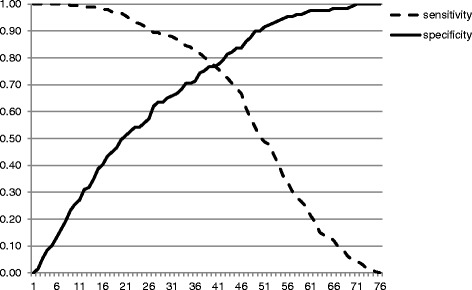
- The PCL-5 total score correlated strongly with CAPS-5 total severity, r = .77, and ROC analysis showed good diagnostic accuracy with AUC = .85 (95% CI .81–.90).
- The recommended cutoff of 33 yielded sensitivity = .86, specificity = .68, and overall efficiency = .79; the authors report no other cutoff with higher overall efficiency.
- In structural validity testing, the DSM-5 model fit was only moderate/unsatisfactory, while the dysphoria model fit slightly better (RMSEA .09, CFI .89, TLI .87, SRMR .05; ΔBIC = 14.15), and other models could not be interpreted because of linear dependencies.
## Methods
- German version of the PCL-5 was developed and evaluated in a clinical trauma-exposed sample; 341 participants were included in the analysis, with 352 consenting and 78 completing retest assessment (3 weeks later).
- Participants were assessed with the PCL-5, the CAPS-5 (gold-standard diagnostic interview), and measures of depressive symptoms and general psychopathology (BDI-II, BSI).
- Analyses included internal consistency, test-retest reliability, correlations with CAPS-5, ROC analyses for diagnostic utility, and confirmatory factor analyses of six PTSD symptom-structure models using SPSS 23.0 and Mplus 7.
## Limitations
- The paper states that the sample size was rather modest, which may have affected the CFA results.
- The authors note they could not directly compare subgroups (for example, military/veteran vs. childhood trauma vs. accidental trauma).
- They were unable to conduct discriminant validity analyses because appropriate instruments were not included in the study design.
Model-written summary. Check it against the paper before relying on it.
Integrity signals
Registry
Cites
Statistics
Figures
Verification
Claims the paper makes
4 Valid · 1 Not valid · 21 Not checked · 42 Own results and interpretations
The sources with a verdict support this claim; the rest weren’t checked yet, have no full text we could read, or their verdicts aren’t rated yet.
In the paper
“In addition, high re-test reliability has been found in three studies (r = .66-.84) [6, 8, 9].”
§ The German version of the Posttraumatic Stress Disorder Checklist for DSM-5 (PCL-5): psychometric properties and diagnostic utility > Background > Psychometric properties of the PCL-5
What the sources say
- Not checked yetcites [6] Bovin MJ Marx BP Weathers FW Gallagher MW Rodriguez P Schnurr PP Keane TM Psychometric properties of the PTSD checklist for diagnostic and statistical manual of mental disorders–fifth edition (PCL-5) in veterans Psychol Assess 2016 28 1379 1391 10.1037/pas0000254 26653052 source
- Not checked yetcites [8] Blevins CA Weathers FW Davis MT Witte TK Domino JL The posttraumatic stress disorder checklist for DSM-5 (PCL-5): development and initial psychometric evaluation J Trauma Stress 2015 28 489 498 10.1002/jts.22059 26606250 source
- Supportedcites [9] Sveen J Bondjers K Willebrand M Psychometric properties of the PTSD checklist for DSM-5: a pilot study Eur J Psychotraumatol 2016 7 30165 10.3402/ejpt.v7.30165 27098450 PMC4838990 source
Table 2 (Results > Scoring distribution) reports a significant PCL-5 total-score test–retest correlation of 0.66, matching the lower end of the range attributed collectively to three cited studies. This paper supplies one study in that group; the sentence does not attribute the other studies’ results to it. (LLM, conf=0.91)
plainstates an association- Asserted: passes — The authors put it forward as true.
- Checkable: passes — It can be checked against evidence.
- Load-bearing: unclear — It is unclear whether the paper’s conclusions depend on it.
- Based: passes — The paper gives a reason why it holds.
The sources with a verdict support this claim; the rest weren’t checked yet, have no full text we could read, or their verdicts aren’t rated yet.
In the paper
“To our knowledge, seven published studies to date have tested whether this 4-factor structure can be supported when applying CFA to the PCL-5 [6, 8, 10, 15–18].2”
§ The German version of the Posttraumatic Stress Disorder Checklist for DSM-5 (PCL-5): psychometric properties and diagnostic utility > Background > Structural validity of the PCL-5
What the sources say
- Not checked yetcites [6] Bovin MJ Marx BP Weathers FW Gallagher MW Rodriguez P Schnurr PP Keane TM Psychometric properties of the PTSD checklist for diagnostic and statistical manual of mental disorders–fifth edition (PCL-5) in veterans Psychol Assess 2016 28 1379 1391 10.1037/pas0000254 26653052 source
- Not checked yetcites [8] Blevins CA Weathers FW Davis MT Witte TK Domino JL The posttraumatic stress disorder checklist for DSM-5 (PCL-5): development and initial psychometric evaluation J Trauma Stress 2015 28 489 498 10.1002/jts.22059 26606250 source
- Not checked yetcites [10] Liu P Wang L Cao C Wang R Zhang J Zhang B Wu Q Zhang H Zhao Z Fan G The underlying dimensions of DSM-5 posttraumatic stress disorder symptoms in an epidemiological sample of Chinese earthquake survivors Journal of Anxiety Disorders 2014 28 345 351 10.1016/j.janxdis.2014.03.008 24792723 source
- Not checked yetcites [15] Armour C Tsai J Durham TA Charak R Biehn TL Elhai JD Pietrzak RH Dimensional structure of DSM-5 posttraumatic stress symptoms: support for a hybrid Anhedonia and externalizing behaviors model J Psychiatr Res 2015 61 106 113 10.1016/j.jpsychires.2014.10.012 25479765 source
- Supportedcites [16] Keane TM Rubin A Lachowicz M Brief D Enggasser JL Roy M Hermos J Helmuth E Rosenbloom D Temporal stability of DSM-5 posttraumatic stress disorder criteria in a problem-drinking sample Psychol Assess 2014 26 1138 1145 10.1037/a0037133 24932642 PMC4286303 source
The Methods (Data Analyses) state that the authors performed confirmatory factor analyses of PCL-5 items. The Results (Confirmatory factor analysis of DSM-5 four-factor model) and Conclusions report that they tested and found support for the four-factor structure. This source is cited as one of the seven studies, not as the source of the citing authors’ count of seven. (LLM, conf=0.94)
- Not checked yetcites [17] Pietrzak RH Tsai J Armour C Mota N Harpaz-Rotem I Southwick SM Functional significance of a novel 7-factor model of DSM-5 PTSD symptoms: results from the National Health and resilience in veterans study J Affect Disord 2015 174 522 526 10.1016/j.jad.2014.12.007 25556669 source
- Not checked yetcites [18] Armour C Contractor A Shea T Elhai JD Pietrzak RH Factor structure of the PTSD checklist for DSM-5: relationships among symptom clusters, anger, and impulsivity J Nerv Ment Dis 2016 204 108 115 10.1097/NMD.0000000000000430 26669984 source
hedged- Asserted: passes — The authors put it forward as true.
- Checkable: passes — It can be checked against evidence.
- Load-bearing: unclear — It is unclear whether the paper’s conclusions depend on it.
- Based: passes — The paper gives a reason why it holds.
The cited sources support only part of this claim — read each source’s verdict below.
In the paper
“Even in the minority of studies where acceptable to good fit was found for the DSM-5 model [5, 6, 16, 19], there were other models that showed significantly better fit.”
§ The German version of the Posttraumatic Stress Disorder Checklist for DSM-5 (PCL-5): psychometric properties and diagnostic utility > Background > Structural validity of the PCL-5
What the sources say
- Not checked yetcites [5] Wortmann JH, Jordan AH, Weathers FW, Resick PA, Dondanville KA, Hall-Clark B, Foa EB, Young-McCaughan S, Yarvis JS, Hembree EA et al: Psychometric Analysis of the PTSD Checklist-5 (PCL-5) Among Treatment-Seeking Military Service Members. Psychol Assess. 2016;28:1392–403. 26751087 source
- Not checked yetcites [6] Bovin MJ Marx BP Weathers FW Gallagher MW Rodriguez P Schnurr PP Keane TM Psychometric properties of the PTSD checklist for diagnostic and statistical manual of mental disorders–fifth edition (PCL-5) in veterans Psychol Assess 2016 28 1379 1391 10.1037/pas0000254 26653052 source
- Partly supportedcites [16] Keane TM Rubin A Lachowicz M Brief D Enggasser JL Roy M Hermos J Helmuth E Rosenbloom D Temporal stability of DSM-5 posttraumatic stress disorder criteria in a problem-drinking sample Psychol Assess 2014 26 1138 1145 10.1037/a0037133 24932642 PMC4286303 sourceExperimental — accuracy not yet measured
Keane et al. (2014) supports the first half of the attributed claim: the Results section 'Temporal stability of DSM-5 model' states the freely estimated DSM-5 model 'provided an adequate fit to the data at each time individually' and that 'good model fit was achieved when all time points were evaluated in a single model', and the Conclusions endorse the four-factor DSM-5 structure. But the second half — that other models showed significantly better fit in this study — is not supported: the paper tested only the DSM-5 four-factor structure and nested invariance-constrained versions of that same model (Methods, Data Analyses), never a competing factor model; the only 'preferred' alternative was the more parsimonious equal-loadings constraint of the DSM-5 model itself. Our copy in fact leans the other way, noting in the Abstract that 'four dimensions or factors better account for PTSD symptoms than three factors or other proposed factor structures'. (LLM, conf=0.82)
- Not checked yetcites [19] Tsai J Harpaz-Rotem I Armour C Southwick SM Krystal JH Pietrzak RH Dimensional structure of DSM-5 posttraumatic stress disorder symptoms: results from the national health and resilience in veterans study The Journal of Clinical Psychiatry 2015 76 546 553 10.4088/JCP.14m09091 25562376 source
plain- Asserted: passes — The authors put it forward as true.
- Checkable: passes — It can be checked against evidence.
- Load-bearing: passes — The paper’s conclusions depend on it.
- Based: passes — The paper gives a reason why it holds.
A result the paper reports from its own data — it cites no other source for it, so there is none to check. The quote shows it is in the paper.
In the paper
“In addition, in all tested models correlations between factors were high.”
§ The German version of the Posttraumatic Stress Disorder Checklist for DSM-5 (PCL-5): psychometric properties and diagnostic utility > Discussion
plainstates an association- Asserted: passes — The authors put it forward as true.
- Checkable: passes — It can be checked against evidence.
- Load-bearing: passes — The paper’s conclusions depend on it.
- Based: passes — The paper gives a reason why it holds.
In the paper
“Inter-item correlations were computed as another measure for internal consistency and ranged from .21 to .73, which can be regarded as acceptable [34] (M = .48; re-experiencing items: .55 - .72, avoidance items: .65, negative alterations in cognitions and mood items: .23 - .69, and alterations in arousal and reactivity items: .27 - .73).”
§ The German version of the Posttraumatic Stress Disorder Checklist for DSM-5 (PCL-5): psychometric properties and diagnostic utility > Results > Reliability
What the sources say
- Not checked yetcites [34] Clark LA Watson D Constructing validity: basic issues in objective scale development Psychol Assess 1995 7 309 319 10.1037/1040-3590.7.3.309 source
plainstates an association- Asserted: passes — The authors put it forward as true.
- Checkable: passes — It can be checked against evidence.
- Load-bearing: passes — The paper’s conclusions depend on it.
- Based: passes — The paper gives a reason why it holds.
26 more claims
Create a free account to see all 68 claims and to verify the 56 references still open.
- Probably not a substantial claim. 20
- It may state two separate claims as one. 22
Claims other papers make about this one
Each is checked against this paper’s own text: does it say what the citing paper says it does?
The cited source doesn’t support the claim as written.
In the citing paper
“The clinical cutoff for this measure in non-postpartum samples is reported to be 31–3353, with a high specificity level using this cutoff34”
From AI and narrative embeddings detect PTSD following childbirth via birth stories (2024) · cites this paper as [53]
Checked by a reasoning model — may be wrong.
Experimental — accuracy not yet measured
Statistics recomputed
Every reported test result, recomputed from its test statistic and degrees of freedom. A result shows as not adding up only once an independent check has confirmed it.
- Consistentt(77) = 1.78reported p = .08 · recomputed p = .079
“t(77) = 1.78, p = .08”
Self-check
Percentages, sums and reported differences re-computed from the paper’s own numbers.
Self-check results appear here once an independent check has confirmed them.
Citations
Cites
Diagnostic and Statistical Manual of Mental Disorders
American Psychiatric Association (2013) · doi:10.1176/appi.books.9780890425596 · Cited by 116,369
Diagnostic and Statistical Manual of Mental Disorders
Williams, J. B. W., & First, M. (2013) · Encyclopedia of Social Work · doi:10.1093/acrefore/9780199975839.013.104 · Cited by 109,519
Hu, L., & Bentler, P. M. (1999) · Structural Equation Modeling A Multidisciplinary Journal · doi:10.1080/10705519909540118 · Cited by 108,788
Kass, R. E., & Raftery, A. E. (1995) · Journal of the American Statistical Association · doi:10.1080/01621459.1995.10476572 · Cited by 12,558
The brief symptom inventory: an introductory report.
Derogatis, L. R., & Melisaratos, N. (1983) · Psychological Medicine · doi:10.1017/s0033291700048017 · Cited by 6,650 · cited 1×
“To assess for comorbid depressive and general psychopathological symptoms, the Beck Depression InventoryII (BDI-II; [25, 26]) and the Brief Symptom Inventory (BSI; [27, 28]) were used.”
MethodConstructing validity: Basic issues in objective scale development.
Clark, L. A., & Watson, D. (1995) · Psychological Assessment · doi:10.1037/1040-3590.7.3.309 · Cited by 6,567 · cited 1×
“73, which can be regarded as acceptable [34] (M = .”
BackgroundBlevins, C. A., Weathers, F. W., Davis, M. T., Witte, T. K., & Domino, J. L. (2015) · Journal of Traumatic Stress · doi:10.1002/jts.22059 · Cited by 5,233 · cited 5×
“However, the seven-factor Hybrid Model has been found to be the best fitting model [5, 6, 8, 11, 15, 18].”
MethodResultInfluentialKenny, A. (2018) · Carl Strehlow’s 1909 Comparative Heritage Dictionary: An Aranda, German, Loritja and Dieri to English Dictionary with Introductory Essays · doi:10.22459/cschd.08.2018.04 · Cited by 3,216
Bovin, M. J., Marx, B. P., Weathers, F. W., Gallagher, M. W., Rodriguez, P., Schnurr, P. P., & Keane, T. M. (2016) · Psychological Assessment · doi:10.1037/pas0000254 · Cited by 2,532 · cited 9×
“However, the seven-factor Hybrid Model has been found to be the best fitting model [5, 6, 8, 11, 15, 18].”
MethodResultInfluentialWeathers, F. W., Bovin, M. J., Lee, D. J., Sloan, D. M., Schnurr, P. P., Kaloupek, D. G., Keane, T. M., & Marx, B. P. (2018) · Psychological Assessment · doi:10.1037/pas0000486 · Cited by 1,799
Research works printed but not linked: 9
- Weathers FW Litz BT Huska JA Keane TM PTSD checklist for DSM-IV (PCL) 1994 Boston, MA National Center for PTSD
- Weathers FW Litz B Keane TM Palmieri PA Marx BP Schnurr PP The PTSD checklist for DSM-5 (PCL-5) 2013 National Center for PTSD Boston, MA
- Weathers FW Blake DD Schnurr PP Kaloupek DG Marx BP Keane TM The clinician-administered PTSD scale for DSM-5 (CAPS-5) 2013 National Center for PTSD Boston, MA
- Weathers FW Blake DD Schnurr PP Kaloupek DG Marx BP Keane TM The life events checklist for DSM-5 (LEC-5) 2013 National Center for PTSD Boston, MA
- Schnyder U The clinician-administered PTSD scale for DSM-5 (CAPS-5), German version Unpublished manuscript 2013
- Beck AT Steer RA Brown GK Beck depression inventory-II manual 1996 2 San Antonio Psychological Corporation
- Hautzinger M Keller F Kühner C Beck depressions-Inventar (BDI-II) 2006 Frankfurt Harcourt Test Services
- Franke GH BSI. Brief symptom inventory - deutsche version. Manual 2000 Göttingen Beltz
- Derogatis LR Brief symptom inventory: administration, scoring and procedures manual 1993 4 Minneapolis NCS, Pearson, Inc.
Cited by
Items 101–200 of 317
Wolf, S., Seiffer, B., Zeibig, J., Welkerling, J., Bauer, L. L., Frei, A. K., Studnitz, T., Rosenstiel, S., Fiedler, D. V., Helmhold, F., et al. (2021) · BMC Psychiatry · doi:10.1186/s12888-021-03541-3 · Cited by 15
“…relevant transdiagnostic and disorder-specific symptomatology with the start of the intervention, scales that assess all primary and secondary outcomes will be presented again between randomization and group start: BSI-18 [58], ISI [66, 67], PSQI [68], PHQ-9 [61, 62], GAD-7 [70, 71], PCL-5 [77].”
BackgroundMethodSelf-citationDiagnostik der PTBS im Spannungsfeld von DSM-5 und ICD-11
Schellong, J., Hanschmidt, F., Ehring, T. W., Knaevelsrud, C., Schäfer, I., Rau, H., Dyer, A., & Krüger-Gottschalk, A. (2019) · Der Nervenarzt · doi:10.1007/s00115-018-0668-0 · Cited by 19
Self-citationBehnke, A., Rojas, R., Karabatsiakis, A., & Kolassa, I. (2019) · Child Abuse & Neglect · doi:10.1016/j.chiabu.2019.104248 · Cited by 21
A brief measure of guilt and shame: validation of the Guilt and Shame Questionnaire (GSQ-8)
Hoppen, T. H., Schlechter, P., Arntz, A. R., Rameckers, S. A., Ehring, T. W., & Morina, N. (2022) · European Journal of Psychotraumatology · doi:10.1080/20008066.2022.2146720 · Cited by 18
“The PCL-5 has good psychometric quality in traumatized populations (Blevins et al., 2015; Boeschoten et al., 2018; Bovin et al., 2016; Krüger-Gottschalk et al., 2017; Wortmann et al., 2016).”
BackgroundSelf-citationGeorgescu, T., Nedelcea, C., Gorbănescu, A., Papasteri, C., Cosmoiu, A., Vasile, D. L., & Letzner, R. D. (2024) · European Journal of Psychotraumatology · doi:10.1080/20008066.2024.2333222 · Cited by 16
“…its strong internal consistency, with Cronbach ’ s alpha values ranging from .92 to .94 for the total score and from .78 to .89 for sub-scales (Boysan et al., 2017; Krüger-Gottschalk et al., 2017; Liu et al., 2014), and McDonald ’ s omega values ranging from .88 to .95 (Stanley et al., 2023).”
BackgroundMethodResultInfluentialWerner, G. G., Danböck, S. K., Metodiev, S., & Kunze, A. E. (2020) · Clinical Psychology in Europe · doi:10.32872/cpe.v2i2.2699 · Cited by 16
Hoffman, J., Ben‐Zion, Z., Arévalo, A., Duek, O. A., Greene, T., Hall, B. J., Harpaz‐Rotem, I., Liddell, B. J., Locher, C., Morina, N., et al. (2022) · European Journal of Psychotraumatology · doi:10.1080/20008066.2022.2143019 · Cited by 15
“…Displ Comm Ukraine 2203 68.1 X Free online Hall et al. (2019) PCL-5 Tagalog Civilian Comm Macau S1:130 S2: 99 S1: 100 S2:100 F & B X X X On request Kruger-Gottschalk et al. (2017) PCL-5 German Civilian Clinical Germany 352 56.3 F & B X X X Martínez-Levy et al. (2021) PCL-5 Spanish Civilian…”
BackgroundInfluentialSeitz, K. I., Ueltzhöffer, K. J., Rademacher, L., Paulus, F. M., Schmitz, M., Herpertz, S. C., & Bertsch, K. (2023) · Translational Psychiatry · doi:10.1038/s41398-023-02364-y · Cited by 13
“PTSD symptom severity was measured with the PTSD Checklist for DSM-5 (PCL-5 [56]), assessing 20 PTSD symptoms in the last month with 20 items on a five-point Likert scale ranging from 0 (not at all) to 4 (extremely).”
MethodEffects of imagery rescripting and imaginal exposure on voluntary memory
Ganslmeier, M. G., Ehring, T. W., & Wolkenstein, L. (2023) · Behaviour Research and Therapy · doi:10.1016/j.brat.2023.104409 · Cited by 17
Self-citationDynamic symptom associations in posttraumatic stress disorder: a network approach
Stefanovic, M., Takano, K., Wittekind, C. E., & Ehring, T. W. (2024) · European Journal of Psychotraumatology · doi:10.1080/20008066.2024.2317675 · Cited by 15
“At each ESM assessment occasion, participants rated 27 items, including the 20 items from the PCL-5 assessing all DSM-5 symptoms of PTSD, and two items adapted from the CAPS-5 to assess depersonalization and derealization symptoms.”
MethodSelf-citationPonder, W. N., Carbajal, J., Whitworth, J., Schuman, D. L., Galusha, J. M., & Yockey, R. A. (2022) · Journal of Occupational and Environmental Medicine · doi:10.1097/jom.0000000000002750 · Cited by 17
Fresno, A., Arias, V. B., Núñez, D., Spencer, R., Ramos, N., Espinoza, C., Bravo, P., Arriagada, J., & Brunet, A. (2020) · The Spanish Journal of Psychology · doi:10.1017/sjp.2020.46 · Cited by 14
“The results show different alternative models with good fit indices (except the study of Krüger-Gottschalk et al., 2017), high correlations between the factors, and symptoms that belong to different factors in different models without affecting the fit index (see Table 2 and Table 3).”
MethodResultInfluentialSteil, R., Schneider, A., & Schwartzkopff, L. (2021) · Journal of Child & Adolescent Trauma · doi:10.1007/s40653-021-00421-6 · Cited by 19
“The initial score of 30 on the Posttraumatic Stress Disorder Checklist for DSM-5 (PCL-5; Krüger-Gottschalk et al., 2017; Weathers et al., 2013) indicated the presence of PTSD, with lower values for the criterion C (avoidance).”
BackgroundShih, C.-H., Thalla, P., Elhai, J. D., Mathews, J., Brickman, K. R., Redfern, R. E., Xie, H., & Wang, X. (2020) · European Journal of Psychotraumatology · doi:10.1080/20008198.2020.1815279 · Cited by 13
“The PCL-5 has shown good psychometric properties across countries and different trauma-exposed populations (Ashbaugh, HouleJohnson, Herbert, El-Hage, & Brunet, 2016; Bovin et al., 2016; Krüger-Gottschalk et al., 2017; Wortmann et al., 2016).”
BackgroundPrioux, C., Marillier, M., Vuillermoz, C., Vandentorren, S., Rabet, G., Petitclerc, M., Baubet, T., Stene, L. E., Pirard, P., & Motreff, Y. (2023) · International Journal of Environmental Research and Public Health · doi:10.3390/ijerph20054160 · Cited by 17
Seitz, K. I., Sicorello, M., Schmitz, M., Valencia, N., Herpertz, S. C., Bertsch, K., & Neukel, C. (2024) · Biological Psychiatry Cognitive Neuroscience and Neuroimaging · doi:10.1016/j.bpsc.2024.01.003 · Cited by 17
Woud, M. L., Blackwell, S. E., Cwik, J. C., Margraf, J., Holmes, E. A., Steudte‐Schmiedgen, S., Herpertz, S., & Kessler, H. (2018) · BMJ Open · doi:10.1136/bmjopen-2017-019964 · Cited by 13
Voß, M., Ehring, T. W., & Wolkenstein, L. (2018) · Cognitive Therapy and Research · doi:10.1007/s10608-018-9976-8 · Cited by 12
Self-citationRecent measles viral activity in Uruguai: serological and genetic approaches.
Cánepa, E., Siqueira, M. M., Hortal, M., & Friedrich, F. (2000) · PubMed · Cited by 11
New insights into the effects of type and timing of childhood maltreatment on brain morphometry
Grauduszus, Y., Sicorello, M., Demirakça, T., von Schröder, C., Schmahl, C. G., & Ende, G. (2024) · Scientific Reports · doi:10.1038/s41598-024-62051-w · Cited by 18
“For information on (current) psychopathology, participants completed the German versions of the dissociative experience scale (DES; Fragebogen zu Dissoziativen Symptomen 46 ), Brief symptom inventory, BSI 47 and PTSD-Checklist for DSM-V, PCL-V 48 .”
MethodCaldirola, D., Cuniberti, F., Daccò, S., Grassi, M., Torti, T., & Perna, G. (2022) · Journal of Neuropsychiatry · doi:10.1176/appi.neuropsych.21060148 · Cited by 10
Fontana, M., Fattori, F., Trezzi, S., Conte, M., Bernardini, L., Marando, L., Michelini, G., Trapani, A., & Costantino, M. A. (2023) · Journal of Migration and Health · doi:10.1016/j.jmh.2023.100177 · Cited by 10
Springer, F., Esser, P., Friedrich, M., Ernst, J., Platzbecker, U., Vučinić, V., & Mehnert-Theuerkauf, A. (2023) · Frontiers in Psychology · doi:10.3389/fpsyg.2023.1278485 · Cited by 12
Isaac, F., Klein, B., Nguyen, H., Watson, S., & Kennedy, G. A. (2025) · JMIR Human Factors · doi:10.2196/65228 · Cited by 9
“A cutoff score of 31 provides optimal sensitivity and specificity in providing a provisional diagnosis of PTSD [45].”
Validation of PCL-5 symptom validity indices in a Cross-Cultural Forensic Sample
Schroeder, R. W., Spector, J., Snodgrass, M. A., & Bieu, R. K. (2025) · Journal of Clinical and Experimental Neuropsychology · doi:10.1080/13803395.2025.2482650 · Cited by 9
“…Boysan et al., 2017; Buhagiar et al., 2022; B. J. Hall et al., 2019; Cheng et al., 2020; Lee et al., 2022; Ibrahim et al., 2018; Islam et al., 2022; Krüger-Gottschalk et al., 2017; Lima et al., 2016; Mat Salleh et al., 2021; Orovou et al., 2021; Patel et al., 2022; Van Praag et al., 2020; Verhey…”
The relationship between language features and PTSD symptoms: a systematic review and meta-analysis
Yu, Z., Gu, Z., Shen, Y., & Lu, J. (2025) · Frontiers in Psychiatry · doi:10.3389/fpsyt.2025.1476978 · Cited by 13
Brewerton, T. D., Suro, G., Fernandez, N., Tulga, K., Gavidia, I., & Perlman, M. M. (2025) · Journal of Psychiatric Research · doi:10.1016/j.jpsychires.2025.05.022 · Cited by 10
The Transdiagnostic Role of Rumination in the Comorbidity of PTSD and Depression
Mendoza, N. B., Mordeno, I. G., & Nalipay, M. J. N. (2021) · Journal of Loss and Trauma · doi:10.1080/15325024.2021.2018197 · Cited by 9
Valencia, N., Seeger, F. R., Seitz, K. I., Carius, L., Nkrumah, R. O., Schmitz, M., Bertsch, K., & Herpertz, S. C. (2024) · Journal of Psychiatric Research · doi:10.1016/j.jpsychires.2024.07.022 · Cited by 10
Isaac, F., Klein, B., Nguyen, H., Watson, S., & Kennedy, G. A. (2024) · doi:10.2196/preprints.65228 · Cited by 9
Lee, D., Lee, D., Kim, S., & Jung, D. (2022) · THE KOREAN JOURNAL OF CULTURE AND SOCIAL ISSUES · doi:10.20406/kjcs.2022.5.28.2.187 · Cited by 10
Müller-Bardorff, M., Schulz, A., Paersch, C., Recher, D., Schlup, B., Seifritz, E., Kolassa, I., Kowatsch, T., Fisher, A. J., Galatzer‐Levy, I. R., et al. (2024) · JMIR Research Protocols · doi:10.2196/42547 · Cited by 12
Jiménez‐Fernández, R., Soria, M. E. H., Granger, M. P., Losa‐Iglesias, M. E., Vallejo, R., & Corral‐Liria, I. (2024) · Archives of Psychiatric Nursing · doi:10.1016/j.apnu.2024.02.006 · Cited by 10
Esser, P., Kuba, K., Ernst, J., & Mehnert-Theuerkauf, A. (2019) · BMC Cancer · doi:10.1186/s12885-019-6047-9 · Cited by 10
Depicting the associations between different forms of psychopathology in trauma-exposed adolescents
Cao, X., Wang, L., Cao, C., Fang, R., Chen, C., Hall, B. J., & Elhai, J. D. (2019) · European Child & Adolescent Psychiatry · doi:10.1007/s00787-019-01400-x · Cited by 9
Vogel, L., Koller, G., & Ehring, T. W. (2021) · Drug and Alcohol Dependence · doi:10.1016/j.drugalcdep.2021.108709 · Cited by 9
Self-citationTeismann, T., Naghavi, A., Asgari, Z., Grundei, L., & Brailovskaia, J. (2022) · Current Psychology · doi:10.1007/s12144-022-03187-8 · Cited by 11
The German version of the Fear of Sleep Inventory - Short Form: A psychometric study
Drexl, K., Kunze, A. E., & Werner, G. G. (2019) · European Journal of Trauma & Dissociation · doi:10.1016/j.ejtd.2019.05.004 · Cited by 11
Post-traumatic Stress Disorder – Assessment of current diagnostic definitions
Bondjers, K. (2020) · Uppsala University Publications (Uppsala University) · Cited by 17
Franzen, M., & Lenferink, L. I. M. (2025) · Internet Interventions · doi:10.1016/j.invent.2025.100877 · Cited by 12
Wanza, C., Gonschor, J., Smith, K. V., Ehlers, A., Barke, A., Rief, W., & Doering, B. K. (2023) · European Journal of Trauma & Dissociation · doi:10.1016/j.ejtd.2023.100327 · Cited by 8
Haghish, E. F., Sahuquillo, J., Rădoi, A., Pomposo, I., & Lozano, G. C. (2024) · Frontiers in Psychology · doi:10.3389/fpsyg.2024.1216435 · Cited by 10
Validation of the PTSD Checklist for DSM-5 (PCL-5) on Patients Injured in Car Accidents
Cernovsky, Z. Z., Fattahi, M., Litman, L. C., & Diamond, D. M. (2021) · European Journal of Medical and Health Sciences · doi:10.24018/ejmed.2021.3.2.790 · Cited by 7
“Although some of the validation studies of PCL-5 included mixed samples of persons with various type of trauma, including also some persons who experienced an MVA [6], [8], a separate validation study of PCL-5 on a homogeneous sample consisting only of post-MVA patients is much needed.”
BackgroundResultHohmann, S., Enning, F., Trasselli, C., Sondergeld, A., Heser, M., Breisacher, A., Banaschewski, T., Bohus, M., & Schmahl, C. G. (2021) · Der Nervenarzt · doi:10.1007/s00115-021-01152-7 · Cited by 8
Pettrich, A., Friedrich, M., Nesterko, Y., & Glaesmer, H. (2024) · European Journal of Psychotraumatology · doi:10.1080/20008066.2024.2317055 · Cited by 8
“In a German clinical sample (Krüger-Gottschalk et al., 2017) evidence for the latent factor structure of the PCL-5 remained inconclusive.”
BackgroundMethodSpies, J., Woud, M. L., Kessler, H., Rau, H., Willmund, G., Köhler, K., Herpertz, S., Blackwell, S. E., Bovin, M. J., Marx, B. P., et al. (2020) · BMJ Open · doi:10.1136/bmjopen-2019-036078 · Cited by 7
Self-citationPosttraumatic stress among refugees: The moderating effect of perceived social support
Boettcher, V. S., & Neuner, F. (2025) · Journal of Migration and Health · doi:10.1016/j.jmh.2025.100323 · Cited by 6
Pettrich, A., Nesterko, Y., & Glaesmer, H. (2025) · Epidemiology and Psychiatric Sciences · doi:10.1017/s2045796025100164 · Cited by 8
“The LEC-5 (Krüger-Gottschalk et al. , 2017; Weathers et al. , 2013) is a self-report measure assessing the lifetime prevalence of TEs.”
InfluentialNijborg, L. C. J., Kunst, M. J. J., Westerhof, G. J., de Keijser, J., & Lenferink, L. I. M. (2024) · European Journal of Psychotraumatology · doi:10.1080/20008066.2023.2297541 · Cited by 9
“A score > 32 is indicative of probable PTSD (Krüger-Gottschalk et al., 2017).”
BackgroundBergvall, H., Linde, J., Alfonsson, S., Sunnhed, R., Barber, J. P., Lundgren, T., Andersson, G., & Bohman, B. (2024) · BMC Psychiatry · doi:10.1186/s12888-024-06328-4 · Cited by 11
“The 20 items are rated on a scale from 1 (not at all) to 5 (extremely), ranging 20–100, with a recommended cut-off of ≥ 33 [68, 69].”
Effectiveness in routine care: trauma-focused treatment for PTSD
Krüger-Gottschalk, A., Kuck, S., Dyer, A., Alpers, G. W., Pittig, A., Morina, N., & Ehring, T. W. (2025) · European Journal of Psychotraumatology · doi:10.1080/20008066.2025.2452680 · Cited by 7
“In the full models of the completer analysis, the history of substance dependence showed a significant interaction with time for the CAPS-5 and a main effect of the number of diagnoses for the PCL-5 reached significance (see Table A6 appendix; for the univariate models of the completer analysis see Tables A4 and A5 ap…”
InfluentialSelf-citationBlackwell, S. E., Ehring, T. W., Gladwin, T. E., Margraf, J., & Woud, M. L. (2021) · Current Psychology · doi:10.1007/s12144-021-02441-9 · Cited by 6
Self-citationDanböck, S. K., Hettegger, S. E., Anders, S., Franke, L. K., Liedlgruber, M., Miedl, S. F., Gashi, A., Kurapov, A., Weber, R.-C., Ehring, T. W., et al. (2023) · European Journal of Psychotraumatology · doi:10.1080/20008066.2023.2238492 · Cited by 7
“X X Psychopathology questionnaires PCL-5 PTSD Checklist for DSM-5 (Krüger-Gottschalk et al., 2017; Weathers, Litz, et al., 2013) PTSD symptoms according to DSM-5 (20 items).”
Self-citationKumsta, R., Zang, J. C. S., Hummel, E. M., Müller, S., Moser, D., Herpertz, S., & Kessler, H. (2023) · Frontiers in Psychiatry · doi:10.3389/fpsyt.2023.1181321 · Cited by 7
“155) and by the ethics committee for the Faculty of Medicine, RuhrUniversity Bochum (15-5462).”
BackgroundMethodInfluentialKheramin, S., Shakibkhah, I., & Ashrafganjooie, M. (2019) · Iranian Red Crescent Medical Journal · doi:10.5812/ircmj.95307 · Cited by 7
Diagnostik und Differenzialdiagnostik
Schellong, J., Schützwohl, M., Lorenz, P., & Trautmann, S. (2019) · Springer eBooks · doi:10.1007/978-3-662-58470-5_8 · Cited by 6
Self-citationBartal, A., Jagodnik, K. M., Chan, S. J., Babu, M. S., & Dekel, S. (2022) · doi:10.1101/2022.08.30.22279394 · Cited by 44
“The PCL-5 has strong correspondence with clinician diagnostic assessments and is used to determine provisional PTSD diagnosis,(41) with a reported clinical cutoff of 31.(42) Reliability of the measure was high (Cronbach’s alpha = 0.”
Psychometric evaluation of the PTSD Checklist for the DSM-5 (PCL-5) in Norway
Lassen, E. R., Omre, A. N., Birkeland, M. S., Egeland, K. M., & Bækkelund, H. (2025) · European Journal of Psychotraumatology · doi:10.1080/20008066.2025.2570951 · Cited by 6
“In comparable studies of clinical psychiatric samples, these two items exhibited below-average fit in a German sample (Krüger-Gottschalk et al., 2017), but not in a Turkish sample (Boysan et al., 2017).”
Boelen, P. A., Eisma, M. C., de Keijser, J., & Lenferink, L. I. M. (2022) · European Journal of Psychotraumatology · doi:10.1080/20008198.2022.2068912 · Cited by 5
“A cut-off score of > 32 was used for an indication of clinically relevant PTSD levels (Krüger-Gottschalk et al., 2017).”
Bencheikh, C., Kefi, H. E., Awissawi, A., Kabtni, W., Baatout, A., Bouizouita, I., Bouguerra, C., Eddif, S., & Oumaya, A. (2022) · Pan African Medical Journal · doi:10.11604/pamj.2022.43.28.35869 · Cited by 6
“Les items constituant le critère B (la répétition) avaient entre 0,77 et 0,92, ceux de l ́évitement entre 0,74 et 0,92, ceux de l ́altération négative des cognitions entre 0,78 et 0,89 et ceux de l ́hyperactivité neurovégétative entre 0,75 et 0,84 [4].”
BackgroundInfluentialTenekedjieva, L., McCalley, D. M., Goldstein‐Piekarski, A. N., Williams, L. M., & Padula, C. B. (2024) · Biological Psychiatry Cognitive Neuroscience and Neuroimaging · doi:10.1016/j.bpsc.2024.01.013 · Cited by 10
Kleineidam, N. J., & Fischbach, A. (2024) · Journal of Police and Criminal Psychology · doi:10.1007/s11896-024-09720-8 · Cited by 6
“Posttraumatic stress disorder was measured with a German version (Krüger-Gottschalk et al. 2017) of the Post-traumatic Stress Disorder Checklist (PCL-5; Weathers et al. 2013) and was slightly adapted.”
Moral injury appraisals and PTSD symptoms in treatment-seeking refugees: a latent profile analysis
Mooren, N., Boelen, P. A., van Berlo, A., & de la Rie, S. M. (2024) · European Journal of Psychotraumatology · doi:10.1080/20008066.2024.2437957 · Cited by 6
Profiles of fluctuating prolonged grief disorder reactions using experience sampling data
Marcolini, S., Pociūnaitė-Ott, J., ten Klooster, P. M., Franzen, M., & Lenferink, L. I. M. (2025) · Journal of Psychiatric Research · doi:10.1016/j.jpsychires.2025.10.017 · Cited by 6
Reinstatement of thought conditioning following extinction and counterconditioning
Zenses, A., Boddez, Y., Dworok, S. I., & Morina, N. (2023) · Behaviour Research and Therapy · doi:10.1016/j.brat.2023.104320 · Cited by 5
Horstmann, R. H., Seefeld, L., Schellong, J., & Garthus‐Niegel, S. (2024) · BMC Pregnancy and Childbirth · doi:10.1186/s12884-024-07061-2 · Cited by 5
“To assess PTSD symptoms related to an event other than childbirth, a short version of the PC-PTSD-5, a screening instrument for PTSD according to DSM-5 criteria, was used [51, 52].”
Self-citationDiagnostische und behandlungsbezogene Klassifikation psychischer Traumafolgestörungen
Schellong, J. (2021) · PTT - Persönlichkeitsstörungen: Theorie und Therapie · doi:10.21706/ptt-25-3-163 · Cited by 5
Self-citationPosttraumatische Belastungsstörung
Ehring, T. W., & Kunze, A. E. (2020) · Springer eBooks · doi:10.1007/978-3-662-61814-1_51 · Cited by 7
Self-citationLee, H. J., Kim, Y. J., & Lee, D. H. (2022) · BMC Psychology · doi:10.1186/s40359-022-00844-2 · Cited by 6
“Previous CFA studies have shown that the DSM-5 fourfactor model is the best-fitting model in countries such as Brazil [20], Germany [21], Turkey [22], and Malaysia [23].”
BackgroundMokros, A., Schemmel, J., Körner, A., Oeberst, A., Imhoff, R., Suchotzki, K., Oberlader, V. A., Banse, R., Kannegießer, A., Gubi‐Kelm, S., et al. (2024) · Psychologische Rundschau · doi:10.1026/0033-3042/a000663 · Cited by 7
Professional Quality of Life in Nursing: The Role of Psychological Resources—A Cross-Sectional Study
Brajković, L., Korać, D., & Kopilaš, V. (2025) · Nursing Reports · doi:10.3390/nursrep15120434 · Cited by 4
Beutler, S., & Croy, I. (2023) · European Journal of Psychotraumatology · doi:10.1080/20008066.2023.2281753 · Cited by 5
“As the study is part of a larger investigation, further questionnaires were fi lled in, e.g. the PTSD Checklist for DSM-5 (PCL-5) (German version) (Krüger-Gottschalk et al., 2017; Weathers et al., 2013b), including the Life Events Checklist for DSM-5 (LEC-5) (Weathers et al., 2013a).”
Vonderlin, R., Priebe, K., Müller‐Engelmann, M., Fydrich, T., Steil, R., Resick, P. A., Schmahl, C. G., Lindauer, P., Kleindienst, N., & Bohus, M. (2024) · European Journal of Psychotraumatology · doi:10.1080/20008066.2024.2393061 · Cited by 6
“In addition, we used the PCL-5 as self-report instrument to assess PTSD symptoms (Blevins et al., 2015); German version (Krüger-Gottschalk et al., 2017).”
MethodDropout from trauma-focused treatment for PTSD in a naturalistic setting
Semmlinger, V., Takano, K., Wolkenstein, L., Krüger-Gottschalk, A., Kuck, S., Dyer, A., Pittig, A., Alpers, G. W., & Ehring, T. W. (2025) · Clinical Psychology in Europe · doi:10.32872/cpe.14491 · Cited by 5
“The German PCL-5 has demonstrated high internal consistency (Cronbach’s α = .95) (Krüger-Gottschalk et al., 2017).”
Self-citationHüsing, P., Löwe, B., & Biedermann, S. V. (2025) · Journal of Psychosomatic Research · doi:10.1016/j.jpsychores.2025.112151 · Cited by 5
Trajectories of grief-related psychopathology: A decade after the MH17 plane disaster
Nijborg, L. C. J., Westerhof, G. J., Pociūnaitė-Ott, J., Kunst, M. J. J., de Keijser, J., & Lenferink, L. I. M. (2025) · Journal of Anxiety Disorders · doi:10.1016/j.janxdis.2025.103036 · Cited by 4
Effects of acute pain medications on posttraumatic stress symptoms in early aftermath of trauma
Grau, A. S., Xie, H., Redfern, R. E., Moussa, M., Wang, X., & Shih, C.-H. (2022) · International Clinical Psychopharmacology · doi:10.1097/yic.0000000000000413 · Cited by 4
“The PCL has shown good psychometric properties (Ashbaugh et al., 2016; Bovin et al., 2016; Wortmann et al., 2016; Krüger-Gottschalk et al., 2017).”
MethodPsychosocial predictors of distress in East and West Germans during the COVID-19 pandemic
Seidel-Koulaxis, L. J., Daniels, J. K., & Ostafin, B. D. (2023) · Psychology and Health · doi:10.1080/08870446.2023.2265929 · Cited by 4
“…(Kroenke et al., 2001; current sample alpha = .91; n = 376), anxiety (Spitzer et al., 2006; current sample alpha = .92; n = 377), intrusions (Krüger-Gottschalk et al., 2017; Weathers et al., 2013; current sample alpha = .93; n = 376), life meaning (George & Park, 2017; current sample alpha…”
Schoofs, N., Pieper, A., Meyer, K., Herrmann, S., Jäger, A., Wülfing, F., Grummt, M., Wolfarth, B., Ströhle, A., & Priebe, K. (2024) · Mental health and physical activity · doi:10.1016/j.mhpa.2024.100579 · Cited by 4
Rhein, C., Apelt, I., Werner, F., Schäflein, E., Adler, W., Reichel, M., Schug, C., Morawa, E., & Erim, Y. (2024) · Journal of Neural Transmission · doi:10.1007/s00702-024-02770-6 · Cited by 4
“Symptoms of acute stress reaction or post-traumatic stress disorder were measured electronically by the German version of the PTSD Checklist for DSM-5 [PCL-5, applied without Life Events Checklist for DSM-5 (LEC-5); (Kruger-Gottschalk et al. 2017)] at baseline and after psychosomatic treatment.”
MethodHerzog, P., Willems, H., Wirkner, J., Κube, T., Nazarenus, E., Glombiewski, J. A., Brakemeier, E., McNally, R. J., & Richter, J. H. (2025) · Behaviour Research and Therapy · doi:10.1016/j.brat.2025.104690 · Cited by 4
van Herpen, M. M., Boeschoten, M. A., Brake, H. T., van der Aa, N., & Olff, M. (2020) · Journal of Medical Internet Research · doi:10.2196/19716 · Cited by 5
Knaevelsrud, C., Rosendahl, J., Reck, J., Gawlytta, R., Kesselmeier, M., Böttche, M., & Niemeyer, H. (2023) · Psychiatrische Praxis · doi:10.1055/a-1997-9556 · Cited by 6
“Mindestens eine Person pro Dyade musste eine klinisch relevante PTBS-Symptomatik (ermittelt mittels PTSD Check-list for DSM5 (PCL5) [28, 29]; PCL5Wert ≥ 33 Punkte) aufweisen, die auf die intensivmedizinische Behandlung zurückführbar war.”
BackgroundInfluentialSelf-citationPeripheral inflammation over the course of a cognitive behavioral intervention in PTSD
von Majewski, K., Rohleder, N., & Ehring, T. W. (2023) · Brain Behavior & Immunity - Health · doi:10.1016/j.bbih.2023.100620 · Cited by 6
Self-citationCwik, J. C., Spies, J., Kessler, H., Herpertz, S., Woud, M. L., Blackwell, S. E., Willmund, G., Zimmermann, P. L., Koch, E., Bohnacker, V., et al. (2025) · BMC Psychiatry · doi:10.1186/s12888-025-07342-w · Cited by 4
“This score was used as an external criterion for diagnostic accuracy due to the studies that recommend using a cut-off score of ≥ 33 [24].”
InfluentialSelf-citationAverage treatment effects on binary outcomes with stochastic covariates
Kiefer, C., Woud, M. L., Blackwell, S. E., & Mayer, A. (2024) · British Journal of Mathematical and Statistical Psychology · doi:10.1111/bmsp.12355 · Cited by 3
Scott, A., Cornelius, T. M., Schwartz, J. E., Fray, N., Kronish, I. M., & Edmondson, D. E. (2024) · Journal of Affective Disorders · doi:10.1016/j.jad.2024.10.007 · Cited by 5
Kessler, H., Doering, S., Kehyayan, A., Pape, M., Hofmann, T., Rose, M., Imbierowicz, K., Geiser, F., Croy, I., Weidner, K., et al. (2025) · Frontiers in Psychiatry · doi:10.3389/fpsyt.2025.1531504 · Cited by 4
Posch, L., & Zube, A.-L. (2024) · Fortschritte der Neurologie · Psychiatrie · doi:10.1055/a-2351-2533 · Cited by 4
Jäger, A., Pieper, A., Priebe, K., Hellweg, R., Meyer, K., Herrmann, S., Wolfarth, B., Grummt, M., Ströhle, A., & Schoofs, N. (2024) · Journal of Psychiatric Research · doi:10.1016/j.jpsychires.2024.11.009 · Cited by 3
Dissociative experiences alter resting state functional connectivity after childhood abuse
von Schröder, C., Nkrumah, R. O., Demirakça, T., Ende, G., & Schmahl, C. G. (2025) · Scientific Reports · doi:10.1038/s41598-024-79023-9 · Cited by 6
“Age, sex, the BSI, and the PCL-5 total severity scores were also corrected for.”
InfluentialAbdalla, S. M., Rosenberg, S. B., Cohen, G. H., Ettman, C. K., Magaña-Valladares, L., Nsoesie, E. O., Sabin, L., & Galea, S. (2023) · SSM - Mental Health · doi:10.1016/j.ssmmh.2023.100249 · Cited by 4
Dolovich, C., Shaffer, S. R., Graff, L. A., Singh, H., El-Gabalawy, R. M., Shaw, S. Y., & Bernstein, C. N. (2023) · Journal of the Canadian Association of Gastroenterology · doi:10.1093/jcag/gwad030 · Cited by 3
Steil, R., Weiss, J., Müller‐Engelmann, M., Dittmann, C., Priebe, K., Kleindienst, N., Fydrich, T., & Stangier, U. (2023) · European Journal of Psychotraumatology · doi:10.1080/20008066.2023.2257434 · Cited by 4
Tang, S. J., Holle, J., Dadario, N. B., Ryan, M., Lesslar, O., Teo, C., Sughrue, M. E., & Yeung, J. T. (2024) · Brain Injury · doi:10.1080/02699052.2024.2371975 · Cited by 3
“Patient 2 had PTSD following TBI and was administered the PCL-5.”
InfluentialMatura, J.-M., Kessler, H., Holmes, E. A., Timmesfeld, N., Tokic, M. C., Axmacher, N., Blackwell, S. E., Schmidt, A.-C., Schweer, J. M., Hippert, C., et al. (2025) · Frontiers in Psychology · doi:10.3389/fpsyg.2024.1454086 · Cited by 3
Seefeld, L., Jehn, V., Schellong, J., & Garthus‐Niegel, S. (2026) · BMC Pregnancy and Childbirth · doi:10.1186/s12884-026-08660-x · Cited by 4
Self-citationKuester, A., Niemeyer, H., Schumacher, S., Engel, S., Spies, J., Weiß, D., Muschalla, B., Burchert, S., Tamm, S., Weidmann, A., et al. (2020) · Journal of Behavioral and Cognitive Therapy · doi:10.1016/j.jbct.2020.03.003 · Cited by 5
Self-citationWürtz, F., Blackwell, S. E., Margraf, J., & Woud, M. L. (2022) · Journal of Experimental Psychopathology · doi:10.1177/20438087221124737 · Cited by 3
“The PCL-5 consists of 20 items with each item representing a PTSD symptom as specified in the DSM-5.”
BackgroundMethodInfluentialResearch on a PTSD Risk Assessment Model Using Multi-Modal Data Fusion
Luo, Y., Shang, Y., Zhu, D., Zhang, T., & Hu, C. (2025) · Mathematics · doi:10.3390/math13111901 · Cited by 4
Metadata
- Authors
- Krüger-Gottschalk, A., Knaevelsrud, C., Rau, H., Dyer, A., Schäfer, I., Schellong, J., & Ehring, T.
- Affiliations
- University of Münster (DE)
- Freie Universität Berlin (DE)
- Bundeswehr (DE)
- Heidelberg University (DE)
- Universität Hamburg (DE)
- Technische Universität Dresden (DE)
- Ludwig-Maximilians-Universität München (DE)
- Corresponding author
- Krüger-Gottschalk, Antje
- ORCID
- Venue
- BMC Psychiatry
- Published
- 2017-11-28
- Volume
- 17
- Issue
- 1
- Pages
- 379-379
- ISSN
- 1471-244X (ISSN-L)
- PMC
- PMC5704375
- OpenAlex
- W2771021719
- Cited by
- 305
- References
- 33
- Citations by year
- 2026: 35 · 2025: 46 · 2024: 48 · 2023: 36 · 2022: 51 · 2021: 24 · 2020: 29 · 2019: 19 · 2018: 14 · 2017: 2
- FWCI
- 21.71
- Type
- journal article
- Language
- en
- Open access
- gold
- doi.org
- Licence
- cc-by
- Locations
- BMC Psychiatry (publishedVersion, cc-by)
- Europe PMC (PubMed Central) (publishedVersion, cc-by)
- PubMed Central (publishedVersion, cc-by)
- PubMed (publishedVersion)
- heiDOK (Heidelberg University) (acceptedVersion, other-oa)
- DOAJ (DOAJ: Directory of Open Access Journals) (submittedVersion, cc-by-sa)
- Open access LMU (Ludwid Maxmilian's Universitat Munchen) (submittedVersion)
- URN:NBN Resolver for Germany & Switzerland (German National Library) (submittedVersion, cc-by)
- Topics
- Social Sciences › Psychology › Clinical Psychology › Posttraumatic Stress Disorder Research
- Social Sciences › Psychology › Experimental and Cognitive Psychology › Anxiety, Depression, Psychometrics, Treatment, Cognitive Processes
- Social Sciences › Decision Sciences › Management Science and Operations Research › Psychometric Methodologies and Testing
- Keywords
- post-traumatic stress disorder, PCL-5, German version, psychometric properties, diagnostic accuracy, DSM-5 diagnostic criteria, CAPS-5, test-retest reliability, internal consistency, factor structure, trauma-exposed individuals
- MeSH terms
- Adaptation, Psychological, Adolescent, Adult, Aged, Depressive Disorder, Major, Major Depressive Disorder, Factor Analysis, Statistical, Female, Germany, Humans, Male, Middle Aged, Psychometrics, Stress Disorders, Post-Traumatic, Translations, Reproducibility of Results, Diagnostic and Statistical Manual of Mental Disorders, Young Adult, Checklist, Anhedonia
About these checks
Registry, retraction, Cites and statistics results are computed, not judged, with one exception: a printed reference that no index lists is read once by a model before it counts as a citation error. Claims are extracted by a model and kept only when their quote appears verbatim in the text; each cited source is then checked, with a model’s help, for whether it says what the claim relies on. Those verdicts can be wrong — read the claim’s quote and the cited source before relying on one.
The claim verdicts this report counts are experimental: their accuracy is not yet measured.
A language model drew the claims from the paper on 2026-10-11, under version 3 of the claim definition (model deepseek-v4.1-flash, prompt extract-v3).
A second model labelled each claim on 2026-10-11 (model jev-1.13-20260917, definition revision gold-guideline-v0.2).
Cited sources are checked with a language model’s help (gpt-6-sol and qwen3.8-omni-flash).
Statistics and arithmetic are recomputed, not judged.
Confidence bands are shown only for fields calibrated on our annotated test set. None is calibrated yet, so no band is shown.
What counts as a claim ›How we measure confidence ›How we check this ›
Are you an author, or do you see a problem with this page? Request a review
Data sources
Bibliographic data: Semantic Scholar, OpenAlex, Crossref.
Contains information from the Semantic Scholar Academic Graph Datasets, made available under the ODC Attribution License (ODC-BY 1.0).
Semantic Scholar’s data is described in: Kinney, R., et al. (2023). The Semantic Scholar Open Data Platform. arXiv:2301.10140.
