

The effect of CBT and its modifications for relapse prevention in major depressive disorder: a systematic review and meta-analysis
Open accessThe DOI matches its Crossref record; 68 of the 69 references it cites were found in a registry or an index.
Abstract
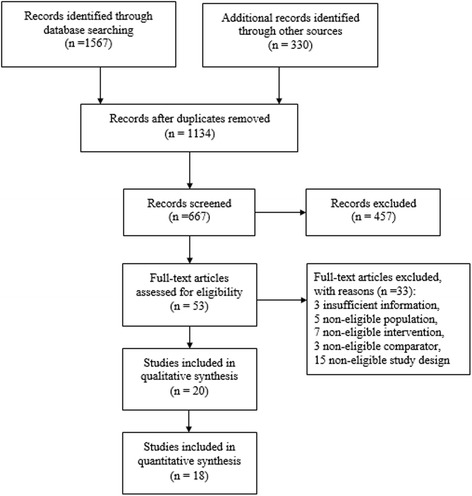
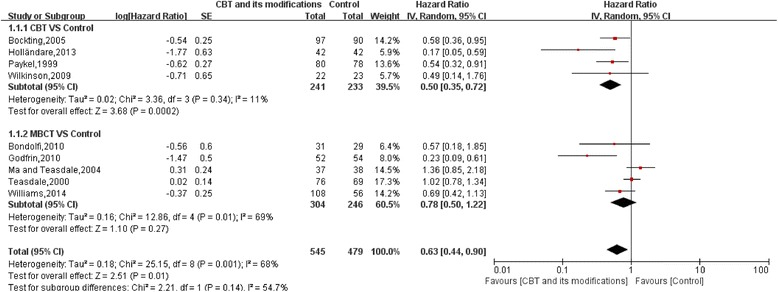
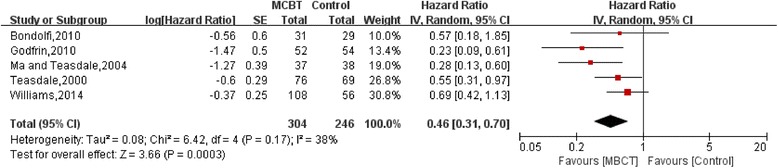
The risk of relapse in major depressive disorder (MDD) is associated with high worldwide disease burden. Cognitive behavioral therapy (CBT) and its modifications might be effective in relapse prevention. The aim of this review was to evaluate the efficacy of these treatments for reducing relapse of MDD. The retrieval was performed in the databases of MEDLINE via Pubmed, EMBASE and PsycINFO via OVID, The Cochrane Library and four Chinese databases. Clinical trials registry platforms and references of relevant articles were retrieved as well. Hazard ratio (HR) and corresponding 95% confidence interval (CI) were used to pool evidences. A total of 16 eligible trials involving 1945 participants were included. In the first 12 months, CBT was more efficacious than control in reducing the risk of developing a new episode of depression for MDD patients in remission (HR:0.50, 95%CI:0.35–0.72, I 2 = 11%). Mindfulness-based cognitive therapy (MBCT) was more efficacious than control only among patients with 3 or more previous depressive episodes (HR:0.46, 95%CI:0.31–0.70, I 2 = 38%). Besides, compared with maintenance antidepressant medication (m-ADM), MBCT was a more effective intervention (HR:0.76, 95%CI:0.58–0.98, I 2 = 0%). These positive effects might be only maintained at two and nearly 6 years follow up for CBT. The use of CBT for MDD patients in remission might reduce risk of relapse. Besides, the effect of MBCT was moderated by number of prior episodes and MBCT might only be effective for MDD patients with 3 or more previous episodes. Further exploration for the influence of previous psychological intervention is required.
Overview
The claims and statistics of this paper haven’t been checked yet.
Free: it reads the open-access text and checks the first 5 claims that cite a source we can check. Create a free account to check every claim.
Integrity signals
Registry
Cites
Statistics
Figures


Verification
Claims the paper makes
The claims and statistics of this paper haven’t been checked yet.
Free: it reads the open-access text and checks the first 5 claims that cite a source we can check. Create a free account to check every claim.
Claims other papers make about this one
Each is checked against this paper’s own text: does it say what the citing paper says it does?
The source backs part of the claim, not all of it — or backs it for a different population, condition or comparison.
In the citing paper
“Further, for some mental health disorders, the positive effects of CBT may require years of follow-up treatment to be maintained [19].”
From Wearable devices for anxiety & depression: A scoping review (2023) · cites this paper as [19]
Experimental — accuracy not yet measuredThe source backs part of the claim, not all of it — or backs it for a different population, condition or comparison.
In the citing paper
“Specific forms of CBT and pharmacotherapy focused on relapse prevention have been found to significantly reduce relapse for eating, substance use, mood and anxiety disorders (246–255).”
From The integrated treatment of eating disorders, posttraumatic stress disorder, and psychiatric comorbidity: a commentary on the evolution of principles and guidelines (2023) · cites this paper as [255]
Experimental — accuracy not yet measuredThe cited source says what the claim attributes to it.
In the citing paper
“For example, it has not been consistently examined and reported whether relapse prevention interventions are more effective for patients who have received other interventions prior to the relapse prevention intervention [18, 44, 48].”
From Psychological interventions to prevent relapse in anxiety and depression: A systematic review and meta-analysis (2022) · cites this paper as [48]
The cited source says what the claim attributes to it.
In the citing paper
“Meta-analyses focusing on psychological relapse prevention interventions for depressive disorders indicate that these interventions are effective in preventing relapse, with reductions of 22–50% in relapse [18, 44–48].”
From Psychological interventions to prevent relapse in anxiety and depression: A systematic review and meta-analysis (2022) · cites this paper as [48]
The cited source says what the claim attributes to it.
In the citing paper
“Other meta-analyses mostly compared psychological interventions to ADM [44, 46, 48], and only one meta-analysis studied the additional effect of psychological interventions [50].”
From Psychological interventions to prevent relapse in anxiety and depression: A systematic review and meta-analysis (2022) · cites this paper as [48]
1 more claim about this paper
Create a free account to see every claim other papers make about this one.
Self-check
Percentages, sums and reported differences re-computed from the paper’s own numbers.
The self-check needs the paper’s full text.
Citations
Cites
Preferred Reporting Items for Systematic Reviews and Meta-Analyses: the PRISMA statement
Moher, D., Liberati, A., Tetzlaff, J., Altman, D. G., & for the PRISMA Group (2009) · BMJ · doi:10.1136/bmj.b2535 · Cited by 83,823
Preferred Reporting Items for Systematic Reviews and Meta-Analyses: The PRISMA Statement
Moher, D., Liberati, A., Tetzlaff, J., Altman, D. G., & The PRISMA Group (2009) · PLoS Medicine · doi:10.1371/journal.pmed.1000097 · Cited by 64,042 · cited 1×
“Methods Overall, our review was performed in line with the PRISMA statement [38, 39].”
MethodPreferred reporting items for systematic reviews and meta-analyses: the PRISMA Statement.
(2009) · PubMed Central · Cited by 44,859
Liberati, A., Altman, D. G., Tetzlaff, J., Mulrow, C., Gøtzsche, P. C., Ioannidis, J. P. A., Clarke, M., Devereaux, P. J., Kleijnen, J., & Moher, D. (2009) · PLoS Medicine · doi:10.1371/journal.pmed.1000100 · Cited by 28,164 · cited 1×
“Methods Overall, our review was performed in line with the PRISMA statement [38, 39].”
MethodWang, G., Ma, R., Qiao, G., Wada, K., Aizawa, Y., & Satoh, T. (2015) · Integrative Medicine International · doi:10.1159/000368408 · Cited by 18,657
Liberati, A., Altman, D. G., Tetzlaff, J., Mulrow, C., Gotzsche, P. C., Ioannidis, J. P. A., Clarke, M., Devereaux, P. J., Kleijnen, J., & Moher, D. (2009) · BMJ · doi:10.1136/bmj.b2700 · Cited by 17,648
Cognitive Therapy for Depression: (675542012-001)
(2012) · PsycEXTRA Dataset · doi:10.1037/e675542012-001 · Cited by 9,663
Practical methods for incorporating summary time-to-event data into meta-analysis.
Tierney, J. F., Stewart, L. A., Ghersi, D., Burdett, S., & Sydes, M. R. (2007) · Trials · doi:10.1186/1745-6215-8-16 · Cited by 6,208
Cognitive Therapy of Depression
HOLLON, S. D., & BECK, A. T. (1979) · Cognitive-Behavioral Interventions · doi:10.1016/b978-0-12-404480-7.50012-5 · Cited by 4,685
Responses to depression and their effects on the duration of depressive episodes
Nolen-Hoeksema, S. (1991) · Journal of Abnormal Psychology · doi:10.1037/0021-843x.100.4.569 · Cited by 4,529 · cited 1×
“MBCT could not only help patients to be more aware of negative thoughts in the period of potential relapse but also allow them to get rid of rumination after depression [30].”
Background
Research works printed but not linked: 2
- World Health Organization Depression fact sheet 2014 Genewa WHO
- Gotlib IH Hammen CL Psychological aspects of depression: toward a cognitiveinterpersonal integration. Clinl Psychol Rev 1994 14 1 90
Cited by
Malhi, G. S., Bell, E., Bassett, D., Boyce, P., Bryant, R., Hazell, P., Hopwood, M., Lyndon, B., Mulder, R., Porter, R., et al. (2021) · Australian & New Zealand Journal of Psychiatry · doi:10.1177/0004867420979353 · Cited by 614
“A recent systematic review and meta-analysis focusing specifically on the effects of interventions (compared to controls) delivered when MDD patients were in remission concluded, (1) CBT is superior in protecting against relapse, (2) MBCT is also superior in protecting against relapse, but only among patients with 3 o…”
BackgroundMarx, W., Manger, S. H., Blencowe, M., Murray, G., Ho, F. Y.-Y., Lawn, S., Blumenthal, J. A., Schuch, F., Stubbs, B., Ruusunen, A., et al. (2023) · The World Journal of Biological Psychiatry · doi:10.1080/15622975.2022.2112074 · Cited by 179
Malhi, G. S., Bell, E., Singh, A., Bassett, D. L., Berk, M., Boyce, P. M., Bryant, R. A., Gitlin, M. J., Hamilton, A., Hazell, P., et al. (2020) · Bipolar Disorders · doi:10.1111/bdi.13035 · Cited by 131
Li, J.-M., Zhang, Y., Su, W.-J., Liu, L.-L., Gong, H., Peng, W., & Jiang, C.-L. (2018) · Psychiatry Research · doi:10.1016/j.psychres.2018.07.020 · Cited by 95
Vancampfort, D., Stubbs, B., Van Damme, T., Smith, L., Hallgren, M., Schuch, F., Deenik, J., Rosenbaum, S., Ashdown-Franks, G., Mugisha, J., et al. (2021) · Journal of Psychiatric Research · doi:10.1016/j.jpsychires.2020.12.048 · Cited by 99
Geschwind, N., Arntz, A., Bannink, F., & Peeters, F. (2019) · Behaviour Research and Therapy · doi:10.1016/j.brat.2019.03.005 · Cited by 79
Fordham, B., Sugavanam, T., Edwards, K., Hemming, K., Howick, J., Copsey, B. J., Lee, H., Kaidesoja, M., Kirtley, S., Hopewell, S., et al. (2021) · Health Technology Assessment · doi:10.3310/hta25090 · Cited by 69
Wearable devices for anxiety & depression: A scoping review
Ahmed, A., Aziz, S., Alzubaidi, M., Schneider, J., Irshaidat, S., Abu Serhan, H., Abd-alrazaq, A. A., Solaiman, B., & Househ, M. (2023) · Computer Methods and Programs in Biomedicine Update · doi:10.1016/j.cmpbup.2023.100095 · Cited by 50
Brewerton, T. D. (2023) · Frontiers in Psychiatry · doi:10.3389/fpsyt.2023.1149433 · Cited by 46
Meta-Analysis of Positive Psychology Interventions on the Treatment of Depression
Pan, S., Ali, K., Kahathuduwa, C. N., Baronia, R. B., & Ibrahim, Y. (2022) · Cureus · doi:10.7759/cureus.21933 · Cited by 53
“Those treatments also have constraints in addition to being not available for many patients [38-41].”
BackgroundBiological mechanism study of meditation and its application in mental disorders
Shen, H., Chen, M., & Cui, D. (2020) · General Psychiatry · doi:10.1136/gpsych-2020-100214 · Cited by 44
Zhou, Y., Zhao, D., Zhu, X., Liu, L., Meng, M., Shao, X., Zhu, X., Xiang, J., He, J., Zhao, Y., et al. (2022) · Translational Psychiatry · doi:10.1038/s41398-023-02604-1 · Cited by 40
Alavi, N., Moghimi, E., Stephenson, C., Gutierrez, G., Jagayat, J., Kumar, A., Shao, Y., Miller, S., Yee, C. S., Stefatos, A., et al. (2023) · Frontiers in Psychiatry · doi:10.3389/fpsyt.2023.1113956 · Cited by 36
López‐Gómez, I., Lorenzo‐Luaces, L., Chaves, C., Hervás, G., DeRubeis, R. J., & Vázquez, C. (2019) · General Hospital Psychiatry · doi:10.1016/j.genhosppsych.2019.07.004 · Cited by 35
Comparative evaluation of neuro-linguistic programming
Kotera, Y., & Sweet, M. J. (2019) · British Journal of Guidance and Counselling · doi:10.1080/03069885.2019.1622075 · Cited by 31
Otto, M. W., Birk, J. L., Fitzgerald, H. E., Chauvin, G. V., Gold, A. K., & Carl, J. R. (2022) · Clinical Psychology Review · doi:10.1016/j.cpr.2022.102172 · Cited by 30
Yan, S., Shan, Y., Zhong, S., Miao, H., Luo, Y., Ran, H., & Jia, Y. (2021) · Frontiers in Psychiatry · doi:10.3389/fpsyt.2021.700458 · Cited by 29
Cosci, F., Mansueto, G., & Fava, G. A. (2020) · International Journal of Psychiatry in Clinical Practice · doi:10.1080/13651501.2020.1779308 · Cited by 29
Krijnen-de Bruin, E., Scholten, W., Muntingh, A., Maarsingh, O., van Meijel, B., van Straten, A., & Batelaan, N. (2022) · PLOS ONE · doi:10.1371/journal.pone.0272200 · Cited by 23
“Secondly, in contrast to other meta-analyses [18, 44, 48], we included more recent trials in our analyses, addressing not only patients suffering from MDD but also from anxiety disorders.”
BackgroundResultInfluentialEnhanced efficacy of CBT following augmentation with amygdala rtfMRI neurofeedback in depression
Compère, L., Siegle, G. J., Riley, E. J., Lazzaro, S. K., Strege, M. V., Pacoe, E. M., Canovali, G., Barb, S. M., Huppert, T. J., & Young, K. D. (2023) · Journal of Affective Disorders · doi:10.1016/j.jad.2023.07.063 · Cited by 22
Tongta, S., Sungkaworn, T., & Pathomthongtaweechai, N. (2025) · International Journal of Molecular Sciences · doi:10.3390/ijms262210974 · Cited by 21
Jones, K., Boschen, M. J., Devilly, G. J., Vogler, J., Flowers, H., Winkleman, C., & Wullschleger, M. (2024) · Health Sciences Review · doi:10.1016/j.hsr.2023.100147 · Cited by 23
Pahlevan, T., Ung, C., & Segal, Z. V. (2020) · The Canadian Journal of Psychiatry · doi:10.1177/0706743720904613 · Cited by 17
Carvalho, S., Gonçalves, Ó. F., Brunoni, A. R., Fernandes-Gonçalves, A., Fregni, F., & Leite, J. (2020) · Frontiers in Psychiatry · doi:10.3389/fpsyt.2020.563058 · Cited by 18
Ye, J., Cheung, W. M., & Tsang, H. W. H. (2019) · Evidence-based Complementary and Alternative Medicine · doi:10.1155/2019/2183403 · Cited by 17
“, acupuncture, acupressure, auricular therapy, massage, Qigong, moxibustion, and Tai Chi); (2) involved patients diagnosed asMDD based on any valid and clinical diagnostic criteria [17]; (3) recruited adults (aged above 18); (4) had a control group; (5) targeted outcomes using depression scales with at least one neuro…”
Case report: The use of medical yoga for adolescent mental health
Stephens, I. (2019) · Complementary Therapies in Medicine · doi:10.1016/j.ctim.2019.01.006 · Cited by 18
Gulliver, A., Banfield, M., Batterham, P. J., Calear, A. L., Farrer, L. M., Dawel, A., McCallum, S. M., Murray, K., & Morse, A. R. (2021) · BJPsych Open · doi:10.1192/bjo.2020.170 · Cited by 15
Peiper, N. C., Nelson, B. W., Aschbacher, K., & Forman‐Hoffman, V. L. (2023) · Social Psychiatry and Psychiatric Epidemiology · doi:10.1007/s00127-022-02402-y · Cited by 13
“social monitoring may therefore be warranted for certain subpopulations after program completion [40].”
BackgroundBerman, B. M., & Kurlancheek, K. (2021) · Frontiers in Psychology · doi:10.3389/fpsyg.2021.758356 · Cited by 12
Zhou, D., Zhou, X., Lin, Q., Wang, W., Lv, Z., Chen, X., Nie, G., & Kuang, L. (2021) · Journal of Affective Disorders · doi:10.1016/j.jad.2021.01.025 · Cited by 15
Hautzinger, M. (2022) · Springer eBooks · doi:10.1007/978-3-662-65734-8_21 · Cited by 12
Management strategies for burning mouth syndrome: a comprehensive review
Canfora, F., Coppola, N., Calabria, E., Armogida, N. G., Mignogna, M. D., Spagnuolo, G., & Adamo, D. (2026) · Journal of Oral & Facial Pain and Headache · doi:10.22514/jofph.2026.001 · Cited by 11
“Streamlining the CBT protocol to focus exclusively on psychoeducation can significantly reduce costs [148].”
Xie, F., You, Y., Yang, W., Tian, J., Guan, C., Cheng, Z., & Yao, F. (2020) · Annals of Palliative Medicine · doi:10.21037/apm-19-461 · Cited by 12
“Additionally, the use of antidepressants is controversial and has significant side effects (7,8).”
BackgroundYamazaki, R., Matsuda, Y., Oba, M. S., Oi, H., & Kito, S. (2023) · BMC Psychiatry · doi:10.1186/s12888-023-04944-0 · Cited by 11
“The recurrence rate has been reported to improve with maintenance therapy using these non-pharmacological therapies in combination with pharmacotherapy, compared to maintenance therapy using pharmacotherapy alone [9– 11].”
BackgroundAligning large language models for cognitive behavioral therapy: a proof-of-concept study
Kim, Y., Choi, C.-H., Cho, S., Sohn, J.-Y., & Kim, B.-H. (2025) · Frontiers in Psychiatry · doi:10.3389/fpsyt.2025.1583739 · Cited by 22
Trkulja, V., & Barić, H. (2021) · Advances in experimental medicine and biology · doi:10.1007/978-981-33-6044-0_20 · Cited by 11
Asadi, H., Kivi, H. G., & Samarein, Z. A. (2025) · BMC Women s Health · doi:10.1186/s12905-025-03690-7 · Cited by 9
Metacognitive Skill and the Therapeutic Regulation of Emotion
Zawidzki, T. (2019) · Philosophical Topics · doi:10.5840/philtopics201947214 · Cited by 8
Is perceived control of depression related to therapy outcome for depression? A longitudinal study
Ulleberg, P., Berge, T., Lending, H. D., Skule, C., & Landrø, N. I. (2021) · Journal of Psychiatric Research · doi:10.1016/j.jpsychires.2021.06.025 · Cited by 8
Breedvelt, J., Warren, F. C., Brouwer, M. E., Karyotaki, E., Kuyken, W., Cuijpers, P. J., van Oppen, P., Gilbody, S. M., & Bockting, C. (2020) · BMJ Open · doi:10.1136/bmjopen-2019-034158 · Cited by 10
Cuerda‐Ballester, M., Bustos, A., Sancho-Cantus, D., Martínez‐Rubio, D., Privado, J., Alarcón-Jiménez, J., Villarón-Casales, C., de Bernardo, N., Navarro-Illana, E., & Ortí, J. E. D. L. R. (2024) · Bioengineering · doi:10.3390/bioengineering11010100 · Cited by 9
“These therapies could be complemented with nutritional interventions such as antioxidant-enriched ketogenic diets and moderate group exercise.”
BackgroundKognitive Verhaltenstherapie bei affektiven Störungen
Zwick, J. C., & Hautzinger, M. (2020) · PSYCH up2date · doi:10.1055/a-0973-2550 · Cited by 6
“Auch MBCT zeigte sich in dieser Untersuchung einer Kontrollgruppe in der Rückfallprävention als überlegen, dies aber erst, wenn Patienten mindestens 3 Episoden aufwiesen [17].”
BackgroundThe provision of cognitive behavioral therapy in Japan: an analysis using insurance claims data
Mukai, K., Hosoi, Y., Yamanishi, K., Sakurai, M., Ogino, S., Hayashida, K., & Matsunaga, H. (2025) · BMC Psychiatry · doi:10.1186/s12888-025-07316-y · Cited by 5
Mhaidat, I., Taherian, M. R., Nazari, S. S. H., Mosavi-Jarrahi, A., Yeganeh, H., Al‐Yateem, N., Al-Marzouqi, A., Rahman, S. A., & Vally, Z. (2025) · International Journal of Mental Health and Addiction · doi:10.1007/s11469-025-01573-4 · Cited by 5
“CBT equips individuals with cognitive and relapse prevention skills that are gradually internalized and enhanced, leading to sustained post-therapy improvements (Zhang et al., 2018).”
Zhang, T., Wang, L., Bai, Y., Zhao, W., Wu, Y., Jiang, W., Fan, Q., & Qiu, J. (2021) · Frontiers in Psychiatry · doi:10.3389/fpsyt.2021.499633 · Cited by 6
“As per the findings in some studies, MBCT can reduce the risk of MDD relapse/recurrence and relieve residual symptoms (9).”
ResultTherapeutic hypothermia can cause non-infective C-reactive protein elevating
Wang, X., Shi, L., Wang, C., & Ma, X. (2023) · Frontiers in Pediatrics · doi:10.3389/fped.2023.1157417 · Cited by 6
Yokotani, K., Takano, M., & Abe, N. (2024) · Journal of Computational Social Science · doi:10.1007/s42001-024-00312-4 · Cited by 6
“Therefore, the prevention and treatment of depressive symptoms and manic/hypomanic episodes are being pursued globally [7].”
Bockting, C., Breedvelt, J., & Brouwer, M. E. (2021) · Elsevier eBooks · doi:10.1016/b978-0-12-818697-8.00224-7 · Cited by 6
Pettitt, A., Nelson, B. W., Forman‐Hoffman, V. L., Goldin, P. R., & Peiper, N. C. (2024) · Psychology and Psychotherapy Theory Research and Practice · doi:10.1111/papt.12517 · Cited by 4
Jung, J. H., & Ko, J. Y. (2024) · BMC Psychology · doi:10.1186/s40359-024-02159-w · Cited by 5
“Since mental health conditions such as depression may be chronic, symptoms may recur over time despite improving with the intervention [43, 44].”
Psychological Treatment for Depressive Disorder
Li, X., & Wang, Q. (2019) · Advances in experimental medicine and biology · doi:10.1007/978-981-32-9271-0_13 · Cited by 5
Scholten, W., Muntingh, A., Batelaan, N. M., Draisma, S., de Jonge, M., & van Balkom, A. J. L. M. (2021) · Journal of Psychiatric Practice · doi:10.1097/pra.0000000000000550 · Cited by 5
Diagnostik und Therapie der unipolaren Depression: Ein Update
Messer, T., & Hermann, M. J. (2018) · CME · doi:10.1007/s11298-018-6513-8 · Cited by 4
Literature study on the Efficacy of antidepressants with CBT in the treatment of depression
Menon, S., & Bhagat, V. (2022) · Research Journal of Pharmacy and Technology · doi:10.52711/0974-360x.2022.00465 · Cited by 3
Predicting Poor Outcomes Among Individuals Seeking Care for Major Depressive Disorder
Liberman, J. N., Pesa, J. A., Rui, P., Teeple, A., Lakey, S. L., Wiggins, E., & Ahmedani, B. K. (2022) · Psychiatric Research and Clinical Practice · doi:10.1176/appi.prcp.20220011 · Cited by 4
Haddad, R. H., Alhusamiah, B. K., Haddad, R. H., Aldaieflih, M. M., Yaseen, K. M., Abuhashish, Y. H., Hamdan‐Mansour, A. M., & Alshraideh, J. A. (2024) · Mental Health and Social Inclusion · doi:10.1108/mhsi-03-2024-0045 · Cited by 4
Depressive Störungen: Major Depression und Persistierende Depressive Störung (Dysthymie)
Beesdo‐Baum, K., & Wïttchen, H. (2020) · Springer eBooks · doi:10.1007/978-3-662-61814-1_46 · Cited by 7
Moretto, U., & Palagini, L. (2019) · Handbook of behavioral neuroscience · doi:10.1016/b978-0-12-813743-7.00046-3 · Cited by 2
A guide to prescribing antidepressants in primary care
Woodall, A., & Walker, L. E. (2022) · Prescriber · doi:10.1002/psb.2006 · Cited by 2
Rakitzi, S. (2023) · Springer eBooks · doi:10.1007/978-3-031-27837-2_2 · Cited by 3
Bombardier, C. H. (2024) · Oxford University Press eBooks · doi:10.1093/oso/9780197748268.003.0009 · Cited by 2
Sinnott, S., O'Donovan, C., & Guérin, S. (2024) · British Journal of Learning Disabilities · doi:10.1111/bld.12617 · Cited by 1
Naturalizing normativity: neopragmatist reflections on mental disorder
Finnegan, C., & Ilieva, A. S. (2025) · Synthese · doi:10.1007/s11229-024-04858-8 · Cited by 1
“Several systematic reviews and metastudies have demonstrated that MBCT is an effective form of therapeutic intervention (Bhat - tacharya & Hofmann, 2023; Goldberg et al., 2018 ; MacKenzie & Kocovski, 2016; Zhang et al., 2018 ).”
Fang, J., Fang, D., Xiong, Y., & Chen, Q. (2025) · Guidelines and Standards of Chinese Medicine · doi:10.1097/gscm.0000000000000065 · Cited by 1
Wang, P., Wang, T., Wang, Y. C., Li, H., Qiu, J., Hu, J., & Zhu, S. (2026) · Psychiatry Research · doi:10.1016/j.psychres.2026.117109 · Cited by 1
Vera, J. M. G., Rodríguez, M. M. D., Vázquez, A. L., Klimczak, K. S., Mukasa, M. N., Miguel, G. G. S., Daramola, D., Mendoza, J. G., & Levin, M. E. (2026) · PLOS Digital Health · doi:10.1371/journal.pdig.0001341 · Cited by 1
Treatment of depression in Alzheimer’s disease
Moustafa, A. A., Bilson, L., & Jaroudi, W. (2021) · Elsevier eBooks · doi:10.1016/b978-0-12-821334-6.00012-0 · Cited by 1
Does cognitive behavioral therapy reduce the recurrence of depression?
Menzel, E. R., & Hoffman, K. (2022) · Evidence-Based Practice · doi:10.1097/ebp.0000000000001643 · Cited by 1
Hohagen, F., Schweiger, U., Klein, J. P., Stieglitz, R.-D. B., Caspar, F., Fabry, G., & Berger, T. (2019) · Elsevier eBooks · doi:10.1016/b978-3-437-22485-0.00006-3 · Cited by 1
Majör Depresyon Bozukluğunun Bilişsel Davranışçı Terapi Yaklaşımı ile Tedavisi: Olgu Sunumu
Bayırkan, A., & Karaaziz, M. (2023) · International Journal of Social Sciences · doi:10.52096/usbd.7.28.29 · Cited by 1
Cognitive dysfunction: An important feature of major depressive disorder
Duan, D.-X., Li, X., Yang, L., Wang, W., & Zhu, H. (2023) · Neurons and Neurological Disorders · doi:10.58489/2836-8851/011 · Cited by 1
Miskowiak, K. W., Kjærstad, H. L., Lystlund, S., Sankar, A., Kessing, L. V., & Vinberg, M. (2025) · Acta Psychiatrica Scandinavica · doi:10.1111/acps.70025 · Cited by 1
Shoopack, J. R., & Geller, K. D. (2020) · iDEA - Drexel University Institutional Repository · doi:10.17918/00000149 · Cited by 1
Macedo, F. J. T. (2019) · Portuguese National Funding Agency for Science, Research and Technology (RCAAP Project by FCT)
Rationale, Mission and Vision for a National Centre of Affective Disorders in Germany
Reif, A., Baune, B. T., Deckert, J., Juckel, G., Kittel‐Schneider, S., Kircher, T. T. J., Kornhuber, J., Rupprecht, R., & Bauer, M. (2021) · Pharmacopsychiatry · doi:10.1055/a-1697-5854
“Examples of such secondary and tertiary prevention are interventions to prevent depression recurrence and, therefore, suicide [44].”
BackgroundAlloy, L. B., Chat, I. K.-Y., Grehl, M. M., Kautz, M. M., Dunning, E. E., Adogli, Z. V., Smith, L. T., Walsh, R. F. L., & Stephenson, A. R. (2021) · Elsevier eBooks · doi:10.1016/b978-0-12-818697-8.00225-9
高, 远. (2021) · Advances in Psychology · doi:10.12677/ap.2021.119238
Talking control sessions in people with advanced cancer: a qualitative analysis of sessions
Lamirel, D., Davis, S., Low, J., Serfaty, M. A., & Armstrong, M. (2022) · BMC Psychology · doi:10.1186/s40359-022-00837-1
“Psychotherapies such as cognitive behavioural therapy (CBT) and acceptance and commitment therapy (ACT) have shown promise across a wide range of disorders [6, 7] including advanced cancer [8, 9].”
BackgroundPsychotherapie: kognitive Verhaltenstherapie
Hautzinger, M. (2022) · Elsevier eBooks · doi:10.1016/b978-3-437-23031-8.00021-2
Quante, A. (2023) · Deutsches Ärzteblatt international · doi:10.3238/arztebl.m2022.0336
A Review on Effects of Positive Psychology Interventions on Depression
Ye, C. (2022) · Advances in Social Science, Education and Humanities Research/Advances in social science, education and humanities research · doi:10.2991/978-2-494069-89-3_201 · Cited by 1
Effectiveness of psychoeducation interventions on the quality of life among patients with depression
Ali, N. M. K., Shaheen, S. H., Elbeh, K., AbdEl-Aziz, A. M., & El-hameed, N. A. E.-G. A. (2022) · International Journal of Advance Research in Nursing · doi:10.33545/nursing.2022.v5.i1c.251
“functioning such as feelings of worthlessness or diminished interest in life, trouble concentrating, insomnia, or fatigue ([19]).”
BackgroundThe Case Study About Cognitive Behavioral Therapy and Major Depression
Yücel, İ., & Karaaziz, M. (2023) · JOURNAL OF ACADEMIC SOCIAL RESOURCES · doi:10.29228/asrjournal.70544 · Cited by 1
Mobile Cognitive Interventions in Mental Disorders
Blomberg, M. (2024) · eDiss (Georg-August-Universität Göttingen) · doi:10.53846/goediss-10652
Konrad, C. (2024) · Springer eBooks · doi:10.1007/978-3-662-68629-4_1
Lee, H.-S., Lee, H., Lee, Y. J., Hong, S., Kim, S. H., Park, H. Y., Choi, S., Park, J. E., Rhee, S. J., Lee, J., et al. (2024) · 신경정신의학 · doi:10.4306/jknpa.2024.63.4.207
Grundlagen der Diagnostik und Therapie
(2024) · Elsevier eBooks · doi:10.1016/b978-3-437-22487-4.16001-0
Cognitive behavioural therapy for seasonal affective disorder: a systematic review and meta-analysis
Melton, S., Wieland, S., Bastounis, A., & Carter, T. (2025) · The Cognitive Behaviour Therapist · doi:10.1017/s1754470x2510024x · Cited by 2
“There is a wealth of evidence to support CBT being efficacious in treating depression (Zhang et al ., 2018) and in reducing the risk of relapse for depression (Cuijpers et al ., 2023).”
Addressing Depression and Insomnia in Cognitive Behavioral Therapy
Bernstein, R. A., Dao, A., & Ezawa, I. D. (2025) · CBT: science into practice · doi:10.1007/978-3-031-92265-7_5
EEG-Neurofeedback: Entwicklung und Evaluation eines depressionsspezifischen Trainingsprotokolls
Tretter, P. (2025) · Electronic Theses of LMU Munich (Ludwig-Maximilians-Universität München) · doi:10.5282/edoc.35018
Yamazaki, R., Matsuda, Y., Oba, M., Oi, H., & Kito, S. (2024) · Figshare · doi:10.6084/m9.figshare.26597579
Song, X. (2023) · University of Minnesota Digital Conservancy (University of Minnesota) · Cited by 1
Yu, K. T. (2023) · oURspace (University of Regina) · doi:10.82465/4904
Hamelin, F. (2022) · theses.fr (ABES) · doi:10.70675/4792d127z7e19z4260z875bz89e9eadba073
Tsirimokos, G., Louka, P., & Iliopoulou, T. (2026) · Dialogues in Clinical Neuroscience & Mental Health · doi:10.26386/obrela.v9i2.386
Kan, S., Li, X., Chen, N., & Zhang, Y. (2026) · Medicine · doi:10.1097/md.0000000000048780 · Cited by 1
“Andersson, G et al 2014, [46] World Psychiatry 684 10.1002/wps.20151 Article [61–63] Current research consistently supports the robust evidence base of CBT, which is reflected in its inclusion in treatment guidelines.”
InfluentialFrom expectation to experience
Hahn, S. (2026) · doi:10.24405/23768
Key Concepts in the Study of Mental Health After Terrorist Attacks
Overmeire, R. V. (2026) · Springer eBooks · doi:10.1007/978-3-032-31560-1_1
South Asian youth perceptions of standard and culturally adapted cognitive behavioural therapy
Nair, R., Naeem, F., & Aitken, M. (2026) · Cognitive Behaviour Therapy · doi:10.1080/16506073.2026.2706580
Metadata
- Authors
- Zhang, Z., Zhang, L., Zhang, G., Jin, J., & Zheng, Z.
- Affiliations
- Sichuan University (CN)
- Fujian Medical University (CN)
- Corresponding author
- Zhang, Lingli
- Venue
- BMC Psychiatry
- Published
- 2018-02-23
- Volume
- 18
- Issue
- 1
- Pages
- 50-50
- ISSN
- 1471-244X (ISSN-L)
- PMC
- PMC6389220
- OpenAlex
- W2797781084
- Cited by
- 99
- References
- 69
- Citations by year
- 2026: 11 · 2025: 10 · 2024: 12 · 2023: 13 · 2022: 15 · 2021: 15 · 2020: 11 · 2019: 9 · 2018: 3
- FWCI
- 1.51
- Type
- journal article
- Language
- en
- Open access
- gold
- doi.org
- Licence
- cc-by
- Locations
- BMC Psychiatry (publishedVersion, cc-by)
- Europe PMC (PubMed Central) (publishedVersion, other-oa)
- PubMed Central (publishedVersion, cc-by)
- PubMed (publishedVersion)
- Funders
- National Natural Science Foundation of China (81373381)
- Topics
- Social Sciences › Psychology › Experimental and Cognitive Psychology › Anxiety, Depression, Psychometrics, Treatment, Cognitive Processes
- Health Sciences › Medicine › Pharmacology (medical) › Treatment of Major Depression
- Social Sciences › Psychology › Clinical Psychology › Psychotherapy Techniques and Applications
- Keywords
- major depressive disorder, relapse prevention, cognitive behavioral therapy, mindfulness-based cognitive therapy, remission, depression recurrence
- MeSH terms
- Antidepressive Agents, Clinical Trials as Topic, Combined Modality Therapy, Depressive Disorder, Major, Major Depressive Disorder, Humans, Recurrence, Registries, Cognitive Behavioral Therapy, Treatment Outcome, Secondary Prevention, Mindfulness
About these checks
Registry, retraction, Cites and statistics results are computed, not judged, with one exception: a printed reference that no index lists is read once by a model before it counts as a citation error. Claims are extracted by a model and kept only when their quote appears verbatim in the text; each cited source is then checked, with a model’s help, for whether it says what the claim relies on. Those verdicts can be wrong — read the claim’s quote and the cited source before relying on one.
Statistics and arithmetic are recomputed, not judged.
Confidence bands are shown only for fields calibrated on our annotated test set. None is calibrated yet, so no band is shown.
What counts as a claim ›How we measure confidence ›How we check this ›
Are you an author, or do you see a problem with this page? Request a review
Data sources
Bibliographic data: Semantic Scholar, OpenAlex, Crossref.
Contains information from the Semantic Scholar Academic Graph Datasets, made available under the ODC Attribution License (ODC-BY 1.0).
Semantic Scholar’s data is described in: Kinney, R., et al. (2023). The Semantic Scholar Open Data Platform. arXiv:2301.10140.
