

The relationship between addiction to smartphone usage and depression among adults: a cross sectional study
Open accessThe DOI matches its Crossref record; 41 of the 41 references it cites were found in a registry or an index.
Abstract
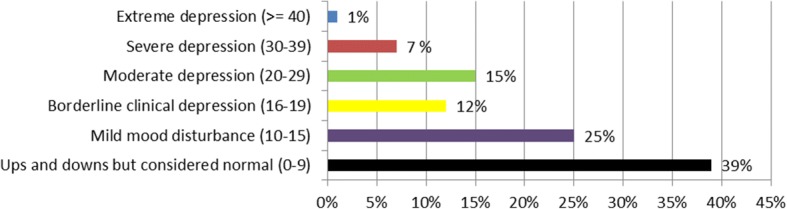
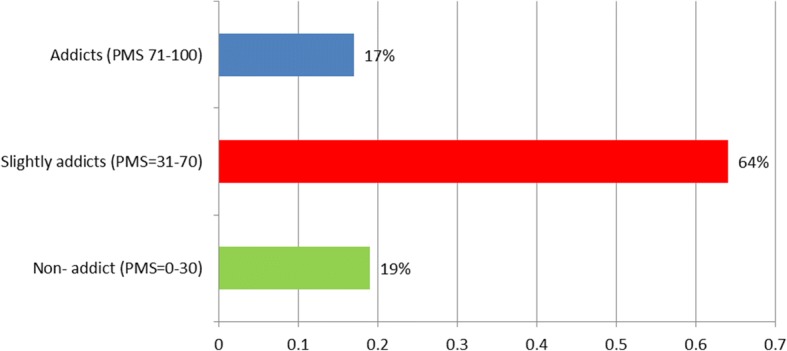
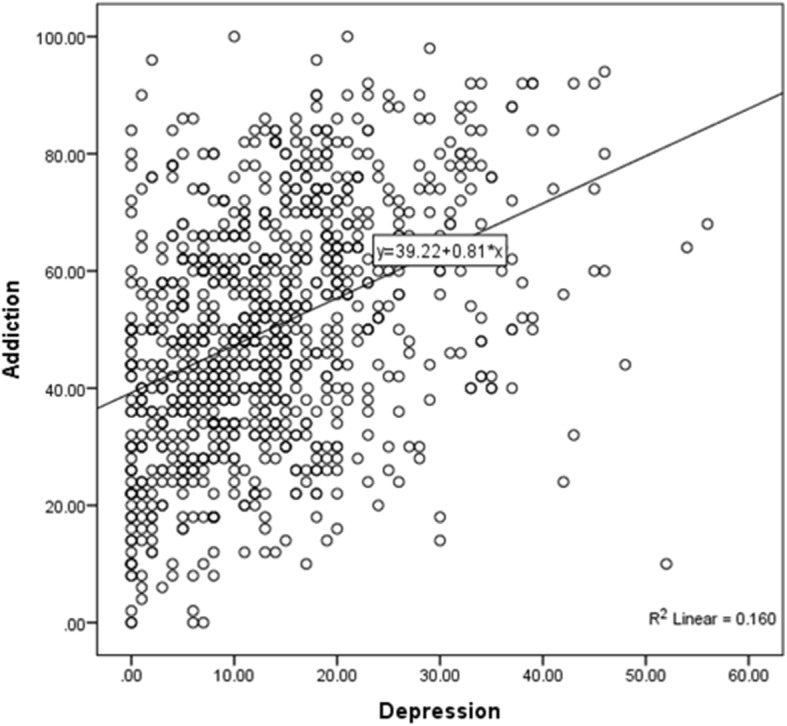
BACKGROUND: Addiction to smartphone usage is a common worldwide problem among adults, which might negatively affect their wellbeing. This study investigated the prevalence and factors associated with smartphone addiction and depression among a Middle Eastern population. METHODS: This cross-sectional study was conducted in 2017 using a web-based questionnaire distributed via social media. Responses to the Smartphone Addiction Scale - Short version (10-items) were rated on a 6-point Likert scale, and their percentage mean score (PMS) was commuted. Responses to Beck's Depression Inventory (20-items) were summated (range 0-60); their mean score (MS) was commuted and categorized. Higher scores indicated higher levels of addiction and depression. Factors associated with these outcomes were identified using descriptive and regression analyses. Statistical significance was set at P < 0.05. RESULTS: Complete questionnaires were 935/1120 (83.5%), of which 619 (66.2%) were females and 316 (33.8%) were males. The mean ± standard deviation of their age was 31.7 ± 11 years. Majority of participants obtained university education 766 (81.9%), while 169 (18.1%) had school education. The PMS of addiction was 50.2 ± 20.3, and MS of depression was 13.6 ± 10.0. A significant positive linear relationship was present between smart phone addiction and depression (y = 39.2 + 0.8×; P < 0.001). Significantly higher smartphone addiction scores were associated with younger age users, (β = - 0.203, adj. P = 0.004). Factors associated with higher depression scores were school educated users (β = - 2.03, adj. P = 0.01) compared to the university educated group and users with higher smart phone addiction scores (β =0.194, adj. P < 0.001). CONCLUSIONS: The positive correlation between smartphone addiction and depression is alarming. Reasonable usage of smart phones is advised, especially among younger adults and less educated users who could be at higher risk of depression.
Overview
The claims and statistics of this paper haven’t been checked yet.
Free: it reads the open-access text and checks the first 5 claims that cite a source we can check. Create a free account to check every claim.
Integrity signals
Registry
Cites
Statistics
Figures
Verification
Claims the paper makes
The claims and statistics of this paper haven’t been checked yet.
Free: it reads the open-access text and checks the first 5 claims that cite a source we can check. Create a free account to check every claim.
Claims other papers make about this one
Each is checked against this paper’s own text: does it say what the citing paper says it does?
The cited source says what the claim attributes to it.
In the citing paper
“some studies raise concerns about these findings, stating that”
From Antecedents and consequences of problematic smartphone use: A systematic literature review of an emerging research area (2021) · cites this paper as Alhassan et al., 2018
Experimental — accuracy not yet measured
Self-check
Percentages, sums and reported differences re-computed from the paper’s own numbers.
The self-check needs the paper’s full text.
Citations
Cites
Diagnostic and Statistical Manual of Mental Disorders
American Psychiatric Association (2013) · doi:10.1176/appi.books.9780890425596 · Cited by 116,369
Diagnostic and Statistical Manual of Mental Disorders
Siegel, L. J., & Fletcher‐Janzem, E. (2008) · Encyclopedia of Special Education · doi:10.1002/9780470373699.speced0655 · Cited by 8,477 · cited 1×
“However, many people fail to realize that addiction to smartphone usage is a serious issue that can have a negative effect on the person’s thoughts, behavior, tendencies, feelings, and sense of well-being [2].”
BackgroundThe Smartphone addiction scale: development and validation of a short version for adolescents
Kwon, M., Kim, D.-J., Cho, H., & Yang, S. (2013) · PLoS ONE · doi:10.1371/journal.pone.0083558 · Cited by 2,177 · cited 2×
“In the original scale of SAS, the cut-off point was not reported [18].”
BackgroundElhai, J. D., Dvorak, R. D., Levine, J. C., & Hall, B. J. (2017) · Journal of Affective Disorders · doi:10.1016/j.jad.2016.08.030 · Cited by 1,689 · cited 1×
“A systematic review of 23 peer reviewed papers reported that depression was consistently related to problematic smartphone usage [22].”
BackgroundDemirci, K., Akgönül, M., & Akpinar, A. (2015) · Journal of Behavioral Addictions · doi:10.1556/2006.4.2015.010 · Cited by 1,529 · cited 2×
“In Turkey, females were more likely to develop an addiction to smartphone usage compared to males [11], while in Austria chronic stress, low emotional stability, female gender, young age and depression were associated with problematic mobile usage [12].”
BackgroundMethodLemola, S., Perkinson-Gloor, N., Brand, S., Dewald-Kaufmann, J. F., & Grob, A. (2015) · Journal of Youth and Adolescence · doi:10.1007/s10964-014-0176-x · Cited by 940 · cited 1×
“It is worth mentioning, that no relationship between smartphone ownership and symptoms of depression were reported by one study, which entails that addiction is related to self-control rather than the possession of the phone itself [25].”
BackgroundBian, M., & Leung, L. (2015) · Social Science Computer Review · doi:10.1177/0894439314528779 · Cited by 669 · cited 1×
“It was reported that high levels of smartphone addiction were correlated with low self-esteem, loneliness, depression and shyness [10].”
BackgroundDepression, anxiety, and smartphone addiction in university students- A cross sectional study
Matar Boumosleh, J., & Jaalouk, D. (2017) · PLOS ONE · doi:10.1371/journal.pone.0182239 · Cited by 668 · cited 2×
“Depression in Lebanese and Austrian university students was also significantly associated with smartphone addiction [12, 23] or problematic mobile phone usage [13] respectively.”
BackgroundResultStaying connected while on the move: Cell phone use and social connectedness
Wei, R., & Lo, V.-H. (2006) · New Media & Society · doi:10.1177/1461444806059870 · Cited by 493 · cited 2×
“For example, one study found that people with depression, social anxiety and loneliness had different uses for their smartphones compared to others [9].”
BackgroundCulturally sensitive social work practice with Arab clients in mental health settings
Al-Krenawi, A., & Graham, J. R. (2000) · Health & Social Work · doi:10.1093/hsw/25.1.9 · Cited by 485 · cited 1×
“It is worth mentioning that Western cultural norms have been disseminated into the Arab world, but this effect has been experienced differently in communities and across societies [16].”
Background
Cited by
Items 201–300 of 350
Kong, H., Wang, X., Fang, H., & Xu-ming, S. (2026) · Frontiers in Psychology · doi:10.3389/fpsyg.2026.1704618 · Cited by 6
de Freitas, B. H. B. M., Gaíva, M. A. M., Bortolini, J., & Diogo, P. (2023) · Journal of Adolescent Research · doi:10.1177/07435584231194869 · Cited by 6
“Instead, it will increase the likelihood of developing smartphone addiction as a way of solving psychological problems (Alhassan et al., 2018; Ting & Chen, 2020).”
B., R. B. K., Fathima, M., Nair, G., & Kolar, R. (2024) · Journal of Orthopaedic Reports · doi:10.1016/j.jorep.2024.100403 · Cited by 10
Electronic Devices Use Association with Psychological Distress and Sleep among Adolescents
Atoum, M., Al-Rawashdeh, S. Y., Atoum, D., Atoum, H., & Atoum, R. (2021) · Electronic Journal of General Medicine · doi:10.29333/ejgm/11314 · Cited by 5
Digitally Engineered Attention and Energy Theft via Psychological Manipulation
Dannhauser, T. M. (2022) · IEEE Technology and Society Magazine · doi:10.1109/mts.2022.3173334 · Cited by 3
A Meta-Analytical Comparison of Depression Prevalence in GCC Countries
Camia, C., & Alhallami, A. O. (2023) · Current Research in Ecological and Social Psychology · doi:10.1016/j.cresp.2023.100149 · Cited by 4
Eroje, A. B. I., AlBariqi, A., Tikare, S., Braimoh, B., Onwuka, C., Alqarni, K., Al-Baitah, A., Hommade, A., & Asiri, A. (2025) · Nigerian Journal of Clinical Practice · doi:10.4103/njcp.njcp_230_24 · Cited by 5
Prevalence of smartphone addiction and associated factors in Brazilian adults
Abdon, A. P. V., Mesquita, R., Magalhães, L. K. S., Medeiros, N. K. F. D., Pinto, I. M. M., César, I. G., Sousa, G. F., Tavares, L. C. P., Saintrain, M. V. L., Viana, M. O., et al. (2020) · World Journal of Advanced Research and Reviews · doi:10.30574/wjarr.2020.7.1.0254 · Cited by 5
“An Arabian study on 935 social network users under 18 years of age found a 81% prevalence of smartphone addiction, associated with young age and depression [17].”
BackgroundNodehi, M. F., Boroomandfar, S., & Mousavi, S. (2020) · International journal of pediatrics · doi:10.22038/ijp.2020.49458.3956 · Cited by 5
“High levels of smartphone addiction have been associated with low self-esteem, isolation, depression, and shyness (44, 45).”
BackgroundEl papel de la autoestima y la soledad en el uso problemático del smartphone: diferencias de género
Hidalgo-Fuentes, S. (2021) · Psicodebate · doi:10.18682/pd.v21i2.4594 · Cited by 11
Sonkoue, M. P., Kadia, B. M., Baame, M., Djouda, C. D., & Ateudjieu, J. (2020) · medRxiv · doi:10.1101/2020.02.29.20029405 · Cited by 5
“For instance, our study involved a student population that was relatively young, and the data was collected via face-to-face interviews while in the Middle East, Alhassan and colleagues studied data collected using web-based questionnaires administered to adults [29,30].”
Relationship Between Screen Time and Body Mass Index in Young AdultsPreprint
Rafique, N., Alkaltham, G. K. I., Almulhim, L. A. A., Asoom, L. I. A., Alsunni, A. A., AlSheikh, M. H., Ghamdi, K. S. A., Yar, T., Alabdulhadi, A. S., & Nadeem, F. (2022) · Research Square · doi:10.21203/rs.3.rs-1485229/v1 · Cited by 4
Zhu, L., Fang, Z., Huang, M., Tong, J., Hua, L., Pan, Z., Dong, P., Chen, Y., Jin, Y., & Yao, Y. (2025) · Acta Psychologica · doi:10.1016/j.actpsy.2025.105347 · Cited by 3
Bao, L., Zhang, W., Zhao, J., & Geng, J. (2025) · BMC Psychology · doi:10.1186/s40359-025-03360-1 · Cited by 6
Does body image dissatisfaction exacerbate smartphone addiction among Chinese college students?
Xu, P., & Shao, K. (2025) · Frontiers in Psychology · doi:10.3389/fpsyg.2025.1618979 · Cited by 3
Zhu, Y., Xue, A., Wang, Z., Wang, Q., & Luo, X. (2026) · BMC Public Health · doi:10.1186/s12889-025-26049-x · Cited by 2
“In turn, excessive smartphone use, is closely associated with depressive symptoms in adolescence [26].”
Wang, X., Madon, Z., Ghani, M. S. A., & Long, X. (2026) · Frontiers in Psychology · doi:10.3389/fpsyg.2026.1768092 · Cited by 5
“Spending excessive time on smartphones may lead to various issues, including depression (Alhassan et al., 2018; Ong et al., 2024; Wang et al., 2019), and anxiety (Mayerhofer et al., 2024; Yang X. et al., 2019).”
Li, X., Wang, J., Li, H., Huang, M., Hu, Y., Yang, L., Wang, H., & Wang, Q. (2026) · Progress in Neuro-Psychopharmacology and Biological Psychiatry · doi:10.1016/j.pnpbp.2026.111741 · Cited by 2
Social Media Addiction and Fear of Missing Out: The Moderating Effect of Smartphone Ease of Access
Seabrooks, A. D. (2020) · Digital Commons (Liberty University) · Cited by 3
Amini, Z., Shariat, A., & Tavakoli-Moghadam, N. (2023) · Advanced Biomedical Research · doi:10.4103/abr.abr_325_21 · Cited by 2
“In addition, high school educated users had a higher risk of developing depression compared to the college‐educated group and users with higher smartphone addiction scores.[23]”
BackgroundCell Phone Addiction, Anxiety and Distraction and Their Relationship to Learning Achievement
Gutiérrez-Aguilar, O., Duche-Pérez, A. B., Lucano, J. J. L., Córdova-Buiza, F., & Huanca, S. C. (2023) · Lecture notes in educational technology · doi:10.1007/978-981-99-7353-8_2 · Cited by 3
Na, J., Lee, S., Sung, H., & Jhone, J. (2024) · Child & Family Social Work · doi:10.1111/cfs.13246 · Cited by 2
The morphology of a smartphonopathic hand – smartphone use and the median nerve cross-sectional area
Hasib, S. W., Usmani, A., Anwar, S. F., & Mumtaz, A. (2024) · Pakistan Journal of Medical Sciences · doi:10.12669/pjms.41.1.9958 · Cited by 2
Ahmed, M. F., Shahariar, M., Shila, F. I., Banik, J. R., & Afifa, F. (2025) · Journal of Public Health · doi:10.1007/s10389-025-02508-y · Cited by 3
Nuevas perspectivas sobre educación, salud y movimiento
Mendoza Ayala, M. A., & Méndez Avila, J. C. (2023) · Editorial Transdigital eBooks · doi:10.56162/transdigitalb11 · Cited by 2
INCIDENCE OF NOMOPHOBIA AND SMARTPHONE ADDICTION AMONG YOUNG PHYSICAL THERAPIST IN KARACHI
Latifi, T. T. (2020) · Pakistan Journal of Rehabilitation · doi:10.36283/pjr.zu.9.2/008 · Cited by 7
Relationships between smartphone addiction and personality traits among cadets
Шейнов, В. П., & Карпиевич, В. А. (2022) · Psychology in Education · doi:10.33910/2686-9527-2021-3-4-416-431 · Cited by 1
8. Scalability and durability, or: is modular the new durable? The case of smartphones
Jaeger‐Erben, M., Proske, M., & Hielscher, S. (2023) · Arbeit und Organisation · doi:10.1515/9783839463963-009 · Cited by 5
The Gilgamesh Effect: The ethical consequences of disconnection
MacDonald, C. (2020) · Open Science Journal · doi:10.23954/osj.v5i2.2316 · Cited by 4
“…high levels of social phobia, loneliness, depression, anxiety, addiction, inequality, division, corruption, pollution, and resource depletion (Alhassan et al, 2018; Bandelow et al, 2015; Beutel et al, 2017; Bystritsky et al, 2013; Cash et al, 2012; Choi et al, 2020; Cook et al, 2013; Cook et…”
Hamamura, T., Kobayashi, N., Oka, T., Kawashima, I., Sakai, Y., Tanaka, S., & Honjo, M. (2022) · doi:10.31234/osf.io/2uzsd · Cited by 2
Understanding the Link Between Social Skills and Phone Use
Ralph, K., & Nuñez, A. R. (2021) · Journal of Student Research · doi:10.47611/jsr.v10i3.1315 · Cited by 6
“A society with a low wellbeing may experience anxiety, depression, decrease motivation, lack of empathy, or decreased social skills (Alhassan et al., 2018; Bian and Leung, 2015; Gao et al., 2016; Scott et al., 2016).”
BackgroundInfluentialTrimeche, M., Zidi, M. I., Al-Shalaki, T., Alnair, A. M. A., SaadAshwal, E. S., Ibrahim, M. M. H., Megahed, A. A. E.-H. M., & Helal, I. E. H. A. (2023) · International Journal of ADVANCED AND APPLIED SCIENCES · doi:10.21833/ijaas.2023.08.023 · Cited by 1
Mehra, M., Joshi, P., Tiwari, S. K., Aggrawal, P., Chandelia, K., & Raghavan, S. (2023) · Journal of Integrative Nursing · doi:10.4103/jin.jin_80_23 · Cited by 2
Işık, K., & İster, E. D. (2024) · International Journal of Environmental Health Research · doi:10.1080/09603123.2024.2396444 · Cited by 1
“The cut-off score of the scale is 32, and scores above the cut-off value indicate a high risk in smartphone addiction (Alhassan et al. 2018).”
Zaman, F., & Mahmud, A. (2025) · Journal of Creative Communications · doi:10.1177/09732586241310677 · Cited by 2
Akkurt, L., & Aksoy, C. C. (2025) · Hacettepe Üniversitesi Sağlık Bilimleri Fakültesi Dergisi · doi:10.21020/husbfd.1529110 · Cited by 2
Dake, D. K., & Gyimah, E. (2025) · Informing Science The International Journal of an Emerging Transdiscipline · doi:10.28945/5596 · Cited by 3
Kabadayı, F. (2025) · SAGE Open · doi:10.1177/21582440251369968 · Cited by 2
“This behavior reflects problematic smartphone use, which exacerbates emotional distress, including depression—a relationship well-documented in previous literature (Alhassan et al., 2018; Elhai et al., 2017; Li, Li, Liu, et al., 2020).”
InfluentialThe Development and Validation of Peace of Mind Scale for Older Pakistani Muslim Adults
Yasmeen, S., Ghayas, S., Niazi, S., & Ilyas, R. (2025) · Journal of Religion and Health · doi:10.1007/s10943-025-02482-5 · Cited by 1
“It is proved through research that smartphone addiction causes depression in young adults (Alhassan et al., 2018).”
Networks of Digital Addiction Symptoms
Hu, M., Lyu, W., Lü, J., Wang, M., & Zheng, H. (2026) · Cyberpsychology Behavior and Social Networking · doi:10.1177/21522715251401080 · Cited by 2
“8,9 A meta-analysis study noted that up to one-fourth of the general population could be affected by at least one sub-type of digital addiction.”
Sun, H., Yan, W., Zeng, Z., Ke, Z. H. O. U., & Wei, G. (2026) · Current Psychology · doi:10.1007/s12144-025-08928-z · Cited by 1
“Both cross-sectional (Alhassan et al., 2018 ) and longitudinal studies (Shi et al., 2023) have noted the association between SMA and depression.”
Priya, D. B., Subramaniyam, M., & Min, S. N. (2020) · Lecture notes in computer science · doi:10.1007/978-3-030-49904-4_29 · Cited by 3
Sheikh, M. N. (2021) · Journal of the Dow University of Health Sciences · doi:10.36570/jduhs.2021.2.1138 · Cited by 2
Bongiorno, P. B. (2020) · Elsevier eBooks · doi:10.1016/b978-0-323-43044-9.00142-4 · Cited by 2
Estimating Mental Health Using Human-generated Big Data and Machine Learning
Fukazawa, Y. (2022) · The Brain & Neural Networks · doi:10.3902/jnns.29.78 · Cited by 2
Munusamy, K. A. P., & Ghazali, A. H. A. (2022) · International Journal of Academic Research in Business and Social Sciences · doi:10.6007/ijarbss/v12-i7/14426 · Cited by 5
Psychological Distress and Smartphone Addiction: Does Perceived Social Support Make a Difference
Law, M.-Y., & Yap, J.-J. (2022) · International Journal of Emerging Trends in Social Sciences · doi:10.55217/103.v12i2.550 · Cited by 2
“However, such a coping strategy can be deemed to be detrimental as problematic use of technology can relate to psychopathology (Alhassan et al., 2018).”
BackgroundInfluentialDurable Economies: Organizing the Material Foundations of Society
Jaeger‐Erben, M., Wieser, H., Marwede, M., & Hofmann, F. (2023) · Arbeit und Organisation · doi:10.1515/9783839463963 · Cited by 7
Smartphone addiction and sleep quality among students
Nikolić, A., & Grujičić, S. Š. (2023) · Medicinski podmladak · doi:10.5937/mp74-42621 · Cited by 7
“Studies showed that smartphone addiction was more prevalent in younger adolescents compared with young adults (13) and in younger-aged users compared to older age (17).”
BackgroundPrevalência da nomofobia entre estudantes universitários
Camargo, H. D., de França, T. A., & de Albuquerque, R. N. (2024) · Programa de Iniciação Científica - PIC/UniCEUB - Relatórios de Pesquisa · doi:10.5102/pic.n0.2022.9602 · Cited by 3
Studying Alienation and Depression as a Predictor of Smartphone Addiction Among Adolescents
Dogra, N., & Sharma, S. (2024) · Journal of Ecophysiology and Occupational Health · doi:10.18311/jeoh/2024/35624 · Cited by 2
(2022) · Personalia Pelajar · doi:10.17576/personalia.2502.2022.18 · Cited by 1
“…score of smartphone addiction and mean score of depression score in this study was lower than in previous studies as a previous study conducted in Middle East reported the mean score for smartphone addiction was 50.2 ± 20.25 and the mean score for depression was 13.6 ± 10.0 (AlHassan et al. 2018).”
InfluentialSyakir, M. A., Maharani, S. A., Putra, Y. E., Handayani, P. W., & Asih, S. R. (2024) · Interdisciplinary Journal of Information Knowledge and Management · doi:10.28945/5269 · Cited by 2
“This result is in line with Alhassan et al. (2018) and Foroughi et al. (2019 , 2022 ), who revealed that smartphone addiction and social networking applications have a positive relationship with social anxiety.”
BackgroundResultPutchavayala, K. C., Sasidharan, K. R., Krishna, D., & Singh, D. (2023) · Journal of Mental Health and Human Behaviour · doi:10.4103/jmhhb.jmhhb_158_22 · Cited by 2
Mental Health and Smartphone Addiction: Understanding the Digital Impact on Well-Being
Goel, R., & Singla, J. (2025) · Advances in human and social aspects of technology book series · doi:10.4018/979-8-3693-8804-4.ch002 · Cited by 3
Mapping the Research Landscape of Internet Addiction and Attention Deficits
Othman, Z., Fadzil, N. A., Zakaria, W. N. A., & Wijaya, A. (2025) · Pakistan Journal of Psychological Research · doi:10.33824/pjpr.2025.40.4.44 · Cited by 1
Mawi, N., Perveen, A., & Hamzah, H. B. (2019) · International Journal of Education Psychology and Counseling · doi:10.35631/ijepc.4310034 · Cited by 1
The prevalence, risks and associations of problematic cell phone use and sexting on mental health
Scott, D. A., McCormick, K., Smith, K., Budlong, E., & Vitonis, A. (2020) · Mental Health and Social Inclusion · doi:10.1108/mhsi-08-2020-0053 · Cited by 3
The Relationship between Problematic Mobile Phone Use and Depression: A Moderated Mediating Model
左, 玉. (2021) · Advances in Psychology · doi:10.12677/ap.2021.113090 · Cited by 1
The Impact of COVID-19 Pandemic on Problematic Smartphone Using Among Adolescents
Bian, S. (2021) · Advances in Social Science, Education and Humanities Research/Advances in social science, education and humanities research · doi:10.2991/assehr.k.211220.061 · Cited by 4
“A study that uses a web-based questionnaire finds a significantly positive correlation between depression and smartphone addiction [28].”
BackgroundNasution, F. A., Amin, M. M., & Effendy, E. (2022) · Open Access Macedonian Journal of Medical Sciences · doi:10.3889/oamjms.2022.9257 · Cited by 1
“In general, adolescents have a higher risk of smartphone addiction compared to adults as they are more prone to accept new technologies than the older generation [7].”
BackgroundResultInfluentialMunusamy, K. A. P., & Ghazali, A. H. A. (2022) · International Journal of Academic Research in Business and Social Sciences · doi:10.6007/ijarbss/v12-i13/14599 · Cited by 2
Kecanduan Gadget dan Aktifitas Fisik Pada Remaja: Tinjauan Literatur
Yusuf, R. A., Syamsir, M. R., Muhsana, F., & Silwanah, A. S. (2023) · Media Ilmu Kesehatan · doi:10.30989/mik.v11i1.651 · Cited by 9
Addictive Behaviour on the Internet: A Quagmire for the Young and Unsuspecting
Archer, T. (2019) · Archives of Addiction and Rehabilitation · doi:10.36959/843/427 · Cited by 1
“Scale, an extremely marked association between smartphone addiction and depression was so highly developed as to constitution an alarming situation [6].”
BackgroundBouazza, S., Kinany, S. E., Abbouyi, S., Rhazi, K. E., & Zarrouq, B. (2022) · Research Square · doi:10.21203/rs.3.rs-1662848/v1 · Cited by 1
Kibria, G., Islam, T., Sultana, P., Jahan, N., Anannna, S. A., Mohiuddin, G., Roy, M., & Alif, S. M. (2024) · Research Square · doi:10.21203/rs.3.rs-4470589/v1 · Cited by 4
ERGÖNÜL, E., Keskіn, T., Ergan, M., Başkurt, F., & Başkurt, Z. (2024) · Research Square · doi:10.21203/rs.3.rs-5341122/v1 · Cited by 2
Cell Phone Addiction and the Link to Depression in Adolescents and Adults
Griffith, C., & Lf, B. (2018) · Journal of Forensic Psychology · doi:10.4172/2475-319x.1000145
Smartphone use in Children's Shows: A Qualitative Content Analysis
Fleming, D. M. (2019)
The Sequela of Smartphone Usage in the Learning Environment
Sabron, M. Z. M., Hashim, R., Abdullah, A., & Shamsudin, N. M. (2020) · Journal of ASIAN Behavioural Studies · doi:10.21834/jabs.v5i16.352
“In the era of this unlimited telecommunications and multimedia technology revolution, the smartphone is widely used among the people (Alhassan et al., 2018).”
MacDonald, C. (2020) · Open Science Journal · doi:10.23954/osj.v5i3.2376
“In line with popular assumptions, research has now linked smartphones to increased depression (Alhassan et al, 2018), loneliness (Jiang et al, 2018), stress, and anxiety (Vahedi et al, 2018).”
BackgroundMobile Paradox- Are Younger Generations Addicted to Smartphones? A Behavioral SurveyPreprint
Kumar, K. (2020) · SSRN Electronic Journal · doi:10.2139/ssrn.3606011
Problem Electronic Device Use in a Representative Sample of Adults in Ontario
van der Maas, M., Hamilton, H. A., Wolpin, J., Ialomiteanu, A., Rehm, J. T., Mann, R. E., Turner, N. E., & Stoduto, G. (2021) · Journal of Gambling Issues · doi:10.4309/jgi.2021.46.6
“Several studies have samples that include adults from a larger age range (Alhassan et al., 2018; Chen et al., 2017; Cho et al., 2017; Duke & Montag, 2017). However, none of these studies used a full range of adult ages or representative sampling techniques. For example, one study (De-Sola et al., 2017) that used the M…”
BackgroundInfluentialالتعقل کمتغیر مُعدل للعلاقة بین إدمان الهاتف الذکی وکل من القلق والاکتئاب ونوعیة النوم
الوکیل, س. أ. م. (2021) · مجلة جامعة الفيوم للعلوم التربوية والنفسية · doi:10.21608/jfust.2021.69218.1342
Nagalingeswari, A., Kunjukunju, A., Aini, A., Puziah, Johari, S., & Ruziana, A. (2021) · International Journal of Integrative Medical Sciences · doi:10.16965/ijims.2021.111 · Cited by 1
Экспериментальные исследования номофобии (Россия, Украина, Беларусь)
Gitikhmayeva, L., & Mambetalina, A. S. (2021) · The Journal of Psychology and Sociology · doi:10.26577/jpss.2021.v79.i4.02
Pattern of Mobile Phone usage and its Association with Stress among University Students in Delhi NCR
Dobhal, B., Badola, M., Dikshit, A., Awasthi, A. A., Taneja, N., & Janardhanan, R. (2021) · Indian Journal of Public Health Research & Development · doi:10.37506/ijphrd.v12i3.16031
“et al reported the same findings regarding association of phone addiction and stress[35],[36].”
BackgroundMiki, C. C., & Reis, L. P. (2022) · Research Society and Development · doi:10.33448/rsd-v11i4.27255 · Cited by 1
Alageel, A. A. S., Alyahya, R. A., Bahatheq, Y., Alzunaydi, N., Alghamdi, R. A., Alrahili, N. M., McIntyre, R. S., & Iacobucci, M. (2021) · Research Square · doi:10.21203/rs.3.rs-135808/v1
Üniversite Öğrencilerinin Akıllı Telefon Bağımlılığına Yönelik Görüşlerinin İncelenmesi
Kaysi, F., Aydemir, E., & Yavuz, M. (2020) · DergiPark (Istanbul University)
ภูลวรรณ, ภ., อินสิน, น., ทัศนเอี่ยม, ศ., & ชมชายผล, จ. (2022) · Health Science Journal of Thailand · doi:10.55164/hsjt.v4i4.256554
Zhao, Y., Zhang, H., Zhang, H., Shan, L., & Xia, Y. (2022) · doi:10.2196/preprints.43884
CHEN, J. R., Rios, S. D. S., CHEN, A. C., Resende, C. N., & JÚNIOR, E. A. (2022) · Minerva Psychiatry · doi:10.23736/s2724-6612.21.02298-3
Dependency on TikTok and Social Alienation Among Gen Y & Z
Moharam, M. M. R., & Mukherjee, T. (2023) · Academic Journal of Interdisciplinary Studies · doi:10.36941/ajis-2023-0063 · Cited by 5
يونس, د. (2021) · مجلة بحوث الشرق الأوسط · doi:10.21608/mercj.2023.305580 · Cited by 1
Trimeche, M., Zidi, M. I., Al-Shalaki, T., Alnair, A. M. A., SaadAshwal, E. S., Ibrahim, M. M. H., & Megahed, A. A. E.-H. M. (2023) · International Journal of ADVANCED AND APPLIED SCIENCES · doi:10.21833/ijaas.2023.07.011
سالم, ا. م. ا. (2023) · المجلة العلمية لبحوث الصحافة · doi:10.21608/sjsj.2023.309023
Smartphone addiction among dental students in university of sumatera utara during covid-19
Siregar, D., Munthe, S. A., Harahap, R., Nasution, F. A., & Taruna, M. (2023) · Padjadjaran Journal of Dentistry · doi:10.24198/pjd.vol35no2.46329 · Cited by 2
Zhang, H., Zhang, H., Shan, L., Xia, Y., & Zhao, Y. (2022) · Journal of Medical Internet Research · doi:10.2196/43884
The Effect of Dependence on Cell Phones on the Mental Health of Prospective Teachers
Ali, M. (2023) · QALAMUNA Jurnal Pendidikan Sosial dan Agama · doi:10.37680/qalamuna.v15i2.3985 · Cited by 2
“The results of this study support previous research conducted by Aljohara A. Alhassan, et al found that there was a significant positive linear relationship between mobile phone addiction and depression (y = 39.2 + 0.8 ×; P <0.001) (Alhassan et al., 2018).”
ResultInfluentialJun, L. Y., Othman, W. N. W., Zainudin, Z. N., & Yusop, Y. M. (2023) · International Journal of Academic Research in Business and Social Sciences · doi:10.6007/ijarbss/v13-i12/20346 · Cited by 3
Suryavanshi, R. J., Rupnawar, A. B., & Yadav, T. (2024) · International Journal of Life Science and Pharma Research · doi:10.22376/ijlpr.2024.14.1.l1-l7
Akodu, A. K., Akanni, B. F., Osuntoki, A. A., & Zibiri, R. A. (2023) · Journal of Occupational Health and Epidemiology · doi:10.61186/johe.12.4.242 · Cited by 1
Pospíšilová, H., & Macháčková, P. (2024) · Social Pathology and Prevention · doi:10.25142/spp.2023.016 · Cited by 1
Algburi, A. S. M., & Yassin, B. A. G. (2024) · International Journal of Research in Medical Sciences · doi:10.18203/2320-6012.ijrms20242205 · Cited by 1
“32 A systematic review of 23 peer-reviewed papers reported that depression was consistently associated with problematic smartphone use.”
Popa, A.-B., & Maftei, A. (2024) · Revista de psihologie. · doi:10.59277/rpsih.2024.2.03
Çorak, T. (2025) · Journal of Dependence · doi:10.51982/bagimli.1453176
Alamoudi, A. K., & Jenkins, D. (2024) · doi:10.2196/preprints.67035
THE RELATIONSHIP BETWEEN COLLEGE STUDENTS' SMARTPHONE ADDICTION AND DAS
Ambica, & Ali, A. (2024) · ShodhKosh Journal of Visual and Performing Arts · doi:10.29121/shodhkosh.v5.i6.2024.1799
Metadata
- Authors
- Alhassan, A. A., Alqadhib, E. M., Taha, N. W., Alahmari, R. A., Salam, M., & Almutairi, A. F.
- Affiliations
- Princess Nourah bint Abdulrahman University (SA)
- King Saud bin Abdulaziz University for Health Sciences (SA)
- Corresponding author
- Salam, Mahmoud
- Venue
- BMC Psychiatry
- Published
- 2018-05-25
- Volume
- 18
- Issue
- 1
- Pages
- 148-148
- ISSN
- 1471-244X (ISSN-L)
- PMC
- PMC5970452
- OpenAlex
- W2803385648
- Cited by
- 353
- References
- 41
- Citations by year
- 2026: 25 · 2025: 43 · 2024: 46 · 2023: 58 · 2022: 52 · 2021: 51 · 2020: 59 · 2019: 17 · 2018: 2
- FWCI
- 73.25
- Type
- journal article
- Language
- en
- Open access
- gold
- doi.org
- Licence
- cc-by
- creativecommons.org/licenses/by/4.0/ (tdm)
- Locations
- BMC Psychiatry (publishedVersion, cc-by)
- Europe PMC (PubMed Central) (publishedVersion, other-oa)
- PubMed Central (publishedVersion, cc-by)
- PubMed (publishedVersion)
- DOAJ (DOAJ: Directory of Open Access Journals) (submittedVersion, cc-by-sa)
- Funders
- King Saud University
- King Abdulaziz University
- King Abdullah International Medical Research Center
- King Saud bin Abdulaziz University for Health Science
- Topics
- Social Sciences › Sociology and Political Science › Impact of Technology on Adolescents
- Social Sciences › Education › Child Development and Digital Technology
- Social Sciences › Psychology › Clinical Psychology › Sexuality, Behavior, and Technology
- Keywords
- smartphone addiction, depression, adults, prevalence, risk factors, educational attainment, age, Middle Eastern populations, Smartphone Addiction Scale, Beck Depression Inventory
- MeSH terms
- Behavior Rating Scale, Smartphone, Addiction Medicine, Adult, Age Factors, Cross-Sectional Studies, Depression, Female, Humans, Male, Middle Aged, Surveys and Questionnaires, Risk Factors, Saudi Arabia, Sex Factors, Universities, Prevalence, Behavior, Addictive
About these checks
Registry, retraction, Cites and statistics results are computed, not judged, with one exception: a printed reference that no index lists is read once by a model before it counts as a citation error. Claims are extracted by a model and kept only when their quote appears verbatim in the text; each cited source is then checked, with a model’s help, for whether it says what the claim relies on. Those verdicts can be wrong — read the claim’s quote and the cited source before relying on one.
Statistics and arithmetic are recomputed, not judged.
Confidence bands are shown only for fields calibrated on our annotated test set. None is calibrated yet, so no band is shown.
What counts as a claim ›How we measure confidence ›How we check this ›
Are you an author, or do you see a problem with this page? Request a review
Data sources
Bibliographic data: Semantic Scholar, OpenAlex, Crossref.
Contains information from the Semantic Scholar Academic Graph Datasets, made available under the ODC Attribution License (ODC-BY 1.0).
Semantic Scholar’s data is described in: Kinney, R., et al. (2023). The Semantic Scholar Open Data Platform. arXiv:2301.10140.
