

The relationship between addiction to smartphone usage and depression among adults: a cross sectional study
Open accessThe DOI matches its Crossref record; 41 of the 41 references it cites were found in a registry or an index.
Abstract
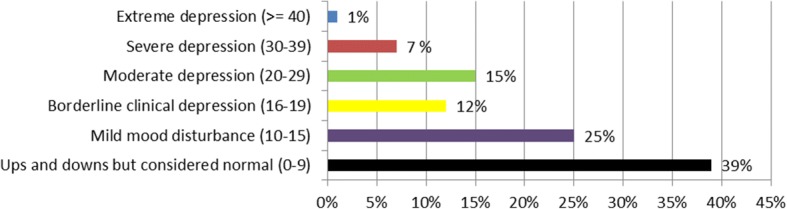
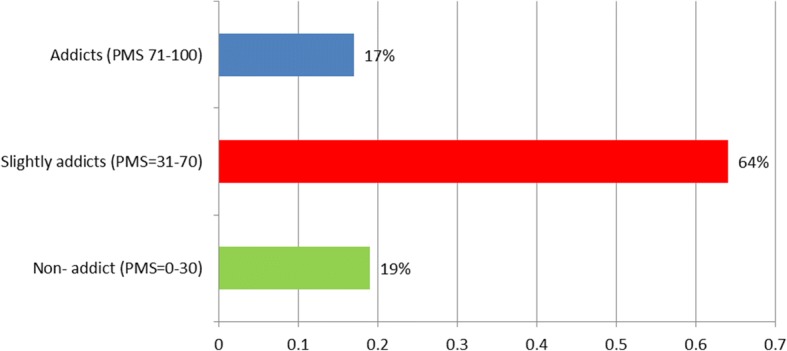
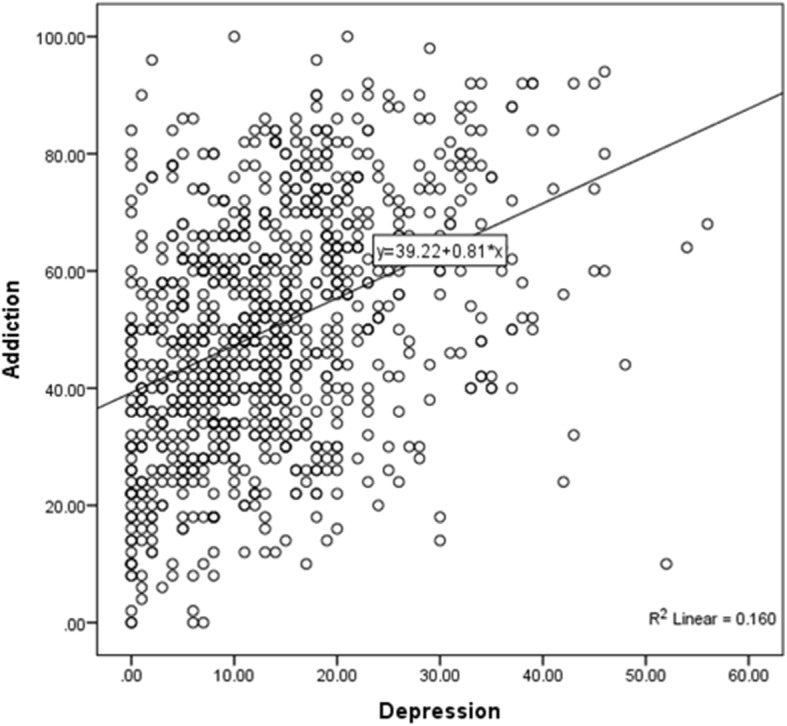
BACKGROUND: Addiction to smartphone usage is a common worldwide problem among adults, which might negatively affect their wellbeing. This study investigated the prevalence and factors associated with smartphone addiction and depression among a Middle Eastern population. METHODS: This cross-sectional study was conducted in 2017 using a web-based questionnaire distributed via social media. Responses to the Smartphone Addiction Scale - Short version (10-items) were rated on a 6-point Likert scale, and their percentage mean score (PMS) was commuted. Responses to Beck's Depression Inventory (20-items) were summated (range 0-60); their mean score (MS) was commuted and categorized. Higher scores indicated higher levels of addiction and depression. Factors associated with these outcomes were identified using descriptive and regression analyses. Statistical significance was set at P < 0.05. RESULTS: Complete questionnaires were 935/1120 (83.5%), of which 619 (66.2%) were females and 316 (33.8%) were males. The mean ± standard deviation of their age was 31.7 ± 11 years. Majority of participants obtained university education 766 (81.9%), while 169 (18.1%) had school education. The PMS of addiction was 50.2 ± 20.3, and MS of depression was 13.6 ± 10.0. A significant positive linear relationship was present between smart phone addiction and depression (y = 39.2 + 0.8×; P < 0.001). Significantly higher smartphone addiction scores were associated with younger age users, (β = - 0.203, adj. P = 0.004). Factors associated with higher depression scores were school educated users (β = - 2.03, adj. P = 0.01) compared to the university educated group and users with higher smart phone addiction scores (β =0.194, adj. P < 0.001). CONCLUSIONS: The positive correlation between smartphone addiction and depression is alarming. Reasonable usage of smart phones is advised, especially among younger adults and less educated users who could be at higher risk of depression.
Overview
The claims and statistics of this paper haven’t been checked yet.
Free: it reads the open-access text and checks the first 5 claims that cite a source we can check. Create a free account to check every claim.
Integrity signals
Registry
Cites
Statistics
Figures
Verification
Claims the paper makes
The claims and statistics of this paper haven’t been checked yet.
Free: it reads the open-access text and checks the first 5 claims that cite a source we can check. Create a free account to check every claim.
Claims other papers make about this one
Each is checked against this paper’s own text: does it say what the citing paper says it does?
The cited source says what the claim attributes to it.
In the citing paper
“some studies raise concerns about these findings, stating that”
From Antecedents and consequences of problematic smartphone use: A systematic literature review of an emerging research area (2021) · cites this paper as Alhassan et al., 2018
Experimental — accuracy not yet measured
Self-check
Percentages, sums and reported differences re-computed from the paper’s own numbers.
The self-check needs the paper’s full text.
Citations
Cites
Diagnostic and Statistical Manual of Mental Disorders
American Psychiatric Association (2013) · doi:10.1176/appi.books.9780890425596 · Cited by 116,369
Diagnostic and Statistical Manual of Mental Disorders
Siegel, L. J., & Fletcher‐Janzem, E. (2008) · Encyclopedia of Special Education · doi:10.1002/9780470373699.speced0655 · Cited by 8,477 · cited 1×
“However, many people fail to realize that addiction to smartphone usage is a serious issue that can have a negative effect on the person’s thoughts, behavior, tendencies, feelings, and sense of well-being [2].”
BackgroundThe Smartphone addiction scale: development and validation of a short version for adolescents
Kwon, M., Kim, D.-J., Cho, H., & Yang, S. (2013) · PLoS ONE · doi:10.1371/journal.pone.0083558 · Cited by 2,177 · cited 2×
“In the original scale of SAS, the cut-off point was not reported [18].”
BackgroundElhai, J. D., Dvorak, R. D., Levine, J. C., & Hall, B. J. (2017) · Journal of Affective Disorders · doi:10.1016/j.jad.2016.08.030 · Cited by 1,689 · cited 1×
“A systematic review of 23 peer reviewed papers reported that depression was consistently related to problematic smartphone usage [22].”
BackgroundDemirci, K., Akgönül, M., & Akpinar, A. (2015) · Journal of Behavioral Addictions · doi:10.1556/2006.4.2015.010 · Cited by 1,529 · cited 2×
“In Turkey, females were more likely to develop an addiction to smartphone usage compared to males [11], while in Austria chronic stress, low emotional stability, female gender, young age and depression were associated with problematic mobile usage [12].”
BackgroundMethodLemola, S., Perkinson-Gloor, N., Brand, S., Dewald-Kaufmann, J. F., & Grob, A. (2015) · Journal of Youth and Adolescence · doi:10.1007/s10964-014-0176-x · Cited by 940 · cited 1×
“It is worth mentioning, that no relationship between smartphone ownership and symptoms of depression were reported by one study, which entails that addiction is related to self-control rather than the possession of the phone itself [25].”
BackgroundBian, M., & Leung, L. (2015) · Social Science Computer Review · doi:10.1177/0894439314528779 · Cited by 669 · cited 1×
“It was reported that high levels of smartphone addiction were correlated with low self-esteem, loneliness, depression and shyness [10].”
BackgroundDepression, anxiety, and smartphone addiction in university students- A cross sectional study
Matar Boumosleh, J., & Jaalouk, D. (2017) · PLOS ONE · doi:10.1371/journal.pone.0182239 · Cited by 668 · cited 2×
“Depression in Lebanese and Austrian university students was also significantly associated with smartphone addiction [12, 23] or problematic mobile phone usage [13] respectively.”
BackgroundResultStaying connected while on the move: Cell phone use and social connectedness
Wei, R., & Lo, V.-H. (2006) · New Media & Society · doi:10.1177/1461444806059870 · Cited by 493 · cited 2×
“For example, one study found that people with depression, social anxiety and loneliness had different uses for their smartphones compared to others [9].”
BackgroundCulturally sensitive social work practice with Arab clients in mental health settings
Al-Krenawi, A., & Graham, J. R. (2000) · Health & Social Work · doi:10.1093/hsw/25.1.9 · Cited by 485 · cited 1×
“It is worth mentioning that Western cultural norms have been disseminated into the Arab world, but this effect has been experienced differently in communities and across societies [16].”
Background
Cited by
Items 301–350 of 350
ROLE OF MINDFULNESS IN MENTAL HEALTH AND OVERUSES OF SMARTPHONEAMONG ADULTS
Ambica, & Ali, A. (2023) · ShodhKosh Journal of Visual and Performing Arts · doi:10.29121/shodhkosh.v4.i2.2023.1798 · Cited by 1
“Role of Mindfulness in Mental Health and Overuses of Smartphoneamong Adults at in the morning.”
InfluentialFung, K. K.-W., Chung, M.-L., Pietra, J. D., & Kwok, Y. H. (2024) · Social Influence · doi:10.1080/15534510.2024.2420819
“Barnes et al. (2019) and Alhassan et al. (2018) report higher levels of smartphone addiction among users with a lower level of educational attainment.”
Lonely and online: An investigation of social media use and social isolation in China
Gainous, J., & MacDonald, A. W. (2025) · First Monday · doi:10.5210/fm.v30i6.14133 · Cited by 1
Validation of the very efficient nomophobia short-form questionnaire in Chinese
Zhu, W., Cheng, M., Wang, H. E., & Yuan, Y. (2025) · BMC Psychology · doi:10.1186/s40359-025-03449-7 · Cited by 1
“It has also been suggested that NMP may contribute to the development of behavioral addictions [10], including smartphone addiction [11], and more narrowly, social media addiction [12].”
Maldonado-Carrión, C., Padilla–Cotto, L., & Estrada, M. R. (2025) · Revista Caribeña de Psicología · doi:10.37226/rcp.v9i1.8349
Correlates of problematic smartphone use among Chinese adolescents during COVID-19
Chao, T., Sit, H. F., Chang, C. I., Yuan, G. F., Chen, C., Shen, J., Montag, C., Elhai, J. D., & Hall, B. J. (2025) · Children and Youth Services Review · doi:10.1016/j.childyouth.2025.108654
Mental Health Challenges Stemming From Smartphone Addiction
Khanday, M. A., & Bourma, A. A. A. (2025) · IGI Global eBooks · doi:10.4018/979-8-3373-0928-6.ch013
Alexithymia, Negative Affectivity, and Social Media Use Among Young Adults in Italy
Montebarocci, O., & Surcinelli, P. (2025) · International Journal of Psychological Science · doi:10.11648/j.ijps.20250504.11
Doğan, V., & Sinanoğlu, G. K. (2026) · The European Research Journal · doi:10.18621/eurj.1760311
Additional file 3 of Ultrasound biomicroscopy study of accommodative state in Smartphone abusers
Kashif, R. F., Rashad, M. A., Said, A. M. A., Rabie, M. A.-E.-M., & Gomaa, W. A. (2022) · Figshare · doi:10.6084/m9.figshare.20430531
Kim, S. H., Kim, Y. H., Lee, C.-H., & Lee, Y. (2024) · Figshare · doi:10.6084/m9.figshare.25194773
Additional file 5 of Ultrasound biomicroscopy study of accommodative state in Smartphone abusers
Kashif, R. F., Rashad, M. A., Said, A. M. A., Rabie, M. A.-E.-M., & Gomaa, W. A. (2022) · Figshare · doi:10.6084/m9.figshare.20430537
Additional file 2 of Ultrasound biomicroscopy study of accommodative state in Smartphone abusers
Kashif, R. F., Rashad, M. A., Said, A. M. A., Rabie, M. A.-E.-M., & Gomaa, W. A. (2022) · Figshare · doi:10.6084/m9.figshare.20430528
Andrews, J. A., Craven, M. P., Lang, A. R., Guo, B., Morriss, R. K., & Hollis, C. P. (2022) · Figshare · doi:10.6084/m9.figshare.19728368
Hamamura, T., Kobayashi, N., Oka, T., Kawashima, I., Sakai, Y., Tanaka, S., & Honjo, M. (2024) · Figshare · doi:10.6084/m9.figshare.26577242
Additional file 1 of Ultrasound biomicroscopy study of accommodative state in Smartphone abusers
Kashif, R. F., Rashad, M. A., Said, A. M. A., Rabie, M. A.-E.-M., & Gomaa, W. A. (2022) · Figshare · doi:10.6084/m9.figshare.20430525
Xie, M., Ren, Z., Bian, D., Li, D., Yu, L. M., Zhu, F., Huang, R., Zhang, Z., Suye, S., & Fu, C. (2020) · Figshare · doi:10.6084/m9.figshare.12986364
Additional file 4 of Ultrasound biomicroscopy study of accommodative state in Smartphone abusers
Kashif, R. F., Rashad, M. A., Said, A. M. A., Rabie, M. A.-E.-M., & Gomaa, W. A. (2022) · Figshare · doi:10.6084/m9.figshare.20430534
Xie, M., Ren, Z., Bian, D., Li, D., Yu, L. M., Zhu, F., Huang, R., Zhang, Z., Suye, S., & Fu, C. (2020) · Figshare · doi:10.6084/m9.figshare.12986361
Kim, S. H., Kim, Y. H., Lee, C.-H., & Lee, Y. (2024) · Figshare · doi:10.6084/m9.figshare.25195129
Bertuol, C., da Silveira, M. H. C., Krug, R. D. R., Kupske, J. W., Mielke, G. I., & Duca, G. F. D. (2024) · Figshare · doi:10.6084/m9.figshare.26612159
Xie, M., Ren, Z., Bian, D., Li, D., Yu, L., Zhu, F., Huang, R., Zhang, Z., Suye, S., & Fu, C. (2020) · Figshare · doi:10.6084/m9.figshare.12986370
Xie, M., Ren, Z., Bian, D., Li, D., Yu, L., Zhu, F., Huang, R., Zhang, Z., Suye, S., & Fu, C. (2020) · Figshare · doi:10.6084/m9.figshare.12986358
Xie, M., Ren, Z., Bian, D., Li, D., Yu, L., Zhu, F., Huang, R., Zhang, Z., Suye, S., & Fu, C. (2020) · Figshare · doi:10.6084/m9.figshare.12986367
Aziz, A., Nazish, S., Khan, A. A., Ali, A., Khattak, H., & Kifayat, M. (2025) · The Healer Journal of Physiotherapy and Rehabilitation Sciences · doi:10.55735/1jqnrp03
Bataineh, M. F., Koodakkadavath, S., Hassan, A., Marzooqi, H. M. A., Afifi, H. S., Shehata, M. G., & Ali, H. I. (2025) · Nutrients · doi:10.3390/nu18010067 · Cited by 2
“Due to the growing popularity and usage rates, numerous studies carried out on SPSM users showed a significant relationship between internet addiction, behavioural problems, restlessness, anger and disruption of duties [17–19].”
Obsessive-compulsive disorder and smartphone addiction among public sector employees in Iran
Pirani, A., Dodangeh, M., Nasirpour, N., Ghanbari, B., Hajebi, A., & Abbas, M. (2026) · BMC Psychology · doi:10.1186/s40359-025-03913-4
“Similarly, depression has been identified as a risk factor for SA in Saudi Arabia’s adult population [34].”
Ameyaw, S., Boateng, F. A., Tawiah, E. M., & Attafuah, H. F. (2026) · African Quarterly Social Science Review · doi:10.51867/aqssr.3.1.14
“Prior studies have indicated a higher prevalence of mobile phone dependency among university students (Ahmed et al., 2020; Bağcı & Pekş en, 2018; Alhassan et al., 2018; Luk et al., 2018); however, these studies did not cover VVU.”
Sultana, S., Phurailatpam, J., Devi, W. S., & Yumnum, H. (2025) · Journal of Medical Society · doi:10.4103/jms.jms_72_25
Association between smartphone addiction and symptoms of depression and anxiety among young adults
Genç, D., & Eray, İ. K. (2026) · Turkish Journal of Family Practice · doi:10.54308/turkjfampract.2026.879
“Our results are also in agreement with prior cross-sectional studies showing a linear association between SAS-SV and BDI scores [ 23 ] , and with other findings linking smartphone use with elevated depression and trait anxiety scores based on the PUMP (Problematic Use of Mobile Phones) scale [ 20 ]…”
InfluentialWallace, J. (2020) · theses.fr (ABES) · doi:10.70675/a3b4c3b0z942az4fffz81ffz298ffd548bcc
Ghazali, S. E., Subramaniam, P., Al-Shahrani, H. F., Rajikan, R., Wahab, N. A. A., Saad, Q. H. M., & Wahab, S. (2026) · Scientific Reports · doi:10.1038/s41598-026-47811-0 · Cited by 2
“Similar relationships have been reported in other research 17,37,38 .”
Çıtak, Ş., & Bülbül, Y. S. (2026) · Adıyaman Üniversitesi Sağlık Bilimleri Dergisi · doi:10.30569/adiyamansaglik.1811288
Rani, V. I., Ahmed, K. A. M., Ahmed, H. A. A., Jeyapaul, S., Asiri, N. Y. H., Thekkathil, C. R. A., Albishi, M. A. B., Elmashad, H. A. M., & Mohammed, I. A. S. (2026) · Health Informatics Journal · doi:10.1177/14604582261444118
Балбаров, Б. Б., & Раева, Т. В. (2026) · Bulletin of psychotherapy · doi:10.25016/2782-652x-2026-0-97-130-138
Gupta, A., Arya, S., Kumar, P., Devi, C. B., Gupta, A., & Roy, D. (2026) · Cureus · doi:10.7759/cureus.108771
“The smartphone emerges as the most frequently used gadget among participants; prior research also identifies moderate levels of smartphone addiction among young adults [17,18].”
Akıllı telefon bağımlılığı mı, yoksa internet bağımlılığının bir türü mü?
Özel, S., & Görgülü, Y. (2026) · Anadolu Kliniği Tıp Bilimleri Dergisi · doi:10.21673/anadoluklin.1764102
Epidemiology of Smartphone Addiction among University Students
Soares, F. P. D. A., Silva, D. L. R. E., Cavalcante, G. A. G., da Silva, V. A. C., Freire, T. G. S., Santos, T. P. A., Ramalho, A. J. C., da Silva, I. D. N., Lima, R., & Filho, E. M. T. (2026) · World Journal of Neuroscience · doi:10.4236/wjns.2026.162010
Prusty, B. K. (2025) · Next Gen World Reviews · doi:10.66132/ss010205
Association between smartphone addiction, suicidal ideation and suicide attempt: a systematic review
Li, Y., Li, J., Song, Y., Cui, L., Zhan, J., Sun, X., Wang, W., Pan, P., Li, N., Song, L., et al. (2026) · PeerJ · doi:10.7717/peerj.21386 · Cited by 2
“…risks of anxiety and depression ( El-Sayed Desouky & Abu-Zaid, 2020 ; Elhai et al., 2020 ; Kim et al., 2018 ; Lee et al., 2016 ), particularly among university students ( Demirci, Akgonul & Akpinar, 2015 ), young adults and individuals with lower educational attainment ( Alhassan et al., 2018 ).”
Smartphone Addiction Psychological Drivers, FOMO, and Nomophobia in the Digital Age
Khatri, D., & Nagariya, R. (2026) · IGI Global eBooks · doi:10.4018/979-8-3373-6665-4.ch006
Mobile phone addiction and depression among adolescents: the moderation effect of family environment
Bai, Y., Xu, X. J., Jiang, W. W., Yang, Y., Li, Q., Li, X., Zhu, Q., Meng, Y., & Qiu, C. (2026) · Frontiers in Public Health · doi:10.3389/fpubh.2026.1863623
Study Of Smartphone Addiction Proneness and Neuroticism Among School-Going Teenagers
Gaur, T. (2023) · Vidhyayana · doi:10.58213/z1h39d86
Franco-Jimenez, R. A., Campos-Rosas, R. M., & Baños-Chaparro, J. (2026) · Frontiers in Education · doi:10.3389/feduc.2026.1886912
Pirwani, N., Vujić, A., & Szabó, A. (2026) · BMC Psychology · doi:10.1186/s40359-026-05229-3
“PSU is associated with a range of mental health consequences, including depression and anxiety [11, 12], as well as poor sleep quality, impaired emotional regulation, and reduced well-being [13–15].”
Alam, R., Sakib, I. U., Chowdhury, J. H., Akter, S., Porosh, M. M. R., & Sikder, M. T. (2026) · PLoS ONE · doi:10.1371/journal.pone.0352129 · Cited by 1
Alqossayir, F. (2026) · Cureus · doi:10.7759/cureus.115058
“Problematic smartphone use has also been reported to be associated with symptoms of depression and anxiety [26,27].”
Latent Classes of Problematic Mobile Phone Use in Adolescents and Targets for Intervention
银, 行. (2026) · Advances in Psychology · doi:10.12677/ap.2026.169457
The relationship between smartphone addiction and shyness among medical college students
Yin, Z., He, R., Chang, R., & Liu, Q. (2026) · Medicine · doi:10.1097/md.0000000000050906
Andi Nurul Mawaddah, B. N., Trisnawaty, T., Delima, A. A. A., Annisha, F., & Dahlan, M. (2025) · Bina Generasi Jurnal Kesehatan · doi:10.35907/bgjk.v17i1.399
“Penggunaan gadget yang berlebihan menyebabkan siswa tidak mampu mengontrol dan bergantung pada pengguna teknologi berbasis internet (Alhassan et al., 2018).”
Metadata
- Authors
- Alhassan, A. A., Alqadhib, E. M., Taha, N. W., Alahmari, R. A., Salam, M., & Almutairi, A. F.
- Affiliations
- Princess Nourah bint Abdulrahman University (SA)
- King Saud bin Abdulaziz University for Health Sciences (SA)
- Corresponding author
- Salam, Mahmoud
- Venue
- BMC Psychiatry
- Published
- 2018-05-25
- Volume
- 18
- Issue
- 1
- Pages
- 148-148
- ISSN
- 1471-244X (ISSN-L)
- PMC
- PMC5970452
- OpenAlex
- W2803385648
- Cited by
- 353
- References
- 41
- Citations by year
- 2026: 25 · 2025: 43 · 2024: 46 · 2023: 58 · 2022: 52 · 2021: 51 · 2020: 59 · 2019: 17 · 2018: 2
- FWCI
- 73.25
- Type
- journal article
- Language
- en
- Open access
- gold
- doi.org
- Licence
- cc-by
- creativecommons.org/licenses/by/4.0/ (tdm)
- Locations
- BMC Psychiatry (publishedVersion, cc-by)
- Europe PMC (PubMed Central) (publishedVersion, other-oa)
- PubMed Central (publishedVersion, cc-by)
- PubMed (publishedVersion)
- DOAJ (DOAJ: Directory of Open Access Journals) (submittedVersion, cc-by-sa)
- Funders
- King Saud University
- King Abdulaziz University
- King Abdullah International Medical Research Center
- King Saud bin Abdulaziz University for Health Science
- Topics
- Social Sciences › Sociology and Political Science › Impact of Technology on Adolescents
- Social Sciences › Education › Child Development and Digital Technology
- Social Sciences › Psychology › Clinical Psychology › Sexuality, Behavior, and Technology
- Keywords
- smartphone addiction, depression, adults, prevalence, risk factors, educational attainment, age, Middle Eastern populations, Smartphone Addiction Scale, Beck Depression Inventory
- MeSH terms
- Behavior Rating Scale, Smartphone, Addiction Medicine, Adult, Age Factors, Cross-Sectional Studies, Depression, Female, Humans, Male, Middle Aged, Surveys and Questionnaires, Risk Factors, Saudi Arabia, Sex Factors, Universities, Prevalence, Behavior, Addictive
About these checks
Registry, retraction, Cites and statistics results are computed, not judged, with one exception: a printed reference that no index lists is read once by a model before it counts as a citation error. Claims are extracted by a model and kept only when their quote appears verbatim in the text; each cited source is then checked, with a model’s help, for whether it says what the claim relies on. Those verdicts can be wrong — read the claim’s quote and the cited source before relying on one.
Statistics and arithmetic are recomputed, not judged.
Confidence bands are shown only for fields calibrated on our annotated test set. None is calibrated yet, so no band is shown.
What counts as a claim ›How we measure confidence ›How we check this ›
Are you an author, or do you see a problem with this page? Request a review
Data sources
Bibliographic data: Semantic Scholar, OpenAlex, Crossref.
Contains information from the Semantic Scholar Academic Graph Datasets, made available under the ODC Attribution License (ODC-BY 1.0).
Semantic Scholar’s data is described in: Kinney, R., et al. (2023). The Semantic Scholar Open Data Platform. arXiv:2301.10140.
