

Clinical practice guidelines for diagnosis of autism spectrum disorder in adults and children in the UK: a narrative review
Open accessThe DOI matches its Crossref record; 56 of the 56 references it cites were found in a registry or an index.
Abstract
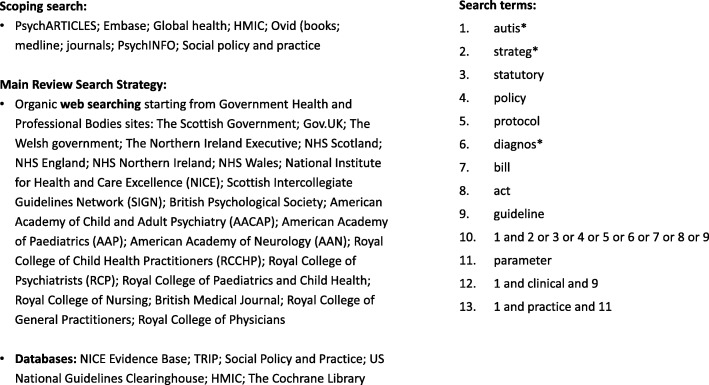
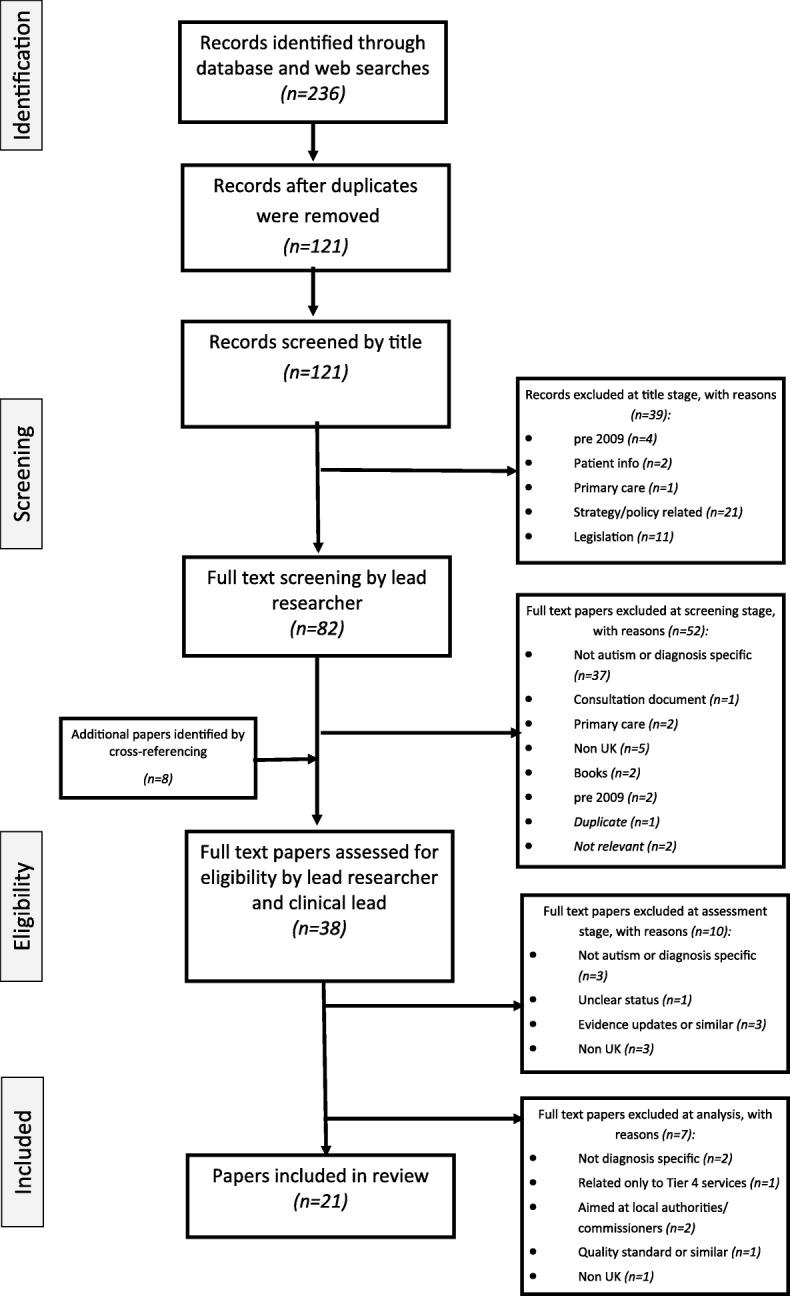
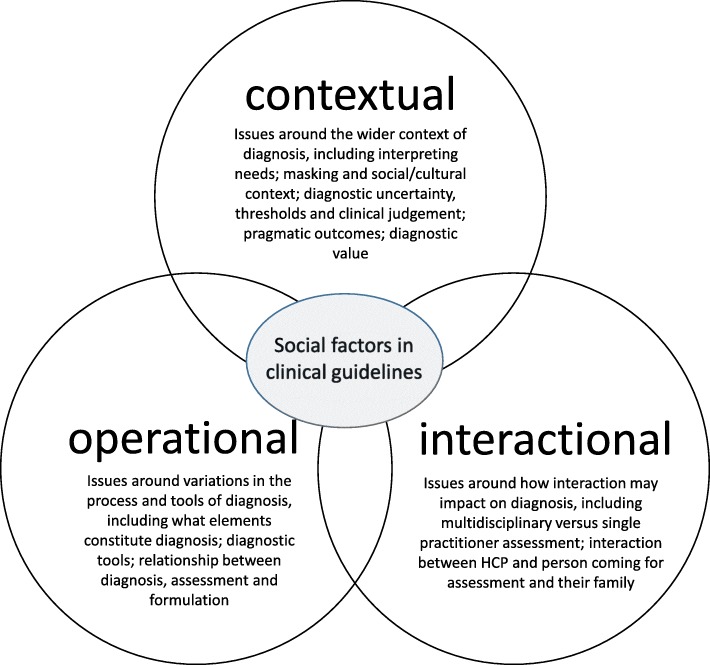
BACKGROUND: Research suggests that diagnostic procedures for Autism Spectrum Disorder are not consistent across practice and that diagnostic rates can be affected by contextual and social drivers. The purpose of this review was to consider how the content of clinical practice guidelines shapes diagnoses of Autism Spectrum Disorder in the UK; and investigate where, within those guidelines, social factors and influences are considered. METHODS: We electronically searched multiple databases (NICE Evidence Base; TRIP; Social Policy and Practice; US National Guidelines Clearinghouse; HMIC; The Cochrane Library; Embase; Global health; Ovid; PsychARTICLES; PsychINFO) and relevant web sources (government, professional and regional NHS websites) for clinical practice guidelines. We extracted details of key diagnostic elements such as assessment process and diagnostic tools. A qualitative narrative analysis was conducted to identify social factors and influences. RESULTS: Twenty-one documents were found and analysed. Guidelines varied in recommendations for use of diagnostic tools and assessment procedures. Although multidisciplinary assessment was identified as the 'ideal' assessment, some guidelines suggested in practice one experienced healthcare professional was sufficient. Social factors in operational, interactional and contextual areas added complexity to guidelines but there were few concrete recommendations as to how these factors should be operationalized for best diagnostic outcomes. CONCLUSION: Although individual guidelines appeared to present a coherent and systematic assessment process, they varied enough in their recommendations to make the choices available to healthcare professionals particularly complex and confusing. We recommend a more explicit acknowledgement of social factors in clinical practice guidelines with advice about how they should be managed and operationalised to enable more consistency of practice and transparency for those coming for diagnosis.
Overview
The claims and statistics of this paper haven’t been checked yet.
Free: it reads the open-access text and checks the first 5 claims that cite a source we can check. Create a free account to check every claim.
Integrity signals
Registry
Cites
Statistics
Figures
Verification
Claims the paper makes
The claims and statistics of this paper haven’t been checked yet.
Free: it reads the open-access text and checks the first 5 claims that cite a source we can check. Create a free account to check every claim.
Claims other papers make about this one
Each is checked against this paper’s own text: does it say what the citing paper says it does?
The cited source says what the claim attributes to it.
In the citing paper
“Likewise, several policy documents suggest use of cognitive assessment within neurodevelopmental diagnostic services (Hayes et al., 2018).”
From Cognitive Profile in Autism and ADHD: A Meta-Analysis of Performance on the WAIS-IV and WISC-V (2024) · cites this paper as Hayes et al., 2018
Self-check
Percentages, sums and reported differences re-computed from the paper’s own numbers.
The self-check needs the paper’s full text.
Citations
Cites
1 retracted
Diagnostic instruments for autism spectrum disorder (ASD)
Vllasaliu, L., Jensen, K., Hoss, S., Landenberger, M., Menze, M., Schütz, M., Ufniarz, K., Kieser, M., & Freitag, C. M. (2016) · Cochrane Database of Systematic Reviews · doi:10.1002/14651858.cd012036 · Cited by 32 · cited 2×
“In reality, the clinical pathway for autism diagnosis differs across health systems and trusts across the UK [3] leading to the potential for a great deal of variation in diagnostic decision-making.”
BackgroundRetractedDiagnostic and Statistical Manual of Mental Disorders
Williams, J. B. W., & First, M. (2013) · Encyclopedia of Social Work · doi:10.1093/acrefore/9780199975839.013.104 · Cited by 109,519
Preferred Reporting Items for Systematic Reviews and Meta-Analyses: the PRISMA statement
Moher, D., Liberati, A., Tetzlaff, J., Altman, D. G., & for the PRISMA Group (2009) · BMJ · doi:10.1136/bmj.b2535 · Cited by 83,823
Preferred Reporting Items for Systematic Reviews and Meta-Analyses: The PRISMA Statement
Moher, D., Liberati, A., Tetzlaff, J., Altman, D. G., & The PRISMA Group (2009) · PLoS Medicine · doi:10.1371/journal.pmed.1000097 · Cited by 64,042
Liberati, A., Altman, D. G., Tetzlaff, J., Mulrow, C., Gøtzsche, P. C., Ioannidis, J. P. A., Clarke, M., Devereaux, P. J., Kleijnen, J., & Moher, D. (2009) · PLoS Medicine · doi:10.1371/journal.pmed.1000100 · Cited by 28,164 · cited 1×
“However, we took a PRISMA approach to our search strategy, borrowing from systematic review methodology in terms of screening titles and abstracts and data extraction techniques [31].”
MethodScottish Intercollegiate Guidelines Network
Twaddle, S., & Qureshi, S. (2005) · Evidence-based Healthcare and Public Health · doi:10.1016/j.ehbc.2005.09.008 · Cited by 4,084
International Classification of Functioning, Disability and Health
World Health Organization (2021) · PsycTESTS Dataset · doi:10.1037/t76403-000 · Cited by 3,751
International Classification of Functioning, Disability and Health
Chard, G. (2004) · British Journal of Occupational Therapy · doi:10.1177/030802260406700101 · Cited by 3,688
Lord, C., Elsabbagh, M., Baird, G., & Veenstra-Vanderweele, J. (2018) · The Lancet · doi:10.1016/s0140-6736(18)31129-2 · Cited by 2,819
Reprint—Preferred Reporting Items for Systematic Reviews and Meta-Analyses: The PRISMA Statement
Moher, D., Liberati, A., Tetzlaff, J., Altman, D. G., & and the PRISMA Group (2009) · Physical Therapy · doi:10.1093/ptj/89.9.873 · Cited by 2,486
Research works printed but not linked: 8
- Field M Lohr K Guidelines for clinical practice: from development to use. Washington DC: Institute of Medicine 1992 Washington, D.C National Academy Press 25121254
- NICE Autism Spectrum disorder in adults: diagnosis and management 2012 32186834
- The National Autistic Society Diverse perspectives: the challenges for families affected by autism from black 2014 London Asian and Minority Ethnic Communities
- NHS Choices New blood test for Autism a long way off 2018
- World Health Organization The ICD-10 Classification of Mental and Behavioural Disorders: diagnostic criteria for research 1993
- Department of Health “Fulfilling and rewarding lives”: The strategy for adults with autism in England 2010
- Howlett D Richman S Recognising, referring and diagnosing autism Every Child J 2011 2 44 49
- National Collaborating Centre for Women’s and Children’s Health. Autism: recognition, referral and diagnosis of children and young people on the autism spectrum: NICE Clinical Guideline. 2011. https://www.ncbi.nlm.nih.gov/pubmed/22624178. Accessed 17 Feb 2017.
Cited by
Diagnosis of autism in adulthood: A scoping review
Huang, Y., Arnold, S. R., Foley, K.-R., & Trollor, J. N. (2020) · Autism · doi:10.1177/1362361320903128 · Cited by 289
“One systematic review from the United Kingdom discussed autism diagnosis in adults (Hayes et al., 2018), but focused exclusively on clinical guidance documents.”
BackgroundLai, M.-C., Anagnostou, E., Wiznitzer, M., Allison, C., & Baron-Cohen, S. (2020) · The Lancet Neurology · doi:10.1016/s1474-4422(20)30034-x · Cited by 250
A capabilities approach to understanding and supporting autistic adulthood
Pellicano, E., Fatima, U., Hall, G., Heyworth, M., Lawson, W., Lilley, R., Mahony, J., & Stears, M. (2022) · Nature Reviews Psychology · doi:10.1038/s44159-022-00099-z · Cited by 237
Editorial Perspective: The autism waitlist crisis and remembering what families need
Kanne, S. M., & Bishop, S. L. (2021) · Journal of Child Psychology and Psychiatry · doi:10.1111/jcpp.13254 · Cited by 99
Miller, H. L., Sherrod, G., Mauk, J. E., Fears, N. E., Hynan, L. S., & Tamplain, P. M. (2021) · Journal of Autism and Developmental Disorders · doi:10.1007/s10803-020-04766-z · Cited by 111
Küpper, C. S., Stroth, S., Wolff, N., Hauck, F., Kliewer, N., Schad‐Hansjosten, T., Kamp‐Becker, I., Poustka, L., Roessner, V., Schultebraucks, K., et al. (2020) · Scientific Reports · doi:10.1038/s41598-020-61607-w · Cited by 96
Risks Associated With Undiagnosed ADHD and/or Autism: A Mixed-Method Systematic Review
French, B., Daley, D., Groom, M. J., & Cassidy, S. (2023) · Journal of Attention Disorders · doi:10.1177/10870547231176862 · Cited by 108
“Individuals with ASD and/or ADHD (henceforth ASD/ ADHD) report difficulties in obtaining appropriate support, diagnosis, and treatment for difficulties associated with their conditions (Camm-Crosbie et al., 2019; Hayes et al., 2018; Sayal et al., 2018).”
BackgroundFrigaux, A., Évrard, R., & Lighezzolo‐Alnot, J. (2019) · L Encéphale · doi:10.1016/j.encep.2019.07.002 · Cited by 94
Application of Eye Tracking Technology in Medicine: A Bibliometric Analysis
Zammarchi, G., & Conversano, C. (2021) · Vision · doi:10.3390/vision5040056 · Cited by 63
“Since the diagnosis of autism is challenging and no biomarker is available [51], the development of computational models based on early abnormalities such as the differences in gaze processing might be of substantial help to improve and anticipate the diagnosis, thus, making it possible to initiate treatment at an ear…”
BackgroundMcConkey, R. (2020) · Support for Learning · doi:10.1111/1467-9604.12296 · Cited by 66
Danilovich, N., Kitto, S. C., Price, D. W., Campbell, C. B., Hodgson, A., & HENDRY, P. J. (2021) · Family Medicine · doi:10.22454/fammed.2021.453158 · Cited by 59
Cognitive Profile in Autism and ADHD: A Meta-Analysis of Performance on the WAIS-IV and WISC-V
Wilson, A. C. (2024) · Archives of Clinical Neuropsychology · doi:10.1093/arclin/acad073 · Cited by 58
“Likewise, several policy documents suggest use of cognitive assessment within neurodevelopmental diagnostic services (Hayes et al., 2018).”
BackgroundGaudreau, C., Guillaumie, L., Jobin, É., & Diallo, T. (2024) · Canadian Journal of Nursing Research · doi:10.1177/08445621241229932 · Cited by 54
“Narrative reviews have been extensively used in previous studies to set out syntheses of clinical guidelines (Bruinsma et al., 2016; Hayes et al., 2018) and to review nurses ’ roles or practices (Biswas et al., 2019; Hulse, 2022; Vasiloglou et al., 2019).”
MethodRutherford, M., Maciver, D., Johnston, L., Prior, S., & Forsyth, K. (2021) · Children · doi:10.3390/children8111033 · Cited by 49
“There has been a tradition of single condition guidelines and pathways [6,11,12].”
BackgroundWilson, R. B., Thompson, A. R., Rowse, G., & Freeth, M. (2023) · Research in Autism · doi:10.1016/j.rasd.2023.102135 · Cited by 52
Timimi, S. B., Milton, D. E. M., Bovell, V., Kapp, S. K., & Russell, G. (2019) · PubMed · Cited by 43
Self-citationWigham, S., Ingham, B., Couteur, A. S. L., Wilson, C., Ensum, I., & Parr, J. R. (2022) · Autism · doi:10.1177/13623613211073020 · Cited by 34
“However, variations in recommendations and some mismatch between best-practice guidance and what is experienced in adult autism assessment pathways has been identified (Hayes et al., 2018; Scattoni et al., 2021).”
BackgroundGellini, H., & Marczak, M. (2023) · Review Journal of Autism and Developmental Disorders · doi:10.1007/s40489-023-00356-8 · Cited by 45
“Furthermore, reviews also synthesised the literature on the suitability of assessment and diagnostic tools for adults and identified best practise for the assessment (Baghdadli et al., 2017; Falkmer et al., 2013; Hayes et al., 2018).”
Abrahamson, V., Zhang, W., Wilson, P. M., Farr, W. J., Reddy, V., Parr, J. R., Peckham, A., & Male, I. (2021) · BMJ Open · doi:10.1136/bmjopen-2021-051241 · Cited by 29
Russell, I., Pearson, B. L., & Masic, U. (2020) · Journal of Autism and Developmental Disorders · doi:10.1007/s10803-020-04698-8 · Cited by 42
“2012; Hembree 2011); the individual must have demonstrated an enduring pattern of gender nonconformity or gender dysphoria (APA 2013), a desire for puberty suppression, and sufficient therapeutic engagement at the GIDS.”
BackgroundSpain, D., Stewart, G. R., Mason, D., Robinson, J., Simone, J., Gillan, N., Ensum, I., & Happe, F. G. E. (2022) · Frontiers in Psychiatry · doi:10.3389/fpsyt.2022.789449 · Cited by 29
Jacobs, D., Steyaert, J. G., Dierickx, K., & Hens, K. (2020) · BMC Psychiatry · doi:10.1186/s12888-020-02806-7 · Cited by 24
Amer, Y. S., Alenezi, S., Bashiri, F. A., Alawami, A. H., Alhazmi, A. S., Aladamawi, S. A., Alnemary, F., Alqahtani, Y. J., Buraik, M. W., AlSuwailem, S. S., et al. (2022) · Children · doi:10.3390/children9071050 · Cited by 21
“The need has arisen for an updated systematic review and critical appraisal of these CPGs [17].”
BackgroundSpain, D., Stewart, G. R., Mason, D., Milner, V. L., Fairhurst, B., Robinson, J., Gillan, N., Ensum, I., Stark, E. A., & Happe, F. G. E. (2022) · JMIR Mental Health · doi:10.2196/37901 · Cited by 24
“…the diagnostic process, the semistructured or structured diagnostic tools that are used, from whom information is obtained apart from the person (eg, family and educators), and the topics that the person is asked about (eg, a sole focus on autism or wider themes that include mental health) [5-7].”
Supporting the needs of college students with autism spectrum disorder
Chandrasekhar, T. (2019) · Journal of American College Health · doi:10.1080/07448481.2019.1686003 · Cited by 23
Höfer, J., Hoffmann, F., Dörks, M., Kamp‐Becker, I., Küpper, C. S., Poustka, L., Roepke, S., Roessner, V., Stroth, S., Wolff, N., et al. (2021) · Journal of Autism and Developmental Disorders · doi:10.1007/s10803-021-04955-4 · Cited by 25
French, B., & Cassidy, S. (2024) · Autism in Adulthood · doi:10.1089/aut.2024.0085 · Cited by 25
Aging Well and Autism: A Narrative Review and Recommendations for Future Research
Klein, C. B., & Klinger, L. G. (2024) · Healthcare · doi:10.3390/healthcare12121207 · Cited by 23
“Although there is no current consensus on adult assessment guidelines [120], recommendations for clinicians exist [4,121].”
BackgroundAssistência do enfermeiro(a) a crianças e adolescentes com transtorno do espectro autista
Jerônimo, T. G. Z., Mazzaia, M. C., Viana, J. M., & Chistofolini, D. M. (2023) · Acta Paulista de Enfermagem · doi:10.37689/acta-ape/2023ao030832 · Cited by 14
Resilience Intervention for Families of Autistic Children: Reviewing the Literature
Kotera, Y., Pope, M. A., Chircop, C., Kirkman, A., Viliardos, L., & Sharaan, S. (2020) · Journal of Concurrent Disorders · doi:10.54127/swjs6679 · Cited by 22
“Journal of Concurrent Disorders, 2021 changes in assessment practices and the expansion of diagnostic criteria (Hanson et al., 2015; Hayes et al., 2017).”
BackgroundBernie, C., Williams, K. J., O’Connor, B., Rogers, S. J., & May, T. (2020) · Journal of Autism and Developmental Disorders · doi:10.1007/s10803-020-04725-8 · Cited by 14
Oshima, F., Murata, T., Ohtani, T., Seto, M., & Shimizu, E. (2021) · BMC Research Notes · doi:10.1186/s13104-021-05556-1 · Cited by 13
Spicer, L., DeCicco, E. E., Clarke, A., Ambrosius, R., & Yalcin, O. (2024) · Frontiers in Psychology · doi:10.3389/fpsyg.2024.1436053 · Cited by 16
Pattison, E., Ure, A. M., Mittiga, S. R., Williams, K. J., & Freeman, N. C. (2021) · Journal of Autism and Developmental Disorders · doi:10.1007/s10803-021-05067-9 · Cited by 14
“1 3 and synthesis of empirical evidence supporting the recommended diagnostic practices and little guidance in relation to their applicability to health services associated with autism (Hayes et al., 2018; Penner et al., 2018).”
BackgroundDAS‐II Cognitive Profiles Are Not Diagnostically Meaningful For Autism: A ROC Analysis
Clements, C. C., Sparding, T., Schultz, R., Yerys, B., & Watkins, M. W. (2020) · Autism Research · doi:10.1002/aur.2336 · Cited by 11
Halpern, C. M., da Silva, P. C., Costa, D., Nascimento, M. J., Reis, J. M., Martins, M. T., Ferreira, B. P., Santos, I., Carvalho, L., Gomes, M. P., et al. (2021) · Acta Médica Portuguesa · doi:10.20344/amp.13397 · Cited by 10
MacLachlan, M. (2020) · Journal of Child Psychology and Psychiatry · doi:10.1111/jcpp.13360 · Cited by 10
Janicki, M. P., McCallion, P., Jokinen, N. S., Larsen, F., Mughal, D., Palanisamy, V., Santos, F. H., Service, K. P., Shih, A. J., Shooshtari, S., et al. (2025) · Journal of Autism and Developmental Disorders · doi:10.1007/s10803-025-06843-7 · Cited by 10
“This apparent “decline is likely due to several factors, including lower diagnostic rates and stricter criteria used in previous decades, which now affect cross-sectional demographic studies (Hayes et al., 2018).”
The increasing prevalence of school pupils with ASD: insights from Northern Ireland
McConkey, R. (2019) · European Journal of Special Needs Education · doi:10.1080/08856257.2019.1683686 · Cited by 13
Fahy, R., Corbett, M., & Keogh, I. J. (2020) · The Journal of Laryngology & Otology · doi:10.1017/s0022215120002029 · Cited by 8
Bernie, C., Williams, K. J., Graham, F. P., & May, T. (2021) · JMIR Research Protocols · doi:10.2196/20011 · Cited by 12
Buffle, P. L., & Naranjo, D. (2021) · Revista Ecuatoriana de Pediatría · doi:10.52011/113 · Cited by 19
Ying, J., Zhang, M. W., Sajith, S. G., Tan, G. M. Y., & Wei, K. (2023) · Case Reports in Psychiatry · doi:10.1155/2023/7705913 · Cited by 10
“The Royal College of Psychiatrists Diagnostic Interview Guide for Assessment of Adults with Autism Spectrum Disorder is one of the useful tools for diagnosis of ASD in adults [41].”
MethodZavaleta-Ramírez, P., Rosetti, M., Albores‐Gallo, L., López, O. N., & González, P. P. (2023) · Clinical Child Psychology and Psychiatry · doi:10.1177/13591045231193817 · Cited by 6
“Hayes et al. (2018) reviews the use of diagnostic tools in the United Kingdom and suggests a range of tools without explicitly recommending any particular measure.”
BackgroundDiagnosing Autism in Adults: Clinically Focused Recommendations
Pagán, A. F., Flint, D. D., & Loveland, K. A. (2024) · Journal of Health Service Psychology · doi:10.1007/s42843-024-00108-0 · Cited by 8
“Thus, current best practice continues to depend on clinical judgment when diagnosing autistic adults (Hayes et al., 2018), especially given that many adults seeking an autism evaluation may not have parents/family members available, leaving clinicians with the burden of evaluating the individual’s…”
Burden, D. G. (2024) · Advances in Autism · doi:10.1108/aia-02-2023-0008 · Cited by 6
Janicki, M. P., McCallion, P., Jokinen, N. S., Larsen, F., Service, K. P., Mughal, D. T., Watchman, K., Gomiero, T., & Keller, S. M. (2025) · International Journal of Geriatric Psychiatry · doi:10.1002/gps.70110 · Cited by 6
Curran, C., Roberts, R., Gannoni, A. F., & Jeyaseelan, D. (2024) · Journal of Autism and Developmental Disorders · doi:10.1007/s10803-023-06202-4 · Cited by 7
“However, recent reviews of the quality and content of such guidelines highlighted variation in all aspects of the ASD diagnostic assessment (Hayes et al., 2018; Penner et al., 2018).”
Motor Skills, Social Skills, and Participation of Autistic Children
Hegazi, A., Horton, S., & Benson, S. M. S. (2024) · Critical Reviews in Physical and Rehabilitation Medicine · doi:10.1615/critrevphysrehabilmed.2024052338 · Cited by 5
Building Consensus Around Adult Autism Diagnostic Assessment: A Mixed-Methods Approach
Stewardson, C. I., McEwen, L. P., & Kerns, C. M. (2025) · Autism in Adulthood · doi:10.1177/25739581251376356 · Cited by 3
Patel, K., Fogler, J., Sideridis, G. D., & Soares, N. S. (2024) · Journal of Developmental & Behavioral Pediatrics · doi:10.1097/dbp.0000000000001246 · Cited by 3
Hopkins, N., Iles, J. E., & Satherley, R. (2023) · Review Journal of Autism and Developmental Disorders · doi:10.1007/s40489-023-00419-w · Cited by 2
“However, the reliability of ASD diagnosis has been questioned, as severity and symptom expression vary widely, and diagnostic rates can be affected by contextual and social drivers (Hayes et al., 2018).”
Bauer‐Negrini, G., Lucchese, L. V., Botelho, V. R., Pianoschi, T. A., & Becker, C. D. L. (2024) · World Congress on Medical Physics and Biomedical Engineering, September 7 - 12, 2009, Munich, Germany · doi:10.1007/978-3-031-49404-8_35 · Cited by 1
Bai, E. W., Lee, E. A. L., Afsharnejad, B., Chih, H., Parsons, R. W., Zou, X., Deng, H., Zhu, H., Bölte, S., & Girdler, S. J. (2026) · Molecular Autism · doi:10.1186/s13229-026-00702-7 · Cited by 1
Cáceres, A. S. J., Burdeus-Olavarrieta, M., Vicente, C., Carbonell, N., Sipos, L., Fernández, L. S., Martín, L., Llauradó, E. V., & Parellada, M. (2026) · Frontiers in Psychology · doi:10.3389/fpsyg.2026.1716298 · Cited by 2
“Therefore, it is currently considered essential to promote early diagnostic processes based on multidimensional and comprehensive assessments, covering the entire developmental history along with current assessment (Falkmer et al., 2013; Hayes et al., 2018).”
Khudiakova, V., Sin, J., Suzuki, M., & Barnicot, K. (2026) · Journal of Developmental and Physical Disabilities · doi:10.1007/s10882-026-10055-x · Cited by 7
“At times, clinicians relied on the “feeling in the room” (CL, Cumin et al., 2022) to counter the limitations of diagnostic tools, especially when they suggested clients were “not at the ‘diagnosis point’” (CL, Hayes et al., 2018).”
Nevin, M., Walsh, E., O’Donnell, G. M., & Xie, H. (2026) · Journal of Autism and Developmental Disorders · doi:10.1007/s10803-026-07353-w · Cited by 1
Autism Detection from Brain Signals: South Asia Perspective
Peya, Z. J., Rahman, S. M., & Akhand, M. A. H. (2023) · Journal of Engineering Science · doi:10.3329/jes.v13i2.63727 · Cited by 2
Precious, K. (2024) · Interest Groups & Advocacy · doi:10.1057/s41309-024-00218-6 · Cited by 1
“Autism itself is clinically defined as a neurodevelopmental disorder (Falkmer et al. 2013; Hayes et al. 2018; NICE 2016), and most autistic people with a clinical diagnosis would meet the legal definition of a disability (Baron–Cohen 2000; Krcek 2013; O’Reilly et al. 2015).”
Integrated Scale for Diagnosis of Autism Spectrum Disorder (ISD-ASD)
Rúa, M. O. (2022) · International Journal for Innovation Education and Research · doi:10.31686/ijier.vol10.iss9.3906 · Cited by 2
Investigation of peripheral nerve sensitivity in two animal models of Autism Spectrum Disorder (ASD)
Ibrahim, H. (2019) · CLOK (University of Central Lancashire) · Cited by 2
Doi, H., Iijima, N., Furui, A., Soh, Z., Shinohara, K., Iriguchi, M., Shimatani, K., & Tsuji, T. (2021) · medRxiv · doi:10.1101/2021.10.11.21264725 · Cited by 1
Oshima, F., Murata, T., Ohtani, T., Seto, M., & Shimizu, E. (2020) · Research Square · doi:10.21203/rs.3.rs-136824/v1 · Cited by 1
Raising awareness of autistic spectrum disorders for healthcare assistants
Hayes, C., Alcorn, L., & Graham, Y. N. H. (2018) · British Journal of Healthcare Assistants · doi:10.12968/bjha.2018.12.11.550
Considering autistic spectrum disorders in the context of clinical nurse prescribing
Hayes, C., Alcorn, L., & Graham, Y. N. H. (2018) · Nurse Prescribing · doi:10.12968/npre.2018.16.11.534
Social Processes and Risk for Autism
Klaiman, C., Saulnier, C. A., Rubin, E., Chawarska, K., & Klin, A. (2019) · Oxford University Press eBooks · doi:10.1093/oxfordhb/9780199837182.013.15
Utilisation and outcomes of treatment in Autism Spectrum Disorder
Houghton, R. (2021) · Research Publications (Maastricht University) · doi:10.26481/dis.20210304rh
Loftin, R. L. (2021) · Springer eBooks · doi:10.1007/978-3-030-70913-6_2
Yarber, K. D. (2007) · Atlanta University Center Robert W. Woodruff Library (Atlanta University Center Robert W. Woodruff Library)
Tiefgreifende Entwicklungsstörungen
Müller, S., Allroggen, M., & Fegert, J. M. (2020) · Springer eBooks · doi:10.1007/978-3-662-58418-7_16
New Research in Children with Neurodevelopmental Disorders
Ayuso, D. M. R. (2022) · MDPI eBooks · doi:10.3390/books978-3-0365-4391-8 · Cited by 1
Autism Spectrum Disorder Detection in Children Using Fuzzy Detection Support System
Amanda, P., Arifin, A., Hikmah, N. F., & Nuh, M. (2022) · International Conference on Computer Engineering, Network, and Intelligent Multimedia (CENIM) · doi:10.1109/cenim56801.2022.10037404
“Motor stereotypes are a group of common signs displayed in various characteristics of ASD, usually in the form of repetitive movements that are not typical for the developmental level of the observed individual [7].”
BackgroundLeung, F. Y. N., Stojanovik, V., Jiang, C., & Liu, F. (2024) · Autism Research · doi:10.1002/aur.3124
“All participants reported normal hearing and normal or corrected-to-normal vision, and all participants in the autism group had a clinical diagnosis of autism spectrum disorder from UK professionals independent of this study (see Hayes et al., 2018 for a review on diagnostic procedures in the UK).”
Myers, S. M., & Challman, T. D. (2024) · Elsevier eBooks · doi:10.1016/b978-0-12-824060-1.00038-9
Abdallah, S., Fiorelli, N. M., Reardon, K. W., & Poreh, A. (2025) · Autism in Adulthood · doi:10.1089/aut.2024.0278 · Cited by 1
Związki cech autystycznych z wczesnymi nieadaptacyjnymi schematami J. Younga
Borycka, A., Bielawska‐Batorowicz, E., & Talarowska, M. E. (2025) · Current Problems of Psychiatry · doi:10.12923/2353-8627/2025-0005
Xia, Y., Vincent, J., Zhao, M., & Wang, P. (2025) · Research in Autism · doi:10.1016/j.reia.2025.202776
Oshima, F., Murata, T., Ohtani, T., Seto, M., & Shimizu, E. (2021) · Figshare · doi:10.6084/m9.figshare.14516602
Oshima, F., Murata, T., Ohtani, T., Seto, M., & Shimizu, E. (2021) · Figshare · doi:10.6084/m9.figshare.14516608
Oshima, F., Murata, T., Ohtani, T., Seto, M., & Shimizu, E. (2021) · Figshare · doi:10.6084/m9.figshare.14516605
Oshima, F., Murata, T., Ohtani, T., Seto, M., & Shimizu, E. (2021) · Figshare · doi:10.6084/m9.figshare.14516611
Janicki, M. P., McCallion, P., Jokinen, N. S., Larsen, F., Mughal, D. T., Service, K. P., Gomiero, T., Marsack‐Topolewski, C. N., Watchman, K., Santos, F. H., et al. (2026) · Autism · doi:10.1177/13623613261416670 · Cited by 1
“…are identified in later life, largely due to historic underdiagnosis, the use of stricter diagnostic criteria than in past decades, premature mortality, and the challenges of recognizing autism in older age (Gerhardt & Lainer, 2011; Hayes et al., 2018; Krantz et al., 2023; Shaw et al., 2023).”
She, H., Xu, T., Liu, R., Jiang, W., Shen, R., & XU, H. (2026) · Behavioral Sciences · doi:10.3390/bs16071214
“Compared to traditional face-to-face interventions, digital tools can reinforce core instructional stimuli and reduce environmental distractions, thereby alleviating the selective attention overload commonly experienced by children with ASD (Hayes et al., 2018).”
Metadata
- Authors
- Hayes, J., Ford, T., Rafeeque, H., & Russell, G.
- Affiliations
- University of Exeter (GB)
- Corresponding author
- Hayes, Jennie
- Venue
- BMC Psychiatry
- Published
- 2018-07-13
- Volume
- 18
- Issue
- 1
- Pages
- 222-222
- ISSN
- 1471-244X (ISSN-L)
- PMC
- PMC6044100
- OpenAlex
- W2884071167
- Cited by
- 83
- References
- 56
- Citations by year
- 2026: 6 · 2025: 6 · 2024: 13 · 2023: 9 · 2022: 8 · 2021: 17 · 2020: 15 · 2019: 6 · 2018: 2
- FWCI
- 1.34
- Type
- journal article
- Language
- en
- Open access
- gold
- doi.org
- Licence
- cc-by
- creativecommons.org/licenses/by/4.0/ (tdm)
- Locations
- BMC Psychiatry (publishedVersion, cc-by)
- Europe PMC (PubMed Central) (publishedVersion, other-oa)
- PubMed Central (publishedVersion, cc-by)
- PubMed (publishedVersion)
- DOAJ (DOAJ: Directory of Open Access Journals) (submittedVersion, cc-by-sa)
- Figshare (submittedVersion)
- Open Research Exeter (University of Exeter) (submittedVersion, cc-by)
- Funders
- Wellcome Trust (108676/Z/15/Z)
- Topics
- Life Sciences › Neuroscience › Cognitive Neuroscience › Autism Spectrum Disorder Research
- Health Sciences › Medicine › Public Health, Environmental and Occupational Health › Clinical practice guidelines implementation
- Social Sciences › Psychology › Clinical Psychology › Psychology and Mental Health
- Keywords
- autism spectrum disorder, diagnosis, diagnostic assessment, diagnostic tools, social factors, multidisciplinary assessment, diagnostic consistency, healthcare workers
- MeSH terms
- Autism Spectrum Disorder, Adult, Child, United Kingdom, Humans, Practice Patterns, Physicians', Practice Guidelines as Topic
About these checks
Registry, retraction, Cites and statistics results are computed, not judged, with one exception: a printed reference that no index lists is read once by a model before it counts as a citation error. Claims are extracted by a model and kept only when their quote appears verbatim in the text; each cited source is then checked, with a model’s help, for whether it says what the claim relies on. Those verdicts can be wrong — read the claim’s quote and the cited source before relying on one.
Statistics and arithmetic are recomputed, not judged.
Confidence bands are shown only for fields calibrated on our annotated test set. None is calibrated yet, so no band is shown.
What counts as a claim ›How we measure confidence ›How we check this ›
Are you an author, or do you see a problem with this page? Request a review
Data sources
Bibliographic data: Semantic Scholar, OpenAlex, Crossref.
Contains information from the Semantic Scholar Academic Graph Datasets, made available under the ODC Attribution License (ODC-BY 1.0).
Semantic Scholar’s data is described in: Kinney, R., et al. (2023). The Semantic Scholar Open Data Platform. arXiv:2301.10140.
