

Extending research on Emotion Regulation Individual Therapy for Adolescents (ERITA) with nonsuicidal self-injury disorder: open pilot trial and mediation analysis of a novel online version
Open accessThe DOI matches its Crossref record; 74 of the 74 references it cites were found in a registry or an index.
Abstract
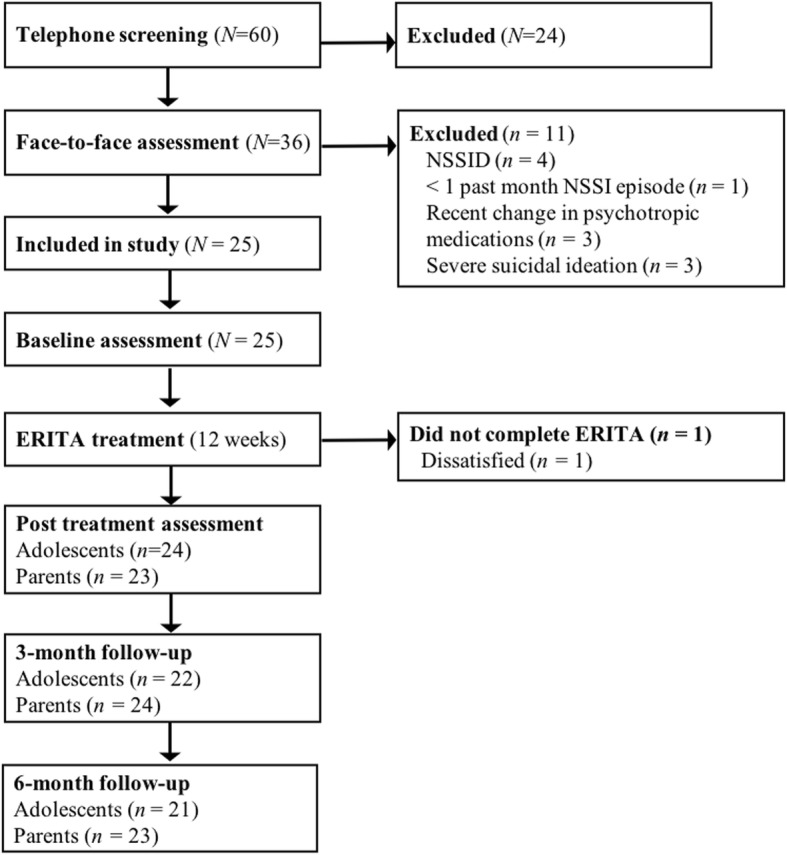
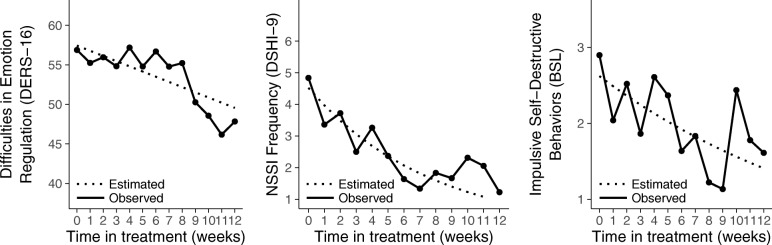
BACKGROUND: Nonsuicidal self-injury (NSSI) is common among adolescents and associated with negative outcomes. However, treatments developed specifically for NSSI and the proposed NSSI disorder (NSSID) are scarce, and access to empirically supported treatments for NSSI in many areas is limited. Online treatments carry the potential to increase the availability of evidence-based treatments. Emotion regulation individual therapy for adolescents (ERITA) has shown promise in the treatment of adolescents with NSSID. METHOD: The present study examined the feasibility, acceptability, and utility of an online version of ERITA. Twenty-five adolescents (aged 13-17) with NSSID and their parents were included in an uncontrolled open trial. Self-report and clinician-rated assessments of outcomes such as NSSI, self-destructive behaviors, emotion dysregulation, and global functioning were administered at pre-treatment, post-treatment, 3- and 6- month follow-up. Measures of NSSI, self-destructive behaviors, and emotion dysregulation were also assessed weekly during treatment. RESULTS: Ratings of treatment credibility, expectancy, and satisfaction were acceptable, and the therapeutic alliance and treatment completion rate (96%) were high. Adolescent participation in the treatment was associated with a statistically significant increase in past-month NSSI abstinence (p = .007), large-sized improvements in past-month NSSI frequency (55% reduction, 95% confidence interval [CI]: 29, 72; Cohen's d = 0.88, 95% CI: 0.73, 1.06) and global functioning (d = 1.01, 95% CI: 0.77, 1.32), and medium-sized improvements in emotion dysregulation (d = 0.75, 95% CI: 0.59, 0.90) and NSSI versatility (d = 0.63, 95% CI: 0.54, 0.77) from pre- to post-treatment. These improvements were further strengthened at 3-month follow-up and maintained at 6-month follow-up. The online therapist-guided parent program was associated with small- to large-sized (ds = 0.47-1.22) improvements in adaptive parent behaviors, and these improvements were maintained or further improved upon at 6-month follow-up. Moreover, in line with the theoretical model underlying ERITA, change in emotion dysregulation mediated changes in both NSSI frequency and self-destructive behaviors over the course of treatment. CONCLUSIONS: Together, results suggest that online ERITA is an acceptable, feasible, and promising low-intensity treatment for adolescents with NSSID. The results of this open trial must be replicated in controlled studies. TRIAL REGISTRATION: ClinicalTrials.gov ( NCT02697019 ). Registered 2 March 2016.
Overview
The claims and statistics of this paper haven’t been checked yet.
Free: it reads the open-access text and checks the first 5 claims that cite a source we can check. Create a free account to check every claim.
Integrity signals
Registry
Cites
Statistics
Figures
Verification
Claims the paper makes
The claims and statistics of this paper haven’t been checked yet.
Free: it reads the open-access text and checks the first 5 claims that cite a source we can check. Create a free account to check every claim.
Claims other papers make about this one
Each is checked against this paper’s own text: does it say what the citing paper says it does?
The cited source says what the claim attributes to it.
In the citing paper
“Treatments that emphasize ER as a core component have successfully reduced addiction, self-harm, symptoms of posttraumatic stress disorder, symptoms of borderline personality disorder (BPD), and depression and anxiety, for example (6–10).”
From An emotion regulation skills training for adolescents and parents: perceptions and acceptability of methodological aspects (2024) · cites this paper as [6]
Self-check
Percentages, sums and reported differences re-computed from the paper’s own numbers.
The self-check needs the paper’s full text.
Citations
Cites
Diagnostic and Statistical Manual of Mental Disorders
American Psychiatric Association (2013) · doi:10.1176/appi.books.9780890425596 · Cited by 116,369
Diagnostic and Statistical Manual of Mental Disorders
Williams, J. B. W., & First, M. (2013) · Encyclopedia of Social Work · doi:10.1093/acrefore/9780199975839.013.104 · Cited by 109,519
Preacher, K. J., & Hayes, A. F. (2008) · Behavior Research Methods · doi:10.3758/brm.40.3.879 · Cited by 34,117
(1998) · The Journal of Clinical Psychiatry · Cited by 19,139
(1998) · PubMed · Cited by 10,216
Gratz, K. L., & Roemer, L. (2004) · Journal of Psychopathology and Behavioral Assessment · doi:10.1023/b:joba.0000007455.08539.94 · Cited by 8,942
Self-citation(1993) · Cited by 7,136
MacKinnon, D. P., Fairchild, A. J., & Fritz, M. S. (2007) · Annual Review of Psychology · doi:10.1146/annurev.psych.58.110405.085542 · Cited by 5,688 · cited 1×
“In both sets, two regression equations were estimated [63].”
Bond, F. W., Hayes, S. C., Baer, R. A., Carpenter, K. M., Guenole, N., Orcutt, H. K., Waltz, T., & Zettle, R. D. (2011) · Behavior Therapy · doi:10.1016/j.beth.2011.03.007 · Cited by 3,950
A Children's Global Assessment Scale (CGAS)
Shaffer, D. (1983) · Archives of General Psychiatry · doi:10.1001/archpsyc.1983.01790100074010 · Cited by 3,716
Research works printed but not linked: 1
- Fabes RA Eisenberger N The Coping with Children’s Negative Emotions Scale Adolescent Version: Procedures and Scoring 1998
Cited by
Emotional Dysregulation in Children and Adolescents With Psychiatric Disorders. A Narrative Review
Paulus, F. W., Ohmann, S., Möhler, E., Plener, P., & Popow, C. (2021) · Frontiers in Psychiatry · doi:10.3389/fpsyt.2021.628252 · Cited by 280
Asarnow, J. R., Berk, M. S., Bedics, J. D., Adrian, M. C., Gallop, R., Cohen, J. A., Korslund, K. E., Hughes, J. L., Avina, C., Linehan, M. M., et al. (2021) · Journal of the American Academy of Child & Adolescent Psychiatry · doi:10.1016/j.jaac.2021.01.016 · Cited by 170
Arshad, U., Farhat‐ul‐Ain, Gauntlett, J., Husain, N., Chaudhry, N., & Taylor, P. J. (2020) · Suicide and Life-Threatening Behavior · doi:10.1111/sltb.12583 · Cited by 104
“Overall satisfaction was only moderate for one Internet-delivered emotion regulation therapy (M rating = 17.8 of 32; Bjureberg et al., 2018).”
BackgroundMethodInfluentialA Meta-Analytic Review of Emotion Regulation Focused Psychosocial Interventions for Adolescents
Eadeh, H., Breaux, R., & Nikolas, M. A. (2021) · Clinical Child and Family Psychology Review · doi:10.1007/s10567-021-00362-4 · Cited by 126
Psychotherapeutic interventions specifically developed for NSSI in adolescence: A systematic review
Calvo, N., García-González, S., Pérez-Galbarro, C., Regales-Peco, C., Lugo‐Marín, J., Ramos‐Quiroga, J. A., & Ferrer, M. (2022) · European Neuropsychopharmacology · doi:10.1016/j.euroneuro.2022.02.009 · Cited by 102
Non-Suicidal Self-Injury and Eating Disordered Behaviors: An Update on What We Do and Do Not Know
Kiekens, G., & Claes, L. (2020) · Current Psychiatry Reports · doi:10.1007/s11920-020-01191-y · Cited by 80
Dyadic Psychosocial eHealth Interventions: Systematic Scoping Review
Shaffer, K. M., Tigershtrom, A., Badr, H., Benvengo, S., Hernandez, M., & Ritterband, L. M. (2020) · Journal of Medical Internet Research · doi:10.2196/15509 · Cited by 74
Bjureberg, J., Ojala, O., Hesser, H., Häbel, H., Sahlin, H., Gratz, K. L., Tull, M. T., Claesdotter Knutsson, E., Hedman-Lagerlöf, E., Ljótsson, B., et al. (2023) · JAMA Network Open · doi:10.1001/jamanetworkopen.2023.22069 · Cited by 59
Yang, H., Wang, Z., Elhai, J. D., & Montag, C. (2022) · Journal of Behavioral Addictions · doi:10.1556/2006.2022.00038 · Cited by 50
“Adolescent emotion dysregulation has been confirmed to be related to many kinds of problematic behaviors (Bjureberg et al., 2018; Lemaigre & Taylor, 2019), especially addictive behaviors with technology use (Casale, Caplan, & Fioravanti, 2016; Evren, Evren, Dalbudak, Topcu, & Kutlu, 2018; Montag & Elhai, 2020; Pettorr…”
BackgroundHolmqvist Larsson, K., Andersson, G., Stern, H., & Zetterqvist, M. (2020) · Clinical Child Psychology and Psychiatry · doi:10.1177/1359104519869782 · Cited by 43
“…skills is not, however, used routinely in a systematic way in clinical practice, and to our knowledge, there are only a few studies (Bjureberg et al., 2016; Bjureberg et al., 2018) to date that examine the effects of emotion regulation interventions in adolescents in regular clinical settings.”
BackgroundZetterqvist, M., Perini, I., Mayo, L. M., & Gustafsson, P. A. (2020) · Frontiers in Psychiatry · doi:10.3389/fpsyt.2020.00008 · Cited by 55
“The Swedish version has also been used to assess adolescents that participated in an emotion regulation treatment study (29, 30), suggesting that it has potential for this population.”
MethodHu, C., Huang, J., Shang, Y., Huang, T., Jiang, W., & Yuan, Y. (2023) · Child and Adolescent Psychiatry and Mental Health · doi:10.1186/s13034-023-00557-3 · Cited by 54
“, Dialectical Behaviour Therapy, DBT; Emotion Regulation Individual Therapy for Adolescents (ERITA)] [22, 58, 59].”
BackgroundČuš, A., Edbrooke-Childs, J. H., Ohmann, S., Plener, P. L., & Akkaya-Kalayci, T. (2021) · International Journal of Environmental Research and Public Health · doi:10.3390/ijerph18063289 · Cited by 50
“Another review identified four trials related specifically to NSSI [20], and while these studies reported reduction in NSSI, their findings need to be interpreted with caution due to lack of control groups [21,22], absence of maintained effect in a follow up study [16] and absence of effect when compared to active con…”
BackgroundmHealth Interventions for Self-Harm: Scoping Review
Cliffe, B., Tingley, J., Greenhalgh, I., & Stallard, P. (2021) · Journal of Medical Internet Research · doi:10.2196/25140 · Cited by 29
“[55,56,58,62] 4 (12) Websites or web-based therapies”
BackgroundInfluentialLenhard, F., Mitsell, K., Jolstedt, M., Vigerland, S., Wahlund, T., Nord, M., Bjureberg, J., Sahlin, H., Andrén, P., Aspvall, K., et al. (2019) · Journal of Medical Internet Research · doi:10.2196/13602 · Cited by 32
“For more detailed information, see the original publications of each trial [24,29-32].”
Dimensions of interoception in obsessive-compulsive disorder
Eng, G. K., Collins, K. A., Brown, C. S., Ludlow, M., Tobe, R. H., Iosifescu, D. V., & Stern, E. R. (2020) · Journal of Obsessive-Compulsive and Related Disorders · doi:10.1016/j.jocrd.2020.100584 · Cited by 33
“, 2004; Mehling, 2016), while other notes therapeutic benefits to distraction that help regulate aversive emotion (Bjureberg et al., 2018; Najmi, Riemann, & Wegner, 2009).”
BackgroundSimonsson, O., Engberg, H., Bjureberg, J., Ljótsson, B., Stensils, J., Sahlin, H., & Hellner, C. (2021) · JMIR Formative Research · doi:10.2196/17910 · Cited by 33
“Exclusion criteria for adolescents in the pilot trial [36] were as follows: (1) severe suicidal ideation; (2) diagnosis of psychotic or bipolar I disorder, or substance dependence; (3) ongoing dialectical behavioral or mentalization-based therapy; and (4) insufficient understanding of the Swedish language.”
BackgroundMethodResultInfluentialFekih‐Romdhane, F., Kanj, G., Obeïd, S., & Hallit, S. R. (2023) · BMC Psychology · doi:10.1186/s40359-023-01117-2 · Cited by 27
“Since its development, several studies sought to investigate the DERS-16’s psychometric characteristics across different settings and in different populations, such as adolescents with non-suicidal self-injury [44, 45], adolescents and adults with severe mental illnesses [46], community adults [47], adults with substa…”
BackgroundNewton, A. S., March, S., Gehring, N. D., Rowe, A., & Radomski, A. D. (2021) · Journal of Medical Internet Research · doi:10.2196/25012 · Cited by 30
Monell, E., Birgegård, A., Nordgren, L., Hesser, H., & Bjureberg, J. (2021) · Journal of Clinical Psychology · doi:10.1002/jclp.23286 · Cited by 26
“DERS scores have further been shown to change after successful treatments targeting emotion regulation in adolescents with self ‐ harm and adults with eating disorders, respectively (Bjureberg et al., 2018; Peterson et al., 2017).”
BackgroundMechler, J., Lindqvist, K., Falkenström, F., Carlbring, P., Andersson, G., & Philips, B. (2020) · Frontiers in Psychiatry · doi:10.3389/fpsyt.2020.00671 · Cited by 19
“Increased capacity for emotion regulation also had a mediating effect in an internet-based intervention for adolescents suffering from non-suicidal self-injury (27) Even though the majority of research on the role of emotion regulation in psychological treatment has been conducted on treatments stemming from a CBT fra…”
BackgroundKruzan, K. P., Mohr, D. C., & Reddy, M. C. (2022) · Frontiers in Digital Health · doi:10.3389/fdgth.2022.913599 · Cited by 19
“Other web-based programs mirroring the structure of manualized treatments have incorporated apps as a component of the intervention and shown similarly promising results, including reductions in NSSI (26).”
ResultThe Study of Motivation in the Suicidal Process: The Motivational Interview for Suicidality
Moselli, M., Frattini, C., Williams, R., & Ronningstam, E. F. (2021) · Frontiers in Psychiatry · doi:10.3389/fpsyt.2020.598866 · Cited by 30
The Road from Pathological Narcissism to Suicidality in Adolescence: An Empirical Study
Williams, R., Casini, M. P., Moselli, M., Frattini, C., & Ronningstam, E. F. (2021) · International Journal of Environmental Research and Public Health · doi:10.3390/ijerph18189761 · Cited by 22
Managing risk and self-harm: Keeping young people safe
Westers, N. J., & Plener, P. L. (2020) · Clinical Child Psychology and Psychiatry · doi:10.1177/1359104519895064 · Cited by 16
“Researchers in Sweden have developed an online version of ERITA and found positive results for reducing adolescent NSSI (Bjureberg et al., 2018).”
BackgroundChen, X., Dong, Y., Ye, M., Wang, X., Yan, J., Yao, Y., Zhou, Q., Qian, C., & Liu, Z. (2025) · BMC Psychiatry · doi:10.1186/s12888-025-06735-1 · Cited by 23
Arqueros, M., Ibáñez, B., Goñi-Sarriés, A., & Galbete, A. (2022) · Revista de Psiquiatría y Salud Mental · doi:10.1016/j.rpsm.2022.10.001 · Cited by 24
Developing a Mobile App for Young Adults with Nonsuicidal Self-Injury: A Prototype Feedback Study
Kruzan, K., Reddy, M. C., Washburn, J., & Mohr, D. (2022) · International Journal of Environmental Research and Public Health · doi:10.3390/ijerph192316163 · Cited by 14
“Like the programs mentioned above, ERITA maintains a focus on skills (emotion regulation) along with psychoeducation [21].”
BackgroundReis, S. L., Matthews, E. L., & Grenyer, B. F. S. (2021) · Research in Psychotherapy Psychopathology Process and Outcome · doi:10.4081/ripppo.2020.488 · Cited by 16
Tailoring treatments for adolescents with nonsuicidal self-injury
Plener, P. L. (2020) · European Child & Adolescent Psychiatry · doi:10.1007/s00787-020-01523-6 · Cited by 18
“It remains an area of further research, whether online psychotherapy might be also an effective option to help lowering these barriers, with first open studies showing promise [7] and a RCT on online CDP currently underway [8].”
BackgroundOlsen, M. H., Morthorst, B. R., Pagsberg, A. K., Heinrichsen, M., Møhl, B., Rubæk, L., Bjureberg, J., Simonsson, O., Lindschou, J., Gluud, C. N., et al. (2021) · Trials · doi:10.1186/s13063-021-05406-2 · Cited by 13
Morthorst, B. R., Olsen, M. H., Jakobsen, J. C., Lindschou, J., Gluud, C. N., Heinrichsen, M., Møhl, B., Rubæk, L., Ojala, O., Hellner, C., et al. (2022) · JCPP Advances · doi:10.1002/jcv2.12115 · Cited by 16
“The Swedish and Danish feasibility studies of the internet‐based intervention ERITA (J Bjureberg et al., 2018; Morthorst et al., 2021; Simonsson et al., 2021) plus the completed Swedish randomised, controlled trial (Bjureberg, J. 2022 in review) suggest that ERITA is worthy of further studies.”
BackgroundMethodInfluentialBelastende Kindheitserfahrungen und selbstverletzendes Verhalten – die Rolle der Emotionsregulation
Haid-Stecher, N., & Sevecke, K. (2019) · Praxis der Kinderpsychologie und Kinderpsychiatrie · doi:10.13109/prkk.2019.68.7.623 · Cited by 19
Understanding predictors of change in a day treatment setting for non‐suicidal self‐injury
Slesinger, N. C., Hayes, N. A., & Washburn, J. J. (2020) · Psychology and Psychotherapy Theory Research and Practice · doi:10.1111/papt.12295 · Cited by 12
Guillén, V., Fonseca-Baeza, S., Fernández‐Felipe, I., Botella, C., Baños, R., García‐Palacios, A., & Marco, J. H. (2022) · Internet Interventions · doi:10.1016/j.invent.2022.100532 · Cited by 13
“, 2014, 2016), or emotional dysregulation (Bjureberg et al., 2018).”
Mechler, J., Lindqvist, K., Falkenström, F., Carlbring, P., Andersson, G., & Philips, B. (2020) · Psychotherapy Research · doi:10.1080/10503307.2020.1804084 · Cited by 15
Andersson, H., Svensson, E., Magnusson, A., Holmqvist, R., & Zetterqvist, M. (2024) · Child and Adolescent Psychiatry and Mental Health · doi:10.1186/s13034-024-00706-2 · Cited by 16
“Some examples of treatments are Dialectical Behavioral Therapy for Adolescents (DBT-A; [17]), Emotion Regulation Therapy for Adolescents (ERITA; [18, 19]) and the online STAR program [20].”
BackgroundKruzan, K. P., Biernesser, C. L., Hoffmann, J. A., & Meyerhoff, J. (2024) · Current Treatment Options in Psychiatry · doi:10.1007/s40501-024-00318-9 · Cited by 16
“…[32, 33], web-based programs such as those that provide psychoeducation on SITBs along with activities to reflect on and practice new strategies [20, 34], and mobile or app-based programs that facilitate the learning and practice of evidence-based strategies (e.g., DBT Coach [35]; MyPlan for…”
Dibaj, I. S., Tørmoen, A. J., Klungsøyr, O., Morken, K. T. E., Haga, E., Dymbe, K. J., & Mehlum, L. I. (2024) · European Child & Adolescent Psychiatry · doi:10.1007/s00787-024-02602-8 · Cited by 17
“It has since its development been used as an outcome and mediator in clinical trials in different age groups and countries [45, 46] The DBT Ways of coping checklist [DBT-WCCL; 47] measured use of functional and dysfunctional coping strategies.”
Holmqvist Larsson, K., Thunberg, M., Münger, A.-C., Andersson, G., Falkenström, F., & Zetterqvist, M. (2023) · BMC Psychiatry · doi:10.1186/s12888-023-05080-5 · Cited by 9
“A qualitative study of the online treatment Emotion Regulation Individual Therapy for Adolescents (ERITA; [24]) showed that decreased difficulties with emotion regulation was a valuable treat-ment outcome for adolescents [51].”
BackgroundMethodSjöblom, K., Frankenstein, K., Klintwall, L., Nilbrink, J., Zetterqvist, M., Hesser, H., Hedman‐Lagerlöf, E., Gross, J. J., Hellner, C., Bellander, M., et al. (2025) · JAMA Network Open · doi:10.1001/jamanetworkopen.2025.14871 · Cited by 14
Jia, J., Du, X., Duan, T., Ye, Z., Hu, J., Lu, T., Liu, X., Zhou, Z., Yu, X., & Ren, Z. (2025) · Psychological Medicine · doi:10.1017/s0033291725102134 · Cited by 12
Morthorst, B. R., Rubæk, L., Lindschou, J., Jakobsen, J. C., Gluud, C. N., Bjureberg, J., Hellner, C., Møhl, B., & Pagsberg, A. K. (2021) · Pilot and Feasibility Studies · doi:10.1186/s40814-021-00785-4 · Cited by 14
Shen, J., Wang, Y., Kurpad, N., & Schena, D. A. (2021) · Prevention Science · doi:10.1007/s11121-021-01271-2 · Cited by 11
Murray, A. L., Thye, M. D., Obsuth, I., Cai, S., Lui, M., Orr, C., & Saravanan, A. (2025) · JMIR Mental Health · doi:10.2196/56066 · Cited by 20
“As such, ACT has informed or been incorporated into interventions targeting emotion regulation in patient groups such as those experiencing nonsuicidal self-injury [68] as well as vulnerable young people [69] and students [70].”
Holmqvist Larsson, K., & Zetterqvist, M. (2024) · Frontiers in Psychiatry · doi:10.3389/fpsyt.2024.1448529 · Cited by 7
Flygare, O., Ojala, O., Pontén, M., Klintwall, L., Karemyr, M., Sjöblom, K., Wallert, J., Hellner, C., Nilbrink, J., Bellander, M., et al. (2024) · Cognitive Behaviour Therapy · doi:10.1080/16506073.2024.2407155 · Cited by 12
“IERITA has demonstrated acceptability in several pilot studies (Bjureberg et al., 2018; Morthorst et al., 2021; Simonsson et al., 2021) and efficacy in reducing NSSI in a randomized clinical trial (Bjureberg et al., 2023).”
Tschan, T., Pfeiffer, S., Gutzweiler, R., & In‐Albon, T. (2022) · Child and Adolescent Psychiatry and Mental Health · doi:10.1186/s13034-022-00500-y · Cited by 10
“Bjureberg J, Sahlin H, Hedman‑Lagerlöf E, Gratz KL, Tull MT, Jokinen J, et al. Extending research on emotion regulation individual therapy for adolescents (ERITA) with nonsuicidal self‑injury disorder: open pilot trial and mediation analysis of a novel online version.”
BackgroundNonsuicidal Self-Injury in Children and Adolescents
Westers, N. J. (2023) · Autism and child psychopathology series · doi:10.1007/978-3-031-24926-6_50 · Cited by 9
Andersson, H., Korhonen, L., Larsson, K. H., Gustafsson, B. M., & Zetterqvist, M. (2024) · Journal of Adolescence · doi:10.1002/jad.12417 · Cited by 10
“Emotion regulation di ffi culties have also been found to mediate NSSI reduction in treatments focused on increasing emotion regulation strategies in adolescents (Bjureberg et al., 2018; Bjureberg et al., 2023) and adults (Gratz et al., 2012; Gratz et al., 2015).”
Technological Interventions for Emotion Regulation
Fernández‐Álvarez, J., Díaz‐García, A., Colombo, D., Botella, C., Cipresso, P., & Riva, G. (2020) · Elsevier eBooks · doi:10.1016/b978-0-12-818697-8.00033-9 · Cited by 8
Interventions for adolescent depression comorbid with non-suicidal self-injury: a scoping review
Fang, S., Chen, F., Bian, J., Zhang, L., & Wang, Y. (2025) · Frontiers in Psychiatry · doi:10.3389/fpsyt.2025.1601073 · Cited by 12
The Role of Emotion Regulation in Clinical Interventions
Bjureberg, J. (2026) · Annual Review of Clinical Psychology · doi:10.1146/annurev-clinpsy-061324-072853 · Cited by 8
Arqueros, M., Pérez-Díez, I., García-Ramos, A., Ayad‐Ahmed, W., Sánchez, A., & de la Torre‐Luque, A. (2025) · European Child & Adolescent Psychiatry · doi:10.1007/s00787-025-02712-x · Cited by 12
“Also, Research indicates invalidating environments exacerbate dysregulation, highlighting the benefits of parental involvement in therapy to support emotional regulation and validation [10, 46].”
Li, M., Li, Q., & Wu, C. (2023) · Interdisciplinary Nursing Research · doi:10.1097/nr9.0000000000000041 · Cited by 6
Christensen, S. H., Heinrichsen, M., Møhl, B., Rubæk, L., Byrialsen, K. K., Ojala, O., Hellner, C., Pagsberg, A. K., Bjureberg, J., & Morthorst, B. R. (2024) · Psychology and Psychotherapy Theory Research and Practice · doi:10.1111/papt.12541 · Cited by 8
“However, previous feasibility studies of the ERITA programme, both face- to-face and internet-delivered, proved strong therapeutic alliance and treatment adherence (Bjureberg et al., 2017, 2018).”
A Literature Review of Digital Behavioral Parent Training Programs for Parents of Adolescents
Morgan, M. H. C., Huber‐Krum, S., Willis, L. A., & Shortt, J. W. (2023) · Prevention Science · doi:10.1007/s11121-023-01596-0 · Cited by 7
“…Wilson et al., 2014), substance use (Newton et al., 2018; Schinke et al., 2009a, b; Thornton et al., 2018; Yap et al., 2011), suicide prevention (Bjureberg et al., 2018; Hill et al., 2020), depression/anxiety (Khor et al., 2021; Yap et al., 2018, 2019), sexual health and teen dating violence…”
InfluentialNormative reference interval for youths on the Difficulties in Emotion Regulation Scale (DERS)
Thoustrup, C. L., & Olsen, M. H. (2024) · Scandinavian Journal of Child and Adolescent Psychiatry and Psychology · doi:10.2478/sjcapp-2024-0014 · Cited by 7
“However, exceptions exist, particularly in studies examining self-harm where mean DERS-T scores exceed this threshold (18 – 20).”
Overview and Epidemiology of NSSI in Clinical Samples
Muehlenkamp, J. J., & Tillotson, V. (2023) · Oxford University Press eBooks · doi:10.1093/oxfordhb/9780197611272.013.8 · Cited by 10
Mediators during a Multimodal intervention for stress-induced exhaustion disorder
van de Leur, J. C., Johansson, F., McCracken, L. M., Åhs, F., Brodda Jansen, G., & Buhrman, M. (2024) · Cognitive Behaviour Therapy · doi:10.1080/16506073.2023.2295217 · Cited by 5
“…in the current study, X was defined as “time in treatment” (treatment start, mid-treatment, and post-treatment), assuming a linear change over time on mediators as well as symptoms of exhaustion, a procedure previously used in clinical trials (Bjureberg et al., 2017, 2018; Särnholm et al., 2021).”
MethodLiu, P., Li, B., Liu, J., Yang, X., Li, Y., Li, Y., & Lu, J. (2025) · BMC Psychology · doi:10.1186/s40359-025-03151-8 · Cited by 8
“…Psychotherapy [5], Therapeutic Assessment (TA) [6], Cutting Down Program (CDP) [7], Emotional Regulation Individual Therapy for Adolescents (ERITA) [8], Treatment for Self-Injurious Behaviors (T-SIB) [9] and Intensive Contextual Treatment (ICT) [10], but they are still in the preliminary research…”
Yang, Y., Li, Q., & Chu, X. (2025) · Journal of Affective Disorders · doi:10.1016/j.jad.2025.120081 · Cited by 7
NSSI in Adolescence and Emerging Adulthood
Kiekens, G., Hasking, P. A., & Claes, L. (2023) · Oxford University Press eBooks · doi:10.1093/oxfordhb/9780197611272.013.26 · Cited by 4
Depression Disorders in Mexican Adolescents: A Predictive Model
Gómez‐Peresmitré, G., & Acevedo, S. P. (2023) · Children · doi:10.3390/children10071264 · Cited by 4
“Other authors [30] suggest that young people resort to self-injury as an emotional response.”
BackgroundBjureberg, J., Ojala, O., Rasmusson, B., Malmgren, J., Hellner, C., Sampaio, F., & Flygare, O. (2025) · JMIR Mental Health · doi:10.2196/74303 · Cited by 7
“IERITA has been shown to be acceptable and effective in reducing NSSI in multiple pilots [18-20] and a randomized controlled trial enrolling 166 adolescents and their parents [21].”
Servi, A., Gardner-Bougaard, E., Mohamed, S., McDermott, A., Rodrigues, R., Aveyard, B., Zalk, N. V., Hampshire, A., Dewa, L. H., & Simplicio, M. C. D. (2026) · JMIR Formative Research · doi:10.2196/79496 · Cited by 7
Sannes, A., Rognli, E. W., Hanssen‐Bauer, K., Torp, N. C., Storfossen, S. K., Høstaker, M. N., & Aalberg, M. (2025) · Journal of Medical Internet Research · doi:10.2196/83543 · Cited by 6
Guerrero, E., Andreasson, K., Larsen, L., Buus, N., Larsen, J. L. S., Krogh, J., Thastum, R., Lindberg, L., Lindblad, K., Erlangsen, A., et al. (2024) · Trials · doi:10.1186/s13063-024-07932-1 · Cited by 8
“A post-intervention standard deviation of 9 is assumed based on previous findings [43, 44].”
MethodInfluentialNon-Suicidal Self-Injury and Eating Disorders
Plener, P. L. (2024) · Springer eBooks · doi:10.1007/978-3-662-67662-2_26 · Cited by 2
Changing the emotion process: The role of emotion regulation
Bjureberg, J., & Gross, J. J. (2024) · Elsevier eBooks · doi:10.1016/b978-0-323-95604-8.00015-0 · Cited by 7
Direct and Indirect Self-Injury
Rubæk, L., & Møhl, B. (2023) · Oxford University Press eBooks · doi:10.1093/oxfordhb/9780197611272.013.4 · Cited by 2
Medical and Pharmaceutical Interventions in NSSI
Plener, P. L. (2023) · Oxford University Press eBooks · doi:10.1093/oxfordhb/9780197611272.013.52 · Cited by 1
Aburşu, H., Hesapçıoğlu, S. T., & Ceylan, M. F. (2024) · Qatar medical journal · doi:10.5339/qmj.2024.69 · Cited by 1
Ojala, O., Sjöblom, K., Hesser, H., Hedman-Lagerlöf, E., Hellner, C., & Bjureberg, J. (2026) · BMJ Mental Health · doi:10.1136/bmjment-2025-302039 · Cited by 1
“15 Validation strategies are a central component of the IERITA parent course, and our findings align with previous qualitative research highlighting validation as particularly valuable from the parents’ perspective.”
Experiential Therapies and Nonsuicidal Self-Injury
Kress, V. E. W., Whisenhunt, J. L., Stargell, N. A., & McAllister, C. A. (2023) · Oxford University Press eBooks · doi:10.1093/oxfordhb/9780197611272.013.58 · Cited by 1
Nicht-suizidales Selbstverletzendes Verhalten und Essstörungen
Plener, P. L. (2022) · Springer eBooks · doi:10.1007/978-3-662-63544-5_26 · Cited by 1
Digital Interventions for Nonsuicidal Self-Injury
Kruzan, K. P., & Whitlock, J. L. (2023) · Oxford University Press eBooks · doi:10.1093/oxfordhb/9780197611272.013.50 · Cited by 1
Flygare, O., Ojala, O., Pontén, M., Klintwall, L., Karemyr, M., Sjöblom, K., Wallert, J., Hellner, C., Nilbrink, J., Bellander, M., et al. (2023) · doi:10.31234/osf.io/vd6yx · Cited by 1
Gratz, K. L. (2019) · Journal of Personality Assessment · doi:10.1080/00223891.2019.1673761
“…support for the utility of a brief emotion regulation treatment designed to target the specific dimensions of emotion regulation difficulties assessed in this study (e.g., Bjureberg et al., 2018; Bjureberg et al., 2017; Gratz & Gunderson, 2006; Gratz, Tull, & Levy, 2014; Sahlin et al., 2017).”
BackgroundDeveloping and Evaluating Novel Treatments for Nonsuicidal Self-Injury Within Swedish Health Care
Bjureberg, J. (2021) · Suicidologi/Nytt i suicidologi · doi:10.5617/suicidologi.8534
“…comparing adolescents engaging in NSSI with adolescents engaging in both NSSI and suicidal behavior, the latter group has even greater risks and are additionally vulnerable to subsequent drug misuse disorder, occupational problems, and both non-violent and violent crime (Bjureberg et al., 2018a).”
BackgroundTschan, T., Pfeiffer, S., Gutzweiler, R., & In‐Albon, T. (2022) · Research Square · doi:10.21203/rs.3.rs-1550544/v1
Muehlenkamp, J. J., & Owens, C. A. (2022) · Elsevier eBooks · doi:10.1016/b978-0-323-91497-0.00086-2
Andreasson, K., Larsen, L., Buus, N., Larsen, J., Krogh, J., Thastum, R., Guerrero, E., Lindberg, L., Lindblad, K., Erlangsen, A., et al. (2022) · Research Square · doi:10.21203/rs.3.rs-1755977/v1
Online Approaches to NSSI Treatment
Hooley, J. M., & Fox, K. R. (2023) · Oxford University Press eBooks · doi:10.1093/oxfordhb/9780197611272.013.53
Use of Technology in Brief Interventions
Gega, L., & Saiger, M. J. (2024) · CBT: science into practice · doi:10.1007/978-3-031-60746-2_16
Reducing non-suicidal self-injury in Chinese adolescents through Imagery Communication Psychotherapy
Lyu, R., Zhang, S., Mao, Y., & Tan, Y. (2025) · Journal of Psychologists and Counsellors in Schools · doi:10.1177/20556365251347382
“The effectiveness of the ICP in reducing NSSI, as well as reducing negative affect and difficulties in emotion regulation, is encouraging and comparable to previous individual behavioural interventions for adolescent NSSI in a similar age group (Bjureberg et al., 2017, 2018).”
Stargell, N. A., Kress, V. E. W., Whisenhunt, J. L., & McAllister, C. A. (2025) · The Journal of Humanistic Counseling · doi:10.1002/johc.70001
Hu, C., Huang, J., Shang, Y., Huang, T., Jiang, W., & Yuan, Y. (2024) · Figshare · doi:10.6084/m9.figshare.26564697
Lived Experiences of Non-suicidal Self-injury (NSSI) Cessation Among Adults in Malaysia
Mohamad, Z. S., & Hui, M. Y. J. (2025) · Malaysian Journal of Medicine and Health Sciences · doi:10.47836/mjmhs.21.4.29
Du, N., He, X.-B., Nie, X.-J., Huan, Z., Xiao, Y., Zhou, D., Hu, Y.-L., Yang, Y., Wang, J., Wang, T., et al. (2026) · European Child & Adolescent Psychiatry · doi:10.1007/s00787-026-03016-4
“Based on the findings of Bjureberg et al. [24], the effect size δ was estimated to be 1.2, and the standard deviation σ was assumed to be 0.”
InfluentialAitken, M., Andrade, B. F., Krasinkiewicz, C. E., Chan, S. W. S., Gandhi, S. P., Pun, J. W., Hamilton-Wright, A., Wang, W., Sack, L., Weisz, J. R., et al. (2026) · Trials · doi:10.1186/s13063-026-09739-8
“Parenting Parenting behaviors will be measured through parent self-report of their likelihood of 6 different responses in 12 hypothetical scenarios on the Coping with Children’s Negative Emotions Scale [90, 91].”
Baek, J., Lee, J., Park, W., & Kim, D. (2026) · Cognitive Therapy and Research · doi:10.1007/s10608-026-10726-1 · Cited by 4
“Several interventions have been used to reduce NSSI symptoms, with recent attention on emotion regulation-focused approaches such as DBT, ERGT, and ERITA (Kothgassner et al., 2021; Sahlin et al., 2017).”
InfluentialDurpoix, A., Cohen, S., Slovak, S., Dieben, K., Blin, S. B., Baptista, A., Perroud, N. A., Blay, M., & Speranza, M. (2026) · Borderline Personality Disorder and Emotion Dysregulation · doi:10.1186/s40479-026-00341-7
“Studies on other psycho-therapeutic formats generally find a good effectiveness for online psychotherapy, although most studies focus on patients [4, 6, 19, 23, 26, 35–37] and only a minority on their families [13, 25].”
Giannakopoulos, G., & Prassou, A. (2026) · Children · doi:10.3390/children13070972
“In the online ERITA open pilot, severe suicidal ideation was an exclusion criterion, NSSI and suicidal ideation were monitored weekly, and an individualized crisis plan was established before treatment [25].”
InfluentialEmotion Focused Therapy for Youth: Within-Session Sudden Gains
Foroughe, M. F., Darking, S., Torchia, A., Park, M., & Arbuck, L. (2026) · Psychotherapy Research · doi:10.1080/10503307.2026.2681512
Luijsmans, M., Claes, L., Tatnell, R., Houben, M., Vaessen, T., Smeets, T. J. M., Myin‐Germeys, I., & Kiekens, G. (2026) · Internet Interventions · doi:10.1016/j.invent.2026.101014
“Several recent programs based on CBT-DBT, including the Cutting Down Program (CDP; Kaess et al., 2020), Emotion Regulation Individual Therapy (ERITA; Bjureberg et al., 2018), and Treatment for Self-Injurious Behaviors (T-SIB; Andover et al., 2020) have further demonstrated efficacy in reducing NSSI…”
Metadata
- Authors
- Bjureberg, J., Sahlin, H., Hedman-Lagerlöf, E., Gratz, K. L., Tull, M. T., Jokinen, J., Hellner, C., & Ljótsson, B.
- Affiliations
- Region Stockholm (SE)
- University of Toledo (US)
- Corresponding author
- Bjureberg, Johan
- ORCID
- Venue
- BMC Psychiatry
- Published
- 2018-10-11
- Volume
- 18
- Issue
- 1
- Pages
- 326-326
- ISSN
- 1471-244X (ISSN-L)
- PMC
- PMC6180600
- OpenAlex
- W2898029007
- Cited by
- 96
- References
- 74
- Citations by year
- 2026: 9 · 2025: 13 · 2024: 15 · 2023: 17 · 2022: 12 · 2021: 15 · 2020: 8 · 2019: 7
- FWCI
- 8.81
- Type
- journal article
- Language
- en
- Open access
- gold
- doi.org
- Licence
- cc-by
- creativecommons.org/licenses/by/4.0/ (tdm)
- Locations
- BMC Psychiatry (publishedVersion, cc-by)
- Europe PMC (PubMed Central) (publishedVersion, other-oa)
- PubMed Central (publishedVersion, cc-by)
- PubMed (publishedVersion)
- DiVA at Umeå University (Umeå University) (submittedVersion, other-oa)
- DOAJ (DOAJ: Directory of Open Access Journals) (submittedVersion, cc-by-sa)
- Funders
- National Self Injury Project in Sweden
- Markus and Amelia Wallenberg Foundation (MAW 2014.0021)
- Fredrik och Ingrid Thurings Stifelse
- Sven Jerring Foundation
- the Kempe-Carlgrenska Foundation
- Stiftelsen Professor Bror Gadelius Minnesfond
- Topics
- Social Sciences › Psychology › Clinical Psychology › Suicide and Self-Harm Studies
- Social Sciences › Psychology › Clinical Psychology › Personality Disorders and Psychopathology
- Social Sciences › Psychology › Applied Psychology › Digital Mental Health Interventions
- Keywords
- non-suicidal self-injury, online therapy, adolescents, emotional dysregulation, self-destructive behavior, parent training, parental behavior, treatment acceptability, intervention fidelity, mediation analysis
- MeSH terms
- Adolescent, Adolescent Behavior, Affective Symptoms, Emotions, Female, Follow-Up Studies, Humans, Male, Pilot Projects, Psychotherapy, Therapy, Computer-Assisted, Self-Injurious Behavior, Internet, Self Report
About these checks
Registry, retraction, Cites and statistics results are computed, not judged, with one exception: a printed reference that no index lists is read once by a model before it counts as a citation error. Claims are extracted by a model and kept only when their quote appears verbatim in the text; each cited source is then checked, with a model’s help, for whether it says what the claim relies on. Those verdicts can be wrong — read the claim’s quote and the cited source before relying on one.
Statistics and arithmetic are recomputed, not judged.
Confidence bands are shown only for fields calibrated on our annotated test set. None is calibrated yet, so no band is shown.
What counts as a claim ›How we measure confidence ›How we check this ›
Are you an author, or do you see a problem with this page? Request a review
Data sources
Bibliographic data: Semantic Scholar, OpenAlex, Crossref.
Contains information from the Semantic Scholar Academic Graph Datasets, made available under the ODC Attribution License (ODC-BY 1.0).
Semantic Scholar’s data is described in: Kinney, R., et al. (2023). The Semantic Scholar Open Data Platform. arXiv:2301.10140.
