

Mental health status among prison officers in the process of enforcing the law during COVID-19epidemic: a cross-sectional survey from China
Open accessThe DOI matches its Crossref record; 42 of the 42 references it cites were found in a registry or an index.
Abstract
Background: A global public health emergency triggered by the Coronavirus Disease 2019 (COVID-19) epidemic may have are markable psychological impact on the population. There is still limited psychological research on police officers, especially prison officers in the process of enforcing the law. The present study aims to identify prevalence and influencing factors on mental health status among frontline prison officers in China during the prevention and control of the COVID-19 epidemic. Methods: A cross-sectional survey with a sample of 981 frontline prison officers was conducted using snowball sampling approach. The self-administered questionnaire consisted of 4 parts: (i) informed consent form; (ii) socio-demographic section; (iii) work and life situations during the prevention and control of the COVID-19 epidemic; (iv) the Chinese version of the 12-item General Health Questionnaire (GHQ-12). Univariate analysis and multivariable logistic regression were performed to identify factors influencing mental health status. Results: The prevalence of being prone to mental health problems (GHQ-12 score ≥ 4) was 33.43% among frontline prison officers. The results of GHQ-12 factors analysis indicated that the prison officers suffered from psychological issues was related to anxiety and depression, which main symptoms were unhappy and depressed, lost sleep over worry and constantly under strain. Multivariate logistic regression analysis revealed that male (OR = 1.573, 95% CI:1.385–1.853), lockdown shift inside the prison(OR = 2.203, 95% CI:2.139–2.297), more night shifts (OR = 2.163, 95% CI:2.031–2.317; OR = 2.749, 95% CI:2.194–2.901), more smoking (OR = 1.100, 95% CI:1.037–2.168), poor self-reported physical condition (OR = 1.947, 95% CI:1.478–2.250), chronic or serious illness history(OR = 1.870, 95% CI:1.314–2.660; OR = 2.214, 95% CI:1.460–2.812) were risk factors for mental health among frontline prison officers, while regular diet (OR = 0.779, 95% CI:0.539–0.928), more physical exercise (OR = 0.702, 95% CI:0.548–0.899; OR = 0.641, 95% CI:0.316–0.887), more communication with family members (OR = 0.437, 95% CI:0.295–0.616) were protective factors. Conclusion: Chinese frontline prison officers experienced different psychological stress coming from the prevention and control of this epidemic. Therefore, continued surveillance of psychological problems and targeted mental health care for frontline prison officers were urgent.
Overview
The claims and statistics of this paper haven’t been checked yet.
Free: it reads the open-access text and checks the first 5 claims that cite a source we can check. Create a free account to check every claim.
Integrity signals
Registry
Cites
Statistics
Figures
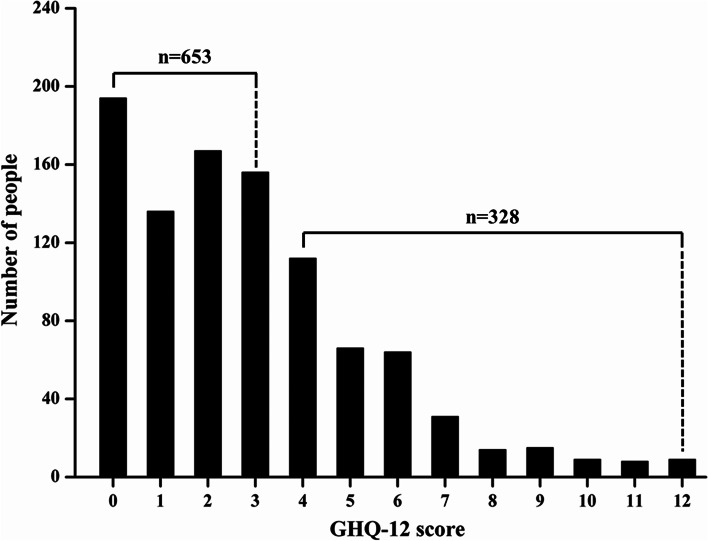
Verification
Claims the paper makes
The claims and statistics of this paper haven’t been checked yet.
Free: it reads the open-access text and checks the first 5 claims that cite a source we can check. Create a free account to check every claim.
Claims other papers make about this one
Each is checked against this paper’s own text: does it say what the citing paper says it does?
The source backs part of the claim, not all of it — or backs it for a different population, condition or comparison.
In the citing paper
“there is evidence that sports and physical activity can improve depression, stress and anxiety in prison inmates, which are problems manifested with a high frequency [6,7,8]”
From Effects of a Mindfulness and Physical Activity Programme on Anxiety, Depression and Stress Levels in People with Mental Health Problems in a Prison: A Controlled Study (2023) · cites this paper as [7]
Experimental — accuracy not yet measured
Self-check
Percentages, sums and reported differences re-computed from the paper’s own numbers.
The self-check needs the paper’s full text.
Citations
Cites
Huang, Y., & Zhao, N. (2020) · Psychiatry Research · doi:10.1016/j.psychres.2020.112954 · Cited by 3,736
Pappa, S., Ntella, V., Giannakas, T., Giannakoulis, V. G., Papoutsi, E., & Katsaounou, P. (2020) · Brain Behavior and Immunity · doi:10.1016/j.bbi.2020.05.026 · Cited by 3,617
Prevalence of mental disorders in China: a cross-sectional epidemiological study
Huang, Y., Wang, Y., Wang, H., Liu, Z., Yu, X., Yan, J., Yu, Y., Kou, C., Xu, X., Lu, J., et al. (2019) · The Lancet Psychiatry · doi:10.1016/s2215-0366(18)30511-x · Cited by 2,335
Self-citationLuo, M., Guo, L., Yu, M., Jiang, W., & Wang, H. (2020) · Psychiatry Research · doi:10.1016/j.psychres.2020.113190 · Cited by 1,615
Risk factors for suicide in individuals with depression: a systematic review
Hawton, K., Casañas i Comabella, C., Haw, C., & Saunders, K. (2013) · Journal of Affective Disorders · doi:10.1016/j.jad.2013.01.004 · Cited by 1,469 · cited 1×
“Many emotional and physical health problems, as well as decrease of the ability to function at work and home, could be elicited by depression [39, 40].”
BackgroundThe effect of COVID-19 on youth mental health
Liang, L., Ren, H., Cao, R., Hu, Y., Qin, Z., Li, C., & Mei, S. (2020) · Psychiatric Quarterly · doi:10.1007/s11126-020-09744-3 · Cited by 971 · cited 1×
“The scale with higher total scores indicated higher degrees of disturbance of the mental health status [27].”
BackgroundZhang, J., Wu, W., Zhao, X., & Zhang, W. (2020) · Precision Clinical Medicine · doi:10.1093/pcmedi/pbaa006 · Cited by 554 · cited 3×
“Discussion Increasing attention has been paid on the mental health issues of frontline healthcare workers during the global public health emergency [18, 31].”
BackgroundCOVID-19 Cases and Deaths in Federal and State Prisons
Saloner, B., Parish, K., Ward, J. A., DiLaura, G., & Dolovich, S. (2020) · JAMA · doi:10.1001/jama.2020.12528 · Cited by 399
Sareen, J., Cox, B. J., Clara, I., & Asmundson, G. J. G. (2005) · Depression and Anxiety · doi:10.1002/da.20072 · Cited by 389 · cited 1×
“Excessive anxiety might lead to several harmful consequences including lower quality of life [36], physical chronic conditions [37], and relationship complications [38].”
BackgroundPoliti, P. L., Piccinelli, M., & Wilkinson, G. (1994) · Acta Psychiatrica Scandinavica · doi:10.1111/j.1600-0447.1994.tb01620.x · Cited by 289
Stress and coping during COVID-19 pandemic: Result of an online survey
Kar, N., Kar, B., & Kar, S. (2021) · Psychiatry Research · doi:10.1016/j.psychres.2020.113598 · Cited by 275
Yu, H., Li, M., Li, Z., Xiang, W., Yuan, Y., Liu, Y., Li, Z., & Xiong, Z. (2020) · BMC Psychiatry · doi:10.1186/s12888-020-02826-3 · Cited by 272
Anxiety, Depression, and Quality of Life in Primary Care Patients
Brenes, G. A. (2007) · The Primary Care Companion to The Journal of Clinical Psychiatry · doi:10.4088/pcc.v09n0606 · Cited by 243 · cited 1×
“Excessive anxiety might lead to several harmful consequences including lower quality of life [36], physical chronic conditions [37], and relationship complications [38].”
BackgroundCOVID-19 pandemic- knowledge, perception, anxiety and depression among frontline doctors of Pakistan
Amin, F., Sharif, S., Saeed, R., Durrani, N., & Jilani, D. (2020) · BMC Psychiatry · doi:10.1186/s12888-020-02864-x · Cited by 161
Internal consistency and factor structure of the Chinese Health Questionnaire
Cheng, T. A., Wu, J. T., Chong, M. Y., & Williams, P. (1990) · Acta Psychiatrica Scandinavica · doi:10.1111/j.1600-0447.1990.tb01389.x · Cited by 152
Cheng, W.-J., & Cheng, Y. (2017) · Occupational and Environmental Medicine · doi:10.1136/oemed-2016-103898 · Cited by 139
The General Health Questionnaire: a psychometric analysis using latent trait theory
Andrich, D., & Schoubroeck, L. V. (1989) · Psychological Medicine · doi:10.1017/s0033291700012502 · Cited by 126
Yang, T., Huang, L., & Wu, Z.-Y. (2003) · PubMed · Cited by 100
Smoking by people with mental illness and benefits of smoke-free mental health services
Campion, J., Checinski, K., Nurse, J., & McNeill, A. (2008) · Advances in Psychiatric Treatment · doi:10.1192/apt.bp.108.005710 · Cited by 86
A Factor Analytic Study of the Twelve Item General Health Questionnaire
Worsley, A., & Gribbin, C. (1977) · Australian & New Zealand Journal of Psychiatry · doi:10.3109/00048677709159577 · Cited by 86
Mäkikangas, A., Feldt, T., Kinnunen, U., Tolvanen, A., Kinnunen, M.-L., & Pulkkinen, L. (2006) · Psychological Assessment · doi:10.1037/1040-3590.18.4.444 · Cited by 85
Chirico, F., & Magnavita, N. (2021) · Workplace Health & Safety · doi:10.1177/2165079920950161 · Cited by 71
The association between stress levels and food consumption among Iranian population.
Roohafza, H., Sarrafzadegan, N., Sadeghi, M., Rafieian‐Kopaei, M., Sajjadi, F., & Khosravi‐Boroujeni, H. (2013) · PubMed · Cited by 70
Grover, S., Sahoo, S., Dua, D., Mehra, A., & Nehra, R. (2020) · International Journal of Mental Health and Addiction · doi:10.1007/s11469-020-00408-8 · Cited by 66
Fovet, T., Lancelevée, C., Eck, M., Scouflaire, T., Bécache, E., Dandelot, D., Giravalli, P., Guillard, A., Horrach, P., Lacambre, M., et al. (2020) · L'Encéphale · doi:10.1016/j.encep.2020.05.002 · Cited by 44
Drissi, N., Alhmoudi, A., Al Nuaimi, H., Alkhyeli, M., Alsalami, S., & Ouhbi, S. (2020) · JMIR Formative Research · doi:10.2196/19876 · Cited by 44
Guo, J., Fu, M., Xing, J., Qu, Z., & Wang, X. (2017) · Personality and Individual Differences · doi:10.1016/j.paid.2017.01.046 · Cited by 43
Mental health status of Chinese residents during the COVID-19 epidemic
Jiang, W., Liu, X., Zhang, J., Wang, J., & Feng, Z. (2020) · BMC Psychiatry · doi:10.1186/s12888-020-02966-6 · Cited by 39
Morgan, A. J., Reavley, N. J., Jorm, A. F., & Beatson, R. (2017) · Social Psychiatry and Psychiatric Epidemiology · doi:10.1007/s00127-017-1391-z · Cited by 38 · cited 1×
“This might be due to the fact that providing emotional support from family and friends and maintaining contact were positive treatments to protect mental health [49].”
BackgroundAnxiety disorders and marital satisfaction.
Kasalová, P., Praško, J. P., Holubová, M., Vrbová, K., Zmeškalová, D., Šlepecký, M., & Grambal, A. (2018) · PubMed · Cited by 35
The Brazilian Penitentiary System under the Threat of COVID-19
Ribeiro, L. M. L., & Diniz, A. M. A. (2020) · Victims & Offenders · doi:10.1080/15564886.2020.1827109 · Cited by 24
Zhang, X., & Wang, L. (2021) · Asian Journal of Criminology · doi:10.1007/s11417-021-09345-4 · Cited by 24
Frontline Health Care Workers’ Mental Workload During the COVID-19 Pandemic: A Cross-Sectional Study
Du, M., & Hu, K. (2021) · Asia Pacific Journal of Public Health · doi:10.1177/1010539521997257 · Cited by 20
COVID-19: digital equivalence of health care in English prisons
Edge, C., Hayward, A. C., Whitfield, A., & Hard, J. (2020) · The Lancet Digital Health · doi:10.1016/s2589-7500(20)30164-3 · Cited by 19
Kenari, M. A. (2014) · Advances in Applied Sociology · doi:10.4236/aasoci.2014.43011 · Cited by 16
Zhu, X., Xia, M. L., Li, S., Hu, Y., Zhang, L., Lu, Y., Zhang, Y., & Guo, X. (2020) · International Journal of Mental Health Promotion · doi:10.32604/ijmhp.2020.011097 · Cited by 16
Jin, Y., Zhang, Y.-S., Zhang, Q., Rao, W., Zhang, L.-L., Cui, L.-J., Li, J.-F., Lin, L., Ungvari, G. S., Jackson, T., et al. (2020) · Frontiers in Psychiatry · doi:10.3389/fpsyt.2020.549148 · Cited by 15
Lock Unlock: The Impact of COVID-19 on Health Security in Pakistani and Indian Prisons
Dmello, J. R., & Ranjan, S. (2020) · Victims & Offenders · doi:10.1080/15564886.2020.1822973 · Cited by 10
Liu, Y., Liu, X., Gao, B., Li, C., & Liang, X.-S. (2020) · doi:10.21203/rs.3.rs-32833/v1 · Cited by 7
A person in a closed environment as a psychological problem
Klochko, Y. V. (2013) · Psychology in Russia State of Art · doi:10.11621/pir.2013.0412 · Cited by 4
COVID-19, Prison Visits, and the Value of a Cup of Coffee
Doyle, T. J. (2020) · Annals of Internal Medicine · doi:10.7326/m20-3073 · Cited by 3
Zhang, X., Sun, J., Sun, M., Wang, J., Li, Y., Wu, L., Mao, F., Cao, F., & Luan, X. (2021) · Journal of Psychosocial Nursing and Mental Health Services · doi:10.3928/02793695-20210623-03 · Cited by 3
Self-citation
Research works printed but not linked: 5
- 19. Dean A, Sullivan K, Soe M. OpenEpi: Open Source Epidemiologic Statistics for Public Health, Version (2013). Available online at: www. openE pi. com.
- 21. Buck N, Gershuny J, Rose D, Scott J, editors. Changing households: the British household panel survey 1990-1992. Essex: ESRC Research Centre on Micro-Social Change, University of Essex; 1994.
- 30. Wang W, Ding L, Liao Z. The best thresholds and the screening features among the three scoring methods of the 12-item general health ques- tionnaire. Chin J Psychiatry. 2012;45:349-53.
- 38. Kasalova P, Prasko J, Holubová M, Vrbova K, Grambal A. Anxiety disorders and maritalsatisfaction. Neuro Endocrinol Lett. 2017;38(8):555-64.
- 50. Chirico F, Ferrari G. Role of the workplace in implementing mental health interventions for high-risk groups among the working age population after the COVID-19 pandemic. J Health Soc Sci. 2021;6(2):145-50.
Cited by
Gallego, J., Cangas, A. J., Mañas, I., Aguilar-Parra, J. M., Langer, Á. I., Navarro, N., & Lirola, M.-J. (2023) · Healthcare · doi:10.3390/healthcare11040555 · Cited by 12
Zeng, Y., Xiao, J., Zhang, Q., Liu, X., & Ai, M. (2023) · Frontiers in Public Health · doi:10.3389/fpubh.2023.1218825 · Cited by 12
Yosep, I., Fitria, N., Mardhiyah, A., & Hikmat, R. (2025) · Child and Adolescent Psychiatry and Mental Health · doi:10.1186/s13034-025-00998-y · Cited by 11
García‐Iglesias, J. J., Chirico, F., Rizzo, A., Szarpak, Ł., Khabbache, H., Yıldırım, M., Fagundo-Rivera, J., & Gómez-Salgado, J. C. (2024) · Risk Management and Healthcare Policy · doi:10.2147/rmhp.s487565 · Cited by 2
The Influence Mechanism of Prison Police’s Depression: A Cross-Lagged Analysis
Zeng, X., & Guo, H. (2024) · Criminal Justice and Behavior · doi:10.1177/00938548241240307 · Cited by 2
Metadata
- Authors
- Li, Y., Wen, Z., He, Y., & Huang, J.
- Affiliations
- Minzu University of China (CN)
- Third People's Hospital of Chengdu (CN)
- Sichuan University (CN)
- Corresponding author
- Huang, Jingting
- Venue
- BMC Psychiatry
- Published
- 2022-01-11
- Volume
- 22
- Issue
- 1
- Pages
- 33-33
- ISSN
- 1471-244X (ISSN-L)
- PMC
- PMC8749117
- OpenAlex
- W4206220873
- Cited by
- 8
- References
- 42
- Citations by year
- 2026: 1 · 2025: 2 · 2024: 3 · 2023: 2
- FWCI
- 1.60
- Type
- journal article
- Language
- en
- Open access
- gold
- doi.org
- Licence
- cc-by
- creativecommons.org/licenses/by/4.0 (tdm)
- creativecommons.org/licenses/by/4.0 (vor)
- Locations
- BMC Psychiatry (publishedVersion, cc-by)
- PubMed Central (publishedVersion, cc-by)
- PubMed (publishedVersion)
- DOAJ (DOAJ: Directory of Open Access Journals) (submittedVersion, cc-by-sa)
- Topics
- Social Sciences › Psychology › Clinical Psychology › COVID-19 and Mental Health
- Health Sciences › Medicine › Public Health, Environmental and Occupational Health › Occupational Health and Burnout
- Health Sciences › Medicine › Public Health, Environmental and Occupational Health › Employment and Welfare Studies
- Keywords
- prison officers, mental health, COVID-19 pandemic, anxiety, depression, frontline workers, night shift work, smoking, physical health, chronic disease, occupational stress, risk factors, GHQ-12, gender differences, sleep disorders, work-life balance, social support, peer support, coping strategies
- MeSH terms
- COVID-19, SARS-CoV-2, Anxiety, China, Communicable Disease Control, Cross-Sectional Studies, Depression, Health Status, Humans, Male, Prisons, Surveys and Questionnaires
About these checks
Registry, retraction, Cites and statistics results are computed, not judged, with one exception: a printed reference that no index lists is read once by a model before it counts as a citation error. Claims are extracted by a model and kept only when their quote appears verbatim in the text; each cited source is then checked, with a model’s help, for whether it says what the claim relies on. Those verdicts can be wrong — read the claim’s quote and the cited source before relying on one.
Statistics and arithmetic are recomputed, not judged.
Confidence bands are shown only for fields calibrated on our annotated test set. None is calibrated yet, so no band is shown.
What counts as a claim ›How we measure confidence ›How we check this ›
Are you an author, or do you see a problem with this page? Request a review
Data sources
Bibliographic data: Semantic Scholar, OpenAlex, Crossref.
Contains information from the Semantic Scholar Academic Graph Datasets, made available under the ODC Attribution License (ODC-BY 1.0).
Semantic Scholar’s data is described in: Kinney, R., et al. (2023). The Semantic Scholar Open Data Platform. arXiv:2301.10140.
