

Extreme weather events in developing countries and related injuries and mental health disorders - a systematic review
Open accessThe DOI matches its Crossref record; 45 of the 48 references it cites were found in a registry or an index.
Abstract
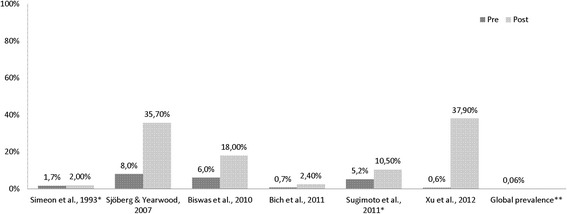
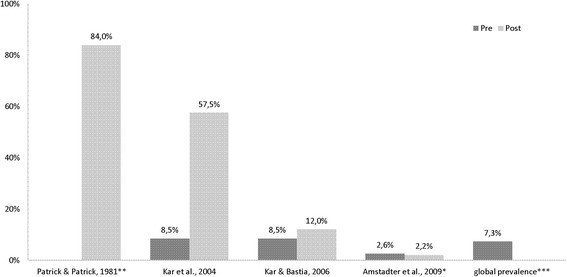
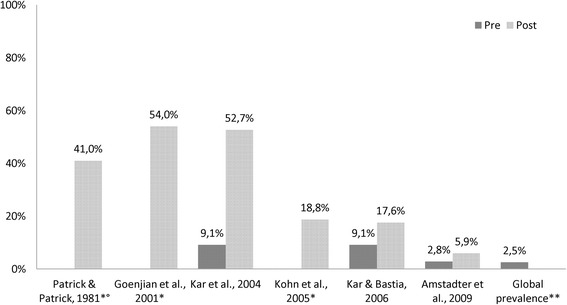
BACKGROUND: Due to climate change, extreme weather events have an incremental impact on human health. Injuries and mental health disorders are a particular burden of disease, which is broadly investigated in high income countries. Most distressed populations are, however, those in developing countries. Therefore, this study investigates mental and physical health impacts arising from extreme weather events in these populations. METHOD: Post-traumatic Stress Disorder (PTSD), injury [primary outcomes], anxiety and depressive disorders [secondary outcomes], caused by weather extremes were systematically analyzed in people of developing countries. A systematic review of observational studies was conducted searching six databases, complemented by hand search, and utilizing two search engines. Review processing was done independently by two reviewers. Prevalence rates were analyzed in a pre/post design; an additional semi-structured search was conducted, to provide reference data for studies not incorporating reference values. RESULTS: All 17 identified studies (70,842 individuals) indicate a disease increase, compared to the reference data. Increase ranges from 0.7-52.6 % for PTSD, and from 0.3-37.3 % for injury. No studies on droughts and heatwaves were identified. All studies were conducted in South America and Asia. CONCLUSION: There is an increased burden of psychological diseases and injury. This finding needs to be incorporated into activities of prevention, preparedness and general health care of those developing countries increasingly experiencing extreme weather events. There is also a gap in research in Africa (in quantity and quality) of studies in this field and a predominant heterogeneity of health assessment tools. PROSPERO registration no.: CRD42014009109.
Overview
The claims and statistics of this paper haven’t been checked yet.
Free: it reads the open-access text and checks the first 5 claims that cite a source we can check. Create a free account to check every claim.
Integrity signals
Registry
Cites
Statistics
Figures
Verification
Claims the paper makes
The claims and statistics of this paper haven’t been checked yet.
Free: it reads the open-access text and checks the first 5 claims that cite a source we can check. Create a free account to check every claim.
Claims other papers make about this one
Each is checked against this paper’s own text: does it say what the citing paper says it does?
The cited source says what the claim attributes to it.
In the citing paper
“Several systematic and scoping reviews have identified LMIC-specific evidence supporting the various negative mental health outcomes associated with climate change and climate-related disasters [6,14,15,16].”
From A Scoping Review of Climate Change, Climate-Related Disasters, and Mental Disorders among Children in Low- and Middle-Income Countries (2022) · cites this paper as [14]
The cited source says what the claim attributes to it.
In the citing paper
“For example, Rataj et al. [14] identified increased burdens of PTSD, anxiety, and depression associated with climate-related disasters in developing countries.”
From A Scoping Review of Climate Change, Climate-Related Disasters, and Mental Disorders among Children in Low- and Middle-Income Countries (2022) · cites this paper as [14]
The check wasn’t confident either way, so it gives no verdict — never disputed.
In the citing paper
“Second, our work was novel given that no previous reviews have explored this specific topic.”
From A Scoping Review of Climate Change, Climate-Related Disasters, and Mental Disorders among Children in Low- and Middle-Income Countries (2022) · cites this paper as [14]
Experimental — accuracy not yet measured
Self-check
Percentages, sums and reported differences re-computed from the paper’s own numbers.
The self-check needs the paper’s full text.
Citations
Cites
Diagnostic and Statistical Manual of Mental Disorders
Williams, J. B. W., & First, M. (2013) · Encyclopedia of Social Work · doi:10.1093/acrefore/9780199975839.013.104 · Cited by 109,519
The Measurement of Observer Agreement for Categorical Data
Landis, J. R., & Koch, G. G. (1977) · Biometrics · doi:10.2307/2529310 · Cited by 81,148 · cited 2×
“86; percentage agreement: 91 %) [23].”
(2014) · Medical Entomology and Zoology · Cited by 17,633
Diagnostic and Statistical Manual of Mental Disorders(DSM)
(2008) · Encyclopedia of Counseling · doi:10.4135/9781412963978.n182 · Cited by 10,830
60,000 Disaster Victims Speak: Part I. An Empirical Review of the Empirical Literature, 1981–2001
Norris, F. H., Friedman, M. J., Watson, P. J., Byrne, C. M., Diaz, E., & Kaniasty, K. (2002) · Psychiatry: Interpersonal and Biological Processes · doi:10.1521/psyc.65.3.207.20173 · Cited by 3,128
Managing the health effects of climate change
Costello, A., Abbas, M., Allen, A., Ball, S., Bell, S., Bellamy, R., Friel, S., Groce, N., Johnson, A., Kett, M., et al. (2009) · The Lancet · doi:10.1016/s0140-6736(09)60935-1 · Cited by 3,102
Herzog, R., Álvarez-Pasquin, M. J., Díaz, C., Del Barrio, J. L., Estrada, J. M., & Gil, Á. (2013) · BMC Public Health · doi:10.1186/1471-2458-13-154 · Cited by 1,652 · cited 1×
“[18].”
Mental Health: New Understanding, New Hope
(2001) · JAMA · doi:10.1001/jama.286.19.2391 · Cited by 1,598
Global prevalence of anxiety disorders: a systematic review and meta-regression
Baxter, A. J., Scott, K. M., Vos, T., & Whiteford, H. A. (2013) · Psychological Medicine · doi:10.1017/s003329171200147x · Cited by 1,537
Norris, F. H., Friedman, M. J., & Watson, P. J. (2002) · Psychiatry: Interpersonal and Biological Processes · doi:10.1521/psyc.65.3.240.20169 · Cited by 1,137 · cited 1×
“The methodological insufficiencies of the current disaster literature from these countries include that sample selection is often not conducted in a representative manner and that there are no comparison groups [40].”
Background
Research works printed but not linked: 5
- IPCC The regional impact of climate change, extreme weather events: IPCC special reports on climate change 2001 Geneva Intergovernmental Panel on Climate Change
- Zacher W Klimawandel und Gesundheit: Fakten, Folgen, Forderungen - für Industrie- und Entwicklungsländer 2011 Bonn Germanwatch
- Mathers CD Stein C Fat DM Rao C Global burden of disease 2000: version 2: methods and results 2002 Geneva World Health Organization
- WHO Caring for children and adolescents with mental disorders: setting WHO directions 2003 Geneva World Health Organization
- WHO Violence, injuries, and disability: biennial 2006–2007 report 2008 Geneva World Health Organization
Cited by
Health effects of climate change: an overview of systematic reviews
Rocque, R. J., Beaudoin, C., Ndjaboue, R., Cameron, L., Poirier-Bergeron, L., Poulin-Rheault, R.-A., Fallon, C., Tricco, A. C., & Witteman, H. O. (2021) · BMJ Open · doi:10.1136/bmjopen-2020-046333 · Cited by 932
Global climate change and mental health
Palinkas, L. A., & Wong, M. (2020) · Current Opinion in Psychology · doi:10.1016/j.copsyc.2019.06.023 · Cited by 493
“Residents of low and middle-income countries are especially vulnerable to these outcomes due to their increased exposure to extreme weather events, high levels of poverty, and lack of access to services [10,16,18,19].”
BackgroundMagnano San Lio, R., Favara, G., Maugeri, A., Barchitta, M., & Agodi, A. (2023) · International Journal of Environmental Research and Public Health · doi:10.3390/ijerph20031681 · Cited by 440
“These changes result in increasing waterborne disease, higher risk of foodborne and vector-borne diseases, and the potential increases in negative mental health outcomes [8,9].”
BackgroundGlobal Warming and Its Health Impact
Rossati, A. (2017) · The International Journal of Occupational and Environmental Medicine · doi:10.15171/ijoem.2017.963 · Cited by 353
“The higher burden of natural disasters is endured by people living in low-income countries because they are directly affected by environmental degradation and they have less chance to defend themselves against the threat of their immediate environment and health.(12)”
BackgroundHealth, Wellbeing and the Changing Structure of Communities
(2023) · Climate Change 2022 – Impacts, Adaptation and Vulnerability · doi:10.1017/9781009325844.009 · Cited by 294
Environmental exposures and depression: biological mechanisms and epidemiological evidence
van den Bosch, M., & Meyer-Lindenberg, A. (2019) · Annual Review of Public Health · doi:10.1146/annurev-publhealth-040218-044106 · Cited by 254
Assistive products and the Sustainable Development Goals (SDGs)
Tebbutt, E., Brodmann, R., Borg, J., MacLachlan, M., Khasnabis, C., & Horvath, R. (2016) · Globalization and Health · doi:10.1186/s12992-016-0220-6 · Cited by 200
“There is also an increased incidence of disease and injury as a result of extreme weather events, which leads to an increased need for assistive products (Rataj et al, [28]).”
BackgroundIntegrating Public Health into Climate Change Policy and Planning: State of Practice Update
Fox, M., Zuidema, C., Bauman, B., Burke, T., & Sheehan, M. (2019) · International Journal of Environmental Research and Public Health · doi:10.3390/ijerph16183232 · Cited by 157
“found increased burden of injuries and mental health impacts related to extreme weather events in Latin America and Asia, highlighting the need for enhanced public health infrastructure from prevention to treatment [111].”
BackgroundEpidemiology of floods in sub-Saharan Africa: a systematic review of health outcomes
Suhr, F., & Steinert, J. (2022) · BMC Public Health · doi:10.1186/s12889-022-12584-4 · Cited by 159
(IPCC), I. P. O. C. C. (2023) · Cambridge University Press eBooks · doi:10.1017/9781009325844.012 · Cited by 143
Sharpe, I., & Davison, C. M. (2021) · BMJ Open · doi:10.1136/bmjopen-2021-051908 · Cited by 118
Thoma, M. V., Rohleder, N., & Rohner, S. L. (2021) · Frontiers in Psychiatry · doi:10.3389/fpsyt.2021.675936 · Cited by 117
Climate change and gendered vulnerability: A systematic review of women’s health
Anjum, G., & Aziz, M. (2025) · Women s Health · doi:10.1177/17455057251323645 · Cited by 113
“91 Additionally, the impact of climate change on women’s health in India highlights the importance of incorporating a gendered perspective into policy frameworks to mitigate adverse outcomes and empower women as agents of social change.”
Ghazali, D. A., Guericolas, M., Thys, F., Sarasin, F., González, P. I. A., & Casalino, E. (2018) · International Journal of Environmental Research and Public Health · doi:10.3390/ijerph15071379 · Cited by 113
“The demographic and socioeconomic impacts of an increase in forced population displacements would surely result in higher rates of stress-related psychiatric disorders [52].”
BackgroundLi, D., Zhang, Y., Li, X., Zhang, K., Lü, Y., & Brown, R. D. (2023) · The Science of The Total Environment · doi:10.1016/j.scitotenv.2023.164435 · Cited by 92
Kelman, I., Ayeb-Karlsson, S., Rose-Clarke, K., Prost, A., Ronneberg, E., Wheeler, N., & Watts, N. (2021) · Environmental Research Letters · doi:10.1088/1748-9326/abe57d · Cited by 82
Patwary, M. M., Bardhan, M., Haque, M. A., Moniruzzaman, S., Gustavsson, J., Khan, M. M. H., Koivisto, J. E., Salwa, M., Mashreky, S. R., Rahman, A., et al. (2024) · Environmental Research · doi:10.1016/j.envres.2024.118436 · Cited by 83
Lindsay, S., Hsu, S., Ragunathan, S., & Lindsay, J. B. (2022) · Disability and Rehabilitation · doi:10.1080/09638288.2022.2150328 · Cited by 99
Ho, H. C., Wong, M. S., Yang, L., Shi, W., Yang, J., Bilal, M., & Chan, T. (2017) · Environment International · doi:10.1016/j.envint.2017.12.001 · Cited by 84
Strategies for Delivering Mental Health Services in Response to Global Climate Change
Palinkas, L., O’Donnell, M., Lau, W., & Wong, M. (2020) · doi:10.20944/preprints202010.0150.v1 · Cited by 77
“These include women, children, and youth, persons with disabilities, poor people, migrants, older persons, individuals with a history of mental health problems, indigenous peoples, and individuals with little professional or social support [2,4,5,10,11,91,92].”
BackgroundAre climate change and mental health correlated?
Ramadan, A., & Ataallah, A. G. (2021) · General Psychiatry · doi:10.1136/gpsych-2021-100648 · Cited by 84
The impact of extreme weather events on mental health in Africa: A scoping review of the evidence
Deglon, M., Dalvie, M. A., & Abrams, A. L. (2023) · The Science of The Total Environment · doi:10.1016/j.scitotenv.2023.163420 · Cited by 69
The Impact of High Ambient Temperature on Human Sperm Parameters: A Meta-Analysis
Hoang-Thi, A.-P., Dang-Thi, A.-T., Phan-Van, S., Nguyen, T. B., Truong-Thi, P.-L., Le-Minh, T., Nguyễn, V. Q. H., & Nguyen, T. T. (2022) · Iranian Journal of Public Health · doi:10.18502/ijph.v51i4.9232 · Cited by 75
“In South America and Asia, climate change influences both mental and physical health, and the effects on populations are increasingly negative (42).”
Backgroundde Quidt, J., & Haushofer, J. (2016) · National Bureau of Economic Research · doi:10.3386/w22973 · Cited by 55
Chique, C., Hynds, P. D., Nyhan, M., Lambert, S., Boudou, M., & O’Dwyer, J. (2021) · International Journal of Hygiene and Environmental Health · doi:10.1016/j.ijheh.2021.113840 · Cited by 57
“…high poverty levels, increased exposure to extreme weather, and restricted access to “ recovery ” resources are likely associated with higher risks of psychological impairment following EWEs (McFarlane and Williams, 2012; Rataj et al., 2016; Berry et al., 2018; Morganstein and Ursano, 2020).”
BackgroundSharpe, I., & Davison, C. M. (2022) · International Journal of Environmental Research and Public Health · doi:10.3390/ijerph19052896 · Cited by 48
“While others have investigated climate change, climate-related disasters, and mental health among individuals in LMICs [14,16,70], none have explored this topic specifically among children.”
BackgroundZhang, R., Zhang, Y., & Dai, Z. (2022) · International Journal of Environmental Research and Public Health · doi:10.3390/ijerph19052511 · Cited by 52
Regular physical activity across the lifespan to build resilience against rising global temperatures
Deshayes, T. A., & Périard, J. D. (2023) · EBioMedicine · doi:10.1016/j.ebiom.2023.104793 · Cited by 37
Planetary Health and Mental Health Nexus: Benefit of Environmental Management
Kumar, P., Brander, L., Kumar, M., & Cuijpers, P. J. (2023) · Annals of Global Health · doi:10.5334/aogh.4079 · Cited by 39
Climate change, 24-hour movement behaviors, and health: a mini umbrella review
Zisis, E., Hakimi, S., & Lee, E. (2021) · Global Health Research and Policy · doi:10.1186/s41256-021-00198-z · Cited by 35
“One of these reviews [35] found that experiences with natural Zisis et al.”
BackgroundInfluentialTran, N. Q. L., Le, H. H. T. C., Pham, C. T., Nguyen, H. T. T., Tran, N. D., Tran, T.-H. T., Nghiem, S. H., Luong, L. M. T., Bui, V., Nguyen‐Huy, T., et al. (2023) · The Lancet Regional Health - Western Pacific · doi:10.1016/j.lanwpc.2023.100943 · Cited by 34
Addressing Pluvial Flash Flooding through Community-Based Collaborative Research in Tijuana, Mexico
Goodrich, K. A., Basolo, V., FELDMAN, D. L., Matthew, R. A., Schubert, J. E., Luke, A., Eguiarte, A., Boudreau, D., Serrano, K., Reyes, A., et al. (2020) · Water · doi:10.3390/w12051257 · Cited by 36
Climate change and health in North America: literature review protocol
Harper, S. L., Cunsolo, A., Babujee, A., Coggins, S., Aguilar, M. D., & Wright, C. J. (2021) · Systematic Reviews · doi:10.1186/s13643-020-01543-y · Cited by 34
“Indirect climate change impacts on health occur via altered environmental conditions, such as climate change impacts on water quality and quantity, which increase waterborne disease [9–13]; shifting ecosystems, which increase the risk of foodborne disease [14–16], exacerbate food and nutritional security [17, 18], and…”
BackgroundEzell, J. M., Salari, S., Rooker, C., & Chase, E. C. (2021) · Traumatology An International Journal · doi:10.1037/trm0000302 · Cited by 34
Rother, H., Etzel, R. A., Shelton, M., Paulson, J. A., Hayward, R. A., & Theron, L. C. (2020) · Atmosphere · doi:10.3390/atmos11050493 · Cited by 34
“, storms, floods, droughts, heatwaves, wildfires, landslides) [8] has the potential to influence (directly and indirectly) the health and well-being of affected communities in different ways, which in turn influences the health of children and adolescents [4,9,10].”
BackgroundWiedermann, M., Siegmund, J. F., Donges, J. F., & Donner, R. V. (2021) · Frontiers in Climate · doi:10.3389/fclim.2021.618548 · Cited by 35
“potential agricultural losses (Karpouzoglou and Barron, 2014) and considerable health risks in that specific area (Rataj et al., 2016).”
BackgroundRother, H., Hayward, R. A., Paulson, J. A., Etzel, R. A., Shelton, M., & Theron, L. C. (2021) · The Journal of Climate Change and Health · doi:10.1016/j.joclim.2021.100087 · Cited by 36
Sapari, H. B., Selamat, M. I., Isa, M. R., Ismail, R., & Mahiyuddin, W. R. W. (2023) · JMIR Research Protocols · doi:10.2196/44702 · Cited by 33
“…heat waves on older people [31]; children [41,42]; men and women [43]; pregnant women [44]; people with chronic conditions, such as mental illness [45,46], cardiovascular disease [47-50], and kidney disease [51]; people experiencing homelessness; people with low socioeconomic status and poor…”
BackgroundMental Health Impacts of Tornadoes: A Systematic Review
Lee, S., & First, J. M. (2022) · International Journal of Environmental Research and Public Health · doi:10.3390/ijerph192113747 · Cited by 33
Climate change, ambient air pollution, and students' mental health
Wang, J., & Liu, X. (2024) · World Journal of Psychiatry · doi:10.5498/wjp.v14.i2.204 · Cited by 28
Niedzwiedz, C. L., Olsen, J. R., Rizeq, J., Afework, T., Hill-Harding, C. K. V., Shaw, R. J., Thomas, R., Kariuki, S. M., Katikireddi, S. V., Weaver, A. J., et al. (2024) · Journal of Epidemiology & Community Health · doi:10.1136/jech-2024-222716 · Cited by 26
Ettinger, J., Walton, P., Painter, J., Flocke, S. A., & Otto, F. E. L. (2023) · Environmental Communication · doi:10.1080/17524032.2023.2259623 · Cited by 29
“Emotions are an important aspect of how individuals engage with, and act upon, environmental issues (Brosch, 2021), and extreme weather experiences are particularly associated with negative mental health impacts (Rataj et al., 2016).”
BackgroundAssociation between climate change and patient health outcomes: a mixed-methods systematic review
Turzáková, J., Kohanová, D., Solgajová, A., & Sollár, T. (2024) · BMC Nursing · doi:10.1186/s12912-024-02562-z · Cited by 24
“…with emerging diseases and infections becoming more prevalent due to extreme weather conditions, such as heat waves, floods, and storm intensity [46, 47], or they can result from subsequent changes in environmental conditions that lead to an increase in waterborne diseases [48], foodborne…”
Surgery, anesthesia, and pathology: A practical primer on greening the delivery of surgical care
Asfaw, S. H., Galway, U. A., Hata, T., Moyle, J. K., & Gordon, I. O. (2021) · The Journal of Climate Change and Health · doi:10.1016/j.joclim.2021.100076 · Cited by 25
Kip, A., Valencia, S., Glunz, E., Lowe, S. R., Tam, K., & Morina, N. (2024) · Epidemiology and Psychiatric Sciences · doi:10.1017/s2045796024000672 · Cited by 23
“Previous reviews and meta-analyses have only focused on single events in the Global South (e.g., Cénat et al. , 2020; Hosseinnejad et al. , 2022) or narratively summarised available evidence on the impact of weather extremes in the Global South (e.g., Deglon et al. , 2023; Rataj et al. , 2016).”
Jerin, T., Chowdhury, M. A., Azad, A. K., Zaman, S., Mahmood, S., Islam, S. L. U., & Hossain, M. J. (2023) · Natural Hazards Research · doi:10.1016/j.nhres.2023.10.006 · Cited by 20
Vafeiadou, A., Banissy, M. J., Banissy, J. F. M., Higgins, J. P. T., & Howard, G. (2023) · Heliyon · doi:10.1016/j.heliyon.2023.e21457 · Cited by 19
“Similarly, populations in the Republic of Korea, the Philippines, and Vietnam were associated with increased PTSD symptoms when facing typhoons [36,44,68].”
BackgroundInfluentialPhysical rehabilitation in the context of a landslide that occurred in Brazil
de Carvalho, M. L., de Freitas, C. M., & Miranda, E. S. (2019) · BMC Public Health · doi:10.1186/s12889-019-7964-x · Cited by 19
First, J. M., Ellis, K. N., Held, M. L., & Glass, F. (2021) · International Journal of Environmental Research and Public Health · doi:10.3390/ijerph18168609 · Cited by 21
Lung cancer in Asia: the impact of climate change
Guzman, R. B. D., Malik, M., Singh, N., Loong, H. H.-F., & Mohan, A. (2024) · EClinicalMedicine · doi:10.1016/j.eclinm.2024.102680 · Cited by 17
“43,44 Residents of LMICs in the region are especially vulnerable to these mental health outcomes due to a number of factors.”
Projection of extreme climatic events related to frequency over different regions of Tanzania
Luhunga, P. (2022) · Journal of Water and Climate Change · doi:10.2166/wcc.2022.357 · Cited by 17
“…dependence on rain-fed agriculture and natural resources for their livelihood, limited resources and technology for adaptation, and weak institutional capacity to adapt and mitigate the impacts (Freeman & Warner 2001; Ahmed et al. 2009; Rataj et al. 2016; Ampaire et al. 2017; Eckstein et al. 2017).”
BackgroundA dual-continuum framework to evaluate climate change impacts on mental health
Vergunst, F., Smith, R. W., Massazza, A., Berry, H. L., & Olff, M. (2024) · Nature Mental Health · doi:10.1038/s44220-024-00326-x · Cited by 19
“These events cause widespread damage and destruction and contribute to acute stress, which is associated with increased risk for a range of psychiatric disorders through well-documented causal pathways 6,35–38 .”
Neue intensivmedizinische Herausforderungen durch Klimawandel und globale Erderwärmung
Bein, T., Karagiannidis, C., Gründling, M., & Quintel, M. (2020) · Der Anaesthesist · doi:10.1007/s00101-020-00783-w · Cited by 16
Youth Resilience to Drought: Learning from a Group of South African Adolescents
Theron, L. C., Mampane, M. R., Ebersöhn, L., & Hart, A. (2020) · International Journal of Environmental Research and Public Health · doi:10.3390/ijerph17217896 · Cited by 15
“That focus is overdue, given the historic inattention to the health and wellbeing of African youth who are exposed to natural disasters in general and to drought in specific [56].”
BackgroundProjected changes in climate extremes over Tanzania
Luhunga, P. (2025) · Scientific Reports · doi:10.1038/s41598-024-79432-w · Cited by 15
Jiang, G., Ji, Y., Chen, C., Wang, X., Ye, T., Ling, Y., & Wang, H. (2022) · BMC Public Health · doi:10.1186/s12889-022-14085-w · Cited by 16
“) has begun to be paid more attention [10].”
BackgroundLeontjevaite, K., Donnelly, A. A., & Macintyre, T. E. (2024) · Air · doi:10.3390/air2030016 · Cited by 13
“Lower SES populations, including minorities [258], often reside in areas lacking green spaces and higher pollution levels due to proximity to industrial zones, heavy traffic, and other pollution sources, work in jobs involving harmful exposures, and are more exposed to extreme weather events [259].”
Climate cafés as a space for navigating climate emotions: A scoping review
Jong, A. D., Harris, S., Costanian, C., & Skinner, H. A. (2025) · The Journal of Climate Change and Health · doi:10.1016/j.joclim.2025.100466 · Cited by 15
“The health impacts of climate change are disproportionately experienced by those who are already vulnerable to climate events, including children and youth [5,16], racial minorities [17], Indigenous people [18], and those living in “ developing ” countries [19].”
Magalhães, S. D. S., Miranda, D. K., de Miranda, D. M., Malloy‐Diniz, L. F., & Romano‐Silva, M. A. (2018) · PLoS ONE · doi:10.1371/journal.pone.0204093 · Cited by 14
Personality profiles and meteoropathy intensity: A comparative study between young and older adults
Rzeszutek, M., Oniszczenko, W., Zalewska, I., & Pięta, M. (2020) · PLoS ONE · doi:10.1371/journal.pone.0241817 · Cited by 12
Extreme pollution, climate change, and depression
Khafaie, M. A., Sayyah, M., & Rahim, F. (2019) · Environmental Science and Pollution Research · doi:10.1007/s11356-019-05727-5 · Cited by 13
Hoang, T., Noy, I., & Van, T. L. (2025) · Health Economics · doi:10.1002/hec.70004 · Cited by 10
“It generally finds that PTSD and MDD often occur jointly in those affected by catastrophic events —see the reviews by Emily and Galea (2014), Rataj et al. (2016) and Beaglehole et al. (2018).”
Leka, S., & Jain, A. (2025) · SSRN Electronic Journal · doi:10.2139/ssrn.5114626 · Cited by 10
Counseling in the Anthropocene: Addressing Social Justice Amid Climate Change
Hilert, A. J. (2021) · Journal of Multicultural Counseling and Development · doi:10.1002/jmcd.12223 · Cited by 9
Assistive Technology and Disabilities in the Context of Sustainable Developmental Goals
Senjam, S. S., & Manna, S. (2024) · Springer eBooks · doi:10.1007/978-3-032-11375-7_67 · Cited by 9
Climate Change and Health Impacts in the South Pacific: A Systematic Review
Alam, M., Ali, M. F., Kundra, S., Nabobo‐Baba, U., & Alam, M. A. (2022) · Springer climate · doi:10.1007/978-3-031-15501-7_29 · Cited by 9
Impact of natural hazards on morbidity and physical incapacity of vulnerable groups in Mexico
Lome-Hurtado, A., White, P. C. L., & Touza, J. (2021) · International Journal of Disaster Risk Reduction · doi:10.1016/j.ijdrr.2021.102417 · Cited by 8
Does Multidimensional Poverty Affect Depression? Evidence from Peru
Barrantes, N., & Clausen, J. (2021) · Progress in Development Studies · doi:10.1177/14649934211059402 · Cited by 8
“The plausibility of the assumptions we make about the instruments we use might be contested based on some literature—mostly cross-sectional studies—that reveals that extreme weather events could have a direct impact on symptoms of major depression (Rataj et al., 2016).”
BackgroundKorneeva, Y. A. (2022) · International Journal of Environmental Research and Public Health · doi:10.3390/ijerph19020997 · Cited by 8
Garavito, G. A. A., Chaparro, L. T., Jasim, S., Zanatta, F., Miliou, I., Bampa, M., Huebner, G. M., & Keck, T. (2024) · International Journal of Environmental Research and Public Health · doi:10.3390/ijerph21111415 · Cited by 8
“…risk, there have been relatively few studies investigating the longer-term effects of climate change not associated with acute extreme weather, like long-term droughts or reduced biodiversity, or the indirect effects of climate change, such as eco-anxiety and migration [20,21,26,28].”
InfluentialA Global Perspective on Climate Change and Mental Health
Clayton, S., Aruta, J. J. B. R., Aylward, B., Cunsolo, A., Harper, S. L., & Berry, H. L. (2024) · Springer eBooks · doi:10.1007/978-3-031-56736-0_1 · Cited by 7
Sifelani, I., Matsikure, M., Songo, S., Kwembeya, M., & Kudejira, D. (2022) · South African Journal of Psychology · doi:10.1177/00812463221077608 · Cited by 6
“There are few documented postdisaster studies in Africa making the impact of disasters generally less understood (Rataj et al., 2016).”
BackgroundNzayisenga, E., Chan, C. W., Roome, A. B., Therrien, A., Sinclair, I., Taleo, G. K., Tarivonda, L., Tosiro, B., Malanga, M., Tagaro, M., et al. (2022) · Frontiers in Public Health · doi:10.3389/fpubh.2022.1017286 · Cited by 6
The Impact Of Heatwaves On Healthcare Services In Developing Countries: A Systematic Review
Sapari, H. B. (2024) · doi:10.53555/kuey.v30i5.3683 · Cited by 8
Heat and High Water: Nine Pathways to Climate Resilient Development
Talbot-Wright, H., & Vogt‐Schilb, A. (2023) · Inter-American Development Bank eBooks · doi:10.18235/0005214 · Cited by 5
Wambua, G. N., Corvetto, J. F., Wekesah, F. M., Bunker, A., Mthiyane, N., Muanido, A., Cumbe, V., Omondi, E., Hunt, X., & Iwuji, C. C. (2026) · Climate Risk Management · doi:10.1016/j.crm.2026.100797 · Cited by 4
“In developing countries (Asia and the Americas), increased psychological illnesses from EWEs were recorded (Rataj et al., 2016).”
Wang, B., Zhao, B., Han, C., Tang, Y., & Jin, C. (2024) · British Journal of Developmental Psychology · doi:10.1111/bjdp.12516 · Cited by 4
Trends and Decomposition of Changes in Mortality in Low‐ and Middle‐Income Countries, 1950–2019
Castro, M. C., Turra, C. M., & Ponmattam, J. (2025) · Population and Development Review · doi:10.1111/padr.70000 · Cited by 6
Strough, J., Best, R., Parker, A. M., Azhar, E., & Atshan, S. (2025) · International Journal of Environmental Research and Public Health · doi:10.3390/ijerph22101548 · Cited by 3
From Gold to Grief: The Psychological Toll of Climate Change on Mining Communities in Zimbabwe
Nyakuwanika, M., & Panicker, M. (2025) · Sustainability · doi:10.3390/su17167503 · Cited by 3
Climate Change Impact on Mental Health: Is Nature Fighting Us Back?
Silva, I., Jólluskin, G., Cardoso, P. R., & Byrne, A. M. (2023) · Climate change management · doi:10.1007/978-3-031-26592-1_4 · Cited by 3
Magalhães, S. D. S., Malloy‐Diniz, L. F., Rosa, D. V., Alvim-Soares, A., de Miranda, D. M., & Romano‐Silva, M. A. (2020) · medRxiv · doi:10.1101/2020.03.26.20044560 · Cited by 3
Social and Political Determinants of Health and Mental Health
Shim, R. S., & Taylor-Desir, M. J. (2022) · Springer eBooks · doi:10.1007/978-3-031-10239-4_29 · Cited by 2
Towards targeted heat resilience: A conceptual framework of urban heat-proof in Chengdu, China
Li, Y., Zhang, S., Li, X., Luo, S., Liu, Q., Zhong, Y., & Liu, S. (2025) · Sustainable Cities and Society · doi:10.1016/j.scs.2025.106725 · Cited by 2
Mishu, M. P., Rabbani, M. M. G., Vereeken, S., Tkach, E., Martin-Kerry, J., Chowdhury, T. F., Wahab, A., Mashreky, S. R., Huque, R., & Friend, R. (2025) · International Journal of Environmental Health Research · doi:10.1080/09603123.2025.2568035 · Cited by 2
“There is very little international cooperation on climate change and mental health, sharing knowledge, resources and best practices across borders, especially in developing countries where access to mental health services barely exists (Rataj et al. 2016; King et al. 2023).”
Seven Months After Tropical Cyclone Chido in Mayotte: Early Lessons and Brain Health Challenges
Reis, J. J., Ransay-Colle, M., Buguet, A., Boumédiène, F., Deparis, X., & Spencer, P. S. (2025) · Annals of Global Health · doi:10.5334/aogh.4921 · Cited by 3
Pienaah, C. K. A., Kansanga, M. M., & Luginaah, I. (2025) · PLOS Climate · doi:10.1371/journal.pclm.0000793 · Cited by 4
“Similarly, exposure to climate-related shocks such as erratic rainfall, droughts, and floods can disrupt agricultural productivity and income stability, triggering psychological distress [19,20].”
Lawrason, S., Khan, S. U., Farrow, A., Lavigne-Robichaud, M., Ellis, C., Amankwah, N., Edjoc, R., & Semchishen, S. N. (2026) · Health Promotion and Chronic Disease Prevention in Canada · doi:10.24095/hpcdp.46.7/8.01 · Cited by 2
“While it is well established that PTSD and other mental health disorders often emerge in low-and middle-income countries following disasters—such as in parts of South America and sub-Saharan Africa 69,70 —this review adds to the growing body of evidence that climate change poses serious mental health risks in highly d…”
Drought amplifies the psychological burden of war
Döring, S., Hecker, T., & Hall, J. (2026) · Nature Sustainability · doi:10.1038/s41893-026-01882-z · Cited by 2
“Our findings add to evidence linking climate-related hardship to mental health 16,27,31 and show that, in this setting, drought and war-related stressors can interact rather than simply accumulate 7,9,48 consistent with research on compounded stress exposure 16,22,24 .”
Practice Responses to Climigration
Palinkas, L. A. (2020) · Springer eBooks · doi:10.1007/978-3-030-41890-8_9 · Cited by 3
Empirical Evidence of the Effects of Climate Change on NCDs: A Literature Review
Bernhardt, L., & Roy, P. K. (2024) · Review of Economics · doi:10.1515/roe-2024-0058 · Cited by 2
Hayes, K. (2019) · TSpace (University of Toronto) · Cited by 8
Missing Links: Current Trends and Future Potential in the Application of Blockchain OraclesPreprint
Heidt, C., Sandner, P., & Anders, M. (2024) · Preprints.org · doi:10.20944/preprints202405.0218.v1 · Cited by 3
Climate Emotions and Climate Change Education
Kavanagh, A. M., & Bourke, A. (2025) · IGI Global eBooks · doi:10.4018/979-8-3693-1293-3.ch011 · Cited by 1
Analysis of antimicrobial resistance and climate change: A global threat
Tendulkar, M., & Tendulkar, R. (2025) · Elsevier eBooks · doi:10.1016/b978-0-443-33702-4.00011-6 · Cited by 1
A bibliometric analysis of extreme weather events and nutritional outcomes
Yadav, A., Rana, M. J., Rahaman, M., & Mishra, A. (2025) · Discover Sustainability · doi:10.1007/s43621-025-02249-8 · Cited by 1
“In general, increased frequency and severity of extreme weather events has led to rise in physical injuries, heat related morbidities, respiratory illness, cardiovascular diseases, psychological issues, communicable diseases, degraded nutritional outcomes, and loss of life [30, 31].”
Motlogeloa, O., Fitchett, J. M., & Sweijd, N. (2026) · International Journal of Biometeorology · doi:10.1007/s00484-025-03062-8 · Cited by 1
“This approach allowed us to build on the EM-DAT records and address potential under-reporting issues, noted in studies by Rataj et al. ( 2016 ) and Van Der Walt and Fitchett (2021a ).”
Peuskens, H., Detraux, J., Catthoor, K., den Broeck, K. V., Bellens, V.-E., Vandendriessche, T., Meel, C. V., Hert, M. D., Luykx, J. J., Bossche, M. J. A. V. D., et al. (2026) · European Psychiatry · doi:10.1192/j.eurpsy.2026.10169 · Cited by 1
Smyth, L., Graham, C., Vargas, N. P., Stanley, S. K., Aggio‐Bruce, R., Miles, K., & Dahlstrom, J. E. (2026) · Wiley Interdisciplinary Reviews Climate Change · doi:10.1002/wcc.70061 · Cited by 1
“…Middleton et al., 2020 ; Militao et al., 2022 ; Mohammadi et al., 2023 ; Palmeiro-Silva et al., 2023 ; Pappas et al., 2024 ; Patwary et al., 2024 ; Rataj et al., 2016 ; Rother et al., 2022 ; Sahu et al., 2023 ; Sanni et al., 2022 ; Schwerdtle et al., 2020 ; Sharpe & Davison 2021 ; Soutar & Wand…”
Ren, J., Ge, J.-S., Fu, X.-G., Li, G. X., Liu, C., & Chen, S. (2026) · ACS Applied Materials & Interfaces · doi:10.1021/acsami.6c08076 · Cited by 1
Metadata
- Authors
- Rataj, E., Kunzweiler, K., & Garthus-Niegel, S.
- Affiliations
- Zentrum für Evidenzbasierte Gesundheitsversorgung (DE)
- Venue
- BMC Public Health
- Published
- 2016-09-29
- Volume
- 16
- Issue
- 1
- Pages
- 1020-1020
- ISSN
- 1471-2458 (ISSN-L)
- PMC
- PMC5041325
- OpenAlex
- W2526922501
- Cited by
- 119
- References
- 48
- Citations by year
- 2026: 9 · 2025: 18 · 2024: 18 · 2023: 13 · 2022: 16 · 2021: 25 · 2020: 9 · 2019: 5 · 2018: 2 · 2017: 2 · 2016: 2
- FWCI
- 0.41
- Type
- journal article
- Language
- en
- Open access
- gold
- doi.org
- Licence
- Locations
- BMC Public Health (publishedVersion, cc-by)
- Europe PMC (PubMed Central) (publishedVersion, cc-by)
- PubMed Central (publishedVersion, cc-by)
- PubMed (publishedVersion)
- DOAJ (DOAJ: Directory of Open Access Journals) (submittedVersion, cc-by-sa)
- NORA - Norwegian Open Research Archives (submittedVersion, other-oa)
- Topics
- Physical Sciences › Environmental Science › Health, Toxicology and Mutagenesis › Climate Change and Health Impacts
- Health Sciences › Health Professions › Emergency Medical Services › Disaster Response and Management
- Social Sciences › Psychology › Clinical Psychology › Posttraumatic Stress Disorder Research
- Keywords
- extreme weather events, climate change, developing countries, post-traumatic stress disorder, injuries, anxiety disorders, depressive disorders, mental health, physical health, disaster preparedness, health burden
About these checks
Registry, retraction, Cites and statistics results are computed, not judged, with one exception: a printed reference that no index lists is read once by a model before it counts as a citation error. Claims are extracted by a model and kept only when their quote appears verbatim in the text; each cited source is then checked, with a model’s help, for whether it says what the claim relies on. Those verdicts can be wrong — read the claim’s quote and the cited source before relying on one.
Statistics and arithmetic are recomputed, not judged.
Confidence bands are shown only for fields calibrated on our annotated test set. None is calibrated yet, so no band is shown.
What counts as a claim ›How we measure confidence ›How we check this ›
Are you an author, or do you see a problem with this page? Request a review
Data sources
Bibliographic data: Semantic Scholar, OpenAlex, Crossref.
Contains information from the Semantic Scholar Academic Graph Datasets, made available under the ODC Attribution License (ODC-BY 1.0).
Semantic Scholar’s data is described in: Kinney, R., et al. (2023). The Semantic Scholar Open Data Platform. arXiv:2301.10140.
