

Food safety knowledge, attitudes and practices of institutional food-handlers in Ghana
Open accessThe DOI matches its Crossref record; 36 of the 38 references it cites were found in a registry or an index.
Abstract
BACKGROUND: In large scale cooking, food is handled by many individuals, thereby increasing the chances of food contamination due to improper handling. Deliberate or accidental contamination of food during large scale production might endanger the health of consumers, and have very expensive repercussions on a country. The purpose of this study was to evaluate the food safety knowledge, attitudes, and practices among institutional food- handlers in Ghana. METHODS: The study was conducted using a descriptive, cross-sectional survey of 29 institutions by conducting face to face interview and administration of questionnaire to two hundred and thirty-five (235) institutional food-handlers. The questionnaire was peer-reviewed and pilot tested in three institutions in the Upper East Region of Ghana, before the final version was distributed to food-handlers. The questionnaire was structured into five distinctive parts to collect information on (i) demographic characteristics, (ii) employees' work satisfaction, (iii) knowledge on food safety, (iv) attitudes towards food safety and (v) food hygiene practices. RESULTS: Majority of the food-handlers were between 41-50 years (39.1%). Female respondents were (76.6%). In our study, the food-handlers were knowledgeable about hygienic practices, cleaning and sanitation procedures. Almost all of the food-handlers were aware of the critical role of general sanitary practices in the work place, such as hand washing (98.7% correct answers), using gloves (77.9%), proper cleaning of the instruments/utensils (86.4%) and detergent use (72.8%). On disease transmission, the results indicates that 76.2% of the food- handlers did not know that Salmonella is a food borne pathogens and 70.6% did not know that hepatitis A is a food borne pathogen. However, 81.7% handlers agreed that typhoid fever is transmitted by food and 87.7% agreed that bloody diarrhea is transmitted by food. Logistic regression analysis testing four models showed statistically significant differences (p < 0.05), for models in which the explanatory variable was the level of education. CONCLUSIONS: In generally, the institutional food-handlers have satisfactory knowledge in food safety but this does not translate into strict hygienic practices during processing and handling food products.
Overview
The claims and statistics of this paper haven’t been checked yet.
Free: it reads the open-access text and checks the first 5 claims that cite a source we can check. Create a free account to check every claim.
Integrity signals
Registry
Cites
Statistics
Figures
Verification
Claims the paper makes
The claims and statistics of this paper haven’t been checked yet.
Free: it reads the open-access text and checks the first 5 claims that cite a source we can check. Create a free account to check every claim.
Claims other papers make about this one
Each is checked against this paper’s own text: does it say what the citing paper says it does?
The check wasn’t confident either way, so it gives no verdict — never disputed.
In the citing paper
“The food safety protocols in CFAPs are not well established because the charitable food practice is not sufficiently regulated in South Africa8–12.”
From Food handling practices and sanitary conditions of charitable food assistance programs in eThekwini District, KwaZulu-Natal, South Africa (2024) · cites this paper as [12]
Experimental — accuracy not yet measured
Self-check
Percentages, sums and reported differences re-computed from the paper’s own numbers.
The self-check needs the paper’s full text.
Citations
Cites
Baş, M., Şafak Ersun, A., & Kıvanç, G. (2006) · Food Control · doi:10.1016/j.foodcont.2004.11.006 · Cited by 399
Food handlers' beliefs and self-reported practices
Clayton, D. A., Griffith, C. J., Price, P., & Peters, A. C. (2002) · International Journal of Environmental Health Research · doi:10.1080/09603120120110031 · Cited by 399 · cited 1×
“[41] reported that about 63% of food-handlers demonstrating Table 4 Food safety attitudes of institutional food-handlers”
BackgroundGreig, J. D., Todd, E. C. D., Bartleson, C. A., & Michaels, B. S. (2007) · Journal of Food Protection · doi:10.4315/0362-028x-70.7.1752 · Cited by 303 · cited 1×
“[11] reports, about 97% of reported food poisoning cases are due to the improper handling of foods by persons involved in catering services.”
BackgroundAnsari-Lari, M., Soodbakhsh, S., & Lakzadeh, L. (2010) · Food Control · doi:10.1016/j.foodcont.2009.06.003 · Cited by 220 · cited 1×
“These results support recently published work where majority of the respondents did not know if Salmonella, hepatitis A and B viruses, and Staphylococcus caused foodborne diseases [13, 22].”
ResultFood handlers’ hygiene knowledge in small food businesses
Walker, E., Pritchard, C., & Forsythe, S. (2003) · Food Control · doi:10.1016/s0956-7135(02)00101-9 · Cited by 210
Food safety knowledge and practices among food handlers in Slovenia
Jevšnik, M., Hlebec, V., & Raspor, P. (2008) · Food Control · doi:10.1016/j.foodcont.2007.11.010 · Cited by 199
Glove Barriers to Bacterial Cross-Contamination between Hands to Food
Montville, R., Chen, Y., & Schaffner, D. W. (2001) · Journal of Food Protection · doi:10.4315/0362-028x-64.6.845 · Cited by 187 · cited 1×
“minimize the risk of contamination during food handling [34].”
BackgroundKnowledge, attitude and practice of Taif University students on food poisoning
Sharif, L., & Al-Malki, T. (2010) · Food Control · doi:10.1016/j.foodcont.2009.03.015 · Cited by 181 · cited 2×
“Here, attitudes was used to mean “a complex mental state involving beliefs, feelings, values and dispositions to act in certain ways” [19].”
BackgroundMethodFood handler certification by home study: measuring changes in knowledge and behavior
Howes, M., McEwen, S., Griffiths, M. D., & Harris, L. N. (1996) · Dairy, food and environmental sanitation · Cited by 179
Soares, L. S., Almeida, R. C. C., Cerqueira, E. S., Carvalho, J. S., & Nunes, I. L. (2012) · Food Control · doi:10.1016/j.foodcont.2012.03.016 · Cited by 166 · cited 2×
“Most studies have reported higher proportion of females [22, 25, 26] involvement in food handling.”
BackgroundResult
Research works printed but not linked: 6
- WHO Food Safety and Foodborne Illness. Fact sheets No. 237 2007 Geneva World Health Organization
- WHO Strategies for implementing HACCP in small and/or less developed businesses 1999 Geneva World Health Organisation, WHO/SDE/FOS/99.7
- Boateng AE Assessment of food hygiene practices by street food vendors and microbial quality of selected foods sold. A study at Dunkwa-On-Offin, Upper Denkyira East municipality of the Central Region 2014 Kumasi, Ghana Kwame Nkrumah University of Science and Technology
- Fuerst R. Frobisher and FuerstÕs microbiology in health and disease: Foods as vectors of microbial disease. Sanitation in food handling (15th ed.). Philadelphia: W.B. Saunders Company; 1983. p. 418–33.
- Julie GR: Food Safety Basics. A Reference Guide for Foodservices Operators. In., vol. 1; 2012: 5–6
- Huda N: Tahap pengetahuan, sikap dan amalan kebersihan dan keselamatan makanan di kalangan pengendali makanan di hospital. MSc Thesis, Universiti Kebangsaan Malaysia, Bangi; 2008
Cited by
Items 201–300 of 482
Personal hygiene and bowls sanitation of meatball cart traders
Amqam, H., Manyullei, S., Wahyuni, A., Nasrah, Gunawan, N. A., & Sari, I. Y. (2021) · Gaceta Sanitaria · doi:10.1016/j.gaceta.2021.10.064 · Cited by 6
Etim, O. O., Okon, A. J., Olanrewaju, O. E., & Inah, S. A. (2022) · Global Journal of Pure and Applied Sciences · doi:10.4314/gjpas.v28i2.10 · Cited by 6
Analisis Praktik Sanitasi dan Higiene Makanan Pada Pengelola Rumah Makan di Kota Padangsidimpuan
Harahap, E. K., Owildan Wisudawan, B., Hadi, A. J., Ahmad, H., Widasari, L., & Permayasa, N. (2024) · Media Publikasi Promosi Kesehatan Indonesia (MPPKI) · doi:10.56338/mppki.v7i4.5204 · Cited by 6
Food safety knowledge, attitude, and practice of consumers in Malaysia: a review
Aspian, N. A., Robin, T., Jamaluddin, F., Ismail, Z., Sharkawi, I., Alan, R., Lepun, P., Rosli, A. B., Nillian, E., & Anyi, U. (2024) · Food Research · doi:10.26656/fr.2017.8(3).243 · Cited by 6
Minhat, H. S., & Zakaria, L. N. (2021) · Child Care Health and Development · doi:10.1111/cch.12936 · Cited by 6
Oladipo-Adekeye, O. T. (2020) · Unisa Institutional Repository (University of South Africa) · Cited by 6
Saadat, A., Siddique, M., & Hashim, M. M. (2024) · Health Sciences Journal · doi:10.59365/hsj.2(2).2024.95 · Cited by 5
“They also avoid high-risk foods, such as raw or undercooked meats and eggs, and are cautious about food products that are past their expiration dates 2 . g. Response to Food Recalls and Warnings: These consumers stay informed about food recalls and safety warnings and take appropriate actions, such…”
BackgroundInfluentialAhad, A. A., Ahmed, F. M., Abdilahi, M. A., & Hussein, H. A. (2025) · Food and Humanity · doi:10.1016/j.foohum.2025.100697 · Cited by 5
Osman, W. A., Saeed, S. M., Ahmed, H. M., Nageye, Q. A., Malin, M. A., & Hassan, A. A. (2025) · Health Science Reports · doi:10.1002/hsr2.70995 · Cited by 5
“These questions were based on earlier research [13, 25].”
An investigation of the food safety knowledge of the street-food vendors in Oyo State, Nigeria
Alawode, O. W., & Tabit, F. T. (2025) · Cogent Food & Agriculture · doi:10.1080/23311932.2025.2559975 · Cited by 5
“These limitations can lead to the preparation and sale of food under poor hygienic conditions (akabanda et al., 2017; Putri & Susanna, 2021). in many urban areas, the regulatory framework for street food vending is either non-existent or poorly enforced in specific zones within a municipality,…”
Ishra, R., Sharif, S., Soar, J., & Khanam, R. (2026) · Food Science & Nutrition · doi:10.1002/fsn3.71540 · Cited by 5
“Contextual cues, past experiences, social norms, and perceived risks may therefore influence attitudes toward food safety in addition to knowledge (Akabanda et al. 2017; Rebouças et al. 2017).”
Food Safety Knowledge, Attitude, and Practices Among Food Handlers in Kirkuk City Hospitals, Iraq
Ali, A. S. T., Azmi, A., & Shahid, N. S. M. (2022) · Malaysian Journal of Medicine and Health Sciences · doi:10.47836/mjmhs.18.s15.19 · Cited by 5
Rohin, M. A. K., Najib, N. A. A. M., Ridzwan, N., Hadi, N. A., Ishak, R., & Baig, A. A. (2024) · Food Research · doi:10.26656/fr.2017.8(3).537 · Cited by 5
Understanding public health risk from unsafe dry fish consumption in Bangladesh
Rahat, M. A. H., Saha, A., Abir, M. H., Sadekeen, A. S. M. N., Khan, S. A., & Chowdhury, S. (2024) · PLoS ONE · doi:10.1371/journal.pone.0310826 · Cited by 5
Hasan, M. M. M., Rahman, N., Islam, M., Ahmed, H. M. S., Mondal, S., Afroz, F., & Noman, M. A. A. (2025) · PLoS ONE · doi:10.1371/journal.pone.0326595 · Cited by 6
Gajida, A. U., Ibrahim, U. M., Iliyasu, Z., Jalo, R. I., Chiroma, A. K., & Saidu, F. A. (2020) · Pyramid Journal of Medicine · doi:10.4081/pjm.2019.41 · Cited by 5
Islam, M. A., Shafique, K., Islam, M. T., & Rajib, M. S. I. (2020) · International Journal of Technical Research & Science · doi:10.30780/ijtrs.v05.i01.002 · Cited by 5
“Age group (years)(min – max)=(8-30) 84 16.”
Fudla, H., Pratiwi, A. A., Tarmizi, N. A. A., Meiyetriani, E., Wangge, G., Pramesthi, I. L., Ananda, A. J. N., Anggraini, R., Iswarawanti, D. N., & Ermayani, E. (2022) · Open Access Macedonian Journal of Medical Sciences · doi:10.3889/oamjms.2022.9483 · Cited by 5
Nyoka, R., Muhezva, C., & Jombo, T. Z. (2023) · Food and Humanity · doi:10.1016/j.foohum.2023.10.009 · Cited by 5
Food safety knowledge, attitudes and practices of fish handlers in Kirinyaga County markets, Kenya
Kyule, D. N., Mburu, S. W., Munguti, J., Obiero, K., Abwao, J., Ndegwa, D., Service, K. F., Outa, N. O., & Ogello, E. (2023) · African Journal of Food Agriculture Nutrition and Development · doi:10.18697/ajfand.125.23850 · Cited by 5
Sarfo, B., Opoku–Mensah, S., Asiedu, C. Y., & Abankwah, V. (2024) · Food and Humanity · doi:10.1016/j.foohum.2024.100480 · Cited by 5
Pelatihan Kesehatan dan Keselamatan Kerja Penjamah Makanan Pada UMKM Teluk Pucung
Ekawaty, D., Kohar, N., Syaharuddin, & Kasmin (2023) · Masyarakat Pariwisata Journal of Community Services in Tourism · doi:10.34013/mp.v4i2.1381 · Cited by 5
Majid, H. A. M. A., Sa’ad, M. S. M., Noor, N. M., Ramli, N., Nawawi, W. N. W., & Anuar, J. (2020) · Springer eBooks · doi:10.1007/978-981-15-3859-9_45 · Cited by 5
Sakore, D. N., Parande, M. A., & Bhattacharya, S. (2022) · Medical Journal of Dr D Y Patil Vidyapeeth · doi:10.4103/mjdrdypu.mjdrdypu_168_21 · Cited by 5
Mussema, M. (2021) · Research on humanities and social sciences · doi:10.7176/rhss/11-7-03 · Cited by 5
Andrew, M. M., Ediriisa, M., Leakey, L. L., George, W. B. B., & Martin, M. (2020) · African Journal of Food Science · doi:10.5897/ajfs2019.1787 · Cited by 5
“The presence of Salmonella spp. was an indicator of poor food preparation and handling practices such as cross contamination (Akabanda et al., 2017).”
BackgroundAssessing Food Hygiene Knowledge and Practice of On-Campus Food Handler During Pandemic COVID-19
Bakar, N. A. N. A., Abdullah, N. B., Yusof, N. M. Y. @. M., & Ishak, N. (2021) · International Journal of Academic Research in Business and Social Sciences · doi:10.6007/ijarbss/v10-i12/8617 · Cited by 5
“The finding from Akabanda et al. (2017) revealed that about 39.2% of the food handlers in Ghana showed incorrect response as they believed that the freezing process can kill all the bacteria in the food.”
BackgroundInfluentialMutfak Şeflerinin Beslenme ve Gıda Güvenliği Bilgi Düzeyinin Belirlenmesi
Ceylan, V., & Sezgin, A. C. (2021) · Turk Turizm Arastirmalari Dergisi · doi:10.26677/tr1010.2021.765 · Cited by 5
Ridawati, R., Alsuhendra, A., & Ramadani, M. I. (2023) · Jurnal Penelitian Pendidikan IPA · doi:10.29303/jppipa.v9i12.5622 · Cited by 4
“As a result, it's recommended to couple hand washing with the use of gloves and other hygiene practices to further reduce contamination risks during food handling (Akabanda et al., 2017).”
BackgroundInfluentialFood safety practices among mothers with infants aged 6–12 months in Sekyere South municipal, Ghana
Mensah, R., Agyeman-Duah, Y., Adusei, O. S., Nketia, R., & Domfeh, V. D. (2025) · BMC Public Health · doi:10.1186/s12889-025-25138-1 · Cited by 4
“While studies have examined food safety among street vendors, institutional food handlers, and food services in urban Ghana [13, 16–18], limited attention has been given to domestic food practices [19], especially among mothers during the complementary feeding period.”
Adebayo, K. A. K., Fagade, O. E., Oloruntoba, E. O., Lawal, R. R., & Oyedele, L. O. (2026) · Food and Humanity · doi:10.1016/j.foohum.2025.100992 · Cited by 5
Moragaa, I., Soliman, F., Rabo, R. A., & Asha, N. A. (2024) · Tanta Scientific Nursing Journal · doi:10.21608/tsnj.2024.340820 · Cited by 4
“Also, Akabanda et al., (2017 ) reported that educational level had positive effect on their participants knowledge and practices.”
BackgroundLokoja, R. B., Esievo, J. N., & Ingwu, J. A. (2024) · International Journal of Medical Science and Dental Health · doi:10.55640/ijmsdh-10-05-03 · Cited by 4
Hossain, M. S., Mahmud, M. Z., Islam, M. R., Sarker, P., & Shimul, M.-E.-E. (2025) · Food and Humanity · doi:10.1016/j.foohum.2025.100629 · Cited by 4
Streetwise Eats: Assessing Food Safety and Hygiene Measures Among Street Food Vendors
Rai, V., Dmello, M. K., Dsouza, N., & Reni, N. (2025) · Journal of Health and Allied Sciences NU · doi:10.25259/jhasnu_64_2025 · Cited by 4
Antimicrobial Strategies in Food Processing and Post-processing
Tong, T. A. N., Cao, T. L., & Pham, B. N. (2025) · Springer eBooks · doi:10.1007/978-3-031-95056-8_11 · Cited by 4
Bakar, N. A. N. A., & Abdullah, N. B. (2020) · UiTM Institutional Repositories (Universiti Teknologi MARA) · Cited by 4
Recent advances in microbial diversity usage in fermented dairy microbial products
Shakya, M., Verma, P., & Sandhu, S. S. (2022) · Elsevier eBooks · doi:10.1016/b978-0-323-85793-2.00020-5 · Cited by 4
Knowledge Attitude and Practices of Food Handlers towards Food Hygiene
SINGH, S. V., & Singh, R. K. (2024) · Asian Journal of Agricultural Extension Economics & Sociology · doi:10.9734/ajaees/2024/v42i62457 · Cited by 4
Food Safety Awareness and Proper Hygiene among Food Vendors
Babor, M. A., Lanurias, E. G. A., Minggong, M. J. D., & Broa, M. D. I. G. (2024) · International Journal of Innovative Research in Multidisciplinary Education · doi:10.58806/ijirme.2024.v3i9n10 · Cited by 5
A study to assess the assess the food safety knowledge and hygienic practices among food handlers
Kushwah, S., Gour, D., Nair, A. R., Bagri, S., Patel, V., Priyabrat, P., & Chandak, A. (2019) · International Journal of Community Medicine and Public Health · doi:10.18203/2394-6040.ijcmph20193969 · Cited by 4
“That is they were aware that food can be a source of infection if not handled properly.(3,5,6)”
BackgroundKortei, N. K., Atsugah, P. Y., Letsyo, E., Abaka‐Yawson, A., Boakye, A. A., Tettey, C. O., & Essuman, E. K. (2021) · Journal of Food Quality and Hazards Control · doi:10.18502/jfqhc.8.3.7196 · Cited by 4
Food safety profile of university food handlers in Bangladesh: A multicenter cross-sectional study
Rupok, T. A., Sweety, S. P., Rahman, M. M., Rahman, M. T., Zaman, F., Ahmed, M. R., Islam, M. T., Islam, M. N., Rana, M. M., Riaz, A. R., et al. (2024) · Food and Humanity · doi:10.1016/j.foohum.2024.100386 · Cited by 4
Oo, N. N., Saw, Y. M., Aye, H. N. N., Aung, Z. Z., Kyaw, H. N., Tun, A. M., Kariya, T., Yamamoto, E., & Hamajima, N. (2019) · BMC Public Health · doi:10.1186/s12889-019-6669-5 · Cited by 4
“Similarly, food handlers from Ghana could not provide good food safety practices even though they had high food safety knowledge [32].”
BackgroundRashid, S. A., Ariffin, H. F., Sanny, M., Abidin, U. F. U. Z., Mutalib, N.-A. A., & Izani, H. F. M. (2020) · UiTM Institutional Repositories (Universiti Teknologi MARA) · Cited by 3
Malhotra, N., Shankar, R., Pal, A., Ahmed, S., Taneja, N., Awasthi, A. A., & Janardhanan, R. (2020) · Journal of Nutritional Health & Food Science · doi:10.15226/jnhfs.2020.001177 · Cited by 4
Jubayer, M. F., Kayshar, M. S., Kabir, M. F., Arifin, M. S., Limon, M. T. I., Uddin, M. N., & Al-Emran, M. (2021) · medRxiv · doi:10.1101/2021.01.06.21249118 · Cited by 4
“When it comes to relating the freezing temperature and microorganisms, several studies demonstrated a low level of food handler’s knowledge regarding this (Al-Kandari et al., 2019; Akabanda et al., 2017; Galgamuwa et al., 2016; Ansari-Lari et al., 2010; Baş et al., 2006).”
BackgroundFood safety knowledge and practices among university students in the northern region of Ghana
Lawal, M., Adzitey, F., Ayamdoo, J., Damba, Y., & Zakaria, R. (2023) · Journal of Agriculture and Food Sciences · doi:10.4314/jafs.v21i1.6 · Cited by 3
“…safety assessment studies in Ghana, however, have been targeted at food establishments and health workers although several food borne disease outbreaks have been recorded in schools across the country (Odonko and Odonkor, 2020; Akabanda et al., 2017; Kunadu et al., 2016; Annor and Baiden, 2011).”
Wahab, S. A., Mutalib, S. A., Ching, C. L., & Sedek, R. (2024) · Malaysian Journal of Medicine and Health Sciences · doi:10.47836/mjmhs.20.2.18 · Cited by 3
Carpio, C. G., Lista, A. M., Oliveros, J. V., Gamiao, E. A., & Malinao, C. W. M. (2025) · Journal of economics, business and commerce. · doi:10.69739/jebc.v2i1.573 · Cited by 3
Sarfo, B., Asiedu, C. Y., Opoku–Mensah, S., Akuriba, G. A., & Antwi, D. K. (2025) · Food and Humanity · doi:10.1016/j.foohum.2025.100843 · Cited by 4
Biftu, T. M., Negassa, B., & Soboksa, N. E. (2026) · Discover Public Health · doi:10.1186/s12982-026-01404-4 · Cited by 3
“Moreover, cultural practices such as the consumption of raw meat, which is regarded as a status symbol, further compound risks [10, 13].”
Koumassa, O. A. B., Tohonon, A. C., Ouétchéhou, R., Hounsou, M., & Dabade, D. S. (2026) · International Journal of Gastronomy and Food Science · doi:10.1016/j.ijgfs.2026.101427 · Cited by 3
O, A. O. (2021) · Food science and quality management · doi:10.7176/fsqm/109-02 · Cited by 3
Miano, A. (2023) · East African Journal of Science Technology and Innovation · doi:10.37425/eajsti.v4i.731 · Cited by 3
Kaugi, R. W., Kariuki, J., Odongo, A. O., Koech, M. J., & Njoroge, H. C. (2023) · International Journal of Community Medicine and Public Health · doi:10.18203/2394-6040.ijcmph20233760 · Cited by 3
Magambo, J. M. J., Kussaga, J. B., & Majaliwa, N. K. (2023) · European Journal of Nutrition & Food Safety · doi:10.9734/ejnfs/2023/v15i121368 · Cited by 3
Brawijaya, U., FITRIA, D. R., Toiba, H., Brawijaya, U., Asmara, R., Brawijaya, U., Nugroho, C. P., Brawijaya, U., Azizah, D. F., Brawijaya, U., et al. (2023) · Journal of Sustainability Science and Management · doi:10.46754/jssm.2023.10.011 · Cited by 3
Ibrahim, U. M., Zubairu, Z., Sunusi, S. M., Inuwa, S. M., Shehu, A., Magaji, S., Sadiq, A. A., Abdullahi, S., Mustapha, Y. K., Audu, S., et al. (2024) · Pan African Medical Journal · doi:10.11604/pamj.2024.48.131.36934 · Cited by 3
“This significant difference in terms of the level of knowledge food safety and hygiene is in keeping with the findings of 81% by a study conducted in South-Eastern Nigeria [26], and other studies conducted in Ghana [27,28] and Sri Lanka [29].”
InfluentialKhuluse, D. S., & Deen, D. (2022) · African Journal of Food Agriculture Nutrition and Development · doi:10.18697/ajfand.106.20345 · Cited by 3
Evaluasi Sistem Jaminan Keamanan Pangan di Restoran Multicabang PT XYZ Area Jakarta
Maharani, K., Rahayu, W. P., & Nurjanah, S. (2023) · Jurnal Mutu Pangan Indonesian Journal of Food Quality · doi:10.29244/jmpi.2023.10.1.54 · Cited by 4
Nuhriawangsa, A. M. P., Kartikasari, L. R., Swastike, W., Hanifa, A., & Hertanto, B. S. (2023) · Jurnal Ilmu dan Teknologi Hasil Ternak · doi:10.21776/ub.jitek.2023.018.03.1 · Cited by 3
Amelia, M., & Adi, A. C. (2019) · Media Gizi Indonesia · doi:10.20473/mgi.v14i2.140-146 · Cited by 3
Mohamed, A., El-Hany, A., Mohammed, S., & Hassan, A. (2020) · Assiut Scientific Nursing Journal · doi:10.21608/asnj.2020.80844 · Cited by 3
Hassan, S. F., Elbagoury, L. S., Amin, G. E. A., Meky, F. A., & Galmal, D. A. (2022) · International Journal of Health Sciences · doi:10.53730/ijhs.v6ns3.5359 · Cited by 3
“Table (5) post hoc analysis using bonferoni shows that there was a statistically significant difference when comparing food safety practice scores before intervention with each time period post intervention separately (pre intervention vs 3 months & pre intervention vs 6 months post intervention).”
MethodResultSibiya, P. K., Sithole, P. K., Nkwane, S. T., Mphasha, M. H., & Tleane, D. M. R. (2023) · Universal Journal of Public Health · doi:10.13189/ujph.2023.110618 · Cited by 3
Leslie, T. A., Bitrus, H. S., Abaribe, C. E., Okwuikpo, M., & Maitanmi, J. O. (2021) · African Journal of Health Nursing and Midwifery · doi:10.52589/ajhnm-bh8qfwdv · Cited by 3
Teffo, L. A. (2017) · Unisa Institutional Repository (University of South Africa) · Cited by 3
Current safety status during poultry processing in the traditional market of Dhaka, Bangladesh
Islam, M. W., Sarder, M. N., Rahman, M. A., Hassan, M. M., Resmi, S. I., & Ahmed, S. T. (2023) · Journal of Agriculture Food and Environment · doi:10.47440/jafe.2023.4301 · Cited by 2
Babulall, M., Lange, S. L., & Wyk, R. H. V. (2026) · Environmental Health Insights · doi:10.1177/11786302261424578 · Cited by 2
Frempong, C. S., Addo, P., Otoo, D. M., Okyere, D. K. M., Saka, B. A., & Mensah-Aidams, A. K. (2025) · Advances in Public Health · doi:10.1155/adph/1146260 · Cited by 2
“Although studies [11, 16, 17, 20, 21] have assessed food hygiene practices in Ghana, their fi ndings do not re fl ect the speci fi c situation in the Kadjebi District, likely due to contextual differences and other local factors.”
Indigenous and Traditional Knowledge Systems in Food Safety and Contaminant Management
Ogwu, M. C., & Ojo, A. O. (2025) · IGI Global eBooks · doi:10.4018/979-8-3373-7052-1.ch009 · Cited by 2
Silvanus, S. N., Kaundjwa, A. O., & Iita, H. (2025) · International Journal of Biomedical Research & Practice · doi:10.33425/2769-6294.1039 · Cited by 2
Hubungan pengetahuan dan sikap terhadap hygiene sanitasi petugas penjamah makanan di warung makan
Pertiwi, S., & Turrahmi, N. (2024) · Journal of Health and Therapy · doi:10.53088/jht.v3i2.2327 · Cited by 2
Sari, D. K., Cahyani, S., & Permatasari, I. (2026) · SELAPARANG Jurnal Pengabdian Masyarakat Berkemajuan · doi:10.31764/jpmb.v10i1.37814 · Cited by 2
“…menunjukkan bahwa rendahnya penerapan higiene pangan pada UMKM umumnya disebabkan oleh kurangnya pemahaman pelaku usaha mengenai risiko penyakit bawaan makanan serta belum terbentuknya kebiasaan kerja yang higienis dalam proses produksi sehari-hari ((Akabanda, Hlortsi, and Owusu-Kwarteng 2017)).”
Malaysia, U. S., RAHMAN, I. A., Samsurijan, M. S., Malaysia, U. S., Kamaruzaman, N. A., Malaysia, U. S., Amil, N., Malaysia, U. S., Jaafar, M. H., & Malaysia, U. S. (2021) · Journal of Sustainability Science and Management · doi:10.46754/jssm.2021.07.008 · Cited by 2
Kar, A., Mohapatra, I., Nayak, S. R., & Behera, B. K. (2023) · International Research Journal of Public and Environmental Health · doi:10.15739/irjpeh.23.008 · Cited by 2
Jemal, T., Teshome, T., Dadi, D., Deti, M., Mekonnen, Z., & Tucho, G. T. (2024) · Advances in Public Health · doi:10.1155/adph/5841992 · Cited by 2
Factors Related to Personal Hygiene of Traditional Jamu Handler in Bantul District, Indonesia
Suryani, D., Indriani, A. R., & Suyitno, S. (2025) · GHMJ (Global Health Management Journal) · doi:10.35898/ghmj-811154 · Cited by 2
“Other research that is in line also shows the results a relation between the attitudes and cleanliness and sanitation of street food vendors (Akabanda et al., 2017).”
Yasein, Y. A., Ghamdi, O. A. A., Mutairi, S. H. A., Ghamdi, M. A. A., Subaie, N. M. A., dossary, A. F. N. A., Ghamdi, M. Y. A., Abutheraa, M. I. M., Alawi, N. H. A., Haroon, M. S. A., et al. (2025) · African Journal of Biomedical Research · doi:10.53555/ajbr.v28i3s.7518 · Cited by 2
Educational Program about Food Safety among Food Services Employees in Assiut University Restaurants
Abdalfata, W. H. (2020) · Assiut Scientific Nursing Journal · doi:10.21608/asnj.2020.36499.1024 · Cited by 2
“Figure (1): Correlation between food service employees’ knowledge and attitude score about food safety”
InfluentialMpundu, P., Mbewe, A. R., Muma, J. B., Sitali, G. M., Mubita, C. M., & Munyeme, M. (2021) · Open Journal of Veterinary Medicine · doi:10.4236/ojvm.2021.111001 · Cited by 2
Malaysia, U. S., RAHMAN, I. A., Samsurijan, M. S., Malaysia, U. S., Kamaruzaman, N. A., Malaysia, U. S., Amil, N., Malaysia, U. S., Jaafar, M. H., & Malaysia, U. S. (2021) · Journal of Sustainability Science and Management · doi:10.46754/jssm.2021.06.019 · Cited by 2
Lawal, M. D., Abubakari, S.-A., Murtala, S., & Abdul-Aziz, U. F. (2022) · European Journal of Nutrition & Food Safety · doi:10.9734/ejnfs/2022/v14i130472 · Cited by 2
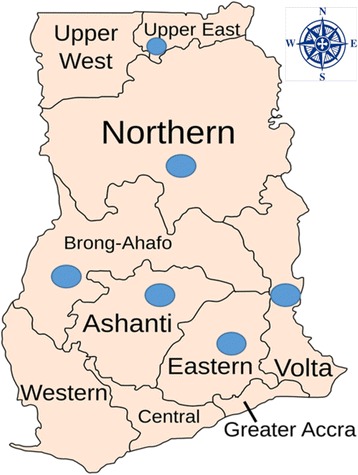
“The study was conducted in the Tamale Metropolis in the Northern Region of Ghana with coordinates 9.4N and 0.8W. Tamale is the capital city of the region and is mainly an urban community with areas and locations that have moderate and high population density.”
BackgroundInfluentialDisassa, H., & Ashenafi, M. (2022) · SINET Ethiopian Journal of Science · doi:10.4314/sinet.v45i3.7 · Cited by 2
The Awareness of Food Safety Knowledge, Attitudes and Practices among Food Handlers during COVID-19
Noor, N. R. A. M., Zaman, L. K., Yaacob, N., Hassan, M. S., & Khadzil, S. A. A. S. (2023) · Food Science and Technology · doi:10.13189/fst.2023.110203 · Cited by 2
Okalany, E., Byakika, S., Asiimwe, J. K., & Mukisa, I. M. (2023) · Food and Humanity · doi:10.1016/j.foohum.2023.08.010 · Cited by 2
Food Safety Knowledge, Attitudes, and Practices Among Food Handlers in Jeddah, Saudi Arabia
Alghafari, W. T. (2023) · Current Nutrition & Food Science · doi:10.2174/1573401319666230818091537 · Cited by 2
Mohammed, O. (2023) · Egyptian Academic Journal of Biological Sciences. B, Zoology · doi:10.21608/eajbsz.2023.313845 · Cited by 2
“8%) believe that safe meat handling helps prevent disease and contamination (Akabanda et al., 2017).”
BackgroundSosialisasi Higiene dan Sanitasi Penjamah Makanan di KB/TK Alam Jungle School Semarang
Putriningtyas, N. D., Lestari, Y. N., Rachmawati, L., & Cahyati, W. H. (2023) · JURNAL KREATIVITAS PENGABDIAN KEPADA MASYARAKAT (PKM) · doi:10.33024/jkpm.v6i10.12249 · Cited by 2
Wang, M., Gong, S., Tang, J., Weng, Z., & Wu, X. (2023) · Frontiers in Public Health · doi:10.3389/fpubh.2023.1187056 · Cited by 2
“Prior to the COVID-19 outbreak, several scholars have attempted to understand the influencing factors of food handling behaviors of food workers (10– 12).”
BackgroundAssinou, K. E., & Kpotchou, K. (2024) · Journal of Ecohumanism · doi:10.62754/joe.v3i4.3850 · Cited by 2
“…of food market choices and restaurant owners' cooking practices in terms of their knowledge, attitudes and practices on food safety, hygiene and health (F. Akabanda and al., 2017; M.I. Dzudzor and N. Gerber, 2023; A. George Amponsah and B. Ekua Anamoaba, 2011; O.A. Odeyemi and al., 2019).”
BackgroundAssinou, K. E., & Kpotchou, K. (2024) · Journal of Ecohumanism · doi:10.62754/joe.v3i5.3963 · Cited by 2
Alhassan, A. R. (2024) · Clinical Research and Clinical Trials · doi:10.31579/2693-4779/215 · Cited by 2
Ilochi, O. N., & Ademola, M. I. N. (2025) · Journal of applied science and environmental management · doi:10.4314/jasem.v28i12.56 · Cited by 2
Knowledge of Rural Women Regarding Health Practices in Bikaner District of Rajasthan, India
chitra, S., Kumar, R., & Sareena, N. (2018) · International Journal of Current Microbiology and Applied Sciences · doi:10.20546/ijcmas.2018.701.322 · Cited by 2
Susanna, D., Kusuma, A., Mairani, T., & Fitria, L. (2020) · Italian Journal of Food Safety · doi:10.4081/ijfs.2020.8782 · Cited by 2
Díaz, E. B. C., Torres, I. G. R., & Saintila, J. (2021) · Food Research · doi:10.26656/fr.2017.5(3).685 · Cited by 2
“These findings are consistent with the results reported in similar studies (Akabanda et al., 2017; Ncube et al., 2020).”
BackgroundResultDetermining Food Safety Knowledge, Attitudes and Practices of Chopbar Workers
Segbedzi, C. E., & Ansah, E. W. (2022) · Springer eBooks · doi:10.1007/978-3-030-90973-4_25 · Cited by 2
Metadata
- Authors
- Akabanda, F., Hlortsi, E. H., & Owusu-Kwarteng, J.
- Affiliations
- University for Development Studies (GH)
- Corresponding author
- Akabanda, Fortune
- ORCID
- Akabanda, Fortune
- Venue
- BMC Public Health
- Published
- 2017-01-06
- Volume
- 17
- Issue
- 1
- Pages
- 40-40
- ISSN
- 1471-2458 (ISSN-L)
- PMC
- PMC5219779
- OpenAlex
- W2568196718
- Cited by
- 375
- References
- 38
- Citations by year
- 2026: 22 · 2025: 38 · 2024: 60 · 2023: 63 · 2022: 53 · 2021: 47 · 2020: 42 · 2019: 29 · 2018: 14 · 2017: 7
- FWCI
- 28.31
- Type
- journal article
- Language
- en
- Open access
- gold
- doi.org
- Licence
- cc-by
- Locations
- BMC Public Health (publishedVersion, cc-by)
- PubMed Central (publishedVersion, cc-by)
- PubMed (publishedVersion)
- DOAJ (DOAJ: Directory of Open Access Journals) (acceptedVersion)
- Greater South Information System
- Topics
- Life Sciences › Agricultural and Biological Sciences › Food Science › Food Safety and Hygiene
- Life Sciences › Agricultural and Biological Sciences › Food Science › Salmonella and Campylobacter epidemiology
- Life Sciences › Agricultural and Biological Sciences › Food Science › Listeria monocytogenes in Food Safety
- Keywords
- food safety knowledge, food safety attitudes, food hygiene practices, foodborne pathogens, hand washing, food contamination, sanitation practices, educational attainment
- MeSH terms
- Adult, Cross-Sectional Studies, Female, Food Contamination, Food Handling, Ghana, Hand Disinfection, Humans, Hygiene, Health Knowledge, Attitudes, Practice, Male, Middle Aged, Surveys and Questionnaires, Sanitation, Food Safety
About these checks
Registry, retraction, Cites and statistics results are computed, not judged, with one exception: a printed reference that no index lists is read once by a model before it counts as a citation error. Claims are extracted by a model and kept only when their quote appears verbatim in the text; each cited source is then checked, with a model’s help, for whether it says what the claim relies on. Those verdicts can be wrong — read the claim’s quote and the cited source before relying on one.
Statistics and arithmetic are recomputed, not judged.
Confidence bands are shown only for fields calibrated on our annotated test set. None is calibrated yet, so no band is shown.
What counts as a claim ›How we measure confidence ›How we check this ›
Are you an author, or do you see a problem with this page? Request a review
Data sources
Bibliographic data: Semantic Scholar, OpenAlex, Crossref.
Contains information from the Semantic Scholar Academic Graph Datasets, made available under the ODC Attribution License (ODC-BY 1.0).
Semantic Scholar’s data is described in: Kinney, R., et al. (2023). The Semantic Scholar Open Data Platform. arXiv:2301.10140.
