

Food safety knowledge, attitudes and practices of institutional food-handlers in Ghana
Open accessThe DOI matches its Crossref record; 36 of the 38 references it cites were found in a registry or an index.
Abstract
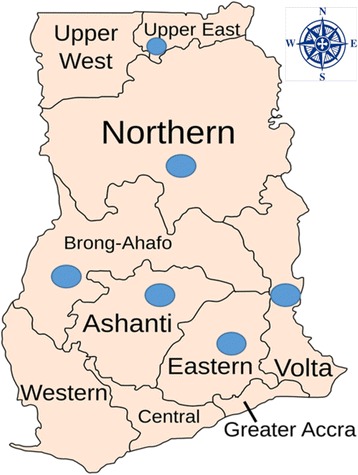
BACKGROUND: In large scale cooking, food is handled by many individuals, thereby increasing the chances of food contamination due to improper handling. Deliberate or accidental contamination of food during large scale production might endanger the health of consumers, and have very expensive repercussions on a country. The purpose of this study was to evaluate the food safety knowledge, attitudes, and practices among institutional food- handlers in Ghana. METHODS: The study was conducted using a descriptive, cross-sectional survey of 29 institutions by conducting face to face interview and administration of questionnaire to two hundred and thirty-five (235) institutional food-handlers. The questionnaire was peer-reviewed and pilot tested in three institutions in the Upper East Region of Ghana, before the final version was distributed to food-handlers. The questionnaire was structured into five distinctive parts to collect information on (i) demographic characteristics, (ii) employees' work satisfaction, (iii) knowledge on food safety, (iv) attitudes towards food safety and (v) food hygiene practices. RESULTS: Majority of the food-handlers were between 41-50 years (39.1%). Female respondents were (76.6%). In our study, the food-handlers were knowledgeable about hygienic practices, cleaning and sanitation procedures. Almost all of the food-handlers were aware of the critical role of general sanitary practices in the work place, such as hand washing (98.7% correct answers), using gloves (77.9%), proper cleaning of the instruments/utensils (86.4%) and detergent use (72.8%). On disease transmission, the results indicates that 76.2% of the food- handlers did not know that Salmonella is a food borne pathogens and 70.6% did not know that hepatitis A is a food borne pathogen. However, 81.7% handlers agreed that typhoid fever is transmitted by food and 87.7% agreed that bloody diarrhea is transmitted by food. Logistic regression analysis testing four models showed statistically significant differences (p < 0.05), for models in which the explanatory variable was the level of education. CONCLUSIONS: In generally, the institutional food-handlers have satisfactory knowledge in food safety but this does not translate into strict hygienic practices during processing and handling food products.
Overview
The claims and statistics of this paper haven’t been checked yet.
Free: it reads the open-access text and checks the first 5 claims that cite a source we can check. Create a free account to check every claim.
Integrity signals
Registry
Cites
Statistics
Figures
Verification
Claims the paper makes
The claims and statistics of this paper haven’t been checked yet.
Free: it reads the open-access text and checks the first 5 claims that cite a source we can check. Create a free account to check every claim.
Claims other papers make about this one
Each is checked against this paper’s own text: does it say what the citing paper says it does?
The check wasn’t confident either way, so it gives no verdict — never disputed.
In the citing paper
“The food safety protocols in CFAPs are not well established because the charitable food practice is not sufficiently regulated in South Africa8–12.”
From Food handling practices and sanitary conditions of charitable food assistance programs in eThekwini District, KwaZulu-Natal, South Africa (2024) · cites this paper as [12]
Experimental — accuracy not yet measured
Self-check
Percentages, sums and reported differences re-computed from the paper’s own numbers.
The self-check needs the paper’s full text.
Citations
Cites
Baş, M., Şafak Ersun, A., & Kıvanç, G. (2006) · Food Control · doi:10.1016/j.foodcont.2004.11.006 · Cited by 399
Food handlers' beliefs and self-reported practices
Clayton, D. A., Griffith, C. J., Price, P., & Peters, A. C. (2002) · International Journal of Environmental Health Research · doi:10.1080/09603120120110031 · Cited by 399 · cited 1×
“[41] reported that about 63% of food-handlers demonstrating Table 4 Food safety attitudes of institutional food-handlers”
BackgroundGreig, J. D., Todd, E. C. D., Bartleson, C. A., & Michaels, B. S. (2007) · Journal of Food Protection · doi:10.4315/0362-028x-70.7.1752 · Cited by 303 · cited 1×
“[11] reports, about 97% of reported food poisoning cases are due to the improper handling of foods by persons involved in catering services.”
BackgroundAnsari-Lari, M., Soodbakhsh, S., & Lakzadeh, L. (2010) · Food Control · doi:10.1016/j.foodcont.2009.06.003 · Cited by 220 · cited 1×
“These results support recently published work where majority of the respondents did not know if Salmonella, hepatitis A and B viruses, and Staphylococcus caused foodborne diseases [13, 22].”
ResultFood handlers’ hygiene knowledge in small food businesses
Walker, E., Pritchard, C., & Forsythe, S. (2003) · Food Control · doi:10.1016/s0956-7135(02)00101-9 · Cited by 210
Food safety knowledge and practices among food handlers in Slovenia
Jevšnik, M., Hlebec, V., & Raspor, P. (2008) · Food Control · doi:10.1016/j.foodcont.2007.11.010 · Cited by 199
Glove Barriers to Bacterial Cross-Contamination between Hands to Food
Montville, R., Chen, Y., & Schaffner, D. W. (2001) · Journal of Food Protection · doi:10.4315/0362-028x-64.6.845 · Cited by 187 · cited 1×
“minimize the risk of contamination during food handling [34].”
BackgroundKnowledge, attitude and practice of Taif University students on food poisoning
Sharif, L., & Al-Malki, T. (2010) · Food Control · doi:10.1016/j.foodcont.2009.03.015 · Cited by 181 · cited 2×
“Here, attitudes was used to mean “a complex mental state involving beliefs, feelings, values and dispositions to act in certain ways” [19].”
BackgroundMethodFood handler certification by home study: measuring changes in knowledge and behavior
Howes, M., McEwen, S., Griffiths, M. D., & Harris, L. N. (1996) · Dairy, food and environmental sanitation · Cited by 179
Soares, L. S., Almeida, R. C. C., Cerqueira, E. S., Carvalho, J. S., & Nunes, I. L. (2012) · Food Control · doi:10.1016/j.foodcont.2012.03.016 · Cited by 166 · cited 2×
“Most studies have reported higher proportion of females [22, 25, 26] involvement in food handling.”
BackgroundResult
Research works printed but not linked: 6
- WHO Food Safety and Foodborne Illness. Fact sheets No. 237 2007 Geneva World Health Organization
- WHO Strategies for implementing HACCP in small and/or less developed businesses 1999 Geneva World Health Organisation, WHO/SDE/FOS/99.7
- Boateng AE Assessment of food hygiene practices by street food vendors and microbial quality of selected foods sold. A study at Dunkwa-On-Offin, Upper Denkyira East municipality of the Central Region 2014 Kumasi, Ghana Kwame Nkrumah University of Science and Technology
- Fuerst R. Frobisher and FuerstÕs microbiology in health and disease: Foods as vectors of microbial disease. Sanitation in food handling (15th ed.). Philadelphia: W.B. Saunders Company; 1983. p. 418–33.
- Julie GR: Food Safety Basics. A Reference Guide for Foodservices Operators. In., vol. 1; 2012: 5–6
- Huda N: Tahap pengetahuan, sikap dan amalan kebersihan dan keselamatan makanan di kalangan pengendali makanan di hospital. MSc Thesis, Universiti Kebangsaan Malaysia, Bangi; 2008
Cited by
Items 301–400 of 482
Hamzah, N. A., Hadi, N. H., Samad, N. I. A., Anua, S. M., & Rahman, H. A. (2022) · International Journal of Academic Research in Business and Social Sciences · doi:10.6007/ijarbss/v12-i7/14422 · Cited by 2
Hamzah, N. A., Hadi, N. H., Samad, N. I. A., Anua, S. M., & Rahman, H. A. (2022) · International Journal of Academic Research in Business and Social Sciences · doi:10.6007/ijarbss/v12-i13/14595 · Cited by 3
Azizan, A. A., Rasdi, H. F. M., Shahar, S., Manaf, Z. A., Haron, H., & Razalli, N. H. (2023) · Malaysian Journal of Medicine and Health Sciences · doi:10.47836/mjmhs.19.3.24 · Cited by 2
Zvenyika, F. (2017) · UWC Research Repository (University of the Western Cape) · Cited by 2
Mathaulula, M. A. (2020) · Cited by 2
Aung, S. T., & Nwe, A. A. (2020) · Research Square · doi:10.21203/rs.3.rs-75468/v1 · Cited by 2
“There is a additional risk of foodborne illness occurrences if basic healthy and hygienic practices are not preserved [8].”
BackgroundStudy on food safety issues in Kedah, Malaysia: A Case on Food Service Operators
Aiman, F., & Latiff, A. F. H. C. (2020) · UUM Electronic Theses and Dissertation [eTheses] (Northern University of Malaysia) · Cited by 2
Food hygiene and safety practices of food handlers in tuckshops at secondary schools in Umlazi
Dlomo, K. N. (2019) · DUT Open Scholar (Durban University of Technology) · doi:10.51415/10321/3598 · Cited by 2
Shabangu, G. B. (2023) · DUT Open Scholar (Durban University of Technology) · doi:10.51415/10321/4800 · Cited by 2
Mazhangara, I. R., Jaja, I. F., Falowo, A. B., Oguttu, J. W., Green, E., & Muchenje, V. (2024) · Research Square · doi:10.21203/rs.3.rs-4218292/v1 · Cited by 2
Ogbeyi, O., Afolaranmi, T., Amede, P., Audu, O., & Koko, B. (2019) · Journal of BioMedical Research and Clinical Practice · doi:10.46912/2i3.2019131 · Cited by 1
Habib, M. A., Islam, M. A., Shill, L. C., Akter, M., Sultana, S., Hossain, M., Kibria, T., & Ahmed, S. (2020) · International Journal of Community Medicine and Public Health · doi:10.18203/2394-6040.ijcmph20202451 · Cited by 1
“Food poisoning is caused by consumption of foods infected with microorganisms or their metabolites, contamination from inadequate methods of safety, unhygienic handling of procedures, cross-contamination from food contact surfaces.(17) Our recent findings showed that the educational level of poultry shop personnel str…”
BackgroundMadeghe, B. A., Moyo, M., Mwaura, L., Magnaghi, A., & Muzhingi, T. (2021) · Food science and quality management · doi:10.7176/fsqm/110-05 · Cited by 1
Musakala, D. I., Wandolo, M. A., & Maranga, V. N. (2024) · Journal of Hospitality and Tourism Management · doi:10.53819/81018102t2300 · Cited by 1
DIỄN BIẾN SÂU RĂNG TRẺ EM Ở KHU VỰC ĐỒNG BẰNG SÔNG HỒNG TRONG HAI THẬP NIÊN QUA
Trịnh, H. A., Đinh, D. H., & Trịnh, Đ. H. (2024) · Tạp chí Y học Việt Nam · doi:10.51298/vmj.v536i1.8681 · Cited by 1
Elsherif, S. A., Mohammed, A. A., Mansor, B. O., Elbarghathi, M. W., & Elmodabel, N. F. (2024) · The Scientific Journal of University of Benghazi · doi:10.37376/sjuob.v37i1.5945 · Cited by 1
“In a study conducted by Akabanda et al., 15 the majority of food handlers demonstrated knowledge of the importance of general sanitary practices, such as wearing gloves (77.9% correct answers).”
BackgroundInfluentialFood Safety Knowledge and Practice in the Era of Dark Kitchens
Pudaruth, C., & Biranjia-Hurdoyal, S. D. (2024) · BioMed Target Journal · doi:10.59786/bmtj.217 · Cited by 1
Kaugi, R. W., Kariuki, J. G., & Odongo, A. O. (2024) · Japanese Journal of Medical Science · doi:10.33140/jjms.02.01.01 · Cited by 1
Gebeyehu, D. T., East, L., Wark, S., & Islam, M. S. (2025) · PLoS ONE · doi:10.1371/journal.pone.0322235 · Cited by 1
“This discrepancy is believed to stem from variations in participants’ demographic factors, attitudes, and practices related to food safety [38], as well as differences in food handling and eating habits.”
Food Handling Practices of Food Vendors in the Vicinity of Davao Del Norte State College
Chiang, K. C. S., Painandos, J. L., Naul, M. A., Lagoy, J., & Nolie, J. C. G. (2025) · doi:10.38124/ijisrt/25jun604 · Cited by 1
Acharya, J., & Uprety, P. (2025) · BioMed Research International · doi:10.1155/bmri/3233795 · Cited by 1
“On the cumulative sum of the scores obtained from 16 questions, less than 70% of the cumulative score indicated having “ poor knowledge ” and greater than or equal to 70% of the cumulative score indicated having “ adequate knowledge ” of food safety [1, 27].”
Food Safety Compliance in Islamic Schools: Knowledge, attitudes and practices of food handlers
Shahid, N. S. M., Ismail, M. H., Shaifuddin, S. N. M., & Ismail, W. I. (2025) · Environment-Behaviour Proceedings Journal · doi:10.21834/e-bpj.v10isi35.7495 · Cited by 1
Kharroubi, S. A., Zeidan, M., & Berjawi, L. E. (2025) · Food Safety and Health · doi:10.1002/fsh3.70073 · Cited by 1
Fasinu, D. F., Habeeb, L. M., Adiama, B. Y., Afolabi, O. S., Sulaimon, O. D., & Arole, Y. A. (2026) · Journal of applied science and environmental management · doi:10.4314/jasem.v30i1.30 · Cited by 1
Mbobo, S., Byaruhanga, C., & Jaja, I. F. (2025) · PAMJ - One Health · doi:10.11604/pamj-oh.2025.18.17.47552 · Cited by 1
Ling, S. J., Hassan, Z., & Garai, R. (2026) · Malaysian Journal of Social Sciences and Humanities (MJSSH) · doi:10.47405/mjssh.v11i1.2786 · Cited by 1
Akuriba, G. A., Wongnaa, C. A., Owusu-Afriyie, R., Hagan, M. A. S., Akuriba, M. A., & Awunyo‐Vitor, D. (2026) · Food Ethics · doi:10.1007/s41055-026-00209-0 · Cited by 1
“…that compliance with meat safety protocols among industry operators is influenced by multiple factors, including knowledge levels, attitudes, enforce - ment mechanisms, and economic constraints (Yenealem et al. 2020 ; Adzitey et al. 2020; Mbonabucha and Fweja 2019 ; Akabanda et al. 2017 ).”
Teamr, T., Gebretsadkan, D., Girmay, W., & Hailu, M. W. (2026) · Veterinary Medicine and Science · doi:10.1002/vms3.70886 · Cited by 1
Delali, D. K., Adenku, L. Y., Kwametukui, S., Zotorglo, S., Abubakari, A.-R., Mohammed, B. Y., Boakye, E. Y., & Amu, H. (2026) · Discover Public Health · doi:10.1186/s12982-026-01594-x · Cited by 1
Adane, B., Ayele, A., Teym, A., Jemere, T. S., Sewunet, B., Kindu, M., Moges, M., & Bewket, Y. (2026) · Scientific Reports · doi:10.1038/s41598-026-49925-x · Cited by 1
“In many developing contexts, medical surveillance remains a weak link 29 ; our results argue for integrating mandatory checkups into the licensing process to bolster professional accountability 29 .”
Ababu, L. A., Gebremedhin, E. Z., Dilbato, T., & Kebede, I. A. (2026) · Food and Humanity · doi:10.1016/j.foohum.2026.101219 · Cited by 1
Smith, T., Moreetsi, C. O., & Mbonane, T. P. (2026) · Frontiers in Food Science and Technology · doi:10.3389/frfst.2026.1850787 · Cited by 1
(2026) · Texila international journal of public health · doi:10.21522/tijph.2013.14.02.art015 · Cited by 1
Tariq, B., Ahmed, D. H., & Naz, D. S. (2025) · Chronicles of Biomedical Sciences · Cited by 1
Microbiological and Proximate Analyses of Lebanese Bread (Pita) from Akure Metropolis
Aruwa, C. E., & Farotimi, A. R. (2019) · South Asian Journal of Research in Microbiology · doi:10.9734/sajrm/2019/v3i130079 · Cited by 1
Loyaga, G. H. G., & Barzola, L. W. S. (2018) · Revista Científica de Ciencias de la Salud · doi:10.17162/rccs.v11i1.26 · Cited by 1
Madhwal, S., & Sharma, S. (2019) · International Journal of Current Microbiology and Applied Sciences · doi:10.20546/ijcmas.2019.810.236 · Cited by 1
“Present results were supported by this study in which the respondents having advanced specific knowledge demonstrated significantly for better understanding of food safety issues (Akabanda et al., 2017).”
ResultOgbeyi, O., Afolaranmi, T., Amede, P., Audu, O., & Koko, B. (2019) · Journal of BioMedical Research and Clinical Practice · doi:10.46912/jbrcp.131 · Cited by 1
Haghi, E., Razeghi, F., Ahmadi, A., & Khaniki, G. J. (2019) · Social Determinants of Health · doi:10.22037/sdh.v5i2.25084 · Cited by 1
Oliveira, D., de Mendonça, S. N. T. G., & Menezes, P. (2020) · Higiene Alimentar/Higiene alimentar · doi:10.37585/ha2020.01boaspraticas · Cited by 1
APPLICATION OF HACCP SYSTEM IN CATERING SYSTEM AND MICROBIOLOGICAL QUALITY OF ROASTED CHICKEN MEALS
Swify, H., El-daim, Y. A., Hammad, Y., & Sedik, M. Z. (2020) · Arab Universities Journal of Agricultural Sciences · doi:10.21608/ajs.2020.153590 · Cited by 1
Food Safety Management System di Hotel Resort Area Kabupaten Garut
Suganda, R. S. A., Sundayana, R. D., Soesanto, H., Kusherdyana, K., & Muslim, S. (2020) · Tourism Scientific Journal · doi:10.32659/tsj.v6i1.120 · Cited by 1
Determination the Awareness Level of Consumers on Food Safety in Turkey
Çolakoğlu, F. A., Çolakoğlu, S., Künili, İ. E., Ormancı, H. B., Ertuğral, T. G., & Yüzgeç, U. (2022) · Çanakkale Onsekiz Mart University Institutional Repository · Cited by 1
معرفة قواعد سلامة الغذاء لدى النساء وتصورهن وموقفهن من تطبيقها في قاعات الاحتفالات في طرابلس، ليبيا
Abuhlega, T. A., & turki, D. A. A. (2022) · AL-MUKHTAR JOURNAL OF SCIENCES · doi:10.54172/mjsc.v37i3.581 · Cited by 1
“%) was also found among a sample of veterinary medicine students (Stratev et al., 2017), while approximately 70% of respondents of institutional food handlers knew that the elderly are likely more prone to the risk of food poisoning (Akabanda et al., 2017).”
BackgroundRahayu, S. F., Hakimah, N., & Cerdasari, C. (2022) · Amerta Nutrition · doi:10.20473/amnt.v6i1sp.2022.200-205 · Cited by 1
Mugure, M. E., Mwenda, L. K. M., Kiplangat, D. C., & Chege, P. W. (2023) · European Journal of Agriculture and Food Sciences · doi:10.24018/ejfood.2023.5.6.743 · Cited by 1
“…institutions’role in the provision of safe food is great because of the many food handlers in the farm-to-fork food chain who expose it to contaminants [1] and with over 600 million cases of food-borne diseases being reported globally [2], unsafe food threat-ens human health and economies globally.”
Killa, N. J., Ombui, J. N., & Gathura, P. B. (2024) · Journal of Food Safety and Hygiene · doi:10.18502/jfsh.v9i4.14999 · Cited by 1
Food Safety Knowledge and Handling Practice among Medical Students at Zagazig University
Fahmy, E., Ragab, H. M., & el-Sattar, E. A. (2024) · Zagazig University Medical Journal · doi:10.21608/zumj.2024.267040.3151 · Cited by 1
Evaluation of University Students’ Food Purchasing Behaviors and Food Safety Concerns
Çalışkan, C., & Kınık, K. (2024) · Journal of Academic Research in Nursing · doi:10.55646/jaren.2024.05826 · Cited by 1
Martinez, M. J. J. (2024) · doi:10.48047/afjbs.6.7.2024.1105-1131 · Cited by 1
Determinants of adoption of food safety practices among clam sellers in Kpong and Atimpoku, Ghana
Akolaa, R. A., Ayisi-Addo, A. K., N’Souvi, K., Mensah, G. D., & Ayisi, C. L. (2024) · Measurement Food · doi:10.1016/j.meafoo.2024.100186 · Cited by 1
Food Safety Management System (FSMS): An Analysis of Restaurant Certificate Schemes in Malaysia
Ghazali, M. B. H., Nazeri, M. Y. M., Jalis, M. H., Bakar, A. M. F. A., Mohamed@Naba, M., & Kassim, A. R. A. (2024) · Asian Journal of Research in Education and Social Sciences · doi:10.55057/ajress.2024.6.s1.19 · Cited by 1
Owusu, M., Basnet, A., & Kilonzo‐Nthenge, A. (2024) · Frontiers in Sustainable Food Systems · doi:10.3389/fsufs.2024.1460350 · Cited by 1
Abdulrahman, M. Y., Adam, S. Y., Ahmed, A. A., Mohamed, A. A., & Eltahir, H. A. (2025) · Journal of Food and Nutrition Sciences · doi:10.11648/j.jfns.20251301.13 · Cited by 1
“%) of respondents were female [11], this similar finding might be due to that females care about food safety more than males.”
AlMesbah, N., Aabdien, M., AlMohannadi, L., & Bougmiza, I. M. (2025) · International Journal of Food Science · doi:10.1155/ijfo/5450277 · Cited by 1
“This is contrary to the results obtained from other research conducted by Abdelhakeem et al. [17] and Akabanda et al. [15].”
Solano, R. N. M., & SOLLANO, S. P. (2023) · Zenodo (CERN European Organization for Nuclear Research) · doi:10.5281/zenodo.7787554 · Cited by 1
Food handlers’ food safety knowledge, attitudes, and practices in Taman Negara, Kuala Tahan
Tamby Chik, C., Mohd Shahed, N. S., Bachok, S., Mohd Shahril, A., & Shamsuddin, N. (2023) · UiTM Institutional Repositories (Universiti Teknologi MARA) · Cited by 1
Yaseen, M. M. (2024) · Procedia of Engineering and Medical Sciences · Cited by 2
Hakwenye, H. L. (2019) · UNAM Scholarly Repository (University of Namibia) · Cited by 1
Food Hygiene Management among Food Handlers of Chitwan Nepal- Pre –Post Study DesignPreprint
Khanal, G., Shrestha, N., Shrestha, S., Chapagain, S., & Chhetri, M. (2022) · Research Square · doi:10.21203/rs.3.rs-2055356/v2 · Cited by 1
Ankomah-Appiah, E., Elizabeth, K., Darko, S., & Abrokwah, F. K. (2023) · Research Square · doi:10.21203/rs.3.rs-2727837/v1 · Cited by 1
Rubushe, M. (2023) · DUT Open Scholar (Durban University of Technology) · doi:10.51415/10321/4801 · Cited by 1
Food Handlers’ Safety Knowledge and Its Impact on Personal Hygiene and Disease Control Practices
Stephen, K. V. (2019) · Eastern Mediterranean University Institutional Repository (Eastern Mediterranean University) · Cited by 1
Основні вимоги до систем управління безпечністю промислового харчового виробництва
Романовська, Т. І., Осейко, М. І., Романовська, Н. І., & Романовський, Н. О. (2022) · Institutional Repository of National University of Food Technologies · Cited by 1
Mbombo-Dweba, T. P. (2017) · Unisa Institutional Repository (University of South Africa)
Conhecimento dos manipuladores de alimentos acerca do plano de higienização antes e após formação.
da Conceicao, M. O. (2017) · Portuguese National Funding Agency for Science, Research and Technology (RCAAP Project by FCT)
Teka, B., Mulu, A., & Ademe, M. (2019) · Science Journal of Public Health · doi:10.11648/j.sjph.20190703.15
Ahmad, N. A. (2018) · Universiti Putra Malaysia Institutional Repository (Universiti Putra Malaysia)
اختبار مقترح لقیاس مستوى الوعی الغذائی لدى العاملین بالمستشفیات: دراسة حالة لمستشفیات المنیا فی مصر
عبدالموجود, م., داوود, ع., & محمد, ک. (2020) · مجلة کلية السياحة والفنادق - جامعة مدينة السادات · doi:10.21608/mfth.2020.103828
“It also showed no relationship between nutritional awareness and food safety (Akabanda et al., 2017).”
BackgroundInfluentialSoftware para a supervisão de boas práticas de fabricação de uma agroindústria
Oliveira, D. T. (2020) · LA Referencia (Red Federada de Repositorios Institucionales de Publicaciones Científicas)
Yusuf, A., Rizki Fitryasari, P. K., Yunitasari, E., & Tristiana, R. D. (2021) · Jurnal Pengabdian Masyarakat Dalam Kesehatan · doi:10.20473/jpmk.v3i1.23139
“Food storage is a way to organize, store, maintain dry and wet food and record its reporting (Akabanda et al., 2017).”
BUENAS PRÁCTICAS DE MANIPULACIÓN EN QUIOSCOS ESCOLARES DE INSTITUCIONES PÚBLICAS Y PRIVADAS
Ticona, S. V. M. (2021) · REVISTA DE INVESTIGACIONES · doi:10.26788/riepg.v10i2.2735
Camacho, A. J. G., Alfelor, R.-D. Z., Cerrero, B. E. M., Mendoza, J. I. C., Nayan, G. P. L., Obay, J. R. P., Pangan, D. A. F., Quiambao, G. A. L., & Malana, J. T. (2021) · International Journal of Progressive Research in Science and Engineering
Amoo, O. S., Awoderu, O., Yisau, J. I., Oladele, D. A., David, A. N., Raheem, T. Y., Uwandu, M., Bamidele, M., Fesobi, T. W., AbdusSalam, A., et al. (2021) · Microbiologia medica · doi:10.4081/mm.2021.10058
Journal of Nutrition & Weight Loss
(2019) · Journal of Nutrition & Weight Loss · doi:10.35248/2593-9793
Giaouris, E., Simões, M., & Dubois-Brissonnet (2020) · MDPI eBooks · doi:10.3390/books978-3-03943-552-4
Singh, N. P. (2022) · International Journal of Healthcare Education & Medical Informatics · doi:10.24321/2455.9199.202201
Dabral, P., Piramanayagam, S., Nigli, K. S., & Dhyani, V. S. (2022) · F1000Research · doi:10.12688/f1000research.122822.1
Food Hygiene Management among Food Handlers of Chitwan Nepal- Pre –Post Study DesignPreprint
Khanal, G., Shrestha, N., Shrestha, S., Chapagain, S., & Chhetri, M. (2022) · Research Square · doi:10.21203/rs.3.rs-2055356/v1
School and Industrial Kitchen Sanitation and Hygiene Practices among HRM Graduates
Candilas, K. S., & Danuco, V. N. T. (2022) · International Journal of Multidisciplinary Applied Business and Education Research · doi:10.11594/ijmaber.03.11.02
Asmi, N. F. (2022) · Jurnal Berkala Kesehatan · doi:10.20527/jbk.v8i2.14654
Efforts to Control Work Environment Hazards Based on 5S Principles for Smoked Fish Workers
Setyaningsih, Y., Ekawati, E., & Wahyuni, I. (2022) · BIO Web of Conferences · doi:10.1051/bioconf/20225400006
Nawarathne, L. C., Wanniarachchi, P. C., Peiris, H. S., & Abeysundara, P. D. A. (2022) · Vidyodaya Journal of Science · doi:10.31357/vjs.v25i02.6175
Food Safety and Hygiene Practices of Hospitality Industries in Damaturu, Yobe State, Nigeria
Emmanuel, R. (2022) · International Journal of Home Economics Hospitality and Allied Research · doi:10.57012/ijhhr.v1n2.025
Improving the Sanitary and Hygienic Conditions of Cold Smoking Fish Using Acidified Sodium Chlorite
al., S. A.-R. E. (2023) · Egyptian Journal of Aquatic Biology and Fisheries · doi:10.21608/ejabf.2023.292264
Setyo, Y., Utami, W. S., Fatmawati, H., Armiyanti, Y., & Hermansyah, B. (2023) · Journal of Health Sciences · doi:10.33086/jhs.v16i01.3192
de Araújo, J. L., & Souza, K. R. (2023) · RECIMA21 - Revista Científica Multidisciplinar · doi:10.47820/recima21.v4i7.3645
Harouna, D. V. (2023) · Food Science & Nutrition Technology · doi:10.23880/fsnt-16000302
An Assessment of Knowledge, Attitude, and Practice among Home-Based Food Handlers
Shattar, N. A., Kamal, M. H. M., Kamarudin, W. N. B. W., Hafiran, K. F. T., & Hadidi, N. A. A. N. (2023) · International Journal of Business and Technology Management · doi:10.55057/ijbtm.2023.5.s1.5
Aladelusi, T. O., Kanmodi, K. K., & Kanmodi, P. A. (2021) · Ibom Medical Journal · doi:10.61386/imj.v14i2.56
Kombucha Production in Uganda: Quality Aspects and Compliance With Standards
Meeme, R., Mukisa, I. M., & Mugabi, R. (2023) · Food ScienTech Journal · doi:10.33512/fsj.v5i2.19880
“However, some studies have reported that high scores on knowledge and practices may not necessarily translate into products conforming to standards (Byakika et al., 2019; Akabanda et al., 2017).”
BackgroundOdogwu, C., & Amosu, A. M. (2022) · CURRENT TRENDS IN LIFE SCIENCES RESEARCH · doi:10.61867/pcub.v1i1a.009
Jubayer, M. F., Kayshar, M. S., Kabir, M. F., Arifin, M. S., Limon, M. T. I., Al-Emran, M., & Uddin, M. N. (2024) · doi:10.22541/au.170665820.09158339/v1
Kachipande, A., Temba, B., Materu, S. F., & Kaonga, C. C. (2024) · Research Square · doi:10.21203/rs.3.rs-3921404/v1
Nguyễn, L. T., & Nguyễn, D. P. (2024) · Tạp chí Y học Việt Nam · doi:10.51298/vmj.v536i1.8680
Abdelrahman, H., Soliman, E., Hamouda, R., & Awad, A. (2023) · Benha Veterinary Medical Journal · doi:10.21608/bvmj.2023.236352.1723
“Also, a deficiency of hygienic handling of food products, especially those of animal origins like raw milk, milk byproducts, and poultry meat, during and after preparation facilitates microbial contamination (Akabanda et al., 2017).”
BackgroundKabir, M. R., Toru, M. T. K., & Faruk, G. F. (2024) · International Journal of Occupational and Environmental Safety · doi:10.24840/2184-0954_008.002_002335
“Several studies have claimed that a positive attitude may help to ensure safe food for everyone (Akabanda et al., 2017; Zanin et al., 2017), while attitude may influence behavior and practices (Al-Shabib et al., 2016).”
BackgroundMohanty, P. P., Tiwari, S., Roy, H., & Bhavsar, R. (2024) · Research in Hospitality Management · doi:10.1080/22243534.2024.2354938
Metadata
- Authors
- Akabanda, F., Hlortsi, E. H., & Owusu-Kwarteng, J.
- Affiliations
- University for Development Studies (GH)
- Corresponding author
- Akabanda, Fortune
- ORCID
- Akabanda, Fortune
- Venue
- BMC Public Health
- Published
- 2017-01-06
- Volume
- 17
- Issue
- 1
- Pages
- 40-40
- ISSN
- 1471-2458 (ISSN-L)
- PMC
- PMC5219779
- OpenAlex
- W2568196718
- Cited by
- 375
- References
- 38
- Citations by year
- 2026: 22 · 2025: 38 · 2024: 60 · 2023: 63 · 2022: 53 · 2021: 47 · 2020: 42 · 2019: 29 · 2018: 14 · 2017: 7
- FWCI
- 28.31
- Type
- journal article
- Language
- en
- Open access
- gold
- doi.org
- Licence
- cc-by
- Locations
- BMC Public Health (publishedVersion, cc-by)
- PubMed Central (publishedVersion, cc-by)
- PubMed (publishedVersion)
- DOAJ (DOAJ: Directory of Open Access Journals) (acceptedVersion)
- Greater South Information System
- Topics
- Life Sciences › Agricultural and Biological Sciences › Food Science › Food Safety and Hygiene
- Life Sciences › Agricultural and Biological Sciences › Food Science › Salmonella and Campylobacter epidemiology
- Life Sciences › Agricultural and Biological Sciences › Food Science › Listeria monocytogenes in Food Safety
- Keywords
- food safety knowledge, food safety attitudes, food hygiene practices, foodborne pathogens, hand washing, food contamination, sanitation practices, educational attainment
- MeSH terms
- Adult, Cross-Sectional Studies, Female, Food Contamination, Food Handling, Ghana, Hand Disinfection, Humans, Hygiene, Health Knowledge, Attitudes, Practice, Male, Middle Aged, Surveys and Questionnaires, Sanitation, Food Safety
About these checks
Registry, retraction, Cites and statistics results are computed, not judged, with one exception: a printed reference that no index lists is read once by a model before it counts as a citation error. Claims are extracted by a model and kept only when their quote appears verbatim in the text; each cited source is then checked, with a model’s help, for whether it says what the claim relies on. Those verdicts can be wrong — read the claim’s quote and the cited source before relying on one.
Statistics and arithmetic are recomputed, not judged.
Confidence bands are shown only for fields calibrated on our annotated test set. None is calibrated yet, so no band is shown.
What counts as a claim ›How we measure confidence ›How we check this ›
Are you an author, or do you see a problem with this page? Request a review
Data sources
Bibliographic data: Semantic Scholar, OpenAlex, Crossref.
Contains information from the Semantic Scholar Academic Graph Datasets, made available under the ODC Attribution License (ODC-BY 1.0).
Semantic Scholar’s data is described in: Kinney, R., et al. (2023). The Semantic Scholar Open Data Platform. arXiv:2301.10140.
