

Socially isolated individuals are more prone to have newly diagnosed and prevalent type 2 diabetes mellitus - the Maastricht study
Open accessThe DOI matches its Crossref record; 30 of the 30 references it cites were found in a registry or an index.
Abstract
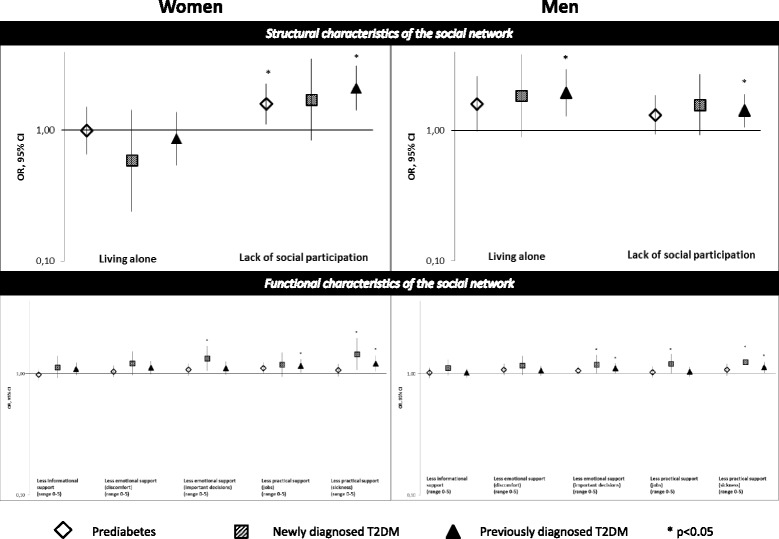
BACKGROUND: Social isolation is associated with type 2 diabetes (T2DM), but it is unclear which elements play a crucial role in this association. Therefore, we assessed the associations of a broad range of structural and functional social network characteristics with normal glucose metabolism, pre-diabetes, newly diagnosed T2DM and previously diagnosed T2DM. METHODS: Participants originated from The Maastricht Study, a population-based cohort study (n = 2861, mean age 60.0 ± 8.2 years, 49% female, 28.8% T2DM (oversampled)). Social network characteristics were assessed through a name generator questionnaire. Diabetes status was determined by an oral glucose tolerance test. We used multinomial regression analyses to investigate the associations between social network characteristics and diabetes status, stratified by sex. RESULTS: More socially isolated individuals (smaller social network size) more frequently had newly diagnosed and previously diagnosed T2DM, while this association was not observed with pre-diabetes. In women, proximity and the type of relationship was associated with newly diagnosed and previously diagnosed T2DM. A lack of social participation was associated with pre-diabetes as well as with previously diagnosed T2DM in women, and with previously diagnosed T2DM in men. Living alone was associated with higher odds of previously diagnosed T2DM in men, but not in women. Less emotional support related to important decisions, less practical support related to jobs, and less practical support for sickness were associated with newly diagnosed and previously diagnosed T2DM in men and women, but not in pre-diabetes. CONCLUSION: This study shows that several aspects of structural and functional characteristics of the social network were associated with newly and previously diagnosed T2DM, partially different for men and women. These results may provide useful targets for T2DM prevention efforts.
Overview
The claims and statistics of this paper haven’t been checked yet.
Free: it reads the open-access text and checks the first 5 claims that cite a source we can check. Create a free account to check every claim.
Integrity signals
Registry
Cites
Statistics
Figures
Verification
Claims the paper makes
The claims and statistics of this paper haven’t been checked yet.
Free: it reads the open-access text and checks the first 5 claims that cite a source we can check. Create a free account to check every claim.
Claims other papers make about this one
Each is checked against this paper’s own text: does it say what the citing paper says it does?
The source backs part of the claim, not all of it — or backs it for a different population, condition or comparison.
In the citing paper
“There is also a growing body of evidence relating social isolation with nonfatal physical health outcomes, including increased risk for cardiovascular disease and stroke [33], pre-diabetes and type 2 diabetes [34], and poorer cognitive functioning [35].”
From Social isolation: an underappreciated determinant of physical health (2022) · cites this paper as [34]
Experimental — accuracy not yet measured
Self-check
Percentages, sums and reported differences re-computed from the paper’s own numbers.
The self-check needs the paper’s full text.
Citations
Cites
Wild, S., Roglic, G., Green, A., Sicree, R., & King, H. (2004) · Diabetes Care · doi:10.2337/diacare.27.5.1047 · Cited by 15,297
Barnett, K., Mercer, S. W., Norbury, M., Watt, G., Wyke, S., & Guthrie, B. (2012) · The Lancet · doi:10.1016/s0140-6736(12)60240-2 · Cited by 6,972 · cited 2×
“Moreover, targeting social network characteristics may also have benefits for other chronic conditions, as it has been shown that most of those with a long-term disorder are multimorbid [3], and social network characteristics have been found to associate with cardiovascular, endocrine, and immune function [29].”
BackgroundLoneliness and Social Isolation as Risk Factors for Mortality: A Meta-Analytic Review
Holt-Lunstad, J., Smith, T. B., Baker, M., Harris, T., & Stephenson, D. (2015) · Perspectives on Psychological Science · doi:10.1177/1745691614568352 · Cited by 6,043
Mechanisms linking obesity to insulin resistance and type 2 diabetes
Kahn, S. E., Hull, R. L., & Utzschneider, K. M. (2006) · Nature · doi:10.1038/nature05482 · Cited by 5,448
Uchino, B. N., Cacioppo, J. T., & Kiecolt-Glaser, J. K. (1996) · Psychological Bulletin · doi:10.1037/0033-2909.119.3.488 · Cited by 2,727 · cited 1×
“Moreover, targeting social network characteristics may also have benefits for other chronic conditions, as it has been shown that most of those with a long-term disorder are multimorbid [3], and social network characteristics have been found to associate with cardiovascular, endocrine, and immune function [29].”
BackgroundDiabetes Mellitus, Fasting Glucose, and Risk of Cause-Specific Death
The Emerging Risk Factors Collaboration (2011) · New England Journal of Medicine · doi:10.1056/nejmoa1008862 · Cited by 2,726 · cited 2×
“Ware JE, Koskinski M, Keller SD. SF-36 physical and mental health summary scales: a user's manual 2nd ed.”
MethodSOCIAL NETWORKS AND SOCIAL SUPPORT
(2016) · The Gerontologist · doi:10.1093/geront/gnw162.1463 · Cited by 1,004
Depression as a risk factor for the onset of type 2 diabetes mellitus. A meta-analysis
Knol, M. J., Twisk, J. W. R., Beekman, A. T. F., Heine, R. J., Snoek, F. J., & Pouwer, F. (2006) · Diabetologia · doi:10.1007/s00125-006-0159-x · Cited by 974
Physical Activity/Exercise and Type 2 Diabetes
Sigal, R. J., Kenny, G. P., Wasserman, D. H., Castaneda-Sceppa, C., & White, R. D. (2006) · Diabetes Care · doi:10.2337/dc06-9910 · Cited by 949
Social Networks and Health: Models, Methods, and Applications
Valente, T. W. (2010) · doi:10.1093/acprof:oso/9780195301014.001.0001 · Cited by 933
Research works printed but not linked: 2
- World Health Organization Definition and Diagnosis of Diabetes Mellitus and Intermediate Hyperglycaemia 2006 Geneva WHO
- Ware JE Koskinski M Keller SD SF-36 physical and mental health summary scales: a user's manual 2nd ed 1994 Boston MA The Health Institute
Cited by
Holt‐Lunstad, J. (2024) · World Psychiatry · doi:10.1002/wps.21224 · Cited by 415
“For example, people with smaller social networks were more likely to have been recently di agnosed with type 2 diabetes, to have previously been diagnosed with this condition, and to have diabetic complications 48,49 .”
A metabolic handbook for the COVID-19 pandemic
Ayres, J. S. (2020) · Nature Metabolism · doi:10.1038/s42255-020-0237-2 · Cited by 292
Social isolation: an underappreciated determinant of physical health
Holt-Lunstad, J., & Steptoe, A. (2022) · Current Opinion in Psychology · doi:10.1016/j.copsyc.2021.07.012 · Cited by 216
Wang, X., Ma, H., Li, X., Heianza, Y., Fonseca, V. A., & Qi, L. (2023) · European Heart Journal · doi:10.1093/eurheartj/ehad306 · Cited by 165
Social networks and type 2 diabetes: a narrative review
Schram, M. T., Assendelft, W. J., van Tilburg, T. G., & Dukers–Muijrers, N. H. T. M. (2021) · Diabetologia · doi:10.1007/s00125-021-05496-2 · Cited by 76
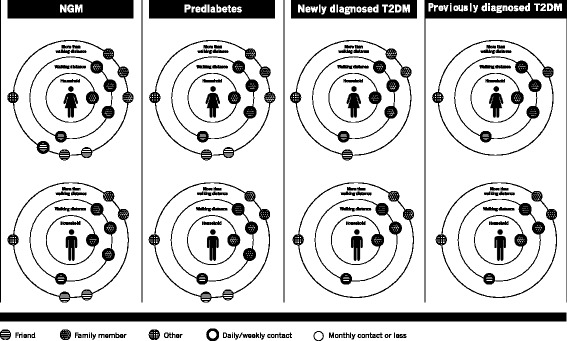
“Figure 2 depicts the composition of structural network characteristics in men and women with and without type 2 diabetes, according to data from the populationbased Maastricht Study [11].”
BackgroundMethodInfluentialSelf-citationBrinkhues, S., Dukers–Muijrers, N. H. T. M., Hoebe, C. J. P. A., Kallen, C., Koster, A., Henry, R. M. A., Stehouwer, C. D. A., Savelkoul, P. H. M., Schaper, N. C., & Schram, M. T. (2018) · Diabetes Care · doi:10.2337/dc17-2144 · Cited by 63
“In addition, low levels of social support have been associated with the prevalence of T2DM (16), as well as with lower QoL and highermortality in T2DM (10,11).”
BackgroundSelf-citationHirabayashi, N., Honda, T., Hata, J., Furuta, Y., Shibata, M., Ohara, T., Tatewaki, Y., Taki, Y., Nakaji, S., Maeda, T., et al. (2023) · Neurology · doi:10.1212/wnl.0000000000207602 · Cited by 60
Kuiper, J. S., Smidt, N., Zuidema, S. U., Comijs, H. C., Voshaar, R. C. O., & Zuidersma, M. (2019) · Aging & Mental Health · doi:10.1080/13607863.2019.1571012 · Cited by 59
“Social network size and cognitive decline Small social network size has been found to predict adverse health outcomes, including Type 2 diabetes (Brinkhues et al., 2017), coronary heart disease (Leigh-Hunt et al., 2017), stroke, and mortality (Holt-Lunstad, Smith, & Layton, 2010; Becofsky et al.,…”
BackgroundPositive Psychology in Lifestyle Medicine and Health Care: Strategies for Implementation
Lianov, L. S., Fredrickson, B. L., Barron, C., Krishnaswami, J., & Wallace, A. (2019) · American Journal of Lifestyle Medicine · doi:10.1177/1559827619838992 · Cited by 55
“Loneliness, depression, and isolation can worsen perception and severity of chronic disease and affect mortality; hence, social health is another key health element.(65-70) Positive psychology practices such as sustained gratitude and mindfulness practices and ongoing activities that promote life purpose have been ass…”
BackgroundSocial capital and the health of left-behind older adults in rural China: a cross-sectional study
Ke, Y., Jiang, J., & Chen, Y. (2019) · BMJ Open · doi:10.1136/bmjopen-2019-030804 · Cited by 49
Education outside the classroom and pupils’ social relations? A one-year quasi-experiment
Bølling, M., Pfister, G. U., Mygind, E., & Nielsen, G. (2019) · International Journal of Educational Research · doi:10.1016/j.ijer.2019.02.014 · Cited by 56
Preferences of people with Type 2 diabetes for diabetes care: a discrete choice experiment
Hertroijs, D. F. L., Elissen, A., Brouwers, M. C. G. J., Hiligsmann, M., Schaper, N. C., & Ruwaard, D. (2019) · Diabetic Medicine · doi:10.1111/dme.13969 · Cited by 43
Self-citationLoneliness and biological responses to acute stress in people with Type 2 diabetes
Hackett, R. A., Poole, L., Hunt, E., Panagi, L., & Steptoe, A. (2019) · Psychophysiology · doi:10.1111/psyp.13341 · Cited by 43
“However, one analysis of 6,839 individuals found that low social network satisfaction was linked with an increased risk of diabetes in male participants only (Lukaschek, Baumert, Kruse, Meisinger, & Ladwig, 2017), while an analysis of a Dutch population cohort reported that socially isolated individuals were more like…”
BackgroundHolt‐Lunstad, J. (2023) · Policy Insights from the Behavioral and Brain Sciences · doi:10.1177/23727322221150204 · Cited by 41
“Poor social connection is linked to other health outcomes, including newly and previously diagnosed type 2 diabetes (Brinkhues et al., 2017).”
BackgroundHambling, C. E., Khunti, K., Cos, X., Wens, J., Martinez, L., Topsever, P., Prato, S. D., Sinclair, A. J., Schernthaner, G., Rutten, G. E. H. M., et al. (2019) · Primary care diabetes · doi:10.1016/j.pcd.2018.12.005 · Cited by 41
Liang, H., Yue, Z., Liu, E., & Xiang, N. (2020) · PLoS ONE · doi:10.1371/journal.pone.0231318 · Cited by 36
Correlates of Social Isolation Among Community-Dwelling Older Adults During the COVID-19 Pandemic
Adepoju, O. E., Chae, M., Woodard, L., Smith, K. L., Herrera, L. E., Han, D., Howard, D. L., Dobbins, J. M., & Ory, M. G. (2021) · Frontiers in Public Health · doi:10.3389/fpubh.2021.702965 · Cited by 31
“This finding aligns with previous studies that show an association between having diabetes and feeling socially isolated (24).”
ResultFord, K. J., & Robitaille, A. (2023) · BMJ Open Diabetes Research & Care · doi:10.1136/bmjdrc-2022-003080 · Cited by 35
Factors associated with loneliness in patients with diabetes mellitus
Kobos, E., Szewczyk, A., Kokoszka‐Paszkot, J., & Dziedzic, B. (2020) · Nursing Open · doi:10.1002/nop2.655 · Cited by 31
“Lukaschek et al. (2017) showed that low satisfaction with social relationships is associated with an increased risk of diabetes; the prevalence of T2D was higher in socially isolated individuals (Brinkhues et al., 2017).”
BackgroundGianfredi, V., Beran, M., Koster, A., Eussen, S. J. P. M., Odone, A., Signorelli, C., Schaper, N. C., Köhler, S., Bosma, H., Dagnelie, P. C., et al. (2021) · Journal of Affective Disorders · doi:10.1016/j.jad.2021.06.046 · Cited by 31
Self-citationAssociation of Psychosocial Factors With Risk of Chronic Diseases: A Nationwide Longitudinal Study
Sahle, B. W., Chen, W. L., Melaku, Y. A., Akombi-Inyang, B. J., Rawal, L. B., & Renzaho, A. M. N. (2020) · American Journal of Preventive Medicine · doi:10.1016/j.amepre.2019.09.007 · Cited by 34
Polygenic risk of social isolation behavior and its influence on psychopathology and personality
Socrates, A., Mullins, N., Gur, R. C., Gur, R. E., Stahl, E. A., O’Reilly, P. F., Reichenberg, A., Jones, H. J., Zammit, S., & Velthorst, E. (2024) · Molecular Psychiatry · doi:10.1038/s41380-024-02617-2 · Cited by 29
“There is evidence that lack of social contact is associated with schizophrenia [2, 3], autism spectrum disorder [3], and depression [4], as well as with medical conditions such as cardiovascular disease [5] and diabetes [6].”
BackgroundSteijvers, L. C., Brinkhues, S., Hoebe, C. J. P. A., van Tilburg, T. G., Claessen, V. P. J., Bouwmeester-Vincken, N., Hamers, F. J. M., Vranken, P., & Dukers–Muijrers, N. H. T. M. (2021) · PLoS ONE · doi:10.1371/journal.pone.0251862 · Cited by 27
“For statistical analyses, the information was used to compute various social network aspects [24], reflecting structural and functional aspects, and that were proposed to reflect strong or weak relationships (described below).”
MethodSelf-citationLoneliness, social isolation and cardiovascular risk
Jackson, A. C., & Murphy, B. M. (2019) · British Journal of Cardiac Nursing · doi:10.12968/bjca.2019.0093 · Cited by 25
Social Isolation and Breast Cancer
Hilakivi-Clarke, L. A., & Andrade, F. D. O. (2023) · Endocrinology · doi:10.1210/endocr/bqad126 · Cited by 23
Associations of carbohydrates and carbohydrate-rich foods with incidence of type 2 diabetes
Olsson, K., Ramne, S., González-Padilla, E., Ericson, U., & Sonestedt, E. (2020) · British Journal Of Nutrition · doi:10.1017/s0007114520005140 · Cited by 24
Gulley, L. D., Shomaker, L. B., Kelly, N. R., Chen, K. Y., Olsen, C. H., Tanofsky‐Kraff, M., & Yanovski, J. A. (2022) · Journal of Psychosomatic Research · doi:10.1016/j.jpsychores.2022.110781 · Cited by 22
Gunn, S., Henson, J. J., Robertson, N., Maltby, J., Brady, E. M., Henderson, S., Hadjiconstantinou, M., Hall, A. P., Rowlands, A. V., Yates, T. E., et al. (2022) · BMJ Open Diabetes Research & Care · doi:10.1136/bmjdrc-2022-002927 · Cited by 20
Lamichhane, B., Moukaddam, N. J., & Sabharwal, A. (2024) · Scientific Reports · doi:10.1038/s41598-024-69739-z · Cited by 18
“…• Location variance ( log (σ 2 latitude + σ 2 longitude ) ) • Normalized cluster entropy ( , k : number of location clusters; t i : time spent in a cluster i ) Sociability features from continuous free-living audio Sociability features are implicated in depression and other health disorders 43–45 .”
Chen, Y., Xue, H., Ai, S., Liu, Y., Nie, Y., Ai, Q. Y. H., Zhang, J., & Liang, Y. Y. (2024) · Diabetes & Metabolism · doi:10.1016/j.diabet.2024.101526 · Cited by 16
Social Connectivity During the COVID-19 Pandemic: Disparities among Medicare Beneficiaries
Jacobs, M., & Ellis, C. (2021) · Journal of Primary Care & Community Health · doi:10.1177/21501327211030135 · Cited by 14
Huang, J., Xiao, L., Zhao, H., Liu, F., & Du, L. (2023) · Primary care diabetes · doi:10.1016/j.pcd.2023.11.011 · Cited by 15
Relationship between loneliness and blood glucose control in diabetes
Kobos, E., Szewczyk, A., Świątkowska, T., Kryczka, T., & Sienkiewicz, Z. (2020) · BMC Public Health · doi:10.1186/s12889-020-09241-z · Cited by 14
Living Alone and Clinical Outcomes in Patients With Heart Failure With Preserved Ejection Fraction
Zhu, W., Wu, Y., Zhou, Y., Liang, W., Xue, R., Wu, Z., Wu, D., He, J., Dong, Y., & Liu, C. (2021) · Psychosomatic Medicine · doi:10.1097/psy.0000000000000945 · Cited by 16
“Individuals living alone are more likely to have newly diagnosed and prevalent diabetes mellitus than individuals living with others (17).”
BackgroundShea, S., Lionis, C. D., Atkinson, L., Kite, C., Lagojda, L., Chaggar, S. S., Kyrou, I., & Randeva, H. S. (2022) · Livers · doi:10.3390/livers3010001 · Cited by 16
Ruiz-Estigarribia, L., Martínez‐González, M. Á., Díaz‐Gutiérrez, J., Sayón-Orea, C., Basterra-Gortari, F. J., & Bes‐Rastrollo, M. (2020) · Nutrition Metabolism and Cardiovascular Diseases · doi:10.1016/j.numecd.2020.04.006 · Cited by 13
Meroni, G., Valerio, A., Vezzoli, M., Croci, E., & Carruba, M. O. (2021) · Diabetes Research and Clinical Practice · doi:10.1016/j.diabres.2021.108748 · Cited by 15
Andrade, F. D. O., Lu, J., Clarke, R. C., Wood, I., Dutton, M., Anjorin, C., Rubin, G., Gao, A., Sengupta, S., Fitzgerald, K. T., et al. (2023) · Cells · doi:10.3390/cells12060961 · Cited by 11
“Social isolation also increases the risk of developing type 2 diabetes [3], dementia [4], worsens neurological disease symptoms [5], and cancer mortality [6,7].”
BackgroundChen, H., Liu, F., Luo, J., Tu, Y., Huang, S., & Zhu, W. (2023) · Clinical Cardiology · doi:10.1002/clc.24153 · Cited by 11
“23 Previous studies have revealed that living alone has an influence on the clinical prognosis of patients with established cardiovascular diseases.”
BackgroundKomalasari, D. R., Vongsirinavarat, M., Hiengkaew, V., & Nualnim, N. (2024) · PeerJ · doi:10.7717/peerj.17287 · Cited by 11
Social isolation: an integrated molecular web that disrupts cellular homeostasis
Qaisiya, M., Moretto, E., Battocchio, E., Pistella, A., Caso, M. G., Bellani, M., & Guarnieri, F. C. (2025) · Frontiers in Neuroscience · doi:10.3389/fnins.2025.1693696 · Cited by 185
Prell, T., Stegmann, S., & Schönenberg, A. (2023) · Scientific Reports · doi:10.1038/s41598-023-33884-8 · Cited by 13
Cai, H., Wu, Z., Xu, J., Wang, T., Li, Y., Jiang, Y., & Xu, M. (2024) · Risk Management and Healthcare Policy · doi:10.2147/rmhp.s479130 · Cited by 10
“4 7 Furthermore, studies have shown that PD patients, compared to those with other chronic conditions, experience exacerbated symptoms and significantly reduced survival rates due to social isolation.”
BackgroundInvestigating relationships between loneliness, social isolation and health
Hilliard, D. D., Wootton, R. E., Sallis, H., van de Weijer, M. P., Treur, J. L., Qualter, P., Dixon, P., Sanderson, E. C. M., Carslake, D., Richmond, R. C., et al. (2026) · Nature Communications · doi:10.1038/s41467-026-74758-7 · Cited by 9
“…health (cardiovascular outcomes including coronary artery disease, heart failure 42,43 , stroke, systolic blood pressure 44,45 type 2 diabetes 46,47 ) and mental health 7 (self-harm 48 , suicidal attempts 49 , depression diagnosis, a continuous depression trait 50 , anxiety diagnosis and a…”
Steijvers, L. C., Leeferink, F., Brinkhues, S., Hoebe, C. J. P. A., & Dukers–Muijrers, N. H. T. M. (2023) · Journal of Public Health · doi:10.1007/s10389-023-01947-9 · Cited by 11
“…include social support such as informational social support (advice), emotional support (when a person experiences discomfort or wants to discuss important matters), or practical social support (jobs around the house and or help when a person is ill) (Berkman and Glass 2000; Brinkhues et al. 2017).”
Self-citationAlnassar, N., Hillman, C., Fontana, B. D., Robson, S. C., Norton, W., & Parker, M. O. (2023) · Neurobiology of Aging · doi:10.1016/j.neurobiolaging.2023.08.004 · Cited by 9
Explaining Chronic Illness and Self-Rated Health Among Immigrants of Five Hispanic Ethnicities
Lo, C. C., Adame, J. L., & Cheng, T. C. (2019) · Journal of Racial and Ethnic Health Disparities · doi:10.1007/s40615-019-00647-z · Cited by 11
“It is important to note, finally, that stress arising from the acculturation process is frequently linked to higher likelihood of mental health problems and chronic illness [47, 55, 59, 60].”
BackgroundAlbers, J. D., Koster, A., Sezer, B., Meisters, R., Schram, M. T., Eussen, S. J. P. M., Dukers–Muijrers, N. H. T. M., Jansen, M. W. J., Stehouwer, C. D. A., Lakerveld, J., et al. (2024) · Diabetes & Metabolic Syndrome Clinical Research & Reviews · doi:10.1016/j.dsx.2024.103155 · Cited by 11
Self-citationShimoda, T., Tomida, K., Nakajima, C., Kawakami, A., & Shimada, H. (2024) · Archives of Gerontology and Geriatrics · doi:10.1016/j.archger.2024.105544 · Cited by 8
Steijvers, L. C., van Bilsen, C. J. A., Wagner, S., Stutterheim, S. E., Crutzen, R., Ruiter, R. A. C., Hoebe, C. J. P. A., & Dukers–Muijrers, N. H. T. M. (2024) · Vaccine X · doi:10.1016/j.jvacx.2024.100562 · Cited by 8
“Geographical proximity was calculated by the proportion of network members living in the same house, within walking distance, less than thirty minutes away by car, more than thirty minutes away by car, or further away (Supplementary Table 1) [27 – 29].”
BackgroundMethodInfluentialSelf-citationThe Effects of Loneliness on the Aged: A Review
Rokach, A. (2023) · OBM Geriatrics · doi:10.21926/obm.geriatr.2302236 · Cited by 8
Peng, C., Wang, X., Zhang, M. X., Tong, D., Li, J., Xu, T., Qiu, J., & Wei, D. (2025) · Social Science & Medicine · doi:10.1016/j.socscimed.2025.117968 · Cited by 9
Shang, Y., Wu, W., Dove, A. E., Guo, J., Welmer, A., Rizzuto, D., Fratiglioni, L., & Xu, W. (2022) · The Journals of Gerontology Series A · doi:10.1093/gerona/glac054 · Cited by 8
“As a rich social network may decrease the risk of T2DM (11), a beneficial effect of social network on long-term outcomes secondary to T2DM could be expected.”
BackgroundPropiedades psicométricas del ENRICHD Social Support Instrument (ESSI) en una muestra chilena
Ortíz, M. S., Villena, C., Salinas-Rehbein, B., Neira-Vallejos, S., & Schleef, J. (2022) · Terapia psicológica · doi:10.4067/s0718-48082022000300331 · Cited by 8
Screening for Loneliness and Social Isolation in Clinical Practice
Mullen, R., & Lum, H. D. (2025) · Clinics in Geriatric Medicine · doi:10.1016/j.cger.2025.04.003 · Cited by 5
Social isolation and subclinical vascular pathways to cerebrovascular disease
Arcidiacono, D. M., Machia, L. V., Lefferts, W. K., Wolf, D. A., & Heffernan, K. S. (2023) · Biodemography and Social Biology · doi:10.1080/19485565.2023.2182274 · Cited by 5
“…examining how psychosocial factors influence CVD risk have shown that low social support is as potent a risk factor for CVD as hypertension, smoking, obesity, hyperlipidemia and diabetes (Brinkhues et al. 2017; Holt-Lunstad et al. 2010; House, Landis, and Umberson 1988; Pantell et al. 2013).”
BackgroundThe Art of Health Promotion: linking research to practice
Johnson, S. S. (2018) · American Journal of Health Promotion · doi:10.1177/0890117118776735 · Cited by 5
Sutherland, J., Herrington, I., Makarski, J., Tindall, J., Hynes, M., & Kastner, M. (2024) · BMC Public Health · doi:10.1186/s12889-024-18720-6 · Cited by 4
“For example, social isolation and loneliness have been associated with coronary heart disease and stroke [18], type 2 diabetes [19], depression and psychological distress [20], dementia [21, 22], and impaired hearing [23].”
BackgroundLamichhane, B., Moukaddam, N. J., Patel, A., & Sabharwal, A. (2022) · IEEE Pervasive Computing · doi:10.1109/mprv.2022.3155698 · Cited by 6
Which Social Variables Predict Diabetes Onset? Robust Findings in Two National Surveys
Hawkley, L. C., Wroblewski, K., Schumm, L. P., Wang, S., Finch, L. E., McClintock, M. K., & Huang, E. S. (2024) · The Gerontologist · doi:10.1093/geront/gnae101 · Cited by 3
Venegas, J. J., Weisz, J. M., Choi, C. Y., Herringshaw, R. E., Nabelsi, O. A., & Liang, N. (2025) · Physiological Reports · doi:10.14814/phy2.70184 · Cited by 3
Atasoy, S., Johar, H., Kruse, J., Lukaschek, K., Peters, A., & Ladwig, K.-H. (2022) · Psychosomatic Medicine · doi:10.1097/psy.0000000000001135 · Cited by 1
Leiva-Granados, R., Grijalva-Eternod, C. S., Kretchy, I. A., Amon, S., Baatiema, L., Haghparast‐Bidgoli, H., Marphatia, A. A., Rougeaux, E., Kushitor, M. K., Kushitor, S. B., et al. (2025) · BMC Public Health · doi:10.1186/s12889-025-25322-3 · Cited by 2
“Our finding that most associations were not statistically significant appears to contrast with previous evidence reporting significant effects of social connectedness variables on health conditions such as diabetes and obesity [16, 22, 32].”
Li, Y., Zhao, W. H., & Wang, B. (2026) · Frontiers in Psychiatry · doi:10.3389/fpsyt.2026.1776298 · Cited by 2
“This condition is associated with multiple adverse outcomes, including physical function deterioration (8), elevated risks of dementia (9)and type 2 diabetes (10), psychological distress (e.g., loneliness and depression) (11), and increased mortality (12).”
Zhang, Y., Wang, L., Bai, J., Ren, R. C., Wang, W., Liu, J., Ma, Y., & Wang, D. (2026) · Journal of Affective Disorders · doi:10.1016/j.jad.2026.121760 · Cited by 2
THE MEDICAL SIGNIFICANCE OF LONELINESS AND SOCIAL ISOLATION IN OLD AGE (literature review)
Лебедев, Д. Т., Rukavishnikov, A. S., Лупашко, Е. В., Хохлюк, Е. В., & Сагинбаев, У. Р. (2024) · Успехи геронтологии · doi:10.34922/ae.2024.37.1-2.017 · Cited by 5
Civil Society Participation and Suicide Rates: A Cross-National Analysis
Hunter, L. Y. (2024) · Cross-Cultural Research · doi:10.1177/10693971241285064 · Cited by 3
“Scholars have discovered that social isolation can increase the risk for cardiovascular disease and stroke (Valtorta et al., 2016), pre-diabetes and type 2 diabetes (Brinkhues et al., 2017), poor cognitive functioning (Evans et al., 2017), and dementia (Penninkilampi et al., 2018).”
Sadera, R., Youssef, J., Ramadan, A., & Ahmed, M. H. (2020) · Journal of Endocrinology and Metabolism · doi:10.14740/jem699 · Cited by 2
“ated with previously diagnosed diabetes in males [8].”
BackgroundLi, S., Ai, T., Zhang, R., You, X., & Li, J. (2025) · BMC Public Health · doi:10.1186/s12889-025-22584-9 · Cited by 1
Chen, J., Cai, X., Yan, Y., Xu, Q., & Xu, M. (2025) · Hemodialysis International · doi:10.1111/hdi.70029 · Cited by 1
“It is associated with decreased physical function [5], increased risks of dementia [6], Type 2 diabetes [7], loneliness, and depression [8], and is an independent risk factor for mortality [9].”
Mamedova, D. I., Nedogreeva, O. A., Aniol, V. A., Kvichansky, A. A., Tret’yakova, L. V., Riga, V. D., Лазарева, Н. А., Gulyaeva, N. V., & Stepanichev, M. Y. (2026) · Neurochemical Research · doi:10.1007/s11064-026-04889-2 · Cited by 1
“Epidemiological studies have linked social isolation and loneliness to cardiovascular diseases [5–7], cognitive impairments [8], psychiatric disorders such as depression and/or anxiety [9] and increased all-cause mortality [4, 10, 11].”
Loneliness and its Relationship with Diabetes Mellitus
Agarwal, S. K. (2022) · East African Scholars Journal of Medical Sciences · doi:10.36349/easms.2022.v05i04.002 · Cited by 1
The Ecological Approach to Self-Management in Diabetes
Fisher, E. B., Bloch, P., & Sherlaw, W. (2023) · Springer eBooks · doi:10.1007/978-3-031-25519-9_4 · Cited by 1
Mapping the Dynamic Complexity of Social Isolation Among Older Adults in Singapore
Toh, E. M. S., Chia, A. W.-Y., & Ansah, J. P. (2024) · SAGE Open · doi:10.1177/21582440241241371 · Cited by 1
“The health impact of social isolation includes, among others, coronary heart diseases and stroke (Valtorta et al., 2016), diabetes (Brinkhues et al., 2017), depression, and increased mortality (Choi et al., 2015; Holt-Lunstad et al., 2015).”
The Effect of Age, Gender and Haemoglobin Variants on Glycated Haemoglobin
Kotila, T. R., Charles-Davies, M. A., Afolabi, R. F., Adeleye, J. O., Ogunlakin, M., Mapayi, F., & Agbedana, E. O. (2018) · International Journal of TROPICAL DISEASE & Health · doi:10.9734/ijtdh/2018/45165
“We observed that the prevalence of T2DM was three times higher in women which is at variance with the epidemiology in high income countries where the prevalence is only slightly higher in men [13-15].”
BackgroundSocial Support and Glycohemoglobin Level Among Older Adults
Fakiya, E. O. (2019) · ScholarWorks (Walden University)
The Ecological Approach to Self-Management in Diabetes
Fisher, E. B., Bloch, P., & Sherlaw, W. (2019) · Springer eBooks · doi:10.1007/978-3-030-11815-0_4
Ruiz-Estigarribia, L. (2019) · Depósito Académico Digital Universidad de Navarra (University of Navarra)
How can older adults combat diabetes to achieve a longer and healthier life
Shang, Y. (2021) · Figshare · Cited by 6
Social Isolation, Towards a Monastic Epidemic
Rad, D. (2020) · Psychology & Psychological Research International Journal · doi:10.23880/pprij-16000237
“…that included 2861 men and women between the ages of 40 and 75 shows that men living alone are at increased risk of developing type 2 diabetes [1], with specialists already claiming that this group should be considered as high risk from the point of view of public health and that the list of…”
Steijvers, L. C., van Bilsen, C. J. A., Brinkhues, S., Stutterheim, S. E., Crutzen, R., Ruiter, R. A. C., Hoebe, C. J. P. A., & Dukers–Muijrers, N. H. T. M. (2024) · medRxiv · doi:10.1101/2024.07.08.24309958
“[25–27] With this method, a distinction in social network characteristics can be made, allowing for the inclusion of a broad range of social network aspects and differentiating between structure, function, and quality of social networks rather than just focusing on network size and social support.”
BackgroundMethodInfluentialSelf-citationA Causal Analysis of Five Population-Wide Health Interventions: Evidence From New Zealand Panel Data
Kempthorne, J. (2025) · Open Access Victoria University of Wellington | Te Herenga Waka (Figshare) · doi:10.26686/wgtn.29474216
Shimoda, T., Tomida, K., Nakajima, C., Kawakami, A., & Shimada, H. (2025) · Endocrine · doi:10.1007/s12020-025-04348-y
“Diabetes mellitus (DM) has been reported to be associated with social isolation and loneliness [11, 12].”
WIP: 10-Minute Talkies – An Easy Method to Encourage Long-Lasting Community
Porter, B. A. (2025) · ASEE Annual Conference & Exposition · doi:10.18260/1-2--57363
Canada’s new drinking guidelines don’t consider the social benefits of alcohol. But should they?
Card, K. G. (2023) · The Conversation · doi:10.64628/aam.q77c5tgys · Cited by 1
Card, K. G. (2023) · The Conversation · doi:10.64628/aam.jhcd9shdh · Cited by 1
Les liens sociaux sont essentiels pour le bien-être. Voici sept manières d’éviter l’isolement
Card, K. G. (2023) · The Conversation · doi:10.64628/aap.dskh45xp9
Sutherland, J., Herrington, I., Makarski, J., Tindall, J., Hynes, M., & Kastner, M. (2024) · Figshare · doi:10.6084/m9.figshare.26716036
Sutherland, J., Herrington, I., Makarski, J., Tindall, J., Hynes, M., & Kastner, M. (2024) · Figshare · doi:10.6084/m9.figshare.26716033
Additional file 1 of Relationship between loneliness and blood glucose control in diabetes
Kobos, E., Szewczyk, A., Świątkowska, T., Kryczka, T., & Sienkiewicz, Z. (2020) · Figshare · doi:10.6084/m9.figshare.12680347
The impact of diet, superfoods and exercise on well-being
Κοντεκάκη, Μ. Ν., & Κοντεκάκη, Μ. Ν. (2025) · University of Thessaly Institutional Repository (University of Thessaly)
Zhu, Y., Zhang, Y., Zhao, C., Zeng, X., & Zheng, X. (2026) · Journal of Medical Internet Research · doi:10.2196/82996
“Although men typically maintain smaller social networks [41], they often occupy more central positions [8].”
Prasad, J., & Sekher, T. V. (2026) · Archives of Gerontology and Geriatrics Plus · doi:10.1016/j.aggp.2026.100302
de Leijer, J. F., Biessels, G. J., Visseren, F. L. J., & van Sloten, T. T. (2026) · Diabetologia · doi:10.1007/s00125-026-06795-2 · Cited by 2
“For example, individuals with type 2 diabetes have lower cognitive reserve, are more often socially isolated and are more likely to have hearing and vision loss compared with people without diabetes [75–77].”
Qi, X., Liu, L., Pan, C., Wei, W., Cheng, S., Gou, Y., Wen, Y., & Zhang, F. (2026) · European Psychiatry · doi:10.1192/j.eurpsy.2026.12244
“Furthermore, individuals with greater social isolation exhibited a higher prevalence of both newly diagnosed and previously diagnosed T2DM, while a lack of social engagement was linked to pre-diabetes and previously diagnosed T2DM [33].”
Kowall, B., Dragano, N., Schmidt, B., & Stang, A. (2026) · Epidemiologia · doi:10.3390/epidemiologia7040106
“Furthermore, few studies suggest that persons with lower levels of social support are at a higher risk of diabetes [10,11,14,15].”
Bastos, S., Severo, M., de la Torre, J. A., & Henriques, A. (2026) · Aging & Mental Health · doi:10.1080/13607863.2026.2713203
Living alone and mortality risk in cancer patients: a systematic review and meta-analysis
Huang, J., Tu, Z., Wu, D., Liu, F., & Du, L. (2026) · Frontiers in Oncology · doi:10.3389/fonc.2026.1866474
“In addition, living alone has been associated with a poorer prognosis in patients with diabetes, heart failure and coronary artery disease (8 – 10).”
Hwang, M., & Yi, J. (2026) · Geriatric Nursing · doi:10.1016/j.gerinurse.2026.104321
Un llamado a la interacción social durante la vejez
Flores, F. A., & Méndez‐Díaz, M. (2026) · Revista de la Facultad de Medicina UNAM · doi:10.22201/fm.24484865e.2026.69.3.06
Metadata
- Authors
- Brinkhues, S., Dukers-Muijrers, N. H. T. M., Hoebe, C. J. P. A., van der Kallen, C. J. H., Dagnelie, P. C., Koster, A., Henry, R. M. A., Sep, S. J. S., Schaper, N. C., Stehouwer, C. D. A., Bosma, H., Savelkoul, P. H. M., & Schram, M. T.
- Affiliations
- Maastricht University Medical Centre (NL)
- Maastricht University (NL)
- Corresponding author
- Schram, Miranda T.
- ORCID
- Venue
- BMC Public Health
- Published
- 2017-12
- Volume
- 17
- Issue
- 1
- Pages
- 955-955
- ISSN
- 1471-2458 (ISSN-L)
- PMC
- PMC5735891
- OpenAlex
- W2771709538
- Cited by
- 97
- References
- 30
- Citations by year
- 2026: 11 · 2025: 9 · 2024: 18 · 2023: 19 · 2022: 8 · 2021: 9 · 2020: 10 · 2019: 10 · 2018: 3
- FWCI
- 7.00
- Type
- journal article
- Language
- en
- Open access
- gold
- doi.org
- Licence
- cc-by
- Locations
- BMC Public Health (publishedVersion, cc-by)
- Europe PMC (PubMed Central) (publishedVersion, cc-by)
- PubMed Central (publishedVersion, cc-by)
- PubMed (publishedVersion)
- Research Publications (Maastricht University) (publishedVersion, cc-by)
- Pure Amsterdam UMC (publishedVersion, other-oa)
- DOAJ (DOAJ: Directory of Open Access Journals) (submittedVersion)
- Amsterdam UMC (VU Amsterdam) - Institutional Repository (submittedVersion)
- Research Publications (Maastricht University) (submittedVersion, other-oa)
- Data Archiving and Networked Services (DANS) (submittedVersion)
- Funders
- Sanofi
- Health Foundation Limburg
- Novo Nordisk
- Stichting De Weijerhorst (31O.041)
- European Regional Development Fund (31O.041)
- CARIM School for Cardiovascular Diseases, Universiteit Maastricht
- Care and Public Health Research Institute, Universiteit Maastricht
- NUTRIM School of Nutrition and Translational Research in Metabolism
- Cilag
- Topics
- Social Sciences › Health › Health disparities and outcomes
- Health Sciences › Medicine › Endocrinology, Diabetes and Metabolism › Diabetes, Cardiovascular Risks, and Lipoproteins
- Health Sciences › Medicine › Endocrinology, Diabetes and Metabolism › Diabetes Management and Education
- Keywords
- social isolation, type 2 diabetes, social networks, social network size, prediabetes, newly diagnosed diabetes, social support, emotional support, practical support, living alone, sex differences, diabetes prevention, Maastricht Study
- MeSH terms
- Adult, Aged, Diabetes Mellitus, Type 2, Female, Glucose Tolerance Test, Humans, Male, Middle Aged, Netherlands, Prediabetic State, Surveys and Questionnaires, Social Isolation, Cohort Studies, Prevalence, Sex Distribution
About these checks
Registry, retraction, Cites and statistics results are computed, not judged, with one exception: a printed reference that no index lists is read once by a model before it counts as a citation error. Claims are extracted by a model and kept only when their quote appears verbatim in the text; each cited source is then checked, with a model’s help, for whether it says what the claim relies on. Those verdicts can be wrong — read the claim’s quote and the cited source before relying on one.
Statistics and arithmetic are recomputed, not judged.
Confidence bands are shown only for fields calibrated on our annotated test set. None is calibrated yet, so no band is shown.
What counts as a claim ›How we measure confidence ›How we check this ›
Are you an author, or do you see a problem with this page? Request a review
Data sources
Bibliographic data: Semantic Scholar, OpenAlex, Crossref.
Contains information from the Semantic Scholar Academic Graph Datasets, made available under the ODC Attribution License (ODC-BY 1.0).
Semantic Scholar’s data is described in: Kinney, R., et al. (2023). The Semantic Scholar Open Data Platform. arXiv:2301.10140.
