

Systematic review of burnout among healthcare providers in sub-Saharan Africa
Open accessThe DOI matches its Crossref record; 145 of the 145 references it cites were found in a registry or an index.
Abstract
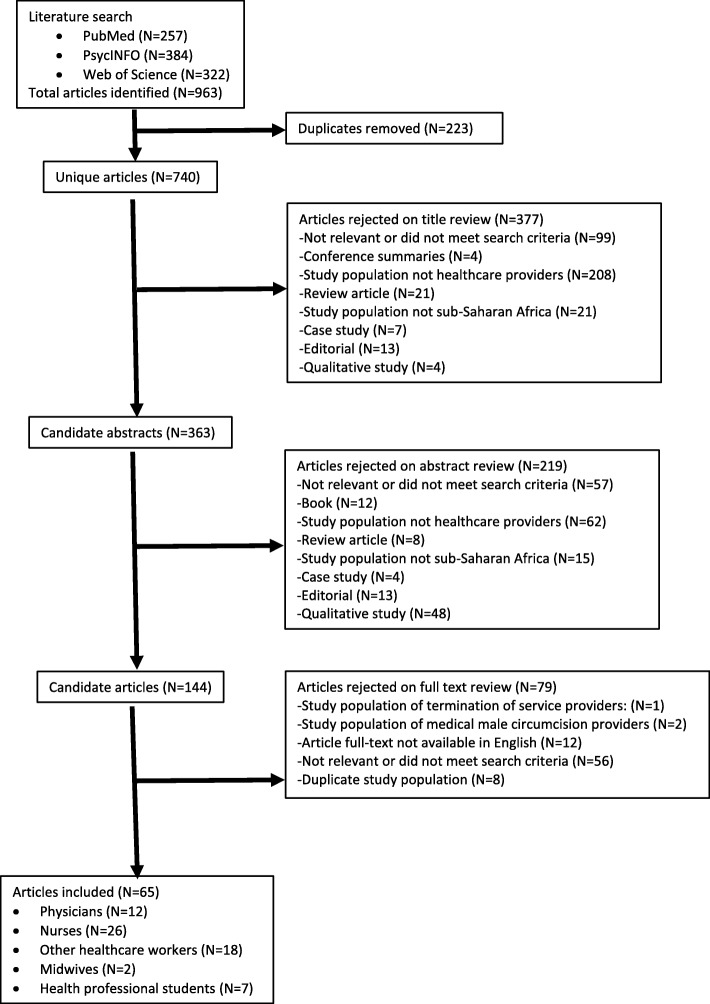
Background: Burnout is characterized by physical and emotional exhaustion from long-term exposure to emotionally demanding work. Burnout affects interpersonal skills, job performance, career satisfaction, and psychological health. However, little is known about the burden of burnout among healthcare providers in sub-Saharan Africa. Methods: Relevant articles were identified through a systematic review of PubMed, Web of Science (Thomson Reuters), and PsycINFO (EBSCO). Studies were selected for inclusion if they examined a quantitative measure of burnout among healthcare providers in sub-Saharan Africa. Results: A total of 65 articles met our inclusion criteria for this systematic review. Previous studies have examined burnout in sub-Saharan Africa among physicians ( N = 12 articles), nurses ( N = 26), combined populations of healthcare providers ( N = 18), midwives ( N = 2), and medical or nursing students ( N = 7). The majority of studies assessed burnout using the Maslach Burnout Inventory. The highest levels of burnout were reported among nurses, although all healthcare providers showed high burnout. Burnout among healthcare providers is associated with their work environments, interpersonal and professional conflicts, emotional distress, and low social support. Conclusions: Available studies on this topic are limited by several methodological challenges. More rigorously designed epidemiologic studies of burnout among healthcare providers are warranted. Health infrastructure improvements will eventually be essential, though difficult to achieve, in under-resourced settings. Programs aimed at raising awareness and coping with burnout symptoms through stress management and resilience enhancement trainings are also needed.
Overview
The claims and statistics of this paper haven’t been checked yet.
Free: it reads the open-access text and checks the first 5 claims that cite a source we can check. Create a free account to check every claim.
Integrity signals
Registry
Cites
Statistics
Figures
Verification
Claims the paper makes
The claims and statistics of this paper haven’t been checked yet.
Free: it reads the open-access text and checks the first 5 claims that cite a source we can check. Create a free account to check every claim.
Claims other papers make about this one
Each is checked against this paper’s own text: does it say what the citing paper says it does?
The source backs part of the claim, not all of it — or backs it for a different population, condition or comparison.
In the citing paper
“Collectively, the findings demonstrate that burnout management in the region is multifaceted, shaped by the interplay between organizational support, interpersonal relationships, individual burnout management strategies, and culturally grounded practices (12–14, 19).”
From Management strategies for healthcare worker burnout in Sub-Saharan Africa: an integrative review (2026) · cites this paper as [12]
Experimental — accuracy not yet measuredThe source backs part of the claim, not all of it — or backs it for a different population, condition or comparison.
In the citing paper
“These findings echo broader regional evidence that burnout in Sub-Saharan Africa is driven primarily by structural conditions rather than individual weakness (12, 38).”
From Management strategies for healthcare worker burnout in Sub-Saharan Africa: an integrative review (2026) · cites this paper as [12]
Experimental — accuracy not yet measuredThe cited source says what the claim attributes to it.
In the citing paper
“There is a striking lack of intervention studies addressing burnout within the SSA region (9, 12).”
From Management strategies for healthcare worker burnout in Sub-Saharan Africa: an integrative review (2026) · cites this paper as [12]
The cited source says what the claim attributes to it.
In the citing paper
“Intra- and inter-professional conflicts in healthcare settings have been reported elsewhere in Sub-Saharan Africa in relation to staff burnout [24], but not previously in relation to implementation of health programmes.”
From Scale-up of a novel vital signs alert device to improve maternity care in Sierra Leone: a mixed methods evaluation of adoption (2023) · cites this paper as [24]
The cited source says what the claim attributes to it.
In the citing paper
“Evidence remains scattered across small-scale studies and often lacks evaluation of effectiveness, highlighting the need for a comprehensive synthesis of available burnout management strategies in SSA (12).”
From Management strategies for healthcare worker burnout in Sub-Saharan Africa: an integrative review (2026) · cites this paper as [12]
1 more claim about this paper
Create a free account to see every claim other papers make about this one.
Self-check
Percentages, sums and reported differences re-computed from the paper’s own numbers.
The self-check needs the paper’s full text.
Citations
Cites
Preferred Reporting Items for Systematic Reviews and Meta-Analyses: the PRISMA statement
Moher, D., Liberati, A., Tetzlaff, J., Altman, D. G., & for the PRISMA Group (2009) · BMJ · doi:10.1136/bmj.b2535 · Cited by 83,823
The Cochrane Collaboration's tool for assessing risk of bias in randomised trials
Higgins, J. P. T., Altman, D. G., Gotzsche, P. C., Juni, P., Moher, D., Oxman, A. D., Savovic, J., Schulz, K. F., Weeks, L., Sterne, J. A. C., et al. (2011) · BMJ · doi:10.1136/bmj.d5928 · Cited by 33,817
Dermyshi, E., Wang, Y., Yan, C., Hong, W., Qiu, G., Gong, X., & Zhang, T. (2017) · Neonatology · doi:10.1159/000454668 · Cited by 24,451
(2014) · Medical Entomology and Zoology · Cited by 17,633
The measurement of experienced burnout
Maslach, C., & Jackson, S. E. (1981) · Journal of Organizational Behavior · doi:10.1002/job.4030020205 · Cited by 14,496 · cited 1×
“Burnout is a psychological syndrome involving emotional exhaustion, feelings of helplessness, depersonalization, negative attitudes towards work and life, and reduced personal accomplishment [1].”
BackgroundPreferred reporting items for systematic reviews and meta-analyses: The PRISMA statement
Moher, D., Liberati, A., Tetzlaff, J., & Altman, D. G. (2010) · International Journal of Surgery · doi:10.1016/j.ijsu.2010.02.007 · Cited by 12,156
Hospital Nurse Staffing and Patient Mortality, Nurse Burnout, and Job Dissatisfaction
Aiken, L. H. (2002) · JAMA · doi:10.1001/jama.288.16.1987 · Cited by 5,226
The Copenhagen Burnout Inventory: A new tool for the assessment of burnout
Kristensen, T. S., Borritz, M., Villadsen, E., & Christensen, K. B. (2005) · Work & Stress · doi:10.1080/02678370500297720 · Cited by 3,136 · cited 1×
“Concerns have been raised about how the MBI operationalizes burnout [133].”
BackgroundShanafelt, T. D., Hasan, O., Dyrbye, L. N., Sinsky, C., Satele, D., Sloan, J., & West, C. P. (2015) · Mayo Clinic Proceedings · doi:10.1016/j.mayocp.2015.08.023 · Cited by 2,885 · cited 2×
“Studies conducted in the United States show 54% of physicians [7], 35% of hospital nurses [11], and 35.”
BackgroundEarly predictors of job burnout and engagement.
Maslach, C., & Leiter, M. P. (2008) · Journal of Applied Psychology · doi:10.1037/0021-9010.93.3.498 · Cited by 2,397
Interventions to prevent and reduce physician burnout: a systematic review and meta-analysis
West, C. P., Dyrbye, L. N., Erwin, P. J., & Shanafelt, T. D. (2016) · The Lancet · doi:10.1016/s0140-6736(16)31279-x · Cited by 2,362
Dyrbye, L. N., West, C. P., Satele, D., Boone, S., Tan, L., Sloan, J., & Shanafelt, T. D. (2014) · Academic Medicine · doi:10.1097/acm.0000000000000134 · Cited by 2,040 · cited 2×
“Furthermore, burnout is highly comorbid with a myriad of psychiatric disorders including depression [19, 20], anxiety [21], substance abuse [19, 22], and suicidality [12, 23] among healthcare providers.”
BackgroundPrevalence of Burnout Among Physicians: A Systematic Review
Rotenstein, L. S., Torre, M., Ramos, M. A., Rosales, R. C., Guille, C., Sen, S., & Mata, D. A. (2018) · JAMA · doi:10.1001/jama.2018.12777 · Cited by 1,904 · cited 2×
“In a recent review (N = 109,628 from 182 studies), 67% of physicians reported burnout [124].”
BackgroundHerzog, R., Álvarez-Pasquin, M. J., Díaz, C., Del Barrio, J. L., Estrada, J. M., & Gil, Á. (2013) · BMC Public Health · doi:10.1186/1471-2458-13-154 · Cited by 1,652 · cited 1×
“Methodological quality of studies was assessed using the Newcastle-Ottawa Scale for cross-sectional studies [52], the Newcastle-Ottawa Scale for cohort studies [53], and the Cochrane Risk of Bias Tool for randomized controlled trials [54].”
MethodPhysician wellness: a missing quality indicator
Wallace, J. E., Lemaire, J. B., & Ghali, W. A. (2009) · The Lancet · doi:10.1016/s0140-6736(09)61424-0 · Cited by 1,608 · cited 1×
“errors, reduction in time devoted to providing clinical care, and higher mortality rates [35, 36].”
BackgroundThe relationship between professional burnout and quality and safety in healthcare: a meta-analysis
Salyers, M. P., Bonfils, K. A., Luther, L., Firmin, R. L., White, D. A., Adams, E. L., & Rollins, A. L. (2017) · Journal of General Internal Medicine · doi:10.1007/s11606-016-3886-9 · Cited by 843 · cited 1×
“In summary, burnout among healthcare providers has profound personal and professional consequences, impacting the quality of patient care and functionality of healthcare systems [37].”
BackgroundWork Related Stress, Burnout, Job Satisfaction and General Health of Nurses
Khamisa, N., Oldenburg, B., Peltzer, K., & Ilic, D. (2015) · International Journal of Environmental Research and Public Health · doi:10.3390/ijerph120100652 · Cited by 828 · cited 5×
“Among nursing populations in South Africa, burnout was associated with high workloads [73, 76, 82, 89] and lack of support [79, 80, 91, 92].”
BackgroundInfluentialAdriaenssens, J., De Gucht, V., & Maes, S. (2015) · International Journal of Nursing Studies · doi:10.1016/j.ijnurstu.2014.11.004 · Cited by 783 · cited 1×
“of burnout has been reported among emergency room (26%) [125] and pediatric nurses (21–39%) [126].”
BackgroundMcHugh, M. D., Kutney-Lee, A., Cimiotti, J. P., Sloane, D. M., & Aiken, L. H. (2011) · Health Affairs · doi:10.1377/hlthaff.2010.0100 · Cited by 770 · cited 1×
“Studies conducted in the United States show 54% of physicians [7], 35% of hospital nurses [11], and 35.”
BackgroundBurnout syndrome in critical care nursing staff
Poncet, M. C., Toullic, P., Papazian, L., Kentish-Barnes, N., Timsit, J.-F., Pochard, F., Chevret, S., Schlemmer, B., & Azoulay, É. (2007) · American Journal of Respiratory and Critical Care Medicine · doi:10.1164/rccm.200606-806oc · Cited by 750 · cited 1×
“The prevalence among physicians is reported to be as high as 70% [8] and nearly 50% among nurses [6, 9, 10].”
BackgroundBurnout in Mental Health Services: A Review of the Problem and Its Remediation
Morse, G., Salyers, M. P., Rollins, A. L., Monroe-DeVita, M., & Pfahler, C. (2012) · Administration and Policy in Mental Health and Mental Health Services Research · doi:10.1007/s10488-011-0352-1 · Cited by 728
Clinic, M., Dyrbye, L. N., Shanafelt, T. D., Clinic, M., Sinsky, C. A., American Medical Association, Cipriano, P. F., American Nurses Association, Bhatt, J., American Hospital Association, et al. (2017) · NAM Perspectives · doi:10.31478/201707b · Cited by 709 · cited 1×
“Additional studies need to address both personal and organizational barriers that increase the risk of burnout among healthcare providers [137].”
BackgroundCharacteristics of Staff Burnout in Mental Health Settings
Pines, A., & Maslach, C. (1978) · Psychiatric Services · doi:10.1176/ps.29.4.233 · Cited by 700 · cited 9×
“The majority of studies assessed burnout using the Maslach Burnout Inventory.”
BackgroundInfluentialShanafelt, T. D., Mungo, M., Schmitgen, J., Storz, K. A., Reeves, D., Hayes, S. N., Sloan, J. A., Swensen, S. J., & Buskirk, S. J. (2016) · Mayo Clinic Proceedings · doi:10.1016/j.mayocp.2016.02.001 · Cited by 642 · cited 1×
“errors, reduction in time devoted to providing clinical care, and higher mortality rates [35, 36].”
BackgroundBurnout in European family doctors: the EGPRN study
Soler, J. K., Yaman, H., Esteva, M., Dobbs, F., Asenova, R. S., Katic, M., Ozvacic, Z., Desgranges, J. P., Moreau, A., Lionis, C., et al. (2008) · Family Practice · doi:10.1093/fampra/cmn038 · Cited by 534
Migration of health-care workers from developing countries: strategic approaches to its management.
Stilwell, B., Diallo, K., Zurn, P., Vujicic, M., Adams, O., & Poz, M. R. D. (2004) · Europe PMC (PubMed Central) · Cited by 423
Physiological correlates of burnout among women
Grossi, G., Perski, A., Evengård, B., Blomkvist, V., & Orth-Gomér, K. (2003) · Journal of Psychosomatic Research · doi:10.1016/s0022-3999(02)00633-5 · Cited by 359 · cited 1×
“pituitary-adrenal axis dysregulation [24–26], inflammatory responses [27, 28], and increased allostatic load [29, 30].”
BackgroundBurnout and Alcohol Abuse/Dependence Among U.S. Medical Students
Jackson, E. R., Shanafelt, T. D., Hasan, O., Satele, D. V., & Dyrbye, L. N. (2016) · Academic Medicine · doi:10.1097/acm.0000000000001138 · Cited by 341 · cited 1×
“Furthermore, burnout is highly comorbid with a myriad of psychiatric disorders including depression [19, 20], anxiety [21], substance abuse [19, 22], and suicidality [12, 23] among healthcare providers.”
BackgroundToker, S., Shirom, A., Shapira, I., Berliner, S., & Melamed, S. (2005) · Journal of Occupational Health Psychology · doi:10.1037/1076-8998.10.4.344 · Cited by 340 · cited 1×
“pituitary-adrenal axis dysregulation [24–26], inflammatory responses [27, 28], and increased allostatic load [29, 30].”
BackgroundStress, Social Support, and Burnout Among Long-Term Care Nursing Staff
Woodhead, E. L., Northrop, L., & Edelstein, B. (2016) · Journal of Applied Gerontology · doi:10.1177/0733464814542465 · Cited by 331
de Oliveira, G. S., Chang, R., Fitzgerald, P. C., Almeida, M. D., Castro-Alves, L. S., Ahmad, S., & McCarthy, R. J. (2013) · Anesthesia & Analgesia · doi:10.1213/ane.0b013e3182917da9 · Cited by 321 · cited 1×
“Furthermore, burnout is highly comorbid with a myriad of psychiatric disorders including depression [19, 20], anxiety [21], substance abuse [19, 22], and suicidality [12, 23] among healthcare providers.”
BackgroundWilliams, E. S., Konrad, T. R., Scheckler, W. E., Pathman, D. E., Linzer, M., McMurray, J. E., Gerrity, M., & Schwartz, M. (2010) · Health Care Management Review · doi:10.1097/01.hmr.0000304509.58297.6f · Cited by 311 · cited 1×
“career dissatisfaction and intention to leave the medical profession [34].”
BackgroundShortage of healthcare workers in developing countries--Africa.
Naicker, S., Plange‐Rhule, J., Tutt, R. C., & Eastwood, J. B. (2009) · PubMed · Cited by 308
Bonenberger, M., Aikins, M., Akweongo, P., & Wyss, K. (2014) · Human Resources for Health · doi:10.1186/1478-4491-12-43 · Cited by 304 · cited 1×
“Two studies measured burnout as a sub-domain of motivation [98, 113].”
BackgroundLamothe, M., Boujut, E., Zenasni, F., & Sultan, S. (2014) · BMC Family Practice · doi:10.1186/1471-2296-15-15 · Cited by 291 · cited 1×
“The prevalence among physicians is reported to be as high as 70% [8] and nearly 50% among nurses [6, 9, 10].”
BackgroundBurnout, career satisfaction, and well-being among US neurologists in 2016
Busis, N. A., Shanafelt, T. D., Keran, C. M., Levin, K. H., Schwarz, H. B., Molano, J. R., Vidic, T. R., Kass, J. S., Miyasaki, J. M., Sloan, J. A., et al. (2017) · Neurology · doi:10.1212/wnl.0000000000003640 · Cited by 258
Burnout in the working population: relations to psychosocial work factors
Lindblom, K. M., Linton, S. J., Fedeli, C., & Bryngelsson, I.-L. (2006) · International Journal of Behavioral Medicine · doi:10.1207/s15327558ijbm1301_7 · Cited by 251 · cited 1×
“The prevalence of burnout in high-income countries among the general working population has been reported to range between 13 and 27% [2, 3].”
BackgroundPrevalence of burnout in paediatric nurses: A systematic review and meta-analysis
Pradas-Hernández, L., Ariza, T., Gómez-Urquiza, J. L., Albendín-García, L., De la Fuente, E. I., & Cañadas-De la Fuente, G. A. (2018) · PLOS ONE · doi:10.1371/journal.pone.0195039 · Cited by 250
Burnout, working conditions and gender - results from the northern Sweden MONICA Study
Norlund, S., Reuterwall, C., Höög, J., Lindahl, B., Janlert, U., & Birgander, L. S. (2010) · BMC Public Health · doi:10.1186/1471-2458-10-326 · Cited by 243
Görgens‐Ekermans, G., & Brand, T. (2012) · Journal of Clinical Nursing · doi:10.1111/j.1365-2702.2012.04171.x · Cited by 235 · cited 5×
“Among nursing populations in South Africa, burnout was associated with high workloads [73, 76, 82, 89] and lack of support [79, 80, 91, 92].”
BackgroundMethodInfluentialSuicidal Thoughts Among Medical Residents with Burnout
van der Heijden, F., Dillingh, G., Bakker, A., & Prins, J. (2008) · Archives of Suicide Research · doi:10.1080/13811110802325349 · Cited by 233 · cited 1×
“Furthermore, burnout is highly comorbid with a myriad of psychiatric disorders including depression [19, 20], anxiety [21], substance abuse [19, 22], and suicidality [12, 23] among healthcare providers.”
BackgroundAshmore, J. (2013) · Human Resources for Health · doi:10.1186/1478-4491-11-1 · Cited by 227
A longitudinal study of job stress in the nursing profession: causes and consequences
GELSEMA, T. I., VAN DER DOEF, M., MAES, S., JANSSEN, M., AKERBOOM, S., & VERHOEVEN, C. (2006) · Journal of Nursing Management · doi:10.1111/j.1365-2934.2006.00635.x · Cited by 217 · cited 1×
“The prevalence among physicians is reported to be as high as 70% [8] and nearly 50% among nurses [6, 9, 10].”
BackgroundCoetzee, S. K., Klopper, H. C., Ellis, S. M., & Aiken, L. H. (2012) · International Journal of Nursing Studies · doi:10.1016/j.ijnurstu.2012.11.002 · Cited by 215 · cited 3×
“8% participants reported high levels of burnout on the emotional exhaustion subscale of the MBI [71].”
BackgroundMethodPredictors and Outcomes of Burnout in Primary Care Physicians
Rabatin, J., Williams, E., Baier Manwell, L., Schwartz, M. D., Brown, R. L., & Linzer, M. (2016) · Journal of Primary Care & Community Health · doi:10.1177/2150131915607799 · Cited by 214 · cited 1×
“Studies in sub-Saharan Africa support other studies among healthcare providers that have shown burnout is more common among women [43, 127, 128], those of younger age [129], and those with less support or resources to manage workloads [39, 82, 130–132].”
BackgroundWork related stress, burnout, job satisfaction and general health of nurses: A follow‐up study
Khamisa, N., Peltzer, K., Ilic, D., & Oldenburg, B. (2016) · International Journal of Nursing Practice · doi:10.1111/ijn.12455 · Cited by 209 · cited 2×
“Patient care was also affected by high rates of burnout among healthcare providers [79, 80, 101].”
BackgroundWu, S., Singh-Carlson, S., Odell, A., Reynolds, G., & Su, Y. (2016) · Oncology Nursing Forum · doi:10.1188/16.onf.e161-e169 · Cited by 207
An Exploratory Study of Resident Burnout and Wellness
Eckleberry-Hunt, J., Lick, D., Boura, J., Hunt, R., Balasubramaniam, M., Mulhem, E., & Fisher, C. (2009) · Academic Medicine · doi:10.1097/acm.0b013e3181938a45 · Cited by 205
Elbarazi, I., Loney, T., Yousef, S., & Elias, A. (2017) · BMC Health Services Research · doi:10.1186/s12913-017-2319-8 · Cited by 204 · cited 2×
“Few studies in low- and middle- income countries have reported burnout among healthcare providers including in China [39, 40], Brazil [41], and Egypt [42, 43].”
BackgroundJuster, R.-P., Sindi, S., Marin, M.-F., Perna, A., Hashemi, A., Pruessner, J. C., & Lupien, S. J. (2011) · Psychoneuroendocrinology · doi:10.1016/j.psyneuen.2010.11.001 · Cited by 202 · cited 1×
“pituitary-adrenal axis dysregulation [24–26], inflammatory responses [27, 28], and increased allostatic load [29, 30].”
BackgroundSharma, A., Sharp, D. M., Walker, L. G., & Monson, J. R. T. (2008) · Psycho-Oncology · doi:10.1002/pon.1269 · Cited by 200
Burnout in Psychiatric Nurses: Contributions of the Work Environment and a Sense of Coherence
Levert, T., Lucas, M., & Ortlepp, K. (2000) · South African Journal of Psychology · doi:10.1177/008124630003000205 · Cited by 194 · cited 4×
“Levert, 2000 [82] South Africa Nurses at psychiatric hospitals (N = 94) MBI Emotional exhaustion (mean ± SD): 29.”
BackgroundMethodInfluentialLandrigan, C. P., Fahrenkopf, A. M., Lewin, D., Sharek, P. J., Barger, L. K., Eisner, M., Edwards, S., Chiang, V. W., Wiedermann, B. L., & Sectish, T. C. (2008) · Pediatrics · doi:10.1542/peds.2007-2306 · Cited by 190
Golkar, A., Johansson, E., Kasahara, M., Osika, W., Perski, A., & Savic, I. (2014) · PLoS ONE · doi:10.1371/journal.pone.0104550 · Cited by 190 · cited 1×
“In addition, occupational burnout has also been associated with a reduced ability to downregulate emotional stressors, altered functioning of the limbic networks [32], and”
BackgroundDugani, S., Afari, H., Hirschhorn, L. R., Ratcliffe, H., Veillard, J., Martin, G., Lagomarsino, G., Basu, L., & Bitton, A. (2018) · Gates Open Research · doi:10.12688/gatesopenres.12779.3 · Cited by 180 · cited 1×
“Furthermore, appallingly little is known about the collective burden of burnout and its effects on healthcare providers in low- and middle-income countries [38].”
BackgroundPalaganas, E. C., Spitzer, D. L., Kabamalan, M. M. M., Sanchez, M. C., Caricativo, R. D., Runnels, V., Labonté, R., Murphy, G. T., & Bourgeault, I. L. (2017) · Human Resources for Health · doi:10.1186/s12960-017-0198-z · Cited by 168 · cited 1×
“Similar migrations from other low- and middle-income countries [48, 49] and from rural areas of high-income countries [50], have led to a scarcity of healthcare providers to care for patients.”
ResultWilliams, E. S., Konrad, T. R., Scheckler, W. E., Pathman, D. E., Linzer, M., McMurray, J. E., Gerrity, M., & Schwartz, M. (2001) · Health Care Management Review · doi:10.1097/00004010-200101000-00002 · Cited by 167
Abdo, S. A. M., El-Sallamy, R. M., El-Sherbiny, A. A. M., & Kabbash, I. A. (2015) · Eastern Mediterranean Health Journal · doi:10.26719/2015.21.12.906 · Cited by 166
Mutale, W., Ayles, H., Bond, V. A., Mwanamwenge, M. T., & Balabanova, D. (2013) · Human Resources for Health · doi:10.1186/1478-4491-11-8 · Cited by 160 · cited 1×
“two questions to measure burnout (“I feel emotionally drained at the end of the day” and “Sometimes when I get up in the morning, I dread having to face another day at work”) [107].”
BackgroundRouleau, D., Fournier, P., Philibert, A., Mbengue, B., & Dumont, A. (2012) · Human Resources for Health · doi:10.1186/1478-4491-10-9 · Cited by 154 · cited 6×
“Among midwives from 22 hospitals in Senegal (N = 226), 55% reported burnout on the MBI, with 80% reporting burnout on emotional exhaustion, 57.8% on depersonalization, and 12.4% on diminished personal accomplishment subscales.”
BackgroundMethodInfluentialQuantification of burnout in emergency nurses: A systematic review and meta-analysis
Li, H., Cheng, B., & Zhu, X. P. (2018) · International Emergency Nursing · doi:10.1016/j.ienj.2017.12.005 · Cited by 153 · cited 2×
“Among physicians in China (N = 9302 participants from 11 studies), burnout prevalence ranged from 66.5–87.8% [39].”
BackgroundInfluentialWeldegebriel, Z., Ejigu, Y., Weldegebreal, F., & Woldie, M. K. (2016) · Patient Preference and Adherence · doi:10.2147/ppa.s90323 · Cited by 150 · cited 1×
“Two studies measured burnout as a sub-domain of motivation [98, 113].”
BackgroundDepression and the workplace: A progress report
Bender, A., & Farvolden, P. (2008) · Current Psychiatry Reports · doi:10.1007/s11920-008-0013-6 · Cited by 144
A systematic review of burnout among doctors in China: a cultural perspective
Lo, D., Wu, F., Chan, M., Chu, R., & Li, D. (2018) · Asia Pacific Family Medicine · doi:10.1186/s12930-018-0040-3 · Cited by 142
Long-Term Occupational Stress Is Associated with Regional Reductions in Brain Tissue Volumes
Blix, E., Perski, A., Berglund, H., & Savic, I. (2013) · PLoS ONE · doi:10.1371/journal.pone.0064065 · Cited by 141
Ekermans, G., & Ekermans, G. (2012) · Journal of Clinical Nursing · Cited by 139
Burnout and associated factors among members of the Society of Gynecologic Oncology
Rath, K. S., Huffman, L. B., Phillips, G. S., Carpenter, K. M., & Fowler, J. M. (2015) · American Journal of Obstetrics and Gynecology · doi:10.1016/j.ajog.2015.07.036 · Cited by 135 · cited 1×
“Furthermore, burnout is highly comorbid with a myriad of psychiatric disorders including depression [19, 20], anxiety [21], substance abuse [19, 22], and suicidality [12, 23] among healthcare providers.”
BackgroundWalton‐Roberts, M., Runnels, V., Rajan, S. I., Sood, A., Nair, S., Thomas, P., Packer, C., MacKenzie, A., Murphy, G. T., Labonté, R., et al. (2017) · Human Resources for Health · doi:10.1186/s12960-017-0199-y · Cited by 134 · cited 1×
“Similar migrations from other low- and middle-income countries [48, 49] and from rural areas of high-income countries [50], have led to a scarcity of healthcare providers to care for patients.”
ResultEzenwaji, I. O., Eseadi, C., Okide, C. C., Nwosu, N. C., Ugwoke, S. C., Ololo, K. O., Oforka, T. O., & Oboegbulem, A. I. (2019) · Medicine · doi:10.1097/md.0000000000013889 · Cited by 133 · cited 7×
“Among nursing students (N = 447) and medical students (N = 413) in Cameroon, burnout was examined using the Oldenburg Burnout Inventory [120, 121].”
BackgroundMethodInfluentialAccess to general practitioner services amongst underserved Australians: a microsimulation study
Schofield, D. J., Shrestha, R. N., & Callander, E. J. (2012) · Human Resources for Health · doi:10.1186/1478-4491-10-1 · Cited by 131
Job conditions, job satisfaction, somatic complaints and burnout among East African nurses
van der Doef, M., Mbazzi, F. B., & Verhoeven, C. (2012) · Journal of Clinical Nursing · doi:10.1111/j.1365-2702.2011.03995.x · Cited by 130 · cited 4×
“van der Doef, 2012 [91] Kenya, Tanzania, and Uganda Nurses in private and public hospitals (N = 309) MBI 32.”
BackgroundMethodInfluentialStructural Changes of the Brain in Relation to Occupational Stress
Savic, I. (2015) · Cerebral Cortex · doi:10.1093/cercor/bht348 · Cited by 127
Burnout among Nurses in a Nigerian General Hospital: Prevalence and Associated Factors
Lasebikan, V. O., & Oyetunde, M. O. (2012) · ISRN Nursing · doi:10.5402/2012/402157 · Cited by 126 · cited 6×
“Burnout is associated with high level of doctor/doctor conflict [58], doctor/nurse conflict [81], work/family conflict [69], and interpersonal conflict in general [89].”
BackgroundMethodInfluentialFatmi, Z., Sahito, A., Ikegami, A., Mizuno, A., Cui, X., Mise, N., Takagi, M., Kobayashi, Y., & Kayama, F. (2017) · International Journal of Environmental Research and Public Health · doi:10.3390/ijerph14040413 · Cited by 126
Burnout, career satisfaction, and well-being among US neurology residents and fellows in 2016
Levin, K. H., Shanafelt, T. D., Keran, C. M., Busis, N. A., Foster, L. A., Molano, J. R. V., O’Donovan, C. A., Ratliff, J. B., Schwarz, H. B., Sloan, J. A., et al. (2017) · Neurology · doi:10.1212/wnl.0000000000004135 · Cited by 123 · cited 1×
“Studies in sub-Saharan Africa support other studies among healthcare providers that have shown burnout is more common among women [43, 127, 128], those of younger age [129], and those with less support or resources to manage workloads [39, 82, 130–132].”
BackgroundThorsen, V. C., Tharp, A. L. T., & Meguid, T. (2011) · BMC Nursing · doi:10.1186/1472-6955-10-9 · Cited by 119 · cited 1×
“Among those that used the MBI, burnout scores were variously reported as (1) percentage of participants with high burnout on each subscale [58, 72, 81, 87, 99, 106, 116], (2) percentage of participants with high burnout on each subscale and total score [55, 66, 101] (3) percentage of participants with high total burno…”
MethodBurnout among doctors in residency training in a tertiary hospital
Ogundipe, O. A., Olagunju, A. T., Lasebikan, V. O., & Coker, A. (2014) · Asian Journal of Psychiatry · doi:10.1016/j.ajp.2014.02.010 · Cited by 115 · cited 5×
“In nine of the studies, burnout was assessed using the Maslach Burnout Inventory-Human Services Survey (MBI-HSS) [56, 57, 61, 66], MBI [55, 58, 60, 64], or an abbreviated MBI [59].”
BackgroundMethodInfluentialBurnout and Psychological Distress Among Pediatric Critical Care Physicians in the United States*
Shenoi, A. N., Kalyanaraman, M., Pillai, A., Raghava, P. S., & Day, S. (2018) · Critical Care Medicine · doi:10.1097/ccm.0000000000002751 · Cited by 114 · cited 1×
“Studies in sub-Saharan Africa support other studies among healthcare providers that have shown burnout is more common among women [43, 127, 128], those of younger age [129], and those with less support or resources to manage workloads [39, 82, 130–132].”
BackgroundHair cortisol as a biological marker for burnout symptomatology
Penz, M. S., Stalder, T., Miller, R. E., Ludwig, V. M., Kanthak, M. K., & Kirschbaum, C. (2017) · Psychoneuroendocrinology · doi:10.1016/j.psyneuen.2017.07.485 · Cited by 110
Kasper, J. Y., & Bajunirwe, F. (2012) · Archives of Disease in Childhood · doi:10.1136/archdischild-2012-301900 · Cited by 107 · cited 2×
“This has resulted in shortages of healthcare providers in sub-Saharan Africa, and a higher risk of burnout among those who remain to care for a disproportionally greater number of acutely ill patients [47].”
BackgroundAsiedu, E. E. A., Annor, F., Amponsah‐Tawiah, K., & Dartey‐Baah, K. (2018) · Nursing Open · doi:10.1002/nop2.178 · Cited by 103 · cited 4×
“in Ghana (N = 134), work-to-family and family-to-work conflict accounted for 20% of the variance in burnout [69].”
BackgroundMethodInfluentialMeasuring and managing the work environment of the mid-level provider – the neglected human resource
McAuliffe, E., Bowie, C., Manafa, O., Maseko, F., MacLachlan, M., Hevey, D., Normand, C., & Chirwa, M. (2009) · Human Resources for Health · doi:10.1186/1478-4491-7-13 · Cited by 100 · cited 1×
“Among those that used the MBI, burnout scores were variously reported as (1) percentage of participants with high burnout on each subscale [58, 72, 81, 87, 99, 106, 116], (2) percentage of participants with high burnout on each subscale and total score [55, 66, 101] (3) percentage of participants with high total burno…”
MethodPopa-Velea, O., Diaconescu, L., Mihăilescu, A., Jidveian Popescu, M., & Macarie, G. (2017) · International Journal of Environmental Research and Public Health · doi:10.3390/ijerph14060560 · Cited by 97
Kim, M. H., Mazenga, A. C., Simon, K., Yu, X., Ahmed, S., Nyasulu, P., Kazembe, P. N., Ngoma, S., & Abrams, E. J. (2018) · PLOS ONE · doi:10.1371/journal.pone.0192983 · Cited by 97 · cited 3×
“Among healthcare workers providing clinical care for HIV-positive patients in Malawi (N = 520), 62% met the MBI criteria for burnout [101].”
BackgroundMethodOosterholt, B. G., Maes, J. H. R., van der Linden, D., Verbraak, M. J. P. M., & Kompier, M. A. J. (2014) · Journal of Psychosomatic Research · doi:10.1016/j.jpsychores.2014.11.003 · Cited by 96
Kruse, G. R., Chapula, B. T., Ikeda, S., Nkhoma, M., Quiterio, N., Pankratz, D., Mataka, K., Chi, B. H., Bond, V., & Reid, S. E. (2009) · Human Resources for Health · doi:10.1186/1478-4491-7-55 · Cited by 90 · cited 2×
“Self-Test [102], 51% using an occupational burnout scale [103], and 63.”
MethodBurnout and psychological distress among nurses in a Nigerian tertiary health institution
Okwaraji, F., & En, A. (2014) · African Health Sciences · doi:10.4314/ahs.v14i1.37 · Cited by 87 · cited 2×
“Among those that used the MBI, burnout scores were variously reported as (1) percentage of participants with high burnout on each subscale [58, 72, 81, 87, 99, 106, 116], (2) percentage of participants with high burnout on each subscale and total score [55, 66, 101] (3) percentage of participants with high total burno…”
BackgroundMethodCrabbe, J. M. (2004) · Emergency Medicine Journal · doi:10.1136/emj.2003.008540 · Cited by 78 · cited 3×
“For example, in a small sample of healthcare workers in a trauma unit in South Africa (N = 38), 61% had high emotional exhaustion, 50% high depersonalization, and 50% reduced personal accomplishment on MBI subscales [99].”
BackgroundMethodDuvivier, R. J., Burch, V. C., & Boulet, J. R. (2017) · Human Resources for Health · doi:10.1186/s12960-017-0217-0 · Cited by 75 · cited 1×
“In 2015, about 6% of all international medical graduates in the US workforce were from sub-Saharan Africa [46].”
BackgroundMuliira, R. S., & Ssendikadiwa, V. B. (2015) · Maternal and Child Health Journal · doi:10.1007/s10995-015-1855-2 · Cited by 73 · cited 15×
“Additionally, one study examined burnout in Kenya, Tanzania, and Uganda.”
BackgroundMethodInfluentialMadede, T., Sidat, M., McAuliffe, E., Patricio, S. R., Uduma, O., Galligan, M., Bradley, S., & Cambe, I. (2017) · Human Resources for Health · doi:10.1186/s12960-017-0213-4 · Cited by 72 · cited 6×
“Only two studies, in combined populations of healthcare workers, examined burnout-related interventions [104, 105].”
BackgroundMethodInfluentialBurnout Status at Work among Health Care Professionals in aTertiary Hospital
Biksegn, A., Kenfe, T., Matiwos, S., & Eshetu, G. (2016) · Ethiopian Journal of Health Sciences · doi:10.4314/ejhs.v26i2.3 · Cited by 63 · cited 10×
“CBI: Copenhagen Burnout Inventory; MBI: Maslach Burnout Inventory; MBIGS: Maslach Burnout Inventory - General Survey; MBI-HSS: Maslach Burnout Inventory - Human Services Survey; PRISMA: Preferred Reporting Items for Systematic Review and Meta-Analyses; ProQOL: Professional Quality of Life Scale; STEM: Support, Train a…”
BackgroundMethodInfluentialShort communication: Occupational stress and burnout among South African medical practitioners
Peltzer, K., Mashego, T., & Mabeba, M. (2003) · Stress and Health · doi:10.1002/smi.982 · Cited by 62 · cited 3×
“In nine of the studies, burnout was assessed using the Maslach Burnout Inventory-Human Services Survey (MBI-HSS) [56, 57, 61, 66], MBI [55, 58, 60, 64], or an abbreviated MBI [59].”
MethodLiebenberg, A. R., Coetzee, J. F., Conradie, H. H., & Coetzee, J. F. (2018) · African Journal of Primary Health Care & Family Medicine · doi:10.4102/phcfm.v10i1.1568 · Cited by 62 · cited 25×
“CBI: Copenhagen Burnout Inventory; MBI: Maslach Burnout Inventory; MBIGS: Maslach Burnout Inventory - General Survey; MBI-HSS: Maslach Burnout Inventory - Human Services Survey; PRISMA: Preferred Reporting Items for Systematic Review and Meta-Analyses; ProQOL: Professional Quality of Life Scale; STEM: Support, Train a…”
BackgroundMethodInfluentialCubero, D. D. I. G., Fumis, R. R. L., de Sá, T. H., Dettino, A. L. A., Costa, F. O., Eyll, B. M. R. H. A. V., Beato, C., Peria, F. M., Mota, A. C. D. A., Altino, J., et al. (2015) · Journal of Cancer Education · doi:10.1007/s13187-015-0850-z · Cited by 53 · cited 1×
“Few studies in low- and middle- income countries have reported burnout among healthcare providers including in China [39, 40], Brazil [41], and Egypt [42, 43].”
BackgroundRajan, S., & Engelbrecht, A. (2018) · African Journal of Emergency Medicine · doi:10.1016/j.afjem.2018.04.001 · Cited by 51
Determinants of burnout syndrome among nursing students in Cameroon: cross-sectional study
Njim, T. N., Mbanga, C. M., Mouemba, D., Makebe, H., Toukam, L., Kika, B. T., & Mulango, I. (2018) · BMC Research Notes · doi:10.1186/s13104-018-3567-3 · Cited by 51 · cited 8×
“Among nursing students (N = 447) and medical students (N = 413) in Cameroon, burnout was examined using the Oldenburg Burnout Inventory [120, 121].”
BackgroundMethodInfluentialHintsa, T., Elovainio, M., Jokela, M., Ahola, K., Virtanen, M., & Pirkola, S. (2016) · Journal of Health Psychology · doi:10.1177/1359105314559619 · Cited by 49 · cited 1×
“pituitary-adrenal axis dysregulation [24–26], inflammatory responses [27, 28], and increased allostatic load [29, 30].”
Backgroundvan Doorn, Y., Ruysseveldt, J. V., van Dam, K., Mistiaen, W. P., & Nikolova, I. (2016) · Journal of Nursing Management · doi:10.1111/jonm.12397 · Cited by 49 · cited 2×
“van Doorn, 2016 [92] Nigeria Nurses at an international health organization (N = 214) Emotional exhaustion subscale of the MBI 4.”
BackgroundAnxiety and Depression in Staff of Mental Units: The Role of Burnout
Papathanasiou, I. V., Tsaras, K., Kleisiaris, C. F., Fradelos, Ε. C., Tsaloglidou, A., & Damigos, D. (2017) · Advances in experimental medicine and biology · doi:10.1007/978-3-319-57379-3_17 · Cited by 49 · cited 1×
“Furthermore, burnout is highly comorbid with a myriad of psychiatric disorders including depression [19, 20], anxiety [21], substance abuse [19, 22], and suicidality [12, 23] among healthcare providers.”
BackgroundA comparative study of burnout syndrome among health professionals in a Nigerian teaching hospital.
Olley, B. O. (2003) · PubMed · Cited by 48
Colby, L., Mareka, M., Pillay, S. F., Sallie, F., Staden, C. V., Plessis, E. D. D., & Joubert, G. (2018) · South African Journal of Psychiatry · doi:10.4102/sajpsychiatry.v24i0.1101 · Cited by 48 · cited 3×
“Colby, 2018 [116] South Africa Medical students (N = 91) MBI-HSS 41.”
BackgroundMethodFernández-Sánchez, J. C., Pérez-Mármol, J. M., Blásquez, A., Santos-Ruiz, A. M., & Peralta-Ramírez, M. I. (2018) · Palliative and Supportive Care · doi:10.1017/s1478951517000244 · Cited by 46
Engelbrecht, M. C., Bester, C. L., Van Den Berg, H., & Van Rensburg, H. C. J. (2008) · South African Journal of Economics · doi:10.1111/j.1813-6982.2008.00164.x · Cited by 45 · cited 4×
“Among those that used the MBI, burnout scores were variously reported as (1) percentage of participants with high burnout on each subscale [58, 72, 81, 87, 99, 106, 116], (2) percentage of participants with high burnout on each subscale and total score [55, 66, 101] (3) percentage of participants with high total burno…”
BackgroundMethodInfluentialBurnout of registered nurses in South Africa
van der Colff, J. J., & Rothmann, S. (2014) · Journal of Nursing Management · doi:10.1111/j.1365-2834.2012.01467.x · Cited by 45 · cited 2×
“Among those that used the MBI, burnout scores were variously reported as (1) percentage of participants with high burnout on each subscale [58, 72, 81, 87, 99, 106, 116], (2) percentage of participants with high burnout on each subscale and total score [55, 66, 101] (3) percentage of participants with high total burno…”
BackgroundMethodTürkçüer, İ. (2015) · Turkish Journal of Trauma and Emergency Surgery · doi:10.5505/tjtes.2015.91298 · Cited by 45 · cited 1×
“Although burnout among healthcare providers has been associated with violence against healthcare providers [134, 135]; few studies have examined violence [99] and secondary traumatic stress [114] in sub-Saharan Africa.”
BackgroundLedikwe, J. H., Kleinman, N. J., Mpho, M., Mothibedi, H., Mawandia, S., Semo, B.-W., & O’Malley, G. (2018) · BMJ Open · doi:10.1136/bmjopen-2017-018492 · Cited by 44 · cited 8×
“Healthcare workers who participated in seven or more WWP activities had significantly higher scores on the Job Descriptive Index subscales related to satisfaction with work, supervision, promotion opportunities and pay, with the highest levels found among those participating in seven or more WWP activities (p 0.05).”
BackgroundMethodInfluentialPienaar, J. W., & Bester, C. L. (2011) · South African Journal of Psychology · doi:10.1177/008124631104100112 · Cited by 44 · cited 3×
“Additional factors in the work environment associated with burnout include nursing hierarchy and poor wages [81], staffing issues [79], difficulty communicating with patients [62], organizational complaints [89], job insecurity [97], and intention to quit [88].”
BackgroundMethodStodel, J. M., & Stewart-Smith, A. (2011) · South African Medical Journal · doi:10.7196/samj.4431 · Cited by 44 · cited 3×
“In nine of the studies, burnout was assessed using the Maslach Burnout Inventory-Human Services Survey (MBI-HSS) [56, 57, 61, 66], MBI [55, 58, 60, 64], or an abbreviated MBI [59].”
BackgroundMethodPredictors of burnout among HIV nurses in the Western Cape
Roomaney, R., Steenkamp, J., & Kagee, A. (2017) · Curationis · doi:10.4102/curationis.v40i1.1695 · Cited by 44 · cited 6×
“Among nursing populations in South Africa, burnout was associated with high workloads [73, 76, 82, 89] and lack of support [79, 80, 91, 92].”
BackgroundInfluentialStress and burnout in junior doctors.
Schweitzer, B. (1994) · PubMed · Cited by 43
Emotional Intelligence and Wellness Among Employees Working in the Nursing Environment
Nel, J. A., Jonker, C., & Rabie, T. (2013) · Journal of Psychology in Africa · doi:10.1080/14330237.2013.10820615 · Cited by 42 · cited 2×
“Heavy workloads were also significantly associated with high levels of reported burnout in populations of nurses [76, 82, 89, 91, 123] and other healthcare workers [108, 109].”
BackgroundMethodYoon, H. S., & Sok, S. R. (2016) · International Journal of Nursing Practice · doi:10.1111/ijn.12479 · Cited by 42
Compassion Fatigue, Burnout and Compassion Satisfaction: Prevalence among Nursing Students
Mason, H. D., & Nel, J. A. (2012) · Journal of Psychology in Africa · doi:10.1080/14330237.2012.10820554 · Cited by 41 · cited 3×
“Mason, 2012 [118] South Africa Nursing students (N = 80) ProQOL, burnout subscale 63.”
BackgroundInfluentialThe Influence of Marital Status on Self-Report of Symptoms of Psychological Burnout among Nurses
Ifeagwazi, F. C. M. (2006) · OMEGA - Journal of Death and Dying · doi:10.2190/dnbr-8e28-jxtm-meaw · Cited by 41 · cited 2×
“Among those that used the MBI, burnout scores were variously reported as (1) percentage of participants with high burnout on each subscale [58, 72, 81, 87, 99, 106, 116], (2) percentage of participants with high burnout on each subscale and total score [55, 66, 101] (3) percentage of participants with high total burno…”
BackgroundMethodSpecialist training in Fiji: Why do graduates migrate, and why do they remain? A qualitative study
Oman, K. M., Moulds, R., & Usher, K. (2009) · Human Resources for Health · doi:10.1186/1478-4491-7-9 · Cited by 40
Factors Influencing Burnout and Job Stress among Military Nurses
Wijk, C. V. (1997) · Military Medicine · doi:10.1093/milmed/162.10.707 · Cited by 40 · cited 2×
“van Wijk, 1997 [93] South Africa Nurses at military institutions (N = 46) Not specified 34% reported a ‘burnout experience’ within the past 3 months Burnout was more common among registered nurses (46%) compared to enrolled (35%) or assistant nurses (21.”
BackgroundInfluentialBurnout among advanced life support paramedics in Johannesburg, South Africa
Stassen, W., Van Nugteren, B., & Stein, C. (2013) · Emergency Medicine Journal · doi:10.1136/emermed-2011-200920 · Cited by 40
Mashego, T.-A. B., Nesengani, D., Ntuli, T. S., & Wyatt, G. E. (2016) · Journal of Psychology in Africa · doi:10.1080/14330237.2016.1219566 · Cited by 39 · cited 11×
“CBI: Copenhagen Burnout Inventory; MBI: Maslach Burnout Inventory; MBIGS: Maslach Burnout Inventory - General Survey; MBI-HSS: Maslach Burnout Inventory - Human Services Survey; PRISMA: Preferred Reporting Items for Systematic Review and Meta-Analyses; ProQOL: Professional Quality of Life Scale; STEM: Support, Train a…”
BackgroundMethodInfluentialMathias, C. T., & Wentzel, D. L. (2017) · Curationis · doi:10.4102/curationis.v40i1.1784 · Cited by 37 · cited 2×
“In a population of undergraduate nursing students in South Africa (N = 67), Mathias and coauthors found on the burnout subscale of the Professional Quality of Life Scale (ProQOL) that 6% of participants had low levels of burnout, 94% had moderate, and none reported high levels of burnout [119].”
BackgroundNjim, T. N., Makebe, H., Toukam, L., Kika, B. T., Fonkou, S., Fondungallah, J., & Fondong, A. (2019) · Psychiatry Journal · doi:10.1155/2019/4157574 · Cited by 36 · cited 8×
“Among nursing students (N = 447) and medical students (N = 413) in Cameroon, burnout was examined using the Oldenburg Burnout Inventory [120, 121].”
BackgroundMethodInfluentialCareer satisfaction and burnout among Ghanaian physicians
Opoku, S. T., & Apenteng, B. A. (2014) · International Health · doi:10.1093/inthealth/iht038 · Cited by 35 · cited 5×
“In nine of the studies, burnout was assessed using the Maslach Burnout Inventory-Human Services Survey (MBI-HSS) [56, 57, 61, 66], MBI [55, 58, 60, 64], or an abbreviated MBI [59].”
BackgroundMethodInfluentialChattu, V., Bhagavathula, A., Abegaz, T., Belachew, S., Gebreyohannes, E., & Gebresillassie, B. (2018) · Journal of Education and Health Promotion · doi:10.4103/jehp.jehp_196_18 · Cited by 35 · cited 1×
“Among those that used the MBI, burnout scores were variously reported as (1) percentage of participants with high burnout on each subscale [58, 72, 81, 87, 99, 106, 116], (2) percentage of participants with high burnout on each subscale and total score [55, 66, 101] (3) percentage of participants with high total burno…”
MethodDeterminants of burnout syndrome among nurses in Cameroon
Mbanga, C. M., Makebe, H., Bonghaseh, D. T., Fonkou, S., Toukam, L., & Njim, T. N. (2018) · BMC Research Notes · doi:10.1186/s13104-018-4004-3 · Cited by 34 · cited 7×
“Among nursing students (N = 447) and medical students (N = 413) in Cameroon, burnout was examined using the Oldenburg Burnout Inventory [120, 121].”
BackgroundMethodInfluentialPhysicians’ Burnout and Factors Affecting it in Southern Ethiopia
Lrago, T., Asefa, F., & Yitbarek, K. (1970) · Ethiopian Journal of Health Sciences · doi:10.4314/ejhs.v28i5.10 · Cited by 34 · cited 24×
“Lrago, 2018 [57] Ethiopia Physicians at public hospitals (N = 491) MBI-HSS Emotional exhaustion (mean ± SD): 27.”
MethodInfluentialBurnout among anaesthetists in South Africa
der Walt, N. V., Scribante, J., & Perrie, H. (2015) · Southern African Journal of Anaesthesia and Analgesia · doi:10.1080/22201181.2015.1102798 · Cited by 32 · cited 26×
“CBI: Copenhagen Burnout Inventory; MBI: Maslach Burnout Inventory; MBIGS: Maslach Burnout Inventory - General Survey; MBI-HSS: Maslach Burnout Inventory - Human Services Survey; PRISMA: Preferred Reporting Items for Systematic Review and Meta-Analyses; ProQOL: Professional Quality of Life Scale; STEM: Support, Train a…”
BackgroundMethodInfluentialBurnout among paramedic students at a university in Johannesburg, South Africa
Stein, C. O. A., & Sibanda, T. T. (2016) · African Journal of Health Professions Education · doi:10.7196/ajhpe.2016.v8i2.626 · Cited by 31
Nurses Caring for Patients with Alzheimer's Disease: Their Strengths and Risk of Burnout
Heyns, P. M., Venter, J. H., Esterhuyse, K. G. F., Bam, R. H., & Odendaal, D. C. (2003) · South African Journal of Psychology · doi:10.1177/008124630303300202 · Cited by 30 · cited 2×
“Heyns, 2003 [77] South Africa Nurses caring for patients with Alzheimer’s disease (N = 226) MBI Emotional exhaustion (mean ± SD): 14.”
BackgroundMethodBurnout in staff working at the Mathari psychiatric hospital
Ndetei, D., Pizzo, M., Maru, H., Ongecha, F., Khasakhala, L., Mutiso, V, & Kokonya, D. (2008) · African Journal of Psychiatry · doi:10.4314/ajpsy.v11i3.30269 · Cited by 29 · cited 2×
“Heavy workloads were also significantly associated with high levels of reported burnout in populations of nurses [76, 82, 89, 91, 123] and other healthcare workers [108, 109].”
BackgroundMethodBurnout Syndrome among Medical Workers at Kenyatta National Hospital (KNH), Nairobi, Kenya
Kokonya, D. (2014) · African Journal of Psychiatry · doi:10.4172/psychiatry.1000142 · Cited by 29 · cited 4×
“An additional 5 studies used the burnout subscale of the Professional Quality of Life Scale (ProQOL), 4 studies used the Oldenburg Burnout Inventory, 3 studies used the Copenhagen Burnout Inventory, 1 study used the Executive Burnout Scale, and 1 study used the Compassion Fatigue Self Test.”
MethodInfluentialFamily cohesion and family size moderating burnout and recovery connection
Ugwu, F. O., Ugwu, C., Njemanze, V. C., & Nwosu, I. (2018) · Occupational Medicine · doi:10.1093/occmed/kqy155 · Cited by 29 · cited 2×
“Lastly in Nigeria, two questions were used to examine emotional exhaustion (‘I feel burned out from my work’) and depersonalization (‘I have become more callous toward people since I took this job’) [65].”
BackgroundAge and burnout syndrome in nursing professionals: moderating role of emotion-focused coping
Mefoh, P. C., Ude, E. N., & Chukwuorji, J. C. (2018) · Psychology Health & Medicine · doi:10.1080/13548506.2018.1502457 · Cited by 24 · cited 2×
“Mefoh, 2019 [86] Nigeria Nurses at a tertiary healthcare hospital (N = 283) MBI-HSS Not reported Emotion-focused coping was positively associated with burnout subscales of emotional exhaustion (β = 0.”
BackgroundLanktree, E., Corluka, A., Cohen, M., & Larocque, R. (2014) · Human Resources for Health · doi:10.1186/1478-4491-12-s1-i2 · Cited by 24
Locus of Control and Burnout among Nurses in Zimbabwe
Wilson, D., & Chiwakata, L. (1989) · Psychological Reports · doi:10.2466/pr0.1989.65.2.426 · Cited by 23 · cited 2×
“Wilson, 1989 [94] Zimbabwe Nurses (N = 83) MBI Not reported Internal-External externality score was significantly related to personal accomplishment subscale (r = −0.”
BackgroundDavhana-Maselesele, M. (2008) · Curationis · doi:10.4102/curationis.v31i2.987 · Cited by 22 · cited 2×
“Among those that used the MBI, burnout scores were variously reported as (1) percentage of participants with high burnout on each subscale [58, 72, 81, 87, 99, 106, 116], (2) percentage of participants with high burnout on each subscale and total score [55, 66, 101] (3) percentage of participants with high total burno…”
BackgroundMethodMbambo, S. W., Uys, L. R., & Groenewald, B. (2003) · Curationis · doi:10.4102/curationis.v26i3.829 · Cited by 19 · cited 3×
“Two studies used the Oldenburg Burnout Inventory [74, 85], one study used the burnout subscale of the ProQOL [83], and one study used first-hand coding by an observer according to the Exhaustion-Disengagement Model [84], which uses job demand and resources to identify exhaustion and disengagement.”
BackgroundMethodCare interrupted: Poverty, in-migration, and primary care in rural resource towns
Rice, K., & Webster, F. (2017) · Social Science & Medicine · doi:10.1016/j.socscimed.2017.08.044 · Cited by 15 · cited 1×
“Similar migrations from other low- and middle-income countries [48, 49] and from rural areas of high-income countries [50], have led to a scarcity of healthcare providers to care for patients.”
ResultBurnout Syndrome among Medical Workers at Kenyatta National Hospital (KNH), Nairobi, Kenya
Kokonya, D. (2014) · African Journal of Psychiatry · doi:10.4172/1994-8220.1000142 · Cited by 15
Nurse’s Roles and the Mediating Effects of Stress on Job Performance in Low and Developing Economies
Gandi, J. C., Beben, W. W., & Gyarazama, Y. (2011) · Psychology · doi:10.4236/psych.2011.24051 · Cited by 13 · cited 2×
“Among those that used the MBI, burnout scores were variously reported as (1) percentage of participants with high burnout on each subscale [58, 72, 81, 87, 99, 106, 116], (2) percentage of participants with high burnout on each subscale and total score [55, 66, 101] (3) percentage of participants with high total burno…”
MethodPerceived stressors of oral hygiene students in the dental environment
Gordon, N. A., Rayner, C. A., Wilson, V., Crombie, K., Shaikh, A. B., & Yasin-Harnekar, S. (2016) · African Journal of Health Professions Education · doi:10.7196/ajhpe.2016.v8i1.422 · Cited by 13
Burnout and stress reaction among psychiatrist working in Lagos, Nigeria
Coker, A., & Omoluabi, P. F. (2010) · IFE PsychologIA · doi:10.4314/ifep.v18i1.51647 · Cited by 12
Burnout in Ghanaian hospitals: Phase model findings in Sub-Saharan Africa.
Bradbury, M., Fiadzo, E., Golembiewski, R. T., Luo, H., & Rivera, T. (2010) · PubMed · doi:10.71889/5fylantbak.30803165 · Cited by 9
Burnout In South-Western Nigeria: A Preliminary Report Among Nurses And Teachers
Amoo, G., & Fatoye, F. (2008) · IFE PsychologIA · doi:10.4314/ifep.v16i2.23810 · Cited by 8 · cited 2×
“Amoo, 2008 [68] Nigeria Psychiatric nurses (N = 50) and secondary school teachers (N = 50) Executive Burnout Scale Among nurses, Total burnout (mean ± SD): 47.”
BackgroundMethodCoping, Occupational Wellbeing and Job Satisfaction of Nurses
Buitendach, J. H., & Moola, M. A. (2011) · Journal of Psychology in Africa · doi:10.1080/14330237.2011.10820428 · Cited by 7 · cited 2×
“Among those that used the MBI, burnout scores were variously reported as (1) percentage of participants with high burnout on each subscale [58, 72, 81, 87, 99, 106, 116], (2) percentage of participants with high burnout on each subscale and total score [55, 66, 101] (3) percentage of participants with high total burno…”
MethodOjedokun, O., Idemudia, E. S., & Kute, V. O. (2013) · Social Behavior and Personality An International Journal · doi:10.2224/sbp.2013.41.10.1625 · Cited by 7
Research works printed but not linked: 3
- Olley B The executive burnout scale: construction and validation Niger J Clin Couns Psychol 1998 4 149 158
- Engelbrecht M van den Berg H Bester C Burnout and compassion fatigue: the case of professional nurses in primary health care facilities in the Free State Province, South Africa Psychology of Burnout: Predictors and Coping Mechanisms: Psychology Research Progress 2009 Hauppage Nova Science Publishers 1 38
- Jha AK Iliff AR Chaoui AA Defossez S Bombaugh MC MIller YR A crisis in healthcare: a call to action on physician burnout 2019 Boston Massachuetts Medical Society
Cited by
Kulkarni, A., Khasne, R. W., Dhakulkar, B. S., & Mahajan, H. C. (2020) · Indian Journal of Critical Care Medicine · doi:10.5005/jp-journals-10071-23518 · Cited by 307
Chemali, Z., Ezzeddine, F. L., Gelaye, B., Dossett, M. L., Salameh, J., Bizri, M., Dubale, B., & Fricchione, G. (2019) · BMC Public Health · doi:10.1186/s12889-019-7713-1 · Cited by 245
Self-citationZhang, X.-J., Song, Y., Jiang, T., Ding, N., & Shi, T.-Y. (2020) · Medicine · doi:10.1097/md.0000000000020992 · Cited by 233
“The highest levels of burnout were reported among nurses, although all healthcare providers showed high burnout,([4]) and the prevalence has been increasing in recent years.”
Determinants of Burnout among Teachers: A Systematic Review of Longitudinal Studies
Mijakoski, D., Cheptea, D., Marca, S. C., Shoman, Y., Çağlayan, Ç., Bugge, M., Gnesi, M., Godderis, L., Kıran, S., McElvenny, D. M., et al. (2022) · International Journal of Environmental Research and Public Health · doi:10.3390/ijerph19095776 · Cited by 223
Impacts of Nursing Student Burnout on Psychological Well-Being and Academic Achievement
Wei, H., Dorn, A. N., Hutto, H., Corbett, R. W., Haberstroh, A. L., & Larson, K. L. (2021) · Journal of Nursing Education · doi:10.3928/01484834-20210616-02 · Cited by 173
Metadata
- Authors
- Dubale, B. W., Friedman, L. E., Chemali, Z., Denninger, J. W., Mehta, D. H., Alem, A., Fricchione, G. L., Dossett, M. L., & Gelaye, B.
- Affiliations
- Addis Ababa University (ET)
- Harvard University (US)
- Corresponding author
- Gelaye, Bizu
- ORCID
- Venue
- BMC Public Health
- Published
- 2019-09-11
- Volume
- 19
- Issue
- 1
- Pages
- 1247-1247
- ISSN
- 1471-2458 (ISSN-L)
- PMC
- PMC6737653
- OpenAlex
- W2973061283
- Cited by
- 327
- References
- 145
- Citations by year
- 2026: 47 · 2025: 59 · 2024: 61 · 2023: 56 · 2022: 35 · 2021: 48 · 2020: 20 · 2019: 1
- FWCI
- 4.81
- Type
- journal article
- Language
- en
- Open access
- gold
- doi.org
- Licence
- cc-by
- creativecommons.org/licenses/by/4.0/ (tdm)
- creativecommons.org/licenses/by/4.0/ (vor)
- Locations
- BMC Public Health (publishedVersion, cc-by)
- PubMed Central (publishedVersion, cc-by)
- PubMed (publishedVersion)
- DOAJ (DOAJ: Directory of Open Access Journals) (submittedVersion, cc-by-sa)
- Funders
- National Center for Complementary and Integrative Health (K23AT009218)
- Topics
- Health Sciences › Health Professions › General Health Professions › Healthcare professionals’ stress and burnout
- Health Sciences › Medicine › Public Health, Environmental and Occupational Health › Occupational Health and Burnout
- Social Sciences › Psychology › Social Psychology › Stress and Burnout Research
- Keywords
- burnout, healthcare workers, nurses, physicians, midwives, medical students, Maslach Burnout Inventory, emotional exhaustion, work environment, social support, occupational stress, sub-Saharan Africa
- MeSH terms
- Occupational Stress, Adaptation, Psychological, Adult, Burnout, Professional, Female, Health Personnel, Humans, Job Satisfaction, Male, Physicians, Workplace, Africa South of the Sahara
About these checks
Registry, retraction, Cites and statistics results are computed, not judged, with one exception: a printed reference that no index lists is read once by a model before it counts as a citation error. Claims are extracted by a model and kept only when their quote appears verbatim in the text; each cited source is then checked, with a model’s help, for whether it says what the claim relies on. Those verdicts can be wrong — read the claim’s quote and the cited source before relying on one.
Statistics and arithmetic are recomputed, not judged.
Confidence bands are shown only for fields calibrated on our annotated test set. None is calibrated yet, so no band is shown.
What counts as a claim ›How we measure confidence ›How we check this ›
Are you an author, or do you see a problem with this page? Request a review
Data sources
Bibliographic data: Semantic Scholar, OpenAlex, Crossref.
Contains information from the Semantic Scholar Academic Graph Datasets, made available under the ODC Attribution License (ODC-BY 1.0).
Semantic Scholar’s data is described in: Kinney, R., et al. (2023). The Semantic Scholar Open Data Platform. arXiv:2301.10140.
