

Defining the commercial determinants of health: a systematic review
Open accessThe DOI matches its Crossref record; 50 of the 50 references it cites were found in a registry or an index; 14 of the 288 sources its claims cite were checked for support.
Abstract
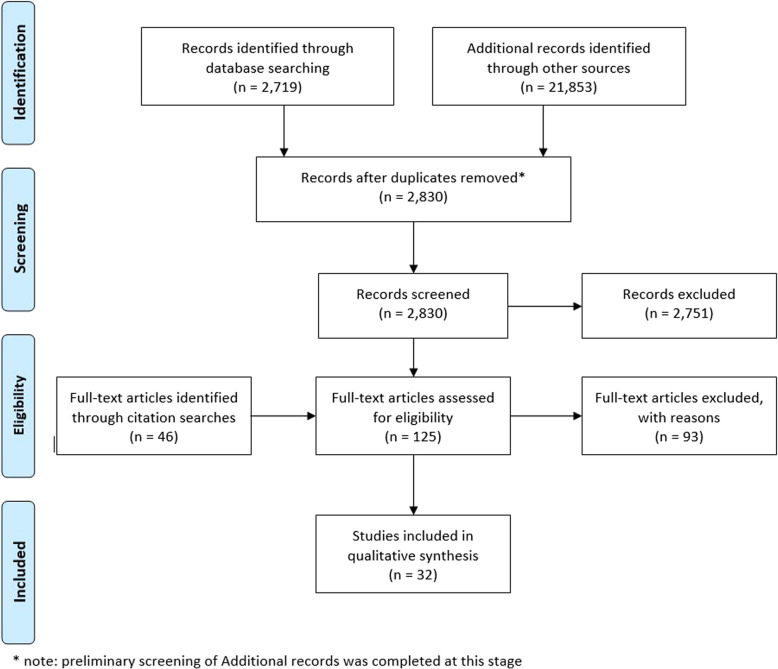
Background: Despite increasing attention to the social determinants of health in recent decades, globally there is an unprecedented burden from non-communicable diseases (NCDs). Recently, the corporate and commercial conditions associated with these, commercial determinants of health (CDoH), have also begun to receive attention. This research aims to articulate the CDoH as described in the literature, summarize substantive findings, and assess strengths and limitations of current literature. Methods: Systematic review of formal (Medline, EMBASE, Scopus, Global Health) and grey literature (database, Google Advanced, targeted website, citation searching). Searching identified 125 texts for full-text review, with 33 included for final review. Data extracted were analyzed thematically. Results: The dynamics constituting CDoH include broad facilitators such as globalization of trade, corporate structures, and regulatory systems, articulation of social and economic power, neoliberal and capitalist ideologies; additional elements include corporate activities such as marketing, corporate political activities, corporate social responsibility, extensive supply chains, harmful products and production, and issues of accessibility. These contribute significantly to worsened global health outcomes. Conclusions: Literature describing effects of macro conditions and corporate activities on health could usefully utilize CDoH terminology. Facilitation via revised, consistent and operational definition of CDoH would assist. Social, political, commercial and economic structures and relations of CDoH are under-theorized. Systematic approaches to identifying, describing, and disrupting these are required to improve global health.
Overview
CoChat Summary
TL;DR
This systematic review synthesizes literature on the commercial determinants of health (CDoH), finding no widely accepted definition and a field that is largely descriptive and conceptual. It maps macro-level conditions, corporate activities, and health harms, and calls for greater definitional precision and systematic action.
Key findings
- No widely accepted CDoH definition was apparent; most texts (n = 19) provided no definition, and three prominent definitions were identified: West and Marteau’s “factors that influence health which stem from the profit motive”; Kickbusch et al.’s “strategies and approaches used by the private sector to promote products and choices that are detrimental to health”; and Kosinska and Ostlin’s broader working definition about an inherent tension between commercial and public health objectives for a good or service.
- CDoH were described as including macro-level facilitators such as globalization of trade, corporate structures, regulatory systems, economic and political power, and neoliberal/capitalist ideologies, alongside corporate activities including marketing, corporate political activities, corporate social responsibility, supply chains, harmful products/production, and accessibility.
- Downstream consequences were consistently described as premature death and disability associated with NCDs/chronic diseases, including cancers, obesity/overweight, cardiovascular diseases, COPD, high cholesterol, diabetes, cirrhosis, injuries, and harms to planetary health.
- The literature most often referenced the food industry, followed by tobacco and alcohol; pharmaceutical, automotive, firearms, mining, and gambling industries were discussed less. Authors appraised existing efforts to address CDoH as inadequate and emphasized the need for new approaches or a paradigm shift.
Methods
- Systematic review conducted per PRISMA; no protocol was registered or published. Searches covered Medline, EMBASE, Scopus, Global Health; grey literature databases, Google Advanced, targeted organization websites, and backward/forward citation searching.
- Inclusion criteria covered peer-reviewed and grey literature providing a definition/description of CDoH drivers, mechanisms, or outcomes; original studies, reviews, commentaries, editorials, discussion papers, books/chapters, reports, web articles/resources, and conceptual works. Exclusions included non-English literature, non-human data, modelling/clinical/laboratory findings without underlying determinants, and surveillance/intervention descriptions without underlying determinants.
- Data extracted included author/date, title, publisher/source, publication type, evidence type, underpinning theories/frameworks, and CDoH terms used; analysis was thematic and inductive. The abstract reports 125 texts for full-text review and 33 included; the results section reports 32 texts included for final review.
Limitations
- The paper states: the narrow searching frame may have missed peripheral CDoH concepts; the working definition used for initial planning may be a limitation; English-only inclusion means high-income country perspectives frame much of the literature; and grey literature searching has inherent limitations including volume and search-engine “filter bubble.”
- The paper states the field is emerging and underdeveloped, with limited capacity to synthesize substantive findings; most included literature was descriptive/conceptual, lacked systematic analysis and original data, and would be appraised as low quality by traditional measures.
- Evident from the text: the abstract and results report different final inclusion counts (33 vs 32), indicating an internal inconsistency; the review also notes no widely accepted definition and inconsistent application of CDoH terminology.
Model-written summary. Check it against the paper before relying on it.
Integrity signals
Registry
Cites
Statistics
Figures
Verification
Claims the paper makes
5 Valid · 4 Not valid · 87 Not checked · 37 Own results and interpretations
Every source the paper cites for this claim was checked and supports it.
In the paper
“Most commonly, CDoH were described as resulting from expressions of economic and political power wielded by large corporate entities, described as “powerful economic operators” [16, 19, 30, 35].”
§ Defining the commercial determinants of health: a systematic review > Results > Macro-level conditions constituting CDoH
What the sources say
- Supportedcites [16] Buse K Tanaka S Hawkes S Healthy people and healthy profits? Elaborating a conceptual framework for governing the commercial determinants of non-communicable diseases and identifying options for reducing risk exposure Glob Health 2017 13 1 34 PMC5472958 28619031 source
The Background section of Buse, Kent & Tanaka (2017) uses exactly the descriptor the claim attributes to it: 'Efforts to prevent noncommunicable diseases go against the business interests of powerful economic operators' (quoting the WHO Director-General, ref 25), immediately followed by the scale of corporate profits relative to public health budgets. The paper elsewhere frames the commercial determinants in terms of corporate economic and political power — 'lobbying by powerful multinational corporations who succeeded in shaping international law to protect their markets' and Table 1 'Corporate political activity' (Findings > Public regulation of the private sector), plus trade/investment policies that 'diminished the policy space' for governments. The only nuance is that the phrase 'powerful economic operators' is quoted from the WHO DG rather than coined by the authors, and the 'most commonly' comparative is the citing review's synthesis across its multiple sources. (LLM, conf=0.82)
- Supportedcites [19] Kickbusch I Allen L Franz C The commercial determinants of health Lancet Glob Health 2016 4 12 e895 e8e6 27855860 source
Our copy of Kickbusch, Allen & Franz (2016) opens by quoting WHO Director-General Margaret Chan that "efforts to prevent non-communicable diseases go against the business interests of powerful economic operators", so the quoted phrase is genuinely this paper's. The body of the Comment frames CDoH exactly as the claim describes: it notes "critical public health analysis of the power of the corporate sector", attributes the field to factors "boosting the power of large companies" (rising demand, market coverage, internationalisation of trade and investment), and sets out corporate influence exerted through economic channels (marketing, supply chains) and a political one (lobbying, "which can impede policy barriers"). The only element not stated by this source is the comparative "most commonly", which is the citing authors' synthesis across the four pooled references rather than an assertion attributed to this paper alone. (LLM, conf=0.85)
- Supportedcites [30] Kickbusch I, Szabo MMC. A new governance space for health. Glob Health Action. 2014;7. 10.3402/gha.v7.23507. PMC3925805 24560259 source
In 'Global governance for health' our copy ties the commercial determinants of health directly to 'the increasing influence of transnational companies and their products on population health' and reproduces the term 'powerful economic operators' (quoting the WHO Director-General, ref. 7) in that same passage, alongside the definition of these drivers as 'the factors that influence health which stem from the profit motive'. The 'Defining global health and global governance' section adds the political-power element ('market power readily translates into political power'; pressure from trans-national private companies on Member States), and the Conclusions frame contestations of power and interests as translating into political and commercial determinants of health. The 'most commonly' frequency judgement is the citing authors' synthesis across their four citations rather than a claim this commentary paper makes, but the paper itself clearly characterises CDoH in these terms, so the substance attributed to it is supported; the phrase 'powerful economic operators' is reported and relied on here (credited to WHO ref. 7), not merely deferred to another work. (LLM, conf=0.82)
plainstates a cause- Asserted: passes — The authors put it forward as true.
- Checkable: passes — It can be checked against evidence.
- Load-bearing: unclear — It is unclear whether the paper’s conclusions depend on it.
- Based: passes — The paper gives a reason why it holds.
- Supported
Every source the paper cites for this claim was checked and supports it.
In the paper
“Power imbalances were described both between corporations (large, for-profit, often trans-national entities) and governments with conflicting interests [30, 33, 34, 39, 43]”
§ Defining the commercial determinants of health: a systematic review > Results > Macro-level conditions constituting CDoH
What the sources say
- Supportedcites [30] Kickbusch I, Szabo MMC. A new governance space for health. Glob Health Action. 2014;7. 10.3402/gha.v7.23507. PMC3925805 24560259 source
In 'Defining global health and global governance' the paper states that resource-strong non-state actors have grown in influence and 'exert political pressure on donor and recipient countries', citing WHA66 remarks that 'the pressure from trans-national private companies on Member States was never stronger', and Dr. Chan's 'market power readily translates into political power. Few governments prioritize health over big business'. The 'Global governance for health' section ties this to 'increasing influence of transnational companies' whose profit motive ('commercial determinants of health') conflicts with NCD prevention, and the paper elsewhere notes 'new power relationships' and the need for 'firewalls and conflict of interest strategies' (Fig. 2 discussion). Together these describe a power imbalance between large, trans-national, for-profit corporations and governments with conflicting interests, so the paraphrase is supported; the strongest phrasing is voiced via the WHO Director-General's quotations, which the paper reports and relies on. (LLM, conf=0.85)
- Supportedcites [33] Madureira Lima J, Galea S. Corporate practices and health: A framework and mechanisms. Global Health. 2018;14(1):21-32. PMC5815179 29448968 source
Our copy of Madureira Lima & Galea (2018) treats the corporate–government relationship as an asymmetry of power throughout the section 'Political tactics: State and institutional capture' (Background): control over decision-making and agenda-setting lets commercial actors 'keep statutory regulation at bay' and water down regulatory powers, 'support of models of international trade that perpetuate historical power differentials'; 'Lobbying confers undue influence on corporate actors', giving corporations 'access to policy makers unavailable to regular voters'. Conflicting interests are stated explicitly in 'Direct participation in governmental agencies...' ('Companies whose interests may conflict with the public's... becoming partners in the formulation of public policy') and in 'Pressures on international Organisations' (Sugar Association vs. WHO/Congress), while 'Preference shaping' and 'Legal systems and the law' describe tension between corporate and public-health interests kept latent. The only element our copy does not spell out as a formal definition is the parenthetical gloss of corporations as 'large, for-profit, often trans-national entities', though it speaks of 'profit driven commercial entities' and transnational corporate pressures; the Background also frames the distal outcome of power exertion as 'an unbalance in the macrosocial determinants of health'. (LLM, conf=0.83)
- Supportedcites [34] McKee M Stuckler D Revisiting the corporate and commercial determinants of health Am J Public Health 2018 108 9 1167 1170 30024808 PMC6085040 source
The Abstract of our copy states the point directly: 'An effective response to the corporate and commercial determinants of health must address the power imbalance between global corporations, which are accountable only to their owners and shareholders, and governments, which are accountable to their citizens.' The 'Setting the Rules' section frames the corporate–government relationship as a paradox (corporations railing against regulation while depending on governments to protect intellectual property and enforce contracts), i.e. conflicting interests, and the paper repeatedly characterises the actors as large global/multinational, shareholder-accountable firms (Introduction, 'The Changing Nature of Corporate Power'). (LLM, conf=0.88)
plainstates an association- Asserted: passes — The authors put it forward as true.
- Checkable: passes — It can be checked against evidence.
- Load-bearing: unclear — It is unclear whether the paper’s conclusions depend on it.
- Based: passes — The paper gives a reason why it holds.
- Supported
The cited sources support only part of this claim — read each source’s verdict below.
In the paper
“Trade agreements and liberalization were described as contributing to worsened health outcomes [16, 24, 31, 34, 36, 41, 43, 44].”
§ Defining the commercial determinants of health: a systematic review > Results > Macro-level conditions constituting CDoH
What the sources say
- Partly supportedcites [16] Buse K Tanaka S Hawkes S Healthy people and healthy profits? Elaborating a conceptual framework for governing the commercial determinants of non-communicable diseases and identifying options for reducing risk exposure Glob Health 2017 13 1 34 PMC5472958 28619031 sourceExperimental — accuracy not yet measured
Our copy does link trade agreements to NCD risk, but at a different level of specificity and with hedging: in Findings > Public regulation of the private sector it states that challenges to public regulation 'are likely to increase with the impact of new trade and investment policies (free trade agreements) which have diminished the policy space within which Governments can exert control over NCD-related measures' [77, 78], and Table 1 notes industry use of bilateral investment treaties to 'challenge states' policymaking authority'. That is an erosion-of-policy-space / prospective argument about prevention, not a statement that trade agreements and liberalization contributed to worsened health outcomes; the Background explicitly declines to attribute specific NCD outcomes to commercial drivers, and the Discussion's 'escalation of transnational commercial activities as a determinant of poor health' refers to commercial activity generally rather than to trade liberalization. So the policy-space part is supported while the direct 'worsened health outcomes' attribution is not. (LLM, conf=0.68)
- Partly supportedcites [24] Franz C Kickbusch I The capital-NCD-nexus: the commercial determinants of health and global capital flows Eurohealth (Lond) 2018 24 3 21 25Experimental — accuracy not yet measured
The 'Commercial determinants of health and NCDs' section does describe trade liberalisation-type processes as a CDoH driver: 'Higher degrees of trade openness... allow companies to reach more customers with their marketing messages and their products. Higher trade volumes can also come with a higher dependence on foreign products, changing food diets, and potentially less influence of national policies to shape food supply chains.' That supports trade openness as a channel acting on NCD risk factors, but only at the level of diets, marketing exposure and policy space — the paper nowhere states worsened health outcomes as a consequence, and it does not discuss trade agreements as such (searches for 'trade agreements', 'liberalisation', 'WTO rules', 'market access' returned only FDI/M&A and capital-flow passages, and the same section explicitly notes 'little understanding of the impact of global capital flows on health'). So the trade-openness half of the claim is in the source; the 'trade agreements' element and the assertion of worsened health outcomes are not. (LLM, conf=0.68)
- Partly supportedcites [31] Knai C Petticrew M Mays N Capewell S Cassidy R Cummins S Systems thinking as a framework for analyzing commercial determinants of health Milbank Q 2018 96 3 472 498 30277610 PMC6131339 sourceExperimental — accuracy not yet measured
The only passage in our copy that touches the claim is in the 'Complex Causality' subsection (Narrow Public Health Approaches to Solving Public Health Problems), which lists 'international trade agreements' among macro-level factors that 'may have both direct and indirect influences on NCDs as well as contributory factors such as smoking, inactivity, and obesity' — so trade agreements as an influence on NCDs is supported, but only as a hedged possibility, not as a described contribution to worsened outcomes. Trade 'liberalization' is not discussed anywhere in our copy (searched: trade liberalization, liberalization, trade agreements and NCD outcomes); the closest is the 'dual forces of increasing globalization' passage in The Involvement of Corporate Actors in Public Health Policymaking, which concerns transnational corporations' marketing/glocalization strategies rather than liberalization causing worse health. The liberalization element and the assertory 'contributing to worsened health outcomes' framing are therefore not attributable to this source. (LLM, conf=0.72)
plainstates a cause- Asserted: passes — The authors put it forward as true.
- Checkable: passes — It can be checked against evidence.
- Load-bearing: unclear — It is unclear whether the paper’s conclusions depend on it.
- Based: passes — The paper gives a reason why it holds.
- Partly supported
The sources with a verdict support this claim; the rest weren’t checked yet, have no full text we could read, or their verdicts aren’t rated yet.
In the paper
“This definition was used in six other texts [23, 24, 26, 28, 40, 44].”
§ Defining the commercial determinants of health: a systematic review > Results > Defining commercial determinants
What the sources say
- Supportedcites [23] Collins T, Mikkelsen B, Axelrod S. Interact, engage or partner? Working with the private sector for the prevention and control of noncommunicable diseases. Cardiovasc Diagn Ther. 2019;9(2):158-64. PMC6511681 31143637 source
The citation exemplifies the citing paper's tally of texts adopting Kickbusch et al.'s definition, and our copy of Collins et al. 2019 is such a text: in 'NCDs: a growing global health threat' it writes 'The commercial determinants of health, defined as "strategies and approaches used by the private sector to promote products and choices that are detrimental to health,"' attributing it to reference (7). The reference list identifies (7) as Kickbusch I, Allen L, Franz C. The commercial determinants of health. Lancet Glob Health 2016;4:e895-6. The count of 'six other texts' is the citing paper's own review finding, not something attributed to this source. (LLM, conf=0.85)
- Supportedcites [24] Franz C Kickbusch I The capital-NCD-nexus: the commercial determinants of health and global capital flows Eurohealth (Lond) 2018 24 3 21 25
The 'Commercial determinants of health and NCDs' section adopts Kickbusch et al.'s definition verbatim: 'CDoH are defined as "strategies and approaches used by the private sector to promote products and choices that are detrimental to health"', carried with the superscript pointing to Kickbusch I, Allen L, Franz C, 'The commercial determinants of health', Lancet Global Health 2016;4(12):e895-6 (the reference list's duplicated numbering shifts entries by one, so the in-text note 8 is that Kickbusch 2016 entry). The same section also frames CDoH as the unifying banner drawn from that literature. So this paper is indeed one of the texts using Kickbusch et al.'s definition, which is what the citation is offered for; the count 'six other texts' is the citing authors' own bibliometric statement, not something this source must assert. (LLM, conf=0.85)
- Not checked yetcites [26] International Federation of Medical Students' Associations IFMSA Policy Non-Communicable Diseases 2015
plain- Asserted: passes — The authors put it forward as true.
- Checkable: passes — It can be checked against evidence.
- Load-bearing: unclear — It is unclear whether the paper’s conclusions depend on it.
- Based: passes — The paper gives a reason why it holds.
- Supported
Every source the paper cites for this claim was checked and supports it.
In the paper
“Corporate rights, including intellectual property rights, were described as presenting challenges to many interventions that could benefit public health [16, 33, 34, 43].”
§ Defining the commercial determinants of health: a systematic review > Results > Macro-level conditions constituting CDoH
What the sources say
- Supportedcites [16] Buse K Tanaka S Hawkes S Healthy people and healthy profits? Elaborating a conceptual framework for governing the commercial determinants of non-communicable diseases and identifying options for reducing risk exposure Glob Health 2017 13 1 34 PMC5472958 28619031 source
In 'Findings > Public regulation of the private sector' our copy states that the 1994 WTO adoption of TRIPS — 'which dictates how states should regulate intellectual property protection' — resulted from multinational corporate lobbying 'to protect their markets', and that the tobacco industry uses bilateral investment treaties to 'challenge states' policymaking authority'. The same section says public regulation 'presents the major challenge of enforceable public authority over the private sector' and that new trade and investment policies 'have diminished the policy space within which Governments can exert control over NCD-related measures'. Together these support the attributed content that corporate legal rights, including IP rights, impede a range of public-health-benefiting interventions; the paper does not use the exact phrase 'corporate rights', but the substance is stated. (LLM, conf=0.80)
- Supportedcites [33] Madureira Lima J, Galea S. Corporate practices and health: A framework and mechanisms. Global Health. 2018;14(1):21-32. PMC5815179 29448968 source
The Background section 'Political tactics: State and institutional capture' (> Commercial pressures on international trade negotiations) describes expanded intellectual property right protection of pharmaceuticals in US trade agreements as eroding TRIPS flexibilities that let low-income countries produce generic medicines in a public health emergency — i.e. an IP-based obstacle to a public health intervention. The 'Legal systems and the law' section adds other corporate rights doing the same work: 4th Amendment privacy rights limiting EPA/OSHA health and environmental inspections, personhood and limited liability removing dissuasion, and the threat of litigation acting as a deterrent to countries considering health-warning or plain-packaging laws. Together these support the paraphrase that corporate rights, including IP rights, are described as challenging measures that would benefit public health; the paper does not use the phrase 'many interventions', but it enumerates the mechanisms across trade, liability and litigation. (LLM, conf=0.80)
- Supportedcites [34] McKee M Stuckler D Revisiting the corporate and commercial determinants of health Am J Public Health 2018 108 9 1167 1170 30024808 PMC6085040 source
The 'Commodifying Knowledge' section states that corporations extend intellectual property, e.g. patented genetically modified foods creating dependence among indigenous farmers, and lobby 'for ever greater intellectual property protection that impedes market entry of those who could make those medicines affordable,' while also demanding state mechanisms to enforce these property rights. The 'Political, Economic, and Social Rights' section adds that they promote international trade deals 'that challenge national policies through investor–state dispute resolution procedures' and can 'slow, or even reverse, the expansion of universal health coverage,' with the earlier section noting secret ISDS tribunals and trade liberalization (e.g. TPP). Together these support the attributed point that corporate rights, including intellectual property rights, pose challenges to health-promoting interventions; the citing sentence is a broad paraphrase across several domains rather than a single quoted finding. (LLM, conf=0.84)
plainstates a cause- Asserted: passes — The authors put it forward as true.
- Checkable: passes — It can be checked against evidence.
- Load-bearing: unclear — It is unclear whether the paper’s conclusions depend on it.
- Based: passes — The paper gives a reason why it holds.
- Supported
26 more claims
Create a free account to see all 133 claims and to verify the 258 references still open.
- Probably not a substantial claim. 91
- It may state two separate claims as one. 33
Self-check
Percentages, sums and reported differences re-computed from the paper’s own numbers.
Each contradiction between two passages listed here was confirmed by an independent check.
Rated minor: it would not touch a result — a value no result rests on, a p-value that stays on the same side of the significance level, or a conflict that is clerical, resolved elsewhere in the paper, or outside its own findings.
In the paper
§ Defining the commercial determinants of health: a systematic review > Abstract > Methods
“Searching identified 125 texts for full-text review, with 33 included for final review.”
§ Defining the commercial determinants of health: a systematic review > Results > Literature selection
“Thirty-two texts were included for final review (see Fig. 1).”
Rated minor: it would not touch a result — a value no result rests on, a p-value that stays on the same side of the significance level, or a conflict that is clerical, resolved elsewhere in the paper, or outside its own findings.
In the paper
§ Defining the commercial determinants of health: a systematic review > Methods > Literature selection
“Hastings (2015) [9] | Public health and the value of disobedience | Public Health (Journal article)”
§ Defining the commercial determinants of health: a systematic review > References
“9. Hastings G Public health and the value of disobedience Ann Nutr Metab 2015 129 66 67 26027449”
Rated minor: it would not touch a result — a value no result rests on, a p-value that stays on the same side of the significance level, or a conflict that is clerical, resolved elsewhere in the paper, or outside its own findings.
In the paper
§ Defining the commercial determinants of health: a systematic review > Results > Proposals for harm minimization, and hierarchy of harmful industries
“Wiist [39] took this further, suggesting the need to restructure corporate entities, repeal corporate charters, remove corporate personhood rights, and restore liability to shareholders and officials.”
§ Defining the commercial determinants of health: a systematic review > References
“39. Thorn M Addressing power and politics through action on the commercial determinants of health Health Promot J Austr 2018 29 3 225 227 30511490”
Rated minor: it would not touch a result — a value no result rests on, a p-value that stays on the same side of the significance level, or a conflict that is clerical, resolved elsewhere in the paper, or outside its own findings.
In the paper
§ Defining the commercial determinants of health: a systematic review > Methods > Literature selection
“International Federation of Medical Students’ Associations, Team of Officials (2017) [26]”
§ Defining the commercial determinants of health: a systematic review > References
“26. International Federation of Medical Students' Associations IFMSA Policy Non-Communicable Diseases 2015”
Citations
Cites
Tong, A., Sainsbury, P., & Craig, J. (2007) · International Journal for Quality in Health Care · doi:10.1093/intqhc/mzm042 · Cited by 42,509 · cited 2×
“, Cochrane Handbook for Systematic Reviews [46] or the Consolidated Criteria for Reporting Qualitative Research [47]) was therefore inappropriate.”
Preferred reporting items for systematic reviews and meta-analyses: The PRISMA statement
Moher, D., Liberati, A., Tetzlaff, J., & Altman, D. G. (2010) · International Journal of Surgery · doi:10.1016/j.ijsu.2010.02.007 · Cited by 12,156
Social determinants of health inequalities
Marmot, M. (2005) · The Lancet · doi:10.1016/s0140-6736(05)71146-6 · Cited by 5,086
Moodie, R., Stuckler, D., Monteiro, C., Sheron, N., Neal, B., Thamarangsi, T., Lincoln, P., & Casswell, S. (2013) · The Lancet · doi:10.1016/s0140-6736(12)62089-3 · Cited by 1,663
Godin, K., Stapleton, J., Kirkpatrick, S. I., Hanning, R. M., & Leatherdale, S. T. (2015) · Systematic Reviews · doi:10.1186/s13643-015-0125-0 · Cited by 959 · cited 2×
“Consistent with previous studies the first 100 results for web searches were screened [22].”
ResultThe commercial determinants of health
Kickbusch, I., Allen, L., & Franz, C. (2016) · The Lancet Global Health · doi:10.1016/s2214-109x(16)30217-0 · Cited by 782 · cited 16×
“None Commercial determinants of global health; and commercial determinants of health Knai et al. (2018) [31] Systems Thinking as a Framework for Analyzing Commercial Determinants of Health The Millbank Quarterly (Journal article) Narrative and descriptive drawing on a systems thinking framework to frame discussion Use…”
BackgroundMethodInfluentialHealth in the sustainable development goals: ready for a paradigm shift?
Buse, K., & Hawkes, S. (2015) · Globalization and Health · doi:10.1186/s12992-015-0098-8 · Cited by 373
Mialon, M., Swinburn, B., & Sacks, G. (2015) · Obesity Reviews · doi:10.1111/obr.12289 · Cited by 318 · cited 5×
“Other CPAs described included lucrative ‘revolving door’ arrangements shuffling individuals between government and commercial sectors, and political donations.”
BackgroundInfluentialRevisiting the corporate and commercial determinants of health
McKee, M., & Stuckler, D. (2018) · American Journal of Public Health · doi:10.2105/ajph.2018.304510 · Cited by 281 · cited 10×
“Corporations reportedly favor personal responsibility for health over regulation [6, 27, 33, 34].”
BackgroundInfluentialSystems Thinking as a Framework for Analyzing Commercial Determinants of Health
KNAI, C., PETTICREW, M., MAYS, N., CAPEWELL, S., CASSIDY, R., CUMMINS, S., EASTMURE, E., FAFARD, P., HAWKINS, B., JENSEN, J. D., et al. (2018) · The Milbank Quarterly · doi:10.1111/1468-0009.12339 · Cited by 199 · cited 11×
“None Commercial determinants of global health; and commercial determinants of health Knai et al. (2018) [31] Systems Thinking as a Framework for Analyzing Commercial Determinants of Health The Millbank Quarterly (Journal article) Narrative and descriptive drawing on a systems thinking framework to…”
BackgroundInfluentialCorporate practices and health: a framework and mechanisms
Madureira Lima, J., & Galea, S. (2018) · Globalization and Health · doi:10.1186/s12992-018-0336-y · Cited by 192 · cited 18×
“alongside power to set agendas and make decisions, and power over conflict [33].”
BackgroundInfluentialBuse, K., Tanaka, S., & Hawkes, S. (2017) · Globalization and Health · doi:10.1186/s12992-017-0255-3 · Cited by 175
Why corporate power is a public health priority
Hastings, G. (2012) · BMJ · doi:10.1136/bmj.e5124 · Cited by 164 · cited 17×
“Groups described as being targeted by corporate actions within CDoH systems included: individual consumers [6, 9, 25, 33], groups living in vulnerable circumstances, including children [6, 24–27, 31, 33, 45]; public health professionals and organizations [25, 33]; researchers and research organizations [6, 25, 33]; ph…”
BackgroundInfluentialGlasgow, S. M., & Schrecker, T. (2015) · Health & Place · doi:10.1016/j.healthplace.2015.06.005 · Cited by 125 · cited 1×
“NCDs are amongst the most pressing contemporary challenges to human health, affecting both high-income and lowand middle-income countries alike, contributing to the double-burden of disease [3].”
BackgroundCivil society: the catalyst for ensuring health in the age of sustainable development
Smith, J., Buse, K., & Gordon, C. (2016) · Globalization and Health · doi:10.1186/s12992-016-0178-4 · Cited by 124 · cited 6×
“Whilst much of the rights discussion focused on corporate legal and commercial rights, including trade, intellectual property, freedom of speech, and limited liability rights, some supported a reorientation towards human rights and social justice in order to achieve sustainable population health and wellbeing [13, 16,…”
BackgroundInfluentialA question of balance: prioritizing public health responses to harm from gambling
Adams, P. J., RAEBURN, J. M., & de Silva, K. (2009) · Addiction · doi:10.1111/j.1360-0443.2008.02414.x · Cited by 113
Gilmore, A. B., Savell, E., & Collin, J. (2011) · Journal of Public Health · doi:10.1093/pubmed/fdr008 · Cited by 108 · cited 6×
“CSR is reportedly used to deflect attention from questionable practices, ‘whitewash tarnished reputations’ [19, 26, 35], and enhance credibility and public perception [5, 9, 16, 19, 23, 27, 28, 33, 37, 40].”
BackgroundInfluentialA new governance space for health
Kickbusch, I., & Szabo, M. M. C. (2014) · Global Health Action · doi:10.3402/gha.v7.23507 · Cited by 107 · cited 7×
“Kickbusch & Szabo (2014) [30] A new governance space for health Global Health Action (Journal article) Narrative and descriptive article describing need for global public goods for health and a rulesbased and reliably financed global public health domain to promote global health.”
BackgroundInfluentialAre we facing a noncommunicable disease pandemic?
Allen, L. N. (2016) · Journal of Epidemiology and Global Health · doi:10.1016/j.jegh.2016.11.001 · Cited by 102 · cited 1×
“Globally, an unprecedented burden from noncommunicable diseases (NCDs) has developed [2].”
BackgroundThe palm oil industry and noncommunicable diseases
Kadandale, S., Marten, R., & Smith, R. (2019) · Bulletin of the World Health Organization · doi:10.2471/blt.18.220434 · Cited by 80 · cited 10×
“This definition was used in six other texts [23, 24, 26, 28, 40, 44].”
BackgroundMethodInfluentialThe Impact of Corporate Practices on Health: Implications for Health Policy
Freudenberg, N., & Galea, S. (2008) · Journal of Public Health Policy · doi:10.1057/palgrave.jphp.3200158 · Cited by 77 · cited 9×
“Groups described as being targeted by corporate actions within CDoH systems included: individual consumers [6, 9, 25, 33], groups living in vulnerable circumstances, including children [6, 24–27, 31, 33, 45]; public health professionals and organizations [25, 33]; researchers and research organizations [6, 25, 33]; ph…”
BackgroundInfluentialCorporation-induced Diseases, Upstream Epidemiologic Surveillance, and Urban Health
Jahiel, R. I. (2008) · Journal of Urban Health · doi:10.1007/s11524-008-9283-x · Cited by 74
Glasgow, S. M., & Schrecker, T. (2016) · Health & Place · doi:10.1016/j.healthplace.2016.04.003 · Cited by 68
Alcohol and the sustainable development goals
Collin, J., & Casswell, S. (2016) · The Lancet · doi:10.1016/s0140-6736(16)30827-3 · Cited by 67
Millar, J. S. (2013) · Canadian Journal of Public Health · doi:10.17269/cjph.104.3849 · Cited by 66 · cited 12×
“Millar (2013) [15] The corporate determinants of health: How big business affects our health, and the need for Canadian Journal of Public Health (Journal article) Narrative and descriptive commentary describing the effect corporations have on None Corporate determinants of health de Lacy-Vawdon and Livingstone BMC Pub…”
BackgroundInfluentialAddressing the interface of the political and commercial determinants of health
Kickbusch, I. (2012) · Health Promotion International · doi:10.1093/heapro/das057 · Cited by 64 · cited 13×
“Kickbusch (2012) [18] Addressing the interface of the political and commercial determinants of health Health Promotion International (Journal editorial) Narrative and descriptive article describing the need to address the political and commercial determinants of health in order to continue to move the health agenda fo…”
BackgroundInfluentialCommercial determinants of health: advertising of alcohol and unhealthy foods during sporting events
Ireland, R., Bunn, C., Reith, G., Philpott, M., Capewell, S., Boyland, E., & Chambers, S. (2019) · Bulletin of the World Health Organization · doi:10.2471/blt.18.220087 · Cited by 61 · cited 1×
“None Commercial determinants of health Ireland et al. (2019) [27] Commercial determinants of health and sport sponsorship Bulletin of the World Health Organization (Journal article) Narrative and descriptive discussion of sport sponsorship as a commercial determinant of health None Commercial…”
BackgroundBriscoe, S. (2015) · BMC Research Notes · doi:10.1186/s13104-015-1079-y · Cited by 57
Public Health and the Anticorporate Movement: Rationale and Recommendations
Wiist, W. H. (2006) · American Journal of Public Health · doi:10.2105/ajph.2005.072298 · Cited by 56 · cited 11×
“Meanwhile, corporations being afforded similar rights as individuals, but with limited liability, was described as contributing to public health harms, and promoting unethical practice [25, 33, 43].”
BackgroundInfluentialCommentary on Casswell (2013): The commercial determinants of health
West, R., & Marteau, T. (2013) · Addiction · doi:10.1111/add.12118 · Cited by 53 · cited 12×
“Most simply, CDoH were termed “factors that influence health which stem from the profit motive” by West and Marteau [42].”
BackgroundInfluentialThe manufacture of lifestyle: The role of corporations in unhealthy living
Freudenberg, N. (2012) · Journal of Public Health Policy · doi:10.1057/jphp.2011.60 · Cited by 45 · cited 6×
“However, these behaviors are increasingly recognized as socially constructed choices heavily influenced by commercial interests [6, 7].”
BackgroundInfluentialThe International Federation of Medical Students’ Associations
Welsh, S. (2012) · BMJ · doi:10.1136/sbmj.e821 · Cited by 39
Rethinking the terms non-communicable disease and chronic disease
Ackland, M., Choi, B. C. K., & Puska, P. (2003) · Journal of Epidemiology and Community Health · doi:10.1136/jech.57.11.838 · Cited by 34 · cited 1×
“NCDs are often termed ‘lifestyle diseases’ given their origins in behaviors including diet, physical inactivity, alcohol use, and tobacco use [4, 5].”
BackgroundAlcohol, ideological schisms and a science of corporate behaviours on health
Herrick, C. (2014) · Critical Public Health · doi:10.1080/09581596.2014.951313 · Cited by 24
Ottawa 25 years on: a more radical agenda for health equity is still required
Baum, F. E., & Sanders, D. M. (2011) · Health Promotion International · doi:10.1093/heapro/dar078 · Cited by 23 · cited 1×
“such as trade relations [51, 52], globalization [53, 54], health commercialization [55], conflicts between corporate and”
BackgroundPolicy space for health and trade and investment agreements
Koivusalo, M. (2014) · Health Promotion International · doi:10.1093/heapro/dau033 · Cited by 23 · cited 1×
“such as trade relations [51, 52], globalization [53, 54], health commercialization [55], conflicts between corporate and”
BackgroundDelobelle, P., Sanders, D., Puoane, T., & Freudenberg, N. (2016) · Health Education & Behavior · doi:10.1177/1090198115610568 · Cited by 23 · cited 5×
“Other CPAs described included lucrative ‘revolving door’ arrangements shuffling individuals between government and commercial sectors, and political donations.”
BackgroundInfluentialIs the Worldwide Epidemic of Obesity a Communicable Feature of Globalization?
Bornstein, S., Ehrhart-Bornstein, M., Wong, M., & Licinio, J. (2008) · Experimental and Clinical Endocrinology & Diabetes · doi:10.1055/s-2008-1081485 · Cited by 21 · cited 1×
“such as trade relations [51, 52], globalization [53, 54], health commercialization [55], conflicts between corporate and”
BackgroundTransnational Corporations and Health: A Research Agenda
Baum, F. E., & Margaret Anaf, J. (2015) · International Journal of Health Services · doi:10.1177/0020731414568513 · Cited by 21 · cited 6×
“CSR is reportedly used to deflect attention from questionable practices, ‘whitewash tarnished reputations’ [19, 26, 35], and enhance credibility and public perception [5, 9, 16, 19, 23, 27, 28, 33, 37, 40].”
BackgroundInfluentialSmith, K., Dorfman, L., Freudenberg, N., Hawkins, B., Hilton, S., Razum, O., & Weishaar, H. (2016) · Frontiers in Public Health · doi:10.3389/fpubh.2016.00064 · Cited by 19
Collins, T., Mikkelsen, B., & Axelrod, S. (2019) · Cardiovascular Diagnosis and Therapy · doi:10.21037/cdt.2018.08.04 · Cited by 18 · cited 9×
“Collins, Mikkelsen, & Axelrod (2019) [23] Interact, engage or partner? Working with the private sector for the prevention and control of noncommunicable diseases Cardiovascular Diagnosis and Therapy (Journal article) Narrative and descriptive paper describing the role of the private sector in noncommunicable disease p…”
BackgroundMethodInfluentialA Game Change in Global Health: The Best Is Yet to Come
Kickbusch, I. (2013) · Public Health Reviews · doi:10.1007/bf03391687 · Cited by 16 · cited 4×
“None Commercial determinants of health Kickbusch (2013) [29] A Game Change in Global Health: The Best Is Yet to Come Public Health Reviews (Journal article) Narrative and descriptive article discussing the need for a better-equipped (health) governance system to improve health, address commercial…”
BackgroundInfluentialPlanetary health: countering commercial and corporate power
Sula-Raxhimi, E., Butzbach, C., & Brousselle, A. (2019) · The Lancet Planetary Health · doi:10.1016/s2542-5196(18)30241-9 · Cited by 16 · cited 10×
“Sula-Raxhimi, Butzbach, & Brousselle, (2019) [38] x”
BackgroundInfluentialTrade, Labour Markets and Health: A Prospective Policy Analysis of the Trans-Pacific Partnership
McNamara, C., & Labonté, R. (2017) · International Journal of Health Services · doi:10.1177/0020731416684325 · Cited by 15
Addressing power and politics through action on the commercial determinants of health
Thorn, M. (2018) · Health Promotion Journal of Australia · doi:10.1002/hpja.216 · Cited by 13 · cited 8×
“Groups described as being targeted by corporate actions within CDoH systems included: individual consumers [6, 9, 25, 33], groups living in vulnerable circumstances, including children [6, 24–27, 31, 33, 45]; public health professionals and organizations [25, 33]; researchers and research organizations [6, 25, 33]; ph…”
BackgroundInfluentialPublic health and the value of disobedience
Hastings, G. (2015) · Public Health · doi:10.1016/j.puhe.2015.03.010 · Cited by 9 · cited 16×
“One article described corporate marketing as a pathogen [9].”
BackgroundMethodInfluentialFreudenberg, N., & Galea, S. (2007) · Macrosocial Determinants of Population Health · doi:10.1007/978-0-387-70812-6_4 · Cited by 7
Addressing the commercial determinants is critical to emerging economies
Kickbusch, I. (2015) · Ciência & Saúde Coletiva · doi:10.1590/1413-81232015204.19962014 · Cited by 6 · cited 5×
“Kickbusch [14] emphasized that while FCTC implementation has commenced, few governments have begun counteracting the influence of other unhealthy commodity industries.”
BackgroundInfluential(2016) · doi:10.19191/ep16.2.ad01.037 · cited 2×
“human rights [55, 56], and health-harming products [53,”
Background(2019) · Graduate Institute Geneva Institutional Repository (Graduate Institute of International and Development Studies)
Research works printed but not linked: 4
- Kosinska M Ostlin P Building systematic approaches to intersectoral action in the WHO European region Public Health Panorama 2016 2 2 124 129
- United Nations Department of Economic and Social Affairs, United Nations Industrial Development Organization Report of the expert meeting in preparation for HLPF 2017 on Readying institutions and policies for integrated approaches to implementation of the 2030 Agenda 2016 Vienna United Nations Department of Economic and Social Affairs, United Nations Industrial Development Organization
- Higgins JPT Green S Cochrane handbook for systematic reviews of in terventions 2008 Chichester Wiley-Blackwell
- Watz V Corporate consumption complex and the need for a new public health agenda 2016 Stockholm IOGT International
Cited by
Defining and conceptualising the commercial determinants of health
Gilmore, A. B., Fabbri, A., Baum, F., Bertscher, A., Bondy, K., Chang, H.-J., Demaio, S., Erzse, A., Freudenberg, N., Friel, S., et al. (2023) · The Lancet · doi:10.1016/s0140-6736(23)00013-2 · Cited by 758
Social media and the spread of misinformation: infectious and a threat to public health
Denniss, E., & Lindberg, R. (2025) · Health Promotion International · doi:10.1093/heapro/daaf023 · Cited by 263
Knai, C., Petticrew, M. P., Capewell, S., Cassidy, R., Collin, J., Cummins, S., Eastmure, E., Fafard, P., Fitzgerald, N., Gilmore, A., et al. (2021) · BMJ Global Health · doi:10.1136/bmjgh-2020-003543 · Cited by 239
Power analysis in health policy and systems research: a guide to research conceptualisation
Topp, S. M., Schaaf, M., Sriram, V. M., Scott, K., Dalglish, S. L., Nelson, E. M., Rajasulochana, S. R., Mishra, A., Asthana, S., Parashar, R., et al. (2021) · BMJ Global Health · doi:10.1136/bmjgh-2021-007268 · Cited by 163
Hambleton, I. R., Caixeta, R. D. B., Jeyaseelan, S. M., Luciani, S., & Hennis, A. J. M. (2023) · The Lancet Regional Health - Americas · doi:10.1016/j.lana.2023.100483 · Cited by 144
Metadata
- Authors
- de Lacy-Vawdon, C., & Livingstone, C.
- Affiliations
- Monash University (AU)
- Corresponding author
- Livingstone, Charles
- ORCID
- Livingstone, Charles
- Venue
- BMC Public Health
- Published
- 2020-06-29
- Volume
- 20
- Issue
- 1
- Pages
- 1022-1022
- ISSN
- 1471-2458 (ISSN-L)
- PMC
- PMC7325018
- OpenAlex
- W3037272524
- Cited by
- 200
- References
- 50
- Citations by year
- 2026: 35 · 2025: 38 · 2024: 44 · 2023: 30 · 2022: 30 · 2021: 21 · 2020: 2
- FWCI
- 2.79
- Type
- journal article
- Language
- en
- Open access
- gold
- doi.org
- Licence
- cc-by
- creativecommons.org/licenses/by/4.0 (tdm)
- creativecommons.org/licenses/by/4.0 (vor)
- Locations
- BMC Public Health (publishedVersion, cc-by)
- Monash University Research Portal (Monash University) (publishedVersion, cc-by)
- PubMed (publishedVersion)
- PubMed Central (publishedVersion, cc-by)
- DOAJ (DOAJ: Directory of Open Access Journals) (submittedVersion, cc-by-sa)
- Minerva Access (University of Melbourne) (submittedVersion, cc-by)
- Funders
- Australian Government
- Monash University
- Topics
- Health Sciences › Medicine › Public Health, Environmental and Occupational Health › Global Public Health Policies and Epidemiology
- Health Sciences › Medicine › Public Health, Environmental and Occupational Health › Public Health Policies and Education
- Social Sciences › Health › Public Health and Social Inequalities
- Keywords
- commercial determinants of health, non-communicable diseases, corporate influence on health, neoliberalism, trade globalization, corporate marketing, corporate political activity, corporate social responsibility, supply chain, harmful products, health disparities, social determinants of health, health policy
- MeSH terms
- Noncommunicable Diseases, Commerce, Humans, Politics, Social Responsibility, Global Health, Internationality, Social Determinants of Health
About these checks
Registry, retraction, Cites and statistics results are computed, not judged, with one exception: a printed reference that no index lists is read once by a model before it counts as a citation error. Claims are extracted by a model and kept only when their quote appears verbatim in the text; each cited source is then checked, with a model’s help, for whether it says what the claim relies on. Those verdicts can be wrong — read the claim’s quote and the cited source before relying on one.
The claim verdicts this report counts are experimental: their accuracy is not yet measured.
A language model drew the claims from the paper on 2026-11-18, under version 3 of the claim definition (model deepseek-v4.1-flash, prompt extract-v3).
A second model labelled each claim on 2026-11-18 (model jev-1.13-20260917, definition revision gold-guideline-v0.2).
Cited sources are checked with a language model’s help (qwen3.8-omni-flash).
Statistics and arithmetic are recomputed, not judged.
Confidence bands are shown only for fields calibrated on our annotated test set. None is calibrated yet, so no band is shown.
What counts as a claim ›How we measure confidence ›How we check this ›
Are you an author, or do you see a problem with this page? Request a review
Data sources
Bibliographic data: Semantic Scholar, OpenAlex, Crossref.
Contains information from the Semantic Scholar Academic Graph Datasets, made available under the ODC Attribution License (ODC-BY 1.0).
Semantic Scholar’s data is described in: Kinney, R., et al. (2023). The Semantic Scholar Open Data Platform. arXiv:2301.10140.
