

Barriers to childhood immunization in sub-Saharan Africa: A systematic review
Open accessPublished version of a preprint
The DOI matches its Crossref record; 62 of the 62 references it cites were found in a registry or an index.
Abstract
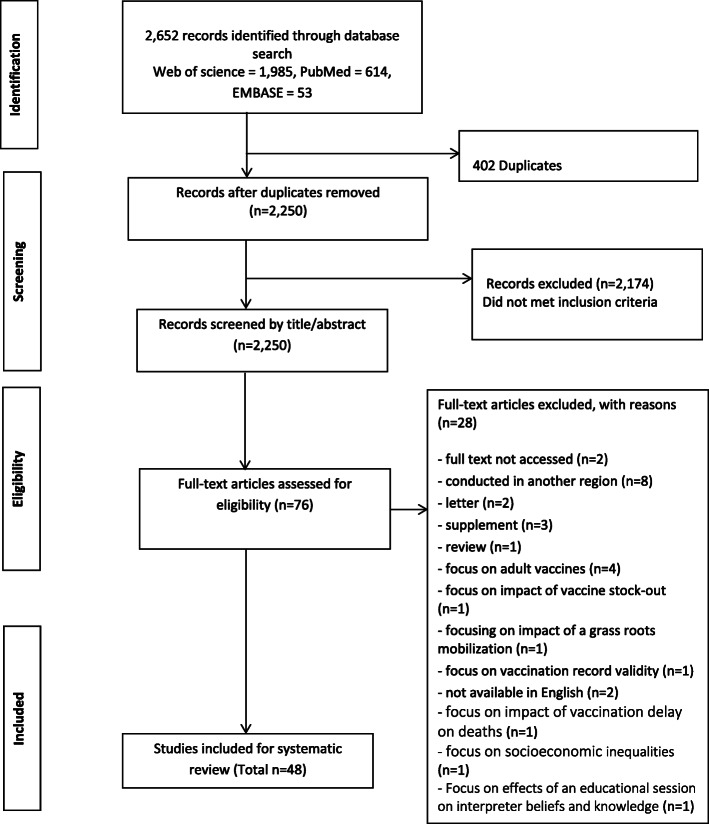
Background: Immunization to prevent infectious diseases is a core strategy to improve childhood health as well as survival. It remains a challenge for some African countries to attain the required childhood immunization coverage. We aim at identifying individual barriers confronting parents/caretakers, providers, and health systems that hinder childhood immunization coverage in Sub-Saharan Africa. Method: This systematic review searched PubMed/MEDLINE, Web of Science and EMBASE. We restricted to published articles in English that focused on childhood immunization barriers in sub-Saharan Africa from January 1988 to December 2019. We excluded studies if: focused on barriers to immunization for children in other regions of the world, studied adult immunization barriers; studies not available on the university library, they were editorial, reports, reviews, supplement, and bulletins. Study designs included were cross-sectional, second-hand data analysis; and case control. Results: Of the 2652 items identified, 48 met inclusion criteria. Parents/caretakers were the most common subjects. Nine articles were of moderate and 39 were of high methodological quality. Nine studies analyzed secondary data; 36 used cross-sectional designs and three employed case control method. Thirty studies reported national immunization coverage of key vaccines for children under one, eighteen did not. When reported, national immunization coverage of childhood vaccines is reported to be low. Parents/caretaker’ barriers included lack of knowledge of immunization, distance to access point, financial deprivation, lack of partners support, and distrust in vaccines and immunization programs. Other associated factors for low vaccine rates included the number of off-springs, lifestyle, migration, occupation and parent’s forgetfulness, inconvenient time and language barrier. Barriers at health system level cited by healthcare providers included limited human resources and inadequate infrastructures to maintain the cold chain and adequate supply of vaccines. Conclusion: In this review we identified more thoroughly the parents/caretakers’ barriers than those of providers and health systems. Factors that influenced decisions to get children vaccinated were mainly their gender, beliefs, socio-culture factors in the communities in which they live. Thus it is vital that immunization programs consider these barriers and address the people and societies in their communities across sub-Saharan Africa.
Overview
The claims and statistics of this paper haven’t been checked yet.
Free: it reads the open-access text and checks the first 5 claims that cite a source we can check. Create a free account to check every claim.
Integrity signals
Registry
Cites
Statistics
Figures
Verification
Claims the paper makes
The claims and statistics of this paper haven’t been checked yet.
Free: it reads the open-access text and checks the first 5 claims that cite a source we can check. Create a free account to check every claim.
Self-check
Percentages, sums and reported differences re-computed from the paper’s own numbers.
The self-check needs the paper’s full text.
Citations
Cites
Preferred Reporting Items for Systematic Reviews and Meta-Analyses: the PRISMA statement
Moher, D., Liberati, A., Tetzlaff, J., Altman, D. G., & for the PRISMA Group (2009) · BMJ · doi:10.1136/bmj.b2535 · Cited by 83,823
Preferred Reporting Items for Systematic Reviews and Meta-Analyses: The PRISMA Statement
Moher, D., Liberati, A., Tetzlaff, J., Altman, D. G., & The PRISMA Group (2009) · PLoS Medicine · doi:10.1371/journal.pmed.1000097 · Cited by 64,042
Preferred reporting items for systematic reviews and meta-analyses: the PRISMA Statement.
(2009) · PubMed Central · Cited by 44,859
Wang, G., Ma, R., Qiao, G., Wada, K., Aizawa, Y., & Satoh, T. (2015) · Integrative Medicine International · doi:10.1159/000368408 · Cited by 18,657
Naghavi, M., Abajobir, A. A., Abbafati, C., Abbas, K. M., Abd-Allah, F., Abera, S. F., Aboyans, V., Adetokunboh, O., Afshin, A., Agrawal, A., et al. (2017) · The Lancet · doi:10.1016/s0140-6736(17)32152-9 · Cited by 4,821
Schmid, P., Rauber, D., Betsch, C., Lidolt, G., & Denker, M.-L. (2017) · PLOS ONE · doi:10.1371/journal.pone.0170550 · Cited by 1,228 · cited 2×
“This is in line with previous review of Influenza Vaccine hesitancy, which pointed out that, a lack of confidence due to low perceived effectiveness of the vaccine was a hindrance to vaccine uptake [56].”
BackgroundResultRainey, J. J., Watkins, M., Ryman, T. K., Sandhu, P., Bo, A., & Banerjee, K. (2011) · Vaccine · doi:10.1016/j.vaccine.2011.08.096 · Cited by 426
Vaccine Hesitancy: Clarifying a Theoretical Framework for an Ambiguous Notion
Peretti-Watel, P., Ward, J. K., Schulz, W. S., Verger, P., & Larson, H. J. (2015) · PLoS Currents · doi:10.1371/currents.outbreaks.6844c80ff9f5b273f34c91f71b7fc289 · Cited by 343 · cited 1×
“A published article exploring vaccine hesitancy stated that various attitudes seems to result into specific categories; for instance, vaccine refusal attitude could be as a result of having little or no knowledge about vaccine, lack of trust on the vaccine or it could as well linked to financial limitations [64].”
BackgroundWiysonge, C. S., Uthman, O. A., Ndumbe, P. M., & Hussey, G. D. (2012) · PLoS ONE · doi:10.1371/journal.pone.0037905 · Cited by 251 · cited 3×
“This is mainly due to vaccinepreventable diseases [7].”
BackgroundEstimating teh costs of achieving the WHO-UNICEF Global Immunization Vision and Strategy, 2006-2015
Wolfson, L. (2008) · Bulletin of the World Health Organization · doi:10.2471/blt.07.045096 · Cited by 232
Research works printed but not linked: 1
- WHO - Ministerial Conference on Immunization in Africa. Historical Commitment from Africa Heads of States to Advance Immunization in Africa. Available from: http://immunizationinafrica2016.org/releases/2017/1/31/historic-commitment-from-african-heads-of-state-to-advance-immunization-in-africa. Accessed 9 Apr 2019.
Cited by
A systematic literature review to clarify the concept of vaccine hesitancy
Bussink-Voorend, D., Hautvast, J. L. A., Vandeberg, L., Visser, O., & Hulscher, M. E. J. L. (2022) · Nature Human Behaviour · doi:10.1038/s41562-022-01431-6 · Cited by 260
Clinical translation of long-acting drug delivery formulations
Li, W., Tang, J., Lee, D., Tice, T. R., Schwendeman, S. P., & Prausnitz, M. R. (2022) · Nature Reviews Materials · doi:10.1038/s41578-021-00405-w · Cited by 223
Drivers of inappropriate antibiotic use in low- and middle-income countries
Otaigbe, I. I., & Elikwu, C. J. (2023) · JAC-Antimicrobial Resistance · doi:10.1093/jacamr/dlad062 · Cited by 186
Hu, H., Xu, J., Liu, M., & Lim, M. K. (2023) · Journal of Business Research · doi:10.1016/j.jbusres.2022.113480 · Cited by 172
“The public ’ s lack of knowledge about immunization in some developing countries leads to distrust of immunization programs (Bangura et al., 2020) and decreases global immunization coverage (Weintraub et al., 2021).”
BackgroundFactors influencing childhood immunisation uptake in Africa: a systematic review
Galadima, A. N., Zulkefli, N. A. M., Said, S. M., & Ahmad, N. (2021) · BMC Public Health · doi:10.1186/s12889-021-11466-5 · Cited by 213
Child vaccination in sub-Saharan Africa: Increasing coverage addresses inequalities
Bobo, F. T., Asante, A. D., Woldie, M. K., Dawson, A. J., & Hayen, A. D. (2021) · Vaccine · doi:10.1016/j.vaccine.2021.11.005 · Cited by 173
Haeuser, E., Byrne, S., Nguyen, J., Raggi, C., McLaughlin, S. A., Bisignano, C., Harris, A. A., Smith, A. E., Lindstedt, P. A., Smith, G., et al. (2025) · The Lancet · doi:10.1016/s0140-6736(25)01037-2 · Cited by 143
Fenta, S. M., Biresaw, H. B., Fentaw, K. D., & Gebremichael, S. G. (2021) · Tropical Medicine and Health · doi:10.1186/s41182-021-00319-x · Cited by 131
“One in five African children will be without lifesaving vaccines in 2016 [11].”
BackgroundWigley, A. S., Lorin, J., Hogan, D. R., Utazi, C. E., Hagedorn, B., Dansereau, E. A., Tatem, A. J., & Tejedor‐Garavito, N. (2022) · PLOS Global Public Health · doi:10.1371/journal.pgph.0001126 · Cited by 105
“Further work could look to examine the numbers of zero-dose children living outside of urban, remote-rural, and conflict-affected settings, to explore other potentially relevant variables that may help to explain barriers to immunisation [18, 44].”
BackgroundObrenovic, B., Du, J., Godinić, D., Baslom, M. M. M., & Tsoy, D. (2021) · Frontiers in Psychology · doi:10.3389/fpsyg.2021.648572 · Cited by 101
Eze, P., Agu, U. J., Aniebo, C. L., Agu, S. A., Lawani, L. O., & Acharya, Y. (2021) · BMJ Open · doi:10.1136/bmjopen-2020-047445 · Cited by 100
Understanding systemic cooling poverty
Mazzone, A., Cian, E. D., Falchetta, G., Jani, A. R., Mistry, M., & Khosla, R. (2023) · Nature Sustainability · doi:10.1038/s41893-023-01221-6 · Cited by 109
“According to the WHO, cold-chain supported vaccinations and prenatal care are key to preventing deadly infections in children, such as diarrhoea, measles, pneumonia, polio and whooping cough 70 .”
Hamson, E., Forbes, C. A., Wittkopf, P. G., Pandey, A., Mendes, D., Kowalik, J. C., Czudek, C., & Mugwagwa, T. (2023) · Human Vaccines & Immunotherapeutics · doi:10.1080/21645515.2023.2219577 · Cited by 81
Eze, P., Lawani, L. O., & Acharya, Y. (2021) · BMJ Global Health · doi:10.1136/bmjgh-2021-005035 · Cited by 83
Ameyaw, E. K., Kareem, Y. O., Ahinkorah, B. O., Seidu, A., & Yaya, S. (2021) · BMJ Global Health · doi:10.1136/bmjgh-2020-003773 · Cited by 70
Sulaiman, S. K., Musa, M. S., Tsiga-Ahmed, F. I., Dayyab, F. M., Sulaiman, A. K., & Bako, A. T. (2022) · PLoS ONE · doi:10.1371/journal.pone.0278224 · Cited by 67
Mohammed, Y., Reynolds, H. W., Waziri, H. S., Attahiru, A., Mikailu, F., Adewole, A. O., Wisdom, M., Uba, B. V., Kamateeka, M., Waziri, N. E., et al. (2024) · Vaccine X · doi:10.1016/j.jvacx.2024.100563 · Cited by 76
“This is a key equity and gender issue as prioritized by Gavi 5.0 guidelines and it has also been identified as key barrier in other sub-Saharan Africa countries [122].”
BackgroundResultInfluentialInstitutional mistrust and child vaccination coverage in Africa
Stoop, N., Hirvonen, K., & Maystadt, J.-F. (2021) · BMJ Global Health · doi:10.1136/bmjgh-2020-004595 · Cited by 63
Adeyanju, G. C., Sprengholz, P., Betsch, C., & Essoh, T.-A. (2021) · Vaccines · doi:10.3390/vaccines9111231 · Cited by 56
“Caregivers who solely depend on their husband’s approval are prone to vaccinate less if the husband does not approve [67].”
BackgroundFaye, S. L., Krumkamp, R., Doumbia, S., Tounkara, M., Strauss, R. A., Ouédraogo, H. G., Sagna, T., Barry, A. M., Mbawah, A. K., Doumbia, C. O., et al. (2022) · BMJ Open · doi:10.1136/bmjopen-2021-059138 · Cited by 51
Health and Related Indicators, 2023
Ndlovu, N., Gray, A., Blose, N., & Mokganya, M. (2024) · South African Health Review · doi:10.61473/001c.122768 · Cited by 53
Mekonnen, Z. A., Gelaye, K. A., Were, M. C., & Tilahun, B. C. (2021) · JMIR mhealth and uhealth · doi:10.2196/27603 · Cited by 57
“Several studies have suggested that parental reminders for vaccination should include modern technologies such as mobile phone text message reminders [62-65].”
BackgroundVaccine Delay and Its Association With Undervaccination in Children in Sub-Saharan Africa
Janusz, C. B., Frye, M., Mutua, M. K., Wagner, A. L., Banerjee, M., & Boulton, M. L. (2020) · American Journal of Preventive Medicine · doi:10.1016/j.amepre.2020.10.003 · Cited by 47
Périères, L., Seror, V., Boyer, S., Sokhna, C., & Peretti‐Watel, P. (2022) · Human Vaccines & Immunotherapeutics · doi:10.1080/21645515.2022.2076524 · Cited by 50
“6 The themes we used to categorize the reasons were adapted from those used by two reviews 6,7 and were slightly different from those of the review by Bangura et al. 11 which divided the reasons into parenteral/caretaker barriers, health system barriers, and provider barriers, without further sub-categories.”
InfluentialThe status of immunization program and challenges in Ethiopia: A mixed method study
Nigatu, T., Abraham, L., Willems, H., Tilaye, M., Tiruneh, F., Gebru, F., Tafesse, Z., Getachew, B. A., Bulcha, M., Tewfik, S., et al. (2024) · SAGE Open Medicine · doi:10.1177/20503121241237115 · Cited by 37
Adamu, A. A., Essoh, T.-A., Adeyanju, G. C., Jalo, R. I., Saleh, Y., Aplogan, A., & Wiysonge, C. S. (2021) · Expert Review of Vaccines · doi:10.1080/14760584.2021.1899819 · Cited by 42
“is important for planning and decision-making by immunization program managers [39,40].”
BackgroundBiset, G., Tadesse, A. W., Mihret, S. T., & Tsihay, M. (2021) · Human Vaccines & Immunotherapeutics · doi:10.1080/21645515.2020.1870392 · Cited by 41
“The finding was similar to the studies conducted in Ethiopia,(46) Nigeria,(50) and SSA.(47) This could be because parents who reside far from health institutions may not bring their child for immunization due to lack of transportation or lack of access to information regarding the immunization program.”
ResultUnderstanding drivers of vaccine hesitancy among pregnant women in Nigeria: A longitudinal study
Adeyanju, G. C., Sprengholz, P., & Betsch, C. (2022) · npj Vaccines · doi:10.1038/s41541-022-00489-7 · Cited by 43
Barrow, A., Afape, A. O., Cham, D., & Azubuike, P. C. (2023) · BMC Public Health · doi:10.1186/s12889-023-15863-w · Cited by 40
“It has been observed that many countries in the sub-Saharan African region have proven to have a high vaccination coverage, but due to various limitations have not achieved this upscaled coverage, necessitating the need to study underlying factors [11].”
BackgroundOlaniyan, A., Isiguzo, C., Agbomeji, S., Akinlade-Omeni, O., Ifie, B., & Hawk, M. E. (2022) · Pan African Medical Journal · doi:10.11604/pamj.2022.43.97.35797 · Cited by 39
Touray, E. S., Barrow, A., Kinteh, B., Badjie, M., Nget, M., Touray, J., Kinteh, S. L. S., Jatta, S. P., & Ceesay, L. (2021) · BMC Public Health · doi:10.1186/s12889-021-11810-9 · Cited by 37
Bergen, N., Cata-Preta, B. O., Schlotheuber, A., Santos, T. M., Danovaro-Holliday, M. C., Mengistu, T., Sodha, S. V., Hogan, D. R., Barros, A. J. D., & Hosseinpoor, A. R. (2022) · Vaccines · doi:10.3390/vaccines10040633 · Cited by 42
“In sub-Saharan Africa, attributes related to parents or caregivers that are most frequently cited as barriers to vaccination include lack of knowledge about immunization, distance to access point, financial deprivation, lack of support from partner and distrust in vaccines, and immunization programs, whereas pertinent…”
BackgroundYibeltal, K., Tsegaye, S., Zelealem, H., Worku, W., Demissie, M., Worku, A., & Berhane, Y. (2022) · BMC Pediatrics · doi:10.1186/s12887-022-03250-0 · Cited by 36
“Despite the steady increments in immunization coverage over the past decades; pro-urban, pro-rich, proeducated inequities in the coverage have been observed in Sub-Saharan African (SSA) countries [7, 8].”
BackgroundBiks, G. A., Shiferie, F., Tsegaye, D. A., Alemayehu, W. A., Mekuria, L. A., Wondie, T., Seboka, G., Hayes, A., Ralph-Opara, U., Zelalem, M., et al. (2024) · Vaccine X · doi:10.1016/j.jvacx.2024.100454 · Cited by 40
Lubanga, A. F., Bwanali, A. N., Kangoma, M., Matola, Y., Moyo, C., Kaonga, B., Ssebibubbu, S., Makole, T. J., Kambili, F., Chumbi, G. D., et al. (2024) · Human Vaccines & Immunotherapeutics · doi:10.1080/21645515.2024.2375081 · Cited by 34
“41 Among children, pooled African regional prevalence of Missed Opportunities for Vaccination (MOV) was found to be 27.3% from a systematic review, about 47.0% from secondary analyses of Demographic and Health Survey (DHS) data, and 62.1% according to a study using DHS and Multiple Indicator…”
MethodInfluentialMultilevel analysis of predictors of multiple indicators of childhood vaccination in Nigeria
Aheto, J. M. K., Pannell, O., Dotse‐Gborgbortsi, W., Trimner, M. K., Tatem, A. J., Rhoda, D. A., Cutts, F. T., & Utazi, C. E. (2022) · PLoS ONE · doi:10.1371/journal.pone.0269066 · Cited by 38
Sako, S., Gilano, G., & Hailegebreal, S. (2023) · BMJ Open · doi:10.1136/bmjopen-2022-069278 · Cited by 34
Tannor, E. K., Onu, U. C., & Okpechi, I. G. (2022) · Seminars in Nephrology · doi:10.1016/j.semnephrol.2023.151338 · Cited by 37
Okesanya, O. J., Olatunji, G. D., Olaleke, N. O., Mercy, M., Ilesanmi, A., Kayode, H., Manirambona, E., Ahmed, M. M., Ukoaka, B. M., & Lucero‐Prisno, D. E. (2024) · Adolescent Health Medicine and Therapeutics · doi:10.2147/ahmt.s494099 · Cited by 34
“32 Achieving these immunization targets will help curb the spread of VPDs by not only increasing access to vaccines, but also promoting better hygiene and sanitation practices, and addressing malnutrition through programs that provide access to essential vitamins and minerals, such as vitamin A…”
BackgroundHoyt, J., Okello, G. R., Bange, T., Kariuki, S., Jalloh, M. F., Webster, J., & Hill, J. (2023) · BMC Public Health · doi:10.1186/s12889-023-17194-2 · Cited by 36
“Low caregiver knowledge, lack of access to services, poor healthcare provider attitudes and distrust in immunisation programmes were identified as prominent barriers [6].”
BackgroundInfluentialHealth Expenditure, Institutional Quality, and Under-Five Mortality in Sub-Saharan African Countries
Sibanda, K., Qoko, A., & Gonese, D. (2024) · International Journal of Environmental Research and Public Health · doi:10.3390/ijerph21030333 · Cited by 31
“A positive effect of immunization on under-five mortality could be attributed to low immunization and inequities in vaccination coverage [85] rates within the SSA population.”
BackgroundAlshammari, S. Z., AlFayyad, I., Altannir, Y., & Al-Tannir, M. A. (2021) · International Journal of Environmental Research and Public Health · doi:10.3390/ijerph18168455 · Cited by 39
Caregivers’ perception and acceptance of malaria vaccine for Children
Bam, V. B., Mohammed, A., Amponsah, A. K., Armah, J., Lomotey, A. Y., Budu, H. I., Poku, C. A., Kyei‐Dompim, J., & Dwumfour, C. K. (2023) · PLoS ONE · doi:10.1371/journal.pone.0288686 · Cited by 30
“Fears related to vaccine safety, lack of information, ignorance and general knowledge even among healthcare workers have been identified as barriers to accepting vaccines [25, 34, 35].”
BackgroundIshoso, D. K., Mafuta, E. M., Danovaro-Holliday, M. C., Ngandu, C. B., Menning, L., Cikomola, A., Lungayo, C. L., Mukendi, J.-C., Mwamba, D., Mboussou, F., et al. (2023) · Vaccines · doi:10.3390/vaccines11081370 · Cited by 30
Amoah, A., Issaka, J., Ayebeng, C., & Okyere, J. (2023) · Tropical Medicine and Health · doi:10.1186/s41182-023-00556-2 · Cited by 27
The first year of COVID-19 vaccine roll-out in Africa: challenges and lessons learned
Masresha, B., Ruiz, M. A. S., Atuhebwe, P. L., & Mihigo, R. (2022) · Pan African Medical Journal · doi:10.11604/pamj.supp.2022.41.2.33686 · Cited by 31
“Vaccination service delivery in developing countries is challenged by poor access to preventive health care because of lack of infrastructure, limited resources and an overstretched health workforce, among others [22].”
BackgroundKremer, P., Haruna, F., Tuffour Sarpong, R., Agamah, D., Billy, J., Osei-Kwakye, K., Aidoo, P., Dodoo, D., & Okoh-Owusu, M. (2023) · Vaccine · doi:10.1016/j.vaccine.2023.06.036 · Cited by 25
“Prevention of infectious diseases among children is crucial to improve child health and survival [1].”
Sabahelzain, M. M., Moukhyer, M. E., van den Borne, B. H. P., & Bosma, H. (2022) · Vaccines · doi:10.3390/vaccines10020205 · Cited by 27
Du, M., Deng, J., Yan, W., Liu, M., Liang, W., Niu, B., & Liu, J. (2024) · EClinicalMedicine · doi:10.1016/j.eclinm.2024.103047 · Cited by 26
“35 Consequently, if immunisation coverage for multiple antigens continues to fall short of the recommended benchmarks for herd immunity across countries, frequent outbreaks of vaccine-preventable diseases will lead to increased morbidity and mortality for both individual countries and the entire…”
Simon, D. J., Tokpovi, V. C. K., Dianou, K., Okonji, O. C., Kiragu, A., Olorunsaiye, C. Z., Wayisovia, E. J., Ouedraogo, A., Ngangue, P., Foba, H. T., et al. (2025) · BMJ Global Health · doi:10.1136/bmjgh-2024-018333 · Cited by 25
Factors associated with malaria vaccine uptake in Nsanje district, Malawi
Simbeye, A. J., Kumwenda, S., Cohee, L. M., Omondi, D., Masibo, P. K., Wao, H., & Awandu, S. S. (2024) · Malaria Journal · doi:10.1186/s12936-024-04938-7 · Cited by 24
Designing supply chains to meet the growing need of vaccines: evidence from four countries
Prosser, W., Spisak, C., Hatch, B., McCord, J., Tien, M., & Roche, G. (2021) · Journal of Pharmaceutical Policy and Practice · doi:10.1186/s40545-021-00368-x · Cited by 25
Tsegaw, T. K., Alemaw, H. B., Wale, Y. B., Nigatu, S. G., Birhan, T. Y., & Taddese, A. A. (2024) · The Italian Journal of Pediatrics/Italian journal of pediatrics · doi:10.1186/s13052-024-01642-9 · Cited by 26
“Insufficient access to healthcare facilities and limited maternal vaccine awareness in Sub-Saharan African countries may be contributing factors to incomplete immunization [15].”
BackgroundHalane, S. A., Ahmed, A. M., Ahmed, M. M., Hersi, M. D., & Sani, J. (2025) · Journal of Epidemiology and Global Health · doi:10.1007/s44197-025-00395-w · Cited by 25
Collins, J., Westerveld, R., Nelson, K. A., Rohan, H., Bower, H., Lazenby, S., Ikilezi, G., Bartlein, R., Bausch, D. G., & Kennedy, D. S. (2021) · BMJ Global Health · doi:10.1136/bmjgh-2021-006951 · Cited by 25
Nchinjoh, S. C., Saidu, Y., Agbor, V. N., Mbanga, C. M., Muteh, N. J., Njoh, A. A., Ndoula, S. T., Nsah, B., Nnang, N. E., Roberman, S., et al. (2022) · Vaccines · doi:10.3390/vaccines10122052 · Cited by 24
“A systemic review of studies in sub-Saharan Africa and the European region revealed migration as a factor associated with low vaccination coverage [31,32].”
BackgroundThe coverage of hepatitis B birth dose vaccination in Nigeria: Does the place of delivery matter?
Olakunde, B. O., Adeyinka, D. A., Olakunde, O. A., Ogundipe, T., Filani, O., & Ezeanolue, E. E. (2021) · Transactions of the Royal Society of Tropical Medicine and Hygiene · doi:10.1093/trstmh/trab129 · Cited by 30
Childhood vaccine uptake in Africa: threats, challenges, and opportunities
Mbonigaba, E., Nderu, D., Chen, S., Denkinger, C. M., Geldsetzer, P., McMahon, S. A., & Bärnighausen, T. (2021) · Journal of Global Health Reports · doi:10.29392/001c.26312 · Cited by 29
Inequalities in Childhood Immunisation in South Asia
Atteraya, M. S., Song, I. H., Ebrahim, N. B., Gnawali, S., Kim, E., & Dhakal, T. (2023) · International Journal of Environmental Research and Public Health · doi:10.3390/ijerph20031755 · Cited by 23
Wassenaar, M., Fombah, A. E., Chen, H., Owusu-Kyei, K., Williams, J., Sunders, J.-H. C., Llach, M., Quintó, L., Sesay, T., Samai, M. H., et al. (2024) · BMC Public Health · doi:10.1186/s12889-023-17534-2 · Cited by 26
“…the following predictive factors were included in the models: district of residence, locality (rural versus urban), child’s age and sex, caretaker’s age, sex, highest level of education, literacy level, main type of income, marital status and religion, and the sex of the household head [22, 23].”
BackgroundResultInfluentialIwu, A. C., Uwakwe, K., Oluoha, U. R., Duru, C. B., & Nwaigbo, E. (2021) · BMC Public Health · doi:10.1186/s12889-021-10311-z · Cited by 22
Okyere, J., Bediako, V. B., Ackah, J. A., Acheampong, E., Owusu, B. A., Agbemavi, W., Nwameme, A. U., Kamau, E. M., & Asampong, E. (2023) · Malaria Journal · doi:10.1186/s12936-023-04690-4 · Cited by 21
Johns, N. E., Santos, T. M., Arroyave, L., Cata-Preta, B. O., Heidari, S., Kirkby, K., Munro, J., Schlotheuber, A., Wendt, A. T., O’Brien, K. L., et al. (2022) · Vaccines · doi:10.3390/vaccines10070988 · Cited by 24
“Though mothers are often assumed to be responsible for the medical care of children, including their vaccination (or lack thereof), the decision about whether or not to vaccinate a child may also be influenced by intra-household gender dynamics as well as other gendered socioeconomic factors (such as affordability, di…”
BackgroundZemariam, A. B., Abebe, G. K., Kassa, M. A., Alamaw, A. W., Woldesenbet, R., Abate, B. B., Tilahun, B. D., Wondie, W. T., Shimelash, R. A., & Fentanew, M. (2024) · PLoS ONE · doi:10.1371/journal.pone.0299384 · Cited by 26
Bulula, N., Philemon, D. B., Swalehe, O., & Mori, A. T. (2020) · Vaccine · doi:10.1016/j.vaccine.2020.10.088 · Cited by 25
Tadele, S., Demissie, B. N., Tamiru, M. T., & Tadesse, T. A. (2023) · Human Vaccines & Immunotherapeutics · doi:10.1080/21645515.2023.2291243 · Cited by 21
“19 Although community pharmacy staff members in Ethiopia are actively engaged in providing health services related to advice on vitamins and supplements, newborn milk or formulas, and minor symptoms, they are not involved in vaccination, as reported in a recent study.”
BackgroundDescriptive analysis of routine childhood immunisation timeliness in the Western Cape, South Africa
Blose, N., Amponsah‐Dacosta, E., Kagina, B. M. N., & Muloiwa, R. (2021) · Vaccine X · doi:10.1016/j.jvacx.2021.100130 · Cited by 20
“In contrast, the low immunisation coverage for the 9- and 18-months vaccines could be a result of caregivers’ inability to adhere to the schedule due to busy work schedules and caregivers’ limited awareness about risk of VPDs at the 9and 18-months immunisation age timepoints [35,36].”
BackgroundMelillo, S., Strachan, R., O'Brien, C. J., Wonodi, C. B., Bormet, M., & Fountain, D. (2022) · Christian Journal for Global Health · doi:10.15566/cjgh.v9i1.587 · Cited by 24
Hussein, S. A., Osman, M. M., Hassan, M. M., Hassan, Y. S. A., Hussein, A. A., Mohamed, A. H., Adem, R., Fuje, M. M., Mohamud, K. H., Ali, A. N., et al. (2025) · Tropical Medicine and Health · doi:10.1186/s41182-025-00833-2 · Cited by 18
Adeyanju, G. C. (2025) · Scientific Reports · doi:10.1038/s41598-025-33121-4 · Cited by 19
Johns, N. E., Hosseinpoor, A. R., Chisema, M., Danovaro-Holliday, M. C., Kirkby, K., Schlotheuber, A., Shibeshi, M. E., Sodha, S. V., & Zimba, B. (2022) · BMJ Open · doi:10.1136/bmjopen-2022-061346 · Cited by 17
Dires, A. A., Workie, D. L., & Tekile, A. K. (2025) · Frontiers in Public Health · doi:10.3389/fpubh.2024.1508303 · Cited by 20
Kirkby, K., Bergen, N., Schlotheuber, A., Sodha, S. V., Danovaro-Holliday, C. M., & Hosseinpoor, A. R. (2021) · Bulletin of the World Health Organization · doi:10.2471/blt.20.279232 · Cited by 17
Ngwa, C. H., Doungtsop, B.-C. K., Bihnwi, R., Ngo, N. V., & Yang, N. M. (2021) · Human Vaccines & Immunotherapeutics · doi:10.1080/21645515.2021.1939620 · Cited by 18
Kuuyi, A., & Kogi, R. (2024) · PLOS Global Public Health · doi:10.1371/journal.pgph.0002881 · Cited by 16
Muhoza, P., Shah, M. P., Gao, H., Amponsa-Achiano, K., Quaye, P., Opare, W., Okae, C., Aboyinga, P.-N., Opare, K. L., Wardle, M. T., et al. (2023) · Vaccines · doi:10.3390/vaccines11101515 · Cited by 15
Akanpaabadai, E. A., Adiak, A. A., Nukpezah, R. N., Adokiya, M. N., Adjei, S. E., & Boah, M. (2024) · BMC Pediatrics · doi:10.1186/s12887-024-04662-w · Cited by 17
“It is worth mentioning that a review of studies in the SSA has demonstrated that coverage is relatively low when vaccination coverage is reported at the national level [8].”
InfluentialMbunga, B. K., Liu, P. Y., Bangelesa, F., Mafuta, E. M., Dalau, N. M., Egbende, L., Hoff, N. A., Kasonga, J. B., Lulebo, A., Manirakiza, D., et al. (2024) · Vaccines · doi:10.3390/vaccines12060617 · Cited by 17
Traceability and projected patterns of Africa’s land use systems and climate variability (1993–2053)
Yeboah, E., Sarfo, I., Zhu, Q., Kwang, C., Puplampu, D. A., Nikoi, E. G. A., Arthur, I. K., Owusu, A. B., Fynn, I. E. M., Rhadiouini, C. E., et al. (2025) · Land Use Policy · doi:10.1016/j.landusepol.2025.107680 · Cited by 14
Nguyen, P. T., Nakamura, R., Shimadzu, H., Abubakar, A. K., Le, P. M., Huy, N. V., Nguyen, H. L., Sato, M., Honda, A., & Gilmour, S. (2025) · PLoS Medicine · doi:10.1371/journal.pmed.1004664 · Cited by 17
“Persistent disparities both between and within African countries, compounded by geographic and socioeconomic inequalities, further complicate progress toward universal immunization coverage and health equity [11–13].”
Participating in a vaccine trial for COVID-19 in Senegal: trust and information
Ridde, V., Ba, M. F., Gaye, I., Diallo, A., Bonnet, E., & Faye, A. (2021) · Human Vaccines & Immunotherapeutics · doi:10.1080/21645515.2021.1951097 · Cited by 15
“A systematic review has recently shown that gender has a significant influence on the decision to vaccinate a child in Africa and that women were facilitators.(40) Even though in Senegal, 72.”
BackgroundSani, J., Halane, S. A., Ahmed, M. M., Ahmed, A. M., & Hersi, M. D. (2025) · Pediatric Health Medicine and Therapeutics · doi:10.2147/phmt.s520721 · Cited by 13
Yusuf, N., Steinglass, R., Gasse, F. L., Raza, A. A., Ahmed, B., Blanc, D. C., Yakubu, A., Gregory, C. J., & Tohme, R. A. (2022) · BMC Public Health · doi:10.1186/s12889-022-13110-2 · Cited by 13
“Health system barriers cited by healthcare providers included limited human resources and inadequate infrastructures to maintain the cold chain and inadequate supply of vaccines [17].”
BackgroundIbekwe, J. L., Femi‐Lawal, V. O., Thomas, J. A., Okei, F. U., Ojile, M. O., & Akingbulugbe, O. O. (2024) · Journal of Medicine Surgery and Public Health · doi:10.1016/j.glmedi.2024.100066 · Cited by 13
Azhar, S., Rashid, L., Islam, T., Akhtar, S., Hopkins, K. L., Sommers, T., Ikram, A., Anwer, N., Maqbool, N. A., Khan, Z., et al. (2024) · Frontiers in Public Health · doi:10.3389/fpubh.2024.1366378 · Cited by 12
“Under-vaccination and non-vaccination are major problems in low-and middle-income countries (LMICs) (3).”
BackgroundMultilevel Analysis of Zero-Dose Children in Sub-Saharan Africa: A Three Delays Model Study
Wiysonge, C. S., Uthman, M. M. B., Ndwandwe, D. E., & Uthman, O. A. (2025) · Vaccines · doi:10.3390/vaccines13090987 · Cited by 15
“However, our finding that rural residence showed no independent association after controlling for socioeconomic factors suggests that geographic barriers may be increasingly mediated through educational and economic pathways rather than distance alone [30].”
Inequitable access to Ebola vaccines and the resurgence of Ebola in Africa: A state of arts review
Abdul‐Rahman, T., Lawal, L., Meale, E., Ajetunmobi, O. A., Toluwalashe, S., Alao, U. H., Ghosh, S., Garg, N., Aborode, A. T., Awuah, W. A., et al. (2023) · Journal of Medical Virology · doi:10.1002/jmv.28986 · Cited by 12
“However, African infrastructure, human capital, and regulations are barriers to the effective vaccine implementation and eradication of the virus.(8,9) The recent development of the Ebola vaccination and increased research efforts by the Food and Drug Administration (FDA) will lead to the more extraordinary ability to…”
BackgroundBayesian spatial analysis of incomplete vaccination among children aged 12–23 months in Nigeria
Ahmed, L. Q., Adebowale, A. S., & Palamuleni, M. E. (2024) · Scientific Reports · doi:10.1038/s41598-024-57345-y · Cited by 13
Knowledge, attitudes and barriers to uptake of COVID-19 vaccine in Uganda, February 2021
Amodan, B. O., Okumu, P. T., Kamulegeya, J., Ndyabakira, A., Amanya, G., Emong, D. J., Byaruhanga, A., Morukileng, J., & Ario, A. R. (2025) · BMJ Global Health · doi:10.1136/bmjgh-2024-016959 · Cited by 13
Global burden and prevalence of otitis media-induced hearing loss in children: 32-year study
Jin, Y., Dong, L., Jiang, Y., Dong, W., Li, Z., Lu, W., Ma, Q., & Yu, D. (2025) · European Archives of Oto-Rhino-Laryngology · doi:10.1007/s00405-025-09461-2 · Cited by 13
“The region faces unique challenges such as high rates of infectious diseases and poor access to vaccination programs [24, 25].”
Endalamew, S. G., Gebeye, E., Assefa, S. K., & Geremew, B. M. (2025) · BioMed Research International · doi:10.1155/bmri/6645541 · Cited by 11
Lawal, T. V., Atoloye, K. A., Adebowale, A. S., & Fagbamigbe, A. F. (2023) · BMC Pediatrics · doi:10.1186/s12887-023-04300-x · Cited by 13
“This was in agreement with a previous study [34], but at variance with findings from other African countries such as Burundi, Rwanda and Kenya [11, 35, 36].”
ResultAssefa, G. M., Tarekegn, M., Negash, K., Mulugeta, B., Abebe, S., Denekew, B., Ayele, M., Tesfahun, A. A., Kassie, G., Stulz, V. M., et al. (2025) · Vaccines · doi:10.3390/vaccines13100998 · Cited by 12
“A systematic review of 42 studies across Africa further supports this, showing widespread caregiver willingness despite structural barriers [16].”
Sophian, A., Normasari, Harumanto, A., & Abinawanto, A. (2026) · Reviews in Medical Virology · doi:10.1002/rmv.70149 · Cited by 11
“Health sys-tem capacity constraints—including critical shortages of trained vaccinators, cold chain infrastructure, and data management systems—are estimated to contribute to 30%–40% of missed vaccinations in low‐income countries, independent of demand‐ side factors [21].”
Assessment of COVID-19 Vaccine Acceptance and Willingness to Pay by Nigerians
Hassan, A. M., Hassan, Z., & Muhammad, H. M. (2022) · Health · doi:10.4236/health.2022.141011 · Cited by 12
“Vaccines are the most effective public health intervention programmes in reducing morbidity and mortality due to infectious diseases [34], which COVID-19 falls into.”
BackgroundAcceptability of COVID-19 vaccines among Black immigrants living in the United States
Ogunbajo, A., & Ojikutu, B. O. (2022) · Vaccine X · doi:10.1016/j.jvacx.2022.100196 · Cited by 10
“A systematic review of barriers to childhood vaccination among parents/caretakers in sub-Saharan Africa included limited knowledge of immunization, long distance to immunization locations, lack of financial resources, and distrust in vaccines and immunization programs [23].”
Asresie, M. B., Dagnew, G. W., & Alemu, Y. (2023) · PLoS ONE · doi:10.1371/journal.pone.0291499 · Cited by 11
“Far distances to nearby health facilities, lack of transportation, poor quality immunization information, and frequent vaccine shortages are the main barriers to the EPI program in Africa [9].”
BackgroundInfluentialHeyi, W. D., Ayele, W. M., Heyi, W. D., Melesse, D. Y., Tejedor‐Garavito, N., Nilsen, K., Zemedu, T. G., Mulu, S., & Wendrad, N. (2024) · Journal of Urban Health · doi:10.1007/s11524-024-00836-0 · Cited by 10
Crenças e atitudes de pais ou responsáveis legais sobre a vacinação infantil: revisão de escopo
Lima, M. M. D. O., Silveira, A. O., Aureliano, A. P. S. C., Rocha, H., de Moura, L. M., & dos Santos, S. R. (2024) · Revista Brasileira de Enfermagem · doi:10.1590/0034-7167-2024-0126pt · Cited by 33
“…segurança (49) , de baixa qualidade (21,36) , que encontram-se fechados na maioria do tempo (48-49) , onde a vacina está indisponível (21,23,27,36,39,49,66,73,77) , localizados longe das residências dos pais (18,21,26-27,36,39,48-49,73-74,77) , com longas filas de espera (21,25,27,40,49-50,73,”
BackgroundYeskendir, A., Gusmanov, A., & Zhussupov, B. (2023) · Vaccine · doi:10.1016/j.vaccine.2023.08.063 · Cited by 10
“Although access to vaccination is the primary obstacle, especially in settings of developing countries, a growing number of parents are prone to delay or refuse routine immunization of their child based on their personal beliefs [7].”
Metadata
- Authors
- Bangura, J. B., Xiao, S., Qiu, D., Ouyang, F., & Chen, L.
- Affiliations
- Central South University (CN)
- Yale University (US)
- Venue
- BMC Public Health
- Published
- 2020-07-14
- Volume
- 20
- Issue
- 1
- Pages
- 1108-1108
- ISSN
- 1471-2458 (ISSN-L)
- PMC
- PMC7362649
- OpenAlex
- W3042680521
- Semantic Scholar
- 70ee944ff604b497be3329c9322a53e8bececfdd
- Cited by
- 340
- References
- 62
- Citations by year
- 2026: 55 · 2025: 91 · 2024: 63 · 2023: 52 · 2022: 38 · 2021: 37 · 2020: 4
- FWCI
- 5.14
- Type
- journal article
- Language
- en
- Open access
- gold
- doi.org
- Licence
- cc-by
- creativecommons.org/licenses/by/4.0 (tdm)
- creativecommons.org/licenses/by/4.0 (vor)
- Locations
- BMC Public Health (publishedVersion, cc-by)
- Research Square (acceptedVersion, cc-by)
- PubMed Central (publishedVersion, cc-by)
- PubMed (publishedVersion)
- DOAJ (DOAJ: Directory of Open Access Journals) (submittedVersion, cc-by-sa)
- Funders
- China Medical Board ([CMB-14-188])
- Topics
- Social Sciences › Health › Vaccine Coverage and Hesitancy
- Health Sciences › Medicine › Pediatrics, Perinatology and Child Health › Global Maternal and Child Health
- Life Sciences › Immunology and Microbiology › Immunology › Immune responses and vaccinations
- Keywords
- childhood immunization, vaccine hesitancy, barriers to vaccination, vaccination coverage, sub-Saharan Africa, vaccine distrust, health system barriers, cold chain, vaccine supply, sociocultural factors
- MeSH terms
- Vaccination Coverage, Adolescent, Adult, Attitude to Health, Child, Child, Preschool, Cross-Sectional Studies, Female, Health Personnel, Humans, Infant, Infant, Newborn, Male, Middle Aged, Parents, Vaccination, Case-Control Studies, Caregivers, Immunization Programs, Africa South of the Sahara
About these checks
Registry, retraction, Cites and statistics results are computed, not judged, with one exception: a printed reference that no index lists is read once by a model before it counts as a citation error. Claims are extracted by a model and kept only when their quote appears verbatim in the text; each cited source is then checked, with a model’s help, for whether it says what the claim relies on. Those verdicts can be wrong — read the claim’s quote and the cited source before relying on one.
Statistics and arithmetic are recomputed, not judged.
Confidence bands are shown only for fields calibrated on our annotated test set. None is calibrated yet, so no band is shown.
What counts as a claim ›How we measure confidence ›How we check this ›
Are you an author, or do you see a problem with this page? Request a review
Data sources
Bibliographic data: Semantic Scholar, OpenAlex, Crossref.
Contains information from the Semantic Scholar Academic Graph Datasets, made available under the ODC Attribution License (ODC-BY 1.0).
Semantic Scholar’s data is described in: Kinney, R., et al. (2023). The Semantic Scholar Open Data Platform. arXiv:2301.10140.
