

The Psychological Inflexibility in Pain Scale (PIPS) - Validation, factor structure and comparison to the Chronic Pain Acceptance Questionnaire (CPAQ) and other validated measures in German chronic back pain patients
Open accessThe DOI matches its Crossref record; 34 of the 35 references it cites were found in a registry or an index; 3 of the 13 sources its claims cite were checked for support.
Abstract
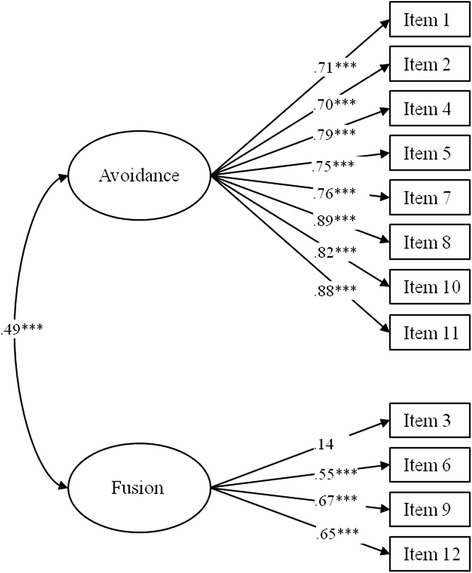
Background: Acceptance and Commitment Therapy (ACT) for pain offers an alternative to traditional Cognitive Behavioural Therapy (CBT) approaches. ACT focuses on the enhancement of 'psychological flexibility' that enables individuals to pursue their values and goals despite pain. To assess specific treatment effect or mediators and moderators of change, questionnaires measuring ACT constructs are needed. Methods: The Psychological Inflexibility in Pain Scale (PIPS) was translated into German and completed by 182 participants with chronic back pain (70.3 % women, age 51.0 ± 10.5 years). Item analyses and a confirmatory factor analysis were computed as well as correlations with the Chronic Pain Acceptance Questionnaire (CPAQ), which measures related, but slightly different ACT-related constructs, and self-reported disability, pain intensity and further pain-related questionnaires. Results: The confirmatory factor analysis reproduced the original structure with two subscales and a good fit. The internal consistencies of the subscales were Cronbach's α = .91 (Avoidance) and α = .26 (Fusion). Average item-whole correlations of the items with the respective subscales were r = .71 (Avoidance) and r = .20 (Fusion). The highest correlations were observed for Avoidance with the CPAQ (r = -.81), the Tampa Scale of Kinesiophobia (r = .58) and the Pain Catastrophizing Scale (r = .56) and for Fusion with the CPAQ subscale Pain willingness (r = -.55). The PIPS subscale Avoidance predicted pain-related disability even after controlling for catastrophizing and fear of movement. Conclusions: The PIPS subscale Avoidance may be a valuable instrument to assess treatment processes in future RCTs. The PIPS subscale Fusion seemed more problematic in the German sample with chronic back pain. More research on the comparison between PIPS and other questionnaires assessing psychological flexibility and the usefulness of the concept 'Fusion' for chronic pain are needed. © 2015 Barke et al.
Overview
CoChat Summary
## TL;DR
This study translated the 12-item Psychological Inflexibility in Pain Scale (PIPS) into German and validated it in 182 German chronic back pain patients. The two-factor structure was replicated, but the Avoidance subscale performed much better than Fusion.
## Key findings
- In 182 participants with chronic back pain (70.3% women; mean age 51.0 ± 10.5 years; mean pain duration 12.7 ± 10.9 years), confirmatory factor analysis reproduced the original two-subscale structure with good fit (χ2/df = 1.53, RMSEA = .054, SRMR = .0625, GFI = .925).
- Internal consistency was strong for Avoidance (Cronbach’s α = .91) and weak for Fusion (α = .26); removing item 3 would improve Fusion to α = .63.
- Avoidance correlated strongly with the CPAQ (r = −.81), TSK (r = .58), PCS (r = .56), PDI (r = .46), QBPDS (r = .42), HADS-D (r = .48), and HADS-A (r = .37).
- In hierarchical regression, PIPS Avoidance added explanatory power beyond age, sex, PCS, and TSK for disability (ΔR2 = .038, p < .01), but not beyond CPAQ (ΔR2 = .017, n.s.); in the final multiple regression, PCS (β = .41, p < .001), average pain intensity (β = .27, p < .001), and PIPS-Avoid (β = .24, p < .05) explained 43% of the variance in pain-related disability.
## Methods
- The authors translated and cross-culturally adapted the PIPS into German, then administered it to 182 adults with chronic back pain recruited via patient websites, support groups, and an inpatient rehabilitation center.
- They assessed item statistics, internal consistency, confirmatory factor analysis, Pearson correlations with CPAQ, PCS, TSK, PDI, QBPDS, HADS, pain intensity, age, and sex, and hierarchical/multiple regression models predicting disability.
- Analyses were conducted with Statistica v10 and AMOS v21.
## Limitations
- The paper states that the correlational design “did not permit drawing conclusions” about directionality, i.e., whether avoidance leads to greater disability or vice versa.
- Disability was assessed only by self-report measures.
- Evident from the text: the Fusion subscale had poor psychometric performance in this German sample, especially item 3, so conclusions about Fusion are limited.
Model-written summary. Check it against the paper before relying on it.
Integrity signals
Registry
Cites
Statistics
Figures
Verification
Claims the paper makes
2 Valid · 1 Not valid · 7 Not checked · 21 Own results and interpretations
A result the paper reports from its own data — it cites no other source for it, so there is none to check. The quote shows it is in the paper.
In the paper
“The highest correlations were observed for Avoidance with the CPAQ (r = −.81)”
- Also stated in: § Correlations with age, sex and pain-related measures · plain
“The PIPS Avoidance subscale showed a high negative correlation (r = −.81, p < .001) with the CPAQ”
§ The Psychological Inflexibility in Pain Scale (PIPS) – validation, factor structure and comparison to the Chronic Pain Acceptance Questionnaire (CPAQ) and other validated measures in German chronic back pain patients > Abstract > Results
plainstates an association- Asserted: passes — The authors put it forward as true.
- Checkable: passes — It can be checked against evidence.
- Load-bearing: passes — The paper’s conclusions depend on it.
- Based: passes — The paper gives a reason why it holds.
- Also stated in: § Correlations with age, sex and pain-related measures · plain
A result the paper reports from its own data — it cites no other source for it, so there is none to check. The quote shows it is in the paper.
In the paper
“The PIPS subscale Avoidance predicted pain-related disability even after controlling for catastrophizing and fear of movement.”
- Also stated in: § PIPS and established instruments (TSK and CPAQ) · plain
“When age, sex, the PCS and the TSK were already part of the model, the addition of the PIPS still improved the explained variance (ΔR2 = .038, p < .01)”
- Also stated in: § Conclusion · plain
“The PIPS subscale Avoidance significantly predicted pain-related disability even after controlling for catastrophizing and fear of movement.”
§ The Psychological Inflexibility in Pain Scale (PIPS) – validation, factor structure and comparison to the Chronic Pain Acceptance Questionnaire (CPAQ) and other validated measures in German chronic back pain patients > Abstract > Results
plainstates an association- Asserted: passes — The authors put it forward as true.
- Checkable: passes — It can be checked against evidence.
- Load-bearing: passes — The paper’s conclusions depend on it.
- Based: passes — The paper gives a reason why it holds.
- Also stated in: § PIPS and established instruments (TSK and CPAQ) · plain
A result the paper reports from its own data — it cites no other source for it, so there is none to check. The quote shows it is in the paper.
In the paper
“The confirmatory factor analysis reproduced the original structure with two subscales and a good fit.”
- Also stated in: § Factor structure · plain
“The overall model fit was good: χ2 = 81.07, df = 53, p = .008 with a ratio of χ2/df = 1.53.”
- Also stated in: § Discussion · boosted
“The confirmatory factor analysis demonstrated a good fit and confirmed the factor structure of the original”
§ The Psychological Inflexibility in Pain Scale (PIPS) – validation, factor structure and comparison to the Chronic Pain Acceptance Questionnaire (CPAQ) and other validated measures in German chronic back pain patients > Abstract > Results
boosted- Asserted: passes — The authors put it forward as true.
- Checkable: passes — It can be checked against evidence.
- Load-bearing: passes — The paper’s conclusions depend on it.
- Based: passes — The paper gives a reason why it holds.
- Also stated in: § Factor structure · plain
A result the paper reports from its own data — it cites no other source for it, so there is none to check. The quote shows it is in the paper.
In the paper
“PIPS Avoidance showed small correlations with current and average pain (r = .23 and r = .24, p < .01, respectively)”
- Also stated in: § Discussion · plain
“the subscale Avoidance showed only small correlations with pain intensity”
§ The Psychological Inflexibility in Pain Scale (PIPS) – validation, factor structure and comparison to the Chronic Pain Acceptance Questionnaire (CPAQ) and other validated measures in German chronic back pain patients > Results > Correlations with age, sex and pain-related measures
plainstates an association- Asserted: passes — The authors put it forward as true.
- Checkable: passes — It can be checked against evidence.
- Load-bearing: passes — The paper’s conclusions depend on it.
- Based: passes — The paper gives a reason why it holds.
- Also stated in: § Discussion · plain
A result the paper reports from its own data — it cites no other source for it, so there is none to check. The quote shows it is in the paper.
In the paper
“The internal consistencies of the subscales were Cronbach’s α = .91 (Avoidance) and α = .26 (Fusion).”
- Also stated in: § Item analyses and internal consistency · plain
“The internal consistency for the whole scale was α = .78 and for the subscales α = .91 (Avoidance) and α = .26 (Fusion).”
§ The Psychological Inflexibility in Pain Scale (PIPS) – validation, factor structure and comparison to the Chronic Pain Acceptance Questionnaire (CPAQ) and other validated measures in German chronic back pain patients > Abstract > Results
plain- Asserted: passes — The authors put it forward as true.
- Checkable: passes — It can be checked against evidence.
- Load-bearing: passes — The paper’s conclusions depend on it.
- Based: passes — The paper gives a reason why it holds.
- Also stated in: § Item analyses and internal consistency · plain
13 more claims
Create a free account to see all 31 claims and to verify the 1 reference still open.
- Probably not a substantial claim. 9
- It may state two separate claims as one. 7
Claims other papers make about this one
Each is checked against this paper’s own text: does it say what the citing paper says it does?
The cited source says what the claim attributes to it.
In the citing paper
“The scale was reported to be a valid and reliable measure of avoidance [31].”
From EFFects of Exposure and Cognitive behavioral Therapy for chronic BACK pain (“EFFECT-BACK”): study protocol for a randomized controlled trial (2024) · cites this paper as [31]
The cited source says what the claim attributes to it.
In the citing paper
“Other studies have found similar issues with this scale and have recommended only interpreting it as a whole [74] or only using the avoidance subscale [75].”
In the citing paper
“However, concerns regarding the internal consistency of the cognitive fusion subscale and the representativeness of the total score as a measure of all aspects of psychological (in)flexibility have been raised in cross-validation studies after this data collection was finished (Barke, Riecke, Rief, & Glombiewski, 2015; Trompetter et al., 2014).”
From Predictors and mediators of outcome in cognitive behavioral therapy for chronic pain: The contributions of psychological flexibility (2021) · cites this paper as Barke, Riecke, Rief, & Glombiewski, 2015
Citations
Cites
The Hospital Anxiety and Depression Scale
Zigmond, A. S., & Snaith, R. P. (1983) · Acta Psychiatrica Scandinavica · doi:10.1111/j.1600-0447.1983.tb09716.x · Cited by 47,139
Guidelines for the process of cross-cultural adaptation of self-report measures
Beaton, D. E., Bombardier, C., Guillemin, F., & Ferraz, M. B. (2000) · Spine · doi:10.1097/00007632-200012150-00014 · Cited by 14,542 · cited 3×
“We developed a German version of the PIPS following international guidelines of cross-cultural adaption [14].”
MethodInfluentialDepression and quality of life in older persons: A review
Sivertsen, H., Bjørkløf, G. H., Engedal, K., Selbæk, G., & Helvik, A.-S. (2015) · Dementia and Geriatric Cognitive Disorders · doi:10.1159/000437299 · Cited by 14,152
Pharmacological interventions for somatoform disorders in adults
Kleinstäuber, M., Witthöft, M., Steffanowski, A., van Marwijk, H., Hiller, W., & Lambert, M. J. (2014) · Cochrane Database of Systematic Reviews · doi:10.1002/14651858.cd010628.pub2 · Cited by 11,335
The Pain Catastrophizing Scale: Development and validation.
Sullivan, M. J. L., Bishop, S. R., & Pivik, J. (1995) · Psychological Assessment · doi:10.1037//1040-3590.7.4.524 · Cited by 8,227 · cited 2×
“Pain catastrophizing For the assessment of pain catastrophizing, the German version of the PCS was used [16, 12].”
MethodReporting Structural Equation Modeling and Confirmatory Factor Analysis Results: A Review
Schreiber, J. B., Nora, A., Stage, F. K., Barlow, E. A., & King, J. (2006) · The Journal of Educational Research · doi:10.3200/joer.99.6.323-338 · Cited by 6,937 · cited 2×
“According to Schreiber and colleagues, a ratio of less than 2 indicates good model fit [27].”
BackgroundFear-avoidance and its consequences in chronic musculoskeletal pain: a state of the art.
Vlaeyen, J. W. S., & Linton, S. J. (2000) · Pain · doi:10.1016/s0304-3959(99)00242-0 · Cited by 4,931
Psychological therapies for the management of chronic pain (excluding headache) in adults
Williams, A. C. D. C., Eccleston, C., & Morley, S. (2012) · Cochrane Database of Systematic Reviews · doi:10.1002/14651858.cd007407.pub3 · Cited by 1,634 · cited 2×
“CBT has proven to be effective in comparison to standard medical treatment but, despite the large body of research on CBT for pain, the effect sizes remain small [1] to moderate [2].”
BackgroundAcceptance of chronic pain: component analysis and a revised assessment method
McCracken, L. M., Vowles, K. E., & Eccleston, C. (2004) · Pain · doi:10.1016/j.pain.2003.10.012 · Cited by 1,101 · cited 2×
“For chronic pain, two recently developed instruments exist: the Chronic Pain Acceptance Questionnaire (CPAQ) [7] and the Psychological Inflexibility in Pain Scale (PIPS) [8].”
MethodKinesiophobia : a new view of chronic pain behavior
Kori, S. (1990) · Medical Entomology and Zoology · Cited by 1,056
Research works printed but not linked: 1
- Herrmann-Lingen C Buss U Snaith RP HADS-D Hospital Anxiety and Depression Scale 2011 3 Bern Hans Huber
Cited by
Psychological Flexibility as a Resilience Factor in Individuals with Chronic Pain
Gentili, C., Rickardsson, J., Zetterqvist, V., Simons, L. E., Lekander, M., & Wicksell, R. K. (2019) · Frontiers in Psychology · doi:10.3389/fpsyg.2019.02016 · Cited by 148
Internet-Delivered Exposure Therapy for Fibromyalgia: A Randomized Controlled Trial
Hedman-Lagerlöf, M., Hedman-Lagerlöf, E., Axelsson, E., Ljótsson, B., Engelbrektsson, J., Hultkrantz, S., Lundbäck, K., Björkander, D., Wicksell, R. K., Flink, I., et al. (2018) · The Clinical Journal of Pain · doi:10.1097/ajp.0000000000000566 · Cited by 79
Åkerblom, S., Perrin, S., Rivano Fischer, M., & McCracken, L. M. (2021) · Journal of Behavioral Medicine · doi:10.1007/s10865-020-00168-9 · Cited by 52
Fang, S., & Ding, D. (2022) · Frontiers in Psychology · doi:10.3389/fpsyg.2022.1069748 · Cited by 34
Åkerblom, S., Perrin, S., Rivano Fischer, M., & McCracken, L. M. (2018) · The Clinical Journal of Pain · doi:10.1097/ajp.0000000000000561 · Cited by 33
Talaei‐Khoei, M., Fischerauer, S. F., Lee, S., Ring, D., & Vranceanu, A. (2017) · Pain Practice · doi:10.1111/papr.12494 · Cited by 31
“We found support that the general psychological inflexibility construct leads to pain catastrophizing, increased pain intensity, and decreased physical function, while prior studies in adults generally used a painspecific inflexibility measure.(1,44) To our knowledge, this is the first study that assessed general psyc…”
BackgroundResultConcept and validation of the German version of the cognitive fusion questionnaire (CFQ-D)
China, C., Hansen, L. B., Gillanders, D. T., & Benninghoven, D. (2018) · Journal of Contextual Behavioral Science · doi:10.1016/j.jcbs.2018.06.003 · Cited by 26
“In particular, one item failed to correlate with the rest of the scale and showed a substantially larger standard deviation (Barke et al., 2015), possibly indicating a large degree of variation in participants’ interpretation of the item.”
BackgroundWiwe Lipsker, C., Kanstrup, M., Holmström, L., Kemani, M., & Wicksell, R. (2016) · Children · doi:10.3390/children3040032 · Cited by 23
Liu, Y., Wang, L., Wei, Y., Wang, X., Xu, T., & Sun, J. (2016) · Medicine · doi:10.1097/md.0000000000004339 · Cited by 19
“However, the 20-item CPAQ has been widely validated in many countries, including Germany,([19]) Spain,([20]) Australia,([8]) Sweden,([21]) Italy,([6]) Finland,([22]) Korea,([10]) and Iran([23]).”
InfluentialSustainability of cognitive behavioural interventions for chronic back pain: A long‐term follow‐up
Riecke, J., Rief, W., Lemmer, G., & Glombiewski, J. A. (2024) · European Journal of Pain · doi:10.1002/ejp.2160 · Cited by 15
“The German version has good psychometric properties (Barke et al., 2015).”
BackgroundMethodSelf-citationVasiliou, V. S., Michaelides, M. P., Kasinopoulos, O., & Karekla, M. (2019) · Psychological Assessment · doi:10.1037/pas0000705 · Cited by 13
Maathz, P., Flink, I. K., Engman, L., & Ekdahl, J. (2020) · Pain Medicine · doi:10.1093/pm/pnaa042 · Cited by 11
“Accordingly, the mean scores on the PIPS are considerably lower in the sample in this study than in previous chronic pain samples [14,46], while a previous study using an adapted measure of pain-related avoidance show levels comparable to those found in other chronic pain samples [10].”
ResultNagasawa, Y., Shibata, A., Fukamachi, H., Ishii, K., Wicksell, R. K., & Oka, K. (2021) · Journal of Pain Research · doi:10.2147/jpr.s287549 · Cited by 13
Emmerich, A. C., Friehs, T., Crombez, G., & Glombiewski, J. A. (2020) · European Journal of Pain · doi:10.1002/ejp.1638 · Cited by 14
“The PIPS is a valid and reliable instrument to assess pain-related avoidance behaviour (Barke et al., 2015).”
BackgroundSelf-citationBorthwick, C., Penlington, C., & Robinson, L. J. (2024) · Journal of Clinical Psychology in Medical Settings · doi:10.1007/s10880-023-09989-7 · Cited by 11
“Participants from the .31 Barke et al. (2015) UK were asked to provide their postcode as a proxy measure of socioeconomic deprivation.”
Mattila-Rautiainen, S., Venojärvi, M., Rautiainen, H., & Keski-Valkama, A. (2023) · Frontiers in Veterinary Science · doi:10.3389/fvets.2023.1085768 · Cited by 8
“Chronic Pain Acceptance Questionnaire (CPAQ) (49) evaluated self-reported chronic pain acceptance with two subscales and is valid and reliable to detect rehabilitation outcomes.”
BackgroundInfluentialXie, C., Xu, X., Ou, M., & Chen, Y. (2021) · Cancer Nursing · doi:10.1097/ncc.0000000000000772 · Cited by 9
“The 12-item PIPS was a result of goodness-of-fit values in the study of Wicksell et al The 11-item PIPS was a result of goodness-of-fit values in the study of Barke et al.(28)”
ResultInfluentialTraxler, J., Gaggini, E., Philips, R. V., Warny, A., Peters, M. L., Crombez, G., & Vlaeyen, J. W. S. (2025) · Pain · doi:10.1097/j.pain.0000000000003765 · Cited by 7
van der Horst, A., Meijer, L., van Os - Medendorp, H., Jukema, J. S., Bohlmeijer, E., Schreurs, K. M., & Kelders, S. (2024) · JMIR Formative Research · doi:10.2196/54600 · Cited by 4
“Other studies have found similar issues with this scale and have recommended only interpreting it as a whole [74] or only using the avoidance subscale [75].”
ResultA Network Analysis of the Fear Avoidance Model of Genital Pain
Dewitte, M. D., Werner, M. A., ter Kuile, M., Engman, L., & Flink, I. K. (2024) · The Journal of Sex Research · doi:10.1080/00224499.2024.2352540 · Cited by 4
Majeed, R., Faust, I., Hüppe, M., & Hermann, C. (2021) · Der Schmerz · doi:10.1007/s00482-021-00537-6 · Cited by 3
Vogt, R., Haas, J., Baumann, L., Sander, A., Klose, C., Riecke, J., Rief, W., Bingel, U., Maser, D., Witthöft, M., et al. (2024) · Trials · doi:10.1186/s13063-024-08017-9 · Cited by 3
“The change in psychological inflexibility will be measured using the Psychological Inflexibility in Pain Scale (PIPS) [31].”
BackgroundMethodInfluentialSelf-citationMarcelino, V., Paço, M., Dias, A., Almeida, V., Rocha, J., Azevedo, R. M. S., Alves‐Ferreira, M., Lemos, C., & Pinho, T. (2022) · International Journal of Environmental Research and Public Health · doi:10.3390/ijerph19137974 · Cited by 5
Omidi, A., Zanjani, Z., Kashani, M. H. F., & Kakhaki, R. D. (2018) · Iranian Journal of Psychiatry and Behavioral Sciences · doi:10.5812/ijpbs.63132 · Cited by 6
“(18), the sample included German patients with descent chronic low back pain.”
BackgroundResultInfluentialNagasawa, Y., Shibata, A., Ishii, K., & Oka, K. (2022) · Pain Management · doi:10.2217/pmt-2022-0011 · Cited by 3
Digital acceptance and commitment therapy for the treatment of chronic pain
Etzelmueller, A., Barke, A., Feiler, M., Guth, M., Heber, E., Baumeister, H., & Ebert, D. D. (2026) · Deutsches Ärzteblatt international · doi:10.3238/arztebl.m2025.0239 · Cited by 4
Self-citationHu, H., Zheng, Q., Ding, D., & Fang, S. (2025) · International Journal of Mental Health Promotion · doi:10.32604/ijmhp.2024.059324 · Cited by 1
Kallesøe, K. H., Ørnbøl, E., Wellnitz, K. B., & Rask, C. U. (2025) · Cognitive Behaviour Therapy · doi:10.1080/16506073.2025.2521719 · Cited by 5
“When differentiating in the present study, it could be suggested that particularly avoidance of planned and valued activities as well as social participation in response to symptoms, as measured with PIPS-12 (Barke et al., 2015), may be important perpetuating factors rather than general avoidance of everyday activitie…”
InfluentialCaverius, U., Fischer, M. R., Lexell, J. E., & Åkerblom, S. (2026) · Frontiers in Pain Research · doi:10.3389/fpain.2026.1744974 · Cited by 1
López, Q. N. G., Rosas, A. R., Morales, A. S., & Cárdenas, S. J. (2022) · Revista Iberoamericana de Diagnóstico y Evaluación - e Avaliação Psicológica · doi:10.21865/ridep63.2.13 · Cited by 2
Lamoureux, É., Ghoussoub, K., Shir, Y., Martel, M. O., Prylutskyy, Z., & Pagé, M. G. (2025) · International Journal of Group Psychotherapy · doi:10.1080/00207284.2025.2469132
“Growth mixture modeling (GMM) was used to identify trajectories of symptom change during the 8-week group psychotherapy in terms of pain severity (PEG–Model 1) and psychological flexibility (PIPS avoidance–Model 2; PIPS fusion–Model 3).”
InfluentialAlcon, C. A., Haymore, A., Kale, J., & Walker, K. (2025) · Physiotherapy Theory and Practice · doi:10.1080/09593985.2025.2582685
“The PIPS has been validated for low back and knee pain conditions (Barke, Riecke, Rief, and Glombiewski, 2015; Nagasawa et al., 2021).”
de Aguiar, S. P. M., Dibai, D. B., Mendes, L. P., Cutrim, N. R. M., Guedes, C. L. R., Pinheiro, J. S., Morais, D. N., Neto, C. W. D. S. C., Leal, P. D. C., & Dibai‐Filho, A. V. (2026) · Sao Paulo Medical Journal · doi:10.1590/1516-3180.2025.0018.r1.08092025 · Cited by 1
A biopsychosocial perspective on endometriosis: the importance of psychological inflexibility
Åkerblom, S., Jönsson, I. P., Ringqvist, Å., Nordengren, J., & Zhao, X. (2026) · Archives of Gynecology and Obstetrics · doi:10.1007/s00404-025-08276-0 · Cited by 1
Tomassini, M., Ruotolo, I., Ugolini, A., Sellitto, G., & Galeoto, G. (2026) · Expert Review of Pharmacoeconomics & Outcomes Research · doi:10.1080/14737167.2026.2691177
“The Psychological The Inflexibility in Pain Scale (PIPS) is validated in Swedish and German [78,79].”
Psychological Inflexibility in Pain Scale: Turkish Adaptation, Validity, and Reliability Study
Alptekin, F. B., Saraçoğlu, T. T., Erken, B., Taygar, A. S., Burhan, H. Ş., & Aytaç, H. M. (2026) · Pain Management Nursing · doi:10.1016/j.pmn.2026.05.027
Metadata
- Authors
- Barke, A., Riecke, J., Rief, W., & Glombiewski, J. A.
- Affiliations
- Philipps University of Marburg (DE)
- Corresponding author
- Barke, Antonia
- Venue
- BMC Musculoskeletal Disorders
- Published
- 2015-07-28
- Volume
- 16
- Issue
- 1
- Pages
- 171-171
- ISSN
- 1471-2474 (ISSN-L)
- PMC
- PMC4517641
- OpenAlex
- W1626152618
- Semantic Scholar
- 84c38c32b248336ed5a3e37e6be01cbccbd79adf
- Cited by
- 37
- References
- 35
- Citations by year
- 2026: 5 · 2025: 5 · 2024: 5 · 2023: 3 · 2022: 4 · 2021: 2 · 2020: 3 · 2019: 3 · 2018: 2 · 2017: 2 · 2016: 3
- FWCI
- 2.89
- Type
- journal article
- Language
- en
- Open access
- gold
- doi.org
- Locations
- BMC Musculoskeletal Disorders (publishedVersion, cc-by)
- PubMed Central (publishedVersion, cc-by)
- PubMed (publishedVersion)
- GoeScholar The Publication Server of the Georg-August-Universität Göttingen (Georg-August-Universität Göttingen) (submittedVersion, cc-by)
- Funders
- Deutsche Forschungsgemeinschaft
- Topics
- Social Sciences › Psychology › Clinical Psychology › Mindfulness and Compassion Interventions
- Health Sciences › Health Professions › Physical Therapy, Sports Therapy and Rehabilitation › Musculoskeletal pain and rehabilitation
- Social Sciences › Psychology › Experimental and Cognitive Psychology › Anxiety, Depression, Psychometrics, Treatment, Cognitive Processes
- Keywords
- psychological flexibility, acceptance and commitment therapy, chronic back pain, Chronic Pain Acceptance Questionnaire, German translation, factor structure, avoidance, fusion, pain-related disability, kinesiophobia, pain catastrophizing
- MeSH terms
- Adaptation, Psychological, Adult, Anxiety, Back Pain, Depression, Factor Analysis, Statistical, Female, Persons with Disabilities, Humans, Male, Middle Aged, Pain Measurement, Psychometrics, Quality of Life, Surveys and Questionnaires, Reproducibility of Results, Catastrophization, Chronic Pain
About these checks
Registry, retraction, Cites and statistics results are computed, not judged, with one exception: a printed reference that no index lists is read once by a model before it counts as a citation error. Claims are extracted by a model and kept only when their quote appears verbatim in the text; each cited source is then checked, with a model’s help, for whether it says what the claim relies on. Those verdicts can be wrong — read the claim’s quote and the cited source before relying on one.
The claim verdicts this report counts are experimental: their accuracy is not yet measured.
A language model drew the claims from the paper on 2026-10-11, under version 3 of the claim definition (model deepseek-v4.1-flash, prompt extract-v3).
A second model labelled each claim on 2026-10-11 (model jev-1.13-20260917, definition revision gold-guideline-v0.2).
Statistics and arithmetic are recomputed, not judged.
Confidence bands are shown only for fields calibrated on our annotated test set. None is calibrated yet, so no band is shown.
What counts as a claim ›How we measure confidence ›How we check this ›
Are you an author, or do you see a problem with this page? Request a review
Data sources
Bibliographic data: Semantic Scholar, OpenAlex, Crossref.
Contains information from the Semantic Scholar Academic Graph Datasets, made available under the ODC Attribution License (ODC-BY 1.0).
Semantic Scholar’s data is described in: Kinney, R., et al. (2023). The Semantic Scholar Open Data Platform. arXiv:2301.10140.
