

Outcomes of dental implant treatment in 3–18 year old children with ectodermal dysplasia: a systematic review spanning three decades
Open accessThe DOI matches its Crossref record; 66 of the 66 references it cites were found in a registry or an index; 13 of the 102 sources its claims cite were checked for support.
Abstract
Systematic review of implant treatment outcomes in children with ectodermal dysplasia aged 3–18 years.
Overview
CoChat Summary
## TL;DR
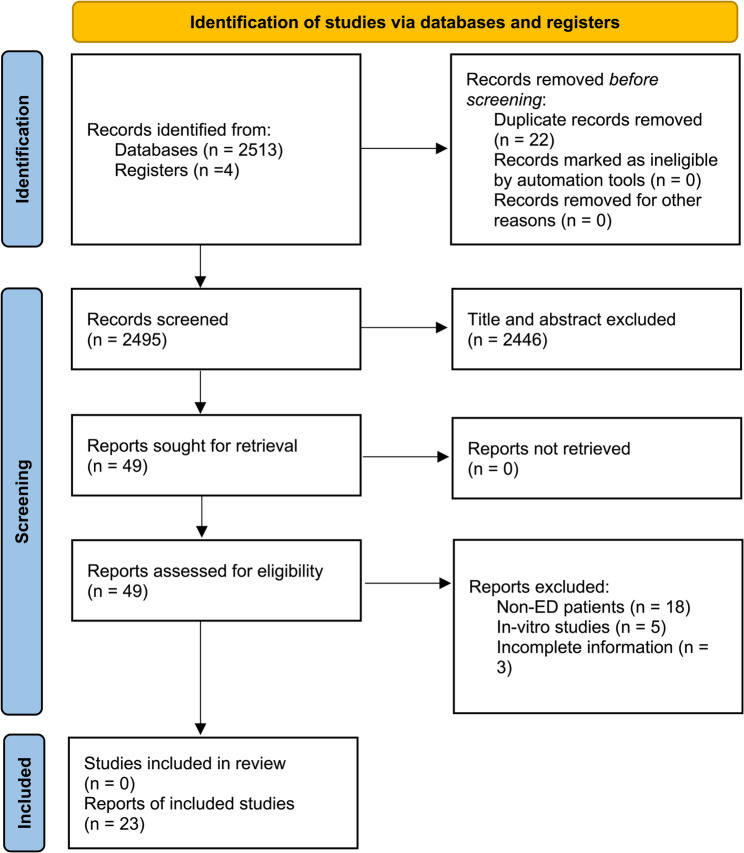
This systematic review of dental implants in children with ectodermal dysplasia (ED) included 23 studies, 46 patients, and 192 implants placed before age 18, and found a reported implant survival rate of 98%. Growth-related complications were common but usually manageable, while true implant-threatening events were uncommon.
## Key findings
- The review included 23 studies: 3 retrospective studies, 1 prospective study, 4 case series, and 15 case reports, totaling 46 patients and 192 implants aged 3 to 18 years.
- The authors report a 98% implant survival rate for implants placed before age 18, with no discernible variance in implant failure rates across age groups under 18.
- Complications were common but usually manageable; the most frequent were denture remaking/relining (17.4%) and implant position changing (17.4%), both linked to craniofacial growth.
- Implant-threatening complications occurred in 6.5% (3/46) of patients and 3.6% (7/192) of implants; these included 2 osseointegration failures leading to implant removal and 1 peri-implantitis case that was stabilized with prolonged treatment.
- Maxillary implants had lower survival than mandibular implants; among 32 maxillary implants, 3 were removed due to failure.
- Mini-implants, narrow-diameter implants, and short implants were reported to have higher survival and lower complication rates than standard-size implants, and no mechanical fractures were reported during follow-up.
## Methods
- Systematic review conducted according to PRISMA 2020 and registered in PROSPERO (CRD42024600172).
- Searches were run in PubMed, Scopus, Web of Science, and Google Scholar for articles published from January 1994 to January 2024; duplicates were removed with EndNote X9.2.
- Included original studies reporting at least one patient with first implant placement before age 18; analysis focused only on implants placed before 18, and risk of bias for case reports/series used the Joanna Briggs Institute checklist.
## Limitations
- The paper explicitly states that ED is rare, so the available clinical studies are rare and most results come from case reports.
- The authors warn of “survivor bias”: successful cases are more likely to be reported and published, so conclusions should be cautious.
- Evidence is limited by small subgroup sizes and heterogeneous study designs; this is evident from the included mix of case reports/series and the authors’ own note that techniques such as position-management approaches are based on individual cases and their long-term efficacy is not yet fully established.
Model-written summary. Check it against the paper before relying on it.
Integrity signals
Registry
Cites
Statistics
Figures
Verification
Claims the paper makes
9 Valid · 3 Not valid · 32 Not checked · 45 Own results and interpretations
The cited sources support only part of this claim — read each source’s verdict below.
In the paper
“Compared to healthy individuals of the same age and sex, children with ED often exhibit severe dental anomalies, such as various degrees of tooth agenesis from hypodontia to complete anodontia and malformed, small, and conical teeth [4–6].”
§ Outcomes of dental implant treatment in 3–18 year old children with ectodermal dysplasia: a systematic review spanning three decades > Introduction
What the sources say
- Partly supportedcites [4] Anuroopa A, Abdulla J, Lovely M. Oral rehabilitation of a young patient with hypohidrotic ectodermal dysplasia: A clinical report. Contemp Clin Dent Apr. 2012;3(Suppl 1):S33–6. 10.4103/0976-237x.95101. PMC3354809 22629063 sourceExperimental — accuracy not yet measured
The Introduction describes hypodontia or anodontia in hypohidrotic ED and says conical teeth are a common malformation; the Case Report also describes partial anodontia and conical-shaped teeth. Our copy does not state that the teeth are small or compare affected children with healthy individuals matched by age and sex. (LLM, conf=0.85)
- Partly supportedcites [5] AlNuaimi R, Mansoor M. Prosthetic rehabilitation with fixed prosthesis of a 5-year-old child with hypohidrotic ectodermal dysplasia and oligodontia: a case report. J Med Case Rep Nov. 2019;8(1):329. 10.1186/s13256-019-2268-4. PMC6839255 31699141 sourceExperimental — accuracy not yet measured
The Background (page not provided) identifies partial or complete anodontia and abnormal tooth shape as oral manifestations of ED. It does not specify that the teeth are small and conical or compare affected children with healthy people of the same age and sex. (LLM, conf=0.84)
- Partly supportedcites [6] Puttaraju GH, Visveswariah PM. Ectodermal dysplasia in identical twins. J Pharm Bioallied Sci Jul. 2013;5(Suppl 2):S150–3. 10.4103/0975-7406.114314. PMC3740664 23956595 sourceExperimental — accuracy not yet measured
The Discussion (page unavailable) lists hypodontia, complete anodontia, and peg- or conical-shaped teeth as dental defects of ectodermal dysplasia. The Case Report (page unavailable) also documents missing teeth and conical crowns in the twins. The paper does not describe the teeth as small or compare affected children with healthy individuals matched for age and sex. (LLM, conf=0.86)
plainstates an association- Asserted: passes — The authors put it forward as true.
- Checkable: passes — It can be checked against evidence.
- Load-bearing: passes — The paper’s conclusions depend on it.
- Based: passes — The paper gives a reason why it holds.
- Partly supported
The cited sources support only part of this claim — read each source’s verdict below.
In the paper
“The observed complications primarily included implant submerge, implant rotation, and the need for prosthesis revision or replacement [25, 31–34, 51–53].”
§ Outcomes of dental implant treatment in 3–18 year old children with ectodermal dysplasia: a systematic review spanning three decades > Results > The relevance of implant placement to complication
What the sources say
- Not matchedcites [25] Toomarian L, Ardakani MR, Ramezani J, Adli AR, Tabari ZA. Using implants for prosthodontic rehabilitation of a 4-year-old with ectodermal dysplasia. Gen Dent. 2014;62(5):e1–5. 25184725
Its entry has no title and year that we can search by.
- Not checked — no full text of the sourcecites [31] Kearns G, Sharma A, Perrott D, Schmidt B, Vargervik KJOSOMOPOR. Endodontology. Placement of endosseous implants in children and adolescents with hereditary ectodermal dysplasia. 1999;88(1):5–10. 10442937 source
- Not checked — no full text of the sourcecites [32] Dds MAPF, Arjan Vissink D, Dds GMR, Anita Visser DDS, PJJoO, Surgery M. Implant-retained overdentures for young children with severe oligodontia: a series of four Cases - ScienceDirect. 2014;72(9):1684–90. 25109582 source
- Not checked — no full text of the sourcecites [33] Celar AG, Durstberger G, Zauza K. Use of an individual traction prosthesis and distraction osteogenesis to reposition osseointegrated implants in a juvenile with ectodermal dysplasia: a clinical report. J Prosthet Dent. 2002;87(2):145–8. 11854668 source
- Not matchedcites [34] Victor E. and, Alveolar bone growth in response to endosteal implants in two patients with ectodermal dysplasia. 1998. 9869284
Its entry has no title and year that we can search by.
- Not checked — no full text of the sourcecites [51] Clarke L, Bowyer L, Noone J, Stevens C, Ashley MJOS. Britain’s youngest implant patients? – A Case Series of implant treatment in children with ectodermal dysplasia. 2020. source
- Partly supportedcites [52] Cezaria Triches T, Ximenes M, Oliveira de Souza JG, Rodrigues Lopes Pereira Neto A, Cardoso AC, Bolan M. Implant-supported oral rehabilitation in child with ectodermal dysplasia – 4-year Follow-up. Bull Tokyo Dent Coll. 2017;58(1):49–56. 10.2209/tdcpublication.2016-0012. 28381734 sourceExperimental — accuracy not yet measured
The Outcomes section (page not available) reports replacement of both dentures after one year because they had become uncomfortable, followed by repositioning and occlusal adjustment at two years. The Discussion (page not available) says the risk of implant submergence was lower in this patient and that all implants remained favorably positioned at four years; it does not report submergence or rotation as observed complications. (LLM, conf=0.88)
- Not checked — no full text of the sourcecites [53] Kilic S, Altintas SH, Yilmaz Altintas N, et al. Six-year survival of a mini dental implant-retained overdenture in a child with ectodermal dysplasia. J Prosthodont. 2017;26(1):70–4. 10.1111/jopr.12366. 26418841 source
plainn = 46- Asserted: passes — The authors put it forward as true.
- Checkable: passes — It can be checked against evidence.
- Load-bearing: unclear — It is unclear whether the paper’s conclusions depend on it.
- Based: passes — The paper gives a reason why it holds.
- Not matched
The cited sources that could be checked couldn’t confirm or dispute this claim.
In the paper
“The rotational growth alters the spatial relationship between the implant and adjacent teeth [64].”
§ Outcomes of dental implant treatment in 3–18 year old children with ectodermal dysplasia: a systematic review spanning three decades > Discussion
What the sources say
- Could not verifycites [64] Krarup S, Darvann TA, Larsen P, Marsh JL, Kreiborg SJJA. Three-dimensional Anal Mandibular Growth Tooth Eruption. 2005;207(5):669–82. PMC1571566 16313399 sourceExperimental — accuracy not yet measured
The Mandibular growth and Discussion passages describe jaw remodelling, canal shifts and tooth eruption, but do not address rotational growth changing the position of an implant relative to adjacent teeth. A search for implant-related passages found only metallic implants used as reference markers in earlier growth studies (Introduction; Fig. 1 caption), not the claimed relationship. (LLM, conf=0.76)
plainstates a cause- Asserted: passes — The authors put it forward as true.
- Checkable: passes — It can be checked against evidence.
- Load-bearing: passes — The paper’s conclusions depend on it.
- Based: passes — The paper gives a reason why it holds.
- Could not verify
In the paper
“Another patient in the 13–18 years age group presented with hyperplastic ulcerated tissue (peri-implant soft tissue hyperplasia) beneath the distal extension of the fixed prosthesis, which was successfully resolved by revising the prosthetic design [37].”
§ Outcomes of dental implant treatment in 3–18 year old children with ectodermal dysplasia: a systematic review spanning three decades > Results > Complications and management
What the sources say
- Not matchedcites [37] Peterson Y, Huang, Carl F. Dentistry DJJoP. From childhood to adulthood: oral rehabilitation of a patient with ectodermal dysplasia. 2014. 24831743
Its entry has no title and year that we can search by.
plainstates a causeSingle case- Asserted: passes — The authors put it forward as true.
- Checkable: passes — It can be checked against evidence.
- Load-bearing: unclear — It is unclear whether the paper’s conclusions depend on it.
- Based: passes — The paper gives a reason why it holds.
- Not matched
A result the paper reports from its own data — it cites no other source for it, so there is none to check. The quote shows it is in the paper.
In the paper
“On the other hand, the fact that this higher risk did not diminish the implant survival rate as shown above, indicates that technological efforts in the past 30 years are able to effectively manage those potential risks.”
§ Outcomes of dental implant treatment in 3–18 year old children with ectodermal dysplasia: a systematic review spanning three decades > Results > Implant survival rate
hedgedn = 46- Asserted: passes — The authors put it forward as true.
- Checkable: passes — It can be checked against evidence.
- Load-bearing: passes — The paper’s conclusions depend on it.
- Based: passes — The paper gives a reason why it holds.
25 more claims
Create a free account to see all 89 claims and to verify the 11 references still open.
- It may state two separate claims as one. 48
- Probably not a substantial claim. 17
- The quote only partly states this claim. 1
Self-check
Percentages, sums and reported differences re-computed from the paper’s own numbers.
Rated major: it would touch a result — a value a result rests on, reported and recomputed p-values on opposite sides of the significance level, two passages that conflict with no sign which is right, or a cited work retracted before this paper was published.
In the paper
“Within the cohort of 46 patients included in this study, there were 5 patients aged between 13 and 18, 21 patients aged between 8 and 13, and 12 patients aged between 3 and 8.”
§ Outcomes of dental implant treatment in 3–18 year old children with ectodermal dysplasia: a systematic review spanning three decades > Results > Implant survival rate
Reported 46 · recomputed 38
Citations
Cites
The long-term efficacy of currently used dental implants: a review and proposed criteria of success.
Albrektsson, T. O., Zarb, G. A., Worthington, P., & Eriksson, A. R. (1986) · PubMed · Cited by 4,710
Survivorship Bias in Performance Studies
Brown, S. J., Goetzmann, W., Ibbotson, R. G., & Ross, S. A. (1992) · Review of Financial Studies · doi:10.1093/rfs/5.4.553 · Cited by 1,121 · cited 1×
“Thus, our study may be affected significantly by the so-called “Survivor bias”, namely, successful cases are more likely to be reported and accepted for publication by the academic community, should be noted [71].”
Buser, D., Weber, H. ‐., & Lang, N. P. (1990) · Clinical Oral Implants Research · doi:10.1034/j.1600-0501.1990.010105.x · Cited by 724 · cited 1×
“Implant-threatening complications refers to uncontrollable or severe adverse events that directly jeopardize the survival of the dental implant, ultimately leading to the failure of the entire implant treatment [41, 42].”
Hypohidrotic ectodermal dysplasia.
Clarke, A. (1987) · Journal of Medical Genetics · doi:10.1136/jmg.24.11.659 · Cited by 193
Placement of endosseous implants in children and adolescents with hereditary ectodermal dysplasia
Kearns, G., Sharma, A., Perrott, D., Schmidt, B., Kaban, L., & Vargervik, K. (1999) · Oral Surgery, Oral Medicine, Oral Pathology, Oral Radiology, and Endodontology · doi:10.1016/s1079-2104(99)70185-x · Cited by 144 · cited 5×
“The results of two studies were not included due to incomplete information [16, 31] there were no mechanical complications, such as implant fracture, occurred.”
InfluentialProspective clinical trial of dental implants in persons with ectodermal dysplasia
Guckes, A. (2002) · The Journal of Prosthetic Dentistry · doi:10.1016/s0022-3913(02)00043-4 · Cited by 139
Prospective clinical trial of dental implants in persons with ectodermal dysplasia
Guckes, A. D., Scurria, M. S., King, T. S., McCarthy, G. R., & Brahim, J. S. (2002) · The Journal of Prosthetic Dentistry · doi:10.1067/mpr.2002.127099 · Cited by 138 · cited 2×
“Conversely, studies have reported a 95% implant survival rate in young adult ED patients who received implants after the age of 18 [63].”
Long-term results of early cochlear implantation in congenitally and prelingually deafened children.
Waltzman, S. B., Cohen, N. L., Gomolin, R. H., Shapiro, W. H., Ozdamar, S., & Hoffman, R. A. (1994) · PubMed · Cited by 135
IMPLANT USE IN GROWING PATIENTS
Cronin, R. J., & Oesterle, L. J. (1998) · Dental Clinics of North America · doi:10.1016/s0011-8532(22)00602-4 · Cited by 114
Anomalies of tooth formation in hypohidrotic ectodermal dysplasia
LEXNER, M. O., BARDOW, A., HERTZ, J. M., NIELSEN, L. A., & KREIBORG, S. (2007) · International Journal of Paediatric Dentistry · doi:10.1111/j.1365-263x.2006.00801.x · Cited by 113 · cited 1×
“Furthermore, the absence of teeth significantly impairs masticatory function, resulting in reduced muscle activity during chewing, inefficient chewing efficiency, nutritional challenges, and mealtime fatigue [7, 8].”
Dental implants in growing patients: a systematic review
Bohner, L., Hanisch, M., Kleinheinz, J., & Jung, S. (2019) · British Journal of Oral and Maxillofacial Surgery · doi:10.1016/j.bjoms.2019.04.011 · Cited by 112 · cited 2×
“Several systematic reviews have suggested a minimum age of 10 for the placement of oral implants in developing patients to avoid structural, growth-related complications [29, 30].”
Implants in children with ectodermal dysplasia: a case report and literature review.
Kramer, F., Baethge, C., & Tschernitschek, H. (2007) · Clinical Oral Implants Research · doi:10.1111/j.1600-0501.2006.01180.x · Cited by 106 · cited 3×
“Maxillary implants are susceptible to vertical and antero-posterior displacements due to resorption at the nasal floor and anterior surface, potentially leading to implant failures [22, 43].”
Hypohidrotic ectodermal dysplasia: clinical and molecular review
Reyes‐Reali, J., Mendoza‐Ramos, M. I., Garrido‐Guerrero, E., Méndez‐Catalá, C. F., Méndez‐Cruz, A. R., & Pozo‐Molina, G. (2018) · International Journal of Dermatology · doi:10.1111/ijd.14048 · Cited by 101
Three‐dimensional analysis of mandibular growth and tooth eruption
Krarup, S., Darvann, T. A., Larsen, P., Marsh, J. L., & Kreiborg, S. (2005) · Journal of Anatomy · doi:10.1111/j.1469-7580.2005.00479.x · Cited by 86
(1997) · PubMed · Cited by 76
Treatment outcomes for adolescent ectodermal dysplasia patients treated with dental implants
SWEENEY, I. P., FERGUSON, J. W., HEGGIE, A. A., & LUCAS, J. O. (2005) · International Journal of Paediatric Dentistry · doi:10.1111/j.1365-263x.2005.00610.x · Cited by 73 · cited 1×
“It was suggested that this problem can be alleviated by using mini-implants with diameters ranging from 1.8 to 3 mm for transitional or permanent restorations [54].”
InfluentialProsthetic rehabilitation of patients with hypohidrotic ectodermal dysplasia: A systematic review
Schnabl, D., Grunert, I., Schmuth, M., & Kapferer‐Seebacher, I. (2018) · Journal of Oral Rehabilitation · doi:10.1111/joor.12638 · Cited by 63
Dental implants in patients with ectodermal dysplasia: A systematic review
Chrcanovic, B. R. (2018) · Journal of Cranio-Maxillofacial Surgery · doi:10.1016/j.jcms.2018.05.038 · Cited by 56 · cited 1×
“Historically, it has been recommended that the minimum age for implant placement in boys should not be younger than 18 years, and slightly earlier for girls, typically above 16–18 years of age [17].”
Dental Implants, Growth of the Jaws, and Determination of Skeletal Maturity
Carmichael, R. P., & Sándor, G. K. B. (2008) · Atlas of the Oral and Maxillofacial Surgery Clinics · doi:10.1016/j.cxom.2007.10.003 · Cited by 46
Bite force of children and adolescents: a systematic review and meta-analysis
Jayakumar, P., Felsypremila, G., Muthu, M., Kirubakaran, R., Panchanadikar, N., & Qassar, S. S. S. A. (2023) · Journal of Clinical Pediatric Dentistry · doi:10.22514/jocpd.2023.022 · Cited by 45
ALCAN, T., BASA, S., & KARGÜL, B. (2006) · Journal of Oral Rehabilitation · doi:10.1111/j.1365-2842.2005.01566.x · Cited by 44 · cited 4×
“Among the 46 patients included, all received implants in the mandible, with 43 patients receiving implants in the interforaminal region and one patient receiving implants in both the interfo-raminal and molar regions [16, 22, 23, 25, 31–34, 36–38, 43–53].”
InfluentialSix‐Year Survival of a Mini Dental Implant‐Retained Overdenture in a Child with Ectodermal Dysplasia
Kilic, S., Altintas, S. H., Yilmaz Altintas, N., Ozkaynak, O., Bayram, M., Kusgoz, A., & Taskesen, F. (2017) · Journal of Prosthodontics · doi:10.1111/jopr.12366 · Cited by 43 · cited 3×
“…by the collective data in the pres-ent study that implantation of mini-implants, narrow-diameter implants, and short implants in children with ED achieved a high implant survival rate with lower complication rate in comparison with standard size implants (Table 4) [25, 37, 44–47, 49, 50, 53].”
AlNuaimi, R., & Mansoor, M. (2019) · Journal of Medical Case Reports · doi:10.1186/s13256-019-2268-4 · Cited by 40
Rehabilitation of Children with Ectodermal Dysplasia. Part 2: An International Consensus Meeting
Klineberg, I., Cameron, A., Hobkirk, J., Bergendal, B., Maniere, M.-C., King, N., Watkins, S., Hobson, R., Stanford, C., Kurtz, K., et al. (2013) · The International Journal of Oral & Maxillofacial Implants · doi:10.11607/jomi.2981 · Cited by 36 · cited 1×
“The 2013 International Delphi Conference delivered a consensus on oral rehabilitation in children with ED, indicating that implants could potentially be placed in the mandibular anterior region starting from the age of 7–8 years in “necessary cases” [28].”
Dental implants in growing patients: A systematic review and meta-analysis
Elagib, M. F. A., Alqaysi, M. A. H., Almushayt, M. O. S., Nagate, R. R., Gokhale, S. T., & Chaturvedi, S. (2023) · Technology and Health Care · doi:10.3233/thc-220581 · Cited by 35 · cited 1×
“Several systematic reviews have suggested a minimum age of 10 for the placement of oral implants in developing patients to avoid structural, growth-related complications [29, 30].”
Güler, N., Çildir, Ş., Iseri, U., Sandalli, N., & Dilek, Ö. (2005) · Oral Surgery, Oral Medicine, Oral Pathology, Oral Radiology, and Endodontology · doi:10.1016/j.tripleo.2004.12.014 · Cited by 30 · cited 1×
“…by the collective data in the pres-ent study that implantation of mini-implants, narrow-diameter implants, and short implants in children with ED achieved a high implant survival rate with lower complication rate in comparison with standard size implants (Table 4) [25, 37, 44–47, 49, 50, 53].”
Singer, S. L., Henry, P. J., Liddelow, G., & Rosenberg, I. (2012) · The Journal of Prosthetic Dentistry · doi:10.1016/s0022-3913(12)60176-0 · Cited by 29 · cited 7×
“Choosing implant-supported overdenture and implant-supported fixed restoration in the mandible is a common and safe option [16, 22, 23, 25, 33, 34, 36–38, 43, 45–53, 55].”
InfluentialThe use of onplants and implants in children with severe oligodontia: a retrospective evaluation
Heuberer, S., Dvorak, G., Zauza, K., & Watzek, G. (2012) · Clinical Oral Implants Research · doi:10.1111/j.1600-0501.2011.02226.x · Cited by 28 · cited 1×
“Choosing implant-supported overdenture and implant-supported fixed restoration in the mandible is a common and safe option [16, 22, 23, 25, 33, 34, 36–38, 43, 45–53, 55].”
Alveolar bone growth in response to endosteal implants in two patients with ectodermal dysplasia
Escobar, V., & Epker, B. N. (1998) · International Journal of Oral and Maxillofacial Surgery · doi:10.1016/s0901-5027(98)80034-9 · Cited by 28
Bergendal, B., Bjerklin, K., Bergendal, T., & Koch, G. (2015) · The International Journal of Prosthodontics · doi:10.11607/ijp.4242 · Cited by 28
Pozzan, M. C., Grande, F., Zamperoli, E. M., Tesini, F., Carossa, M., & Catapano, S. (2022) · Materials · doi:10.3390/ma15041582 · Cited by 27 · cited 1×
“Clarke et al. and Montanari et al. recommend to use of resilient silicone liners and the Seeger Rings to absorb shocking energy and allow for the physiological movement of the prostheses upon loading and functioning [16, 51, 58–60].”
Mini-implants: Alternative for Oral Rehabilitation of a Child with Ectodermal Dysplasia
Mello, B. Z. F., Silva, T. C., Rios, D., Machado, M. A. A. M., Valarelli, F. P., & Oliveira, T. M. (2015) · Brazilian Dental Journal · doi:10.1590/0103-6440201300111 · Cited by 26 · cited 1×
“…by the collective data in the pres-ent study that implantation of mini-implants, narrow-diameter implants, and short implants in children with ED achieved a high implant survival rate with lower complication rate in comparison with standard size implants (Table 4) [25, 37, 44–47, 49, 50, 53].”
Ectodermal dysplasias: New perspectives on the treatment of so far immedicable genetic disorders
Schneider, H. (2022) · Frontiers in Genetics · doi:10.3389/fgene.2022.1000744 · Cited by 26
(2014) · PubMed · Cited by 25
Chatrattanarak, W., Aunmeungtong, W., & Khongkhunthian, P. (2022) · Clinical Implant Dentistry and Related Research · doi:10.1111/cid.13098 · Cited by 24 · cited 1×
“Consequently, some dental professionals advocate for the early utilization of dental implants before growth cessation, and they have been actively investigating this feasibility in clinical studies for over three decades [19– 21].”
Machado, M., Wallace, C., Austin, B., Deshpande, S., Lai, A., Whittle, T., & Klineberg, I. J. (2018) · Journal of Prosthodontic Research · doi:10.1016/j.jpor.2018.07.001 · Cited by 23 · cited 1×
“Choosing implant-supported overdenture and implant-supported fixed restoration in the mandible is a common and safe option [16, 22, 23, 25, 33, 34, 36–38, 43, 45–53, 55].”
Alhammadi, S. H., Burnside, G., & Milosevic, A. (2021) · BMC Oral Health · doi:10.1186/s12903-021-01530-2 · Cited by 23 · cited 1×
“While mechanical complications like screw loosening and implant or prosthesis fractures are common in adults, they also manifest in younger patients [65, 66].”
Influence of Reduced Saliva Production on Phonation in Patients With Ectodermal Dysplasia
Semmler, M., Kniesburges, S., Pelka, F., Ensthaler, M., Wendler, O., & Schützenberger, A. (2021) · Journal of Voice · doi:10.1016/j.jvoice.2021.06.016 · Cited by 22 · cited 1×
“Speech impairments are common due to the lack of anterior teeth and reduced salivary flow, with objective phonatory alterations detected in acoustic analyses [9].”
Grande, F., Pozzan, M. C., Marconato, R., Mollica, F., & Catapano, S. (2022) · Materials · doi:10.3390/ma15227963 · Cited by 21
Implant-Retained Overdentures for Young Children With Severe Oligodontia: A Series of Four Cases
Filius, M. A. P., Vissink, A., Raghoebar, G. M., & Visser, A. (2014) · Journal of Oral and Maxillofacial Surgery · doi:10.1016/j.joms.2014.04.034 · Cited by 20
Artopoulou, I. I., Jw, M., & Gd, S. (2009) · PubMed · Cited by 20
Characterization of EDARADD gene mutations responsible for hypohidrotic ectodermal dysplasia
Asano, N., Yasuno, S., Hayashi, R., & Shimomura, Y. (2021) · The Journal of Dermatology · doi:10.1111/1346-8138.16044 · Cited by 19 · cited 1×
“Ectodermal dysplasia (ED) represents a group of genetic syndromes characterized by congenital anomalies affecting two or more ectodermal structures in the body [1].”
Čelar, A. G., Durstberger, G., & Zauza, K. (2002) · The Journal of Prosthetic Dentistry · doi:10.1067/mpr.2002.120844 · Cited by 18 · cited 5×
“Choosing implant-supported overdenture and implant-supported fixed restoration in the mandible is a common and safe option [16, 22, 23, 25, 33, 34, 36–38, 43, 45–53, 55].”
InfluentialComparing pre‐ and post‐treatment patients' perceptions on dental implant therapy
Sermsiripoca, K., Pisarnturakit, P. P., Mattheos, N., Pimkhaokham, A., & Subbalekha, K. (2021) · Clinical Implant Dentistry and Related Research · doi:10.1111/cid.13036 · Cited by 18
Hsieh, Y., Razzoog, M. E., & Hammaker, S. G. (2018) · Case Reports in Dentistry · doi:10.1155/2018/4736495 · Cited by 16 · cited 1×
“Untreated tooth agenesis in ED may lead to systemic and developmental deficiencies, including nutritional deficits and compromised craniofacial development [11, 12].”
Taoufik, K., Divaris, K., Kavvadia, K., Koletsi‐Kounari, H., & Polychronopoulou, A. (2020) · The Open Dentistry Journal · doi:10.2174/1874210602014010088 · Cited by 16 · cited 1×
“ED children often experience a lower quality of life related to oral health, with studies indicating a particular susceptibility to psychological depression around the age of nine when they become acutely aware of their condition [13, 14].”
Outcomes of dental implants in young patients with congenital versus non-congenital missing teeth
Al Najam, Y., Tahmaseb, A., Wiryasaputra, D., Wolvius, E., & Dhamo, B. (2021) · International Journal of Implant Dentistry · doi:10.1186/s40729-021-00362-7 · Cited by 16 · cited 1×
“In reality, young children with ED encounter greater challenges with removable denture usage, making oral implant treatment more essential and beneficial for them [18].”
Implant-supported Oral Rehabilitation in Child with Ectodermal Dysplasia — 4-year Follow-up
Cezária Triches, T., Ximenes, M., Oliveira de Souza, J. G., Rodrigues Lopes Pereira Neto, A., Cardoso, A. C., & Bolan, M. (2017) · The Bulletin of Tokyo Dental College · doi:10.2209/tdcpublication.2016-0012 · Cited by 15
Hypodontia due to ectodermal dysplasia: Rehabilitation with very early dental implants
Paulus, C., & Martin, P. (2013) · Revue de Stomatologie, de Chirurgie Maxillo-faciale et de Chirurgie Orale · doi:10.1016/j.revsto.2013.03.008 · Cited by 14
Clinical Influence of Mandibular Flexure on Oral Rehabilitation: Narrative Review
Mijiritsky, E., Shacham, M., Meilik, Y., & Dekel-Steinkeller, M. (2022) · International Journal of Environmental Research and Public Health · doi:10.3390/ijerph192416748 · Cited by 13 · cited 1×
“The sliding movement is able to follow the deformation of the mandible during mastication or the opening and closing of the mouth, thus preventing horizontal disturbances to jaw growth [56, 57].”
Mcmillan, Nunn, & Postlethwaite (1998) · International Journal of Paediatric Dentistry · doi:10.1046/j.1365-263x.1998.00065.x · Cited by 12 · cited 3×
“Among the 46 patients included, all received implants in the mandible, with 43 patients receiving implants in the interforaminal region and one patient receiving implants in both the interfo-raminal and molar regions [16, 22, 23, 25, 31–34, 36–38, 43–53].”
From childhood to adulthood: Oral rehabilitation of a patient with ectodermal dysplasia
Huang, P. Y., & Driscoll, C. F. (2014) · The Journal of Prosthetic Dentistry · doi:10.1016/j.prosdent.2014.04.012 · Cited by 12 · cited 5×
“Montanari et al. utilized a sliding bar to connect implants and the removable prosthesis [16, 37].”
InfluentialMontanari, M., Grande, F., Lepidi, L., Piana, G., & Catapano, S. (2023) · Clinical Implant Dentistry and Related Research · doi:10.1111/cid.13258 · Cited by 12 · cited 7×
“Montanari et al. utilized a sliding bar to connect implants and the removable prosthesis [16, 37].”
InfluentialGrande, F., Pozzan, M. C., Zamperoli, E. M., Gianoli, C. M., Mollica, F., & Catapano, S. (2023) · European Journal of Dentistry · doi:10.1055/s-0042-1758785 · Cited by 11 · cited 1×
“Clarke et al. and Montanari et al. recommend to use of resilient silicone liners and the Seeger Rings to absorb shocking energy and allow for the physiological movement of the prostheses upon loading and functioning [16, 51, 58–60].”
Oral rehabilitation of a young patient with hypohidrotic ectodermal dysplasia: A clinical report
Anuroopa, A., Abdulla, J., & Lovely, M. (2012) · Contemporary Clinical Dentistry · doi:10.4103/0976-237x.95101 · Cited by 10 · cited 2×
“Compared to healthy individuals of the same age and sex, children with ED often exhibit severe dental anomalies, such as various degrees of tooth agenesis from hypodontia to complete anodontia and malformed, small, and conical teeth [4–6].”
(2014) · PubMed · Cited by 10
de Oliveira Rigotti, R. L., Tardelli, J. D. C., Dos Reis, A. C., & da Valente, M. L. C. (2023) · Oral and Maxillofacial Surgery · doi:10.1007/s10006-023-01177-z · Cited by 9 · cited 1×
“…in implant diameter significantly impact stress distribution, and the survival rates of mini-implants and narrow-diam-eter implants may not be as favorable as those of conventional implants in adult patients, these conclusions are specific to adults and may not apply to pediatric patients [70].”
Goyal, M., Pradhan, G., Gupta, S., & Kapoor, S. (2015) · Contemporary Clinical Dentistry · doi:10.4103/0976-237x.149304 · Cited by 8 · cited 1×
“In addition, temporomandibular joint disorders have been associated with ED-related dental anomalies; reported issues include correctable disc displacement and congenital structural anomalies [10].”
Clarke, L., Bowyer, L., Noone, J., Stevens, C., Yates, J., & Ashley, M. (2020) · Oral Surgery · doi:10.1111/ors.12479 · Cited by 7 · cited 2×
“Clarke et al. and Montanari et al. recommend to use of resilient silicone liners and the Seeger Rings to absorb shocking energy and allow for the physiological movement of the prostheses upon loading and functioning [16, 51, 58–60].”
Bhattacharjee, B., Saneja, R., Bhatnagar, A., Verma, A. K., Soni, R., Singh, A., & Dubey, P. K. (2022) · Clinical Implant Dentistry and Related Research · doi:10.1111/cid.13094 · Cited by 6 · cited 1×
“Consequently, some dental professionals advocate for the early utilization of dental implants before growth cessation, and they have been actively investigating this feasibility in clinical studies for over three decades [19– 21].”
Etiology of dental implant complication and failure—an overview
Gupta, A., Kale, B., Masurkar, D., & Jaiswal, P. (2023) · AIMS Bioengineering · doi:10.3934/bioeng.2023010 · Cited by 6 · cited 1×
“While mechanical complications like screw loosening and implant or prosthesis fractures are common in adults, they also manifest in younger patients [65, 66].”
Azpiazu-Flores, F. X., Lee, D. J., Mata-Mata, S. J., & Zheng, F. (2024) · The Journal of Prosthetic Dentistry · doi:10.1016/j.prosdent.2022.12.014 · Cited by 4 · cited 1×
“The sliding movement is able to follow the deformation of the mandible during mastication or the opening and closing of the mouth, thus preventing horizontal disturbances to jaw growth [56, 57].”
Ding, M., Kang, Y., Qin, M., & Zhu, J. (2024) · International Journal of Paediatric Dentistry · doi:10.1111/ipd.13271 · Cited by 4
Mourad, A., & Nahass, M. G. (2017) · International Journal of Clinical Pediatric Dentistry · doi:10.5005/jp-journals-10005-1408 · Cited by 3 · cited 1×
“Untreated tooth agenesis in ED may lead to systemic and developmental deficiencies, including nutritional deficits and compromised craniofacial development [11, 12].”
Ectodermal dysplasia in identical twins
Puttaraju, G., & Visveswariah, P. (2013) · Journal of Pharmacy And Bioallied Sciences · doi:10.4103/0975-7406.114314 · Cited by 2
Hypohidrotic Ectodermal Dysplasia: Classical Clinical Features
Gupta, P., Agrawal, S., & Grover, C. (2024) · Indian Pediatrics · doi:10.1007/s13312-024-3147-7 · Cited by 2
Research works printed but not linked: 6
- Dds MAPF, Arjan Vissink D, Dds GMR, Anita Visser DDS, PJJoO, Surgery M. Implant-retained overdentures for young children with severe oligodontia: a series of four Cases - ScienceDirect. 2014;72(9):1684–90. 25109582 · DOI · Paper page
- Peterson Y, Huang, Carl F. Dentistry DJJoP. From childhood to adulthood: oral rehabilitation of a patient with ectodermal dysplasia. 2014. 24831743
- Singer SL, Henry PJ, Liddelow G, Rosenberg I. Long-term follow-up of implant treatment for oligodontia in an actively growing individual: a clinical report. J Prosthet Dent. 2012;108(5):279–85. 10.1016/S0022-3913(12)60176-0. 23107235 · DOI · Paper page
- Montanari M, Grande F, Lepidi L, Piana G, Catapano S. Rehabilitation with implant-supported overdentures in preteens patients with ectodermal dysplasia: a cohort study. Clin Implant Dent Relat Res. 2023;25(6):1187–96. 37608501 · DOI · Paper page
- Fernandes MBZ, Cruvinel ST, Daniela R, Moreira MMAA, Pinelli VF, Marchini OTJBDJ. Mini-implants: alternative for oral rehabilitation of a child with. Ectodermal Dysplasia. 2015;26(1):75. 25672389
- Sood A, Mishra D. Ectodermal dysplasia: a case report and molecular review. 2020.
Cited by
Ekmekcioğlu, A., Karaca, B., & Ülgen, A. N. (2026) · BMC Oral Health · doi:10.1186/s12903-026-08009-y · Cited by 4
“Primary indications for dental implant therapy include single and multiple tooth loss, complete edentulism, prosthetic rehabilitation, and the restoration of esthetic and functional outcomes [7, 8].”
Shi, H., Jiang, M., Luo, Y., & Zhang, Z. (2026) · Journal of Oral and Maxillofacial Surgery · doi:10.1016/j.joms.2026.09.016
Metadata
- Authors
- Zhu, S., Chen, R., Zhang, S., Wang, Z., & Xie, Z.
- Affiliations
- Kunming Medical University (CN)
- Corresponding author
- Zhu, Shuyu
- Chen, Rongkun
- Zhang, Shu
- Wang, Zhiya
- Xie, Zhigang
- Venue
- BMC Oral Health
- Published
- 2025-11-21
- Volume
- 25
- Issue
- 1
- Pages
- 1818-1818
- ISSN
- 1472-6831 (ISSN-L)
- PMC
- PMC12639673
- OpenAlex
- W4416504145
- Cited by
- 5
- References
- 53
- Citations by year
- 2026: 5
- FWCI
- 1.12
- Type
- journal article
- Language
- en
- Open access
- gold
- doi.org
- Licence
- cc-by-nc-nd
- creativecommons.org/licenses/by-nc-nd/4.0 (tdm)
- creativecommons.org/licenses/by-nc-nd/4.0 (vor)
- Locations
- BMC Oral Health (publishedVersion, cc-by-nc-nd)
- Europe PMC (PubMed Central) (publishedVersion, cc-by-nc-nd)
- PubMed (publishedVersion)
- DOAJ (DOAJ: Directory of Open Access Journals) (submittedVersion, cc-by-sa)
- Funders
- Xingdian Talents-Medical and Health Care Talent Project (XDYC-YLWS-2023-049)
- the Key Joint Special Project of Yunnan Provincial Science and Technology Department and Kunming Medical University (202101AY070001-025)
- the Key Project of Yunnan Clinical Research Center for Oral Diseases (2022ZD005)
- Topics
- Health Sciences › Dentistry › Oral Surgery › Dental Implant Techniques and Outcomes
- Health Sciences › Dentistry › General Dentistry › dental development and anomalies
- Health Sciences › Dentistry › General Dentistry › Dental Trauma and Treatments
- Keywords
- dental implants, ectodermal dysplasia, pediatric patients, implant survival, implant complications, implant positioning, age-related outcomes, risk-benefit assessment
- MeSH terms
- Adolescent, Child, Child, Preschool, Ectodermal Dysplasia, Humans, Dental Implants, Treatment Outcome
About these checks
Registry, retraction, Cites and statistics results are computed, not judged, with one exception: a printed reference that no index lists is read once by a model before it counts as a citation error. Claims are extracted by a model and kept only when their quote appears verbatim in the text; each cited source is then checked, with a model’s help, for whether it says what the claim relies on. Those verdicts can be wrong — read the claim’s quote and the cited source before relying on one.
The claim verdicts this report counts are experimental: their accuracy is not yet measured.
A language model drew the claims from the paper on 2026-10-10, under version 3 of the claim definition (model deepseek-v4.1-flash, prompt extract-v3).
A second model labelled each claim on 2026-10-10 (model jev-1.13-20260917, definition revision gold-guideline-v0.2).
Cited sources are checked with a language model’s help (gpt-6-sol).
Statistics and arithmetic are recomputed, not judged.
Confidence bands are shown only for fields calibrated on our annotated test set. None is calibrated yet, so no band is shown.
What counts as a claim ›How we measure confidence ›How we check this ›
Are you an author, or do you see a problem with this page? Request a review
Data sources
Bibliographic data: Semantic Scholar, OpenAlex, Crossref.
Contains information from the Semantic Scholar Academic Graph Datasets, made available under the ODC Attribution License (ODC-BY 1.0).
Semantic Scholar’s data is described in: Kinney, R., et al. (2023). The Semantic Scholar Open Data Platform. arXiv:2301.10140.
