

Advance care planning in dementia: recommendations for healthcare professionals.
Open accessThe DOI matches its Crossref record; 103 of the 103 references it cites were found in a registry or an index.
Abstract
BACKGROUND: Advance care planning (ACP) is a continuous, dynamic process of reflection and dialogue between an individual, those close to them and their healthcare professionals, concerning the individual's preferences and values concerning future treatment and care, including end-of-life care. Despite universal recognition of the importance of ACP for people with dementia, who gradually lose their ability to make informed decisions themselves, ACP still only happens infrequently, and evidence-based recommendations on when and how to perform this complex process are lacking. We aimed to develop evidence-based clinical recommendations to guide professionals across settings in the practical application of ACP in dementia care. METHODS: Following the Belgian Centre for Evidence-Based Medicine's procedures, we 1) performed an extensive literature search to identify international guidelines, articles reporting heterogeneous study designs and grey literature, 2) developed recommendations based on the available evidence and expert opinion of the author group, and 3) performed a validation process using written feedback from experts, a survey for end users (healthcare professionals across settings), and two peer-review groups (with geriatricians and general practitioners). RESULTS: Based on 67 publications and validation from ten experts, 51 end users and two peer-review groups (24 participants) we developed 32 recommendations covering eight domains: initiation of ACP, evaluation of mental capacity, holding ACP conversations, the role and importance of those close to the person with dementia, ACP with people who find it difficult or impossible to communicate verbally, documentation of wishes and preferences, including information transfer, end-of-life decision-making, and preconditions for optimal implementation of ACP. Almost all recommendations received a grading representing low to very low-quality evidence. CONCLUSION: No high-quality guidelines are available for ACP in dementia care. By combining evidence with expert and user opinions, we have defined a unique set of recommendations for ACP in people living with dementia. These recommendations form a valuable tool for educating healthcare professionals on how to perform ACP across settings.
Overview
The claims and statistics of this paper haven’t been checked yet.
Free: it reads the open-access text and checks the first 5 claims that cite a source we can check. Create a free account to check every claim.
Integrity signals
Registry
Cites
Statistics
Figures
Verification
Claims the paper makes
The claims and statistics of this paper haven’t been checked yet.
Free: it reads the open-access text and checks the first 5 claims that cite a source we can check. Create a free account to check every claim.
Claims other papers make about this one
Each is checked against this paper’s own text: does it say what the citing paper says it does?
The cited source says what the claim attributes to it.
In the citing paper
“The process of delivering the intervention was informed by the recommendations developed by Piers et al. for ACP in PLwD [25].”
From Acceptability of the voice your values, an advance care planning intervention in persons living with mild dementia using videoconferencing technology (2022) · cites this paper as [25]
Self-check
Percentages, sums and reported differences re-computed from the paper’s own numbers.
The self-check needs the paper’s full text.
Citations
Cites
Grading quality of evidence and strength of recommendations
(2004) · BMJ · doi:10.1136/bmj.328.7454.1490 · Cited by 8,477
Detering, K. M., Hancock, A. D., Reade, M. C., & Silvester, W. (2010) · BMJ · doi:10.1136/bmj.c1345 · Cited by 2,332 · cited 1×
“Pay attention to the needs of those close to the person during the ACP process [9, 25, 63, 65, 86].”
BackgroundShea, B. J., Hamel, C., Wells, G. A., Bouter, L. M., Kristjansson, E., Grimshaw, J., Henry, D. A., & Boers, M. (2009) · Journal of Clinical Epidemiology · doi:10.1016/j.jclinepi.2008.10.009 · Cited by 1,755 · cited 1×
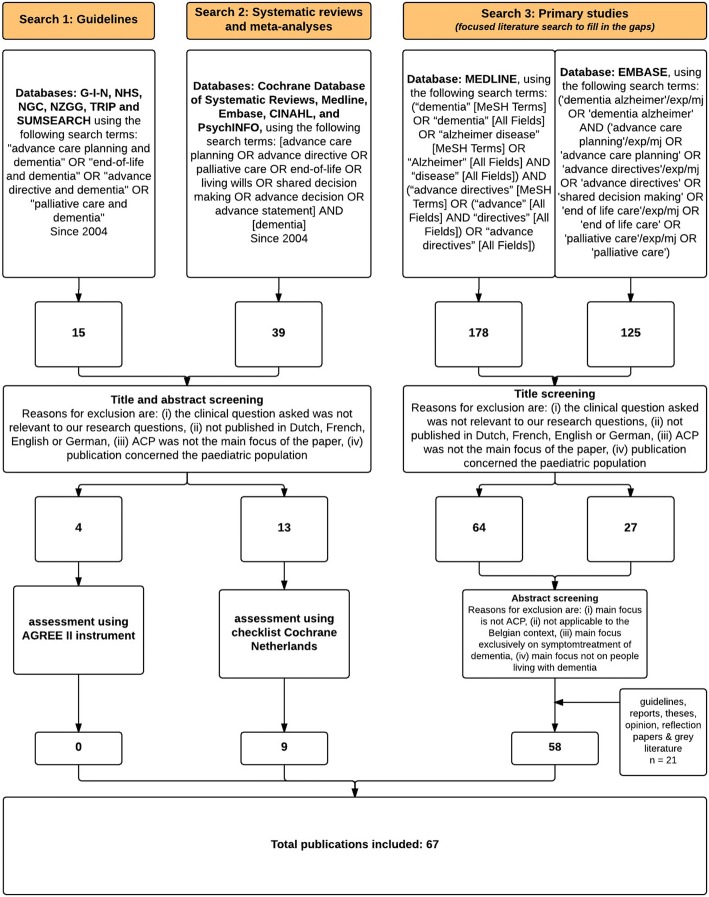
“The quality of the guidelines and systematic reviews and/or meta-analyses was independently checked by pairs of authors against the Appraisal of Guidelines Research and Evaluation (AGREE II) instrument [28] for guidelines and a checklist to assess the methodological quality of systematic reviews [29], as recommended b…”
MethodThe Clinical Course of Advanced Dementia.
Mitchell, S. L., Teno, J. M., Kiely, D. K., Shaffer, M. L., Jones, R. N., Prigerson, H. G., Volicer, L., Givens, J. L., & Hamel, M. B. (2009) · New England Journal of Medicine · doi:10.1056/nejmoa0902234 · Cited by 1,618 · cited 1×
“Because of the gradual loss of mental capacity in people living with dementia - more than in other diseases - they are often dependent on other people [81].”
BackgroundCommunication About Serious Illness Care Goals: A Review and Synthesis of Best Practices
Bernacki, R. E., & Block, S. D. (2014) · JAMA Internal Medicine · doi:10.1001/jamainternmed.2014.5271 · Cited by 1,422
van der Steen, J. T., Radbruch, L., Hertogh, C. M., de Boer, M. E., Hughes, J. C., Larkin, P., Francke, A. L., Jünger, S., Gove, D., Firth, P., et al. (2014) · Palliative Medicine · doi:10.1177/0269216313493685 · Cited by 997
The National Collaborating Centre for Mental Health
Kendall, T., & Pilling, S. (2004) · UCL Discovery (University College London) · Cited by 840
Efficacy of advance care planning: a systematic review and meta-analysis.
Houben, C. H. M., Spruit, M. A., Groenen, M. T. J., Wouters, E. F. M., & Janssen, D. J. A. (2014) · Journal of the American Medical Directors Association · doi:10.1016/j.jamda.2014.01.008 · Cited by 765 · cited 2×
“Nonetheless, evidence shows that ACP may be more effective in meeting a patient’s preferences when it entails more than just written documents and a conversation [39, 101].”
BackgroundPerson‐Centered Care: A Definition and Essential Elements
The American Geriatrics Society Expert Panel on Person‐Centered Care (2016) · Journal of the American Geriatrics Society · doi:10.1111/jgs.13866 · Cited by 723
The MacCAT-T: a clinical tool to assess patients' capacities to make treatment decisions
(1997) · Psychiatric Services · doi:10.1176/ps.48.11.1415 · Cited by 704 · cited 2×
“Available tools for making general clinical judgments of mental capacity are the MacArthur Competence Assessment Tool [54], the Vignette method [55] or the flow chart guide from Church et al.”
MethodEvidence for Improving Palliative Care at the End of Life: A Systematic Review
Lorenz, K. A., Lynn, J., Dy, S. M., Shugarman, L. R., Wilkinson, A., Mularski, R. A., Morton, S. C., Hughes, R. G., Hilton, L. K., Maglione, M., et al. (2008) · Annals of Internal Medicine · doi:10.7326/0003-4819-148-2-200801150-00010 · Cited by 591
Dementia: timely diagnosis and early intervention
Robinson, L., Tang, E., & Taylor, J.-P. (2015) · BMJ · doi:10.1136/bmj.h3029 · Cited by 503 · cited 6×
“Healthcare professionals should consider the following principles: Always assume full mental capacity [50, 51] and regard it as a fluctuating, not static, condition situated on a continuum [52].”
BackgroundInfluentialOncologists’ Attitudes Toward and Practices in Giving Bad News: An Exploratory Study
Baile, W. F., Lenzi, R., Parker, P. A., Buckman, R., & Cohen, L. (2002) · Journal of Clinical Oncology · doi:10.1200/jco.2002.08.004 · Cited by 366 · cited 1×
“Interactive sessions with role-plays, regular come-back sessions and a specific focus on attitudes towards talking about death and dying are also important [5, 25, 62, 95, 96].”
BackgroundClayton, J. M., Hancock, K. M., Butow, P. N., Tattersall, M. H. N., & Currow, D. C. (2007) · Medical Journal of Australia · doi:10.5694/j.1326-5377.2007.tb01100.x · Cited by 357
Sharp, T., Moran, E., Kuhn, I., & Barclay, S. (2013) · British Journal of General Practice · doi:10.3399/bjgp13x673667 · Cited by 286 · cited 5×
“16 Try to understand the whole person living with dementia; explore their life story, important values, norms, beliefs and preferences [17, 26] 1C”
BackgroundInfluentialThe Effects of Advance Care Planning Interventions on Nursing Home Residents: A Systematic Review
Martin, R. S., Hayes, B., Gregorevic, K., & Lim, W. K. (2016) · Journal of the American Medical Directors Association · doi:10.1016/j.jamda.2015.12.017 · Cited by 271 · cited 1×
“Older people themselves indicate that they find ACP valuable [17, 63] and there is an important body of literature suggesting that it has a positive impact on outcomes, ranging from family satisfaction with care to concordance between end-oflife care and patient wishes, especially for older people and those living in…”
BackgroundDying with Dementia: What We Know after More than a Decade of Research
van der Steen, J. T. (2010) · Journal of Alzheimer's Disease · doi:10.3233/jad-2010-100744 · Cited by 261 · cited 10×
“Learn to know who the person living with dementia is ‘as a whole person’: explore their life story and most important values, norms, ideas and preferences in order to understand who the person is, what the significant events in their life have been and what gives their life meaning [15, 25, 37, 45].”
BackgroundInfluentialFervers, B., Burgers, J. S., Voellinger, R., Brouwers, M., Browman, G. P., Graham, I. D., Harrison, M. B., Latreille, J., Mlika-Cabane, N., Paquet, L., et al. (2011) · BMJ Quality & Safety · doi:10.1136/bmjqs.2010.043257 · Cited by 260
Dixon, J., Karagiannidou, M., & Knapp, M. (2018) · Journal of Pain and Symptom Management · doi:10.1016/j.jpainsymman.2017.04.009 · Cited by 245 · cited 2×
“Difficulties implementing ACP in this population and the evaluation of “active ingredients” necessary to successfully change outcomes are not fully addressed in research and high-quality evaluation research such as randomised design studies are still rare [6, 8].”
BackgroundLovell, A., & Yates, P. (2014) · Palliative Medicine · doi:10.1177/0269216314531313 · Cited by 244
Robinson, L., Dickinson, C., Rousseau, N., Beyer, F., Clark, A., Hughes, J., Howel, D., & Exley, C. (2012) · Age and Ageing · doi:10.1093/ageing/afr148 · Cited by 221 · cited 3×
“Nonetheless, evidence shows that ACP may be more effective in meeting a patient’s preferences when it entails more than just written documents and a conversation [39, 101].”
BackgroundDening, K. H., Jones, L., & Sampson, E. L. (2013) · Palliative Medicine · doi:10.1177/0269216312464094 · Cited by 216 · cited 1×
“Evaluate the disease awareness of those close to the person and inform them of the expected disease trajectory and possible end-of-life decisions [15, 23, 43, 83, 84].”
BackgroundBélanger, E., Rodríguez, C., & Groleau, D. (2011) · Palliative Medicine · doi:10.1177/0269216310389348 · Cited by 209 · cited 4×
“4 Consider the person as an individual and consider their specific situation when starting ACP conversations [43, 49] 1C”
BackgroundInfluentialFactors Associated with Initiation of Advance Care Planning in Dementia: A Systematic Review
van der Steen, J. T., van Soest-Poortvliet, M. C., Hallie-Heierman, M., Onwuteaka-Philipsen, B. D., Deliens, L., de Boer, M. E., Van den Block, L., van Uden, N., Hertogh, C. M. P. M., & de Vet, H. C. W. (2014) · Journal of Alzheimer's Disease · doi:10.3233/jad-131967 · Cited by 204 · cited 5×
“Hence, when starting ACP conversations, one needs to consider the person as an individual and consider their specific situation [43, 49].”
BackgroundInfluentialAdvance Care Planning Beyond Advance Directives: Perspectives From Patients and Surrogates
McMahan, R. D., Knight, S. J., Fried, T. R., & Sudore, R. L. (2013) · Journal of Pain and Symptom Management · doi:10.1016/j.jpainsymman.2012.09.006 · Cited by 195 · cited 2×
“Often medical decisions with regard to the provision of antibiotics, hospital admission in case of urgent health problems, resuscitation and artificial fluids are relevant [2, 71, 72].”
BackgroundAdvance care planning for people with dementia: a review
Dening, K. H., Jones, L., & Sampson, E. L. (2011) · International Psychogeriatrics · doi:10.1017/s1041610211001608 · Cited by 177 · cited 7×
“Adequate support in practice is essential in making healthcare professionals confident about engaging in ACP [9, 20, 25, 93, 94].”
BackgroundInfluentialThe Evidence for Evidence-Based Practice Implementation
Titler, M. G. (2008) · Cited by 173
Living with dementia from the perspective of older people: Is it a positive story?
Steeman, E., Godderis, J., Grypdonck, M. H. F., Bal, N. D., & de Casterlé, B. D. (2007) · Aging & Mental Health · doi:10.1080/13607860600963364 · Cited by 168 · cited 2×
“In many cases the person with dementia does not experience his/her disease as something ‘negative’ in the way that the family does [82, 85].”
BackgroundSelf-citationPalliative care for people with dementia
Sampson, E. L. (2010) · British Medical Bulletin · doi:10.1093/bmb/ldq024 · Cited by 164 · cited 3×
“anticipation of a ‘response shift’ [15, 25, 40, 47, 70].”
BackgroundDifficult but necessary conversations — the case for advance care planning
Scott, I. A., Mitchell, G. K., J Reymond, E., & Daly, M. P. (2013) · Medical Journal of Australia · doi:10.5694/mja13.10158 · Cited by 163 · cited 7×
“2 Be alert for triggers and opportunities to start ACP and make use of any opportunity to talk about ACP [46, 47] 1C”
BackgroundInfluentialKe, L., Huang, X., O'Connor, M., & Lee, S. (2015) · Journal of Clinical Nursing · doi:10.1111/jocn.12853 · Cited by 145 · cited 2×
“Training should at least entail the basic principles of ACP, the legal, deontological and ethical framework, the importance and effectiveness of ACP, a discussion of the professionals’ own barriers to ACP, general communication techniques and active listening skills, documentation of advance directives, communication…”
BackgroundHoe, J., Katona, C., Orrell, M., & Livingston, G. (2007) · International Journal of Geriatric Psychiatry · doi:10.1002/gps.1786 · Cited by 141 · cited 4×
“In many cases the person with dementia does not experience his/her disease as something ‘negative’ in the way that the family does [82, 85].”
BackgroundInfluentialMold, J. W., Blake, G. H., & Becker, L. A. (1991) · PubMed · Cited by 138
Advance Care Planning in terminally ill and frail older persons
Piers, R. D., van Eechoud, I. J., Camp, S. V., Grypdonck, M. H. F., Deveugele, M., Verbeke, N. C., & Noortgate, N. J. V. D. (2011) · Patient Education and Counseling · doi:10.1016/j.pec.2011.07.008 · Cited by 137 · cited 7×
“Explore the person’s fears and concerns for the future and for the end of life [42, 63].”
BackgroundInfluentialSelf-citationSystematic review of recent dementia practice guidelines
Ngo, J., & Holroyd-Leduc, J. M. (2015) · Age and Ageing · doi:10.1093/ageing/afu143 · Cited by 134 · cited 8×
“16 Try to understand the whole person living with dementia; explore their life story, important values, norms, beliefs and preferences [17, 26] 1C”
BackgroundMethodInfluentialShibasaki, K., Yamada, S., Ouchi, Y., Akishita, M., & Ogawa, S. (2016) · Journal of the American Geriatrics Society · doi:10.1111/jgs.14214 · Cited by 134
The economic evidence for advance care planning: Systematic review of evidence
Dixon, J., Matosevic, T., & Knapp, M. (2015) · Palliative Medicine · doi:10.1177/0269216315586659 · Cited by 132 · cited 1×
“There is additional evidence, albeit of variable quality, which shows that ACP has the potential to reduce inappropriate hospital admissions and healthcare costs in nursing homes where end-of-life care spending is already high [39, 102].”
BackgroundVandervoort, A., den Block, L. V., van der Steen, J. T., Volicer, L., Stichele, R. V., Houttekier, D., & Deliëns, L. (2013) · Journal of the American Medical Directors Association · doi:10.1016/j.jamda.2013.01.016 · Cited by 130
Sampson, E. L., Jones, L., Thuné-Boyle, I. C., Kukkastenvehmas, R., King, M., Leurent, B., Tookman, A., & Blanchard, M. R. (2011) · Palliative Medicine · doi:10.1177/0269216310391691 · Cited by 129 · cited 4×
“30 Carefully weigh the wishes (expressed and/or written down earlier) against the current best interest of the person living with dementia, in consultation with those close to them and the healthcare professionals involved [83, 89, 90] 1C”
BackgroundInfluentialMeeussen, K., den Block, L. V., Echteld, M. A., Bossuyt, N., Bilsen, J. J. R., Casteren, V. V., Abarshi, E., Donker, G., Onwuteaka-Philipsen, B. D., & Deliëns, L. (2011) · Journal of Pain and Symptom Management · doi:10.1016/j.jpainsymman.2011.01.011 · Cited by 126 · cited 1×
“For example, only 22% of deceased nursing home residents in Belgium had an ACP conversation [13].”
BackgroundEbell, M. H., & Afonso, A. M. (2011) · Family Practice · doi:10.1093/fampra/cmr023 · Cited by 126
Dickinson, C., Bamford, C., Exley, C., Emmett, C., Hughes, J., & Robinson, L. (2013) · International Psychogeriatrics · doi:10.1017/s1041610213001531 · Cited by 126 · cited 1×
“This does not preclude ACP but does make ACP conversations more difficult [21, 57, 58].”
BackgroundGivens, J. L., Kiely, D. K., Carey, K., & Mitchell, S. L. (2009) · Journal of the American Geriatrics Society · doi:10.1111/j.1532-5415.2009.02304.x · Cited by 125 · cited 3×
“Often medical decisions with regard to the provision of antibiotics, hospital admission in case of urgent health problems, resuscitation and artificial fluids are relevant [2, 71, 72].”
BackgroundVandervoort, A., Houttekier, D., den Block, L. V., van der Steen, J. T., Stichele, R. V., & Deliëns, L. (2013) · Journal of Pain and Symptom Management · doi:10.1016/j.jpainsymman.2013.03.009 · Cited by 109 · cited 6×
“for a certain decision at a particular moment in time [11, 50, 51] 1C”
BackgroundInfluentialQualitative Evaluation of Advanced Care Planning in Early Dementia (ACP-ED)
Poppe, M., Burleigh, S., & Banerjee, S. (2013) · PLoS ONE · doi:10.1371/journal.pone.0060412 · Cited by 108 · cited 2×
“1 Start ACP as early as possible and integrate ACP into the daily care of people living with dementia [10, 37, 106] [11, 38–43] Specific key moments might be: - the period around the diagnosis of dementia [39, 44] - when discussing the general care plan - when changes occur in the health status, place of residence or…”
BackgroundBarriers to providing end-of-life care for people with dementia: a whole-system qualitative study
Dening, K. H., Greenish, W., Jones, L., Mandal, U., & Sampson, E. L. (2012) · BMJ Supportive & Palliative Care · doi:10.1136/bmjspcare-2011-000178 · Cited by 105 · cited 1×
“This does not preclude ACP but does make ACP conversations more difficult [21, 57, 58].”
BackgroundVandervoort, A., Houttekier, D., Vander Stichele, R., van der Steen, J. T., & Van den Block, L. (2014) · PLoS ONE · doi:10.1371/journal.pone.0091130 · Cited by 100
Surrogate Decision Makers' Understanding of Dementia Patients' Prior Wishes for End-of-Life Care
Black, B. S., Fogarty, L. A., Phillips, H., Finucane, T., Loreck, D. J., Baker, A., Blass, D. M., & Rabins, P. V. (2009) · Journal of Aging and Health · doi:10.1177/0898264309333316 · Cited by 100
Stewart, F., Goddard, C., Schiff, R., & Hall, S. (2011) · Age and Ageing · doi:10.1093/ageing/afr006 · Cited by 97
Antibiotics and Mortality in Patients with Lower Respiratory Infection and Advanced Dementia
van der Steen, J. T., Lane, P., Kowall, N. W., Knol, D. L., & Volicer, L. (2010) · Journal of the American Medical Directors Association · doi:10.1016/j.jamda.2010.07.001 · Cited by 94
Briggs, L. A. (2004) · Journal of Palliative Medicine · doi:10.1089/109662104773709503 · Cited by 92 · cited 1×
“The authors believe that the majority of publications only started defining ACP from 2004 onward as a more comprehensive process that is not limited to advance directives [27].”
BackgroundHirschman, K. B., Kapo, J. M., & Karlawish, J. H. (2006) · American Journal of Geriatric Psychiatry · doi:10.1097/01.jgp.0000203179.94036.69 · Cited by 88 · cited 1×
“However, even if disease awareness is lacking, it remains important to explore someone’s general values and concerns as part of the ACP process [9, 64].”
BackgroundIdentifying the Factors That Facilitate or Hinder Advance Planning by Persons With Dementia
Hirschman, K. B., Kapo, J. M., & Karlawish, J. H. T. (2008) · Alzheimer Disease & Associated Disorders · doi:10.1097/wad.0b013e318169d669 · Cited by 86 · cited 10×
“Explore whether the person would like to complete an advance directive or whether s/he has done so in the past [45].”
BackgroundInfluentialJuthani-Mehta, M., Malani, P. N., & Mitchell, S. L. (2015) · JAMA · doi:10.1001/jama.2015.13080 · Cited by 84
Incidence and predictors of advance care planning among persons with cognitive impairment.
Garand, L., Dew, M. A., Lingler, J. H., & DeKosky, S. T. (2011) · The American Journal of Geriatric Psychiatry · doi:10.1097/jgp.0b013e3181faebef · Cited by 84 · cited 2×
“15 ACP conversations can best be held on several occasions and over a longer period of time [38, 106, 45] and cover several different topics such as the broader values of the person, their experience of the present and their fears about the future and the end of life, their future care goals, specific advance decision…”
Backgroundvan Gijn, M. S., Frijns, D., van de Glind, E. M. M., C. van Munster, B., & Hamaker, M. E. (2014) · Age and Ageing · doi:10.1093/ageing/afu035 · Cited by 84
Vandervoort, A., den Block, L. V., van der Steen, J. T., Volicer, L., Stichele, R. V., Houttekier, D., & Deliëns, L. (2012) · VUBIR (Vrije Universiteit Brussel) · Cited by 84
Clayton, J. M., Hancock, K. M., Butow, P. N., Tattersall, M. H. N., & Currow, D. C. (2007) · The Medical Journal of Australia · doi:10.5694/j.1326-5377.2007.tb01375.x · Cited by 81
de Boer, M. E., Dröes, R., Jonker, C., Eefsting, J. A., & Hertogh, C. M. P. M. (2011) · Journal of the American Geriatrics Society · doi:10.1111/j.1532-5415.2011.03414.x · Cited by 80
Improving end-of-life care for people with dementia
Sampson, E. L., Burns, A. S., & Richards, M. A. (2011) · The British Journal of Psychiatry · doi:10.1192/bjp.bp.111.097030 · Cited by 72 · cited 1×
“Therefore it may be necessary to have these discussions in the earlier stages of dementia, when the person is still able to make decisions and express their values and preferences [3].”
BackgroundAdvance care planning in care homes for older people: an English perspective
Froggatt, K., Vaughan, S., Bernard, C., & Wild, D. (2009) · Palliative Medicine · doi:10.1177/0269216309103802 · Cited by 65 · cited 1×
“These training programmes should be organised for GPs, nurses and social care workers, as the skills they provide often function as an important facilitator between physician and patient [92, 97].”
BackgroundWhat Influences Individuals to Engage in Advance Care Planning?
Levi, B. H., Dellasega, C. A., Whitehead, M. M., & Green, M. J. (2010) · American Journal of Hospice and Palliative Medicine® · doi:10.1177/1049909109355280 · Cited by 65 · cited 4×
“ACP is not only about exploring the future, but includes a focus on the past and the present [4, 22, 63, 65].”
BackgroundInfluentialVandervoort, A., den Block, L. V., van der Steen, J. T., Stichele, R. V., Bilsen, J. J. R., & Deliëns, L. (2012) · International Psychogeriatrics · doi:10.1017/s1041610212000142 · Cited by 60 · cited 1×
“22 Involve family or significant others as early as possible in the ACP process and inform them about the role of a surrogate decision-maker [11, 26, 41] 1C”
BackgroundAlzheimer, dementia and the living will: a proposal
Burlá, C., Rego, G., & Nunes, R. (2014) · Medicine, Health Care and Philosophy · doi:10.1007/s11019-014-9559-8 · Cited by 56 · cited 4×
“It is important to have a trusting relationship with the person and those close to them, to have some knowledge of the disease trajectory [37, 48] and to communicate with the GP.”
BackgroundInfluentialAdvance care planning: concise evidence-based guidelines
Conroy, S., Fade, P., Fraser, A., & Schiff, R. (2009) · Clinical Medicine · doi:10.7861/clinmedicine.9-1-76 · Cited by 56
de Boer, M. E., Dröes, R.-M., Jonker, C., Eefsting, J. A., & Hertogh, C. M. P. M. (2012) · AJOB Primary Research · doi:10.1080/21507716.2011.636784 · Cited by 54 · cited 6×
“Explore the person’s fears and concerns for the future and for the end of life [42, 63].”
BackgroundInfluentialBeck, E.-R., McIlfatrick, S., Hasson, F., & Leavey, G. (2017) · Dementia · doi:10.1177/1471301215604997 · Cited by 54
Silvester, W., Fullam, R., Parslow, R., Lewis, V., Sjanta, R., Jackson, L., White, V., & Gilchrist, J. (2012) · BMJ Supportive & Palliative Care · doi:10.1136/bmjspcare-2012-000262 · Cited by 53
Bölenius, K., Brulin, C., & Graneheim, U. H. (2014) · Nursing Research and Practice · doi:10.1155/2014/538704 · Cited by 52
Ashton, S. E., Roe, B., Jack, B., & McClelland, B. (2016) · Dementia · doi:10.1177/1471301214548521 · Cited by 51
Reyniers, T., Houttekier, D., Cohen, J., Pasman, H. R. W., & Deliëns, L. (2014) · Palliative Medicine · doi:10.1177/0269216314522317 · Cited by 51 · cited 1×
“Nearly 97% of all physicians in Belgium are affiliated with peer review groups like these and are obliged to attend two out of four meetings per year for accreditation [36].”
BackgroundGeneral practitioners perceptions on advance care planning for patients living with dementia
Brazil, K., Carter, G., Galway, K., Watson, M., & van der Steen, J. T. (2015) · BMC Palliative Care · doi:10.1186/s12904-015-0019-x · Cited by 50 · cited 3×
“Be alert for triggers and opportunities to start ACP and make use of any opportunity to talk about ACP [46, 47].”
BackgroundReadiness of Chinese frail old age home residents towards end‐of‐life care decision making
Chan, H. Y. L., & Pang, S. M. (2011) · Journal of Clinical Nursing · doi:10.1111/j.1365-2702.2010.03670.x · Cited by 47 · cited 4×
“Lead the conversation but do not make it too phased, despite the fact that ACP is often described in such a way [59].”
BackgroundMethodInfluentialMeasuring End-of-Life Care and Outcomes in Residential Care/Assisted Living and Nursing Homes
Zimmerman, S. I., Cohen, L. W., van der Steen, J. T., Reed, D., van Soest‐Poortvliet, M. C., Hanson, L. C., & Sloane, P. D. (2014) · Journal of Pain and Symptom Management · doi:10.1016/j.jpainsymman.2014.08.009 · Cited by 44 · cited 3×
“Training should at least entail the basic principles of ACP, the legal, deontological and ethical framework, the importance and effectiveness of ACP, a discussion of the professionals’ own barriers to ACP, general communication techniques and active listening skills, documentation of advance directives, communication…”
BackgroundManaging identity in early-stage dementia: maintaining a sense of being valued
Steeman, E., Tournoy, J., Grypdonck, M., Godderis, J., & de Casterlé, B. D. (2011) · Ageing and Society · doi:10.1017/s0144686x11001115 · Cited by 44 · cited 2×
“anticipation of a ‘response shift’ [15, 25, 40, 47, 70].”
BackgroundSelf-citationAdvance care planning for people with dementia: benefits and challenges
Dempsey, D. (2013) · International Journal of Palliative Nursing · doi:10.12968/ijpn.2013.19.5.227 · Cited by 43
When Previously Expressed Wishes Conflict With Best Interests
Smith, A. K., Lo, B., & Sudore, R. (2013) · JAMA Internal Medicine · doi:10.1001/jamainternmed.2013.6053 · Cited by 42 · cited 3×
“Best Interest can support professionals and family in making these decisions, by asking questions such as: ‘is the clinical situation an emergency that allows no time for deliberation?’, ‘in view of the person’s values and goals, how likely is it that the benefits of the intervention outweigh the burdens?’, ‘to what d…”
BackgroundOutcomes of cardiac arrest in the nursing home: Destiny or futility?
Benkendorf, R., Swor, R. A., Jackson, R. E., Rivera–Rivera, E. J., & Demrick, A. (1997) · Prehospital Emergency Care · doi:10.1080/10903129708958790 · Cited by 40
The capacity to appoint a proxy and the possibility of concurrent proxy directives
Kim, S. Y. H., & Appelbaum, P. S. (2006) · Behavioral Sciences & the Law · doi:10.1002/bsl.702 · Cited by 39 · cited 4×
“Judge mental capacity taskspecifically as the capacity for making a certain decision at a particular moment [9, 50, 51].”
BackgroundInfluentialAdaptation of international evidence based clinical practice guidelines: The ADAPTE process
Attia, A. M. (2013) · Middle East Fertility Society Journal · doi:10.1016/j.mefs.2013.03.002 · Cited by 35
Discussions about treatment restrictions in chronic neurologic diseases
Seeber, A. A., Hijdra, A., Vermeulen, M., & Willems, D. L. (2012) · Neurology · doi:10.1212/wnl.0b013e318247cc56 · Cited by 34 · cited 1×
“It is important to have a trusting relationship with the person and those close to them, to have some knowledge of the disease trajectory [37, 48] and to communicate with the GP.”
BackgroundShanley, C., Whitmore, E., Khoo, A., Cartwright, C., Walker, A., & Cumming, R. G. (2009) · Australian Journal on Ageing · doi:10.1111/j.1741-6612.2009.00383.x · Cited by 34 · cited 2×
“the values, wishes or care goals of the person and, where relevant, details of an advance directive or legal representative [25, 88, 89].”
BackgroundSzafara, K. L., Kruse, R. L., Mehr, D. R., Ribbe, M. W., & van der Steen, J. T. (2011) · Journal of the American Medical Directors Association · doi:10.1016/j.jamda.2011.03.004 · Cited by 31
Palliative and end of life care for people with dementia: lessons for clinical commissioners
Raymond, M., Warner, A., Davies, N., Nicholas, N., Manthorpe, J., & Iliffe, S. (2013) · Primary Health Care Research & Development · doi:10.1017/s146342361300039x · Cited by 30 · cited 2×
“Interactive sessions with role-plays, regular come-back sessions and a specific focus on attitudes towards talking about death and dying are also important [5, 25, 62, 95, 96].”
BackgroundA Review of Advance Care Planning Programs in Long-Term Care Homes: Are They Dementia Friendly?
Wickson-Griffiths, A., Kaasalainen, S., Ploeg, J., & McAiney, C. (2014) · Nursing Research and Practice · doi:10.1155/2014/875897 · Cited by 30
Assessment of mental capacity: a flow chart guide
Church, M., & Watts, S. (2007) · Psychiatric Bulletin · doi:10.1192/pb.bp.106.011353 · Cited by 30
Advance Directives and the Severely Demented
Harvey, M. (2006) · The Journal of Medicine and Philosophy A Forum for Bioethics and Philosophy of Medicine · doi:10.1080/03605310500499195 · Cited by 30 · cited 3×
“30 Carefully weigh the wishes (expressed and/or written down earlier) against the current best interest of the person living with dementia, in consultation with those close to them and the healthcare professionals involved [83, 89, 90] 1C”
BackgroundGillick, M. R. (2012) · The Journal of Law Medicine & Ethics · doi:10.1111/j.1748-720x.2012.00645.x · Cited by 28 · cited 3×
“When end-of-life decisions need to be made, it is important to weigh carefully the wishes expressed and/or written down earlier against the current best interest of the person living with dementia, in consultation with the person’s close circle and the healthcare professionals involved [84, 90, 91].”
BackgroundAdvance care planning for institutionalised older people: an integrative review of the literature
Séchaud, L., Goulet, C., Morin, D., & Mazzocato, C. (2013) · International Journal of Older People Nursing · doi:10.1111/opn.12033 · Cited by 27 · cited 2×
“11 Explore who the significant people in their life are and who can be involved in the ACP conversations, and explore who can become their legal representative [47, 52, 61] 1C”
BackgroundWelie, S. P. K., Dute, J., Nys, H., & van Wijmen, F. C. B. (2004) · Health Policy · doi:10.1016/j.healthpol.2004.09.012 · Cited by 24 · cited 1×
“A formal clinical assessment (including substantive clinical and neuropsychological examinations [53]) is only necessary in case of doubt or disagreement between healthcare professionals and/or those close to the person, or when decisions can have far-reaching consequences, and should then preferably be performed by a…”
BackgroundEnd-of-Life Decision-Making and Terminal Sedation among Very Old Patients
Gendt, C. D., Bilsen, J. J. R., Mortier, F., Stichele, R. V., & Deliëns, L. (2008) · Gerontology · doi:10.1159/000163445 · Cited by 23
Maymone, M. B. C., Gan, S. D., & Bigby, M. E. (2014) · Journal of Investigative Dermatology · doi:10.1038/jid.2014.335 · Cited by 22 · cited 1×
“The quality of the guidelines and systematic reviews and/or meta-analyses was independently checked by pairs of authors against the Appraisal of Guidelines Research and Evaluation (AGREE II) instrument [28] for guidelines and a checklist to assess the methodological quality of systematic reviews [29], as recommended b…”
MethodNursing home policies regarding advance care planning in Flanders, Belgium
Gendt, C. D., Bilsen, J. J. R., Stichele, R. V., & Deliëns, L. (2009) · European Journal of Public Health · doi:10.1093/eurpub/ckp121 · Cited by 21
Berghmans, R. L. P. (2001) · Current Opinion in Psychiatry · doi:10.1097/00001504-200109000-00012 · Cited by 19
Advance Care Planning: An opportunity for person-centred care for people living with dementia
Exley, C., Bamford, C., Hughes, J. C., & Robinson, L. A. (2009) · Dementia · doi:10.1177/14713012090080030702 · Cited by 18
Penders, Y. W. H., Gilissen, J., Moreels, S., Deliëns, L., & den Block, L. V. (2017) · Palliative Medicine · doi:10.1177/0269216317720833 · Cited by 16 · cited 1×
“Further high-quality research, however, would strengthen the arguments for ACP becoming part of routine dementia care and provide information on how it can be carried out effectively and sustainably [103].”
BackgroundSelf-citationLemmens, C. (2012) · European Journal of Health Law · doi:10.1163/157180912x629117 · Cited by 12 · cited 2×
“When end-of-life decisions need to be made, it is important to weigh carefully the wishes expressed and/or written down earlier against the current best interest of the person living with dementia, in consultation with the person’s close circle and the healthcare professionals involved [84, 90, 91].”
BackgroundAdvance Care Planning for the end of life: an overview
Seymour, J., & Horne, G. (2010) · Advance Care Planning in End of Life Care · doi:10.1093/acprof:oso/9780199561636.003.0002 · Cited by 11 · cited 2×
“Difficulties implementing ACP in this population and the evaluation of “active ingredients” necessary to successfully change outcomes are not fully addressed in research and high-quality evaluation research such as randomised design studies are still rare [6, 8].”
BackgroundVellinga, A. (2006) · Data Archiving and Networked Services (DANS) · Cited by 8
Grade: een systeem om niveau van bewijskracht en graad van aanbeveling aan te geven
Royen, P. V. (2008) · Cited by 3
Royal College of Physicians of London
(1898) · BMJ · doi:10.1136/bmj.1.1936.395-a · Cited by 2
Een handreiking voor familie en naasten.
van der Steen, J. T., Hertogh, C. M. P. M., & de Graas, T. (2011) · Pure Amsterdam UMC · Cited by 1
(2014) · Journal of Investigative Dermatology · doi:10.1038/jid.2014.339 · Cited by 1
Research works printed but not linked: 4
- 5. Van Mechelen W. Vroegtijdige Zorgplanning. Richtlijn, Versie: 1.0. In: Federatie Palliatieve Zorg Vlaanderen vzw; 2014.
- 31. The ADAPTE Collaboration. The ADAPTE process: Resource Toolkit for Guideline Adaptation. Version 2.0. [Internet]. 2009. Available from: http:// www.g-i-n.net
- Silvester W, Fullam RS, Parslow RA, Lewis VJ, Sjanta R, Jackson L, et al. Quality of advance care planning policy and practice in residential aged care facilities in Australia. BMJ Support Palliat Care. 2012;bmjspcare:2012.
- 102. Rockville (MD): Agency for Healthcare Research and Quality (US); 2008 [cited 22 Aug 2016]. Available from: http://www.ncbi.nlm.nih.gov/books/NBK2659/
Cited by
Wendrich-van Dael, A., Bunn, F., Lynch, J., Pivodic, L., Van den Block, L., & Goodman, C. (2020) · International Journal of Nursing Studies · doi:10.1016/j.ijnurstu.2020.103576 · Cited by 192
Advance Care Planning in Serious Illness: A Narrative Review
Rosa, W. E., Izumi, S., Sullivan, D. R., Lakin, J. R., Rosenberg, A. R., Creutzfeldt, C. J., Lafond, D., Tjia, J., Cotter, V. T., Wallace, C. L., et al. (2022) · Journal of Pain and Symptom Management · doi:10.1016/j.jpainsymman.2022.08.012 · Cited by 155
Advance care planning in dementia: recommendations for healthcare professionals
Harrison Dening, K., Sampson, E. L., & De Vries, K. (2019) · Palliative Care: Research and Treatment · doi:10.1177/1178224219826579 · Cited by 114
Evenblij, K., ten Koppel, M., Smets, T., Widdershoven, G. A. M., Onwuteaka-Philipsen, B. D., & Pasman, H. R. W. (2019) · BMC Palliative Care · doi:10.1186/s12904-018-0388-z · Cited by 71
Huang, H., Lu, W.-R., Liu, C., & Chang, H. (2020) · PLoS ONE · doi:10.1371/journal.pone.0240684 · Cited by 66
Metadata
- Authors
- Piers, R., Albers, G., Gilissen, J., De Lepeleire, J., Steyaert, J., Van Mechelen, W., Steeman, E., Dillen, L., Vanden Berghe, P., & Van den Block, L.
- Affiliations
- Vrije Universiteit Brussel (BE)
- University of Antwerp (BE)
- KU Leuven (BE)
- Ghent University Hospital (BE)
- Corresponding author
- Gilissen, Joni
- Venue
- BMC Palliative Care
- Published
- 2018-06-21
- Volume
- 17
- Issue
- 1
- Pages
- 88-88
- ISSN
- 1472-684X (ISSN-L)
- PMC
- PMC6014017
- OpenAlex
- W2809287084
- Cited by
- 254
- References
- 103
- Citations by year
- 2026: 13 · 2025: 30 · 2024: 43 · 2023: 35 · 2022: 62 · 2021: 24 · 2020: 28 · 2019: 17 · 2018: 2
- FWCI
- 3.22
- Type
- journal article
- Language
- en
- Open access
- gold
- doi.org
- Licence
- cc-by
- creativecommons.org/licenses/by/4.0/ (tdm)
- Locations
- BMC Palliative Care (publishedVersion, cc-by)
- Europe PMC (PubMed Central) (publishedVersion, other-oa)
- PubMed Central (publishedVersion, cc-by)
- PubMed (publishedVersion)
- Ghent University Academic Bibliography (Ghent University) (submittedVersion, cc-by)
- Lirias (KU Leuven) (submittedVersion, other-oa)
- DOAJ (DOAJ: Directory of Open Access Journals) (submittedVersion, cc-by-sa)
- VUBIR (Vrije Universiteit Brussel) (submittedVersion)
- Funders
- Koning Boudewijnstichting
- Topics
- Health Sciences › Medicine › Public Health, Environmental and Occupational Health › Palliative Care and End-of-Life Issues
- Health Sciences › Medicine › Public Health, Environmental and Occupational Health › Ethics and bioethics in healthcare
- Health Sciences › Medicine › Psychiatry and Mental health › Dementia and Cognitive Impairment Research
- Keywords
- advance care planning, dementia, clinical guidelines, end-of-life care, decision-making capacity, family involvement, end-of-life decisions, health professions education
- MeSH terms
- Decision Making, Dementia, Health Planning Guidelines, Humans, Palliative Care, Surveys and Questionnaires, Advance Care Planning, Evidence-Based Practice
About these checks
Registry, retraction, Cites and statistics results are computed, not judged, with one exception: a printed reference that no index lists is read once by a model before it counts as a citation error. Claims are extracted by a model and kept only when their quote appears verbatim in the text; each cited source is then checked, with a model’s help, for whether it says what the claim relies on. Those verdicts can be wrong — read the claim’s quote and the cited source before relying on one.
Statistics and arithmetic are recomputed, not judged.
Confidence bands are shown only for fields calibrated on our annotated test set. None is calibrated yet, so no band is shown.
What counts as a claim ›How we measure confidence ›How we check this ›
Are you an author, or do you see a problem with this page? Request a review
Data sources
Bibliographic data: Semantic Scholar, OpenAlex, Crossref.
Contains information from the Semantic Scholar Academic Graph Datasets, made available under the ODC Attribution License (ODC-BY 1.0).
Semantic Scholar’s data is described in: Kinney, R., et al. (2023). The Semantic Scholar Open Data Platform. arXiv:2301.10140.
