

Medical, dental, and nursing students’ attitudes and knowledge towards artificial intelligence: a systematic review and meta-analysis
Open accessThe DOI matches its Crossref record; 49 of the 49 references it cites were found in a registry or an index; 13 of the 15 sources its claims cite were checked for support.
Abstract
Background: Nowadays, Artificial intelligence (AI) is one of the most popular topics that can be integrated into healthcare activities. Currently, AI is used in specialized fields such as radiology, pathology, and ophthalmology. Despite the advantages of AI, the fear of human labor being replaced by this technology makes some students reluctant to choose specific fields. This meta-analysis aims to investigate the knowledge and attitude of medical, dental, and nursing students and experts in this field about AI and its application. Method: This study was designed based on PRISMA guidelines. PubMed, Scopus, and Google Scholar databases were searched with relevant keywords. After study selection according to inclusion criteria, data of knowledge and attitude were extracted for meta-analysis. Result: Twenty-two studies included 8491 participants were included in this meta-analysis. The pooled analysis revealed a proportion of 0.44 (95%CI = [0.34, 0.54], P < 0.01, I2 = 98.95%) for knowledge. Moreover, the proportion of attitude was 0.65 (95%CI = [0.55, 0.75], P < 0.01, I2 = 99.47%). The studies did not show any publication bias with a symmetrical funnel plot. Conclusion: Average levels of knowledge indicate the necessity of including relevant educational programs in the student’s academic curriculum. The positive attitude of students promises the acceptance of AI technology. However, dealing with ethics education in AI and the aspects of human-AI cooperation are discussed. Future longitudinal studies could follow students to provide more data to guide how AI can be incorporated into education.
Overview
CoChat Summary
TL;DR
This systematic review and meta-analysis pooled 22 studies of medical, dental, and nursing students and found moderate knowledge but generally positive attitudes toward artificial intelligence. The authors conclude that AI education should be strengthened in health professions curricula, including ethics and human-AI collaboration.
Key findings
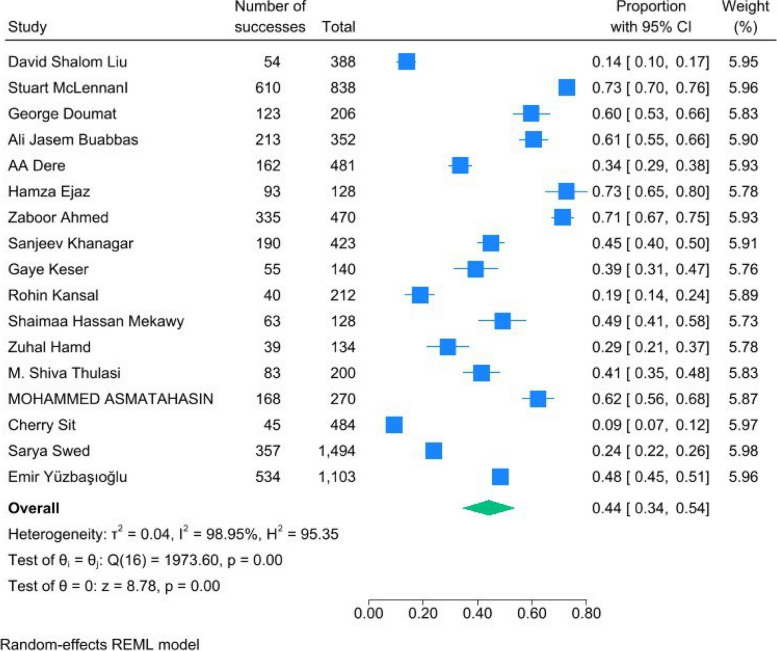
- Across 22 studies with 8491 participants, the pooled proportion for knowledge about AI was 0.44 (95% CI [0.34, 0.54], P < 0.01, I² = 98.95%).
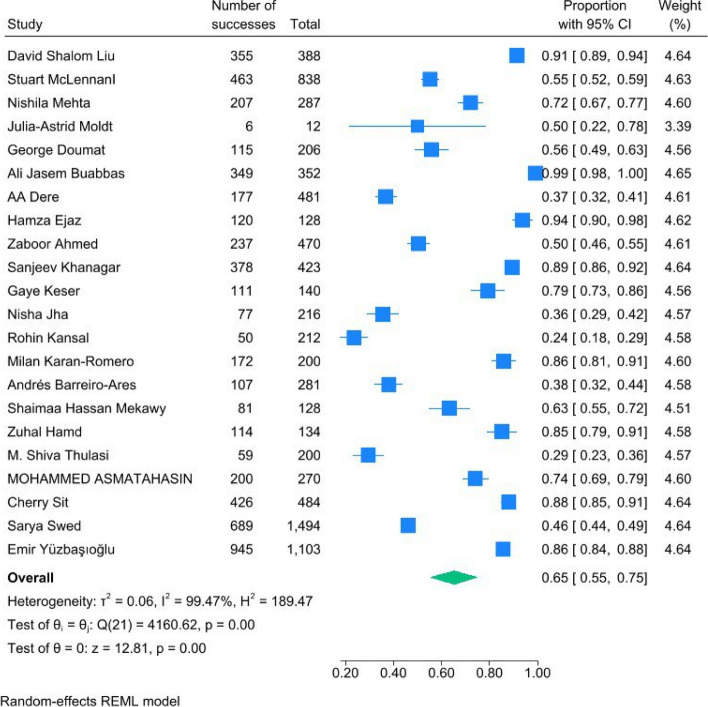
- The pooled proportion for positive attitude toward AI was 0.65 (95% CI [0.55, 0.75], P < 0.01, I² = 99.47%).
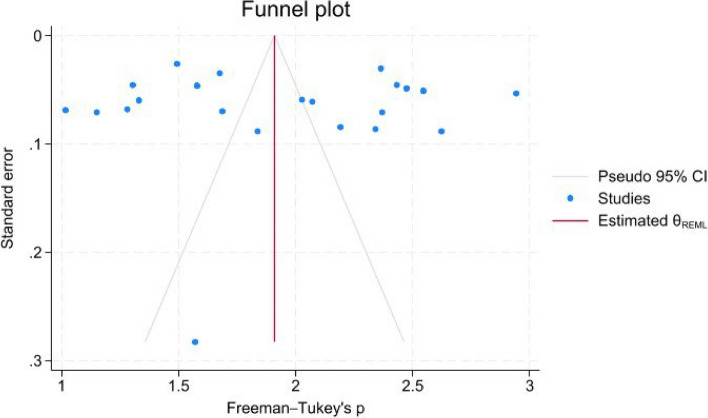
- Publication bias was assessed as absent: the funnel plot was symmetrical and Egger’s test gave P = 0.75.
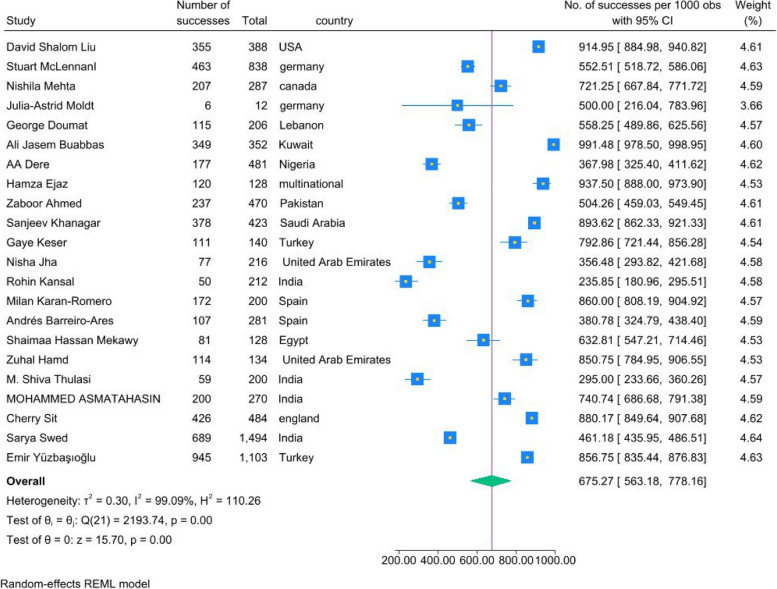
- Country comparisons suggested higher attitude rates in the U.S.A., Kuwait, Saudi Arabia, Turkey, and England, while higher knowledge levels were reported for Germany, Lebanon, Kuwait, and Pakistan.
Methods
- Systematic review and meta-analysis conducted according to PRISMA guidelines, registered on PROSPERO (CRD42024521006).
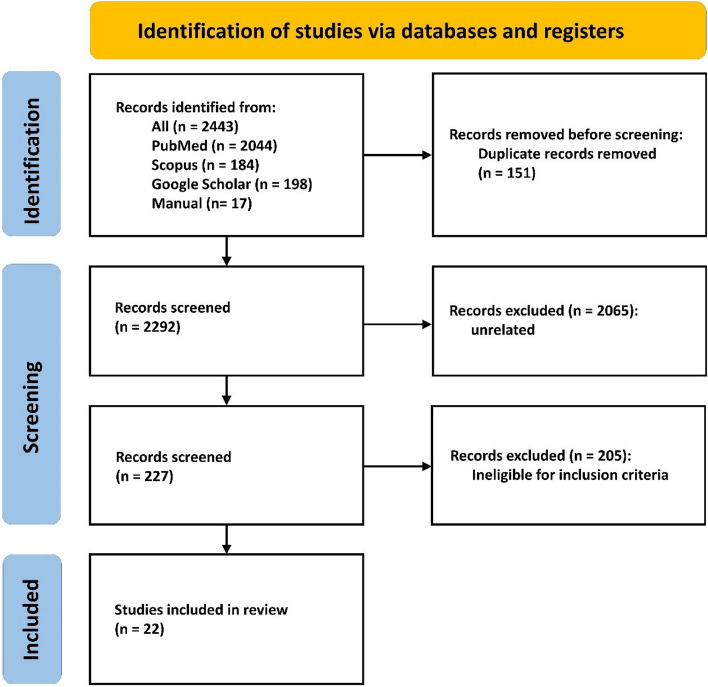
- PubMed/MEDLINE, Scopus, and Google Scholar were searched up to 12 September 2023; after screening, 22 original articles published from 2020–2023 were included, with 8491 participants and mean age 19–30 years.
- Data were analyzed in STATA 13.1 using pooled proportions with 95% confidence intervals, a random-effects model when I² > 50%, sensitivity analysis excluding one study at a time, and funnel plot plus Egger’s regression for publication bias.
Limitations
- The paper states that only English-language studies were included, most included studies used their own questionnaires to assess knowledge and attitudes, and there were not enough studies to extract skill results and perform a meta-analysis.
- The text makes evident severe heterogeneity for both knowledge (I² = 98.95%) and attitude (I² = 99.47%), and most included studies were cross-sectional, limiting causal or longitudinal inference.
- The discussion reports “24 studies with 5789 participants,” which conflicts with the abstract and results reporting 22 studies and 8491 participants; this inconsistency is evident in the text.
Model-written summary. Check it against the paper before relying on it.
Integrity signals
Registry
Cites
Statistics
Figures
Verification
Claims the paper makes
5 Valid · 1 Not valid · 2 Not checked · 39 Own results and interpretations
Some cited sources support this claim and some don’t — read each source’s verdict below.
In the paper
“This was also showed in previous studies that most of healthcare students have a positive attitude towards AI [19, 44–47].”
§ Medical, dental, and nursing students’ attitudes and knowledge towards artificial intelligence: a systematic review and meta-analysis > Discussion
What the sources say
- Partly supportedcites [19] Moldt J-A Chatbots for future docs: exploring medical students’ attitudes and knowledge towards artificial intelligence and medical chatbots Med Educ Online 2023 28 1 2182659 10.1080/10872981.2023.2182659 36855245 PMC9979998 sourceExperimental — accuracy not yet measured
The Results (Part 2: attitudes toward AI in medicine) say that a majority of the medical students supported AI use in various areas of medicine, and the Discussion describes their attitudes as generally optimistic. The study concerns medical students, however, so it does not establish that most healthcare students more broadly have a positive attitude. (LLM, conf=0.84)
- Partly supportedcites [44] AlZaabi A AlMaskari S AalAbdulsalam A Are physicians and medical students ready for artificial intelligence applications in healthcare? DIGITAL HEALTH 2023 9 20552076231152167 10.1177/20552076231152167 36762024 PMC9903019 sourceExperimental — accuracy not yet measured
The Results (Attitude; page unavailable) describe an overall positive attitude among participants and report that 62.5% of the medical students believed a specific AI application would be cost-effective. The Abstract Conclusion also says medical students showed positive attitudes. The study concerns medical students, not healthcare students generally, and does not establish that most students held a positive attitude toward AI overall. (LLM, conf=0.82)
- Partly supportedcites [45] Chen, M., et al., Acceptance of clinical artificial intelligence among physicians and medical students: A systematic review with cross-sectional survey. Frontiers in Medicine, 2022. 9. PMC9472134 36117979 sourceExperimental — accuracy not yet measured
The Results (Attitude and acceptability of clinical artificial intelligence; page not provided) report that more than 60% of respondents had an optimistic outlook in 38 of 45 studies of physicians and medical students. The paper supports a generally positive attitude toward clinical AI, but does not establish that most healthcare students specifically—rather than the combined physician-and-medical-student group—held that attitude, or extend the finding beyond clinical AI. (LLM, conf=0.84)
- Disputedcites [46] Gillissen A, Kochanek T, Zupanic M, Ehlers E. "Medical students’ perceptions towards digitization and artificial intelligence: a mixed-methods study." Healthcare. 2022;10(4):723. PMC9027704 35455898 sourceExperimental — accuracy not yet measured
The Discussion (section 5; no page number supplied) describes the overall AI-attitude score as “quite neutral,” with differences between student groups, rather than reporting that most students had a positive attitude toward AI. The Abstract says most medical students were positive toward digital applications in medicine, which is broader than AI and does not establish the claim about healthcare students generally. (LLM, conf=0.82)
Checked by a reasoning model — may be wrong.
- Partly supportedcites [47] Karan-Romero M, Salazar-Gamarra RE,Leon-Rios XA. Evaluation of attitudes and perceptions in students about the use of artificial intelligence in dentistry. Dent J. 2023;11(5):125. PMC10217404 37232776 sourceExperimental — accuracy not yet measured
The Results and Discussion report positive attitudes toward AI among most of the 200 dental students surveyed in Lima: 86% expected advances in dentistry and 90.5% were excited about its use. The study does not establish that most healthcare students generally hold a positive attitude; its own sample was limited to dental students. (LLM, conf=0.85)
plain- Asserted: passes — The authors put it forward as true.
- Checkable: passes — It can be checked against evidence.
- Load-bearing: passes — The paper’s conclusions depend on it.
- Based: passes — The paper gives a reason why it holds.
- Partly supported
Every source the paper cites for this claim was checked and supports it.
In the paper
“Other reason is that lack of knowledge is an important barrier to the use of AI [42].”
§ Medical, dental, and nursing students’ attitudes and knowledge towards artificial intelligence: a systematic review and meta-analysis > Discussion
What the sources say
- Supportedcites [42] Singh N Attitude, perception and barriers of dental professionals towards artificial intelligence J Oral Biol Craniofac Res 2023 13 5 584 588 10.1016/j.jobcr.2023.06.006 37576799 PMC10415790 source
The Results section reports that 66.7% of participants identified lack of awareness as a major barrier to using AI in dentistry. The Discussion likewise says a majority identified lack of awareness as a barrier. The claim's 'lack of knowledge' is a reasonable paraphrase in this context; the paper does not provide page numbers in the supplied passages. (LLM, conf=0.92)
plainstates a cause- Asserted: passes — The authors put it forward as true.
- Checkable: passes — It can be checked against evidence.
- Load-bearing: passes — The paper’s conclusions depend on it.
- Based: passes — The paper gives a reason why it holds.
- Supported
The cited sources support only part of this claim — read each source’s verdict below.
In the paper
“Studies show that students support this idea [40, 41].”
§ Medical, dental, and nursing students’ attitudes and knowledge towards artificial intelligence: a systematic review and meta-analysis > Discussion
What the sources say
- Partly supportedcites [40] Banerjee M The impact of artificial intelligence on clinical education: perceptions of postgraduate trainee doctors in London (UK) and recommendations for trainers BMC Med Educ 2021 21 1 429 10.1186/s12909-021-02870-x 34391424 PMC8364021 sourceExperimental — accuracy not yet measured
The Conclusions (page not provided) report overwhelming support for formal AI education, and the Discussion says trainee doctors had a willing appetite for it. The respondents were postgraduate trainee doctors, not students generally, so the claim extends the finding to a broader population. (LLM, conf=0.86)
- Supportedcites [41] Pupic N An evidence-based approach to artificial intelligence education for medical students: A systematic review PLOS Digit Health 2023 2 11 e0000255 10.1371/journal.pdig.0000255 38011214 PMC10681314 source
The Results report that 92% of participants in a reviewed study wanted AI-related teaching incorporated into the core medical curriculum. The Introduction also reports that 63.36% of medical students supported fundamental AI literacy training. (LLM, conf=0.94)
plain- Asserted: passes — The authors put it forward as true.
- Checkable: passes — It can be checked against evidence.
- Load-bearing: unclear — It is unclear whether the paper’s conclusions depend on it.
- Based: passes — The paper gives a reason why it holds.
- Partly supported
A result the paper reports from its own data — it cites no other source for it, so there is none to check. The quote shows it is in the paper.
In the paper
“A total of 17 studies had provided the knowledge data.”
§ Medical, dental, and nursing students’ attitudes and knowledge towards artificial intelligence: a systematic review and meta-analysis > Result > Knowledge
plain- Asserted: passes — The authors put it forward as true.
- Checkable: passes — It can be checked against evidence.
- Load-bearing: unclear — It is unclear whether the paper’s conclusions depend on it.
- Based: passes — The paper gives a reason why it holds.
A result the paper reports from its own data — it cites no other source for it, so there is none to check. The quote shows it is in the paper.
In the paper
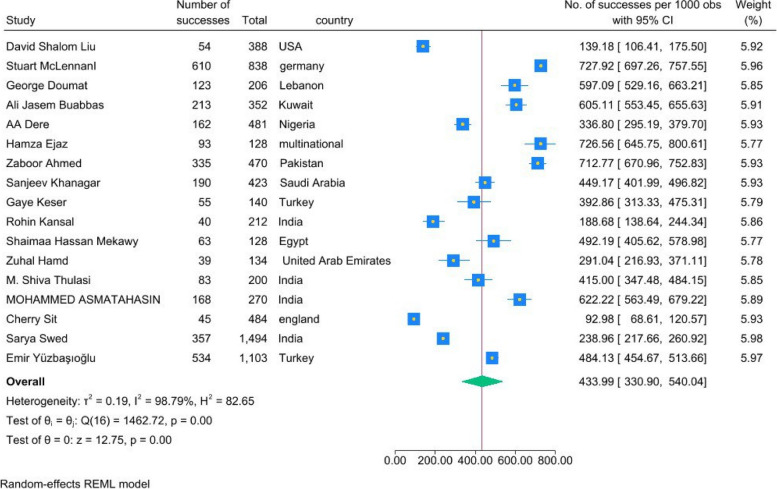
“The studies showed a high heterogeneity with an I2 of 98.95% and H2 of 93.35 (Fig. 4).”
§ Medical, dental, and nursing students’ attitudes and knowledge towards artificial intelligence: a systematic review and meta-analysis > Result > Knowledge
plain- Asserted: passes — The authors put it forward as true.
- Checkable: passes — It can be checked against evidence.
- Load-bearing: unclear — It is unclear whether the paper’s conclusions depend on it.
- Based: passes — The paper gives a reason why it holds.
19 more claims
Create a free account to see all 47 claims and every source verdict.
- It may state two separate claims as one. 9
- Probably not a substantial claim. 18
- The quote only partly states this claim. 1
Self-check
Percentages, sums and reported differences re-computed from the paper’s own numbers.
Each contradiction between two passages listed here was confirmed by an independent check.
Rated major: it would touch a result — a value a result rests on, reported and recomputed p-values on opposite sides of the significance level, two passages that conflict with no sign which is right, or a cited work retracted before this paper was published.
In the paper
§ Medical, dental, and nursing students’ attitudes and knowledge towards artificial intelligence: a systematic review and meta-analysis > Method > Criteria for selecting studies
“We didn't use any restrictions on date and language, but to make the search more specific, we restricted the keyword search to the title.”
§ Medical, dental, and nursing students’ attitudes and knowledge towards artificial intelligence: a systematic review and meta-analysis > Discussion > Strength and limitations
“We included only studies in English.”
Rated major: it would touch a result — a value a result rests on, reported and recomputed p-values on opposite sides of the significance level, two passages that conflict with no sign which is right, or a cited work retracted before this paper was published.
In the paper
§ Medical, dental, and nursing students’ attitudes and knowledge towards artificial intelligence: a systematic review and meta-analysis > Result > Knowledge
“Figure: Fig. 4 Forest plot of proportion of knowledge showed a significant effect of 0.65 (0.55, 0.75)”
§ Medical, dental, and nursing students’ attitudes and knowledge towards artificial intelligence: a systematic review and meta-analysis > Result > Knowledge
“The pooled analysis showed a proportion for knowledge of 0.44 (95%CI = [0.34, 0.54], P < 0.01).”
Rated major: it would touch a result — a value a result rests on, reported and recomputed p-values on opposite sides of the significance level, two passages that conflict with no sign which is right, or a cited work retracted before this paper was published.
In the paper
§ Medical, dental, and nursing students’ attitudes and knowledge towards artificial intelligence: a systematic review and meta-analysis > Discussion
“Across 24 studies with 5789 participants, students demonstrated moderate knowledge but generally positive attitudes towards AI.”
§ Medical, dental, and nursing students’ attitudes and knowledge towards artificial intelligence: a systematic review and meta-analysis > Result > Search strategy
“Finally, 22 studies were included in this systematic review and meta-analysis (Fig. 1).”
Rated minor: it would not touch a result — a value no result rests on, a p-value that stays on the same side of the significance level, or a conflict that is clerical, resolved elsewhere in the paper, or outside its own findings.
In the paper
§ Medical, dental, and nursing students’ attitudes and knowledge towards artificial intelligence: a systematic review and meta-analysis > Result > Attitude
“Figure: Fig. 2 Forest plot of proportion of attitude showed a significant effect of 0.44 (0.34, 0.54)”
§ Medical, dental, and nursing students’ attitudes and knowledge towards artificial intelligence: a systematic review and meta-analysis > Result > Attitude
“The proportion for attitude was 0.65 (95%CI = [0.55, 0.75], P < 0.01) according to 22 studies.”
Rated minor: it would not touch a result — a value no result rests on, a p-value that stays on the same side of the significance level, or a conflict that is clerical, resolved elsewhere in the paper, or outside its own findings.
In the paper
§ Medical, dental, and nursing students’ attitudes and knowledge towards artificial intelligence: a systematic review and meta-analysis > Result > Baseline characteristic
“Andrés Barreiro-Ares (2323) [29]”
§ Medical, dental, and nursing students’ attitudes and knowledge towards artificial intelligence: a systematic review and meta-analysis > Result > Baseline characteristic
“We included 22 original articles published from 2020–2023.”
1 more finding
Create a free account to see every finding of this check.
Citations
Cites
Deep learning for healthcare: review, opportunities and challenges
Miotto, R., Wang, F., Wang, S., Jiang, X., & Dudley, J. T. (2018) · Briefings in Bioinformatics · doi:10.1093/bib/bbx044 · Cited by 3,076 · cited 1×
“Recent advancements in computer and informatics technologies have paved the way for integrating of AI technologies, such as machine learning and deep learning, into healthcare information systems [8, 9].”
BackgroundHistory of artificial intelligence in medicine
Kaul, V., Enslin, S., & Gross, S. A. (2020) · Gastrointestinal Endoscopy · doi:10.1016/j.gie.2020.06.040 · Cited by 1,011 · cited 1×
“Integrating of AI in medicine was a gradual process [3] that began with the development of a software program that guided doctors on appropriate antimicrobial therapy [4].”
MethodXiao, C., Choi, E., & Sun, J. (2018) · Journal of the American Medical Informatics Association · doi:10.1093/jamia/ocy068 · Cited by 792 · cited 1×
“Recent advancements in computer and informatics technologies have paved the way for integrating of AI technologies, such as machine learning and deep learning, into healthcare information systems [8, 9].”
BackgroundMedical students' attitude towards artificial intelligence: a multicentre survey
Pinto dos Santos, D., Giese, D., Brodehl, S., Chon, S. H., Staab, W., Kleinert, R., Maintz, D., & Baeßler, B. (2019) · European Radiology · doi:10.1007/s00330-018-5601-1 · Cited by 754 · cited 1×
“Studies have indicated that medical students do not express significant concern or fear about being replaced by AI in their profession [15].”
BackgroundDeep Learning—A Technology With the Potential to Transform Health Care
Hinton, G. (2018) · JAMA · doi:10.1001/jama.2018.11100 · Cited by 667 · cited 1×
“AI is a trending topic that is currently at the forefront of technological advancements [5] and has the potential to influence the healthcare industry significantly [6].”
BackgroundCanadian Association of Radiologists White Paper on Artificial Intelligence in Radiology
Tang, A., Tam, R., Cadrin-Chênevert, A., Guest, W., Chong, J., Barfett, J., Chepelev, L., Cairns, R., Mitchell, J. R., Cicero, M. D., et al. (2018) · Canadian Association of Radiologists Journal · doi:10.1016/j.carj.2018.02.002 · Cited by 522 · cited 1×
“Radiological societies have also published white papers promoting their views [13, 14].”
BackgroundSit, C., Srinivasan, R., Amlani, A., Muthuswamy, K., Azam, A., Monzon, L., & Poon, D. S. (2020) · Insights into Imaging · doi:10.1186/s13244-019-0830-7 · Cited by 507 · cited 1×
“These studies were performed in several countries, including the U.S.A [18], Germany [19, 20], Lebanon [21], Pakistan [22], Canada [23], The U.K. [24], United Arab Emirates [25], Nigeria [26], Turkey [27, 28], Spain [29] Saudi Arabia [30], India [31–33], Egypt [34], Peru [35], Nepal [36], Kuwait…”
BackgroundShortliffe, E. H., Davis, R., Axline, S. G., Buchanan, B. G., Green, C. C., & Cohen, S. N. (1975) · Computers and Biomedical Research · doi:10.1016/0010-4809(75)90009-9 · Cited by 493 · cited 1×
“Integrating of AI in medicine was a gradual process [3] that began with the development of a software program that guided doctors on appropriate antimicrobial therapy [4].”
MethodGong, B., Nugent, J. P., Guest, W., Parker, W., Chang, P. J., Khosa, F., & Nicolaou, S. (2019) · Academic Radiology · doi:10.1016/j.acra.2018.10.007 · Cited by 325 · cited 1×
“However, some students may experience anxiety related to the possibility of being displaced by AI, which may discourage them from considering certain medical specialties [16].”
BackgroundChen, M., Zhang, B., Cai, Z., Seery, S., Gonzalez, M. J., Ali, N. M., Ren, R., Qiao, Y., Xue, P., & Jiang, Y. (2022) · Frontiers in Medicine · doi:10.3389/fmed.2022.990604 · Cited by 258
Research works printed but not linked: 6
- Russell S, Norvig P. Artificial Intelligence, A Modern Approach. Second Edition. 2003. p 1081.
- Shapiro, S.C., Artificial intelligence (AI), in Encyclopedia of Computer Science. 2003, John Wiley and Sons Ltd. p. 89–93.
- Khanagar S Knowledge, attitudes, and perceptions of dental students towards artificial intelligence in Riyadh Saudi Arabia Med Sci 2021 25 114 1857 1867
- Karan-Romero M, Salazar-Gamarra RE,Leon-Rios XA. Evaluation of attitudes and perceptions in students about the use of artificial intelligence in dentistry. Dent J. 2023;11(5):125. PMC10217404 37232776 · DOI · Paper page
- Liu DS Perceptions of US Medical Students on Artificial Intelligence in Medicine: Mixed Methods Survey Study JMIR Med Educ 2022 8 4 e38325 10.2196/38325 36269641 PMC9636531 · DOI · Paper page
- McLennan S German medical students´ views regarding artificial intelligence in medicine: A cross-sectional survey PLOS Digit Health 2022 1 10 e0000114 10.1371/journal.pdig.0000114 36812635 PMC9931368 · DOI · Paper page
Cited by
Items 101–138 of 138
Marley, J., Pedlow, K., Martin, S., Cathcart, J. M., Johnston, S. J., Welch, H., & McFadden, S. L. (2026) · Digital Health · doi:10.1177/20552076261437342 · Cited by 4
“23,24 Integrating AI education at all levels of AHP education and as part of continuing professional development frameworks could improve awareness of utility, efficacy, bias, ethical considerations and critical appraisal.”
Artificial Intelligence in Medical Education: An Umbrella Review
Ghazi, S. E., Charef, N., Qarmiche, N., Bourkhime, H., Omari, M., Fakir, S. E., & Otmani, N. (2026) · Lecture notes in networks and systems · doi:10.1007/978-3-032-18894-6_9
Qazi, S., Khan, I. A., Waleed, M., Ahmad, A., Qarni, O., Abdullah, M. W., Jehan, A. M., Khattak, A., Aamir, A., & Mazhar, M. A. (2026) · Medical Education Online · doi:10.1080/10872981.2026.2673253 · Cited by 1
“Students reported moderate knowledge, favourable attitudes, and limited AI use alongside prominent institutional barriers, a pattern consistent with a 2024 systematic review and meta-analysis of AI attitudes among medical, dental, and nursing students [25].”
Tunç, H., ÖKCÜ, Ö., Turan, O., & Koç, Y. (2026) · Journal of Health and Allied Sciences NU · doi:10.25259/jhasnu_263_2025
Zeng, Q., Zhu, J., Yang, C. R., Hu, J., & Huang, X. (2026) · Frontiers in Public Health · doi:10.3389/fpubh.2026.1786184
“However, most previous studies (4, 5, 10) have predominantly relied on calculating total scores from traditional instruments, such as literacy scales or attitude scales, and utilized mean comparisons or descriptive statistics to examine the current state of nurses’ AI perceptions.”
Chen, L., Liu, W., & Zhou, Y. (2026) · Frontiers in Public Health · doi:10.3389/fpubh.2026.1824962 · Cited by 2
Zhong, Q., Lei, L., 李天兰, Lam, L. T.-M., & Wan, L. (2026) · Acta Psychologica · doi:10.1016/j.actpsy.2026.107209 · Cited by 1
Attitudes, perceptions and awareness of Artificial Intelligence among dental students in Turkiye
Tartuk, B. K., & Tartuk, G. A. (2026) · Journal of Health Sciences and Medicine · doi:10.32322/jhsm.1896644
TIBBİ YAPAY ZEKÂ HAZIRBULUNUŞLUĞUNUN İNCELENMESİ: BİTLİS EREN ÜNİVERSİTESİ ÖRNEĞİ
Beştaş, M., & Okdayan, S. (2026) · Uluslararası Batı Karadeniz Sosyal ve Beşeri Bilimler Dergisi · doi:10.46452/baksoder.1911708
Younis, M. B., Ayed, A., Alqudah, H., Alkhalaileh, M. A., Habahbeh, A., Khaled, M. H. B., & Abu-Shennar, J. A. (2026) · The Open Nursing Journal · doi:10.2174/0118744346487793260629120139
Al-Dabbas, Z., Khandakji, L., Al-Shatarat, N., Alqaisiah, H., Ibrahim, Y., Awed, T., Baik, H., Dawoud, M., Ali, R. A.-H., Telfah, Z., et al. (2026) · PLOS Digital Health · doi:10.1371/journal.pdig.0001285 · Cited by 1
“A systematic review and meta analysis across medical, dental, and nursing student populations found generally positive attitudes alongside only moderate knowledge, implying an enthusiasm preparedness gap that may influence how confidently future clinicians communicate about AI to patients [22].”
Nasr, A. M., Soliman, A. M., Hendawi, N. E., Othman, A. A., Abozed, H. W., & Wahba, N. M. I. (2026) · Nurse Education Today · doi:10.1016/j.nedt.2026.107277
Gen Z perceptions of AI-supported prescription fulfillment in community pharmacy
Morrison, B., & Boyle, T. A. (2026) · Canadian Pharmacists Journal / Revue des Pharmaciens du Canada · doi:10.3138/cpj-25-0114
Zhang, W., Han, J., Han, X., Xu, H., Wang, L., Lin, T., Tan, P., Peng, Z., & Zheng, X. (2026) · JMIR Medical Education · doi:10.2196/89411 · Cited by 3
“This broad pattern of favorable but uneven perceptions is directionally consistent with prior review-level evidence in health professions learners [12-14].”
InfluentialBerdida, D. J. E., Alhudaib, N. A. A., Grande, R. A. N., Alsharafi, S. A., Agunod, C. D., Santos, A. M., Alanazi, H. H., Al‐Moteri, M., Alqarawi, N., & Alasqah, I. (2026) · Journal of Nursing Management · doi:10.1155/jonm/5338801
Iglesias-Pérez, H. D., Gallo-Sánchez, M. E., López-Loachamin, A. S., Paccha-Melgar, D. A., Rivadeneira-Ahuilar, J. D., Luna-Ponce, N. I., Gallo-Achig, M. A., Pillajo-Villalba, D. M., Campuzano-Donoso, M., & Reytor-González, C. (2026) · Frontiers in Oral Health · doi:10.3389/froh.2026.1878692 · Cited by 1
“Workforce preparedness is also incomplete: among medical, dental, and nursing students, pooled proportions for AI knowledge and attitudes were 0.44 and 0.65, respectively, across 22 studies and 8,491 participants (11).”
InfluentialHu, X., Guo, J., Li, X., et al. (2026) · doi:10.2196/preprints.108007
Yang, X., Xiao, Y., Liu, D., Sun, Y., Zhou, X., Yao, J., Zhang, B., Yang, L., Guo, W., Tang, W., et al. (2026) · Research Square · doi:10.21203/rs.3.rs-10258686/v1
Zeng, Q., Zhang, S., Hu, J., Wu, Y., Yang, M., & Hu, Y. (2026) · Frontiers in Public Health · doi:10.3389/fpubh.2026.1918134 · Cited by 3
AI literacy and ethical attitudes toward AI in medical students: evidence from a structural model
Ülkü, H. H., & Torun, F. (2026) · BMC Medical Education · doi:10.1186/s12909-026-10142-9
“Current studies indicate a lack of research examining the ethical dimension of AI and students’ attitudes toward this issue at a sufficient level [16–18].”
Naser, A. Y., Almasri, A. A., & Alsharif, A. A. (2026) · Digital Health · doi:10.1177/20552076261479039
Hamonari, N. H. (2026) · International Journal of Dentistry · doi:10.1155/ijod/8981807
Yapay zekâ çağında diyetisyen adayı olmak: tutumlar, endişeler ve eğitim ihtiyaçları
Baykan, H. K. (2026) · Mersin üniversitesi sağlık bilimleri dergisi/Mersin üniversitesi sağlık bilimleri dergisi · doi:10.26559/mersinsbd.1836080
Kaplan, T., Wang, K., Bichsel, O., Bacchi, S., & Gheihman, G. (2026) · Neurology Education · doi:10.1212/ne9.0000000000200351
Hantash, R. O. A., Ayyad, M., Younis, M. A., & Habash, F. S. (2026) · Open Journal of Stomatology · doi:10.4236/ojst.2026.169018
Johnson, B. B., Osei-Yeboah, J., Klutsey, E. E., Agbo, I. A., Lokpo, S. Y., Duneeh, R. V., Asem, L., Gyamfua, D. P. P., Kwadzokpui, P. K., Bohli, J. K., et al. (2026) · Journal of Umm Al-Qura University for Medical Sciences · doi:10.1007/s44361-026-00053-1 · Cited by 1
Canbay, F. Ç., Çitil, E. T., & Amanak, K. (2026) · Research Square · doi:10.21203/rs.3.rs-10411366/v1
Effect of Nursing Students’ Artificial Intelligence Self-Efficacy on Innovative Behavior
Zhang, Y., Li, C., Lv, S., Shang, Q., Wang, J., & Li, N. (2026) · Nurse Educator · doi:10.1097/nne.0000000000002321
Yıldırım, D., Kocatepe, V., Özdemir, S. T., Türkmenoğlu, A., & Önsüz, Ü. (2026) · Journal of Evaluation in Clinical Practice · doi:10.1111/jep.70606
Neelamana, S. K., Dirie, A. M., Saju, D., Prasad, V. G., John, D., & Jose, W. M. (2026) · Frontiers in Education · doi:10.3389/feduc.2026.1925011
AI-Aware but AI-Unprepared: The Curriculum Gap at a Health Sciences Higher Institution in UgandaPreprint
SHARIF, K., & Mayimuna, N. (2026) · Research Square · doi:10.21203/rs.3.rs-11092233/v1
Olson, J., Travo, A., Olla, P., Campbell, Y. N., Diaz, V. J., & Davis, R. W. (2026) · Nurse Education Today · doi:10.1016/j.nedt.2026.107437
Mete, E., Benli, R. K., KILIÇ, B. B., & YAŞARER, Ö. (2026) · Work · doi:10.1177/10519815261492327
Işık, M. A., & Şat, S. Ö. (2026) · Ordu Üniversitesi Hemşirelik Çalışmaları Dergisi · doi:10.38108/ouhcd.1622974
Contemporary AI attitude scale research: a systematic mapping review and bibliometric analysis
Olpak, Y. Z. (2026) · Frontiers in Psychology · doi:10.3389/fpsyg.2026.1956889
Ayanda, A. O. (2026) · International Journal of Applied Resilience and Sustainability · doi:10.70593/deepsci.0203003
“Conversational AI, large language models, and adaptive learning technologies are applied in these applications to answer questions, explain concepts, give hints, and walk students through assignments [77-79].”
Metadata
- Authors
- Amiri, H., Peiravi, S., rezazadeh shojaee, S. S., Rouhparvarzamin, M., Nateghi, M. N., Etemadi, M. H., ShojaeiBaghini, M., Musaie, F., Anvari, M. H., & Asadi Anar, M.
- Affiliations
- Arak University of Medical Sciences (IR)
- Mashhad University of Medical Sciences (IR)
- Shahid Sadoughi University of Medical Sciences and Health Services (IR)
- Isfahan University of Medical Sciences (IR)
- Kerman University of Medical Sciences (IR)
- Islamic Azad University, Tehran (IR)
- National University of Malaysia (MY)
- ORCID
- Venue
- BMC Medical Education
- Published
- 2024-04-15
- Volume
- 24
- Issue
- 1
- Pages
- 412-412
- ISSN
- 1472-6920 (ISSN-L)
- PMC
- PMC11017500
- OpenAlex
- W4394820105
- Semantic Scholar
- 3080807300183fa33c4cc5399ecfc771ed53141e
- Cited by
- 149
- References
- 48
- Citations by year
- 2026: 85 · 2025: 49 · 2024: 14
- FWCI
- 3.37
- Type
- journal article
- Language
- en
- Open access
- gold
- doi.org
- Licence
- cc-by
- creativecommons.org/licenses/by/4.0 (tdm)
- creativecommons.org/licenses/by/4.0 (vor)
- Locations
- BMC Medical Education (publishedVersion, cc-by)
- PubMed Central (publishedVersion, cc-by)
- PubMed (publishedVersion)
- DOAJ (DOAJ: Directory of Open Access Journals) (submittedVersion)
- Topics
- Health Sciences › Medicine › Health Informatics › Artificial Intelligence in Healthcare and Education
- Social Sciences › Education › Artificial Intelligence in Education
- Physical Sciences › Computer Science › Artificial Intelligence › Artificial Intelligence Applications
- Keywords
- artificial intelligence, medical students, dental students, nursing students, student attitudes, student knowledge, artificial intelligence in healthcare, artificial intelligence in education, curriculum integration, ethics education, human-AI collaboration
- MeSH terms
- Artificial Intelligence, Attitude of Health Personnel, Humans, Health Knowledge, Attitudes, Practice, Students, Dental, Students, Medical, Students, Nursing
About these checks
Registry, retraction, Cites and statistics results are computed, not judged, with one exception: a printed reference that no index lists is read once by a model before it counts as a citation error. Claims are extracted by a model and kept only when their quote appears verbatim in the text; each cited source is then checked, with a model’s help, for whether it says what the claim relies on. Those verdicts can be wrong — read the claim’s quote and the cited source before relying on one.
The claim verdicts this report counts are experimental: their accuracy is not yet measured.
A language model drew the claims from the paper on 2026-10-10, under version 3 of the claim definition (model deepseek-v4.1-flash, prompt extract-v3).
A second model labelled each claim on 2026-10-10 (model jev-1.13-20260917, definition revision gold-guideline-v0.2).
Cited sources are checked with a language model’s help (gpt-6-sol).
Statistics and arithmetic are recomputed, not judged.
Confidence bands are shown only for fields calibrated on our annotated test set. None is calibrated yet, so no band is shown.
What counts as a claim ›How we measure confidence ›How we check this ›
Are you an author, or do you see a problem with this page? Request a review
Data sources
Bibliographic data: Semantic Scholar, OpenAlex, Crossref.
Contains information from the Semantic Scholar Academic Graph Datasets, made available under the ODC Attribution License (ODC-BY 1.0).
Semantic Scholar’s data is described in: Kinney, R., et al. (2023). The Semantic Scholar Open Data Platform. arXiv:2301.10140.
