

Medical, dental, and nursing students’ attitudes and knowledge towards artificial intelligence: a systematic review and meta-analysis
Open accessThe DOI matches its Crossref record; 49 of the 49 references it cites were found in a registry or an index; 13 of the 15 sources its claims cite were checked for support.
Abstract
Background: Nowadays, Artificial intelligence (AI) is one of the most popular topics that can be integrated into healthcare activities. Currently, AI is used in specialized fields such as radiology, pathology, and ophthalmology. Despite the advantages of AI, the fear of human labor being replaced by this technology makes some students reluctant to choose specific fields. This meta-analysis aims to investigate the knowledge and attitude of medical, dental, and nursing students and experts in this field about AI and its application. Method: This study was designed based on PRISMA guidelines. PubMed, Scopus, and Google Scholar databases were searched with relevant keywords. After study selection according to inclusion criteria, data of knowledge and attitude were extracted for meta-analysis. Result: Twenty-two studies included 8491 participants were included in this meta-analysis. The pooled analysis revealed a proportion of 0.44 (95%CI = [0.34, 0.54], P < 0.01, I2 = 98.95%) for knowledge. Moreover, the proportion of attitude was 0.65 (95%CI = [0.55, 0.75], P < 0.01, I2 = 99.47%). The studies did not show any publication bias with a symmetrical funnel plot. Conclusion: Average levels of knowledge indicate the necessity of including relevant educational programs in the student’s academic curriculum. The positive attitude of students promises the acceptance of AI technology. However, dealing with ethics education in AI and the aspects of human-AI cooperation are discussed. Future longitudinal studies could follow students to provide more data to guide how AI can be incorporated into education.
Overview
CoChat Summary
TL;DR
This systematic review and meta-analysis pooled 22 studies of medical, dental, and nursing students and found moderate knowledge but generally positive attitudes toward artificial intelligence. The authors conclude that AI education should be strengthened in health professions curricula, including ethics and human-AI collaboration.
Key findings
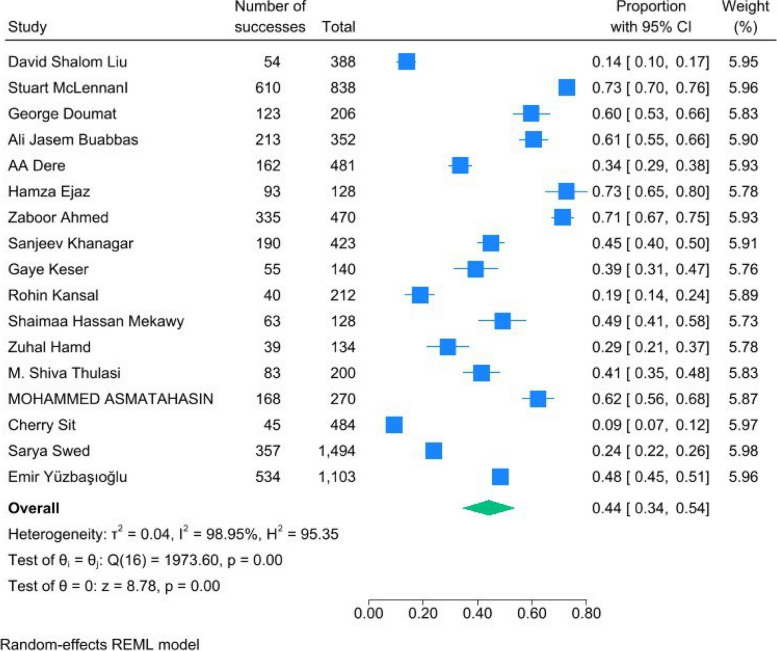
- Across 22 studies with 8491 participants, the pooled proportion for knowledge about AI was 0.44 (95% CI [0.34, 0.54], P < 0.01, I² = 98.95%).
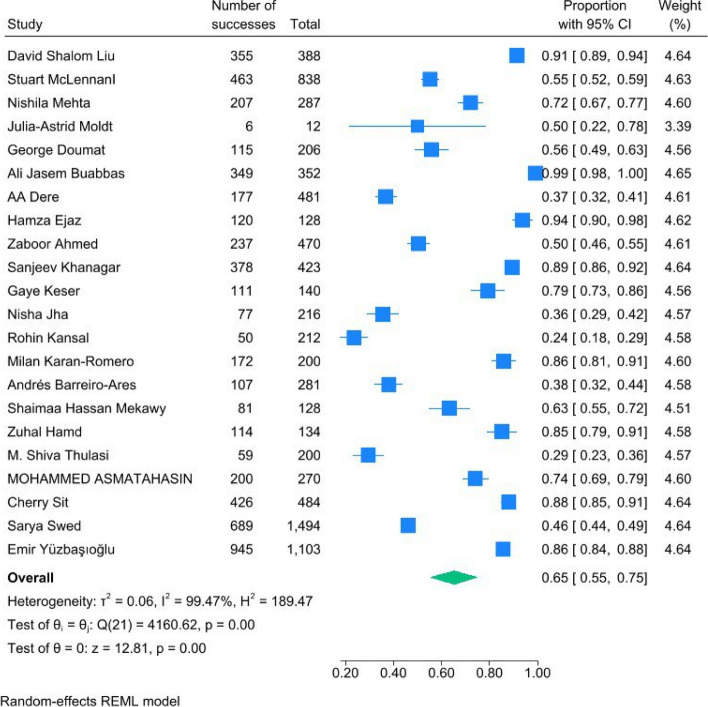
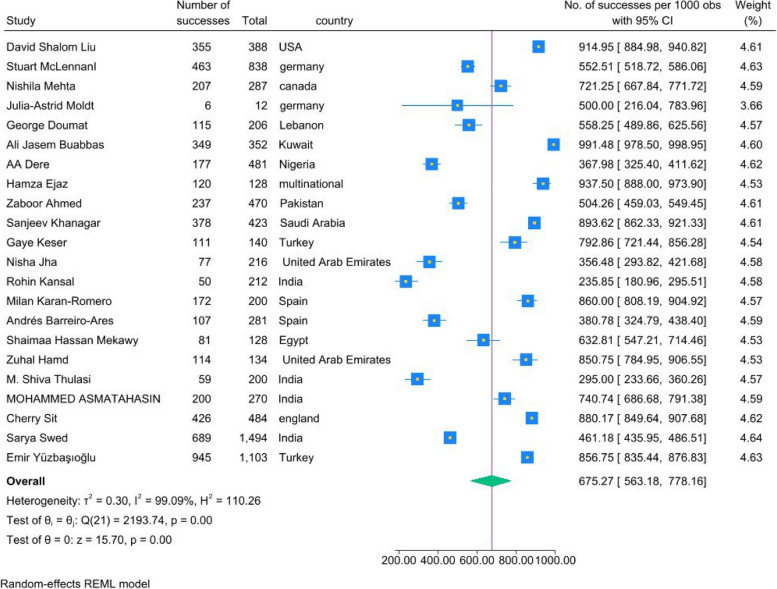
- The pooled proportion for positive attitude toward AI was 0.65 (95% CI [0.55, 0.75], P < 0.01, I² = 99.47%).
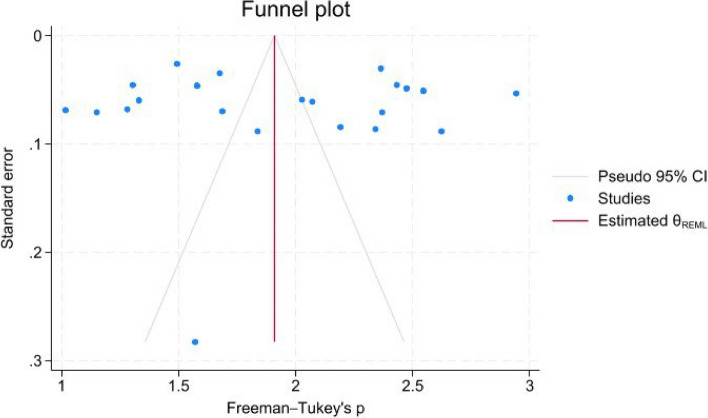
- Publication bias was assessed as absent: the funnel plot was symmetrical and Egger’s test gave P = 0.75.
- Country comparisons suggested higher attitude rates in the U.S.A., Kuwait, Saudi Arabia, Turkey, and England, while higher knowledge levels were reported for Germany, Lebanon, Kuwait, and Pakistan.
Methods
- Systematic review and meta-analysis conducted according to PRISMA guidelines, registered on PROSPERO (CRD42024521006).
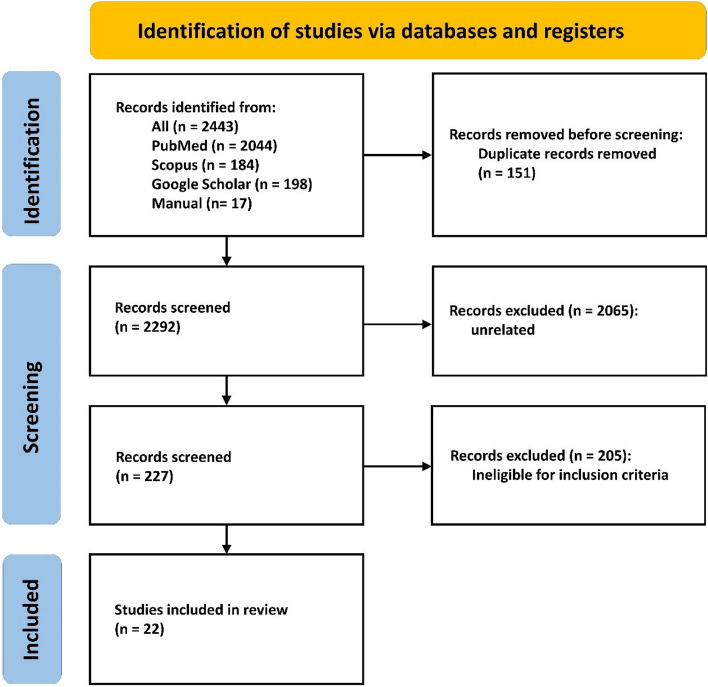
- PubMed/MEDLINE, Scopus, and Google Scholar were searched up to 12 September 2023; after screening, 22 original articles published from 2020–2023 were included, with 8491 participants and mean age 19–30 years.
- Data were analyzed in STATA 13.1 using pooled proportions with 95% confidence intervals, a random-effects model when I² > 50%, sensitivity analysis excluding one study at a time, and funnel plot plus Egger’s regression for publication bias.
Limitations
- The paper states that only English-language studies were included, most included studies used their own questionnaires to assess knowledge and attitudes, and there were not enough studies to extract skill results and perform a meta-analysis.
- The text makes evident severe heterogeneity for both knowledge (I² = 98.95%) and attitude (I² = 99.47%), and most included studies were cross-sectional, limiting causal or longitudinal inference.
- The discussion reports “24 studies with 5789 participants,” which conflicts with the abstract and results reporting 22 studies and 8491 participants; this inconsistency is evident in the text.
Model-written summary. Check it against the paper before relying on it.
Integrity signals
Registry
Cites
Statistics
Figures
Verification
Claims the paper makes
5 Valid · 1 Not valid · 2 Not checked · 39 Own results and interpretations
Some cited sources support this claim and some don’t — read each source’s verdict below.
In the paper
“This was also showed in previous studies that most of healthcare students have a positive attitude towards AI [19, 44–47].”
§ Medical, dental, and nursing students’ attitudes and knowledge towards artificial intelligence: a systematic review and meta-analysis > Discussion
What the sources say
- Partly supportedcites [19] Moldt J-A Chatbots for future docs: exploring medical students’ attitudes and knowledge towards artificial intelligence and medical chatbots Med Educ Online 2023 28 1 2182659 10.1080/10872981.2023.2182659 36855245 PMC9979998 sourceExperimental — accuracy not yet measured
The Results (Part 2: attitudes toward AI in medicine) say that a majority of the medical students supported AI use in various areas of medicine, and the Discussion describes their attitudes as generally optimistic. The study concerns medical students, however, so it does not establish that most healthcare students more broadly have a positive attitude. (LLM, conf=0.84)
- Partly supportedcites [44] AlZaabi A AlMaskari S AalAbdulsalam A Are physicians and medical students ready for artificial intelligence applications in healthcare? DIGITAL HEALTH 2023 9 20552076231152167 10.1177/20552076231152167 36762024 PMC9903019 sourceExperimental — accuracy not yet measured
The Results (Attitude; page unavailable) describe an overall positive attitude among participants and report that 62.5% of the medical students believed a specific AI application would be cost-effective. The Abstract Conclusion also says medical students showed positive attitudes. The study concerns medical students, not healthcare students generally, and does not establish that most students held a positive attitude toward AI overall. (LLM, conf=0.82)
- Partly supportedcites [45] Chen, M., et al., Acceptance of clinical artificial intelligence among physicians and medical students: A systematic review with cross-sectional survey. Frontiers in Medicine, 2022. 9. PMC9472134 36117979 sourceExperimental — accuracy not yet measured
The Results (Attitude and acceptability of clinical artificial intelligence; page not provided) report that more than 60% of respondents had an optimistic outlook in 38 of 45 studies of physicians and medical students. The paper supports a generally positive attitude toward clinical AI, but does not establish that most healthcare students specifically—rather than the combined physician-and-medical-student group—held that attitude, or extend the finding beyond clinical AI. (LLM, conf=0.84)
- Disputedcites [46] Gillissen A, Kochanek T, Zupanic M, Ehlers E. "Medical students’ perceptions towards digitization and artificial intelligence: a mixed-methods study." Healthcare. 2022;10(4):723. PMC9027704 35455898 sourceExperimental — accuracy not yet measured
The Discussion (section 5; no page number supplied) describes the overall AI-attitude score as “quite neutral,” with differences between student groups, rather than reporting that most students had a positive attitude toward AI. The Abstract says most medical students were positive toward digital applications in medicine, which is broader than AI and does not establish the claim about healthcare students generally. (LLM, conf=0.82)
Checked by a reasoning model — may be wrong.
- Partly supportedcites [47] Karan-Romero M, Salazar-Gamarra RE,Leon-Rios XA. Evaluation of attitudes and perceptions in students about the use of artificial intelligence in dentistry. Dent J. 2023;11(5):125. PMC10217404 37232776 sourceExperimental — accuracy not yet measured
The Results and Discussion report positive attitudes toward AI among most of the 200 dental students surveyed in Lima: 86% expected advances in dentistry and 90.5% were excited about its use. The study does not establish that most healthcare students generally hold a positive attitude; its own sample was limited to dental students. (LLM, conf=0.85)
plain- Asserted: passes — The authors put it forward as true.
- Checkable: passes — It can be checked against evidence.
- Load-bearing: passes — The paper’s conclusions depend on it.
- Based: passes — The paper gives a reason why it holds.
- Partly supported
Every source the paper cites for this claim was checked and supports it.
In the paper
“Other reason is that lack of knowledge is an important barrier to the use of AI [42].”
§ Medical, dental, and nursing students’ attitudes and knowledge towards artificial intelligence: a systematic review and meta-analysis > Discussion
What the sources say
- Supportedcites [42] Singh N Attitude, perception and barriers of dental professionals towards artificial intelligence J Oral Biol Craniofac Res 2023 13 5 584 588 10.1016/j.jobcr.2023.06.006 37576799 PMC10415790 source
The Results section reports that 66.7% of participants identified lack of awareness as a major barrier to using AI in dentistry. The Discussion likewise says a majority identified lack of awareness as a barrier. The claim's 'lack of knowledge' is a reasonable paraphrase in this context; the paper does not provide page numbers in the supplied passages. (LLM, conf=0.92)
plainstates a cause- Asserted: passes — The authors put it forward as true.
- Checkable: passes — It can be checked against evidence.
- Load-bearing: passes — The paper’s conclusions depend on it.
- Based: passes — The paper gives a reason why it holds.
- Supported
The cited sources support only part of this claim — read each source’s verdict below.
In the paper
“Studies show that students support this idea [40, 41].”
§ Medical, dental, and nursing students’ attitudes and knowledge towards artificial intelligence: a systematic review and meta-analysis > Discussion
What the sources say
- Partly supportedcites [40] Banerjee M The impact of artificial intelligence on clinical education: perceptions of postgraduate trainee doctors in London (UK) and recommendations for trainers BMC Med Educ 2021 21 1 429 10.1186/s12909-021-02870-x 34391424 PMC8364021 sourceExperimental — accuracy not yet measured
The Conclusions (page not provided) report overwhelming support for formal AI education, and the Discussion says trainee doctors had a willing appetite for it. The respondents were postgraduate trainee doctors, not students generally, so the claim extends the finding to a broader population. (LLM, conf=0.86)
- Supportedcites [41] Pupic N An evidence-based approach to artificial intelligence education for medical students: A systematic review PLOS Digit Health 2023 2 11 e0000255 10.1371/journal.pdig.0000255 38011214 PMC10681314 source
The Results report that 92% of participants in a reviewed study wanted AI-related teaching incorporated into the core medical curriculum. The Introduction also reports that 63.36% of medical students supported fundamental AI literacy training. (LLM, conf=0.94)
plain- Asserted: passes — The authors put it forward as true.
- Checkable: passes — It can be checked against evidence.
- Load-bearing: unclear — It is unclear whether the paper’s conclusions depend on it.
- Based: passes — The paper gives a reason why it holds.
- Partly supported
A result the paper reports from its own data — it cites no other source for it, so there is none to check. The quote shows it is in the paper.
In the paper
“A total of 17 studies had provided the knowledge data.”
§ Medical, dental, and nursing students’ attitudes and knowledge towards artificial intelligence: a systematic review and meta-analysis > Result > Knowledge
plain- Asserted: passes — The authors put it forward as true.
- Checkable: passes — It can be checked against evidence.
- Load-bearing: unclear — It is unclear whether the paper’s conclusions depend on it.
- Based: passes — The paper gives a reason why it holds.
A result the paper reports from its own data — it cites no other source for it, so there is none to check. The quote shows it is in the paper.
In the paper
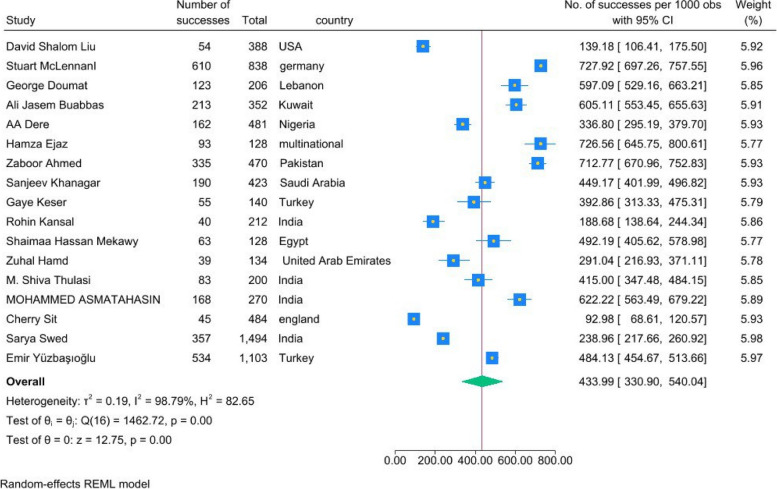
“The studies showed a high heterogeneity with an I2 of 98.95% and H2 of 93.35 (Fig. 4).”
§ Medical, dental, and nursing students’ attitudes and knowledge towards artificial intelligence: a systematic review and meta-analysis > Result > Knowledge
plain- Asserted: passes — The authors put it forward as true.
- Checkable: passes — It can be checked against evidence.
- Load-bearing: unclear — It is unclear whether the paper’s conclusions depend on it.
- Based: passes — The paper gives a reason why it holds.
19 more claims
Create a free account to see all 47 claims and every source verdict.
- It may state two separate claims as one. 9
- Probably not a substantial claim. 18
- The quote only partly states this claim. 1
Self-check
Percentages, sums and reported differences re-computed from the paper’s own numbers.
Each contradiction between two passages listed here was confirmed by an independent check.
Rated major: it would touch a result — a value a result rests on, reported and recomputed p-values on opposite sides of the significance level, two passages that conflict with no sign which is right, or a cited work retracted before this paper was published.
In the paper
§ Medical, dental, and nursing students’ attitudes and knowledge towards artificial intelligence: a systematic review and meta-analysis > Method > Criteria for selecting studies
“We didn't use any restrictions on date and language, but to make the search more specific, we restricted the keyword search to the title.”
§ Medical, dental, and nursing students’ attitudes and knowledge towards artificial intelligence: a systematic review and meta-analysis > Discussion > Strength and limitations
“We included only studies in English.”
Rated major: it would touch a result — a value a result rests on, reported and recomputed p-values on opposite sides of the significance level, two passages that conflict with no sign which is right, or a cited work retracted before this paper was published.
In the paper
§ Medical, dental, and nursing students’ attitudes and knowledge towards artificial intelligence: a systematic review and meta-analysis > Result > Knowledge
“Figure: Fig. 4 Forest plot of proportion of knowledge showed a significant effect of 0.65 (0.55, 0.75)”
§ Medical, dental, and nursing students’ attitudes and knowledge towards artificial intelligence: a systematic review and meta-analysis > Result > Knowledge
“The pooled analysis showed a proportion for knowledge of 0.44 (95%CI = [0.34, 0.54], P < 0.01).”
Rated major: it would touch a result — a value a result rests on, reported and recomputed p-values on opposite sides of the significance level, two passages that conflict with no sign which is right, or a cited work retracted before this paper was published.
In the paper
§ Medical, dental, and nursing students’ attitudes and knowledge towards artificial intelligence: a systematic review and meta-analysis > Discussion
“Across 24 studies with 5789 participants, students demonstrated moderate knowledge but generally positive attitudes towards AI.”
§ Medical, dental, and nursing students’ attitudes and knowledge towards artificial intelligence: a systematic review and meta-analysis > Result > Search strategy
“Finally, 22 studies were included in this systematic review and meta-analysis (Fig. 1).”
Rated minor: it would not touch a result — a value no result rests on, a p-value that stays on the same side of the significance level, or a conflict that is clerical, resolved elsewhere in the paper, or outside its own findings.
In the paper
§ Medical, dental, and nursing students’ attitudes and knowledge towards artificial intelligence: a systematic review and meta-analysis > Result > Attitude
“Figure: Fig. 2 Forest plot of proportion of attitude showed a significant effect of 0.44 (0.34, 0.54)”
§ Medical, dental, and nursing students’ attitudes and knowledge towards artificial intelligence: a systematic review and meta-analysis > Result > Attitude
“The proportion for attitude was 0.65 (95%CI = [0.55, 0.75], P < 0.01) according to 22 studies.”
Rated minor: it would not touch a result — a value no result rests on, a p-value that stays on the same side of the significance level, or a conflict that is clerical, resolved elsewhere in the paper, or outside its own findings.
In the paper
§ Medical, dental, and nursing students’ attitudes and knowledge towards artificial intelligence: a systematic review and meta-analysis > Result > Baseline characteristic
“Andrés Barreiro-Ares (2323) [29]”
§ Medical, dental, and nursing students’ attitudes and knowledge towards artificial intelligence: a systematic review and meta-analysis > Result > Baseline characteristic
“We included 22 original articles published from 2020–2023.”
1 more finding
Create a free account to see every finding of this check.
Citations
Cites
Deep learning for healthcare: review, opportunities and challenges
Miotto, R., Wang, F., Wang, S., Jiang, X., & Dudley, J. T. (2018) · Briefings in Bioinformatics · doi:10.1093/bib/bbx044 · Cited by 3,076 · cited 1×
“Recent advancements in computer and informatics technologies have paved the way for integrating of AI technologies, such as machine learning and deep learning, into healthcare information systems [8, 9].”
BackgroundHistory of artificial intelligence in medicine
Kaul, V., Enslin, S., & Gross, S. A. (2020) · Gastrointestinal Endoscopy · doi:10.1016/j.gie.2020.06.040 · Cited by 1,011 · cited 1×
“Integrating of AI in medicine was a gradual process [3] that began with the development of a software program that guided doctors on appropriate antimicrobial therapy [4].”
MethodXiao, C., Choi, E., & Sun, J. (2018) · Journal of the American Medical Informatics Association · doi:10.1093/jamia/ocy068 · Cited by 792 · cited 1×
“Recent advancements in computer and informatics technologies have paved the way for integrating of AI technologies, such as machine learning and deep learning, into healthcare information systems [8, 9].”
BackgroundMedical students' attitude towards artificial intelligence: a multicentre survey
Pinto dos Santos, D., Giese, D., Brodehl, S., Chon, S. H., Staab, W., Kleinert, R., Maintz, D., & Baeßler, B. (2019) · European Radiology · doi:10.1007/s00330-018-5601-1 · Cited by 754 · cited 1×
“Studies have indicated that medical students do not express significant concern or fear about being replaced by AI in their profession [15].”
BackgroundDeep Learning—A Technology With the Potential to Transform Health Care
Hinton, G. (2018) · JAMA · doi:10.1001/jama.2018.11100 · Cited by 667 · cited 1×
“AI is a trending topic that is currently at the forefront of technological advancements [5] and has the potential to influence the healthcare industry significantly [6].”
BackgroundCanadian Association of Radiologists White Paper on Artificial Intelligence in Radiology
Tang, A., Tam, R., Cadrin-Chênevert, A., Guest, W., Chong, J., Barfett, J., Chepelev, L., Cairns, R., Mitchell, J. R., Cicero, M. D., et al. (2018) · Canadian Association of Radiologists Journal · doi:10.1016/j.carj.2018.02.002 · Cited by 522 · cited 1×
“Radiological societies have also published white papers promoting their views [13, 14].”
BackgroundSit, C., Srinivasan, R., Amlani, A., Muthuswamy, K., Azam, A., Monzon, L., & Poon, D. S. (2020) · Insights into Imaging · doi:10.1186/s13244-019-0830-7 · Cited by 507 · cited 1×
“These studies were performed in several countries, including the U.S.A [18], Germany [19, 20], Lebanon [21], Pakistan [22], Canada [23], The U.K. [24], United Arab Emirates [25], Nigeria [26], Turkey [27, 28], Spain [29] Saudi Arabia [30], India [31–33], Egypt [34], Peru [35], Nepal [36], Kuwait…”
BackgroundShortliffe, E. H., Davis, R., Axline, S. G., Buchanan, B. G., Green, C. C., & Cohen, S. N. (1975) · Computers and Biomedical Research · doi:10.1016/0010-4809(75)90009-9 · Cited by 493 · cited 1×
“Integrating of AI in medicine was a gradual process [3] that began with the development of a software program that guided doctors on appropriate antimicrobial therapy [4].”
MethodGong, B., Nugent, J. P., Guest, W., Parker, W., Chang, P. J., Khosa, F., & Nicolaou, S. (2019) · Academic Radiology · doi:10.1016/j.acra.2018.10.007 · Cited by 325 · cited 1×
“However, some students may experience anxiety related to the possibility of being displaced by AI, which may discourage them from considering certain medical specialties [16].”
BackgroundChen, M., Zhang, B., Cai, Z., Seery, S., Gonzalez, M. J., Ali, N. M., Ren, R., Qiao, Y., Xue, P., & Jiang, Y. (2022) · Frontiers in Medicine · doi:10.3389/fmed.2022.990604 · Cited by 258
Research works printed but not linked: 6
- Russell S, Norvig P. Artificial Intelligence, A Modern Approach. Second Edition. 2003. p 1081.
- Shapiro, S.C., Artificial intelligence (AI), in Encyclopedia of Computer Science. 2003, John Wiley and Sons Ltd. p. 89–93.
- Khanagar S Knowledge, attitudes, and perceptions of dental students towards artificial intelligence in Riyadh Saudi Arabia Med Sci 2021 25 114 1857 1867
- Karan-Romero M, Salazar-Gamarra RE,Leon-Rios XA. Evaluation of attitudes and perceptions in students about the use of artificial intelligence in dentistry. Dent J. 2023;11(5):125. PMC10217404 37232776 · DOI · Paper page
- Liu DS Perceptions of US Medical Students on Artificial Intelligence in Medicine: Mixed Methods Survey Study JMIR Med Educ 2022 8 4 e38325 10.2196/38325 36269641 PMC9636531 · DOI · Paper page
- McLennan S German medical students´ views regarding artificial intelligence in medicine: A cross-sectional survey PLOS Digit Health 2022 1 10 e0000114 10.1371/journal.pdig.0000114 36812635 PMC9931368 · DOI · Paper page
Cited by
El-Sayed, B. K. M., El-Sayed, A. A. I., Alsenany, S. A., & Asal, M. G. R. (2025) · Nurse Education in Practice · doi:10.1016/j.nepr.2024.104208 · Cited by 108
Chen, C., Hu, W., & Wei, X. (2024) · Interactive Learning Environments · doi:10.1080/10494820.2024.2440877 · Cited by 154
“…2022), teachers ’ acceptance of AI (An et al., 2023; Park et al., 2023; Seo et al., 2024), and students ’ continuous use intentions of AI tools (Amiri et al., 2024; Jin et al., 2023; Ma & Lei, 2024), the current study uniquely explores the relationship between AI anxiety, AI self-efficacy, and…”
Wang, X., Fei, F., Wei, J., Huang, M., Xiang, F., Tu, J., Wang, Y., & Gan, J. (2024) · Frontiers in Public Health · doi:10.3389/fpubh.2024.1433252 · Cited by 133
“In addition, predictive models based on machine learning algorithms have also been used to predict unplanned readmissions of patients and diseases to reduce healthcare-related costs through active intervention (22, 23).”
BackgroundMethodNursing students' attitudes and literacy toward artificial intelligence: a cross-sectional study
Akca Sumengen, A., Ozcevik Subasi, D., & Cakir, G. N. (2025) · Teaching and Learning in Nursing · doi:10.1016/j.teln.2024.10.022 · Cited by 62
Yalcinkaya, T., Ergin, E., & Yucel, S. C. (2024) · Teaching and Learning in Nursing · doi:10.1016/j.teln.2024.07.008 · Cited by 57
Almagharbeh, W. T., Alfanash, H. A., Alnawafleh, K. A., Alasmari, A. A., Alsaraireh, F. A., Dreidi, M. M., & Nashwan, A. J. (2025) · BMC Nursing · doi:10.1186/s12912-024-02658-6 · Cited by 58
Rony, M. K. K., Akter, K., Nesa, L., Islam, M. T., Johra, F. T., Akter, F., Uddin, M. J., Begum, J., Noor, M. A., Ahmad, S., et al. (2024) · Heliyon · doi:10.1016/j.heliyon.2024.e40775 · Cited by 92
“This openness is an encouraging sign for the future of AI in healthcare, as positive attitudes are pivotal for seamless technology integration [50].”
Derakhshanian, S., Wood, L., & Arruzza, E. (2024) · Health Science Reports · doi:10.1002/hsr2.2289 · Cited by 44
Boztepe, H., Akdeniz Kudubeş, A., Semerci Şahin, R., Durmuş Sarıkahya, S., & Çınar Özbay, S. (2025) · Nurse Education in Practice · doi:10.1016/j.nepr.2025.104568 · Cited by 38
Using ChatGPT for medical education: the technical perspective
Chan, K. Y., Yuen, T. H., & Co, M. (2025) · BMC Medical Education · doi:10.1186/s12909-025-06785-9 · Cited by 34
Alqaissi, N. M., & Qtait, M. T. (2025) · SAGE Open Nursing · doi:10.1177/23779608251374185 · Cited by 63
“In Saudi Arabia, 84.7% of students agreed that ChatGPT could enhance their academic performance (Alharbi et al., 2024), and in Egypt, 65% supported AI's inclusion in medical education (Amiri et al., 2024).”
InfluentialElchaghaby, M. A., & Wahby, R. (2025) · BMC Oral Health · doi:10.1186/s12903-024-05282-7 · Cited by 32
“Amiri et al., (2024) [18] conducted a systematic review and meta-analysis that provided data regarding the attitudes, knowledge, and skills of medical, dental, and nursing students concerning artificial intelligence, evaluating 5789 participants from 24 studies.”
Nursing Students’ Attitudes Toward Artificial Intelligence: Palestinian Perspectives
Salameh, B. S., Qaddumi, J. A. S., Hammad, B. M., Eqtit, F., Ayed, A., Fashafsheh, I., ALBashtawy, M., Reshia, F. A. A., & Lukić, I. K. (2025) · SAGE Open Nursing · doi:10.1177/23779608251343297 · Cited by 40
“Furthermore, existing studies have paid insuf fi cient attention to regional variations in AI acceptance and preparedness, leaving critical gaps in our understanding of context-speci fi c challenges (Amiri et al., 2024).”
Balasa, K. A., Dumagay, A. H., Alieto, E. O., & Vallejo, R. G. (2025) · Seminars in Medical Writing and Education · doi:10.56294/mw2025668 · Cited by 31
AL-Olimat, K. A., Salameh, B. S., Alqadi, R. A., Alruwaili, A. N., Hakami, M. S., ALanazi, H. H., Maharem, T. A. S., & Reshia, F. A. A. (2025) · JMIR Nursing · doi:10.2196/71653 · Cited by 46
“A systematic review and meta-analysis by Amiri et al [9] examined the attitudes and knowledge of medical, dental, and nursing students toward AI in health care.”
Hamad, N. I., El‐Ashry, A. M., Ibrahim, I. M., & Hassan, E. A. (2024) · Teaching and learning in nursing · doi:10.1016/j.teln.2024.12.017 · Cited by 30
Artificial intelligence, medications, pharmacogenomics, and ethics
Haga, S. B. (2024) · Pharmacogenomics · doi:10.1080/14622416.2024.2428587 · Cited by 33
Oweidat, I. A., Alkhatib, M., ALBashtawy, M., Omar, S. A., Al-Rjoub, S. F., Alsaqer, K., Al‐Mugheed, K., & Abdelaliem, S. M. F. (2025) · Digital Health · doi:10.1177/20552076251336106 · Cited by 30
Hawk, H., Coriasco, M., & Jones, J. R. (2024) · Nurse Educator · doi:10.1097/nne.0000000000001736 · Cited by 27
Naureen, M., Siddiqui, S., Nasir, S., & Khan, A. (2025) · Nurse Education Today · doi:10.1016/j.nedt.2025.106673 · Cited by 22
Angkurawaranon, S., Inmutto, N., Bannangkoon, K., Wonghan, S., Kham-ai, T., Khumma, P., Daengpisut, K., Thabarsa, P., & Angkurawaranon, C. (2024) · BMC Medical Education · doi:10.1186/s12909-024-06150-2 · Cited by 18
“The vast majority of respondents anticipated that AI would play a significant part in healthcare in the coming years, just like the student from other countries [16, 17, 20, 26, 28, 29].”
BackgroundChereka, A. A., Butta, F. W., Demsash, A. W., Kassie, S. Y., Shibabaw, A. A., Dubale, A. T., Dube, G. N., Hunde, M. K., Limeneh, W. D., Fentahun, A. D., et al. (2024) · Heliyon · doi:10.1016/j.heliyon.2024.e41545 · Cited by 12
“Furthermore, artificial intelligence (AI) has emerged as a critical field within healthcare, expanding capabilities in data analysis, personalized care, and clinical decision support [12,13].”
Aydın, G. Ö., Küçükaydınoğlu, S., Palloş, A., Coşkun, E. Y., & Turan, N. (2025) · Nurse Education in Practice · doi:10.1016/j.nepr.2025.104429 · Cited by 12
Albikawi, Z. F., & Abuadas, M. H. (2025) · The Open Nursing Journal · doi:10.2174/0118744346376183250212033153 · Cited by 13
Ezzeldin, N., Salama, A. A., & Shehab, K. A. (2025) · BMC Oral Health · doi:10.1186/s12903-025-06077-0 · Cited by 9
“Amiri et al., 2024 [14] performed a systematic review and meta-analysis that offered insights into the attitudes, knowledge, and skills of medical, dental, and nursing students regarding artificial intelligence, involving 5789 participants from 24 different studies.”
David-Olawade, A. C., Wada, O. Z., Adeniji, Y. J., Aderupoko, I. V., & Olawade, D. B. (2025) · International Journal of Medical Informatics · doi:10.1016/j.ijmedinf.2025.106085 · Cited by 21
Nasirun, H., Mulyono, S., Hapsari, A. W. D., Wiradinata, H. H., & Ratu, M. (2026) · Nurse Education in Practice · doi:10.1016/j.nepr.2026.104847 · Cited by 25
Global Trends in the Use of Artificial Intelligence in Dental Education: A Bibliometric Analysis
Iniesta, M., & Pérez‐Higueras, J. J. (2025) · European Journal Of Dental Education · doi:10.1111/eje.13133 · Cited by 10
Sadiq, F., Sadiq, F., Gul, R., Zuhra, F. T., Khan, M. K., Shah, S., Uzma, F., Khattak, N. U. H., Alam, W., & Khan, M. U. (2024) · Cureus · doi:10.7759/cureus.75355 · Cited by 10
Şimşek, E., Kudubeş, A. A., & Semerci, R. (2025) · Teaching and learning in nursing · doi:10.1016/j.teln.2025.02.036 · Cited by 11
Ng, I. S. H., Siu, A., Han, C. S. J., Ho, O. S. H., Sun, J., Markiv, A., Knight, S., & Sagoo, M. G. (2025) · Behavioral Sciences · doi:10.3390/bs15091284 · Cited by 4
“While students often express optimism about AI’s potential in medical education, multiple studies suggest that their understanding of its practical applications and limitations remains superficial (Amiri et al., 2024; Jebreen et al., 2024).”
Jing, Z., & Mouhong, Z. (2025) · BMC Medical Education · doi:10.1186/s12909-025-08289-y · Cited by 4
“Our findings strongly aligned with calls to incorporate artificial intelligence into medical education systems [41–44].”
Al‐Khalifa, K. S., Ahmed, W. M., Azhari, A. A., Ibrahim, A. I. O., Alsaljah, R. S., Ali, R., Ainoosah, S., & Alfaraj, A. (2025) · European Journal Of Dental Education · doi:10.1111/eje.70042 · Cited by 6
Alazmah, A., Kaabi, H. H., Abushanan, A., Altuwalah, A. S., Alshenaiber, R., Abuelqomsan, M. A. S., & Hashem, Q. M. (2026) · BMC Medical Education · doi:10.1186/s12909-025-08524-6 · Cited by 6
“However, the expertise and practical abilities are lacking, highlighting the need to incorporate AI-relevant educational programs into the academic curricula [16].”
Ten tips for utilizing AI to generate high quality OSCE stations in medical education
Zafar, I., Aboueisha, H., Elhassan, I., Shersad, F., Çalışkan, S. A., Syeda, A. F., Al-Houqani, M., & Magzoub, M. E. (2026) · Frontiers in Medicine · doi:10.3389/fmed.2025.1744657 · Cited by 9
“A focused review of peer-reviewed studies, conference proceedings, and scoping reviews published over the past 5 years on AI applications in medical education, clinical scenario generation, and assessment validity (14, 15).”
Artificial Intelligence in Nursing Education: A Bibliometric Analysis
Yu, X., Wu, W., Ni, J., & Lin, Z. (2026) · Nursing Research and Practice · doi:10.1155/nrp/1538554 · Cited by 5
Elmaoğlu, E., & GÜLEÇ, H. Y. (2025) · Bingöl Üniversitesi Sağlık Dergisi · doi:10.58605/bingolsaglik.1600963 · Cited by 5
Pham, C., Nguyen, K.-H., & Le, D. T. (2025) · World Congress on Medical Physics and Biomedical Engineering, September 7 - 12, 2009, Munich, Germany · doi:10.1007/978-3-031-90194-2_35 · Cited by 5
Artificial Intelligence in Healthcare: University Students’ Perceptions and Level of Confidence
Péres, P., Castro, L., & Duarte, I. (2025) · Healthcare · doi:10.3390/healthcare13182312 · Cited by 11
“The existing body of evidence underscores the need to incorporate AI into undergraduate healthcare training, while also raising awareness of the potential ethical issues associated with its use [15,16].”
Turan, M., & Cengiz, Z. (2025) · Nurse Education in Practice · doi:10.1016/j.nepr.2025.104574 · Cited by 5
Gürkan, D. Y., & Çakmak, R. (2025) · BMC Nursing · doi:10.1186/s12912-025-03947-4 · Cited by 6
“In addition, systematic reviews and meta-analyses examining healthcare students’ knowledge and attitudes toward artificial intelligence emphasize that the use of AI in clinical practice has the potential to reduce inequalities in opportunities across different educational and clinical settings [15].”
Alatawi, F., & Kerari, A. (2025) · Journal of Multidisciplinary Healthcare · doi:10.2147/jmdh.s567485 · Cited by 11
“13,14 Comprehending students’ attitudes and readiness is crucial for ensuring that future nurses possess the requisite knowledge, confidence, and ethical awareness to utilize AI effectively.”
InfluentialQi, J., Zeng, Y., Wang, H., Xiang, Y., Fang, Z., Zhang, Y., Bao, T., Yan, S., Liu, L., Su, Y., et al. (2026) · Frontiers in Public Health · doi:10.3389/fpubh.2026.1749279 · Cited by 5
Adoption of AI in nursing education- A systematic review of factors influencing student intentions
Almarwani, A. M. (2026) · Applied Nursing Research · doi:10.1016/j.apnr.2026.152068 · Cited by 10
Olegário, I. C., Coffey, N., Chaurasia, A., & Leung, A. (2026) · Dentistry Journal · doi:10.3390/dj14020128 · Cited by 4
“Permissions for AI use also varied between staff, students, and administrators, underscoring the need for harmonised approaches [20,21].”
Alqaissi, N. M., Qtait, M. T., Farajalla, F., & Al-Tamimi, M. (2026) · Digital Health · doi:10.1177/20552076261452364 · Cited by 8
“13 This duality reflects cautious optimism rather than unconditional acceptance, emphasizing the complexity of AI adoption in healthcare education.”
Ito, Y., & 池原, 弘. (2024) · BMC Medical Education · doi:10.1186/s12909-024-06095-6 · Cited by 4
Lee, J., & Kim, E. (2025) · Digital Health · doi:10.1177/20552076251356396 · Cited by 5
Amechghal, A., Naciri, A., Takhdat, K., Lahlou, L., & Nassik, H. (2025) · Malque Health · doi:10.31893/health.2025005 · Cited by 2
Jiang, Y., Ma, H., Zhang, S., Bao, H., Chen, C., & Luo, Y. (2025) · BMC Medical Education · doi:10.1186/s12909-025-08290-5 · Cited by 5
“This transformation has fundamentally reshaped the production and distribution of digital information [6], while also introducing unprecedented technical and governance challenges in verifying the authenticity of online medical and health information [7, 8].”
Ota, Y., Asada, Y., Kubo, S., Kanno, T., Yagi, M., & Matsuyama, Y. (2026) · JMIR Medical Education · doi:10.2196/84535 · Cited by 11
“Both educators and students recognize this necessity, and many studies support the implementation of systematic AI education [7,8].”
Sirajudeen, N., Bhatt, N., Patel, A., Fallouh, G., Hyclová, A., Varadpande, M., Goel, A. R., Rajaratnam, W., & Dost, S. (2025) · BMC Medical Education · doi:10.1186/s12909-025-08319-9 · Cited by 5
Lee, J. Y., Min, Y. H., Yim, J., Park, K. H., & Yune, S. J. (2025) · Journal of Yeungnam Medical Science · doi:10.12701/jyms.2026.43.7 · Cited by 5
“A recent systematic review re-ported that only 44% of medical, dental, and nursing students possessed adequate AI knowledge, highlighting the need for more effective educational interventions [13].”
Suri, R. A., Gohel, C., Alghamdi, W. K., Crowther, B., Garcia, A. I., & Gohel, A. (2026) · Frontiers in Dental Medicine · doi:10.3389/fdmed.2025.1735299 · Cited by 6
Unal, C., & Şahin, S. (2026) · BMC Medical Education · doi:10.1186/s12909-026-08707-9 · Cited by 6
Dikmen, M., & Elmalı, F. (2026) · Journal of Nursing Management · doi:10.1155/jonm/6154880 · Cited by 7
Hanci, N., & Metin, Z. G. (2026) · Nurse Education Today · doi:10.1016/j.nedt.2026.107078 · Cited by 4
Şahin, N. D., & Yildirim, M. (2026) · Journal of Evaluation in Clinical Practice · doi:10.1111/jep.70413 · Cited by 5
“In contrast to our study findings, a meta‐analysis reported that most students had limited knowledge of AI [32].”
Rujito, L., Muhaimin, A., Pergodi, M. A., Darmawan, A. S., Ferine, M., & Wahyudin, W. (2026) · Journal of Education and Health Promotion · doi:10.4103/jehp.jehp_580_25 · Cited by 3
“[23] Another reason for students’ skepticism is that they have little direct exposure to AI in clinical practice.”
Dunker, Ø., Bergsjø, L. O., Severinsen, G.-H., Glette, H., & Nilsen, K. B. (2026) · Clinical Neurophysiology Practice · doi:10.1016/j.cnp.2026.04.003 · Cited by 4
Yıldız, R., & Nişancı, O. S. (2026) · BMC Medical Education · doi:10.1186/s12909-026-09220-9 · Cited by 5
Visci, P., Lupelli, F., Calò, F., Sirago, G., Solarino, B., Dell'Erba, A., & Ferorelli, D. (2026) · Medical Teacher · doi:10.1080/0142159x.2026.2663855 · Cited by 4
“Our findings were compared primarily with the systematic reviews by Alsahafi et al. [15] and Amiri et al. [16].”
Medical Education Learning Specialists in the Age of Artificial Intelligence
Hu, H. H., Wallace, D. D., & Boateng, B. A. (2025) · Cureus · doi:10.7759/cureus.88439 · Cited by 1
Thuy, L. T., Sen, H. T. N., Giang, N. H., Huynh, B. H., & Ha, V. T. N. (2025) · Health Policy and Technology · doi:10.1016/j.hlpt.2025.101145 · Cited by 2
Personalizing online nursing education in the age of artificial intelligence
Gagne, J. C. D. (2025) · Teaching and learning in nursing · doi:10.1016/j.teln.2025.12.009 · Cited by 5
Çakmak, S., Karakiraz, A., ULUIŞIK, I. E., Kara, A. E., Bayraktar, Ş., & Altınkurt, E. (2026) · Ophthalmic Epidemiology · doi:10.1080/09286586.2026.2651197 · Cited by 3
Çetinkaya, Ü. C., & Akyol, C. (2026) · Health Policy and Technology · doi:10.1016/j.hlpt.2026.101219 · Cited by 1
Sayed, Z. A., Alnjadat, R. M., Khwaldeh, A., & Alqudah, L. M. M. (2026) · Nursing in Critical Care · doi:10.1111/nicc.70477 · Cited by 4
“Confidence in learning to use AI was reported by 52.7% of participants, with variability consistent with studies by Amiri [45] and Sarman [46], which highlight differences in self-efficacy across settings and levels of exposure.”
InfluentialAbousoliman, A. D., Elsehrawy, M. G., & Elgamal, H. G. (2026) · International Journal of Nursing Studies Advances · doi:10.1016/j.ijnsa.2026.100567 · Cited by 1
Karaçay, P., Yaşar, Ö., Göktaş, P., & Küçükkaya, A. (2026) · BMC Nursing · doi:10.1186/s12912-026-04832-4 · Cited by 1
“A systematic review and meta-analysis also found that the pooled proportion with relatively good AI knowledge was 0.44, whereas the pooled proportion with positive attitudes toward AI was 0.65, indicating a clear gap between receptiveness and actual literacy [25].”
InfluentialYi, M., Gan, Y., Liao, T., Luo, L., Huang, Y., & Li, G. (2026) · BMC Nursing · doi:10.1186/s12912-026-04901-8 · Cited by 2
“Systematic reviews and empirical studies have reported associations between demographic factors such as gender, academic level, and prior exposure to AI-related technologies and variations in AI-related perceptions and attitudes [24, 25].”
Assessment of Artificial Intelligence Attitudes, Literacy, and Self‐Efficacy in Nursing Students
Duran, S., & ÖZ, Y. C. (2026) · Perspectives In Psychiatric Care · doi:10.1155/ppc/1496081 · Cited by 1
Özkan, Z., & Eyı, S. (2026) · BMC Medical Education · doi:10.1186/s12909-026-09778-4 · Cited by 4
“A recent meta-analysis examining the attitudes and knowledge of medical, dental and nursing students regarding AI highlights the importance of considering students' views in order to provide more data and gain insight into how AI can be effectively integrated into the educational process [5].”
Khalifah, A. M., & Alafaleg, R. (2025) · Research Square · doi:10.21203/rs.3.rs-6498214/v1 · Cited by 2
Miao, Y., Zhang, Y., Zhao, C., Ma, S., & Wang, J. (2025) · Research Square · doi:10.21203/rs.3.rs-7327894/v1 · Cited by 2
Uporaba umetne inteligence pri izobraževanju študentov zdravstvene nege
Smodiš, M. (2025) · Human Being, Artificial Intelligence and Organization, Conference Proceedings · doi:10.18690/um.fov.2.2025.64 · Cited by 1
Chun, E. J., Kang, S. R., Nam, T. H., & Yoo, J. Y. (2025) · Clinical Radiology · doi:10.1016/j.crad.2025.107027
HEMŞİRELİK ÖĞRENCİLERİNİN YAPAY ZEKAYA YÖNELİK GENEL TUTUMLARI VE ETKİLEYEN FAKTÖRLER
Yazıcı, H. G., Ökten, Ç., & Akdulum, G. H. (2025) · Sağlık Bilimleri Dergisi · doi:10.34108/eujhs.1541870 · Cited by 3
Flores, K. F. C., Cac, J. W. P., Cubacub, R. M. R., Corpuz, J. T., Desepida, M. C. L., Corpuz, J. M. C. M., & Feliciano, P. M. (2025) · Advances in computational intelligence and robotics book series · doi:10.4018/979-8-3373-2302-2.ch011
Moallem, E., Ghavami, V., Moghri, J., Marvi, A., Najafi, M., & Tabatabaee, S. S. (2025) · Journal of Health Administration · doi:10.61882/jha.28.1.40 · Cited by 2
“This finding is consistent with other studies; for example, a review study by Amiri et al. [29] showed that 65% of students had a positive attitude towards artificial intelligence.”
Diş Hekimliği Müfredatıyla İlgili En çok Atıf Alan 50 Yayının Bibliyometrik Analizi
Boylu, Ö. F., & Demir, N. M. (2025) · Selcuk Dental Journal · doi:10.15311/selcukdentj.1675715
Giavina-Bianchi, B., Bianchi, M. G., Wolosker, N., Amaro, E., & Machado, B. S. (2025) · Einstein (São Paulo) · doi:10.31744/einstein_journal/2025ao1401 · Cited by 4
Alshammeri, A. F., Almarzooq, B. S., Raghib, R. N., Aljibreen, A. F., Alshammrai, J. M. S., Alafnan, S. A., & Fahad, F. (2025) · Research Square · doi:10.21203/rs.3.rs-7724943/v1
Understanding Nursing Students’ Perceptions of Artificial Intelligence and Its Future in Healthcare
Amponsah, B., Frimpong, M., & Adomako, E. (2022) · Journal of integrative nursing and palliative care · doi:10.51847/dzlsfexxgi
Tasijawa, F. A., Addiarto, W., Hartono, D., Munir, Z., & Pandin, M. G. R. (2025) · Research Square · doi:10.21203/rs.3.rs-8033889/v1
Suchánek, O., Havlásková, T., Tran, D., Javorčík, T., Kancner, M., Mrázová, M., & Ulrichova, H. (2025) · International Conference on Emerging eLearning Technologies and Applications (ICETA) · doi:10.1109/iceta67772.2025.11280144
“These results are consistent with international studies, which also show that while students appreciate the benefits of AI, they express concerns related to ethics, privacy, accuracy, and the impact on human values [6], [8], [9], [12], [13].”
Effects of AI on Nursing Education: Protocol for a Systematic Review and Meta-Analysis
Yang, T., Chen, B., & Qin, H. (2026) · JMIR Research Protocols · doi:10.2196/89455
Dawood, B. M. A. E., Abouelfettoh, A., Zewiel, M. A. A., Perumal, L., Alibrahim, L., Boayesha, A., Alaklabi, H., Alrashed, A., Alsuwaylih, A., Alashoor, E., et al. (2025) · Nursing Forum · doi:10.1155/nuf/2848944 · Cited by 2
Paris, F., & Vuillaume, L. A. (2026) · doi:10.2196/preprints.91345
Al-Dabbas, Z., Khandakji, L., Al-Shatarat, N., et al. (2026) · medRxiv · doi:10.64898/2026.02.22.26346852
Çetin, S. P., & Bılgın, N. (2026) · BMC Medical Education · doi:10.1186/s12909-026-08905-5
“These findings suggest a growing acceptance of AI technologies within the healthcare sector [29].”
Cummins, M. R., Moore, S. P., & Sward, K. A. (2026) · CIN Computers Informatics Nursing · doi:10.1097/cin.0000000000001506
“46 Prior research related to telehealth nursing education has been characterized, based on formal review, as “minimal”.”
TIBBİ YAPAY ZEKÂYA YÖNELİK HAZIRLIK DÜZEYLERİNİN İNCELENMESİ: BİTLİS EREN ÜNİVERSİTESİ ÖRNEĞİ
Beştaş, M., & Okdayan, S. (2026) · Gazi Sağlık Bilimleri Dergisi · doi:10.52881/gsbdergi.1888887
Nursing students’ anxiety level regarding the use of artificial ıntelligence
Acavut, G., ÖZPOLAT, E., Agbı, K., Hassan, N., Alı, A., & Alpaslan, T. (2026) · Acta Paulista de Enfermagem · doi:10.37689/acta-ape/2026ao000102i · Cited by 1
Perceptions, Attitudes, and Use of AI by Medical Students: Mixed Methods Study
Paris, F., Garrouste, V., & Vuillaume, L. A. (2026) · JMIR Medical Education · doi:10.2196/91345 · Cited by 2
“However, neither the level of education nor the academic year showed a significant effect [19].”
InfluentialWu, Y., Bao, Y., Jiang, Z., & Sun, H. (2026) · Frontiers in Public Health · doi:10.3389/fpubh.2026.1841849
“A systematic review and meta-analysis also reported positive attitudes toward AI among medical, dental, and nursing students, together with insufficient knowledge in ethics and human–AI collaboration (15).”
Alhumaidi, B. N., & Alharbi, T. A. F. (2026) · Healthcare · doi:10.3390/healthcare14101407 · Cited by 2
“…systematic reviews indicates that nursing students generally hold positive attitudes toward AI and express high intentions to adopt AI technology in practice [8,35,36]; comparable findings extend to medical and dental student populations and to the broader nursing science literature [37,38].”
Alshahrani, A. M., Ibrahim, I. A. E., Jibo, A. M., Alshahrani, A. F., Alshahrani, K. H. S., Alshahrani, K. H. S., Alqarni, G. A. M., Alghamdi, M. A. S., Almarhabi, A. M., Almuawi, M. T. M., et al. (2026) · BMC Medical Education · doi:10.21203/rs.3.rs-9602069/v1
Hamam, Y., AbuZarifa, M., Abushahla, A., Zughbur, M. R., Hamam, M., Hamam, N., Abuolwan, O., & Ewaida, S. (2026) · Journal of Medical Education and Curricular Development · doi:10.1177/23821205261454740
“10,17 Addressing this gap through practice-oriented, competency-based AI education is therefore essential to translate growing interest in AI into meaningful clinical competence.”
Metadata
- Authors
- Amiri, H., Peiravi, S., rezazadeh shojaee, S. S., Rouhparvarzamin, M., Nateghi, M. N., Etemadi, M. H., ShojaeiBaghini, M., Musaie, F., Anvari, M. H., & Asadi Anar, M.
- Affiliations
- Arak University of Medical Sciences (IR)
- Mashhad University of Medical Sciences (IR)
- Shahid Sadoughi University of Medical Sciences and Health Services (IR)
- Isfahan University of Medical Sciences (IR)
- Kerman University of Medical Sciences (IR)
- Islamic Azad University, Tehran (IR)
- National University of Malaysia (MY)
- ORCID
- Venue
- BMC Medical Education
- Published
- 2024-04-15
- Volume
- 24
- Issue
- 1
- Pages
- 412-412
- ISSN
- 1472-6920 (ISSN-L)
- PMC
- PMC11017500
- OpenAlex
- W4394820105
- Semantic Scholar
- 3080807300183fa33c4cc5399ecfc771ed53141e
- Cited by
- 149
- References
- 48
- Citations by year
- 2026: 85 · 2025: 49 · 2024: 14
- FWCI
- 3.37
- Type
- journal article
- Language
- en
- Open access
- gold
- doi.org
- Licence
- cc-by
- creativecommons.org/licenses/by/4.0 (tdm)
- creativecommons.org/licenses/by/4.0 (vor)
- Locations
- BMC Medical Education (publishedVersion, cc-by)
- PubMed Central (publishedVersion, cc-by)
- PubMed (publishedVersion)
- DOAJ (DOAJ: Directory of Open Access Journals) (submittedVersion)
- Topics
- Health Sciences › Medicine › Health Informatics › Artificial Intelligence in Healthcare and Education
- Social Sciences › Education › Artificial Intelligence in Education
- Physical Sciences › Computer Science › Artificial Intelligence › Artificial Intelligence Applications
- Keywords
- artificial intelligence, medical students, dental students, nursing students, student attitudes, student knowledge, artificial intelligence in healthcare, artificial intelligence in education, curriculum integration, ethics education, human-AI collaboration
- MeSH terms
- Artificial Intelligence, Attitude of Health Personnel, Humans, Health Knowledge, Attitudes, Practice, Students, Dental, Students, Medical, Students, Nursing
About these checks
Registry, retraction, Cites and statistics results are computed, not judged, with one exception: a printed reference that no index lists is read once by a model before it counts as a citation error. Claims are extracted by a model and kept only when their quote appears verbatim in the text; each cited source is then checked, with a model’s help, for whether it says what the claim relies on. Those verdicts can be wrong — read the claim’s quote and the cited source before relying on one.
The claim verdicts this report counts are experimental: their accuracy is not yet measured.
A language model drew the claims from the paper on 2026-10-10, under version 3 of the claim definition (model deepseek-v4.1-flash, prompt extract-v3).
A second model labelled each claim on 2026-10-10 (model jev-1.13-20260917, definition revision gold-guideline-v0.2).
Cited sources are checked with a language model’s help (gpt-6-sol).
Statistics and arithmetic are recomputed, not judged.
Confidence bands are shown only for fields calibrated on our annotated test set. None is calibrated yet, so no band is shown.
What counts as a claim ›How we measure confidence ›How we check this ›
Are you an author, or do you see a problem with this page? Request a review
Data sources
Bibliographic data: Semantic Scholar, OpenAlex, Crossref.
Contains information from the Semantic Scholar Academic Graph Datasets, made available under the ODC Attribution License (ODC-BY 1.0).
Semantic Scholar’s data is described in: Kinney, R., et al. (2023). The Semantic Scholar Open Data Platform. arXiv:2301.10140.
