

Cognitive biases associated with medical decisions: a systematic review
Open accessThe DOI matches its Crossref record; 76 of the 76 references it cites were found in a registry or an index.
Abstract
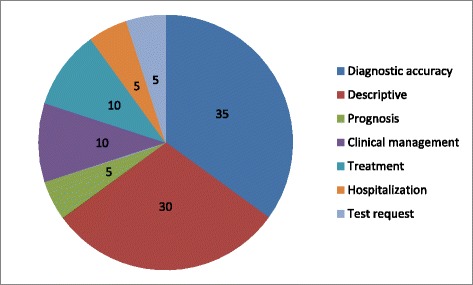
BACKGROUND: Cognitive biases and personality traits (aversion to risk or ambiguity) may lead to diagnostic inaccuracies and medical errors resulting in mismanagement or inadequate utilization of resources. We conducted a systematic review with four objectives: 1) to identify the most common cognitive biases, 2) to evaluate the influence of cognitive biases on diagnostic accuracy or management errors, 3) to determine their impact on patient outcomes, and 4) to identify literature gaps. METHODS: We searched MEDLINE and the Cochrane Library databases for relevant articles on cognitive biases from 1980 to May 2015. We included studies conducted in physicians that evaluated at least one cognitive factor using case-vignettes or real scenarios and reported an associated outcome written in English. Data quality was assessed by the Newcastle-Ottawa scale. Among 114 publications, 20 studies comprising 6810 physicians met the inclusion criteria. Nineteen cognitive biases were identified. RESULTS: All studies found at least one cognitive bias or personality trait to affect physicians. Overconfidence, lower tolerance to risk, the anchoring effect, and information and availability biases were associated with diagnostic inaccuracies in 36.5 to 77 % of case-scenarios. Five out of seven (71.4 %) studies showed an association between cognitive biases and therapeutic or management errors. Of two (10 %) studies evaluating the impact of cognitive biases or personality traits on patient outcomes, only one showed that higher tolerance to ambiguity was associated with increased medical complications (9.7 % vs 6.5 %; p = .004). Most studies (60 %) targeted cognitive biases in diagnostic tasks, fewer focused on treatment or management (35 %) and on prognosis (10 %). Literature gaps include potentially relevant biases (e.g. aggregate bias, feedback sanction, hindsight bias) not investigated in the included studies. Moreover, only five (25 %) studies used clinical guidelines as the framework to determine diagnostic or treatment errors. Most studies (n = 12, 60 %) were classified as low quality. CONCLUSIONS: Overconfidence, the anchoring effect, information and availability bias, and tolerance to risk may be associated with diagnostic inaccuracies or suboptimal management. More comprehensive studies are needed to determine the prevalence of cognitive biases and personality traits and their potential impact on physicians' decisions, medical errors, and patient outcomes.
Overview
The claims and statistics of this paper haven’t been checked yet.
Free: it reads the open-access text and checks the first 5 claims that cite a source we can check. Create a free account to check every claim.
Integrity signals
Registry
Cites
Statistics
Figures
Verification
Claims the paper makes
The claims and statistics of this paper haven’t been checked yet.
Free: it reads the open-access text and checks the first 5 claims that cite a source we can check. Create a free account to check every claim.
Claims other papers make about this one
Each is checked against this paper’s own text: does it say what the citing paper says it does?
The source backs part of the claim, not all of it — or backs it for a different population, condition or comparison.
In the citing paper
“Cognitive tendencies, including anchoring, status-quo preference, and an asymmetric weighting of affirmative rather than disproving information, may reinforce familiar clinical defaults [ 54 ].”
From Paracetamol: A History of Assumptions, Errors, and Evidence Reversals in Pain Management (2026) · cites this paper as [54]
Experimental — accuracy not yet measuredThe source backs part of the claim, not all of it — or backs it for a different population, condition or comparison.
In the citing paper
“Labels associated with medical data, disease rating scales, and diagnosis may be imbued with cognitive biases of the health care personnel who collected this information.51”
From Addressing bias in big data and AI for health care: A call for open science (2021) · cites this paper as [51]
Experimental — accuracy not yet measuredThe source backs part of the claim, not all of it — or backs it for a different population, condition or comparison.
In the citing paper
“Human cognitive biases in clinical decision-making are increasingly recognized as a crucial factor in health care errors and suboptimal patient outcomes [1].”
From Mitigating cognitive biases in clinical decision-making through multi-agent conversations using large language models: simulation study (2024) · cites this paper as [1]
Experimental — accuracy not yet measuredThe source backs part of the claim, not all of it — or backs it for a different population, condition or comparison.
In the citing paper
“Cognitive biases in clinical decision-making significantly contribute to errors in diagnosis and suboptimal patient outcomes.”
From Mitigating cognitive biases in clinical decision-making through multi-agent conversations using large language models: simulation study (2024) · cites this paper as [1]
Experimental — accuracy not yet measured
Self-check
Percentages, sums and reported differences re-computed from the paper’s own numbers.
The self-check needs the paper’s full text.
Citations
Cites
Tversky, A., & Kahneman, D. (1974) · Science · doi:10.1126/science.185.4157.1124 · Cited by 28,810 · cited 2×
“errors in the diagnosis, management, or treatment of medical conditions [6, 26].”
Liberati, A., Altman, D. G., Tetzlaff, J., Mulrow, C., Gøtzsche, P. C., Ioannidis, J. P. A., Clarke, M., Devereaux, P. J., Kleijnen, J., & Moher, D. (2009) · PLoS Medicine · doi:10.1371/journal.pmed.1000100 · Cited by 28,164
Judgment under Uncertainty: Heuristics and Biases
Tversky, A., & Kahneman, D. (1975) · Utility, Probability, and Human Decision Making · doi:10.1007/978-94-010-1834-0_8 · Cited by 22,650
(2014) · Medical Entomology and Zoology · Cited by 17,633
Liberati, A., Altman, D. G., Tetzlaff, J., Mulrow, C., Gøtzsche, P. C., Ioannidis, J. P. A., Clarke, M., Devereaux, P. J., Kleijnen, J., & Moher, D. (2009) · Annals of Internal Medicine · doi:10.7326/0003-4819-151-4-200908180-00136 · Cited by 10,349
Newcastle-Ottawa Scale: comparing reviewers’ to authors’ assessments
Lo, C. K.-L., Mertz, D., & Loeb, M. (2014) · BMC Medical Research Methodology · doi:10.1186/1471-2288-14-45 · Cited by 2,477
Incidence of Adverse Drug Events and Potential Adverse Drug Events: Implications for Prevention
Bates, D. W. (1995) · JAMA · doi:10.1001/jama.1995.03530010043033 · Cited by 2,127 · cited 1×
“each year, and perhaps one million in excess injuries in the USA [1, 2].”
BackgroundThe Importance of Cognitive Errors in Diagnosis and Strategies to Minimize Them
Croskerry, P. (2003) · Academic Medicine · doi:10.1097/00001888-200308000-00003 · Cited by 1,675 · cited 5×
“errors in the diagnosis, management, or treatment of medical conditions [6, 26].”
BackgroundInfluentialWhat every teacher needs to know about clinical reasoning
Eva, K. W. (2005) · Medical Education · doi:10.1111/j.1365-2929.2004.01972.x · Cited by 930 · cited 1×
“Fourth, case-vignettes or real clinical encounters were used [28].”
MethodClaims, Errors, and Compensation Payments in Medical Malpractice Litigation
Studdert, D. M., Mello, M. M., Gawande, A. A., Gandhi, T. K., Kachalia, A., Yoon, C., Puopolo, A. L., & Brennan, T. A. (2006) · New England Journal of Medicine · doi:10.1056/nejmsa054479 · Cited by 848 · cited 1×
“outcomes, which are the most common reasons for patients’ dissatisfaction and medical complaints [54, 64, 65].”
BackgroundPeabody, J. W., Luck, J., Glassman, P., Jain, S., Hansen, J., Spell, M., & Lee, M. (2004) · Annals of Internal Medicine · doi:10.7326/0003-4819-141-10-200411160-00008 · Cited by 714 · cited 1×
“evaluate cognitive biases among physicians [27].”
Computerized Surveillance of Adverse Drug Events in Hospital Patients
Classen, D. C. (1991) · JAMA: The Journal of the American Medical Association · doi:10.1001/jama.1991.03470200059035 · Cited by 639
The incidence of diagnostic error in medicine
Graber, M. L. (2013) · BMJ Quality & Safety · doi:10.1136/bmjqs-2012-001615 · Cited by 626 · cited 1×
“avoidable hospitalizations, complications related to a procedure or medication, request of unnecessary tests, etc) and help attenuate medical errors [3, 68, 69].”
BackgroundBlumenthal-Barby, J. S., & Krieger, H. (2015) · Medical Decision Making · doi:10.1177/0272989x14547740 · Cited by 545 · cited 5×
“While a recent review on cognitive biases and heuristics suggested that general medical personnel is prone to show cognitive biases, it did not answer the question whether these biases actually relate to the number of medical errors in physicians [25].”
BackgroundResultInfluentialHealth at a Glance 2013: OECD Indicators
OECD (2013) · Health at a Glance · doi:10.1787/health_glance-2013-en · Cited by 518
Kern, K. B., Hilwig, R. W., Berg, R. A., Sanders, A. B., & Ewy, G. A. (2002) · Circulation · doi:10.1161/hc0502.102963 · Cited by 516
Cognitive interventions to reduce diagnostic error: a narrative review
Graber, M. L., Kissam, S., Payne, V. L., Meyer, A. N. D., Sorensen, A., Lenfestey, N., Tant, E., Henriksen, K., LaBresh, K., & Singh, H. (2012) · BMJ Quality & Safety · doi:10.1136/bmjqs-2011-000149 · Cited by 449 · cited 1×
“A comprehensive narrative review comprising 41 studies on cognitive interventions to reduce misdiagnosis found three main effective strategies: increasing knowledge and expertise, improving clinical reasoning, and getting help from colleagues, experts and tools [55].”
BackgroundTesting the Newcastle Ottawa Scale showed low reliability between individual reviewers
Hartling, L., Milne, A., Hamm, M. P., Vandermeer, B., Ansari, M., Tsertsvadze, A., & Dryden, D. M. (2013) · Journal of Clinical Epidemiology · doi:10.1016/j.jclinepi.2013.03.003 · Cited by 436 · cited 1×
“Fifth, the use of the NOS to assess the quality of studies has been criticized for having modest inter-rater reliability [66, 67].”
MethodMedical Decision Making in Situations That Offer Multiple Alternatives
Redelmeier, D. A. (1995) · JAMA: The Journal of the American Medical Association · doi:10.1001/jama.1995.03520280048038 · Cited by 422 · cited 4×
“Moreover, anchoring, information bias, overconfidence, premature closure, representativeness and confirmation bias may be associated with therapeutic or management errors [38, 43, 46, 47, 50].”
BackgroundInfluentialSelf-citationIs Health Care Ready for Six Sigma Quality?
Chassin, M. R. (1998) · The Milbank Quarterly · doi:10.1111/1468-0009.00106 · Cited by 387
Heuristic decision making in medicine
Marewski, J. N., & Gigerenzer, G. (2012) · Dialogues in Clinical Neuroscience · doi:10.31887/dcns.2012.14.1/jmarewski · Cited by 377 · cited 1×
“As shown by Marewski and Gigerenzer, the identification of three rules (search for predictors to determine their individual importance, stop searching when relevant information was already obtained, and a criteria that specifies how a decision is made) may facilitate prompt decisions and may help physicians to avoid e…”
Mamede, S., van Gog, T., van den Berge, K., Rikers, R. M. J. P., van Saase, J. L. C. M., van Guldener, C., & Schmidt, H. G. (2010) · JAMA · doi:10.1001/jama.2010.1276 · Cited by 374 · cited 3×
“reflective reasoning) to ameliorate cognitive biases in physicians [35].”
BackgroundChecklists to Reduce Diagnostic Errors
Ely, J. W., Graber, M. L., & Croskerry, P. (2011) · Academic Medicine · doi:10.1097/acm.0b013e31820824cd · Cited by 366 · cited 1×
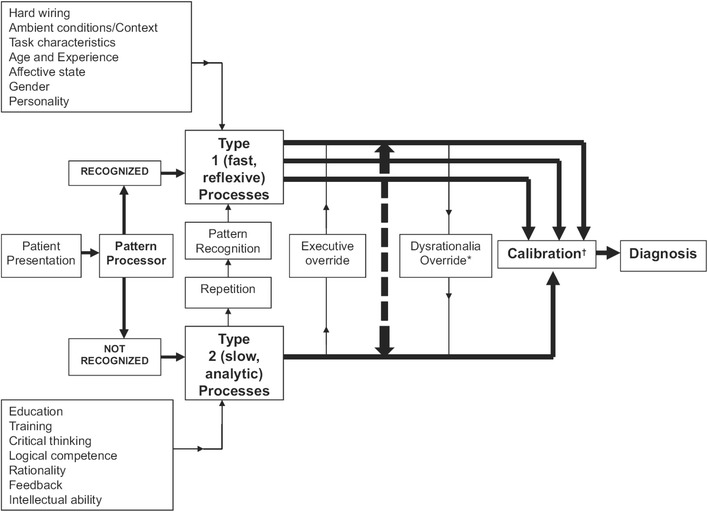
“with permission).[9] System 1 thinking can be influenced by multiple”
BackgroundThe economics of health care quality and medical errors.
Andel, C., Davidow, S. L., Hollander, M., & Moreno, D. A. (2012) · PubMed · Cited by 357
Wegwarth, O., Schwartz, L. M., Woloshin, S., Gaissmaier, W., & Gigerenzer, G. (2012) · Annals of Internal Medicine · doi:10.7326/0003-4819-156-5-201203060-00005 · Cited by 304
Computerized surveillance of adverse drug events in hospital patients.
Classen, D. C., Pestotnik, S. L., Evans, R. S., & Burke, J. P. (1991) · PubMed · Cited by 281
Physicians’ Diagnostic Accuracy, Confidence, and Resource Requests: A Vignette Study
Meyer, A. N. D., Payne, V. L., Meeks, D. W., Rao, R., & Singh, H. (2013) · JAMA Internal Medicine · doi:10.1001/jamainternmed.2013.10081 · Cited by 268 · cited 2×
“The main outcomes were any form of medical error [26, 30], including: underuse or overuse of medical tests, diagnostic accuracy, lack of prescription or prescription of unnecessary medications, outcomes of surgical procedures, and avoidable hospitalizations.”
BackgroundReyna, V. F., & Lloyd, F. J. (2006) · Journal of Experimental Psychology: Applied · doi:10.1037/1076-898x.12.3.179 · Cited by 266 · cited 2×
“some studies are descriptive, [36, 37, 39, 44, 48, 51] whereas others [7, 30, 35, 42, 43, 47, 50, 52] target diagnostic or therapeutic errors).”
BackgroundComputerized surveillance of adverse drug events in hospital patients
Classen, D. C. (2005) · Quality and Safety in Health Care · doi:10.1136/qshc.2002.002972 · Cited by 211
Training in Advanced Trauma Life Support
Collicott, P. E. (1980) · JAMA: The Journal of the American Medical Association · doi:10.1001/jama.1980.03300370030022 · Cited by 154
Bhatia, R. S., Levinson, W., Shortt, S., Pendrith, C., Fric-Shamji, E., Kallewaard, M., Peul, W., Veillard, J., Elshaug, A., Forde, I., et al. (2015) · BMJ Quality & Safety · doi:10.1136/bmjqs-2015-004070 · Cited by 154 · cited 1×
“An initial step towards this goal may be the ‘Choosing wisely’ strategy [62, 63].”
BackgroundMamede, S., Schmidt, H. G., Rikers, R. M. J. P., Custers, E. J. F. M., Splinter, T. A. W., & van Saase, J. L. C. M. (2010) · Psychological Research · doi:10.1007/s00426-010-0281-8 · Cited by 149
Clinical Judgment: Psychological Research and Medical Practice
Elstein, A. S. (1976) · Science · doi:10.1126/science.982034 · Cited by 123
Doctors and Patients’ Susceptibility to Framing Bias: A Randomized Trial
Perneger, T. V., & Agoritsas, T. (2011) · Journal of General Internal Medicine · doi:10.1007/s11606-011-1810-x · Cited by 122 · cited 4×
“Moreover, anchoring, information bias, overconfidence, premature closure, representativeness and confirmation bias may be associated with therapeutic or management errors [38, 43, 46, 47, 50].”
BackgroundInfluentialMichaels, A. D., Spinler, S. A., Leeper, B. “., Ohman, E. M., Alexander, K. P., Newby, L. K., Ay, H., & Gibler, W. B. (2010) · Circulation · doi:10.1161/cir.0b013e3181d4b43e · Cited by 116
The power of simplicity: a fast-and-frugal heuristics approach to performance science
Raab, M., & Gigerenzer, G. (2015) · Frontiers in Psychology · doi:10.3389/fpsyg.2015.01672 · Cited by 114 · cited 1×
“As shown by Marewski and Gigerenzer, the identification of three rules (search for predictors to determine their individual importance, stop searching when relevant information was already obtained, and a criteria that specifies how a decision is made) may facilitate prompt decisions and may help physicians to avoid e…”
BackgroundWhat every teacher needs to know about clinical reasoning
Eva Kevin, W. (2005) · Educación Médica · Cited by 113
Cognitive diagnostic error in internal medicine
van den Berge, K., & Mamede, S. (2013) · European Journal of Internal Medicine · doi:10.1016/j.ejim.2013.03.006 · Cited by 111 · cited 1×
“contribute to decreasing the rising health care costs altogether [3, 8, 54].”
BackgroundDo Decision Biases Predict Bad Decisions? Omission Bias, Naturalness Bias, and Influenza Vaccination
DiBonaventura, M. D., & Chapman, G. B. (2008) · Medical Decision Making · doi:10.1177/0272989x07312723 · Cited by 108 · cited 2×
“some studies are descriptive, [36, 37, 39, 44, 48, 51] whereas others [7, 30, 35, 42, 43, 47, 50, 52] target diagnostic or therapeutic errors).”
BackgroundJURaSSiC: Accuracy of clinician vs risk score prediction of ischemic stroke outcomes
Saposnik, G., Cote, R., Mamdani, M., Raptis, S., Thorpe, K. E., Fang, J., Redelmeier, D. A., & Goldstein, L. B. (2013) · Neurology · doi:10.1212/wnl.0b013e31829d874e · Cited by 100
Self-citationOgdie, A. R., Reilly, J. B., Pang, W. G., Keddem, S., Barg, F. K., Von Feldt, J. M., & Myers, J. S. (2012) · Academic Medicine · doi:10.1097/acm.0b013e31826742c9 · Cited by 100
Relating Faults in Diagnostic Reasoning With Diagnostic Errors and Patient Harm
Zwaan, L., Thijs, A., Wagner, C., van der Wal, G., & Timmermans, D. R. M. (2012) · Academic Medicine · doi:10.1097/acm.0b013e31823f71e6 · Cited by 100
Ioannidis, J. P. A., & Lau, J. (2001) · Journal of General Internal Medicine · doi:10.1046/j.1525-1497.2001.00714.x · Cited by 99
Effect of a patient’s psychiatric history on physicians’ estimation of probability of disease
Graber, M. A., BERGUS, G. R., Dawson, J. D., Wood, G. B., Levy, B. T., & Levin, I. P. (2000) · Journal of General Internal Medicine · doi:10.1046/j.1525-1497.2000.04399.x · Cited by 88 · cited 2×
“some studies are descriptive, [36, 37, 39, 44, 48, 51] whereas others [7, 30, 35, 42, 43, 47, 50, 52] target diagnostic or therapeutic errors).”
BackgroundLevinson, W. S., & Huynh, T. (2014) · Canadian Medical Association Journal · doi:10.1503/cmaj.131674 · Cited by 86
Why Do Doctors Make Mistakes? A Study of the Role of Salient Distracting Clinical Features
Mamede, S., van Gog, T., van den Berge, K., van Saase, J. L. C. M., & Schmidt, H. G. (2013) · Academic Medicine · doi:10.1097/acm.0000000000000077 · Cited by 86 · cited 1×
“some studies are descriptive, [36, 37, 39, 44, 48, 51] whereas others [7, 30, 35, 42, 43, 47, 50, 52] target diagnostic or therapeutic errors).”
Approaching the Evidence Basis for Aviation-Derived Teamwork Training in Medicine
Zeltser, M. V., & Nash, D. B. (2010) · American Journal of Medical Quality · doi:10.1177/1062860609345664 · Cited by 79 · cited 1×
“The health sector shares commonalities with industrial sectors including vulnerability to human errors [11, 14].”
BackgroundMedical errors in primary care clinics – a cross sectional study
Khoo, E. M., Lee, W. K., Sararaks, S., Abdul Samad, A., Liew, S. M., Cheong, A. T., Ibrahim, M. Y., Su, S. H., Mohd Hanafiah, A. N., Maskon, K., et al. (2012) · BMC Family Practice · doi:10.1186/1471-2296-13-127 · Cited by 78
Do Decision Biases Predict Bad Decisions? Omission Bias, Naturalness Bias, and Influenza Vaccination
DiBonaventura, M. D., & Chapman, G. B. (2008) · Medical Decision Making · doi:10.1177/0272989x08315250 · Cited by 72
Ross, S., Moffat, K. J., McConnachie, A., Gordon, J., & Wilson, P. (1999) · Europe PMC (PubMed Central) · Cited by 71
Mamede, S., Splinter, T. A. W., van Gog, T., Rikers, R. M. J. P., & Schmidt, H. G. (2012) · BMJ Quality & Safety · doi:10.1136/bmjqs-2011-000518 · Cited by 65
Decision-making and safety in anesthesiology
Stiegler, M. P., & Ruskin, K. J. (2012) · Current Opinion in Anaesthesiology · doi:10.1097/aco.0b013e328359307a · Cited by 65 · cited 10×
“All included studies found at least one cognitive factor/bias, indicating that a large number of physicians may be possibly affected [39, 50, 52].”
BackgroundInfluentialAutomated detection of heuristics and biases among pathologists in a computer-based system
Crowley, R. S., Legowski, E., Medvedeva, O., Reitmeyer, K., Tseytlin, E., Castine, M., Jukic, D., & Mello-Thoms, C. (2013) · Advances in Health Sciences Education · doi:10.1007/s10459-012-9374-z · Cited by 64 · cited 6×
“All included studies found at least one cognitive factor/bias, indicating that a large number of physicians may be possibly affected [39, 50, 52].”
BackgroundInfluentialShi, Q., MacDermid, J. C., Santaguida, P. L., & Kyu, H. H. (2011) · The Journal Of Hand Surgery · doi:10.1016/j.jhsa.2011.09.024 · Cited by 63 · cited 1×
“Previous studies defined NOS scores as: 7–9 points considered as high quality, 5–6 as moderate quality, and 0–4 as low quality [33].”
BackgroundDefensive Medicine in Neurosurgery
Smith, T. R., Habib, A., Rosenow, J. M., Nahed, B. V., Babu, M. A., Cybulski, G. R., Fessler, R. D., Batjer, H. H., & Heary, R. F. (2014) · Neurosurgery · doi:10.1227/neu.0000000000000576 · Cited by 59
Sorum, P. C., Shim, J., Chasseigne, G., Bonnin-Scaon, S., Cogneau, J., & Mullet, É. (2003) · Medical Decision Making · doi:10.1177/0272989x03256010 · Cited by 49 · cited 5×
“Misinterpretation of recommendations and lower comfort with uncertainty were associated with overutilization of diagnostic tests [46].”
BackgroundInfluentialElwyn, G. J., Thompson, R., John, R. T., & Grande, S. W. (2015) · International Journal of Integrated Care · doi:10.5334/ijic.1597 · Cited by 48 · cited 1×
“As shown by Marewski and Gigerenzer, the identification of three rules (search for predictors to determine their individual importance, stop searching when relevant information was already obtained, and a criteria that specifies how a decision is made) may facilitate prompt decisions and may help physicians to avoid e…”
BackgroundMsaouel, P., Kappos, T., Tasoulis, A., Apostolopoulos, A. P., Lekkas, I., Tripodaki, E., & Keramaris, N. C. (2014) · Medical Education Online · doi:10.3402/meo.v19.23646 · Cited by 44 · cited 2×
“some studies are descriptive, [36, 37, 39, 44, 48, 51] whereas others [7, 30, 35, 42, 43, 47, 50, 52] target diagnostic or therapeutic errors).”
BackgroundDhillon, B. S. (1989) · Microelectronics Reliability · doi:10.1016/0026-2714(89)90612-4 · Cited by 42 · cited 2×
“and 50–70 % of all electronic equipment failures were partly or wholly due to human cognitive factors [10].”
BackgroundYee, L. M., Liu, L. Y., & Grobman, W. A. (2014) · American Journal of Obstetrics and Gynecology · doi:10.1016/j.ajog.2014.06.003 · Cited by 42 · cited 10×
“20) among patients cared for by physicians with higher tolerance to ambiguity [43].”
BackgroundInfluentialKällberg, A.-S., Göransson, K. E., Östergren, J., Florin, J., & Ehrenberg, A. (2011) · European Journal of Emergency Medicine · doi:10.1097/mej.0b013e32834fe917 · Cited by 41 · cited 1×
“outcomes, which are the most common reasons for patients’ dissatisfaction and medical complaints [54, 64, 65].”
BackgroundPhysician Risk Attitudes and Hospitalization of Infants with Bronchiolitis
Baldwin, R. L., Green, J. W., Shaw, J. L., Simpson, D. D., Bird, T. M., Cleves, M. A., & Robbins, J. M. (2005) · Academic Emergency Medicine · doi:10.1111/j.1553-2712.2005.tb00852.x · Cited by 41 · cited 6×
“Moreover, across studies we often found a lack (in 30 % of studies) or heterogeneity in the outcome measures, mixed denominators (some studies report their findings based on the number of participants, while others based on case-scenarios) [41, 43, 52], and different scope (e.”
BackgroundInfluentialAre Clinicians Correct When They Believe They Are Correct? Implications for Medical Decision Support
Charles, F., Guido, G., Arthur, E., Timothy, F., Gwendolyn, M., & Fredric, W. (2001) · Studies in Health Technology and Informatics · doi:10.3233/978-1-60750-928-8-454 · Cited by 41 · cited 1×
“Fourth, the assessment of the number of medical elements included in each case scenario may not be consistent (some were reported by authors and others estimated based on the description of case-scenarios) [35, 40, 51].”
BackgroundA model for reflection for good clinical practice
Balla, J. I., Heneghan, C., Glasziou, P., Thompson, M., & Balla, M. E. (2009) · Journal of Evaluation in Clinical Practice · doi:10.1111/j.1365-2753.2009.01243.x · Cited by 34
Physician Risk Attitudes and Hospitalization of Infants with Bronchiolitis
Baldwin, R. L. (2005) · Academic Emergency Medicine · doi:10.1197/j.aem.2004.10.002 · Cited by 34
Information Bias in Endoscopic Assessment
Bytzer, P. M. (2007) · The American Journal of Gastroenterology · doi:10.1111/j.1572-0241.2006.00911.x · Cited by 29
Simple strategies to avoid medication errors.
Jenkins, R. H., & Vaida, A. J. (2007) · PubMed · Cited by 29
Hyman, D. J., Pavlik, V., Greisinger, A. J., Chan, W., Bayona, J., Mansyur, C. L., Simms, V., & Pool, J. L. (2011) · Journal of General Internal Medicine · doi:10.1007/s11606-011-1888-1 · Cited by 27 · cited 1×
“The inclusion of training in cognitive biases in graduate and postgraduate programs might foster medical education and thereby improve health care delivery [59].”
BackgroundThe Presence of Outcome Bias in Emergency Physician Retrospective Judgments of the Quality of Care
Gupta, M., Schriger, D. L., & Tabas, J. A. (2011) · Annals of Emergency Medicine · doi:10.1016/j.annemergmed.2010.10.004 · Cited by 25 · cited 3×
“some studies are descriptive, [36, 37, 39, 44, 48, 51] whereas others [7, 30, 35, 42, 43, 47, 50, 52] target diagnostic or therapeutic errors).”
BackgroundAviation Model Cognitive Risk Factors Applied to Medical Malpractice Cases
Stripe, S. C., Best, L. G., Cole-Harding, S., Fifield, B., & Talebdoost, F. (2006) · The Journal of the American Board of Family Medicine · doi:10.3122/jabfm.19.6.627 · Cited by 25 · cited 2×
“The health sector shares commonalities with industrial sectors including vulnerability to human errors [11, 14].”
BackgroundDefensive Medicine—Legally Necessary but Ethically Wrong?
Kachalia, A. B., & Mello, M. M. (2013) · JAMA Internal Medicine · doi:10.1001/jamainternmed.2013.7293 · Cited by 24
Medical errors – not only patients’ problem
Stangierski, A., Warmuz‐Stangierska, I., Ruchała, M. A., Zdanowska, J., Głowacka, M. D., Sowiński, J., & Ruchała, P. (2012) · Archives of Medical Science · doi:10.5114/aoms.2012.29539 · Cited by 22
Medical errors - not only patients' problem.
Stangierski, A., Warmuz‐Stangierska, I., Ruchała, M. A., et al. (2012) · PubMed · doi:10.5114/aoms.2012.29413 · Cited by 17
Corn, J. B. (2009) · PubMed · Cited by 12
The U.S. Commercial Air Tour Industry: A Review of Aviation Safety Concerns
Ballard, S.-B. (2014) · Aviation Space and Environmental Medicine · doi:10.3357/asem.3814.2014 · Cited by 9
Analytic Methods and Medical Education
Elstein, A. S. (1983) · Medical Decision Making · doi:10.1177/0272989x8300300303 · Cited by 5
Cited by
Addressing bias in big data and AI for health care: A call for open science
Norori, N., Hu, Q., Aellen, F. M., Faraci, F. D., & Tzovara, A. (2021) · Patterns · doi:10.1016/j.patter.2021.100347 · Cited by 903
“51 Personality traits like tolerance to risk, or overconfidence may result in diagnostic, therapeutic, or management errors, and may impact patient outcomes.”
BackgroundBattaglio, R. P., Belardinelli, P., Bellé, N., & Cantarelli, P. (2019) · Public Administration Review · doi:10.1111/puar.12994 · Cited by 312
Cognitive and human factors in expert decision making: Six fallacies and the eight sources of bias
Dror, I. E. (2020) · Analytical Chemistry · doi:10.1021/acs.analchem.0c00704 · Cited by 333
Massoth, C., Röder, H., Ohlenburg, H., Hessler, M., Zarbock, A., Pöpping, D. M., & Wenk, M. (2019) · BMC Medical Education · doi:10.1186/s12909-019-1464-7 · Cited by 316
Chou, Y.-L., Moreira, C., Bruza, P., Ouyang, C., & Jorge, J. (2022) · Information Fusion · doi:10.1016/j.inffus.2021.11.003 · Cited by 302
Metadata
- Authors
- Saposnik, G., Redelmeier, D., Ruff, C. C., & Tobler, P. N.
- Affiliations
- St. Michael's Hospital (CA)
- Institute for Clinical Evaluative Sciences (CA)
- University of Zurich (CH)
- Corresponding author
- Saposnik, Gustavo
- Venue
- BMC Medical Informatics and Decision Making
- Published
- 2016-11-03
- Volume
- 16
- Issue
- 1
- Pages
- 138-138
- ISSN
- 1472-6947 (ISSN-L)
- PMC
- PMC5093937
- OpenAlex
- W2548421507
- Cited by
- 1,001
- References
- 74
- Citations by year
- 2026: 141 · 2025: 111 · 2024: 118 · 2023: 97 · 2022: 158 · 2021: 120 · 2020: 95 · 2019: 83 · 2018: 55 · 2017: 21 · 2016: 1
- FWCI
- 8.96
- Type
- journal article
- Language
- en
- Open access
- gold
- doi.org
- Licence
- Locations
- BMC Medical Informatics and Decision Making (publishedVersion, cc-by)
- PubMed Central (publishedVersion, cc-by)
- PubMed (publishedVersion)
- Zurich Open Repository and Archive (University of Zurich) (acceptedVersion, cc-by)
- TSpace (University of Toronto) (submittedVersion, cc-by)
- Zurich Open Repository and Archive (University of Zurich) (submittedVersion, cc-by)
- Zurich Open Repository and Archive (University of Zurich)
- Funders
- Swiss National Science Foundation (CRSII3_141965)
- Heart and Stroke Foundation of Canada (NA)
- Topics
- Health Sciences › Medicine › Family Practice › Clinical Reasoning and Diagnostic Skills
- Social Sciences › Decision Sciences › General Decision Sciences › Decision-Making and Behavioral Economics
- Health Sciences › Medicine › Public Health, Environmental and Occupational Health › Patient Safety and Medication Errors
- Keywords
- cognitive biases, clinical decision-making, diagnostic errors, medical errors, overconfidence, anchoring effect, availability bias, information bias, risk aversion, ambiguity tolerance, personality traits, patient outcomes, physician decision-making
- MeSH terms
- Clinical Decision-Making, Humans, Personality, Physicians, Thinking
About these checks
Registry, retraction, Cites and statistics results are computed, not judged, with one exception: a printed reference that no index lists is read once by a model before it counts as a citation error. Claims are extracted by a model and kept only when their quote appears verbatim in the text; each cited source is then checked, with a model’s help, for whether it says what the claim relies on. Those verdicts can be wrong — read the claim’s quote and the cited source before relying on one.
Statistics and arithmetic are recomputed, not judged.
Confidence bands are shown only for fields calibrated on our annotated test set. None is calibrated yet, so no band is shown.
What counts as a claim ›How we measure confidence ›How we check this ›
Are you an author, or do you see a problem with this page? Request a review
Data sources
Bibliographic data: Semantic Scholar, OpenAlex, Crossref.
Contains information from the Semantic Scholar Academic Graph Datasets, made available under the ODC Attribution License (ODC-BY 1.0).
Semantic Scholar’s data is described in: Kinney, R., et al. (2023). The Semantic Scholar Open Data Platform. arXiv:2301.10140.
