

The DOI matches its Crossref record; 38 of the 39 references it cites were found in a registry or an index.
Automation bias in electronic prescribing
Open accessAbstract
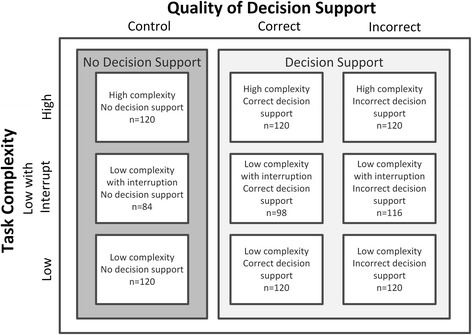
BACKGROUND: Clinical decision support (CDS) in e-prescribing can improve safety by alerting potential errors, but introduces new sources of risk. Automation bias (AB) occurs when users over-rely on CDS, reducing vigilance in information seeking and processing. Evidence of AB has been found in other clinical tasks, but has not yet been tested with e-prescribing. This study tests for the presence of AB in e-prescribing and the impact of task complexity and interruptions on AB. METHODS: One hundred and twenty students in the final two years of a medical degree prescribed medicines for nine clinical scenarios using a simulated e-prescribing system. Quality of CDS (correct, incorrect and no CDS) and task complexity (low, low + interruption and high) were varied between conditions. Omission errors (failure to detect prescribing errors) and commission errors (acceptance of false positive alerts) were measured. RESULTS: Compared to scenarios with no CDS, correct CDS reduced omission errors by 38.3% (p < .0001, n = 120), 46.6% (p < .0001, n = 70), and 39.2% (p < .0001, n = 120) for low, low + interrupt and high complexity scenarios respectively. Incorrect CDS increased omission errors by 33.3% (p < .0001, n = 120), 24.5% (p < .009, n = 82), and 26.7% (p < .0001, n = 120). Participants made commission errors, 65.8% (p < .0001, n = 120), 53.5% (p < .0001, n = 82), and 51.7% (p < .0001, n = 120). Task complexity and interruptions had no impact on AB. CONCLUSIONS: This study found evidence of AB omission and commission errors in e-prescribing. Verification of CDS alerts is key to avoiding AB errors. However, interventions focused on this have had limited success to date. Clinicians should remain vigilant to the risks of CDS failures and verify CDS.
Overview
The claims and statistics of this paper haven’t been checked yet.
Run the check — free, no account needed. It reads the open-access text and checks the sources it cites.
Integrity signals
Registry
Cites
Statistics
Figures
Verification
Claims the paper makes
The claims and statistics of this paper haven’t been checked yet.
Run the check — free, no account needed. It reads the open-access text and checks the sources it cites.
Claims other papers make about this one
Each is checked against this paper’s own text: does it say what the citing paper says it does?
In the citing paper
“Another explanation might be that participants worry about physicians’ automation bias, 48 that is, physicians might blindly rely on the AI-enabled system's suggestions without critically reviewing them resulting in reduced accuracy 49 and increased medical errors. 50”
From Patient perspectives on informed consent for medical AI: A web-based experiment (2024) · cites this paper as [50]
Self-check
Percentages, sums and reported differences re-computed from the paper’s own numbers.
The self-check needs the paper’s full text.
Citations
Cites
Faul, F., Erdfelder, E., Lang, A.-G., & Buchner, A. (2007) · Behavior Research Methods · doi:10.3758/bf03193146 · Cited by 65,971
Note on the Sampling Error of the Difference Between Correlated Proportions or Percentages
McNemar, Q. (1947) · Psychometrika · doi:10.1007/bf02295996 · Cited by 4,754
Multiple significance tests: the Bonferroni method
Bland, J. M., & Altman, D. G. (1995) · BMJ · doi:10.1136/bmj.310.6973.170 · Cited by 3,341
Complacency and Bias in Human Use of Automation: An Attentional Integration
Parasuraman, R., & Manzey, D. H. (2010) · Human Factors: The Journal of the Human Factors and Ergonomics Society · doi:10.1177/0018720810376055 · Cited by 1,710
Automation bias: a systematic review of frequency, effect mediators, and mitigators
Goddard, K., Roudsari, A., & Wyatt, J. C. (2012) · Journal of the American Medical Informatics Association · doi:10.1136/amiajnl-2011-000089 · Cited by 1,162 · cited 2×
“There are multiple possible causes of AB, [8, 9] and the literature is currently unclear regarding which, or all, of these are genuinely causal, and under which circumstances.”
BackgroundPerformance Consequences of Automation-Induced 'Complacency'
Parasuraman, R., Molloy, R., & Singh, I. L. (1993) · The International Journal of Aviation Psychology · doi:10.1207/s15327108ijap0301_1 · Cited by 875 · cited 1×
“The prevailing view in the human factors literature is that AB only occurs in a multi-task environment [14, 20, 21].”
BackgroundSpeier, C., Valacich, J. S., & Vessey, I. (1999) · Decision Sciences · doi:10.1111/j.1540-5915.1999.tb01613.x · Cited by 699
Ammenwerth, E., Schnell‐Inderst, P., Machan, C., & Siebert, U. (2008) · Journal of the American Medical Informatics Association · doi:10.1197/jamia.m2667 · Cited by 681
Automation bias and verification complexity: a systematic review
Lyell, D., & Coiera, E. (2017) · Journal of the American Medical Informatics Association · doi:10.1093/jamia/ocw105 · Cited by 451 · cited 3×
“However AB has been reported in some, but not all, tasks in a single task environment [14].”
BackgroundSelf-citationWolfstadt, J. I., Gurwitz, J. H., Field, T. S., Lee, M. M., Kalkar, S. R., Wu, W., & Rochon, P. A. (2008) · Journal of General Internal Medicine · doi:10.1007/s11606-008-0504-5 · Cited by 388
Accountability and automation bias
SKITKA, L. J., MOSIER, K., & BURDICK, M. D. (2000) · International Journal of Human-Computer Studies · doi:10.1006/ijhc.1999.0349 · Cited by 324
Bahner, J. E., Hüper, A.-D., & Manzey, D. (2008) · International Journal of Human-Computer Studies · doi:10.1016/j.ijhcs.2008.06.001 · Cited by 279 · cited 2×
“For example, commission errors have been associated with reduced sampling of information which can verify decision support [10, 11].”
BackgroundManzey, D., Reichenbach, J., & Onnasch, L. (2012) · Journal of Cognitive Engineering and Decision Making · doi:10.1177/1555343411433844 · Cited by 277 · cited 2×
“inattentional blindness where participants have made AB errors despite accessing sufficient information to assess that automation was incorrect [12, 13].”
Backgroundvan Rosse, F., Maat, B., Rademaker, C. M. A., van Vught, A. J., Egberts, T. C. G., & Bollen, C. W. (2009) · PEDIATRICS · doi:10.1542/peds.2008-1494 · Cited by 264
Taylor, D. (2007) · Cited by 234
Westbrook, J. I., Reckmann, M., Li, L., Runciman, W. B., Burke, R. A., Lo, C., Baysari, M. T., Braithwaite, J., & Day, R. O. (2012) · PLoS Medicine · doi:10.1371/journal.pmed.1001164 · Cited by 227
Self-citationBailey, N. R., & Scerbo, M. W. (2007) · Theoretical Issues in Ergonomics Science · doi:10.1080/14639220500535301 · Cited by 224 · cited 5×
“This is in stark contrast to the findings of Bailey and Scerbo [25] who”
BackgroundResultInfluentialLi, S. Y. W., Magrabi, F., & Coiera, E. W. (2011) · Journal of the American Medical Informatics Association · doi:10.1136/amiajnl-2010-000024 · Cited by 223 · cited 2×
“However, interruptions are a complex phenomenon where multiple variables, including the characteristics of primary tasks, an individual’s cognitive state, the interruptions themselves, and the environment, may influence impact on clinical tasks and errors [22].”
BackgroundSelf-citationHuman Decision Makers and Automated Decision Aids: Made for Each Other?
Mosier, K. L., & Skitka, L. J. (2018) · doi:10.1201/9781315137957-10 · Cited by 188 · cited 2×
“” With AB omission errors, users fail to notice problems because they were not alerted to the problem by CDS, and with commission errors, users comply with incorrect recommendations [7].”
BackgroundMisdiagnosis of atrial fibrillation and its clinical consequences
Bogun, F. M., Anh, D., Kalahasty, G., Wißner, E., Serhal, C. B., Bazzi, R., Weaver, W. D., & Schuger, C. D. (2004) · The American Journal of Medicine · doi:10.1016/j.amjmed.2004.06.024 · Cited by 165
Automation bias: Empirical results assessing influencing factors
Goddard, K., Roudsari, A., & Wyatt, J. C. (2014) · International Journal of Medical Informatics · doi:10.1016/j.ijmedinf.2014.01.001 · Cited by 163 · cited 2×
“Finding evidence of omission errors in the computer-aided detection of cancers in screening mammography [15, 16] and commission errors in the computerized interpretation of EKGs, [17] answering clinical questions assisted by CDS, [18] and deciding what to prescribe for clinical scenarios [19].”
BackgroundDornan, T., Ashcroft, D. M., Heathfield, H., Lewis, P., Miles, J. D., Taylor, D. R., Tully, M. P., & Wass, V. (2009) · Research Explorer (The University of Manchester) · Cited by 153
Analysis of clinical decision support system malfunctions: a case series and survey
Wright, A., Hickman, T.-T. T., McEvoy, D., Aaron, S., Ai, A., Andersen, J. M., Hussain, S., Ramoni, R., Fiskio, J., Sittig, D. F., et al. (2016) · Journal of the American Medical Informatics Association · doi:10.1093/jamia/ocw005 · Cited by 132 · cited 2×
“Clinicians need to be mindful that CDS can and does fail [6].”
BackgroundEffects of incorrect computer-aided detection (CAD) output on human decision-making in mammography
Alberdi, E., Povyakalo, A., Strigini, L., & Ayton, P. (2004) · Academic Radiology · doi:10.1016/j.acra.2004.05.012 · Cited by 124 · cited 2×
“There have been a small number of studies conducted in healthcare, finding evidence of AB omission errors in computer-aided detection of cancers in mammograms, [15, 16] and”
BackgroundInterruptions create prospective memory tasks
Dodhia, R. M., & Dismukes, R. K. (2008) · Applied Cognitive Psychology · doi:10.1002/acp.1441 · Cited by 114
Bierbooms, J. J. P. A., Bongers, I. M. B., & OERS, H. A. M. V. (2011) · BMC Medical Informatics and Decision Making · doi:10.1186/1472-6947-11-1 · Cited by 88
Povyakalo, A. A., Alberdi, E., Strigini, L., & Ayton, P. (2013) · Medical Decision Making · doi:10.1177/0272989x12465490 · Cited by 79 · cited 2×
“There have been a small number of studies conducted in healthcare, finding evidence of AB omission errors in computer-aided detection of cancers in mammograms, [15, 16] and”
BackgroundMagrabi, F., Li, S. Y. W., Day, R. O., & Coiera, E. W. (2010) · Journal of the American Medical Informatics Association · doi:10.1136/jamia.2009.001719 · Cited by 67 · cited 1×
“Any impact of interruptions on prescribing errors was not detected in our experiment, replicating earlier results [33].”
ResultSelf-citationThe impact of context-related reliability on automation failure detection and scanning behaviour
Bagheri, N., & Jamieson, G. A. (2005) · Conference proceedings/Conference proceedings - IEEE International Conference on Systems, Man, and Cybernetics · doi:10.1109/icsmc.2004.1398299 · Cited by 65
Aircrews and automation bias: the advantages of teamwork?
Mosier, K. L., Skitka, L. J., Dunbar, M., & McDonnell, L. (2001) · The International Journal of Aviation Psychology · doi:10.1207/s15327108ijap1101_1 · Cited by 62
Technology, cognition and error
Coiera, E. W. (2015) · BMJ Quality & Safety · doi:10.1136/bmjqs-2014-003484 · Cited by 48 · cited 1×
“One possible reason for not detecting an effect of interruptions was thus that disruption were minimized by these cues within the user interface [34].”
BackgroundSelf-citationBahner, J. E., Elepfandt, M. F., & Manzey, D. (2008) · Proceedings of the Human Factors and Ergonomics Society Annual Meeting · doi:10.1177/154193120805201906 · Cited by 35 · cited 1×
“For example, commission errors have been associated with reduced sampling of information which can verify decision support [10, 11].”
BackgroundWhere to find information about drugs
Day, R. O., & Snowden, L. (2016) · Australian Prescriber · doi:10.18773/austprescr.2016.023 · Cited by 21 · cited 1×
“It is evidence-based, reflects Australian best practice and is widely utilised in Australian clinical practice [27].”
BackgroundSelf-citationEvaluation of features to support safety and quality in general practice clinical software
Sweidan, M., Williamson, M. F., Reeve, J. F., Harvey, K. J., O’Neill, J. A., Schattner, P. L., & Snowdon, T. (2011) · BMC Medical Informatics and Decision Making · doi:10.1186/1472-6947-11-27 · Cited by 18 · cited 2×
“The electronic prescription of medicines (e-prescribing) is now routine, [1] making the clinical decision support (CDS) systems they include [2] amongst the most common encountered by clinicians.”
BackgroundReichenbach, J., Onnasch, L., & Manzey, D. (2010) · Proceedings of the Human Factors and Ergonomics Society Annual Meeting · doi:10.1177/154193121005400422 · Cited by 14 · cited 2×
“inattentional blindness where participants have made AB errors despite accessing sufficient information to assess that automation was incorrect [12, 13].”
BackgroundWhy is it so difficult to measure the effects of interruptions in healthcare?
Magrabi, F., Li, S. Y. W., Dunn, A. G., & Coiera, E. W. (2010) · Studies in health technology and informatics · doi:10.3233/978-1-60750-588-4-784 · Cited by 14 · cited 1×
“Despite clear evidence that interruptions can disrupt clinical tasks, their effects are complex, and may not always be detected [32].”
BackgroundSelf-citationMonitoring Automation Failures: Effects of Automation Reliability and Task Complexity
Molloy, R., & Parasuraman, R. (1992) · Proceedings of the Human Factors and Ergonomics Society Annual Meeting · doi:10.1177/154193129203601833 · Cited by 6 · cited 1×
“The prevailing view in the human factors literature is that AB only occurs in a multi-task environment [14, 20, 21].”
BackgroundGolchin, K., & Roudsari, A. (2011) · Studies in health technology and informatics · doi:10.3233/978-1-60750-709-3-13 · Cited by 4 · cited 9×
“With AB omission errors, users fail to notice problems because they were not alerted to the problem by CDS, and with commission errors, users comply with incorrect recommendations [7].”
Influential
Research works printed but not linked: 3
- Britt H, Miller G, Henderson J, Bayram C, Harrison C, Valenti L, Wong C, Gordon J, Pollack A, Pan Y, et al. General practice activity in Australia 2014–15. General practice series no. 38. Sydney: Sydney University Press; 2015.
- De Vries TPGM, Henning RH, Hogerzeil HV, Fresle DA. Guide to good prescribing. Geneva: World Health Organization; 1994.
- Singh AL, Tiwari T, Singh IL. Performance feedback, mental workload and monitoring efficiency. J Indian Acad Appl Psychol. 2010;36(1):151–8.
Cited by
Sorted by citations
Magrabi, F., Ammenwerth, E., McNair, J. B., De Keizer, N. F., Hyppönen, H., Nykänen, P., Rigby, M., Scott, P. J., Vehko, T., Wong, Z. S.-Y., et al. (2019) · Yearbook of Medical Informatics · doi:10.1055/s-0039-1677903 · Cited by 347
“Previous work has demonstrated the effects of automation bias with a prescribing DSS that was based on simple rules of logic [42].”
BackgroundSelf-citationCurrent challenges in health information technology–related patient safety
Sittig, D. F., Wright, A. T., Coiera, E. W., Magrabi, F., Ratwani, R. M., Bates, D. W., & Singh, H. (2018) · Health Informatics Journal · doi:10.1177/1460458218814893 · Cited by 183
“41 How should useful clinical decision support be developed, implemented, and potentially regulated to have the biggest impact?”
BackgroundSelf-citationHumans inherit artificial intelligence biases
Vicente, L., & Matute, H. (2023) · Scientific Reports · doi:10.1038/s41598-023-42384-8 · Cited by 158
General Practitioners’ Attitudes Toward Artificial Intelligence–Enabled Systems: Interview Study
Buck, C., Doctor, E., Hennrich, J., Jöhnk, J., & Eymann, T. (2022) · Journal of Medical Internet Research · doi:10.2196/28916 · Cited by 147
“By blindly relying on the AI-enabled systems’suggestions, physicians would no longer critically review them, which can reduce accuracy [86] and increase medical errors [87].”
MethodHuman Factors Challenges for the Safe Use of Artificial Intelligence in Patient Care
Sujan, M., Furniss, D., Grundy, K., Grundy, H., Nelson, D., Elliott, M., White, S., Habli, I., & Reynolds, N. (2019) · BMJ Health & Care Informatics · doi:10.1136/bmjhci-2019-100081 · Cited by 144
“22 The study found that clinical decision support reduced prescribing errors when working correctly but also increased prescribing errors by around one-third in cases where the system either did not alert the clinician to a potential problem or provided the wrong advice.”
Metadata
- Authors
- Lyell, D., Magrabi, F., Raban, M. Z., Pont, L. G., Baysari, M. T., Day, R. O., & Coiera, E.
- Affiliations
- Macquarie University (AU)
- UNSW Sydney (AU)
- Corresponding author
- Lyell, David
- ORCID
- Venue
- BMC Medical Informatics and Decision Making
- Published
- 2017-03-16
- Volume
- 17
- Issue
- 1
- Pages
- 28-28
- ISSN
- 1472-6947 (ISSN-L)
- PMC
- PMC5356416
- OpenAlex
- W2595764213
- Cited by
- 103
- References
- 39
- Citations by year
- 2026: 25 · 2025: 12 · 2024: 9 · 2023: 12 · 2022: 13 · 2021: 4 · 2020: 9 · 2019: 13 · 2018: 5
- FWCI
- 10.13
- Type
- journal article
- Language
- en
- Open access
- gold
- doi.org
- Licence
- cc-by
- Locations
- BMC Medical Informatics and Decision Making (publishedVersion, cc-by)
- PubMed Central (publishedVersion, cc-by)
- PubMed (publishedVersion)
- OPUS - Open Publications of UTS Scholars (University of Technology Sydney) (submittedVersion)
- UNSWorks (University of New South Wales, Sydney, Australia) (submittedVersion, cc-by)
- Funders
- HCF Research Foundation
- Topics
- Health Sciences › Health Professions › Health Information Management › Electronic Health Records Systems
- Health Sciences › Medicine › Public Health, Environmental and Occupational Health › Patient Safety and Medication Errors
- Health Sciences › Medicine › Family Practice › Clinical Reasoning and Diagnostic Skills
- Keywords
- automation bias, electronic prescribing, clinical decision support, medication errors, omission errors, commission errors, false positive alerts, task complexity, interruptions, medical students, prescribing safety
- MeSH terms
- Automation, Humans, Medication Errors, Students, Medical, Decision Support Systems, Clinical, Electronic Prescribing
About these checks
Registry, retraction, Cites and statistics results are computed, not judged, with one exception: a printed reference that no index lists is read once by a model before it counts as a citation error. Claims are extracted by a model and kept only when their quote appears verbatim in the text; each cited source is then checked, with a model’s help, for whether it says what the claim relies on. Those verdicts can be wrong — read the claim’s quote and the cited source before relying on one.
Statistics and arithmetic are recomputed, not judged.
Confidence bands are shown only for fields calibrated on our annotated test set. None is calibrated yet, so no band is shown.
What counts as a claim ›How we measure confidence ›How we check this ›
Are you an author, or do you see a problem with this page? Request a review
