

The DOI matches its Crossref record; 38 of the 39 references it cites were found in a registry or an index.
Automation bias in electronic prescribing
Open accessAbstract
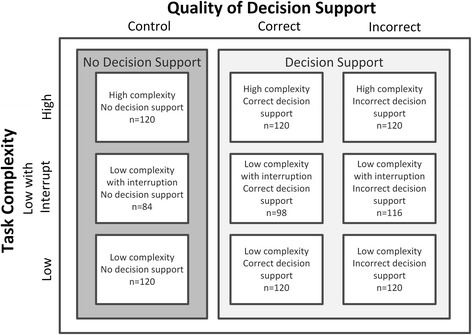
BACKGROUND: Clinical decision support (CDS) in e-prescribing can improve safety by alerting potential errors, but introduces new sources of risk. Automation bias (AB) occurs when users over-rely on CDS, reducing vigilance in information seeking and processing. Evidence of AB has been found in other clinical tasks, but has not yet been tested with e-prescribing. This study tests for the presence of AB in e-prescribing and the impact of task complexity and interruptions on AB. METHODS: One hundred and twenty students in the final two years of a medical degree prescribed medicines for nine clinical scenarios using a simulated e-prescribing system. Quality of CDS (correct, incorrect and no CDS) and task complexity (low, low + interruption and high) were varied between conditions. Omission errors (failure to detect prescribing errors) and commission errors (acceptance of false positive alerts) were measured. RESULTS: Compared to scenarios with no CDS, correct CDS reduced omission errors by 38.3% (p < .0001, n = 120), 46.6% (p < .0001, n = 70), and 39.2% (p < .0001, n = 120) for low, low + interrupt and high complexity scenarios respectively. Incorrect CDS increased omission errors by 33.3% (p < .0001, n = 120), 24.5% (p < .009, n = 82), and 26.7% (p < .0001, n = 120). Participants made commission errors, 65.8% (p < .0001, n = 120), 53.5% (p < .0001, n = 82), and 51.7% (p < .0001, n = 120). Task complexity and interruptions had no impact on AB. CONCLUSIONS: This study found evidence of AB omission and commission errors in e-prescribing. Verification of CDS alerts is key to avoiding AB errors. However, interventions focused on this have had limited success to date. Clinicians should remain vigilant to the risks of CDS failures and verify CDS.
Overview
The claims and statistics of this paper haven’t been checked yet.
Run the check — free, no account needed. It reads the open-access text and checks the sources it cites.
Integrity signals
Registry
Cites
Statistics
Figures
Verification
Claims the paper makes
The claims and statistics of this paper haven’t been checked yet.
Run the check — free, no account needed. It reads the open-access text and checks the sources it cites.
Claims other papers make about this one
Each is checked against this paper’s own text: does it say what the citing paper says it does?
In the citing paper
“Another explanation might be that participants worry about physicians’ automation bias, 48 that is, physicians might blindly rely on the AI-enabled system's suggestions without critically reviewing them resulting in reduced accuracy 49 and increased medical errors. 50”
From Patient perspectives on informed consent for medical AI: A web-based experiment (2024) · cites this paper as [50]
Self-check
Percentages, sums and reported differences re-computed from the paper’s own numbers.
The self-check needs the paper’s full text.
Citations
Cites
Faul, F., Erdfelder, E., Lang, A.-G., & Buchner, A. (2007) · Behavior Research Methods · doi:10.3758/bf03193146 · Cited by 65,971
Note on the Sampling Error of the Difference Between Correlated Proportions or Percentages
McNemar, Q. (1947) · Psychometrika · doi:10.1007/bf02295996 · Cited by 4,754
Multiple significance tests: the Bonferroni method
Bland, J. M., & Altman, D. G. (1995) · BMJ · doi:10.1136/bmj.310.6973.170 · Cited by 3,341
Complacency and Bias in Human Use of Automation: An Attentional Integration
Parasuraman, R., & Manzey, D. H. (2010) · Human Factors: The Journal of the Human Factors and Ergonomics Society · doi:10.1177/0018720810376055 · Cited by 1,710
Automation bias: a systematic review of frequency, effect mediators, and mitigators
Goddard, K., Roudsari, A., & Wyatt, J. C. (2012) · Journal of the American Medical Informatics Association · doi:10.1136/amiajnl-2011-000089 · Cited by 1,162 · cited 2×
“There are multiple possible causes of AB, [8, 9] and the literature is currently unclear regarding which, or all, of these are genuinely causal, and under which circumstances.”
BackgroundPerformance Consequences of Automation-Induced 'Complacency'
Parasuraman, R., Molloy, R., & Singh, I. L. (1993) · The International Journal of Aviation Psychology · doi:10.1207/s15327108ijap0301_1 · Cited by 875 · cited 1×
“The prevailing view in the human factors literature is that AB only occurs in a multi-task environment [14, 20, 21].”
BackgroundSpeier, C., Valacich, J. S., & Vessey, I. (1999) · Decision Sciences · doi:10.1111/j.1540-5915.1999.tb01613.x · Cited by 699
Ammenwerth, E., Schnell‐Inderst, P., Machan, C., & Siebert, U. (2008) · Journal of the American Medical Informatics Association · doi:10.1197/jamia.m2667 · Cited by 681
Automation bias and verification complexity: a systematic review
Lyell, D., & Coiera, E. (2017) · Journal of the American Medical Informatics Association · doi:10.1093/jamia/ocw105 · Cited by 451 · cited 3×
“However AB has been reported in some, but not all, tasks in a single task environment [14].”
BackgroundSelf-citationWolfstadt, J. I., Gurwitz, J. H., Field, T. S., Lee, M. M., Kalkar, S. R., Wu, W., & Rochon, P. A. (2008) · Journal of General Internal Medicine · doi:10.1007/s11606-008-0504-5 · Cited by 388
Research works printed but not linked: 3
- Britt H, Miller G, Henderson J, Bayram C, Harrison C, Valenti L, Wong C, Gordon J, Pollack A, Pan Y, et al. General practice activity in Australia 2014–15. General practice series no. 38. Sydney: Sydney University Press; 2015.
- De Vries TPGM, Henning RH, Hogerzeil HV, Fresle DA. Guide to good prescribing. Geneva: World Health Organization; 1994.
- Singh AL, Tiwari T, Singh IL. Performance feedback, mental workload and monitoring efficiency. J Indian Acad Appl Psychol. 2010;36(1):151–8.
Cited by
Sorted by citations
Magrabi, F., Ammenwerth, E., McNair, J. B., De Keizer, N. F., Hyppönen, H., Nykänen, P., Rigby, M., Scott, P. J., Vehko, T., Wong, Z. S.-Y., et al. (2019) · Yearbook of Medical Informatics · doi:10.1055/s-0039-1677903 · Cited by 347
“Previous work has demonstrated the effects of automation bias with a prescribing DSS that was based on simple rules of logic [42].”
BackgroundSelf-citationCurrent challenges in health information technology–related patient safety
Sittig, D. F., Wright, A. T., Coiera, E. W., Magrabi, F., Ratwani, R. M., Bates, D. W., & Singh, H. (2018) · Health Informatics Journal · doi:10.1177/1460458218814893 · Cited by 183
“41 How should useful clinical decision support be developed, implemented, and potentially regulated to have the biggest impact?”
BackgroundSelf-citationHumans inherit artificial intelligence biases
Vicente, L., & Matute, H. (2023) · Scientific Reports · doi:10.1038/s41598-023-42384-8 · Cited by 158
General Practitioners’ Attitudes Toward Artificial Intelligence–Enabled Systems: Interview Study
Buck, C., Doctor, E., Hennrich, J., Jöhnk, J., & Eymann, T. (2022) · Journal of Medical Internet Research · doi:10.2196/28916 · Cited by 147
“By blindly relying on the AI-enabled systems’suggestions, physicians would no longer critically review them, which can reduce accuracy [86] and increase medical errors [87].”
MethodHuman Factors Challenges for the Safe Use of Artificial Intelligence in Patient Care
Sujan, M., Furniss, D., Grundy, K., Grundy, H., Nelson, D., Elliott, M., White, S., Habli, I., & Reynolds, N. (2019) · BMJ Health & Care Informatics · doi:10.1136/bmjhci-2019-100081 · Cited by 144
“22 The study found that clinical decision support reduced prescribing errors when working correctly but also increased prescribing errors by around one-third in cases where the system either did not alert the clinician to a potential problem or provided the wrong advice.”
Abdelwanis, M., Alarafati, H. K., Tammam, M. M. S., & Simsekler, M. C. E. (2024) · Journal of Safety Science and Resilience · doi:10.1016/j.jnlssr.2024.06.001 · Cited by 177
Black Box Warning: Large Language Models and the Future of Infectious Diseases Consultation
Schwartz, I. S., Link, K. E., Daneshjou, R., & Cortés-Penfield, N. (2024) · Clinical Infectious Diseases · doi:10.1093/cid/ciad633 · Cited by 131
“…incorrect diagnoses of atrial fibrillation in one-quarter of cases, leading to unnecessary antiarrhythmics and anticoagulation in 10% [24]; in yet another, erroneous alerts from clinical decision-support systems during electronic prescribing led to an overall increase in prescribing errors [25].”
BackgroundArtificial intelligence and clinical anatomical education: Promises and perils
Lazarus, M. D., Truong, M., Douglas, P., & Selwyn, N. (2024) · Anatomical Sciences Education · doi:10.1002/ase.2221 · Cited by 116
“Automation bias is reported in a range of domains, including health-care, where the use of clinical decision-support systems leads to clinicians failing to notice problems (unless alerted to them), as well as complying with incorrect recommendations (Lyell et al., 2017).”
BackgroundPatient perspectives on informed consent for medical AI: A web-based experiment
Park, H. J. (2024) · DIGITAL HEALTH · doi:10.1177/20552076241247938 · Cited by 95
“50 Further research is needed to con fi rm the source of respondents ’ increased anxiety regarding the use of AI.”
BackgroundAI and machine learning ethics, law, diversity, and global impact
Drabiak, K., Kyzer, S., Nemov, V., & El Naqa, I. (2023) · The British Journal of Radiology · doi:10.1259/bjr.20220934 · Cited by 84
Pedro, A. R., Dias, M. B., Laranjo, L., Cunha, A. S., & Cordeiro, J. V. (2023) · PLOS ONE · doi:10.1371/journal.pone.0290613 · Cited by 74
Cabitza, F., & Zeitoun, J.-D. (2019) · Annals of Translational Medicine · doi:10.21037/atm.2019.04.07 · Cited by 72
“In this way, “oracularity” could affect decision-making and lead to automation bias (14).”
BackgroundHow Should AI Be Developed, Validated, and Implemented in Patient Care?
Anderson, M., & Anderson, S. (2019) · The AMA Journal of Ethic · doi:10.1001/amajethics.2019.125 · Cited by 73
High-reward, high-risk technologies? An ethical and legal account of AI development in healthcare
Corfmat, M., Martineau, J. T., & Régis, C. (2025) · BMC Medical Ethics · doi:10.1186/s12910-024-01158-1 · Cited by 87
The impact of AI errors in a human-in-the-loop process
Agudo, U., Liberal, K. G., Arrese, M., & Matute, H. (2024) · Cognitive Research: Principles and Implications · doi:10.1186/s41235-023-00529-3 · Cited by 66
“An example of this automation bias is found in Lyell et al. (2017).”
BackgroundChatGPT in Medical Education: A Precursor for Automation Bias?
Nguyen, T. (2023) · JMIR Medical Education · doi:10.2196/50174 · Cited by 85
“In Lyell et al’s [6] study, the error rate associated with a clinical decision support system when it was inaccurate was higher (86.6”
BackgroundInfluentialFelmingham, C. M., Adler, N. R., Ge, Z., Morton, R. L., Janda, M., & Mar, V. J. (2021) · American Journal of Clinical Dermatology · doi:10.1007/s40257-020-00574-4 · Cited by 57
The effect of cognitive load and task complexity on automation bias in electronic prescribing
Lyell, D., Magrabi, F., & Coiera, E. (2018) · Human Factors: The Journal of the Human Factors and Ergonomics Society · doi:10.1177/0018720818781224 · Cited by 67
“One cause of errors when using clinical decision support (CDS) in electronic prescribing (e-prescribing) is automation bias (AB; Lyell et al., 2017).”
BackgroundMethodResultInfluentialSelf-citationExpectations for Artificial Intelligence (AI) in Psychiatry
Monteith, S., Glenn, T., Geddes, J. R., Whybrow, P. C., Achtyes, E. D., & Bauer, M. (2022) · Current Psychiatry Reports · doi:10.1007/s11920-022-01378-5 · Cited by 61
“There are examples of automation bias across medicine including for interpretation of electrocardiograms [134, 135], e-prescribing [136], whole slide image classification in pathology [137], and diagnosis of skin cancers [138].”
BackgroundSusanto, A. P., Lyell, D., Widyantoro, B., Berkovsky, S., & Magrabi, F. (2023) · Journal of the American Medical Informatics Association · doi:10.1093/jamia/ocad180 · Cited by 76
Self-citationInfluences on User Trust in Healthcare Artificial Intelligence: A Systematic Review
Jermutus, E., Kneale, D., Thomas, J., & Michie, S. (2022) · Wellcome Open Research · doi:10.12688/wellcomeopenres.17550.1 · Cited by 50
“For instance, trusting too may result in errors in electronic prescribing 11 .”
BackgroundAutomation to optimise physician treatment of individual patients: examples in psychiatry
Bauer, M., Monteith, S., Geddes, J., Gitlin, M. J., Grof, P., Whybrow, P. C., & Glenn, T. (2019) · The Lancet Psychiatry · doi:10.1016/s2215-0366(19)30041-0 · Cited by 44
Algorithms and Influence Artificial Intelligence and Crisis Decision-Making
Horowitz, M. C., & Lin-Greenberg, E. (2022) · International Studies Quarterly · doi:10.1093/isq/sqac069 · Cited by 46
Systematic review of computerized prescriber order entry and clinical decision support
Vélez-Díaz-Pallarés, M., Pérez-Menéndez-Conde, C., & Bermejo-Vicedo, T. (2018) · American Journal of Health-System Pharmacy · doi:10.2146/ajhp170870 · Cited by 50
Autopilots in the Operating Room: Safe Use of Automated Medical Technology
Ruskin, K. J., Corvin, C., Rice, S. C., & Winter, S. R. (2020) · Anesthesiology · doi:10.1097/aln.0000000000003385 · Cited by 38
“6% more errors when this support is incorrect.(85) Automation bias seems to be exacerbated by multitasking and by increasing cognitive load.”
BackgroundLiu, F., Chang, X., Zhu, Q., Huang, Y., Li, Y., & Wang, H. (2024) · BMC Medical Education · doi:10.1186/s12909-024-06232-1 · Cited by 35
“Growing up in the digital age, medical students who have limited background knowledge may have too much reliance on LLMs and cannot identify errors [7, 83, 84].”
BackgroundPan, D., Nilsson, E., & Rahman Jabin, M. S. (2024) · Health Informatics Journal · doi:10.1177/14604582241270742 · Cited by 32
“46 Therefore, it is highly desirable that Arti fi cial Intelligence (AI)-driven automation ensures human awareness of what is going on and what is “ in the loop ” 47 AI-driven automation should balance when to interrupt a human by sending alerts and when a human can overrule an alert.”
Considering the Safety and Quality of Artificial Intelligence in Health Care
Ross, P. A., & Spates, K. (2020) · The Joint Commission Journal on Quality and Patient Safety · doi:10.1016/j.jcjq.2020.08.002 · Cited by 33
Fraile Navarro, D., Kocaballi, A. B., Dras, M., & Berkovsky, S. (2023) · ACM Transactions on Computer-Human Interaction · doi:10.1145/3569893 · Cited by 28
“Aspects like explainability [3], automation bias [76], fairness [20], and other ethical challenges need to be addressed [129] in parallel with improving the precision and accuracy of AI.”
BackgroundJordan, S. E., Banner, T., Gabe‐Walters, M., Mikhail, J. M., Panes, G., Round, J. A., Snelgrove, S. R., Storey, M., & Hughes, D. (2019) · PLoS ONE · doi:10.1371/journal.pone.0220885 · Cited by 34
“Where clinical decision support is poor, electronic prescribing increases errors [54], and ADRe’s supporting information helps here.”
BackgroundArtificial intelligence and deskilling in medicine
Monteith, S., Glenn, T., Geddes, J. R., Whybrow, P. C., Achtyes, E. D., Bauer, R., & Bauer, M. (2026) · The British Journal of Psychiatry · doi:10.1192/bjp.2025.10496 · Cited by 26
“19 – 22 There is also concern that if basic tasks such as interview skills are performed by artificial intelligence, physicians may not develop advanced skills to the same extent.”
Barnard, L., Botha, H., Corriveau-Lecavalier, N., Graff-Radford, J., Dicks, E., Gogineni, V., Zhang, G., Burkett, B. J., Johnson, D. R., Huls, S. J., et al. (2025) · Neurology · doi:10.1212/wnl.0000000000213831 · Cited by 25
Trust and Transparency in Machine Learning-Based Clinical Decision Support
Gretton, C. (2018) · Human–Computer Interaction Series · doi:10.1007/978-3-319-90403-0_14 · Cited by 27
The safety of computerised prescribing in hospitals
Baysari, M. T., & Raban, M. Z. (2019) · Australian Prescriber · doi:10.18773/austprescr.2019.037 · Cited by 22
Self-citationTsai, D.-J., Lin, C., Liu, W.-T., Lee, C.-C., Chang, C.-H., Lin, W.-Y., Liu, Y.-L., Chang, D.-W., Hsieh, P.-H., Tsai, C.-S., et al. (2025) · BMC Medicine · doi:10.1186/s12916-025-04190-z · Cited by 19
“Such discrepancies may elevate the risk to patient safety [25].”
Leveraging law and ethics to promote safe and reliable AI/ML in healthcare
Drabiak, K. (2022) · Frontiers in Nuclear Medicine · doi:10.3389/fnume.2022.983340 · Cited by 22
“The “black-box” highly complex nature of AI/ML also makes it difficult or impossible for the physician to understand the reasoning behind the CDS recommendation, creating uncertainty for a physician when comparing clinical judgment against the AI/ML recommendation as a means to prevent error (4, 15).”
BackgroundInfluentialWhere to find information about drugs
Day, R. O., & Snowden, L. (2016) · Australian Prescriber · doi:10.18773/austprescr.2016.023 · Cited by 21
Self-citationMeaningful oversight of medical AI beyond human in the loop
van de Sande, D., Economou-Zavlanos, N., & van Genderen, M. E. (2026) · npj Digital Medicine · doi:10.1038/s41746-026-02971-1 · Cited by 29
Reduced Verification of Medication Alerts Increases Prescribing Errors
Lyell, D., Magrabi, F., & Coiera, E. W. (2019) · Applied Clinical Informatics · doi:10.1055/s-0038-1677009 · Cited by 19
“These fi ndings highlight the importance of veri fi cation in preventing prescribing errors and may be generalizable to other forms of CDS.”
BackgroundMethodInfluentialSelf-citationMonteith, S., Glenn, T., Gitlin, M. J., & Bauer, M. (2020) · Pharmacopsychiatry · doi:10.1055/a-1156-4193 · Cited by 19
“Automation bias may also occur, with some prescribers becoming over-reliant on the drug interaction database program to detect potential DDI at the exclusion of clinical judgement [91].”
BackgroundNavarro, D. F., Kocaballi, A. B., & Berkovsky, S. (2025) · Journal of Medical Systems · doi:10.1007/s10916-025-02234-8 · Cited by 16
“In this context, flexible automation and moderate levels of oversight are crucial for controlling and mitigating the risk of biases [ 19].”
Should AI-Enabled Medical Devices be Explainable?
Matulionytė, R., Nolan, P., Magrabi, F., & Beheshti, A. (2022) · International Journal of Law and Information Technology · doi:10.1093/ijlit/eaac015 · Cited by 14
Self-citationRozario, S. Y., Sarkar, M., Farlie, M. K., & Lazarus, M. D. (2023) · Anatomical Sciences Education · doi:10.1002/ase.2260 · Cited by 10
Stakeholder perspectives of system-related errors: Types, contributing factors, and consequences
Kinlay, M., Zheng, W. Y., Burke, R. A., Juraskova, I., Ho, L. M., Turton, H., Trinh, J., & Baysari, M. T. (2022) · International Journal of Medical Informatics · doi:10.1016/j.ijmedinf.2022.104821 · Cited by 9
Self-citationMcMullan, R. D., Urwin, R., Wiggins, M. W., & Westbrook, J. I. (2022) · Applied Ergonomics · doi:10.1016/j.apergo.2022.103906 · Cited by 8
Raban, M. Z., Baysari, M. T., Jorgensen, M. L., Tariq, A., Georgiou, A., & Westbrook, J. I. (2020) · Applied Clinical Informatics · doi:10.1055/s-0040-1721011 · Cited by 8
Self-citationABCs: Differentiating Algorithmic Bias, Automation Bias, and Automation Complacency
Potasznik, A. (2023) · IEEE International Symposium on Ethics in Engineering, Science, and Technology (ETHICS) · doi:10.1109/ethics57328.2023.10155094 · Cited by 9
“…bags when the automated system incorrectly fails to flag them) [29], electronic prescription decisions (e.g., avoiding certain prescriptions based on inappropriate alerts) [30], the reading and interpretation of electrocardiograms [31], the identification of suspected criminals [11], and more.”
BackgroundUsing AI to improve medication safety
Westbrook, J. I., Wabe, N., & Raban, M. Z. (2024) · Nature Medicine · doi:10.1038/s41591-024-02980-1 · Cited by 6
Self-citationA Synergistic Bridge Between Human–Computer Interaction and Data Management Within CDSS
Azadi, A., & García‐Peñalvo, F. J. (2025) · Data · doi:10.3390/data10050060 · Cited by 6
Guo, S., Du, W., Chen, S., Guo, X., & Ju, X. (2019) · International Journal of Environmental Research and Public Health · doi:10.3390/ijerph16183463 · Cited by 6
The education and training of medical students in electronic prescribing
Burns, N., & Okorie, M. (2022) · Pharmacology Research & Perspectives · doi:10.1002/prp2.1011 · Cited by 6
GDPR Impacts and Opportunities for Computer-Aided Diagnosis Guidelines and Legal Perspectives
Pedrosa, M., Costa, C. M. A., & Dorado, J. (2019) · Proceedings - IEEE Symposium on Computer-Based Medical Systems · doi:10.1109/cbms.2019.00128 · Cited by 6
“The complacency issue was originally identified in aviation, but from then it has also spread into the medical field [20].”
BackgroundIn search of a Goldilocks zone for credible AI
Allan, K., Oren, N., Hutchison, J., & Martin, D. S. (2021) · Scientific Reports · doi:10.1038/s41598-021-93109-8 · Cited by 5
Findings from the 2018 Yearbook Section on Human Factors and Organizational Issues
Sylvia Pelayo, A., Viitanen, J., & Issues, S. E. F. T. I. Y. S. O. H. F. A. O. (2018) · Yearbook of Medical Informatics · doi:10.1055/s-0038-1667074 · Cited by 5
“[9] found evidence of the automation bias in e-prescribing.”
Human Performance in Automated and Autonomous Systems
(2019) · CRC Press eBooks · doi:10.1201/9780429458330 · Cited by 5
Young, S. R. (2020) · Archives of Clinical Neuropsychology · doi:10.1093/arclin/acaa040 · Cited by 4
Using Clinical Simulation to Evaluate AI-Enabled Decision Support
Lyell, D., Lustig, A., Denyer, K., Vedantam, S., & Magrabi, F. (2024) · Studies in health technology and informatics · doi:10.3233/shti230975 · Cited by 4
Self-citationWhat is Wrong With Automation Bias?
Jovchevski, P., Buijsman, S., & Neerincx, M. A. (2026) · Philosophy & Technology · doi:10.1007/s13347-026-01090-9 · Cited by 4
“Lyell et al. ( 2017 ) investigated the phenomenon of automation bias in the context of electronic prescribing, where 120 final-year medical students used a simulated e-prescribing system with clinical decision support (CDS) under varying conditions of task complexity and interruption.”
PDMP causes more than just testimonial injustice
Nguyen, T. (2023) · Journal of Medical Ethics · doi:10.1136/jme-2023-109112 · Cited by 3
Benchmarking Interpretability in Healthcare Using Pattern Discovery and Disentanglement
Zhou, P.-Y., Takeuchi, A., Lopez, F. M., Ehghaghi, M., Wong, A. K. C., & Lee, E.-S. A. (2025) · Bioengineering · doi:10.3390/bioengineering12030308 · Cited by 5
“Lyell et al. [21] also pointed out that AI systems potentially have a bias against minority groups, people with disabilities, and individuals with mental health problems.”
Kara, M. A. (2024) · Medicine Health Care and Philosophy · doi:10.1007/s11019-024-10241-8 · Cited by 3
“…non-human elements of the system can be a serious design challenge and, if unsuccessful, can create a judgment gap in the interpretation of the general rules for specific cases. complexity of verification task (Goddard et al. 2012; Lyell and Coiera 2017; Lyell et al. 2017 ; Harbarth et al. 2024).”
Working memory capacity improves checking performance for errors on a simulated rail control task
McMullan, R. D., Aryal, N. R., Li, L., Wiggins, M. W., Clive, J., & Westbrook, J. I. (2025) · Applied Ergonomics · doi:10.1016/j.apergo.2025.104482 · Cited by 3
Writing a prescription: the law and good practice
Bowles, A. (2021) · Journal of Paramedic Practice · doi:10.12968/jpar.2021.13.11.472 · Cited by 3
Integration of AI for Clinical Decision Support
Visweswaran, S., King, A. J., & Cooper, G. F. (2022) · Cognitive informatics in biomedicine and healthcare · doi:10.1007/978-3-031-09108-7_10 · Cited by 3
ChatGPT in Medical Education: A Precursor for Automation Bias? (Preprint)Preprint
Nguyen, T. (2023) · doi:10.2196/preprints.50174 · Cited by 3
The Clinical Considerations for Trustworthy AI in Oncologic Imaging
Bobowicz, M., Koh, D., Penzkofer, T., Regge, D., Riklund, K., Martínez-Gironés, P. M., Fütterer, J. J., Lekadir, K., Tsakou, G., & Martí‐Bonmatí, L. (2025) · Springer eBooks · doi:10.1007/978-3-031-89963-8_2 · Cited by 2
A nursing perspective on human-AI collaboration in personalized breast cancer care pathways
Zhang, J., Zhao, X., Tao, J.-H., & Su, D.-C. (2026) · Frontiers in Oncology · doi:10.3389/fonc.2026.1784401 · Cited by 2
“Within this structure, ultimate decision-making authority remains with licensed clinicians (60).”
Technology and Health Care Improvement
Herstek, J., & Shelov, E. D. (2021) · Springer eBooks · doi:10.1007/978-3-030-70780-4_8 · Cited by 2
Mathematical Model for Computer-Assisted Modification of Medication Dosing Rules
Grabel, M., Vaughan, B. L., Dexheimer, J. W., & Kirkendall, E. S. (2019) · Biomedical Informatics Insights · doi:10.1177/1178222619829079 · Cited by 2
“22,23 This tool has the capability to rapidly assess all drug rules in a corpus in an automated fashion, identify and prioritize candidate rules for editing based on the potential decrease in alert burden or other factors, and pre-sent these rules to a human expert for validation and implementation.”
MethodInfluences on User Trust in Healthcare Artificial Intelligence (HAI): A Systematic Review (Preprint)Preprint
Jermutus, E., Kneale, D., Thomas, J., & Michie, S. (2021) · doi:10.2196/preprints.35122 · Cited by 1
Prével, A., Salatino, A., & Bue, S. L. (2023) · Preprints.org · doi:10.20944/preprints202203.0070.v2 · Cited by 1
Lambert, A., Hombourger, B., Salleron, J., Chergui, F., Vallance, C., Nicolas, N., Moussouni, M., Cherif, L., Chenot, E., Gavoille, C., et al. (2024) · Journal of Medical Internet Research · doi:10.2196/57782 · Cited by 2
“However, electronic prescription introduces a new source of risk [4], one of which is called automation bias, which occurs when a physician blindly trusts prescription-helping software, thereby reducing vigilance in information-seeking and validation [5].”
Artificial Intelligence in Dental Education: Opportunities, Challenges, and Implementation
Uribe, S. E., Schwendicke, F., & González‐Cabezas, C. (2025) · Springer eBooks · doi:10.1007/978-3-031-84047-0_12 · Cited by 1
The Transparency and Liability Issues Associated with AI-Based Medical Systems
Blatti, A., & Tramacere, S. (2025) · Data science, machine intelligence, and law · doi:10.1007/978-3-031-99709-9_15 · Cited by 1
Rizal, P. (2025) · Annals of Innovation in Medicine · doi:10.59652/hrnhkr35 · Cited by 1
“(15) A systematic review focusing on automation bias and verification complexity found that such bias can occur even in single-task environments and may relate to cognitive load and task verification difficulty.”
InfluentialZhang, T., Le, M.-H., Zlotnik, N., Yee, A. V., Patodia, A., & Austin, Z. (2026) · Pharmacy · doi:10.3390/pharmacy14050113 · Cited by 1
“Alert fatigue increases the risk of automation bias whereby humans in the loop may act more passively, or ‘on the loop’, agreeing blindly with AI outputs and merely ‘pressing go’ without much thought, allowing potential mistakes to slip by [20,21].”
Prével, A., & Bue, S. L. (2022) · Preprints.org · doi:10.20944/preprints202203.0070.v1 · Cited by 1
Implementation of electronic prescription - the physicians’ view (Preprint)Preprint
Starič, K. D., Tilney, M. K., Chouvarda, I., Bukovec, P., & Belani, H. (2019) · doi:10.2196/preprints.14559 · Cited by 1
IMPLEMENTATION OF ELECTRONIC PRESCRIPTIONS: THE PHYSICIANS VIEW
Stari?, K. D., Tilney, M. K., Chouvarda, I., & Belani, P. B. A. H. (2020) · IADIS International Conference on e-Health (EH) · doi:10.33965/eh2020_202009l008
Gurley, A. L., Tanch, J., Portelli, D. C., Priebe, C. J., Berube, J. A., Dieffenbach, A., Harris, R., Jalal, M., Sayles, S., Smulling, A. J., et al. (2020) · IEEE International IOT, Electronics and Mechatronics Conference (IEMTRONICS) · doi:10.1109/iemtronics51293.2020.9216436
“This widespread adoption of HIT and CIS has demonstrably introduced new complexities into patient care at the bedside [3-17].”
BackgroundCognitive considerations for health information technology in clinical team environments
Franklin, A., & Zhang, J. (2023) · Elsevier eBooks · doi:10.1016/b978-0-323-91200-6.00024-3
Ethical and Legal Protection Mechanisms for Security Risks of Medical Artificial Intelligence
Wang, Y., & Dai, H. (2020) · JOURNAL OF ENGINEERING STUDIES · doi:10.3724/sp.j.1224.2020.00241
Electronic Prescribing and Medicines Administration
Goundrey-Smith, S. (2026) · Health informatics · doi:10.1007/978-1-4471-7613-8_3
Goundrey-Smith, S. (2026) · Health informatics · doi:10.1007/978-1-4471-7613-8_1
When Silence Signals Safety: Governance and Responsibility in AI-Enabled Prescription Verification
Zavaleta‐Monestel, E., Mora-Jiménez, J., & Arguedas‐Chacón, S. (2026) · Cureus · doi:10.7759/cureus.103272
“In medication-related decision support, this phenomenon, known as automation bias, has been shown to influence pharmacist oversight and clinical decision-making, leading clinicians to defer to computerized outputs even when those outputs may be incomplete or incorrect [2].”
Fingeret, A. L., Cloonan, M. R., Nelson, K., Haggar, F. L., Buesing, K. L., Talmon, G., & Beam, E. L. (2026) · Academic Medicine · doi:10.1093/acamed/wvag089
Ghatak, T. (2026) · Indian Journal of Critical Care Medicine · doi:10.5005/jp-journals-10071-25188
Badgery‐Parker, T., Li, L., Woods, A. J., Raban, M. Z., & Westbrook, J. I. (2026) · BMJ Health & Care Informatics · doi:10.1136/bmjhci-2025-101507
Self-citationPatients’ attitudes in Bulgaria towards electronic prescriptions and digital solutions
Kilova, K. P., Hadzhieva, B. R., Dimcheva, T., Petkova, V. B., Chepilska, S., & Stoyanova, R. (2026) · Pharmacia · doi:10.3897/pharmacia.73.e190084
Patientensicherheit im Operationssaal
Szabó, A. K., & Flemming, S. (2026) · Die Chirurgie · doi:10.1007/s00104-026-02506-0
Robertson, C., Cooper, D., Duggan, S. N., Manson, P. D., Imamura, M., Hernández, R. A., Clarke, M. J., Treweek, S. P., & Brazzelli, M. G. (2026) · Journal of Medical Screening · doi:10.1177/09691413261447057
Moral diversity and the challenge of responsibility in AI-CDSS
Liedtke, W., & Langanke, M. (2026) · Philosophy Ethics and Humanities in Medicine · doi:10.1186/s13010-026-00226-1 · Cited by 1
Osman, H. A. (2026) · African Journal of Laboratory Medicine · doi:10.4102/ajlm.v15i1.3130
“7,8,9,10,11,12,13 Addressing these gaps is essential for widespread clinical adoption and trust among practitioners.”
Emergenz-Achse: Wenn aus Einzelmechanismen ein klinisches Risiko wird
Elsharkawy, A. E. (2026) · Essentials · doi:10.1007/978-3-662-74123-8_6
Shiraishi, K. (2026) · Patient Safety · doi:10.33940/001c.161810
Amoei, M., Fraser, K., & Poenaru, D. (2026) · doi:10.2196/preprints.107982 · Cited by 1
Avery, A., Dinger, M., & Maier, C. (2026) · ACM SIGMIS Database the DATABASE for Advances in Information Systems · doi:10.1145/3822165.3822168
“One such suggestion for the phenomenon of automation bias in DSSs is for workers to simply verify system alerts (Lyell et al., 2017).”
Where Should Automation Stop in Community Pharmacy? A Boundary Model for Delegating Medication Tasks
Müller, H., Schmidt, A., & Weber, T. (2025) · Archives of Pharmacy Practice · doi:10.51847/lgc8j2bcwu
Sifakis, N., Sarti, S., Chachalis, A., Cholidis, D., Batistatos, M. C., Kourtis, M., Aryblia, M., & Arampatzis, G. (2026) · Sustainability · doi:10.3390/su18178858
Metadata
- Authors
- Lyell, D., Magrabi, F., Raban, M. Z., Pont, L. G., Baysari, M. T., Day, R. O., & Coiera, E.
- Affiliations
- Macquarie University (AU)
- UNSW Sydney (AU)
- Corresponding author
- Lyell, David
- ORCID
- Venue
- BMC Medical Informatics and Decision Making
- Published
- 2017-03-16
- Volume
- 17
- Issue
- 1
- Pages
- 28-28
- ISSN
- 1472-6947 (ISSN-L)
- PMC
- PMC5356416
- OpenAlex
- W2595764213
- Cited by
- 103
- References
- 39
- Citations by year
- 2026: 25 · 2025: 12 · 2024: 9 · 2023: 12 · 2022: 13 · 2021: 4 · 2020: 9 · 2019: 13 · 2018: 5
- FWCI
- 10.13
- Type
- journal article
- Language
- en
- Open access
- gold
- doi.org
- Licence
- cc-by
- Locations
- BMC Medical Informatics and Decision Making (publishedVersion, cc-by)
- PubMed Central (publishedVersion, cc-by)
- PubMed (publishedVersion)
- OPUS - Open Publications of UTS Scholars (University of Technology Sydney) (submittedVersion)
- UNSWorks (University of New South Wales, Sydney, Australia) (submittedVersion, cc-by)
- Funders
- HCF Research Foundation
- Topics
- Health Sciences › Health Professions › Health Information Management › Electronic Health Records Systems
- Health Sciences › Medicine › Public Health, Environmental and Occupational Health › Patient Safety and Medication Errors
- Health Sciences › Medicine › Family Practice › Clinical Reasoning and Diagnostic Skills
- Keywords
- automation bias, electronic prescribing, clinical decision support, medication errors, omission errors, commission errors, false positive alerts, task complexity, interruptions, medical students, prescribing safety
- MeSH terms
- Automation, Humans, Medication Errors, Students, Medical, Decision Support Systems, Clinical, Electronic Prescribing
About these checks
Registry, retraction, Cites and statistics results are computed, not judged, with one exception: a printed reference that no index lists is read once by a model before it counts as a citation error. Claims are extracted by a model and kept only when their quote appears verbatim in the text; each cited source is then checked, with a model’s help, for whether it says what the claim relies on. Those verdicts can be wrong — read the claim’s quote and the cited source before relying on one.
Statistics and arithmetic are recomputed, not judged.
Confidence bands are shown only for fields calibrated on our annotated test set. None is calibrated yet, so no band is shown.
What counts as a claim ›How we measure confidence ›How we check this ›
Are you an author, or do you see a problem with this page? Request a review
