

A systematic review of large language model (LLM) evaluations in clinical medicine
Open accessThe DOI matches its Crossref record; 18 of the 18 references it cites were found in a registry or an index.
Abstract
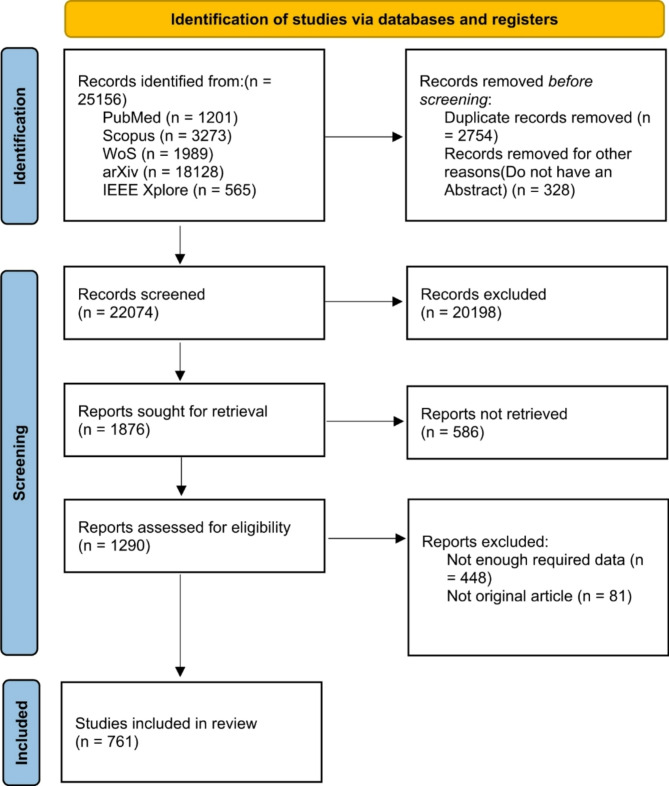
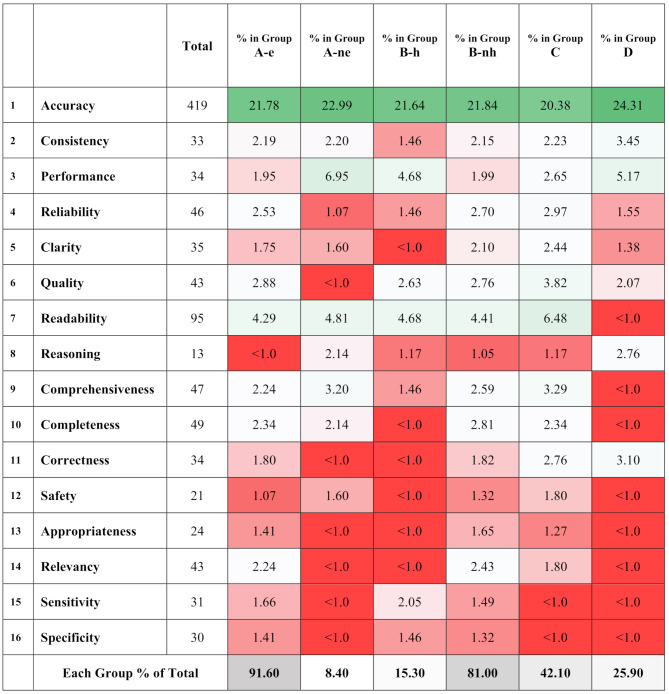
BACKGROUND: Large Language Models (LLMs), advanced AI tools based on transformer architectures, demonstrate significant potential in clinical medicine by enhancing decision support, diagnostics, and medical education. However, their integration into clinical workflows requires rigorous evaluation to ensure reliability, safety, and ethical alignment. OBJECTIVE: This systematic review examines the evaluation parameters and methodologies applied to LLMs in clinical medicine, highlighting their capabilities, limitations, and application trends. METHODS: A comprehensive review of the literature was conducted across PubMed, Scopus, Web of Science, IEEE Xplore, and arXiv databases, encompassing both peer-reviewed and preprint studies. Studies were screened against predefined inclusion and exclusion criteria to identify original research evaluating LLM performance in medical contexts. RESULTS: The results reveal a growing interest in leveraging LLM tools in clinical settings, with 761 studies meeting the inclusion criteria. While general-domain LLMs, particularly ChatGPT and GPT-4, dominated evaluations (93.55%), medical-domain LLMs accounted for only 6.45%. Accuracy emerged as the most commonly assessed parameter (21.78%). Despite these advancements, the evidence base highlights certain limitations and biases across the included studies, emphasizing the need for careful interpretation and robust evaluation frameworks. CONCLUSIONS: The exponential growth in LLM research underscores their transformative potential in healthcare. However, addressing challenges such as ethical risks, evaluation variability, and underrepresentation of critical specialties will be essential. Future efforts should prioritize standardized frameworks to ensure safe, effective, and equitable LLM integration in clinical practice.
Overview
The claims and statistics of this paper haven’t been checked yet.
Free: it reads the open-access text and checks the first 5 claims that cite a source we can check. Create a free account to check every claim.
Integrity signals
Registry
Cites
Statistics
Figures
Verification
Claims the paper makes
The claims and statistics of this paper haven’t been checked yet.
Free: it reads the open-access text and checks the first 5 claims that cite a source we can check. Create a free account to check every claim.
Self-check
Percentages, sums and reported differences re-computed from the paper’s own numbers.
The self-check needs the paper’s full text.
Citations
Cites
Cascella, M., Montomoli, J., Bellini, V., & Bignami, E. (2023) · Journal of Medical Systems · doi:10.1007/s10916-023-01925-4 · Cited by 1,120
Large language models in healthcare and medical domain: A review
Nazi, Z. A., & Peng, W. (2024) · Informatics · doi:10.3390/informatics11030057 · Cited by 415
Current applications and challenges in large language models for patient care: a systematic review
Busch, F., Hoffmann, L., Rueger, C., van Dijk, E. H., Kader, R., Ortiz-Prado, E., Makowski, M. R., Saba, L., Hadamitzky, M., Kather, J. N., et al. (2025) · Communications Medicine · doi:10.1038/s43856-024-00717-2 · Cited by 358
Systematic Review of Large Language Models for Patient Care: Current Applications and Challenges
(2024) · doi:10.1101/2024.03.04.24303733 · Cited by 356
Embracing Large Language Models for Medical Applications: Opportunities and Challenges
Karabacak, M., & Margetis, K. (2023) · Cureus · doi:10.7759/cureus.39305 · Cited by 204 · cited 1×
“Additionally, the unique demands of healthcare require LLMs to interpret and generate specialized medical content with high reliability and contextual relevance [6, 7].”
Assessing the research landscape and clinical utility of large language models: a scoping review
Park, Y.-J., Pillai, A., Deng, J., Guo, E., Gupta, M., Paget, M., & Naugler, C. (2024) · BMC Medical Informatics and Decision Making · doi:10.1186/s12911-024-02459-6 · Cited by 187
Large Language Models for Therapy Recommendations Across 3 Clinical Specialties: Comparative Study
Wilhelm, T. I., Roos, J., & Kaczmarczyk, R. (2023) · Journal of Medical Internet Research · doi:10.2196/49324 · Cited by 133
Future of the Language Models in Healthcare: The Role of Chatgpt
Tustumi, F., Andreollo, N. A., & Aguilar-Nascimento, J. E. D. (2023) · ABCD. Arquivos Brasileiros de Cirurgia Digestiva (São Paulo) · doi:10.1590/0102-672020230002e1727 · Cited by 99
Hoppe, J. M., Auer, M. K., Strüven, A., Massberg, S., & Stremmel, C. (2024) · Journal of Medical Internet Research · doi:10.2196/56110 · Cited by 94
Evaluation of large language models as a diagnostic aid for complex medical cases
Ríos-Hoyo, A., Shan, N. L., Li, A., Pearson, A. T., Pusztai, L., & Howard, F. M. (2024) · Frontiers in Medicine · doi:10.3389/fmed.2024.1380148 · Cited by 66
Research works printed but not linked: 4
- Zhou H, Liu F, Gu B, Zou X, Huang J, Wu J et al. A survey of large language models in medicine: progress, application, and challenge. ArXiv Preprint. 2023;arXiv:231105112.
- Chen X, Xiang J, Lu S, Liu Y, He M, Shi D. Evaluating large language models in medical applications: a survey. ArXiv Preprint. 2024;arXiv:240507468.
- Zhou H, Liu F, Gu B, Zou X, Huang J, Wu J et al. A survey of large language models in medicine: principles, applications, and challenges. arXiv preprint. 2023;arXiv:231105112.
- Liu F, Zhou H, Hua Y, Rohanian O, Clifton L, Clifton DA. Large language models in healthcare: A comprehensive benchmark. MedRxiv. 2024:2024.04.24.24306315.
Cited by
Items 201–300 of 348
Large Language Models in Healthcare: A Meta-Analysis for Clinical Decision-Making
Paikrao, P. D., Bhalke, D. G., Wagh, M., Chougule, S., Chavan, S. S., Deshpande, C., & Sayyad, F. A. (2025) · International Conference on Artificial Intelligence for Computing, Astronomy and Renewable Energy (AICARE) · doi:10.1109/aicare66005.2025.11402661 · Cited by 1
“Standardized evaluation and addressing these gaps—particularly for critical care residents are explored in [7] in which DeepSeeR1 was tested with 32 critical care residents across 48 complex cases.”
Donga, S., Palresha, D., Maheshwari, S., & Sharma, R. (2025) · International Conference on Artificial Intelligence for Innovations in Healthcare Industries (ICAIIHI) · doi:10.1109/icaiihi67124.2025.11403559
Large Language Models Readability Classification: A Variability Analysis of Sources and MetricsPreprint
de Matos, H. G. C., Wasmann, J.-W. A., Morata, T. C., Alvarenga, K. D. F., & JACOB, L. C. B. (2026) · medRxiv · doi:10.64898/2026.02.20.26346638 · Cited by 1
Altunışık, E., Fırat, Y. E., Cengiz, E. K., & Comruk, G. B. (2026) · Neurological Research · doi:10.1080/01616412.2026.2638552
“There is an abundance of studies analyzing the performance of LLMs in medical exams and clinical problems, and the number is increasing [2,11–13].”
Stifini, D., Penna, A. D., Mihaljevic, A., Missios, P., Bitzer, M., Eickhoff, C., & Capobianco, I. (2026) · Research Square · doi:10.21203/rs.3.rs-8849187/v1
Deschepper, M., Rogge, H., & Colpaert, K. E. (2026) · JMIR Medical Informatics · doi:10.2196/90374
“The growing adoption of domain-specific models, such as Meditron and HuatuoGPT, which have demonstrated strong performance in clinical contexts [1], suggests that specialized models may offer advantages in higher positive response rates and interpretability that general-purpose models cannot match.”
Large language models in emergency medicine: a bibliometric study
Oğuzlar, F. Ç. (2026) · Journal of Health Sciences and Medicine · doi:10.32322/jhsm.1849694
Inteligencia artificial y toxicología: conocimientos frente a los de otras especialidades médicas
Nogué, S., Ríos, J., Saavedra, C., & Amigó‐Tadín, M. (2026) · Medicina Clínica · doi:10.1016/j.medcli.2026.107407
Sogalow, L., Miri, M., Maniaci, A., Chiesa-Estomba, C. M., Saxena, S., Hans, S., Briganti, G., & Lechien, J. R. (2026) · European Archives of Oto-Rhino-Laryngology · doi:10.1007/s00405-026-10091-5
Yan, C., Yang, R., Yan, H., Wei, X., Zhou, E., Zhao, S., & Zhuang, Y. (2026) · Therapeutic Innovation & Regulatory Science · doi:10.1007/s43441-026-00953-9 · Cited by 1
“%) of DeepSeek-R1 stemmed from over-reasoning of medical term variations, a common pit-fall of reasoning-oriented LLMs in rule-based clinical tasks [32].”
Krueckel, J., Szymski, D., Ahmad, N., Schiffelholz, D., Weber, J., Buchhorn, S., Buchhorn, T., Fehske, K., Lang, S., Alt, V., et al. (2026) · Journal of Personalized Medicine · doi:10.3390/jpm16030173
“As healthcare continues to integrate digital technologies, LLMs have the potential to serve as valuable adjuncts in the patient–provider relationship, provided that the information they generate meets standards of medical reliability and readability [24,25].”
Quantitative Synthesis of Large Language Model Performance in Medical Reasoning Tasks
Paikrao, P. D., Wagh, M., Chavan, S. S., Chougule, S., Wattamwar, R. V., Sayyad, F. A., Bhalke, D. G., & Deshpande, C. (2026) · Biennial International Conference on Nascent Technologies in Engineering (ICNTE) · doi:10.1109/icnte66387.2026.11437404
“Standardized evaluation and addressing these gaps—particularly for critical care residents are explored in [7] in which DeepSeeR1 was tested with 32 critical care residents across 48 complex cases.”
Arora, T., & Beam, K. (2026) · American Journal of Perinatology · doi:10.1055/a-2838-5446
Pesticide Induced Skin Condition and Slur Detection System using AI
Naveen kumar., B., Mahalakshmi, M. S., Musunuru, P., Kota, H. P., Kanteti, J. C., & Vaddapally, U. K. (2026) · International Conference on AI-Driven Smart Systems and Ubiquitous Computing (ICAUC) · doi:10.1109/icauc68182.2026.11440979
“There have also been more complaints of health issues as a result of their widespread use, especially among farmers and field workers who come into close contact with these chemicals [1].”
InfluentialHarada, Y. (2026) · Cureus · doi:10.7759/cureus.105878
“Viewed alongside broader reviews of LLM use in patient care, the implication is not that all digital triage is unsafe, but that a general-purpose language model cannot be assumed to inherit the safety profile of a purpose-built triage system [20-22].”
QingNangTCM: a parameter-efficient fine-tuning large language model for traditional Chinese medicine
Tong, X., Liyan, L., Yanhong, Y., Xiaozheng, D., Huiru, J., Xu, Y., Kei, I. S., Han, W. M., Zhang, X., & Yapeng, W. (2026) · Digital Chinese Medicine · doi:10.1016/j.dcmed.2026.02.002 · Cited by 1
Qin, Z., Gui, Q., Bian, M., Wang, R., Ge, H., Yao, D., Sun, Z., Zhao, Y., Zhang, Y., Shi, H., et al. (2026) · European Journal of Radiology · doi:10.1016/j.ejrad.2026.112840 · Cited by 2
What will be the next step of LLMs in TCM? A narrative review
Chen, S., Zhong, R., Zhang, W., Li, Z., Su, Y., Gao, L., & Hu, K. (2026) · Science of Traditional Chinese Medicine · doi:10.1097/st9.0000000000000109 · Cited by 1
Lee, W.-Y., Kim, J.-H., Leem, J., Lee, B.-W., Lee, S., & Kim, Y. W. (2026) · Applied Sciences · doi:10.3390/app16073377
Can large language models like ChatGPT and Gemini interpret cervical cytology accurately?
Geetha, S. D. (2026) · Annals of Diagnostic Pathology · doi:10.1016/j.anndiagpath.2026.152641
Intelligent Modeling of Protein Function and Drug Discovery Using Large Language Models: A Review
Zhang, M., Liu, B., Xu, J., Zhou, B., Sun, H., Wang, Y., Wang, J., & Xue, M. (2026) · International Journal of Intelligent Systems · doi:10.1155/int/9139921
Castano-Villegas, N., Villa, M. C., Barrientos, K. M., Llano, I., Velásquez, L., & Zea, J. (2026) · Mayo Clinic Proceedings Digital Health · doi:10.1016/j.mcpdig.2026.100356 · Cited by 1
“36,37”
Comparing Large Language Models' Performances on Otolaryngology Knowledge Assessment Questions
Cook, R., Kahan, A. A., Scharfenberger, T., Tasoulas, J., Hawks-Ladds, N., Chouake, R. J., Jariwala, S. P., & Arora, S. (2026) · Applied Clinical Informatics · doi:10.1055/a-2835-4634 · Cited by 1
Jansen, A., Sankaran, S., & Krahmer, E. (2026) · ACM Transactions on Computing for Healthcare · doi:10.1145/3806649
“While specific models have been trained on medical data such as Med-Bert [61] and GatorTron [78], most evaluations and applications involve general-purpose language models applied in the health context [65].”
Sun, Y., Huang, C., Kang, H., Wu, K., Jin, Z., Chen, C., Liao, M., Wang, B., Chen, X., & Zhang, G. (2026) · doi:10.2196/preprints.97136
Javaheri, H., Ghamarnejad, O., Schwarzkopf, P. D. K., Karolus, J., Stavrou, G. A., & Lukowicz, P. (2026) · CHI Conference on Human Factors in Computing Systems · doi:10.1145/3772318.3790327
“Recent advances in LLMs for clinical applications demonstrate the potential of such systems , particularly when grounded in structured intraoperative data [64].”
Gomez‐Carrillo, D., Izhar, A., Arain, H. A., Swaminathan, N., Caretti, R., Roy, R., Kasmirski, J. A., Gillis, A., Dream, S. Y., Chen, H., et al. (2026) · Journal of Surgical Research · doi:10.1016/j.jss.2026.03.079
Akyüz, B., Sezer, İ., Demir, A. N., & Kaçar, C. (2026) · Informatics for Health and Social Care · doi:10.1080/17538157.2026.2654150
Lombardi, R., Destère, A., Dellamonica, J., Gérard, A. O., & Jozwiak, M. (2026) · JMIR Medical Education · doi:10.2196/82702
“LLMs are increasingly being explored as important tools in the fields of pedagogy and medical education [14,15].”
Zhu, X., Wu, S., Li, P., Xing, C., & Zhang, Y. (2026) · Lecture notes in computer science · doi:10.1007/978-981-95-6304-3_15
Ayhan, B. (2026) · Acta Medica Young Doctors · doi:10.66288/actamedi.2026.71
What Can Be Improved in the Short-Term Future and for the Long-Term Future of Triage Systems
Zaboli, A., & Turcato, G. (2026) · Springer eBooks · doi:10.1007/978-3-032-20825-5_8
K'Orimba, K., Mwema, E., Obat, E., & Bowers, C. P. (2026) · Research Square · doi:10.21203/rs.3.rs-9596467/v1
Multilingual Evaluation of a Large Language Model-Based Primary Care ChatbotPreprint
Chen, P.-L., Rao, A. A., Pugh, S., & Johnson, K. B. (2026) · medRxiv · doi:10.64898/2026.05.03.26352241
Assessing Large Language Models for Medical QA: Zero-Shot and LLM-as-a-Judge Evaluation
Adib, S. E. S., Sani, A. A., Esham, E. A., Abrar, A., & Chowdhury, T. M. (2025) · International Conference on Computer and Information Technology (ICCIT) · doi:10.1109/iccit68739.2025.11491589 · Cited by 5
“Bench-marking efforts have revealed significant performance gaps across model sizes and architectures [2], [5], with performance varying considerably across languages and contexts, as demonstrated by multilingual benchmarks such as BRIDGE [7].”
InfluentialBabuc, D., & Fortiş, T.-F. (2026) · Communications in computer and information science · doi:10.1007/978-3-032-19105-2_17
Windisch, P., Weyrich, J., Dennstädt, F., Zwahlen, D. R., Förster, R., & Schröder, C. (2026) · Cureus · doi:10.7759/cureus.108666
Kennedy, E., Vadlamani, S., Amuan, M. E., Stewart, I. J., Miles, S. R., Martindale, S. L., Brenner, L. A., & Pugh, M. J. (2026) · Military Medicine · doi:10.1093/milmed/usag217
Automatic Speech Recognition in Healthcare in the Post-LLM Era: A Scoping Review
Alabbad, M., & Alhoshan, W. (2026) · Healthcare · doi:10.3390/healthcare14101333 · Cited by 1
“A systematic review documented a dramatic surge in research interest, with publications increasing from a single study in 2019 to over 550 by 2024 [32].”
He, K., Xiao, Q., Chen, W., Jing, L., Wang, Y., Li, S., Yang, D., Xu, H., Pang, K., Xiao, R., et al. (2026) · Journal of Medical Internet Research · doi:10.2196/92852
Artificial intelligence and toxicology: Knowledge compared with other medical specialties
Nogué, S., Ríos, J., Saavedra, C., & Amigó‐Tadín, M. (2026) · Medicina Clínica (English Edition) · doi:10.1016/j.medcle.2026.107407
Novelty to necessity: large language models in clinical practice—a call to action for physicians
Beltrani, V., Giannini, O., AbouEzzeddine, O. F., Gruebler, M. R., Mastroleo, F., & Tersalvi, G. (2026) · Internal and Emergency Medicine · doi:10.1007/s11739-026-04393-z
Li, X., Dai, J., & Pang, H. (2026) · Journal of Biopharmaceutical Statistics · doi:10.1080/10543406.2026.2670522 · Cited by 1
Explainability and Reliability of Large Language Models in Health Systems
Darzehkonani, J. J., Zamanifar, A., & Gharehchopogh, F. S. (2026) · Springer eBooks · doi:10.1007/978-3-032-15088-2_3
Elforaici, M. E. A., Azzi, F., Trudel, D., Nguyen, B., Tang, A., Turcotte, S., & Kadoury, S. (2026) · IEEE International Symposium on Biomedical Imaging (ISBI) · doi:10.1109/isbi61048.2026.11515310
“In the clinical context, models such as BERT have shown promise in interpreting complex clinical narratives and pathology reports [7].”
Leveraging LLMs for Querying an Attention Deficit Hyperactivity Disorder Knowledge Graph
Doulaverakis, C., Vassiliou, G., Papadakis, E., Batsakis, S., Kondylakis, H., Trouli, G. E., Papadakis, N., & Antoniou, G. (2026) · Lecture notes on data engineering and communications technologies · doi:10.1007/978-3-032-22798-0_17
LLMs to Support Speech Therapists in Creating Exercises: a Preliminary Study
Calvano, M., Curci, A., Lanzilotti, R., Piccinno, A., & Pretorino, A. P. (2026) · International Conference on Advanced Visual Interfaces (AVI) · doi:10.1145/3811427.3811528
Quality Assurance of Large Language Model-based Software: A Systematic Literature ReviewPreprint
O'Berry, J., & Kanewala, U. (2026) · SSRN Electronic Journal · doi:10.2139/ssrn.6864773 · Cited by 1
Automated Review of Patient Records
Nguyen, T. T., Li, K. Z., Chaitanuwong, P., & Moss, H. E. (2026) · Ophthalmology Science · doi:10.1016/j.xops.2026.101265
“…emerged as promising tools for automating the extraction of information from clinical text, 7,8 and they have shown encouraging results in clinical decision support, administrative tasks such as coding 9 — 11 and retrospective research 7,12 — 16 including for optic neuropathies such as glaucoma.”
Quantized Medical LLMs for Edge Deployment: A Privacy-Preserving RAG System
Bianchini, F., Bianchini, E., Boyault, C., Folco, E. G., Proponnet-Guérault, M., Vuillerme, N., & Mecella, M. (2026) · IEEE Conference on Artificial Intelligence (CAI) · doi:10.1109/cai68641.2026.11536204 · Cited by 1
“Prior studies report performance degradation of 7–15% when moving from English to other languages [39], [3], indicating the need for language-specific validation before broader deployment.”
The Validity and Reliability of Artificial Intelligence Chatbots in the Self-management of Diabetes
Dereli, F., & Yıldırım, J. G. (2026) · CIN Computers Informatics Nursing · doi:10.1097/cin.0000000000001573
Nazi, Z. A., Hristidis, V., McLean, A. L., Meem, J. A., & Chowdhury, M. T. A. (2026) · Data Mining and Knowledge Discovery · doi:10.1007/s10618-026-01220-z · Cited by 2
“Following established methodologies for evaluating medical language model outputs (Singhal et al. 2025; Zuo and Jiang 2024; Shool et al. 2025), we conducted a con - trolled expert evaluation to assess the clinical fidelity of pseudo-documents generated by our ontology-guided approach compared to…”
Küçük, E. E., & Küçük, D. (2026) · Advances in computational intelligence and robotics book series · doi:10.4018/979-8-2600-2173-6.ch007
Jaiswal, U. K., Bhatnagar, A., Jain, J., Saini, H., Vikas, Sahu, S., & Mishra, K. (2026) · Advances in computational intelligence and robotics book series · doi:10.4018/979-8-2600-2173-6.ch003
Foundations of LLMs in Medicine and Healthcare
Sundaram, K., Maheswaran, N., Sumathi, T., & Kanagaraj, K. (2026) · Advances in computational intelligence and robotics book series · doi:10.4018/979-8-2600-2173-6.ch001
DataXflowGen for GenAI-driven model generation
Crouch, S. A. W., & Breitenbach, T. (2026) · Scientific Reports · doi:10.1038/s41598-026-56492-8 · Cited by 1
Khobrani, M. A., Khalil, A. A. A., Ahmad, S. A., & Ishaqui, A. A. (2026) · Digital Health · doi:10.1177/20552076261452489
“6,7 Most published evaluations of LLMs in medicine have taken a broad view, examining performance on large, multi-system examination banks or full licensing exams that mix basic science, organ-based pathophysiology, and clinical management questions.”
Prompting Shapes the Statistical Tails of LLM ‐Generated Biomedical Data
Novák, A., Grbić, M., Ivaniček, M., & Matić, D. (2026) · Statistical Analysis and Data Mining The ASA Data Science Journal · doi:10.1002/sam.70093 · Cited by 2
Sun, Y., Huang, C., Kang, H., Wu, K., Jin, Z., Chen, C., Liao, M., Ou, W., Wang, B., Chen, X., et al. (2026) · Journal of Medical Internet Research · doi:10.2196/97136 · Cited by 1
“Second, while previous studies have retrospectively validated the clinical safety of LLM-generated reports using physician evaluators, there is a distinct lack of prospective, real-world clinical evidence regarding the actual psychological impact on patients [13].”
Thirupathi, L., Aavula, R., Praveen, M., Ruthiwik, T., & Katakam, V. (2026) · Advances in computational intelligence and robotics book series · doi:10.4018/979-8-3373-7862-6.ch009
Gray-zone decisions in subclinical hypothyroidism: a qualitative analysis of ChatGPT responses
Vuraloğlu, E. (2026) · BMC Endocrine Disorders · doi:10.1186/s12902-026-02356-1
“Similarly, the comprehensive systematic review by Shool et al., which included 761 studies, emphasized that LLMs tend to adopt a cautious stance in clinical scenarios characterized by uncertainty and frequently produce specialist referral recommendations as a common output pattern [20].”
Sun, Y.-D., Xu, X., Liu, D.-D., Long, Y.-Z., Luo, L., Wu, M.-F., Ou, Y., Zhang, Y.-B., & Cui, Y. (2026) · Aesthetic Plastic Surgery · doi:10.1007/s00266-026-05935-8
“Beyond generating relevant text and visual content in response to input prompts, it can also process keywords to deliver contextualized answers [10, 11].”
Che, H., Ye, F., Hu, X., & Zhou, Y. (2026) · Designing Interactive Systems Conference · doi:10.1145/3800645.3813015 · Cited by 1
Limaye, D., Shah, R., & Jonelgadda, C. (2026) · Research Square · doi:10.21203/rs.3.rs-10047888/v1
Soares, G. M., Vrielink, L. S., Wickboldt, J. A., Nobre, J. C., & Granville, L. Z. (2026) · doi:10.5753/sbrc.2026.19490
“Os LLMs podem gerar automaticamente conteúdo baseado em texto, que pode ser aplicado a uma ampla gama de casos de uso em seto-res como saúde [Shool et al. 2025], telecomunicações [Zhou et al. 2025], cibersegurança [Yao et al. 2024] e finanças [Wu et al. 2023].”
Integrating artificial intelligence into cancers of unknown primary diagnosis and treatment
Chen, Z., Honglin, Y., Xie, T., Xiang, L., & Yuan, J. (2026) · iScience · doi:10.1016/j.isci.2026.116351
“…large language models (LLMs) based on trans-former architectures and pre-trained on massive text data have significantly advanced AI capabilities, 36 which not only handle multimodal data (e.g., text and images) but also perform a diverse range of tasks, including classification, regression, and…”
Lee, M.-C., Chou, Y.-W., Fung, T.-N., & Lin, J. (2026) · International Conference on Information and Education Technology (ICIET) · doi:10.1109/iciet69664.2026.11561613
“Shool et al. [6] also observed that attention towards utilizing LLMs in clinical settings is continuously rising, particularly regarding ChatGPT and GPT-4.”
Legado, N. K. M., Villar, L. J. A., & Comia, L. V. (2026) · International Conference on Integrated Intelligence and Cognitive Engineering (ICIICE) · doi:10.1109/iciice69672.2026.11565253
Luo, J., Tao, S., Zhi, H., & Xie, C. (2026) · Chinese Control and Decision Conference (CCDC) · doi:10.1109/ccdc69976.2026.11559704
“To overcome these challenges, this study integrates the cognitive capabilities of LLMs with the standardized ICF framework to construct a data-driven intelligent rehabilitation diagnosis and treatment process control system[7].”
Zhong, Q., Gong, J., Zhu, K., Liao, F., Liu, J., & Du, B. (2026) · Knowledge-Based Systems · doi:10.1016/j.knosys.2026.116524
When Efficiency Eclipses Care: A Socio-Technical Perspective on Technology in Corporate Dentistry
Kim, D. S. (2026) · ACM Interactive Health Conference · doi:10.1145/3786579.3804929
“While this represents the frontier, not the norm [19, 61], even subspecialties with less research infrastructure are developing systematic AI performance reviews, while dental AI lacks this baseline.”
Young, R., Cacho, J. R. F., & Poston, B. (2026) · Bioengineering · doi:10.3390/bioengineering13070773
“…for pipeline design: simple classifications are strong candidates for automation with human audit, and even complex extractions achieve high accuracy against an expert standard, though targeted human-in-the-loop review remains valuable for detecting the rare error shared across models [92–95].”
Qasim, H. S., & Simpson, M. D. (2026) · Tropical Medicine and Infectious Disease · doi:10.3390/tropicalmed11070186
A Critical Survey on the Evaluation of Large Language Models in Clinical Applications
Saafi, Y., Omheni, N., Mannai, Z., & Mahmoudi, R. (2026) · Lecture notes in computer science · doi:10.1007/978-3-032-30813-9_33
Abhulime, E. W. M., da Cunha, D. T., Monaco, V. R., de Melo, R. D., & Benatti, F. B. (2026) · Research Square · doi:10.21203/rs.3.rs-10232285/v1
Paoli, D., Lanza, M., Banchelli, F., Boarini, M., Borghi, S., Sangiorgi, L., & Mordenti, M. (2026) · Frontiers in Digital Health · doi:10.3389/fdgth.2026.1807607
Anand, R., Semple, C. J., Strutt, L., Paul, S., & Hanna, J. R. (2026) · PLOS Digital Health · doi:10.1371/journal.pdig.0001493 · Cited by 1
“[51] Quantitative differences in mDISCERN, GQS and NHS readability scores were determined using a pairwise analysis following histogram assessments for data normality.”
From appraisal to deployment: A governance framework for large language models in emergency medicine
Aykut, A. (2026) · Artificial Intelligence in Emergency Medicine · doi:10.1016/j.aiemed.2026.100029
Wang, Y., Yao, J., Tian, J., Wang, Y., & Yang, Y. (2026) · JMIR Research Protocols · doi:10.2196/88163
“LLMs are capable of understanding and generating humanlike text, enabling applications such as answering medical questions, summarizing clinical reports, drafting consultation notes, and engaging in conversational interactions with patients or clinicians [11].”
Goal versus duty? Persuading seniors to use generative AI-enabled medical applications
Li, C., Zhai, Y., Zhao, J., Xiong, M., Gao, P., Cheng, T., & Wang, Y. (2026) · Technovation · doi:10.1016/j.technovation.2026.103646
Can AI assist in reducing diagnostic error? A narrative review
Scott, I. A. (2026) · Diagnosis · doi:10.1515/dx-2026-0021
Zhu, M., Gou, L., Zhang, C., & Zheng, D. (2026) · Frontiers in Oncology · doi:10.3389/fonc.2026.1912362 · Cited by 2
“Beyond documentation, these systems can assist with chart summarization, extraction of staging and treatment history from unstructured records, tumor board preparation, inbox management, and guideline retrieval (35, 36).”
Secure LLM Annotation: Hierarchical Mental Health Risk Intervention With Safety Alignment
Tao, Y., Yang, S., Liu, C., Zhang, M., Yang, M., Chen, J., & Chen, W. Y. F. (2026) · IEEE Transactions on Cloud Computing · doi:10.1109/tcc.2026.3716348
“With the advancement of Artificial Intelligence (AI) technologies, Large language models (LLMs) have garnered widespread attention and application, gradually permeating diverse domains such as automated question-answering, text generation, and sentiment analysis [4].”
Aydoğan, H. C., Sevindik, M., Öztürk, Z. U., KAYGISIZ, Ş., & Teke, H. Y. (2026) · Healthcare · doi:10.3390/healthcare14152261
“The present study incorporated multiple methodological safeguards to enhance the reliability, transparency, and reproducibility of AI-assisted clinical decision support for legal capacity assessment [43].”
InfluentialMolu, B. (2026) · International Emergency Nursing · doi:10.1016/j.ienj.2026.101885
Rao, A. S., Nwokemodo-Ihejirika, C., Kincaid, J. W. R., Крылова, М. В., Esmail, K. P., Nguyen, D. S., Rivera, C., Koranteng, E., & Succi, M. D. (2026) · Journal of Medical Internet Research · doi:10.2196/87818
Overview of RAG-based and LLM-based approaches to personalization in healthcare AI applications
Althobaiti, M., & Jun, M. (2026) · Frontiers in Artificial Intelligence · doi:10.3389/frai.2026.1785766
On the use of large language models for methods-time measurement
Ceylan, G., Yapıcıoğlu, H., Benter, M., Eckart, C., & Kuhlang, P. (2026) · International Journal of Production Research · doi:10.1080/00207543.2026.2709045
Keuchel, M., Bisgin, P., Strube, T., Tschorn, N., Weltermann, L., & Meister, S. (2026) · JMIR Research Protocols · doi:10.2196/93509
“Several publications point out the need for standardized evaluation frameworks to address clinical needs [9,20,21].”
Agentic AI in Healthcare 5.0: Reference Architecture, Applications, and Challenges
Gadekallu, T. R., Huynh‐The, T., Chehri, A., Mohammed, S. Y., Saleh, H. M., Bhattacharya, P., Kodati, D., Donta, P. K., Masuduzzaman, M., Yenduri, G., et al. (2026) · IEEE Internet of Things Journal · doi:10.1109/jiot.2026.3718925 · Cited by 1
“Bedi et al. [28], Shool et al. [29], and Moor et al. [30] discuss clinical evaluation, multimodal foundation models, and generalist medical AI.”
Padilha, B., de Barros, J. V., Cerri, G. G., & Ferreira, J. E. (2026) · doi:10.5753/pesquisanuvem.2026.21913
“In the medical field, LLMs are utilized for medical images interpretation [Wang et al. 2025], clinical evaluation and decision support [Shool et al. 2025] [Jeong et al. 2025], patient data variability [Joshi et al. 2026], navigating heterogeneous data source [Campos et al. 2025] and etc.…”
An Intelligent Scoring System Based on Fine-Tuning of Large Language Models
Zhang, Z., Zhang, C., Li, Z., Feng, F., & Lin, P. (2026) · Mechanisms and machine science · doi:10.1007/978-3-032-28967-4_63
Willson, C. M., Thind, B. S., Srinivas, J., & Gupta, A. (2026) · Cureus · doi:10.7759/cureus.114071 · Cited by 1
The Rise of Generalist Foundation Models and Quantum Computing in Oncology
Kakar, M. (2026) · Technology in Cancer Research & Treatment · doi:10.1177/15330338261476208
“The advancement of FM has been advocated primarily by LLMs, 33 especially those utilizing attention-based techniques.”
InfluentialJamaluddin, J., CHONG, K., Choong, J. W., Hashim, M. M. A. A. M., Saw, S. N., & Abdullah, A. B. (2026) · International Journal of Data Science and Analytics · doi:10.1007/s41060-026-01238-y
Markov, E. (2026) · 2026 International Conference Automatics, Robotics and Artificial Intelligence (ICARAI) · doi:10.1109/icarai70085.2026.11635230
“A parallel review of 1,534 LLM evaluations in clinical medicine documents an exponential increase in research output, from 6 publications in 2021 to 557 in 2024 [5].”
InfluentialPark, K. H., Shim, D. W., Lee, J. W., Kim, H. J., Suh, D. H., Jeon, Y., Park, J. H., & Choi, G. W. (2026) · Foot and Ankle Surgery · doi:10.1016/j.fas.2026.08.002
ClinAuditAI: Agentic AI for Clinical Guideline Adherence Auditing
Raza, A., Cockayne, M. J., Ortolani, M., Hill, J. C., & Al‐Bander, B. (2026) · Lecture notes in computer science · doi:10.1007/978-3-032-35390-0_9
Differentially Private RAG for Clinical Decision Support from Electronic Health Records
Ramaswamy, A., Vinod, V., Krishnamoorthy, S., Krishnan, R., Pillutla, K., & Padman, R. (2026) · IEEE International Conference on Healthcare Informatics (ICHI) · doi:10.1109/ichi69079.2026.00252
“LLM-based assistants could support these workflows by using medical record databases to assist with diagnostic reasoning, patient triaging, medical record summarisation, and answering domain-specific questions to aid clinical decision making [14].”
EmmaEmb: A quantitative framework for analyzing embedding spaces in molecular biology
Rissom, P. F., Škrhák, V., Sarmiento, P. Y., Safer, J. F., Coley, C. W., Renard, B. Y., Heyne, H., & Iqbal, S. (2026) · Patterns · doi:10.1016/j.patter.2026.101635
“13 As foundation models become tools for biological discovery, there is a pressing need for methods that can elucidate information captured by these models and guide their applications in a principled manner.”
Metadata
- Authors
- Shool, S., Adimi, S., Saboori Amleshi, R., Bitaraf, E., Golpira, R., & Tara, M.
- Affiliations
- Iran University of Medical Sciences (IR)
- Corresponding author
- Tara, Mahmood
- Venue
- BMC Medical Informatics and Decision Making
- Published
- 2025-03-07
- Volume
- 25
- Issue
- 1
- Pages
- 117-117
- ISSN
- 1472-6947 (ISSN-L)
- PMC
- PMC11889796
- OpenAlex
- W4408226143
- Semantic Scholar
- 705a913fd7153069b99a66c03862657122d9f737
- Cited by
- 346
- References
- 16
- Citations by year
- 2026: 244 · 2025: 102
- FWCI
- 20.45
- Type
- journal article
- Language
- en
- Open access
- gold
- doi.org
- Licence
- cc-by-nc-nd
- creativecommons.org/licenses/by-nc-nd/4.0 (tdm)
- creativecommons.org/licenses/by-nc-nd/4.0 (vor)
- Locations
- BMC Medical Informatics and Decision Making (publishedVersion, cc-by-nc-nd)
- Europe PMC (PubMed Central) (publishedVersion, cc-by-nc-nd)
- PubMed Central (publishedVersion, cc-by-nc-nd)
- PubMed (publishedVersion)
- DOAJ (DOAJ: Directory of Open Access Journals) (submittedVersion, cc-by-sa)
- Topics
- Health Sciences › Medicine › Health Informatics › Artificial Intelligence in Healthcare and Education
- Physical Sciences › Computer Science › Artificial Intelligence › Machine Learning in Healthcare
- Health Sciences › Health Professions › Health Information Management › Artificial Intelligence in Healthcare
- Keywords
- large language models, LLM evaluation, clinical medicine, artificial intelligence in healthcare, ChatGPT, GPT-4, evaluation metrics, accuracy, clinical decision support, clinical workflow integration, evaluation bias
- MeSH terms
- Large Language Models, Artificial Intelligence, Humans, Clinical Medicine
About these checks
Registry, retraction, Cites and statistics results are computed, not judged, with one exception: a printed reference that no index lists is read once by a model before it counts as a citation error. Claims are extracted by a model and kept only when their quote appears verbatim in the text; each cited source is then checked, with a model’s help, for whether it says what the claim relies on. Those verdicts can be wrong — read the claim’s quote and the cited source before relying on one.
Statistics and arithmetic are recomputed, not judged.
Confidence bands are shown only for fields calibrated on our annotated test set. None is calibrated yet, so no band is shown.
What counts as a claim ›How we measure confidence ›How we check this ›
Are you an author, or do you see a problem with this page? Request a review
Data sources
Bibliographic data: Semantic Scholar, OpenAlex, Crossref.
Contains information from the Semantic Scholar Academic Graph Datasets, made available under the ODC Attribution License (ODC-BY 1.0).
Semantic Scholar’s data is described in: Kinney, R., et al. (2023). The Semantic Scholar Open Data Platform. arXiv:2301.10140.
