

A systematic review of large language model (LLM) evaluations in clinical medicine
Open accessThe DOI matches its Crossref record; 18 of the 18 references it cites were found in a registry or an index.
Abstract
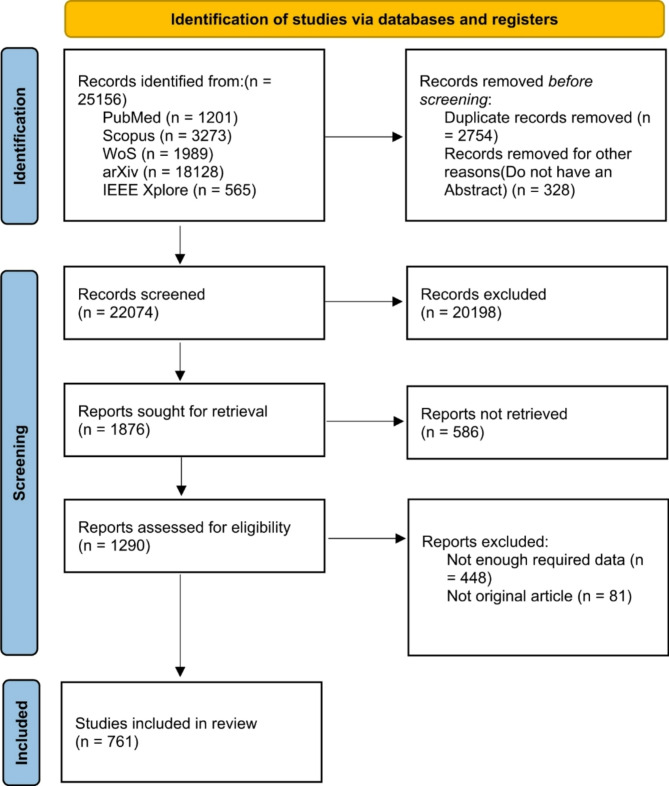
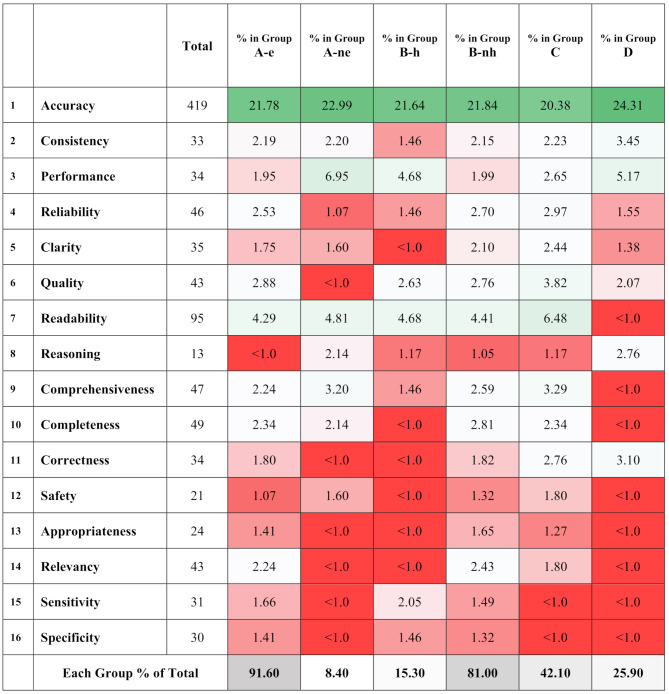
BACKGROUND: Large Language Models (LLMs), advanced AI tools based on transformer architectures, demonstrate significant potential in clinical medicine by enhancing decision support, diagnostics, and medical education. However, their integration into clinical workflows requires rigorous evaluation to ensure reliability, safety, and ethical alignment. OBJECTIVE: This systematic review examines the evaluation parameters and methodologies applied to LLMs in clinical medicine, highlighting their capabilities, limitations, and application trends. METHODS: A comprehensive review of the literature was conducted across PubMed, Scopus, Web of Science, IEEE Xplore, and arXiv databases, encompassing both peer-reviewed and preprint studies. Studies were screened against predefined inclusion and exclusion criteria to identify original research evaluating LLM performance in medical contexts. RESULTS: The results reveal a growing interest in leveraging LLM tools in clinical settings, with 761 studies meeting the inclusion criteria. While general-domain LLMs, particularly ChatGPT and GPT-4, dominated evaluations (93.55%), medical-domain LLMs accounted for only 6.45%. Accuracy emerged as the most commonly assessed parameter (21.78%). Despite these advancements, the evidence base highlights certain limitations and biases across the included studies, emphasizing the need for careful interpretation and robust evaluation frameworks. CONCLUSIONS: The exponential growth in LLM research underscores their transformative potential in healthcare. However, addressing challenges such as ethical risks, evaluation variability, and underrepresentation of critical specialties will be essential. Future efforts should prioritize standardized frameworks to ensure safe, effective, and equitable LLM integration in clinical practice.
Overview
The claims and statistics of this paper haven’t been checked yet.
Free: it reads the open-access text and checks the first 5 claims that cite a source we can check. Create a free account to check every claim.
Integrity signals
Registry
Cites
Statistics
Figures
Verification
Claims the paper makes
The claims and statistics of this paper haven’t been checked yet.
Free: it reads the open-access text and checks the first 5 claims that cite a source we can check. Create a free account to check every claim.
Self-check
Percentages, sums and reported differences re-computed from the paper’s own numbers.
The self-check needs the paper’s full text.
Citations
Cites
Cascella, M., Montomoli, J., Bellini, V., & Bignami, E. (2023) · Journal of Medical Systems · doi:10.1007/s10916-023-01925-4 · Cited by 1,120
Large language models in healthcare and medical domain: A review
Nazi, Z. A., & Peng, W. (2024) · Informatics · doi:10.3390/informatics11030057 · Cited by 415
Current applications and challenges in large language models for patient care: a systematic review
Busch, F., Hoffmann, L., Rueger, C., van Dijk, E. H., Kader, R., Ortiz-Prado, E., Makowski, M. R., Saba, L., Hadamitzky, M., Kather, J. N., et al. (2025) · Communications Medicine · doi:10.1038/s43856-024-00717-2 · Cited by 358
Systematic Review of Large Language Models for Patient Care: Current Applications and Challenges
(2024) · doi:10.1101/2024.03.04.24303733 · Cited by 356
Embracing Large Language Models for Medical Applications: Opportunities and Challenges
Karabacak, M., & Margetis, K. (2023) · Cureus · doi:10.7759/cureus.39305 · Cited by 204 · cited 1×
“Additionally, the unique demands of healthcare require LLMs to interpret and generate specialized medical content with high reliability and contextual relevance [6, 7].”
Assessing the research landscape and clinical utility of large language models: a scoping review
Park, Y.-J., Pillai, A., Deng, J., Guo, E., Gupta, M., Paget, M., & Naugler, C. (2024) · BMC Medical Informatics and Decision Making · doi:10.1186/s12911-024-02459-6 · Cited by 187
Large Language Models for Therapy Recommendations Across 3 Clinical Specialties: Comparative Study
Wilhelm, T. I., Roos, J., & Kaczmarczyk, R. (2023) · Journal of Medical Internet Research · doi:10.2196/49324 · Cited by 133
Future of the Language Models in Healthcare: The Role of Chatgpt
Tustumi, F., Andreollo, N. A., & Aguilar-Nascimento, J. E. D. (2023) · ABCD. Arquivos Brasileiros de Cirurgia Digestiva (São Paulo) · doi:10.1590/0102-672020230002e1727 · Cited by 99
Hoppe, J. M., Auer, M. K., Strüven, A., Massberg, S., & Stremmel, C. (2024) · Journal of Medical Internet Research · doi:10.2196/56110 · Cited by 94
Evaluation of large language models as a diagnostic aid for complex medical cases
Ríos-Hoyo, A., Shan, N. L., Li, A., Pearson, A. T., Pusztai, L., & Howard, F. M. (2024) · Frontiers in Medicine · doi:10.3389/fmed.2024.1380148 · Cited by 66
Research works printed but not linked: 4
- Zhou H, Liu F, Gu B, Zou X, Huang J, Wu J et al. A survey of large language models in medicine: progress, application, and challenge. ArXiv Preprint. 2023;arXiv:231105112.
- Chen X, Xiang J, Lu S, Liu Y, He M, Shi D. Evaluating large language models in medical applications: a survey. ArXiv Preprint. 2024;arXiv:240507468.
- Zhou H, Liu F, Gu B, Zou X, Huang J, Wu J et al. A survey of large language models in medicine: principles, applications, and challenges. arXiv preprint. 2023;arXiv:231105112.
- Liu F, Zhou H, Hua Y, Rohanian O, Clifton L, Clifton DA. Large language models in healthcare: A comprehensive benchmark. MedRxiv. 2024:2024.04.24.24306315.
Cited by
Items 301–348 of 348
Ibrahim, O. H., Farina, J. M., Ibrahim, O., Awad, K., Abbas, M. T., Scalia, I. G., Sheashaa, H., Abdelfattah, F. E., Razaghi, M., Etchegoyen, C. V., et al. (2026) · BMJ Open · doi:10.1136/bmjopen-2025-116133
Babu, A. M., Nehemiah, A. J., Jagadeep, V., Suji, R. A., & Nallusamy, P. (2026) · Frontiers in Digital Health · doi:10.3389/fdgth.2026.1890072
“Shool et al. (44) analysed the evaluation practices in 87 LLM clinical studies and revealed significant variation in the benchmarks, metrics and reporting methods — variation which will make it difficult to compare clinical studies in terms of their benchmarks and metrics, as well as report the results, and which will…”
InfluentialIshaqui, A. A., Mallhi, T. H., Alsaleh, E. A., Asiri, R., Shah, S. F., Khan, A. H., Orayj, K., Ahmad, S. A., Imran, M., Kumar, N., et al. (2026) · Expert Review of Anti-infective Therapy · doi:10.1080/14787210.2026.2721559 · Cited by 1
Hu, Z., Yang, L., Bai, H., Guo, L., & Yin, L. (2026) · Journal of Robotic Surgery · doi:10.1007/s11701-026-03780-0
“A retrieval-augmented generation architecture that grounds responses in authoritative clinical knowledge sources is essential to minimize hallucination risk [ 139].”
Miyamoto, Y., Nakaura, T., KAWATA, A., Hirai, T., 江口英利, Taketomi, A., & Iwatsuki, M. (2026) · Surgery Today · doi:10.1007/s00595-026-03472-0
MedEthicsBench: Evaluating Medical Ethics Reasoning Across Jurisdictions
Kang, Y., Lee, S.-Y., Chu, L., Qu, W., Liu, W., Hou, C., Wu, S., Cao, L., & Chu, W. C. (2026) · IEEE International Conference on Digital Health (ICDH) · doi:10.1109/icdh72779.2026.00031
“Recent reviews have shown that medical LLM evaluation is expanding rapidly but remains fragmented across specialties, task formats, and scoring paradigms [1].”
Çörekci, A. M., Devran, S., Yakal, S., Uyanık, A. F., & Metin, G. (2026) · International Journal of Sports Science & Coaching · doi:10.1177/17479541261478878
Ho, C.-Y., Zheng, B.-X., Lin, T.-K., Tho, N. T. T., Hsieh, C., Chang, C.-Y., & Lin, Y.-C. (2026) · International Artificial Intelligence Technology Conference (AITC) · doi:10.1109/aitc70732.2026.11666532
“Recent systematic reviews of clinical LLM studies similarly conclude that most reported results remain experimental, with limited real-world evidence and persistent concerns regarding hallucination, bias, and safety monitoring [14].”
Fang, Y., Xiong, D., Zhao, G., Yang, Y., Wang, H., & Sun, M. (2026) · Aerospace · doi:10.3390/aerospace13090790
Chase, M. E. R., Hubbuch, J., McMullen, C. A., Davenport, D. L., Kawkgi, O. M. E., Habib, N., Willis, A., Zalla, R., Walsh, D. S., Fackelmayer, O. J., et al. (2026) · Surgery · doi:10.1016/j.surg.2026.110590
Ma, Y., Liu, S., Song, J., Song, X., Yang, X., Zhao, Q., Xiao, M., & Wang, J. (2026) · Journal of Nursing Management · doi:10.1155/jonm/9524014 · Cited by 2
“Our fndings indicate that most studies were dedicated to evaluating the performance of unoptimized GPT-series models on clinical nursing tasks, which is consistent with fndings of Shool et al. [70].”
Artificial Intelligence and Sleep
Schneider, L. D., Hernandez, J., & Heneghan, C. (2026) · Neurologic Clinics · doi:10.1016/j.ncl.2026.07.015
Zhang, H., Li, X., Fang, K., Ma, Y., Li, L., Yan, H., Liu, Y., Yu, Y., & Wang, J. (2026) · Journal of Medical Internet Research · doi:10.2196/92921
“Despite their potential, the use of LLM-based embeddings as feature encoding tools for downstream predictive modeling remains underexplored in liver disease research [21,22].”
Yan, K., Li, Y., Liu, Y., Li, K., Wu, J., & Kong, J. (2026) · Brain Behavior and Immunity Integrative · doi:10.1016/j.bbii.2026.100192
Zhang, W., Li, X., Yuan, R., Zhang, Y., Yang, Y., Xu, Y., Zhong, R., Chen, S., Liu, D., Gao, L., et al. (2026) · Digital Health · doi:10.1177/20552076261487079
Multimodal Online Black Industry Discovery with Long-Context Compression
Wang, Y., Wang, J., Huang, W., & Huang, Z. (2026) · Lecture notes of the Institute for Computer Sciences, Social Informatics and Telecommunications Engineering · doi:10.1007/978-3-032-37274-1_7
Knowledge-guided multi-agent framework for intelligent acupuncture diagnosis and reasoning
Zhang, W., Cui, J., Zhao, M., Zhang, M., & Li, P. (2026) · Engineering Applications of Artificial Intelligence · doi:10.1016/j.engappai.2026.116139
Guo, X., Sun, Y., Chen, Y., Liu, H., Liu, X., & Wang, X. (2026) · Biosensors · doi:10.3390/bios16090514 · Cited by 1
Öğütlü, Ö. B. G., Solomon, B. D., & Çelik, Y. S. (2026) · Frontiers in Medicine · doi:10.3389/fmed.2026.1938886
Praestegaard, L., & Paja, E. (2026) · IEEE International Requirements Engineering Conference Workshops (REW) · doi:10.1109/rew72749.2026.00084 · Cited by 1
“Healthcare LLMs are increasingly evaluated across multiple quality dimensions, including accuracy, safety, comprehen-siveness, trust, and consistency, as reflected in recent evaluation frameworks and systematic reviews [7], [8].”
InfluentialViswanathan, V., Zhang, P., & Chaudhary, D. (2026) · Communications in computer and information science · doi:10.1007/978-981-92-5190-2_4
PETFlux: Taming Natural Foundation Models for Accurate MRI-to-PET Synthesis
Yin, Y., Xiong, H., Huang, H., Li, Y., Kong, Y., Zhu, Y., Jiang, Z., Sun, K., Shen, D. G., & Wang, Q. (2026) · Lecture notes in computer science · doi:10.1007/978-3-032-38062-3_44
Windisch, P., Weyrich, J., Dennstädt, F., Zwahlen, D. R., Foerster, R., & Schroeder, C. (2026) · International Journal of Radiation Oncology*Biology*Physics · doi:10.1016/j.ijrobp.2026.06.1305
Choi, K., Kim, S. J., & Kim, Y. (2026) · Communications in computer and information science · doi:10.1007/978-3-032-28463-1_19
Bhatnagar, P. B., Chhima, N., Guilbert, P., & York, N. E. (2026) · doi:10.2196/preprints.112998
Human-Centered Design to Build Symbiotic AI Systems: A Case Study
Calvano, M., Curci, A., Lanzilotti, R., & Piccinno, A. (2026) · Lecture notes in computer science · doi:10.1007/978-3-032-41627-8_10
Nobel, M. N. A., Matar, M. G. S., Hemal, M. A. K. P., Contreras, K. A. Z., Mamun, A. A., & Uddin, R. (2026) · Technology and Innovation Conference (TIC) · doi:10.1109/tic68483.2026.11702858
AI-Driven Healthcare Assistant: MediMate
Jadhav, A., Kadam, V., Kale, A., & Rane, M. (2026) · International Conference on Innovation & Growth in Next-Gen Intelligent Technology & Engineering (IGNITE) · doi:10.1109/ignite69592.2026.11706095
“Transformer-based language models, including BERT [16] and more recent foundation models [20], have made context-aware medical dialogue systems possible.”
Tian, T., Zhang, S., Yang, X., & Shi, R. (2026) · Frontiers in Medicine · doi:10.3389/fmed.2026.1947584
“The systematic review by Shool et al. (150) on LLM evaluation in clinical medicine shows that existing evaluations mostly focus on clinical question answering and decision-making capability, and the reliability evaluation of LLMs as annotators remains insufficient, with hallucination and domain-shift risks in annotati…”
Ronicke, M., Sollfrank, L., Sagonas, I., Atreya, R., Grieshaber‐Bouyer, R., Hoerning, A., Jefremow, A., Kowalski, I., Krickau, T., Lermer, J., et al. (2026) · Scientific Reports · doi:10.1038/s41598-026-72397-y
“The integration of specialized LLMs represents a promising opportunity for clinical decision support, as LLMs can enhance access to medical knowledge, support diagnostic reasoning, and facilitate evidence-based recommendations across diverse specialties 6 .”
Kalengkongan, I. S. G., Sasmoko, Faisal, B., & Hermanus, D. R. (2026) · International Conference on ICT for Smart Society (ICISS) · doi:10.1109/iciss71466.2026.11715439
“Evaluation parameters vary widely across studies, and standardized frameworks remain necessary when outputs must be assessed through expert or human judgment rather than by automatic scores alone [15].”
Demir, Y., ATAY, H., & Ozturk, E. (2026) · Infection · doi:10.1007/s15010-026-03006-3
Tabuchi, H., Oshika, T., Akada, M., Toba, Y., & Gomi, F. (2026) · AJO International · doi:10.1016/j.ajoint.2026.100328
Alomair, S. M. (2026) · Frontiers in Nutrition · doi:10.3389/fnut.2026.1969789
“A larger review of 761 clinical LLM evaluations stresses the necessity of rigorous reliability and safety assessments before clinical use (26).”
Gandini, S., Lindskog, J., Yu, Y., Oettl, F. C., Willy, R. W., Adami, P. E., Villa, F. D., Paolo, S. D., Bonsanto, F., Mazzoni, S., et al. (2026) · Journal of Experimental Orthopaedics · doi:10.1002/jeo2.70939
“Early studies were largely centred on ChatGPT as the most widely available and adopted model [29, 37], whereas more recent work has progressively expanded to include comparisons across multiple LLMs, often including models evaluated in the present study, although model selection and versions vary…”
Shen, Y., Ju, X., Sun, Y., & Cui, J. (2026) · International Journal of Medical Informatics · doi:10.1016/j.ijmedinf.2026.106767
Generating MeSH terms using large language models: From individual models to ensemble strategies
Lee, D. H. (2026) · Journal of Information Science · doi:10.1177/01655515261490025
Hui, S., Luo, L., Hou, Z., & Li, D. (2026) · Scientifica · doi:10.1155/sci5/2900790
Benjamin, J. C., Masters, K., Kunga, B., Liang, J.-F., Agrawal, A., Margolis, Á., Kumar, S., AlZaabi, A., MacNeill, H., Rajan, S. J., et al. (2026) · Cureus · doi:10.7759/cureus.118022
Blinded professional ratings of artificial intelligence–generated and dietitian-designed meal plans
Abhulime, E. W. M., da Cunha, D. T., Monaco, V., de Melo, R., & Benatti, F. B. (2026) · Nutrition · doi:10.1016/j.nut.2026.113428
Towards an Adaptive and Intelligent Dashboard for AI-Driven Clinical Decision Support
Orji, F. A., Motolani, A., Ataguba, G., Rudzicz, F., & Orji, R. (2026) · IEEE International Conference on Intelligent Systems · doi:10.1109/is71416.2026.11727218
“Systematic reviews of LLM and RAG use in healthcare further emphasize that retrieval can improve grounding and transparency, while also identifying continuing gaps in evaluation methods, safety assessment, bias, and responsible clinical deployment [15], [16].”
Multilingual evaluation of a large language model-based primary care chatbot
Chen, P.-L., Rao, A. A., Pugh, S., Lu, Y., & Johnson, K. B. (2026) · JAMIA Open · doi:10.1093/jamiaopen/ooag207
“12,13 Whether speech-capable LLMs sustain quality in spoken dialogue in patient-facing, clinical settings across languages is unknown.”
Duarte, R. J. D. S., Lobo, A., Cunha, J., Guimarães, T. A. S., & Santos, M. F. (2026) · doi:10.2196/preprints.114574
Cornelisse, E., Kousa, D., Menz, B. D., Murphy-Reuter, B., Shahnam, A., Chin-Yee, B. H., Calabro, R., Li, L. X., Ramsey, I., Abuhelwa, A. Y., et al. (2026) · Journal of Medical Internet Research · doi:10.2196/100531 · Cited by 1
Pequeno, L. G., Silva, É. A., Neto, A. L. C., Melo, M. D. T., & Athayde, G. A. T. (2026) · Hipertensión y Riesgo Vascular · doi:10.20960/hipertensriesgovasc.00003
PeerCheck: Enhancing LLM-Generated Academic Reviews Towards Human-Level Quality
Chen, Z., Yang, Z., Ma, Y., Backes, M., & Zhang, Y. (2026) · Findings of the Association for Computational Linguistics: ACL 2026 · doi:10.18653/v1/2026.findings-acl.1170
“However, comparisons across multiple advanced models using standardized review criteria remain limited [57, 74], and most approaches enhance LLM capabilities rather than targeting academic review weaknesses [28, 40].”
Metadata
- Authors
- Shool, S., Adimi, S., Saboori Amleshi, R., Bitaraf, E., Golpira, R., & Tara, M.
- Affiliations
- Iran University of Medical Sciences (IR)
- Corresponding author
- Tara, Mahmood
- Venue
- BMC Medical Informatics and Decision Making
- Published
- 2025-03-07
- Volume
- 25
- Issue
- 1
- Pages
- 117-117
- ISSN
- 1472-6947 (ISSN-L)
- PMC
- PMC11889796
- OpenAlex
- W4408226143
- Cited by
- 346
- References
- 16
- Citations by year
- 2026: 244 · 2025: 102
- FWCI
- 20.45
- Type
- journal article
- Language
- en
- Open access
- gold
- doi.org
- Licence
- cc-by-nc-nd
- creativecommons.org/licenses/by-nc-nd/4.0 (tdm)
- creativecommons.org/licenses/by-nc-nd/4.0 (vor)
- Locations
- BMC Medical Informatics and Decision Making (publishedVersion, cc-by-nc-nd)
- Europe PMC (PubMed Central) (publishedVersion, cc-by-nc-nd)
- PubMed Central (publishedVersion, cc-by-nc-nd)
- PubMed (publishedVersion)
- DOAJ (DOAJ: Directory of Open Access Journals) (submittedVersion, cc-by-sa)
- Topics
- Health Sciences › Medicine › Health Informatics › Artificial Intelligence in Healthcare and Education
- Physical Sciences › Computer Science › Artificial Intelligence › Machine Learning in Healthcare
- Health Sciences › Health Professions › Health Information Management › Artificial Intelligence in Healthcare
- Keywords
- large language models, LLM evaluation, clinical medicine, artificial intelligence in healthcare, ChatGPT, GPT-4, evaluation metrics, accuracy, clinical decision support, clinical workflow integration, evaluation bias
- MeSH terms
- Large Language Models, Artificial Intelligence, Humans, Clinical Medicine
About these checks
Registry, retraction, Cites and statistics results are computed, not judged, with one exception: a printed reference that no index lists is read once by a model before it counts as a citation error. Claims are extracted by a model and kept only when their quote appears verbatim in the text; each cited source is then checked, with a model’s help, for whether it says what the claim relies on. Those verdicts can be wrong — read the claim’s quote and the cited source before relying on one.
Statistics and arithmetic are recomputed, not judged.
Confidence bands are shown only for fields calibrated on our annotated test set. None is calibrated yet, so no band is shown.
What counts as a claim ›How we measure confidence ›How we check this ›
Are you an author, or do you see a problem with this page? Request a review
Data sources
Bibliographic data: Semantic Scholar, OpenAlex, Crossref.
Contains information from the Semantic Scholar Academic Graph Datasets, made available under the ODC Attribution License (ODC-BY 1.0).
Semantic Scholar’s data is described in: Kinney, R., et al. (2023). The Semantic Scholar Open Data Platform. arXiv:2301.10140.
