

Genomes in turmoil: quantification of genome dynamics in prokaryote supergenomes
Open accessThe DOI matches its Crossref record; 88 of the 88 references it cites were found in a registry or an index.
Abstract
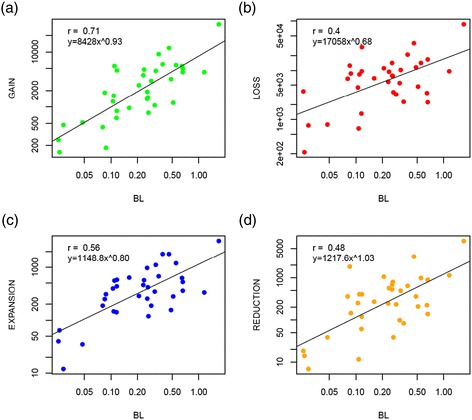
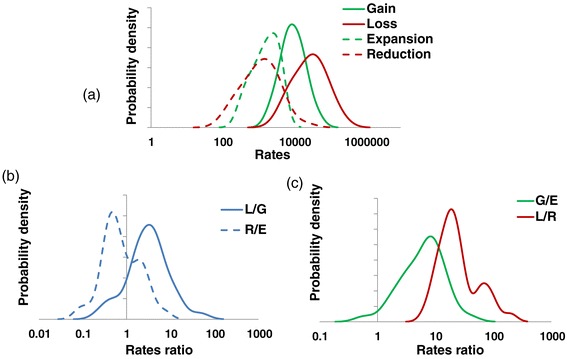
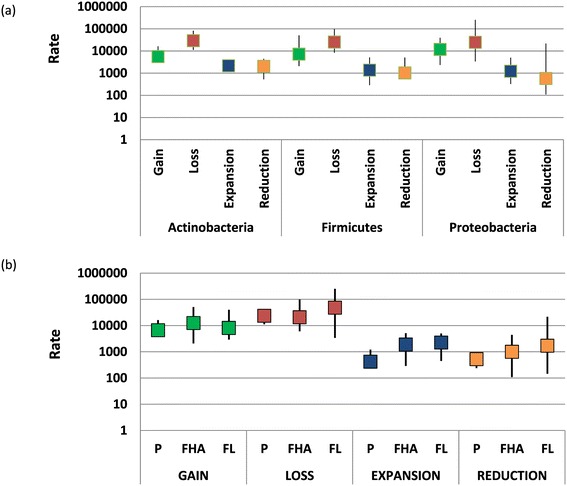
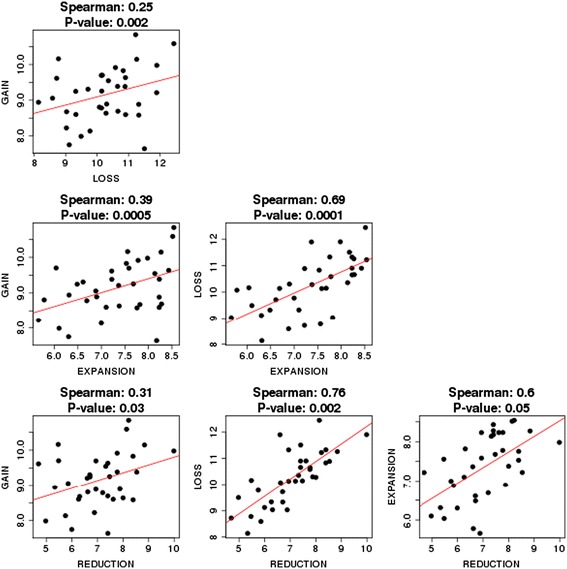
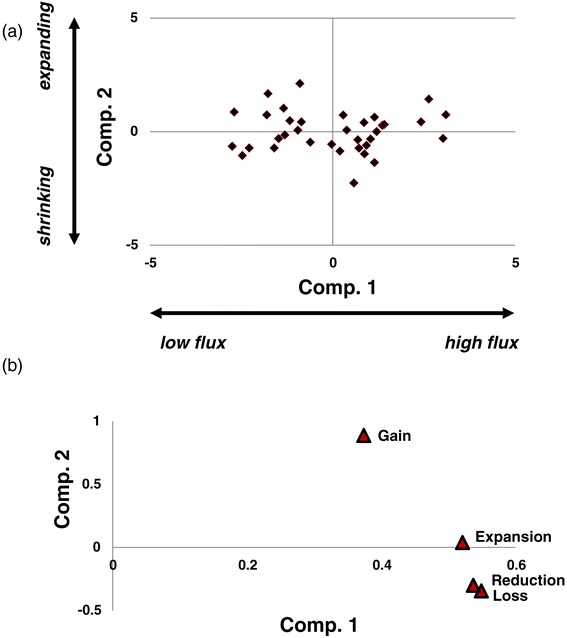
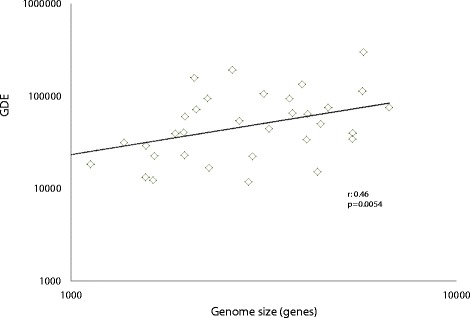
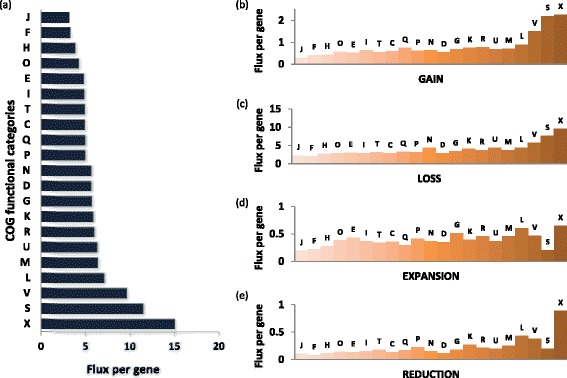
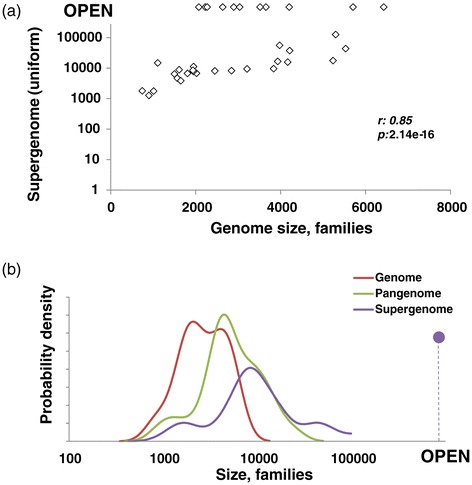
BACKGROUND: Genomes of bacteria and archaea (collectively, prokaryotes) appear to exist in incessant flux, expanding via horizontal gene transfer and gene duplication, and contracting via gene loss. However, the actual rates of genome dynamics and relative contributions of different types of event across the diversity of prokaryotes are largely unknown, as are the sizes of microbial supergenomes, i.e. pools of genes that are accessible to the given microbial species. RESULTS: We performed a comprehensive analysis of the genome dynamics in 35 groups (34 bacterial and one archaeal) of closely related microbial genomes using a phylogenetic birth-and-death maximum likelihood model to quantify the rates of gene family gain and loss, as well as expansion and reduction. The results show that loss of gene families dominates the evolution of prokaryotes, occurring at approximately three times the rate of gain. The rates of gene family expansion and reduction are typically seven and twenty times less than the gain and loss rates, respectively. Thus, the prevailing mode of evolution in bacteria and archaea is genome contraction, which is partially compensated by the gain of new gene families via horizontal gene transfer. However, the rates of gene family gain, loss, expansion and reduction vary within wide ranges, with the most stable genomes showing rates about 25 times lower than the most dynamic genomes. For many groups, the supergenome estimated from the fraction of repetitive gene family gains includes about tenfold more gene families than the typical genome in the group although some groups appear to have vast, 'open' supergenomes. CONCLUSIONS: Reconstruction of evolution for groups of closely related bacteria and archaea reveals an extremely rapid and highly variable flux of genes in evolving microbial genomes, demonstrates that extensive gene loss and horizontal gene transfer leading to innovation are the two dominant evolutionary processes, and yields robust estimates of the supergenome size.
Overview
The claims and statistics of this paper haven’t been checked yet.
Free: it reads the open-access text and checks the first 5 claims that cite a source we can check. Create a free account to check every claim.
Integrity signals
Registry
Cites
Statistics
Figures
Verification
Claims the paper makes
The claims and statistics of this paper haven’t been checked yet.
Free: it reads the open-access text and checks the first 5 claims that cite a source we can check. Create a free account to check every claim.
Claims other papers make about this one
Each is checked against this paper’s own text: does it say what the citing paper says it does?
The source backs part of the claim, not all of it — or backs it for a different population, condition or comparison.
In the citing paper
“Recent theoretical, comparative genomic and experimental research on microbial evolution clearly indicates that HGT is the principal factor in microbial adaptation and innovation (46, 65, 66, 80).”
From Origin and Evolution of the Universal Genetic Code (2017) · cites this paper as [65]
Experimental — accuracy not yet measuredThe cited source says what the claim attributes to it.
In the citing paper
“Given that HGT, even if limited by both physical and selective barriers, remained a key factor of microbial evolution [36,37,38,39,40], and apparently, a condition for long term survival of microbial populations [41,42]”
From Frozen Accident Pushing 50: Stereochemistry, Expansion, and Chance in the Evolution of the Genetic Code (2017) · cites this paper as [39]
Self-check
Percentages, sums and reported differences re-computed from the paper’s own numbers.
The self-check needs the paper’s full text.
Citations
Cites
MUSCLE: multiple sequence alignment with high accuracy and high throughput
Edgar, R. C. (2004) · Nucleic Acids Research · doi:10.1093/nar/gkh340 · Cited by 44,662
FastTree 2 – Approximately Maximum-Likelihood Trees for Large Alignments
Price, M. N., Dehal, P. S., & Arkin, A. P. (2010) · PLoS ONE · doi:10.1371/journal.pone.0009490 · Cited by 14,894
PAML 4: Phylogenetic Analysis by Maximum Likelihood
Yang, Z. (2007) · Molecular Biology and Evolution · doi:10.1093/molbev/msm088 · Cited by 13,879
The COG database: a tool for genome-scale analysis of protein functions and evolution
Tatusov, R. L. (2000) · Nucleic Acids Research · doi:10.1093/nar/28.1.33 · Cited by 4,520
The COG database: an updated version includes eukaryotes
Tatusov, R. L., Fedorova, N. D., Jackson, J. D., Jacobs, A. R., Kiryutin, B., Koonin, E. V., Krylov, D. M., Mazumder, R., Mekhedov, S. L., Nikolskaya, A. N., et al. (2003) · BMC Bioinformatics · doi:10.1186/1471-2105-4-41 · Cited by 4,430
Self-citationA Genomic Perspective on Protein Families
Tatusov, R. L., Koonin, E. V., & Lipman, D. J. (1997) · Science · doi:10.1126/science.278.5338.631 · Cited by 3,590
Self-citationTettelin, H., Masignani, V., Cieslewicz, M. J., Donati, C., Medini, D., Ward, N. L., Angiuoli, S. V., Crabtree, J., Jones, A. L., Durkin, A. S., et al. (2005) · Proceedings of the National Academy of Sciences · doi:10.1073/pnas.0506758102 · Cited by 2,631
Genome sequence of enterohaemorrhagic Escherichia coli O157:H7
Perna, N. T., Plunkett, G., Burland, V., Mau, B., Glasner, J. D., Rose, D. J., Mayhew, G. F., Evans, P. S., Gregor, J., Kirkpatrick, H. A., et al. (2001) · Nature · doi:10.1038/35054089 · Cited by 2,055
Toward Automatic Reconstruction of a Highly Resolved Tree of Life
Ciccarelli, F. D., Doerks, T., von Mering, C., Creevey, C. J., Snel, B., & Bork, P. (2006) · Science · doi:10.1126/science.1123061 · Cited by 1,663
Extreme genome reduction in symbiotic bacteria
McCutcheon, J. P., & Moran, N. A. (2012) · Nature Reviews Microbiology · doi:10.1038/nrmicro2670 · Cited by 1,464
Cited by
Items 101–200 of 238
Fleshman, A. C., Mullins, K., Sahl, J. W., Hepp, C. M., Nieto, N. C., Wiggins, K., Hornstra, H., Kelly, D. J., Chan, T.-C., Phetsouvanh, R., et al. (2018) · Microbial Genomics · doi:10.1099/mgen.0.000199 · Cited by 22
Ancestral Genomes: a resource for reconstructed ancestral genes and genomes across the tree of life
Huang, X., Albou, L.-P., Mushayahama, T., Muruganujan, A., Tang, H., & Thomas, P. D. (2019) · Nucleic Acids Research · doi:10.1093/nar/gky1009 · Cited by 19
Horizontal Gene Transfer Phylogenetics: A Random Walk Approach
Sevillya, G., Doerr, D., Lerner, Y., Stoye, J., Steel, M., & Snir, S. (2019) · Molecular Biology and Evolution · doi:10.1093/molbev/msz302 · Cited by 16
Stronger selection can slow down evolution driven by recombination on a smooth fitness landscape
Ueda, M., Takeuchi, N., & Kaneko, K. (2017) · PLoS ONE · doi:10.1371/journal.pone.0183120 · Cited by 17
Evolutionary assembly patterns of prokaryotic genomes
Press, M. O., Queitsch, C., & Borenstein, E. (2016) · Genome Research · doi:10.1101/gr.200097.115 · Cited by 17
Xu, H., Qin, S., Lan, Y., Liu, M., Cao, X., Qiao, D., Cao, Y., & Cao, Y. (2017) · Scientific Reports · doi:10.1038/s41598-017-06160-9 · Cited by 21
Evolvability of an Optimal Recombination Rate
Lobkovsky, A. E., Wolf, Y. I., & Koonin, E. V. (2015) · Genome Biology and Evolution · doi:10.1093/gbe/evv249 · Cited by 20
Self-citationvan Dijk, B., Buffard, P., Farr, A. D., Giersdorf, F., Meijer, J., Dutilh, B. E., & Rainey, P. B. (2023) · ISME Communications · doi:10.1038/s43705-023-00294-w · Cited by 18
Cooper, A. L., Low, A., Wong, A., Tamber, S., Blais, B. W., & Carrillo, C. D. (2024) · BMC Microbiology · doi:10.1186/s12866-023-03148-6 · Cited by 18
Persi, E., Wolf, Y. I., Karamycheva, S. A., Makarova, K. S., & Koonin, E. V. (2023) · Proceedings of the National Academy of Sciences · doi:10.1073/pnas.2300154120 · Cited by 13
Self-citationValenzuela‐Miranda, D., Valenzuela‐Muñoz, V., Núñez-Acuña, G., & Gallardo‐Escárate, C. (2020) · Aquaculture · doi:10.1016/j.aquaculture.2020.735634 · Cited by 13
Colnaghi, M., Lane, N. J., & Pomiankowski, A. (2022) · Proceedings of the National Academy of Sciences · doi:10.1073/pnas.2205041119 · Cited by 14
Liu, Y., Botelho, J., & Iranzo, J. (2025) · Genome Research · doi:10.1101/gr.279300.124 · Cited by 15
Hemara, L. M., Hoyte, S., Arshed, S., Schipper, M. M., Wood, P. N., Marshall, S. L., Andersen, M. T., Patterson, H. R., Vanneste, J. L., Peacock, L., et al. (2025) · Molecular Plant Pathology · doi:10.1111/mpp.70056 · Cited by 12
van Dijk, B., & Hogeweg, P. (2015) · Genome Biology and Evolution · doi:10.1093/gbe/evv255 · Cited by 12
Social Diversification Driven by Mobile Genetic Elements
Weltzer, M. L., & Wall, D. (2023) · Genes · doi:10.3390/genes14030648 · Cited by 15
Sevillya, G., & Snir, S. (2019) · Molecular Phylogenetics and Evolution · doi:10.1016/j.ympev.2019.03.010 · Cited by 15
Expanding diversity of Asgard archaea and the elusive ancestry of eukaryotesPreprint
Liu, Y., Makarova, K. S., Huang, W.-C., Wolf, Y. I., Nikolskaya, A. V., Zhang, X., Cai, M., Zhang, C., Xu, W., Luo, Z.-H., et al. (2020) · bioRxiv (Cold Spring Harbor Laboratory) · doi:10.1101/2020.10.19.343400 · Cited by 12
Self-citationEstimation of prokaryotic supergenome size and composition from gene frequency distributions
Lobkovsky, A. E., Wolf, Y. I., & Koonin, E. V. (2014) · BMC Genomics · doi:10.1186/1471-2164-15-s6-s14 · Cited by 12
Self-citationBremer, N., Knopp, M. R., Martin, W. F., & Tria, F. D. K. (2022) · Life · doi:10.3390/life12070995 · Cited by 10
Singh, R. P., Kumari, K., Sharma, P. K., & Ma, Y. (2023) · BMC Microbiology · doi:10.1186/s12866-023-02939-1 · Cited by 11
Karamycheva, S. A., Wolf, Y. I., Persi, E., Koonin, E. V., & Makarova, K. S. (2022) · Biology Direct · doi:10.1186/s13062-022-00337-7 · Cited by 11
Self-citationHow genetic parasites persist despite the purge of natural selection
Iranzo, J., & Koonin, E. V. (2018) · Europhysics Letters (EPL) · doi:10.1209/0295-5075/122/58001 · Cited by 11
Self-citationUse of Live Biopreservatives and Bacteriophages to Enhance the Safety of Meat Products
Rodríguez-Marca, C., Domenech-Coca, C., Nakamura, M., Ortega-Olivé, N., & Puigbò, P. (2025) · Life · doi:10.3390/life15020197 · Cited by 12
Self-citationEvolution of gene order in prokaryotes is driven primarily by gene gain and loss
Brezner, S., Garushyants, S. K., Wolf, Y. I., Koonin, E. V., & Snir, S. (2025) · Proceedings of the National Academy of Sciences · doi:10.1073/pnas.2502752122 · Cited by 9
Self-citationEcological constraints and evolutionary trade-offs shape nitrogen fixation across habitats
Sobol, M. S., Klos, A. S., Ané, C., McMahon, K. D., & Kaçar, B. (2026) · ISME Communications · doi:10.1093/ismeco/ycag007 · Cited by 15
Fajardo-Cavazos, P., Maughan, H., & Nicholson, W. L. (2014) · Microbiology Spectrum · doi:10.1128/microbiolspec.tbs-0020-2014 · Cited by 11
Iyyappan, Y., Sridhar, J., Michael, D., & Sekar, K. (2016) · Gene · doi:10.1016/j.gene.2016.11.025 · Cited by 9
Prediction of Horizontally and Widely Transferred Genes in Prokaryotes
Nakamura, Y. (2018) · Evolutionary Bioinformatics · doi:10.1177/1176934318810785 · Cited by 9
Evolution and Distribution of Cyanobacteria
Pathak, J., Singh, P. R., Sinha, R. P., & Rastogi, R. P. (2021) · Springer eBooks · doi:10.1007/978-981-16-4873-1_1 · Cited by 12
PanBGC: a pangenome-inspired framework for comparative analysis of biosynthetic gene clusters
Paccagnella, D., Bağcı, C., Gavriilidou, A., & Ziemert, N. (2025) · ISME Communications · doi:10.1093/ismeco/ycaf225 · Cited by 11
Gene Transfer-Based Phylogenetics: Analytical Expressions and Additivity via Birth–Death Theory
Katriel, G., Mahanaymi, U., Brezner, S., Kezel, N., Koutschan, C., Zeilberger, D., Steel, M., & Snir, S. (2023) · Systematic Biology · doi:10.1093/sysbio/syad060 · Cited by 8
Neethu, C. S., Saravanakumar, C., Purvaja, R., Robin, R. S., & Ramesh, R. (2022) · Environmental Pollution · doi:10.1016/j.envpol.2022.119937 · Cited by 8
A Flavor of Prokaryotic Taxonomy: Systematics Revisited
Vos, P. D., Thompson, F. L., Thompson, C. C., & Swings, J. (2017) · Elsevier eBooks · doi:10.1016/b978-0-12-804765-1.00002-3 · Cited by 8
Tang, H., Thomas, P. D., & Xia, H. (2018) · arXiv (Cornell University) · doi:10.48550/arxiv.1802.06035 · Cited by 10
Ono, R., Konno, N., Nishimura, Y., & Furusawa, C. (2026) · Nucleic Acids Research · doi:10.1093/nar/gkaf1479 · Cited by 6
Estimation of universal and taxon-specific parameters of prokaryotic genome evolution
Sela, I., Wolf, Y. I., & Koonin, E. V. (2018) · PLoS ONE · doi:10.1371/journal.pone.0195571 · Cited by 6
Self-citationA k-mer Based Sequence Similarity for Pangenomic Analyses
Bonnici, V., Cracco, A., & Franco, G. (2022) · Lecture notes in computer science · doi:10.1007/978-3-030-95470-3_3 · Cited by 5
Manzano-Morales, S., & Gabaldón, T. (2026) · Nature Communications · doi:10.1038/s41467-026-71534-5 · Cited by 8
Babajanyan, S. G., Garushyants, S. K., Wolf, Y. I., & Koonin, E. V. (2025) · mBio · doi:10.1128/mbio.02409-25 · Cited by 4
Self-citationGenome mapping tools: current research and future prospects
Kumaraswamy, H. H., & Kashyap, B. K. (2020) · Elsevier eBooks · doi:10.1016/b978-0-12-819715-8.00005-7 · Cited by 5
Garza, D. R., von Meijenfeldt, F. A. B., van Dijk, B., Boleij, A., Huynen, M. A., & Dutilh, B. E. (2022) · BMC Ecology and Evolution · doi:10.1186/s12862-022-02052-3 · Cited by 5
He, L., Huang, R., Chen, H., Zhao, L., & Zhang, Z. (2024) · Frontiers in Microbiology · doi:10.3389/fmicb.2024.1365685 · Cited by 6
Saikkonen, K., Birge, T., Fuchs, B., Helander, M. L., Ihalainen, J. A., NISSINEN, R. M., & Puigbò, P. (2024) · One Earth · doi:10.1016/j.oneear.2024.08.002 · Cited by 5
Self-citationUncoupling between core genome and virulome in extraintestinal pathogenic Escherichia coli
Fernández-Romero, N., Romero‐Gómez, M. P., Mora-Rillo, M., Rodríguez‐Baño, J., López‐Cerero, L., Pascual, Á., & Mingorance, J. (2015) · Canadian Journal of Microbiology · doi:10.1139/cjm-2014-0835 · Cited by 4
Horizontal transfer beyond genes
Koonin, E. V. (2014) · Proceedings of the National Academy of Sciences · doi:10.1073/pnas.1418789111 · Cited by 5
Self-citationFajardo-Cavazos, P., Maughan, H., & Nicholson, W. L. (2016) · ASM Press eBooks · doi:10.1128/9781555819323.ch2 · Cited by 4
Avni, E., Montoya, D. J., Lopez, D., Modlin, R. L., Pellegrini, M. A., & Snir, S. (2018) · PLoS ONE · doi:10.1371/journal.pone.0204322 · Cited by 5
Gao, T., Zhou, X., Han, M., Shen, Y., Zhang, Y., Wu, Q., Dan, H., Wang, T., Ye, H., Liu, L., et al. (2025) · Frontiers in Plant Science · doi:10.3389/fpls.2025.1499244 · Cited by 3
Lin, Y., He, J., Zhang, Q., Li, Y., Ke, J., Lin, C., Yao, B., Zhang, C., & Tan, N. (2025) · Functional & Integrative Genomics · doi:10.1007/s10142-025-01730-x · Cited by 3
Biosafety Issues of Unintended Horizontal Transfer of Recombinant DNA
Alamnie, G., & Andualem, B. (2020) · IntechOpen eBooks · doi:10.5772/intechopen.93170 · Cited by 6
Wang, Y., Cai, X., Hu, S., Qin, S., Wang, Z., Cao, Y., Hou, C., Yang, J., & Zhou, W. (2022) · Gene · doi:10.1016/j.gene.2022.147118 · Cited by 3
Kristensen, D. M., Saeed, U., Frishman, D., & Koonin, E. V. (2015) · BMC Bioinformatics · doi:10.1186/s12859-015-0817-4 · Cited by 5
Self-citationKaramycheva, S. A., Wolf, Y. I., Koonin, E. V., & Makarova, K. S. (2025) · mBio · doi:10.1128/mbio.03127-25 · Cited by 4
Self-citationThe pangenome: a statistical model, not a fixed biological property
Guerra, A. (2026) · Bioinformatics Advances · doi:10.1093/bioadv/vbag069 · Cited by 5
Evolution towards simplicity in bacterial small heat shock protein system
Karaś, P., Kochanowicz, K., Pitek, M., Domanski, P., Obuchowski, I., Tomiczek, B., & Liberek, K. (2023) · eLife · doi:10.7554/elife.89813 · Cited by 2
Evolution of Transcription Factor-containing Superfamilies in Eukaryotes
Dubey, A., Muthu, G., & Seshasayee, A. S. N. (2025) · Journal of Molecular Biology · doi:10.1016/j.jmb.2025.168959 · Cited by 2
Phylogenetics, Reticulation and Evolution
Gallardo, M. H. (2017) · InTech eBooks · doi:10.5772/intechopen.68564 · Cited by 3
Han, X., Guo, J., Pang, E., Song, H., & Lin, K. (2020) · Genome Biology and Evolution · doi:10.1093/gbe/evaa041 · Cited by 4
Bacterial Genomes: Trees and Networks
Seshasayee, A. S. N. (2025) · Open Book Publishers · doi:10.11647/obp.0446 · Cited by 4
The heterogeneous selection landscape of genome evolution in prokaryotes
Kogay, R., Karamycheva, S. A., Rochman, N. D., Wolf, Y. I., & Koonin, E. V. (2026) · Proceedings of the National Academy of Sciences · doi:10.1073/pnas.2605871123 · Cited by 4
Self-citationThe cell nucleus as a barrier against horizontal gene transfer in microbial endosymbioses
Zachar, I., Máté, J., & Oszoli, I. (2026) · Philosophical Transactions of the Royal Society B Biological Sciences · doi:10.1098/rstb.2025.0096 · Cited by 1
Lin, Z., Pang, S., Xu, T., Zhou, Y., Zhang, C., Qian, P., & Zhang, S. (2026) · Water Research · doi:10.1016/j.watres.2026.125879 · Cited by 1
Evolution of the Genomic Universe
Koonin, E. V. (2016) · Springer eBooks · doi:10.1007/978-3-319-48838-7_35 · Cited by 1
Self-citationCritical mutation rate in a population with horizontal gene transfer
Aston, E., Channon, A., Belavkin, R. V., Gifford, D. R., Krašovec, R., & Cg, K. (2017) · European Conference on Artificial Life · doi:10.7551/ecal_a_074 · Cited by 1
A large-scale whole-genome sequencing analysis reveals false positives of bacterial essential genes
Li, Y., Jiang, B., & Dai, W. (2021) · Applied Microbiology and Biotechnology · doi:10.1007/s00253-021-11702-3 · Cited by 1
Mierke, C. T. (2020) · Biological and medical physics, biomedical engineering · doi:10.1007/978-3-030-58532-7_11 · Cited by 1
Biosafety Issues of Unintended Horizontal Transfer of Recombinant DNA
(2020) · International journal of research studies in biosciences · doi:10.20431/2349-0365.0801003
1. All creatures great and small
Seshasayee, A. S. N. (2025) · Open Book Publishers · doi:10.11647/obp.0446.01 · Cited by 1
Koehorst, J. J. (2019) · doi:10.18174/463364 · Cited by 2
A non-adaptive demographic mechanism for genome expansion in StreptomycesPreprint
Choudoir, M. J., Järvenpää, M. J., Marttinen, P., & Buckley, D. H. (2021) · bioRxiv (Cold Spring Harbor Laboratory) · doi:10.1101/2021.01.09.426074 · Cited by 2
Colnaghi, M., Lane, N. J., & Pomiankowski, A. (2022) · bioRxiv (Cold Spring Harbor Laboratory) · doi:10.1101/2022.03.22.485314 · Cited by 1
Membrane bioenergetics at major transitions in evolution
Martinez, V. S. (2016) · UCL Discovery (University College London) · Cited by 2
Crime and punishment. Can the NHIN reduce the cost of healthcare fraud?
Parente, S. T., Mandelbaum, K., Hanson, S. P., Cassidy, B. S., & Simborg, D. W. (2008) · PubMed
Substitutions are boring: some arguments about parallel mutations and repetitive DNAPreprint
Press, M. O., Hall, A., Morton, E. A., & Queitsch, C. (2018) · OSF Preprints (OSF Preprints) · doi:10.31219/osf.io/5typz · Cited by 1
Horizontal Gene Transfer in Microbial Evolution
Gogarten, J. P., & Papke, R. T. (2018) · CRC Press eBooks · doi:10.1201/b22230-36
Slightly beneficial genes are retained by evolving Horizontal Gene Transfer despite selfish elementsPreprint
van Dijk, B., Hogeweg, P., Doekes, H. M., & Takeuchi, N. (2020) · bioRxiv (Cold Spring Harbor Laboratory) · doi:10.1101/2020.02.13.947077 · Cited by 1
Microbial Evolution at Multiple Scales
Doekes, H. M. (2020) · Utrecht University Repository (Utrecht University) · doi:10.33540/272
Nutrition or nature: disentangling the complex forces shaping prokaryote pan-genomesPreprint
Garza, D. R., von Meijenfeldt, F. A. B., van Dijk, B., Boleij, A., Huynen, M. A., & Dutilh, B. E. (2020) · bioRxiv (Cold Spring Harbor Laboratory) · doi:10.1101/2020.12.14.422685
A graph-based approach for the visualisation and analysis of bacterial pangenomesPreprint
Harling-Lee, J. D., Gorzynski, J., Yebra, G., Angus, T., Fitzgerald, J. R., & Freeman, T. C. (2022) · Research Square · doi:10.21203/rs.3.rs-1406006/v1
Faculty Opinions recommendation of Microbial genome analysis: the COG approach.
Gao, F. (2017) · Faculty Opinions – Post-Publication Peer Review of the Biomedical Literature · doi:10.3410/f.731288498.793537176
Evolution towards simplicity in bacterial small heat shock protein systemPreprint
Karaś, P., Kochanowicz, K., Pitek, M., Domanski, P., Obuchowski, I., Tomiczek, B., & Liberek, K. (2023) · bioRxiv (Cold Spring Harbor Laboratory) · doi:10.1101/2023.05.18.541272
eLife Assessment: Evolution towards simplicity in bacterial small heat shock protein system
Landry, C. R. (2023) · eLife · doi:10.7554/elife.89813.2.sa2
Evolution towards simplicity in bacterial small heat shock protein systemPreprint
Karaś, P., Kochanowicz, K., Pitek, M., Domanski, P., Obuchowski, I., Tomiczek, B., & Liberek, K. (2023) · eLife · doi:10.7554/elife.89813.2
Author Response: Evolution towards simplicity in bacterial small heat shock protein system
Karaś, P., Kochanowicz, K., Pitek, M., Domanski, P., Obuchowski, I., Tomiczek, B., & Liberek, K. (2023) · eLife · doi:10.7554/elife.89813.2.sa3
Garza, D. R., von Meijenfeldt, F. A. B., van Dijk, B., Boleij, A., Huynen, M. A., & Dutilh, B. E. (2022) · Figshare · doi:10.6084/m9.figshare.20499829
Manzano-Morales, S., Liu, Y., González-Bodí, S., Huerta‐Cepas, J., & Iranzo, J. (2023) · Figshare · doi:10.6084/m9.figshare.24465142
Garza, D. R., von Meijenfeldt, F. A. B., van Dijk, B., Boleij, A., Huynen, M. A., & Dutilh, B. E. (2022) · Figshare · doi:10.6084/m9.figshare.20499832
Garza, D. R., von Meijenfeldt, F. A. B., van Dijk, B., Boleij, A., Huynen, M. A., & Dutilh, B. E. (2022) · Figshare · doi:10.6084/m9.figshare.20499802
Garza, D. R., von Meijenfeldt, F. A. B., van Dijk, B., Boleij, A., Huynen, M. A., & Dutilh, B. E. (2022) · Figshare · doi:10.6084/m9.figshare.20499805
Garza, D. R., von Meijenfeldt, F. A. B., van Dijk, B., Boleij, A., Huynen, M. A., & Dutilh, B. E. (2022) · Figshare · doi:10.6084/m9.figshare.20499826
Seshasayee, A. S. N. (2025) · Open Book Publishers · doi:10.11647/obp.0446.00
4. The ebb and flow of bacterial genomes
Seshasayee, A. S. N. (2025) · Open Book Publishers · doi:10.11647/obp.0446.04
Seshasayee, A. S. N. (2025) · Open Book Publishers · doi:10.11647/obp.0446.03
5. Reading and organising the genome
Seshasayee, A. S. N. (2025) · Open Book Publishers · doi:10.11647/obp.0446.05 · Cited by 1
2. The molecules of bacteria and of life
Seshasayee, A. S. N. (2025) · Open Book Publishers · doi:10.11647/obp.0446.02
Untying Rates of Gene Gain and Loss Leads to a New Phylogenetic Approach
Dvir, Y., & Snir, S. (2025) · Lecture notes in computer science · doi:10.1007/978-3-031-90252-9_51
Host range and ARG dissemination are shaped by distinct survival strategies of conjugative plasmidsPreprint
Ono, R., Konno, N., Nishimura, Y., & Furusawa, C. (2025) · bioRxiv (Cold Spring Harbor Laboratory) · doi:10.1101/2025.05.22.655438
Metadata
- Authors
- Puigbò, P., Lobkovsky, A. E., Kristensen, D. M., Wolf, Y. I., & Koonin, E. V.
- Affiliations
- National Institutes of Health (US)
- Corresponding author
- Koonin, Eugene V
- Venue
- BMC Biology
- Published
- 2014-08-21
- Volume
- 12
- Issue
- 1
- Pages
- 66-66
- ISSN
- 1741-7007 (ISSN-L)
- PMC
- PMC4166000
- OpenAlex
- W2033718613
- Cited by
- 232
- References
- 88
- Citations by year
- 2026: 12 · 2025: 22 · 2024: 15 · 2023: 22 · 2022: 30 · 2021: 17 · 2020: 18 · 2019: 13 · 2018: 15 · 2017: 27 · 2016: 27 · 2015: 10 · 2014: 3
- FWCI
- 9.15
- Type
- journal article
- Language
- en
- Open access
- gold
- doi.org
- Locations
- BMC Biology (publishedVersion, cc-by)
- PubMed Central (publishedVersion, cc-by)
- PubMed (publishedVersion)
- Funders
- U.S. Department of Health and Human Services
- National Institutes of Health
- U.S. National Library of Medicine
- Topics
- Life Sciences › Biochemistry, Genetics and Molecular Biology › Molecular Biology › Genomics and Phylogenetic Studies
- Life Sciences › Biochemistry, Genetics and Molecular Biology › Genetics › Chromosomal and Genetic Variations
- Life Sciences › Biochemistry, Genetics and Molecular Biology › Genetics › Evolution and Genetic Dynamics
- Keywords
- genome dynamics, horizontal gene transfer, gene loss, birth-death model, archaea, bacterial evolution
- MeSH terms
- Archaea, Bacteria, Phylogeny, Likelihood Functions, Genome, Bacterial, Evolution, Molecular, Gene Duplication, Genome, Archaeal, Gene Transfer, Horizontal
About these checks
Registry, retraction, Cites and statistics results are computed, not judged, with one exception: a printed reference that no index lists is read once by a model before it counts as a citation error. Claims are extracted by a model and kept only when their quote appears verbatim in the text; each cited source is then checked, with a model’s help, for whether it says what the claim relies on. Those verdicts can be wrong — read the claim’s quote and the cited source before relying on one.
Statistics and arithmetic are recomputed, not judged.
Confidence bands are shown only for fields calibrated on our annotated test set. None is calibrated yet, so no band is shown.
What counts as a claim ›How we measure confidence ›How we check this ›
Are you an author, or do you see a problem with this page? Request a review
Data sources
Bibliographic data: Semantic Scholar, OpenAlex, Crossref.
Contains information from the Semantic Scholar Academic Graph Datasets, made available under the ODC Attribution License (ODC-BY 1.0).
Semantic Scholar’s data is described in: Kinney, R., et al. (2023). The Semantic Scholar Open Data Platform. arXiv:2301.10140.
