

Genomes in turmoil: quantification of genome dynamics in prokaryote supergenomes
Open accessThe DOI matches its Crossref record; 88 of the 88 references it cites were found in a registry or an index.
Abstract
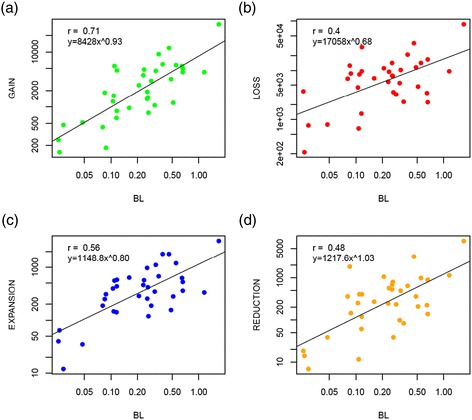
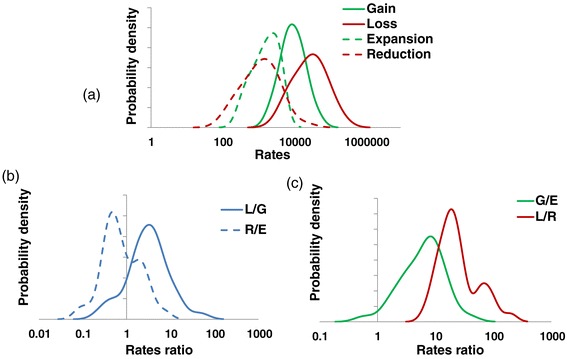
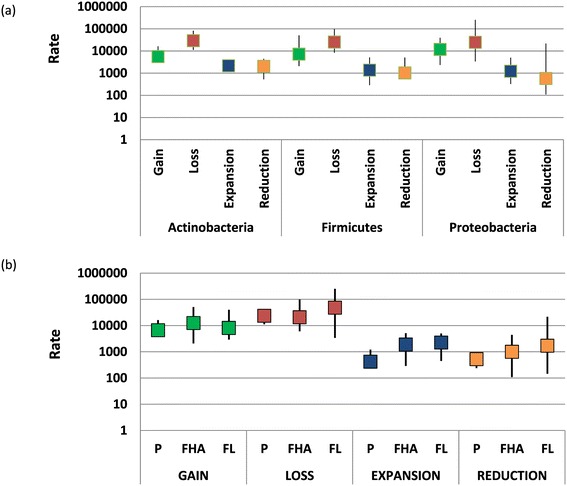
BACKGROUND: Genomes of bacteria and archaea (collectively, prokaryotes) appear to exist in incessant flux, expanding via horizontal gene transfer and gene duplication, and contracting via gene loss. However, the actual rates of genome dynamics and relative contributions of different types of event across the diversity of prokaryotes are largely unknown, as are the sizes of microbial supergenomes, i.e. pools of genes that are accessible to the given microbial species. RESULTS: We performed a comprehensive analysis of the genome dynamics in 35 groups (34 bacterial and one archaeal) of closely related microbial genomes using a phylogenetic birth-and-death maximum likelihood model to quantify the rates of gene family gain and loss, as well as expansion and reduction. The results show that loss of gene families dominates the evolution of prokaryotes, occurring at approximately three times the rate of gain. The rates of gene family expansion and reduction are typically seven and twenty times less than the gain and loss rates, respectively. Thus, the prevailing mode of evolution in bacteria and archaea is genome contraction, which is partially compensated by the gain of new gene families via horizontal gene transfer. However, the rates of gene family gain, loss, expansion and reduction vary within wide ranges, with the most stable genomes showing rates about 25 times lower than the most dynamic genomes. For many groups, the supergenome estimated from the fraction of repetitive gene family gains includes about tenfold more gene families than the typical genome in the group although some groups appear to have vast, 'open' supergenomes. CONCLUSIONS: Reconstruction of evolution for groups of closely related bacteria and archaea reveals an extremely rapid and highly variable flux of genes in evolving microbial genomes, demonstrates that extensive gene loss and horizontal gene transfer leading to innovation are the two dominant evolutionary processes, and yields robust estimates of the supergenome size.
Overview
The claims and statistics of this paper haven’t been checked yet.
Free: it reads the open-access text and checks the first 5 claims that cite a source we can check. Create a free account to check every claim.
Integrity signals
Registry
Cites
Statistics
Figures
Verification
Claims the paper makes
The claims and statistics of this paper haven’t been checked yet.
Free: it reads the open-access text and checks the first 5 claims that cite a source we can check. Create a free account to check every claim.
Claims other papers make about this one
Each is checked against this paper’s own text: does it say what the citing paper says it does?
The source backs part of the claim, not all of it — or backs it for a different population, condition or comparison.
In the citing paper
“Recent theoretical, comparative genomic and experimental research on microbial evolution clearly indicates that HGT is the principal factor in microbial adaptation and innovation (46, 65, 66, 80).”
From Origin and Evolution of the Universal Genetic Code (2017) · cites this paper as [65]
Experimental — accuracy not yet measuredThe cited source says what the claim attributes to it.
In the citing paper
“Given that HGT, even if limited by both physical and selective barriers, remained a key factor of microbial evolution [36,37,38,39,40], and apparently, a condition for long term survival of microbial populations [41,42]”
From Frozen Accident Pushing 50: Stereochemistry, Expansion, and Chance in the Evolution of the Genetic Code (2017) · cites this paper as [39]
Self-check
Percentages, sums and reported differences re-computed from the paper’s own numbers.
The self-check needs the paper’s full text.
Citations
Cites
MUSCLE: multiple sequence alignment with high accuracy and high throughput
Edgar, R. C. (2004) · Nucleic Acids Research · doi:10.1093/nar/gkh340 · Cited by 44,662
FastTree 2 – Approximately Maximum-Likelihood Trees for Large Alignments
Price, M. N., Dehal, P. S., & Arkin, A. P. (2010) · PLoS ONE · doi:10.1371/journal.pone.0009490 · Cited by 14,894
PAML 4: Phylogenetic Analysis by Maximum Likelihood
Yang, Z. (2007) · Molecular Biology and Evolution · doi:10.1093/molbev/msm088 · Cited by 13,879
The COG database: a tool for genome-scale analysis of protein functions and evolution
Tatusov, R. L. (2000) · Nucleic Acids Research · doi:10.1093/nar/28.1.33 · Cited by 4,520
The COG database: an updated version includes eukaryotes
Tatusov, R. L., Fedorova, N. D., Jackson, J. D., Jacobs, A. R., Kiryutin, B., Koonin, E. V., Krylov, D. M., Mazumder, R., Mekhedov, S. L., Nikolskaya, A. N., et al. (2003) · BMC Bioinformatics · doi:10.1186/1471-2105-4-41 · Cited by 4,430
Self-citationA Genomic Perspective on Protein Families
Tatusov, R. L., Koonin, E. V., & Lipman, D. J. (1997) · Science · doi:10.1126/science.278.5338.631 · Cited by 3,590
Self-citationTettelin, H., Masignani, V., Cieslewicz, M. J., Donati, C., Medini, D., Ward, N. L., Angiuoli, S. V., Crabtree, J., Jones, A. L., Durkin, A. S., et al. (2005) · Proceedings of the National Academy of Sciences · doi:10.1073/pnas.0506758102 · Cited by 2,631
Genome sequence of enterohaemorrhagic Escherichia coli O157:H7
Perna, N. T., Plunkett, G., Burland, V., Mau, B., Glasner, J. D., Rose, D. J., Mayhew, G. F., Evans, P. S., Gregor, J., Kirkpatrick, H. A., et al. (2001) · Nature · doi:10.1038/35054089 · Cited by 2,055
Toward Automatic Reconstruction of a Highly Resolved Tree of Life
Ciccarelli, F. D., Doerks, T., von Mering, C., Creevey, C. J., Snel, B., & Bork, P. (2006) · Science · doi:10.1126/science.1123061 · Cited by 1,663
Extreme genome reduction in symbiotic bacteria
McCutcheon, J. P., & Moran, N. A. (2012) · Nature Reviews Microbiology · doi:10.1038/nrmicro2670 · Cited by 1,464
Cited by
Horizontal gene transfer: building the web of life
Soucy, S. M., Huang, J., & Gogarten, J. P. (2015) · Nature Reviews Genetics · doi:10.1038/nrg3962 · Cited by 1,449
Horizontal gene transfer and adaptive evolution in bacteria.
Arnold, B. J., Huang, I.-T., & Hanage, W. P. (2022) · Nature Reviews Microbiology · doi:10.1038/s41579-021-00650-4 · Cited by 869
Albalat, R., & Cañestro, C. (2016) · Nature Reviews Genetics · doi:10.1038/nrg.2016.39 · Cited by 775
The pan-immune system of bacteria: antiviral defence as a community resource
Bernheim, A., & Sorek, R. (2020) · Nature Reviews Microbiology · doi:10.1038/s41579-019-0278-2 · Cited by 675
Global Organization and Proposed Megataxonomy of the Virus World
Koonin, E. V., Dolja, V. V., Krupovic, M., Varsani, A., Wolf, Y. I., Yutin, N., Zerbini, F. M., & Kuhn, J. H. (2020) · Microbiology and Molecular Biology Reviews · doi:10.1128/mmbr.00061-19 · Cited by 585
Self-citationEcology and evolution of metabolic cross-feeding interactions in bacteria
D'Souza, G., Shitut, S., Preussger, D., Yousif, G., Waschina, S., & Kost, C. (2018) · Natural Product Reports · doi:10.1039/c8np00009c · Cited by 563
Evolutionary Genomics of Defense Systems in Archaea and Bacteria
Koonin, E. V., Makarova, K. S., & Wolf, Y. I. (2017) · Annual Review of Microbiology · doi:10.1146/annurev-micro-090816-093830 · Cited by 348
Self-citationExpanded diversity of Asgard archaea and their relationships with eukaryotes
Liu, Y., Makarova, K. S., Huang, W.-C., Wolf, Y. I., Nikolskaya, A. N., Zhang, X., Cai, M., Zhang, C.-J., Xu, W., Luo, Z., et al. (2021) · Nature · doi:10.1038/s41586-021-03494-3 · Cited by 324
Self-citationMechanisms and clinical importance of bacteriophage resistance
Egido, J. E., Costa, A. R., Aparicio-Maldonado, C., Haas, P.-J., & Brouns, S. J. J. (2022) · FEMS Microbiology Reviews · doi:10.1093/femsre/fuab048 · Cited by 325
Evolutionary Pathways and Trajectories in Antibiotic Resistance
Baquero, F., Martínez, J. L., F. Lanza, V., Rodríguez-Beltrán, J., Galán, J. C., San Millán, A., Cantón, R., & Coque, T. M. (2021) · Clinical Microbiology Reviews · doi:10.1128/cmr.00050-19 · Cited by 295
panX: pan-genome analysis and exploration
Ding, W., Baumdicker, F., & Neher, R. A. (2018) · Nucleic Acids Research · doi:10.1093/nar/gkx977 · Cited by 300
Bacteriophage evolution differs by host, lifestyle and genome
Mavrich, T. N., & Hatfull, G. F. (2017) · Nature Microbiology · doi:10.1038/nmicrobiol.2017.112 · Cited by 294
Microbial genome analysis: the COG approach
Galperin, M. Y., Kristensen, D. M., Makarova, K. S., Wolf, Y. I., & Koonin, E. V. (2019) · Briefings in Bioinformatics · doi:10.1093/bib/bbx117 · Cited by 287
Self-citationOrigin and Evolution of the Universal Genetic Code
Koonin, E. V., & Novozhilov, A. S. (2017) · Annual Review of Genetics · doi:10.1146/annurev-genet-120116-024713 · Cited by 200
Self-citationThe CRISPR Spacer Space Is Dominated by Sequences from Species-Specific Mobilomes
Shmakov, S. A., Sitnik, V., Makarova, K. S., Wolf, Y. I., Severinov, K. V., & Koonin, E. V. (2017) · mBio · doi:10.1128/mbio.01397-17 · Cited by 217
Self-citationKoonin, E. V., & Yutin, N. (2019) · Advances in Virus Research · doi:10.1016/bs.aivir.2018.09.002 · Cited by 177
Self-citationTheory of prokaryotic genome evolution
Sela, I., Wolf, Y. I., & Koonin, E. V. (2016) · Proceedings of the National Academy of Sciences · doi:10.1073/pnas.1614083113 · Cited by 166
Self-citationYaffe, E., & Relman, D. A. (2019) · Nature Microbiology · doi:10.1038/s41564-019-0625-0 · Cited by 159
Koonin, E. V. (2016) · F1000Research · doi:10.12688/f1000research.8737.1 · Cited by 152
Self-citationBäckström, D., Yutin, N., Jørgensen, S. L., Dharamshi, J., Homa, F., Zaremba-Niedwiedzka, K., Spang, A., Wolf, Y. I., Koonin, E. V., & Ettema, T. J. G. (2019) · mBio · doi:10.1128/mbio.02497-18 · Cited by 151
Self-citationKu, C., & Martin, W. F. (2016) · BMC Biology · doi:10.1186/s12915-016-0315-9 · Cited by 149
Experimental Evolution of Metabolic Dependency in Bacteria
D’Souza, G., & Kost, C. (2016) · PLOS Genetics · doi:10.1371/journal.pgen.1006364 · Cited by 146
Maistrenko, O. M., Mende, D. R., Luetge, M., Hildebrand, F., Schmidt, T. S. B., Li, S. S., Rodrigues, J. F. M., von Mering, C., Pedro Coelho, L., Huerta-Cepas, J., et al. (2020) · The ISME Journal · doi:10.1038/s41396-020-0600-z · Cited by 132
O’Donnell, S., Yue, J.-X., Saada, O. A., Agier, N., Caradec, C., Cokelaer, T., De Chiara, M., Delmas, S., Dutreux, F., Fournier, T., et al. (2023) · Nature Genetics · doi:10.1038/s41588-023-01459-y · Cited by 129
Endosymbiont evolution: predictions from theory and surprises from genomes
Wernegreen, J. J. (2015) · Annals of the New York Academy of Sciences · doi:10.1111/nyas.12740 · Cited by 142
Ecogenomics and Taxonomy of Cyanobacteria Phylum
Walter, J. M., Coutinho, F. H., Dutilh, B. E., Swings, J., Thompson, F. L., & Thompson, C. C. (2017) · Frontiers in Microbiology · doi:10.3389/fmicb.2017.02132 · Cited by 149
No evidence of inhibition of horizontal gene transfer by CRISPR–Cas on evolutionary timescales
Gophna, U., Kristensen, D. M., Wolf, Y. I., Popa, O., Drevet, C., & Koonin, E. V. (2015) · The ISME Journal · doi:10.1038/ismej.2015.20 · Cited by 119
Self-citationThe LUCA and its complex virome
Krupovic, M., Dolja, V. V., & Koonin, E. V. (2020) · Nature Reviews Microbiology · doi:10.1038/s41579-020-0408-x · Cited by 128
Self-citation‘ARMAN’ archaea depend on association with euryarchaeal host in culture and in situ
Golyshina, O. V., Toshchakov, S. V., Makarova, K. S., Gavrilov, S. N., Korzhenkov, A. A., La Cono, V., Arcadi, E., Nechitaylo, T. Y., Ferrer, M., Kublanov, I. V., et al. (2017) · Nature Communications · doi:10.1038/s41467-017-00104-7 · Cited by 108
Self-citationInevitability of Genetic Parasites
Iranzo, J., Puigbò, P., Lobkovsky, A. E., Wolf, Y. I., & Koonin, E. V. (2016) · Genome Biology and Evolution · doi:10.1093/gbe/evw193 · Cited by 90
“Estimation of Duplication, Loss and Transfer Rates from Genomic Data Genomic data were obtained from an updated version of the ATCG database that clusters genomes from bacteria and archaea into closely related groups (Novichkov et al. 2009; Puigbo et al. 2014).”
BackgroundMethodInfluentialSelf-citationRodríguez-Gijón, A., Nuy, J. K., Mehrshad, M., Buck, M., Schulz, F., Woyke, T., & Garcia, S. L. (2022) · Frontiers in Microbiology · doi:10.3389/fmicb.2021.761869 · Cited by 117
Evolution of Pentameric Ligand-Gated Ion Channels: Pro-Loop Receptors
Jaiteh, M., Taly, A., & Hénin, J. (2016) · PLoS ONE · doi:10.1371/journal.pone.0151934 · Cited by 125
Press, M. O., Wiser, A. H., Kronenberg, Z. N., Langford, K. W., Shakya, M., Lo, C.-C., Mueller, K. A., Sullivan, S. T., Chain, P. S. G., & Liachko, I. (2017) · bioRxiv (Cold Spring Harbor Laboratory) · doi:10.1101/198713 · Cited by 103
Vakirlis, N., Sarilar, V., Drillon, G., Fleiss, A., Agier, N., Meyniel, J.-P., Blanpain, L., Carbone, A., Devillers, H., Dubois, K., et al. (2016) · Genome Research · doi:10.1101/gr.204420.116 · Cited by 97
Iranzo, J., Wolf, Y. I., Koonin, E. V., & Sela, I. (2019) · Nature Communications · doi:10.1038/s41467-019-13429-2 · Cited by 91
Self-citationKoonin, E. (2017) · doi:10.20944/preprints201705.0121.v1 · Cited by 85
Self-citationHorizontal Gene Transfer as a Source of Conflict and Cooperation in Prokaryotes
Hall, R. J., Whelan, F., McInerney, J. O., Ou, Y., & Domingo-Sananes, M. R. (2020) · Frontiers in Microbiology · doi:10.3389/fmicb.2020.01569 · Cited by 90
Koonin, E. (2017) · Life · doi:10.3390/life7020022 · Cited by 85
“Given that HGT, even if limited by both physical and selective barriers, remained a key factor of microbial evolution [36-40], and apparently, a condition for long term survival of microbial populations [41, 42], it stands to reason that it played a key role not only in the primordial universalization of the code but…”
BackgroundSelf-citationCorrelation between genome reduction and bacterial growth
Kurokawa, M., Seno, S., Matsuda, H., & Ying, B. (2016) · DNA Research · doi:10.1093/dnares/dsw035 · Cited by 89
Diversity, evolution, and classification of the RNA-guided nucleases TnpB and Cas12
Altae-Tran, H., Shmakov, S. A., Makarova, K. S., Wolf, Y. I., Kannan, S., Zhang, F., & Koonin, E. V. (2023) · Proceedings of the National Academy of Sciences · doi:10.1073/pnas.2308224120 · Cited by 77
Self-citationKoonin, E. V., Wolf, Y. I., & Katsnelson, M. I. (2017) · Biology Direct · doi:10.1186/s13062-017-0202-5 · Cited by 74
“That said, the high fidelity of replication does not at all preclude evolution extensive gene loss via recombination that results, in particular, in the evolution of parasites with minimal genomes [67], e.”
BackgroundSelf-citationMechanisms That Shape Microbial Pangenomes
Domingo-Sananes, M. R., & McInerney, J. O. (2021) · Trends in Microbiology · doi:10.1016/j.tim.2020.12.004 · Cited by 76
Thermodynamics of evolution and the origin of life
Vanchurin, V., Wolf, Y. I., Koonin, E. V., & Katsnelson, M. I. (2022) · Proceedings of the National Academy of Sciences · doi:10.1073/pnas.2120042119 · Cited by 101
Self-citationEvolution of Microbial Genomics: Conceptual Shifts over a Quarter Century
Koonin, E. V., Makarova, K. S., & Wolf, Y. I. (2021) · Trends in Microbiology · doi:10.1016/j.tim.2021.01.005 · Cited by 84
Self-citationDmitrijeva, M., Tackmann, J., Matias Rodrigues, J. F., Huerta-Cepas, J., Coelho, L. P., & von Mering, C. (2024) · Nature Ecology & Evolution · doi:10.1038/s41559-024-02357-0 · Cited by 72
“Gene gain through horizontal gene transfer (HGT) in particular is a driving force in prokaryotic genome evolution 1,2 , and most genes have been shown to undergo HGT at least once in their evolutionary history 3,4 .”
BackgroundSojo, V., Dessimoz, C., Pomiankowski, A., & Lane, N. (2016) · Molecular Biology and Evolution · doi:10.1093/molbev/msw164 · Cited by 69
Genetic Competence Drives Genome Diversity in Bacillus subtilis
Brito, P. H., Chevreux, B., Serra, C. R., Schyns, G., Henriques, A. O., & Pereira‐Leal, J. B. (2017) · Genome Biology and Evolution · doi:10.1093/gbe/evx270 · Cited by 77
The Turbulent Network Dynamics of Microbial Evolution and the Statistical Tree of Life
Koonin, E. V. (2015) · Journal of Molecular Evolution · doi:10.1007/s00239-015-9679-7 · Cited by 66
Self-citationSheinman, M., Arkhipova, K., Arndt, P. F., Dutilh, B. E., Hermsen, R., & Massip, F. (2021) · eLife · doi:10.7554/elife.62719 · Cited by 66
Benler, S., Faure, G., Altae-Tran, H., Shmakov, S., Zhang, F., & Koonin, E. (2021) · mBio · doi:10.1128/mbio.02938-21 · Cited by 58
Self-citationDisentangling the effects of selection and loss bias on gene dynamics
Iranzo, J., Cuesta, J. A., Manrubia, S. C., Katsnelson, M. I., & Koonin, E. V. (2017) · Proceedings of the National Academy of Sciences · doi:10.1073/pnas.1704925114 · Cited by 68
Self-citationBacterial lifestyle shapes pangenomes
Dewar, A. E., Hao, C., Belcher, L. J., Ghoul, M., & West, S. A. (2024) · Proceedings of the National Academy of Sciences · doi:10.1073/pnas.2320170121 · Cited by 57
Large-scale phylogenomics of aquatic bacteria reveal molecular mechanisms for adaptation to salinity
Jurdzinski, K. T., Mehrshad, M., Delgado, L. F., Deng, Z., Bertilsson, S., & Andersson, A. F. (2023) · Science Advances · doi:10.1126/sciadv.adg2059 · Cited by 57
Reconstruction of the evolution of microbial defense systems
Puigbò, P., Makarova, K. S., Kristensen, D. M., Wolf, Y. I., & Koonin, E. V. (2017) · BMC Evolutionary Biology · doi:10.1186/s12862-017-0942-y · Cited by 56
Self-citationComparative genomics ofSynechococcusand proposal of the new genusParasynechococcus
Coutinho, F. H., Tschoeke, D. A., Thompson, F. L., & Thompson, C. C. (2016) · PeerJ · doi:10.7717/peerj.1522 · Cited by 59
The origin and evolution of cyanobacteria
Shestakov, S. V., & Karbysheva, E. A. (2017) · Biology Bulletin Reviews · doi:10.1134/s2079086417040090 · Cited by 67
Two fundamentally different classes of microbial genes
Wolf, Y. I., Makarova, K. S., Lobkovsky, A. E., & Koonin, E. V. (2016) · Nature Microbiology · doi:10.1038/nmicrobiol.2016.208 · Cited by 52
Self-citationSantis, B. D., Stockhofe, N., Wal, J. ‐., Weesendorp, E., Lallès, J. P., van Dijk, J. P., Kok, E. J., Giacomo, M. D., Einspanier, R., Onori, R., et al. (2017) · Food and Chemical Toxicology · doi:10.1016/j.fct.2017.08.033 · Cited by 65
Evolution of biosynthetic diversity
Michael, A. J. (2017) · Biochemical Journal · doi:10.1042/bcj20160823 · Cited by 49
Braga, L. P. P., Soucy, S. M., Amgarten, D., da Silva, A. M., & Setúbal, J. C. (2018) · Frontiers in Ecology and Evolution · doi:10.3389/fevo.2018.00006 · Cited by 58
Prokaryote pangenomes are dynamic entities
Cummins, E., Hall, R. J., McInerney, J. O., & McNally, A. (2022) · Current Opinion in Microbiology · doi:10.1016/j.mib.2022.01.005 · Cited by 54
Substitutions Are Boring: Some Arguments about Parallel Mutations and High Mutation Rates
Press, M. O., Hall, A. N., Morton, E. A., & Queitsch, C. (2019) · Trends in Genetics · doi:10.1016/j.tig.2019.01.002 · Cited by 46
Kristensen, D. M., Wolf, Y. I., & Koonin, E. V. (2016) · Nucleic Acids Research · doi:10.1093/nar/gkw934 · Cited by 46
Self-citationPADS Arsenal: a database of prokaryotic defense systems related genes
Zhang, Y., Zhang, Z., Zhang, H., Zhao, Y., Zhang, Z., & Xiao, J. (2019) · Nucleic Acids Research · doi:10.1093/nar/gkz916 · Cited by 54
Contingency, repeatability, and predictability in the evolution of a prokaryotic pangenome
Beavan, A. J. S., Domingo-Sananes, M. R., & McInerney, J. O. (2024) · Proceedings of the National Academy of Sciences · doi:10.1073/pnas.2304934120 · Cited by 43
Rainio, M. J., Ruuskanen, S., Helander, M. L., Saikkonen, K., Saloniemi, I., & Puigbò, P. (2021) · Environmental Microbiology Reports · doi:10.1111/1758-2229.12931 · Cited by 52
Self-citationFernández, S. L., Větrovský, T., & Baldrián, P. (2018) · Folia Microbiologica · doi:10.1007/s12223-018-0627-y · Cited by 41
Slightly beneficial genes are retained by bacteria evolving DNA uptake despite selfish elements
van Dijk, B., Hogeweg, P., Doekes, H. M., & Takeuchi, N. (2020) · eLife · doi:10.7554/elife.56801 · Cited by 43
Nanotube‐mediated cross‐feeding couples the metabolism of interacting bacterial cells
Shitut, S., Ahsendorf, T., Pande, S., Egbert, M. D., & Kost, C. (2019) · Environmental Microbiology · doi:10.1111/1462-2920.14539 · Cited by 41
Linking prokaryotic genome size variation to metabolic potential and environment
Rodríguez-Gijón, A., Buck, M., Andersson, A. F., Izabel‐Shen, D., Nascimento, F. J. A., & Garcia, S. L. (2023) · ISME Communications · doi:10.1038/s43705-023-00231-x · Cited by 32
Mineral Facilitated Horizontal Gene Transfer: A New Principle for Evolution of Life?
Sand, K. K. S., & Jelavić, S. (2018) · Frontiers in Microbiology · doi:10.3389/fmicb.2018.02217 · Cited by 35
Origin and Evolution of Rickettsial Plasmids
Karkouri, K. E., Pontarotti, P., Raoult, D., & Fournier, P. (2016) · PLoS ONE · doi:10.1371/journal.pone.0147492 · Cited by 37
Bolotin, E., & Hershberg, R. (2016) · Scientific Reports · doi:10.1038/srep35168 · Cited by 42
Faure, G., & Koonin, E. V. (2015) · Physical Biology · doi:10.1088/1478-3975/12/3/035001 · Cited by 33
Self-citationZhi, X., Jiang, Z., Yang, L., & Huang, Y. (2016) · Molecular Phylogenetics and Evolution · doi:10.1016/j.ympev.2016.11.009 · Cited by 30
Madi, N., Chen, D., Wolff, R., Shapiro, B. J., & Garud, N. R. (2023) · eLife · doi:10.7554/elife.78530 · Cited by 32
A two‐step evolutionary process establishes a non‐native vitamin B6 pathway in Bacillus subtilis
Rosenberg, J., Yeak, K. Y. C., & Commichau, F. M. (2017) · Environmental Microbiology · doi:10.1111/1462-2920.13950 · Cited by 32
Recapitulating phylogenies using k-mers: from trees to networks
Bernard, G., Ragan, M. A., & Chan, C. X. (2016) · F1000Research · doi:10.12688/f1000research.10225.1 · Cited by 33
Systematic Detection of Large-Scale Multigene Horizontal Transfer in Prokaryotes
Kloub, L. H., Gosselin, S. P., Fullmer, M. S., Graf, J., Gogarten, J. P., & Bansal, M. S. (2021) · Molecular Biology and Evolution · doi:10.1093/molbev/msab043 · Cited by 33
Evolutionary switches between two serine codon sets are driven by selection
Rogozin, I., Belinky, F., Pavlenko, V., Shabalina, S., Kristensen, D., & Koonin, E. (2016) · Proceedings of the National Academy of Sciences of the United States of America · doi:10.1073/pnas.1615832113 · Cited by 28
Self-citationBrown, N. M., Mueller, R., Shepardson, J. W., Landry, Z., Morré, J. T., Maier, C. S., Hardy, F. J., & Dreher, T. W. (2016) · BMC Genomics · doi:10.1186/s12864-016-2738-7 · Cited by 26
Selection and Genome Plasticity as the Key Factors in the Evolution of Bacteria
Sela, I., Wolf, Y. I., & Koonin, E. V. (2019) · Physical Review X · doi:10.1103/physrevx.9.031018 · Cited by 29
Self-citationpanX: pan-genome analysis and explorationPreprint
Ding, W., Baumdicker, F., & Neher, R. A. (2016) · bioRxiv (Cold Spring Harbor Laboratory) · doi:10.1101/072082 · Cited by 26
Koehorst, J. J., Saccenti, E., Schaap, P. J., dos Santos, V. A. P. M., & Diez, M. S. (2017) · F1000Research · doi:10.12688/f1000research.9416.3 · Cited by 38
Plasticity and epistasis strongly affect bacterial fitness after losing multiple metabolic genes
D’Souza, G. G., Waschina, S., Kaleta, C., & Kost, C. (2015) · Evolution · doi:10.1111/evo.12640 · Cited by 29
Allopatric Plant Pathogen Population Divergence following Disease Emergence
Castillo, A. I., Bojanini, I., Chen, H., Kandel, P. P., Fuente, L. D. L., & Almeida, R. P. P. (2021) · Applied and Environmental Microbiology · doi:10.1128/aem.02095-20 · Cited by 24
A graph-based approach for the visualisation and analysis of bacterial pangenomes
Harling-Lee, J. D., Gorzynski, J., Yebra, G., Angus, T., Fitzgerald, J. R., & Freeman, T. C. (2022) · BMC Bioinformatics · doi:10.1186/s12859-022-04898-2 · Cited by 27
Comparison of gene clustering criteria reveals intrinsic uncertainty in pangenome analyses
Manzano-Morales, S., Liu, Y., González-Bodí, S., Huerta‐Cepas, J., & Iranzo, J. (2023) · Genome biology · doi:10.1186/s13059-023-03089-3 · Cited by 28
Flores‐Bautista, E., Hernandez-Guerrero, R., Saquero, A. H., Tenorio‐Salgado, S., Rivera-Gómez, N., Romero, A., Ibarra, J. A., & Pérez‐Rueda, E. (2020) · PLoS ONE · doi:10.1371/journal.pone.0237135 · Cited by 28
The evolutionary genomics of adaptation to stress in wild rhizobium bacteria
Kehlet-Delgado, H., Montoya, A. P., Jensen, K. T., Wendlandt, C. E., Dexheimer, C., Roberts, M., Torres‐Martínez, L., Friesen, M., Griffitts, J. S., & Porter, S. S. (2024) · Proceedings of the National Academy of Sciences · doi:10.1073/pnas.2311127121 · Cited by 26
Virulence factor activity relationships (VFARs): a bioinformatics perspective
Waseem, H., Williams, M. R., Stedtfeld, T. M., Chai, B., Stedtfeld, R. D., Cole, J. R., Tiedje, J. M., & Hashsham, S. A. (2017) · Environmental Science Processes & Impacts · doi:10.1039/c6em00689b · Cited by 25
Koehorst, J. J., Saccenti, E., Schaap, P. J., dos Santos, V. A. P. M., & Diez, M. S. (2016) · F1000Research · doi:10.12688/f1000research.9416.2 · Cited by 29
Castillo, J. A., Secaira-Morocho, H., Maldonado, S., & Sarmiento, K. N. (2020) · Frontiers in Microbiology · doi:10.3389/fmicb.2020.00961 · Cited by 26
Challenges in gene-oriented approaches for pangenome content discovery
Bonnici, V., Maresi, E., & Giugno, R. (2020) · Briefings in Bioinformatics · doi:10.1093/bib/bbaa198 · Cited by 26
The complex resistomes of Paenibacillaceae reflect diverse antibiotic chemical ecologies
Pawlowski, A. C., Westman, E. L., Koteva, K. K., Waglechner, N., & Wright, G. D. (2017) · The ISME Journal · doi:10.1038/s41396-017-0017-5 · Cited by 27
Doekes, H. M., de Boer, R. J., & Hermsen, R. (2019) · PLoS Computational Biology · doi:10.1371/journal.pcbi.1007333 · Cited by 30
Cerbino, G. N., Traglia, G. M., Nuñez, T. A., Noto, G. P. D., Ramirez, M. S., Centrón, D., Iriarte, A., & Quiroga, C. (2023) · Frontiers in Microbiology · doi:10.3389/fmicb.2023.1124225 · Cited by 26
Takahashi, D. T., Cunha, V. D., Krupovìč, M., Mayer, C., Forterre, P., & Gadelle, D. (2019) · NAR Genomics and Bioinformatics · doi:10.1093/nargab/lqz021 · Cited by 20
Assessment of assumptions underlying models of prokaryotic pangenome evolution
Sela, I., Wolf, Y. I., & Koonin, E. V. (2021) · BMC Biology · doi:10.1186/s12915-021-00960-2 · Cited by 26
Self-citationRaimondeau, P., Bianconi, M. E., Pereira, L., Parisod, C., Christin, P., & Dunning, L. T. (2023) · New Phytologist · doi:10.1111/nph.19272 · Cited by 20
Metadata
- Authors
- Puigbò, P., Lobkovsky, A. E., Kristensen, D. M., Wolf, Y. I., & Koonin, E. V.
- Affiliations
- National Institutes of Health (US)
- Corresponding author
- Koonin, Eugene V
- Venue
- BMC Biology
- Published
- 2014-08-21
- Volume
- 12
- Issue
- 1
- Pages
- 66-66
- ISSN
- 1741-7007 (ISSN-L)
- PMC
- PMC4166000
- OpenAlex
- W2033718613
- Cited by
- 232
- References
- 88
- Citations by year
- 2026: 12 · 2025: 22 · 2024: 15 · 2023: 22 · 2022: 30 · 2021: 17 · 2020: 18 · 2019: 13 · 2018: 15 · 2017: 27 · 2016: 27 · 2015: 10 · 2014: 3
- FWCI
- 9.15
- Type
- journal article
- Language
- en
- Open access
- gold
- doi.org
- Locations
- BMC Biology (publishedVersion, cc-by)
- PubMed Central (publishedVersion, cc-by)
- PubMed (publishedVersion)
- Funders
- U.S. Department of Health and Human Services
- National Institutes of Health
- U.S. National Library of Medicine
- Topics
- Life Sciences › Biochemistry, Genetics and Molecular Biology › Molecular Biology › Genomics and Phylogenetic Studies
- Life Sciences › Biochemistry, Genetics and Molecular Biology › Genetics › Chromosomal and Genetic Variations
- Life Sciences › Biochemistry, Genetics and Molecular Biology › Genetics › Evolution and Genetic Dynamics
- Keywords
- genome dynamics, horizontal gene transfer, gene loss, birth-death model, archaea, bacterial evolution
- MeSH terms
- Archaea, Bacteria, Phylogeny, Likelihood Functions, Genome, Bacterial, Evolution, Molecular, Gene Duplication, Genome, Archaeal, Gene Transfer, Horizontal
About these checks
Registry, retraction, Cites and statistics results are computed, not judged, with one exception: a printed reference that no index lists is read once by a model before it counts as a citation error. Claims are extracted by a model and kept only when their quote appears verbatim in the text; each cited source is then checked, with a model’s help, for whether it says what the claim relies on. Those verdicts can be wrong — read the claim’s quote and the cited source before relying on one.
Statistics and arithmetic are recomputed, not judged.
Confidence bands are shown only for fields calibrated on our annotated test set. None is calibrated yet, so no band is shown.
What counts as a claim ›How we measure confidence ›How we check this ›
Are you an author, or do you see a problem with this page? Request a review
Data sources
Bibliographic data: Semantic Scholar, OpenAlex, Crossref.
Contains information from the Semantic Scholar Academic Graph Datasets, made available under the ODC Attribution License (ODC-BY 1.0).
Semantic Scholar’s data is described in: Kinney, R., et al. (2023). The Semantic Scholar Open Data Platform. arXiv:2301.10140.
