

Genomes in turmoil: quantification of genome dynamics in prokaryote supergenomes
Open accessThe DOI matches its Crossref record; 88 of the 88 references it cites were found in a registry or an index.
Abstract
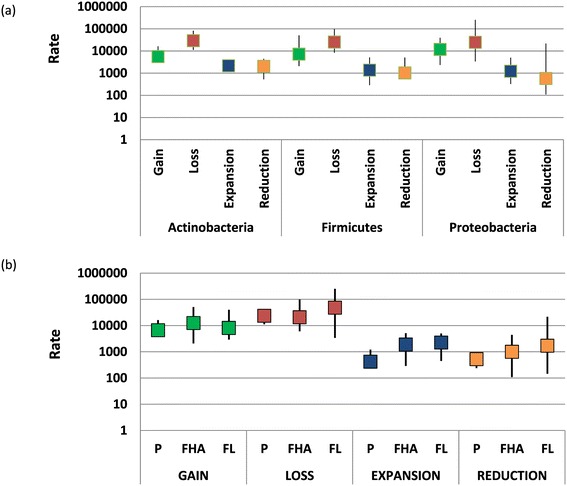
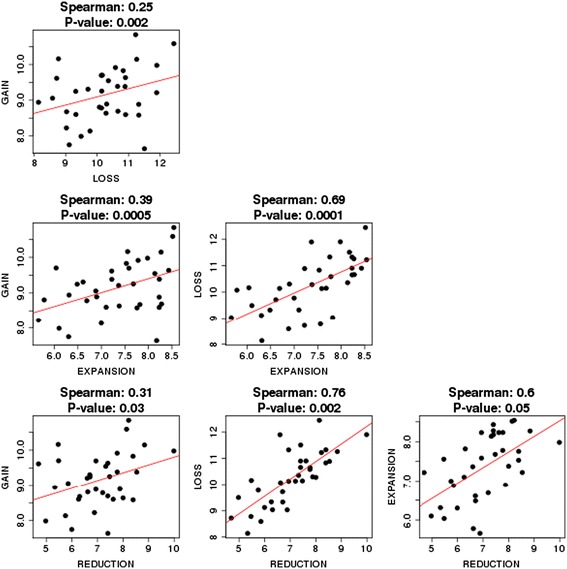
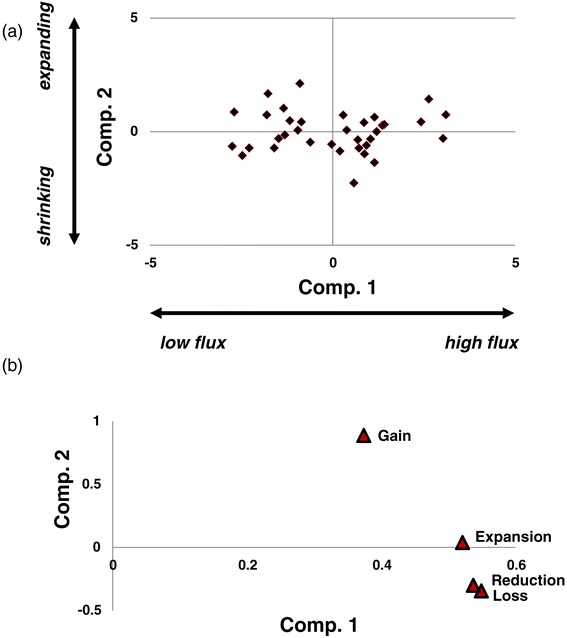
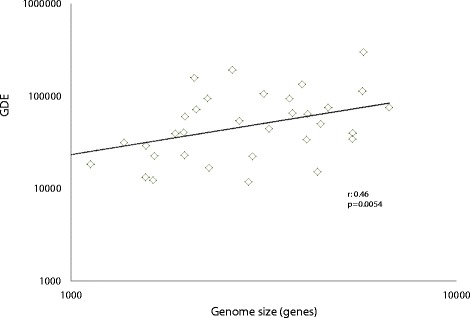
BACKGROUND: Genomes of bacteria and archaea (collectively, prokaryotes) appear to exist in incessant flux, expanding via horizontal gene transfer and gene duplication, and contracting via gene loss. However, the actual rates of genome dynamics and relative contributions of different types of event across the diversity of prokaryotes are largely unknown, as are the sizes of microbial supergenomes, i.e. pools of genes that are accessible to the given microbial species. RESULTS: We performed a comprehensive analysis of the genome dynamics in 35 groups (34 bacterial and one archaeal) of closely related microbial genomes using a phylogenetic birth-and-death maximum likelihood model to quantify the rates of gene family gain and loss, as well as expansion and reduction. The results show that loss of gene families dominates the evolution of prokaryotes, occurring at approximately three times the rate of gain. The rates of gene family expansion and reduction are typically seven and twenty times less than the gain and loss rates, respectively. Thus, the prevailing mode of evolution in bacteria and archaea is genome contraction, which is partially compensated by the gain of new gene families via horizontal gene transfer. However, the rates of gene family gain, loss, expansion and reduction vary within wide ranges, with the most stable genomes showing rates about 25 times lower than the most dynamic genomes. For many groups, the supergenome estimated from the fraction of repetitive gene family gains includes about tenfold more gene families than the typical genome in the group although some groups appear to have vast, 'open' supergenomes. CONCLUSIONS: Reconstruction of evolution for groups of closely related bacteria and archaea reveals an extremely rapid and highly variable flux of genes in evolving microbial genomes, demonstrates that extensive gene loss and horizontal gene transfer leading to innovation are the two dominant evolutionary processes, and yields robust estimates of the supergenome size.
Overview
The claims and statistics of this paper haven’t been checked yet.
Free: it reads the open-access text and checks the first 5 claims that cite a source we can check. Create a free account to check every claim.
Integrity signals
Registry
Cites
Statistics
Figures
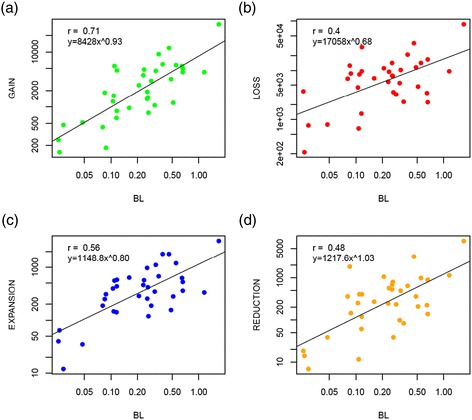
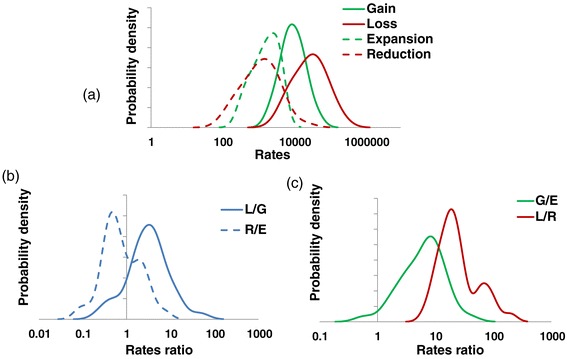
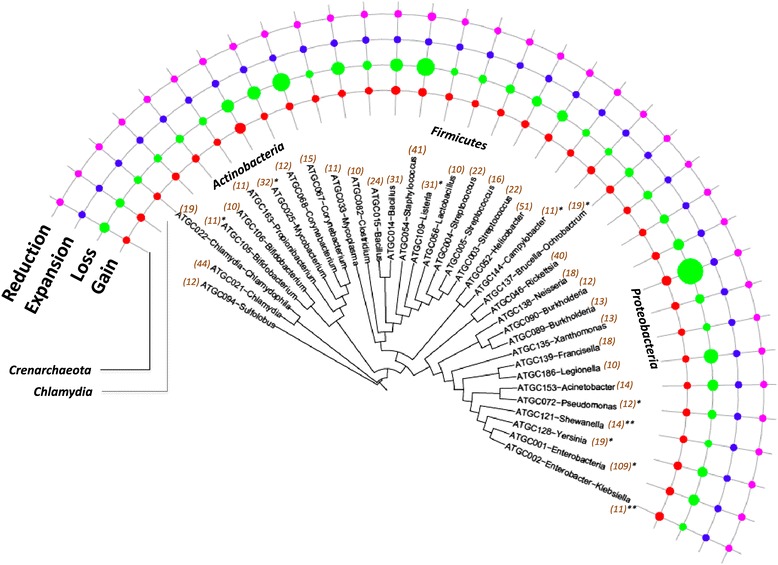
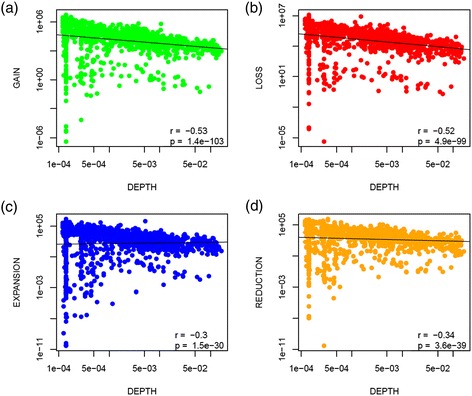
Verification
Claims the paper makes
The claims and statistics of this paper haven’t been checked yet.
Free: it reads the open-access text and checks the first 5 claims that cite a source we can check. Create a free account to check every claim.
Claims other papers make about this one
Each is checked against this paper’s own text: does it say what the citing paper says it does?
The source backs part of the claim, not all of it — or backs it for a different population, condition or comparison.
In the citing paper
“Recent theoretical, comparative genomic and experimental research on microbial evolution clearly indicates that HGT is the principal factor in microbial adaptation and innovation (46, 65, 66, 80).”
From Origin and Evolution of the Universal Genetic Code (2017) · cites this paper as [65]
Experimental — accuracy not yet measuredThe cited source says what the claim attributes to it.
In the citing paper
“Given that HGT, even if limited by both physical and selective barriers, remained a key factor of microbial evolution [36,37,38,39,40], and apparently, a condition for long term survival of microbial populations [41,42]”
From Frozen Accident Pushing 50: Stereochemistry, Expansion, and Chance in the Evolution of the Genetic Code (2017) · cites this paper as [39]
Self-check
Percentages, sums and reported differences re-computed from the paper’s own numbers.
The self-check needs the paper’s full text.
Citations
Cites
MUSCLE: multiple sequence alignment with high accuracy and high throughput
Edgar, R. C. (2004) · Nucleic Acids Research · doi:10.1093/nar/gkh340 · Cited by 44,662
FastTree 2 – Approximately Maximum-Likelihood Trees for Large Alignments
Price, M. N., Dehal, P. S., & Arkin, A. P. (2010) · PLoS ONE · doi:10.1371/journal.pone.0009490 · Cited by 14,894
PAML 4: Phylogenetic Analysis by Maximum Likelihood
Yang, Z. (2007) · Molecular Biology and Evolution · doi:10.1093/molbev/msm088 · Cited by 13,879
The COG database: a tool for genome-scale analysis of protein functions and evolution
Tatusov, R. L. (2000) · Nucleic Acids Research · doi:10.1093/nar/28.1.33 · Cited by 4,520
The COG database: an updated version includes eukaryotes
Tatusov, R. L., Fedorova, N. D., Jackson, J. D., Jacobs, A. R., Kiryutin, B., Koonin, E. V., Krylov, D. M., Mazumder, R., Mekhedov, S. L., Nikolskaya, A. N., et al. (2003) · BMC Bioinformatics · doi:10.1186/1471-2105-4-41 · Cited by 4,430
Self-citationA Genomic Perspective on Protein Families
Tatusov, R. L., Koonin, E. V., & Lipman, D. J. (1997) · Science · doi:10.1126/science.278.5338.631 · Cited by 3,590
Self-citationTettelin, H., Masignani, V., Cieslewicz, M. J., Donati, C., Medini, D., Ward, N. L., Angiuoli, S. V., Crabtree, J., Jones, A. L., Durkin, A. S., et al. (2005) · Proceedings of the National Academy of Sciences · doi:10.1073/pnas.0506758102 · Cited by 2,631
Genome sequence of enterohaemorrhagic Escherichia coli O157:H7
Perna, N. T., Plunkett, G., Burland, V., Mau, B., Glasner, J. D., Rose, D. J., Mayhew, G. F., Evans, P. S., Gregor, J., Kirkpatrick, H. A., et al. (2001) · Nature · doi:10.1038/35054089 · Cited by 2,055
Toward Automatic Reconstruction of a Highly Resolved Tree of Life
Ciccarelli, F. D., Doerks, T., von Mering, C., Creevey, C. J., Snel, B., & Bork, P. (2006) · Science · doi:10.1126/science.1123061 · Cited by 1,663
Extreme genome reduction in symbiotic bacteria
McCutcheon, J. P., & Moran, N. A. (2012) · Nature Reviews Microbiology · doi:10.1038/nrmicro2670 · Cited by 1,464
Comparative genomics of the lactic acid bacteria.
Makarova, K., Slesarev, A., Wolf, Y., Sorokin, A., Mirkin, B., Koonin, E., Pavlov, A., Pavlova, N., Karamychev, V., Polouchine, N., et al. (2006) · Proceedings of the National Academy of Sciences · doi:10.1073/pnas.0607117103 · Cited by 1,391 · cited 2×
“However, genome reduction, often described as streamlining, also prevails in the evolution of bacterial saprophytes [24,29] and some free-living microbes, particularly in marine environments [23,25,30,31].”
BackgroundSelf-citationThe Ka/Ks ratio: diagnosing the form of sequence evolution
Hurst, L. D. (2002) · Trends in Genetics · doi:10.1016/s0168-9525(02)02722-1 · Cited by 1,356
Medini, D., Donati, C., Tettelin, H., Masignani, V., & Rappuoli, R. (2005) · Current Opinion in Genetics & Development · doi:10.1016/j.gde.2005.09.006 · Cited by 1,299
Horizontal gene transfer in prokaryotes: Quantification and classification
Koonin, E. V., Makarova, K. S., & Aravind, L. (2001) · Annual Review of Microbiology · doi:10.1146/annurev.micro.55.1.709 · Cited by 1,126
Self-citationComparative genomics: the bacterial pan-genome
Tettelin, H., Riley, D., Cattuto, C., & Medini, D. (2008) · Current Opinion in Microbiology · doi:10.1016/j.mib.2008.09.006 · Cited by 1,120 · cited 3×
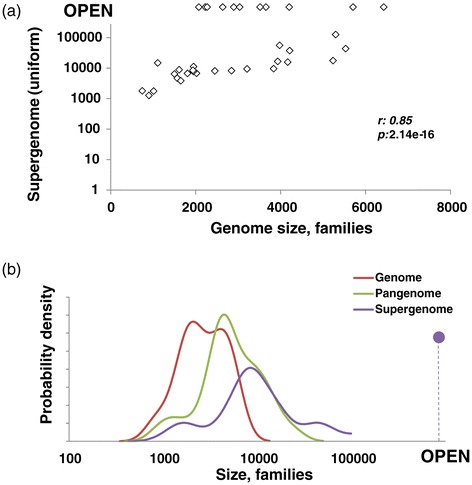
“Such estimates have pointed to vast, ‘open’ supergenomes for most prokaryotes because analysis of newly sequenced isolates did not show any signs of saturation of new gene discovery [36,37,40].”
BackgroundHorizontal gene transfer, genome innovation and evolution
Gogarten, J. P., & Townsend, J. P. (2005) · Nature Reviews Microbiology · doi:10.1038/nrmicro1204 · Cited by 1,020
Prokaryotic Evolution in Light of Gene Transfer
Gogarten, J. P., Doolittle, W. F., & Lawrence, J. G. (2002) · Molecular Biology and Evolution · doi:10.1093/oxfordjournals.molbev.a004046 · Cited by 986 · cited 1×
“HGT is at present universally recognized as a major factor in the evolution of prokaryotes and a key source of innovation and adaptation to new environments and lifestyles [5,18,45-47].”
BackgroundDeletional bias and the evolution of bacterial genomes
Mira, A., Ochman, H., & Moran, N. A. (2001) · Trends in Genetics · doi:10.1016/s0168-9525(01)02447-7 · Cited by 809
Improving the coverage of the cyanobacterial phylum using diversity driven genome sequencing
Shih, P. M., Wu, D., Latifi, A., Axen, S. D., Fewer, D. P., Talla, E., Calteau, A., Cai, F., Tandeau de Marsac, N., Rippka, R., et al. (2013) · Proceedings of the National Academy of Sciences · doi:10.1073/pnas.1217107110 · Cited by 800 · cited 1×
“Prokaryotic genomes present a wide variety of genome sizes, from approximately 150 kb in some intracellular endosymbionts of insects [7] to approximately 13 Mb in the largest cyanobacteria [8] and myxobacteria [9].”
BackgroundGenomics of bacteria and archaea: the emerging dynamic view of the prokaryotic world
Koonin, E. V., & Wolf, Y. I. (2008) · Nucleic Acids Research · doi:10.1093/nar/gkn668 · Cited by 797
Self-citationComparative genomics, minimal gene-sets and the last universal common ancestor
Koonin, E. V. (2003) · Nature Reviews Microbiology · doi:10.1038/nrmicro751 · Cited by 661 · cited 1×
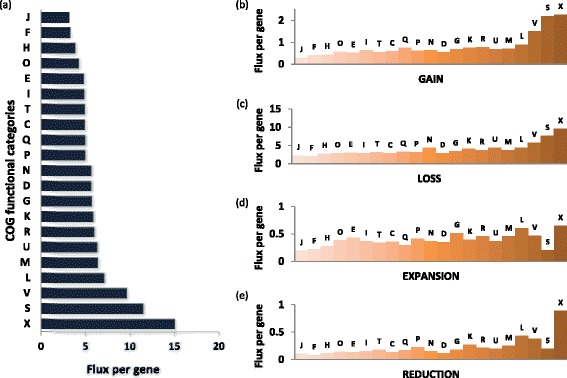
“components of the translation system, which constitute the great majority of the (nearly) universal genes in cellular life forms [69-71], make up the category with the lowest flux per gene (mostly static), closely followed by enzymes of nucleotide and coenzyme metabolism as well as molecular chaperones, which also ten…”
BackgroundSelf-citationBromham, L., & Penny, D. (2003) · Nature Reviews Genetics · doi:10.1038/nrg1020 · Cited by 615 · cited 1×
“Thus, all these events appear to occur under a genomic clock, by analogy to the traditional molecular clock of sequence evolution [59].”
BackgroundThe 160-Kilobase Genome of the Bacterial Endosymbiont Carsonella
Nakabachi, A., Yamashita, A., Toh, H., Ishikawa, H., Dunbar, H. E., Moran, N. A., & Hattori, M. (2006) · Science · doi:10.1126/science.1134196 · Cited by 565
Patterns and Implications of Gene Gain and Loss in the Evolution of Prochlorococcus
Kettler, G. C., Martiny, A. C., Huang, K., Zucker, J., Coleman, M. L., Rodrigue, S., Chen, F., Lapidus, A., Ferriera, S., Johnson, J., et al. (2007) · PLoS Genetics · doi:10.1371/journal.pgen.0030231 · Cited by 550
Conjugative plasmids: vessels of the communal gene pool
Norman, A., Hansen, L. H., & Sørensen, S. J. (2009) · Philosophical Transactions of the Royal Society B: Biological Sciences · doi:10.1098/rstb.2009.0037 · Cited by 524
Horizontal Transfer, Not Duplication, Drives the Expansion of Protein Families in Prokaryotes
Treangen, T. J., & Rocha, E. P. C. (2011) · PLoS Genetics · doi:10.1371/journal.pgen.1001284 · Cited by 509 · cited 1×
“Furthermore, evidence has been presented that HGT rather than gene duplication is the principal contributor to the evolution of gene families in prokaryotes [57].”
BackgroundCount: evolutionary analysis of phylogenetic profiles with parsimony and likelihood
Csűös, M. (2010) · Bioinformatics · doi:10.1093/bioinformatics/btq315 · Cited by 454
Comparative genomics of defense systems in archaea and bacteria
Makarova, K. S., Wolf, Y. I., & Koonin, E. V. (2013) · Nucleic Acids Research · doi:10.1093/nar/gkt157 · Cited by 435
Self-citationComplete genome sequence of the myxobacterium Sorangium cellulosum
Schneiker, S., Perlova, O., Kaiser, O., Gerth, K., Alici, A., Altmeyer, M. O., Bartels, D., Bekel, T., Beyer, S., Bode, E., et al. (2007) · Nature Biotechnology · doi:10.1038/nbt1354 · Cited by 425
Wolf, Y. I., Aravind, L., Grishin, N. V., & Koonin, E. V. (1999) · Genome Research · doi:10.1101/gr.9.8.689 · Cited by 410
Self-citationPrevalent genome streamlining and latitudinal divergence of planktonic bacteria in the surface ocean
Swan, B. K., Tupper, B., Sczyrba, A., Lauro, F. M., Martinez-Garcia, M., González, J. M., Luo, H., Wright, J. J., Landry, Z. C., Hanson, N. W., et al. (2013) · Proceedings of the National Academy of Sciences · doi:10.1073/pnas.1304246110 · Cited by 406
Structure and dynamics of the pan-genome of Streptococcus pneumoniae and closely related species
Donati, C., Hiller, N. L., Tettelin, H., Muzzi, A., Croucher, N. J., Angiuoli, S. V., Oggioni, M., Dunning Hotopp, J. C., Hu, F. Z., Riley, D. R., et al. (2010) · Genome Biology · doi:10.1186/gb-2010-11-10-r107 · Cited by 399
Mirkin, B. G., Fenner, T. I., Galperin, M. Y., & Koonin, E. V. (2003) · BMC Evolutionary Biology · doi:10.1186/1471-2148-3-2 · Cited by 368
Self-citationEstimating the size of the bacterial pan-genome
Lapierre, P., & Gogarten, J. P. (2009) · Trends in Genetics · doi:10.1016/j.tig.2008.12.004 · Cited by 358
Genomes in Flux: The Evolution of Archaeal and Proteobacterial Gene Content
Snel, B., Bork, P., & Huynen, M. A. (2002) · Genome Research · doi:10.1101/gr.176501 · Cited by 356
(2006) · Genome biology · doi:10.1186/gb-2006-7-10-118 · Cited by 355
Genome reduction as the dominant mode of evolution
Wolf, Y. I., & Koonin, E. V. (2013) · BioEssays · doi:10.1002/bies.201300037 · Cited by 314
Self-citationSearch for a 'Tree of Life' in the thicket of the phylogenetic forest
Puigbò, P., Wolf, Y. I., & Koonin, E. V. (2009) · Journal of Biology · doi:10.1186/jbiol159 · Cited by 289
Self-citationRickettsial evolution in the light of comparative genomics
Merhej, V., & Raoult, D. (2011) · Biological Reviews · doi:10.1111/j.1469-185x.2010.00151.x · Cited by 276
Makarova, K. S., Aravind, L., Galperin, M. Y., Grishin, N. V., Tatusov, R. L., Wolf, Y. I., & Koonin, E. V. (1999) · Genome Research · doi:10.1101/gr.9.7.608 · Cited by 274
Self-citationThe net of life: Reconstructing the microbial phylogenetic network
Kunin, V., Goldovsky, L., Darzentas, N., & Ouzounis, C. A. (2005) · Genome Research · doi:10.1101/gr.3666505 · Cited by 269
Streamlining and Simplification of Microbial Genome Architecture
Lynch, M. (2006) · Annual Review of Microbiology · doi:10.1146/annurev.micro.60.080805.142300 · Cited by 256
Bacterial genome size reduction by experimental evolution
Nilsson, A. I., Koskiniemi, S., Eriksson, S., Kugelberg, E., Hinton, J. C. D., & Andersson, D. I. (2005) · Proceedings of the National Academy of Sciences · doi:10.1073/pnas.0503654102 · Cited by 255
Hogg, J. S., Hu, F. Z., Janto, B., Boissy, R., Hayes, J., Keefe, R., Post, J. C., & Ehrlich, G. D. (2007) · Genome Biology · doi:10.1186/gb-2007-8-6-r103 · Cited by 243
Doolittle, W. F. (1999) · Trends in Cell Biology · doi:10.1016/s0962-8924(99)01664-5 · Cited by 239
Efficient Exploration of the Space of Reconciled Gene Trees
Szöllősi, G. J., Rosikiewicz, W., Boussau, B., Tannier, E., & Daubin, V. (2013) · Systematic Biology · doi:10.1093/sysbio/syt054 · Cited by 234
Prokaryotic evolution and the tree of life are two different things
Bapteste, E., O'Malley, M. A., Beiko, R. G., Ereshefsky, M., Gogarten, J. P., Franklin-Hall, L., Lapointe, F.-J., Dupré, J., Dagan, T., Boucher, Y., et al. (2009) · Biology Direct · doi:10.1186/1745-6150-4-34 · Cited by 226
Kristensen, D. M., Kannan, L., Coleman, M. K., Wolf, Y. I., Sorokin, A., Koonin, E. V., & Mushegian, A. (2010) · Bioinformatics · doi:10.1093/bioinformatics/btq229 · Cited by 222
Self-citationDeletional Bias across the Three Domains of Life
Kuo, C.-H., & Ochman, H. (2009) · Genome Biology and Evolution · doi:10.1093/gbe/evp016 · Cited by 219
Bansal, M. S., Alm, E. J., & Kellis, M. (2012) · Bioinformatics · doi:10.1093/bioinformatics/bts225 · Cited by 218
Kaas, R. S., Friis, C., Ussery, D. W., & Aarestrup, F. M. (2012) · BMC Genomics · doi:10.1186/1471-2164-13-577 · Cited by 210
The Balance of Driving Forces During Genome Evolution in Prokaryotes
Kunin, V., & Ouzounis, C. A. (2003) · Genome Research · doi:10.1101/gr.1092603 · Cited by 209
Computing prokaryotic gene ubiquity: Rescuing the core from extinction
Charlebois, R. L., & Doolittle, W. F. (2004) · Genome Research · doi:10.1101/gr.3024704 · Cited by 199
THE DIVERSE AND DYNAMIC STRUCTURE OF BACTERIAL GENOMES
Casjens, S. (1998) · Annual Review of Genetics · doi:10.1146/annurev.genet.32.1.339 · Cited by 188
The Tree and Net Components of Prokaryote Evolution
Puigbò, P., Wolf, Y. I., & Koonin, E. V. (2010) · Genome Biology and Evolution · doi:10.1093/gbe/evq062 · Cited by 181
Self-citationDo orthologous gene phylogenies really support tree-thinking?
Bapteste, E., Susko, E., Leigh, J., MacLeod, D., Charlebois, R., & Doolittle, W. (2005) · BMC Evolutionary Biology · doi:10.1186/1471-2148-5-33 · Cited by 180
Wolf, Y. I., Makarova, K. S., Yutin, N., & Koonin, E. V. (2012) · Biology Direct · doi:10.1186/1745-6150-7-46 · Cited by 165
Self-citationPhylogenomics and the Dynamic Genome Evolution of the Genus Streptococcus
Richards, V. P., Palmer, S. R., Pavinski Bitar, P. D., Qin, X., Weinstock, G. M., Highlander, S. K., Town, C. D., Burne, R. A., & Stanhope, M. J. (2014) · Genome Biology and Evolution · doi:10.1093/gbe/evu048 · Cited by 148
Prokaryotic genomes: the emerging paradigm of genome-based microbiology
Koonin, E. V., & Galperin, M. Y. (1997) · Current Opinion in Genetics & Development · doi:10.1016/s0959-437x(97)80037-8 · Cited by 144
Self-citationThe Infinitely Many Genes Model for the Distributed Genome of Bacteria
Baumdicker, F., Hess, W. R., & Pfaffelhuber, P. (2012) · Genome Biology and Evolution · doi:10.1093/gbe/evs016 · Cited by 143
Models, algorithms and programs for phylogeny reconciliation
Doyon, J.-P., Ranwez, V., Daubin, V., & Berry, V. (2011) · Briefings in Bioinformatics · doi:10.1093/bib/bbr045 · Cited by 142
The Cobweb of Life Revealed by Genome-Scale Estimates of Horizontal Gene Transfer
Ge, F., Wang, L.-S., & Kim, J. (2005) · PLoS Biology · doi:10.1371/journal.pbio.0030316 · Cited by 137
Csuros, M., & Miklos, I. (2009) · Molecular Biology and Evolution · doi:10.1093/molbev/msp123 · Cited by 133
Novichkov, P. S., Wolf, Y. I., Dubchak, I., & Koonin, E. V. (2009) · Journal of Bacteriology · doi:10.1128/jb.01237-08 · Cited by 132
Self-citationDoolittle, W. F. (1999) · PubMed · Cited by 129
Microbial comparative pan-genomics using binomial mixture models
Snipen, L. G., Almøy, T., & Ussery, D. W. (2009) · BMC Genomics · doi:10.1186/1471-2164-10-385 · Cited by 126
Dynamic bacterial genome organization
Kolstø, A. (1997) · Molecular Microbiology · doi:10.1046/j.1365-2958.1997.3501715.x · Cited by 122
Testing the Infinitely Many Genes Model for the Evolution of the Bacterial Core Genome and Pangenome
Collins, R. E., & Higgs, P. G. (2012) · Molecular Biology and Evolution · doi:10.1093/molbev/mss163 · Cited by 116
Evolution of Divergent Life History Strategies in Marine Alphaproteobacteria
Luo, H., Csűros, M., Hughes, A. L., & Moran, M. A. (2013) · mBio · doi:10.1128/mbio.00373-13 · Cited by 115
How stands the Tree of Life a century and a half after The Origin?
O'Malley, M. A., & Koonin, E. V. (2011) · Biology Direct · doi:10.1186/1745-6150-6-32 · Cited by 106
Self-citationGetting a better picture of microbial evolution en route to a network of genomes
Dagan, T., & Martin, W. (2009) · Philosophical Transactions of the Royal Society B: Biological Sciences · doi:10.1098/rstb.2009.0040 · Cited by 101
Universally Distributed Single-Copy Genes Indicate a Constant Rate of Horizontal Transfer
Creevey, C. J., Doerks, T., Fitzpatrick, D. A., Raes, J., & Bork, P. (2011) · PLoS ONE · doi:10.1371/journal.pone.0022099 · Cited by 98
Dagan, T. (2011) · Trends in Microbiology · doi:10.1016/j.tim.2011.07.001 · Cited by 97
Microevolutionary Genomics of Bacteria
Jordan, I. K., Rogozin, I. B., Wolf, Y. I., & Koonin, E. V. (2002) · Theoretical Population Biology · doi:10.1006/tpbi.2002.1588 · Cited by 96
Self-citationBoscaro, V., Felletti, M., Vannini, C., Ackerman, M. S., Chain, P. S. G., Malfatti, S., Vergez, L. M., Shin, M., Doak, T. G., Lynch, M., et al. (2013) · Proceedings of the National Academy of Sciences · doi:10.1073/pnas.1316687110 · Cited by 88
Merhej, V., Georgiades, K., & Raoult, D. (2013) · Briefings in Functional Genomics · doi:10.1093/bfgp/elt015 · Cited by 88
Gan, H. M., Hudson, A. O., Rahman, A. Y. A., Chan, K., & Savka, M. A. (2013) · BMC Genomics · doi:10.1186/1471-2164-14-431 · Cited by 69
Pareto-optimal phylogenetic tree reconciliation
Libeskind-Hadas, R., Wu, Y.-C., Bansal, M. S., & Kellis, M. (2014) · Bioinformatics · doi:10.1093/bioinformatics/btu289 · Cited by 68
Comparative Genomics of Escherichia coli Strains Causing Urinary Tract Infections
Vejborg, R. M., Hancock, V., Schembri, M. A., & Klemm, P. (2011) · Applied and Environmental Microbiology · doi:10.1128/aem.02970-10 · Cited by 67
Paradigm change in evolutionary microbiology
O’Malley, M. A., & Boucher, Y. (2005) · Studies in History and Philosophy of Science Part C Studies in History and Philosophy of Biological and Biomedical Sciences · doi:10.1016/j.shpsc.2004.12.002 · Cited by 65
Novichkov, P. S., Ratnere, I., Wolf, Y. I., Koonin, E. V., & Dubchak, I. (2008) · Nucleic Acids Research · doi:10.1093/nar/gkn684 · Cited by 59
Self-citationRan, W., Kristensen, D. M., & Koonin, E. V. (2014) · mBio · doi:10.1128/mbio.00956-14 · Cited by 57
Self-citationRogers, J. S. (2001) · Systematic Biology · doi:10.1080/106351501753328839 · Cited by 49
Genomic Taxonomy of the Genus Prochlorococcus
Thompson, C. C., Silva, A. E. T., Vieira, N. M., Edwards, R. A., Vicente, A. C. P., & Thompson, F. L. (2013) · Microbial Ecology · doi:10.1007/s00248-013-0270-8 · Cited by 35
Gene trees and species trees: irreconcilable differences
Swenson, K. M., & El-Mabrouk, N. (2012) · BMC Bioinformatics · doi:10.1186/1471-2105-13-s19-s15 · Cited by 34
Efficient Exploration of the Space of Reconciled Gene TreesPreprint
Szöllősi, G. J., Rosikiewicz, W., Boussau, B., Tannier, É., & Daubin, V. (2013) · arXiv (Cornell University) · doi:10.48550/arxiv.1306.2167 · Cited by 27
Dynamic Evolution of Genomes and the Concept of Genome Space
Bellgard, M., Itoh, T., Watanabe, H., Imanishi, T., & Gojobori, T. (1999) · Annals of the New York Academy of Sciences · doi:10.1111/j.1749-6632.1999.tb08891.x · Cited by 22
Mathematical Framework for Phylogenetic Birth-And-Death ModelsPreprint
Csűrös, M., & Miklós, I. (2009) · arXiv (Cornell University) · doi:10.48550/arxiv.0902.0970 · Cited by 4
Cited by
Horizontal gene transfer: building the web of life
Soucy, S. M., Huang, J., & Gogarten, J. P. (2015) · Nature Reviews Genetics · doi:10.1038/nrg3962 · Cited by 1,449
Horizontal gene transfer and adaptive evolution in bacteria.
Arnold, B. J., Huang, I.-T., & Hanage, W. P. (2022) · Nature Reviews Microbiology · doi:10.1038/s41579-021-00650-4 · Cited by 869
Albalat, R., & Cañestro, C. (2016) · Nature Reviews Genetics · doi:10.1038/nrg.2016.39 · Cited by 775
The pan-immune system of bacteria: antiviral defence as a community resource
Bernheim, A., & Sorek, R. (2020) · Nature Reviews Microbiology · doi:10.1038/s41579-019-0278-2 · Cited by 675
Global Organization and Proposed Megataxonomy of the Virus World
Koonin, E. V., Dolja, V. V., Krupovic, M., Varsani, A., Wolf, Y. I., Yutin, N., Zerbini, F. M., & Kuhn, J. H. (2020) · Microbiology and Molecular Biology Reviews · doi:10.1128/mmbr.00061-19 · Cited by 585
Self-citation
Metadata
- Authors
- Puigbò, P., Lobkovsky, A. E., Kristensen, D. M., Wolf, Y. I., & Koonin, E. V.
- Affiliations
- National Institutes of Health (US)
- Corresponding author
- Koonin, Eugene V
- Venue
- BMC Biology
- Published
- 2014-08-21
- Volume
- 12
- Issue
- 1
- Pages
- 66-66
- ISSN
- 1741-7007 (ISSN-L)
- PMC
- PMC4166000
- OpenAlex
- W2033718613
- Cited by
- 232
- References
- 88
- Citations by year
- 2026: 12 · 2025: 22 · 2024: 15 · 2023: 22 · 2022: 30 · 2021: 17 · 2020: 18 · 2019: 13 · 2018: 15 · 2017: 27 · 2016: 27 · 2015: 10 · 2014: 3
- FWCI
- 9.15
- Type
- journal article
- Language
- en
- Open access
- gold
- doi.org
- Locations
- BMC Biology (publishedVersion, cc-by)
- PubMed Central (publishedVersion, cc-by)
- PubMed (publishedVersion)
- Funders
- U.S. Department of Health and Human Services
- National Institutes of Health
- U.S. National Library of Medicine
- Topics
- Life Sciences › Biochemistry, Genetics and Molecular Biology › Molecular Biology › Genomics and Phylogenetic Studies
- Life Sciences › Biochemistry, Genetics and Molecular Biology › Genetics › Chromosomal and Genetic Variations
- Life Sciences › Biochemistry, Genetics and Molecular Biology › Genetics › Evolution and Genetic Dynamics
- Keywords
- genome dynamics, horizontal gene transfer, gene loss, birth-death model, archaea, bacterial evolution
- MeSH terms
- Archaea, Bacteria, Phylogeny, Likelihood Functions, Genome, Bacterial, Evolution, Molecular, Gene Duplication, Genome, Archaeal, Gene Transfer, Horizontal
About these checks
Registry, retraction, Cites and statistics results are computed, not judged, with one exception: a printed reference that no index lists is read once by a model before it counts as a citation error. Claims are extracted by a model and kept only when their quote appears verbatim in the text; each cited source is then checked, with a model’s help, for whether it says what the claim relies on. Those verdicts can be wrong — read the claim’s quote and the cited source before relying on one.
Statistics and arithmetic are recomputed, not judged.
Confidence bands are shown only for fields calibrated on our annotated test set. None is calibrated yet, so no band is shown.
What counts as a claim ›How we measure confidence ›How we check this ›
Are you an author, or do you see a problem with this page? Request a review
Data sources
Bibliographic data: Semantic Scholar, OpenAlex, Crossref.
Contains information from the Semantic Scholar Academic Graph Datasets, made available under the ODC Attribution License (ODC-BY 1.0).
Semantic Scholar’s data is described in: Kinney, R., et al. (2023). The Semantic Scholar Open Data Platform. arXiv:2301.10140.
