

A randomised controlled trial of dietary improvement for adults with major depression (the ‘SMILES’ trial)
Open accessThe DOI matches its Crossref record; 46 of the 47 references it cites were found in a registry or an index.
Abstract
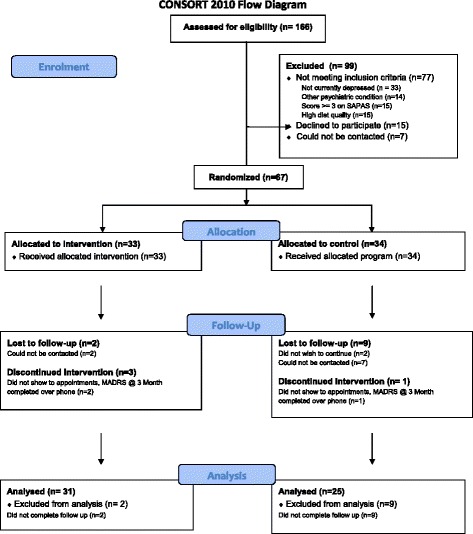
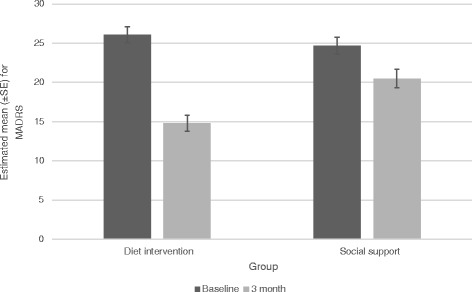
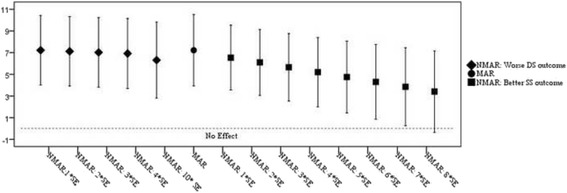
The possible therapeutic impact of dietary changes on existing mental illness is largely unknown. Using a randomised controlled trial design, we aimed to investigate the efficacy of a dietary improvement program for the treatment of major depressive episodes. ‘SMILES’ was a 12-week, parallel-group, single blind, randomised controlled trial of an adjunctive dietary intervention in the treatment of moderate to severe depression. The intervention consisted of seven individual nutritional consulting sessions delivered by a clinical dietician. The control condition comprised a social support protocol to the same visit schedule and length. Depression symptomatology was the primary endpoint, assessed using the Montgomery–Åsberg Depression Rating Scale (MADRS) at 12 weeks. Secondary outcomes included remission and change of symptoms, mood and anxiety. Analyses utilised a likelihood-based mixed-effects model repeated measures (MMRM) approach. The robustness of estimates was investigated through sensitivity analyses. We assessed 166 individuals for eligibility, of whom 67 were enrolled (diet intervention, n = 33; control, n = 34). Of these, 55 were utilising some form of therapy: 21 were using psychotherapy and pharmacotherapy combined; 9 were using exclusively psychotherapy; and 25 were using only pharmacotherapy. There were 31 in the diet support group and 25 in the social support control group who had complete data at 12 weeks. The dietary support group demonstrated significantly greater improvement between baseline and 12 weeks on the MADRS than the social support control group, t(60.7) = 4.38, p < 0.001, Cohen’s d = –1.16. Remission, defined as a MADRS score <10, was achieved for 32.3% (n = 10) and 8.0% (n = 2) of the intervention and control groups, respectively (χ 2 (1) = 4.84, p = 0.028); number needed to treat (NNT) based on remission scores was 4.1 (95% CI of NNT 2.3–27.8). A sensitivity analysis, testing departures from the missing at random (MAR) assumption for dropouts, indicated that the impact of the intervention was robust to violations of MAR assumptions. These results indicate that dietary improvement may provide an efficacious and accessible treatment strategy for the management of this highly prevalent mental disorder, the benefits of which could extend to the management of common co-morbidities. Australia and New Zealand Clinical Trials Register (ANZCTR): ACTRN12612000251820 . Registered on 29 February 2012.
Overview
The claims and statistics of this paper haven’t been checked yet.
Free: it reads the open-access text and checks the first 5 claims that cite a source we can check. Create a free account to check every claim.
Integrity signals
Registry
Cites
Statistics
Figures
Verification
Claims the paper makes
The claims and statistics of this paper haven’t been checked yet.
Free: it reads the open-access text and checks the first 5 claims that cite a source we can check. Create a free account to check every claim.
Claims other papers make about this one
Each is checked against this paper’s own text: does it say what the citing paper says it does?
The source backs part of the claim, not all of it — or backs it for a different population, condition or comparison.
In the citing paper
“Such Mediterranean-like diets can promote healthy brain function as demonstrated in a variety of dietary intervention trials in depression and in cognitive decline [1–3, 6].”
From Role of diet and its effects on the gut microbiome in the pathophysiology of mental disorders (2022) · cites this paper as [2]
Experimental — accuracy not yet measuredThe source backs part of the claim, not all of it — or backs it for a different population, condition or comparison.
In the citing paper
“The Mediterranean diet, characterized by high intake of fruits, vegetables, legumes, nuts, olive oil, and fish, and low consumption of red meat, dairy products, and saturated fats (198), has been well known for various health benefits, including mental health and cognition (199-202).”
From Diet and the Microbiota–Gut–Brain Axis: Sowing the Seeds of Good Mental Health (2021) · cites this paper as [199]
Experimental — accuracy not yet measuredThe source backs part of the claim, not all of it — or backs it for a different population, condition or comparison.
In the citing paper
“A randomized controlled trial of dietary intervention in major depression (SMILES) confirmed a poor diet correlated with a depressed cohort (N=67) and furthermore showed that the Mediterranean diet intervention (ModiMedDiet) improved depression scores (Jacka et al., 2017).”
From The Microbiota-Gut-Brain Axis (2019) · cites this paper as Jacka et al., 2017
Experimental — accuracy not yet measuredThe cited source says what the claim attributes to it.
In the citing paper
“some RCTs have shown important mental health benefits from nutritional interventions [87,88] and physical exercise interventions [64] demonstrating that brain function can be modified through lifestyle changes.”
From Psychobiotic effects on anxiety are modulated by lifestyle behaviors: a randomized placebo-controlled trial on healthy adults (2023) · cites this paper as [87]
The cited source says what the claim attributes to it.
In the citing paper
“a number of large epidemiological studies have implicated dietary factors in some of these disorders [1–5], both in terms of risk factors [6] as well as potential therapies [2, 5, 7].”
From Role of diet and its effects on the gut microbiome in the pathophysiology of mental disorders (2022) · cites this paper as [2]
5 more claims about this paper
Create a free account to see every claim other papers make about this one.
Self-check
Percentages, sums and reported differences re-computed from the paper’s own numbers.
The self-check needs the paper’s full text.
Citations
Cites
2 retracted
RETRACTED: Primary Prevention of Cardiovascular Disease with a Mediterranean Diet
Estruch, R., Ros, E., Salas-Salvadó, J., Covas, M.-I., Corella, D., Arós, F., Gómez-Gracia, E., Ruiz-Gutiérrez, V., Fiol, M., Lapetra, J., et al. (2013) · New England Journal of Medicine · doi:10.1056/nejmoa1200303 · Cited by 4,257 · cited 2×
“The Mediterranean diet is recognised as a healthful dietary pattern and has been extensively associated with chronic disease risk reduction [12].”
BackgroundRetractedRetracted: Nutrition, adult hippocampal neurogenesis and mental health
Zainuddin, M. S. A., & Thuret, S. (2012) · British Medical Bulletin · doi:10.1093/bmb/lds021 · Cited by 116
RetractedThe Hospital Anxiety and Depression Scale
Zigmond, A. S., & Snaith, R. P. (1983) · Acta Psychiatrica Scandinavica · doi:10.1111/j.1600-0447.1983.tb09716.x · Cited by 47,139
International physical activity questionnaire: 12-country reliability and validity
CRAIG, C. L., MARSHALL, A. L., SJ??STR??M, M., BAUMAN, A. E., BOOTH, M. L., AINSWORTH, B. E., PRATT, M., EKELUND, U., YNGVE, A., SALLIS, J. F., et al. (2003) · Medicine & Science in Sports & Exercise · doi:10.1249/01.mss.0000078924.61453.fb · Cited by 21,619
Depression and quality of life in older persons: A review
Sivertsen, H., Bjørkløf, G. H., Engedal, K., Selbæk, G., & Helvik, A.-S. (2015) · Dementia and Geriatric Cognitive Disorders · doi:10.1159/000437299 · Cited by 14,152
A new depression scale designed to be sensitive to change
Montgomery, S. A., & Åsberg, M. (1979) · British Journal of Psychiatry · doi:10.1192/bjp.134.4.382 · Cited by 13,962 · cited 2×
“It has been found to be a robust and psychometrically sound measure of depressive symptomatology [27].”
BackgroundMethodValidation of a New General Self-Efficacy Scale
Chen, G., Gully, S. M., & Eden, D. (2001) · Organizational Research Methods · doi:10.1177/109442810141004 · Cited by 3,542 · cited 2×
“The World Health Organization wellbeing scale (WHO-5) [39] and the Generalized Self-Efficacy Scale [40] were used to assess wellbeing and self-efficacy, respectively.”
Methodde Lorgeril, M., Salen, P., Martin, J.-L., Monjaud, I., Delaye, J., & Mamelle, N. (1999) · Circulation · doi:10.1161/01.cir.99.6.779 · Cited by 2,910
The clinical global impressions scale: applying a research tool in clinical practice.
Busner, J., & Targum, S. D. (2007) · PubMed Central · Cited by 2,817
Schröder, H., Fitó, M., Estruch, R., Martínez-González, M. A., Corella, D., Salas-Salvadó, J., Lamuela-Raventós, R., Ros, E., Salaverría, I., Fiol, M., et al. (2011) · The Journal of Nutrition · doi:10.3945/jn.110.135566 · Cited by 1,624
Research works printed but not linked: 4
- National Health and Medical Research Council (NHMRC) Dietary Guidelines for Australian Adults. A guide to healthy eating, Commonwealth of Australia, National Health and Medical Research Council 2003 Canberra Australian Government Publishing Service
- Ministry of Health and Welfare Dietary guidelines for adults in Greece Arch Hell Med 1999 16 5 516 24
- McNair D Lorr M Dropplemen L EdITS manual for the profile of mood states 1992 San Diego EdITS Educational & Industrial Testing Service
- World Health Organisation Well-being measures in primary healthcare/the Depcare Project 1998 Stockholm Psychiatric Research Unit, WHO Collaborating Centre in Mental Health
Cited by
Items 301–400 of 1,001
Sleep deprivation-induced shifts in gut microbiota: Implications for neurological disorders
Wankhede, N. L., Kale, M. B., Kyada, A., Rekha, M. M., Chaudhary, K., Naidu, K. S., Rahangdale, S. R., Shende, P. V., Taksande, B. G., Khalid, M., et al. (2024) · Neuroscience · doi:10.1016/j.neuroscience.2024.11.070 · Cited by 24
A Comprehensive Review of Nutritional Influences on the Serotonergic System
Tang, J., Krushelnycky, L., Shaqo, A., & Cho, C. E. (2025) · Advances in Nutrition · doi:10.1016/j.advnut.2025.100524 · Cited by 34
Zuccolo, P. F., Xavier, M. O., Matijasevich, A., Polanczyk, G. V., & Fatori, D. (2021) · Trials · doi:10.1186/s13063-021-05179-8 · Cited by 31
Holton, K. F., Johnstone, J. M., Brandley, E. T., & Nigg, J. T. (2018) · Nutritional Neuroscience · doi:10.1080/1028415x.2018.1427661 · Cited by 31
Blampied, M., Bell, C., Gilbert, C., & Rucklidge, J. J. (2020) · Expert Review of Neurotherapeutics · doi:10.1080/14737175.2020.1740595 · Cited by 51
Güngör, B. B., Akgul, A. I., Taymur, İ., Demirci, H., & İnel, A. (2020) · Psychiatria Danubina · doi:10.24869/psyd.2020.105 · Cited by 23
Lugon, G., Hernáez, Á., Jacka, F. N., Marrugat, J., Ramos, R., Garre‐Olmo, J., Elosúa, R., & Lassale, C. M. (2024) · European Journal of Nutrition · doi:10.1007/s00394-024-03466-z · Cited by 22
Self-citationRibichini, E., Scalese, G., Mocci, C., & Severi, C. (2024) · Nutrients · doi:10.3390/nu16203515 · Cited by 26
Evolving Issues in the Treatment of Depression
Köhler‐Forsberg, O., Cusin, C., & Nierenberg, A. A. (2019) · JAMA · doi:10.1001/jama.2019.4990 · Cited by 20
Simkin, V., Hodsoll, J. P., & Veale, D. M. (2022) · Journal of Behavior Therapy and Experimental Psychiatry · doi:10.1016/j.jbtep.2022.101748 · Cited by 24
Lee, M. F., Bradbury, J., Yoxall, J., & Sargeant, S. J. E. (2022) · British Journal Of Nutrition · doi:10.1017/s0007114522002410 · Cited by 22
Lee, M. F., Bradbury, J., Yoxall, J., & Sargeant, S. J. E. (2023) · International Journal of Environmental Research and Public Health · doi:10.3390/ijerph20021476 · Cited by 22
Is diet important in bipolar disorder?
Łojko, D., Stelmach-Mardas, M., & Suwalska, A. (2018) · Psychiatria Polska · doi:10.12740/pp/onlinefirst/78703 · Cited by 27
Jane, M., Foster, J. K., Hagger, M. S., Ho, S. S., Kane, R. T., & Pal, S. (2018) · Health & Social Care in the Community · doi:10.1111/hsc.12584 · Cited by 21
Webel, A. R., Long, D. M., Rodriguez, B. A., Davey, C. H., Buford, T. W., Crane, H. M., Mayer, K. H., Saag, M. S., & Willig, A. L. (2019) · Journal of the Association of Nurses in AIDS Care · doi:10.1097/jnc.0000000000000145 · Cited by 22
A Possible Antidepressive Effect of Dietary Interventions: Emergent Findings and Research Challenges
Ceolin, G., Breda, V., Koning, E., Chinna‐Meyyappan, A., Gomes, F. A., Moreira, J. D., Gerchman, F., & Brietzke, E. M. (2022) · Current Treatment Options in Psychiatry · doi:10.1007/s40501-022-00259-1 · Cited by 23
Houminer-Klepar, N., & Dopelt, K. (2025) · Foods · doi:10.3390/foods14091485 · Cited by 22
Exercise and mental health literacy in an Australian adult population
Stanton, R., Rebar, A. L., & Rosenbaum, S. (2018) · Depression and Anxiety · doi:10.1002/da.22851 · Cited by 22
Li, R., Zhan, W., Huang, X., Zhang, Z., Zhou, M., Bao, W., Huang, F., & Ma, Y. (2022) · BMJ Open · doi:10.1136/bmjopen-2021-056019 · Cited by 47
Mediterranean Diet Reduces Social Isolation and Anxiety in Adult Female Nonhuman Primates
Johnson, C. S. C., Frye, B. M., Register, T. C., Snyder‐Mackler, N., & Shively, C. A. (2022) · Nutrients · doi:10.3390/nu14142852 · Cited by 18
Chen, T., Chen, C., Fang, C., Cheng, Y., & Lin, K. (2022) · Journal of Affective Disorders · doi:10.1016/j.jad.2022.09.109 · Cited by 23
Treacy, C., Levenstein, J. M., Jefferies, A., Metse, A. P., Schaumberg, M. A., Villani, A. M., Bouças, A. P., Hermens, D. F., Lagopoulos, J., & Andrews, S. C. (2023) · Journal of Alzheimer s Disease · doi:10.3233/jad-230193 · Cited by 19
GENA: A knowledge graph for nutrition and mental health
Dang, L. D., Phan, U., & Nguyen, N. T. H. (2023) · Journal of Biomedical Informatics · doi:10.1016/j.jbi.2023.104460 · Cited by 30
Paris, T., Daly, R. M., Abbott, G., Sood, S., Freer, C. L., Ryan, M. C., & George, E. S. (2024) · Advances in Nutrition · doi:10.1016/j.advnut.2024.100169 · Cited by 21
Radd‐Vagenas, S., Singh, M. A. F., Daniel, K., Noble, Y., Jain, N., O’Leary, F., Mavros, Y., Heffernan, M., Meiklejohn, J., Guerrero, Y., et al. (2018) · Nutrients · doi:10.3390/nu10121913 · Cited by 18
Xu, D., Jenkins, A. J., Ryan, C. D., KEECH, A. C., Brown, A. D. H., Boffa, J. D., O’Dea, K., Bursell, S., Brazionis, L., & the CRE in Diabetic Retinopathy and the TEAMSnet Study Group (2019) · Diabetic Medicine · doi:10.1111/dme.14099 · Cited by 18
Self-citationDiet and Neurocognition in Mood Disorders - An Overview of the Overlooked
Balanzá‐Martínez, V., Shansis, F., Tatay-Manteiga, A., & López-García, P. (2020) · Current Pharmaceutical Design · doi:10.2174/1381612826666200318152530 · Cited by 22
Correlation Between Stress, Immunity and Intestinal Microbiota
Николаевна, К. О., & Хавкин, А. И. (2020) · Педиатрическая фармакология · doi:10.15690/pf.v17i1.2078 · Cited by 25
The Microbiota-gut-immune-glia (MGIG) Axis in Major DepressionPreprint
Rudzki, L., & Maes, M. H. J. (2020) · Preprints.org · doi:10.20944/preprints202002.0084.v1 · Cited by 18
Diet and depression: future needs to unlock the potential
Marx, W., Lane, M. M., Hockey, M., Aslam, H., Walder, K. R., Borsini, A., Firth, J., Pariante, C. M., Berding, K., Cryan, J. F., et al. (2021) · Molecular Psychiatry · doi:10.1038/s41380-021-01360-2 · Cited by 21
Self-citationHall, C. V., Hepsomali, P., Dalile, B., Scapozza, L., & Gurry, T. (2024) · British Journal Of Nutrition · doi:10.1017/s0007114524002186 · Cited by 22
The Gut Microbiome in Anxiety Disorders
Butler, M., Kittel‐Schneider, S., Wagner‐Skacel, J., Mörkl, S., & Clarke, G. A. (2025) · Current Psychiatry Reports · doi:10.1007/s11920-025-01604-w · Cited by 24
Add-on probiotics for inflammatory depression – A double-blind randomized placebo-controlled trial
Veibäck, G. S., Lindahl, J., Suneson, K., Tjernberg, J., Ståhl, D., Landberg, R., Asp, M., Kjellberg, A., Falknäs, F., Sjöberg, K., et al. (2025) · Brain Behavior and Immunity · doi:10.1016/j.bbi.2025.06.002 · Cited by 25
Ahmed, F., Arshad, M. T., Maqsood, S., Ikram, A., & Gnedeka, K. T. (2025) · Food Science & Nutrition · doi:10.1002/fsn3.70689 · Cited by 26
Kamath, S., Sokolenko, E., Clark, S. R., Cross, C., Scott, J. S., Wardill, H. R., Margolis, K. G., Forsythe, P., Burnet, P. W. J., Dinan, T. G., et al. (2025) · Nature Mental Health · doi:10.1038/s44220-025-00498-0 · Cited by 28
Bayes, J., Schloss, J. M., & Sibbritt, D. W. (2020) · British Journal Of Nutrition · doi:10.1017/s0007114520004699 · Cited by 19
The microbiome-gut-brain axis in nutritional neuroscience
Schellekens, H., Ribeiro, G., Cuesta‐Marti, C., & Cryan, J. F. (2022) · Nutritional Neuroscience · doi:10.1080/1028415x.2022.2128007 · Cited by 21
Lee, M. F., Bradbury, J., Yoxall, J., & Sargeant, S. J. E. (2023) · British Journal of Health Psychology · doi:10.1111/bjhp.12656 · Cited by 20
The interactive effects of psychosocial stress and diet composition on health in primates
Shively, C. A., Frye, B. M., Negrey, J. D., Johnson, C. S. C., Sutphen, C. L., Molina, A. J. A., Yadav, H., Snyder‐Mackler, N., & Register, T. C. (2023) · Neuroscience & Biobehavioral Reviews · doi:10.1016/j.neubiorev.2023.105320 · Cited by 18
Chen, D., Zhang, H., Wu, J., Xue, E., Guo, P., Tang, L., Shao, J., Cui, N., Wang, X., Chen, L., et al. (2023) · Journal of Medical Internet Research · doi:10.2196/49257 · Cited by 23
Pannu, A. S., & Goyal, R. K. (2024) · Current Drug Safety · doi:10.2174/0115748863301630240417071353 · Cited by 29
Elemental Ratios Link Environmental Change and Human Health
Paseka, R. E., Bratt, A. R., MacNeill, K. L., Burian, A., & See, C. R. (2019) · Frontiers in Ecology and Evolution · doi:10.3389/fevo.2019.00378 · Cited by 18
Improving Mental Health for the Mother-Infant Dyad by Nutrition and the Maternal Gut Microbiome
Bernabé, B. P., Tussing-Humphreys, L. M., Rackers, H., Welke, L., Mantha, A., & Kimmel, M. (2019) · Gastroenterology Clinics of North America · doi:10.1016/j.gtc.2019.04.007 · Cited by 17
Opie, R. S., Jacka, F. N., Marx, W., Rocks, T., Young, C., & O’Neil, A. (2021) · Nutrients · doi:10.3390/nu13113766 · Cited by 16
Self-citationThe Power of Lifestyle Psychiatry: A New Approach to Mental Health
Merlo, G., & Sugden, S. G. (2025) · American Journal of Lifestyle Medicine · doi:10.1177/15598276251329915 · Cited by 17
Immunological Interfaces: The COVID-19 Pandemic and Depression
Perlmutter, A. (2021) · Frontiers in Neurology · doi:10.3389/fneur.2021.657004 · Cited by 18
Cabrera-Suárez, B. M., Fleta, J. L. H., Molero, P., González-Pinto, A. M., Lahortiga‐Ramos, F., Cabrera, C., Actis, C. C., Sánchez‐Villegas, A., & PREDI-DEP investigators (2023) · Nutritional Neuroscience · doi:10.1080/1028415x.2023.2283290 · Cited by 19
F. prausnitzii potentially modulates the association between citrus intake and depression
Samuthpongtorn, C., Chan, A. A., Ma, W., Wang, F., Nguyen, L. H., Wang, D. D., Okereke, O. I., Huttenhower, C., Chan, A. T., & Mehta, R. S. (2024) · Microbiome · doi:10.1186/s40168-024-01961-3 · Cited by 19
Haghbin, H., Hasan, F., Gangwani, M. K., Zakirkhodjaev, N., Lee‐Smith, W., Beran, A., Kamal, F., Hart, B. R., & Aziz, M. (2024) · Journal of Clinical Medicine · doi:10.3390/jcm13247531 · Cited by 25
Lee, M. F., Orr, R., Marx, W., Jacka, F. N., O'Neil, A. E., Lane, M. M., & Ashtree, D. N. (2025) · Journal of Affective Disorders · doi:10.1016/j.jad.2025.119651 · Cited by 21
Self-citationLogan, A. C., & Prescott, S. L. (2017) · Challenges · doi:10.3390/challe8020024 · Cited by 16
Ringin, E., Dunstan, D. W., McIntyre, R. S., Berk, M., Owen, N. G., Rossell, S. L., & Rheenen, T. E. V. (2022) · Neuropsychopharmacology · doi:10.1038/s41386-022-01471-6 · Cited by 17
Self-citationLiang, J., Zhang, J., Sun, J., Liang, Q., Zhan, Y., Yang, Z., Zhang, Y., Jin, L., Hu, C., & Zhao, Y. (2025) · Food & Function · doi:10.1039/d5fo00226e · Cited by 19
Young, C., Mohebbi, M., Staudacher, H. M., Berk, M., Jacka, F. N., & O'Neil, A. E. (2021) · International Review of Psychiatry · doi:10.1080/09540261.2020.1854193 · Cited by 20
Self-citationEffects of a group-based lifestyle medicine for depression: A pilot randomized controlled trial
Ip, A. K.-Y., Ho, F. Y., Yeung, W., Chung, K., Ng, C. H., Oliver, G., & Sarris, J. J. (2021) · PLoS ONE · doi:10.1371/journal.pone.0258059 · Cited by 20
Christensen, N., van Woerden, I., Aubuchon-Endsley, N. L., Fleckenstein, P., Olsen, J., & Blanton, C. A. (2021) · International Journal of Environmental Research and Public Health · doi:10.3390/ijerph182413377 · Cited by 20
Businaro, R. (2022) · F1000Research · doi:10.12688/f1000research.75856.1 · Cited by 20
Positive Effects of Probiotic Therapy in Patients with Post-Infectious Fatigue
Obermoser, K., Brigo, N., Schroll, A., Monfort‐Lanzas, P., Gostner, J. M., Engl, S., Geisler, S., Knoll, M., Schennach, H., Weiß, G., et al. (2023) · Metabolites · doi:10.3390/metabo13050639 · Cited by 15
Hwang, Y.-G., Pae, C., Lee, S., Yook, K.-H., & Park, C. I. (2023) · Frontiers in Nutrition · doi:10.3389/fnut.2023.1219743 · Cited by 22
Rizzo, G., Baroni, L., Bonetto, C., Visaggi, P., Orazzini, M., Solinas, I., Guidi, G., Pugliese, J., Scaramuzza, G., Ovidi, F., et al. (2023) · Nutrients · doi:10.3390/nu15224725 · Cited by 19
Microbiota-Gut-Brain Axis and Antidepressant Treatment
Lachmansingh, D. A., Lavelle, A., Cryan, J. F., & Clarke, G. A. (2023) · Current topics in behavioral neurosciences · doi:10.1007/7854_2023_449 · Cited by 18
Logan, A. C., D’Adamo, C. R., Pizzorno, J. E., & Prescott, S. L. (2023) · EXPLORE · doi:10.1016/j.explore.2023.12.014 · Cited by 21
Velichkov, M., Bezur, Z., van Reekum, C. M., & Williams, C. M. (2024) · European Journal of Nutrition · doi:10.1007/s00394-023-03311-9 · Cited by 19
Strengthening Neuroplasticity in Substance Use Recovery Through Lifestyle Intervention
Sugden, S. G., Merlo, G., & Manger, S. (2024) · American Journal of Lifestyle Medicine · doi:10.1177/15598276241242016 · Cited by 20
Ahmad, F., Ahmed, S. H., Choucair, F., Chouliaras, S., Awwad, J. T., & Terranegra, A. (2025) · Journal of Translational Medicine · doi:10.1186/s12967-025-06117-x · Cited by 21
LaPelusa, M. B., Donoviel, D. B., Branzini, S. E., Carlson, P. E., Culler, S. J., Cheema, A. K., Kaddurah‐Daouk, R., Kelly, D., de Cremoux, I., Knight, R. D., et al. (2021) · Microbiome · doi:10.1186/s40168-020-00951-5 · Cited by 16
Young, C., Mohebbi, M., Staudacher, H. M., KAY‐LAMBKIN, F. J., Berk, M., Jacka, F. N., & O'Neil, A. E. (2021) · JMIR Mental Health · doi:10.2196/24871 · Cited by 18
Self-citationBrandley, E. T., Kirkland, A. E., Baron, M. I., Baraniuk, J. N., & Holton, K. F. (2022) · Frontiers in Psychiatry · doi:10.3389/fpsyt.2022.926688 · Cited by 16
Vitamin D level in relation to depression symptoms during adolescence
Al‐Sabah, R., Al‐Taiar, A., Shaban, L. H., Albatineh, A. N., Alddin, R. S., & Durgampudi, P. K. (2022) · Child and Adolescent Psychiatry and Mental Health · doi:10.1186/s13034-022-00489-4 · Cited by 18
Jin, L., Zhang, N., & Zhu, J. (2022) · Current Psychology · doi:10.1007/s12144-022-03562-5 · Cited by 15
Isoard‐Gautheur, S., Ginoux, C., Petit, R., Clavier, V., Dias, D., Sarrazin, P. G., & Couturier, K. (2023) · Scandinavian Journal of Medicine and Science in Sports · doi:10.1111/sms.14361 · Cited by 22
The Relationship between Diet, Depression, and Alzheimer's Disease: A Narrative Review
Shamsi, H. S. S. A., Rainey‐Smith, S. R., Gardener, S. L., Sohrabi, H. R., Cánovas, R., Martins, R. N., & Fernando, W. M. A. D. B. (2024) · Molecular Nutrition & Food Research · doi:10.1002/mnfr.202300419 · Cited by 17
O'Neil, A. E., Perez, J., Young, L. M., John, T., Turner, M., Saunders, D., Mahoney, S., Bryan, M., Ashtree, D. N., Jacka, F. N., et al. (2024) · The Lancet Regional Health - Western Pacific · doi:10.1016/j.lanwpc.2024.101142 · Cited by 27
Self-citationCrime and Nourishment: A Narrative Review Examining Ultra-Processed Foods, Brain, and Behavior
Prescott, S. L., Logan, A. C., LaFata, E. M., Naik, A., Nelson, D. H., Robinson, M. B., & Soble, L. (2024) · Dietetics · doi:10.3390/dietetics3030025 · Cited by 21
Wilson, C. A., Seed, P. T., Flynn, A. C., Howard, L. M., Molyneaux, E., Sigurðardottir, J. N., & Poston, L. (2020) · Maternal and Child Health Journal · doi:10.1007/s10995-020-02933-3 · Cited by 17
Oftedal, S., Glozier, N., Holliday, E. G., & Duncan, M. J. (2020) · Journal of Affective Disorders · doi:10.1016/j.jad.2020.05.046 · Cited by 15
Young, L. M., Gauci, S., Scholey, A. B., White, D., Lassemillante, A. M., Meyer, D., & Pipingas, A. (2020) · Nutrients · doi:10.3390/nu12102964 · Cited by 18
Gut Health = Mental Health? The Impact of Diet and Dietary Supplements on Mood Disorders
Mueller, M. R., Ganesh, R., & Bonnes, S. L. R. (2020) · Current Nutrition Reports · doi:10.1007/s13668-020-00340-2 · Cited by 20
Rees, J., Radavelli‐Bagatini, S., Lo, J., Hodgson, J. M., Christophersen, C. T., Daly, R. M., Magliano, D. J., Shaw, J. E., Sim, M., Bondonno, C. P., et al. (2021) · Nutrients · doi:10.3390/nu13051447 · Cited by 16
Werneck, A. O., Costa, C. S., Horta, B. L., Wehrmeister, F. C., Gonçalves, H., Menezes, A. M. B., Barros, F. C., & Monteiro, C. A. (2022) · Journal of Affective Disorders · doi:10.1016/j.jad.2022.06.007 · Cited by 16
Cebrino, J., & de la Cruz, S. P. (2020) · Nutrients · doi:10.3390/nu13010106 · Cited by 16
Liu, S., Jiang, H., Zhang, D., Luo, J., & Zhang, H. (2022) · Nutrients · doi:10.3390/nu14153047 · Cited by 14
Skinner, J. A., Leary, M., Whatnall, M. C., Collins, R. A., Pursey, K., Verdejo‐García, A., Hay, P., Baker, A., Hides, L. M., Paxton, S. J., et al. (2024) · Appetite · doi:10.1016/j.appet.2024.107211 · Cited by 17
Warren, M., O’Connor, C. P., Lee, J. E., Burton, J. P., Walton, D. M., Keathley, J., Wammes, M., & Osuch, E. A. (2024) · Frontiers in Nutrition · doi:10.3389/fnut.2024.1339269 · Cited by 17
López-Olivares, M., Sapp, P. A., Riley, T. M., Kris‐Etherton, P. M., Enrique-Mirón, C., Nestares, T., & Davis, K. M. (2023) · Nutrients · doi:10.3390/nu15183971 · Cited by 14
Comorbilidad y síntomas digestivos asociados a depresión en pacientes mayores de 60 años
Aguado, A., & del Álamo, M. G. (2019) · Medicina de Familia SEMERGEN · doi:10.1016/j.semerg.2019.03.003 · Cited by 16
The dark side of compulsive eating and food addiction
Zorrilla, E. P., & Koob, G. F. (2019) · Elsevier eBooks · doi:10.1016/b978-0-12-816207-1.00006-8 · Cited by 23
Abbott, R. D., Sherwin, K., Klopf, H., Mattingly, H. J., & Brogan, K. (2020) · Cureus · doi:10.7759/cureus.9061 · Cited by 16
Bartonicek, A., Wickham, S. R., Pat, N., & Conner, T. S. (2021) · BMC Public Health · doi:10.1186/s12889-021-10690-3 · Cited by 16
Kasujja, I., Lund, C., & Salisbury, T. T. (2025) · Children and Youth Services Review · doi:10.1016/j.childyouth.2025.108493 · Cited by 16
Eskandar, K. (2025) · Middle East Current Psychiatry · doi:10.1186/s43045-025-00585-z · Cited by 15
Baxter, D. A., & Lovell, G. P. (2021) · Australian Psychologist · doi:10.1080/00050067.2021.1893597 · Cited by 15
Carrillo, A., Feig, E. H., Harnedy, L. E., Huffman, J. C., Park, E. R., Thorndike, A. N., Kim, S. S.-E., & Millstein, R. A. (2022) · Health Psychology Open · doi:10.1177/20551029211055264 · Cited by 15
Young, L. M., Gauci, S., Arnoldy, L., Martin, L., Perry, N., White, D., Meyer, D., Lassemillante, A. M., Ogden, E., Silber, B. Y., et al. (2022) · Nutrients · doi:10.3390/nu14235079 · Cited by 13
Impacts of nutrition counseling on depression and obesity: A scoping review
Milligan, M. N., Duemling, K., Radovanović, N., Alkozah, M., & Riblet, N. B. V. (2023) · Obesity Reviews · doi:10.1111/obr.13594 · Cited by 14
Jakstas, T., Follong, B., Bucher, T., Miller, A. A., Shrewsbury, V. A., & Collins, C. E. (2023) · International Journal of Behavioral Nutrition and Physical Activity · doi:10.1186/s12966-023-01502-5 · Cited by 17
Wang, B., Fan, Y., Wang, X., Zeng, X., Zeng, S., Jia, H., Li, Y., & Dai, C. (2024) · BMC Public Health · doi:10.1186/s12889-024-19319-7 · Cited by 17
Bodnaruc, A. M., Roberge, M., Giroux, I., & Aguer, C. (2024) · Endocrines · doi:10.3390/endocrines5040035 · Cited by 16
Ribeiro, G., Schellekens, H., Cuesta‐Marti, C., Maneschy, I. R., Ismael, S., Cuevas‐Sierra, A., Martínez, J. A., Silvestre, M. P., Marques, C., Moreira-Rosário, A., et al. (2025) · American Journal of Physiology-Gastrointestinal and Liver Physiology · doi:10.1152/ajpgi.00227.2024 · Cited by 14
Dudley, L. M., Saluja, S., Stevenson, R. J., Francis, H., & Case, T. I. (2025) · Food Quality and Preference · doi:10.1016/j.foodqual.2025.105517 · Cited by 16
Metadata
- Authors
- Jacka, F. N., O’Neil, A., Opie, R., Itsiopoulos, C., Cotton, S., Mohebbi, M., Castle, D., Dash, S., Mihalopoulos, C., Chatterton, M. L., Brazionis, L., Dean, O. M., Hodge, A. M., & Berk, M.
- Affiliations
- Deakin University (AU)
- La Trobe University (AU)
- Orygen (AU)
- The University of Melbourne (AU)
- Cancer Council Victoria (AU)
- Corresponding author
- Jacka, Felice N.
- ORCID
- Venue
- BMC Medicine
- Published
- 2017-01-30
- Volume
- 15
- Issue
- 1
- Pages
- 23-23
- ISSN
- 1741-7015 (ISSN-L)
- PMC
- PMC5282719
- OpenAlex
- W2582290224
- Semantic Scholar
- 5a6ea46fefb97b7492c2a5dc03b9f34e65420180
- Cited by
- 1,093
- References
- 47
- Citations by year
- 2026: 143 · 2025: 176 · 2024: 145 · 2023: 105 · 2022: 109 · 2021: 99 · 2020: 153 · 2019: 72 · 2018: 62 · 2017: 29
- FWCI
- 81.01
- Type
- journal article
- Language
- en
- Update notices
- correction (2018-12-28)
- Open access
- gold
- doi.org
- Licence
- cc-by
- Locations
- BMC Medicine (publishedVersion, cc-by)
- PubMed Central (publishedVersion, cc-by)
- PubMed (publishedVersion)
- Victoria University Research Repository (Victoria University) (submittedVersion, cc-by)
- Minerva Access (University of Melbourne) (submittedVersion, cc-by)
- RMIT Research Repository (RMIT University Library) (submittedVersion, other-oa)
- DOAJ (DOAJ: Directory of Open Access Journals) (submittedVersion, cc-by-sa)
- Figshare (submittedVersion, cc-by)
- Funders
- National Health and Medical Research Council (1021347)
- Topics
- Health Sciences › Medicine › Public Health, Environmental and Occupational Health › Nutritional Studies and Diet
- Health Sciences › Medicine › Pharmacology (medical) › Treatment of Major Depression
- Health Sciences › Medicine › Psychiatry and Mental health › Mental Health Treatment and Access
- Keywords
- major depressive disorder, dietary intervention, nutrition counseling, adjunctive therapy, social support, remission, depression severity, mood and anxiety, number needed to treat, comorbidities, cost-effectiveness, implementation facilitators, implementation research, mental health services
- MeSH terms
- Adult, Australia, Major Depressive Disorder, Female, Humans, Male, Middle Aged, New Zealand, Comorbidity, Likelihood Functions, Single-Blind Method, Treatment Outcome
About these checks
Registry, retraction, Cites and statistics results are computed, not judged, with one exception: a printed reference that no index lists is read once by a model before it counts as a citation error. Claims are extracted by a model and kept only when their quote appears verbatim in the text; each cited source is then checked, with a model’s help, for whether it says what the claim relies on. Those verdicts can be wrong — read the claim’s quote and the cited source before relying on one.
Statistics and arithmetic are recomputed, not judged.
Confidence bands are shown only for fields calibrated on our annotated test set. None is calibrated yet, so no band is shown.
What counts as a claim ›How we measure confidence ›How we check this ›
Are you an author, or do you see a problem with this page? Request a review
Data sources
Bibliographic data: Semantic Scholar, OpenAlex, Crossref.
Contains information from the Semantic Scholar Academic Graph Datasets, made available under the ODC Attribution License (ODC-BY 1.0).
Semantic Scholar’s data is described in: Kinney, R., et al. (2023). The Semantic Scholar Open Data Platform. arXiv:2301.10140.
