

A randomised controlled trial of dietary improvement for adults with major depression (the ‘SMILES’ trial)
Open accessThe DOI matches its Crossref record; 46 of the 47 references it cites were found in a registry or an index.
Abstract
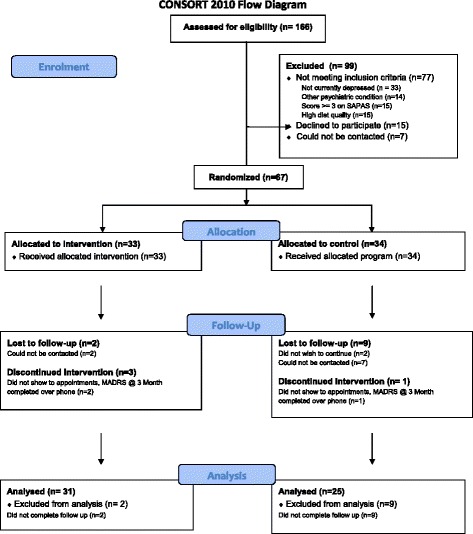
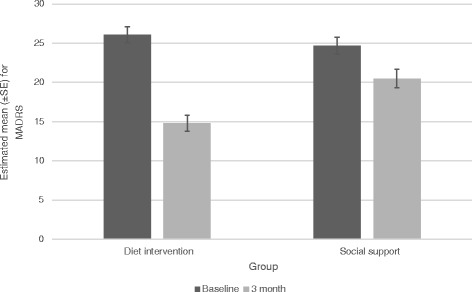
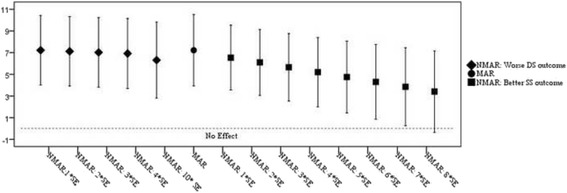
The possible therapeutic impact of dietary changes on existing mental illness is largely unknown. Using a randomised controlled trial design, we aimed to investigate the efficacy of a dietary improvement program for the treatment of major depressive episodes. ‘SMILES’ was a 12-week, parallel-group, single blind, randomised controlled trial of an adjunctive dietary intervention in the treatment of moderate to severe depression. The intervention consisted of seven individual nutritional consulting sessions delivered by a clinical dietician. The control condition comprised a social support protocol to the same visit schedule and length. Depression symptomatology was the primary endpoint, assessed using the Montgomery–Åsberg Depression Rating Scale (MADRS) at 12 weeks. Secondary outcomes included remission and change of symptoms, mood and anxiety. Analyses utilised a likelihood-based mixed-effects model repeated measures (MMRM) approach. The robustness of estimates was investigated through sensitivity analyses. We assessed 166 individuals for eligibility, of whom 67 were enrolled (diet intervention, n = 33; control, n = 34). Of these, 55 were utilising some form of therapy: 21 were using psychotherapy and pharmacotherapy combined; 9 were using exclusively psychotherapy; and 25 were using only pharmacotherapy. There were 31 in the diet support group and 25 in the social support control group who had complete data at 12 weeks. The dietary support group demonstrated significantly greater improvement between baseline and 12 weeks on the MADRS than the social support control group, t(60.7) = 4.38, p < 0.001, Cohen’s d = –1.16. Remission, defined as a MADRS score <10, was achieved for 32.3% (n = 10) and 8.0% (n = 2) of the intervention and control groups, respectively (χ 2 (1) = 4.84, p = 0.028); number needed to treat (NNT) based on remission scores was 4.1 (95% CI of NNT 2.3–27.8). A sensitivity analysis, testing departures from the missing at random (MAR) assumption for dropouts, indicated that the impact of the intervention was robust to violations of MAR assumptions. These results indicate that dietary improvement may provide an efficacious and accessible treatment strategy for the management of this highly prevalent mental disorder, the benefits of which could extend to the management of common co-morbidities. Australia and New Zealand Clinical Trials Register (ANZCTR): ACTRN12612000251820 . Registered on 29 February 2012.
Overview
The claims and statistics of this paper haven’t been checked yet.
Free: it reads the open-access text and checks the first 5 claims that cite a source we can check. Create a free account to check every claim.
Integrity signals
Registry
Cites
Statistics
Figures
Verification
Claims the paper makes
The claims and statistics of this paper haven’t been checked yet.
Free: it reads the open-access text and checks the first 5 claims that cite a source we can check. Create a free account to check every claim.
Claims other papers make about this one
Each is checked against this paper’s own text: does it say what the citing paper says it does?
The source backs part of the claim, not all of it — or backs it for a different population, condition or comparison.
In the citing paper
“Such Mediterranean-like diets can promote healthy brain function as demonstrated in a variety of dietary intervention trials in depression and in cognitive decline [1–3, 6].”
From Role of diet and its effects on the gut microbiome in the pathophysiology of mental disorders (2022) · cites this paper as [2]
Experimental — accuracy not yet measuredThe source backs part of the claim, not all of it — or backs it for a different population, condition or comparison.
In the citing paper
“The Mediterranean diet, characterized by high intake of fruits, vegetables, legumes, nuts, olive oil, and fish, and low consumption of red meat, dairy products, and saturated fats (198), has been well known for various health benefits, including mental health and cognition (199-202).”
From Diet and the Microbiota–Gut–Brain Axis: Sowing the Seeds of Good Mental Health (2021) · cites this paper as [199]
Experimental — accuracy not yet measuredThe source backs part of the claim, not all of it — or backs it for a different population, condition or comparison.
In the citing paper
“A randomized controlled trial of dietary intervention in major depression (SMILES) confirmed a poor diet correlated with a depressed cohort (N=67) and furthermore showed that the Mediterranean diet intervention (ModiMedDiet) improved depression scores (Jacka et al., 2017).”
From The Microbiota-Gut-Brain Axis (2019) · cites this paper as Jacka et al., 2017
Experimental — accuracy not yet measuredThe cited source says what the claim attributes to it.
In the citing paper
“some RCTs have shown important mental health benefits from nutritional interventions [87,88] and physical exercise interventions [64] demonstrating that brain function can be modified through lifestyle changes.”
From Psychobiotic effects on anxiety are modulated by lifestyle behaviors: a randomized placebo-controlled trial on healthy adults (2023) · cites this paper as [87]
The cited source says what the claim attributes to it.
In the citing paper
“a number of large epidemiological studies have implicated dietary factors in some of these disorders [1–5], both in terms of risk factors [6] as well as potential therapies [2, 5, 7].”
From Role of diet and its effects on the gut microbiome in the pathophysiology of mental disorders (2022) · cites this paper as [2]
5 more claims about this paper
Create a free account to see every claim other papers make about this one.
Self-check
Percentages, sums and reported differences re-computed from the paper’s own numbers.
The self-check needs the paper’s full text.
Citations
Cites
2 retracted
RETRACTED: Primary Prevention of Cardiovascular Disease with a Mediterranean Diet
Estruch, R., Ros, E., Salas-Salvadó, J., Covas, M.-I., Corella, D., Arós, F., Gómez-Gracia, E., Ruiz-Gutiérrez, V., Fiol, M., Lapetra, J., et al. (2013) · New England Journal of Medicine · doi:10.1056/nejmoa1200303 · Cited by 4,257 · cited 2×
“The Mediterranean diet is recognised as a healthful dietary pattern and has been extensively associated with chronic disease risk reduction [12].”
BackgroundRetractedRetracted: Nutrition, adult hippocampal neurogenesis and mental health
Zainuddin, M. S. A., & Thuret, S. (2012) · British Medical Bulletin · doi:10.1093/bmb/lds021 · Cited by 116
RetractedThe Hospital Anxiety and Depression Scale
Zigmond, A. S., & Snaith, R. P. (1983) · Acta Psychiatrica Scandinavica · doi:10.1111/j.1600-0447.1983.tb09716.x · Cited by 47,139
International physical activity questionnaire: 12-country reliability and validity
CRAIG, C. L., MARSHALL, A. L., SJ??STR??M, M., BAUMAN, A. E., BOOTH, M. L., AINSWORTH, B. E., PRATT, M., EKELUND, U., YNGVE, A., SALLIS, J. F., et al. (2003) · Medicine & Science in Sports & Exercise · doi:10.1249/01.mss.0000078924.61453.fb · Cited by 21,619
Depression and quality of life in older persons: A review
Sivertsen, H., Bjørkløf, G. H., Engedal, K., Selbæk, G., & Helvik, A.-S. (2015) · Dementia and Geriatric Cognitive Disorders · doi:10.1159/000437299 · Cited by 14,152
A new depression scale designed to be sensitive to change
Montgomery, S. A., & Åsberg, M. (1979) · British Journal of Psychiatry · doi:10.1192/bjp.134.4.382 · Cited by 13,962 · cited 2×
“It has been found to be a robust and psychometrically sound measure of depressive symptomatology [27].”
BackgroundMethodValidation of a New General Self-Efficacy Scale
Chen, G., Gully, S. M., & Eden, D. (2001) · Organizational Research Methods · doi:10.1177/109442810141004 · Cited by 3,542 · cited 2×
“The World Health Organization wellbeing scale (WHO-5) [39] and the Generalized Self-Efficacy Scale [40] were used to assess wellbeing and self-efficacy, respectively.”
Methodde Lorgeril, M., Salen, P., Martin, J.-L., Monjaud, I., Delaye, J., & Mamelle, N. (1999) · Circulation · doi:10.1161/01.cir.99.6.779 · Cited by 2,910
The clinical global impressions scale: applying a research tool in clinical practice.
Busner, J., & Targum, S. D. (2007) · PubMed Central · Cited by 2,817
Schröder, H., Fitó, M., Estruch, R., Martínez-González, M. A., Corella, D., Salas-Salvadó, J., Lamuela-Raventós, R., Ros, E., Salaverría, I., Fiol, M., et al. (2011) · The Journal of Nutrition · doi:10.3945/jn.110.135566 · Cited by 1,624
Research works printed but not linked: 4
- National Health and Medical Research Council (NHMRC) Dietary Guidelines for Australian Adults. A guide to healthy eating, Commonwealth of Australia, National Health and Medical Research Council 2003 Canberra Australian Government Publishing Service
- Ministry of Health and Welfare Dietary guidelines for adults in Greece Arch Hell Med 1999 16 5 516 24
- McNair D Lorr M Dropplemen L EdITS manual for the profile of mood states 1992 San Diego EdITS Educational & Industrial Testing Service
- World Health Organisation Well-being measures in primary healthcare/the Depcare Project 1998 Stockholm Psychiatric Research Unit, WHO Collaborating Centre in Mental Health
Cited by
Items 401–500 of 1,001
Bui, T. A., O’Croinin, B. R., Dennett, L., Winship, I. R., & Greenshaw, A. J. (2025) · Microbiology · doi:10.1099/mic.0.001568 · Cited by 16
Bayes, J., Schloss, J. M., & Sibbritt, D. W. (2020) · Nutrition · doi:10.1016/j.nut.2020.110946 · Cited by 13
Young, L. M., Moylan, S., John, T., Turner, M., Opie, R., Hockey, M., Saunders, D., Bruscella, C., Jacka, F. N., Teychenne, M. J., et al. (2022) · BMC Psychiatry · doi:10.1186/s12888-022-03840-3 · Cited by 16
Self-citationRadavelli‐Bagatini, S., Sim, M., Blekkenhorst, L. C., Bondonno, N. P., Bondonno, C. P., Woodman, R. J., Dickson, J. M., Harms, C. A., Magliano, D. J., Shaw, J. E., et al. (2022) · Frontiers in Nutrition · doi:10.3389/fnut.2022.837066 · Cited by 14
Brierley, M., Albertella, L., Christensen, E., Rotaru, K., Jacka, F. N., Segrave, R. A., Richardson, K. E., Lee, R. S., Kayayan, E., Hughes, S. D., et al. (2022) · Australian & New Zealand Journal of Psychiatry · doi:10.1177/00048674221085923 · Cited by 14
Self-citationCabrera-Suárez, B. M., Pla, J., González-Pinto, A. M., Hernández, J., Actis, C. C., Ortuño, F., Florido-Rodriguez, M., Sánchez‐Villegas, A., & PREDI-DEP investigators (2022) · Nutritional Neuroscience · doi:10.1080/1028415x.2022.2081448 · Cited by 12
Logan, A. C., & Schoenthaler, S. J. (2023) · Challenges · doi:10.3390/challe14030037 · Cited by 14
Walaszek, M., Kachlik, Z., & Cubała, W. J. (2024) · Nutritional Neuroscience · doi:10.1080/1028415x.2024.2303218 · Cited by 16
New and traditional foods in a modernized Mediterranean diet model
de Lorgeril, M., Salen, P., & Rabaeus, M. (2018) · European Journal of Clinical Nutrition · doi:10.1038/s41430-018-0308-6 · Cited by 15
von Essen, E. (2020) · Appetite · doi:10.1016/j.appet.2020.105003 · Cited by 16
The SMILES trial: an important first step
Jacka, F. N., O'Neil, A. E., Itsiopoulos, C., Opie, R., Cotton, S., Mohebbi, M., Castle, D. J., Dash, S. R., Mihalopoulos, C., Chatterton, M. L., et al. (2018) · BMC Medicine · doi:10.1186/s12916-018-1228-y · Cited by 16
Self-citationScannell, N., Villani, A., Moran, L., & Mantzioris, E. (2025) · Proceedings of the Nutrition Society · doi:10.1017/s0029665124007584 · Cited by 12
“In addition to the growing body of observational research, the SMILES (128) and HELFIMED (129) studies were among the first two clinical trials to show that a MedDiet intervention can be effective at reducing depressive symptoms in adults with major depression or mild depressive symptoms.”
Radavelli‐Bagatini, S., Sim, M., Blekkenhorst, L. C., Bondonno, N. P., Bondonno, C. P., Woodman, R. J., Dickson, J. M., Magliano, D. J., Shaw, J. E., Daly, R. M., et al. (2022) · European Journal of Nutrition · doi:10.1007/s00394-022-02848-5 · Cited by 16
Blampied, M., Tylianakis, J. M., Bell, C., Gilbert, C., & Rucklidge, J. J. (2023) · Journal of Affective Disorders · doi:10.1016/j.jad.2023.05.077 · Cited by 13
Association between Depressive Symptoms and Adherence to the Mediterranean Diet in Nursing Students
Valle, V. I.-D., Navarro-Martínez, R., & Cauli, O. (2023) · Nutrients · doi:10.3390/nu15143158 · Cited by 13
Prescott, S. L., Holton, K. F., Lowry, C. A., Nicholson, J. J., & Logan, A. C. (2024) · NeuroSci · doi:10.3390/neurosci5030028 · Cited by 14
Marx, W., Visser, M., Wallace, C., Jacka, F. N., Bayes, J., Francis, H., Opie, R., Hockey, M., Teasdale, S. B., Sánchez‐Villegas, A., et al. (2024) · British Journal Of Nutrition · doi:10.1017/s0007114524001946 · Cited by 19
Self-citationAssociation between Mediterranean diet and metabolic syndrome: analysis of NHANES 2007–2020
Kang, Q., Mei, X., Guo, C., Si, Y., & Wang, N.-R. (2025) · International Journal of Food Sciences and Nutrition · doi:10.1080/09637486.2025.2450452 · Cited by 12
Holtmann, G., Moniruzzaman, M., & Shah, A. (2025) · Digestive Diseases · doi:10.1159/000543845 · Cited by 13
Droz, N., Hanaway, P. J., Hyman, M. A., Jin, Y., Beidelschies, M. A., & Husni, M. E. (2020) · PLoS ONE · doi:10.1371/journal.pone.0240416 · Cited by 13
Sabet, J. A., Ekman, M. S., Lundvall, A. S., Risérus, U., Johansson, U., Öström, Å., Adamsson, V., Cao, Y., Msghina, M., & Brummer, R. J. (2021) · Nutrients · doi:10.3390/nu13030902 · Cited by 14
Kałuża, J., Łożyńska, K., Rudzińska, J., Granda, D., Sicinska, E., & Szmidt, M. K. (2023) · Nutrients · doi:10.3390/nu15030725 · Cited by 14
The Role of Dietary Patterns in Mood Disorders: Prospective Research in Youth Populations
Perez, L. F. (2018) · American Journal of Lifestyle Medicine · doi:10.1177/1559827618765937 · Cited by 13
Dietary Patterns: A New Therapeutic Approach for Depression?
de Jesús, M., Silva, T., Cagigal, C. A. M., Martins, V., & Silva, C. (2018) · Current Pharmaceutical Biotechnology · doi:10.2174/1389201019666180925122116 · Cited by 11
Hitzler, M., Karabatsiakis, A., & Kolassa, I. (2019) · Psychotherapeut · doi:10.1007/s00278-019-0366-9 · Cited by 15
Gaudiano, B. A., Davis, C. H., Miller, I. W., & Uebelacker, L. A. (2020) · Clinical Psychology & Psychotherapy · doi:10.1002/cpp.2436 · Cited by 14
Bourdel‐Marchasson, I., Ostan, R., Regueme, S. C., Pinto, A., Pryen, F., Charrouf, Z., d’Alessio, P., Baudron, C. R., Guerville, F., Durrieu, J., et al. (2020) · Nutrients · doi:10.3390/nu12030800 · Cited by 14
Cordwell, A., McClure, R., & Villani, A. M. (2021) · British Journal Of Nutrition · doi:10.1017/s0007114521002324 · Cited by 14
Beyond the neuro-immune interplay in depression: Could gut microbes be the missing link?
Audet, M. (2021) · Brain Behavior & Immunity - Health · doi:10.1016/j.bbih.2021.100308 · Cited by 12
The Handbook of Wellness Medicine
IsHak, W. W. (2020) · Cambridge University Press eBooks · doi:10.1017/9781108650182 · Cited by 13
Thomson-Casey, C., Adams, J., & McIntyre, E. (2022) · BMC Complementary Medicine and Therapies · doi:10.1186/s12906-022-03620-2 · Cited by 11
Owens, M., Watkins, E. R., Bot, M., Brouwer, I. A., Roca, M., Kohls, E., Penninx, B. W. J. H., van Grootheest, G., Hegerl, U., Gili, M., et al. (2020) · Nutrition Bulletin · doi:10.1111/nbu.12447 · Cited by 15
A Recipe for Resilience: A Systematic Review of Diet and Adolescent Mental Health
Tucker, J., Brennan, A., Benton, D., & Young, H. A. (2025) · Nutrients · doi:10.3390/nu17233677 · Cited by 16
Wetherill, M. S., Caywood, L. T., Hollman, N., Carter, V. P., Gentges, J., Sims, A., & Henderson, C. V. (2023) · Nutrients · doi:10.3390/nu15204417 · Cited by 14
Gao, Y., & Zhou, T. (2024) · Trends in Food Science & Technology · doi:10.1016/j.tifs.2024.104596 · Cited by 10
Bromley, K., Sacks, D. D., Boyes, A., Driver, C., & Hermens, D. F. (2024) · Frontiers in Psychiatry · doi:10.3389/fpsyt.2024.1413268 · Cited by 13
Tavakoly, R., Moosburner, A., Anheyer, D., & Cramer, H. (2025) · Nutrients · doi:10.3390/nu17030563 · Cited by 15
Menniti, G., Meshkat, S., Lin, Q., Lou, W. Y. W., Reichelt, A. C., & Bhat, V. (2025) · BMJ Nutrition Prevention & Health · doi:10.1136/bmjnph-2025-001167 · Cited by 15
Rosell‐Cardona, C., Cryan, J. F., Clarke, G. A., & Kittel‐Schneider, S. (2025) · npj Biofilms and Microbiomes · doi:10.1038/s41522-025-00749-z · Cited by 12
Naumoska, T., Zafirovski, K., & Hanna, F. S. (2025) · Children · doi:10.3390/children12070953 · Cited by 15
Food and Mood: Current Evidence on Mental Health and the Microbiota-Gut-Brain Axis
Morse, M., & Garcia, B. (2025) · Current Psychiatry Reports · doi:10.1007/s11920-025-01636-2 · Cited by 11
Oddo, V. M., Moise, C., Welke, L., Bernabé, B. P., Maki, P. M., Koenig, M. D., Pezley, L., Xia, Y., & Tussing-Humphreys, L. M. (2023) · Journal of Nutrition · doi:10.1016/j.tjnut.2023.08.022 · Cited by 13
Baenas, I., Camacho‐Barcia, L., Granero, R., Razquín, C., Corella, D., Martínez, C. G., Castañer, O., Martínez, J. A., Alonso‐Gómez, Á. M., Wärnberǵ, J., et al. (2024) · Journal of Endocrinological Investigation · doi:10.1007/s40618-023-02278-y · Cited by 11
A low-carbohydrate survey: Evidence for sustainable metabolic syndrome reversal
Cucuzzella, M. T., Tondt, J., Dockter, N. E., Saslow, L. R., & Wood, T. R. (2017) · Journal of Metabolic Health · doi:10.4102/jir.v2i1.30 · Cited by 12
Minamino, H., Katsushima, M., Hashimoto, M., Fujita, Y., Torii, M., Ikeda, K., Isomura, N., Oguri, Y., Yamamoto, W., Watanabe, R., et al. (2021) · PLoS ONE · doi:10.1371/journal.pone.0255526 · Cited by 14
What do Climate Change, Nutrition, and the Environment Have to do With Mental Health?
Sugden, S. G., & Merlo, G. (2024) · American Journal of Lifestyle Medicine · doi:10.1177/15598276241280245 · Cited by 10
Using lifestyle interventions and the gut microbiota to improve PTSD symptoms
Sugden, S. G., & Merlo, G. (2024) · Frontiers in Neuroscience · doi:10.3389/fnins.2024.1488841 · Cited by 12
Prescott, S. L., & Logan, A. C. (2024) · Criminal Justice and Behavior · doi:10.1177/00938548241302468 · Cited by 13
Shi, J., Zhao, Q., Liang, Z., Cui, H., Liu, Y., Cheng, Y., & Zhang, M. (2024) · Environmental Health and Preventive Medicine · doi:10.1265/ehpm.24-00202 · Cited by 9
Human microplastic removal: what does the evidence tell us?
Fabiano, N., Luu, B., & Puder, D. (2025) · Brain medicine : · doi:10.61373/bm025c.0020 · Cited by 10
Cheng, L., Chen, Y., He, J., Cheng, X., Wang, Y., Lin, X., Huang, Z., Miao, X., & Xia, S. (2025) · Nutrients · doi:10.3390/nu17060957 · Cited by 12
Dai, H., Yang, H., Wang, R., Wang, X., & Zhang, X. (2025) · Nutrients · doi:10.3390/nu17091505 · Cited by 10
Parallel Pathways, Divergent Outcomes: Adipose Tissue–Neural Crosstalk in Depression and Obesity
Prodaniuc, A., Amălinei, C., Căruntu, I.-D., Riscanu, L., & Grigoraş, A. (2025) · Journal of Clinical Medicine · doi:10.3390/jcm14238307 · Cited by 13
The ketogenic diet: a co-therapy in the treatment of mood disorders and obesity - a case report
Pieklik, A., Pawlaczyk, M., Róg, J., & Karakuła‐Juchnowicz, H. (2021) · Current Problems of Psychiatry · doi:10.2478/cpp-2021-0002 · Cited by 11
O’Neill, S., Minehan, M., Knight-Agarwal, C. R., & Pyne, D. B. (2024) · Frontiers in Nutrition · doi:10.3389/fnut.2023.1303405 · Cited by 11
Mental health and diet quality after primary treatment for ovarian cancer
Johnston, E. A., Veenhuizen, S. G. A., Ibiebele, T. I., Webb, P. M., van der Pols, J. C., & the OPAL Study Group (2024) · Nutrition & Dietetics · doi:10.1111/1747-0080.12861 · Cited by 11
Hoare, E., Dash, S. R., Varsamis, P., Jennings, G., & Kingwell, B. A. (2017) · Nutrients · doi:10.3390/nu9121330 · Cited by 10
Self-citationRook, G. A. W., Raison, C. L., & Lowry, C. A. (2018) · Elsevier eBooks · doi:10.1016/b978-0-12-811073-7.00002-7 · Cited by 9
Stress and Western diets increase vulnerability to neuropsychiatric disorders: A common mechanism
Dagnino‐Subiabre, A. (2019) · Nutritional Neuroscience · doi:10.1080/1028415x.2019.1661651 · Cited by 9
Good for the planet and good for our health: the evidence for whole-food plant-based diets
Pye, A., Bash, K., Joiner, A. B., & Beenstock, J. (2022) · BJPsych International · doi:10.1192/bji.2022.7 · Cited by 13
Pedroso, I., Kumbhare, S. V., Joshi, B., Saravanan, S. K., Mongad, D., Singh-Rambiritch, S., Uday, T., Muthukumar, K., Irudayanathan, C., Reddy-Sinha, C., et al. (2022) · Journal of Personalized Medicine · doi:10.3390/jpm12081237 · Cited by 15
The protective effect of mushroom consumption on depressive symptoms in Korean population
Park, S. K., Oh, C., Ryoo, J., & Jung, J. Y. (2022) · Scientific Reports · doi:10.1038/s41598-022-26549-5 · Cited by 11
Walker, L., Smith, N., & Delon, C. (2021) · BMJ Nutrition Prevention & Health · doi:10.1136/bmjnph-2020-000219 · Cited by 10
Anxiety and stress over COVID‐19 pandemic associated with increased eating
Himmelstein, M. S., Beaver, J. N., & Gilman, T. L. (2021) · Obesity Science & Practice · doi:10.1002/osp4.576 · Cited by 11
Lane, M. M., Lotfaliany, M., Machado, P. P., Jacka, F. N., Mohebbi, M., O'Neil, A. E., Werneck, A. O., Monteiro, C. A., Loughman, A., Rocks, T., et al. (2023) · Preprints.org · doi:10.20944/preprints202308.1110.v1 · Cited by 10
Self-citationChehadi, A. C., Pereira de Lima, E., Detregiachi, C. R. P., Santos de Argollo Haber, R., Catharin, V. M. C. S., Fornari Laurindo, L., Engracia Valenti, V., Machado Galhardi, C., Tanaka, M., & Maria Barbalho, S. (2026) · International Journal of Molecular Sciences · doi:10.3390/ijms27010465 · Cited by 8
“Patients often perceive dietary changes as more holistic and less stigmatizing than medication alone, thereby enhancing engagement and long-term treatment compliance [399–401].”
Mörkl, S., Stell, L., Buhai, D.-V., Schweinzer, M., Wagner‐Skacel, J., Vajda, C., Lackner, S., Bengesser, S., Lahousen, T., Painold, A., et al. (2021) · Nutrients · doi:10.3390/nu13030822 · Cited by 62
Incorporating Mental Health Into Lifestyle Medicine
Abascal, L. B., VELA, A. M., Sugden, S. G., Kohlenberg, S., Hirschberg, A., Young, A., Lane, K., & Merlo, G. (2022) · American Journal of Lifestyle Medicine · doi:10.1177/15598276221084250 · Cited by 10
The Relationship Between Mental Health Literacy and Social Well-Being: A Longitudinal Study in China
Pan, J., Xu, T., & Li, D. (2024) · Behavioral Sciences · doi:10.3390/bs15010029 · Cited by 13
Microbiome: A Key Regulator of Body-Brain Interactions
O’Riordan, K. J., Aburto, M. R., Nagpal, J. K., Clarke, G. A., & Cryan, J. F. (2025) · Advances in experimental medicine and biology · doi:10.1007/978-3-031-89525-8_6 · Cited by 10
Novel Ingredients: Hydroxytyrosol as a Neuroprotective Agent; What Is New on the Horizon?
Martínez‐Zamora, L. (2025) · Foods · doi:10.3390/foods14213624 · Cited by 13
The Gut-Brain-Microbe Interaction: Relevance in Inflammation and Depression
Parletta, N. (2018) · Elsevier eBooks · doi:10.1016/b978-0-12-811073-7.00013-1 · Cited by 25
Berg, E., Wilhelm, K. A., & Handley, T. E. (2020) · BMC Psychiatry · doi:10.1186/s12888-020-02950-0 · Cited by 9
Campisi, S. C., Zasowski, C., Shah, S., Bradley-Ridout, G., Madigan, S. L., Szatmári, P., & Korczak, D. J. (2021) · Advances in Nutrition · doi:10.1093/advances/nmab088 · Cited by 12
Towards new nutritional policies for brain health: A research perspective on future actions
Adan, R. A. H., Cirulli, F., Dye, L., Higgs, S., Aarts, K., van der Beek, E. M., Buitelaar, J. K., Destrebecq, F., Witte, E. D., Hartmann, T., et al. (2022) · Brain Behavior and Immunity · doi:10.1016/j.bbi.2022.07.012 · Cited by 12
Higuera‐Gómez, A., Ribot-Rodríguez, R., Micó, V., Cuevas‐Sierra, A., San-Cristóbal, R., & Martínez, J. A. (2022) · International Journal of Environmental Research and Public Health · doi:10.3390/ijerph20010767 · Cited by 9
Nutrition Education in Psychiatry Residency Programs: A Call to Action
Mudd, M. K., & Angelotta, C. (2024) · Journal of Nutrition · doi:10.1016/j.tjnut.2024.05.030 · Cited by 9
Ohi, K., Nishizawa, D., Saito, T., Goto, T., Kubota, I., Shinoda, T., Fujikane, D., Hasegawa, J., Sato, N., Tanioka, F., et al. (2024) · Translational Psychiatry · doi:10.1038/s41398-024-03105-5 · Cited by 10
Cimo, A., Loong, D., & Dewa, C. S. (2020) · Canadian Journal of Diabetes · doi:10.1016/j.jcjd.2020.06.015 · Cited by 11
Hołowko, J., Cięszczyk, P., Biliński, J., Basak, G. W., & Stachowska, E. (2020) · Nutrients · doi:10.3390/nu12123604 · Cited by 12
Bayes, J., Schloss, J. M., & Sibbritt, D. W. (2022) · Clinical Nutrition ESPEN · doi:10.1016/j.clnesp.2022.12.016 · Cited by 8
Gerber, M., Jakowski, S., Kellmann, M., Cody, R., Gygax, B., Ludyga, S., Müller, C., Ramseyer, S., & Beckmann, J. (2023) · Psychology of sport and exercise · doi:10.1016/j.psychsport.2023.102387 · Cited by 12
Owens, M., Watkins, E. R., Bot, M., Brouwer, I. A., Roca, M., Kohls, E., Penninx, B. W. J. H., van Grootheest, G., Cabout, M., Hegerl, U., et al. (2020) · BMJ Open · doi:10.1136/bmjopen-2019-034025 · Cited by 9
Wheatley, L., Rosenbaum, S., Mastrogiovanni, C., Pebole, M. M., Wells, R., Rees, S. J., Teasdale, S. B., & McKeon, G. (2024) · Violence Against Women · doi:10.1177/10778012241257245 · Cited by 9
The role of nutrition in mild traumatic brain injury rehabilitation for service members and veterans
Monti, K. S., Conkright, M. W., Eagle, S. R., Lawrence, D. W., & Dretsch, L. M. (2024) · Neurorehabilitation · doi:10.3233/nre-230241 · Cited by 13
Baghdadi, G., Feyzpour, M., Shahrokhi, S. A., Amiri, R., & Rahimlou, M. (2025) · Frontiers in Medicine · doi:10.3389/fmed.2025.1529374 · Cited by 10
Oxidative Stress in Treatment-Resistant and Refractory Depression: A Hidden Therapeutic Target?
Winczewska, Z., Cubała, W. J., Radziwiłłowicz, P., & Górska‐Ponikowska, M. (2026) · Molecular Neurobiology · doi:10.1007/s12035-026-05715-0 · Cited by 9
Madeghe, B. A., Kogi‐Makau, W., Ngala, S., & Kumar, M. (2021) · Global Social Welfare · doi:10.1007/s40609-020-00199-9 · Cited by 9
Mental health is EVERY dietitian's business!
Burrows, T. L. (2022) · Nutrition & Dietetics · doi:10.1111/1747-0080.12753 · Cited by 7
Lee, M. F., Bayes, J., Moustafa, A. A., Storz, M. A., & Best, T. (2025) · Nutrition Reviews · doi:10.1093/nutrit/nuaf073 · Cited by 11
McCabe, D., Bednarz, J., Lockwood, C. S., & Barker, T. H. (2020) · Women s Health Reports · doi:10.1089/whr.2020.0035 · Cited by 8
Rhea, K. C., Mayeux, M. C., Cater, M. W., Carr, I. J., & Tuuri, G. (2020) · Journal of Veterinary Medical Education · doi:10.3138/jvme-2019-0162 · Cited by 9
Diet Quality and Mental Health Amongst Acute Inpatient Psychiatric Patients
Gill, R., Tyndall, S. F., Vora, D., Hasan, R., Megna, J. L., & Leontieva, L. (2021) · Cureus · doi:10.7759/cureus.12434 · Cited by 30
Roponen, J., Ruusunen, A. A., Absetz, P., Partonen, T., Kuvaja-Köllner, V., Hujo, M., & Nuutinen, O. (2021) · Trials · doi:10.1186/s13063-021-05279-5 · Cited by 9
Vaiciurgis, V. T., Charlton, K. E., Clancy, A. K., & Beck, E. J. (2022) · Public Health Nutrition · doi:10.1017/s1368980022000969 · Cited by 10
Alnabulsi, M., Imam, A. A., Alawlaqi, A. A., Alhawaj, F. H., Jamjoom, G. F., Alsaeidi, L. D., Hassan, F. E.-S., & Ansari, S. A. (2024) · Medicina · doi:10.3390/medicina60040642 · Cited by 11
Coprophagy in nineteenth-century psychiatry
Moore, A. M. D. (2018) · Microbial Ecology in Health and Disease · doi:10.1080/16512235.2018.1535737 · Cited by 8
Wait, J., Burns, C., Jones, T., Harper, Z., Allen, E., Langley‐Evans, S. C., & Voigt, J. (2020) · Developmental Psychobiology · doi:10.1002/dev.22063 · Cited by 7
Collins, S., Lotfalian, M., Marx, W., Lane, M. M., Allender, S. E., Jacka, F. N., & Hoare, E. (2021) · Mental Health & Prevention · doi:10.1016/j.mhp.2021.200220 · Cited by 10
Self-citationFurulund, E., Druckrey-Fiskaaen, K. T., Carlsen, S.-E. L., Madebo, T., Fadnes, L. T., & Lid, T. G. (2024) · BMC Nutrition · doi:10.1186/s40795-024-00880-8 · Cited by 5
Metadata
- Authors
- Jacka, F. N., O’Neil, A., Opie, R., Itsiopoulos, C., Cotton, S., Mohebbi, M., Castle, D., Dash, S., Mihalopoulos, C., Chatterton, M. L., Brazionis, L., Dean, O. M., Hodge, A. M., & Berk, M.
- Affiliations
- Deakin University (AU)
- La Trobe University (AU)
- Orygen (AU)
- The University of Melbourne (AU)
- Cancer Council Victoria (AU)
- Corresponding author
- Jacka, Felice N.
- ORCID
- Venue
- BMC Medicine
- Published
- 2017-01-30
- Volume
- 15
- Issue
- 1
- Pages
- 23-23
- ISSN
- 1741-7015 (ISSN-L)
- PMC
- PMC5282719
- OpenAlex
- W2582290224
- Semantic Scholar
- 5a6ea46fefb97b7492c2a5dc03b9f34e65420180
- Cited by
- 1,093
- References
- 47
- Citations by year
- 2026: 143 · 2025: 176 · 2024: 145 · 2023: 105 · 2022: 109 · 2021: 99 · 2020: 153 · 2019: 72 · 2018: 62 · 2017: 29
- FWCI
- 81.01
- Type
- journal article
- Language
- en
- Update notices
- correction (2018-12-28)
- Open access
- gold
- doi.org
- Licence
- cc-by
- Locations
- BMC Medicine (publishedVersion, cc-by)
- PubMed Central (publishedVersion, cc-by)
- PubMed (publishedVersion)
- Victoria University Research Repository (Victoria University) (submittedVersion, cc-by)
- Minerva Access (University of Melbourne) (submittedVersion, cc-by)
- RMIT Research Repository (RMIT University Library) (submittedVersion, other-oa)
- DOAJ (DOAJ: Directory of Open Access Journals) (submittedVersion, cc-by-sa)
- Figshare (submittedVersion, cc-by)
- Funders
- National Health and Medical Research Council (1021347)
- Topics
- Health Sciences › Medicine › Public Health, Environmental and Occupational Health › Nutritional Studies and Diet
- Health Sciences › Medicine › Pharmacology (medical) › Treatment of Major Depression
- Health Sciences › Medicine › Psychiatry and Mental health › Mental Health Treatment and Access
- Keywords
- major depressive disorder, dietary intervention, nutrition counseling, adjunctive therapy, social support, remission, depression severity, mood and anxiety, number needed to treat, comorbidities, cost-effectiveness, implementation facilitators, implementation research, mental health services
- MeSH terms
- Adult, Australia, Major Depressive Disorder, Female, Humans, Male, Middle Aged, New Zealand, Comorbidity, Likelihood Functions, Single-Blind Method, Treatment Outcome
About these checks
Registry, retraction, Cites and statistics results are computed, not judged, with one exception: a printed reference that no index lists is read once by a model before it counts as a citation error. Claims are extracted by a model and kept only when their quote appears verbatim in the text; each cited source is then checked, with a model’s help, for whether it says what the claim relies on. Those verdicts can be wrong — read the claim’s quote and the cited source before relying on one.
Statistics and arithmetic are recomputed, not judged.
Confidence bands are shown only for fields calibrated on our annotated test set. None is calibrated yet, so no band is shown.
What counts as a claim ›How we measure confidence ›How we check this ›
Are you an author, or do you see a problem with this page? Request a review
Data sources
Bibliographic data: Semantic Scholar, OpenAlex, Crossref.
Contains information from the Semantic Scholar Academic Graph Datasets, made available under the ODC Attribution License (ODC-BY 1.0).
Semantic Scholar’s data is described in: Kinney, R., et al. (2023). The Semantic Scholar Open Data Platform. arXiv:2301.10140.
