

A randomised controlled trial of dietary improvement for adults with major depression (the ‘SMILES’ trial)
Open accessThe DOI matches its Crossref record; 46 of the 47 references it cites were found in a registry or an index.
Abstract
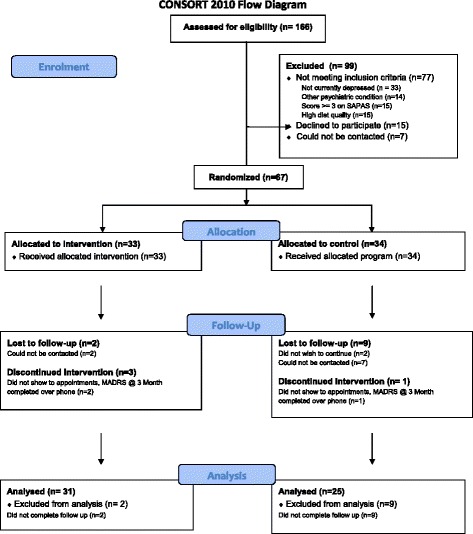
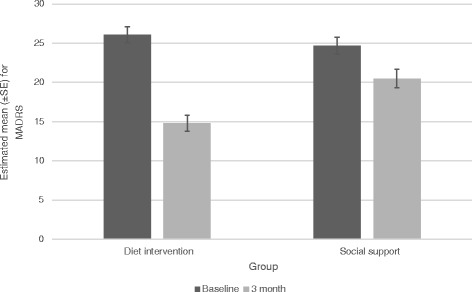
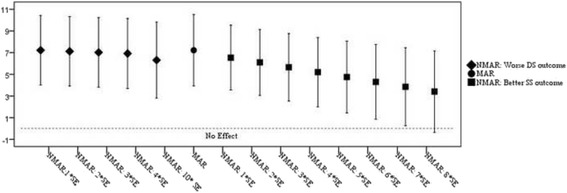
The possible therapeutic impact of dietary changes on existing mental illness is largely unknown. Using a randomised controlled trial design, we aimed to investigate the efficacy of a dietary improvement program for the treatment of major depressive episodes. ‘SMILES’ was a 12-week, parallel-group, single blind, randomised controlled trial of an adjunctive dietary intervention in the treatment of moderate to severe depression. The intervention consisted of seven individual nutritional consulting sessions delivered by a clinical dietician. The control condition comprised a social support protocol to the same visit schedule and length. Depression symptomatology was the primary endpoint, assessed using the Montgomery–Åsberg Depression Rating Scale (MADRS) at 12 weeks. Secondary outcomes included remission and change of symptoms, mood and anxiety. Analyses utilised a likelihood-based mixed-effects model repeated measures (MMRM) approach. The robustness of estimates was investigated through sensitivity analyses. We assessed 166 individuals for eligibility, of whom 67 were enrolled (diet intervention, n = 33; control, n = 34). Of these, 55 were utilising some form of therapy: 21 were using psychotherapy and pharmacotherapy combined; 9 were using exclusively psychotherapy; and 25 were using only pharmacotherapy. There were 31 in the diet support group and 25 in the social support control group who had complete data at 12 weeks. The dietary support group demonstrated significantly greater improvement between baseline and 12 weeks on the MADRS than the social support control group, t(60.7) = 4.38, p < 0.001, Cohen’s d = –1.16. Remission, defined as a MADRS score <10, was achieved for 32.3% (n = 10) and 8.0% (n = 2) of the intervention and control groups, respectively (χ 2 (1) = 4.84, p = 0.028); number needed to treat (NNT) based on remission scores was 4.1 (95% CI of NNT 2.3–27.8). A sensitivity analysis, testing departures from the missing at random (MAR) assumption for dropouts, indicated that the impact of the intervention was robust to violations of MAR assumptions. These results indicate that dietary improvement may provide an efficacious and accessible treatment strategy for the management of this highly prevalent mental disorder, the benefits of which could extend to the management of common co-morbidities. Australia and New Zealand Clinical Trials Register (ANZCTR): ACTRN12612000251820 . Registered on 29 February 2012.
Overview
The claims and statistics of this paper haven’t been checked yet.
Free: it reads the open-access text and checks the first 5 claims that cite a source we can check. Create a free account to check every claim.
Integrity signals
Registry
Cites
Statistics
Figures
Verification
Claims the paper makes
The claims and statistics of this paper haven’t been checked yet.
Free: it reads the open-access text and checks the first 5 claims that cite a source we can check. Create a free account to check every claim.
Claims other papers make about this one
Each is checked against this paper’s own text: does it say what the citing paper says it does?
The source backs part of the claim, not all of it — or backs it for a different population, condition or comparison.
In the citing paper
“Such Mediterranean-like diets can promote healthy brain function as demonstrated in a variety of dietary intervention trials in depression and in cognitive decline [1–3, 6].”
From Role of diet and its effects on the gut microbiome in the pathophysiology of mental disorders (2022) · cites this paper as [2]
Experimental — accuracy not yet measuredThe source backs part of the claim, not all of it — or backs it for a different population, condition or comparison.
In the citing paper
“The Mediterranean diet, characterized by high intake of fruits, vegetables, legumes, nuts, olive oil, and fish, and low consumption of red meat, dairy products, and saturated fats (198), has been well known for various health benefits, including mental health and cognition (199-202).”
From Diet and the Microbiota–Gut–Brain Axis: Sowing the Seeds of Good Mental Health (2021) · cites this paper as [199]
Experimental — accuracy not yet measuredThe source backs part of the claim, not all of it — or backs it for a different population, condition or comparison.
In the citing paper
“A randomized controlled trial of dietary intervention in major depression (SMILES) confirmed a poor diet correlated with a depressed cohort (N=67) and furthermore showed that the Mediterranean diet intervention (ModiMedDiet) improved depression scores (Jacka et al., 2017).”
From The Microbiota-Gut-Brain Axis (2019) · cites this paper as Jacka et al., 2017
Experimental — accuracy not yet measuredThe cited source says what the claim attributes to it.
In the citing paper
“some RCTs have shown important mental health benefits from nutritional interventions [87,88] and physical exercise interventions [64] demonstrating that brain function can be modified through lifestyle changes.”
From Psychobiotic effects on anxiety are modulated by lifestyle behaviors: a randomized placebo-controlled trial on healthy adults (2023) · cites this paper as [87]
The cited source says what the claim attributes to it.
In the citing paper
“a number of large epidemiological studies have implicated dietary factors in some of these disorders [1–5], both in terms of risk factors [6] as well as potential therapies [2, 5, 7].”
From Role of diet and its effects on the gut microbiome in the pathophysiology of mental disorders (2022) · cites this paper as [2]
5 more claims about this paper
Create a free account to see every claim other papers make about this one.
Self-check
Percentages, sums and reported differences re-computed from the paper’s own numbers.
The self-check needs the paper’s full text.
Citations
Cites
2 retracted
RETRACTED: Primary Prevention of Cardiovascular Disease with a Mediterranean Diet
Estruch, R., Ros, E., Salas-Salvadó, J., Covas, M.-I., Corella, D., Arós, F., Gómez-Gracia, E., Ruiz-Gutiérrez, V., Fiol, M., Lapetra, J., et al. (2013) · New England Journal of Medicine · doi:10.1056/nejmoa1200303 · Cited by 4,257 · cited 2×
“The Mediterranean diet is recognised as a healthful dietary pattern and has been extensively associated with chronic disease risk reduction [12].”
BackgroundRetractedRetracted: Nutrition, adult hippocampal neurogenesis and mental health
Zainuddin, M. S. A., & Thuret, S. (2012) · British Medical Bulletin · doi:10.1093/bmb/lds021 · Cited by 116
RetractedThe Hospital Anxiety and Depression Scale
Zigmond, A. S., & Snaith, R. P. (1983) · Acta Psychiatrica Scandinavica · doi:10.1111/j.1600-0447.1983.tb09716.x · Cited by 47,139
International physical activity questionnaire: 12-country reliability and validity
CRAIG, C. L., MARSHALL, A. L., SJ??STR??M, M., BAUMAN, A. E., BOOTH, M. L., AINSWORTH, B. E., PRATT, M., EKELUND, U., YNGVE, A., SALLIS, J. F., et al. (2003) · Medicine & Science in Sports & Exercise · doi:10.1249/01.mss.0000078924.61453.fb · Cited by 21,619
Depression and quality of life in older persons: A review
Sivertsen, H., Bjørkløf, G. H., Engedal, K., Selbæk, G., & Helvik, A.-S. (2015) · Dementia and Geriatric Cognitive Disorders · doi:10.1159/000437299 · Cited by 14,152
A new depression scale designed to be sensitive to change
Montgomery, S. A., & Åsberg, M. (1979) · British Journal of Psychiatry · doi:10.1192/bjp.134.4.382 · Cited by 13,962
Validation of a New General Self-Efficacy Scale
Chen, G., Gully, S. M., & Eden, D. (2001) · Organizational Research Methods · doi:10.1177/109442810141004 · Cited by 3,542 · cited 2×
“The World Health Organization wellbeing scale (WHO-5) [39] and the Generalized Self-Efficacy Scale [40] were used to assess wellbeing and self-efficacy, respectively.”
Methodde Lorgeril, M., Salen, P., Martin, J.-L., Monjaud, I., Delaye, J., & Mamelle, N. (1999) · Circulation · doi:10.1161/01.cir.99.6.779 · Cited by 2,910
The clinical global impressions scale: applying a research tool in clinical practice.
Busner, J., & Targum, S. D. (2007) · PubMed Central · Cited by 2,806
Schröder, H., Fitó, M., Estruch, R., Martínez-González, M. A., Corella, D., Salas-Salvadó, J., Lamuela-Raventós, R., Ros, E., Salaverría, I., Fiol, M., et al. (2011) · The Journal of Nutrition · doi:10.3945/jn.110.135566 · Cited by 1,624
Gueorguieva, R., & Krystal, J. H. (2004) · Archives of General Psychiatry · doi:10.1001/archpsyc.61.3.310 · Cited by 1,529
So depression is an inflammatory disease, but where does the inflammation come from?
Berk, M., Williams, L. J., Jacka, F. N., O’Neil, A., Pasco, J. A., Moylan, S., Allen, N. B., Stuart, A. L., Hayley, A. C., Byrne, M. L., et al. (2013) · BMC Medicine · doi:10.1186/1741-7015-11-200 · Cited by 1,423 · cited 2×
“Several cohort studies also reported associations between the quality of women’s diets during pregnancy and the risk for emotional dysregulation in children [13–15], with new insights into potential mechanisms of action that include brain plasticity [16], the gut microbiota [17] and inflammatory [18] and oxidative str…”
BackgroundSelf-citationMalhi, G. S., Bassett, D., Boyce, P., Bryant, R., Fitzgerald, P. B., Fritz, K., Hopwood, M., Lyndon, B., Mulder, R., Murray, G., et al. (2015) · Australian & New Zealand Journal of Psychiatry · doi:10.1177/0004867415617657 · Cited by 842 · cited 1×
“garding the need to address these behaviours as a first step in the treatment of patients [48].”
BackgroundAssociation of Western and Traditional Diets With Depression and Anxiety in Women
Jacka, F. N., Pasco, J. A., Mykletun, A., Williams, L. J., Hodge, A. M., O'Reilly, S. L., Nicholson, G. C., Kotowicz, M. A., & Berk, M. (2010) · American Journal of Psychiatry · doi:10.1176/appi.ajp.2009.09060881 · Cited by 802
Self-citationMediterranean diet, stroke, cognitive impairment, and depression: A meta‐analysis
Psaltopoulou, T., Sergentanis, T. N., Panagiotakos, D. B., Sergentanis, I. N., Kosti, R., & Scarmeas, N. (2013) · Annals of Neurology · doi:10.1002/ana.23944 · Cited by 793
Lai, J. S., Hiles, S., Bisquera, A., Hure, A. J., McEvoy, M., & Attia, J. (2014) · The American Journal of Clinical Nutrition · doi:10.3945/ajcn.113.069880 · Cited by 786
Rao, M., Afshin, A., Singh, G., & Mozaffarian, D. (2013) · BMJ Open · doi:10.1136/bmjopen-2013-004277 · Cited by 770
Relationship Between Diet and Mental Health in Children and Adolescents: A Systematic Review
O’Neil, A., Quirk, S. E., Housden, S., Brennan, S. L., Williams, L. J., Pasco, J. A., Berk, M., & Jacka, F. N. (2014) · American Journal of Public Health · doi:10.2105/ajph.2014.302110 · Cited by 734
Self-citationHodge, A., Patterson, A. J., Brown, W. J., Ireland, P., & Giles, G. (2000) · Australian and New Zealand Journal of Public Health · doi:10.1111/j.1467-842x.2000.tb00520.x · Cited by 636
Self-citationDietary pattern and depressive symptoms in middle age
Akbaraly, T. N., Brunner, E. J., Ferrie, J. E., Marmot, M. G., Kivimaki, M., & Singh-Manoux, A. (2009) · British Journal of Psychiatry · doi:10.1192/bjp.bp.108.058925 · Cited by 602
Nutritional medicine as mainstream in psychiatry
Sarris, J., Logan, A. C., Akbaraly, T. N., Amminger, G. P., Balanzá-Martínez, V., Freeman, M. P., Hibbeln, J., Matsuoka, Y., Mischoulon, D., Mizoue, T., et al. (2015) · The Lancet Psychiatry · doi:10.1016/s2215-0366(14)00051-0 · Cited by 592
Self-citationSánchez-Villegas, A., Delgado-Rodríguez, M., Alonso, A., Schlatter, J., Lahortiga, F., Majem, L. S., & Martínez-González, M. A. (2009) · Archives of General Psychiatry · doi:10.1001/archgenpsychiatry.2009.129 · Cited by 577
Adjunctive Nutraceuticals for Depression: A Systematic Review and Meta-Analyses
Sarris, J., Murphy, J., Mischoulon, D., Papakostas, G. I., Fava, M., Berk, M., & Ng, C. H. (2016) · American Journal of Psychiatry · doi:10.1176/appi.ajp.2016.15091228 · Cited by 436 · cited 1×
“Although there are data suggesting that some nutritional supplements may be of utility as adjunctive therapies in psychiatric disorders [20], the field of research focusing on the relationships between overall dietary quality and mental disorders is new and has thus far been largely limited to animal studies and obser…”
BackgroundSelf-citationOxidative & nitrosative stress in depression: Why so much stress?
Moylan, S., Berk, M., Dean, O. M., Samuni, Y., Williams, L. J., O’Neil, A., Hayley, A. C., Pasco, J. A., Anderson, G., Jacka, F. N., et al. (2014) · Neuroscience & Biobehavioral Reviews · doi:10.1016/j.neubiorev.2014.05.007 · Cited by 403
Self-citationMediterranean dietary pattern and depression: the PREDIMED randomized trial
Sánchez-Villegas, A., Martínez-González, M. A., Estruch, R., Salas-Salvadó, J., Corella, D., Covas, M. I., Arós, F., Romaguera, D., Gómez-Gracia, E., Lapetra, J., et al. (2013) · BMC Medicine · doi:10.1186/1741-7015-11-208 · Cited by 403 · cited 1×
“This protective effect was statistically significant in those with type 2 diabetes, who comprised approximately half the sample [24].”
BackgroundA prospective study of diet quality and mental health in adolescents
Jacka, F. N., Kremer, P. J., Berk, M., de Silva-Sanigorski, A. M., Moodie, M., Leslie, E. R., Pasco, J. A., & Swinburn, B. A. (2011) · PLoS ONE · doi:10.1371/journal.pone.0024805 · Cited by 374
Self-citationThe gut microbiome and diet in psychiatry: focus on depression
Dash, S., Clarke, G., Berk, M., & Jacka, F. N. (2015) · Current Opinion in Psychiatry · doi:10.1097/yco.0000000000000117 · Cited by 369 · cited 2×
“Several cohort studies also reported associations between the quality of women’s diets during pregnancy and the risk for emotional dysregulation in children [13–15], with new insights into potential mechanisms of action that include brain plasticity [16], the gut microbiota [17] and inflammatory [18] and oxidative str…”
BackgroundSelf-citationJacka, F. N., Mykletun, A., Berk, M., Bjelland, I., & Tell, G. S. (2011) · Psychosomatic Medicine · doi:10.1097/psy.0b013e318222831a · Cited by 303
Self-citationWestern diet is associated with a smaller hippocampus: a longitudinal investigation
Jacka, F. N., Cherbuin, N., Anstey, K. J., Sachdev, P., & Butterworth, P. (2015) · BMC Medicine · doi:10.1186/s12916-015-0461-x · Cited by 293
Self-citationDietary recommendations for the prevention of depression
Opie, R. S., Itsiopoulos, C., Parletta, N., Sanchez-Villegas, A., Akbaraly, T. N., Ruusunen, A., & Jacka, F. N. (2017) · Nutritional Neuroscience · doi:10.1179/1476830515y.0000000043 · Cited by 287
Self-citationJacka, F. N., Ystrom, E., Brantsaeter, A. L., Karevold, E., Roth, C., Haugen, M., Meltzer, H. M., Schjolberg, S., & Berk, M. (2013) · Journal of the American Academy of Child & Adolescent Psychiatry · doi:10.1016/j.jaac.2013.07.002 · Cited by 279
Self-citationKerr, I. B. (2005) · Psychiatry · doi:10.1383/psyt.4.5.28.65105 · Cited by 256
Opie, R. S., O’Neil, A., Itsiopoulos, C., & Jacka, F. N. (2015) · Public Health Nutrition · doi:10.1017/s1368980014002614 · Cited by 243
Self-citationMoving towards a population health approach to the primary prevention of common mental disorders
Jacka, F. N., Mykletun, A., & Berk, M. (2012) · BMC Medicine · doi:10.1186/1741-7015-10-149 · Cited by 235 · cited 1×
“Thus, whilst the existing observational data support a causal relationship between diet quality and depression on the basis of the Bradford Hill criteria [3] and are supported by extensive experimental data in animals (see, e.”
BackgroundSelf-citationSensitivity analysis after multiple imputation under missing at random: a weighting approach
Carpenter, J. R., Kenward, M. G., & White, I. R. (2007) · Statistical Methods in Medical Research · doi:10.1177/0962280206075303 · Cited by 233
Rumawas, M. E., Dwyer, J. T., Mckeown, N. M., Meigs, J. B., Rogers, G., & Jacques, P. F. (2009) · The Journal of Nutrition · doi:10.3945/jn.108.103424 · Cited by 188 · cited 2×
“The method for scoring the ModiMedDiet is similar to those used in PREDIMED [33] and the Framingham Offspring Cohort [34].”
MethodDoes reverse causality explain the relationship between diet and depression?
Jacka, F. N., Cherbuin, N., Anstey, K. J., & Butterworth, P. (2015) · Journal of Affective Disorders · doi:10.1016/j.jad.2015.01.007 · Cited by 173
Self-citationDietary screening tool identifies nutritional risk in older adults
Bailey, R. L., Miller, P. E., Mitchell, D. C., Hartman, T. J., Lawrence, F., Sempos, C. T., & Smiciklas‐Wright, H. (2009) · American Journal of Clinical Nutrition · doi:10.3945/ajcn.2008.27268 · Cited by 156
Steenweg-de Graaff, J., Tiemeier, H., Steegers-Theunissen, R. P. M., Hofman, A., Jaddoe, V. W. V., Verhulst, F. C., & Roza, S. J. (2014) · Clinical Nutrition · doi:10.1016/j.clnu.2013.03.002 · Cited by 134
Maternal depression symptoms, unhealthy diet and child emotional–behavioural dysregulation
Pina-Camacho, L., Jensen, S. K., Gaysina, D., & Barker, E. D. (2015) · Psychological Medicine · doi:10.1017/s0033291714002955 · Cited by 94
Forsyth, A., Deane, F. P., & Williams, P. (2015) · Psychiatry Research · doi:10.1016/j.psychres.2015.10.001 · Cited by 74
O’Neil, A., Berk, M., Itsiopoulos, C., Castle, D., Opie, R., Pizzinga, J., Brazionis, L., Hodge, A., Mihalopoulos, C., Chatterton, M. L., et al. (2013) · BMC Psychiatry · doi:10.1186/1471-244x-13-114 · Cited by 69
Self-citationHéraud-Bousquet, V., Larsen, C., Carpenter, J., Desenclos, J.-C., & Le Strat, Y. (2012) · BMC Medical Research Methodology · doi:10.1186/1471-2288-12-73 · Cited by 64
Red meat consumption and mood and anxiety disorders
Jacka, F. N., Pasco, J. A., Williams, L. J., Mann, N., Hodge, A., Brazionis, L., & Berk, M. (2012) · Psychotherapy and Psychosomatics · doi:10.1159/000334910 · Cited by 62
Self-citationBendall, S., Jackson, H. J., Killackey, E., Allott, K., Johnson, T., Harrigan, S., Gleeson, J., & McGorry, P. D. (2006) · Behavioural and Cognitive Psychotherapy · doi:10.1017/s1352465806002815 · Cited by 48
Assessing healthy diet affordability in a cohort with major depressive disorders
Rachelle, S. O., Leonie, S., Felice, N. J., Laura, N., Sarah, D., Josephine, P., & Catherine, I. (2015) · Journal of Public Health and Epidemiology · doi:10.5897/jphe2014.0668 · Cited by 17
Self-citation
Research works printed but not linked: 4
- National Health and Medical Research Council (NHMRC) Dietary Guidelines for Australian Adults. A guide to healthy eating, Commonwealth of Australia, National Health and Medical Research Council 2003 Canberra Australian Government Publishing Service
- Ministry of Health and Welfare Dietary guidelines for adults in Greece Arch Hell Med 1999 16 5 516 24
- McNair D Lorr M Dropplemen L EdITS manual for the profile of mood states 1992 San Diego EdITS Educational & Industrial Testing Service
- World Health Organisation Well-being measures in primary healthcare/the Depcare Project 1998 Stockholm Psychiatric Research Unit, WHO Collaborating Centre in Mental Health
Cited by
Cryan, J. F., O'Riordan, K. J., Cowan, C. S. M., Sandhu, K. V., Bastiaanssen, T. F. S., Boehme, M., Codagnone, M. G., Cussotto, S., Fulling, C., Golubeva, A. V., et al. (2019) · Physiological Reviews · doi:10.1152/physrev.00018.2018 · Cited by 5,286
Firth, J., Solmi, M., Wootton, R. E., Vancampfort, D., Schuch, F. B., Hoare, E., Gilbody, S., Torous, J., Teasdale, S. B., Jackson, S. E., et al. (2020) · World Psychiatry · doi:10.1002/wps.20773 · Cited by 1,242
Self-citationLassale, C., Batty, G. D., Baghdadli, A., Jacka, F., Sánchez-Villegas, A., Kivimäki, M., & Akbaraly, T. (2019) · Molecular Psychiatry · doi:10.1038/s41380-018-0237-8 · Cited by 931
Self-citationThe gut microbiota in anxiety and depression—A systematic review
Simpson, C. A., Diaz-Arteche, C., Eliby, D., Schwartz, O. S., Simmons, J. G., & Cowan, C. S. M. (2021) · Clinical Psychology Review · doi:10.1016/j.cpr.2020.101943 · Cited by 912
Diet and depression: Exploring the biological mechanisms of action
Marx, W., Lane, M., Hockey, M., Aslam, H., Berk, M., Walder, K., Borsini, A., Firth, J., Pariante, C. M., Berding, K., et al. (2021) · Molecular Psychiatry · doi:10.1038/s41380-020-00925-x · Cited by 685
Self-citation
Metadata
- Authors
- Jacka, F. N., O’Neil, A., Opie, R., Itsiopoulos, C., Cotton, S., Mohebbi, M., Castle, D., Dash, S., Mihalopoulos, C., Chatterton, M. L., Brazionis, L., Dean, O. M., Hodge, A. M., & Berk, M.
- Affiliations
- Deakin University (AU)
- La Trobe University (AU)
- Orygen (AU)
- The University of Melbourne (AU)
- Cancer Council Victoria (AU)
- Corresponding author
- Jacka, Felice N.
- ORCID
- Venue
- BMC Medicine
- Published
- 2017-01-30
- Volume
- 15
- Issue
- 1
- Pages
- 23-23
- ISSN
- 1741-7015 (ISSN-L)
- PMC
- PMC5282719
- OpenAlex
- W2582290224
- Cited by
- 1,093
- References
- 47
- Citations by year
- 2026: 143 · 2025: 176 · 2024: 145 · 2023: 105 · 2022: 109 · 2021: 99 · 2020: 153 · 2019: 72 · 2018: 62 · 2017: 29
- FWCI
- 81.01
- Type
- journal article
- Language
- en
- Update notices
- correction (2018-12-28)
- Open access
- gold
- doi.org
- Licence
- cc-by
- Locations
- BMC Medicine (publishedVersion, cc-by)
- PubMed Central (publishedVersion, cc-by)
- PubMed (publishedVersion)
- Victoria University Research Repository (Victoria University) (submittedVersion, cc-by)
- Minerva Access (University of Melbourne) (submittedVersion, cc-by)
- RMIT Research Repository (RMIT University Library) (submittedVersion, other-oa)
- DOAJ (DOAJ: Directory of Open Access Journals) (submittedVersion, cc-by-sa)
- Figshare (submittedVersion, cc-by)
- Funders
- National Health and Medical Research Council (1021347)
- Topics
- Health Sciences › Medicine › Public Health, Environmental and Occupational Health › Nutritional Studies and Diet
- Health Sciences › Medicine › Pharmacology (medical) › Treatment of Major Depression
- Health Sciences › Medicine › Psychiatry and Mental health › Mental Health Treatment and Access
- Keywords
- major depressive disorder, dietary intervention, nutrition counseling, adjunctive therapy, social support, remission, depression severity, mood and anxiety, number needed to treat, comorbidities, cost-effectiveness, implementation facilitators, implementation research, mental health services
- MeSH terms
- Adult, Australia, Major Depressive Disorder, Female, Humans, Male, Middle Aged, New Zealand, Comorbidity, Likelihood Functions, Single-Blind Method, Treatment Outcome
About these checks
Registry, retraction, Cites and statistics results are computed, not judged, with one exception: a printed reference that no index lists is read once by a model before it counts as a citation error. Claims are extracted by a model and kept only when their quote appears verbatim in the text; each cited source is then checked, with a model’s help, for whether it says what the claim relies on. Those verdicts can be wrong — read the claim’s quote and the cited source before relying on one.
Statistics and arithmetic are recomputed, not judged.
Confidence bands are shown only for fields calibrated on our annotated test set. None is calibrated yet, so no band is shown.
What counts as a claim ›How we measure confidence ›How we check this ›
Are you an author, or do you see a problem with this page? Request a review
Data sources
Bibliographic data: Semantic Scholar, OpenAlex, Crossref.
Contains information from the Semantic Scholar Academic Graph Datasets, made available under the ODC Attribution License (ODC-BY 1.0).
Semantic Scholar’s data is described in: Kinney, R., et al. (2023). The Semantic Scholar Open Data Platform. arXiv:2301.10140.
