

Influence of the number and timing of malaria episodes during pregnancy on prematurity and small-for-gestational-age in an area of low transmission.
Open accessThe DOI matches its Crossref record; 58 of the 59 references it cites were found in a registry or an index.
Abstract
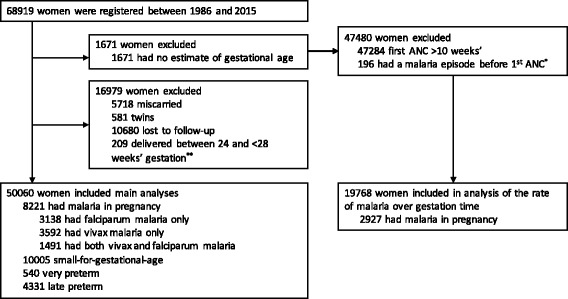
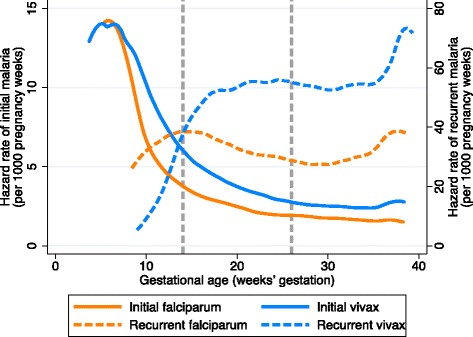
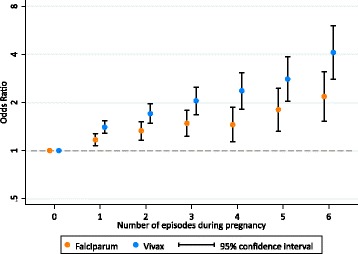
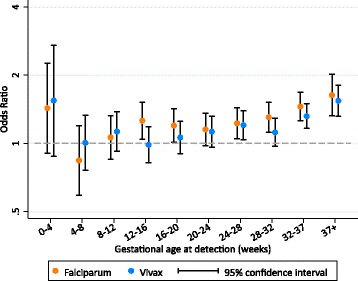
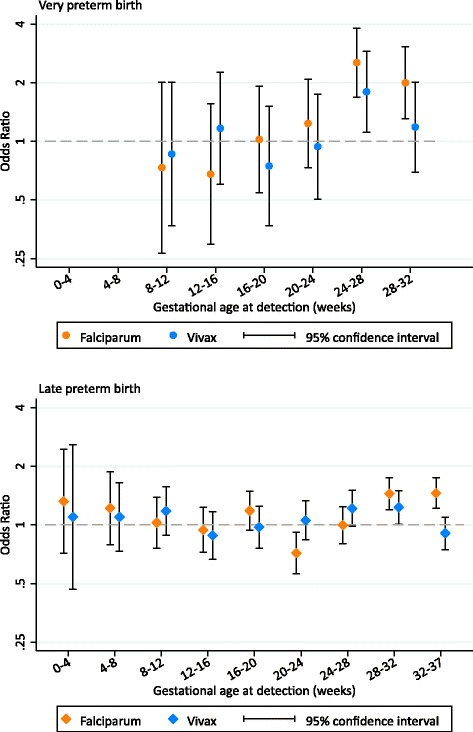
BACKGROUND: Most evidence on the association between malaria in pregnancy and adverse pregnancy outcomes focuses on falciparum malaria detected at birth. We assessed the association between the number and timing of falciparum and vivax malaria episodes during pregnancy on small-for-gestational-age (SGA) and preterm birth. METHODS: We analysed observational data collected from antenatal clinics on the Thailand-Myanmar border (1986-2015). We assessed the effects of the total number of malaria episodes in pregnancy on SGA and the effects of malaria in pregnancy on SGA, very preterm birth, and late preterm birth, by the gestational age at malaria detection and treatment using logistic regression models with time-dependent malaria variables (monthly intervals). World Health Organisation definitions of very preterm birth (≥28 and <32 weeks) and late preterm birth (≥32 and <37 weeks) and international SGA standards were used. RESULTS: Of 50,060 pregnant women followed, 8221 (16%) had malaria during their pregnancy. Of the 50,060 newborns, 10,005 (21%) were SGA, 540 (1%) were very preterm, and 4331 (9%) were late preterm. The rates of falciparum and vivax malaria were highest at 6 and 5 weeks' gestation, respectively. The odds of SGA increased linearly by 1.13-fold (95% confidence interval: 1.09, 1.17) and 1.27-fold (1.21, 1.33) per episode of falciparum and vivax malaria, respectively. Falciparum malaria at any gestation period after 12-16 weeks and vivax malaria after 20-24 weeks were associated with SGA (falciparum odds ratio, OR range: 1.15-1.63 [p range: <0.001-0.094]; vivax OR range: 1.12-1.54 [p range: <0.001-0.138]). Falciparum malaria at any gestation period after 24-28 weeks was associated with either very or late preterm birth (OR range: 1.44-2.53; p range: <0.001-0.001). Vivax malaria at 24-28 weeks was associated with very preterm birth (OR: 1.79 [1.11, 2.90]), and vivax malaria at 28-32 weeks was associated with late preterm birth (OR: 1.23 [1.01, 1.50]). Many of these associations held for asymptomatic malaria. CONCLUSIONS: Protection against malaria should be started as early as possible in pregnancy. Malaria control and elimination efforts in the general population can avert the adverse consequences associated with treated asymptomatic malaria in pregnancy.
Overview
The claims and statistics of this paper haven’t been checked yet.
Free: it reads the open-access text and checks the first 5 claims that cite a source we can check. Create a free account to check every claim.
Integrity signals
Registry
Cites
Statistics
Figures
Verification
Claims the paper makes
The claims and statistics of this paper haven’t been checked yet.
Free: it reads the open-access text and checks the first 5 claims that cite a source we can check. Create a free account to check every claim.
Claims other papers make about this one
Each is checked against this paper’s own text: does it say what the citing paper says it does?
The source backs part of the claim, not all of it — or backs it for a different population, condition or comparison.
In the citing paper
“the cohort has demonstrated the strong association between malaria (both P. falciparum and P. vivax) during pregnancy and severe adverse pregnancy outcomes such as maternal anaemia, foetal loss including miscarriage, 241 stillbirth and neonatal mortality, 83”
From Cohort Profile: the SMRU Refugee and Migrant Pregnancy Study in Western Thailand and Eastern Myanmar (2026) · cites this paper as [84]
Experimental — accuracy not yet measuredThe source backs part of the claim, not all of it — or backs it for a different population, condition or comparison.
In the citing paper
“poor infant outcomes demonstrating small for gestational age and preterm births as the main mediators of neonatal deaths. 83 , 84”
From Cohort Profile: the SMRU Refugee and Migrant Pregnancy Study in Western Thailand and Eastern Myanmar (2026) · cites this paper as [84]
Experimental — accuracy not yet measured
Self-check
Percentages, sums and reported differences re-computed from the paper’s own numbers.
The self-check needs the paper’s full text.
Citations
Cites
Villar, J., Ismail, L. C., Victora, C. G., Ohuma, E. O., Bertino, E., Altman, D. G., Lambert, A., Papageorghiou, A. T., Carvalho, M., Jaffer, Y. A., et al. (2014) · The Lancet · doi:10.1016/s0140-6736(14)60932-6 · Cited by 2,281 · cited 1×
“Primary outcomes were very preterm (birth at ≥28 and <32 weeks’ gestation), late preterm (birth ≥32 and <37 weeks’ gestation), and SGA (birthweight-for-gestational age below the INTERGROWTH-21st Project 10th centile) [30].”
BackgroundEvery Newborn: progress, priorities, and potential beyond survival
Lawn, J. E., Blencowe, H., Oza, S., You, D., Lee, A. C., Waiswa, P., Lalli, M., Bhutta, Z., Barros, A. J., Christian, P., et al. (2014) · The Lancet · doi:10.1016/s0140-6736(14)60496-7 · Cited by 1,929 · cited 1×
“birth are strong predictors of infant mortality and morbidity, including disability, stunting, and non-communicable diseases in later life [9, 10].”
BackgroundKatz, J., Lee, A. C., Kozuki, N., Lawn, J. E., Cousens, S., Blencowe, H., Ezzati, M., Bhutta, Z. A., Marchant, T., Willey, B. A., et al. (2013) · The Lancet · doi:10.1016/s0140-6736(13)60993-9 · Cited by 922
Pelvic Scoring for Elective Induction: The Bishop Score
Ajewole, C. S., & Abbott, J. F. (2021) · 50 Studies Every Obstetrician-Gynecologist Should Know · doi:10.1093/med/9780190947088.003.0011 · Cited by 880
An analysis of malaria in pregnancy in Africa.
Brabin, B. J. (1983) · PubMed Central · Cited by 877
PELVIC SCORING FOR ELECTIVE INDUCTION.
Bishop, E. H. (1964) · PubMed · Cited by 852
Kourtis, A. P., Read, J. S., & Jamieson, D. J. (2014) · New England Journal of Medicine · doi:10.1056/nejmra1213566 · Cited by 850
Malaria in pregnancy: pathogenesis and immunity
Rogerson, S. J., Hviid, L., Duffy, P. E., Leke, R. F., & Taylor, D. W. (2007) · The Lancet Infectious Diseases · doi:10.1016/s1473-3099(07)70022-1 · Cited by 628
Nosten, F., van Vugt, M., Price, R., Luxemburger, C., Thway, K., Brockman, A., McGready, R., ter Kuile, F., Looareesuwan, S., & White, N. (2000) · The Lancet · doi:10.1016/s0140-6736(00)02505-8 · Cited by 500 · cited 1×
“workers and effective treatment, which has been the major single influence on the burden of malaria in pregnancy in this population [51, 52], should be strengthened to improve maternal and child health in malaria endemic areas.”
BackgroundSelf-citationQuantifying the Number of Pregnancies at Risk of Malaria in 2007: A Demographic Study
Dellicour, S., Tatem, A. J., Guerra, C. A., Snow, R. W., & ter Kuile, F. O. (2010) · PLoS Medicine · doi:10.1371/journal.pmed.1000221 · Cited by 490 · cited 1×
“125 million women are at risk of malaria in pregnancy every year [2].”
Background
Cited by
Interferons and Proinflammatory Cytokines in Pregnancy and Fetal Development
Yockey, L. J., & Iwasaki, A. (2018) · Immunity · doi:10.1016/j.immuni.2018.07.017 · Cited by 559
“Malaria is another prevalent pathogen associated with poor pregnancy outcomes: women infected with P. falciparum or P. vivax are at an elevated risk of growth restriction and preterm birth (Moore et al., 2017a).”
BackgroundInfluentialAshley, E. A., Pyae Phyo, A., & Woodrow, C. J. (2018) · The Lancet · doi:10.1016/s0140-6736(18)30324-6 · Cited by 553
Malaria vaccines: a new era of prevention and control
Duffy, P. E., Gorres, J. P., Healy, S. A., & Fried, M. (2024) · Nature Reviews Microbiology · doi:10.1038/s41579-024-01065-7 · Cited by 145
“In stable transmission areas, pregnancy infections are often asymptomatic 185,186 and even treated infections are associated with fetal and early neonatal death 186,187 .”
The prevention and treatment of Plasmodium vivax malaria
Chu, C. S., & White, N. J. (2021) · PLOS Medicine · doi:10.1371/journal.pmed.1003561 · Cited by 88
“vivax malaria in pregnancy is associated with miscarriage and low birth weight [14,15].”
BackgroundSelf-citationChua, C. L. L., Hasang, W., Rogerson, S. J., & Teo, A. (2021) · Frontiers in Immunology · doi:10.3389/fimmu.2021.621382 · Cited by 114
“falciparum-related MiP, including symptomatic malaria and infection after 12–16 weeks’ gestation (24), In addition, the risk of SGA was reported to increase by 1.”
BackgroundInfluentialClinical impact of vivax malaria: A collection review
Phyo, A. P., Dahal, P., Mayxay, M., & Ashley, E. A. (2022) · PLoS Medicine · doi:10.1371/journal.pmed.1003890 · Cited by 114
“Data from the same cohort were used to assess the risk of preterm birth and small for gestational age (SGA) infants [36].”
MethodElphinstone, R. E., Weckman, A. M., McDonald, C. R., Tran, V., Zhong, K., Madanitsa, M., Kalilani-Phiri, L., Khairallah, C., Taylor, S. M., Meshnick, S. R., et al. (2019) · PLOS Medicine · doi:10.1371/journal.pmed.1002914 · Cited by 66
“In contrast, women with PTB are reported to be at higher risk if they had malaria later in pregnancy [13,14], including at delivery [10,11].”
Saito, M., Briand, V., Min, A. M., & McGready, R. (2020) · The Lancet Child & Adolescent Health · doi:10.1016/s2352-4642(20)30099-7 · Cited by 61
Self-citationPincelli, A., Neves, P. A. R., Lourenço, B. H., Corder, R. M., Malta, M. B., Sampaio-Silva, J., de Souza, R. M., Cardoso, M. A., Castro, M. C., Ferreira, M. U., et al. (2018) · The American Journal of Tropical Medicine and Hygiene · doi:10.4269/ajtmh.18-0135 · Cited by 57
Aitken, E. H., Damelang, T., Ortega-Pajares, A., Alemu, A., Hasang, W., Dini, S., Unger, H. W., Ome‐Kaius, M., Nielsen, M. A., Salanti, A., et al. (2021) · eLife · doi:10.7554/elife.65776 · Cited by 51
“Among women with lifelong malaria exposure, pregnant women have increased susceptibility to malaria, and complications include maternal mortality, severe maternal anemia, miscarriage and stillbirth, and impaired fetal growth or prematurity leading to low birth weight delivery (Steketee et al., 2001; Guyatt and Snow, 2…”
BackgroundSelf-citationSaito, M., McGready, R. M., Tinto, H., Rouamba, T., Mosha, D., Rulisa, S., Kariuki, S., Desai, M. R., Manyando, C., Njunju, E. M., et al. (2022) · The Lancet · doi:10.1016/s0140-6736(22)01881-5 · Cited by 54
Self-citationPlasmodium falciparum Infection Early in Pregnancy has Profound Consequences for Fetal Growth
Schmiegelow, C., Matondo, S., Minja, D. T. R., Resende, M., Pehrson, C., Nielsen, B. B., Olomi, R., Nielsen, M. A., Deloron, P., Salanti, A., et al. (2017) · The Journal of Infectious Diseases · doi:10.1093/infdis/jix530 · Cited by 54
Dombrowski, J. G., Souza, R. M. D., Silva, N. R. M., Barateiro, A., Epiphanio, S., Gonçalves, L. A., & Marinho, C. R. F. (2018) · PLOS ONE · doi:10.1371/journal.pone.0199415 · Cited by 43
Dombrowski, J. G., Barateiro, A., Peixoto, E. P. M., Barros, A. B. C. D. S., Souza, R. M. D., Clark, T. G., Campino, S., Wrenger, C., Wunderlich, G., Palmisano, G., et al. (2021) · PLOS Neglected Tropical Diseases · doi:10.1371/journal.pntd.0009390 · Cited by 42
“Group stratification was performed by the trimester in which the first infection occurred, considering that time of infection is known to be associated with MiP poor pregnancy outcomes [34].”
MethodEffects of Malaria in the First Trimester of Pregnancy on Poor Maternal and Birth Outcomes in Benin
Accrombessi, M., Yovo, E., Fiévet, N., Cottrell, G., Agbota, G., Gartner, A., Martin‐Prével, Y., Vianou, B., Sossou, D., Fanou‐Fogny, N., et al. (2018) · Clinical Infectious Diseases · doi:10.1093/cid/ciy1073 · Cited by 58
“This result has been reported elsewhere in SSA [27,28] and Southeast Asia [15].”
BackgroundResultThe immune response to malaria in utero
Feeney, M. E. (2019) · Immunological Reviews · doi:10.1111/imr.12806 · Cited by 46
Mangusho, C., Mwebesa, E., Izudi, J., Aleni, M., Ratib, D., Ayiasi, R. M., & Legason, I. D. (2023) · PLoS ONE · doi:10.1371/journal.pone.0283755 · Cited by 50
“Malaria in pregnancy is of particular concern and is associated with adverse birth outcomes [4, 5].”
BackgroundThe impact of gravidity, symptomatology and timing of infection on placental malaria
Tran, E. E., Cheeks, M. L., Kakuru, A., Muhindo, M. K., Natureeba, P., Nakalembe, M., Ategeka, J., Nayebare, P., Kamya, M., Havlir, D., et al. (2020) · Malaria Journal · doi:10.1186/s12936-020-03297-3 · Cited by 40
Saito, M., Mansoor, R., Kennon, K., Anvikar, A. R., Ashley, E. A., Chandramohan, D., Cohee, L. M., D'Alessandro, U., Genton, B., Gilder, M. E., et al. (2020) · The Lancet Infectious Diseases · doi:10.1016/s1473-3099(20)30064-5 · Cited by 39
Self-citationAccrombessi, M., Fiévet, N., Yovo, E., Cottrell, G., Agbota, G., Massougbodji, A., Cot, M., & Briand, V. (2018) · The Journal of Infectious Diseases · doi:10.1093/infdis/jiy009 · Cited by 55
“This result is in accordance with previous publications [19, 29, 30], which suggested that malaria occurring at the time of placentation (around 12 wg) may be responsible for up to 70% of the total exposure to placental infection [29].”
Primaquine Pharmacokinetics in Lactating Women and Breastfed Infant Exposures
Gilder, M. E., Hanpithakphong, W., Hoglund, R. M., Tärning, J., Win, H. H., Hilda, N., Chu, C. S., Bancone, G., Carrara, V. I., Singhasivanon, P., et al. (2018) · Clinical Infectious Diseases · doi:10.1093/cid/ciy235 · Cited by 40
“vivax contributes to maternal anemia and decreases birth weight [5, 6], which are associated with maternal [7] and infant mortality [8, 9].”
BackgroundSelf-citationSaito, M., Gilder, M. E., Nosten, F. H., McGready, R. M., & Guerin, P. J. (2017) · Malaria Journal · doi:10.1186/s12936-017-2135-y · Cited by 35
“This finding is important as repetitive malaria infections during pregnancy increase adverse effects of miscarriage, small for gestational age and preterm birth cumulatively [18, 97].”
BackgroundSelf-citationGutman, J. R., Khairallah, C., Stepniewska, K., Tagbor, H., Madanitsa, M., Cairns, M., L'lanziva, A. J., Kalilani, L., Otieno, K., Mwapasa, V., et al. (2021) · eClinicalMedicine · doi:10.1016/j.eclinm.2021.101160 · Cited by 33
“This relationship between patent infections and preterm delivery and SGA is not be restricted to highly malaria endemic areas and has also been described in areas with much lower malaria transmission along the Thailand-Myanmar border [35].”
BackgroundMahamar, A., Andemel, N., Swihart, B., Sidibé, Y., Gaoussou, S., Barry, A., Traoré, M., Attaher, O., Dembele, A. B., Diarra, B. S., et al. (2021) · Clinical Infectious Diseases · doi:10.1093/cid/ciab301 · Cited by 42
van Eijk, A. M., Stepniewska, K., Hill, J., Taylor, S. M., Rogerson, S. J., Cottrell, G., Chico, R. M., Gutman, J., Tinto, H., Unger, H. W., et al. (2023) · The Lancet Global Health · doi:10.1016/s2214-109x(23)00194-8 · Cited by 37
Briggs, J. J., Ategeka, J., Kajubi, R., Ochieng, T., Kakuru, A., Ssemanda, C., Wasswa, R., Jagannathan, P., Greenhouse, B., Rodríguez-Barraquer, I., et al. (2019) · The Journal of Infectious Diseases · doi:10.1093/infdis/jiz130 · Cited by 38
Devine, A., Battle, K. E., Meagher, N., Howes, R. E., Dini, S., Gething, P. W., Simpson, J. A., Price, R. N., & Lubell, Y. (2021) · PLOS Medicine · doi:10.1371/journal.pmed.1003614 · Cited by 33
Self-citationSaito, M., Gilder, M. E., Nosten, F. H., Guerin, P. J., & McGready, R. M. (2017) · Malaria Journal · doi:10.1186/s12936-017-2136-x · Cited by 29
Self-citationCorder, R. M., de Lima, A. C. P., Khoury, D. S., Docken, S. S., Davenport, M. P., & Ferreira, M. U. (2020) · PLoS neglected tropical diseases · doi:10.1371/journal.pntd.0008526 · Cited by 28
Saito, M., Carrara, V. I., Gilder, M. E., Min, A. M., Tun, N. W., Pimanpanarak, M., Viladpai-nguen, J., Paw, M. K., Haohankhunnatham, W., Konghahong, K., et al. (2021) · BMC Medicine · doi:10.1186/s12916-021-02002-8 · Cited by 25
Self-citationBrummaier, T., Tun, N. W., Min, A. M., Gilder, M. E., Archasuksan, L., Proux, S., Kiestra, D., Charunwatthana, P., Utzinger, J., Paris, D. H., et al. (2021) · PLoS neglected tropical diseases · doi:10.1371/journal.pntd.0009219 · Cited by 29
“While the problem of malaria in pregnancy as an independent risk factor for adverse pregnancy outcome is well described [35,36], the role of STH infections has been largely neglected [37].”
BackgroundSelf-citationMruma, H. A., McQuillan, R., & Norrie, J. D. (2020) · Journal of Global Health · doi:10.7189/jogh.10.020417 · Cited by 24
Genesis of placental sequestration in malaria and possible targets for drugs for placental malaria
Clark, R. L. (2019) · Birth Defects Research · doi:10.1002/bdr2.1496 · Cited by 32
“In an area of low transmission (the Thailand–Myanmar border), a total of 16.4% (8221) of 50,060 pregnant women had falciparum and/or vivax malaria (6.3% with falciparummalaria only, 7.2% with vivaxmalaria only and 3.0% with both; Moore et al., 2017).”
BackgroundInfluentialSaito, M., Mansoor, R., Kennon, K., Anvikar, A. R., Ashley, E. A., Chandramohan, D., Cohee, L. M., D’Alessandro, U., Genton, B., Gilder, M. E., et al. (2020) · BMC Medicine · doi:10.1186/s12916-020-01592-z · Cited by 23
“In this study, the risk of SGA was higher with infection in the early second trimester and possibly in the late third trimester as was reported previously [3, 40, 41].”
BackgroundResultInfluentialSelf-citationThe effect and control of malaria in pregnancy and lactating women in the Asia-Pacific region
Unger, H. W., Acharya, S., Arnold, L., Wu, C., van Eijk, A. M., Gore‐Langton, G. R., ter Kuile, F. O., Lufele, E., Chico, R. M., Price, R. N., et al. (2023) · The Lancet Global Health · doi:10.1016/s2214-109x(23)00415-1 · Cited by 25
Harrington, W. E., Moore, K. A., Min, A. M., Gilder, M. E., Tun, N. W., Paw, M. K., Wiladphaingern, J., Proux, S., Chotivanich, K., Rijken, M. J., et al. (2021) · BMC Medicine · doi:10.1186/s12916-021-01960-3 · Cited by 20
“In contrast, Plasmodium vivax malaria does not display a placental tropism, but in the present study area, has also been associated with poor pregnancy outcomes similar to the effect of falciparum malaria [12, 13, 16].”
BackgroundResultSelf-citationClimate change and preterm birth: A narrative review
Bátiz, L. F., Illanes, S. E., Romero, R. J., Barrera, M. D. V., Mattar, C. N. Z., Choolani, M. A., & Kemp, M. W. (2022) · Environmental Advances · doi:10.1016/j.envadv.2022.100316 · Cited by 21
Contribution of Murine Models to the Study of Malaria During Pregnancy
Barateiro, A., Pereira, M. H. N., Epiphânio, S., & Marinho, C. R. F. (2019) · Frontiers in Microbiology · doi:10.3389/fmicb.2019.01369 · Cited by 18
Gilder, M. E., Saito, M., Haohankhunnatham, W., Ling, C. L., Gornsawun, G., Bancone, G., Chu, C. S., Christensen, P. R., Imwong, M., Charunwatthana, P., et al. (2025) · PLOS Medicine · doi:10.1371/journal.pmed.1004529 · Cited by 15
Self-citationOn the Health Impacts of Climatic Shocks: How Heatwaves Reduce Birthweight in Sub‐Saharan Africa
Andriano, L. (2023) · Population and Development Review · doi:10.1111/padr.12583 · Cited by 24
“For example, evidence suggests that malaria and influenza infections in pregnancy adversely affect intrauterine growth (Schlaudecker, Steinhoff, and Moore 2011; Briand et al. 2016; Moore et al. 2017).”
Malaria reduction drives childhood stunting decline in Uganda: a mixed-methods country case study
Keats, E. C., Kajjura, R., Ataullahjan, A., Islam, M., Cheng, B., Somaskandan, A., Charbonneau, K. D., Confreda, E., Jardine, R., Oh, C., et al. (2022) · American Journal of Clinical Nutrition · doi:10.1093/ajcn/nqac038 · Cited by 19
Vivax malaria in pregnancy and lactation: a long way to health equity
Brummaier, T., Gilder, M. E., Gornsawun, G., Chu, C. S., Bancone, G., Pimanpanarak, M., Chotivanich, K., Nosten, F. H., & McGready, R. M. (2020) · Malaria Journal · doi:10.1186/s12936-020-3123-1 · Cited by 16
“recurrent infections, on birth weight has been demonstrated, and this increases both short- and long-term morbidity and mortality for affected infants [5].”
BackgroundSelf-citationIndividual variation in Plasmodium vivax malaria risk: Are repeatedly infected people just unlucky?
Corder, R. M., Arez, A. P., & Ferreira, M. U. (2023) · PLoS neglected tropical diseases · doi:10.1371/journal.pntd.0011020 · Cited by 14
Augusto, O. J., Stergachis, A. S., Dellicour, S., Tinto, H., Valá, A., Rupérez, M., Macete, E., Diallo, S. N., Kazienga, A., Valéa, I., et al. (2020) · Malaria Journal · doi:10.1186/s12936-020-03210-y · Cited by 14
Effect of Diarrheal Illness During Pregnancy on Adverse Birth Outcomes in Nepal
Newman, K. L., Gustafson, K., Englund, J. A., Magaret, A., Khatry, S. K., LeClerq, S. C., Tielsch, J. M., Katz, J., & Chu, H. Y. (2019) · Open Forum Infectious Diseases · doi:10.1093/ofid/ofz011 · Cited by 12
“This has been demonstrated for malaria [31, 32], but no such studies exist for common diarrheal pathogens.”
BackgroundOtoo, G. E., Gaffey, M. F., Confreda, E., Somaskandan, A., Islam, M., Kyei‐Arthur, F., Keats, E. C., Ataullahjan, A., Bhutta, Z. A., & Adu‐Afarwuah, S. (2025) · American Journal of Clinical Nutrition · doi:10.1016/j.ajcnut.2025.02.011 · Cited by 13
Teratogen update: Malaria in pregnancy and the use of antimalarial drugs in the first trimester
Clark, R. L. (2020) · Birth Defects Research · doi:10.1002/bdr2.1798 · Cited by 12
“In a subsequent study, it was shown that the risk of stillbirth is increased by episodes of falciparum malaria or symptomatic vivax malaria occurring later in pregnancy (Moore et al., 2017).”
BackgroundPregnancy outcomes in a malaria-exposed Malian cohort of women of child-bearing age
Gaoussou, S., Attaher, O., Swihart, B., Traoré, M., Diarra, S., Soumbounou, I. H., Ndiaye, O., Issiaka, D., Morrison, R., Mahamar, A., et al. (2022) · Frontiers in Medicine · doi:10.3389/fmed.2022.1061538 · Cited by 15
“falciparum at gestational weeks 28–32 increased the odds of very early PTD, and infections after week 32 increased the odds of late PTD (2).”
BackgroundClark, R. L. (2022) · Reproductive Toxicology · doi:10.1016/j.reprotox.2022.05.016 · Cited by 10
Aung, P. P., Han, K. T., Groot, W., Biesma, R., Thein, Z. W., Htay, T., Lin, Z., Aye, K. H., Adams, M., & Pavlova, M. (2024) · Tropical Medicine and Health · doi:10.1186/s41182-024-00577-5 · Cited by 7
“In Myanmar, studies conducted along the Thailand–Myanmar border utilized microscopy to assess malaria in pregnant individuals [4, 19].”
BackgroundGebretsadik, G. G., Biratu, A. K., Gessessew, A., Lassi, Z. S., Kahsay, A. B., & Mulugeta, A. (2025) · Journal of Health Population and Nutrition · doi:10.1186/s41043-025-00888-1 · Cited by 12
“In SSA, malaria remains a significant public health issue, contributing to APOs such as intrauterine growth restriction, spontaneous abortion, preterm labor, and low birth weight [150–152].”
Mahamar, A., Traoré, M., Swihart, B., Attaher, O., Diarra, B. S., Gaoussou, S., Issiaka, D., Barry, A., Sidibé, Y., Dicko, Y. T., et al. (2024) · Frontiers in Immunology · doi:10.3389/fimmu.2023.1330962 · Cited by 8
Tenório, M. C. D. S., Tenório, M. B., Ferreira, R. C., Mello, C. S., & de Oliveira, A. C. M. (2018) · Revista Brasileira de Saúde Materno Infantil · doi:10.1590/1806-93042018000300006 · Cited by 7
Doyle, M.-A. (2023) · Economics & Human Biology · doi:10.1016/j.ehb.2023.101287 · Cited by 9
Leuba, S. I., Westreich, D. J., Bose, C. L., Powers, K. A., Olshan, A. F., Taylor, S. M., Tshefu, A. K., Lokangaka, A. L., Carlo, W. A., Chomba, E., et al. (2021) · The Journal of Infectious Diseases · doi:10.1093/infdis/jiab588 · Cited by 9
Dombrowski, J. G., Acford-Palmer, H., Campos, M., Separovic, E. P. M., Epiphanio, S., Clark, T. G., Campino, S., & Marinho, C. R. F. (2023) · The Lancet Regional Health - Americas · doi:10.1016/j.lana.2022.100407 · Cited by 5
Bashir, H. A., Lufting-Leeffrers, D., Min, A. M., Win, H. H., Tun, N. W., Wah, T. G., Gilder, M. E., Paw, M. K., Carrara, V. I., Meeyai, A. C., et al. (2023) · Wellcome Open Research · doi:10.12688/wellcomeopenres.19396.1 · Cited by 9
“Malaria control relies on antenatal early diagnosis and treat-ment to prevent mortality and reduce the adverse perinatal effects of infection 22,23 .”
Self-citationSubclinical malaria among pregnant women living in refugee settlements in Northern Uganda
Kibone, W., Bongomin, F., Lebu, S., Ochaya, S., Nantale, R., Okot, J., Awekonimungu, B., Beardsley, R., Muoghalu, C., & Manga, M. (2024) · Therapeutic Advances in Infectious Disease · doi:10.1177/20499361241296002 · Cited by 3
“21,22 In addition to the adverse effects of clinical malaria, the insidious presence of subclinical malaria further compounds the challenges faced by pregnant women, especially those residing in vulnerable settings, such as refugee settlements.”
BackgroundLeuba, S. I., Westreich, D. J., Bose, C. L., Olshan, A. F., Taylor, S. M., Tshefu, A. K., Lokangaka, A. L., Carlo, W. A., Chomba, E., Mwenechanya, M., et al. (2024) · PLoS ONE · doi:10.1371/journal.pone.0310339 · Cited by 5
Seijas-Chávez, J. A., Nolan, M. S., Lynn, M. K., da Rocha, M. J. F., Araújo, M. D. C., Fonseca, F. L. A., & Laporta, G. Z. (2021) · Malaria Journal · doi:10.1186/s12936-021-03981-y · Cited by 4
Dombrowski, J. G., Gomes, L. C., Lorenz, C., Palasio, R. G. S., Marchesini, P. B., Epiphânio, S., & Marinho, C. R. F. (2022) · The Lancet Regional Health - Americas · doi:10.1016/j.lana.2022.100285 · Cited by 7
Placental malaria induces a unique methylation profile associated with fetal growth restriction
Özarslan, N., Mong, C., Ategeka, J., Li, L., Buarpung, S., Robinson, J. F., Kizza, J., Kakuru, A., Kamya, M. R., Dorsey, G., et al. (2025) · Epigenetics · doi:10.1080/15592294.2025.2475276 · Cited by 3
“…of infected RBCs in the inter-villous spaces during pregnancy, disrupt trophoblast invasion and angiogenesis, decreasing the umbilical artery flow [5–7]; and 2) vascular dysfunction and chronic inflammation contribute to impaired nutrient exchange at the maternal-fetal interface and imbalances in…”
A novel murine model of post-implantation malaria-induced preterm birth
Andrew, A. K., Cooper, C. A., & Moore, J. M. (2022) · PLoS ONE · doi:10.1371/journal.pone.0256060 · Cited by 3
Misal, S. A., Renn, J. P., Morrison, R. D., Cowles, M. V., Mahamar, A., Attaher, O., Dicko, A., Duffy, P. E., & Fried, M. (2025) · Frontiers in Immunology · doi:10.3389/fimmu.2025.1704346 · Cited by 2
Audibert, C., Borghini-Fuhrer, I., Gaaloul, M. E., Ramachandruni, H., Tchouatieu, A.-M., & Lugand, M. M. (2026) · PLOS Global Public Health · doi:10.1371/journal.pgph.0005607 · Cited by 1
de Deus, N., Chissaque, A., Bauhofer, A. F. L., Barata, A., Jani, I. V., Cavestany, R. L., Jeyaseelan, V., & Mach, O. (2024) · Vaccine · doi:10.1016/j.vaccine.2024.01.071 · Cited by 3
Malaria in Pregnancy, Current Challenges, and Emerging Prevention Strategies in a Warming Climate
Ranjit, A., & Wylie, B. J. (2024) · Clinical Obstetrics & Gynecology · doi:10.1097/grf.0000000000000888 · Cited by 4
Effects of in Utero SARS-CoV-2 Exposure on Newborn Health Outcomes
Kyle, M. H., & Dumitriu, D. (2022) · Encyclopedia · doi:10.3390/encyclopedia3010002 · Cited by 3
Cohort Profile: the SMRU Refugee and Migrant Pregnancy Study in Western Thailand and Eastern Myanmar
McGready, R., J White, N., Nosten, F. H., & Collaborators, S. R. A. M. P. S. (2026) · Wellcome Open Research · doi:10.12688/wellcomeopenres.25582.2 · Cited by 2
“83,84 These adverse outcomes occur despite treatment and are observed at submicroscopic parasitaemic concentrations.”
Self-citationKinoshita, T., Espino, F. E., Bunagan, R., Lim, D. R., Daga, C. M., Parungao, S., Balderian, A., Micu, K., Laborera, R., Basilio, R., et al. (2024) · Tropical Medicine and Health · doi:10.1186/s41182-024-00583-7 · Cited by 3
“…enables better comprehension and generalizability regarding patient follow-up and traceability [12] unlike case–control and cohort studies which may sometimes not accurately reflect the real-world settings due to difficulties in patient comprehension, lost to follow-up, and selection bias [13, 14].”
BackgroundPreterm Birth and Malaria Susceptibility in Offspring of Uninfected Multigravid Women
Barry, A., Dang, L., Sidibé, Y., Issiaka, D., Gaoussou, S., Hu, Z., Dicko, Y. T., Mahamar, A., Attaher, O., Diarra, B. S., et al. (2025) · JAMA Network Open · doi:10.1001/jamanetworkopen.2025.32179 · Cited by 2
Ubulom, P. M. E., Ettebong, E. O., Akpabio, E. I., & Ibokette, E. O. (2017) · Asian Pacific Journal of Tropical Disease · doi:10.12980/apjtd.7.2017d7-5 · Cited by 1
Nüsken, E., & Nüsken, K. (2021) · Elsevier eBooks · doi:10.1016/b978-3-437-22533-8.00084-2 · Cited by 1
Cintra, A. P. (2019) · Digital Library of Theses and Dissertations (Universidade de São Paulo) · doi:10.11606/d.42.2019.tde-25042019-162413
Papel da autofagia na modulação da imunopatogênese da malária placentária
Costa, D. D. S. (2018) · Digital Library of Theses and Dissertations (Universidade de São Paulo) · doi:10.11606/d.42.2018.tde-12112021-173323
Descoberta de derivados de marinoquinolina como inibidores de Plasmodium falciparum
de Souza, G. E. (2022) · Digital Library of Theses and Dissertations (Universidade de São Paulo) · doi:10.11606/t.76.2022.tde-19072022-140332
Complicated vivax malaria in pregnancy: A case report in rural area of Indonesia
Surya, R., Manurung, E. S., & Saroyo, Y. B. (2023) · Majalah Obstetri & Ginekologi · doi:10.20473/mog.v31i32023.162-166
“18 Meanwhile, vivax malaria infection at each gestational age was related with preterm birth (OR 1.23-1.79).”
BackgroundInfluentialTamir, Z., Animut, A., Dugassa, S., Gebresilassie, A., Belachew, M., Abera, A., Tsegaye, A., & Erko, B. (2024) · American Journal of Tropical Medicine and Hygiene · doi:10.4269/ajtmh.24-0080
Kyle, M. H., Nichols, P., Coskun, L. Z., Fifer, W. P., Finch, A., Firestein, M. R., Gallagher, D., Gyamfi‐Bannerman, C., Marsh, R., Mollicone, I., et al. (2025) · Pediatric Research · doi:10.1038/s41390-025-03909-1
Saito, M., Mansoor, R., Kennon, K., Anvikar, A. R., Ashley, E. A., Chandramohan, D., Cohee, L. M., D’Alessandro, U., Genton, B., Gilder, M. E., et al. (2020) · Figshare · doi:10.6084/m9.figshare.12408371
Self-citationAung, P. P., Han, K. T., Groot, W. N. J., Biesma, R., Thein, Z. W., Htay, T., Lin, Z., Aye, K. H., Adams, M., & Pavlova, M. (2024) · Figshare · doi:10.6084/m9.figshare.25374717
Augusto, O. J., Stergachis, A., Dellicour, S., Tinto, H., Valá, A., Ruperez, M., Macete, E., Diallo, S. N., Kazienga, A., Valéa, I., et al. (2020) · Figshare · doi:10.6084/m9.figshare.12101658
Saito, M., Mansoor, R., Kennon, K., Anvikar, A. R., Ashley, E. A., Chandramohan, D., Cohee, L. M., D’Alessandro, U., Genton, B., Gilder, M. E., et al. (2020) · Figshare · doi:10.6084/m9.figshare.12408395
Self-citationSaito, M., Mansoor, R., Kennon, K., Anvikar, A. R., Ashley, E. A., Chandramohan, D., Cohee, L. M., D’Alessandro, U., Genton, B., Gilder, M. E., et al. (2020) · Figshare · doi:10.6084/m9.figshare.12408407
Self-citationSaito, M., Mansoor, R., Kennon, K., Anvikar, A. R., Ashley, E. A., Chandramohan, D., Cohee, L. M., D’Alessandro, U., Genton, B., Gilder, M. E., et al. (2020) · Figshare · doi:10.6084/m9.figshare.12408404
Self-citationSaito, M., Mansoor, R., Kennon, K., Anvikar, A. R., Ashley, E. A., Chandramohan, D., Cohee, L. M., D’Alessandro, U., Genton, B., Gilder, M. E., et al. (2020) · Figshare · doi:10.6084/m9.figshare.12408386
Self-citationSaito, M., Carrara, V. I., Gilder, M. E., Min, A. M., Tun, N. W., Pimanpanarak, M., Viladpai-nguen, J., Paw, M. K., Haohankhunnatham, W., Konghahong, K., et al. (2021) · Figshare · doi:10.6084/m9.figshare.14759838
Self-citationAung, P. P., Han, K. T., Groot, W. N. J., Biesma, R., Thein, Z. W., Htay, T., Lin, Z., Aye, K. H., Adams, M., & Pavlova, M. (2024) · Figshare · doi:10.6084/m9.figshare.26690692
Aung, P. P., Han, K. T., Groot, W. N. J., Biesma, R., Thein, Z. W., Htay, T., Lin, Z., Aye, K. H., Adams, M., & Pavlova, M. (2024) · Figshare · doi:10.6084/m9.figshare.26690686
Saito, M., Mansoor, R., Kennon, K., Anvikar, A. R., Ashley, E. A., Chandramohan, D., Cohee, L. M., D’Alessandro, U., Genton, B., Gilder, M. E., et al. (2020) · Figshare · doi:10.6084/m9.figshare.12408374
Self-citationSaito, M., Mansoor, R., Kennon, K., Anvikar, A. R., Ashley, E. A., Chandramohan, D., Cohee, L. M., D’Alessandro, U., Genton, B., Gilder, M. E., et al. (2020) · Figshare · doi:10.6084/m9.figshare.12408401
Self-citationTran, E. E., Cheeks, M. L., Kakuru, A., Muhindo, M. K., Natureeba, P., Nakalembe, M., Ategeka, J., Nayebare, P., Kamya, M., Havlir, D., et al. (2020) · Figshare · doi:10.6084/m9.figshare.12560954
Saito, M., Mansoor, R., Kennon, K., Anvikar, A. R., Ashley, E. A., Chandramohan, D., Cohee, L. M., D’Alessandro, U., Genton, B., Gilder, M. E., et al. (2020) · Figshare · doi:10.6084/m9.figshare.12408398
Self-citationSeijas-Chávez, J. A., Nolan, M. S., Lynn, M. K., da Rocha, M. J. F., da Costa Araújo, M., Fonseca, F. L. A., & Laporta, G. Z. (2021) · Figshare · doi:10.6084/m9.figshare.17083757
Harrington, W. E., Moore, K. A., Min, A. M., Gilder, M. E., Tun, N. W., Paw, M. K., Wiladphaingern, J., Proux, S., Chotivanich, K., Rijken, M. J., et al. (2021) · Figshare · doi:10.6084/m9.figshare.14490088
Self-citationSaito, M., Mansoor, R., Kennon, K., Anvikar, A. R., Ashley, E. A., Chandramohan, D., Cohee, L. M., D’Alessandro, U., Genton, B., Gilder, M. E., et al. (2020) · Figshare · doi:10.6084/m9.figshare.12408389
Self-citationHarrington, W. E., Moore, K. A., Min, A. M., Gilder, M. E., Tun, N. W., Paw, M. K., Wiladphaingern, J., Proux, S., Chotivanich, K., Rijken, M. J., et al. (2021) · Figshare · doi:10.6084/m9.figshare.14490094
Self-citationHarrington, W. E., Moore, K. A., Min, A. M., Gilder, M. E., Tun, N. W., Paw, M. K., Wiladphaingern, J., Proux, S., Chotivanich, K., Rijken, M. J., et al. (2021) · Figshare · doi:10.6084/m9.figshare.14490097
Self-citationAung, P. P., Han, K. T., Groot, W. N. J., Biesma, R., Thein, Z. W., Htay, T., Lin, Z., Aye, K. H., Adams, M., & Pavlova, M. (2024) · Figshare · doi:10.6084/m9.figshare.25374840
Harrington, W. E., Moore, K. A., Min, A. M., Gilder, M. E., Tun, N. W., Paw, M. K., Wiladphaingern, J., Proux, S., Chotivanich, K., Rijken, M. J., et al. (2021) · Figshare · doi:10.6084/m9.figshare.14490091
Self-citation
Metadata
- Authors
- Moore, K. A., Simpson, J. A., Wiladphaingern, J., Min, A. M., Pimanpanarak, M., Paw, M. K., Raksuansak, J., Pukrittayakamee, S., Fowkes, F. J. I., White, N. J., Nosten, F., & McGready, R.
- Affiliations
- Burnet Institute (AU)
- The University of Melbourne (AU)
- Mahidol University (TH)
- Corresponding author
- Moore, Kerryn A.
- ORCID
- Venue
- BMC Medicine
- Published
- 2017-06-21
- Volume
- 15
- Issue
- 1
- Pages
- 117-117
- ISSN
- 1741-7015 (ISSN-L)
- PMC
- PMC5479010
- OpenAlex
- W2625355422
- Semantic Scholar
- 2ba58f27fd6b06549cf750405e99dc89352c9114
- Cited by
- 111
- References
- 59
- Citations by year
- 2026: 6 · 2025: 7 · 2024: 16 · 2023: 8 · 2022: 11 · 2021: 20 · 2020: 23 · 2019: 7 · 2018: 9 · 2017: 4
- FWCI
- 11.04
- Type
- journal article
- Language
- en
- Open access
- gold
- doi.org
- Licence
- cc-by
- creativecommons.org/licenses/by/4.0/ (tdm)
- creativecommons.org/licenses/by/4.0/ (vor)
- Locations
- BMC Medicine (publishedVersion, cc-by)
- Europe PMC (PubMed Central) (publishedVersion, other-oa)
- PubMed Central (publishedVersion, cc-by)
- PubMed (publishedVersion)
- Minerva Access (University of Melbourne) (submittedVersion, cc-by)
- Monash University Research Portal (Monash University) (submittedVersion, other-oa)
- DOAJ (DOAJ: Directory of Open Access Journals) (submittedVersion)
- Funders
- Wellcome Trust (WT-106698)
- Australian Research Council
- Australian Commonwealth Government
- State Government of Victoria
- National Health and Medical Research Council (1104975)
- Bill and Melinda Gates Foundation (46589)
- Topics
- Health Sciences › Medicine › Public Health, Environmental and Occupational Health › Malaria Research and Control
- Health Sciences › Medicine › Pediatrics, Perinatology and Child Health › Global Maternal and Child Health
- Health Sciences › Medicine › Obstetrics and Gynecology › Pregnancy and preeclampsia studies
- Keywords
- malaria in pregnancy, falciparum malaria, vivax malaria, small for gestational age, preterm birth, very preterm birth, late preterm birth, low malaria transmission, adverse pregnancy outcomes, Thai-Myanmar border, newborn birth weight
- MeSH terms
- Female, Humans, Infant, Newborn, Infant, Premature, Infant, Small for Gestational Age, Pregnancy, Pregnancy Complications, Infectious, Pregnancy Outcome, Risk Factors, Odds Ratio, Malaria, Falciparum, Malaria, Vivax
About these checks
Registry, retraction, Cites and statistics results are computed, not judged, with one exception: a printed reference that no index lists is read once by a model before it counts as a citation error. Claims are extracted by a model and kept only when their quote appears verbatim in the text; each cited source is then checked, with a model’s help, for whether it says what the claim relies on. Those verdicts can be wrong — read the claim’s quote and the cited source before relying on one.
Statistics and arithmetic are recomputed, not judged.
Confidence bands are shown only for fields calibrated on our annotated test set. None is calibrated yet, so no band is shown.
What counts as a claim ›How we measure confidence ›How we check this ›
Are you an author, or do you see a problem with this page? Request a review
Data sources
Bibliographic data: Semantic Scholar, OpenAlex, Crossref.
Contains information from the Semantic Scholar Academic Graph Datasets, made available under the ODC Attribution License (ODC-BY 1.0).
Semantic Scholar’s data is described in: Kinney, R., et al. (2023). The Semantic Scholar Open Data Platform. arXiv:2301.10140.
