

Influence of the number and timing of malaria episodes during pregnancy on prematurity and small-for-gestational-age in an area of low transmission.
Open accessThe DOI matches its Crossref record; 58 of the 59 references it cites were found in a registry or an index.
Abstract
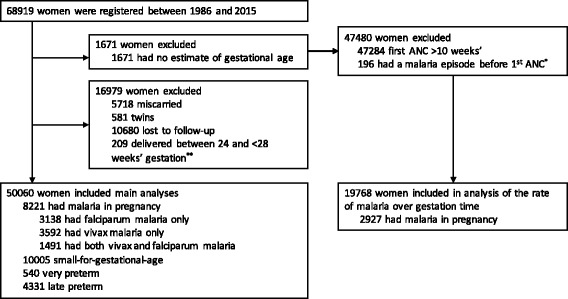
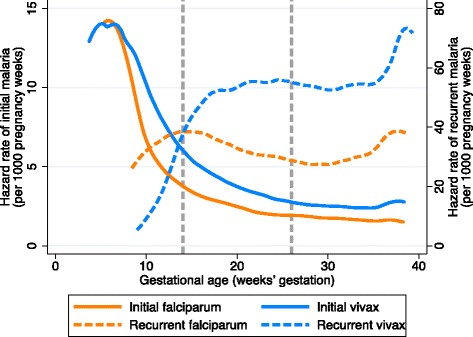
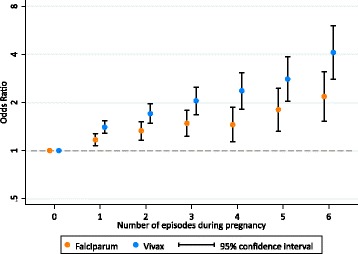
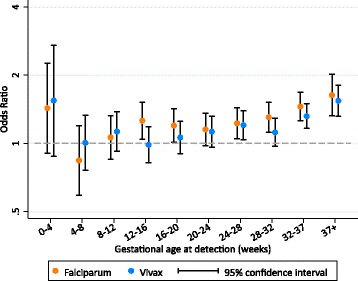
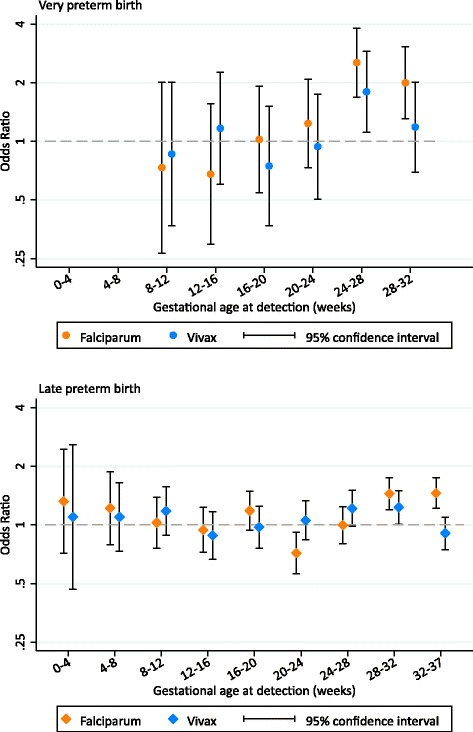
BACKGROUND: Most evidence on the association between malaria in pregnancy and adverse pregnancy outcomes focuses on falciparum malaria detected at birth. We assessed the association between the number and timing of falciparum and vivax malaria episodes during pregnancy on small-for-gestational-age (SGA) and preterm birth. METHODS: We analysed observational data collected from antenatal clinics on the Thailand-Myanmar border (1986-2015). We assessed the effects of the total number of malaria episodes in pregnancy on SGA and the effects of malaria in pregnancy on SGA, very preterm birth, and late preterm birth, by the gestational age at malaria detection and treatment using logistic regression models with time-dependent malaria variables (monthly intervals). World Health Organisation definitions of very preterm birth (≥28 and <32 weeks) and late preterm birth (≥32 and <37 weeks) and international SGA standards were used. RESULTS: Of 50,060 pregnant women followed, 8221 (16%) had malaria during their pregnancy. Of the 50,060 newborns, 10,005 (21%) were SGA, 540 (1%) were very preterm, and 4331 (9%) were late preterm. The rates of falciparum and vivax malaria were highest at 6 and 5 weeks' gestation, respectively. The odds of SGA increased linearly by 1.13-fold (95% confidence interval: 1.09, 1.17) and 1.27-fold (1.21, 1.33) per episode of falciparum and vivax malaria, respectively. Falciparum malaria at any gestation period after 12-16 weeks and vivax malaria after 20-24 weeks were associated with SGA (falciparum odds ratio, OR range: 1.15-1.63 [p range: <0.001-0.094]; vivax OR range: 1.12-1.54 [p range: <0.001-0.138]). Falciparum malaria at any gestation period after 24-28 weeks was associated with either very or late preterm birth (OR range: 1.44-2.53; p range: <0.001-0.001). Vivax malaria at 24-28 weeks was associated with very preterm birth (OR: 1.79 [1.11, 2.90]), and vivax malaria at 28-32 weeks was associated with late preterm birth (OR: 1.23 [1.01, 1.50]). Many of these associations held for asymptomatic malaria. CONCLUSIONS: Protection against malaria should be started as early as possible in pregnancy. Malaria control and elimination efforts in the general population can avert the adverse consequences associated with treated asymptomatic malaria in pregnancy.
Overview
The claims and statistics of this paper haven’t been checked yet.
Free: it reads the open-access text and checks the first 5 claims that cite a source we can check. Create a free account to check every claim.
Integrity signals
Registry
Cites
Statistics
Figures
Verification
Claims the paper makes
The claims and statistics of this paper haven’t been checked yet.
Free: it reads the open-access text and checks the first 5 claims that cite a source we can check. Create a free account to check every claim.
Claims other papers make about this one
Each is checked against this paper’s own text: does it say what the citing paper says it does?
The source backs part of the claim, not all of it — or backs it for a different population, condition or comparison.
In the citing paper
“the cohort has demonstrated the strong association between malaria (both P. falciparum and P. vivax) during pregnancy and severe adverse pregnancy outcomes such as maternal anaemia, foetal loss including miscarriage, 241 stillbirth and neonatal mortality, 83”
From Cohort Profile: the SMRU Refugee and Migrant Pregnancy Study in Western Thailand and Eastern Myanmar (2026) · cites this paper as [84]
Experimental — accuracy not yet measuredThe source backs part of the claim, not all of it — or backs it for a different population, condition or comparison.
In the citing paper
“poor infant outcomes demonstrating small for gestational age and preterm births as the main mediators of neonatal deaths. 83 , 84”
From Cohort Profile: the SMRU Refugee and Migrant Pregnancy Study in Western Thailand and Eastern Myanmar (2026) · cites this paper as [84]
Experimental — accuracy not yet measured
Self-check
Percentages, sums and reported differences re-computed from the paper’s own numbers.
The self-check needs the paper’s full text.
Citations
Cites
Villar, J., Ismail, L. C., Victora, C. G., Ohuma, E. O., Bertino, E., Altman, D. G., Lambert, A., Papageorghiou, A. T., Carvalho, M., Jaffer, Y. A., et al. (2014) · The Lancet · doi:10.1016/s0140-6736(14)60932-6 · Cited by 2,281 · cited 1×
“Primary outcomes were very preterm (birth at ≥28 and <32 weeks’ gestation), late preterm (birth ≥32 and <37 weeks’ gestation), and SGA (birthweight-for-gestational age below the INTERGROWTH-21st Project 10th centile) [30].”
BackgroundEvery Newborn: progress, priorities, and potential beyond survival
Lawn, J. E., Blencowe, H., Oza, S., You, D., Lee, A. C., Waiswa, P., Lalli, M., Bhutta, Z., Barros, A. J., Christian, P., et al. (2014) · The Lancet · doi:10.1016/s0140-6736(14)60496-7 · Cited by 1,929 · cited 1×
“birth are strong predictors of infant mortality and morbidity, including disability, stunting, and non-communicable diseases in later life [9, 10].”
BackgroundKatz, J., Lee, A. C., Kozuki, N., Lawn, J. E., Cousens, S., Blencowe, H., Ezzati, M., Bhutta, Z. A., Marchant, T., Willey, B. A., et al. (2013) · The Lancet · doi:10.1016/s0140-6736(13)60993-9 · Cited by 922
Pelvic Scoring for Elective Induction: The Bishop Score
Ajewole, C. S., & Abbott, J. F. (2021) · 50 Studies Every Obstetrician-Gynecologist Should Know · doi:10.1093/med/9780190947088.003.0011 · Cited by 880
An analysis of malaria in pregnancy in Africa.
Brabin, B. J. (1983) · PubMed Central · Cited by 877
PELVIC SCORING FOR ELECTIVE INDUCTION.
Bishop, E. H. (1964) · PubMed · Cited by 852
Kourtis, A. P., Read, J. S., & Jamieson, D. J. (2014) · New England Journal of Medicine · doi:10.1056/nejmra1213566 · Cited by 850
Malaria in pregnancy: pathogenesis and immunity
Rogerson, S. J., Hviid, L., Duffy, P. E., Leke, R. F., & Taylor, D. W. (2007) · The Lancet Infectious Diseases · doi:10.1016/s1473-3099(07)70022-1 · Cited by 628
Nosten, F., van Vugt, M., Price, R., Luxemburger, C., Thway, K., Brockman, A., McGready, R., ter Kuile, F., Looareesuwan, S., & White, N. (2000) · The Lancet · doi:10.1016/s0140-6736(00)02505-8 · Cited by 500 · cited 1×
“workers and effective treatment, which has been the major single influence on the burden of malaria in pregnancy in this population [51, 52], should be strengthened to improve maternal and child health in malaria endemic areas.”
BackgroundSelf-citationQuantifying the Number of Pregnancies at Risk of Malaria in 2007: A Demographic Study
Dellicour, S., Tatem, A. J., Guerra, C. A., Snow, R. W., & ter Kuile, F. O. (2010) · PLoS Medicine · doi:10.1371/journal.pmed.1000221 · Cited by 490 · cited 1×
“125 million women are at risk of malaria in pregnancy every year [2].”
BackgroundEffects of Plasmodium vivax malaria in pregnancy.
Nosten, F., McGready, R., Simpson, J., Thwai, K., Balkan, S., Cho, T., Hkirijaroen, L., Looareesuwan, S., & White, N. (1999) · The Lancet · doi:10.1016/s0140-6736(98)09247-2 · Cited by 381 · cited 1×
“There are few prospective studies assessing the effects of malaria during pregnancy in relation to gestational age [8, 11–22], especially for vivax malaria [8, 20, 21], and these studies have reached conflicting conclusions (Additional file 1).”
BackgroundSelf-citationFried, M., Muga, R., Misore, A. O., & Duffy, P. E. (1998) · PubMed · Cited by 321
Malaria during pregnancy in an area of unstable endemicity.
Nosten, F., ter Kuile, F., Maelankirri, L., Decludt, B., & White, N. J. (1991) · Transactions of the Royal Society of Tropical Medicine and Hygiene · doi:10.1016/0035-9203(91)90205-d · Cited by 294 · cited 1×
“Women were encouraged to attend antenatal care early and return weekly throughout their pregnancy for malaria screening (finger-prick blood sample examined by trained microscopists) because there were no suitable preventive interventions for malaria in this region [25, 26].”
BackgroundSelf-citationFried, M., Muga, R. O., Misore, A. O., & Duffy, P. E. (1998) · The Journal of Immunology · doi:10.4049/jimmunol.160.5.2523 · Cited by 262
McGready, R., Lee, S., Wiladphaingern, J., Ashley, E., Rijken, M., Boel, M., Simpson, J., Paw, M., Pimanpanarak, M., Mu, O., et al. (2012) · The Lancet Infectious Diseases · doi:10.1016/s1473-3099(11)70339-5 · Cited by 228
Self-citationImwong, M., Nguyen, T. N., Tripura, R., Peto, T. J., Lee, S. J., Lwin, K. M., Suangkanarat, P., Jeeyapant, A., Vihokhern, B., Wongsaen, K., et al. (2015) · Malaria Journal · doi:10.1186/s12936-015-0906-x · Cited by 214 · cited 2×
“Even in this relatively low transmission setting, the rate of asymptomatic parasitaemia in adults commonly exceeds 5% even now, and was probably much higher when the programme began 30 years ago [36].”
BackgroundSelf-citationMalaria in pregnancy: small babies, big problem
Umbers, A. J., Aitken, E. H., & Rogerson, S. J. (2011) · Trends in Parasitology · doi:10.1016/j.pt.2011.01.007 · Cited by 200 · cited 1×
“Malaria in early pregnancy inhibits trophoblast invasion, which occurs from very early pregnancy until 18 to 20 weeks’ gestation and is essential for appropriate placental function and fetal growth [19, 37, 38].”
BackgroundIams, J. D., Goldenberg, R. L., Mercer, B. M., Moawad, A. H., Meis, P. J., Das, A. F., Caritis, S. N., Miodovnik, M., Menard, M. K., Thurnau, G. R., et al. (2001) · American Journal of Obstetrics and Gynecology · doi:10.1067/mob.2001.111248 · Cited by 170
McGREADY, R., DAVISON, B. B., STEPNIEWSKA, K., CHO, T., SHEE, H., BROCKMAN, A., UDOMSANGPETCH, R., LOOAREESUWAN, S., WHITE, N. J., MESHNICK, S. R., et al. (2004) · The American Journal of Tropical Medicine and Hygiene · doi:10.4269/ajtmh.2004.70.398 · Cited by 170 · cited 1×
“In this population, placental changes are rarely found in women who have malaria detected and treated early in pregnancy, suggesting placental recovery [43].”
BackgroundSelf-citationDe Beaudrap, P., Turyakira, E., White, L. J., Nabasumba, C., Tumwebaze, B., Muehlenbachs, A., Guérin, P. J., Boum, Y., McGready, R., & Piola, P. (2013) · Malaria Journal · doi:10.1186/1475-2875-12-139 · Cited by 156
Self-citationCarrara, V. I., Sirilak, S., Thonglairuam, J., Rojanawatsirivet, C., Proux, S., Gilbos, V., Brockman, A., Ashley, E. A., McGready, R., Krudsood, S., et al. (2006) · PLoS Medicine · doi:10.1371/journal.pmed.0030183 · Cited by 146 · cited 1×
“workers and effective treatment, which has been the major single influence on the burden of malaria in pregnancy in this population [51, 52], should be strengthened to improve maternal and child health in malaria endemic areas.”
BackgroundSelf-citationMalaria Infection during Pregnancy: Intrauterine Growth Retardation and Preterm Delivery in Malawi
Sullivan, A. D., Nyirenda, T., Cullinan, T., Taylor, T., Harlow, S. D., James, S. A., & Meshnick, S. R. (1999) · The Journal of Infectious Diseases · doi:10.1086/314752 · Cited by 136 · cited 3×
“Falciparum malaria detected at delivery, but not during pregnancy, has consistently been associated with preterm birth [12, 17], and falciparum malaria during pregnancy and at delivery has consistently been associated with fetal growth-related outcomes (LBW, SGA, and IUGR) [11, 13, 15–19, 22].”
BackgroundResultImpaired uteroplacental blood flow in pregnancies complicated by falciparum malaria
Dorman, E. K., Shulman, C. E., Kingdom, J., Bulmer, J. N., Mwendwa, J., Peshu, N., & Marsh, K. (2002) · Ultrasound in Obstetrics & Gynecology · doi:10.1046/j.0960-7692.2001.00545.x · Cited by 132
Huynh, B.-T., Fievet, N., Gbaguidi, G., Dechavanne, S., Borgella, S., Guézo-Mévo, B., Massougbodji, A., Ndam, N. T., Deloron, P., & Cot, M. (2011) · The American Society of Tropical Medicine and Hygiene · doi:10.4269/ajtmh.2011.11-0103 · Cited by 124
An analysis of intra-uterine growth retardation in rural Malawi
Verhoeff, F. H., Brabin, B. J., van Buuren, S., Chimsuku, L., Kazembe, P. N., Wit, J. M., & Broadhead, R. (2001) · European Journal of Clinical Nutrition · doi:10.1038/sj.ejcn.1601200 · Cited by 105 · cited 3×
“Falciparum malaria detected at delivery, but not during pregnancy, has consistently been associated with preterm birth [12, 17], and falciparum malaria during pregnancy and at delivery has consistently been associated with fetal growth-related outcomes (LBW, SGA, and IUGR) [11, 13, 15–19, 22].”
BackgroundResultMcGready, R., Boel, M., Rijken, M. J., Ashley, E. A., Cho, T., Moo, O., Paw, M. K., Pimanpanarak, M., Hkirijareon, L., Carrara, V. I., et al. (2012) · PLoS ONE · doi:10.1371/journal.pone.0040244 · Cited by 101
Self-citationGriffin, J. B., Lokomba, V., Landis, S. H., Thorp, J. M., Herring, A. H., Tshefu, A. K., Rogerson, S. J., & Meshnick, S. R. (2012) · Malaria Journal · doi:10.1186/1475-2875-11-319 · Cited by 97 · cited 4×
“Malaria in early pregnancy inhibits trophoblast invasion, which occurs from very early pregnancy until 18 to 20 weeks’ gestation and is essential for appropriate placental function and fetal growth [19, 37, 38].”
BackgroundResultInfluentialCOTTRELL, G., MARY, J.-Y., BARRO, D., & COT, M. (2007) · The American Journal of Tropical Medicine and Hygiene · doi:10.4269/ajtmh.2007.76.849 · Cited by 93 · cited 1×
“Others have also reported that falciparum malaria in early pregnancy (before 20 weeks’ gestation) was associated with intrauterine growth restriction or reduced birthweight [14, 19].”
BackgroundUmbers, A. J., Boeuf, P., Clapham, C., Stanisic, D. I., Baiwog, F., Mueller, I., Siba, P., King, C. L., Beeson, J. G., Glazier, J., et al. (2011) · The Journal of Infectious Diseases · doi:10.1093/infdis/jiq080 · Cited by 90
the FSP/MISAME study Group, Valea, I., Tinto, H., Drabo, M. K., Huybregts, L., Sorgho, H., Ouedraogo, J.-B., Guiguemde, R. T., van Geertruyden, J. P., Kolsteren, P., et al. (2012) · Malaria Journal · doi:10.1186/1475-2875-11-71 · Cited by 87
LANDIS, S. H., LOKOMBA, V., ANANTH, C. V., ATIBU, J., RYDER, R. W., HARTMANN, K. E., THORP, J. M., TSHEFU, A., & MESHNICK, S. R. (2009) · Epidemiology and Infection · doi:10.1017/s0950268808000915 · Cited by 86 · cited 1×
“Africa found that the effect of falciparum malaria on intrauterine growth restriction was also cumulative [23].”
BackgroundMoore, K. A., Simpson, J. A., Paw, M. K., Pimanpanarak, M., Wiladphaingern, J., Rijken, M. J., Jittamala, P., White, N. J., Fowkes, F. J. I., Nosten, F., et al. (2016) · The Lancet Infectious Diseases · doi:10.1016/s1473-3099(15)00547-2 · Cited by 84 · cited 3×
“However, in a previous analysis of SMRU antenatal data, malaria detected and treated in the first trimester was strongly associated with miscarriage [31], and in this analysis, malaria detected and treated from 12 weeks’ gestation was associated with preterm birth and/or SGA, regardless of the presence of symptoms.”
BackgroundResultSelf-citationUltrasound Evidence of Early Fetal Growth Restriction after Maternal Malaria Infection
Rijken, M. J., Papageorghiou, A. T., Thiptharakun, S., Kiricharoen, S., Dwell, S. L. M., Wiladphaingern, J., Pimanpanarak, M., Kennedy, S. H., Nosten, F., & McGready, R. (2012) · PLoS ONE · doi:10.1371/journal.pone.0031411 · Cited by 80
Self-citationMatangila, J. R., Lufuluabo, J., Ibalanky, A. L., Inocêncio da Luz, R. A., Lutumba, P., & Van Geertruyden, J.-P. (2014) · Malaria Journal · doi:10.1186/1475-2875-13-132 · Cited by 80
Kalilani, L., Mofolo, I., Chaponda, M., Rogerson, S. J., & Meshnick, S. R. (2010) · Transactions of the Royal Society of Tropical Medicine and Hygiene · doi:10.1016/j.trstmh.2010.01.013 · Cited by 74
The effects of quinine and chloroquine antimalarial treatments in the first trimester of pregnancy
Mcgready, R., Thwai, K. L., Cho, T., Samuel, Looareesuwan, S., White, N. J., & Nosten, F. (2002) · Transactions of the Royal Society of Tropical Medicine and Hygiene · doi:10.1016/s0035-9203(02)90297-x · Cited by 73 · cited 7×
“Several previous studies have found that the effect of falciparum malaria in reducing birthweight increases with the number of episodes [11, 14–16], and one study in Africa found that the effect of falciparum malaria on intrauterine growth restriction was also cumulative [23].”
BackgroundInfluentialSelf-citationBriand, V., Saal, J., Ghafari, C., Huynh, B.-T., Fievet, N., Schmiegelow, C., Massougbodji, A., Deloron, P., Zeitlin, J., & Cot, M. (2016) · Journal of Infectious Diseases · doi:10.1093/infdis/jiw158 · Cited by 66 · cited 1×
“Additionally, it has been shown that malaria in early pregnancy is associated with reduced fetal growth velocity regardless of the time elapsed between detection and velocity assessment, suggesting an effect that persists even after treatment [22].”
BackgroundKalilani-Phiri, L., Thesing, P. C., Nyirenda, O. M., Mawindo, P., Madanitsa, M., Membe, G., Wylie, B., Masonbrink, A., Makwakwa, K., Kamiza, S., et al. (2013) · PLoS ONE · doi:10.1371/journal.pone.0074643 · Cited by 62 · cited 7×
“Some studies [18, 19], but not all [12, 13, 17], also found an association between falciparum malaria detected and treated during pregnancy and SGA.”
BackgroundResultInfluentialPrevention of preterm delivery: current challenges and future prospects
van Zijl, M. D., Koullali, B., Mol, B. W., Pajkrt, E., & Oudijk, M. A. (2016) · International Journal of Women s Health · doi:10.2147/ijwh.s89317 · Cited by 58
A model of parity-dependent immunity to placental malaria
Walker, P. G. T., Griffin, J. T., Cairns, M., Rogerson, S. J., van Eijk, A. M., ter Kuile, F., & Ghani, A. C. (2013) · Nature Communications · doi:10.1038/ncomms2605 · Cited by 57 · cited 1×
“This analysis adds to a growing body of evidence that — if the fetus survives [31] — falciparum and vivax malaria in early pregnancy, even when treated, are associated with adverse birth outcomes [19, 20, 31, 39].”
ResultMalaria during pregnancy and infancy, in an area of intense malaria transmission in central India
Singh, N., Mehra, R. K., & Srivastava, N. (2001) · Annals of Tropical Medicine & Parasitology · doi:10.1080/00034983.2001.11813611 · Cited by 56
Asymptomatic Malaria Correlates with Anaemia in Pregnant Women at Ouagadougou, Burkina Faso
Douamba, Z., Bisseye, C., Djigma, F. W., Compaoré, T. R., Bazie, V. J. T., Pietra, V., Nikiema, J.-B., & Simpore, J. (2012) · Journal of Biomedicine and Biotechnology · doi:10.1155/2012/198317 · Cited by 55
Placental Infection With Plasmodium vivax: A Histopathological and Molecular Study
Mayor, A., Bardají, A., Felger, I., King, C. L., Cisteró, P., Dobaño, C., Stanisic, D. I., Siba, P., Wahlgren, M., del Portillo, H., et al. (2012) · The Journal of Infectious Diseases · doi:10.1093/infdis/jis614 · Cited by 53 · cited 1×
“vivax can also sequester in the placenta but without associated placental inflammation, suggesting that other factors such as maternal anaemia are responsible for vivaxassociated SGA [44].”
BackgroundMoore, K. A., Simpson, J. A., Thomas, K. H., Rijken, M. J., White, L. J., Lu Moo Dwell, S., Paw, M. K., Wiladphaingern, J., Pukrittayakamee, S., Nosten, F., et al. (2015) · PLOS ONE · doi:10.1371/journal.pone.0131025 · Cited by 46
Self-citationDoes Malaria Affect Placental Development? Evidence from In Vitro Models
Umbers, A. J., Stanisic, D. I., Ome, M., Wangnapi, R., Hanieh, S., Unger, H. W., Robinson, L. J., Lufele, E., Baiwog, F., Siba, P. M., et al. (2013) · PLoS ONE · doi:10.1371/journal.pone.0055269 · Cited by 43 · cited 1×
“Malaria in early pregnancy inhibits trophoblast invasion, which occurs from very early pregnancy until 18 to 20 weeks’ gestation and is essential for appropriate placental function and fetal growth [19, 37, 38].”
BackgroundMalaria Burden Among Pregnant Women Living in the Rural District of Boromo, Burkina Faso
Coulibaly, S. O., Gies, S., & D’Alessandro, U. (2007) · The American Journal of Tropical Medicine and Hygiene · doi:10.4269/ajtmh.2007.77.56 · Cited by 42
McClure, E. M., Meshnick, S. R., Lazebnik, N., Mungai, P., King, C. L., Hudgens, M. G., Goldenberg, R. L., Siega‐Riz, A. M., & Dent, A. E. (2014) · International Journal of Gynecology & Obstetrics · doi:10.1016/j.ijgo.2014.01.016 · Cited by 41 · cited 2×
“Few of these studies looked at falciparum malaria in early pregnancy [14–16], only one looked at the effect of falciparum malaria within gestation windows of less than 3 months [18], and only one was conducted outside of Africa [21].”
BackgroundResultIntermittent preventive treatment of malaria in pregnancy: at the crossroads of public health policy
Chico, R. M., & Chandramohan, D. (2011) · Tropical Medicine & International Health · doi:10.1111/j.1365-3156.2011.02765.x · Cited by 38
Ahmed, R., Levy, E. I., Maratina, S. S., de Jong, J. J., Asih, P. B. S., Rozi, I. E., Hawley, W., Syafruddin, D., & ter Kuile, F. (2015) · Malaria Journal · doi:10.1186/s12936-015-0943-5 · Cited by 38 · cited 6×
“Several previous studies have found that the effect of falciparum malaria in reducing birthweight increases with the number of episodes [11, 14–16], and one study in Africa found that the effect of falciparum malaria on intrauterine growth restriction was also cumulative [23].”
BackgroundInfluentialWilliams, J. E., Cairns, M., Njie, F., Laryea Quaye, S., Awine, T., Oduro, A., Tagbor, H., Bojang, K., Magnussen, P., ter Kuile, F. O., et al. (2016) · Clinical Infectious Diseases · doi:10.1093/cid/civ1198 · Cited by 35
Effects of Vivax Malaria Acquired Before 20 Weeks of Pregnancy on Subsequent Changes in Fetal Growth
Machado Filho, A. C., da Costa, E. P., da Costa, E. P., Reis, I. S., Fernandes, E. A. C., Paim, B. V., & Martinez-Espinosa, F. E. (2014) · The American Society of Tropical Medicine and Hygiene · doi:10.4269/ajtmh.13-0285 · Cited by 26 · cited 3×
“There are few prospective studies assessing the effects of malaria during pregnancy in relation to gestational age [8, 11–22], especially for vivax malaria [8, 20, 21], and these studies have reached conflicting conclusions (Additional file 1).”
BackgroundResultMalaria during pregnancy and infancy, in an area of intense malaria transmission in central India
Singh, R. K. M. (2001) · Annals of Tropical Medicine And Parasitology · doi:10.1080/00034980020035889 · Cited by 23
Laochan, N., Zaloumis, S. G., Imwong, M., Lek-Uthai, U., Brockman, A., Sriprawat, K., Wiladphaingern, J., White, N. J., Nosten, F., & McGready, R. (2015) · Malaria Journal · doi:10.1186/s12936-015-0745-9 · Cited by 20 · cited 1×
“Genotyping data were not available to classify recurrent episodes, which could be either novel, recrudescent, or a relapse in the case of vivax malaria [28].”
BackgroundSelf-citationMcGready, R., Kang, J., Watts, I., Tyrosvoutis, M. E. G., Torchinsky, M. B., Htut, A. M., Tun, N. W., Keereecharoen, L., Wangsing, C., Hanboonkunupakarn, B., et al. (2015) · F1000Research · doi:10.12688/f1000research.4190.2 · Cited by 19
Self-citationMcGready, R., Paw, M. K., Wiladphaingern, J., Min, A. M., Carrara, V. I., Moore, K. A., Pukrittayakamee, S., & Nosten, F. H. (2018) · Wellcome Open Research · doi:10.12688/wellcomeopenres.10352.2 · Cited by 18
Self-citationMalaria during pregnancy and its effects on foetus in a tribal area of Koraput District, Orissa.
Das, L. K. (2000) · PubMed · Cited by 17
McGready, R., Kang, J., Watts, I., Tyrosvoutis, M. E. G., Torchinsky, M. B., Htut, A. M., Tun, N. W., Keereecharoen, L., Wangsing, C., Hanboonkunupakarn, B., et al. (2014) · F1000Research · doi:10.12688/f1000research.4190.1 · Cited by 11
Self-citationCorrection: Does Malaria Affect Placental Development? Evidence from In Vitro Models
Umbers, A. J., Stanisic, D. I., Ome, M., Wangnapi, R. A., Hanieh, S., Unger, H. W., Robinson, L. J., Lufele, E., Baiwog, F., Siba, P. M., et al. (2013) · PLoS ONE · doi:10.1371/annotation/4faa7351-837e-4531-a513-0ea80277017f · Cited by 8
Cited by
Interferons and Proinflammatory Cytokines in Pregnancy and Fetal Development
Yockey, L. J., & Iwasaki, A. (2018) · Immunity · doi:10.1016/j.immuni.2018.07.017 · Cited by 559
“Malaria is another prevalent pathogen associated with poor pregnancy outcomes: women infected with P. falciparum or P. vivax are at an elevated risk of growth restriction and preterm birth (Moore et al., 2017a).”
BackgroundInfluentialAshley, E. A., Pyae Phyo, A., & Woodrow, C. J. (2018) · The Lancet · doi:10.1016/s0140-6736(18)30324-6 · Cited by 553
Malaria vaccines: a new era of prevention and control
Duffy, P. E., Gorres, J. P., Healy, S. A., & Fried, M. (2024) · Nature Reviews Microbiology · doi:10.1038/s41579-024-01065-7 · Cited by 145
“In stable transmission areas, pregnancy infections are often asymptomatic 185,186 and even treated infections are associated with fetal and early neonatal death 186,187 .”
The prevention and treatment of Plasmodium vivax malaria
Chu, C. S., & White, N. J. (2021) · PLOS Medicine · doi:10.1371/journal.pmed.1003561 · Cited by 88
“vivax malaria in pregnancy is associated with miscarriage and low birth weight [14,15].”
BackgroundSelf-citationChua, C. L. L., Hasang, W., Rogerson, S. J., & Teo, A. (2021) · Frontiers in Immunology · doi:10.3389/fimmu.2021.621382 · Cited by 114
“falciparum-related MiP, including symptomatic malaria and infection after 12–16 weeks’ gestation (24), In addition, the risk of SGA was reported to increase by 1.”
BackgroundInfluential
Metadata
- Authors
- Moore, K. A., Simpson, J. A., Wiladphaingern, J., Min, A. M., Pimanpanarak, M., Paw, M. K., Raksuansak, J., Pukrittayakamee, S., Fowkes, F. J. I., White, N. J., Nosten, F., & McGready, R.
- Affiliations
- Burnet Institute (AU)
- The University of Melbourne (AU)
- Mahidol University (TH)
- Corresponding author
- Moore, Kerryn A.
- ORCID
- Venue
- BMC Medicine
- Published
- 2017-06-21
- Volume
- 15
- Issue
- 1
- Pages
- 117-117
- ISSN
- 1741-7015 (ISSN-L)
- PMC
- PMC5479010
- OpenAlex
- W2625355422
- Semantic Scholar
- 2ba58f27fd6b06549cf750405e99dc89352c9114
- Cited by
- 111
- References
- 59
- Citations by year
- 2026: 6 · 2025: 7 · 2024: 16 · 2023: 8 · 2022: 11 · 2021: 20 · 2020: 23 · 2019: 7 · 2018: 9 · 2017: 4
- FWCI
- 11.04
- Type
- journal article
- Language
- en
- Open access
- gold
- doi.org
- Licence
- cc-by
- creativecommons.org/licenses/by/4.0/ (tdm)
- creativecommons.org/licenses/by/4.0/ (vor)
- Locations
- BMC Medicine (publishedVersion, cc-by)
- Europe PMC (PubMed Central) (publishedVersion, other-oa)
- PubMed Central (publishedVersion, cc-by)
- PubMed (publishedVersion)
- Minerva Access (University of Melbourne) (submittedVersion, cc-by)
- Monash University Research Portal (Monash University) (submittedVersion, other-oa)
- DOAJ (DOAJ: Directory of Open Access Journals) (submittedVersion)
- Funders
- Wellcome Trust (WT-106698)
- Australian Research Council
- Australian Commonwealth Government
- State Government of Victoria
- National Health and Medical Research Council (1104975)
- Bill and Melinda Gates Foundation (46589)
- Topics
- Health Sciences › Medicine › Public Health, Environmental and Occupational Health › Malaria Research and Control
- Health Sciences › Medicine › Pediatrics, Perinatology and Child Health › Global Maternal and Child Health
- Health Sciences › Medicine › Obstetrics and Gynecology › Pregnancy and preeclampsia studies
- Keywords
- malaria in pregnancy, falciparum malaria, vivax malaria, small for gestational age, preterm birth, very preterm birth, late preterm birth, low malaria transmission, adverse pregnancy outcomes, Thai-Myanmar border, newborn birth weight
- MeSH terms
- Female, Humans, Infant, Newborn, Infant, Premature, Infant, Small for Gestational Age, Pregnancy, Pregnancy Complications, Infectious, Pregnancy Outcome, Risk Factors, Odds Ratio, Malaria, Falciparum, Malaria, Vivax
About these checks
Registry, retraction, Cites and statistics results are computed, not judged, with one exception: a printed reference that no index lists is read once by a model before it counts as a citation error. Claims are extracted by a model and kept only when their quote appears verbatim in the text; each cited source is then checked, with a model’s help, for whether it says what the claim relies on. Those verdicts can be wrong — read the claim’s quote and the cited source before relying on one.
Statistics and arithmetic are recomputed, not judged.
Confidence bands are shown only for fields calibrated on our annotated test set. None is calibrated yet, so no band is shown.
What counts as a claim ›How we measure confidence ›How we check this ›
Are you an author, or do you see a problem with this page? Request a review
Data sources
Bibliographic data: Semantic Scholar, OpenAlex, Crossref.
Contains information from the Semantic Scholar Academic Graph Datasets, made available under the ODC Attribution License (ODC-BY 1.0).
Semantic Scholar’s data is described in: Kinney, R., et al. (2023). The Semantic Scholar Open Data Platform. arXiv:2301.10140.
