

Selective serotonin reuptake inhibitor use during early pregnancy and congenital malformations: a systematic review and meta-analysis of cohort studies of more than 9 million births.
Open accessThe DOI matches its Crossref record; 85 of the 87 references it cites were found in a registry or an index.
Abstract
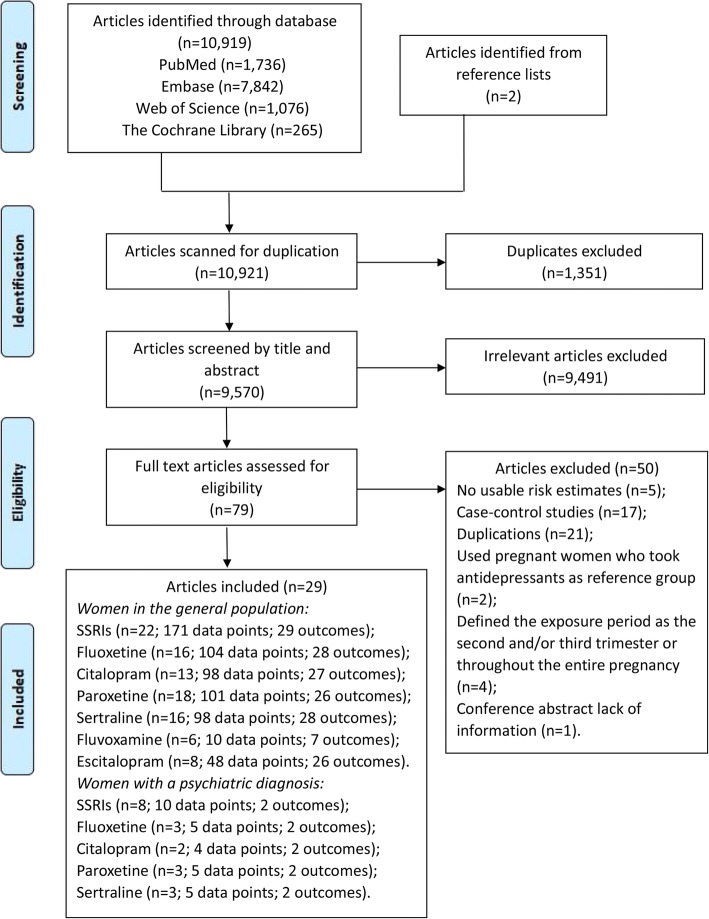
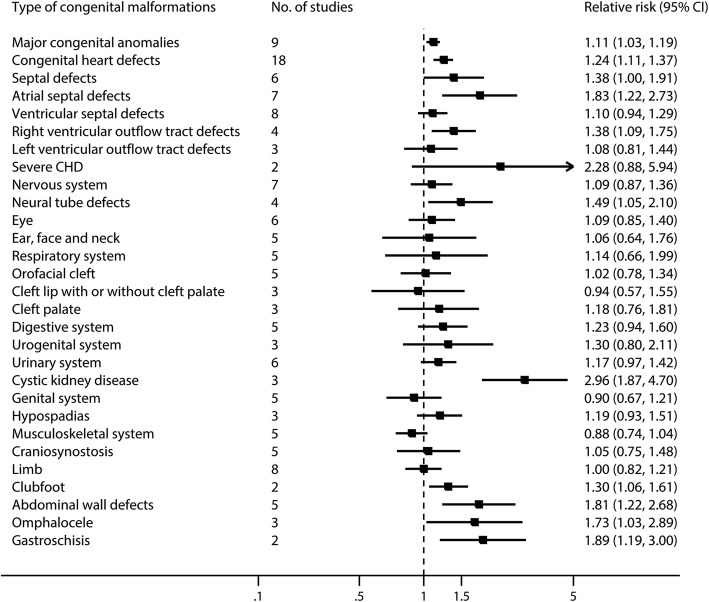
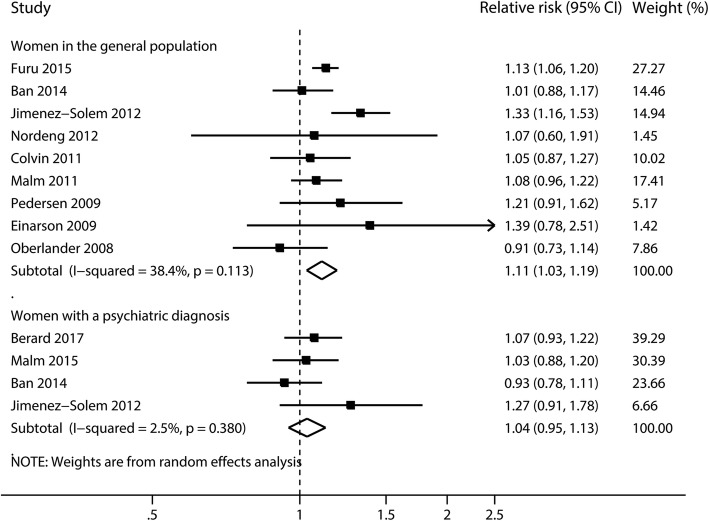
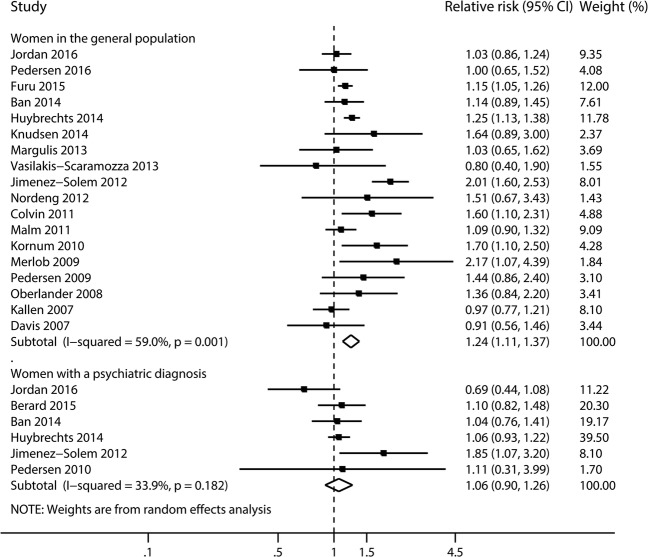
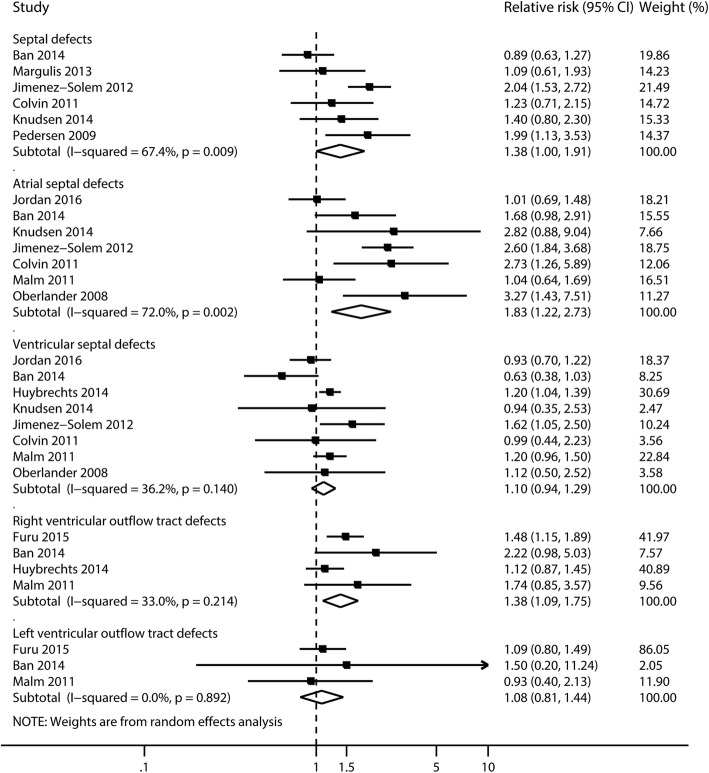
BACKGROUND: In 2005, the FDA cautioned that exposure to paroxetine, a selective serotonin reuptake inhibitor (SSRI), during the first trimester of pregnancy may increase the risk of cardiac malformations. Since then, the association between maternal use of SSRIs during pregnancy and congenital malformations in infants has been the subject of much discussion and controversy. The aim of this study is to systematically review the associations between SSRIs use during early pregnancy and the risk of congenital malformations, with particular attention to the potential confounding by indication. METHODS: The study protocol was registered with PROSPERO (CRD42018088358). Cohort studies on congenital malformations in infants born to mothers with first-trimester exposure to SSRIs were identified via PubMed, Embase, Web of Science, and the Cochrane Library databases through 17 January 2018. Random-effects models were used to calculate summary relative risks (RRs). RESULTS: Twenty-nine cohort studies including 9,085,954 births were identified. Overall, use of SSRIs was associated with an increased risk of overall major congenital anomalies (MCAs, RR 1.11, 95% CI 1.03 to 1.19) and congenital heart defects (CHD, RR 1.24, 95% CI 1.11 to 1.37). No significantly increased risk was observed when restricted to women with a psychiatric diagnosis (MCAs, RR 1.04, 95% CI 0.95 to 1.13; CHD, RR 1.06, 95% CI 0.90 to 1.26). Similar significant associations were observed using maternal citalopram exposure (MCAs, RR 1.20, 95% CI 1.09 to 1.31; CHD, RR 1.24, 95% CI 1.02 to 1.51), fluoxetine (MCAs, RR 1.17, 95% CI 1.07 to 1.28; CHD, 1.30, 95% CI 1.12 to 1.53), and paroxetine (MCAs, RR 1.18, 95% CI 1.05 to 1.32; CHD, RR 1.17, 95% CI 0.97 to 1.41) and analyses restricted to using women with a psychiatric diagnosis were not statistically significant. Sertraline was associated with septal defects (RR 2.69, 95% CI 1.76 to 4.10), atrial septal defects (RR 2.07, 95% CI 1.26 to 3.39), and respiratory system defects (RR 2.65, 95% CI 1.32 to 5.32). CONCLUSIONS: The evidence suggests a generally small risk of congenital malformations and argues against a substantial teratogenic effect of SSRIs. Caution is advisable in making decisions about whether to continue or stop treatment with SSRIs during pregnancy.
Overview
The claims and statistics of this paper haven’t been checked yet.
Free: it reads the open-access text and checks the first 5 claims that cite a source we can check. Create a free account to check every claim.
Integrity signals
Registry
Cites
Statistics
Figures
Verification
Claims the paper makes
The claims and statistics of this paper haven’t been checked yet.
Free: it reads the open-access text and checks the first 5 claims that cite a source we can check. Create a free account to check every claim.
Claims other papers make about this one
Each is checked against this paper’s own text: does it say what the citing paper says it does?
The source backs part of the claim, not all of it — or backs it for a different population, condition or comparison.
In the citing paper
“Overall, the results showed that the association between antidepressant use and adverse health outcomes was not supported by robust evidence and that the underlying disease likely inflated the findings in a relevant way. 39,44”
From Association of Antidepressant Use With Adverse Health Outcomes: A Systematic Umbrella Review (2019) · cites this paper as [44]
Experimental — accuracy not yet measuredThe source backs part of the claim, not all of it — or backs it for a different population, condition or comparison.
In the citing paper
“Overall, the results showed that the association between antidepressant use and adverse health outcomes was not supported by robust evidence and that the underlying disease likely inflated the findings in a relevant way. 39,44”
From Association of Antidepressant Use With Adverse Health Outcomes: A Systematic Umbrella Review (2019) · cites this paper as [44]
Experimental — accuracy not yet measuredIn the citing paper
“The convincing evidence level was not confirmed when confounding by indication was considered, suggesting that the association between antidepressant use and autism as well as suicidality in youth and other outcomes may be due to the underlying disease rather than to the use of antidepressants, 39,43,44,50 as shown in a recent umbrella review on risk factors for autism.86”
From Association of Antidepressant Use With Adverse Health Outcomes: A Systematic Umbrella Review (2019) · cites this paper as [44]
Self-check
Percentages, sums and reported differences re-computed from the paper’s own numbers.
The self-check needs the paper’s full text.
Citations
Cites
Preferred Reporting Items for Systematic Reviews and Meta-Analyses: the PRISMA statement
Moher, D., Liberati, A., Tetzlaff, J., Altman, D. G., & for the PRISMA Group (2009) · BMJ · doi:10.1136/bmj.b2535 · Cited by 83,823
Measuring inconsistency in meta-analyses
Higgins, J. P. T., Thompson, S. G., Deeks, J. J., & Altman, D. G. (2003) · BMJ · doi:10.1136/bmj.327.7414.557 · Cited by 63,139
Bias in meta-analysis detected by a simple, graphical test
Egger, M., Smith, G. D., Schneider, M., & Minder, C. (1997) · BMJ · doi:10.1136/bmj.315.7109.629 · Cited by 56,722
Preferred reporting items for systematic reviews and meta-analyses: the PRISMA Statement.
(2009) · PubMed Central · Cited by 44,859
Meta-analysis in clinical trials
DerSimonian, R., & Laird, N. (1986) · Controlled Clinical Trials · doi:10.1016/0197-2456(86)90046-2 · Cited by 39,552
(2014) · Medical Entomology and Zoology · Cited by 17,633
Operating characteristics of a rank correlation test for publication bias
Begg, C. B., & Mazumdar, M. (1994) · Biometrics · doi:10.2307/2533446 · Cited by 16,955
Grote, N. K., Bridge, J. A., Gavin, A. R., Melville, J. L., Iyengar, S., & Katon, W. J. (2010) · Archives of General Psychiatry · doi:10.1001/archgenpsychiatry.2010.111 · Cited by 1,882
Odutayo, A., Wong, C. X., Hsiao, A. J., Hopewell, S., Altman, D. G., & Emdin, C. A. (2016) · BMJ · doi:10.1136/bmj.i4482 · Cited by 867
Birth Outcomes in Pregnant Women Taking Fluoxetine
Chambers, C. D., Johnson, K. A., Dick, L. M., Felix, R. J., & Jones, K. L. (1996) · New England Journal of Medicine · doi:10.1056/nejm199610033351402 · Cited by 735
Hamling, J., Lee, P., Weitkunat, R., & Ambühl, M. (2008) · Statistics in Medicine · doi:10.1002/sim.3013 · Cited by 651
Use of Selective Serotonin-Reuptake Inhibitors in Pregnancy and the Risk of Birth Defects
Alwan, S., Reefhuis, J., Rasmussen, S. A., Olney, R. S., & Friedman, J. M. (2007) · New England Journal of Medicine · doi:10.1056/nejmoa066584 · Cited by 495
Causes of death among stillbirths
(2011) · JAMA · doi:10.1001/jama.2011.1823 · Cited by 444
Antidepressant Use in Pregnancy and the Risk of Cardiac Defects
Huybrechts, K. F., Palmsten, K., Avorn, J., Cohen, L. S., Holmes, L. B., Franklin, J. M., Mogun, H., Levin, R., Kowal, M., Setoguchi, S., et al. (2014) · New England Journal of Medicine · doi:10.1056/nejmoa1312828 · Cited by 402
Placental Passage of Antidepressant Medications
Hendrick, V., Stowe, Z. N., Altshuler, L. L., Hwang, S., Lee, E., & Haynes, D. (2003) · American Journal of Psychiatry · doi:10.1176/appi.ajp.160.5.993 · Cited by 380
Laine, K., Heikkinen, T., Ekblad, U., & Kero, P. (2003) · Archives of General Psychiatry · doi:10.1001/archpsyc.60.7.720 · Cited by 331
Pedersen, L. H., Henriksen, T. B., Vestergaard, M., Olsen, J., & Bech, B. H. (2009) · BMJ · doi:10.1136/bmj.b3569 · Cited by 297
Källén, B. A. J., & Otterblad Olausson, P. (2007) · Birth Defects Research Part A: Clinical and Molecular Teratology · doi:10.1002/bdra.20327 · Cited by 270
Bar-Oz, B., Einarson, T., Einarson, A., Boskovic, R., O'Brien, L., Malm, H., Bérard, A., & Koren, G. (2007) · Clinical Therapeutics · doi:10.1016/j.clinthera.2007.05.003 · Cited by 226
Selective Serotonin Reuptake Inhibitors and Risk for Major Congenital Anomalies
Malm, H., Artama, M., Gissler, M., & Ritvanen, A. (2011) · Obstetrics & Gynecology · doi:10.1097/aog.0b013e318220edcc · Cited by 213
Richard, T. L., & Hinrichs, C. C. (2002) · Applied Engineering in Agriculture · doi:10.13031/2013.11320 · Cited by 209
Paroxetine and fluoxetine in pregnancy: a prospective, multicentre, controlled, observational study
Diav‐Citrin, O., Shechtman, S., Weinbaum, D., Wajnberg, R., Avgil, M., Di Gianantonio, E., Clementi, M., Weber‐Schoendorfer, C., Schaefer, C., & Ornoy, A. (2008) · British Journal of Clinical Pharmacology · doi:10.1111/j.1365-2125.2008.03261.x · Cited by 207
Davis, R. L., Rubanowice, D., McPhillips, H., Raebel, M. A., Andrade, S. E., Smith, D., Yood, M. U., & Platt, R. (2007) · Pharmacoepidemiology and Drug Safety · doi:10.1002/pds.1462 · Cited by 203
Oberlander, T. F., Warburton, W., Misri, S., Riggs, W., Aghajanian, J., & Hertzman, C. (2008) · Birth Defects Research Part B: Developmental and Reproductive Toxicology · doi:10.1002/bdrb.20144 · Cited by 187
Einarson, A., Pistelli, A., DeSantis, M., Malm, H., Paulus, W. D., Panchaud, Kennedy, D., Einarson, T. R., & Koren, G. (2008) · American Journal of Psychiatry · doi:10.1176/appi.ajp.2007.07060879 · Cited by 186
Furu, K., Kieler, H., Haglund, B., Engeland, A., Selmer, R., Stephansson, O., Valdimarsdottir, U. A., Zoega, H., Artama, M., Gissler, M., et al. (2015) · BMJ · doi:10.1136/bmj.h1798 · Cited by 185
Grigoriadis, S., VonderPorten, E. H., Mamisashvili, L., Roerecke, M., Rehm, J., Dennis, C.-L., Koren, G., Steiner, M., Mousmanis, P., Cheung, A., et al. (2013) · The Journal of Clinical Psychiatry · doi:10.4088/jcp.12r07966 · Cited by 181
Einarson, A., Choi, J., Einarson, T. R., & Koren, G. (2009) · The Canadian Journal of Psychiatry · doi:10.1177/070674370905400405 · Cited by 163
Reefhuis, J., Devine, O., Friedman, J. M., Louik, C., & Honein, M. A. (2015) · BMJ · doi:10.1136/bmj.h3190 · Cited by 161
Wurst, K. E., Poole, C., Ephross, S. A., & Olshan, A. F. (2010) · Birth Defects Research Part A: Clinical and Molecular Teratology · doi:10.1002/bdra.20627 · Cited by 159
Changes in Antidepressant Metabolism and Dosing Across Pregnancy and Early Postpartum
Sit, D. K., Perel, J. M., Helsel, J. C., & Wisner, K. L. (2008) · The Journal of Clinical Psychiatry · doi:10.4088/jcp.v69n0419 · Cited by 156
Szegda, K., Markenson, G., Bertone-Johnson, E. R., & Chasan-Taber, L. (2014) · The Journal of Maternal-Fetal & Neonatal Medicine · doi:10.3109/14767058.2013.845157 · Cited by 155
Serotonin and cardiac morphogenesis in the mouse embryo
Yavarone, M. S., Shuey, D. L., Tamir, H., Sadler, T. W., & Lauder, J. M. (1993) · Teratology · doi:10.1002/tera.1420470609 · Cited by 151
Bérard, A., Zhao, J.-P., & Sheehy, O. (2017) · BMJ Open · doi:10.1136/bmjopen-2016-013372 · Cited by 148
Jimenez-Solem, E., Andersen, J. T., Petersen, M., Broedbaek, K., Jensen, J. K., Afzal, S., Gislason, G. H., Torp-Pedersen, C., & Poulsen, H. E. (2012) · BMJ Open · doi:10.1136/bmjopen-2012-001148 · Cited by 139
Malm, H., Sourander, A., Gissler, M., Gyllenberg, D., Hinkka-Yli-Salomäki, S., McKeague, I. W., Artama, M., & Brown, A. S. (2015) · American Journal of Psychiatry · doi:10.1176/appi.ajp.2015.14121575 · Cited by 136
Boggon, R., van Staa, T. P., Chapman, M., Gallagher, A. M., Hammad, T. A., & Richards, M. A. (2013) · Pharmacoepidemiology and Drug Safety · doi:10.1002/pds.3374 · Cited by 134
Nordeng, H., van Gelder, M. M. H. J., Spigset, O., Koren, G., Einarson, A., & Eberhard-Gran, M. (2012) · Journal of Clinical Psychopharmacology · doi:10.1097/jcp.0b013e3182490eaf · Cited by 133
Myles, N., Newall, H., Ward, H., & Large, M. (2013) · Australian & New Zealand Journal of Psychiatry · doi:10.1177/0004867413492219 · Cited by 126
Prevalence of Antidepressant Use during Pregnancy in Denmark, a Nation-Wide Cohort Study
Jimenez-Solem, E., Andersen, J. T., Petersen, M., Broedbaek, K., Andersen, N. L., Torp-Pedersen, C., & Poulsen, H. E. (2013) · PLoS ONE · doi:10.1371/journal.pone.0063034 · Cited by 119
ADDIS, A., & KOREN, G. (2000) · Psychological Medicine · doi:10.1017/s0033291799001270 · Cited by 115
Safety of Selective Serotonin Reuptake Inhibitors in Pregnancy
Alwan, S. S., & Friedman, J. M. (2009) · CNS Drugs · doi:10.2165/00023210-200923060-00004 · Cited by 114
Kornum (2010) · Clinical Epidemiology · doi:10.2147/clep.s9256 · Cited by 112
Antidepressant use during pregnancy: the benefit-risk ratio
Koren, G., & Nordeng, H. (2012) · American Journal of Obstetrics and Gynecology · doi:10.1016/j.ajog.2012.02.009 · Cited by 106
Ban, L., Gibson, J., West, J., Fiaschi, L., Sokal, R., Smeeth, L., Doyle, P., Hubbard, R., & Tata, L. (2014) · BJOG: An International Journal of Obstetrics & Gynaecology · doi:10.1111/1471-0528.12682 · Cited by 105
Serotonin and its transporter on proliferation of fetal heart cells
Sari, Y., & Zhou, F. C. (2003) · International Journal of Developmental Neuroscience · doi:10.1016/j.ijdevneu.2003.10.002 · Cited by 104
Bérard, A., Iessa, N., Chaabane, S., Muanda, F. T., Boukhris, T., & Zhao, J. (2016) · British Journal of Clinical Pharmacology · doi:10.1111/bcp.12849 · Cited by 103
Sertraline use during pregnancy and the risk of major malformations
Bérard, A., Zhao, J., & Sheehy, O. (2015) · American Journal of Obstetrics and Gynecology · doi:10.1016/j.ajog.2015.01.034 · Cited by 94
Colvin, L., Slack‐Smith, L., Stanley, F. J., & Bower, C. (2011) · Birth Defects Research Part A: Clinical and Molecular Teratology · doi:10.1002/bdra.20773 · Cited by 93
Safety of Selective Serotonin Reuptake Inhibitors in Pregnancy: A Review of Current Evidence
Alwan, S. S., Friedman, J. M., & Chambers, C. (2016) · CNS Drugs · doi:10.1007/s40263-016-0338-3 · Cited by 87
Merlob, P., Birk, E., Sirota, L., Linder, N., Berant, M., Stahl, B., & Klinger, G. (2009) · Birth Defects Research Part A: Clinical and Molecular Teratology · doi:10.1002/bdra.20615 · Cited by 78
Jordan, S. E., Morris, J. K., Davies, G. I., Tucker, D., Thayer, D. S., Luteijn, M., Morgan, M., Garne, E., Hansen, A. V., Klungsøyr, K., et al. (2016) · PLoS ONE · doi:10.1371/journal.pone.0165122 · Cited by 76
Sadler, T. W. (2011) · Reproductive Toxicology · doi:10.1016/j.reprotox.2011.09.004 · Cited by 66
Does Paroxetine Cause Cardiac Malformations?
O’Brien, L., Einarson, T. R., Sarkar, M., Einarson, A., & Koren, G. (2008) · Journal of Obstetrics and Gynaecology Canada · doi:10.1016/s1701-2163(16)32918-8 · Cited by 56
Pregnancy Outcomes Following Use of Escitalopram: A Prospective Comparative Cohort Study
Klieger‐Grossmann, C., Weitzner, B., Panchaud, A., Pistelli, A., Einarson, T., Koren, G., & Einarson, A. (2012) · The Journal of Clinical Pharmacology · doi:10.1177/0091270011405524 · Cited by 56
Margulis, A. V., Abou‐Ali, A., Strazzeri, M. M., Ding, Y., Kuyateh, F., Frimpong, E. Y., Levenson, M. S., & Hammad, T. A. (2013) · Pharmacoepidemiology and Drug Safety · doi:10.1002/pds.3462 · Cited by 56
Fluoxetine and congenital malformations: a systematic review and meta‐analysis of cohort studies
Gao, S., Wu, Q., Zhang, T., Shen, Z., Liu, C., Xu, X., Ji, C., & Zhao, Y. (2017) · British Journal of Clinical Pharmacology · doi:10.1111/bcp.13321 · Cited by 56
Self-citationNikfar, S., Rahimi, R., Hendoiee, N., & Abdollahi, M. (2012) · DARU Journal of Pharmaceutical Sciences · doi:10.1186/2008-2231-20-75 · Cited by 54
Wang, S., Yang, L., Wang, L., Gao, L., Xu, B., & Xiong, Y. (2015) · Journal of the American Heart Association · doi:10.1161/jaha.114.001681 · Cited by 51
MOTHERISK ROUNDS: The Fetal Safety of Fluoxetine: A Systematic Review and Meta-Analysis
Riggin, L., Frankel, Z., Moretti, M. E., Pupco, A., & Koren, G. (2013) · Journal of Obstetrics and Gynaecology Canada · doi:10.1016/s1701-2163(15)30965-8 · Cited by 49
Shen, Z., Gao, S., Li, S. X., Zhang, T., Liu, C., Lv, H., Zhang, Y., Gong, T., Xu, X., Ji, C., et al. (2017) · British Journal of Clinical Pharmacology · doi:10.1111/bcp.13161 · Cited by 48
Self-citationSpontaneous abortion–high risk factor for neural tube defects in subsequent pregnancy
Carmi, R., Gohar, J., Meizner, I., & Katz, M. (1994) · American Journal of Medical Genetics · doi:10.1002/ajmg.1320510203 · Cited by 46
Selective serotonin reuptake inhibitors in human pregnancy: On the way to resolving the controversy
Ornoy, A., & Koren, G. (2013) · Seminars in Fetal and Neonatal Medicine · doi:10.1016/j.siny.2013.11.007 · Cited by 45
Medical databases in studies of drug teratogenicity: methodological issues
Ehrenstein, V., Sørensen, H. T., Bakketeig, L. S., & Pedersen, L. (2010) · Clinical Epidemiology · doi:10.2147/clep.s9304 · Cited by 45
Knudsen, T. M., Hansen, A. V., Garne, E., & Andersen, A. N. (2014) · BMC Pregnancy and Childbirth · doi:10.1186/1471-2393-14-333 · Cited by 43
Ogunyemi, D. A., Jovanovski, A. P., Liu, J., Friedman, P., Sugiyama, N., Creps, J. R., & Madan, I. (2018) · American Journal of Perinatology Reports · doi:10.1055/s-0038-1661379 · Cited by 41
Selective serotonin reuptake inhibitors for depression in pregnancy
Susser, L. C., Sansone, S. A., & Hermann, A. D. (2016) · American Journal of Obstetrics and Gynecology · doi:10.1016/j.ajog.2016.07.011 · Cited by 37
Antidepressant Use During Early Pregnancy and the Risk of Congenital Anomalies
Vasilakis‐Scaramozza, C., Aschengrau, A., Cabral, H., & Jick, S. S. (2013) · Pharmacotherapy: The Journal of Human Pharmacology and Drug Therapy · doi:10.1002/phar.1211 · Cited by 36
Zhang, T., Gao, S., Shen, Z., Li, D., Liu, C., Lv, H., Zhang, Y., Gong, T., Xu, X. P., Ji, C., et al. (2017) · Scientific Reports · doi:10.1038/srep43085 · Cited by 35
Self-citationTuccori, M., Montagnani, S., Testi, A., Ruggiero, E., Mantarro, S., Scollo, C., Pergola, A., Fornai, M., Antonioli, L., Colucci, R., et al. (2010) · Postgraduate Medicine · doi:10.3810/pgm.2010.07.2175 · Cited by 33
Selective Serotonin Reuptake Inhibitors and Congenital Heart Anomalies
Petersen, I., Evans, S. J. W., Gilbert, R. E., Marston, L., & Nazareth, I. (2016) · The Journal of Clinical Psychiatry · doi:10.4088/jcp.14m09241 · Cited by 31
Mouse 5‐HT2B Receptor‐mediated Serotonin Trophic Functionsa
Choi, D., Kellermann, O., Mouillet‐Richard, S., Colas, J., Bolaños, F. J., Tournois, C., Launay, J., & Maroteaux, L. (1998) · Annals of the New York Academy of Sciences · doi:10.1111/j.1749-6632.1998.tb10174.x · Cited by 30
Nembhard, W. N., Tang, X., Hu, Z., Macleod, S. L., Stowe, Z. N., Webber, D. M., & Study, T. N. B. D. P. (2017) · BMJ · doi:10.1136/bmj.j832 · Cited by 30
Preventable drug related mortality in a Swedish population
Jönsson, A. K., Hakkarainen, K. M., Spigset, O., Druid, H., Hiselius, A., & Hägg, S. (2009) · Pharmacoepidemiology and Drug Safety · doi:10.1002/pds.1890 · Cited by 28
Liu, Y., Zhou, X., Zhu, D., Chen, J., Qin, B., Zhang, Y., Wang, X., Yang, D., Meng, H., Luo, Q., et al. (2015) · Human Psychopharmacology: Clinical and Experimental · doi:10.1002/hup.2465 · Cited by 26
Selmer, R. M., Haglund, B., Furu, K., Andersen, M. T., Nørgaard, M., Zoëga, H., & Kieler, H. (2016) · Pharmacoepidemiology and Drug Safety · doi:10.1002/pds.4033 · Cited by 21
Taouk, L. H., Matteson, K. A., Stark, L. M., & Schulkin, J. A. (2017) · Archives of Women s Mental Health · doi:10.1007/s00737-017-0760-7 · Cited by 18
Gentile, S. (2015) · Expert Opinion on Drug Metabolism & Toxicology · doi:10.1517/17425255.2015.1063614 · Cited by 17
Paroxetine and Congenital Malformations: a Prospective Comparative Study
Vial, T., Cournot, M. P., Bernard, N., Carlier, P., Jonville‐Béra, A. ‐., Jean-Pastor, M.-J., Barjhoux, C. E., Robert, E., Éléfant, É., & Descotes, J. (2006) · Drug Safety · doi:10.2165/00002018-200629100-00121 · Cited by 16
Risk of cardiovascular malformations after exposure to paroxetine in pregnancy: meta-analysis
Painuly, N., Painuly, R., Heun, R., & Sharan, P. (2013) · The Psychiatrist · doi:10.1192/pb.bp.111.035915 · Cited by 12
Nishigori, H., Obara, T., Nishigori, T., Mizuno, S., Metoki, H., Hoshiai, T., Watanabe, Z., Sakurai, K., Ishikuro, M., Tatsuta, N., et al. (2016) · Congenital Anomalies · doi:10.1111/cga.12202 · Cited by 12
The risks associated with prenatal antidepressant exposure: time for a precision medicine approach
Pedersen, L. H. (2017) · Expert Opinion on Drug Safety · doi:10.1080/14740338.2017.1341872 · Cited by 12
Schaefer, J., & Sachs, B. (2006) · Drug Safety · doi:10.2165/00002018-200629100-00067 · Cited by 11
Association of citalopram with congenital anomalies: A meta-analysis
Kang, H.-H., Ahn, K. H., Hong, S., Kwon, B. Y., Lee, E. H., Lee, J. S., Oh, M., & Kim, H.-J. (2017) · Obstetrics & Gynecology Science · doi:10.5468/ogs.2017.60.2.145 · Cited by 10
Colvin, L., Slack-Smith, L. M., Stanley, F. J., & Bower, A. C. (2011) · Birth Defects Research Part A Clinical and Molecular Teratology · doi:10.1002/bdra.20832 · Cited by 4
Research works printed but not linked: 3
- U.S Food and Drug Administration (FDA) Public Health Advisory: Paroxetine 2005
- Kowalik E Ward K Ye Y SSRI use in pregnancy and congenital heart defects: a metaanalysis of population-based cohort studies Pharmacotherapy 2016 36 12 e302
- Rothman KJ Development DD. Modern Epidemiology 2014 3
Cited by
Perinatal mental health: a review of progress and challenges
Howard, L. M., & Khalifeh, H. (2020) · World Psychiatry · doi:10.1002/wps.20769 · Cited by 1,118
Barnes, T. R., Drake, R., Paton, C., Cooper, S. J., Deakin, B., Ferrier, I. N., Gregory, C. J., Haddad, P. M., Howes, O. D., Jones, I., et al. (2020) · Journal of Psychopharmacology · doi:10.1177/0269881119889296 · Cited by 606
Selective Serotonin Reuptake Inhibitors and Adverse Effects: A Narrative Review
Edinoff, A. N., Akuly, H. A., Hanna, T. A., Ochoa, C. O., Patti, S. J., Ghaffar, Y. A., Kaye, A. D., Viswanath, O., Urits, I., Boyer, A. G., et al. (2021) · Neurology International · doi:10.3390/neurolint13030038 · Cited by 440
Association of Antidepressant Use With Adverse Health Outcomes: A Systematic Umbrella Review
Dragioti, E., Solmi, M., Favaro, A., Fusar-Poli, P., Dazzan, P., Thompson, T., Stubbs, B., Firth, J., Fornaro, M., Tsartsalis, D., et al. (2019) · JAMA Psychiatry · doi:10.1001/jamapsychiatry.2019.2859 · Cited by 215
Environmental Risk Factors for Congenital Heart Disease
Kalisch-Smith, J. I., Ved, N., & Sparrow, D. B. (2019) · Cold Spring Harbor Perspectives in Biology · doi:10.1101/cshperspect.a037234 · Cited by 178
Metadata
- Authors
- Gao, S.-Y., Wu, Q.-J., Sun, C., Zhang, T.-N., Shen, Z.-Q., Liu, C.-X., Gong, T.-T., Xu, X., Ji, C., Huang, D.-H., Chang, Q., & Zhao, Y.-H.
- Affiliations
- China Medical University (CN)
- Sheng Jing Hospital (CN)
- Venue
- BMC Medicine
- Published
- 2018-11-12
- Volume
- 16
- Issue
- 1
- Pages
- 205-205
- ISSN
- 1741-7015 (ISSN-L)
- PMC
- PMC6231277
- OpenAlex
- W2899847685
- Cited by
- 152
- References
- 87
- Citations by year
- 2026: 10 · 2025: 21 · 2024: 33 · 2023: 12 · 2022: 23 · 2021: 19 · 2020: 24 · 2019: 9
- FWCI
- 2.36
- Type
- journal article
- Language
- en
- Open access
- gold
- doi.org
- Licence
- cc-by
- creativecommons.org/licenses/by/4.0/ (tdm)
- Locations
- BMC Medicine (publishedVersion, cc-by)
- Europe PMC (PubMed Central) (publishedVersion, cc-by)
- PubMed Central (publishedVersion, cc-by)
- PubMed (publishedVersion)
- DOAJ (DOAJ: Directory of Open Access Journals) (submittedVersion, cc-by-sa)
- Funders
- National Key R&D Program of China (2017YFC0907400)
- the Science and Technology Project of Liaoning Province (2013225079)
- the Doctoral Start-Up Foundation of Liaoning Province (201501007)
- the Natural Science Foundation of China (81602918)
- the Younger research fund of Shengjing Hospital (2014sj09)
- Capital Foundation of Medical Development (YQ20170002)
- Topics
- Health Sciences › Medicine › Public Health, Environmental and Occupational Health › Pregnancy and Medication Impact
- Health Sciences › Medicine › Pediatrics, Perinatology and Child Health › Pharmacological Effects and Toxicity Studies
- Health Sciences › Medicine › Pediatrics, Perinatology and Child Health › Prenatal Substance Exposure Effects
- Keywords
- selective serotonin reuptake inhibitors, maternal antidepressant use, early pregnancy, congenital malformations, congenital heart disease, major congenital malformations, paroxetine, citalopram, fluoxetine, confounding by indication, psychiatric disorders in pregnancy, prenatal drug exposure, pregnancy outcomes
- MeSH terms
- Abnormalities, Drug-Induced, Female, Humans, Infant, Pregnancy, Pregnancy Trimester, First, Risk, Cohort Studies, Selective Serotonin Reuptake Inhibitors
About these checks
Registry, retraction, Cites and statistics results are computed, not judged, with one exception: a printed reference that no index lists is read once by a model before it counts as a citation error. Claims are extracted by a model and kept only when their quote appears verbatim in the text; each cited source is then checked, with a model’s help, for whether it says what the claim relies on. Those verdicts can be wrong — read the claim’s quote and the cited source before relying on one.
Statistics and arithmetic are recomputed, not judged.
Confidence bands are shown only for fields calibrated on our annotated test set. None is calibrated yet, so no band is shown.
What counts as a claim ›How we measure confidence ›How we check this ›
Are you an author, or do you see a problem with this page? Request a review
Data sources
Bibliographic data: Semantic Scholar, OpenAlex, Crossref.
Contains information from the Semantic Scholar Academic Graph Datasets, made available under the ODC Attribution License (ODC-BY 1.0).
Semantic Scholar’s data is described in: Kinney, R., et al. (2023). The Semantic Scholar Open Data Platform. arXiv:2301.10140.
