

Differential effects of glucagon-like peptide-1 receptor agonists on heart rate
Open accessThe DOI matches its Crossref record; 50 of the 51 references it cites were found in a registry or an index.
Abstract
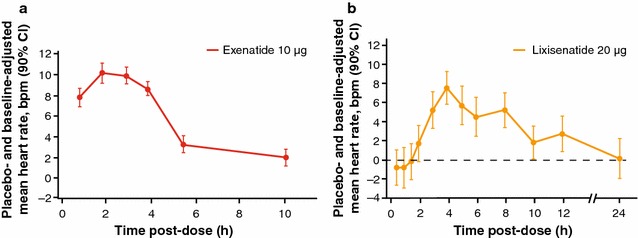
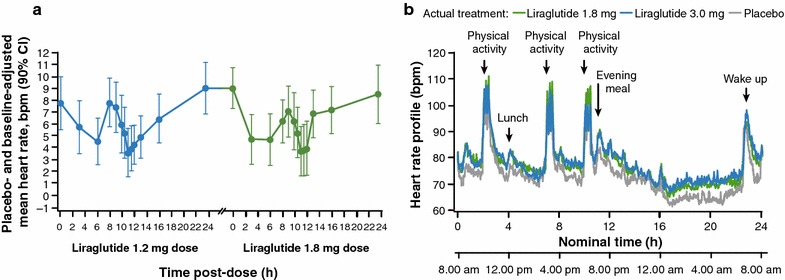
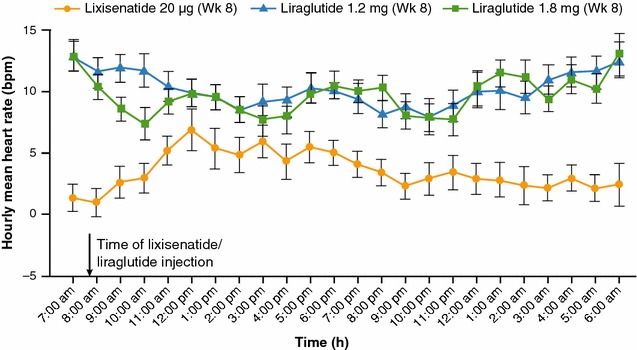
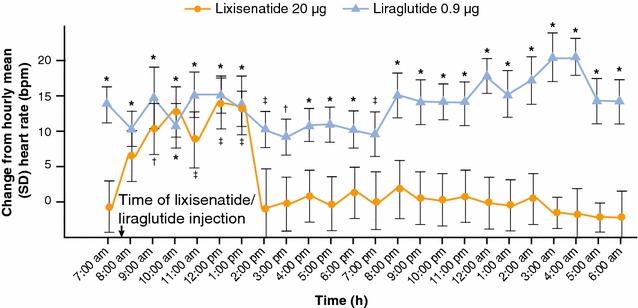
While glucagon-like peptide-1 receptor agonists (GLP-1 RAs) are known to increase heart rate (HR), it is insufficiently recognized that the extent varies greatly between the various agonists and is affected by the assessment methods employed. Here we review published data from 24-h time-averaged HR monitoring in healthy individuals and subjects with type 2 diabetes mellitus (T2DM) treated with either short-acting GLP-1 RAs, lixisenatide or exenatide, or long-acting GLP-1 RAs, exenatide LAR, liraglutide, albiglutide, or dulaglutide (N = 1112; active-treatment arms). HR effects observed in two independent head-to-head trials of lixisenatide and liraglutide (N = 202; active-treatment arms) are also reviewed. Short-acting GLP-1 RAs, exenatide and lixisenatide, are associated with a transient (1-12 h) mean placebo- and baseline-adjusted 24-h HR increase of 1-3 beats per minute (bpm). Conversely, long-acting GLP-1 RAs are associated with more pronounced increases in mean 24-h HR; the highest seen with liraglutide and albiglutide at 6-10 bpm compared with dulaglutide and exenatide LAR at 3-4 bpm. For both liraglutide and dulaglutide, HR increases were recorded during both the day and at night. In two head-to-head comparisons, a small, transient mean increase in HR from baseline was observed with lixisenatide; liraglutide induced a substantially greater increase that remained significantly elevated over 24 h. The underlying mechanism for increased HR remains to be elucidated; however, it could be related to a direct effect at the sinus node and/or stimulation of the sympathetic nervous system, with this effect related to the duration of action of the respective GLP-1 RAs. In conclusion, this review indicates that the effects on HR differ within the class of GLP-1 RAs: short-acting GLP-1 RAs are associated with a modest and transient HR increase before returning to baseline levels, while some long-acting GLP-1 RAs are associated with a more pronounced and sustained increase during the day and night. Findings from recently completed trials indicate that a GLP-1 RA-induced increase in HR, regardless of magnitude, does not present an increased cardiovascular risk for subjects with T2DM, although a pronounced increase in HR may be associated with adverse clinical outcomes in those with advanced heart failure.
Overview
The claims and statistics of this paper haven’t been checked yet.
Free: it reads the open-access text and checks the first 5 claims that cite a source we can check. Create a free account to check every claim.
Integrity signals
Registry
Cites
Statistics
Figures
Verification
Claims the paper makes
The claims and statistics of this paper haven’t been checked yet.
Free: it reads the open-access text and checks the first 5 claims that cite a source we can check. Create a free account to check every claim.
Claims other papers make about this one
Each is checked against this paper’s own text: does it say what the citing paper says it does?
The cited source says what the claim attributes to it.
In the citing paper
“This was not entirely unexpected as GLP-1 RAs are known to have chronotropic effects [32,33];”
In the citing paper
“GLP1-RA may also cause an increase in heart rate of 1 to 10 beats per minute; this effect is usually transient [59].”
From Glucagon-like peptide-1 receptor agonists in diabetic kidney disease: a review of their kidney and heart protection (2023) · cites this paper as [59]
Self-check
Percentages, sums and reported differences re-computed from the paper’s own numbers.
The self-check needs the paper’s full text.
Citations
Cites
10-year follow-up of intensive glucose control in type 2 diabetes
Holman, R. R., Paul, S. K., Bethel, M. A., Matthews, D. R., & Neil, H. A. W. (2008) · New England Journal of Medicine · doi:10.1056/nejmoa0806470 · Cited by 7,751 · cited 1×
“Reduction of atherosclerosis requires long-term treatment [53], hence longer trials are better suited to show a reduction in risk of myocardial infarction or other atherosclerotic complications of diabetes.”
BackgroundLiraglutide and Cardiovascular Outcomes in Type 2 Diabetes
Marso, S. P., Daniels, G. H., Brown-Frandsen, K., Kristensen, P., Mann, J. F. E., Nauck, M. A., Nissen, S. E., Pocock, S., Poulter, N. R., Ravn, L. S., et al. (2016) · New England Journal of Medicine · doi:10.1056/nejmoa1603827 · Cited by 7,629 · cited 1×
“The results of the Liraglutide Effect and Action in Diabetes: Evaluation of Cardiovascular Outcome Results (LEADER) trial were published recently [51].”
ResultDrucker, D. J., & Nauck, M. A. (2006) · The Lancet · doi:10.1016/s0140-6736(06)69705-5 · Cited by 3,896
Saxagliptin and cardiovascular outcomes in patients with type 2 diabetes mellitus
Scirica, B. M., Bhatt, D. L., Braunwald, E., Steg, P. G., Davidson, J., Hirshberg, B., Ohman, P., Frederich, R., Wiviott, S. D., Hoffman, E. B., et al. (2013) · New England Journal of Medicine · doi:10.1056/nejmoa1307684 · Cited by 3,470
Inzucchi, S. E., Bergenstal, R. M., Buse, J. B., Diamant, M., Ferrannini, E., Nauck, M., Peters, A. L., Tsapas, A., Wender, R., & Matthews, D. R. (2015) · Diabetes Care · doi:10.2337/dc14-2441 · Cited by 3,066
Ivabradine and outcomes in chronic heart failure (SHIFT): a randomised placebo-controlled study
Swedberg, K., Komajda, M., Böhm, M., Borer, J. S., Ford, I., Dubost-Brama, A., Lerebours, G., & Tavazzi, L. (2010) · The Lancet · doi:10.1016/s0140-6736(10)61198-1 · Cited by 2,563 · cited 1×
“However, in support of a causal relationship, lowering of HR by ivabradine, a selective inhibitor of the sinus node I(f ) channel, devoid of any activity on blood pressure, cardiac contractility, atrioventricular conduction or ventricular repolarization, decreased the risk of cardiovascular death or hospitalization du…”
BackgroundLixisenatide in Patients with Type 2 Diabetes and Acute Coronary Syndrome
Pfeffer, M. A., Claggett, B., Diaz, R., Dickstein, K., Gerstein, H. C., Køber, L. V., Lawson, F. C., Ping, L., Wei, X., Lewis, E. F., et al. (2015) · New England Journal of Medicine · doi:10.1056/nejmoa1509225 · Cited by 2,409 · cited 1×
“The results of the Evaluation of LIXisenatide in Acute coronary syndrome (ELIXA) trial, the first cardiovascular outcomes trial for the short-acting GLP-1 RA lixisenatide, were also published recently [52].”
BackgroundSelf-citationHeart Rate, Life Expectancy and the Cardiovascular System: Therapeutic Considerations
Boudoulas, K. D., Borer, J. S., & Boudoulas, H. (2015) · Cardiology · doi:10.1159/000435947 · Cited by 1,938
GLP-1 receptor agonists for individualized treatment of type 2 diabetes mellitus
Meier, J. J. (2012) · Nature Reviews Endocrinology · doi:10.1038/nrendo.2012.140 · Cited by 1,311 · cited 2×
“According to their respective PK profiles, exenatide BID and lixisenatide can be categorized as short-acting agents (each has a half-life of 3–5 h) compared with the long-acting agents liraglutide, exenatide LAR, albiglutide, and dulaglutide, which have half-lives ranging from 12 h to several days [16].”
BackgroundBöhm, M., Swedberg, K., Komajda, M., Borer, J. S., Ford, I., Dubost-Brama, A., Lerebours, G., & Tavazzi, L. (2010) · The Lancet · doi:10.1016/s0140-6736(10)61259-7 · Cited by 1,099
Research works printed but not linked: 2
- Tillner J Golor G Voirot P Lehmann A Frosio C Megard C Lorenz M Lixisenatide (Lyxumia®) has no effect on QTc interval in healthy subjects: a thorough QTc study Diabetes 2016 65 Suppl 1 A270
- Sager P Darpo B Han J Kothare P Linnebjerg H Mitchell M Porter L Exenatide once weekly did not affect corrected QT interval in patients with type 2 diabetes Diabetes 2011 60 Suppl 1 A294
Cited by
Triple-Hormone-Receptor Agonist Retatrutide for Obesity — A Phase 2 Trial
Jastreboff, A. M., Kaplan, L. M., Frías, J. P., Wu, Q., Du, Y., Gurbuz, S., Coskun, T., Haupt, A., Milicevic, Z., & Hartman, M. L. (2023) · New England Journal of Medicine · doi:10.1056/nejmoa2301972 · Cited by 1,174
Rosenstock, J., Wysham, C., Frías, J. P., Kaneko, S., Lee, C. J., Fernández Landó, L., Mao, H., Cui, X., Karanikas, C. A., & Thieu, V. T. (2021) · The Lancet · doi:10.1016/s0140-6736(21)01324-6 · Cited by 1,080
Pratley, R. E., Aroda, V. R., Lingvay, I., Lüdemann, J., Andreassen, C., Navarria, A., & Viljoen, A. (2018) · The Lancet Diabetes & Endocrinology · doi:10.1016/s2213-8587(18)30024-x · Cited by 790
Ludvik, B., Giorgino, F., Jódar, E., Frias, J. P., Fernández Landó, L., Brown, K., Bray, R., & Rodríguez, Á. (2021) · The Lancet · doi:10.1016/s0140-6736(21)01443-4 · Cited by 639
Yun, J.-S., & Ko, S.-H. (2021) · Metabolism · doi:10.1016/j.metabol.2021.154838 · Cited by 292
Inagaki, N., Takeuchi, M., Oura, T., Imaoka, T., & Seino, Y. (2022) · The Lancet Diabetes & Endocrinology · doi:10.1016/s2213-8587(22)00188-7 · Cited by 226
Sarafidis, P., Ferro, C. J., Morales, E., Ortiz, A., Malyszko, J., Hojs, R., Khazim, K., Ekart, R., Valdivielso, J., Fouque, D., et al. (2019) · Nephrology Dialysis Transplantation · doi:10.1093/ndt/gfy407 · Cited by 204
“GLP-1 receptor agonists induce an increase in heart rate [182] that theoretically could represent a safety concern [183, 184].”
BackgroundBossart, M., Wagner, M., Elvert, R., Evers, A., Hübschle, T., Kloeckener, T., Lorenz, K., Moessinger, C., Eriksson, O., Velikyan, I., et al. (2022) · Cell Metabolism · doi:10.1016/j.cmet.2021.12.005 · Cited by 179
Cornell, S. (2020) · Journal of Clinical Pharmacy and Therapeutics · doi:10.1111/jcpt.13230 · Cited by 156
Khan, M. S., Fonarow, G. C., McGuire, D. K., Hernandez, A. F., Vaduganathan, M., Rosenstock, J., Handelsman, Y., Verma, S., Anker, S. D., McMurray, J. J. V., et al. (2020) · Circulation · doi:10.1161/circulationaha.120.045888 · Cited by 139
Safety and tolerability of once‐weekly GLP‐1 receptor agonists in type 2 diabetes
Trujillo, J. (2020) · Journal of Clinical Pharmacy and Therapeutics · doi:10.1111/jcpt.13225 · Cited by 130
Kadowaki, T., Chin, R., Ozeki, A., Imaoka, T., & Ogawa, Y. (2022) · The Lancet Diabetes & Endocrinology · doi:10.1016/s2213-8587(22)00187-5 · Cited by 131
Once-Weekly Mazdutide in Chinese Adults with Obesity or Overweight
Ji, L., Jiang, H., Bi, Y., Li, H., Tian, J., Liu, D., Zhao, Y., Qiu, W., Huang, C., Chen, L., et al. (2025) · New England Journal of Medicine · doi:10.1056/nejmoa2411528 · Cited by 125
Michos, E. D., Bakris, G. L., Rodbard, H. W., & Tuttle, K. R. (2023) · American Journal of Preventive Cardiology · doi:10.1016/j.ajpc.2023.100502 · Cited by 125
“GLP1-RA may also cause an increase in heart rate of 1 to 10 beats per minute; this effect is usually transient [59].”
BackgroundEffect of SGLT2 Inhibitors on the Sympathetic Nervous System and Blood Pressure
Scheen, A. J. (2019) · Current Cardiology Reports · doi:10.1007/s11886-019-1165-1 · Cited by 122
Tirzepatide for the treatment of adults with type 2 diabetes: An endocrine perspective
De Block, C., Bailey, C., Wysham, C., Hemmingway, A., Allen, S. E., & Peleshok, J. (2023) · Diabetes, Obesity and Metabolism · doi:10.1111/dom.14831 · Cited by 121
“Considering SURPASS-2 specifically, adverse events were the most common reason for treatment discontinuation with tirzepatide and semaglutide.”
ResultInfluentialMarso, S. P., Baeres, F. M. M., Bain, S. C., Goldman, B., Husain, M., Nauck, M. A., Poulter, N. R., Pratley, R. E., Thomsen, A. B., & Buse, J. B. (2020) · Journal of the American College of Cardiology · doi:10.1016/j.jacc.2019.12.063 · Cited by 118
Management of post‐transplant diabetes: immunosuppression, early prevention, and novel antidiabetics
Hecking, M., Sharif, A., Eller, K., & Jenssen, T. G. (2020) · Transplant International · doi:10.1111/tri.13783 · Cited by 128
Glucagon-like peptide-1 receptor agonists: a systematic review of comparative effectiveness research
Levin, P. A., Nguyen, H., Wittbrodt, E., & Kim, S. C. (2017) · Diabetes, Metabolic Syndrome and Obesity: Targets and Therapy · doi:10.2147/dmso.s130834 · Cited by 107
“Conclusion: This systematic review found that GLP-1RAs are an effective class of glucoselowering drugs for T2D.”
BackgroundInfluentialHeuvelman, V. D., Van Raalte, D. H., & Smits, M. M. (2020) · Cardiovascular Research · doi:10.1093/cvr/cvz323 · Cited by 106
Helmstädter, J., Keppeler, K., Küster, L., Münzel, T., Daiber, A., & Steven, S. (2022) · British Journal of Pharmacology · doi:10.1111/bph.15462 · Cited by 99
“Nevertheless, in healthy, obese and T2DM patients, treatment with GLP-1 receptor agonists induces natriuresis, which might contribute to blood pressure reduction (Lovshin et al., 2015).”
BackgroundInfluentialKellerer, M., Kaltoft, M. S., Lawson, J., Nielsen, L. L., Strojek, K., Tabak, Ö., & Jacob, S. (2022) · Diabetes, Obesity and Metabolism · doi:10.1111/dom.14765 · Cited by 86
The Changing Landscape of Diabetes Therapy for Cardiovascular Risk Reduction
Newman, J. D., Vani, A. K., Aleman, J. O., Weintraub, H. S., Berger, J. S., & Schwartzbard, A. Z. (2018) · Journal of the American College of Cardiology · doi:10.1016/j.jacc.2018.07.071 · Cited by 93
“GLP-1 RA use is also associated with increased heart rate, especially with the long-acting formulations, though the mechanism has yet to be elucidated (69).”
BackgroundGlucagon-like peptide-1 increases heart rate by a direct action on the sinus node
Lubberding, A. F., Veedfald, S., Achter, J. S., Nissen, S. D., Soattin, L., Sorrentino, A., Vega, E. T., Linz, B., Eggertsen, C. H. E., Mulvey, J., et al. (2024) · Cardiovascular Research · doi:10.1093/cvr/cvae120 · Cited by 84
“30 Despite the well-established clinical cardiovascular benefits of GLP-1 RAs, the chronotropic effect may limit the use of GLP-1RAs in some patients with underlying heart conditions.”
BackgroundNreu, B., Dicembrini, I., Tinti, F., Sesti, G., Mannucci, E., & Monami, M. (2020) · Nutrition, Metabolism and Cardiovascular Diseases · doi:10.1016/j.numecd.2020.03.013 · Cited by 84
Garg, V., Verma, S., & Connelly, K. (2019) · Progress in Cardiovascular Diseases · doi:10.1016/j.pcad.2019.07.005 · Cited by 82
Packer, M. (2018) · Circulation Research · doi:10.1161/circresaha.118.312673 · Cited by 81
Siraj, M. A., Mundil, D., Beca, S., Momen, A., Shikatani, E. A., Afroze, T., Sun, X., Liu, Y., Ghaffari, S., Lee, W., et al. (2020) · Journal of Clinical Investigation · doi:10.1172/jci99934 · Cited by 78
Glycaemic Control and Vascular Complications in Diabetes Mellitus Type 2
Maranta, F., Cianfanelli, L., & Cianflone, D. (2020) · Advances in experimental medicine and biology · doi:10.1007/5584_2020_514 · Cited by 90
Monami, M., Nreu, B., Scatena, A., Giannini, S., Andreozzi, F., Sesti, G., & Mannucci, E. (2017) · Journal of Endocrinological Investigation · doi:10.1007/s40618-017-0698-7 · Cited by 74
“It has been suggested that long-acting GLP-1 RA have a greater impact on heart rate than shorter acting agents, and that, among long-acting molecules, liraglutide and albiglutide increase heart rate to a greater extent than dulaglutide and exenatide LAR [17].”
BackgroundLawitz, E., Fraessdorf, M., Neff, G. W., Schattenberg, J. M., Noureddin, M., Alkhouri, N., Schmid, B., Andrews, C. P., Takács, I., Hussain, S. A., et al. (2024) · Journal of Hepatology · doi:10.1016/j.jhep.2024.06.003 · Cited by 66
Side Effects Associated with Liraglutide Treatment for Obesity as Well as Diabetes
Seo, Y.-G. (2021) · Journal of Obesity & Metabolic Syndrome · doi:10.7570/jomes20059 · Cited by 57
Jiang, H., Pang, S., Zhang, Y., Yu, T., Liu, M., Deng, H., Li, L., Feng, L., Song, B., Han-Zhang, H., et al. (2022) · Nature Communications · doi:10.1038/s41467-022-31328-x · Cited by 50
Effect of glucose-lowering therapies on heart failure
Nassif, M. E., & Kosiborod, M. (2018) · Nature Reviews Cardiology · doi:10.1038/nrcardio.2017.211 · Cited by 57
GLP-1 receptor agonist-based therapies and cardiovascular risk: a review of mechanisms
Mullur, N., Morissette, A., Morrow, N. M., & Mulvihill, E. E. (2024) · Journal of Endocrinology · doi:10.1530/joe-24-0046 · Cited by 51
Shi, F.-H., Li, H., Cui, M., Zhang, Z.-L., Gu, Z.-C., & Liu, X.-Y. (2018) · Frontiers in Pharmacology · doi:10.3389/fphar.2018.00576 · Cited by 50
“The possible mechanism of increased heart rate of GLP1 RAs is related to the activate effect on myocytes in sinoatrial node or the sympathetic nervous system (Lorenz et al., 2017).”
BackgroundWu, S., Lu, W., Chen, Z., Dai, Y., Chen, K., & Zhang, S. (2022) · Diabetology & Metabolic Syndrome · doi:10.1186/s13098-022-00970-2 · Cited by 50
Friedrichsen, M. H., Endahl, L., Kreiner, F. F., Goldwater, R., Kankam, M., Toubro, S., & Nygård, S. B. (2023) · Molecular Metabolism · doi:10.1016/j.molmet.2023.101801 · Cited by 46
Cardiovascular disease prevention strategies for type 2 diabetes mellitus
Katsiki, N., Purrello, F., Tsioufis, C., & Mikhailidis, D. P. (2017) · Expert Opinion on Pharmacotherapy · doi:10.1080/14656566.2017.1351946 · Cited by 42
“Furthermore, GLP-1 RAs can increase heart rate (from 1–3 to 6–10 beats/min for short-acting and long-acting GLP-1 RA), but this does not seem to adversely affect CVD risk in T2DM patients treated with such drugs [275] despite the link between elevated heart rate and atherosclerosis [276].”
BackgroundLiakos, A., Lambadiari, V., Bargiota, Α., Kitsios, K., Avramidis, I., Kotsa, K., Gerou, S., Boura, P., Tentolouris, N., Dimitriadis, G., et al. (2018) · Diabetes Obesity and Metabolism · doi:10.1111/dom.13541 · Cited by 42
“The attendant chronotropic action of liraglutide is a consistent finding among previous clinical trials and could be either regarded as a compensatory response to blood pressure reduction or could be mediated through a direct effect on the sinus node or the sympathetic nervous system.(26) In the present study, the ris…”
ResultAndreasen, C. R., Andersen, A., Knop, F. K., & Vilsbøll, T. (2021) · Diabetes, Obesity and Metabolism · doi:10.1111/dom.14500 · Cited by 38
“leads to a small but sustained average increase in heart rate of approximately 2 to 4 beats per minute with some differences between trials.(32,33) Notably, the increase in heart rate does not seem to be associated with cardiac arrhythmias or to increase the incidence of CVD.”
BackgroundMuzurović, E., & Mikhailidis, D. P. (2020) · Expert Opinion on Pharmacotherapy · doi:10.1080/14656566.2020.1795132 · Cited by 35
Dyslipidaemia in type 2 diabetes mellitus: bad for the heart
Katsiki, N., Tentolouris, N., & Mikhailidis, D. P. (2017) · Current Opinion in Cardiology · doi:10.1097/hco.0000000000000407 · Cited by 38
Packer, M. (2018) · European Journal of Heart Failure · doi:10.1002/ejhf.1185 · Cited by 35
Nalisa, D. L., Cuboia, N., Dyab, E., Jackson, I. L., Felix, H. J., Shoki, P., Mubiana, M., Oyedeji-Amusa, M., Azevedo, L., & Jiang, H. (2024) · Frontiers in Endocrinology · doi:10.3389/fendo.2024.1309118 · Cited by 31
Packer, M. (2018) · Cardiovascular Diabetology · doi:10.1186/s12933-017-0648-x · Cited by 32
Kiyosue, A., Dunn, J. P., Cui, X., Hickey, A., Hirase, T., Imaoka, T., & Heine, R. J. (2023) · Diabetes, Obesity and Metabolism · doi:10.1111/dom.14952 · Cited by 30
Hsiao, F., Yen, K., Chao, T., Chen, S., Chan, Y., & Chu, P. (2022) · The Journal of Clinical Endocrinology & Metabolism · doi:10.1210/clinem/dgac402 · Cited by 30
Sato, T., Shimizu, T., Fujita, H., Imai, Y., Drucker, D. J., Seino, Y., & Yamada, Y. (2020) · Endocrinology · doi:10.1210/endocr/bqaa201 · Cited by 29
Owens, D. R., Monnier, L., & Hanefeld, M. (2017) · Diabetes Obesity and Metabolism · doi:10.1111/dom.12998 · Cited by 32
“24-h heart rate, whereas the long-acting GLP-1 RAs caused a more profound increase.(72) When patients with T2DM were further assessed using 24-hour ambulatory heart rate monitoring, 8 weeks of”
BackgroundSelf-citationPathophysiology and Advances in the Therapy of Cardiomyopathy in Patients with Diabetes Mellitus
Graczyk, P., Dach, A., Dyrka, K., & Pawlik, A. (2024) · International Journal of Molecular Sciences · doi:10.3390/ijms25095027 · Cited by 32
“However, it should not increase the cardiovascular risk of individuals with DM2 and those at high risk of or with CVD [89].”
BackgroundSemaglutide: a key medication for managing cardiovascular-kidney-metabolic syndrome
MacIsaac, R. J. (2025) · Future Cardiology · doi:10.1080/14796678.2025.2511412 · Cited by 31
Effect of GLP-1 receptor agonists on weight and cardiovascular outcomes: A review
Raza, F. A., Altaf, R., Bashir, T., Asghar, F., Altaf, R., Tousif, S., Goyal, A., Mohammed, A., Mohammad, M. F., Anan, M., et al. (2024) · Medicine · doi:10.1097/md.0000000000040364 · Cited by 37
“[64,70,71] Finally, GLP-1 RA improves lipid profiles by lowering postprandial triglyceride levels, apo B-48, apo C-III, remnant lipoprotein cholesterol, and remnant lipoprotein tri-glycerides.”
BackgroundGlucagon-like peptide-1 receptor agonist (GLP1-RA) therapy in type 2 diabetes
Ng, E., Shaw, J. E., Wood, A. J., Maple-Brown, L. J., & Hare, M. J. L. (2022) · Australian Journal of General Practice · doi:10.31128/ajgp-07-21-6057 · Cited by 30
Cai, H., Chen, Q., Duan, Y., Zhao, Y., & Zhang, X. (2023) · Frontiers in Endocrinology · doi:10.3389/fendo.2023.1106868 · Cited by 29
Role of G-protein coupled receptors in cardiovascular diseases
Li, Y., Li, B., Chen, W., & Wang, Y. (2023) · Frontiers in Cardiovascular Medicine · doi:10.3389/fcvm.2023.1130312 · Cited by 30
Nyström, T., Santos‐Pardo, I., Hedberg, F., Wardell, J., Witt, N., Cao, Y., Bojö, L., Nilsson, B., & JENDLE, J. H. (2017) · Frontiers in Endocrinology · doi:10.3389/fendo.2017.00325 · Cited by 27
“Besides lowering, glucose GLP-1RA have other beneficial effects such as weight reduction and low risk of hypoglycemia.”
BackgroundResultInfluentialShiraki, A., Oyama, J., Nishikido, T., & Node, K. (2019) · Cardiovascular Diabetology · doi:10.1186/s12933-019-0966-2 · Cited by 24
“It is reported that liraglutide increases 6–10 bpm heart rate by stimulation of the sinus node, and it could be through sympathetic nervous system in patients [36].”
BackgroundLăcătușu, C.-M., Grigorescu, E.-D., Stătescu, C., Sascău, R. A., Onofriescu, A., & Mihai, B. M. (2019) · Medicina · doi:10.3390/medicina55090592 · Cited by 24
GLP‐1 RA and atrial fibrillation in the cardiovascular outcome trials
Hamedi, Z., Mishriky, B. M., Okunrintemi, V., Powell, J. R., & Cummings, D. M. (2021) · Diabetes/Metabolism Research and Reviews · doi:10.1002/dmrr.3436 · Cited by 26
“Long‐acting GLP‐1 RAs might have a greater effect on increasing heart rate than shorter‐acting agents.(19) GLP‐1 RAs demonstrate a range of effects on the cardiovascular system that are independent of their effects on blood glucose, including reducing systolic and diastolic blood pressure,(20) lowering plasma choleste…”
BackgroundHolmström, L. T. A., Junttila, J. M., & Chugh, S. S. (2024) · Journal of the American College of Cardiology · doi:10.1016/j.jacc.2024.09.016 · Cited by 26
Haggag, A. Z., Xu, J., Butcher, L., Pagnussat, S., Davies, G., Lundqvist, S., Wang, W., van Zuydam, N. R., Nelander, K., Jha, A., et al. (2024) · Diabetes Obesity and Metabolism · doi:10.1111/dom.16047 · Cited by 22
“34,35 – 38 Notably, fewer or no titration steps were required for ECC5004 at dose levels predicted to be therapeutically efficacious on glucose lowering.”
Finan, B., Douros, J. D., Goldwater, R., Hansen, A. M. K., Hjerpsted, J., Hjøllund, K. R., Kankam, M. K., Knerr, P. J., Konkar, A. A., Mowery, S. A., et al. (2025) · Molecular Metabolism · doi:10.1016/j.molmet.2025.102129 · Cited by 21
Lu, Y., Li, M., Gao, Z., Ma, H., Chong, Y., Hong, J., Wu, J., Wu, D., Xi, D., & Deng, W. (2024) · International Journal of Molecular Sciences · doi:10.3390/ijms252312940 · Cited by 23
“Combined proteomics analysis further indicated that GLP-1 receptor activation could modulate key proteins involved in sinoatrial node calcium signaling [104].”
Packer, M. (2017) · European Journal of Heart Failure · doi:10.1002/ejhf.1047 · Cited by 20
Proglucagon-derived peptides: human physiology and therapeutic potential
Gasbjerg, L. S., Nielsen, C. K., Suppli, M. P., Grøndahl, M. F. G., Holst, J. J., Knop, F. K., Jeppesen, P. B., & Lund, A. (2025) · Physiological Reviews · doi:10.1152/physrev.00057.2024 · Cited by 22
Boulmpou, A., Patoulias, D., Papadopoulos, C. E., Teperikidis, E., Doumas, M. N., & Vassilikos, V. P. (2022) · Acta cardiologica. Supplementum · doi:10.1080/00015385.2022.2087839 · Cited by 19
“The exact mechanisms of this antiarrhythmic action of GLP-1RAs are still under investigation; treatment with liraglutide, a GLP-1RA, may reduce arrhythmogenesis by posing an inhibitory effect on the parasympathetic system [12,13].”
BackgroundMoreira, R. O., Valério, C. M., Hohl, A., Moulin, C., Moura, F., Trujilho, F. R., Gerchman, F., Corrêa, L. L., Mancini, M. C., de Melo, M. E., et al. (2024) · Archives of Endocrinology and Metabolism · doi:10.20945/2359-4292-2024-0422 · Cited by 29
“Current data indicate that this effect does not result in increased cardiovascular risk, although a pronounced increase in heart rate may be associated with adverse clinical outcomes in patients with advanced HF (77).”
Bidirectional interplay of sleep apnea syndrome and cardio-vascular disorders in diabetes
Valensi, P. E., Benmohammed, K., & Zerguine, M. (2025) · Diabetes Research and Clinical Practice · doi:10.1016/j.diabres.2024.111984 · Cited by 20
Efficacy and safety of once-weekly semaglutide for the treatment of type 2 diabetes
Tan, X., Cao, X., Zhou, M., Zou, P., & Hu, J. (2017) · Expert Opinion on Investigational Drugs · doi:10.1080/13543784.2017.1360274 · Cited by 18
Tougaard, R. S., Jorsal, A., Tarnow, L., Hansson, N. H., Kistorp, C., Schou, M., Nielsen, R. R., Flyvbjerg, A., Videbæk, L. M., Mølgaard, H., et al. (2020) · Scandinavian Cardiovascular Journal · doi:10.1080/14017431.2020.1751873 · Cited by 19
“system inhibition and consequent sympathetic nervous system enhancement [14].”
BackgroundWang, G., Wu, P., Qiu, Y., Dong, X., Wang, Y., Chi, Y., Zhang, F., Li, Y., Zhang, J., Huang, Z., et al. (2021) · Archives of Endocrinology and Metabolism · doi:10.20945/2359-3997000000388 · Cited by 17
“Among these GLP-1RAs drugs, beinaglutide is the only prandial GLP-1 (7-36) receptor agonist with a 100% protein sequence identity to human 7-36 GLP-1.”
Raubenheimer, P. J., Cushman, W. C., Avezum, Á., Basile, J., Conget, I., Dagenais, G. R., Hoover, A., Janský, P., Lanas, F. T., Leiter, L. A., et al. (2022) · Diabetes Obesity and Metabolism · doi:10.1111/dom.14634 · Cited by 18
Lyons, S. A., & Beaudry, J. L. (2023) · Endocrinology · doi:10.1210/endocr/bqad153 · Cited by 19
Challenging Clinical Perspectives in Type 2 Diabetes with Tirzepatide, a First-in-Class Twincretin
MacIsaac, R. J., Deed, G., dʼEmden, M. C., Ekinci, E. I., HOCKING, S. L., Sumithran, P., & Rasalam, R. R. (2023) · Diabetes Therapy · doi:10.1007/s13300-023-01475-5 · Cited by 17
Liu, Z., Bian, N., Wu, S., Fan, Y., Li, H., Yu, J. Y., Guo, J., & Chen, D. (2022) · Frontiers in Cardiovascular Medicine · doi:10.3389/fcvm.2022.1019120 · Cited by 19
“In addition, GLP-1RAs have been shown to cause an increase in heart rate by stimulating SNS, but the theoretical higher cardiovascular risk was not found in multiple studies related to GLP-1RAs (36).”
BackgroundSridhar, V. S., Dubrofsky, L., Boulet, J., & Cherney, D. Z. I. (2020) · Brazilian Journal of Nephrology · doi:10.1590/2175-8239-jbn-2020-0100 · Cited by 25
Glucagon-like Peptide-1 Receptor Agonists
Jeon, J. Y., & Kim, H. J. (2021) · Stroke revisited · doi:10.1007/978-981-16-5123-6_14 · Cited by 17
No QTc Prolongation with Semaglutide: A Thorough QT Study in Healthy Subjects
Demmel, V., Sandberg-Schaal, A., Jacobsen, J. B., Golor, G., Pettersson, J., & Flint, A. (2018) · Diabetes Therapy · doi:10.1007/s13300-018-0442-0 · Cited by 16
“As GLP-1RAs are known to increase the HR [19], in the trial reported here, four correction methods for HR were applied: the individual exponential, the linear regression, Fridericia’s [13], and Bazett’s, as outlined below [17].”
BackgroundMethodCardiovascular Effects of Liraglutide
Mikhail, N. E. (2018) · Current Hypertension Reviews · doi:10.2174/1573402114666180507152620 · Cited by 17
Øhrstrøm, C. C., Worm, D., Kielgast, U. L., Holst, J. J., & Hansen, D. L. (2020) · Obesity Surgery · doi:10.1007/s11695-020-04387-6 · Cited by 16
Mainieri, F., Bella, S. L., Rinaldi, M., & Chiarelli, F. (2024) · European Journal of Pediatrics · doi:10.1007/s00431-024-05427-4 · Cited by 15
Habel, N., Infeld, M. M., Lustgarten, D. L., & Meyer, M. (2024) · Heart Rhythm · doi:10.1016/j.hrthm.2024.08.064 · Cited by 17
Lambert, G. W., Patel, M., & Lambert, É. (2025) · Metabolites · doi:10.3390/metabo15050286 · Cited by 15
“…heart rate and mortality [66], these improvements following therapy contrast with the effect of GLP-1 agonists on heart rate, with short-acting drugs associated with a transient increase of 1–3 beats per minute and longer-acting agents associated with a rise of around 3–10 beats per minute [122].”
Cardiovascular Outcome Trials in Type 2 Diabetes: What Do They Mean for Clinical Practice?
Eckel, R. H., Farooki, A., Henry, R. R., Koch, G. G., & Leiter, L. A. (2019) · Clinical Diabetes · doi:10.2337/cd19-0001 · Cited by 17
Packer, M. (2017) · Circulation Heart Failure · doi:10.1161/circheartfailure.117.004551 · Cited by 16
“Dipeptidyl peptidase 4 inhibition stimulates distal tubular natriuresis and increases in circulating SDF-1α(1-67) in patients with type 2 diabetes.”
BackgroundGlucagon‐Like Peptide‐1 Links Ingestion, Homeostasis, and the Heart
Krieger, J., Daniels, D., Lee, S. J., Mastitskaya, S., & Langhans, W. (2024) · Comprehensive physiology · doi:10.1002/cph4.7 · Cited by 15
“GLP-1 has been shown to acutely increase heart rate via stimulation of sympathetic drive (see Lorenz et al. 2017), which in cardiovascular disease is considered maladaptive and detrimental due to increased myocardial oxygen demands and arrhythmic susceptibility.”
Lu, Z., Yeung, C.-K., Lin, G., Yew, D. T. W., Andrews, P. L. R., & Rudd, J. A. (2017) · Neuropeptides · doi:10.1016/j.npep.2017.04.006 · Cited by 13
Picoli, C. C., Tsibulnikov, S., Ho, M., DeMambro, V., Feng, T., Eltahir, M., Le, P. T., Chlebek, C., Rosen, C. J., Ryzhov, S. V., et al. (2025) · American Journal of Physiology-Endocrinology and Metabolism · doi:10.1152/ajpendo.00521.2024 · Cited by 13
McHugh, K. R., DeVore, A. D., Mentz, R. J., Edmonston, D. L., Green, J. B., & Hernandez, A. F. (2018) · Clinical Cardiology · doi:10.1002/clc.23054 · Cited by 13
“An increase in heart rate due to direct action of GLP-1 on the sinoatrial node may prove detrimental in the HF population.(36)”
BackgroundGLP ‐1 agonists for people living with HIV and obesity, is there a potential?
Zino, L., Tack, C. J., Richel, O., & Burger, D. M. (2023) · HIV Medicine · doi:10.1111/hiv.13521 · Cited by 14
Retatrutide: A Triple Incretin Receptor Agonist for Obesity Management
Ray, A. (2023) · Expert Opinion on Investigational Drugs · doi:10.1080/13543784.2023.2276754 · Cited by 11
“This finding is similar to those seen in GLP-1RAs [34] and, together with the incidence of mild to moderate cardiac arrythmias among trial participants, signify that carrying out long-term cardiovascular outcome trials (CVOTs) will be critical for getting regulatory approvals, which might…”
ResultLuo, Y., Jiang, H., Shi, B., Cai, H., Wang, H., Li, S., Qiu, W., Li, Y., Zhou, R., Deng, H., et al. (2025) · Contemporary Clinical Trials · doi:10.1016/j.cct.2025.108150 · Cited by 10
Marso, S. P., Hardy, E., Han, J., Wang, H., & CHILTON, R. J. (2018) · Diabetes Therapy · doi:10.1007/s13300-018-0370-z · Cited by 10
Wełnicki, M. T., Gorczyca-Głowacka, I., Mamcarz, A., Filipiak, K. J., Wożakowska−Kapłon, B., Barylski, M., Szymański, F. M., Kasprzak, J. D., Grabowski, M., & Dzida, G. J. (2022) · Kardiologia Polska · doi:10.33963/kp.a2022.0282 · Cited by 15
Does Incretin Agonism Have Sustainable Efficacy?
Janket, S., Chatanaka, M. K., Sohaei, D., Tamimi, F., Meurman, J. H., & Diamandis, E. P. (2024) · Cells · doi:10.3390/cells13221842 · Cited by 11
Role of Glucagon-like Peptide-1 Receptor Agonists (GLP-1RAs) in Patients with Chronic Heart Failure
Llongueras-Espí, P., García‐Romero, E., Colet, J. C., & González‐Costello, J. (2025) · Biomolecules · doi:10.3390/biom15091342 · Cited by 11
“Subtle differences between GLP-1RAs have been noted, with a pronounced and prolonged increase in 24 h mean HR with long-acting agents, while short-acting ones lead to a more transient increase that reverts few hours after injection [28].”
Hong, T., Su, Q., Li, X., Shan, Z., Chen, L., Peng, Y., Chen, L., Yan, L., Bao, Y., Lyu, Z., et al. (2020) · Diabetes/Metabolism Research and Reviews · doi:10.1002/dmrr.3416 · Cited by 11
Peptibodies: Bridging the gap between peptides and antibodies
Khezri, H., Mostafavi, M., Dabirmanesh, B., & Khajeh, K. (2024) · International Journal of Biological Macromolecules · doi:10.1016/j.ijbiomac.2024.134718 · Cited by 10
Zhao, D., Liu, H., & Dong, P. (2019) · Clinical and Experimental Hypertension · doi:10.1080/10641963.2019.1676771 · Cited by 11
Metadata
- Authors
- Lorenz, M., Lawson, F., Owens, D., Raccah, D., Roy-Duval, C., Lehmann, A., Perfetti, R., & Blonde, L.
- Affiliations
- Sanofi (Germany) (DE)
- Sanofi (United States) (US)
- Swansea University (GB)
- Hôpital Sainte-Marguerite (FR)
- Sanofi (France) (FR)
- Ochsner Health System (US)
- Corresponding author
- Lorenz, Martin
- Venue
- Cardiovascular Diabetology
- Published
- 2017-01-13
- Volume
- 16
- Issue
- 1
- Pages
- 6-6
- ISSN
- 1475-2840 (ISSN-L)
- PMC
- PMC5237337
- OpenAlex
- W2574032118
- Cited by
- 166
- References
- 51
- Citations by year
- 2026: 19 · 2025: 18 · 2024: 24 · 2023: 17 · 2022: 14 · 2021: 14 · 2020: 19 · 2019: 9 · 2018: 18 · 2017: 14
- FWCI
- 2.39
- Type
- journal article
- Language
- en
- Open access
- gold
- doi.org
- Licence
- cc-by
- Locations
- Cardiovascular Diabetology (publishedVersion, cc-by)
- Europe PMC (PubMed Central) (publishedVersion, cc-by)
- PubMed Central (publishedVersion, cc-by)
- PubMed (publishedVersion)
- Funders
- Sanofi
- Topics
- Health Sciences › Medicine › Endocrinology, Diabetes and Metabolism › Diabetes Treatment and Management
- Health Sciences › Medicine › Endocrinology, Diabetes and Metabolism › Diabetes Management and Research
- Health Sciences › Medicine › Cardiology and Cardiovascular Medicine › Heart Failure Treatment and Management
- Keywords
- GLP-1 receptor agonists, heart rate, type 2 diabetes, liraglutide, lixisenatide, exenatide, dulaglutide, albiglutide
- MeSH terms
- Glucagon-Like Peptide-1 Receptor, Liraglutide, Glucagon-Like Peptide-1 Receptor Agonists, Animals, Cardiovascular Diseases, Diabetes Mellitus, Type 2, Glucagon-Like Peptides, Heart Rate, Humans, Hypoglycemic Agents, Immunoglobulin Fc Fragments, Recombinant Fusion Proteins, Risk Factors
About these checks
Registry, retraction, Cites and statistics results are computed, not judged, with one exception: a printed reference that no index lists is read once by a model before it counts as a citation error. Claims are extracted by a model and kept only when their quote appears verbatim in the text; each cited source is then checked, with a model’s help, for whether it says what the claim relies on. Those verdicts can be wrong — read the claim’s quote and the cited source before relying on one.
Statistics and arithmetic are recomputed, not judged.
Confidence bands are shown only for fields calibrated on our annotated test set. None is calibrated yet, so no band is shown.
What counts as a claim ›How we measure confidence ›How we check this ›
Are you an author, or do you see a problem with this page? Request a review
Data sources
Bibliographic data: Semantic Scholar, OpenAlex, Crossref.
Contains information from the Semantic Scholar Academic Graph Datasets, made available under the ODC Attribution License (ODC-BY 1.0).
Semantic Scholar’s data is described in: Kinney, R., et al. (2023). The Semantic Scholar Open Data Platform. arXiv:2301.10140.
