

Differential effects of glucagon-like peptide-1 receptor agonists on heart rate
Open accessThe DOI matches its Crossref record; 50 of the 51 references it cites were found in a registry or an index.
Abstract
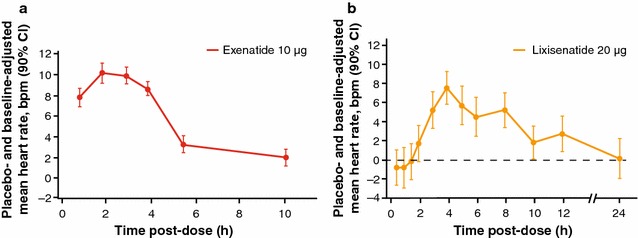
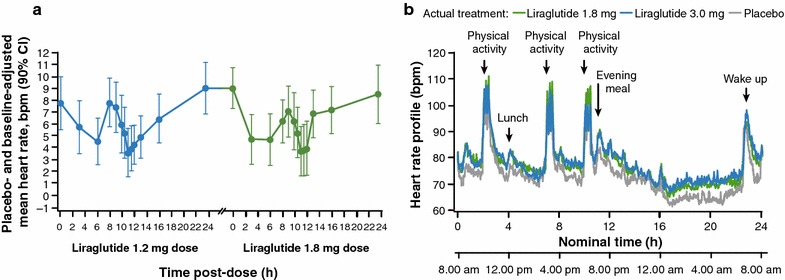
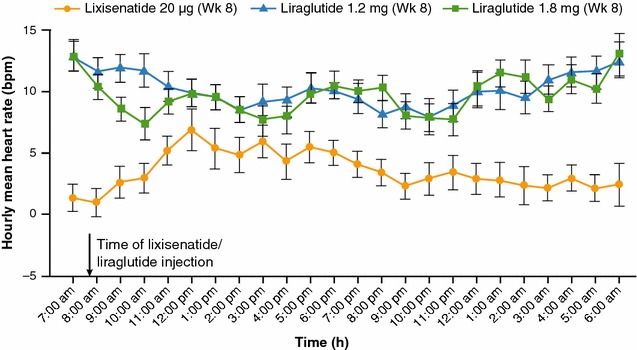
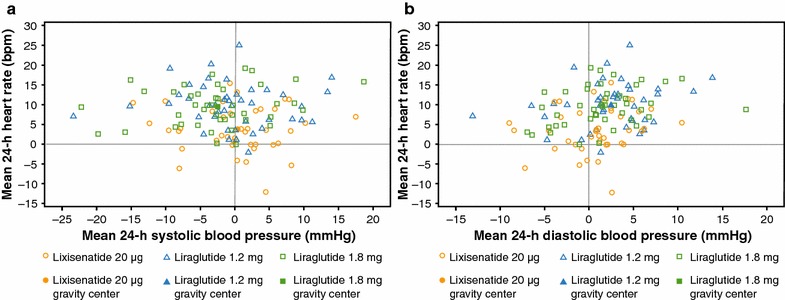
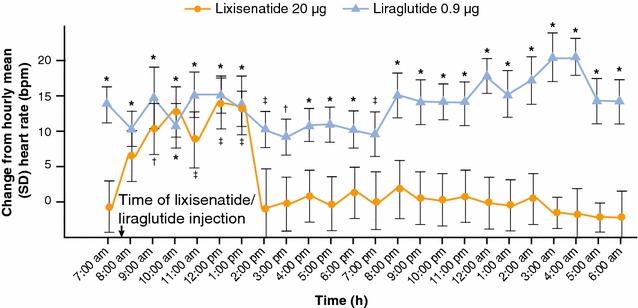
While glucagon-like peptide-1 receptor agonists (GLP-1 RAs) are known to increase heart rate (HR), it is insufficiently recognized that the extent varies greatly between the various agonists and is affected by the assessment methods employed. Here we review published data from 24-h time-averaged HR monitoring in healthy individuals and subjects with type 2 diabetes mellitus (T2DM) treated with either short-acting GLP-1 RAs, lixisenatide or exenatide, or long-acting GLP-1 RAs, exenatide LAR, liraglutide, albiglutide, or dulaglutide (N = 1112; active-treatment arms). HR effects observed in two independent head-to-head trials of lixisenatide and liraglutide (N = 202; active-treatment arms) are also reviewed. Short-acting GLP-1 RAs, exenatide and lixisenatide, are associated with a transient (1-12 h) mean placebo- and baseline-adjusted 24-h HR increase of 1-3 beats per minute (bpm). Conversely, long-acting GLP-1 RAs are associated with more pronounced increases in mean 24-h HR; the highest seen with liraglutide and albiglutide at 6-10 bpm compared with dulaglutide and exenatide LAR at 3-4 bpm. For both liraglutide and dulaglutide, HR increases were recorded during both the day and at night. In two head-to-head comparisons, a small, transient mean increase in HR from baseline was observed with lixisenatide; liraglutide induced a substantially greater increase that remained significantly elevated over 24 h. The underlying mechanism for increased HR remains to be elucidated; however, it could be related to a direct effect at the sinus node and/or stimulation of the sympathetic nervous system, with this effect related to the duration of action of the respective GLP-1 RAs. In conclusion, this review indicates that the effects on HR differ within the class of GLP-1 RAs: short-acting GLP-1 RAs are associated with a modest and transient HR increase before returning to baseline levels, while some long-acting GLP-1 RAs are associated with a more pronounced and sustained increase during the day and night. Findings from recently completed trials indicate that a GLP-1 RA-induced increase in HR, regardless of magnitude, does not present an increased cardiovascular risk for subjects with T2DM, although a pronounced increase in HR may be associated with adverse clinical outcomes in those with advanced heart failure.
Overview
The claims and statistics of this paper haven’t been checked yet.
Free: it reads the open-access text and checks the first 5 claims that cite a source we can check. Create a free account to check every claim.
Integrity signals
Registry
Cites
Statistics
Figures
Verification
Claims the paper makes
The claims and statistics of this paper haven’t been checked yet.
Free: it reads the open-access text and checks the first 5 claims that cite a source we can check. Create a free account to check every claim.
Claims other papers make about this one
Each is checked against this paper’s own text: does it say what the citing paper says it does?
The cited source says what the claim attributes to it.
In the citing paper
“This was not entirely unexpected as GLP-1 RAs are known to have chronotropic effects [32,33];”
In the citing paper
“GLP1-RA may also cause an increase in heart rate of 1 to 10 beats per minute; this effect is usually transient [59].”
From Glucagon-like peptide-1 receptor agonists in diabetic kidney disease: a review of their kidney and heart protection (2023) · cites this paper as [59]
Self-check
Percentages, sums and reported differences re-computed from the paper’s own numbers.
The self-check needs the paper’s full text.
Citations
Cites
10-year follow-up of intensive glucose control in type 2 diabetes
Holman, R. R., Paul, S. K., Bethel, M. A., Matthews, D. R., & Neil, H. A. W. (2008) · New England Journal of Medicine · doi:10.1056/nejmoa0806470 · Cited by 7,751 · cited 1×
“Reduction of atherosclerosis requires long-term treatment [53], hence longer trials are better suited to show a reduction in risk of myocardial infarction or other atherosclerotic complications of diabetes.”
BackgroundLiraglutide and Cardiovascular Outcomes in Type 2 Diabetes
Marso, S. P., Daniels, G. H., Brown-Frandsen, K., Kristensen, P., Mann, J. F. E., Nauck, M. A., Nissen, S. E., Pocock, S., Poulter, N. R., Ravn, L. S., et al. (2016) · New England Journal of Medicine · doi:10.1056/nejmoa1603827 · Cited by 7,629 · cited 1×
“The results of the Liraglutide Effect and Action in Diabetes: Evaluation of Cardiovascular Outcome Results (LEADER) trial were published recently [51].”
ResultDrucker, D. J., & Nauck, M. A. (2006) · The Lancet · doi:10.1016/s0140-6736(06)69705-5 · Cited by 3,896
Saxagliptin and cardiovascular outcomes in patients with type 2 diabetes mellitus
Scirica, B. M., Bhatt, D. L., Braunwald, E., Steg, P. G., Davidson, J., Hirshberg, B., Ohman, P., Frederich, R., Wiviott, S. D., Hoffman, E. B., et al. (2013) · New England Journal of Medicine · doi:10.1056/nejmoa1307684 · Cited by 3,470
Inzucchi, S. E., Bergenstal, R. M., Buse, J. B., Diamant, M., Ferrannini, E., Nauck, M., Peters, A. L., Tsapas, A., Wender, R., & Matthews, D. R. (2015) · Diabetes Care · doi:10.2337/dc14-2441 · Cited by 3,066
Ivabradine and outcomes in chronic heart failure (SHIFT): a randomised placebo-controlled study
Swedberg, K., Komajda, M., Böhm, M., Borer, J. S., Ford, I., Dubost-Brama, A., Lerebours, G., & Tavazzi, L. (2010) · The Lancet · doi:10.1016/s0140-6736(10)61198-1 · Cited by 2,563 · cited 1×
“However, in support of a causal relationship, lowering of HR by ivabradine, a selective inhibitor of the sinus node I(f ) channel, devoid of any activity on blood pressure, cardiac contractility, atrioventricular conduction or ventricular repolarization, decreased the risk of cardiovascular death or hospitalization du…”
BackgroundLixisenatide in Patients with Type 2 Diabetes and Acute Coronary Syndrome
Pfeffer, M. A., Claggett, B., Diaz, R., Dickstein, K., Gerstein, H. C., Køber, L. V., Lawson, F. C., Ping, L., Wei, X., Lewis, E. F., et al. (2015) · New England Journal of Medicine · doi:10.1056/nejmoa1509225 · Cited by 2,409 · cited 1×
“The results of the Evaluation of LIXisenatide in Acute coronary syndrome (ELIXA) trial, the first cardiovascular outcomes trial for the short-acting GLP-1 RA lixisenatide, were also published recently [52].”
BackgroundSelf-citationHeart Rate, Life Expectancy and the Cardiovascular System: Therapeutic Considerations
Boudoulas, K. D., Borer, J. S., & Boudoulas, H. (2015) · Cardiology · doi:10.1159/000435947 · Cited by 1,938
GLP-1 receptor agonists for individualized treatment of type 2 diabetes mellitus
Meier, J. J. (2012) · Nature Reviews Endocrinology · doi:10.1038/nrendo.2012.140 · Cited by 1,311 · cited 2×
“According to their respective PK profiles, exenatide BID and lixisenatide can be categorized as short-acting agents (each has a half-life of 3–5 h) compared with the long-acting agents liraglutide, exenatide LAR, albiglutide, and dulaglutide, which have half-lives ranging from 12 h to several days [16].”
BackgroundBöhm, M., Swedberg, K., Komajda, M., Borer, J. S., Ford, I., Dubost-Brama, A., Lerebours, G., & Tavazzi, L. (2010) · The Lancet · doi:10.1016/s0140-6736(10)61259-7 · Cited by 1,099
Vilsboll, T., Christensen, M., Junker, A. E., Knop, F. K., & Gluud, L. L. (2012) · BMJ · doi:10.1136/bmj.d7771 · Cited by 970
Pyke, C., Heller, R. S., Kirk, R. K., Ørskov, C., Reedtz-Runge, S., Kaastrup, P., Hvelplund, A., Bardram, L., Calatayud, D., & Knudsen, L. B. (2014) · Endocrinology · doi:10.1210/en.2013-1934 · Cited by 876 · cited 1×
“It is more likely that increased HR results from a direct GLP-1 receptor-mediated effect on the endogenous sinoatrial pacemaker node of the heart, as GLP-1 receptors are expressed in the human heart in myocytes in the sinoatrial node [33].”
BackgroundMargulies, K. B., Hernandez, A. F., Redfield, M. M., Givertz, M. M., Oliveira, G. H., Cole, R., Mann, D. L., Whellan, D. J., Kiernan, M. S., Felker, G. M., et al. (2016) · JAMA · doi:10.1001/jama.2016.10260 · Cited by 706 · cited 1×
“The study results were published recently [48] and indicated that liraglutide did not improve clinical stability but was rather associated with a numerical but not statistically significant increase in the composite of death or HF hospitalization compared with placebo.”
Inzucchi, S. E., Bergenstal, R. M., Buse, J. B., Diamant, M., Ferrannini, E., Nauck, M., Peters, A. L., Tsapas, A., Wender, R., & Matthews, D. R. (2015) · Diabetologia · doi:10.1007/s00125-014-3460-0 · Cited by 694
Heart failure prevalence, incidence, and mortality in the elderly with diabetes
Bertoni, A. G., Hundley, W. G., Massing, M. W., Bonds, D. E., Burke, G. L., & Goff, D. C. (2004) · Diabetes Care · doi:10.2337/diacare.27.3.699 · Cited by 596 · cited 1×
“Also, diabetes adversely affects the outcomes of subjects with HF, substantially decreasing their survival rate [42].”
BackgroundJorsal, A., Kistorp, C., Holmager, P., Tougaard, R. S., Nielsen, R., Hänselmann, A., Nilsson, B., Møller, J. E., Hjort, J., Rasmussen, J., et al. (2017) · European Journal of Heart Failure · doi:10.1002/ejhf.657 · Cited by 592
van Can, J., Sloth, B., Jensen, C. B., Flint, A., Blaak, E. E., & Saris, W. H. M. (2014) · International Journal of Obesity · doi:10.1038/ijo.2013.162 · Cited by 537 · cited 1×
“In a second study [24, 25], the effect of liraglutide on HR was investigated by 24-h continuous HR monitoring in obese individuals (3 mg n = 32; 1.”
BackgroundKim, M., Platt, M. J., Shibasaki, T., Quaggin, S. E., Backx, P. H., Seino, S., Simpson, J. A., & Drucker, D. J. (2013) · Nature Medicine · doi:10.1038/nm.3128 · Cited by 514 · cited 1×
“by their vasodilatory effect [9, 31] and/or increased urinary sodium excretion [32].”
BackgroundCooney, M. T., Vartiainen, E., Laakitainen, T., Juolevi, A., Dudina, A., & Graham, I. M. (2010) · American Heart Journal · doi:10.1016/j.ahj.2009.12.029 · Cited by 416 · cited 2×
“GLP-1 RAs induce an increase in heart rate (HR), which, theoretically, represents a safety concern, as this is considered to be associated with higher cardiovascular risk [13, 14].”
BackgroundCardiovascular Actions of Incretin-Based Therapies
Ussher, J. R., & Drucker, D. J. (2014) · Circulation Research · doi:10.1161/circresaha.114.301958 · Cited by 358 · cited 2×
“by their vasodilatory effect [9, 31] and/or increased urinary sodium excretion [32].”
BackgroundRobinson, L. E., Holt, T. A., Rees, K., Randeva, H. S., & O'Hare, J. P. (2013) · BMJ Open · doi:10.1136/bmjopen-2012-001986 · Cited by 296 · cited 2×
“A recent meta-analysis of Phase 3 trials reported increases in HR, based on single time point assessments, in the range of 1–4 bpm with both long- and short-acting GLP-1 RAs [15].”
BackgroundNauck, M. A. (2011) · The American Journal of Medicine · doi:10.1016/j.amjmed.2010.11.002 · Cited by 295
Meier, J. J., Rosenstock, J., Hincelin-Méry, A., Roy-Duval, C., Delfolie, A., Coester, H.-V., Menge, B. A., Forst, T., & Kapitza, C. (2015) · Diabetes Care · doi:10.2337/dc14-1984 · Cited by 262 · cited 4×
“compared following 8 weeks’ treatment in 142 subjects with T2DM not adequately controlled with insulin glargine with or without metformin [17].”
BackgroundMethodInfluentialSelf-citationHeart failure events with rosiglitazone in type 2 diabetes: data from the RECORD clinical trial
Komajda, M., McMurray, J. J. V., Beck-Nielsen, H., Gomis, R., Hanefeld, M., Pocock, S. J., Curtis, P. S., Jones, N. P., & Home, P. D. (2010) · European Heart Journal · doi:10.1093/eurheartj/ehp604 · Cited by 234
Heart Rate as a Risk Factor for Cardiovascular Disease
Perret-Guillaume, C., Joly, L., & Benetos, A. (2009) · Progress in Cardiovascular Diseases · doi:10.1016/j.pcad.2009.05.003 · Cited by 222 · cited 2×
“GLP-1 RAs induce an increase in heart rate (HR), which, theoretically, represents a safety concern, as this is considered to be associated with higher cardiovascular risk [13, 14].”
BackgroundLovshin, J. A., Barnie, A., DeAlmeida, A., Logan, A., Zinman, B., & Drucker, D. J. (2015) · Diabetes Care · doi:10.2337/dc14-1958 · Cited by 168
Ferdinand, K. C., White, W. B., Calhoun, D. A., Lonn, E. M., Sager, P. T., Brunelle, R., Jiang, H. H., Threlkeld, R. J., Robertson, K. E., & Geiger, M. J. (2014) · Hypertension · doi:10.1161/hypertensionaha.114.03062 · Cited by 145 · cited 2×
“5 mg were investigated using ambulatory blood pressure and HR measurements in 505 subjects with T2DM following 26 weeks’ treatment [30].”
BackgroundMethodGill, A., Hoogwerf, B. J., Burger, J., Bruce, S., MacConell, L., Yan, P., Braun, D., Giaconia, J., & Malone, J. (2010) · Cardiovascular Diabetology · doi:10.1186/1475-2840-9-6 · Cited by 133 · cited 1×
“HR averaged over 24 h increased by 2 bpm with exenatide BID compared with a decrease of 1 bpm for placebo (n = 26) at the end of the study period [21].”
Skov, J., Pedersen, M., Holst, J. J., Madsen, B., Goetze, J. P., Rittig, S., Jonassen, T., Frøkiær, J., Dejgaard, A., & Christiansen, J. S. (2016) · Diabetes, Obesity and Metabolism · doi:10.1111/dom.12651 · Cited by 128
Lorenz, M., Evers, A., & Wagner, M. (2013) · Bioorganic & Medicinal Chemistry Letters · doi:10.1016/j.bmcl.2013.05.022 · Cited by 127 · cited 4×
“Liraglutide is in close structural homology to native GLP-1 and is conjugated to a palmitic acid to prolong its half-life for QD administration [3].”
BackgroundInfluentialSelf-citationHillis, G. S., Woodward, M., Rodgers, A., Chow, C. K., Li, Q., Zoungas, S., Patel, A., Webster, R., Batty, G. D., Ninomiya, T., et al. (2012) · Diabetologia · doi:10.1007/s00125-012-2471-y · Cited by 117
Griffioen, K. J., Wan, R., Okun, E., Wang, X., Lovett-Barr, M. R., Li, Y., Mughal, M. R., Mendelowitz, D., & Mattson, M. P. (2011) · Cardiovascular Research · doi:10.1093/cvr/cvq271 · Cited by 112 · cited 2×
“A further possibility is that the positive chronotropic effect could be, at least partially, mediated by sympathetic nervous system enhancement, related to the inhibition of the autonomic nervous system [18, 36, 37].”
BackgroundAsmar, A., Simonsen, L., Asmar, M., Madsbad, S., Holst, J. J., Frandsen, E., Moro, C., Jonassen, T., & Bülow, J. (2015) · American Journal of Physiology-Endocrinology and Metabolism · doi:10.1152/ajpendo.00429.2014 · Cited by 93 · cited 1×
“Such a direct GLP-1 mechanism is supported by studies using native GLP-1 and exenatide in healthy people and patients with T2DM showing that the acute increase of HR was not preceded by a decrease in blood pressure, was not associated with changes in plasma levels of adrenaline or noradrenaline, and was independent of…”
ResultCeriello, A., Novials, A., Canivell, S., La Sala, L., Pujadas, G., Esposito, K., Testa, R., Bucciarelli, L., Rondinelli, M., & Genovese, S. (2014) · Diabetes Care · doi:10.2337/dc13-2618 · Cited by 78 · cited 1×
“by their vasodilatory effect [9, 31] and/or increased urinary sodium excretion [32].”
BackgroundNakatani, Y., Kawabe, A., Matsumura, M., Aso, Y., Yasu, T., Banba, N., & Nakamoto, T. (2016) · Diabetes Care · doi:10.2337/dc15-1437 · Cited by 77 · cited 6×
“Two trials fulfilling these criteria directly compared the short-acting GLP-1 RA lixisenatide with the long-acting GLP-1 RA liraglutide [17, 18].”
BackgroundInfluentialBlonde, L., Pencek, R., & MacConell, L. (2015) · Cardiovascular Diabetology · doi:10.1186/s12933-014-0171-2 · Cited by 72
Self-citationHillis, G. S., Hata, J., Woodward, M., Perkovic, V., Arima, H., Chow, C. K., Zoungas, S., Patel, A., Poulter, N. R., Mancia, G., et al. (2012) · Journal of the American Heart Association · doi:10.1161/jaha.112.002832 · Cited by 68 · cited 2×
“In the same study population, a higher HR was also associated with a greater incidence of new-onset or progressive nephropathy and retinopathy [38].”
BackgroundInvestigation of the haemodynamic effects of exenatide in healthy male subjects
Mendis, B., Simpson, E., MacDonald, I., & Mansell, P. (2012) · British Journal of Clinical Pharmacology · doi:10.1111/j.1365-2125.2012.04214.x · Cited by 56 · cited 1×
“Such a direct GLP-1 mechanism is supported by studies using native GLP-1 and exenatide in healthy people and patients with T2DM showing that the acute increase of HR was not preceded by a decrease in blood pressure, was not associated with changes in plasma levels of adrenaline or noradrenaline, and was independent of…”
ResultKumarathurai, P., Anholm, C., Nielsen, O. W., Kristiansen, O. P., Mølvig, J., Madsbad, S., Haugaard, S. B., & Sajadieh, A. (2016) · Cardiovascular Diabetology · doi:10.1186/s12933-016-0425-2 · Cited by 54
Simó, R., Guerci, B., Schernthaner, G., Gallwitz, B., Rosas-Guzmàn, J., Dotta, F., Festa, A., Zhou, M., & Kiljański, J. (2015) · Cardiovascular Diabetology · doi:10.1186/s12933-015-0279-z · Cited by 47 · cited 1×
“The majority of these are cardio-protective, including lowering systolic and diastolic blood pressure [5, 6] and attenuating hypotension induced by intraduodenal glucose infusion [7], lowering plasma cholesterol level [5, 8] and ischemia–reperfusion injury [9], and delaying the progression of atherosclerotic disease […”
BackgroundMargulies, K. B., Anstrom, K. J., Hernandez, A. F., Redfield, M. M., Shah, M. R., Braunwald, E., & Cappola, T. P. (2014) · Circulation: Heart Failure · doi:10.1161/circheartfailure.114.000346 · Cited by 46 · cited 1×
“The National Heart, Lung and Blood Institute Heart Failure Clinical Research Network designed the Functional Impact of GLP-1 for Heart Failure Treatment (FIGHT) study (NCT01800968) to test the hypothesis that liraglutide would improve myocardium bioenergetics leading to post-hospitalization clinical stability in subje…”
MethodAdjudication of serious heart failure in patients from PROactive
Rydén, L., Thráinsdóttir, I., & Swedberg, K. (2007) · The Lancet · doi:10.1016/s0140-6736(07)60106-8 · Cited by 41
Asmar, A., Simonsen, L., Asmar, M., Madsbad, S., Holst, J. J., Frandsen, E., Moro, C., Sorensen, C. M., Jonassen, T., & Bülow, J. (2016) · American Journal of Physiology-Endocrinology and Metabolism · doi:10.1152/ajpendo.00518.2015 · Cited by 41 · cited 1×
“Such a direct GLP-1 mechanism is supported by studies using native GLP-1 and exenatide in healthy people and patients with T2DM showing that the acute increase of HR was not preceded by a decrease in blood pressure, was not associated with changes in plasma levels of adrenaline or noradrenaline, and was independent of…”
ResultDiabetes: a driver for heart failure: Figure 1
Voors, A. A., & van der Horst, I. C. C. (2011) · Heart · doi:10.1136/hrt.2009.183624 · Cited by 40 · cited 1×
“HF is one of the most common complications of diabetes, and patients with diabetes are at a higher risk of developing HF [41].”
BackgroundTrahair, L. G., Horowitz, M., Hausken, T., Feinle-Bisset, C., Rayner, C. K., & Jones, K. L. (2014) · The Journal of Clinical Endocrinology & Metabolism · doi:10.1210/jc.2014-2475 · Cited by 37 · cited 1×
“The majority of these are cardio-protective, including lowering systolic and diastolic blood pressure [5, 6] and attenuating hypotension induced by intraduodenal glucose infusion [7], lowering plasma cholesterol level [5, 8] and ischemia–reperfusion injury [9], and delaying the progression of atherosclerotic disease […”
BackgroundDarpö, B., Philip, S., MacConell, L., Cirincione, B., Mitchell, M., Han, J., Huang, W., Malloy, J., Schulteis, C., Shen, L., et al. (2013) · British Journal of Clinical Pharmacology · doi:10.1111/j.1365-2125.2012.04416.x · Cited by 35 · cited 1×
“Exenatide LAR A thorough QT study evaluated the effects of steady-state therapeutic (253 and 399 pg/ml) and supra-therapeutic (627 pg/ml) plasma concentrations of exenatide following continuous intravenous infusion of exenatide LAR to healthy individuals (N = 86; patients with evaluable data, n = 74) over three 24-h p…”
MethodLinnebjerg, H., Seger, M., Kothare, P. A., Hunt, T., Wolka, A. M., & Mitchell, M. I. (2011) · Int. Journal of Clinical Pharmacology and Therapeutics · doi:10.5414/cp201462 · Cited by 32
Jorsal, A., Wiggers, H., Holmager, P., Nilsson, B., Nielsen, R., Boesgaard, T. W., Kumme, A., Møller, J. E., Videbæk, L., Kistorp, C., et al. (2014) · BMJ Open · doi:10.1136/bmjopen-2014-004885 · Cited by 31 · cited 1×
“Similar findings were observed in the Effect of LIraglutide on left VEntricular function in chronic heart failure patients with and without type 2 diabetes (LIVE) study [49, 50].”
ResultPlamboeck, A., Veedfald, S., Deacon, C. F., Hartmann, B., Vilsbøll, T., Knop, F. K., & Holst, J. J. (2015) · American Journal of Physiology-Regulatory, Integrative and Comparative Physiology · doi:10.1152/ajpregu.00123.2015 · Cited by 25 · cited 1×
“A further possibility is that the positive chronotropic effect could be, at least partially, mediated by sympathetic nervous system enhancement, related to the inhibition of the autonomic nervous system [18, 36, 37].”
BackgroundAlbiglutide Does Not Prolong QTc Interval in Healthy Subjects: A Thorough ECG Study
Darpo, B., Zhou, M., Matthews, J., Zhi, H., Young, M. A., Perry, C., & Reinhardt, R. R. (2014) · Diabetes Therapy · doi:10.1007/s13300-014-0055-1 · Cited by 24 · cited 1×
“followed by 50 mg [optional dose based on individual glycemic response] for 4 weeks) [29].”
MethodZhou, X., Huang, C.-H., Lao, J., Pocai, A., Forrest, G., Price, O., Roy, S., Kelley, D. E., Sullivan, K. A., & Forrest, M. J. (2015) · Cardiovascular Diabetology · doi:10.1186/s12933-015-0194-3 · Cited by 23
Research works printed but not linked: 2
- Tillner J Golor G Voirot P Lehmann A Frosio C Megard C Lorenz M Lixisenatide (Lyxumia®) has no effect on QTc interval in healthy subjects: a thorough QTc study Diabetes 2016 65 Suppl 1 A270
- Sager P Darpo B Han J Kothare P Linnebjerg H Mitchell M Porter L Exenatide once weekly did not affect corrected QT interval in patients with type 2 diabetes Diabetes 2011 60 Suppl 1 A294
Cited by
Triple-Hormone-Receptor Agonist Retatrutide for Obesity — A Phase 2 Trial
Jastreboff, A. M., Kaplan, L. M., Frías, J. P., Wu, Q., Du, Y., Gurbuz, S., Coskun, T., Haupt, A., Milicevic, Z., & Hartman, M. L. (2023) · New England Journal of Medicine · doi:10.1056/nejmoa2301972 · Cited by 1,174
Rosenstock, J., Wysham, C., Frías, J. P., Kaneko, S., Lee, C. J., Fernández Landó, L., Mao, H., Cui, X., Karanikas, C. A., & Thieu, V. T. (2021) · The Lancet · doi:10.1016/s0140-6736(21)01324-6 · Cited by 1,080
Pratley, R. E., Aroda, V. R., Lingvay, I., Lüdemann, J., Andreassen, C., Navarria, A., & Viljoen, A. (2018) · The Lancet Diabetes & Endocrinology · doi:10.1016/s2213-8587(18)30024-x · Cited by 790
Ludvik, B., Giorgino, F., Jódar, E., Frias, J. P., Fernández Landó, L., Brown, K., Bray, R., & Rodríguez, Á. (2021) · The Lancet · doi:10.1016/s0140-6736(21)01443-4 · Cited by 639
Yun, J.-S., & Ko, S.-H. (2021) · Metabolism · doi:10.1016/j.metabol.2021.154838 · Cited by 292
Metadata
- Authors
- Lorenz, M., Lawson, F., Owens, D., Raccah, D., Roy-Duval, C., Lehmann, A., Perfetti, R., & Blonde, L.
- Affiliations
- Sanofi (Germany) (DE)
- Sanofi (United States) (US)
- Swansea University (GB)
- Hôpital Sainte-Marguerite (FR)
- Sanofi (France) (FR)
- Ochsner Health System (US)
- Corresponding author
- Lorenz, Martin
- Venue
- Cardiovascular Diabetology
- Published
- 2017-01-13
- Volume
- 16
- Issue
- 1
- Pages
- 6-6
- ISSN
- 1475-2840 (ISSN-L)
- PMC
- PMC5237337
- OpenAlex
- W2574032118
- Cited by
- 166
- References
- 51
- Citations by year
- 2026: 19 · 2025: 18 · 2024: 24 · 2023: 17 · 2022: 14 · 2021: 14 · 2020: 19 · 2019: 9 · 2018: 18 · 2017: 14
- FWCI
- 2.39
- Type
- journal article
- Language
- en
- Open access
- gold
- doi.org
- Licence
- cc-by
- Locations
- Cardiovascular Diabetology (publishedVersion, cc-by)
- Europe PMC (PubMed Central) (publishedVersion, cc-by)
- PubMed Central (publishedVersion, cc-by)
- PubMed (publishedVersion)
- Funders
- Sanofi
- Topics
- Health Sciences › Medicine › Endocrinology, Diabetes and Metabolism › Diabetes Treatment and Management
- Health Sciences › Medicine › Endocrinology, Diabetes and Metabolism › Diabetes Management and Research
- Health Sciences › Medicine › Cardiology and Cardiovascular Medicine › Heart Failure Treatment and Management
- Keywords
- GLP-1 receptor agonists, heart rate, type 2 diabetes, liraglutide, lixisenatide, exenatide, dulaglutide, albiglutide
- MeSH terms
- Glucagon-Like Peptide-1 Receptor, Liraglutide, Glucagon-Like Peptide-1 Receptor Agonists, Animals, Cardiovascular Diseases, Diabetes Mellitus, Type 2, Glucagon-Like Peptides, Heart Rate, Humans, Hypoglycemic Agents, Immunoglobulin Fc Fragments, Recombinant Fusion Proteins, Risk Factors
About these checks
Registry, retraction, Cites and statistics results are computed, not judged, with one exception: a printed reference that no index lists is read once by a model before it counts as a citation error. Claims are extracted by a model and kept only when their quote appears verbatim in the text; each cited source is then checked, with a model’s help, for whether it says what the claim relies on. Those verdicts can be wrong — read the claim’s quote and the cited source before relying on one.
Statistics and arithmetic are recomputed, not judged.
Confidence bands are shown only for fields calibrated on our annotated test set. None is calibrated yet, so no band is shown.
What counts as a claim ›How we measure confidence ›How we check this ›
Are you an author, or do you see a problem with this page? Request a review
Data sources
Bibliographic data: Semantic Scholar, OpenAlex, Crossref.
Contains information from the Semantic Scholar Academic Graph Datasets, made available under the ODC Attribution License (ODC-BY 1.0).
Semantic Scholar’s data is described in: Kinney, R., et al. (2023). The Semantic Scholar Open Data Platform. arXiv:2301.10140.
