

The role of endothelial nitric oxide in the anti-restenotic effects of liraglutide in a mouse model of restenosis
Open accessThe DOI matches its Crossref record; 57 of the 59 references it cites were found in a registry or an index.
Abstract
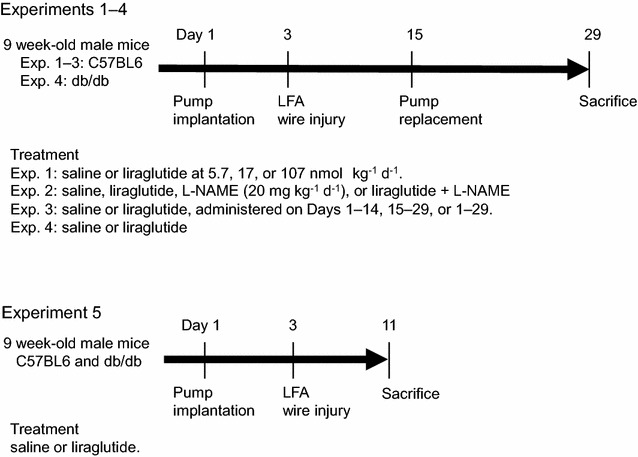
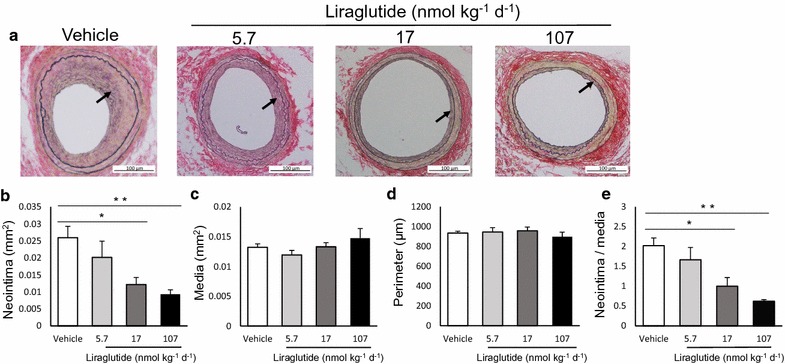
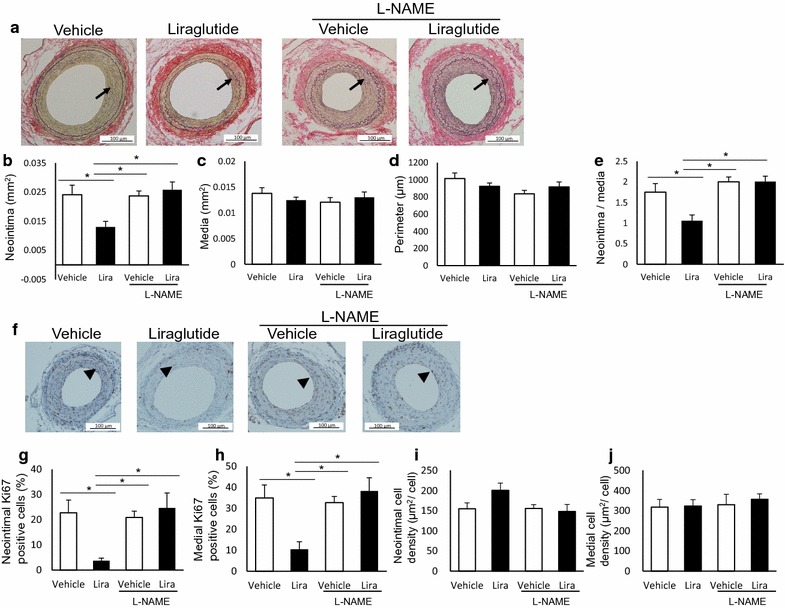
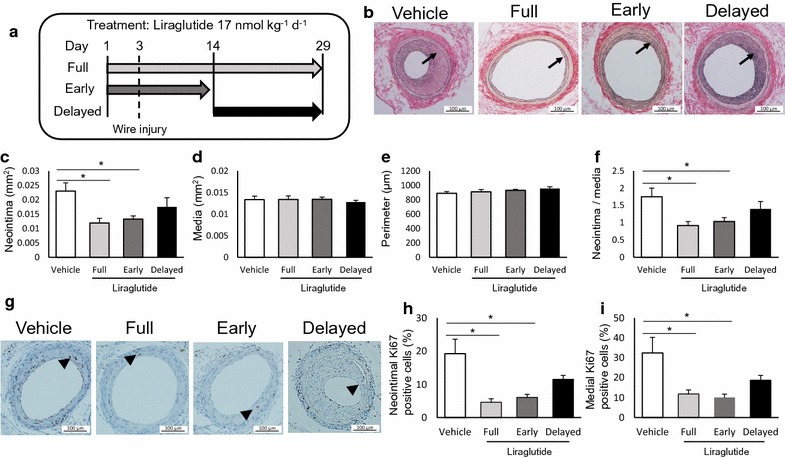
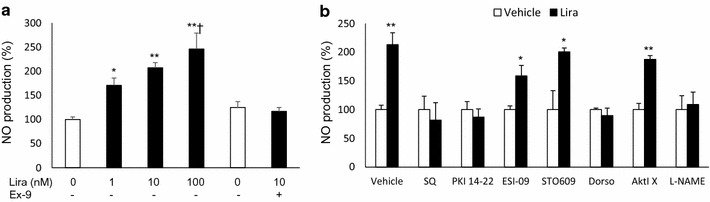
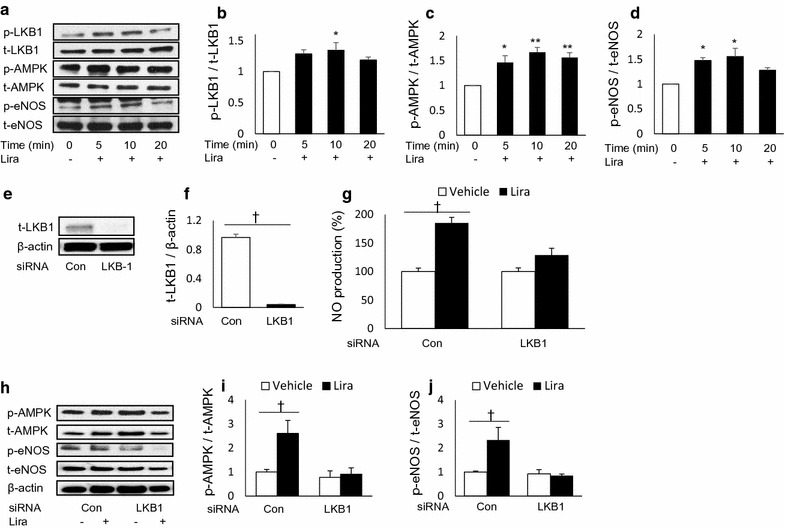
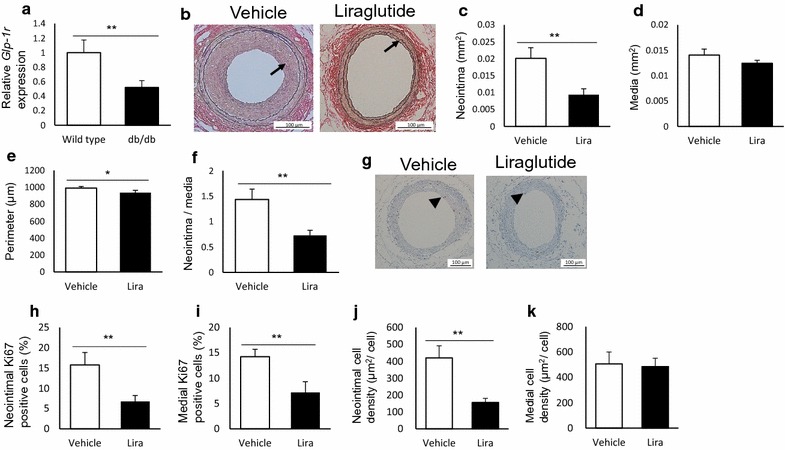
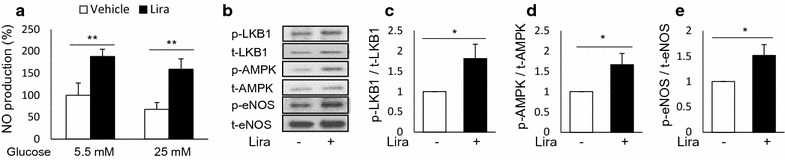
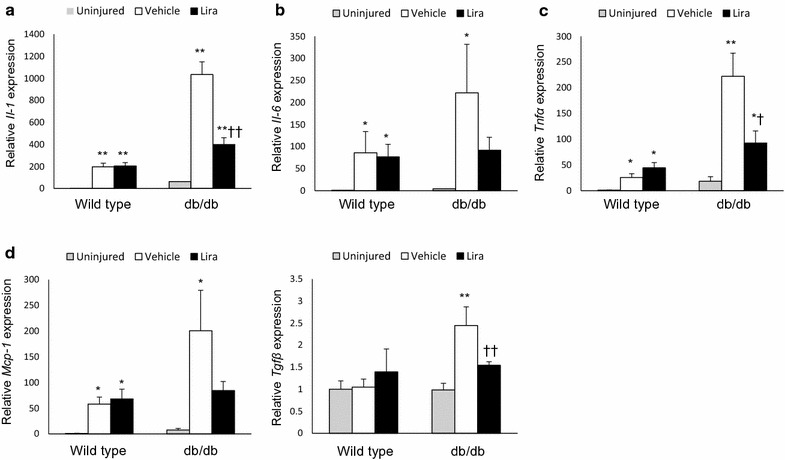
BACKGROUND: Previous animal studies have shown that glucagon-like peptide-1 receptor agonists (GLP-1RAs) suppress arterial restenosis, a major complication of angioplasty, presumably through their direct action on vascular smooth muscle cells. However, the contribution of vascular endothelial cells (VECs) to this process remains unknown. In addition, the potential interference caused by severe hyperglycemia and optimal treatment regimen remain to be determined. METHODS: Nine-week-old male C57BL6 (wild-type) and diabetic db/db mice were randomly divided into vehicle or liraglutide treatment groups (Day 1), and subject to femoral artery wire injuries (Day 3). The injured arteries were collected on Day 29 for morphometric analysis. Human umbilical vein endothelial cells (HUVECs) were used for in vitro experiments. One-way ANOVA, followed by Tukey's test, was used for comparisons. RESULTS: In wild-type mice, liraglutide treatment (5.7, 17, or 107 nmol/kg/day) dose-dependently reduced the neointimal area (20, 50, and 65%) without inducing systemic effects, and caused an associated decrease in the percentage of vascular proliferating cells. However, these effects were completely abolished by the nitric oxide synthase (NOS) inhibitor N-omega-nitro-L-arginine methyl ester. Next, we investigated the optimal treatment regimen. Early treatment (Days 1-14) was as effective in reducing the neointimal area and vascular cell proliferation as full treatment (Days 1-29), whereas delayed treatment (Days 15-29) was ineffective. In HUVECs, liraglutide treatment dose-dependently stimulated NO production, which was dependent on GLP-1R, cAMP, cAMP-dependent protein kinase, AMP-activated protein kinase (AMPK), and NOS. Subsequently, we investigated the role of liver kinase B (LKB)-1 in this process. Liraglutide increased the phosphorylation of LKB-1, and siRNA-induced LKB-1 knockdown abolished liraglutide-stimulated NO production. In severe hyperglycemic db/db mice, liraglutide treatment also suppressed neointimal hyperplasia, which was accompanied by reductions in vascular cell proliferation and density. Furthermore, liraglutide treatment suppressed hyperglycemia-enhanced vascular inflammation 7 days after arterial injury. CONCLUSIONS: We demonstrate that endothelial cells are targets of liraglutide, and suppress restenosis via endothelial NO. Furthermore, the protective effects are maintained in severe hyperglycemia. Our findings provide an evidence base for a future clinical trial to determine whether treatment with GLP-1RAs represents potentially effective pharmacological therapy following angioplasty in patients with diabetes.
Overview
The claims and statistics of this paper haven’t been checked yet.
Free: it reads the open-access text and checks the first 5 claims that cite a source we can check. Create a free account to check every claim.
Integrity signals
Registry
Cites
Statistics
Figures
Verification
Claims the paper makes
The claims and statistics of this paper haven’t been checked yet.
Free: it reads the open-access text and checks the first 5 claims that cite a source we can check. Create a free account to check every claim.
Claims other papers make about this one
Each is checked against this paper’s own text: does it say what the citing paper says it does?
In the citing paper
“In vitro/ex vivo studies conducted on endothelial cells showed that GLP-1RAs such as exenatide and liraglutide stimulate endothelial NO production and endothelial nitric oxide synthase (eNOS) activation, eliciting vasodilatation through activation of the GLP-1 receptor-dependent AMP-activated protein kinase (AMPK)/protein kinase B (Akt)/eNOS signaling pathway [48–50].”
From Protection against stroke with glucagon-like peptide-1 receptor agonists: a comprehensive review of potential mechanisms (2022) · cites this paper as [50]
Self-check
Percentages, sums and reported differences re-computed from the paper’s own numbers.
The self-check needs the paper’s full text.
Citations
Cites
Liraglutide and Cardiovascular Outcomes in Type 2 Diabetes
Marso, S. P., Daniels, G. H., Brown-Frandsen, K., Kristensen, P., Mann, J. F. E., Nauck, M. A., Nissen, S. E., Pocock, S., Poulter, N. R., Ravn, L. S., et al. (2016) · New England Journal of Medicine · doi:10.1056/nejmoa1603827 · Cited by 7,629 · cited 1×
“The findings suggest that GLP-1RAs exhibit vascular protective properties [10, 11].”
BackgroundSemaglutide and Cardiovascular Outcomes in Patients with Type 2 Diabetes
Marso, S. P., Bain, S. C., Consoli, A., Eliaschewitz, F. G., Jódar, E., Leiter, L. A., Lingvay, I., Rosenstock, J., Seufert, J., Warren, M. L., et al. (2016) · New England Journal of Medicine · doi:10.1056/nejmoa1607141 · Cited by 6,900 · cited 1×
“The findings suggest that GLP-1RAs exhibit vascular protective properties [10, 11].”
BackgroundTight control of gene expression in mammalian cells by tetracycline-responsive promoters.
Gossen, M., & Bujard, H. (1992) · Proceedings of the National Academy of Sciences · doi:10.1073/pnas.89.12.5547 · Cited by 4,943 · cited 1×
“For a better understanding of the role of eNOS at the molecular level, a study employing cell-specific gene deletion, including an inducible Cre-loxP or tetracycline-controlled transcriptional regulation system, is required [53, 54].”
BackgroundNitric oxide synthases: regulation and function
Forstermann, U., & Sessa, W. C. (2012) · European Heart Journal · doi:10.1093/eurheartj/ehr304 · Cited by 4,409 · cited 1×
“masked the potential effects of liraglutide on other NOS isoforms: the inducible and the neuronal NOS [50].”
BackgroundLixisenatide in Patients with Type 2 Diabetes and Acute Coronary Syndrome
Pfeffer, M. A., Claggett, B., Diaz, R., Dickstein, K., Gerstein, H. C., Køber, L. V., Lawson, F. C., Ping, L., Wei, X., Lewis, E. F., et al. (2015) · New England Journal of Medicine · doi:10.1056/nejmoa1509225 · Cited by 2,409
Hawley, S. A., Pan, D. A., Mustard, K. J., Ross, L., Bain, J., Edelman, A. M., Frenguelli, B. G., & Hardie, D. G. (2005) · Cell Metabolism · doi:10.1016/j.cmet.2005.05.009 · Cited by 1,589
Regulation of Cre Recombinase Activity by Mutated Estrogen Receptor Ligand-Binding Domains
Feil, R., Wagner, J., Metzger, D., & Chambon, P. (1997) · Biochemical and Biophysical Research Communications · doi:10.1006/bbrc.1997.7124 · Cited by 991 · cited 1×
“For a better understanding of the role of eNOS at the molecular level, a study employing cell-specific gene deletion, including an inducible Cre-loxP or tetracycline-controlled transcriptional regulation system, is required [53, 54].”
BackgroundThe Influence of GLP-1 on Glucose-Stimulated Insulin Secretion
Kjems, L. L., Holst, J. J., Vølund, A., & Madsbad, S. (2003) · Diabetes · doi:10.2337/diabetes.52.2.380 · Cited by 582
Arakawa, M., Mita, T., Azuma, K., Ebato, C., Goto, H., Nomiyama, T., Fujitani, Y., Hirose, T., Kawamori, R., & Watada, H. (2010) · Diabetes · doi:10.2337/db09-1694 · Cited by 548
A cascade model for restenosis. A special case of atherosclerosis progression.
Libby, P., Schwartz, D., Brogi, E., Tanaka, H., & Clinton, S. K. (1992) · PubMed · Cited by 509
Cited by
GLP-1 receptor agonists and reduction of cardiometabolic risk: Potential underlying mechanisms
Rizzo, M., Nikolic, D., Patti, A. M., Mannina, C., Montalto, G., McAdams, B. S., Rizvi, A. A., & Cosentino, F. (2018) · Biochimica et Biophysica Acta (BBA) - Molecular Basis of Disease · doi:10.1016/j.bbadis.2018.05.012 · Cited by 152
Bizino, M. B., Jazet, I. M., Westenberg, J. J. M., van Eyk, H. J., Paiman, E. H. M., Smit, J. W. A., & Lamb, H. J. (2019) · Cardiovascular Diabetology · doi:10.1186/s12933-019-0857-6 · Cited by 137
Vergès, B., Aboyans, V., Angoulvant, D., Boutouyrie, P., Cariou, B., Hyafil, F., Mohammedi, K., & Amarenco, P. (2022) · Cardiovascular Diabetology · doi:10.1186/s12933-022-01686-3 · Cited by 72
Yue, W., Li, Y., Ou, D., & Yang, Q. (2019) · IUBMB Life · doi:10.1002/iub.2046 · Cited by 60
“Two separate studies show that administration of Liraglutide improves the endothelial function in both mouse atherosclerotic and restenotic models (29, 30).”
BackgroundSachinidis, A., Nikolic, D., Stoian, A. P., Papanas, N., Tarar, O., Rizvi, A. A., & Rizzo, M. (2020) · Metabolism · doi:10.1016/j.metabol.2020.154343 · Cited by 58
GIP as a Potential Therapeutic Target for Atherosclerotic Cardiovascular Disease–A Systematic Review
Mori, Y., Matsui, T., Hirano, T., & Yamagishi, S.-I. (2020) · International Journal of Molecular Sciences · doi:10.3390/ijms21041509 · Cited by 60
Self-citationMori, Y., Terasaki, M., Hiromura, M., Saito, T., Kushima, H., Koshibu, M., Osaka, N., Ohara, M., Fukui, T., Ohtaki, H., et al. (2019) · Cardiovascular Diabetology · doi:10.1186/s12933-019-0947-5 · Cited by 54
Self-citationSukumaran, V., Tsuchimochi, H., Sonobe, T., Waddingham, M. T., Shirai, M., & Pearson, J. T. (2020) · Cardiovascular Diabetology · doi:10.1186/s12933-020-01000-z · Cited by 54
Role of oxidative stress in the process of vascular remodeling following coronary revascularization
Gallo, G., Pierelli, G., Forte, M., Coluccia, R., Volpe, M., & Rubattu, S. D. (2018) · International Journal of Cardiology · doi:10.1016/j.ijcard.2018.05.046 · Cited by 52
Zhou, R., Lin, C., Cheng, Y., Zhuo, X., Li, Q., Xu, W., Zhao, L., & Yang, L. (2021) · Frontiers in Pharmacology · doi:10.3389/fphar.2020.600175 · Cited by 52
Glucose-Dependent Insulinotropic Polypeptide Suppresses Peripheral Arterial Remodeling in Male Mice
Mori, Y., Kushima, H., Koshibu, M., Saito, T., Hiromura, M., Kohashi, K., Terasaki, M., Seino, Y., Yamada, Y., & Hirano, T. (2018) · Endocrinology · doi:10.1210/en.2018-00336 · Cited by 39
Self-citationCardiovascular effects of incretins: focus on glucagon-like peptide-1 receptor agonists
Madsbad, S., & Holst, J. J. (2022) · Cardiovascular Research · doi:10.1093/cvr/cvac112 · Cited by 39
Tsai, T.-H., Lee, C.-H., Cheng, C.-I., Fang, Y.-N., Chung, S.-Y., Chen, S.-M., Lin, C.-J., Wu, C.-J., Hang, C.-L., & Chen, W.-Y. (2019) · Cells · doi:10.3390/cells8060589 · Cited by 37
“Liraglutide activated the GLP-1 receptor to trigger AMPK via PKA-dependent phosphorylation of the LKB1 pathway in endothelial cells [47,48].”
BackgroundHFpEF and MASLD: converging mechanisms and clinical implications
Capone, F., Häseli, S. P., Liu, L., Strocchi, S., Langenberg, C., Lusis, A. J., Pietzner, M., Muoio, D. M., Rider, O. J., Raman, B., et al. (2026) · Nature Reviews Cardiology · doi:10.1038/s41569-026-01257-z · Cited by 37
“Activation of GLP1R in endothelial cells stimulates the AMP-activated protein kinase (AMPK)–AKT–eNOS signalling cascade, increasing NO availability and promoting vascular relaxation 371,372 .”
Bonaventura, A., Carbone, S., Dixon, D. L., Abbate, A., & Montecucco, F. (2019) · Journal of Internal Medicine · doi:10.1111/joim.12890 · Cited by 37
Tan, X., Feng, L., Huang, X., Yang, Y., Yang, C., & Gao, Y. (2017) · Journal of Cellular and Molecular Medicine · doi:10.1111/jcmm.13122 · Cited by 33
Luo, Z., Jia, A., Lü, Z., Muhammad, I., Adenrele, A., & Song, Y. (2019) · Postgraduate Medical Journal · doi:10.1136/postgradmedj-2019-136396 · Cited by 33
Tan, L., He, C., Chu, X., Chu, Y., & Ding, Y. (2020) · Chemical Engineering Journal · doi:10.1016/j.cej.2020.125177 · Cited by 32
Tanaka, A., & Node, K. (2018) · Cardiovascular Diabetology · doi:10.1186/s12933-018-0731-y · Cited by 33
“In an experimental study, liraglutide treatment could also reduce vascular inflammation and suppress neointimal hyperplasia via improvement of nitric oxide bioavailability [21].”
BackgroundZhang, W.-X., Tai, G., Li, X.-X., & Xu, M. (2019) · Free Radical Biology and Medicine · doi:10.1016/j.freeradbiomed.2019.07.030 · Cited by 29
Koshibu, M., Mori, Y., Saito, T., Kushima, H., Hiromura, M., Terasaki, M., Takada, M., Fukui, T., & Hirano, T. (2019) · American Journal of Physiology-Endocrinology and Metabolism · doi:10.1152/ajpendo.00511.2018 · Cited by 27
“Gene expression was assessed by real-time RT-PCR using the TaqMan gene expression assay and sequence detection system (StepOne; Life Technologies Japan, Minato, Tokyo, Japan), as previously described (27).”
BackgroundMethodInfluentialSelf-citationYan, X., Su, Y., Fan, X., Chen, H., Lu, Z., Liu, Z., Li, Y., Yi, M., Zhang, G., Gu, C., et al. (2022) · Cells · doi:10.3390/cells11233821 · Cited by 23
“Moreover, liraglutide has also been shown to ameliorate arterial restenosis in a femoral artery wire injury model [35] and attenuate cardiovascular complications of an arterial hypertension model [36] under non-diabetic conditions.”
BackgroundYagi, K., Imamura, T., Tada, H., Chujo, D., Liu, J., Shima, Y., Ohbatake, A., Miyamoto, Y., Okazaki, S., Ito, N., et al. (2021) · Journal of Diabetes Research · doi:10.1155/2021/8838026 · Cited by 20
Nusca, A., Piccirillo, F., Bernardini, F., Filippis, A. D., Coletti, F., Mangiacapra, F., Ricottini, E., Melfi, R., Gallo, P., Cammalleri, V., et al. (2022) · International Journal of Molecular Sciences · doi:10.3390/ijms23137261 · Cited by 14
Zhao, Q., Xu, H., Zhang, L., Liu, L., & Wang, L. (2019) · Artificial Cells Nanomedicine and Biotechnology · doi:10.1080/21691401.2019.1620248 · Cited by 14
RetractedLundgren, J. R., Færch, K., Witte, D. R., Jonsson, A. E., Pedersen, O. B., Hansen, T. F., Lauritzen, T., Holst, J. J., Vistisen, D., Jørgensen, M. E., et al. (2019) · Cardiovascular Diabetology · doi:10.1186/s12933-019-0937-7 · Cited by 14
Advances in inorganic-based colloidal nanovehicles functionalized for nitric oxide delivery
Tan, L., & He, C. (2020) · Colloids and Surfaces B Biointerfaces · doi:10.1016/j.colsurfb.2020.111508 · Cited by 13
Cessario, J., Pierre-Louis, V., Wahl, J., & Li, Z. (2021) · Pharmacological Reports · doi:10.1007/s43440-021-00224-4 · Cited by 13
Wang, C., Chen, J., Wang, P., Qing, S., Li, W., & Lu, J. (2022) · Frontiers in Endocrinology · doi:10.3389/fendo.2022.821028 · Cited by 13
Omachi, T., Ohara, M., Fujikawa, T., Kohata, Y., Sugita, H., Irie, S., Terasaki, M., Mori, Y., Fukui, T., & Yamagishi, S. (2023) · Diabetes Therapy · doi:10.1007/s13300-023-01493-3 · Cited by 13
“Furthermore, in experimental animal models, higher circulating concentrations of GLP-1 demonstrated more favorable effects on atherosclerotic lesion progression by suppressing oxidative stress [35, 36].”
BackgroundSelf-citationLiraglutide for the prevention of major adverse cardiovascular events in diabetic patients
Madsbad, S. (2019) · Expert Review of Cardiovascular Therapy · doi:10.1080/14779072.2019.1615444 · Cited by 12
“neointima hyperplasia via improvement in nitric oxide bioavailability [63].”
BackgroundNesfatin-1 suppresses peripheral arterial remodeling without elevating blood pressure in mice
Mori, Y., Shimizu, H., Kushima, H., Saito, T., Hiromura, M., Terasaki, M., Koshibu, M., Ohtaki, H., & Hirano, T. (2019) · Endocrine Connections · doi:10.1530/ec-19-0120 · Cited by 10
Self-citationRGD-modified ZnO nanoparticles loaded with nitric oxide precursor for targeted cancer therapy
Ding, H., Wang, L., Zhang, L., Zhu, B., Hou, L., Huang, G., & Xu, Z. (2020) · Chemical Physics Letters · doi:10.1016/j.cplett.2020.137445 · Cited by 9
Self-assembled drug-polymer micelles with NO precursor loaded for synergistic cancer therapy
Jin, Y., Wang, L., Liu, Y., Liu, X., & Zhong, T. (2021) · Journal of Polymer Research · doi:10.1007/s10965-021-02645-4 · Cited by 7
Mori, Y., Medina, M. G., Liu, Z., Guo, J., Dingwell, L. S., Chiang, S., Kahn, C. R., Husain, M., & Giacca, A. (2021) · Diabetes and Vascular Disease Research · doi:10.1177/14791641211027324 · Cited by 6
Self-citationYao, Q., Liu, H., Wang, X., Zhang, Z., Xie, H., Xie, C., & Gao, H. (2026) · Biological Research · doi:10.1186/s40659-025-00665-8 · Cited by 6
Zhang, F., Song, H., Zheng, L.-H., An, Y.-B., & Liu, P. (2024) · Medicine · doi:10.1097/md.0000000000039331 · Cited by 5
“[37] Indeed, we should emphasize the importance of glycemic control in diabetic patients who underwent revascularization to decrease restenosis in effective secondary prevention.”
BackgroundZhong, Z., Chen, K., Zhao, Y., & Xia, S. (2021) · International Journal of Endocrinology · doi:10.1155/2021/9993229 · Cited by 5
Zhou, T., Chen, X., Wang, Y., Zhang, X., Miao, L., Tian, R., Li, Y., Feng, Y., Wu, X., & Cheang, W. S. (2026) · Food Research International · doi:10.1016/j.foodres.2026.119215 · Cited by 4
PATHOPHYSIOLOGICAL AND MORPHOLOGICAL DATA ON VASCULAR CHANGES AFTER STENT IMPLANTATION
Ministry of Healthcare of Penza region, Stolyarov, A. P., Fedorova, M. G., Kharitonov, E. A., & Сергеевич, А. Н. (2018) · University proceedings Volga region Medical sciences · doi:10.21685/2072-3032-2018-2-14 · Cited by 4
Nagase, C., Tanno, M., Kouzu, H., Miki, T., Nishida, J., Murakami, N., Kokubu, N., Nagano, N., Nishikawa, R., Yoshioka, N., et al. (2021) · Scientific Reports · doi:10.1038/s41598-021-95065-9 · Cited by 3
Hsu, J., Ho, B., Sayed, R., Patel, N. T. P., & Dardik, A. (2026) · Journal of Vascular Surgery · doi:10.1016/j.jvs.2026.02.003 · Cited by 2
Jiang, L., He, L., Li, D., Luo, X., Yang, M., Wu, H., & Long, H. (2026) · Journal of Translational Autoimmunity · doi:10.1016/j.jtauto.2026.100349 · Cited by 1
Lubberding, A. F., Holst, J. J., & Madsbad, S. (2023) · Elsevier eBooks · doi:10.1016/b978-0-323-99991-5.00017-6 · Cited by 1
Koshibu, M., Mori, Y., Kushima, H., Hiromura, M., Kohashi, K., Terasaki, M., Osaka, N., Fujikawa, T., Fukui, T., & Hirano, T. (2019) · The Showa University Journal of Medical Sciences · doi:10.15369/sujms.31.115
Self-citationTherapeutic Management of Type 2 Diabetes: The Nitric Oxide Axis
Ranjbar, T., O’Connor, J. L., & Kashfi, K. (2022) · BENTHAM SCIENCE PUBLISHERS eBooks · doi:10.2174/9789815079814122010013 · Cited by 1
Mechanisms of GLP‒1 Receptor Agonists on the Cardio-Renal Protective Effects
Kuriyama, S., & Matsumoto, K. (2022) · Rinsho yakuri/Japanese Journal of Clinical Pharmacology and Therapeutics · doi:10.3999/jscpt.53.6_249
Mori, Y., Osaka, N., Terasaki, M., Yashima, H., Saito, T., Tanno, D., Ogino, M., Ohara, M., & Yamagishi, S. (2026) · Biomedicines · doi:10.3390/biomedicines14071554
“L-NAME L-NAME was added to drinking water (100 mg/L), which has been previously shown to reduce plasma nitric oxide (NO) and aortic endothelial NO synthase (eNOS) phosphorylation in mice [6,7].”
InfluentialSelf-citationKoshizaka, M., Ishibashi, R., Ishikawa, T., Goda, K., Sato, J., Kitsuregawa, M., Yokote, K., & Mitsutake, N. (2026) · Diabetes Obesity and Metabolism · doi:10.1111/dom.71209
Alharbi, N. H. J. (2026) · Pharmacology Research & Perspectives · doi:10.1002/prp2.70329
Metadata
- Authors
- Kushima, H., Mori, Y., Koshibu, M., Hiromura, M., Kohashi, K., Terasaki, M., Fukui, T., & Hirano, T.
- Affiliations
- SHOWA Medical University (JP)
- Corresponding author
- Mori, Yusaku
- Hirano, Tsutomu
- Venue
- Cardiovascular Diabetology
- Published
- 2017-10-02
- Volume
- 16
- Issue
- 1
- Pages
- 122-122
- ISSN
- 1475-2840 (ISSN-L)
- PMC
- PMC5625638
- OpenAlex
- W2760658785
- Cited by
- 48
- References
- 59
- Citations by year
- 2026: 6 · 2024: 2 · 2023: 2 · 2022: 7 · 2021: 7 · 2020: 6 · 2019: 13 · 2018: 4 · 2017: 1
- FWCI
- 4.85
- Type
- journal article
- Language
- en
- Open access
- gold
- doi.org
- Licence
- cc-by
- Locations
- Cardiovascular Diabetology (publishedVersion, cc-by)
- Europe PMC (PubMed Central) (publishedVersion, cc-by)
- PubMed Central (publishedVersion, cc-by)
- PubMed (publishedVersion)
- DOAJ (DOAJ: Directory of Open Access Journals) (submittedVersion, cc-by-sa)
- Funders
- Mitsubishi Tanabe Pharma Co.
- MSD KK
- Novartis Pharma KK
- Novo Nordisk Pharma Ltd.
- Sanwa Kagaku Kenkyusho Co., LTD.
- Kowa Co., LTD.
- Eli Lilly Japan KK
- Topics
- Health Sciences › Medicine › Physiology (medical) › Nitric Oxide and Endothelin Effects
- Health Sciences › Medicine › Cardiology and Cardiovascular Medicine › Coronary Interventions and Diagnostics
- Health Sciences › Medicine › Endocrinology, Diabetes and Metabolism › Diabetes Treatment and Management
- Keywords
- endothelial nitric oxide, arterial restenosis, intimal hyperplasia, GLP-1 receptor agonists, vascular endothelial cells, AMPK, cAMP signaling, hyperglycemia, db/db mice, wire injury, vascular inflammation, angioplasty complications, nitric oxide synthase inhibition
- MeSH terms
- Liraglutide, Animals, Cells, Cultured, Disease Models, Animal, Dose-Response Relationship, Drug, Humans, Hypoglycemic Agents, Male, Mice, Inbred C57BL, Mice, Obese, Nitric Oxide, Treatment Outcome, Coronary Restenosis, Mice, Human Umbilical Vein Endothelial Cells
About these checks
Registry, retraction, Cites and statistics results are computed, not judged, with one exception: a printed reference that no index lists is read once by a model before it counts as a citation error. Claims are extracted by a model and kept only when their quote appears verbatim in the text; each cited source is then checked, with a model’s help, for whether it says what the claim relies on. Those verdicts can be wrong — read the claim’s quote and the cited source before relying on one.
Statistics and arithmetic are recomputed, not judged.
Confidence bands are shown only for fields calibrated on our annotated test set. None is calibrated yet, so no band is shown.
What counts as a claim ›How we measure confidence ›How we check this ›
Are you an author, or do you see a problem with this page? Request a review
Data sources
Bibliographic data: Semantic Scholar, OpenAlex, Crossref.
Contains information from the Semantic Scholar Academic Graph Datasets, made available under the ODC Attribution License (ODC-BY 1.0).
Semantic Scholar’s data is described in: Kinney, R., et al. (2023). The Semantic Scholar Open Data Platform. arXiv:2301.10140.
