

The role of endothelial nitric oxide in the anti-restenotic effects of liraglutide in a mouse model of restenosis
Open accessThe DOI matches its Crossref record; 57 of the 59 references it cites were found in a registry or an index.
Abstract
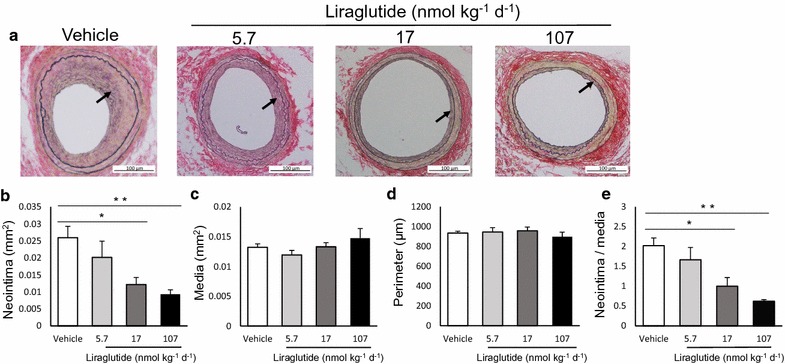
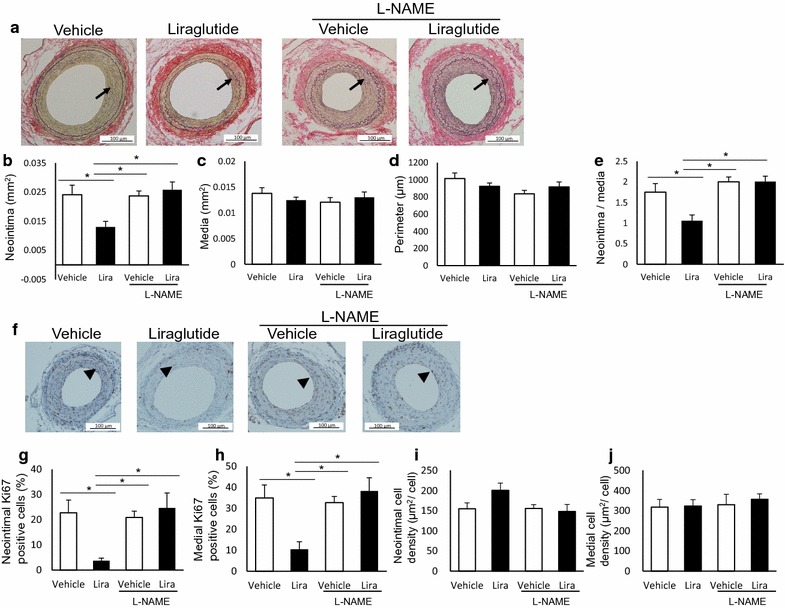
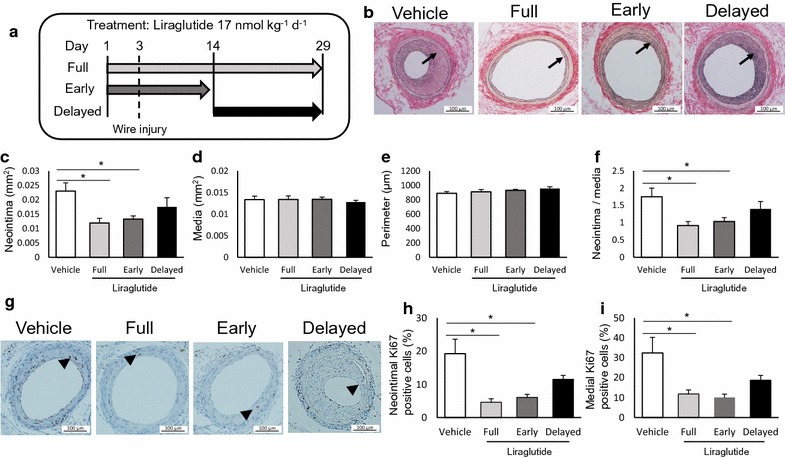
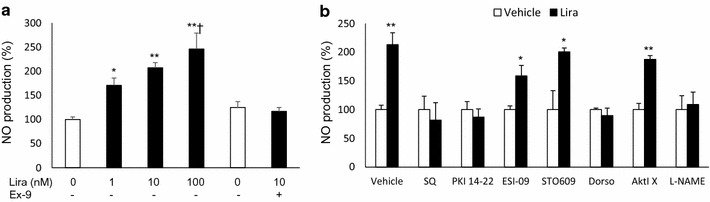
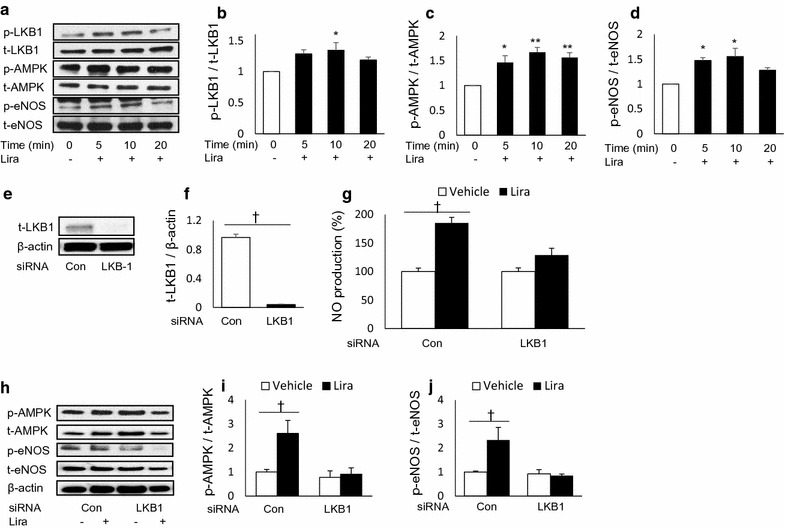
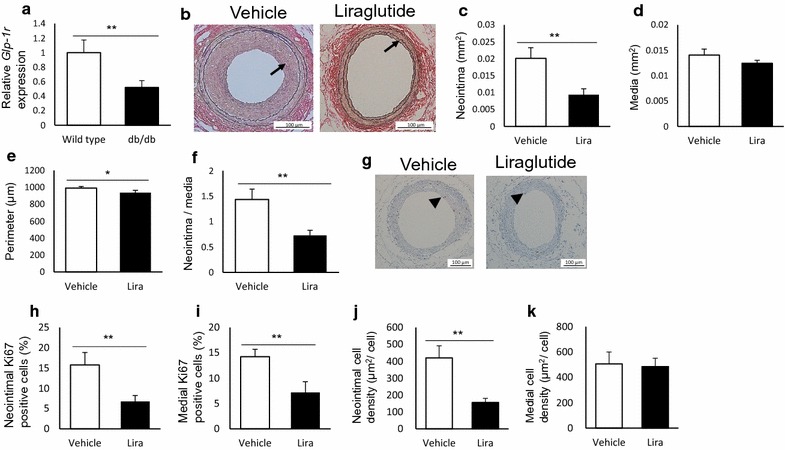
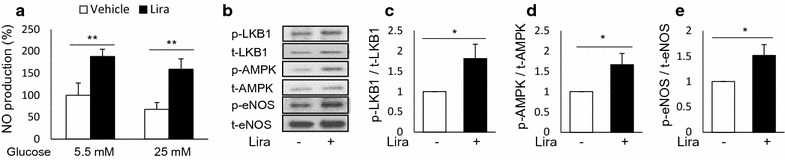
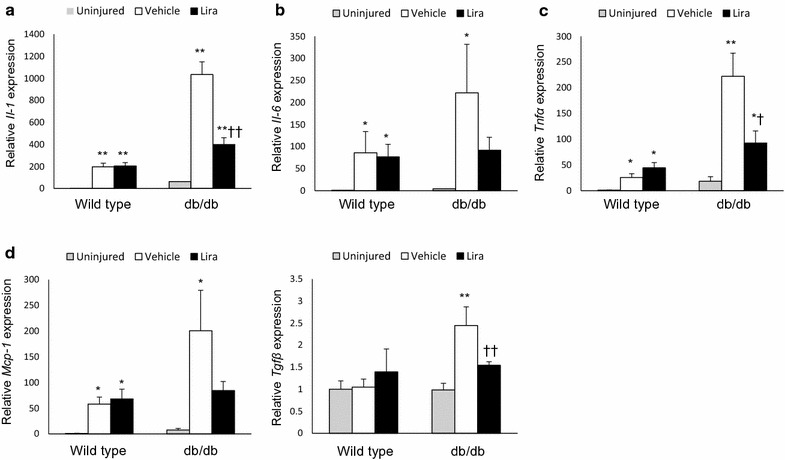
BACKGROUND: Previous animal studies have shown that glucagon-like peptide-1 receptor agonists (GLP-1RAs) suppress arterial restenosis, a major complication of angioplasty, presumably through their direct action on vascular smooth muscle cells. However, the contribution of vascular endothelial cells (VECs) to this process remains unknown. In addition, the potential interference caused by severe hyperglycemia and optimal treatment regimen remain to be determined. METHODS: Nine-week-old male C57BL6 (wild-type) and diabetic db/db mice were randomly divided into vehicle or liraglutide treatment groups (Day 1), and subject to femoral artery wire injuries (Day 3). The injured arteries were collected on Day 29 for morphometric analysis. Human umbilical vein endothelial cells (HUVECs) were used for in vitro experiments. One-way ANOVA, followed by Tukey's test, was used for comparisons. RESULTS: In wild-type mice, liraglutide treatment (5.7, 17, or 107 nmol/kg/day) dose-dependently reduced the neointimal area (20, 50, and 65%) without inducing systemic effects, and caused an associated decrease in the percentage of vascular proliferating cells. However, these effects were completely abolished by the nitric oxide synthase (NOS) inhibitor N-omega-nitro-L-arginine methyl ester. Next, we investigated the optimal treatment regimen. Early treatment (Days 1-14) was as effective in reducing the neointimal area and vascular cell proliferation as full treatment (Days 1-29), whereas delayed treatment (Days 15-29) was ineffective. In HUVECs, liraglutide treatment dose-dependently stimulated NO production, which was dependent on GLP-1R, cAMP, cAMP-dependent protein kinase, AMP-activated protein kinase (AMPK), and NOS. Subsequently, we investigated the role of liver kinase B (LKB)-1 in this process. Liraglutide increased the phosphorylation of LKB-1, and siRNA-induced LKB-1 knockdown abolished liraglutide-stimulated NO production. In severe hyperglycemic db/db mice, liraglutide treatment also suppressed neointimal hyperplasia, which was accompanied by reductions in vascular cell proliferation and density. Furthermore, liraglutide treatment suppressed hyperglycemia-enhanced vascular inflammation 7 days after arterial injury. CONCLUSIONS: We demonstrate that endothelial cells are targets of liraglutide, and suppress restenosis via endothelial NO. Furthermore, the protective effects are maintained in severe hyperglycemia. Our findings provide an evidence base for a future clinical trial to determine whether treatment with GLP-1RAs represents potentially effective pharmacological therapy following angioplasty in patients with diabetes.
Overview
The claims and statistics of this paper haven’t been checked yet.
Free: it reads the open-access text and checks the first 5 claims that cite a source we can check. Create a free account to check every claim.
Integrity signals
Registry
Cites
Statistics
Figures
Verification
Claims the paper makes
The claims and statistics of this paper haven’t been checked yet.
Free: it reads the open-access text and checks the first 5 claims that cite a source we can check. Create a free account to check every claim.
Claims other papers make about this one
Each is checked against this paper’s own text: does it say what the citing paper says it does?
In the citing paper
“In vitro/ex vivo studies conducted on endothelial cells showed that GLP-1RAs such as exenatide and liraglutide stimulate endothelial NO production and endothelial nitric oxide synthase (eNOS) activation, eliciting vasodilatation through activation of the GLP-1 receptor-dependent AMP-activated protein kinase (AMPK)/protein kinase B (Akt)/eNOS signaling pathway [48–50].”
From Protection against stroke with glucagon-like peptide-1 receptor agonists: a comprehensive review of potential mechanisms (2022) · cites this paper as [50]
Self-check
Percentages, sums and reported differences re-computed from the paper’s own numbers.
The self-check needs the paper’s full text.
Citations
Cites
Liraglutide and Cardiovascular Outcomes in Type 2 Diabetes
Marso, S. P., Daniels, G. H., Brown-Frandsen, K., Kristensen, P., Mann, J. F. E., Nauck, M. A., Nissen, S. E., Pocock, S., Poulter, N. R., Ravn, L. S., et al. (2016) · New England Journal of Medicine · doi:10.1056/nejmoa1603827 · Cited by 7,629 · cited 1×
“The findings suggest that GLP-1RAs exhibit vascular protective properties [10, 11].”
BackgroundSemaglutide and Cardiovascular Outcomes in Patients with Type 2 Diabetes
Marso, S. P., Bain, S. C., Consoli, A., Eliaschewitz, F. G., Jódar, E., Leiter, L. A., Lingvay, I., Rosenstock, J., Seufert, J., Warren, M. L., et al. (2016) · New England Journal of Medicine · doi:10.1056/nejmoa1607141 · Cited by 6,900 · cited 1×
“The findings suggest that GLP-1RAs exhibit vascular protective properties [10, 11].”
BackgroundTight control of gene expression in mammalian cells by tetracycline-responsive promoters.
Gossen, M., & Bujard, H. (1992) · Proceedings of the National Academy of Sciences · doi:10.1073/pnas.89.12.5547 · Cited by 4,943 · cited 1×
“For a better understanding of the role of eNOS at the molecular level, a study employing cell-specific gene deletion, including an inducible Cre-loxP or tetracycline-controlled transcriptional regulation system, is required [53, 54].”
BackgroundNitric oxide synthases: regulation and function
Forstermann, U., & Sessa, W. C. (2012) · European Heart Journal · doi:10.1093/eurheartj/ehr304 · Cited by 4,409 · cited 1×
“masked the potential effects of liraglutide on other NOS isoforms: the inducible and the neuronal NOS [50].”
BackgroundLixisenatide in Patients with Type 2 Diabetes and Acute Coronary Syndrome
Pfeffer, M. A., Claggett, B., Diaz, R., Dickstein, K., Gerstein, H. C., Køber, L. V., Lawson, F. C., Ping, L., Wei, X., Lewis, E. F., et al. (2015) · New England Journal of Medicine · doi:10.1056/nejmoa1509225 · Cited by 2,409
Hawley, S. A., Pan, D. A., Mustard, K. J., Ross, L., Bain, J., Edelman, A. M., Frenguelli, B. G., & Hardie, D. G. (2005) · Cell Metabolism · doi:10.1016/j.cmet.2005.05.009 · Cited by 1,589
Regulation of Cre Recombinase Activity by Mutated Estrogen Receptor Ligand-Binding Domains
Feil, R., Wagner, J., Metzger, D., & Chambon, P. (1997) · Biochemical and Biophysical Research Communications · doi:10.1006/bbrc.1997.7124 · Cited by 991 · cited 1×
“For a better understanding of the role of eNOS at the molecular level, a study employing cell-specific gene deletion, including an inducible Cre-loxP or tetracycline-controlled transcriptional regulation system, is required [53, 54].”
BackgroundThe Influence of GLP-1 on Glucose-Stimulated Insulin Secretion
Kjems, L. L., Holst, J. J., Vølund, A., & Madsbad, S. (2003) · Diabetes · doi:10.2337/diabetes.52.2.380 · Cited by 582
Arakawa, M., Mita, T., Azuma, K., Ebato, C., Goto, H., Nomiyama, T., Fujitani, Y., Hirose, T., Kawamori, R., & Watada, H. (2010) · Diabetes · doi:10.2337/db09-1694 · Cited by 548
A cascade model for restenosis. A special case of atherosclerosis progression.
Libby, P., Schwartz, D., Brogi, E., Tanaka, H., & Clinton, S. K. (1992) · PubMed · Cited by 509
Htike, Z. Z., Zaccardi, F., Papamargaritis, D., Webb, D. R., Khunti, K., & Davies, M. J. (2017) · Diabetes, Obesity and Metabolism · doi:10.1111/dom.12849 · Cited by 416 · cited 1×
“Background Glucagon-like peptide receptor-1 agonists (GLP-1RAs) have been widely used for the treatment of type 2 diabetes owing to their robust glucose-lowering effects, which are accompanied by a reduction in body weight [1].”
BackgroundThe importance of the endothelium in atherothrombosis and coronary stenting
Otsuka, F., Finn, A. V., Yazdani, S. K., Nakano, M., Kolodgie, F. D., & Virmani, R. (2012) · Nature Reviews Cardiology · doi:10.1038/nrcardio.2012.64 · Cited by 402
Downregulation of GLP-1 and GIP Receptor Expression by Hyperglycemia
Xu, G., Kaneto, H., Laybutt, D. R., Duvivier-Kali, V. F., Trivedi, N., Suzuma, K., King, G. L., Weir, G. C., & Bonner-Weir, S. (2007) · Diabetes · doi:10.2337/db06-1033 · Cited by 377 · cited 1×
“It has been reported that chronic hyperglycemia leads to impaired GLP-1 activity in pancreatic β cells [31, 45]; however, evidence regarding the vascular role of GLP-1 under these conditions is limited, except for several studies in mice with mild hyperglycemia [15, 46].”
BackgroundPanjwani, N., Mulvihill, E. E., Longuet, C., Yusta, B., Campbell, J. E., Brown, T. J., Streutker, C., Holland, D., Cao, X., Baggio, L. L., et al. (2013) · Endocrinology · doi:10.1210/en.2012-1937 · Cited by 346
Stettler, C., Allemann, S., Wandel, S., Kastrati, A., Morice, M. C., Schomig, A., Pfisterer, M. E., Stone, G. W., Leon, M. B., Lezo, J. S. D., et al. (2008) · BMJ · doi:10.1136/bmj.a1331 · Cited by 320 · cited 1×
“However, their beneficial effects are reduced in patients with diabetes [19, 20], leaving them at a high risk for restenosis.”
BackgroundSata, M., Maejima, Y., Adachi, F., Fukino, K., Saiura, A., Sugiura, S., Aoyagi, T., Imai, Y., Kurihara, H., Kimura, K., et al. (2000) · Journal of Molecular and Cellular Cardiology · doi:10.1006/jmcc.2000.1238 · Cited by 297 · cited 3×
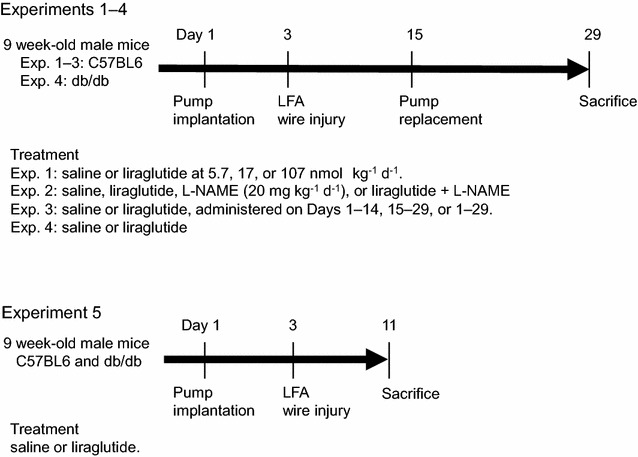
“On Day 3, mice underwent left femoral artery wire injury, as previously reported by Sata and co-workers, with a few modifications [21].”
BackgroundMethodInfluentialMyocardial viability in patients with Q wave myocardial infarction and no residual ischemia.
Montalescot, G., Faraggi, M., Drobinski, G., Messian, O., Evans, J., Grosgogeat, Y., & Thomas, D. (1992) · Circulation · doi:10.1161/01.cir.86.1.47 · Cited by 276
Incretin Action in the Pancreas: Potential Promise, Possible Perils, and Pathological Pitfalls
Drucker, D. J. (2013) · Diabetes · doi:10.2337/db13-0822 · Cited by 272 · cited 1×
“Recent studies have revealed that GLP-1 is involved in the regulation of multiple physiological processes in various extra-pancreatic tissues, including the cardiovascular system [2].”
BackgroundNagashima, M., Watanabe, T., Terasaki, M., Tomoyasu, M., Nohtomi, K., Kim-Kaneyama, J., Miyazaki, A., & Hirano, T. (2011) · Diabetologia · doi:10.1007/s00125-011-2241-2 · Cited by 259
Self-citationA Novel EPAC-Specific Inhibitor Suppresses Pancreatic Cancer Cell Migration and Invasion
Almahariq, M., Tsalkova, T., Mei, F. C., Chen, H., Zhou, J., Sastry, S. K., Schwede, F., & Cheng, X. (2013) · Molecular Pharmacology · doi:10.1124/mol.112.080689 · Cited by 207
Restenosis: Delineating the Numerous Causes of Drug-Eluting Stent Restenosis
Farooq, V., Gogas, B. D., & Serruys, P. W. (2011) · Circulation: Cardiovascular Interventions · doi:10.1161/circinterventions.110.959882 · Cited by 191
Liu, L., Liu, J., Wong, W. T., Tian, X. Y., Lau, C. W., Wang, Y.-X., Xu, G., Pu, Y., Zhu, Z., Xu, A., et al. (2012) · Hypertension · doi:10.1161/hypertensionaha.112.195115 · Cited by 179
Vascular Remodeling: Hemodynamic and Biochemical Mechanisms Underlying Glagov’s Phenomenon
Korshunov, V. A., Schwartz, S. M., & Berk, B. C. (2007) · Arteriosclerosis, Thrombosis, and Vascular Biology · doi:10.1161/atvbaha.106.129254 · Cited by 178
Koska, J., Sands, M., Burciu, C., D’Souza, K. M., Raravikar, K., Liu, J., Truran, S., Franco, D. A., Schwartz, E. A., Schwenke, D. C., et al. (2015) · Diabetes · doi:10.2337/db14-0976 · Cited by 174
Kang, S.-H., Park, K. W., Kang, D.-Y., Lim, W.-H., Park, K. T., Han, J.-K., Kang, H.-J., Koo, B.-K., Oh, B.-H., Park, Y.-B., et al. (2014) · European Heart Journal · doi:10.1093/eurheartj/eht570 · Cited by 168
Role of endogenous nitric oxide in progression of atherosclerosis in apolipoprotein E-deficient mice
Kauser, K., da Cunha, V., Fitch, R., Mallari, C., & Rubanyi, G. M. (2000) · American Journal of Physiology-Heart and Circulatory Physiology · doi:10.1152/ajpheart.2000.278.5.h1679 · Cited by 150 · cited 1×
“inhibitor, was administered via drinking water [26].”
Tashiro, Y., Sato, K., Watanabe, T., Nohtomi, K., Terasaki, M., Nagashima, M., & Hirano, T. (2014) · Peptides · doi:10.1016/j.peptides.2013.12.015 · Cited by 149 · cited 1×
“The dose of liraglutide was 17 nmol/ kg/day, unless otherwise specified [3, 7, 8].”
BackgroundSelf-citationGaspari, T., Welungoda, I., Widdop, R. E., Simpson, R. W., & Dear, A. E. (2013) · Diabetes and Vascular Disease Research · doi:10.1177/1479164113481817 · Cited by 148
Ding, L., & Zhang, J. (2012) · Acta Pharmacologica Sinica · doi:10.1038/aps.2011.149 · Cited by 147
Goto, H., Nomiyama, T., Mita, T., Yasunari, E., Azuma, K., Komiya, K., Arakawa, M., Jin, W. L., Kanazawa, A., Kawamori, R., et al. (2011) · Biochemical and Biophysical Research Communications · doi:10.1016/j.bbrc.2010.12.131 · Cited by 127 · cited 1×
“Previous studies have reported the anti-proliferative and anti-migration effects of GLP1RAs on VSMCs in vitro [12, 13, 22, 23].”
BackgroundWang, Y., Parlevliet, E. T., Geerling, J. J., van der Tuin, S. J. L., Zhang, H., Bieghs, V, Jawad, A. H. M., Shiri‐Sverdlov, R., Bot, I., de Jager, S. C. A., et al. (2014) · British Journal of Pharmacology · doi:10.1111/bph.12490 · Cited by 126
Mechanisms by which diabetes increases cardiovascular disease
Gleissner, C. A., Galkina, E., Nadler, J. L., & Ley, K. F. (2007) · Drug Discovery Today Disease Mechanisms · doi:10.1016/j.ddmec.2007.12.005 · Cited by 114 · cited 1×
“In addition, liraglutide treatment reduced the hyperglycemiaenhanced expression of Tgf-β, which is associated with vascular complications in patients with diabetes [48, 49]; this change is consistent with the reduction in cell density.”
BackgroundPereira, S., Park, E., Mori, Y., Haber, C. A., Han, P., Uchida, T., Stavar, L., Oprescu, A. I., Koulajian, K., Ivovic, A., et al. (2014) · American Journal of Physiology-Endocrinology and Metabolism · doi:10.1152/ajpendo.00436.2013 · Cited by 107 · cited 1×
“Western blot was performed as previously described [40].”
MethodSelf-citationJojima, T., Uchida, K., Akimoto, K., Tomotsune, T., Yanagi, K., Iijima, T., Suzuki, K., Kasai, K., & Aso, Y. (2017) · Atherosclerosis · doi:10.1016/j.atherosclerosis.2017.04.001 · Cited by 105 · cited 1×
“The dose of liraglutide was 17 nmol/ kg/day, unless otherwise specified [3, 7, 8].”
BackgroundChen, L., Daum, G., Forough, R., Clowes, M., Walter, U., & Clowes, A. W. (1998) · Circulation Research · doi:10.1161/01.res.82.8.862 · Cited by 104 · cited 1×
“Treatment with NO donors and transfection of the eNOS gene to the injured site have been shown to suppress restenosis in animal models [43, 44].”
BackgroundUnderstanding the role of transforming growth factor-β1 in intimal thickening after vascular injury
KHAN, R., AGROTIS, A., & BOBIK, A. (2007) · Cardiovascular Research · doi:10.1016/j.cardiores.2007.02.012 · Cited by 104
Calay, D., Vind-Kezunovic, D., Frankart, A., Lambert, S., Poumay, Y., & Gniadecki, R. (2010) · Journal of Investigative Dermatology · doi:10.1038/jid.2009.415 · Cited by 99
Spirli, C., Okolicsanyi, S., Fiorotto, R., Fabris, L., Cadamuro, M., Lecchi, S., Tian, X., Somlo, S., & Strazzabosco, M. (2010) · Gastroenterology · doi:10.1053/j.gastro.2009.09.005 · Cited by 97
Shi, L., Ji, Y., Jiang, X., Zhou, L., Xu, Y., Li, Y., Jiang, W., Meng, P., & Liu, X. (2015) · Cardiovascular Diabetology · doi:10.1186/s12933-015-0177-4 · Cited by 91
Aronson, D., & Edelman, E. R. (2010) · Reviews in Endocrine and Metabolic Disorders · doi:10.1007/s11154-010-9135-3 · Cited by 88 · cited 1×
“However, their beneficial effects are reduced in patients with diabetes [19, 20], leaving them at a high risk for restenosis.”
BackgroundLee, M.-Y., Tsai, K.-B., Hsu, J.-H., Shin, S.-J., Wu, J.-R., & Yeh, J.-L. (2016) · Scientific Reports · doi:10.1038/srep31788 · Cited by 80
Beneficial effect of a short-acting NO donor for the prevention of neointimal hyperplasia
Pearce, C. G., Najjar, S. F., Kapadia, M. R., Murar, J., Eng, J. W. ‐., Lyle, B., Aalami, O., Jiang, Q., Hrabie, J. A., Saavedra, J. E., et al. (2007) · Free Radical Biology and Medicine · doi:10.1016/j.freeradbiomed.2007.09.010 · Cited by 77 · cited 1×
“Treatment with NO donors and transfection of the eNOS gene to the injured site have been shown to suppress restenosis in animal models [43, 44].”
BackgroundYu, X., Li, F., Klußmann, E., Stallone, J. N., & Han, G. (2014) · American Journal of Physiology-Endocrinology and Metabolism · doi:10.1152/ajpendo.00534.2013 · Cited by 75
Wang, W., & Diamond, S. L. (1997) · Biochemical and Biophysical Research Communications · doi:10.1006/bbrc.1997.6548 · Cited by 70 · cited 1×
“Conversely, liraglutide-stimulated NO production was not affected by the inhibition of CaMKK-β, another molecule located upstream of AMPK [38].”
BackgroundTreatment of coronary artery in-stent restenosis
Kokkinidis, D. G., Waldo, S. W., & Armstrong, E. J. (2017) · Expert Review of Cardiovascular Therapy · doi:10.1080/14779072.2017.1284588 · Cited by 61 · cited 1×
“Vascular restenosis is one of the major complications of percutaneous transluminal angioplasty (PTA), mainly caused by neointimal hyperplasia, an exaggerated healing process of the damaged intima [17, 18].”
BackgroundHirata, Y., Kurobe, H., Nishio, C., Tanaka, K., Fukuda, D., Uematsu, E., Nishimoto, S., Soeki, T., Harada, N., Sakaue, H., et al. (2012) · European Journal of Pharmacology · doi:10.1016/j.ejphar.2012.11.057 · Cited by 59
Kumarathurai, P., Anholm, C., Nielsen, O. W., Kristiansen, O. P., Mølvig, J., Madsbad, S., Haugaard, S. B., & Sajadieh, A. (2016) · Cardiovascular Diabetology · doi:10.1186/s12933-016-0425-2 · Cited by 54 · cited 1×
“not to improve the systolic function of the left ventricle in patients with type 2 diabetes and stable coronary artery disease, indicating that liraglutide treatment exerts positive chronotropic, but not inotropic effects on the heart [58].”
BackgroundNagayama, K., Kyotani, Y., Zhao, J., Ito, S., Ozawa, K., Bolstad, F. A., & Yoshizumi, M. (2015) · PLOS ONE · doi:10.1371/journal.pone.0137960 · Cited by 48 · cited 1×
“Previous studies have reported the anti-proliferative and anti-migration effects of GLP1RAs on VSMCs in vitro [12, 13, 22, 23].”
BackgroundCardiovascular Neural Reflexes in L-NAME–Induced Hypertension in Mice
Peotta, V. A., Vasquez, E. C., & Meyrelles, S. S. (2001) · Hypertension · doi:10.1161/01.hyp.38.3.555 · Cited by 47 · cited 1×
“Mice treated with l-NAME exhibited higher systolic blood pressure levels than those not administered the inhibitor, as previously reported [41].”
ResultLim, S., Lee, G. Y., Park, H. S., Lee, D.-H., Tae Jung, O., Kyoung Min, K., Kim, Y.-B., Jun, H.-S., Hak Chul, J., & Park, K. S. (2017) · Cardiovascular Research · doi:10.1093/cvr/cvw213 · Cited by 47 · cited 2×
“It has been reported that chronic hyperglycemia leads to impaired GLP-1 activity in pancreatic β cells [31, 45]; however, evidence regarding the vascular role of GLP-1 under these conditions is limited, except for several studies in mice with mild hyperglycemia [15, 46].”
BackgroundMethodLiraglutide Reduces Both Atherosclerosis and Kidney Inflammation in Moderately Uremic LDLr-/- Mice
Bisgaard, L. S., Bosteen, M. H., Fink, L. N., Sørensen, C. M., Rosendahl, A., Mogensen, C. K., Rasmussen, S. E., Rolin, B., Nielsen, L. B., & Pedersen, T. X. (2016) · PLOS ONE · doi:10.1371/journal.pone.0168396 · Cited by 47
Nielsen, R., Jorsal, A., Iversen, P., Tolbod, L. P., Bouchelouche, K., Sørensen, J., Harms, H. J., Flyvbjerg, A., Tarnow, L., Kistorp, C., et al. (2019) · Journal of Nuclear Cardiology · doi:10.1007/s12350-017-1000-2 · Cited by 43
Ke, J., Liu, Y., Yang, J., Lu, R., Tian, Q., Hou, W., Wang, G., Wei, R., & Hong, T. (2017) · Scientific Reports · doi:10.1038/srep41085 · Cited by 38
Tan, X., Feng, L., Huang, X., Yang, Y., Yang, C., & Gao, Y. (2017) · Journal of Cellular and Molecular Medicine · doi:10.1111/jcmm.13122 · Cited by 33
Kohashi, K., Hiromura, M., Mori, Y., Terasaki, M., Watanabe, T., Kushima, H., Shinmura, K., Tomoyasu, M., Nagashima, M., & Hirano, T. (2015) · Journal of Atherosclerosis and Thrombosis · doi:10.5551/jat.31997 · Cited by 32 · cited 1×
“Total RNA extracted from the arteries was used for synthesizing complementary DNA as previously described [32].”
MethodSelf-citationEriksson, L., Saxelin, R., Röhl, S., Roy, J., Caidahl, K., Nyström, T., Hedin, U., & Razuvaev, A. (2015) · Journal of Vascular Research · doi:10.1159/000381097 · Cited by 27
Guo, J., Breen, D. M., Pereira, T. J., Dalvi, P. S., Zhang, H., Mori, Y., Ghanim, H., Tumiati, L., Fantus, I. G., Bendeck, M. P., et al. (2015) · Atherosclerosis · doi:10.1016/j.atherosclerosis.2015.04.799 · Cited by 24
Self-citationZhou, X., Huang, C.-H., Lao, J., Pocai, A., Forrest, G., Price, O., Roy, S., Kelley, D. E., Sullivan, K. A., & Forrest, M. J. (2015) · Cardiovascular Diabetology · doi:10.1186/s12933-015-0194-3 · Cited by 23
Nitric oxide generated by iNOS reduces deformability of Lewis lung carcinoma cells
Igawa, S., Hayashi, I., Tanaka, N., Hiruma, H., Majima, M., Kawakami, T., Hirose, M., Masuda, N., & Kobayashi, H. (2004) · Cancer Science · doi:10.1111/j.1349-7006.2004.tb03213.x · Cited by 19 · cited 2×
“Measurement of NO production Plasma NO levels and NO production by HUVECs was determined by measuring the stable metabolites of NO (NO2 and NO3) in the culture medium (Nitrate/Nitrite Fluorometric Assay Kit; Dojin, Kamimashiki, Kumamoto, Japan) [33].”
Method
Cited by
GLP-1 receptor agonists and reduction of cardiometabolic risk: Potential underlying mechanisms
Rizzo, M., Nikolic, D., Patti, A. M., Mannina, C., Montalto, G., McAdams, B. S., Rizvi, A. A., & Cosentino, F. (2018) · Biochimica et Biophysica Acta (BBA) - Molecular Basis of Disease · doi:10.1016/j.bbadis.2018.05.012 · Cited by 152
Bizino, M. B., Jazet, I. M., Westenberg, J. J. M., van Eyk, H. J., Paiman, E. H. M., Smit, J. W. A., & Lamb, H. J. (2019) · Cardiovascular Diabetology · doi:10.1186/s12933-019-0857-6 · Cited by 137
Vergès, B., Aboyans, V., Angoulvant, D., Boutouyrie, P., Cariou, B., Hyafil, F., Mohammedi, K., & Amarenco, P. (2022) · Cardiovascular Diabetology · doi:10.1186/s12933-022-01686-3 · Cited by 72
Yue, W., Li, Y., Ou, D., & Yang, Q. (2019) · IUBMB Life · doi:10.1002/iub.2046 · Cited by 60
“Two separate studies show that administration of Liraglutide improves the endothelial function in both mouse atherosclerotic and restenotic models (29, 30).”
BackgroundSachinidis, A., Nikolic, D., Stoian, A. P., Papanas, N., Tarar, O., Rizvi, A. A., & Rizzo, M. (2020) · Metabolism · doi:10.1016/j.metabol.2020.154343 · Cited by 58
Metadata
- Authors
- Kushima, H., Mori, Y., Koshibu, M., Hiromura, M., Kohashi, K., Terasaki, M., Fukui, T., & Hirano, T.
- Affiliations
- SHOWA Medical University (JP)
- Corresponding author
- Mori, Yusaku
- Hirano, Tsutomu
- Venue
- Cardiovascular Diabetology
- Published
- 2017-10-02
- Volume
- 16
- Issue
- 1
- Pages
- 122-122
- ISSN
- 1475-2840 (ISSN-L)
- PMC
- PMC5625638
- OpenAlex
- W2760658785
- Cited by
- 48
- References
- 59
- Citations by year
- 2026: 6 · 2024: 2 · 2023: 2 · 2022: 7 · 2021: 7 · 2020: 6 · 2019: 13 · 2018: 4 · 2017: 1
- FWCI
- 4.85
- Type
- journal article
- Language
- en
- Open access
- gold
- doi.org
- Licence
- cc-by
- Locations
- Cardiovascular Diabetology (publishedVersion, cc-by)
- Europe PMC (PubMed Central) (publishedVersion, cc-by)
- PubMed Central (publishedVersion, cc-by)
- PubMed (publishedVersion)
- DOAJ (DOAJ: Directory of Open Access Journals) (submittedVersion, cc-by-sa)
- Funders
- Mitsubishi Tanabe Pharma Co.
- MSD KK
- Novartis Pharma KK
- Novo Nordisk Pharma Ltd.
- Sanwa Kagaku Kenkyusho Co., LTD.
- Kowa Co., LTD.
- Eli Lilly Japan KK
- Topics
- Health Sciences › Medicine › Physiology (medical) › Nitric Oxide and Endothelin Effects
- Health Sciences › Medicine › Cardiology and Cardiovascular Medicine › Coronary Interventions and Diagnostics
- Health Sciences › Medicine › Endocrinology, Diabetes and Metabolism › Diabetes Treatment and Management
- Keywords
- endothelial nitric oxide, arterial restenosis, intimal hyperplasia, GLP-1 receptor agonists, vascular endothelial cells, AMPK, cAMP signaling, hyperglycemia, db/db mice, wire injury, vascular inflammation, angioplasty complications, nitric oxide synthase inhibition
- MeSH terms
- Liraglutide, Animals, Cells, Cultured, Disease Models, Animal, Dose-Response Relationship, Drug, Humans, Hypoglycemic Agents, Male, Mice, Inbred C57BL, Mice, Obese, Nitric Oxide, Treatment Outcome, Coronary Restenosis, Mice, Human Umbilical Vein Endothelial Cells
About these checks
Registry, retraction, Cites and statistics results are computed, not judged, with one exception: a printed reference that no index lists is read once by a model before it counts as a citation error. Claims are extracted by a model and kept only when their quote appears verbatim in the text; each cited source is then checked, with a model’s help, for whether it says what the claim relies on. Those verdicts can be wrong — read the claim’s quote and the cited source before relying on one.
Statistics and arithmetic are recomputed, not judged.
Confidence bands are shown only for fields calibrated on our annotated test set. None is calibrated yet, so no band is shown.
What counts as a claim ›How we measure confidence ›How we check this ›
Are you an author, or do you see a problem with this page? Request a review
Data sources
Bibliographic data: Semantic Scholar, OpenAlex, Crossref.
Contains information from the Semantic Scholar Academic Graph Datasets, made available under the ODC Attribution License (ODC-BY 1.0).
Semantic Scholar’s data is described in: Kinney, R., et al. (2023). The Semantic Scholar Open Data Platform. arXiv:2301.10140.
