

Effects of exenatide and open-label SGLT2 inhibitor treatment, given in parallel or sequentially, on mortality and cardiovascular and renal outcomes in type 2 diabetes: insights from the EXSCEL trial
Open accessThe DOI matches its Crossref record; 46 of the 46 references it cites were found in a registry or an index.
Abstract
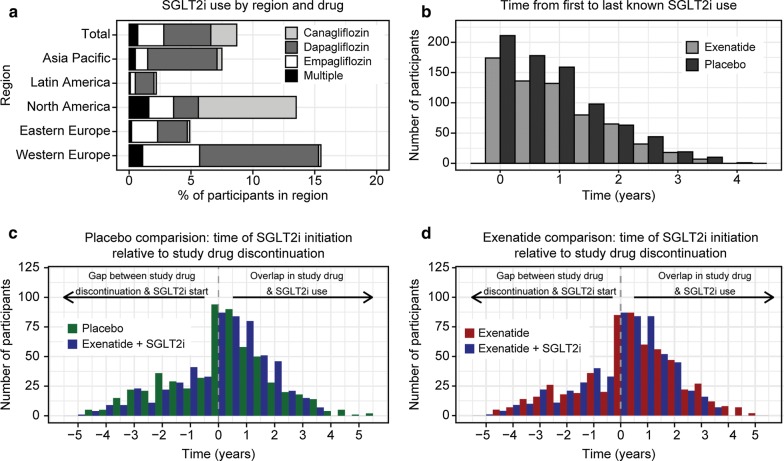
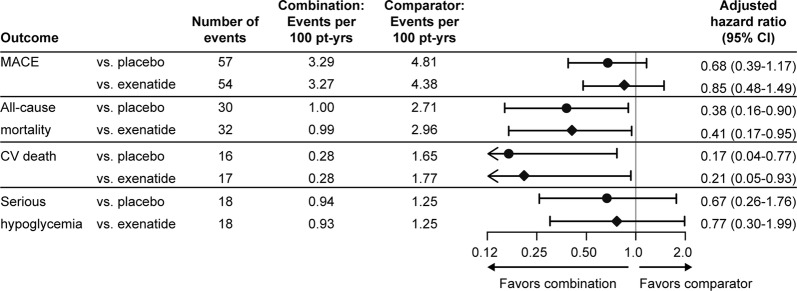
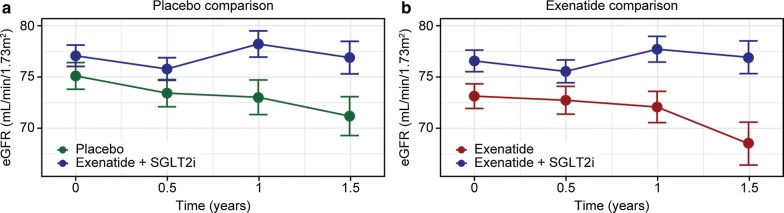
Background: Sodium-glucose cotransporter-2 inhibitors (SGLT2i) and glucagon-like peptide-1 receptor agonists (GLP-1 RA) improve cardiovascular and renal outcomes in patients with type 2 diabetes through distinct mechanisms. However, evidence on clinical outcomes in patients treated with both GLP-1 RA and SGLT2i is lacking. We aim to provide insight into the effects of open-label SGLT2i use in parallel with or shortly after once-weekly GLP-1 RA exenatide (EQW) on cardiorenal outcomes. Methods: In the EXSCEL cardiovascular outcomes trial EQW arm, SGLT2i drop-in occurred in 8.7% of participants. These EQW+SGLT2i users were propensity-matched to: (1) placebo-arm participants not taking SGLT2i (n = 572 per group); and to (2) EQW-arm participants not taking SGLT2i (n = 575), based on their last measured characteristics before SGLT2i initiation, and equivalent study visit in comparator groups. Time-to-first major adverse cardiovascular event (MACE) and all-cause mortality (ACM) were compared using Cox regression analyses. eGFR slopes were quantified using mixed model repeated measurement analyses. Results: In adjusted analyses, the risk for MACE with combination EQW+SGLT2i use was numerically lower compared with both placebo (adjusted hazard ratio 0.68, 95% CI 0.39–1.17) and EQW alone (0.85, 0.48–1.49). Risk of ACM was nominally significantly reduced compared with placebo (0.38, 0.16–0.90) and compared with EQW (0.41, 0.17–0.95). Combination EQW+SGLT2i use also nominally significantly improved estimated eGFR slope compared with placebo (+ 1.94, 95% CI 0.94–2.94 mL/min/1.73 m 2/year) and EQW alone (+ 2.38, 1.40–3.35 mL/min/1.73 m 2/year). Conclusions: This post hoc analysis supports the hypothesis that combinatorial EQW and SGLT2i therapy may provide benefit on cardiovascular outcomes and mortality. Trial registration Clinicaltrials.gov, Identifying number: NCT01144338, Date of registration: June 15, 2010.
Overview
The claims and statistics of this paper haven’t been checked yet.
Free: it reads the open-access text and checks the first 5 claims that cite a source we can check. Create a free account to check every claim.
Integrity signals
Registry
Cites
Statistics
Figures
Verification
Claims the paper makes
The claims and statistics of this paper haven’t been checked yet.
Free: it reads the open-access text and checks the first 5 claims that cite a source we can check. Create a free account to check every claim.
Claims other papers make about this one
Each is checked against this paper’s own text: does it say what the citing paper says it does?
The source backs part of the claim, not all of it — or backs it for a different population, condition or comparison.
In the citing paper
“Importantly, GLP1-RA can be used in combination with SGLT2i, and many patients with DKD may benefit from both therapies although this has not yet been explored in detail in clinical trials [27,28].”
From Glucagon-like peptide-1 receptor agonists in diabetic kidney disease: a review of their kidney and heart protection (2023) · cites this paper as [27]
Experimental — accuracy not yet measuredThe cited source says what the claim attributes to it.
In the citing paper
“A post hoc analysis of data from the Exenatide Study of Cardiovascular Event Lowering (EXSCEL) has suggested that the combination of exenatide once weekly (EQW) plus openlabel SGLT2i reduces all-cause mortality rates and attenuates the decline in eGFR compared with treatment with EQW alone (244).”
Self-check
Percentages, sums and reported differences re-computed from the paper’s own numbers.
The self-check needs the paper’s full text.
Citations
Cites
R: A Language and Environment for Statistical Computing
R Core Team (2025) · doi:10.32614/r.manuals · Cited by 352,181
Empagliflozin, Cardiovascular Outcomes, and Mortality in Type 2 Diabetes
Zinman, B., Wanner, C., Lachin, J. M., Fitchett, D., Bluhmki, E., Hantel, S., Mattheus, M., Devins, T., Johansen, O. E., Woerle, H. J., et al. (2015) · New England Journal of Medicine · doi:10.1056/nejmoa1504720 · Cited by 12,315
Canagliflozin and Cardiovascular and Renal Events in Type 2 Diabetes
Neal, B., Perkovic, V., Mahaffey, K. W., de Zeeuw, D., Fulcher, G., Erondu, N., Shaw, W., Law, G., Desai, M., & Matthews, D. R. (2017) · New England Journal of Medicine · doi:10.1056/nejmoa1611925 · Cited by 7,830
Semaglutide and Cardiovascular Outcomes in Patients with Type 2 Diabetes
Marso, S. P., Bain, S. C., Consoli, A., Eliaschewitz, F. G., Jódar, E., Leiter, L. A., Lingvay, I., Rosenstock, J., Seufert, J., Warren, M. L., et al. (2016) · New England Journal of Medicine · doi:10.1056/nejmoa1607141 · Cited by 6,900
Dapagliflozin and Cardiovascular Outcomes in Type 2 Diabetes
Wiviott, S. D., Raz, I., Bonaca, M. P., Mosenzon, O., Kato, E. T., Cahn, A., Silverman, M. G., Zelniker, T. A., Kuder, J. F., Murphy, S. A., et al. (2019) · New England Journal of Medicine · doi:10.1056/nejmoa1812389 · Cited by 6,382
Canagliflozin and Renal Outcomes in Type 2 Diabetes and Nephropathy
Perkovic, V., Jardine, M. J., Neal, B., Bompoint, S., Heerspink, H. J. L., Charytan, D. M., Edwards, R., Agarwal, R., Bakris, G., Bull, S., et al. (2019) · New England Journal of Medicine · doi:10.1056/nejmoa1811744 · Cited by 6,189
Self-citationLevey, A. S., Coresh, J., Greene, T., Stevens, L. A., Zhang, Y. (., Hendriksen, S., Kusek, J. W., & Van Lente, F. (2006) · Annals of Internal Medicine · doi:10.7326/0003-4819-145-4-200608150-00004 · Cited by 5,725
MatchIt : Nonparametric Preprocessing for Parametric Causal Inference
Ho, D. E., Imai, K., King, G., & Stuart, E. A. (2011) · Journal of Statistical Software · doi:10.18637/jss.v042.i08 · Cited by 4,385 · cited 3×
“MatchIt: nonparametric preprocessing for parametric casual inference.”
MethodInfluentialGerstein, H. C., Colhoun, H. M., Dagenais, G. R., Diaz, R., Lakshmanan, M., Pais, P., Probstfield, J., Riesmeyer, J. S., Riddle, M. C., Rydén, L., et al. (2019) · The Lancet · doi:10.1016/s0140-6736(19)31149-3 · Cited by 3,163 · cited 1×
“While the majority of evidence supports this MACE benefit in subjects with ASCVD, there is some evidence that this benefit may extend to high-risk subjects without a previous CV event [4, 21].”
BackgroundZelniker, T. A., Wiviott, S. D., Raz, I., Im, K., Goodrich, E. L., Bonaca, M. P., Mosenzon, O., Kato, E. T., Cahn, A., Furtado, R. H. M., et al. (2019) · The Lancet · doi:10.1016/s0140-6736(18)32590-x · Cited by 2,845
Research works printed but not linked: 2
- Stuart DEHaKIaGKaEA MatchIt: nonparametric preprocessing for parametric casual inference J Stat Softw 2011 42 8 1 28
- Goncalves E Bell DSH Combination treatment of SGLT2 inhibitors and GLP-1 receptor agonists: symbiotic effects on metabolism and cardiorenal risk Diabetes Ther 2018 9 3 919 926 10.1007/s13300-018-0420-6 29623594 PMC5984923 · DOI · Paper page
Cited by
Davies, M. J., Aroda, V. R., Collins, B. S., Gabbay, R. A., Green, J., Maruthur, N. M., Rosas, S. E., Del Prato, S., Mathieu, C., Mingrone, G., et al. (2022) · Diabetes Care · doi:10.2337/dci22-0034 · Cited by 2,104
“A post hoc analysis of data from the Exenatide Study of Cardiovascular Event Lowering (EXSCEL) has suggested that the combination of exenatide once weekly (EQW) plus openlabel SGLT2i reduces all-cause mortality rates and attenuates the decline in eGFR compared with treatment with EQW alone (244).”
MethodSelf-citationDavies, M. J., Aroda, V. R., Collins, B. S., Gabbay, R. A., Green, J., Maruthur, N. M., Rosas, S. E., Del Prato, S., Mathieu, C., Mingrone, G., et al. (2022) · Diabetologia · doi:10.1007/s00125-022-05787-2 · Cited by 1,048
“A post hoc analysis of data from the EXenatide Study of Cardiovascular Event Lowering (EXSCEL) has suggested that the combination of exenatide once-weekly (EQW) plus open-label SGLT2i reduces allcause mortality rates and attenuates the decline in eGFR compared with treatment with EQW alone [244].”
Self-citationCardiovascular and renal outcomes with efpeglenatide in type 2 diabetes
Gerstein, H. C., Sattar, N., Rosenstock, J., Ramasundarahettige, C., Pratley, R., Lopes, R. D., Lam, C. S. P., Khurmi, N. S., Heenan, L., Del Prato, S., et al. (2021) · New England Journal of Medicine · doi:10.1056/nejmoa2108269 · Cited by 829
Therapeutic pipeline in nonalcoholic steatohepatitis
Vuppalanchi, R., Noureddin, M., Alkhouri, N., & Sanyal, A. J. (2021) · Nature Reviews Gastroenterology & Hepatology · doi:10.1038/s41575-020-00408-y · Cited by 278
Oxidative Stress: A Culprit in the Progression of Diabetic Kidney Disease
Wang, N., & Zhang, C. (2024) · Antioxidants · doi:10.3390/antiox13040455 · Cited by 218
Yau, K., Dharia, A., Alrowiyti, I., & Cherney, D. Z. I. (2022) · Kidney International Reports · doi:10.1016/j.ekir.2022.04.094 · Cited by 223
“Kidney International Reports (2022) 7, 1463–1476 events were observed in addition to a nominal significant improvement in preventing decline in eGFR in comparison to patients not on SGLT2 inhibitors.(100) Although SGLT2 inhibitors are preferred to delay progression of CKD, patients with residual albuminuria may benefi…”
ResultSimms-Williams, N., Treves, N., Yin, H., Lu, S., Yu, O., Pradhan, R., Renoux, C., Suissa, S., & Azoulay, L. (2024) · BMJ · doi:10.1136/bmj-2023-078242 · Cited by 151
“To 18-20 The primary objective of this study was to determine whether the combined use of GLP-1 receptor agonists and SGLT-2 inhibitors is associated with a decreased risk of two co-primary outcomes, major adverse cardiovascular events and serious renal events, compared with the use of either drug…”
BackgroundGourdy, P., Darmon, P., Dievart, F., Halimi, J.-M., & Guerci, B. (2023) · Cardiovascular Diabetology · doi:10.1186/s12933-023-01798-4 · Cited by 127
“Overall, these post-hoc analyses of different CVOTs support the concept that the combination of GLP-1RAs plus SGLT2is may be well-tolerated and may provide additional benefits to GLP-1RAs or SGLT2is alone in terms of cardiovascular and renal protection and mortality, without an increase in the risk of hypoglycemia [13…”
BackgroundMethodMichos, E. D., Bakris, G. L., Rodbard, H. W., & Tuttle, K. R. (2023) · American Journal of Preventive Cardiology · doi:10.1016/j.ajpc.2023.100502 · Cited by 125
“Importantly, GLP1-RA can be used in combination with SGLT2i, and many patients with DKD may benefit from both therapies although this has not yet been explored in detail in clinical trials [27,28].”
BackgroundChen, H.-Y., Huang, J., Siao, W.-Z., & Jong, G. (2020) · Cardiovascular Diabetology · doi:10.1186/s12933-020-01048-x · Cited by 109
New strategies to improve clinical outcomes for diabetic kidney disease
Forst, T. M., Mathieu, C., Giorgino, F., Wheeler, D. C., Παπάνας, Ν., Schmieder, R. E., Halabi, A., Schnell, O., Streckbein, M., & Tuttle, K. R. (2022) · BMC Medicine · doi:10.1186/s12916-022-02539-2 · Cited by 102
“EXSCEL found no significant difference in risk of their composite outcome (HR=0.43 [95% CI: 0.15–1.22]) [54].”
BackgroundInfluentialKanie, T., Mizuno, A., Takaoka, Y., Suzuki, T., Yoneoka, D., Nishikawa, Y., Tam, W. W. S., Morze, J., Rynkiewicz, A., Xin, Y., et al. (2021) · Cochrane Database of Systematic Reviews · doi:10.1002/14651858.cd013650.pub2 · Cited by 127
The expanding role of SGLT2 inhibitors beyond glucose-lowering to cardiorenal protection
Brown, E. E., Wilding, J. P. H., Alam, U., Barber, T. M., Karalliedde, J. J., & Cuthbertson, D. J. (2021) · Annals of Medicine · doi:10.1080/07853890.2020.1841281 · Cited by 84
“The risk for MACE and all-cause mortality was numerically lower, and the estimated eGFR slope improved, with combination therapy compared with placebo or once-weekly exenatide only alone supporting the hypothesis that combinatorial therapy may provide benefit on cardiovascular outcomes and mortality [80].”
Riley, D. R., Essa, H., Austin, P., Preston, F., Kargbo, I., Ibarburu, G. H., Ghuman, R., Cuthbertson, D. J., Lip, G. Y. H., & Alam, U. (2023) · Diabetes, Obesity and Metabolism · doi:10.1111/dom.15185 · Cited by 59
“A post-hoc analysis of the EXSCEL trial showed combination therapy may provide additional cardiovascular benefit compared with Exenatide alone.(34) However, given the post-hoc nature and moderate size of the study cohort this should be interpreted as a hypothesis generating trend.”
MethodLongato, E., Di Camillo, B., Sparacino, G., Tramontan, L., Avogaro, A., & Fadini, G. P. (2020) · Cardiovascular Diabetology · doi:10.1186/s12933-020-01049-w · Cited by 57
Han, X., Liu, X., Zhao, X., Wang, X., Sun, Y., Qu, C., Liang, J., & Yang, B. (2023) · European Journal of Pharmacology · doi:10.1016/j.ejphar.2023.175930 · Cited by 59
van Ruiten, C. C., van der Aart‐van der Beek, A. B., IJzerman, R. G., Nieuwdorp, M., Hoogenberg, K., van Raalte, D. H., & Heerspink, H. J. L. (2021) · Diabetes, Obesity and Metabolism · doi:10.1111/dom.14410 · Cited by 53
“After participants were propensityscore-matched, annual estimated GFR loss was significantly less in the combined treatment group compared to exenatide/placebo.(17) These findings are reassuring and collectively support the conduct of larger clinical trials to assess the effects on rate of estimated GFR decline Placeb…”
ResultSelf-citationScheen, A. J. (2024) · Drugs · doi:10.1007/s40265-024-02090-9 · Cited by 59
“The effects of add-on to SGLT2is were investigated in three trials that tested GLP-1RAs—exenatide in EXSCEL [84] 2].”
Cahn, A., Wiviott, S. D., Mosenzon, O., Murphy, S. A., Goodrich, E. L., Yanuv, I., Rozenberg, A., Wilding, J. P. H., Leiter, L. A., Bhatt, D. L., et al. (2021) · Diabetes, Obesity and Metabolism · doi:10.1111/dom.14179 · Cited by 51
D’Andrea, E., Kesselheim, A. S., Franklin, J. M., Jung, E. H., Hey, S. P., & Patorno, E. (2020) · Cardiovascular Diabetology · doi:10.1186/s12933-020-01133-1 · Cited by 45
Alfayez, O. M., Almohammed, O. A., Alkhezi, O. S., Almutairi, A. R., & Al Yami, M. S. (2020) · Cardiovascular Diabetology · doi:10.1186/s12933-020-01070-z · Cited by 41
Real-world effectiveness of adding newer generation GLP-1RA to SGLT2i in type 2 diabetes
Chaiyakunapruk, N., Tan, X., Liang, Y. M., Guevarra, M., Xie, L., & CHENG, A. Y. Y. (2025) · Cardiovascular Diabetology · doi:10.1186/s12933-025-02737-1 · Cited by 47
“Post hoc analyses of the EXSCEL and DECLARE-TIMI 58 trials showed reduced risk of MACE, MI, and hospitalization for heart failure with combination GLP-1RA and SGLT2i therapy [31, 32].”
Nonalcoholic Steatohepatitis Drug Development Pipeline: An Update
Chew, N., Ng, C. H., Truong, E., Noureddin, M., & Kowdley, K. V. (2022) · Seminars in Liver Disease · doi:10.1055/a-1877-9656 · Cited by 52
Dulaglutide and Kidney Function–Related Outcomes in Type 2 Diabetes: A REWIND Post Hoc Analysis
Botros, F. T., Gerstein, H. C., Malik, R., Nicolay, C., Hoover, A., Turfanda, I., Colhoun, H. M., & Shaw, J. E. (2023) · Diabetes Care · doi:10.2337/dc23-0231 · Cited by 42
Mousavi, A., Shojaei, S., Soleimani, H., Semirani-Nezhad, D., Ebrahimi, P., Zafari, A., Ebrahimi, R., Roozbehi, K., Harrison, A., Syed, M., et al. (2025) · Diabetology & Metabolic Syndrome · doi:10.1186/s13098-025-01635-6 · Cited by 44
“Our results are consistent with a post hoc analysis of the EXCEL trial [29] which concluded that exenatide combined with SGLT-2i reduced the risk of MACE (defined as cardiovascular death, nonfatal myocardial infarction, or nonfatal stroke) compared with exenatide monotherapy and also improved eGFR…”
Arnott, C., Neuen, B. L., Heerspink, H. J. L., Figtree, G. A., Kosiborod, M., Lam, C. S., Cannon, C. P., Rosenthal, N., Shaw, W., Mahaffey, K. W., et al. (2020) · International Journal of Cardiology · doi:10.1016/j.ijcard.2020.06.011 · Cited by 36
Self-citationIncretins and cardiovascular disease: to the heart of type 2 diabetes?
Solini, A., Tricò, D., & Del Prato, S. (2023) · Diabetologia · doi:10.1007/s00125-023-05973-w · Cited by 32
Singh, A. K., & Singh, R. (2022) · World Journal of Cardiology · doi:10.4330/wjc.v14.i6.329 · Cited by 35
Rroji, M., Spahia, N., Figurek, A., & Spasovski, G. B. (2025) · Biomedicines · doi:10.3390/biomedicines13030728 · Cited by 35
Katsurada, K., Nandi, S. S., Zheng, H., Liu, X., Sharma, N. M., & Patel, K. P. (2020) · Cardiovascular Diabetology · doi:10.1186/s12933-020-01029-0 · Cited by 32
Castellana, M., Procino, F., Sardone, R., Trimboli, P., & Giannelli, G. (2020) · Cardiovascular Diabetology · doi:10.1186/s12933-020-01067-8 · Cited by 34
Lin, F., Wang, C., Hsu, C., Yang, C., Wang, C., & Ou, H. (2021) · Cardiovascular Diabetology · doi:10.1186/s12933-021-01396-2 · Cited by 33
Early combination therapy with SGLT2i and GLP ‐1 RA or dual GIP / GLP ‐1 RA in type 2 diabetes
Vale, C., Lourenço, I. M., Jordan, G., Golovaty, I., Torres, H., Moin, T., Buysschaert, M., Neves, J. S., & Bergman, M. (2024) · Diabetes Obesity and Metabolism · doi:10.1111/dom.16077 · Cited by 33
Natale, P., Green, S. C., Tunnicliffe, D. J., Pellegrino, G., Toyama, T., & Strippoli, G. F. (2025) · Cochrane Database of Systematic Reviews · doi:10.1002/14651858.cd015849.pub2 · Cited by 40
Yepes, C. A., Cardenas-Moreno, I. C., Daza-Arnedo, R., Fériz, K., Yama-Mosquera, E., Rincón, A. R., Castillo, G. A., Suarez-Rodriguez, A. F., Carreño-Jiménez, J., & Builes-Montaño, C. E. (2025) · Diabetes Therapy · doi:10.1007/s13300-025-01722-x · Cited by 28
Goldenberg, R. M., Ahooja, V., Clemens, K. K., Gilbert, J. D., Poddar, M., & Verma, S. (2021) · Canadian Journal of Diabetes · doi:10.1016/j.jcjd.2020.09.005 · Cited by 23
Next-generation therapeutics for diabetic kidney disease
Yi, T. W., Sridhar, V. S., Scott, J., Nardone, M., & Cherney, D. Z. I. (2026) · Nature Reviews Nephrology · doi:10.1038/s41581-025-01042-0 · Cited by 29
Aristizábal-Colorado, D., Corredor-Rengifo, D., Sierra-Castillo, S., López-Corredor, C., Trujillo, D. A. V., Weir-Restrepo, D., Izquierdo‐Condoy, J. S., Ortiz‐Prado, E., Rico-Fontalvo, J. E., Gomez‐Mesa, J., et al. (2025) · Frontiers in Endocrinology · doi:10.3389/fendo.2025.1605746 · Cited by 37
Cardiorenal Protection in Diabetic Kidney Disease
Lee, J. F., Berzan, E., Sridhar, V. S., Odutayo, A., & Cherney, D. Z. I. (2021) · Endocrinology and Metabolism · doi:10.3803/enm.2021.987 · Cited by 23
The Role of Inflammation as a Preponderant Risk Factor in Cardiovascular Diseases
García, R. D., Asensio, J. A., Perdicaro, D. J., & Peral, M. D. L. Á. (2022) · Current Vascular Pharmacology · doi:10.2174/1570161120666220201160038 · Cited by 22
Scheen, A. J. (2024) · Diabetes & Metabolism · doi:10.1016/j.diabet.2024.101594 · Cited by 24
Karakasis, P., Patoulias, D., Fragakis, N., Bernal-López, M. R., & Gómez‐Huelgas, R. (2024) · European Journal of Internal Medicine · doi:10.1016/j.ejim.2024.07.002 · Cited by 18
Naing, S., Ramesh, G., Garcha, J., Poliyedath, A., Khandelwal, S., & Mills, P. K. (2020) · Endocrinology Diabetes & Metabolism · doi:10.1002/edm2.204 · Cited by 17
Incretin and glucagon receptor polypharmacology in chronic kidney disease
McFarlin, B. E., Duffin, K. L., & Konkar, A. A. (2024) · American Journal of Physiology-Endocrinology and Metabolism · doi:10.1152/ajpendo.00374.2023 · Cited by 17
Lau, K. T. K., Wong, C. K. H., Au, I. C. H., Lau, W. C. Y., Man, K. K. C., Chui, C. S. L., & Wong, I. C. K. (2022) · Journal of the American Heart Association · doi:10.1161/jaha.121.023489 · Cited by 18
Wang, F., Wei, W.-B., Li, X., Huo, J.-Y., Jiang, W., Wang, H., Qian, P., Li, Z., & Zhou, Y. (2021) · Research Square · doi:10.21203/rs.3.rs-242853/v1 · Cited by 19
“The Dapagli ozin And Prevention of Adverse-outcomes in Heart Failure (DAPA-HF) Trial outcomes showed that the SGLT2i markedly reduced mortality and impoved heart failure remarkably, these bene ts seemed to be similar in people with and without diabetes [5].”
BackgroundShah, M. U., Roebuck, A., Srinivasan, B., Ward, J. K., Squires, P. E., Hills, C. E., & Lee, K. (2025) · Frontiers in Endocrinology · doi:10.3389/fendo.2024.1499681 · Cited by 24
Sridhar, V. S., Dubrofsky, L., Boulet, J., & Cherney, D. Z. I. (2020) · Brazilian Journal of Nephrology · doi:10.1590/2175-8239-jbn-2020-0100 · Cited by 25
Tian, C., Yang, Z. R., Zhao, S., Zhang, P., & Li, R. (2024) · Nutrition Metabolism and Cardiovascular Diseases · doi:10.1016/j.numecd.2024.09.028 · Cited by 11
Homoródi, N., Varga, É., Szabó, Z., Sztanek, F., & Harangi, M. (2025) · Biomedicines · doi:10.3390/biomedicines13112595 · Cited by 15
“Subgroup analysis from the EXSCEL trial indicated that the addition of exenatide to SGLT2 inhibitor therapy improved cardiovascular outcomes and reduced mortality [127].”
Cases, A. (2023) · Nefrología (English Edition) · doi:10.1016/j.nefroe.2023.09.003 · Cited by 16
Comprehensive Care of Lower-Extremity Wounds
Learned, A., Robinson, S.-A., & Nguyen, T. (2023) · Surgical Clinics of North America · doi:10.1016/j.suc.2023.04.015 · Cited by 10
RECAP study group, Tsukamoto, S., Kobayashi, K., Toyoda, M., Tone, A., Kawanami, D., Suzuki, D., Tsuriya, D., Machimura, H., Shimura, H., et al. (2024) · Diabetes Obesity and Metabolism · doi:10.1111/dom.15652 · Cited by 11
Clegg, L. E., Jing, Y., Penland, R. C., Boulton, D. W., Hernandez, A. F., Holman, R. R., & Vora, J. P. (2021) · Diabetes Obesity and Metabolism · doi:10.1111/dom.14313 · Cited by 10
Self-citationHypoglycemic Drugs in Patients with Diabetes Mellitus and Heart Failure: A Narrative Review
Nikolaidou, A., Ventoulis, I., Karakoulidis, G., Anastasiou, V., Daios, S., Papadopoulos, S.-F., Didagelos, M., Parissis, J., Karamitsos, T. D., Kotsa, K., et al. (2024) · Medicina · doi:10.3390/medicina60060912 · Cited by 10
“The co ‐ administration of exenatide and SGLT2i reduced 3P ‐ MACE with a pronounced decrease in CV mortali ‐ ty, compared to exenatide alone and without increasing the risk of hypoglycemia [128].”
BackgroundZhu, J., Wilding, J. P. H., & Gu, X. (2024) · World Journal of Diabetes · doi:10.4239/wjd.v15.i10.2135 · Cited by 9
Horiuchi, Y., Wettersten, N. W., Asami, M., Yahagi, K., Komiyama, K., Yuzawa, H., Tanaka, J., Aoki, J., & Tanabe, K. (2024) · International Journal of Cardiology · doi:10.1016/j.ijcard.2024.132611 · Cited by 10
Du, L., Qin, J., Wang, D., Zhao, Y., Xu, N., Wu, C., & Yuan, J. (2022) · Frontiers in Physiology · doi:10.3389/fphys.2022.1028486 · Cited by 7
“We included a total of nine studies (Clegg et al., 2019; Arnott et al., 2020; Cannon et al., 2020; Bhatt et al., 2021a; Bhatt et al., 2021b; Cahn et al., 2021; Dave et al., 2021; Lam et al., 2022; Lopez et al., 2022) in this meta-analysis.”
BackgroundDiévart, F., Darmon, P., Halimi, J., Hadjadj, S., Angoulvant, D., Prévost, G., Delanaye, P., & Boivin, J. (2023) · Néphrologie & Thérapeutique · doi:10.1684/ndt.2023.25 · Cited by 12
“…l’association d’une gliflozine et d’un arGLP-1, mais des analyses a posteriori de quelques essais de sécu-rité CV menés avec ces molécules (EXCEL [87] ; AMPLI-TUDE-O [88]) et des études d’observation [89] suggèrent qu’elle pourrait conférer une protection supplémentaire chez les patients déjà…”
Chen, J., Chuang, M., Lai, H.-W., & Wu, V. (2025) · Diabetes Research and Clinical Practice · doi:10.1016/j.diabres.2025.112339 · Cited by 7
Diabetes and vascular disease: New therapeutic avenues
Prato, S. D. (2023) · Vascular Pharmacology · doi:10.1016/j.vph.2023.107247 · Cited by 8
Rico-Fontalvo, J. E., Daza-Arnedo, R., Elbert, A. E., Correa‐Rotter, R., Diná-Batlle, E., Lorca, E., de Moraes, T. P., Sánchez-Polo, V., & Builes-Montaño, C. E. (2026) · Diabetes Therapy · doi:10.1007/s13300-026-01854-8 · Cited by 6
Al‐Ozairi, E., Narula, K., Miras, A. D., Taghadom, E., Samad, A. E., Kandari, J. A., Alyosef, A., Mashankar, A., Al‐Najim, W., & le Roux, C. W. (2024) · Trials · doi:10.1186/s13063-024-07930-3 · Cited by 5
Mao, X., Fan, H., Yuen, M.-F., Cheung, R. C., Seto, W., & Nguyen, M. H. (2026) · Hepatology · doi:10.1097/hep.0000000000001771 · Cited by 6
Luo, Z., Chou, O. H. I., Ng, Z. M. W., Chung, C. T., Chan, J. S. K., Chan, R. N. C., Lü, L., Zhu, T., Cheung, B. M. Y., Liu, T., et al. (2023) · medRxiv · doi:10.1101/2023.11.06.23298185 · Cited by 3
Albhaisi, S. A. M., & Sanyal, A. J. (2021) · Elsevier eBooks · doi:10.1016/b978-0-12-820472-6.00121-3 · Cited by 2
Antihyperglycemic Algorithms for Type 2 Diabetes: Focus on Nonglycemic Outcomes
Solis‐Herrera, C., Cersósimo, E., & Triplitt, C. L. (2021) · Diabetes Spectrum · doi:10.2337/ds20-0067 · Cited by 3
Mikhail, N. E. (2020) · Archives of Diabetes & Obesity · doi:10.32474/ado.2020.02.000149 · Cited by 1
Abdelfattah, O., Sayed, A., Al-Refaei, A., Abdeldayem, J., Moustafa, K., Elias, N., & Saleh, Y. (2023) · Frontiers in clinical drug research. Diabetes and obesity · doi:10.2174/9789815123586123070008 · Cited by 1
Hayashi, T., Tachi, T., Noguchi, Y., Sugioka, M., Aoyama, S., Tanaka, K., Yasuda, M., Goto, C., Yamada, K., Mizui, T., et al. (2021) · Iryo Yakugaku (Japanese Journal of Pharmaceutical Health Care and Sciences) · doi:10.5649/jjphcs.47.464
Series: Cardiovascular outcome trials for diabetes drugs.
Fisher, M. (2022) · British Journal of Diabetes · doi:10.15277/bjd.2022.387
der Beek, A. B. V. D. A. (2023) · University of Groningen research database (University of Groningen / Centre for Information Technology) · doi:10.33612/diss.637600695
Nandave, M. (2024) · Springer eBooks · doi:10.1007/978-981-97-7568-2_7
Photocatalysis: Application in Drug Derivatization
Chaudhary, P., & Sureshbabu, P. (2024) · Springer eBooks · doi:10.1007/978-981-97-8205-5_6
Diabetes-Kidney-Heart Continuum and Its Implication on Therapeutic Management
Zargar, A. H., Balagopalan, J. P., Bhattacharyya, A., Almeida, A. F., Taraphder, A., Bansal, S., Dani, S., Deka, N., Jain, S., & Swami, O. C. (2025) · Cureus · doi:10.7759/cureus.88561
“Using exenatide and SGLT-2i in parallel or in relatively close sequence has shown benefits on mortality, as well as CV and renal outcomes in patients with T2D and a history of CVD and HF (EXSCEL trial, n=14,752) [53].”
Real-world data and its clinical relevance: Complementing randomized controlled trials
Horiuchi, Y., & Wettersten, N. W. (2025) · International Journal of Cardiology · doi:10.1016/j.ijcard.2025.133971
Medications for the Management of Chronic Kidney Disease
Tran, E. (2025) · American Diabetes Association eBooks · doi:10.2337/9781580408462-ch25 · Cited by 1
Alfayez, O. M., Almohammed, O. A., Alkhezi, O. S., Almutairi, A. R., & Al Yami, M. S. (2020) · Figshare · doi:10.6084/m9.figshare.12545036
Alfayez, O. M., Almohammed, O. A., Alkhezi, O. S., Almutairi, A. R., & Yami, M. S. A. (2020) · Figshare · doi:10.6084/m9.figshare.12544994
Alfayez, O. M., Almohammed, O. A., Alkhezi, O. S., Almutairi, A. R., & Yami, M. S. A. (2020) · Figshare · doi:10.6084/m9.figshare.12545009
Alfayez, O. M., Almohammed, O. A., Alkhezi, O. S., Almutairi, A. R., & Yami, M. S. A. (2020) · Figshare · doi:10.6084/m9.figshare.12545018
Lin, F.-J., Wang, C., Hsu, C.-N., Yang, C.-Y., Wang, C.-Y., & Ou, H.-T. (2021) · Figshare · doi:10.6084/m9.figshare.16767703
Longato, E., Di Camillo, B., Sparacino, G., Tramontan, L., Avogaro, A., & Fadini, G. P. (2020) · Figshare · doi:10.6084/m9.figshare.12463160
Alfayez, O. M., Almohammed, O. A., Alkhezi, O. S., Almutairi, A. R., & Al Yami, M. S. (2020) · Figshare · doi:10.6084/m9.figshare.12545000
Alfayez, O. M., Almohammed, O. A., Alkhezi, O. S., Almutairi, A. R., & Al Yami, M. S. (2020) · Figshare · doi:10.6084/m9.figshare.12544985
D’Andrea, E., Kesselheim, A. S., Franklin, J. M., Jung, E. H., Hey, S. P., & Patorno, E. (2020) · Figshare · doi:10.6084/m9.figshare.13023513
Chen, H.-Y., Huang, J., Siao, W.-Z., & Jong, G.-P. (2020) · Figshare · doi:10.6084/m9.figshare.12440942
Alfayez, O. M., Almohammed, O. A., Alkhezi, O. S., Almutairi, A. R., & Al Yami, M. S. (2020) · Figshare · doi:10.6084/m9.figshare.12545027
Yau, K. Y. T. (2025) · TSpace (University of Toronto)
Matsushita, T., Wada, Y., Saburi, M., Kobayashi, K., Tsukamoto, S., Kawanami, D., Suzuki, D., Tsuriya, D., Wakui, H., Kanasaki, K., et al. (2026) · Hypertension Research · doi:10.1038/s41440-026-02695-5
“potentially more effective than monotherapy in reducing cardiovascular and renal events [13 – 16].”
Hinton, W., Joy, M., Forbes, A., Whyte, M., Ordóñez-Mena, J. M., Fan, X., Ferreira, F., Meza-Torres, B., Munro, N. M., de Lusignan, S., et al. (2026) · Diabetes Obesity and Metabolism · doi:10.1111/dom.70946
Pagel, P. S., Hang, D., Freed, J. K., & Crystal, G. J. (2026) · Journal of Cardiothoracic and Vascular Anesthesia · doi:10.1053/j.jvca.2026.07.032
Ghafoury, R., Naghshbandi, M., Malek, M., Kalra, S., Ismail‐Beigi, F., & Khamseh, M. E. (2026) · Diabetes Therapy · doi:10.1007/s13300-026-01911-2 · Cited by 1
Metadata
- Authors
- Clegg, L. E., Penland, R. C., Bachina, S., Boulton, D. W., Thuresson, M., Heerspink, H. J. L., Gustavson, S., Sjöström, C. D., Ruggles, J. A., Hernandez, A. F., Buse, J. B., Mentz, R. J., & Holman, R. R.
- Affiliations
- AstraZeneca (United States) (US)
- Statisticon (Sweden) (SE)
- University Medical Center Groningen (NL)
- AstraZeneca (Sweden) (SE)
- Duke University (US)
- University of North Carolina at Chapel Hill (US)
- University of Oxford (GB)
- Corresponding author
- Clegg, Lindsay E.
- ORCID
- Venue
- Cardiovascular Diabetology
- Published
- 2019-10-22
- Volume
- 18
- Issue
- 1
- Pages
- 138-138
- ISSN
- 1475-2840 (ISSN-L)
- PMC
- PMC6805385
- OpenAlex
- W2981486868
- Cited by
- 94
- References
- 46
- Citations by year
- 2026: 7 · 2025: 12 · 2024: 15 · 2023: 12 · 2022: 11 · 2021: 14 · 2020: 23
- FWCI
- 9.73
- Type
- journal article
- Language
- en
- Open access
- gold
- doi.org
- Licence
- cc-by
- creativecommons.org/licenses/by/4.0 (tdm)
- creativecommons.org/licenses/by/4.0 (vor)
- Locations
- Cardiovascular Diabetology (publishedVersion, cc-by)
- Europe PMC (PubMed Central) (publishedVersion, cc-by)
- PubMed Central (publishedVersion, cc-by)
- PubMed (publishedVersion)
- DOAJ (DOAJ: Directory of Open Access Journals) (submittedVersion, cc-by-sa)
- University of Groningen research database (University of Groningen / Centre for Information Technology) (submittedVersion, cc-by)
- Funders
- AstraZeneca
- Topics
- Health Sciences › Medicine › Endocrinology, Diabetes and Metabolism › Diabetes Treatment and Management
- Health Sciences › Medicine › Cardiology and Cardiovascular Medicine › Heart Failure Treatment and Management
- Health Sciences › Medicine › Nephrology › Chronic Kidney Disease and Diabetes
- Keywords
- exenatide, SGLT2 inhibitors, type 2 diabetes, combination therapy, major adverse cardiovascular events, all-cause mortality, estimated glomerular filtration rate, renal outcomes, cardiovascular outcomes, EXSCEL trial, GLP-1 receptor agonists, propensity score matching, post hoc analysis, drug safety and efficacy
- MeSH terms
- Sodium-Glucose Transporter 2 Inhibitors, Exenatide, Aged, Cardiovascular Diseases, Cause of Death, Diabetes Mellitus, Type 2, Drug Administration Schedule, Drug Therapy, Combination, Female, Glomerular Filtration Rate, Humans, Kidney, Male, Middle Aged, Risk Factors, Time Factors, Multicenter Studies as Topic, Randomized Controlled Trials as Topic, Treatment Outcome, Risk Assessment, Incretins
About these checks
Registry, retraction, Cites and statistics results are computed, not judged, with one exception: a printed reference that no index lists is read once by a model before it counts as a citation error. Claims are extracted by a model and kept only when their quote appears verbatim in the text; each cited source is then checked, with a model’s help, for whether it says what the claim relies on. Those verdicts can be wrong — read the claim’s quote and the cited source before relying on one.
Statistics and arithmetic are recomputed, not judged.
Confidence bands are shown only for fields calibrated on our annotated test set. None is calibrated yet, so no band is shown.
What counts as a claim ›How we measure confidence ›How we check this ›
Are you an author, or do you see a problem with this page? Request a review
Data sources
Bibliographic data: Semantic Scholar, OpenAlex, Crossref.
Contains information from the Semantic Scholar Academic Graph Datasets, made available under the ODC Attribution License (ODC-BY 1.0).
Semantic Scholar’s data is described in: Kinney, R., et al. (2023). The Semantic Scholar Open Data Platform. arXiv:2301.10140.
