

Sodium–glucose transporter-2 inhibitors for prevention and treatment of cardiorenal complications of type 2 diabetes
Open accessThe DOI matches its Crossref record; 78 of the 80 references it cites were found in a registry or an index.
Abstract
Hospitalization for major diabetes complications, including myocardial infarction, stroke, lower-extremity amputation, and end-stage kidney disease, is on the rise and represents a great health burden for patients with type 2 diabetes (T2D), in particular for older people. Newer glucose-lowering medications have generated some optimism on the possibility to influence the natural history of cardiorenal complications of T2D. This review summarizes work in the area of sodium–glucose cotransporter 2 inhibitors (SGLT-2i) treatment and prevention of cardiorenal complications in patients with T2D (major adverse cardiovascular events, hospitalization for heart failure, kidney outcomes), with a particular emphasis on the effect of age, the role of primary versus secondary prevention and the possible extension of their cardiorenal benefits to the entire class of SGLT-2i.
Overview
The claims and statistics of this paper haven’t been checked yet.
Free: it reads the open-access text and checks the first 5 claims that cite a source we can check. Create a free account to check every claim.
Integrity signals
Registry
Cites
Statistics
Figures
Verification
Claims the paper makes
The claims and statistics of this paper haven’t been checked yet.
Free: it reads the open-access text and checks the first 5 claims that cite a source we can check. Create a free account to check every claim.
Claims other papers make about this one
Each is checked against this paper’s own text: does it say what the citing paper says it does?
In the citing paper
“Because the prevalence of CVD in the population with T2DM is around 32% [33], at least one fourth of the average patient with T2DM is possible a candidate for the use of the GLP-1RA, or sodium-glucose transporter-2 inhibitors [34], to improve the MACE outcome.”
From GLP-1 receptor agonists and cardiorenal outcomes in type 2 diabetes: an updated meta-analysis of eight CVOTs (2021) · cites this paper as [34]
Self-check
Percentages, sums and reported differences re-computed from the paper’s own numbers.
The self-check needs the paper’s full text.
Citations
Cites
International Diabetes Federation 2017
Carracher, A. M., Marathe, P. H., & Close, K. L. (2018) · Journal of Diabetes · doi:10.1111/1753-0407.12644 · Cited by 13,418
Canagliflozin and Cardiovascular and Renal Events in Type 2 Diabetes
Neal, B., Perkovic, V., Mahaffey, K. W., de Zeeuw, D., Fulcher, G., Erondu, N., Shaw, W., Law, G., Desai, M., & Matthews, D. R. (2017) · New England Journal of Medicine · doi:10.1056/nejmoa1611925 · Cited by 7,830
Dapagliflozin in Patients with Heart Failure and Reduced Ejection Fraction
McMurray, J. J. V., Solomon, S. D., Inzucchi, S. E., Køber, L., Kosiborod, M. N., Martinez, F. A., Ponikowski, P., Sabatine, M. S., Anand, I. S., Bělohlávek, J., et al. (2019) · New England Journal of Medicine · doi:10.1056/nejmoa1911303 · Cited by 7,140
Dapagliflozin and Cardiovascular Outcomes in Type 2 Diabetes
Wiviott, S. D., Raz, I., Bonaca, M. P., Mosenzon, O., Kato, E. T., Cahn, A., Silverman, M. G., Zelniker, T. A., Kuder, J. F., Murphy, S. A., et al. (2019) · New England Journal of Medicine · doi:10.1056/nejmoa1812389 · Cited by 6,382 · cited 2×
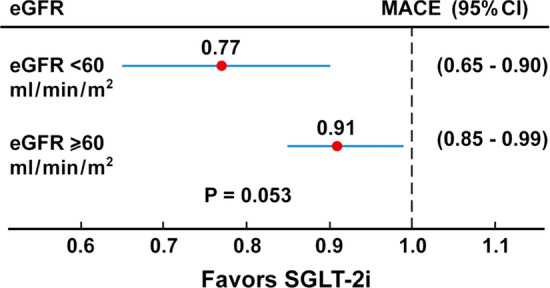
“Most patients assessed in the trials (EMPA-REG [29], CANVAS [30], DECLARE [31], CREDENCE [32]) had preserved kidney function (estimated glomerular filtration rate [eGFR] ≥ 60 ml/min/1.”
BackgroundCanagliflozin and Renal Outcomes in Type 2 Diabetes and Nephropathy
Perkovic, V., Jardine, M. J., Neal, B., Bompoint, S., Heerspink, H. J. L., Charytan, D. M., Edwards, R., Agarwal, R., Bakris, G., Bull, S., et al. (2019) · New England Journal of Medicine · doi:10.1056/nejmoa1811744 · Cited by 6,189 · cited 10×
“1 Meta-analysis evaluating the efficacy of SGLT-2i (empagliflozin, canagliflozin and dapagliflozin) on MACE according to basal eGFR values in four trials (EMPA-REG, CANVAS, DECLARE and CREDENCE) Fig.”
BackgroundInfluentialDapagliflozin in Patients with Chronic Kidney Disease
Heerspink, H. J. L., Stefánsson, B. V., Correa-Rotter, R., Chertow, G. M., Greene, T., Hou, F.-F., Mann, J. F. E., McMurray, J. J. V., Lindberg, M., Rossing, P., et al. (2020) · New England Journal of Medicine · doi:10.1056/nejmoa2024816 · Cited by 5,618 · cited 1×
“Treatment with these SGLT2i could be useful for early [47] as well as late [48] prevention of DKD.”
BackgroundCardiovascular and renal outcomes with empagliflozin in heart failure
Packer, M., Anker, S. D., Butler, J., Filippatos, G., Pocock, S. J., Carson, P., Januzzi, J., Verma, S., Tsutsui, H., Brueckmann, M., et al. (2020) · New England Journal of Medicine · doi:10.1056/nejmoa2022190 · Cited by 5,206 · cited 1×
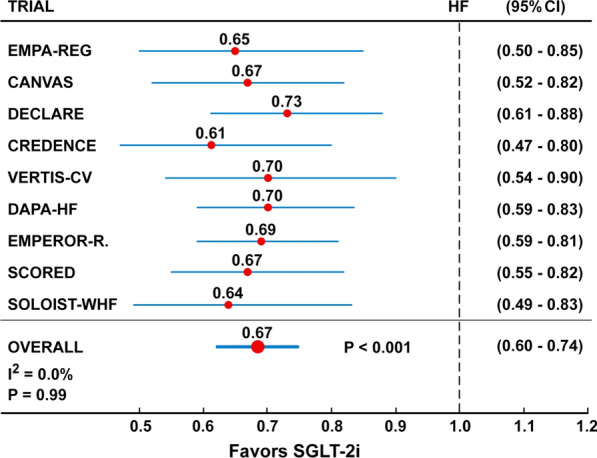
“2 months), the EMPEROR-Reduced trial [38] with empagliflozin (3730 patients with or without T2D and with HF randomized to empagliflozin or placebo and followed for a median of 16 months), the SCORED trial [34] with sotagliflozin (10 584 patients with T2D and DKD randomized to sotagliflozin or placebo and followed for…”
MethodCosentino, F., Grant, P. J., Aboyans, V., Bailey, C. J., Ceriello, A., Delgado, V., Federici, M., Filippatos, G., Grobbee, D. E., Hansen, T. B., et al. (2020) · European Heart Journal · doi:10.1093/eurheartj/ehz486 · Cited by 4,763
(2019) · doi:10.1161/cir.0000000000000677 · Cited by 4,501
Empagliflozin and Progression of Kidney Disease in Type 2 Diabetes
Wanner, C., Inzucchi, S. E., Lachin, J. M., Fitchett, D., von Eynatten, M., Mattheus, M., Johansen, O. E., Woerle, H. J., Broedl, U. C., & Zinman, B. (2016) · New England Journal of Medicine · doi:10.1056/nejmoa1515920 · Cited by 3,655 · cited 14×
“1 Meta-analysis evaluating the efficacy of SGLT-2i (empagliflozin, canagliflozin and dapagliflozin) on MACE according to basal eGFR values in four trials (EMPA-REG, CANVAS, DECLARE and CREDENCE) Fig.”
BackgroundInfluential
Research works printed but not linked: 1
- Heerspink HJL Stefánsson BV Correa-Rotter R Dapagliflozin in patients with chronic kidney disease N Engl J Med 2020 383 1436 1446 10.1056/NEJMoa2024816 32970396 · DOI · Paper page
Cited by
Yun, J.-S., & Ko, S.-H. (2021) · Metabolism · doi:10.1016/j.metabol.2021.154838 · Cited by 292
Giugliano, D., Scappaticcio, L., Longo, M., Caruso, P., Maiorino, M. I., Bellastella, G., Ceriello, A., Chiodini, P., & Esposito, K. (2021) · Cardiovascular Diabetology · doi:10.1186/s12933-021-01366-8 · Cited by 263
“Because the prevalence of CVD in the population with T2DM is around 32% [33], at least one fourth of the average patient with T2DM is possible a candidate for the use of the GLP-1RA, or sodium-glucose transporter-2 inhibitors [34], to improve the MACE outcome.”
BackgroundSelf-citationThe current role of sodium-glucose cotransporter 2 inhibitors in type 2 diabetes mellitus management
Xu, B., Li, S., Kang, B., & Zhou, J. (2022) · Cardiovascular Diabetology · doi:10.1186/s12933-022-01512-w · Cited by 190
Giugliano, D., Longo, M., Scappaticcio, L., Bellastella, G., Maiorino, M. I., & Esposito, K. (2021) · Cardiovascular Diabetology · doi:10.1186/s12933-021-01430-3 · Cited by 107
Self-citationMascolo, A., Scavone, C., Scisciola, L., Chiodini, P., Capuano, A., & Paolisso, G. (2021) · Pharmacological Research · doi:10.1016/j.phrs.2021.105836 · Cited by 60
Glycemic control and atrial fibrillation: an intricate relationship, yet under investigation
Papazoglou, Α. S., Κάρτας, Α., Moysidis, D. V., Tsagkaris, C., Papadakos, S. P., Bekiaridou, Α., Samaras, A., Karagiannidis, E., Papadakis, M., & Giannakoulas, G. A. (2022) · Cardiovascular Diabetology · doi:10.1186/s12933-022-01473-0 · Cited by 59
“The clinician should be aware, of course, of the severe CV morbidity burden that DM carries on, and be prepared to prevent heart failure by focusing on its early signs and initiating with SGLT-2 inhibitors particularly in patients at higher CV risk [110, 111].”
BackgroundMyricetin ameliorated prediabetes via immunomodulation and gut microbiota interaction
Yang, L., Gao, Y., Gong, J., Wang, H., Farag, M. A. F., Simal‐Gándara, J., Zhao, Y., Nie, S., & Xiao, J. (2022) · Food Frontiers · doi:10.1002/fft2.152 · Cited by 50
Li, Z., Lin, C., Cai, X., Lv, F., Yang, W., & Ji, L. (2024) · Alzheimer s Research & Therapy · doi:10.1186/s13195-024-01645-y · Cited by 55
“In recent years, several pre-clinical researches have revealed additional pharmacological benefits of SGLT-2i beyond glycemic effects, which majorly involved cardiorenal protective traits [44, 45], and gradually extended to cognitive function preserving effects.”
The Role of NLRP3 Inflammasome in Diabetic Cardiomyopathy and Its Therapeutic Implications
Ding, K., Song, C., Hu, H.-J., Yin, K., Huang, H., & Tang, H. (2022) · Oxidative Medicine and Cellular Longevity · doi:10.1155/2022/3790721 · Cited by 49
“…events (MACE) was eliminated, and the risk of HF was not a ff ected at all in T2D patients after achieving the best possible glycemic control [106], suggesting that optimal glycemic control is not enough to prevent the development of DCM. Based on the aforementioned experimental data,…”
Giugliano, D., Longo, M., Caruso, P., Maiorino, M. I., Bellastella, G., & Esposito, K. (2021) · Diabetes Obesity and Metabolism · doi:10.1111/dom.14374 · Cited by 48
Self-citationThe residual cardiorenal risk in type 2 diabetes
Giugliano, D., Maiorino, M. I., Bellastella, G., & Esposito, K. (2021) · Cardiovascular Diabetology · doi:10.1186/s12933-021-01229-2 · Cited by 43
Self-citationGlycemic Control and the Heart: The Tale of Diabetic Cardiomyopathy Continues
Longo, M., Scappaticcio, L., Cirillo, P., Maio, A., Carotenuto, R. M., Maiorino, M. I., Bellastella, G., & Esposito, K. (2022) · Biomolecules · doi:10.3390/biom12020272 · Cited by 34
“Since this effect is associated with each studied molecule (dapagliflozin, empagliflozin, canagliflozin, ertugliflozin, and sotagliflozin), the reduced risk for HF related to SGLT-2i should be considered a class effect [79].”
BackgroundSelf-citationSchechter, M., Cohen, C. M., Rozenberg, A., Yanuv, I., Chodick, G., Karasik, A., Kosiborod, M., & Mosenzon, O. (2021) · Cardiovascular Diabetology · doi:10.1186/s12933-021-01362-y · Cited by 26
Uneda, K., Kawai, Y., Yamada, T., Kinguchi, S., Azushima, K., Kanaoka, T., Toya, Y., Wakui, H., & Tamura, K. (2021) · Scientific Reports · doi:10.1038/s41598-021-89620-7 · Cited by 28
Hypertension in diabetes care: emerging roles of recent hypoglycemic agents
Tanaka, A., & Node, K. (2021) · Hypertension Research · doi:10.1038/s41440-021-00665-7 · Cited by 21
“regardless of their diabetes status [17, 18, 20].”
Kowalska, K., Wilczopolski, P., Buławska, D., Młynarska, E., Rysz, J., & Franczyk, B. (2022) · Antioxidants · doi:10.3390/antiox11122500 · Cited by 23
“Representatives of SGLT-2is, such as empagliflozin and dapagliflozin, have conquered the world of internal medicine research not only with their hypoglycaemic properties but also with their cardio and nephroprotective effects ever since the results of the EMPA-REG OUTCOME, EMPERORREDUCED, EMPEROR-PRESERVED, DAPA-HF, D…”
Galis, P., Bartosova, L., Farkašová, V., Barteková, M., Ferenczyová, K., & Rajtík, T. (2024) · Frontiers in Endocrinology · doi:10.3389/fendo.2024.1451100 · Cited by 21
Biomarkers of autoimmunity and beta cell metabolism in type 1 diabetes
Yang, M., Kibbey, R. G., & Mamula, M. J. (2022) · Frontiers in Immunology · doi:10.3389/fimmu.2022.1028130 · Cited by 17
The SGLT-2 Inhibitors in Personalized Therapy of Diabetes Mellitus Patients
Tilinca, M. C., Tiucă, R. A., Ţilea, I., & Varga, A. (2021) · Journal of Personalized Medicine · doi:10.3390/jpm11121249 · Cited by 15
“The mechanism of action of SGLT-2i consists of blocking glucose reabsorption at the proximal renal tubule, resulting in glucosuria, osmotic diuresis, and natriuresis, thus reducing blood glucose without stimulating insulin release [22,23].”
BackgroundSönmez, A., Sabbour, H. M., Echtay, A. S., Rahmah, A. M., Alhozali, A. M., Sabaan, F. S. A., Haddad, F., Iraqi, H., Elebrashy, I., Assaad, S. N., et al. (2022) · Journal of Diabetes · doi:10.1111/1753-0407.13266 · Cited by 16
“leading to their expansion to nondiabetic patients.(77-79) A recent meta-analysis showed that SGLT2is were associated with a reduced risk of major adverse cardiovascular events (MACE); the greatest benefit was a reduction in the risk of hospitalization for heart failure (HHF) and kidney outcomes.”
BackgroundZhan, X., Cheng, L., Huo, N., Yu, L., Liu, C., Liu, T., Li, G., & Fu, H. (2022) · Frontiers in Cardiovascular Medicine · doi:10.3389/fcvm.2022.908037 · Cited by 19
“There are clinical evidences that SGLT-2i reduces 32% hospitalization of heart failure and incidence of atrial fibrillation (4, 5).”
BackgroundTanaka, A., Toyoda, S., Imai, T., Shiina, K., Tomiyama, H., Matsuzawa, Y., Okumura, T., Kanzaki, Y., Onishi, K., Kiyosue, A., et al. (2021) · Cardiovascular Diabetology · doi:10.1186/s12933-021-01369-5 · Cited by 13
Wahinya, M., & Khan, Z. U. (2023) · Cureus · doi:10.7759/cureus.37388 · Cited by 14
“The hypoglycemic drugs, sodium-glucose cotransporter-2 (SGLT2) inhibitors, have emerged as formidable drugs demonstrating primary and secondary prevention of HF events in both T2DM and nondiabetes mellitus (DM) patients [8,10].”
BackgroundKuang, Z., Hou, N., Kan, C., Han, F., Qiu, H., & Sun, X. (2022) · International Urology and Nephrology · doi:10.1007/s11255-022-03355-6 · Cited by 10
“For example, patients treated with SGLT-2is have an increased risk of genital tract infections, volume depletion or rarely lower-extremity amputation [106].”
BackgroundStevioside Improves Liver Insulin Resistance in Prediabetic Mice via IRS1/PI3K/AKT Signaling Pathway
Zhang, C., Kang, L., Li, K., Zhang, J., Liu, Y., Wang, R., & Li, G. (2025) · Molecular Nutrition & Food Research · doi:10.1002/mnfr.70190 · Cited by 8
“T2DM also leads to a variety of complications, including cardiovascular disease, kidney and neurological diseases, diabetic foot ulcers, and elevated risk of mortality [2–4].”
Pharmacological Management of Diabesity: Current and Emerging Therapies
Galasso, M., Caporusso, M., Volatile, A., Verde, L., Esposito, K., Giorgino, F., Perrini, S., Colao, A., Barrea, L., & Muscogiuri, G. (2026) · Current Obesity Reports · doi:10.1007/s13679-025-00681-5 · Cited by 6
“In addition, SGLT2i confers significant cardiorenal benefits, thereby contributing to a reduction in overall cardiovascular risk [14, 15 ].”
Self-citationPrybyla, О. В. (2021) · INTERNATIONAL JOURNAL OF ENDOCRINOLOGY (Ukraine) · doi:10.22141/2224-0721.17.4.2021.237342 · Cited by 6
Tang, T., Guo, M., Yu, H., Huang, L., Li, S., Zhang, Y., & Lou, Y. (2025) · Diabetes Research and Clinical Practice · doi:10.1016/j.diabres.2025.112320 · Cited by 5
Sodium Glucose Transporter-2 Inhibitors (SGLT2Is)-TLRs Axis Modulates Diabetes
Niknejad, A., Hosseini, Y., Shamsnia, H. S., Kashani, A. S., Rostamian, F., Momtaz, S., & Abdolghaffari, A. H. (2023) · Cell Biochemistry and Biophysics · doi:10.1007/s12013-023-01164-x · Cited by 5
“SGLT2Is can also improve hypertension and act as a weight lowering agent in diabetic individuals [97].”
BackgroundLongo, M., Caruso, P., Scappaticcio, L., Maiorino, M. I., Bellastella, G., Capuano, A., Esposito, K., & Giugliano, D. (2024) · Diabetes Obesity and Metabolism · doi:10.1111/dom.15451 · Cited by 4
“29 We found a slight improvement of ejection fraction in the only cohort with SGLT-2i, confirming the potential CV benefit of this class of treatment.”
BackgroundSelf-citationCheng, W.-Y., Yen, F., Hung, Y., Wei, J. C.-C., Lin, H.-J., Huang, Y., Hsu, C.-C., & Hwu, C. (2025) · Journal of the Royal Society of Medicine · doi:10.1177/01410768251375906 · Cited by 4
Dandan, H. O. U., SHANG, S., Juan, L. V., & Shuling, W. A. N. G. (2022) · Food Science and Technology · doi:10.1590/fst.124721 · Cited by 3
Singh, A. K., & Shah, V. N. (2022) · Clinical Diabetology · doi:10.5603/dk.a2022.0037 · Cited by 3
Luo, Z., Pi, D., Xi, T., Jiang, W., Qiu, F., & Yang, J. (2025) · Frontiers in Endocrinology · doi:10.3389/fendo.2025.1641114 · Cited by 3
Yuan, P., Teng, Y., Li, Y., Zhou, Y., Gao, M., Chen, X., Yan, Z., Li, X., Wei, R., & Teng, Z. (2025) · Frontiers in Endocrinology · doi:10.3389/fendo.2025.1609966 · Cited by 2
“After multiple infections and treatments, the drug resistance of pathogens may be enhanced (16).”
Jia, S., Zeng, Q., Zhu, P., & Liu, F. (2026) · Diabetes Research and Clinical Practice · doi:10.1016/j.diabres.2026.113109 · Cited by 3
Barakat, H. E., Ibrahim, M. A., Warda, A. E. A., Abdelmoneam, M. Y., Sallam, M. F., & Abougalambou, S. S. I. (2026) · BMC Pharmacology and Toxicology · doi:10.1186/s40360-026-01211-2 · Cited by 1
“Diabetes is associated with a two-to three-fold increased risk of cardiovascular disease in addition to increased risk of developing diabetic kidney disease, stroke and heart failure [2–5].”
Modern Approaches to Treatment of Chronic Heart Failure in Patients with Type 2 Diabetes Mellitus
Gorb, Y. G., Serik, S. A., Tkachenko, O. V., & Ryabukha, V. V. (2022) · Ukraïnsʹkij žurnal medicini bìologìï ta sportu · doi:10.26693/jmbs07.01.014 · Cited by 1
SGLT-2i para a prevenção de eventos cardiovasculares em portadores com Diabetes mellitus tipo 2
Barros, W. F. D. N., & de Oliveira, F. H. P. C. (2022) · Research Society and Development · doi:10.33448/rsd-v11i8.30528
Sztanek, F., Tóth, L., & Pető, A. (2023) · Diabetologia Hungarica · doi:10.24121/dh.2023.15
Bah, F., Camara, C., Sangare, O., Baldé, E. S., Touré, K., Camara, T. D., Kourouma, M., & Hagassou, C. (2024) · Journal of Diabetes Mellitus · doi:10.4236/jdm.2024.142010
Nandave, M. (2024) · Springer eBooks · doi:10.1007/978-981-97-7568-2_3
Roberson, C. L. A., Hoffman, A. F., Cohen, P., Jackson, V. L., & Spratt, S. E. (2024) · Journal of the American Pharmacists Association · doi:10.1016/j.japh.2024.102320
Rastogi, S. K., Odeh, M. A., & Rastogi, P. K. (2025) · Elsevier eBooks · doi:10.1016/b978-0-443-29129-6.00002-6 · Cited by 1
Yen, F., Wei, J. C.-C., Hung, Y., Li, P.-Y., Hsu, C., & Hwu, C. (2025) · Journal of General Internal Medicine · doi:10.1007/s11606-025-09847-2 · Cited by 2
Tanaka, A., Toyoda, S., Imai, T., Shiina, K., Tomiyama, H., Matsuzawa, Y., Okumura, T., Kanzaki, Y., Onishi, K., Kiyosue, A., et al. (2021) · Figshare · doi:10.6084/m9.figshare.16570283
Schechter, M., Cohen, C. M., Rozenberg, A., Yanuv, I., Chodick, G., Karasik, A., Kosiborod, M., & Mosenzon, O. (2021) · Figshare · doi:10.6084/m9.figshare.15253888
Giugliano, D., Longo, M., Scappaticcio, L., Bellastella, G., Maiorino, M. I., & Esposito, K. (2021) · Figshare · doi:10.6084/m9.figshare.17254158
Self-citation(2021) · repository of the Library and Information Centre, Hungarian Academy of Sciences (REAL-J)
Metadata
- Authors
- Giugliano, D., Longo, M., Scappaticcio, L., Caruso, P., & Esposito, K.
- Affiliations
- University of Campania "Luigi Vanvitelli" (IT)
- Corresponding author
- Giugliano, Dario
- Venue
- Cardiovascular Diabetology
- Published
- 2021-01-11
- Volume
- 20
- Issue
- 1
- Pages
- 17-17
- ISSN
- 1475-2840 (ISSN-L)
- PMC
- PMC7798345
- OpenAlex
- W3119719361
- Semantic Scholar
- 2a9a7f9db5eb5bb09ac091b21d4d8f821fa2eb5a
- Cited by
- 48
- References
- 80
- Citations by year
- 2026: 3 · 2025: 7 · 2024: 6 · 2023: 3 · 2022: 14 · 2021: 15
- FWCI
- 1.46
- Type
- journal article
- Language
- en
- Open access
- gold
- doi.org
- Licence
- cc-by
- creativecommons.org/licenses/by/4.0/ (tdm)
- creativecommons.org/licenses/by/4.0/ (vor)
- Locations
- Cardiovascular Diabetology (publishedVersion, cc-by)
- Europe PMC (PubMed Central) (publishedVersion, other-oa)
- PubMed Central (publishedVersion, cc-by)
- PubMed (publishedVersion)
- DOAJ (DOAJ: Directory of Open Access Journals) (submittedVersion, cc-by-sa)
- Archivio Istituzionale della Ricerca - Università degli Studi della Campania "Luigi Vanvitelli" (submittedVersion)
- Funders
- Associazione Salute con Stile
- Topics
- Health Sciences › Medicine › Endocrinology, Diabetes and Metabolism › Diabetes Treatment and Management
- Health Sciences › Medicine › Nephrology › Chronic Kidney Disease and Diabetes
- Health Sciences › Medicine › Cardiology and Cardiovascular Medicine › Heart Failure Treatment and Management
- Keywords
- SGLT2 inhibitors, type 2 diabetes, cardiorenal complications, major adverse cardiovascular events, heart failure hospitalization, renal outcomes, end-stage renal disease, primary prevention, secondary prevention, age, older adults, glucose-lowering medications
- MeSH terms
- Sodium-Glucose Transporter 2 Inhibitors, Glycemic Control, Blood Glucose, Diabetes Mellitus, Type 2, Diabetic Nephropathies, Heart Failure, Glycated Hemoglobin, Humans, Primary Prevention, Risk Factors, Biomarkers, Treatment Outcome, Risk Assessment, Secondary Prevention, Diabetic Cardiomyopathies
About these checks
Registry, retraction, Cites and statistics results are computed, not judged, with one exception: a printed reference that no index lists is read once by a model before it counts as a citation error. Claims are extracted by a model and kept only when their quote appears verbatim in the text; each cited source is then checked, with a model’s help, for whether it says what the claim relies on. Those verdicts can be wrong — read the claim’s quote and the cited source before relying on one.
Statistics and arithmetic are recomputed, not judged.
Confidence bands are shown only for fields calibrated on our annotated test set. None is calibrated yet, so no band is shown.
What counts as a claim ›How we measure confidence ›How we check this ›
Are you an author, or do you see a problem with this page? Request a review
Data sources
Bibliographic data: Semantic Scholar, OpenAlex, Crossref.
Contains information from the Semantic Scholar Academic Graph Datasets, made available under the ODC Attribution License (ODC-BY 1.0).
Semantic Scholar’s data is described in: Kinney, R., et al. (2023). The Semantic Scholar Open Data Platform. arXiv:2301.10140.
