

The DOI matches its Crossref record; 31 of the 31 references it cites were found in a registry or an index.
Antisense knockdown of pyruvate dehydrogenase kinase promotes the neutral lipid accumulation in the diatom Phaeodactylum tricornutum
Open accessAbstract
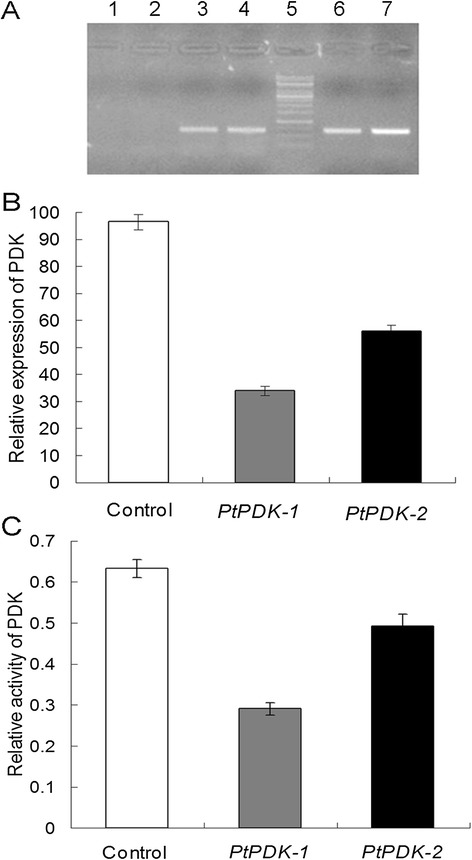
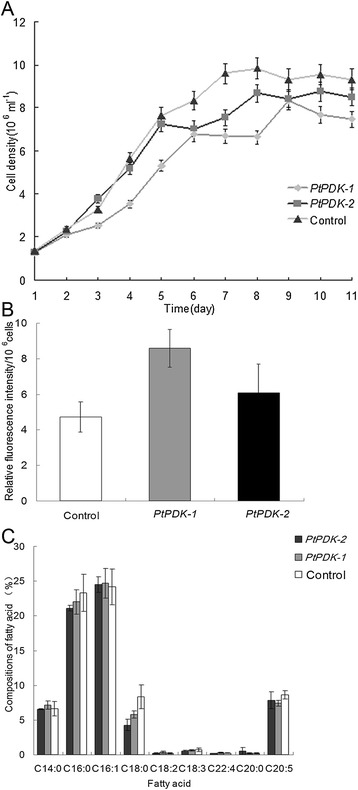
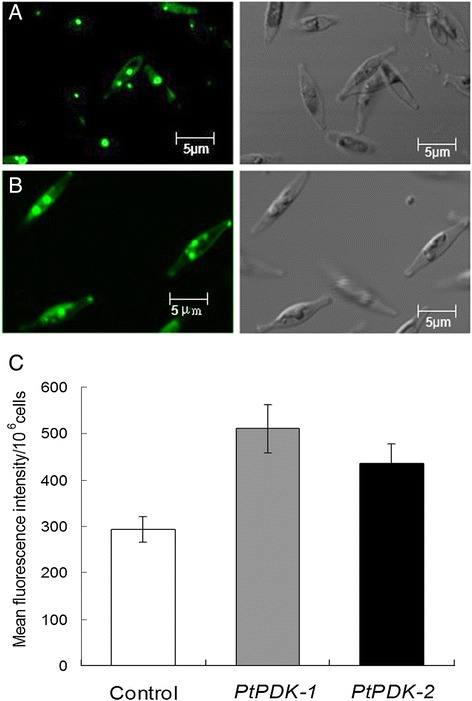
BACKGROUND: Microalgae have been an emerging biofuel resource; however, the germplasm improvement has been slow due to the lack of molecular tools. Pyruvate dehydrogenase kinase (PDK) deactivates the pyruvate dehydrogenase complex (PDC) which catalyzes the oxidative decarboxylation of pyruvate. Acetyl-CoA production via PDC is important in plant tissues that are active in fatty acid synthesis. RESULTS: A 1261-bp cDNA of a putative PDK gene (PtPDK) was cloned from a diatom Phaeodactylum tricornutum, and PtPDK antisense knockdown transgenic diatoms were generated. Both PtPDK transcript abundance and enzyme activity were reduced significantly due to antisense knockdown of PtPDK. Neutral lipid content of transgenic diatom cells increased up to 82% as determined by Nile red staining, and fatty acid composition was not altered. Transgenic cells showed slightly lower growth rate but similar cell size with the wild type, hence retaining similar biomass productivity. CONCLUSIONS: This work first obtained a successful engineered diatom regulating a key gene involved in lipid metabolism. Our findings also provide powerful indications in enhancing microalgal lipid production by metabolic engineering for biofuel industry.
Overview
The claims and statistics of this paper haven’t been checked yet.
Run the check — free, no account needed. It reads the open-access text and checks the sources it cites.
Integrity signals
Registry
Cites
Statistics
Figures
Verification
Claims the paper makes
The claims and statistics of this paper haven’t been checked yet.
Run the check — free, no account needed. It reads the open-access text and checks the sources it cites.
Claims other papers make about this one
Each is checked against this paper’s own text: does it say what the citing paper says it does?
The check wasn’t confident either way, so it gives no verdict — never disputed.
In the citing paper
“The exceptionally high content of total lipids was noted in microalgae Prymnesium parvum (65.79%) [99], Vischeria vischeri (65.16%) [100], Nannochloropsis granulata CCMP525 (60.35%) [101], Chlorella vulgaris (67.1%) [99], Tetradesmus deserticola JNU19 (62.4%) [102].”
From Nitrogen and phosphorus stress as a tool to induce lipid production in microalgae (2023) · cites this paper as [101]
Experimental — accuracy not yet measured
Self-check
Percentages, sums and reported differences re-computed from the paper’s own numbers.
The self-check needs the paper’s full text.
Citations
Cites
Single-Step Method of RNA Isolation by Acid Guanidinium Thiocyanate–Phenol–Chloroform Extraction
Chomczynski, P., & Sacchi, N. (1987) · Analytical Biochemistry · doi:10.1006/abio.1987.9999 · Cited by 65,515
MEGA4: Molecular Evolutionary Genetics Analysis (MEGA) Software Version 4.0
Tamura, K., Dudley, J. T., Nei, M., & Kumar, S. (2007) · Molecular Biology and Evolution · doi:10.1093/molbev/msm092 · Cited by 28,734 · cited 1×
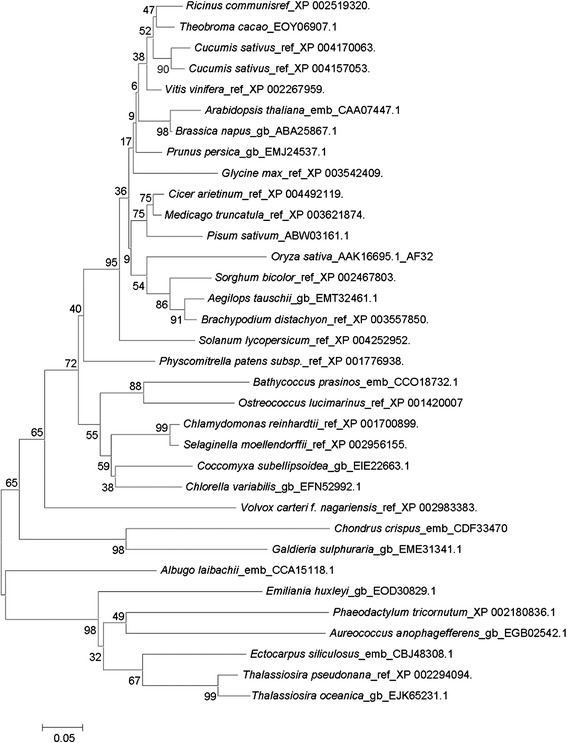
“Phylogenetic tree of protein clusters from various species was constructed by neighborjoining (NJ) method using software MEGA 5 [20].”
MethodMicroalgal triacylglycerols as feedstocks for biofuel production: perspectives and advances
Hu, Q., Sommerfeld, M., Jarvis, E., Ghirardi, M., Posewitz, M., Seibert, M., & Darzins, A. (2008) · The Plant Journal · doi:10.1111/j.1365-313x.2008.03492.x · Cited by 3,745 · cited 1×
“Microalgae have become an emerging biofuel resource [3].”
BackgroundChomczyński, P., & Sacchi, N. (2006) · Nature Protocols · doi:10.1038/nprot.2006.83 · Cited by 2,084
The Genome of the Diatom Thalassiosira Pseudonana : Ecology, Evolution, and Metabolism
Armbrust, E. V., Berges, J. A., Bowler, C., Green, B. R., Martínez, D., Putnam, N. H., Zhou, S., Allen, A. E., Apt, K. E., Bechner, M., et al. (2004) · Science · doi:10.1126/science.1101156 · Cited by 2,029 · cited 1×
“Particularly, a range of novel metabolic pathways have been found in diatoms which were presumably acquired during their evolution [1], so they are of major interest for the discovery of novel biological processes which are not present in other more intensively studied model organisms [2].”
BackgroundLepage, G., & ROY, C. C. (1984) · Journal of Lipid Research · doi:10.1016/s0022-2275(20)34457-6 · Cited by 1,028
Trentacoste, E. M., Shrestha, R. P., Smith, S. R., Glé, C., Hartmann, A. C., Hildebrand, M., & Gerwick, W. H. (2013) · Proceedings of the National Academy of Sciences · doi:10.1073/pnas.1309299110 · Cited by 430 · cited 1×
“pseudonana to improve lipid content by knockdown of a lipase gene [12].”
BackgroundSugden, M. C., & Holness, M. J. (2003) · American Journal of Physiology-Endocrinology and Metabolism · doi:10.1152/ajpendo.00526.2002 · Cited by 428 · cited 14×
“Overexpression of Brassica napus PDK in Arabidopsis repressed the PDC activity, leading to a decrease in seed oil content [10].”
BackgroundInfluentialYang, Z.-K., Niu, Y., Ma, Y.-H., Xue, J., Zhang, M.-H., Yang, W.-D., Liu, J.-S., Lu, S.-H., Guan, Y., & Li, H. (2013) · Biotechnology for Biofuels · doi:10.1186/1754-6834-6-67 · Cited by 366 · cited 2×
“[24] to detect the cellular neutral lipid contents of P.”
BackgroundMethodSelf-citationMolecular toolbox for studying diatom biology in Phaeodactylum tricornutum
Siaut, M., Heijde, M., Mangogna, M., Montsant, A., Coesel, S., Allen, A. E., Manfredonia, A., Falciatore, A., & Bowler, C. (2007) · Gene · doi:10.1016/j.gene.2007.05.022 · Cited by 345 · cited 1×
“Particularly, a range of novel metabolic pathways have been found in diatoms which were presumably acquired during their evolution [1], so they are of major interest for the discovery of novel biological processes which are not present in other more intensively studied model organisms [2].”
BackgroundRegulation of pyruvate dehydrogenase kinase and phosphatase by acetyl-CoA/CoA and NADH/NAD ratios
Pettit, F. H., Pelley, J. W., & Reed, L. J. (1975) · Biochemical and Biophysical Research Communications · doi:10.1016/s0006-291x(75)80185-9 · Cited by 315 · cited 2×
“PDK has an effect on short-term regulation of pyruvate generated by glycolysis and its activity could be regulated by the molar ratios of acetyl-CoA/CoA, NADH/NAD [17].”
BackgroundFlow cytometry for the development of biotechnological processes with microalgae
Hyka, P., Lickova, S., Přibyl, P., Melzoch, K., & Kovar, K. (2012) · Biotechnology Advances · doi:10.1016/j.biotechadv.2012.04.007 · Cited by 282 · cited 1×
“Nile red-stained diatom cells were also quantified by flow cytometry at single-cell level [11].”
MethodMOLECULAR GENETIC MANIPULATION OF THE DIATOM THALASSIOSIRA PSEUDONANA (BACILLARIOPHYCEAE)1
Poulsen, N., Chesley, P. M., & Kröger, N. (2006) · Journal of Phycology · doi:10.1111/j.1529-8817.2006.00269.x · Cited by 261 · cited 1×
“provided evidence that PDK may participate in the regulation of lipid biosynthesis in Arabidopsis thaliana [4].”
BackgroundMitochondrial Metabolism in Developing Embryos of Brassica napus
Schwender, J., Shachar‐Hill, Y., & Ohlrogge, J. B. (2006) · Journal of Biological Chemistry · doi:10.1074/jbc.m606266200 · Cited by 238 · cited 1×
“This hypothesis is consistent with the metabolic fluxes determined in developing embryos of Brassica napus, in which mitochondrial flux largely contributed to the provision of precursors for cytosolic fatty acid elongation [19].”
ResultThe use of a fluorescent dye, Nile red, to evaluate the lipid content of single mammalian oocytes
Genicot, G., Leroy, J., Soom, A. V., & Donnay, I. (2004) · Theriogenology · doi:10.1016/j.theriogenology.2004.06.006 · Cited by 195 · cited 1×
“The dye Nile red has been used to detect the intracellular lipid droplets by fluorescence microscopy and quantified with a photometer and photomultiplier connected to the microscope [23].”
MethodFunction of plastidial pyruvate kinases in seeds of Arabidopsis thaliana†
Baud, S., Wuillème, S., Dubreucq, B., de Almeida, A., Vuagnat, C., Lepiniec, L., Miquel, M., & Rochat, C. (2007) · The Plant Journal · doi:10.1111/j.1365-313x.2007.03232.x · Cited by 158 · cited 1×
“In seeds of Arabidopsis thaliana, the plastidial pyruvate kinases were important for fatty acid synthesis [14].”
BackgroundConnaughton, S., Chowdhury, F., Attia, R. R., Song, S., Zhang, Y., Elam, M. B., Cook, G. A., & Park, E. A. (2009) · Molecular and Cellular Endocrinology · doi:10.1016/j.mce.2009.08.011 · Cited by 144 · cited 1×
“PDK, a member of serine/threonine kinase family, plays a role in regulating carbohydrate metabolism by deactivation of PDC via the reversible phosphorylation of pyruvate dehydrogenase (E1) α subunit to achieve ATP-dependent inactivation of pyruvate dehydrogenase [16].”
BackgroundFlow Cytometry: Present and Future
Muirhead, K. A., Horan, P. K., & Poste, G. H. (1985) · Nature Biotechnology · doi:10.1038/nbt0485-337 · Cited by 142 · cited 1×
“Flow cytometry is used as a rapid approach for qualitative and quantitative analysis of individual cells which can detect a variety of biochemical reactions accurately in cells [27], especially analysis of large number of individual cells by fluorescence staining [28].”
MethodNiu, Y., Yang, Z.-K., Zhang, M., Zhu, C.-C., Yang, W., Liu, J., & Li, H. (2012) · BioTechniques · doi:10.2144/000113881 · Cited by 96 · cited 1×
“tricornutum transformation vector modified from a previously constructed plasmid pHY11 [21].”
BackgroundSelf-citationDevelopment of multispecies algal bioassays using flow cytometry
Franklin, N. M., Stauber, J. L., & Lim, R. P. (2004) · Environmental Toxicology and Chemistry · doi:10.1897/03-250 · Cited by 73
Mechanisms responsible for regulation of pyruvate dehydrogenase kinase 4 gene expression
Kwon, H., & Harris, R. A. (2004) · Advances in Enzyme Regulation · doi:10.1016/j.advenzreg.2003.11.020 · Cited by 71 · cited 1×
“Although activity of PDC is directly inhibited by acetyl-CoA and NADH, which are products of aerobic oxidation of fatty acids, the major regulation on PDC is the covalent modification of PDC leading to the activated or inhibited activity [15].”
BackgroundZou, J.-T., Qi, Q., Katavić, V., Marillia, E., & Taylor, D. C. (1999) · Plant Molecular Biology · doi:10.1023/a:1006393726018 · Cited by 69 · cited 1×
“Relative activities of PDK were represented by the production of NADH (μmol/min per mg protein from algal cells) measured by absorbance [26].”
MethodHwang, B., Jeoung, N. H., & Harris, R. A. (2009) · Biochemical Journal · doi:10.1042/bj20090390 · Cited by 61 · cited 1×
“The findings suggest PDHK4 deficiency could result in the altered upstream signaling components associated with the regulation of lipid metabolism [18].”
BackgroundMiyagawa‐Yamaguchi, A., Okami, T., Kira, N., Yamaguchi, H., Ohnishi, K., & Adachi, M. (2009) · Phycological Research · doi:10.1111/j.1440-1835.2009.00531.x · Cited by 57 · cited 1×
“tricornutum for improving traits suited to biodiesel production [5].”
BackgroundThelen, J. J., Miernyk, J. A., & Randall, D. D. (2000) · Biochemical Journal · doi:10.1042/0264-6021:3490195 · Cited by 56 · cited 1×
“The mitochondrial PDC, unlike its plastid counterpart, has an associated pyruvate dehydrogenase kinase (PDK) [7].”
BackgroundCharacteristics of the Gene That Encodes Acetyl‐CoA Carboxylase in the Diatom Cyclotella crypticaa
Roessler, P. G., Bleibaum, J. L., Thompson, G. A., & Ohlrogge, J. B. (1994) · Annals of the New York Academy of Sciences · doi:10.1111/j.1749-6632.1994.tb47398.x · Cited by 49 · cited 1×
“Although expression of ACCase was elevated, lipid yields did not exhibit significant changes [13].”
BackgroundBenoist, C. O., & Hacohen, N. (2011) · Science · doi:10.1126/science.1206351 · Cited by 37 · cited 1×
“Flow cytometry is used as a rapid approach for qualitative and quantitative analysis of individual cells which can detect a variety of biochemical reactions accurately in cells [27], especially analysis of large number of individual cells by fluorescence staining [28].”
MethodThelen, J. J., Miernyk, J. A., & Randall, D. D. (2000) · Biochemical Journal · doi:10.1042/bj3490195 · Cited by 36
Igamberdiev, A. U., Lernmark, U., & Gardeström, P. (2014) · Mitochondrion · doi:10.1016/j.mito.2014.04.006 · Cited by 29 · cited 1×
“The mitochondrial pyruvate dehydrogenase complex (PDC) catalyzes the irreversible oxidative decarboxylation of pyruvate to acetyl-CoA, thus directing the carbon flow into TCA cycle for yielding NADH to satisfy the energy demands of cells [6].”
BackgroundCloning and functions analysis of a pyruvate dehydrogenase kinase in Brassica napus
Li, R., Hu, Z., Zhang, H., Zhan, G., Wang, H., & Hua, W. (2011) · Plant Cell Reports · doi:10.1007/s00299-011-1066-2 · Cited by 14 · cited 1×
“Overexpression of Brassica napus PDK in Arabidopsis repressed the PDC activity, leading to a decrease in seed oil content [10].”
BackgroundTokmakov, A. A. (2011) · Journal of Molecular Modeling · doi:10.1007/s00894-011-1281-3 · Cited by 5 · cited 1×
“modeling of PDK isozymes from Xenopus tropicalis revealed that acetyl-CoA production via PDC is important in tissues that are active in fatty acid synthesis [9].”
Background
Cited by
Sorted by citations
The lipid biochemistry of eukaryotic algae
Li-Beisson, Y., Thelen, J. J., Fedosejevs, E., & Harwood, J. L. (2019) · Progress in Lipid Research · doi:10.1016/j.plipres.2019.01.003 · Cited by 453
“Activation of the pyruvate dehydrogenase complex (PDC) protein while silencing the pyruvate dehydrogenase kinase (PDK) has boosted acetyl-CoA production therefore neutral lipid content in Phaeodactylum tricornutum [121].”
BackgroundMicroalgae for high-value products: A way towards green nutraceutical and pharmaceutical compounds
Mehariya, S., Goswami, R. K., Karthikeysan, O. P., & Verma, P. (2021) · Chemosphere · doi:10.1016/j.chemosphere.2021.130553 · Cited by 303
Biofuel production from microalgae: a review
Peng, L., Fu, D., Chu, H., Wang, Z., & Qi, H. (2020) · Environmental Chemistry Letters · doi:10.1007/s10311-019-00939-0 · Cited by 227
Self-citationCurrent trends to comprehend lipid metabolism in diatoms
Zulu, N. N., Zienkiewicz, K., Vollheyde, K., & Feussner, I. (2018) · Progress in Lipid Research · doi:10.1016/j.plipres.2018.03.001 · Cited by 226
Storage of starch and lipids in microalgae: Biosynthesis and manipulation by nutrients
Ran, W., Wang, H., Liu, Y., Qi, M., Xiang, Q., Yao, C., Zhang, Y., & Lan, X. (2019) · Bioresource Technology · doi:10.1016/j.biortech.2019.121894 · Cited by 224
Metadata
- Authors
- Ma, Y.-H., Wang, X., Niu, Y.-F., Yang, Z.-K., Zhang, M.-H., Wang, Z.-M., Yang, W.-D., Liu, J.-S., & Li, H.-Y.
- Affiliations
- Jinan University (CN)
- Venue
- Microbial Cell Factories
- Published
- 2014-08-09
- Volume
- 13
- Issue
- 1
- Pages
- 100-100
- ISSN
- 1475-2859 (ISSN-L)
- PMC
- PMC4251698
- OpenAlex
- W2108487405
- Cited by
- 106
- References
- 30
- Citations by year
- 2026: 2 · 2025: 10 · 2024: 2 · 2023: 10 · 2022: 8 · 2021: 12 · 2020: 9 · 2019: 19 · 2018: 10 · 2017: 11 · 2016: 9 · 2015: 4
- FWCI
- 2.64
- Type
- journal article
- Language
- en
- Open access
- gold
- doi.org
- Locations
- Microbial Cell Factories (publishedVersion, cc-by)
- PubMed Central (publishedVersion, cc-by)
- PubMed (publishedVersion)
- Institutional Repository of Guangzhou Institute of Energy Research, Chinese Academy of Sciences (submittedVersion)
- Topics
- Physical Sciences › Energy › Renewable Energy, Sustainability and the Environment › Algal biology and biofuel production
- Life Sciences › Biochemistry, Genetics and Molecular Biology › Molecular Biology › Microbial Metabolic Engineering and Bioproduction
- Life Sciences › Biochemistry, Genetics and Molecular Biology › Biochemistry › Lipid metabolism and biosynthesis
- Keywords
- pyruvate dehydrogenase kinase, Phaeodactylum tricornutum, diatoms, neutral lipid accumulation, pyruvate dehydrogenase complex, antisense knockdown, microalgal lipid production, metabolic engineering, biofuels, fatty acid composition, acetyl-CoA
- MeSH terms
- Pyruvate Dehydrogenase Acetyl-Transferring Kinase, RNA, Antisense, Protein Serine-Threonine Kinases, Diatoms, Lipid Metabolism, Gene Knockdown Techniques, Microalgae, Metabolic Engineering
About these checks
Registry, retraction, Cites and statistics results are computed, not judged, with one exception: a printed reference that no index lists is read once by a model before it counts as a citation error. Claims are extracted by a model and kept only when their quote appears verbatim in the text; each cited source is then checked, with a model’s help, for whether it says what the claim relies on. Those verdicts can be wrong — read the claim’s quote and the cited source before relying on one.
Statistics and arithmetic are recomputed, not judged.
Confidence bands are shown only for fields calibrated on our annotated test set. None is calibrated yet, so no band is shown.
What counts as a claim ›How we measure confidence ›How we check this ›
Are you an author, or do you see a problem with this page? Request a review
