

The DOI matches its Crossref record; 31 of the 31 references it cites were found in a registry or an index.
Antisense knockdown of pyruvate dehydrogenase kinase promotes the neutral lipid accumulation in the diatom Phaeodactylum tricornutum
Open accessAbstract
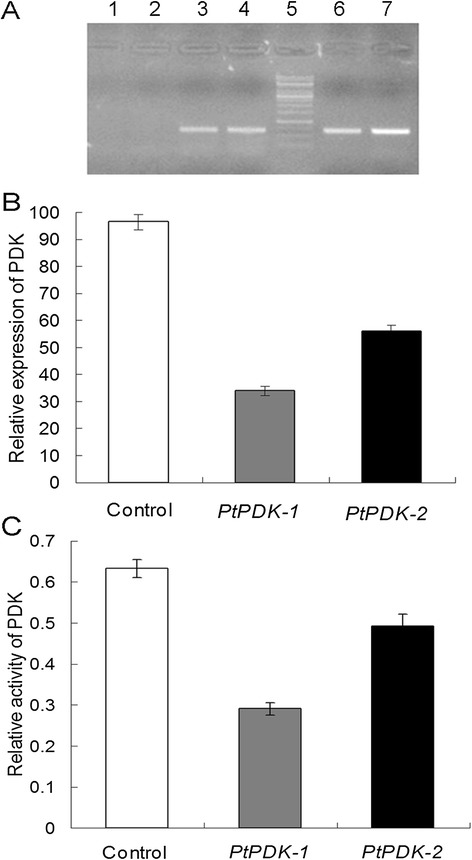
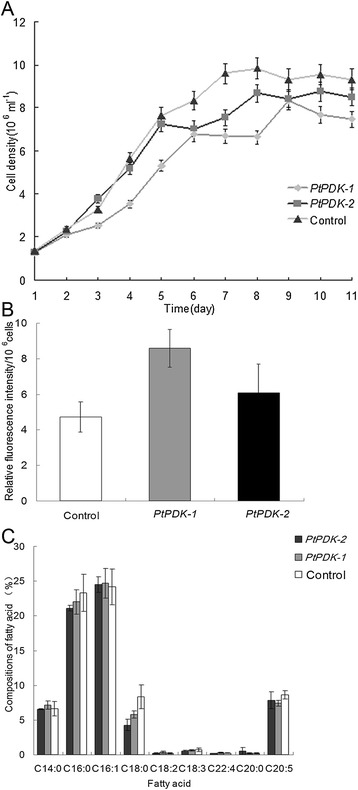
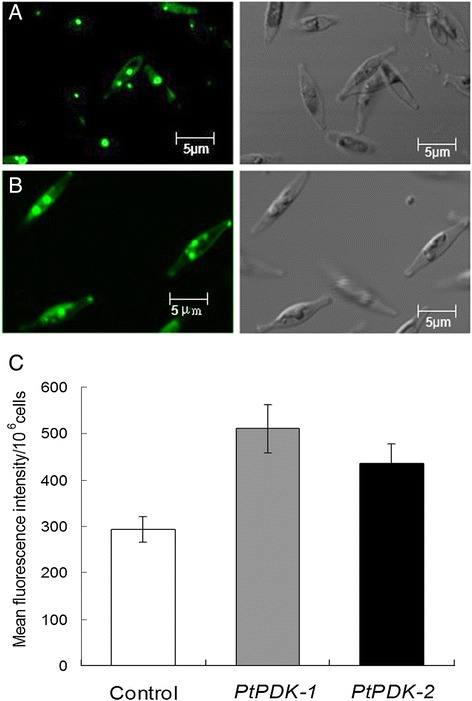
BACKGROUND: Microalgae have been an emerging biofuel resource; however, the germplasm improvement has been slow due to the lack of molecular tools. Pyruvate dehydrogenase kinase (PDK) deactivates the pyruvate dehydrogenase complex (PDC) which catalyzes the oxidative decarboxylation of pyruvate. Acetyl-CoA production via PDC is important in plant tissues that are active in fatty acid synthesis. RESULTS: A 1261-bp cDNA of a putative PDK gene (PtPDK) was cloned from a diatom Phaeodactylum tricornutum, and PtPDK antisense knockdown transgenic diatoms were generated. Both PtPDK transcript abundance and enzyme activity were reduced significantly due to antisense knockdown of PtPDK. Neutral lipid content of transgenic diatom cells increased up to 82% as determined by Nile red staining, and fatty acid composition was not altered. Transgenic cells showed slightly lower growth rate but similar cell size with the wild type, hence retaining similar biomass productivity. CONCLUSIONS: This work first obtained a successful engineered diatom regulating a key gene involved in lipid metabolism. Our findings also provide powerful indications in enhancing microalgal lipid production by metabolic engineering for biofuel industry.
Overview
The claims and statistics of this paper haven’t been checked yet.
Run the check — free, no account needed. It reads the open-access text and checks the sources it cites.
Integrity signals
Registry
Cites
Statistics
Figures
Verification
Claims the paper makes
The claims and statistics of this paper haven’t been checked yet.
Run the check — free, no account needed. It reads the open-access text and checks the sources it cites.
Claims other papers make about this one
Each is checked against this paper’s own text: does it say what the citing paper says it does?
The check wasn’t confident either way, so it gives no verdict — never disputed.
In the citing paper
“The exceptionally high content of total lipids was noted in microalgae Prymnesium parvum (65.79%) [99], Vischeria vischeri (65.16%) [100], Nannochloropsis granulata CCMP525 (60.35%) [101], Chlorella vulgaris (67.1%) [99], Tetradesmus deserticola JNU19 (62.4%) [102].”
From Nitrogen and phosphorus stress as a tool to induce lipid production in microalgae (2023) · cites this paper as [101]
Experimental — accuracy not yet measured
Self-check
Percentages, sums and reported differences re-computed from the paper’s own numbers.
The self-check needs the paper’s full text.
Citations
Cites
Single-Step Method of RNA Isolation by Acid Guanidinium Thiocyanate–Phenol–Chloroform Extraction
Chomczynski, P., & Sacchi, N. (1987) · Analytical Biochemistry · doi:10.1006/abio.1987.9999 · Cited by 65,515
MEGA4: Molecular Evolutionary Genetics Analysis (MEGA) Software Version 4.0
Tamura, K., Dudley, J. T., Nei, M., & Kumar, S. (2007) · Molecular Biology and Evolution · doi:10.1093/molbev/msm092 · Cited by 28,734 · cited 1×
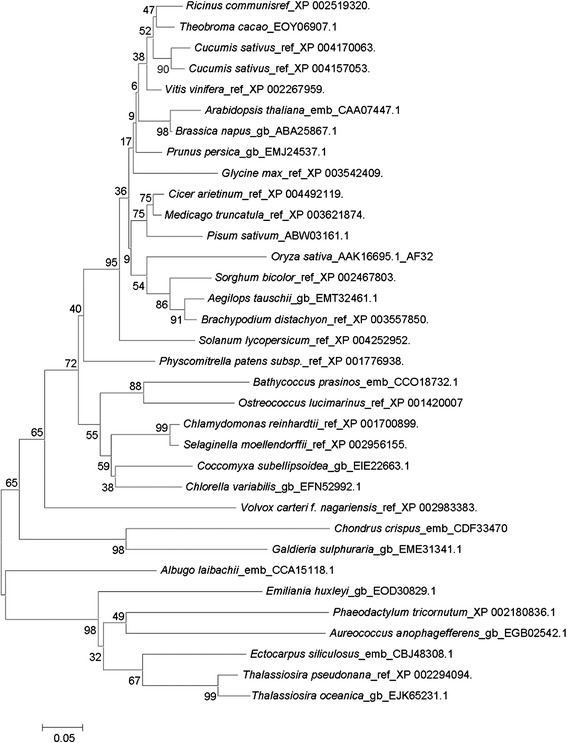
“Phylogenetic tree of protein clusters from various species was constructed by neighborjoining (NJ) method using software MEGA 5 [20].”
MethodMicroalgal triacylglycerols as feedstocks for biofuel production: perspectives and advances
Hu, Q., Sommerfeld, M., Jarvis, E., Ghirardi, M., Posewitz, M., Seibert, M., & Darzins, A. (2008) · The Plant Journal · doi:10.1111/j.1365-313x.2008.03492.x · Cited by 3,745 · cited 1×
“Microalgae have become an emerging biofuel resource [3].”
BackgroundChomczyński, P., & Sacchi, N. (2006) · Nature Protocols · doi:10.1038/nprot.2006.83 · Cited by 2,084
The Genome of the Diatom Thalassiosira Pseudonana : Ecology, Evolution, and Metabolism
Armbrust, E. V., Berges, J. A., Bowler, C., Green, B. R., Martínez, D., Putnam, N. H., Zhou, S., Allen, A. E., Apt, K. E., Bechner, M., et al. (2004) · Science · doi:10.1126/science.1101156 · Cited by 2,029 · cited 1×
“Particularly, a range of novel metabolic pathways have been found in diatoms which were presumably acquired during their evolution [1], so they are of major interest for the discovery of novel biological processes which are not present in other more intensively studied model organisms [2].”
BackgroundLepage, G., & ROY, C. C. (1984) · Journal of Lipid Research · doi:10.1016/s0022-2275(20)34457-6 · Cited by 1,028
Trentacoste, E. M., Shrestha, R. P., Smith, S. R., Glé, C., Hartmann, A. C., Hildebrand, M., & Gerwick, W. H. (2013) · Proceedings of the National Academy of Sciences · doi:10.1073/pnas.1309299110 · Cited by 430 · cited 1×
“pseudonana to improve lipid content by knockdown of a lipase gene [12].”
BackgroundSugden, M. C., & Holness, M. J. (2003) · American Journal of Physiology-Endocrinology and Metabolism · doi:10.1152/ajpendo.00526.2002 · Cited by 428 · cited 14×
“Overexpression of Brassica napus PDK in Arabidopsis repressed the PDC activity, leading to a decrease in seed oil content [10].”
BackgroundInfluentialYang, Z.-K., Niu, Y., Ma, Y.-H., Xue, J., Zhang, M.-H., Yang, W.-D., Liu, J.-S., Lu, S.-H., Guan, Y., & Li, H. (2013) · Biotechnology for Biofuels · doi:10.1186/1754-6834-6-67 · Cited by 366 · cited 2×
“[24] to detect the cellular neutral lipid contents of P.”
BackgroundMethodSelf-citationMolecular toolbox for studying diatom biology in Phaeodactylum tricornutum
Siaut, M., Heijde, M., Mangogna, M., Montsant, A., Coesel, S., Allen, A. E., Manfredonia, A., Falciatore, A., & Bowler, C. (2007) · Gene · doi:10.1016/j.gene.2007.05.022 · Cited by 345 · cited 1×
“Particularly, a range of novel metabolic pathways have been found in diatoms which were presumably acquired during their evolution [1], so they are of major interest for the discovery of novel biological processes which are not present in other more intensively studied model organisms [2].”
Background
Cited by
Sorted by citations
The lipid biochemistry of eukaryotic algae
Li-Beisson, Y., Thelen, J. J., Fedosejevs, E., & Harwood, J. L. (2019) · Progress in Lipid Research · doi:10.1016/j.plipres.2019.01.003 · Cited by 453
“Activation of the pyruvate dehydrogenase complex (PDC) protein while silencing the pyruvate dehydrogenase kinase (PDK) has boosted acetyl-CoA production therefore neutral lipid content in Phaeodactylum tricornutum [121].”
BackgroundMicroalgae for high-value products: A way towards green nutraceutical and pharmaceutical compounds
Mehariya, S., Goswami, R. K., Karthikeysan, O. P., & Verma, P. (2021) · Chemosphere · doi:10.1016/j.chemosphere.2021.130553 · Cited by 303
Biofuel production from microalgae: a review
Peng, L., Fu, D., Chu, H., Wang, Z., & Qi, H. (2020) · Environmental Chemistry Letters · doi:10.1007/s10311-019-00939-0 · Cited by 227
Self-citationCurrent trends to comprehend lipid metabolism in diatoms
Zulu, N. N., Zienkiewicz, K., Vollheyde, K., & Feussner, I. (2018) · Progress in Lipid Research · doi:10.1016/j.plipres.2018.03.001 · Cited by 226
Storage of starch and lipids in microalgae: Biosynthesis and manipulation by nutrients
Ran, W., Wang, H., Liu, Y., Qi, M., Xiang, Q., Yao, C., Zhang, Y., & Lan, X. (2019) · Bioresource Technology · doi:10.1016/j.biortech.2019.121894 · Cited by 224
Gimpel, J. A., Henríquez, V., & Mayfield, S. P. (2015) · Frontiers in Microbiology · doi:10.3389/fmicb.2015.01376 · Cited by 207
Enhancement of lipid accumulation in microalgae by metabolic engineering
Sun, X., Ren, L., Zhao, Q., Ji, X., & Huang, H. (2018) · Biochimica et Biophysica Acta (BBA) - Molecular and Cell Biology of Lipids · doi:10.1016/j.bbalip.2018.10.004 · Cited by 181
Nitrogen and phosphorus stress as a tool to induce lipid production in microalgae
Maltsev, Y., Kulikovskiy, M., & Maltseva, S. (2023) · Microbial Cell Factories · doi:10.1186/s12934-023-02244-6 · Cited by 174
“[101], Chlorella vulgaris (67.1”
InfluentialTan, K. W. M., & Lee, Y. K. (2016) · Biotechnology for Biofuels · doi:10.1186/s13068-016-0671-2 · Cited by 166
Potential and Challenges of Improving Photosynthesis in Algae
Vecchi, V., Barera, S., Bassi, R., & Dall’Osto, L. (2020) · Plants · doi:10.3390/plants9010067 · Cited by 157
“tricornutum [138]; malic enzyme (ME) and glucose-6-phosphate dehydrogenase (G6PDH) were over-expressed in P.”
BackgroundModulation of lipid biosynthesis by stress in diatoms
Sayanova, O. V., Mimouni, V., Ulmann, L., Morant-Manceau, A., Pasquet, V., Schoefs, B., & Napier, J. A. (2017) · Philosophical Transactions of the Royal Society B Biological Sciences · doi:10.1098/rstb.2016.0407 · Cited by 156
“[130] have identified a putative PDK gene (PtPDK) from P.”
BackgroundProgress and Challenges in Microalgal Biodiesel Production
Mallick, N., Bagchi, S. K., Koley, S., & Singh, A. K. (2016) · Frontiers in Microbiology · doi:10.3389/fmicb.2016.01019 · Cited by 157
“In this approach, an overall 82% increase in neutral lipid content as compared to the wild-type strains was achieved (Ma et al., 2014).”
BackgroundEmerging Trends in Genetic Engineering of Microalgae for Commercial Applications
Grama, S. B., Liu, Z., & Li, J. (2022) · Marine Drugs · doi:10.3390/md20050285 · Cited by 164
“The concentration of neutral lipids in transgenic cells was increased by 82% without changing the fatty acid profiles [44].”
BackgroundKang, N. K., Jeon, S., Kwon, S., Koh, H. G., Shin, S.-E., Lee, B., Choi, G., Yang, J.-W., Jeong, B., & Chang, Y. K. (2015) · Biotechnology for Biofuels · doi:10.1186/s13068-015-0386-9 · Cited by 152
“For example, in Phaeodactylum tricornutum, the amount of neutral lipid increases by 82 and 60 % following antisense knockdown of putative pyruvate dehydrogenase kinase (PDK) and overexpression of glycerol-3-phosphate dehydrogenase (GPDH), respectively [18, 19].”
BackgroundHigh-value bioproducts from microalgae: Strategies and progress
Liang, M., Wang, L., Wang, Q., Zhu, J., & Jiang, J. (2018) · Critical Reviews in Food Science and Nutrition · doi:10.1080/10408398.2018.1455030 · Cited by 139
“tricornutum cells increased up to 82% (Ma et al. 2014).”
BackgroundTailoring Microalgae for Efficient Biofuel Production
Sharma, P. K., Saharia, M., Srivstava, R., Kumar, S., & Sahoo, L. (2018) · Frontiers in Marine Science · doi:10.3389/fmars.2018.00382 · Cited by 135
Kang, N. K., Kim, E. K., Kim, Y. U., Lee, B., Jeong, W.-J., Jeong, B., & Chang, Y. K. (2017) · Biotechnology for Biofuels · doi:10.1186/s13068-017-0919-5 · Cited by 119
“In addition, mitochondrial PDH catalyzes the conversion of pyruvate to acetyl-CoA, which can be used for fatty acid and neutral lipid synthesis [9].”
BackgroundPark, S., Nguyen, T., & Jin, E. (2019) · Bioresource Technology · doi:10.1016/j.biortech.2019.121953 · Cited by 121
Human health benefits of very-long-chain polyunsaturated fatty acids from microalgae
Lupette, J., & Benning, C. (2020) · Biochimie · doi:10.1016/j.biochi.2020.04.022 · Cited by 122
Lin, W., Tan, S., Hsiang, C., Sung, P.-K., & Ng, I. (2019) · Bioresource Technology · doi:10.1016/j.biortech.2019.121932 · Cited by 109
Saravanan, A., Kumar, P. S., Badawi, M., Mohanakrishna, G., & Aminabhavi, T. M. (2022) · Chemical Engineering Journal · doi:10.1016/j.cej.2022.139754 · Cited by 108
Zienkiewicz, A., Zienkiewicz, K., Poliner, E., Pulman, J. A., Du, Z., Stefano, G., Tsai, C., Horn, P. J., Feußner, I., Farré, E. M., et al. (2019) · PLANT PHYSIOLOGY · doi:10.1104/pp.19.00854 · Cited by 104
“5B) were down-regulated under N deprivation, agreeing with previously reported effects of antisense knockdown of mPDK leading to significant TAG accumulation in P. tricornutum (Ma et al., 2014).”
BackgroundShokravi, Z., Shokravi, H., Ong, H. C., Lau, W. J., Koloor, S. S. R., Petrů, M., & Ismail, A. F. (2020) · Sustainability · doi:10.3390/su12219083 · Cited by 103
“Phaeodactylum tricornutum Suppression Pyruvate dehydrogenase kinase Improves lipid (up to 82%)/slight decrease in growth [80]”
BackgroundBrar, A., Kumar, M., Soni, T., Vivekanand, V., & Pareek, N. (2021) · Bioresource Technology · doi:10.1016/j.biortech.2021.125597 · Cited by 97
Ten years of algal biofuel and bioproducts: gains and pains
Chen, H., Li, T., & Wang, Q. (2019) · Planta · doi:10.1007/s00425-018-3066-8 · Cited by 85
Yang, J., Pan, Y., Bowler, C., Zhang, L., & Hu, H. (2016) · Algal Research · doi:10.1016/j.algal.2016.02.004 · Cited by 80
Production of chemicals from microalgae lipids – status and perspectives
Hess, S. K., Lepetit, B., Kroth, P. G., & Mecking, S. (2018) · European Journal of Lipid Science and Technology · doi:10.1002/ejlt.201700152 · Cited by 74
Santin, A., Russo, M. T., Ferrante, M. I., Balzano, S., Orefice, I., & Sardo, A. (2021) · Molecules · doi:10.3390/molecules26247697 · Cited by 79
Behera, B., Unpaprom, Y., Ramaraj, R., Maniam, G. P., Govindan, N., & Balasubramanian, P. (2021) · Renewable and Sustainable Energy Reviews · doi:10.1016/j.rser.2021.111270 · Cited by 72
Microalgal metabolic engineering strategies for the production of fuels and chemicals
Kang, N. K., Baek, K., Koh, H. G., Atkinson, C., Ort, D. R., & Jin, Y. (2021) · Bioresource Technology · doi:10.1016/j.biortech.2021.126529 · Cited by 71
Jakhwal, P., Biswas, J. K., Tiwari, A., Kwon, E. E., & Bhatnagar, A. (2021) · Bioresource Technology · doi:10.1016/j.biortech.2021.126250 · Cited by 72
Can We Approach Theoretical Lipid Yields in Microalgae?
Remmers, I. M., Wijffels, R. H., Barbosa, M. J., & Lamers, P. P. (2018) · Trends in biotechnology · doi:10.1016/j.tibtech.2017.10.020 · Cited by 69
Biotechnological approaches to enhance biofuel producing potential of microalgae
Xue, J., Balamurugan, S., Li, T., Cai, J.-X., Chen, T., Wang, X., Yang, W., & Li, H. (2021) · Fuel · doi:10.1016/j.fuel.2021.121169 · Cited by 70
Self-citationAdvances in Genetic Engineering in Improving Photosynthesis and Microalgal Productivity
Hu, J., Wang, D., Chen, H., & Wang, Q. (2023) · International Journal of Molecular Sciences · doi:10.3390/ijms24031898 · Cited by 69
Diao, J., Song, X., Cui, J., Liu, L., Shi, M., Wang, F., & Zhang, W. (2018) · Metabolic Engineering · doi:10.1016/j.ymben.2018.10.004 · Cited by 66
Recent advances in biotechnology and bioengineering for efficient microalgal biofuel production
Zhang, C., Singh, R. P., Yadav, P., Kumar, I., Kaushik, A., Roychowdhury, R., Mubeen, M., Singh, S. K., Kumar, A., & Wang, J. (2025) · Fuel Processing Technology · doi:10.1016/j.fuproc.2025.108199 · Cited by 72
Banerjee, S., Banerjee, S., Ghosh, A. K., & Das, D. (2020) · Renewable and Sustainable Energy Reviews · doi:10.1016/j.rser.2020.110155 · Cited by 66
Ma, X., Yao, L., Yang, B., Lee, Y. K., Chen, F., & Liu, J. (2017) · Scientific Reports · doi:10.1038/s41598-017-11932-4 · Cited by 60
Self-citationWu, S., Gu, W., Huang, A., Li, Y., Kumar, M., Lim, P. E., Li, H., Gao, S., & Wang, G. (2019) · Microbial Cell Factories · doi:10.1186/s12934-019-1214-x · Cited by 55
“For instance, overexpression of malic enzyme [14] and glycerol-3-phosphate dehydrogenase [18] and knockdown of pyruvate dehydrogenase kinase [13] and phosphoenolpyruvate carboxykinase [15] to increase lipid production.”
BackgroundSelf-citationYao, L., Shen, H., Wang, N., Tatlay, J., Li, L., Tan, T. W., & Lee, Y. K. (2016) · Plant Biotechnology Journal · doi:10.1111/pbi.12648 · Cited by 53
“was reported to promote TAG production by 82% (Ma et al., 2014).”
BackgroundA Review of Diatom Lipid Droplets
Leyland, B., Boussiba, S., & Khozin‐Goldberg, I. (2020) · Biology · doi:10.3390/biology9020038 · Cited by 57
“Various steps within the “push, pull, package, protect” paradigm have already has been accomplished in diatoms by over-expression of enzymes implicated in fatty acid and TAG biosynthesis [114,117,240–242], modulating the acyl-CoA pool [243] or repression of lipid catabolism [124,125,244].”
BackgroundSumiya, N., Kawase, Y., Hayakawa, J., Matsuda, M., Nakamura, M., Era, A., Tanaka, K., Kondo, A., Hasunuma, T., Imamura, S., et al. (2015) · Plant and Cell Physiology · doi:10.1093/pcp/pcv120 · Cited by 50
“In the same diatom, knockdown of mitochondrial pyruvate dehydrogenase kinase, which inactivates pyruvate dehydrogenase, increased cellular neutral lipid content up to approximately 80% while decreasing the cellular growth rate slightly (Ma et al. 2014).”
BackgroundFourth generation biofuel from genetically modified algal biomass for bioeconomic development
Shokravi, H., Heidarrezaei, M., Shokravi, Z., Ong, H. C., Lau, W. J., Din, M. F. M., & Ismail, A. F. (2022) · Journal of Biotechnology · doi:10.1016/j.jbiotec.2022.10.010 · Cited by 49
Biodiesel from oleaginous microbes: opportunities and challenges
Gujjala, L. K. S., Kumar, S. P. J., Talukdar, B., Dash, A., Kumar, S., Sherpa, K. C., & Banerjee, R. (2017) · Biofuels · doi:10.1080/17597269.2017.1402587 · Cited by 50
Genetic Engineering for Enhancement of Biofuel Production in Microalgae
Chaturvedi, V., Goswami, R. K., & Verma, P. (2020) · Clean Energy Production Technologies · doi:10.1007/978-981-15-9593-6_21 · Cited by 46
Sharma, T., & Chauhan, R. S. (2016) · Algal Research · doi:10.1016/j.algal.2016.07.020 · Cited by 45
Phytosterol biosynthesis and production by diatoms (Bacillariophyceae)
Jaramillo-Madrid, A. C., Ashworth, J. R., Fabris, M., & Ralph, P. J. (2019) · Phytochemistry · doi:10.1016/j.phytochem.2019.03.018 · Cited by 44
The generational shift in biofuels: A path toward sustainable energy solutions
Kant, G., Hasan, A., Yadav, P., Pandey, A., & Srivastava, S. (2025) · Biomass and Bioenergy · doi:10.1016/j.biombioe.2025.107757 · Cited by 49
Metabolic Engineering of Microalgae for Biofuel Production
Naghshbandi, M. P., Tabatabaei, M., Aghbashlo, M., Aftab, M. N., & Iqbal, I. (2019) · Methods in molecular biology · doi:10.1007/7651_2018_205 · Cited by 43
Huete‐Ortega, M., Okurowska, K., Kapoore, R. V., Johnson, M. P., Gilmour, D. J., & Vaidyanathan, S. (2018) · Biotechnology for Biofuels · doi:10.1186/s13068-018-1061-8 · Cited by 42
Li, R., Song, M., Yin, D., Ye, X., Yu, J., & Chen, X. (2023) · Bioresource Technology · doi:10.1016/j.biortech.2023.129700 · Cited by 37
Jothibasu, K., Dhar, D. W., & Rakesh, S. (2021) · Biomass and Bioenergy · doi:10.1016/j.biombioe.2021.106093 · Cited by 37
Xue, J., Chen, T., Zheng, J., Balamurugan, S., Liu, Y., Yang, W., Liu, J., & Li, H. (2019) · Biotechnology Journal · doi:10.1002/biot.201900135 · Cited by 36
Self-citationShi, Q., Chen, C., Zhang, W., Wu, P., Sun, M., Wu, H. C., Wu, H., Fu, P., & Fan, J. (2021) · Journal of Applied Phycology · doi:10.1007/s10811-020-02350-7 · Cited by 34
Gao, P., Gao, Y., Guo, L., Gao, M., Zhao, Y., Jin, C., She, Z., & Wang, G. (2022) · Chemical Engineering Journal · doi:10.1016/j.cej.2022.135579 · Cited by 33
Otero, P., Saha, S. K., Gushin, J. M., Moane, S., Barron, J., & Murray, P. (2017) · Analytical and Bioanalytical Chemistry · doi:10.1007/s00216-017-0412-9 · Cited by 32
Jin, P., González, G., & Agustı́, S. (2020) · Evolutionary Applications · doi:10.1111/eva.13059 · Cited by 29
Progress of metabolic engineering for the production of eicosapentaenoic acid
Jia, Y.-L., Geng, S., Du, F., Xu, Y., Wang, L., Sun, X., Wang, Q., & Li, Q. (2021) · Critical Reviews in Biotechnology · doi:10.1080/07388551.2021.1971621 · Cited by 28
Huang, D., Cheng, C.-Q., Zhang, H.-Y., Huang, Y., Li, S., Huang, Y.-T., Huang, X., Pei, L.-L., Luo, Z., Zou, L., et al. (2025) · Nature Communications · doi:10.1038/s41467-025-58547-2 · Cited by 27
“Each sample was tested in triplicate, and expression levels were referenced against the endogenous gene β -actin and TBP (TATA box binding protein), which were selected based on their stable expression across different conditions in P. tricornutum , as veri fi ed in previous studies 105,106 .”
Self-citationLu, Y., Wang, X., Balamurugan, S., Yang, W., Liu, J., Dong, H., & Li, H. (2017) · Journal of Applied Phycology · doi:10.1007/s10811-017-1173-8 · Cited by 25
Self-citationPartitioning of crude protein from aqua waste using PEG 600-inorganic salt Aqueous Two-Phase Systems
Baskaran, D., Chinnappan, K., Rajasimman, M., & Mahadevan, D. K. (2018) · Chemical Data Collections · doi:10.1016/j.cdc.2018.05.004 · Cited by 24
Ghiffary, M. R., Kim, H. U., & Chang, Y. K. (2019) · Biotechnology Journal · doi:10.1002/biot.201900043 · Cited by 22
Song, H., Fan, X., Liu, G., Xu, J., Li, X., Tan, Y., & Qian, H. (2016) · Environmental Science and Pollution Research · doi:10.1007/s11356-016-7531-2 · Cited by 20
“…the TAG increase following 48 h of TBP treatment correlates to an upregulation of glycolysisrelated genes and fatty acid biosynthesis, which is compelling considering that glycolysis may result in accumulated intracellular acetyl coenzymeA, the material of fatty acid synthesis (Ma et al. 2014).”
BackgroundMethodMicroalgae Applications to Bone Repairing Processes: A Review
Payares, L. M. A., Púa, L. D. C. G., Pareja, L. A. D. M., Méndez, S. C. P., & Paredes, V. (2023) · ACS Biomaterials Science & Engineering · doi:10.1021/acsbiomaterials.2c01389 · Cited by 19
Recent progress in biotechnological approaches for diverse applications of algae: an overview
Saravanakumar, K., Sathyanarayanan, K., Khan, M. S., Park, S., Yoo, H. M., Cho, S. H., Ahn, G., Ahamed, M. A., Padmanabhan, S., MubarakAli, D., et al. (2023) · International Journal of Environmental Science and Technology · doi:10.1007/s13762-023-05321-w · Cited by 20
“In another intriguing experiment, antisense cDNA constructs from the microalgae Phaeodactylum tricornutum were used to generate transgenic diatoms that exhibited putative pyruvate dehydrogenase kinase (PtPDK) knockdown characteristics (Ma et al. 2014).”
Relationship between acyl-lipid and sterol metabolisms in diatoms
Maréchal, É., & Lupette, J. (2019) · Biochimie · doi:10.1016/j.biochi.2019.07.005 · Cited by 19
“of mitochondrial acetyl-CoA pool in diatoms [35].”
Thangaraj, S., & Sun, J. (2020) · Marine Drugs · doi:10.3390/md18050259 · Cited by 19
“Especially, stimulating fatty acid-elongase, D5-desaturase, Acyl-ACP, and Acetyl-CoA carboxylase were demonstrated to increase the lipid and fatty acids contents [69,70], while transcripts associated with multi-functional lipase/acyltransferase, pyruvate metabolism were silenced to the increased yield of lipid content…”
BackgroundSong, Q., Liu, C., Xu, R., & Cai, L. (2025) · Chemical Engineering Journal · doi:10.1016/j.cej.2025.159388 · Cited by 19
Rathod, J. P., Gade, R. M., Rathod, D. R., & Dudhare, M. S. (2017) · International Journal of Current Microbiology and Applied Sciences · doi:10.20546/ijcmas.2017.612.373 · Cited by 18
“…2012 Δ4 desaturase Increased accumulation of FA 16:4 Zäuner et al., 2012 P. tricornutum Pyruvate dehydroganase kinase Neutral lipids increase by 82% Ma et al., 2014 Malic enzyme Total lipids increased by 2.5 times Xue et al., 2014 Δ5 desaturase 65% more neutral FA with 58% increased…”
BackgroundInfluentialNew strategies enhancing feasibility of microalgal cultivations
Caprio, F. D., Altimari, P., & Pagnanelli, F. (2019) · Studies in surface science and catalysis · doi:10.1016/b978-0-444-64337-7.00016-1 · Cited by 17
Heterotrophic modification of Phaeodactylum tricornutum Bohlin
Zhang, W., Zhou, W., Jiang, S. W., Wang, Y., Chen, L., Yang, G., & Liu, T. (2023) · Algal Research · doi:10.1016/j.algal.2023.103137 · Cited by 16
Aromatic Amino Acids: Exploring Microalgae as a Potential Biofactory
Niraula, A., Danesh, A., Mérindol, N., Meddeb‐Mouelhi, F., & Desgagné‐Penix, I. (2025) · BioTech · doi:10.3390/biotech14010006 · Cited by 14
“[52] 35% increase in neutral lipid accumulation, 76% increase in the valuable omega-3, eicosapentaenoic acid (EPA) Overexpression of the endogenous diacylglycerol acyltransferase 2, transformed via electroporation.”
Su, Z., Sharma, M., Zhang, P., Zhang, L., Xing, X., Yue, J., Song, Z., Nan, L., Yujun, S., Zheng, Y., et al. (2023) · Journal of environmental chemical engineering · doi:10.1016/j.jece.2023.110398 · Cited by 14
He, M., Song, H., Wu, C., Zhang, Y., Wang, T., Wang, C., & Du, W. (2019) · Journal of Applied Phycology · doi:10.1007/s10811-019-01821-w · Cited by 14
“As the end product of glycolysis, pyruvate links glycolysis with TCA cycle and lipid biosynthesis, thus pyruvate is also considered a regulative metabolite for adjusting lipid biosynthesis (Goodson et al. 2011; Ma et al. 2014; Avidan and Pick 2015).”
Murison, V., Hérault, J., Guinio, S., Côme, M., Loiseau, C., Kwasiborski, A., Marchand, J., & Ulmann, L. (2024) · Algal Research · doi:10.1016/j.algal.2024.103621 · Cited by 11
Thangaraj, S., Giordano, M., & Sun, J. (2020) · Frontiers in Plant Science · doi:10.3389/fpls.2020.578915 · Cited by 11
“, 2018), while PYK is involved in the lipid biosynthesis of diatoms (Ma et al., 2014).”
BackgroundScale‐Down: Simulating Large‐Scale Cultures in the Laboratory
Lara, A. R., Palomares, L. A., & Ramı́rez, O. T. (2016) · Industrial Biotechnology · doi:10.1002/9783527807833.ch2 · Cited by 11
Diatom triacylglycerol metabolism: from carbon fixation to lipid droplet degradation
Murison, V., Hérault, J., Marchand, J., & Ulmann, L. (2025) · Biological reviews/Biological reviews of the Cambridge Philosophical Society · doi:10.1111/brv.70006 · Cited by 8
“Knockdown of the latter induces accumulation of NL in the cell (Ma et al ., 2014).”
Ma, X., Liu, B., Yang, B., Guo, B., Liu, J., & Chen, F. (2017) · Journal of Applied Phycology · doi:10.1007/s10811-017-1318-9 · Cited by 9
“Nannochloropsis salina was selected in this study because of its high lipid content and interesting fatty acid composition (Bellou and Aggelis 2012; Ma et al. 2014b).”
BackgroundMethodInfluentialSelf-citationTrends in Synthetic Biology in the Bioeconomy of Non-Food-Competing Biofuels
Fantinel, A. L., Margis, R., Talamini, E., & Dewes, H. (2022) · SynBio · doi:10.3390/synbio1010003 · Cited by 6
Potential of Microalgae Biomass for the Sustainable Production of Bio-commodities
Perin, G., & Morosinotto, T. (2019) · Progress in botany · doi:10.1007/124_2019_30 · Cited by 7
Kayani, S., Hu, X., Shen, Q., Zou, B., Zhu, F., Yu, Z., Shah, M. A. R., Rehman, O. U., & Huo, S. (2025) · Critical Reviews in Biotechnology · doi:10.1080/07388551.2025.2503788 · Cited by 6
A comparison of lipid content metrics using six species from the genus Halamphora (Bacillariophyta)
Stepanek, J. G., Fields, F. J., & Kociolek, J. P. (2016) · Biofuels · doi:10.1080/17597269.2016.1163216 · Cited by 6
DHA- and EPA-rich oil from microalgae
Lupette, J. (2023) · Elsevier eBooks · doi:10.1016/b978-0-323-99196-4.00035-8 · Cited by 5
High-value products from microalgae—Unlocking the potential for large-scale commercialization
Kaur, M., Peshwani, H., & Goel, M. (2025) · Elsevier eBooks · doi:10.1016/b978-0-443-24110-9.00012-8 · Cited by 5
Kira, N., Yoshimatsu, T., Fukunaga, K., Okada, S., Adachi, M., & Kadono, T. (2016) · Environment Control in Biology · doi:10.2525/ecb.54.31 · Cited by 5
Vidya, D., & Arunkumar, K. (2022) · Clean Energy Production Technologies · doi:10.1007/978-981-19-0680-0_7 · Cited by 5
Chen, R.-S., Zhang, L., Wei, F.-J., Yuan, L.-Y., Zhao, P., Wang, H., & Gong, Y. (2021) · Journal of Applied Phycology · doi:10.1007/s10811-021-02471-7 · Cited by 4
“Genetic engineering methods such as gene overexpression and knockout have also been used to increase the lipid content of algae, but these approaches affect algal growth (Ma et al. 2014; Hamilton et al. 2015; Xue et al. 2015; Zou et al. 2018).”
MethodZhang, K., Tan, X., & Zhang, Q. (2024) · Microbial Ecology · doi:10.1007/s00248-024-02432-w · Cited by 4
“As the end product of glycolysis, pyruvate links glycolysis with TCA cycle and lipid biosynthesis, thus pyruvate is also considered a regulative metabolite for adjusting lipid biosynthesis [65, 66].”
BackgroundKhozin‐Goldberg, I., & Sayanova, O. V. (2019) · Grand challenges in biology and biotechnology · doi:10.1007/978-3-030-25233-5_7 · Cited by 5
Biofuel production from renewable feedstocks: Progress through metabolic engineering
Das, M., Sarnaik, A. P., Patra, P., Varman, A. M., & Ghosh, A. (2022) · Elsevier eBooks · doi:10.1016/b978-0-323-88504-1.00004-2 · Cited by 4
Chansawang, N., Obara, B., Geider, R. J., & Laissue, P. P. (2015) · Springer protocols handbooks/Springer protocols · doi:10.1007/8623_2015_142 · Cited by 4
Li, Y., Yang, R., Pohnert, G., & Wei, D. (2025) · Chemical Engineering Journal · doi:10.1016/j.cej.2025.167926 · Cited by 2
Microalgal farming for biofuel production: Extraction, conversion, and characterization
Mondal, S., Halder, S. K., & Mondal, K. C. (2023) · Elsevier eBooks · doi:10.1016/b978-0-443-13927-7.00006-2 · Cited by 2
Metabolic engineering of microalgae: a review and future prospects
Chen, B., Zhao, X., & Bai, F. (2017) · Scientia Sinica Vitae · doi:10.1360/n052017-00087 · Cited by 1
Renewable Energy: The Past and the Future
Rahman, K. H. A., Yusof, S. J. H. M., & Ismail, K. S. K. (2022) · Green energy and technology · doi:10.1007/978-981-16-9314-4_10 · Cited by 2
Haider, S. M. A., Hussain, M., Majeed, K., Ahmed, U., Shafiq, I., & Akhter, P. (2025) · Waste and Biomass Valorization · doi:10.1007/s12649-025-03190-7 · Cited by 1
“Another experiment showed that antisense cDNA present in microalgae Phaeodactylum tricornutum was used in transgenic diatoms exhibiting putative pyruvate dehydrogenase kinase (PtPDK) characteristics [104].”
Metabolic Engineering Prospects for Enhanced Green Fuel Production by Microalgae
Sahoo, R. K., & Subudhi, E. (2018) · Springer eBooks · doi:10.1007/978-981-13-1586-2_16 · Cited by 1
Photosynthetic efficiency in microalgal lipid production
Remmers, I. M. (2017) · doi:10.18174/416933 · Cited by 1
Transcriptional Engineering for Enhancing Valuable Components in Photosynthetic Microalgae
Balamurugan, S., Li, D., Wang, X., Yang, W., Liu, J., & Li, H. (2019) · Springer eBooks · doi:10.1007/978-981-13-9624-3_16
Self-citation
Metadata
- Authors
- Ma, Y.-H., Wang, X., Niu, Y.-F., Yang, Z.-K., Zhang, M.-H., Wang, Z.-M., Yang, W.-D., Liu, J.-S., & Li, H.-Y.
- Affiliations
- Jinan University (CN)
- Venue
- Microbial Cell Factories
- Published
- 2014-08-09
- Volume
- 13
- Issue
- 1
- Pages
- 100-100
- ISSN
- 1475-2859 (ISSN-L)
- PMC
- PMC4251698
- OpenAlex
- W2108487405
- Cited by
- 106
- References
- 30
- Citations by year
- 2026: 2 · 2025: 10 · 2024: 2 · 2023: 10 · 2022: 8 · 2021: 12 · 2020: 9 · 2019: 19 · 2018: 10 · 2017: 11 · 2016: 9 · 2015: 4
- FWCI
- 2.64
- Type
- journal article
- Language
- en
- Open access
- gold
- doi.org
- Locations
- Microbial Cell Factories (publishedVersion, cc-by)
- PubMed Central (publishedVersion, cc-by)
- PubMed (publishedVersion)
- Institutional Repository of Guangzhou Institute of Energy Research, Chinese Academy of Sciences (submittedVersion)
- Topics
- Physical Sciences › Energy › Renewable Energy, Sustainability and the Environment › Algal biology and biofuel production
- Life Sciences › Biochemistry, Genetics and Molecular Biology › Molecular Biology › Microbial Metabolic Engineering and Bioproduction
- Life Sciences › Biochemistry, Genetics and Molecular Biology › Biochemistry › Lipid metabolism and biosynthesis
- Keywords
- pyruvate dehydrogenase kinase, Phaeodactylum tricornutum, diatoms, neutral lipid accumulation, pyruvate dehydrogenase complex, antisense knockdown, microalgal lipid production, metabolic engineering, biofuels, fatty acid composition, acetyl-CoA
- MeSH terms
- Pyruvate Dehydrogenase Acetyl-Transferring Kinase, RNA, Antisense, Protein Serine-Threonine Kinases, Diatoms, Lipid Metabolism, Gene Knockdown Techniques, Microalgae, Metabolic Engineering
About these checks
Registry, retraction, Cites and statistics results are computed, not judged, with one exception: a printed reference that no index lists is read once by a model before it counts as a citation error. Claims are extracted by a model and kept only when their quote appears verbatim in the text; each cited source is then checked, with a model’s help, for whether it says what the claim relies on. Those verdicts can be wrong — read the claim’s quote and the cited source before relying on one.
Statistics and arithmetic are recomputed, not judged.
Confidence bands are shown only for fields calibrated on our annotated test set. None is calibrated yet, so no band is shown.
What counts as a claim ›How we measure confidence ›How we check this ›
Are you an author, or do you see a problem with this page? Request a review
