

Parallelised online biomass monitoring in shake flasks enables efficient strain and carbon source dependent growth characterisation of Saccharomyces cerevisiae
Open accessThe DOI matches its Crossref record; 53 of the 53 references it cites were found in a registry or an index.
Abstract
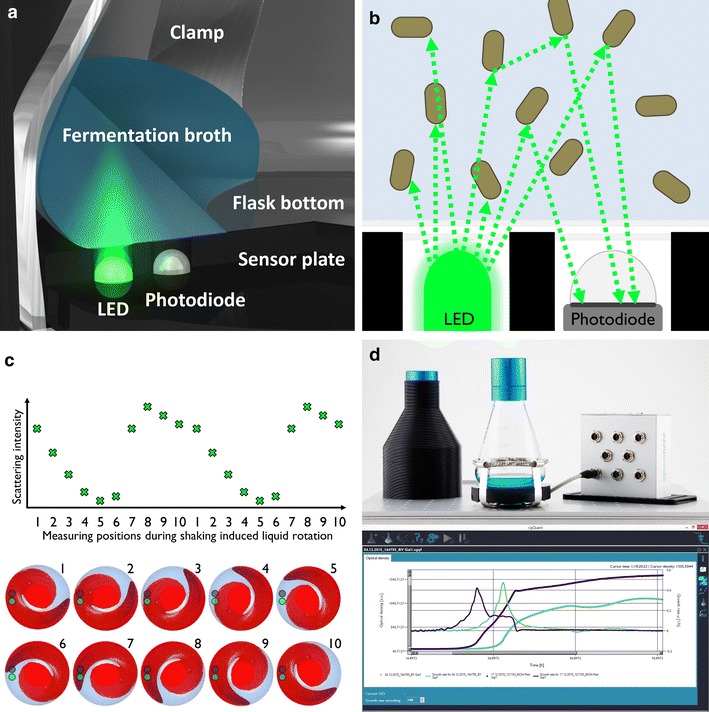
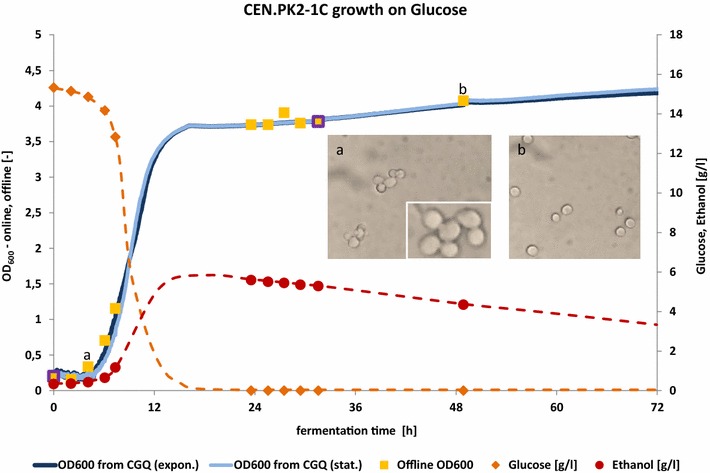
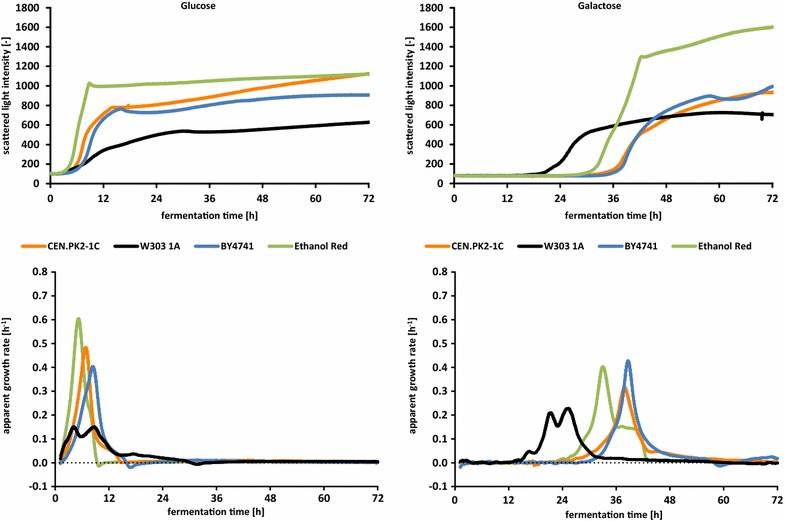
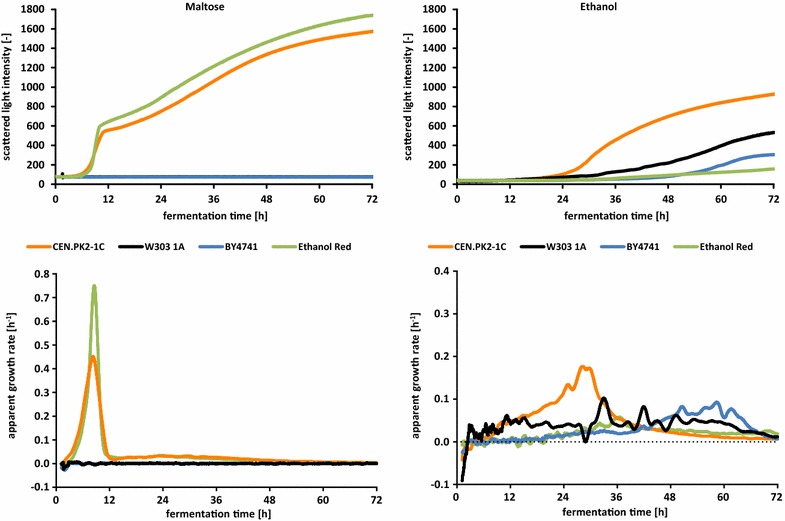
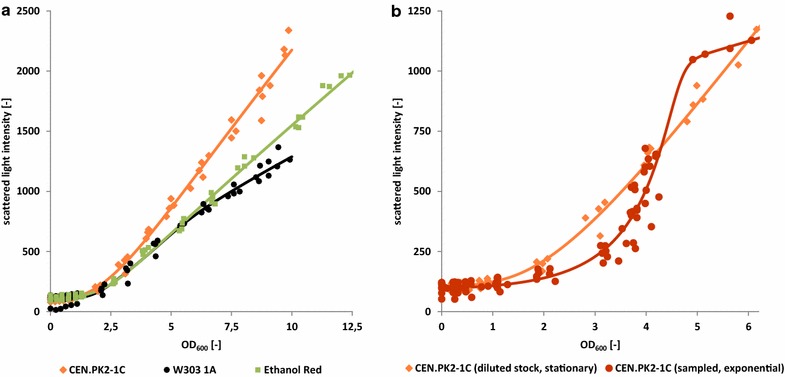
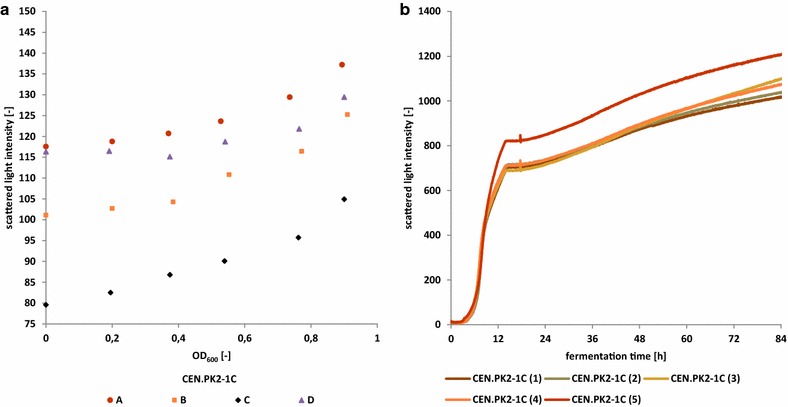
BACKGROUND: Baker's yeast, Saccharomyces cerevisiae, as one of the most often used workhorses in biotechnology has been developed into a huge family of application optimised strains in the last decades. Increasing numbers of strains render their characterisation highly challenging, even with the simple methods of growth-based analytics. Here we present a new sensor system for the automated, non-invasive and parallelisable monitoring of biomass in continuously shaken shake flask cultures, called CGQ ("cell growth quantifier"). The CGQ implements a dynamic approach of backscattered light measurement, allowing for efficient and accurate growth-based strain characterisation, as exemplarily demonstrated for the four most commonly used laboratory and industrial yeast strains, BY4741, W303-1A, CEN.PK2-1C and Ethanol Red. RESULTS: Growth experiments revealed distinct carbon source utilisation differences between the investigated S. cerevisiae strains. Phenomena such as diauxic shifts, morphological changes and oxygen limitations were clearly observable in the growth curves. A strictly monotonic non-linear correlation of OD600 and the CGQ's backscattered light intensities was found, with strain-to-strain as well as growth-phase related differences. The CGQ measurements showed high resolution, sensitivity and smoothness even below an OD600 of 0.2 and were furthermore characterised by low background noise and signal drift in combination with high reproducibility. CONCLUSIONS: With the CGQ, shake flask fermentations can be automatically monitored regarding biomass and growth rates with high resolution and parallelisation. This makes the CGQ a valuable tool for growth-based strain characterisation and development. The exceptionally high resolution allows for the identification of distinct metabolic differences and shifts as well as for morphologic changes. Applications that will benefit from that kind of automatized biomass monitoring include, amongst many others, the characterization of deregulated native or integrated heterologous pathways, the fast detection of co-fermentation as well as the realisation of rational and growth-data driven evolutionary engineering approaches.
Overview
The claims and statistics of this paper haven’t been checked yet.
Free: it reads the open-access text and checks the first 5 claims that cite a source we can check. Create a free account to check every claim.
Integrity signals
Registry
Cites
Statistics
Figures
Verification
Claims the paper makes
The claims and statistics of this paper haven’t been checked yet.
Free: it reads the open-access text and checks the first 5 claims that cite a source we can check. Create a free account to check every claim.
Claims other papers make about this one
Each is checked against this paper’s own text: does it say what the citing paper says it does?
The source backs part of the claim, not all of it — or backs it for a different population, condition or comparison.
In the citing paper
“Automation of process control in shake flasks is technically possible [78], but so far it is not used for batch studies with phototrophic microorganisms.”
From Lab-scale photobioreactor systems: principles, applications, and scalability (2022) · cites this paper as [78]
Experimental — accuracy not yet measured
Self-check
Percentages, sums and reported differences re-computed from the paper’s own numbers.
The self-check needs the paper’s full text.
Citations
Cites
Goffeau, A., Barrell, B. G., Bussey, H., Davis, R. W., Dujon, B., Feldmann, H., Galibert, F., Hoheisel, J. D., Jacq, C., Johnston, M., et al. (1996) · Science · doi:10.1126/science.274.5287.546 · Cited by 4,263 · cited 1×
“This non-natural derived strain, generated from various crosses among three baking and three natural strains from rotting fruit, was the first eukaryotic organism whose genome has been sequenced and is still used as reference genome [14, 15].”
BackgroundSherman, F. (2002) · Methods in Enzymology · doi:10.1016/s0076-6879(02)50954-x · Cited by 4,121
[1] Getting started with yeast
Sherman, F. (1991) · Methods in Enzymology · doi:10.1016/0076-6879(91)94004-v · Cited by 4,067
Functional Characterization of the S. cerevisiae Genome by Gene Deletion and Parallel Analysis
Winzeler, E. A., Shoemaker, D. D., Astromoff, A., Liang, H., Anderson, K., Andre, B., Bangham, R., Benito, R., Boeke, J. D., Bussey, H., et al. (1999) · Science · doi:10.1126/science.285.5429.901 · Cited by 3,953 · cited 1×
“A collection of more than 6000 strains each deleted in a single open reading frame (ORF) within the BY background allows fast characterization for various purposes [12].”
BackgroundBaker Brachmann, C., Davies, A., Cost, G. J., Caputo, E., Li, J., Hieter, P., & Boeke, J. D. (1998) · Yeast · doi:10.1002/(sici)1097-0061(19980130)14:2<115::aid-yea204>3.0.co;2-2 · Cited by 3,401 · cited 2×
“The strain is a direct descendant of the original S288c isolate [11, 13].”
BackgroundVerduyn, C., Postma, E., Scheffers, W. A., & Van Dijken, J. P. (1992) · Yeast · doi:10.1002/yea.320080703 · Cited by 1,510 · cited 1×
“PK, W303, and S288c exhibited growth in a different synthetic glycerol medium (according to [48]) after supplementation of nucleobases and amino acids, could be due to the different handling of pre-cultures, different pHvalues, different composition of both media or different genotypic characters.”
BackgroundConstruction of a set of convenient saccharomyces cerevisiae strains that are isogenic to S288C
Winston, F., Dollard, C., & Ricupero‐Hovasse, S. L. (1995) · Yeast · doi:10.1002/yea.320110107 · Cited by 941 · cited 1×
“The strain is a direct descendant of the original S288c isolate [11, 13].”
BackgroundSystematic Identification of Pathways That Couple Cell Growth and Division in Yeast
Jorgensen, P., Nishikawa, J. L., Breitkreutz, B.-J., & Tyers, M. (2002) · Science · doi:10.1126/science.1070850 · Cited by 768 · cited 1×
“In opposite to haploid strains, size and volume of diploid cells are clearly enhanced [41] and might therefore influence growth measurements as determined by optical densities of the newly developed CGQ system.”
GENEALOGY OF PRINCIPAL STRAINS OF THE YEAST GENETIC STOCK CENTER
Mortimer, R. K., & Johnston, J. R. (1986) · Genetics · doi:10.1093/genetics/113.1.35 · Cited by 602 · cited 2×
“Whether the non-existing growth of both derivatives of S288C on maltose could be due to the progenitor’s inability for maltose utilization [16, 46] or due to other reasons cannot finally be concluded by these exemplarily intended experiments.”
BackgroundResultAguilar-Uscanga, B., & Francois, J. M. (2003) · Letters in Applied Microbiology · doi:10.1046/j.1472-765x.2003.01394.x · Cited by 465 · cited 1×
“cerevisiae’s cell volume (size reductions >20 %) [51], as well as cell wall thickness, roughness and composition [52].”
Background
Cited by
Lab-scale photobioreactor systems: principles, applications, and scalability
Benner, P., Meier, L., Pfeffer, A., Krüger, K., Oropeza Vargas, J. E., & Weuster-Botz, D. (2022) · Bioprocess and Biosystems Engineering · doi:10.1007/s00449-022-02711-1 · Cited by 215
“Automation of process control in shake flasks is technically possible [78], but so far it is not used for batch studies with phototrophic microorganisms.”
BackgroundAn artificial transport metabolon facilitates improved substrate utilization in yeast
Thomik, T., Wittig, I., Choe, J., Boles, E., & Oreb, M. (2017) · Nature Chemical Biology · doi:10.1038/nchembio.2457 · Cited by 96
Self-citationBrückner, C., Oreb, M., Kunze, G., Boles, E., & Tripp, J. (2018) · FEMS Yeast Research · doi:10.1093/femsyr/foy017 · Cited by 73
“7 g L−1 Difco yeast nitrogen base without amino acids), supplemented with amino acids as described previously (Bruder et al. 2016) and with 20 g L−1 D-glucose as a carbon source (SCD), adjusted to pH 6.”
MethodSelf-citationDe novo biosynthesis of trans-cinnamic acid derivatives in Saccharomyces cerevisiae
Gottardi, M., Knudsen, J. D., Prado, L., Oreb, M., Branduardi, P., & Boles, E. (2017) · Applied Microbiology and Biotechnology · doi:10.1007/s00253-017-8220-x · Cited by 69
“For real time measurements of cell growth in toxicity assays, the Cell Growth Quantifier (CGQ, Aquila 124 Biosystems), was used (Bruder et al. 2016).”
Self-citationReifenrath, M., & Boles, E. (2018) · Metabolic Engineering · doi:10.1016/j.ymben.2018.01.001 · Cited by 67
Self-citationReifenrath, M., & Boles, E. (2018) · Scientific Reports · doi:10.1038/s41598-018-30367-z · Cited by 60
Self-citationA Yeast-Based Biosensor for Screening of Short- and Medium-Chain Fatty Acid Production
Baumann, L., Rajkumar, A. S., Morrissey, J. P., Boles, E., & Oreb, M. (2018) · ACS Synthetic Biology · doi:10.1021/acssynbio.8b00309 · Cited by 51
Self-citationStreamlined Pseudomonas taiwanensis VLB120 Chassis Strains with Improved Bioprocess Features
Wynands, B., Otto, M., Runge, N., Preckel, S., Polen, T., Blank, L. M., & Wierckx, N. J. P. (2019) · ACS Synthetic Biology · doi:10.1021/acssynbio.9b00108 · Cited by 51
Henritzi, S., Fischer, M., Grininger, M., Oreb, M., & Boles, E. (2018) · Biotechnology for Biofuels · doi:10.1186/s13068-018-1149-1 · Cited by 45
“[64] without leucine and histidine containing the respective antibiotics (200 μg mL−1 hygromycin; 100 μg mL−1 nourseothricin sulfate).”
BackgroundSelf-citationSchirmer, C., Maschke, R. W., Pörtner, R., & Eibl, D. (2021) · Applied Microbiology and Biotechnology · doi:10.1007/s00253-021-11180-7 · Cited by 49
“However, batch or fed-batch processes mainly using Escherichia coli that last only a few hours or days dominate in the microbial field (Terpe 2006; van Heerden and Nicol 2013; Li et al. 2014).”
InfluentialEstablishing a yeast-based screening system for discovery of human GLUT5 inhibitors and activators
Tripp, J., Essl, C., Iancu, C. V., Boles, E., Choe, J., & Oreb, M. (2017) · Scientific Reports · doi:10.1038/s41598-017-06262-4 · Cited by 35
Self-citationReifenrath, M., Oreb, M., Boles, E., & Tripp, J. (2020) · ACS Synthetic Biology · doi:10.1021/acssynbio.0c00241 · Cited by 30
Self-citationSchmidl, S., Rojas, S., Iancu, C. V., Choe, J., & Oreb, M. (2021) · Frontiers in Molecular Biosciences · doi:10.3389/fmolb.2020.598419 · Cited by 32
“Analysis of the apparent maximal growth rates with the CGQuant Software (Bruder et al., 2016) showed a significantly faster doubling rate for EBY.”
BackgroundMethodInfluentialHitschler, J., & Boles, E. (2019) · Metabolic Engineering Communications · doi:10.1016/j.mec.2019.e00093 · Cited by 27
Self-citationRegmi, P., Knesebeck, M., Boles, E., Weuster‐Botz, D., & Oreb, M. (2024) · Metabolic Engineering Communications · doi:10.1016/j.mec.2024.e00245 · Cited by 26
“Amino acids were added as previously described (Bruder et al., 2016).”
Self-citationValdez‐Cruz, N. A., Reynoso-Cereceda, G. I., Rodriguez, S. P., Restrepo-Pineda, S., González-Santana, J., Olvera, A., Zavala, G., Alagon, A. C., & Trujillo‐Roldán, M. A. (2017) · Microbial Cell Factories · doi:10.1186/s12934-017-0746-1 · Cited by 24
“Nonetheless, cultures developed in conventional flasks under aerobic conditions usually reach lower cell density as compared with wellagitated bioreactors [3, 4].”
BackgroundRojas, S., Schadeweg, V., Kirchner, F., Boles, E., & Oreb, M. (2021) · Scientific Reports · doi:10.1038/s41598-021-03822-7 · Cited by 23
Self-citationGeneroso, W. C., Brinek, M., Dietz, H., Oreb, M., & Boles, E. (2017) · FEMS Yeast Research · doi:10.1093/femsyr/fox029 · Cited by 22
“…sulfate, 20 or 40 g/L carbon source, 20 mM potassium phosphate buffer, pH 6.3) and synthetic complex medium without valine (SC-V) (1.7 g/L YNB, 5 g/L ammonium sulfate, 20 or 40 g/L carbon source, pH 6.3, with addition of amino acids and nucleobases as described by Bruder et al. (2016), but valine).”
MethodSelf-citationPitfalls in Early Bioprocess Development Using Shake Flask Cultivations
Brauneck, G., Engel, D., Grebe, L. A., Hoffmann, M., Lichtenberg, P. G., Neuß, A., Mann, M., & Magnus, J. B. (2025) · Engineering in Life Sciences · doi:10.1002/elsc.70001 · Cited by 21
“Similarly, Bruder et al. assessed the growth rates of various Saccharomyces cerevisiae strains with industrial relevance to compare their performance [106].”
Friedrich, I., Klassen, A., Neubauer, H., Schneider, D., Hertel, R., & Daniel, R. (2021) · Applied Microbiology · doi:10.3390/applmicrobiol1010005 · Cited by 21
Wernig, F., Baumann, L., Boles, E., & Oreb, M. (2021) · Biotechnology and Bioengineering · doi:10.1002/bit.27814 · Cited by 20
“Growth was either monitored by measurement of OD600 or online by use of a Cell Growth Quantifier; Aquila Biolabs (Bruder et al., 2016).”
MethodSelf-citationSchrott, S., & Osman, C. (2023) · Nucleic Acids Research · doi:10.1093/nar/gkad849 · Cited by 22
“For continuous assessment of culture densities, a backscatter-measurement sensor based CGQ system by aquila biolabs ( Baesweiler ) ( now scientific bioprocessing Europe ) ( 45 ) was used.”
MethodAutomated growth rate determination in high-throughput microbioreactor systems
Hemmerich, J., Wiechert, W., & Oldiges, M. (2017) · BMC Research Notes · doi:10.1186/s13104-017-2945-6 · Cited by 20
“In principle, the code is not restricted to a specific MBR system or scripting language, and thus, can be easily adapted for different microbial cultivation systems or MBR equipment providing biomass data at high temporal resolution [8, 9].”
BackgroundKondybayev, A., Achir, N., Mestres, C., Collombel, I., Strub, C., Grabulos, J., Akhmetsadykov, N., Aubakirova, A., Kamidinkyzy, U., Ghanmi, W., et al. (2023) · Fermentation · doi:10.3390/fermentation9020101 · Cited by 18
Piližota, T., & Yang, Y. (2018) · Frontiers in Microbiology · doi:10.3389/fmicb.2018.01666 · Cited by 19
“…scattering” regime (usually above 108 ml−1 cell concentration), OD measurements are no longer a good indication of the cell number and alternatives methods, such as direct counting or the so-called cell growth quantifier, should be used (Koch, 1970; Bruder et al., 2016; Stevenson et al., 2016).”
BackgroundMethodReifenrath, M., Bauer, M., Oreb, M., & Boles, E. (2018) · Metabolic Engineering Communications · doi:10.1016/j.mec.2018.e00079 · Cited by 16
“S. cerevisiae strains were always freshly transformed and plated onto synthetic complete medium (SCD, 20 g/L glucose, as described in Bruder et al. (2016) omitting leucine, histidine and/or uracil according to auxotrophic requirements.”
InfluentialSelf-citationWernig, F., Boles, E., & Oreb, M. (2019) · Metabolic Engineering Communications · doi:10.1016/j.mec.2019.e00111 · Cited by 17
“Liquid cultures were grown in shake flasks at 30 C and 180 rpm using either SC (0.17% (w/v) yeast nitrogen base without amino acids, 0.5% (w/v) ammonium sulfate, addition of amino acids as previously described (Bruder et al., 2016)) or YP (2% (w/v) peptone, 1% (w/v) yeast extract) medium.”
MethodInfluentialSelf-citationGeinitz, B., Rehmann, L., Büchs, J., & Regestein, L. (2019) · Biotechnology and Bioengineering · doi:10.1002/bit.27256 · Cited by 14
Strobl, F., Ghorbanpour, S. M., Palmberger, D., & Striedner, G. (2020) · Scientific Reports · doi:10.1038/s41598-020-57761-w · Cited by 16
Zhuang, S., Renault, N., & Archer, I. (2021) · Journal of Biotechnology · doi:10.1016/j.jbiotec.2021.07.013 · Cited by 14
Amann, V., Kissmann, A., Mildenberger, V., Krebs, I., Perez‐Erviti, J. A., Martell-Huguet, E. M., Otero‐González, A. J., Morales-Vicente, F., Rodríguez-Castaño, G. P., Firacative, C., et al. (2023) · International Journal of Molecular Sciences · doi:10.3390/ijms24129788 · Cited by 13
“Microscopic analysis under transmitted light at ×20 magnitude using a Leica DMi8 coded (Leica Microsystems CMS GmbH, Wetzlar, Germany).”
MethodInfluentialSchütte, L., Hanisch, P., Scheler, N., Haböck, K. C., Huber, R., Ersoy, F., & Berger, R. G. (2024) · Applied Microbiology and Biotechnology · doi:10.1007/s00253-024-13051-3 · Cited by 13
“The runtime of the continuous cultivation (25 d) was chosen to equal the space-time yield reached by the fed-batch cultivation been demonstrated for S. cerevisiae and A. fumigatus (Bauer et al. 2022; Bruder et al. 2016).”
A new approach to off-gas analysis for shaken bioreactors showing high CTR and RQ accuracy
Schulte, A., Brockmann, J., Müller, N., Anderlei, T., & Büchs, J. (2025) · Journal of Biological Engineering · doi:10.1186/s13036-025-00480-5 · Cited by 13
Friedrich, I., Bodenberger, B., Neubauer, H., Hertel, R., & Daniel, R. (2021) · PLoS ONE · doi:10.1371/journal.pone.0259673 · Cited by 13
Jin, L., Yang, L., Zhao, S., & Wang, Z. (2022) · Bioresources and Bioprocessing · doi:10.1186/s40643-022-00517-3 · Cited by 13
“PK2 has a faster growth rate with doubling times of about 80 min for haploid strains (Rogowska-Wrzesinska et al. 2001; Bruder et al. 2016).”
BackgroundMonitoring of Oxygen, pH, CO2, and Biomass in Smart Single‐Use Shake Flasks
Maschke, R. W., John, G. T., & Eibl, D. (2022) · Chemie Ingenieur Technik · doi:10.1002/cite.202200094 · Cited by 13
Sass, A. M., & Coenye, T. (2020) · PLoS ONE · doi:10.1371/journal.pone.0236405 · Cited by 15
“Growth rates were determined using the equation μ � h = ln (xt2/xt1)/(t2-t1), where x denotes optical density or backscatter arbitrary units, and t1 and t2 refer to a point at the beginning or end of the analysed time interval, respectively [17].”
MethodTranscriptomic response of Saccharomyces cerevisiae to octanoic acid production
Baumann, L., Doughty, T. W., Siewers, V., Nielsen, J., Boles, E., & Oreb, M. (2021) · FEMS Yeast Research · doi:10.1093/femsyr/foab011 · Cited by 14
Self-citationIdentification of Fungal Limonene-3-Hydroxylase for Biotechnological Menthol Production
Schempp, F. M., Strobel, I., Etschmann, M. M. W., Bierwirth, E., Panten, J., Schewe, H., Schrader, J., & Buchhaupt, M. (2021) · Applied and Environmental Microbiology · doi:10.1128/aem.02873-20 · Cited by 12
Harth, S., Wagner, J., Sens, T., Choe, J., Benz, J. P., Weuster‐Botz, D., & Oreb, M. (2020) · Scientific Reports · doi:10.1038/s41598-020-75926-5 · Cited by 12
Rojas, S., Schmidl, S., Boles, E., & Oreb, M. (2021) · FEMS Yeast Research · doi:10.1093/femsyr/foab019 · Cited by 12
Self-citationBaumann, L., Bruder, S., Kabisch, J., Boles, E., & Oreb, M. (2021) · ACS Synthetic Biology · doi:10.1021/acssynbio.0c00600 · Cited by 13
Self-citationBenner, P., Effenberger, S., Franzgrote, L., Kurzrock, T., Kress, K., & Weuster‐Botz, D. (2020) · Biochemical Engineering Journal · doi:10.1016/j.bej.2020.107749 · Cited by 11
Bruder, S., & Boles, E. (2016) · Biochemical Engineering Journal · doi:10.1016/j.bej.2016.09.021 · Cited by 11
Self-citationBauer, I., Abt, B., Yap, A., Leuchtle, B., & Haas, H. (2022) · Journal of Fungi · doi:10.3390/jof8101013 · Cited by 12
“, different liquid heights above the sensor and irregular signals due to non-homogenous cell suspensions [19].”
BackgroundMaschke, R. W., Pretzner, B., John, G. T., Herwig, C., & Eibl, D. (2022) · Bioengineering · doi:10.3390/bioengineering9080339 · Cited by 10
“Several approaches exist to describe the properties in shake flasks during cultivation: the RAMOS [33–37], Kuhner TOM [38] and BCPreFerm [39] systems using off-gas measurement; the cell growth quantifier using backscattered light (BSL) [40,41]; the SENBIT system using a multiparameter probe [42]; the Shake Flask Reade…”
MethodPyruvate-dependent growth of Methanosarcina acetivorans
Richter, M., Sattler, C., Schöne, C., & Rother, M. (2024) · Journal of Bacteriology · doi:10.1128/jb.00363-23 · Cited by 9
“The effect of CO 2 on pyruvate-dependent growth of WWM73A on P-HS medium was monitored nephelometrically (61) using a “cell growth quantifier” (Aquila Biolabs, Baesweiler, Germany).”
MethodPredictive Monitoring of Shake Flask Cultures with Online Estimated Growth Models
Pretzner, B., Maschke, R. W., Haiderer, C., John, G. T., Herwig, C., & Sykacek, P. (2021) · Bioengineering · doi:10.3390/bioengineering8110177 · Cited by 9
Dinter, C., Vonester, D., Flitsch, D., Mertens, M., Tüschenbönner, M., Hoffmann, M., Büchs, J., & Magnus, J. B. (2024) · Biochemical Engineering Journal · doi:10.1016/j.bej.2024.109515 · Cited by 7
Peri, K. V. R., Yuan, L., Faria‐Oliveira, F., Persson, K. O., Alalam, H., Olsson, L., Larsbrink, J., Kerkhoven, E. J., & Geijer, C. (2024) · Applied and Environmental Microbiology · doi:10.1128/aem.01135-24 · Cited by 9
“Growth was quantified as “Scatter values” by the CGQ system (49).”
MethodStarke, S., Velleman, L., Dobbert, B., Seibert, L., Witte, J., Jung, S., & Meyer, V. (2025) · Frontiers in Microbiology · doi:10.3389/fmicb.2024.1490293 · Cited by 6
Berwanger, L. L., Thumm, N., Stirba, F. P., Gholamipoorfard, R., Pawlowski, A., Kolkhof, P., Volke, J., Kollmann, M., Wiegard, A., & Axmann, I. M. I. (2025) · PNAS Nexus · doi:10.1093/pnasnexus/pgaf120 · Cited by 6
“Details of the setup and data processing are described in Bruder et al. (46).”
Phenotypic and genotypic discrimination of Francisella tularensis ssp. holarctica clades
Köppen, K., Rydzewski, K., Doellinger, J., Myrtennäs, K., Forsman, M., Appelt, S., Scholz, H. C., & Heuner, K. (2023) · International Journal of Medical Microbiology · doi:10.1016/j.ijmm.2023.151583 · Cited by 6
Friedrich, I., Kuritsyn, A., Hertel, R., & Daniel, R. (2023) · Microorganisms · doi:10.3390/microorganisms11020307 · Cited by 6
Kapetanakis, G. C., Sousa, L. S., Felten, C., Mues, L., Gabant, P., Nedervelde, L. V., Georis, I., & André, B. (2023) · Scientific Reports · doi:10.1038/s41598-023-32062-0 · Cited by 8
A label-free real-time method for measuring glucose uptake kinetics in yeast
Schmidl, S., Iancu, C. V., Reifenrath, M., Choe, J., & Oreb, M. (2020) · FEMS Yeast Research · doi:10.1093/femsyr/foaa069 · Cited by 5
“…without amino acids, without folic acid and without riboflavin (MP Biomedicals), containing 1% (w/v) maltose or 2% (v/v) ethanol and amino acids as stated in Bruder et al. (2016), in which the respective amino acid(s) were omitted, was used for cultivation of cultures for the pHluorin measurements.”
MethodSelf-citationDrenker, C., Mazouar, D. E., Seib, T., Weißhaupt, S., Stephan, D., Kunz, S., Reineke, A., Rondot, Y., Linkies, A., & Koch, E. (2024) · Biocontrol Science and Technology · doi:10.1080/09583157.2024.2425931 · Cited by 3
“Details are described in Bruder et al. (2016) and Soerjawinata et al. (2022).”
Mentrup, A., Scheitz, L. V., Wallenfang, T., & Rother, M. (2025) · Microbial Biotechnology · doi:10.1111/1751-7915.70105 · Cited by 2
“In the presence of different isoprenoids growth of M. acetivorans was monitored nephelometrically using a cell growth quantifier (CGQ) (Aquila Biolabs GmbH, Baesweiler, Germany) (Bruder et al. 2016) in serum bottles with 50 mL media as described (Richter et al. 2024).”
Peri, K. V. R., Domenzain, I., Alalam, H., Pianale, L. T., Rascón, A. V., Nielsen, J., & Geijer, C. (2026) · Microbial Cell Factories · doi:10.1186/s12934-026-02941-y · Cited by 3
“Growth characterization was performed in 100 ml shake flasks using the CGQ system (aquila biolabs GmbH, Germany) [61].”
Rojas, S., Boles, E., & Oreb, M. (2022) · FEMS Yeast Research · doi:10.1093/femsyr/foac038 · Cited by 2
Self-citationMODERN TASKS OF SCIENTIFIC RESEARCH IN THE FIELD OF WINEMAKING
Лиховской, В. В., & Lutkov, I. (2024) · Fruit growing and viticulture of South Russia · doi:10.30679/2219-5335-2024-1-85-113-130 · Cited by 1
Herrera, A., Martínez, I. M. G., & Kurmen, J. E. C. (2024) · Revista Mutis · doi:10.21789/22561498.2108 · Cited by 2
Li, Z., Zhang, B., Liu, M., Deng, C., Wu, X., Wang, L., Verstrepen, K. J., Zhao, G., & Zhang, Y. (2026) · Bioresource Technology · doi:10.1016/j.biortech.2026.135113 · Cited by 1
Assawajaruwan, S., & Hitzmann, B. (2018) · Elsevier eBooks · doi:10.1016/b978-0-12-409547-2.11324-1 · Cited by 1
Peskova, I. V., Tanashchuk, T. N., Ostroukhova, E. V., Lutkova, N., & Viugina, M. (2023) · Food Processing Techniques and Technology · doi:10.21603/2074-9414-2023-1-2415 · Cited by 1
Strehl, L., Kuhn, A., Hoffmann, K., Mann, M., & Magnus, J. B. (2025) · Biotechnology Progress · doi:10.1002/btpr.70035 · Cited by 1
Structure and function of bacterial viruses and viral communities
Friedrich, I. (2023) · eDiss (Georg-August-Universität Göttingen) · doi:10.53846/goediss-9796 · Cited by 1
Guzmán, L. J. B. (2024) · Publication Server of Goethe University Frankfurt am Main (Goethe University Frankfurt) · doi:10.21248/gups.83676 · Cited by 1
Genetic engineering of Saccharomyces cerevisiae for improved Cytosolic Isobutanol Biosynthesis
Brinek, M. (2022) · Publication Server of Goethe University Frankfurt am Main (Goethe University Frankfurt) · doi:10.21248/gups.66940 · Cited by 1
Baumann, L. (2021) · Publication Server of Goethe University Frankfurt am Main (Goethe University Frankfurt) · doi:10.21248/gups.61413
PRIORITY AREAS OF RESEARCH IN THE FIELD OF WINE-MAKING
Лиховской, В. В., & Lutkov, I. (2023) · Fruit growing and viticulture of South Russia · doi:10.30679/2219-5335-2023-3-81-120-134
Optimization of the angle for scattered light measurements in 3D-printed cultivation vessels
Debener, N., Kuhnke, L. M., Beutel, S., & Bahnemann, J. (2025) · Analytical and Bioanalytical Chemistry · doi:10.1007/s00216-025-06131-4
Köppen, K., Rydzewski, K., & Heuner, K. (2025) · BMC Microbiology · doi:10.1186/s12866-025-04600-5
“Culture flasks were incubated at 37 °C and 250 rpm to determine backscatter values (as “scattered light intensity”) automatically every hour of incubation by CGQ [25].”
Foam Control and In-line Cell Density Monitoring in a Laboratory-Scale Bioreactor
Klausser, R. (2022) · reposiTUm (TU Wien) · doi:10.34726/hss.2022.107240
Development of a bioprocess for squalene production in thraustochytrids
Schütte, L. (2024) · Institutional Repository of Leibniz Universität Hannover (Leibniz Universität Hannover) · doi:10.15488/17745
Zhong, Y., Lai, Z., Lin, F., Qu, L., & Wan, Y. (2026) · IEEE Sensors Journal · doi:10.1109/jsen.2026.3674910
Parallelized Bioprocess Development in Small-Scale Bioreactors
Lapierre, F. M., & Huber, R. (2025) · Cell engineering · doi:10.1007/978-3-032-17514-4_4
Metadata
- Authors
- Bruder, S., Reifenrath, M., Thomik, T., Boles, E., & Herzog, K.
- Affiliations
- Goethe University Frankfurt (DE)
- Corresponding author
- Herzog, Konrad
- Venue
- Microbial Cell Factories
- Published
- 2016-07-25
- Volume
- 15
- Issue
- 1
- Pages
- 127-127
- ISSN
- 1475-2859 (ISSN-L)
- PMC
- PMC4960845
- OpenAlex
- W2502716066
- Cited by
- 78
- References
- 53
- Citations by year
- 2026: 3 · 2025: 9 · 2024: 11 · 2023: 10 · 2022: 7 · 2021: 13 · 2020: 6 · 2019: 4 · 2018: 8 · 2017: 6 · 2016: 1
- FWCI
- 3.29
- Type
- journal article
- Language
- en
- Open access
- gold
- doi.org
- Licence
- cc-by
- Locations
- Microbial Cell Factories (publishedVersion, cc-by)
- PubMed Central (publishedVersion, cc-by)
- PubMed (publishedVersion)
- Publication Server of Goethe University Frankfurt am Main (Goethe University Frankfurt) (submittedVersion, cc-by)
- Topics
- Life Sciences › Biochemistry, Genetics and Molecular Biology › Molecular Biology › Fungal and yeast genetics research
- Physical Sciences › Chemical Engineering › Fluid Flow and Transfer Processes › Fluid Dynamics and Mixing
- Life Sciences › Biochemistry, Genetics and Molecular Biology › Molecular Biology › Microbial Metabolic Engineering and Bioproduction
- Keywords
- Saccharomyces cerevisiae, biomass monitoring, shake flask culture, strain characterization, carbon source utilization, diauxic shift, yeast morphology, oxygen limitation, growth rate, evolutionary engineering
- MeSH terms
- Ethanol, Automation, Carbon, Fermentation, Glucose, Oxygen, Saccharomyces cerevisiae, Biomass, Bioreactors, Batch Cell Culture Techniques
About these checks
Registry, retraction, Cites and statistics results are computed, not judged, with one exception: a printed reference that no index lists is read once by a model before it counts as a citation error. Claims are extracted by a model and kept only when their quote appears verbatim in the text; each cited source is then checked, with a model’s help, for whether it says what the claim relies on. Those verdicts can be wrong — read the claim’s quote and the cited source before relying on one.
Statistics and arithmetic are recomputed, not judged.
Confidence bands are shown only for fields calibrated on our annotated test set. None is calibrated yet, so no band is shown.
What counts as a claim ›How we measure confidence ›How we check this ›
Are you an author, or do you see a problem with this page? Request a review
Data sources
Bibliographic data: Semantic Scholar, OpenAlex, Crossref.
Contains information from the Semantic Scholar Academic Graph Datasets, made available under the ODC Attribution License (ODC-BY 1.0).
Semantic Scholar’s data is described in: Kinney, R., et al. (2023). The Semantic Scholar Open Data Platform. arXiv:2301.10140.
