

Parallelised online biomass monitoring in shake flasks enables efficient strain and carbon source dependent growth characterisation of Saccharomyces cerevisiae
Open accessThe DOI matches its Crossref record; 53 of the 53 references it cites were found in a registry or an index.
Abstract
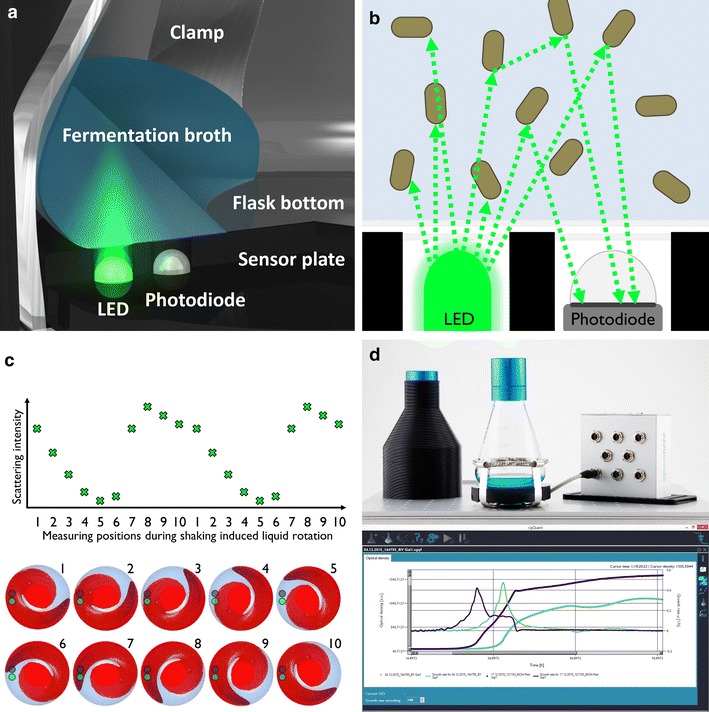
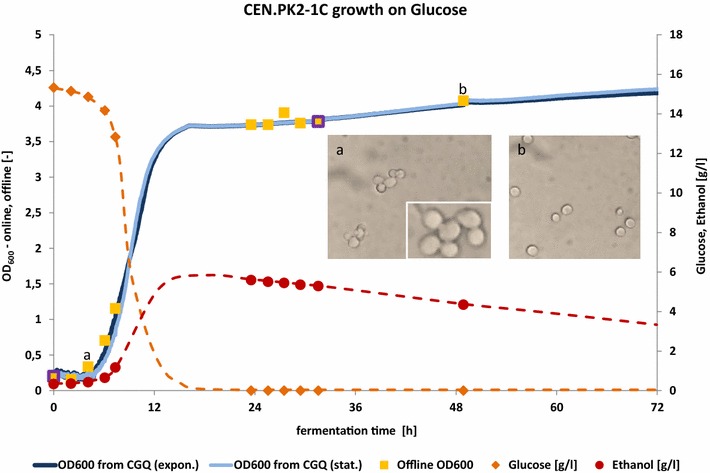
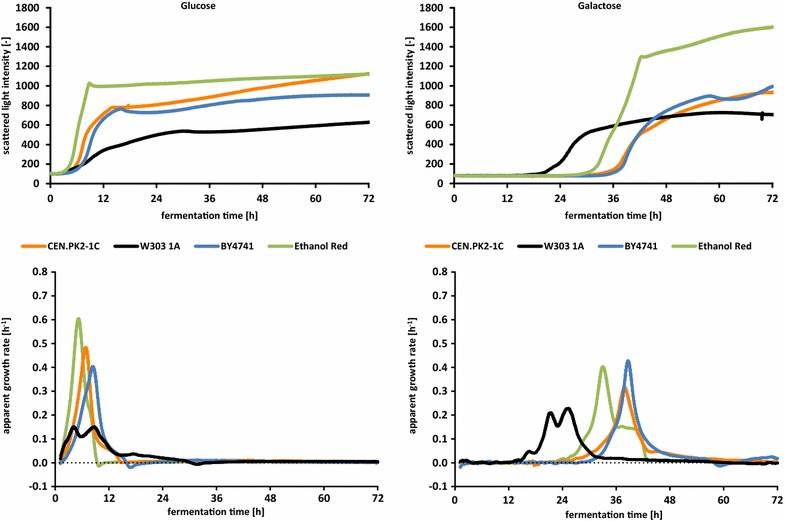
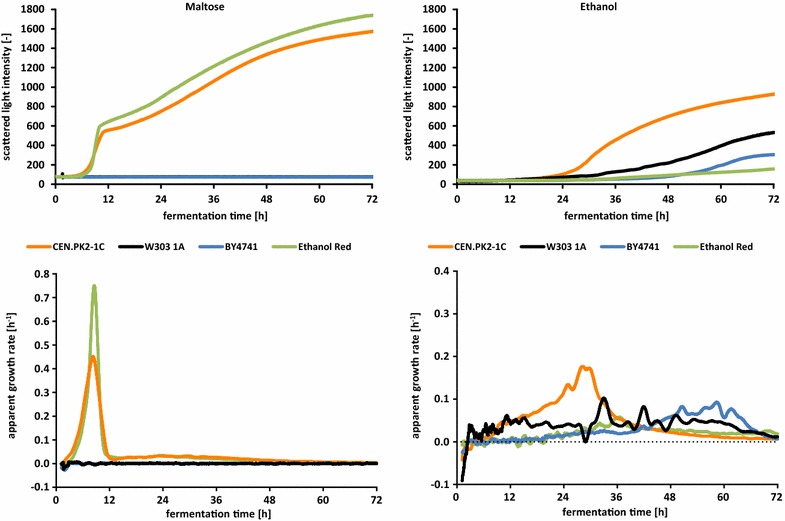
BACKGROUND: Baker's yeast, Saccharomyces cerevisiae, as one of the most often used workhorses in biotechnology has been developed into a huge family of application optimised strains in the last decades. Increasing numbers of strains render their characterisation highly challenging, even with the simple methods of growth-based analytics. Here we present a new sensor system for the automated, non-invasive and parallelisable monitoring of biomass in continuously shaken shake flask cultures, called CGQ ("cell growth quantifier"). The CGQ implements a dynamic approach of backscattered light measurement, allowing for efficient and accurate growth-based strain characterisation, as exemplarily demonstrated for the four most commonly used laboratory and industrial yeast strains, BY4741, W303-1A, CEN.PK2-1C and Ethanol Red. RESULTS: Growth experiments revealed distinct carbon source utilisation differences between the investigated S. cerevisiae strains. Phenomena such as diauxic shifts, morphological changes and oxygen limitations were clearly observable in the growth curves. A strictly monotonic non-linear correlation of OD600 and the CGQ's backscattered light intensities was found, with strain-to-strain as well as growth-phase related differences. The CGQ measurements showed high resolution, sensitivity and smoothness even below an OD600 of 0.2 and were furthermore characterised by low background noise and signal drift in combination with high reproducibility. CONCLUSIONS: With the CGQ, shake flask fermentations can be automatically monitored regarding biomass and growth rates with high resolution and parallelisation. This makes the CGQ a valuable tool for growth-based strain characterisation and development. The exceptionally high resolution allows for the identification of distinct metabolic differences and shifts as well as for morphologic changes. Applications that will benefit from that kind of automatized biomass monitoring include, amongst many others, the characterization of deregulated native or integrated heterologous pathways, the fast detection of co-fermentation as well as the realisation of rational and growth-data driven evolutionary engineering approaches.
Overview
The claims and statistics of this paper haven’t been checked yet.
Free: it reads the open-access text and checks the first 5 claims that cite a source we can check. Create a free account to check every claim.
Integrity signals
Registry
Cites
Statistics
Figures
Verification
Claims the paper makes
The claims and statistics of this paper haven’t been checked yet.
Free: it reads the open-access text and checks the first 5 claims that cite a source we can check. Create a free account to check every claim.
Claims other papers make about this one
Each is checked against this paper’s own text: does it say what the citing paper says it does?
The source backs part of the claim, not all of it — or backs it for a different population, condition or comparison.
In the citing paper
“Automation of process control in shake flasks is technically possible [78], but so far it is not used for batch studies with phototrophic microorganisms.”
From Lab-scale photobioreactor systems: principles, applications, and scalability (2022) · cites this paper as [78]
Experimental — accuracy not yet measured
Self-check
Percentages, sums and reported differences re-computed from the paper’s own numbers.
The self-check needs the paper’s full text.
Citations
Cites
Goffeau, A., Barrell, B. G., Bussey, H., Davis, R. W., Dujon, B., Feldmann, H., Galibert, F., Hoheisel, J. D., Jacq, C., Johnston, M., et al. (1996) · Science · doi:10.1126/science.274.5287.546 · Cited by 4,263 · cited 1×
“This non-natural derived strain, generated from various crosses among three baking and three natural strains from rotting fruit, was the first eukaryotic organism whose genome has been sequenced and is still used as reference genome [14, 15].”
BackgroundSherman, F. (2002) · Methods in Enzymology · doi:10.1016/s0076-6879(02)50954-x · Cited by 4,121
[1] Getting started with yeast
Sherman, F. (1991) · Methods in Enzymology · doi:10.1016/0076-6879(91)94004-v · Cited by 4,067
Functional Characterization of the S. cerevisiae Genome by Gene Deletion and Parallel Analysis
Winzeler, E. A., Shoemaker, D. D., Astromoff, A., Liang, H., Anderson, K., Andre, B., Bangham, R., Benito, R., Boeke, J. D., Bussey, H., et al. (1999) · Science · doi:10.1126/science.285.5429.901 · Cited by 3,953 · cited 1×
“A collection of more than 6000 strains each deleted in a single open reading frame (ORF) within the BY background allows fast characterization for various purposes [12].”
BackgroundBaker Brachmann, C., Davies, A., Cost, G. J., Caputo, E., Li, J., Hieter, P., & Boeke, J. D. (1998) · Yeast · doi:10.1002/(sici)1097-0061(19980130)14:2<115::aid-yea204>3.0.co;2-2 · Cited by 3,401 · cited 2×
“The strain is a direct descendant of the original S288c isolate [11, 13].”
BackgroundVerduyn, C., Postma, E., Scheffers, W. A., & Van Dijken, J. P. (1992) · Yeast · doi:10.1002/yea.320080703 · Cited by 1,510 · cited 1×
“PK, W303, and S288c exhibited growth in a different synthetic glycerol medium (according to [48]) after supplementation of nucleobases and amino acids, could be due to the different handling of pre-cultures, different pHvalues, different composition of both media or different genotypic characters.”
BackgroundConstruction of a set of convenient saccharomyces cerevisiae strains that are isogenic to S288C
Winston, F., Dollard, C., & Ricupero‐Hovasse, S. L. (1995) · Yeast · doi:10.1002/yea.320110107 · Cited by 941 · cited 1×
“The strain is a direct descendant of the original S288c isolate [11, 13].”
BackgroundSystematic Identification of Pathways That Couple Cell Growth and Division in Yeast
Jorgensen, P., Nishikawa, J. L., Breitkreutz, B.-J., & Tyers, M. (2002) · Science · doi:10.1126/science.1070850 · Cited by 768 · cited 1×
“In opposite to haploid strains, size and volume of diploid cells are clearly enhanced [41] and might therefore influence growth measurements as determined by optical densities of the newly developed CGQ system.”
GENEALOGY OF PRINCIPAL STRAINS OF THE YEAST GENETIC STOCK CENTER
Mortimer, R. K., & Johnston, J. R. (1986) · Genetics · doi:10.1093/genetics/113.1.35 · Cited by 602 · cited 2×
“Whether the non-existing growth of both derivatives of S288C on maltose could be due to the progenitor’s inability for maltose utilization [16, 46] or due to other reasons cannot finally be concluded by these exemplarily intended experiments.”
BackgroundResultAguilar-Uscanga, B., & Francois, J. M. (2003) · Letters in Applied Microbiology · doi:10.1046/j.1472-765x.2003.01394.x · Cited by 465 · cited 1×
“cerevisiae’s cell volume (size reductions >20 %) [51], as well as cell wall thickness, roughness and composition [52].”
BackgroundIntroduction to advantages and problems of shaken cultures
Büchs, J. (2001) · Biochemical Engineering Journal · doi:10.1016/s1369-703x(00)00106-6 · Cited by 388 · cited 1×
“Shake flasks are the most popular bioreactor system for small scale fermentations [3] due to their ease of use, their cost efficiency and their capability to be utilised in parallelised screening experiments [4].”
BackgroundSaccharomyces cerevisiae S288C Has a Mutation in FL08, a Gene Required for Filamentous Growth
Liu, H., Styles, C. A., & Fink, G. R. (1996) · Genetics · doi:10.1093/genetics/144.3.967 · Cited by 380
Device for sterile online measurement of the oxygen transfer rate in shaking flasks
Anderlei, T., & Büchs, J. (2001) · Biochemical Engineering Journal · doi:10.1016/s1369-703x(00)00116-9 · Cited by 368
Online respiration activity measurement (OTR, CTR, RQ) in shake flasks
Anderlei, T., Zang, W., Papaspyrou, M., & Büchs, J. (2004) · Biochemical Engineering Journal · doi:10.1016/s1369-703x(03)00181-5 · Cited by 365 · cited 2×
“This has been shown within a comparable experimental setup [45] for S.”
MethodTrends and challenges in the microbial production of lignocellulosic bioalcohol fuels
Weber, C., Farwick, A., Benisch, F., Brat, D., Dietz, H., Subtil, T., & Boles, E. (2010) · Applied Microbiology and Biotechnology · doi:10.1007/s00253-010-2707-z · Cited by 334 · cited 1×
“Due to its high tolerance against inhibitory compounds in lignocellulosic hydrolysates, a crucial trait for second-generation bioethanol production [39], it is now even used in metabolic and evolutionary engineering approaches for pentose fermentations [38, 40].”
BackgroundSelf-citationDemeke, M. M., Dietz, H., Li, Y., Foulquié-Moreno, M. R., Mutturi, S., Deprez, S., Den Abt, T., Bonini, B. M., Liden, G., Dumortier, F., et al. (2013) · Biotechnology for Biofuels · doi:10.1186/1754-6834-6-89 · Cited by 331 · cited 3×
“Due to its high tolerance against inhibitory compounds in lignocellulosic hydrolysates, a crucial trait for second-generation bioethanol production [39], it is now even used in metabolic and evolutionary engineering approaches for pentose fermentations [38, 40].”
BackgroundSelf-citation25 Yeast Genetic Strain and Plasmid Collections
Entian, K.-D., & Kötter, P. (2007) · Methods in Microbiology · doi:10.1016/s0580-9517(06)36025-4 · Cited by 317 · cited 1×
“under aerobic and anaerobic conditions, high mating, sporulation and transformation efficiency and no more flocculation [30].”
BackgroundNijkamp, J. F., van den Broek, M., Datema, E., de Kok, S., Bosman, L., Luttik, M. A., Daran-Lapujade, P., Vongsangnak, W., Nielsen, J., Heijne, W. H., et al. (2012) · Microbial Cell Factories · doi:10.1186/1475-2859-11-36 · Cited by 285
Kensy, F., Zang, E., Faulhammer, C., Tan, R.-K., & Büchs, J. (2009) · Microbial Cell Factories · doi:10.1186/1475-2859-8-31 · Cited by 253 · cited 1×
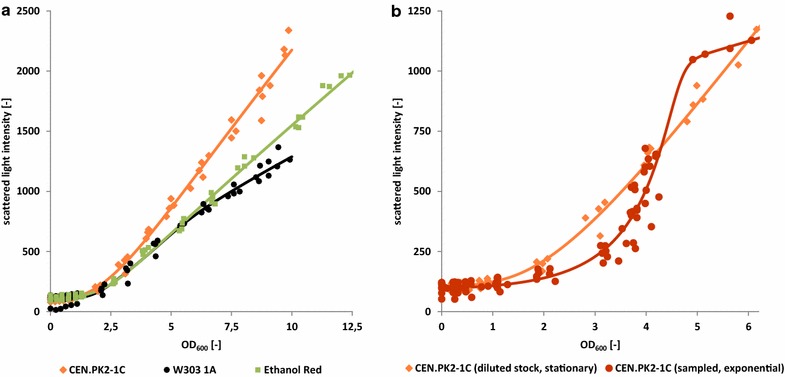
“[10], formulating a purely linear correlation, given by”
BackgroundAdvances in shaking technologies
Klöckner, W., & Büchs, J. (2012) · Trends in Biotechnology · doi:10.1016/j.tibtech.2012.03.001 · Cited by 216 · cited 1×
“Shake flasks are the most popular bioreactor system for small scale fermentations [3] due to their ease of use, their cost efficiency and their capability to be utilised in parallelised screening experiments [4].”
BackgroundZimmermann, F. K. (1975) · Mutation Research/Environmental Mutagenesis and Related Subjects · doi:10.1016/0165-1161(75)90069-2 · Cited by 213 · cited 4×
“Cultivation conditions Cultivations were performed at defined synthetic complete media (SC) (similar to [27]), consisting of the following compounds: 0.”
BackgroundMethodInfluentialRecent advances in DNA assembly technologies
Chao, R., Yuan, Y., & Zhao, H. (2014) · FEMS Yeast Research · doi:10.1111/1567-1364.12171 · Cited by 209 · cited 1×
“Moreover, due to the recent advances in strain construction (reviewed in [1, 2]), the number of new, distinct strains will increase even faster.”
BackgroundGenetic Diversity in Yeast Assessed With Whole-Genome Oligonucleotide Arrays
Winzeler, E. A., Castillo-Davis, C. I., Oshiro, G., Liang, D., Richards, D. R., Zhou, Y., & Hartl, D. L. (2003) · Genetics · doi:10.1093/genetics/163.1.79 · Cited by 188
Dimitrov, L. N., Brem, R. B., Kruglyak, L., & Gottschling, D. E. (2009) · Genetics · doi:10.1534/genetics.109.104497 · Cited by 182
Samorski, M., Müller‐Newen, G., & Büchs, J. (2005) · Biotechnology and Bioengineering · doi:10.1002/bit.20573 · Cited by 179
Wallace-Salinas, V., & Gorwa-Grauslund, M. F. (2013) · Biotechnology for Biofuels · doi:10.1186/1754-6834-6-151 · Cited by 157 · cited 1×
“Due to its high tolerance against inhibitory compounds in lignocellulosic hydrolysates, a crucial trait for second-generation bioethanol production [39], it is now even used in metabolic and evolutionary engineering approaches for pentose fermentations [38, 40].”
BackgroundYbp1 Is Required for the Hydrogen Peroxide-induced Oxidation of the Yap1 Transcription Factor
Veal, E. A., Ross, S. J., Malakasi, P., Peacock, E., & Morgan, B. A. (2003) · Journal of Biological Chemistry · doi:10.1074/jbc.m303542200 · Cited by 156 · cited 1×
“W303-1A is widely used in physiology research [23], for instance as model organism for regulation of oxidative stress response [24], in ageing research [15] or in cell separation because of its (haploid) bipolar bud site selection [25].”
MethodFunke, M., Diederichs, S., Kensy, F., Müller, C., & Büchs, J. (2009) · Biotechnology and Bioengineering · doi:10.1002/bit.22341 · Cited by 148 · cited 1×
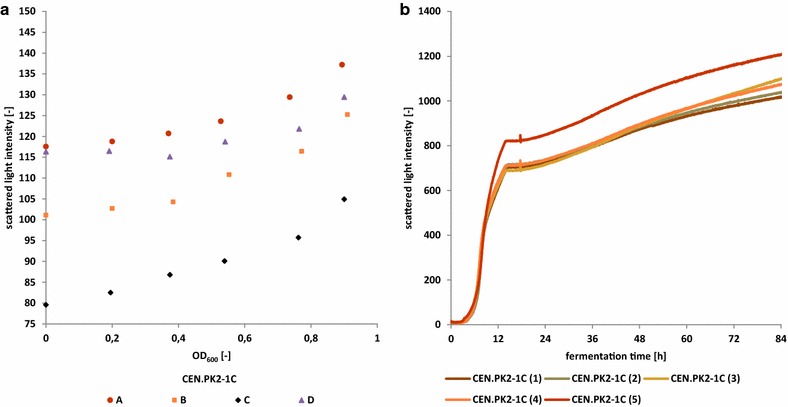
“Indeed, those oxygen limitations are observable in real-time biomass data (as shown in [49]).”
BackgroundGenome-Wide Analysis of Nucleotide-Level Variation in Commonly Used Saccharomyces cerevisiae Strains
Schacherer, J., Ruderfer, D. M., Gresham, D., Dolinski, K., Botstein, D., & Kruglyak, L. (2007) · PLoS ONE · doi:10.1371/journal.pone.0000322 · Cited by 130 · cited 1×
“They have been thoroughly compared with other laboratory strains [34, 35].”
Background23 Yeast Mutant and Plasmid Collections
(1998) · Methods in microbiology · doi:10.1016/s0580-9517(08)70344-1 · Cited by 126 · cited 1×
“PK strains were developed for studying metabolic fluxes and functional gene analysis [29].”
MethodRalser, M., Kuhl, H., Ralser, M., Werber, M., Lehrach, H., Breitenbach, M., & Timmermann, B. (2012) · Open Biology · doi:10.1098/rsob.120093 · Cited by 116
Wittmann, C., Kim, H. M., John, G. T., & Heinzle, E. (2003) · Biotechnology Letters · doi:10.1023/a:1022402212537 · Cited by 100
Swinnen, S., Klein, M., Carrillo, M., McInnes, J., Nguyen, H. T. T., & Nevoigt, E. (2013) · Biotechnology for Biofuels · doi:10.1186/1754-6834-6-157 · Cited by 95 · cited 1×
“[47], where prototrophic versions of the laboratory strains CEN.”
BackgroundACE2 , CBK1 , and BUD4 in Budding and Cell Separation
Voth, W. P., Olsen, A. E., Sbia, M., Freedman, K. H., & Stillman, D. J. (2005) · Eukaryotic Cell · doi:10.1128/ec.4.6.1018-1028.2005 · Cited by 80 · cited 1×
“W303-1A is widely used in physiology research [23], for instance as model organism for regulation of oxidative stress response [24], in ageing research [15] or in cell separation because of its (haploid) bipolar bud site selection [25].”
MethodLight Scattering at Various Angles
Latimer, P., & Pyle, B. E. (1972) · Biophysical Journal · doi:10.1016/s0006-3495(72)86120-4 · Cited by 74
Otero, J. M., Vongsangnak, W., Asadollahi, M. A., Olivares-Hernandes, R., Maury, J., Farinelli, L., Barlocher, L., Østerås, M., Schalk, M., Clark, A., et al. (2010) · BMC Genomics · doi:10.1186/1471-2164-11-723 · Cited by 73
Atomic force microscopic study of the effects of ethanol on yeast cell surface morphology
Canetta, E., Adya, A. K., & Walker, G. M. (2006) · FEMS Microbiology Letters · doi:10.1111/j.1574-6968.2005.00089.x · Cited by 70 · cited 1×
“cerevisiae’s cell volume (size reductions >20 %) [51], as well as cell wall thickness, roughness and composition [52].”
BackgroundMadrid, R. E., & Felice, C. J. (2005) · Critical Reviews in Biotechnology · doi:10.1080/07388550500248563 · Cited by 64 · cited 1×
“Conclusion and outlook Besides widely used OD600 measurements, cell dry/ wet weight or counting numbers of viable/dead cells of total cell amount per volume, scattered light intensity measurement is an additional tool for absolute biomass determination [53].”
MethodSaccharomyces cerevisiae BY4741 and W303-1A laboratory strains differ in salt tolerance
Petrezsélyová, S., Zahrádka, J., & Sychrová, H. (2009) · Fungal Biology · doi:10.1016/j.funbio.2009.11.002 · Cited by 63 · cited 1×
“Differences between BY4741 and W303-1A are especially evident in physiological parameters such as cell size and volume, in their relative plasma-membrane potential as well as in their tolerance to alkali-metal cations [21].”
BackgroundOptical device for parallel online measurement of dissolved oxygen and pH in shake flask cultures
Schneider, K. P., Schütz, V., John, G. T., & Heinzle, E. (2009) · Bioprocess and Biosystems Engineering · doi:10.1007/s00449-009-0367-0 · Cited by 62
Sharma, K. G., Kaur, R., & Bachhawat, A. K. (2003) · Archives of Microbiology · doi:10.1007/s00203-003-0566-z · Cited by 62 · cited 1×
“Popularity is also owed to the adenine auxotrophy, which probably leads to glutathione-mediated accumulation of red pigments in the vacuole under adenine-limiting conditions [26] and is used in white red mutant screening [27, 28].”
BackgroundCell volume as a factor limiting the replicative lifespan of the yeast Saccharomyces cerevisiae
Zadrąg‐Tęcza, R., Kwolek‐Mirek, M., Bartosz, G., & Biliński, T. (2008) · Biogerontology · doi:10.1007/s10522-008-9192-0 · Cited by 60 · cited 1×
“Furthermore, it is proposed that senescent W303 cells develop larger cell volumes due to larger vacuoles [22].”
BackgroundDARANLAPUJADE, P., DARAN, J., KOTTER, P., PETIT, T., PIPER, M., & PRONK, J. (2003) · FEMS Yeast Research · doi:10.1016/s1567-1356(03)00156-9 · Cited by 60
Advances in yeast genome engineering
David, F., & Siewers, V. (2014) · FEMS Yeast Research · doi:10.1111/1567-1364.12200 · Cited by 59 · cited 1×
“Moreover, due to the recent advances in strain construction (reviewed in [1, 2]), the number of new, distinct strains will increase even faster.”
BackgroundKokina, A., Ķibilds, J., & Liepiņš, J. (2014) · FEMS Yeast Research · doi:10.1111/1567-1364.12154 · Cited by 57 · cited 3×
“[23] recently described changes in the correlation of cell count and OD600 due to increased cell swelling of aged cultures.”
BackgroundMethodUde, C., Schmidt-Hager, J., Findeis, M., John, G., Scheper, T., & Beutel, S. (2014) · Sensors · doi:10.3390/s140917390 · Cited by 53
Vanhalewyn, M., Dumortier, F. M., Debast, G., Colombo, S., Ma, P., Winderickx, J., Dijck, P. V., & Thevelein, J. M. (1999) · Molecular Microbiology · doi:10.1046/j.1365-2958.1999.01479.x · Cited by 51 · cited 1×
“Despite hypersensitivity to sodium and, in particular lithium ions [31], as well as deviations in cAMP signalling [32, 33], strains from the CEN.”
BackgroundComparison of the proteomes of three yeast wild type strains: CEN.PK2, FY1679 and W303
Rogowska-Wrzesińska, A., Larsen, P. M., Blomberg, A., Görg, A., Roepstorff, P., Norbeck, J., & Fey, S. J. (2001) · Comparative and Functional Genomics · doi:10.1002/cfg.94 · Cited by 45 · cited 1×
“In fact, this strain is the main but not exclusive ancestor [19, 20].”
BackgroundFraenkel, D. G. (2011) · Cited by 37
Daran-Lapujade, P. A. S., Daran, J.-M. G., Luttik, M. A. H., Almering, M. J. H., Pronk, J. T., & Kötter, P. (2009) · FEMS Yeast Research · doi:10.1111/j.1567-1364.2009.00530.x · Cited by 35 · cited 1×
“Despite hypersensitivity to sodium and, in particular lithium ions [31], as well as deviations in cAMP signalling [32, 33], strains from the CEN.”
BackgroundNoninvasive online biomass detector system for cultivation in shake flasks
Schmidt‐Hager, J., Ude, C., Findeis, M., John, G. T., Scheper, T. H., & Beutel, S. (2014) · Engineering in Life Sciences · doi:10.1002/elsc.201400026 · Cited by 30 · cited 8×
“[8] proposed several different nonlinear model functions for correlation of backscatter intensities and offline biomass measures, such as polynomial, exponential and Bleasdale-Nelder functions.”
BackgroundMethodInfluentialDumortier, F. M., Vanhalewyn, M., Debast, G., Colombo, S., Ma, P., Winderickx, J., Dijck, P. V., & Thevelein, J. M. (2000) · International Journal of Food Microbiology · doi:10.1016/s0168-1605(00)00184-7 · Cited by 14 · cited 1×
“Despite hypersensitivity to sodium and, in particular lithium ions [31], as well as deviations in cAMP signalling [32, 33], strains from the CEN.”
BackgroundNonselective URA3 Colony-Color Assay in Yeast ade1 or ade2 Mutants
Weng, Y.-S., & Nickoloff, J. A. (1997) · BioTechniques · doi:10.2144/97232bm13 · Cited by 12 · cited 1×
“Popularity is also owed to the adenine auxotrophy, which probably leads to glutathione-mediated accumulation of red pigments in the vacuole under adenine-limiting conditions [26] and is used in white red mutant screening [27, 28].”
Background
Cited by
Lab-scale photobioreactor systems: principles, applications, and scalability
Benner, P., Meier, L., Pfeffer, A., Krüger, K., Oropeza Vargas, J. E., & Weuster-Botz, D. (2022) · Bioprocess and Biosystems Engineering · doi:10.1007/s00449-022-02711-1 · Cited by 215
“Automation of process control in shake flasks is technically possible [78], but so far it is not used for batch studies with phototrophic microorganisms.”
BackgroundAn artificial transport metabolon facilitates improved substrate utilization in yeast
Thomik, T., Wittig, I., Choe, J., Boles, E., & Oreb, M. (2017) · Nature Chemical Biology · doi:10.1038/nchembio.2457 · Cited by 96
Self-citationBrückner, C., Oreb, M., Kunze, G., Boles, E., & Tripp, J. (2018) · FEMS Yeast Research · doi:10.1093/femsyr/foy017 · Cited by 73
“7 g L−1 Difco yeast nitrogen base without amino acids), supplemented with amino acids as described previously (Bruder et al. 2016) and with 20 g L−1 D-glucose as a carbon source (SCD), adjusted to pH 6.”
MethodSelf-citationDe novo biosynthesis of trans-cinnamic acid derivatives in Saccharomyces cerevisiae
Gottardi, M., Knudsen, J. D., Prado, L., Oreb, M., Branduardi, P., & Boles, E. (2017) · Applied Microbiology and Biotechnology · doi:10.1007/s00253-017-8220-x · Cited by 69
“For real time measurements of cell growth in toxicity assays, the Cell Growth Quantifier (CGQ, Aquila 124 Biosystems), was used (Bruder et al. 2016).”
Self-citationReifenrath, M., & Boles, E. (2018) · Metabolic Engineering · doi:10.1016/j.ymben.2018.01.001 · Cited by 67
Self-citation
Metadata
- Authors
- Bruder, S., Reifenrath, M., Thomik, T., Boles, E., & Herzog, K.
- Affiliations
- Goethe University Frankfurt (DE)
- Corresponding author
- Herzog, Konrad
- Venue
- Microbial Cell Factories
- Published
- 2016-07-25
- Volume
- 15
- Issue
- 1
- Pages
- 127-127
- ISSN
- 1475-2859 (ISSN-L)
- PMC
- PMC4960845
- OpenAlex
- W2502716066
- Cited by
- 78
- References
- 53
- Citations by year
- 2026: 3 · 2025: 9 · 2024: 11 · 2023: 10 · 2022: 7 · 2021: 13 · 2020: 6 · 2019: 4 · 2018: 8 · 2017: 6 · 2016: 1
- FWCI
- 3.29
- Type
- journal article
- Language
- en
- Open access
- gold
- doi.org
- Licence
- cc-by
- Locations
- Microbial Cell Factories (publishedVersion, cc-by)
- PubMed Central (publishedVersion, cc-by)
- PubMed (publishedVersion)
- Publication Server of Goethe University Frankfurt am Main (Goethe University Frankfurt) (submittedVersion, cc-by)
- Topics
- Life Sciences › Biochemistry, Genetics and Molecular Biology › Molecular Biology › Fungal and yeast genetics research
- Physical Sciences › Chemical Engineering › Fluid Flow and Transfer Processes › Fluid Dynamics and Mixing
- Life Sciences › Biochemistry, Genetics and Molecular Biology › Molecular Biology › Microbial Metabolic Engineering and Bioproduction
- Keywords
- Saccharomyces cerevisiae, biomass monitoring, shake flask culture, strain characterization, carbon source utilization, diauxic shift, yeast morphology, oxygen limitation, growth rate, evolutionary engineering
- MeSH terms
- Ethanol, Automation, Carbon, Fermentation, Glucose, Oxygen, Saccharomyces cerevisiae, Biomass, Bioreactors, Batch Cell Culture Techniques
About these checks
Registry, retraction, Cites and statistics results are computed, not judged, with one exception: a printed reference that no index lists is read once by a model before it counts as a citation error. Claims are extracted by a model and kept only when their quote appears verbatim in the text; each cited source is then checked, with a model’s help, for whether it says what the claim relies on. Those verdicts can be wrong — read the claim’s quote and the cited source before relying on one.
Statistics and arithmetic are recomputed, not judged.
Confidence bands are shown only for fields calibrated on our annotated test set. None is calibrated yet, so no band is shown.
What counts as a claim ›How we measure confidence ›How we check this ›
Are you an author, or do you see a problem with this page? Request a review
Data sources
Bibliographic data: Semantic Scholar, OpenAlex, Crossref.
Contains information from the Semantic Scholar Academic Graph Datasets, made available under the ODC Attribution License (ODC-BY 1.0).
Semantic Scholar’s data is described in: Kinney, R., et al. (2023). The Semantic Scholar Open Data Platform. arXiv:2301.10140.
