

The DOI matches its Crossref record; 53 of the 53 references it cites were found in a registry or an index.
CRISPR interference (CRISPRi) for gene regulation and succinate production in cyanobacterium S. elongatus PCC 7942
Open accessAbstract
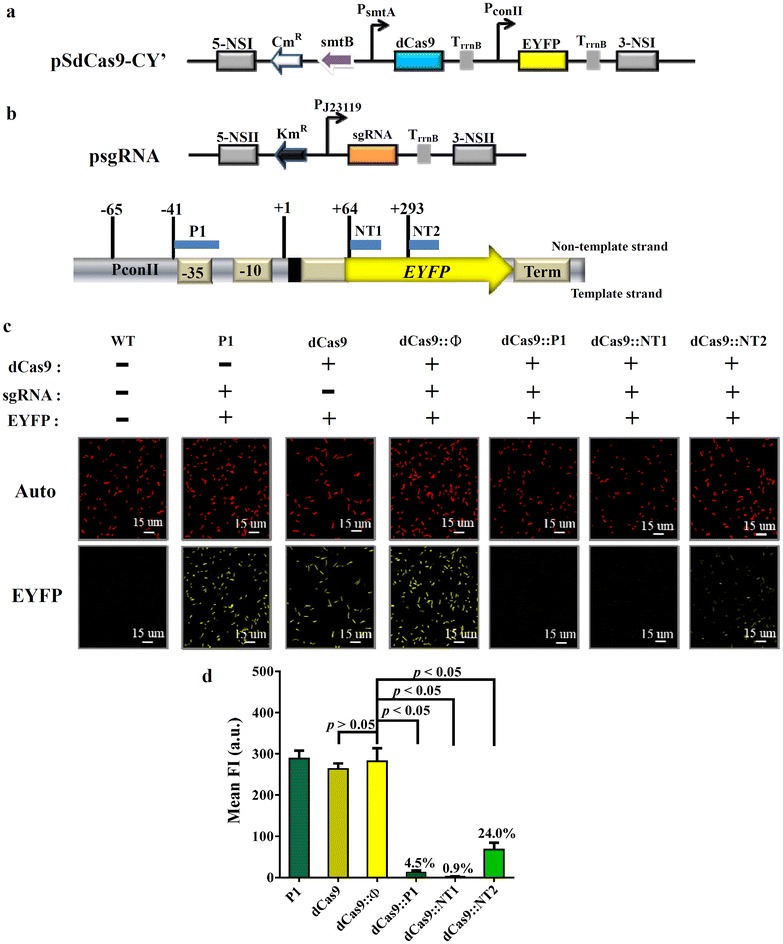
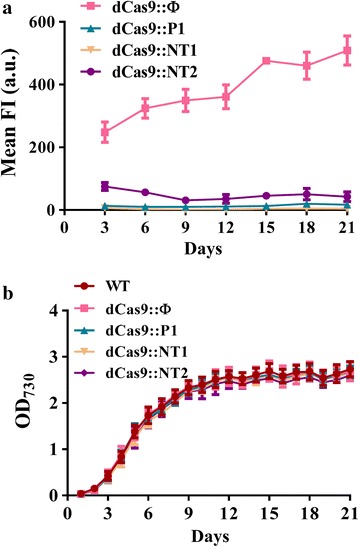
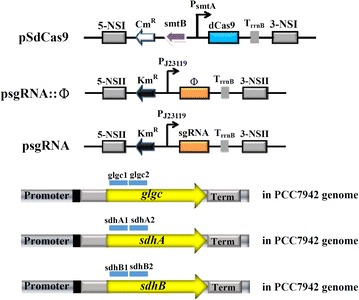
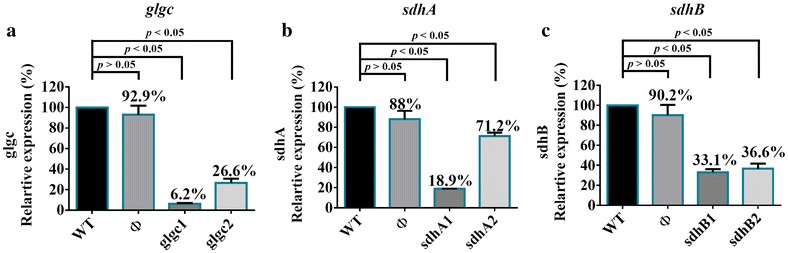
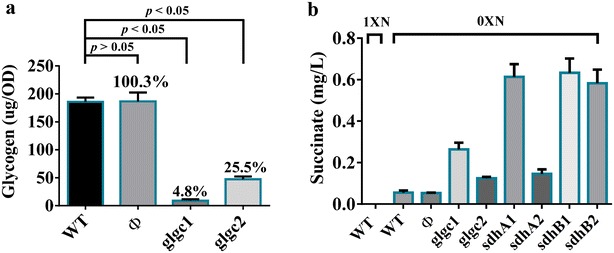
BACKGROUND: Cyanobacterium Synechococcus elongatus PCC 7942 holds promise for biochemical conversion, but gene deletion in PCC 7942 is time-consuming and may be lethal to cells. CRISPR interference (CRISPRi) is an emerging technology that exploits the catalytically inactive Cas9 (dCas9) and single guide RNA (sgRNA) to repress sequence-specific genes without the need of gene knockout, and is repurposed to rewire metabolic networks in various procaryotic cells. RESULTS: To employ CRISPRi for the manipulation of gene network in PCC 7942, we integrated the cassettes expressing enhanced yellow fluorescent protein (EYFP), dCas9 and sgRNA targeting different regions on eyfp into the PCC 7942 chromosome. Co-expression of dCas9 and sgRNA conferred effective and stable suppression of EYFP production at efficiencies exceeding 99%, without impairing cell growth. We next integrated the dCas9 and sgRNA targeting endogenous genes essential for glycogen accumulation (glgc) and succinate conversion to fumarate (sdhA and sdhB). Transcription levels of glgc, sdhA and sdhB were effectively suppressed with efficiencies depending on the sgRNA binding site. Targeted suppression of glgc reduced the expression to 6.2%, attenuated the glycogen accumulation to 4.8% and significantly enhanced the succinate titer. Targeting sdhA or sdhB also effectively downregulated the gene expression and enhanced the succinate titer ≈12.5-fold to ≈0.58-0.63 mg/L. CONCLUSIONS: These data demonstrated that CRISPRi-mediated gene suppression allowed for re-directing the cellular carbon flow, thus paving a new avenue to rationally fine-tune the metabolic pathways in PCC 7942 for the production of biotechnological products.
Overview
The claims and statistics of this paper haven’t been checked yet.
Run the check — free, no account needed. It reads the open-access text and checks the sources it cites.
Integrity signals
Registry
Cites
Statistics
Figures
Verification
Claims the paper makes
The claims and statistics of this paper haven’t been checked yet.
Run the check — free, no account needed. It reads the open-access text and checks the sources it cites.
Claims other papers make about this one
Each is checked against this paper’s own text: does it say what the citing paper says it does?
The source backs part of the claim, not all of it — or backs it for a different population, condition or comparison.
In the citing paper
“This approach provides a valuable means for studying gene function and fine-tuning of metabolic pathways without permanent genomic alterations [119,120].”
From Cyanobacteria as a Photosynthetic Chassis for Metabolic Pathway Engineering with Heterologous Gene Expression (2026) · cites this paper as [120]
Experimental — accuracy not yet measured
Self-check
Percentages, sums and reported differences re-computed from the paper’s own numbers.
The self-check needs the paper’s full text.
Citations
Cites
A Programmable Dual-RNA–Guided DNA Endonuclease in Adaptive Bacterial Immunity
Jinek, M., Chylinski, K., Fonfara, I., Hauer, M., Doudna, J. A., & Charpentier, E. (2012) · Science · doi:10.1126/science.1225829 · Cited by 17,116
Multiplex Genome Engineering Using CRISPR/Cas Systems
Cong, L., Ran, F. A., Cox, D., Lin, S., Barretto, R., Habib, N., Hsu, P. D., Wu, X., Jiang, W., Marraffini, L. A., et al. (2013) · Science · doi:10.1126/science.1231143 · Cited by 15,339
RNA-Guided Human Genome Engineering via Cas9
Mali, P., Yang, L., Esvelt, K. M., Aach, J., Guell, M., DiCarlo, J. E., Norville, J. E., & Church, G. M. (2013) · Science · doi:10.1126/science.1232033 · Cited by 9,210
Development and Applications of CRISPR-Cas9 for Genome Engineering
Hsu, P. D., Lander, E. S., & Zhang, F. (2014) · Cell · doi:10.1016/j.cell.2014.05.010 · Cited by 5,762
Repurposing CRISPR as an RNA-Guided Platform for Sequence-Specific Control of Gene Expression
Qi, L. S., Larson, M. H., Gilbert, L. A., Doudna, J. A., Weissman, J. S., Arkin, A. P., & Lim, W. A. (2013) · Cell · doi:10.1016/j.cell.2013.02.022 · Cited by 5,016 · cited 3×
“pyogenes) driven by the PLtetO1 promoter [24].”
BackgroundMethodWang, H., Yang, H., Shivalila, C. S., Dawlaty, M. M., Cheng, A. W., Zhang, F., & Jaenisch, R. (2013) · Cell · doi:10.1016/j.cell.2013.04.025 · Cited by 3,495
Ancient DNA and the rewriting of human history: be sparing with Occam’s razor
Haber, M., Mezzavilla, M., Xue, Y., & Tyler-Smith, C. (2016) · Genome Biology · doi:10.1186/s13059-015-0866-z · Cited by 1,924
CRISPR interference (CRISPRi) for sequence-specific control of gene expression
Larson, M. H., Gilbert, L. A., Wang, X., Lim, W. A., Weissman, J. S., & Qi, L. S. (2013) · Nature Protocols · doi:10.1038/nprot.2013.132 · Cited by 1,241
Direct photosynthetic recycling of carbon dioxide to isobutyraldehyde
Atsumi, S., Higashide, W., & Liao, J. C. (2009) · Nature Biotechnology · doi:10.1038/nbt.1586 · Cited by 870
Beyond editing: repurposing CRISPR-Cas9 for precision genome regulation and interrogation
Dominguez, A. A., Lim, W. A., & Qi, L. S. (2016) · Nature Reviews Molecular Cell Biology · doi:10.1038/nrm.2015.2 · Cited by 832 · cited 1×
“This new technology, termed CRISPR interference (CRISPRi), was recently repurposed to repress sequence-specific genes in diverse eucaryotic and procaryotic cells, for rewiring metabolic networks [23, 24] and high-throughput interrogation of genome-wide gene functions [25, 26].”
MethodGenome-editing Technologies for Gene and Cell Therapy
Maeder, M. L., & Gersbach, C. A. (2016) · Molecular Therapy · doi:10.1038/mt.2016.10 · Cited by 736
A Comprehensive, CRISPR-based Functional Analysis of Essential Genes in Bacteria
Peters, J. M., Colavin, A., Shi, H., Czarny, T. L., Larson, M. H., Wong, S. S., Hawkins, J. S., Lu, C. H. S., Koo, B., Marta, E., et al. (2016) · Cell · doi:10.1016/j.cell.2016.05.003 · Cited by 701
Hu, Y., Yang, H., Wang, J., Zhang, Y., Yu, J., & Wei, H. (2015) · World Journal of Microbiology and Biotechnology · doi:10.1007/s11274-015-1971-6 · Cited by 419
Self-citationHe, X., Tan, C., Wang, F., Wang, Y., Zhou, R., Cui, D., You, W., Zhao, H., Ren, J., & Feng, B. (2016) · Nucleic Acids Research · doi:10.1093/nar/gkw064 · Cited by 338
Synthetic biology of cyanobacteria: unique challenges and opportunities
Berla, B. M., Saha, R., Immethun, C. M., Maranas, C. D., Moon, T. S., & Pakrasi, H. B. (2013) · Frontiers in Microbiology · doi:10.3389/fmicb.2013.00246 · Cited by 305
Gründel, M., Scheunemann, R., Lockau, W., & Zilliges, Y. (2012) · Microbiology · doi:10.1099/mic.0.062950-0 · Cited by 282
Consequences of Cas9 cleavage in the chromosome of Escherichia coli
Cui, L., & Bikard, D. (2016) · Nucleic Acids Research · doi:10.1093/nar/gkw223 · Cited by 278
Metabolic engineering of cyanobacteria for the synthesis of commodity products
Angermayr, S. A., Gorchs Rovira, A., & Hellingwerf, K. J. (2015) · Trends in Biotechnology · doi:10.1016/j.tibtech.2015.03.009 · Cited by 273
Corynebacterium glutamicum Metabolic Engineering with CRISPR Interference (CRISPRi)
Cleto, S., Jensen, J. V. K., Wendisch, V. F., & Lu, T. K. (2016) · ACS Synthetic Biology · doi:10.1021/acssynbio.5b00216 · Cited by 266
Streptococcus thermophilus CRISPR-cas9 systems enable specific editing of the human genome
Müller, M., Lee, C. M., Gasiunas, G., Davis, T. H., Cradick, T. J., Siksnys, V., Bao, G., Cathomen, T., & Mussolino, C. (2016) · Molecular Therapy · doi:10.1038/mt.2015.218 · Cited by 254
Gene silencing by CRISPR interference in mycobacteria
Choudhary, E., Thakur, P., Pareek, M., & Agarwal, N. (2015) · Nature Communications · doi:10.1038/ncomms7267 · Cited by 253
Lv, L., Ren, Y., Chen, J., Wu, Q., & Chen, G. (2015) · Metabolic Engineering · doi:10.1016/j.ymben.2015.03.013 · Cited by 252
Multiple Gene Repression in Cyanobacteria Using CRISPRi
Yao, L., Cengic, I., Anfelt, J., & Hudson, E. P. (2016) · ACS Synthetic Biology · doi:10.1021/acssynbio.5b00264 · Cited by 246
CRISPR-mediated Genome Editing Restores Dystrophin Expression and Function in mdx Mice
Xu, L., Park, K. H., Zhao, L., Xu, J., El Refaey, M., Gao, Y., Zhu, H., Ma, J., & Han, R. (2016) · Molecular Therapy · doi:10.1038/mt.2015.192 · Cited by 244
CRISPR-Cas9 for the genome engineering of cyanobacteria and succinate production
Li, H., Shen, C. R., Huang, C.-H., Sung, L., Wu, M., & Hu, Y. (2016) · Metabolic Engineering · doi:10.1016/j.ymben.2016.09.006 · Cited by 235
Self-citationMarkley, A. L., Begemann, M. B., Clarke, R., Gordon, G. C., & Pfleger, B. F. (2014) · ACS Synthetic Biology · doi:10.1021/sb500260k · Cited by 212
Application of synthetic biology in cyanobacteria and algae
Wang, B., Wang, J., Zhang, W., & Meldrum, D. R. (2012) · Frontiers in Microbiology · doi:10.3389/fmicb.2012.00344 · Cited by 211
Development of a CRISPR-Cas9 Tool Kit for Comprehensive Engineering of Bacillus subtilis
Westbrook, A. W., Moo‐Young, M., & Chou, C.-H. P. (2016) · Applied and Environmental Microbiology · doi:10.1128/aem.01159-16 · Cited by 205
Wu, J., Du, G., Chen, J., & Zhou, J. (2015) · Scientific Reports · doi:10.1038/srep13477 · Cited by 203
Smith, J., Suresh, S., Schlecht, U., Wu, M., Wagih, O., Peltz, G., Davis, R. W., Steinmetz, L. M., Parts, L., & St.Onge, R. P. (2016) · Genome biology · doi:10.1186/s13059-016-0900-9 · Cited by 199
Self-citationGordon, G. C., Korosh, T. C., Cameron, J. C., Markley, A. L., Begemann, M. B., & Pfleger, B. F. (2016) · Metabolic Engineering · doi:10.1016/j.ymben.2016.07.007 · Cited by 189
Singh, A., Carette, X., Potluri, L.-P., Sharp, J. D., Xu, R., Prisic, S., & Husson, R. (2016) · Nucleic Acids Research · doi:10.1093/nar/gkw625 · Cited by 153
CRISPR technologies for bacterial systems: Current achievements and future directions
Choi, K. R., & Lee, S. Y. (2016) · Biotechnology Advances · doi:10.1016/j.biotechadv.2016.08.002 · Cited by 151
Kim, S. K., Han, G. H., Seong, W., Kim, H., Kim, S.-W., Lee, D., & Lee, S. (2016) · Metabolic Engineering · doi:10.1016/j.ymben.2016.08.006 · Cited by 150
Ma, A. T., Schmidt, C. M., & Golden, J. W. (2014) · Applied and Environmental Microbiology · doi:10.1128/aem.01697-14 · Cited by 126
Shen, C. R., & Liao, J. C. (2012) · Energy & Environmental Science · doi:10.1039/c2ee23148d · Cited by 118
Self-citationEnhanced integration of large DNA into E. coli chromosome by CRISPR/Cas9
Chung, M., I-Hsin, Y., Sung, L., Wu, M., Chao, Y., Ng, I., & Hu, Y. (2016) · Biotechnology and Bioengineering · doi:10.1002/bit.26056 · Cited by 118
Self-citationLan, E. I., Chuang, D. S., Shen, C. R., Lee, A. M., Ro, S. Y., & Liao, J. C. (2015) · Metabolic Engineering · doi:10.1016/j.ymben.2015.08.002 · Cited by 111
Self-citationProgrammable control of bacterial gene expression with the combined CRISPR and antisense RNA system
Lee, Y. J., Hoynes-O’Connor, A., Leong, M. C., & Moon, T. S. (2016) · Nucleic Acids Research · doi:10.1093/nar/gkw056 · Cited by 106
Enhanced protein and biochemical production using CRISPRi-based growth switches
Li, S., Jendresen, C. B., Grünberger, A., Ronda, C., Jensen, S. I., Noack, S., & Nielsen, A. T. (2016) · Metabolic Engineering · doi:10.1016/j.ymben.2016.09.003 · Cited by 95
Cress, B. F., Jones, J. A., Kim, D. C., Leitz, Q. D., Englaender, J. A., Collins, S. M., Linhardt, R. J., & Koffas, M. A. G. (2016) · Nucleic Acids Research · doi:10.1093/nar/gkw231 · Cited by 93
Carrieri, D., Paddock, T., Maness, P., Seibert, M., & Yu, J. (2012) · Energy & Environmental Science · doi:10.1039/c2ee23181f · Cited by 91
From cyanochemicals to cyanofactories: a review and perspective
Zhou, J., Zhu, T., Cai, Z., & Li, Y. (2016) · Microbial Cell Factories · doi:10.1186/s12934-015-0405-3 · Cited by 82
Hickman, J. W., Kotovic, K. M., Miller, C. R., Warrener, P., Kaiser, B. K., Jurista, T., Budde, M. W., Cross, F., Roberts, J. M., & Carleton, M. O. (2013) · Algal Research · doi:10.1016/j.algal.2013.01.008 · Cited by 79
Baroukh, C., Muñoz‐Tamayo, R., Steyer, J., & Olivier Bernard, A. (2015) · Metabolic Engineering · doi:10.1016/j.ymben.2015.03.019 · Cited by 72
Genome Engineering in Cyanobacteria: Where We Are and Where We Need To Go
Ramey, C. J., Barón‐Sola, Á., Aucoin, H. R., & Boyle, N. R. (2015) · ACS Synthetic Biology · doi:10.1021/acssynbio.5b00043 · Cited by 65
Effective knockdown of Drosophila long non-coding RNAs by CRISPR interference
Ghosh, S., Tibbit, C., & Liu, J. (2016) · Nucleic Acids Research · doi:10.1093/nar/gkw063 · Cited by 62
Orthogonal Modular Gene Repression in Escherichia coli Using Engineered CRISPR/Cas9
Didovyk, A., Borek, B., Hasty, J., & Tsimring, L. S. (2015) · ACS Synthetic Biology · doi:10.1021/acssynbio.5b00147 · Cited by 62
Highly efficient targeted chromosome deletions using CRISPR/Cas9
He, Z., Proudfoot, C., Mileham, A. J., McLaren, D. G., Whitelaw, B., & Lillico, S. G. (2014) · Biotechnology and Bioengineering · doi:10.1002/bit.25490 · Cited by 59
Gene transcription repression in Clostridium beijerinckii using CRISPR‐dCas9
Wang, Y., Zhang, Z.-T., Seo, S.-O., Patrick, L., Lu, T., Jin, Y., & Blaschek, H. P. (2016) · Biotechnology and Bioengineering · doi:10.1002/bit.26020 · Cited by 53
CRISPR-mediated control of the bacterial initiation of replication
Wiktor, J., Lesterlin, C., Sherratt, D. J., & Dekker, C. (2016) · Nucleic Acids Research · doi:10.1093/nar/gkw214 · Cited by 50
A novel process for obtaining pinosylvin using combinatorial bioengineering in Escherichia coli
Liang, J., Guo, L., Lin, J., He, Z., Cai, F., & Chen, J. (2016) · World Journal of Microbiology and Biotechnology · doi:10.1007/s11274-016-2062-z · Cited by 48
Cited by
Sorted by citations
Biomass and lipid induction strategies in microalgae for biofuel production and other applications
Alishah Aratboni, H., Rafiei, N., Garcia-Granados, R., Alemzadeh, A., & Morones-Ramírez, J. R. (2019) · Microbial Cell Factories · doi:10.1186/s12934-019-1228-4 · Cited by 437
Minimizing carbon footprint via microalgae as a biological capture
Onyeaka, H. N., Miri, T., Obileke, K. C., Hart, A., Anumudu, C. K., & Al-Sharify, Z. T. (2021) · Carbon Capture Science & Technology · doi:10.1016/j.ccst.2021.100007 · Cited by 345
Recent Developments on Genetic Engineering of Microalgae for Biofuels and Bio‐Based Chemicals
Ng, I., Tan, S., Kao, P., Chang, Y.-K., & Chang, J. (2017) · Biotechnology Journal · doi:10.1002/biot.201600644 · Cited by 257
Kao, P., & Ng, I. (2017) · Bioresource Technology · doi:10.1016/j.biortech.2017.04.111 · Cited by 222
A realistic scenario on microalgae based biodiesel production: Third generation biofuel
Ananthi, V., Raja, R., Carvalho, I. S., Brindhadevi, K., Pugazhendhi, A., & Arun, A. (2020) · Fuel · doi:10.1016/j.fuel.2020.118965 · Cited by 194
Metadata
- Authors
- Huang, C.-H., Shen, C. R., Li, H., Sung, L.-Y., Wu, M.-Y., & Hu, Y.-C.
- Affiliations
- National Tsing Hua University (TW)
- Corresponding author
- Hu, Yu-Chen
- Venue
- Microbial Cell Factories
- Published
- 2016-11-15
- Volume
- 15
- Issue
- 1
- Pages
- 196-196
- ISSN
- 1475-2859 (ISSN-L)
- PMC
- PMC5111286
- OpenAlex
- W2549981312
- Cited by
- 164
- References
- 53
- Citations by year
- 2026: 10 · 2025: 11 · 2024: 14 · 2023: 15 · 2022: 20 · 2021: 23 · 2020: 21 · 2019: 23 · 2018: 17 · 2017: 10
- FWCI
- 8.66
- Type
- journal article
- Language
- en
- Open access
- gold
- doi.org
- Licence
- cc-by
- Locations
- Microbial Cell Factories (publishedVersion, cc-by)
- PubMed Central (publishedVersion, cc-by)
- PubMed (publishedVersion)
- Funders
- Ministry of Science and Technology (MOST 103B7028J2, 104-2622-8-007-001, 105-2622-8-007-009)
- Topics
- Life Sciences › Biochemistry, Genetics and Molecular Biology › Molecular Biology › Microbial Metabolic Engineering and Bioproduction
- Life Sciences › Biochemistry, Genetics and Molecular Biology › Molecular Biology › CRISPR and Genetic Engineering
- Physical Sciences › Energy › Renewable Energy, Sustainability and the Environment › Algal biology and biofuel production
- Keywords
- CRISPR interference, Synechococcus elongatus PCC 7942, cyanobacteria, dCas9, single guide RNA, gene expression inhibition, succinate production, glycogen accumulation, SDHA, SDHB, metabolic pathway engineering, chromosomal integration
- MeSH terms
- Gene Expression Regulation, Bacterial, Succinic Acid, Synechococcus, Metabolic Engineering, Clustered Regularly Interspaced Short Palindromic Repeats
About these checks
Registry, retraction, Cites and statistics results are computed, not judged, with one exception: a printed reference that no index lists is read once by a model before it counts as a citation error. Claims are extracted by a model and kept only when their quote appears verbatim in the text; each cited source is then checked, with a model’s help, for whether it says what the claim relies on. Those verdicts can be wrong — read the claim’s quote and the cited source before relying on one.
Statistics and arithmetic are recomputed, not judged.
Confidence bands are shown only for fields calibrated on our annotated test set. None is calibrated yet, so no band is shown.
What counts as a claim ›How we measure confidence ›How we check this ›
Are you an author, or do you see a problem with this page? Request a review
