

The novel long noncoding RNA CRART16 confers cetuximab resistance in colorectal cancer cells by enhancing ERBB3 expression via miR-371a-5p
Open accessThe DOI matches its Crossref record; 48 of the 48 references it cites were found in a registry or an index.
Abstract
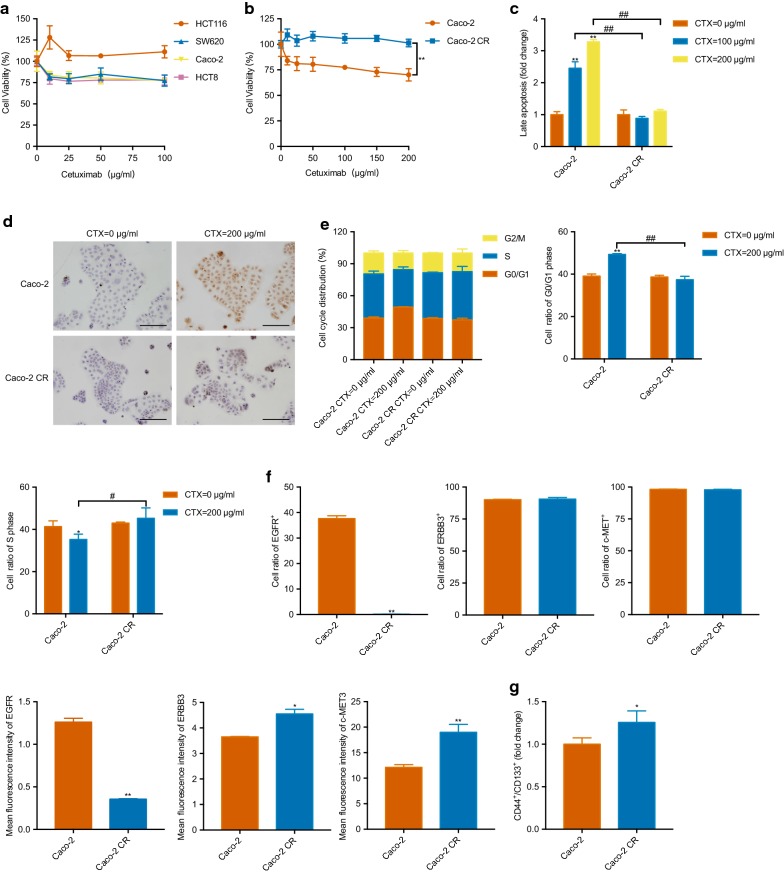
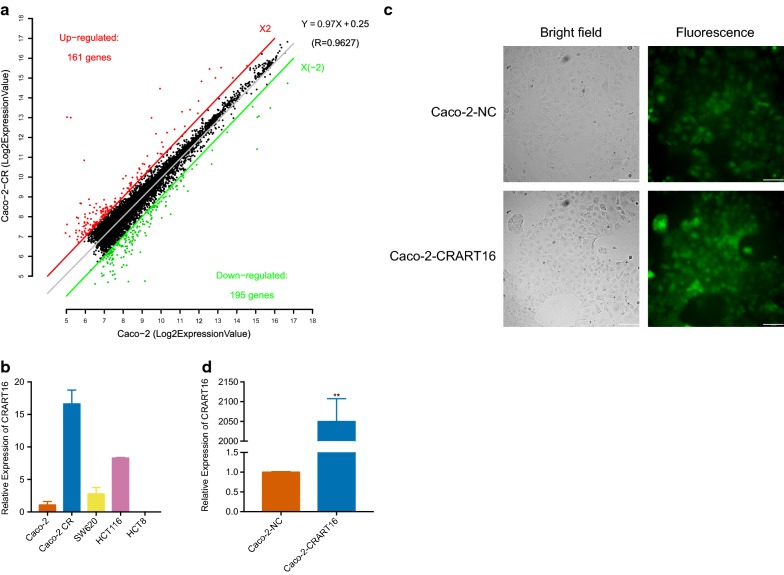
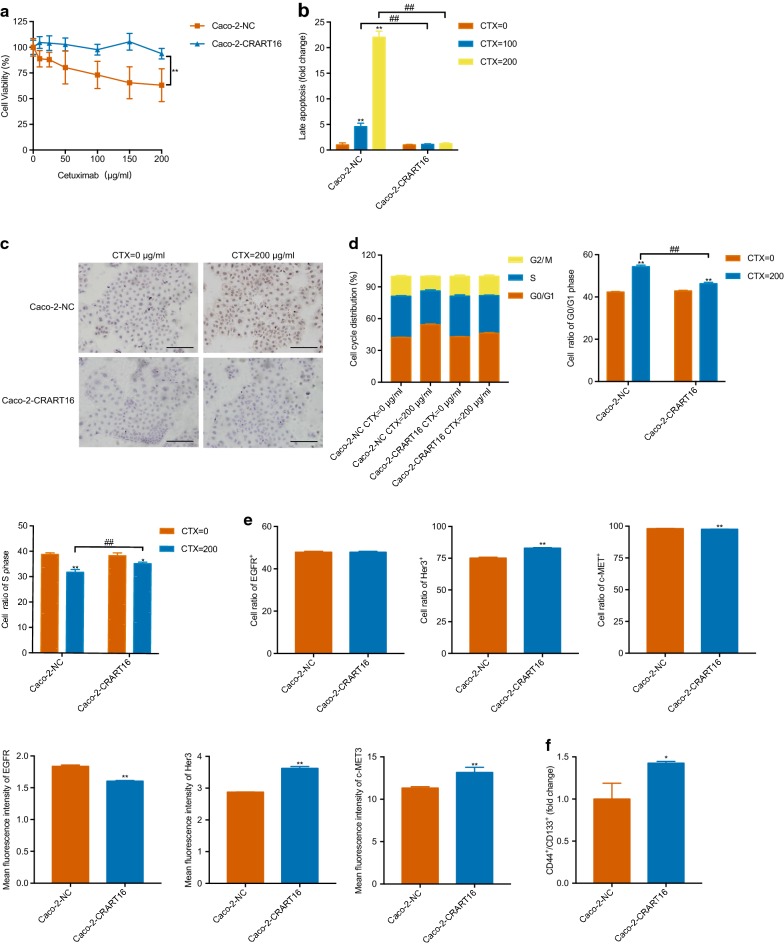
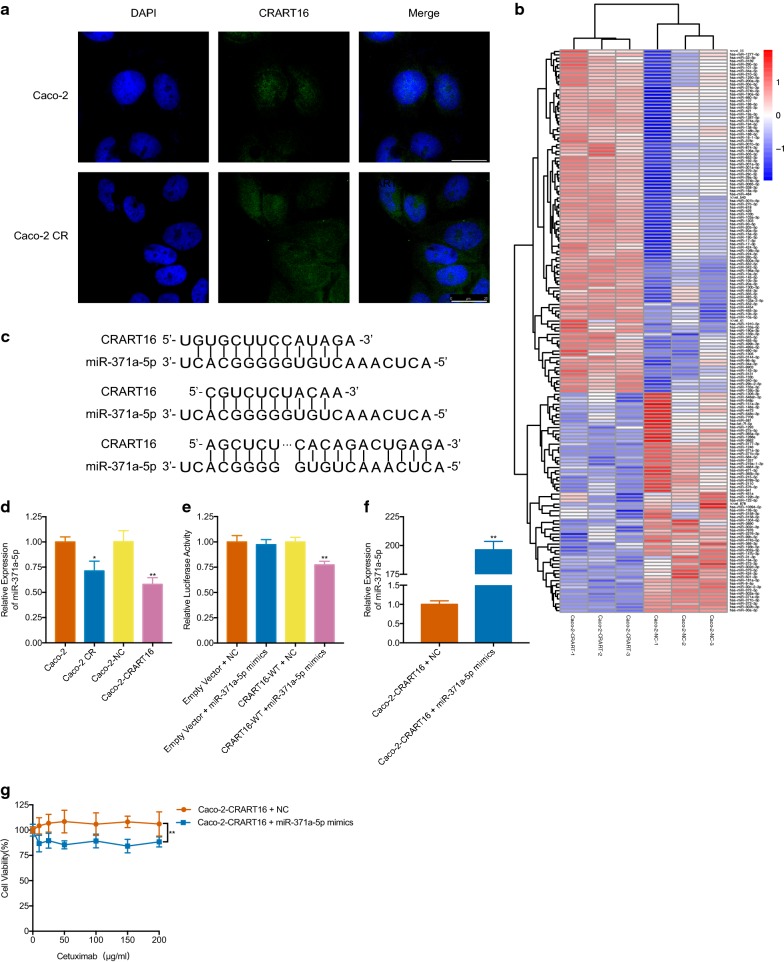
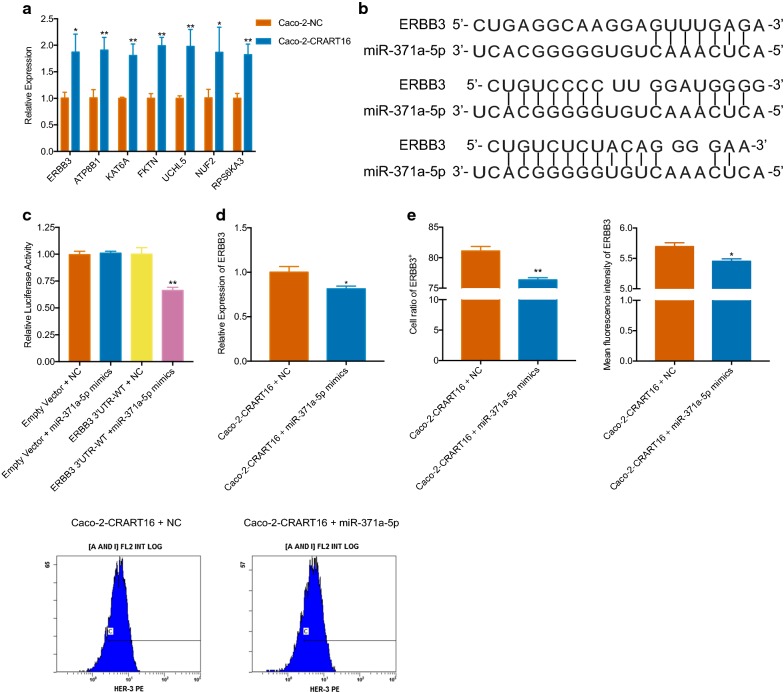
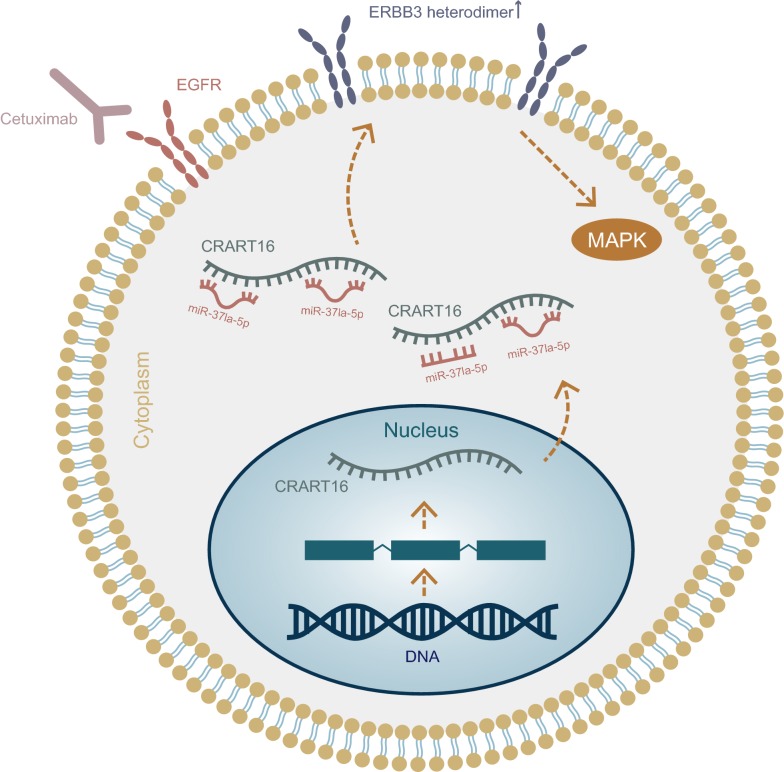
Background: Long noncoding RNAs (lncRNAs) have been shown to participate in multiple biological processes and confer drug resistance. However, it remains unclear whether lncRNAs are involved in conferring cetuximab resistance in colorectal cancer (CRC) cells. Methods: Cell Counting Kit-8 (CCK-8) assays were performed to assess the sensitivity of CRC cell lines to cetuximab treatment. We incubated Caco-2 cells, which are partially responsive to cetuximab, with increasing concentrations of cetuximab for approximately 6 months to generate Caco-2 cetuximab-resistant (Caco-2 CR) cells. Microarray analysis comparing Caco-2 CR with Caco-2 cells was used to identify lncRNAs that were potentially related to cetuximab resistance. Caco-2 cells were stably transduced with cetuximab resistance-associated RNA transcript 16 (CRART16) or an empty vector using lentiviral infection; the cells were designated Caco-2-CRART16 and Caco-2-NC, respectively, and were analyzed with RNA sequencing (RNA-seq). Quantitative real-time PCR (qRT-PCR) was performed to investigate RNA expression. Flow cytometry and TUNEL assays were used to assess apoptosis levels induced by cetuximab. The cell cycle, stemness biomarkers and membrane proteins of CRC cells were assessed via flow cytometry. RNA fluorescence in situ hybridization (FISH) was used to examine CRART16 localization and expression. Bioinformatics analysis was performed to predict the potential mechanism of CRART16, which was further validated by a dual-luciferase reporter assay. Differences in measurement data were compared using Student’s t test, one-way ANOVA followed by Dunnett’s test and two-way ANOVA. Results: The novel lncRNA CRART16 was upregulated in Caco-2 CR cells. CRART16 overexpression reversed the effects of cetuximab on cell viability and reduced cetuximab-induced apoptosis. Meanwhile, CRART16 overexpression led to increases in the proportion of CD44+/CD133+ cells. In addition, CRART16 acts as a competing endogenous RNA (ceRNA) for miR-371a-5p to regulate V-Erb-B2 Erythroblastic Leukemia Viral Oncogene Homolog 3 (ERBB3) expression. MiR-371a-5p mimics counteracted the cetuximab resistance induced by CRART16 overexpression. Kyoto Encyclopedia of Genes and Genomes (KEGG) pathway analysis revealed that after CRART16 was overexpressed, the resulting differentially expressed mRNAs were mainly enriched in the MAPK signaling pathway. Conclusions: CRART16 overexpression may contribute to cetuximab resistance through the miR-371a-5p/ERBB3/MAPK pathway. Additionally, CRART16 contributes to the acquisition of stemness properties.
Overview
The claims and statistics of this paper haven’t been checked yet.
Free: it reads the open-access text and checks the first 5 claims that cite a source we can check. Create a free account to check every claim.
Integrity signals
Registry
Cites
Statistics
Figures
Verification
Claims the paper makes
The claims and statistics of this paper haven’t been checked yet.
Free: it reads the open-access text and checks the first 5 claims that cite a source we can check. Create a free account to check every claim.
Claims other papers make about this one
Each is checked against this paper’s own text: does it say what the citing paper says it does?
The cited source says what the claim attributes to it.
In the citing paper
“In addition, different ncRNAs have been shown to contribute to resistance against 5-FU, oxaliplatin, and anti-EGFR therapies by various mechanisms [62,63,64].”
From Mechanisms and Strategies to Overcome Drug Resistance in Colorectal Cancer (2025) · cites this paper as [63]
Self-check
Percentages, sums and reported differences re-computed from the paper’s own numbers.
The self-check needs the paper’s full text.
Citations
Cites
Bray, F., Ferlay, J., Soerjomataram, I., Siegel, R. L., Torre, L. A., & Jemal, A. (2018) · CA: A Cancer Journal for Clinicians · doi:10.3322/caac.21492 · Cited by 84,109
The C. elegans heterochronic gene lin-4 encodes small RNAs with antisense complementarity to lin-14
Lee, R. C., Feinbaum, R. L., & Ambros, V. (1993) · Cell · doi:10.1016/0092-8674(93)90529-y · Cited by 12,948
Untangling the ErbB signalling network
Yarden, Y., & Sliwkowski, M. X. (2001) · Nature Reviews Molecular Cell Biology · doi:10.1038/35052073 · Cited by 6,974
Global patterns and trends in colorectal cancer incidence and mortality
Arnold, M., Sierra, M. S., Laversanne, M., Soerjomataram, I., Jemal, A., & Bray, F. (2017) · Gut · doi:10.1136/gutjnl-2015-310912 · Cited by 5,228
Derrien, T., Johnson, R., Bussotti, G., Tanzer, A., Djebali, S., Tilgner, H., Guernec, G., Martin, D., Merkel, A., Knowles, D. G., et al. (2012) · Genome Research · doi:10.1101/gr.132159.111 · Cited by 5,061
Identification of Novel Genes Coding for Small Expressed RNAs
Lagos-Quintana, M., Rauhut, R., Lendeckel, W., & Tuschl, T. (2001) · Science · doi:10.1126/science.1064921 · Cited by 4,956
Molecular Mechanisms of Long Noncoding RNAs
Wang, K. C., & Chang, H. Y. (2011) · Molecular Cell · doi:10.1016/j.molcel.2011.08.018 · Cited by 4,812
An Abundant Class of Tiny RNAs with Probable Regulatory Roles in Caenorhabditis elegans
Lau, N. C., Lim, L. P., Weinstein, E. G., & Bartel, D. P. (2001) · Science · doi:10.1126/science.1065062 · Cited by 3,345
Long non-coding RNAs: new players in cell differentiation and development
Fatica, A., & Bozzoni, I. (2014) · Nature Reviews Genetics · doi:10.1038/nrg3606 · Cited by 2,980
An Extensive Class of Small RNAs in Caenorhabditis elegans
Lee, R. C., & Ambros, V. (2001) · Science · doi:10.1126/science.1065329 · Cited by 2,922
Cited by
Drug resistance in colorectal cancer: An epigenetic overview
Luo, M., Yang, X., Chen, H.-N., Nice, E. C., & Huang, C. (2021) · Biochimica et Biophysica Acta (BBA) - Reviews on Cancer · doi:10.1016/j.bbcan.2021.188623 · Cited by 94
Hamdy, N. Μ., Zaki, M. B., Rizk, N. I., Abdelmaksoud, N. M., Abd‐Elmawla, M. A., Abdelhamid, R., & Abulsoud, A. I. (2024) · Life Sciences · doi:10.1016/j.lfs.2024.122946 · Cited by 92
Mechanisms and Strategies to Overcome Drug Resistance in Colorectal Cancer
Haynes, J., & Manogaran, P. (2025) · International Journal of Molecular Sciences · doi:10.3390/ijms26051988 · Cited by 82
Yang, Y., Yan, X., Li, X., Ma, Y., & Goel, A. (2021) · Cancer Letters · doi:10.1016/j.canlet.2021.01.009 · Cited by 75
Self-citationEpigenetic Alteration in Colorectal Cancer: Potential Diagnostic and Prognostic Implications
Cao, Q., Tian, Y., Deng, Z., Yang, F., & Chen, E. (2024) · International Journal of Molecular Sciences · doi:10.3390/ijms25063358 · Cited by 60
“Additionally, overexpression of CRART16 increases the proportion of CD44+/CD133+ cells and may promote resistance to cetuximab in CRC cells through the miR-371a-5p/ERBB3/MAPK pathway [183].”
BackgroundZhang, J., Zhang, J., Pang, X., Chen, Z., Zhang, Z., Lei, L., Xu, H., Wen, L., Zhu, J., Jiang, Y. H., et al. (2021) · Experimental Cell Research · doi:10.1016/j.yexcr.2021.112579 · Cited by 53
Self-citationUnveiling acquired resistance to anti-EGFR therapies in colorectal cancer: a long and winding road
Ríos-Hoyo, A., Monzonís, X., Vidal, J., Linares, J., & Montagut, C. O. (2024) · Frontiers in Pharmacology · doi:10.3389/fphar.2024.1398419 · Cited by 47
Barik, G. K., Sahay, O., Behera, A., Naik, D., & Kalita, B. (2021) · Biochimica et Biophysica Acta (BBA) - Reviews on Cancer · doi:10.1016/j.bbcan.2021.188612 · Cited by 38
Wei, S., Hu, W., Feng, J., & Geng, Y. (2022) · Cell Communication and Signaling · doi:10.1186/s12964-022-00960-x · Cited by 32
“Moreover, CRART16 overexpression can enhance CSC transformation, which in turn promotes Cetuximab resistance [33].”
BackgroundCompeting Endogenous RNAs (ceRNAs) in Colorectal Cancer: A Review
Akhbari, M. H., Zafari, Z., & Sheykhhasan, M. (2022) · Expert Reviews in Molecular Medicine · doi:10.1017/erm.2022.21 · Cited by 31
LncRNA TUSC7 suppresses pancreatic carcinoma progression by modulating miR‐371a‐5p expression
Yue, L., & Guo, J. (2019) · Journal of Cellular Physiology · doi:10.1002/jcp.28248 · Cited by 31
Zhang, J., Pang, X., Lei, L., Zhang, J., Zhang, X., Chen, Z., Zhu, J., Jiang, Y. H., Chen, G., Wu, Y., et al. (2022) · Aging · doi:10.18632/aging.204078 · Cited by 25
Self-citationHe, J., & Wu, W. (2022) · Non-coding RNA Research · doi:10.1016/j.ncrna.2022.10.001 · Cited by 23
lncRNA MCM3AP‐AS1 inhibits the progression of colorectal cancer via the miR‐19a‐3p/FOXF2 axis
Dai, W., Zeng, W., & Lee, D. (2021) · The Journal of Gene Medicine · doi:10.1002/jgm.3306 · Cited by 22
“It is the third most common cancer worldwide and is ranked as the second cause of cancer-related death.(1,2) Currently, surgical treatment, chemotherapy, and targeted therapy are the leading methods of CRC treatment and, with the continuous optimization of the treatment plan, the treatment effect continues to be impro…”
BackgroundYang, S., Yuan, Z., Zhu, Y., Xue, C., & Wang, W. (2021) · Head & Neck · doi:10.1002/hed.26742 · Cited by 19
“reported that lncRNA CRART16 promoted cetuximab resistance through increasing cell viability and inhibiting apoptosis via acting as a competing endogenous RNA (ceRNA) of miR-371a-5p.(11) Plasmacytoma variant translocation 1 (PVT1) is a lncRNA with a length of 1716 nucleotides that was upregulated in a variety of malig…”
BackgroundWang, J., Zhang, X., Zhang, J., Chen, S., Zhu, J., & Wang, X. (2021) · Cancer Cell International · doi:10.1186/s12935-021-02353-5 · Cited by 18
“endogenous RNA (ceRNA) Our previously published study demonstrated that CRART16 could confer cetuximab resistance in CRC cells by functioning as a ceRNA [17].”
BackgroundMethodResultInfluentialSelf-citationDashtaki, M. E., & Ghasemi, S. (2022) · Current Molecular Pharmacology · doi:10.2174/1874467216666221206100135 · Cited by 17
Zeng, D., Hu, Z., Yi, Y., Besskaya, V., Shan, G., Chen, Z., Zhan, C., Lin, M., Lin, Z., & Wang, Q. (2021) · BMC Pulmonary Medicine · doi:10.1186/s12890-021-01671-8 · Cited by 17
The role of LncRNA MCM3AP-AS1 in human cancer
Azizidoost, S., Ghaedrahmati, F., Sheykhi-Sabzehpoush, M., Shahab Uddin, M. S., Ghafourian, M., Salehi, A. M., Keivan, M., Cheraghzadeh, M., Nazeri, Z., Farzaneh, M., et al. (2022) · Clinical & Translational Oncology · doi:10.1007/s12094-022-02904-w · Cited by 15
“Although recent advances in early treatment options have reduced CRC mortality, a better understanding of both molecular mechanisms and biomarkers in patients with CRC is necessary [74, 75, 76].”
BackgroundNon-Coding RNAs and Oral Cancer: Small Molecules With Big Functions
Erfanparast, L., Taghizadieh, M., & Shekarchi, A. A. (2022) · Frontiers in Oncology · doi:10.3389/fonc.2022.914593 · Cited by 15
Non-Coding RNAs Regulate the Resistance to Anti-EGFR Therapy in Colorectal Cancer
Chu, J., Fang, X., Sun, Z., Gai, L., Dai, W., Li, H., Yan, X., Du, J., Zhang, L., Zhao, L., et al. (2022) · Frontiers in Oncology · doi:10.3389/fonc.2021.801319 · Cited by 14
Aschmoneit, N., Steinlein, S., Kühl, L., Seifert, O., & Kontermann, R. E. (2021) · Scientific Reports · doi:10.1038/s41598-021-93351-0 · Cited by 13
Zhang, X., Wang, H., & Sun, C. (2024) · Journal of Cancer Research and Clinical Oncology · doi:10.1007/s00432-024-05740-3 · Cited by 12
“Some studies have revealed that upregulation of ERBB3 is a key resistance mechanism to EGFR and ERBB2 targeted therapies (Kruser and Wheeler 2010; Leto et al. 2015; Zhang et al. 2020), highlighting the importance of developing novel therapeutic strategies targeting ERBB3.”
BackgroundSelf-citationZhang, Q., Feng, Z., Shi, S., Zhang, Y., & Ren, S. (2020) · Oncology Letters · doi:10.3892/ol.2020.12405 · Cited by 11
Wu, L., Huang, M., Qi, C., Shen, L., Zou, Y., Yang, R., Sheng, J., & Chen, S. (2021) · Bioengineered · doi:10.1080/21655979.2021.1949236 · Cited by 9
“Apoptotic cells were evaluated on a FACS Calibur flow cytometer (BD Biosciences, NJ, USA), and analysis of the experimental data was carried out by using FlowJo software [18].”
MethodSelf-citationLv, Z., Qiu, X., Jin, P., Li, Z., Zhang, Y., Lv, L., & Song, F. (2022) · Life · doi:10.3390/life12101651 · Cited by 9
“A recent study demonstrates that down-regulation of miR-371a-5p leads to the enhanced resistance of colorectal cancer cells to cetuximab [13].”
BackgroundResultAschmoneit, N., Kühl, L., Seifert, O., & Kontermann, R. E. (2021) · Journal for ImmunoTherapy of Cancer · doi:10.1136/jitc-2021-003616 · Cited by 7
CD24-associated ceRNA network reveals prognostic biomarkers in breast carcinoma
Yu, B., Zhao, Z., Chen, Z., Xiang, C., Wang, P., Xiao, B., Xia, Y., Li, A., Xiao, T., & Li, H. (2023) · Scientific Reports · doi:10.1038/s41598-022-25072-x · Cited by 7
LncRNAs, the Molecules Involved in Communications With Colorectal Cancer Stem Cells
Fan, B., Zhang, Q., Wang, N., & Wang, G. (2022) · Frontiers in Oncology · doi:10.3389/fonc.2022.811374 · Cited by 7
Ding, C., Yao, R., Wang, Y., Liu, H., Li, C., & Xie, H. (2025) · Frontiers in Pharmacology · doi:10.3389/fphar.2025.1656372 · Cited by 7
Predictive “omic” biomarkers of drug response: Colorectal cancer as a model
Mini, E., Landini, I., Paolo, A. D., Ravegnini, G., Saponara, S., Frosini, M., Lapucci, A., & Nobili, S. (2022) · Elsevier eBooks · doi:10.1016/b978-0-323-90190-1.00002-0 · Cited by 5
Yang, J., Su, Y., Wang, Y., Gao, K., Li, C., & Li, M. (2024) · SAGE Open Medicine · doi:10.1177/20503121241289290 · Cited by 4
Xu, W., Yu, H., Chen, D., Pan, W., Yang, W., Miao, J., Jia, W., Zheng, B., Liu, Y., Chen, X., et al. (2023) · World Journal of Pediatric Surgery · doi:10.1136/wjps-2022-000547 · Cited by 2
Li, N., Li, Z., Li, X., Chen, B., Sun, H., & Zhao, K. (2021) · Biomarkers in Medicine · doi:10.2217/bmm-2020-0268 · Cited by 1
Non-Coding RNAs and cernas: emerging modulators of drug response in colorectal cancer
Shams, E., Abkenar, E. D., Sina, N., Ebrahimi, S., Malekzadeh, M., Sadeghi, A., Nobili, S., Mojarad, E. N., & Fatemi, N. (2025) · Molecular Biology Reports · doi:10.1007/s11033-025-11349-7 · Cited by 1
Shen, J., Ma, Y., Wang, Y., Yang, M., Liang, T., & Guo, L. (2026) · Biochemical Pharmacology · doi:10.1016/j.bcp.2026.118184 · Cited by 1
Self-citationZeng, D., Hu, Z., Yi, Y., Besskaya, V., Shan, G., Chen, Z., Zhan, C., Lin, M., Lin, Z., & Wang, Q. (2021) · Research Square · doi:10.21203/rs.3.rs-638087/v1
Metadata
- Authors
- Zhang, X., Wen, L., Chen, S., Zhang, J., Ma, Y., Hu, J., Yue, T., Wang, J., Zhu, J., Bu, D., & Wang, X.
- Affiliations
- Peking University First Hospital (CN)
- Corresponding author
- Wang, Xin
- ORCID
- Venue
- Cancer Cell International
- Published
- 2020-03-04
- Volume
- 20
- Issue
- 1
- Pages
- 68-68
- ISSN
- 1475-2867 (ISSN-L)
- PMC
- PMC7057486
- OpenAlex
- W3012275406
- Cited by
- 35
- References
- 48
- Citations by year
- 2026: 1 · 2025: 3 · 2024: 5 · 2023: 2 · 2022: 10 · 2021: 12 · 2020: 1
- FWCI
- 2.14
- Type
- journal article
- Language
- en
- Open access
- gold
- doi.org
- Licence
- cc-by
- creativecommons.org/licenses/by/4.0/ (tdm)
- creativecommons.org/licenses/by/4.0/ (vor)
- Locations
- Cancer Cell International (publishedVersion, cc-by)
- PubMed Central (publishedVersion, cc-by)
- PubMed (publishedVersion)
- DOAJ (DOAJ: Directory of Open Access Journals) (submittedVersion, cc-by-sa)
- Topics
- Life Sciences › Biochemistry, Genetics and Molecular Biology › Cancer Research › Cancer-related molecular mechanisms research
- Health Sciences › Medicine › Oncology › Colorectal Cancer Treatments and Studies
- Life Sciences › Biochemistry, Genetics and Molecular Biology › Cancer Research › MicroRNA in disease regulation
- Keywords
- long non-coding RNA, cetuximab resistance, colorectal cancer, HER3, competing endogenous RNA, anti-EGFR therapy, apoptosis, cell cycle, cancer stemness, drug resistance, Caco-2 cells, lncRNA-miRNA interaction, cell invasion
About these checks
Registry, retraction, Cites and statistics results are computed, not judged, with one exception: a printed reference that no index lists is read once by a model before it counts as a citation error. Claims are extracted by a model and kept only when their quote appears verbatim in the text; each cited source is then checked, with a model’s help, for whether it says what the claim relies on. Those verdicts can be wrong — read the claim’s quote and the cited source before relying on one.
Statistics and arithmetic are recomputed, not judged.
Confidence bands are shown only for fields calibrated on our annotated test set. None is calibrated yet, so no band is shown.
What counts as a claim ›How we measure confidence ›How we check this ›
Are you an author, or do you see a problem with this page? Request a review
Data sources
Bibliographic data: Semantic Scholar, OpenAlex, Crossref.
Contains information from the Semantic Scholar Academic Graph Datasets, made available under the ODC Attribution License (ODC-BY 1.0).
Semantic Scholar’s data is described in: Kinney, R., et al. (2023). The Semantic Scholar Open Data Platform. arXiv:2301.10140.
