

The novel long noncoding RNA CRART16 confers cetuximab resistance in colorectal cancer cells by enhancing ERBB3 expression via miR-371a-5p
Open accessThe DOI matches its Crossref record; 48 of the 48 references it cites were found in a registry or an index.
Abstract
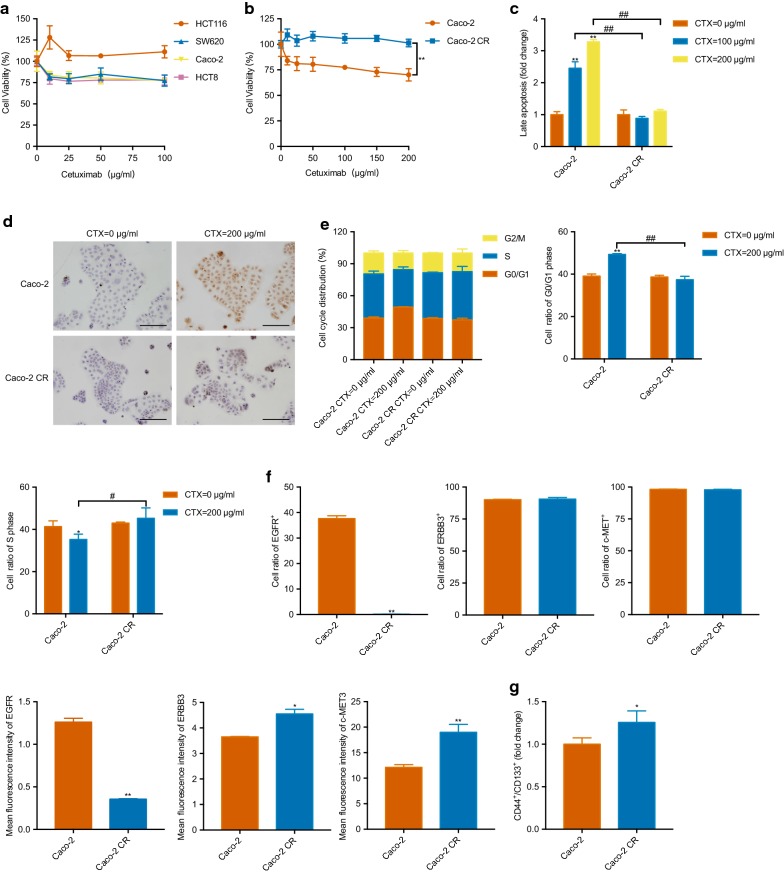
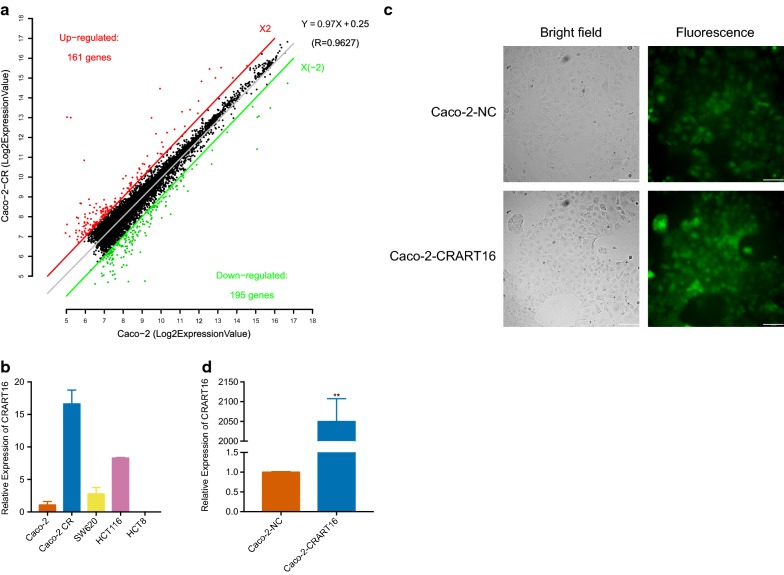
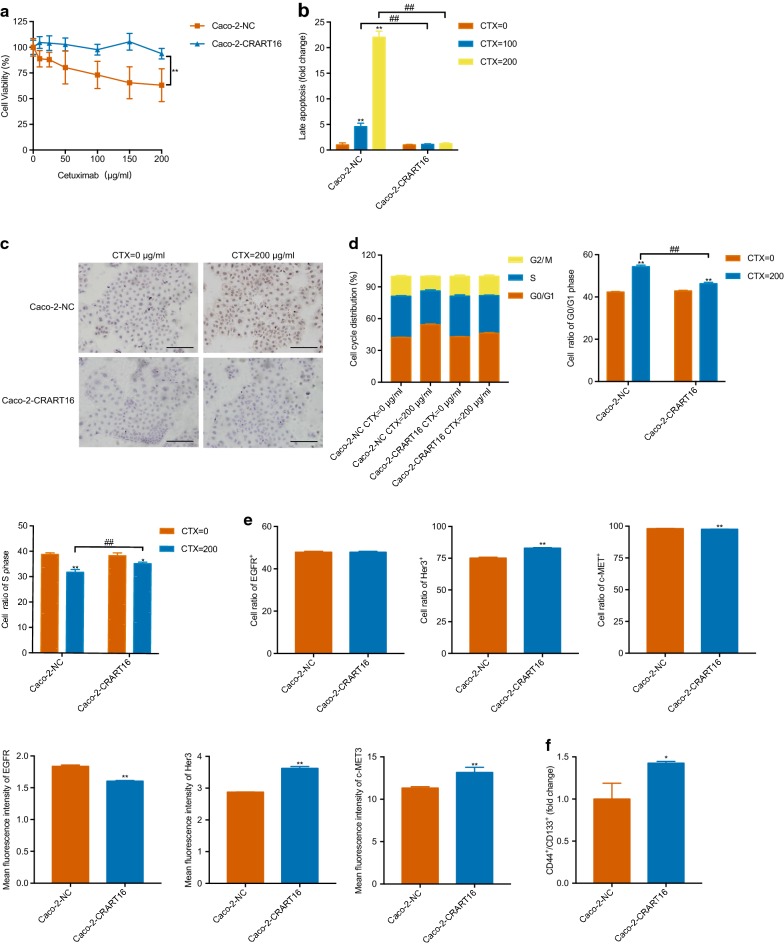
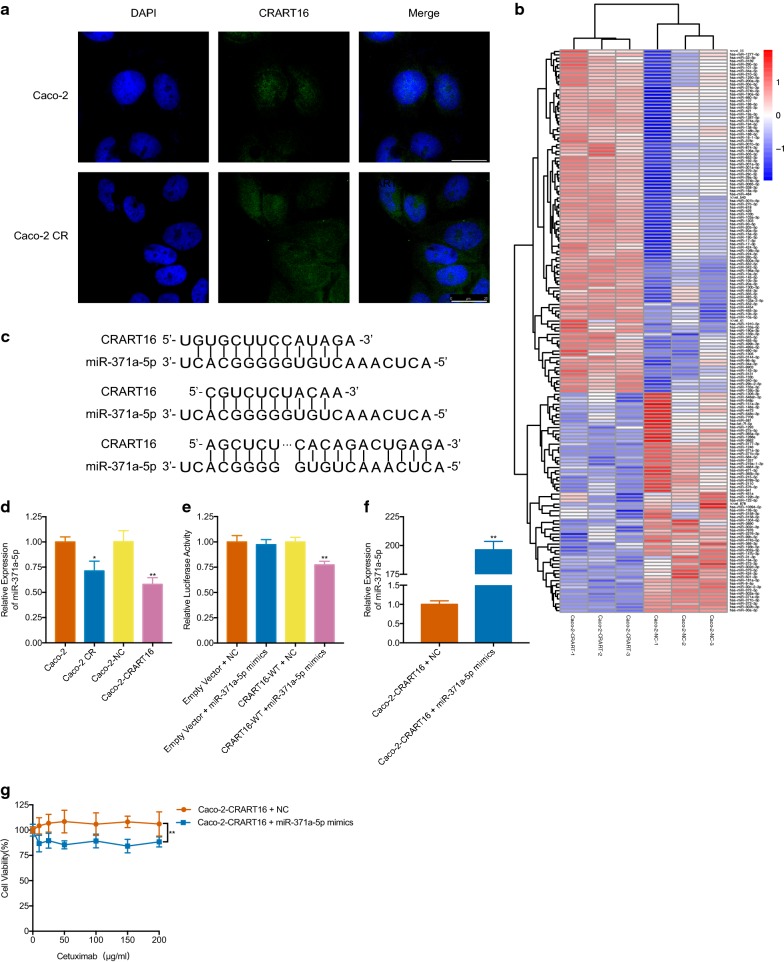
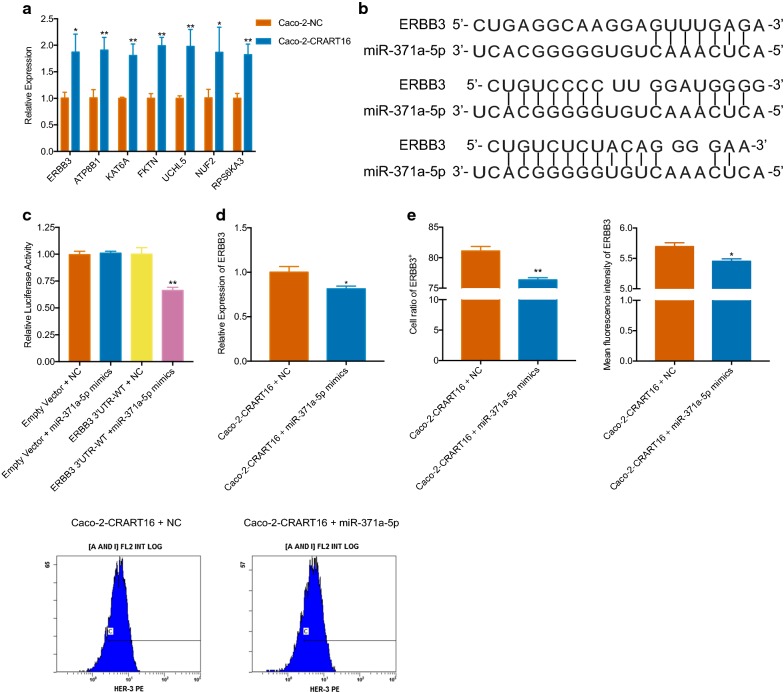
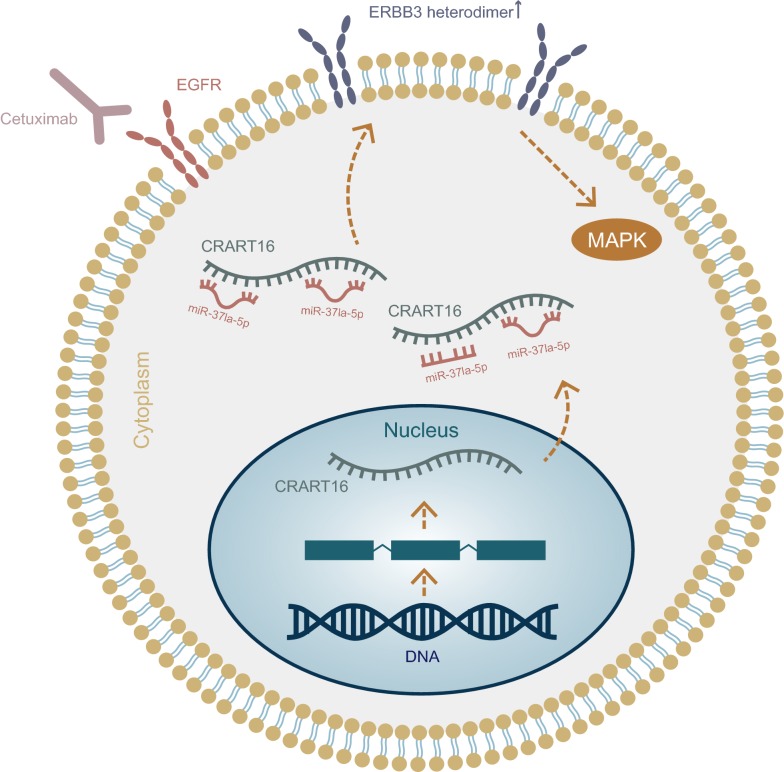
Background: Long noncoding RNAs (lncRNAs) have been shown to participate in multiple biological processes and confer drug resistance. However, it remains unclear whether lncRNAs are involved in conferring cetuximab resistance in colorectal cancer (CRC) cells. Methods: Cell Counting Kit-8 (CCK-8) assays were performed to assess the sensitivity of CRC cell lines to cetuximab treatment. We incubated Caco-2 cells, which are partially responsive to cetuximab, with increasing concentrations of cetuximab for approximately 6 months to generate Caco-2 cetuximab-resistant (Caco-2 CR) cells. Microarray analysis comparing Caco-2 CR with Caco-2 cells was used to identify lncRNAs that were potentially related to cetuximab resistance. Caco-2 cells were stably transduced with cetuximab resistance-associated RNA transcript 16 (CRART16) or an empty vector using lentiviral infection; the cells were designated Caco-2-CRART16 and Caco-2-NC, respectively, and were analyzed with RNA sequencing (RNA-seq). Quantitative real-time PCR (qRT-PCR) was performed to investigate RNA expression. Flow cytometry and TUNEL assays were used to assess apoptosis levels induced by cetuximab. The cell cycle, stemness biomarkers and membrane proteins of CRC cells were assessed via flow cytometry. RNA fluorescence in situ hybridization (FISH) was used to examine CRART16 localization and expression. Bioinformatics analysis was performed to predict the potential mechanism of CRART16, which was further validated by a dual-luciferase reporter assay. Differences in measurement data were compared using Student’s t test, one-way ANOVA followed by Dunnett’s test and two-way ANOVA. Results: The novel lncRNA CRART16 was upregulated in Caco-2 CR cells. CRART16 overexpression reversed the effects of cetuximab on cell viability and reduced cetuximab-induced apoptosis. Meanwhile, CRART16 overexpression led to increases in the proportion of CD44+/CD133+ cells. In addition, CRART16 acts as a competing endogenous RNA (ceRNA) for miR-371a-5p to regulate V-Erb-B2 Erythroblastic Leukemia Viral Oncogene Homolog 3 (ERBB3) expression. MiR-371a-5p mimics counteracted the cetuximab resistance induced by CRART16 overexpression. Kyoto Encyclopedia of Genes and Genomes (KEGG) pathway analysis revealed that after CRART16 was overexpressed, the resulting differentially expressed mRNAs were mainly enriched in the MAPK signaling pathway. Conclusions: CRART16 overexpression may contribute to cetuximab resistance through the miR-371a-5p/ERBB3/MAPK pathway. Additionally, CRART16 contributes to the acquisition of stemness properties.
Overview
The claims and statistics of this paper haven’t been checked yet.
Free: it reads the open-access text and checks the first 5 claims that cite a source we can check. Create a free account to check every claim.
Integrity signals
Registry
Cites
Statistics
Figures
Verification
Claims the paper makes
The claims and statistics of this paper haven’t been checked yet.
Free: it reads the open-access text and checks the first 5 claims that cite a source we can check. Create a free account to check every claim.
Claims other papers make about this one
Each is checked against this paper’s own text: does it say what the citing paper says it does?
The cited source says what the claim attributes to it.
In the citing paper
“In addition, different ncRNAs have been shown to contribute to resistance against 5-FU, oxaliplatin, and anti-EGFR therapies by various mechanisms [62,63,64].”
From Mechanisms and Strategies to Overcome Drug Resistance in Colorectal Cancer (2025) · cites this paper as [63]
Self-check
Percentages, sums and reported differences re-computed from the paper’s own numbers.
The self-check needs the paper’s full text.
Citations
Cites
Bray, F., Ferlay, J., Soerjomataram, I., Siegel, R. L., Torre, L. A., & Jemal, A. (2018) · CA: A Cancer Journal for Clinicians · doi:10.3322/caac.21492 · Cited by 84,109
The C. elegans heterochronic gene lin-4 encodes small RNAs with antisense complementarity to lin-14
Lee, R. C., Feinbaum, R. L., & Ambros, V. (1993) · Cell · doi:10.1016/0092-8674(93)90529-y · Cited by 12,948
Untangling the ErbB signalling network
Yarden, Y., & Sliwkowski, M. X. (2001) · Nature Reviews Molecular Cell Biology · doi:10.1038/35052073 · Cited by 6,974
Global patterns and trends in colorectal cancer incidence and mortality
Arnold, M., Sierra, M. S., Laversanne, M., Soerjomataram, I., Jemal, A., & Bray, F. (2017) · Gut · doi:10.1136/gutjnl-2015-310912 · Cited by 5,228
Derrien, T., Johnson, R., Bussotti, G., Tanzer, A., Djebali, S., Tilgner, H., Guernec, G., Martin, D., Merkel, A., Knowles, D. G., et al. (2012) · Genome Research · doi:10.1101/gr.132159.111 · Cited by 5,061
Identification of Novel Genes Coding for Small Expressed RNAs
Lagos-Quintana, M., Rauhut, R., Lendeckel, W., & Tuschl, T. (2001) · Science · doi:10.1126/science.1064921 · Cited by 4,956
Molecular Mechanisms of Long Noncoding RNAs
Wang, K. C., & Chang, H. Y. (2011) · Molecular Cell · doi:10.1016/j.molcel.2011.08.018 · Cited by 4,396
An Abundant Class of Tiny RNAs with Probable Regulatory Roles in Caenorhabditis elegans
Lau, N. C., Lim, L. P., Weinstein, E. G., & Bartel, D. P. (2001) · Science · doi:10.1126/science.1065062 · Cited by 3,345
Long non-coding RNAs: new players in cell differentiation and development
Fatica, A., & Bozzoni, I. (2014) · Nature Reviews Genetics · doi:10.1038/nrg3606 · Cited by 2,980
An Extensive Class of Small RNAs in Caenorhabditis elegans
Lee, R. C., & Ambros, V. (2001) · Science · doi:10.1126/science.1065329 · Cited by 2,922
The emerging role of lncRNAs in cancer
Huarte, M. (2015) · Nature Medicine · doi:10.1038/nm.3981 · Cited by 2,702
RNA Maps Reveal New RNA Classes and a Possible Function for Pervasive Transcription
Kapranov, P., Cheng, J., Dike, S., Nix, D. A., Duttagupta, R., Willingham, A. T., Stadler, P. F., Hertel, J., Hackermüller, J., Hofacker, I. L., et al. (2007) · Science · doi:10.1126/science.1138341 · Cited by 2,538
De Roock, W., Claes, B., Bernasconi, D., De Schutter, J., Biesmans, B., Fountzilas, G., Kalogeras, K. T., Kotoula, V., Papamichael, D., Laurent-Puig, P., et al. (2010) · The Lancet Oncology · doi:10.1016/s1470-2045(10)70130-3 · Cited by 2,144
MicroRNA biogenesis pathways in cancer
Lin, S., & Gregory, R. I. (2015) · Nature Reviews Cancer · doi:10.1038/nrc3932 · Cited by 2,112
EGFR Antagonists in Cancer Treatment
Ciardiello, F., & Tortora, G. (2008) · New England Journal of Medicine · doi:10.1056/nejmra0707704 · Cited by 2,058
Targeting MET in cancer: rationale and progress
Gherardi, E., Birchmeier, W., Birchmeier, C., & Woude, G. V. (2012) · Nature Reviews Cancer · doi:10.1038/nrc3205 · Cited by 1,423
Cunningham, D., Atkin, W., Lenz, H.-J., Lynch, H. T., Minsky, B., Nordlinger, B., & Starling, N. (2010) · The Lancet · doi:10.1016/s0140-6736(10)60353-4 · Cited by 1,351
A comprehensive pathway map of epidermal growth factor receptor signaling
Oda, K., Matsuoka, Y., Funahashi, A., & Kitano, H. (2005) · Molecular Systems Biology · doi:10.1038/msb4100014 · Cited by 1,158
Linking Long Noncoding RNA Localization and Function
Chen, L.-L. (2016) · Trends in Biochemical Sciences · doi:10.1016/j.tibs.2016.07.003 · Cited by 1,052
Escape from HER-family tyrosine kinase inhibitor therapy by the kinase-inactive HER3
Sergina, N. V., Rausch, M., Wang, D., Blair, J., Hann, B., Shokat, K. M., & Moasser, M. M. (2007) · Nature · doi:10.1038/nature05474 · Cited by 991
Venook, A. P., Niedzwiecki, D., Lenz, H.-J., Innocenti, F., Fruth, B., Meyerhardt, J. A., Schrag, D., Greene, C., O'Neil, B. H., Atkins, J. N., et al. (2017) · JAMA · doi:10.1001/jama.2017.7105 · Cited by 898
Han, P., Li, J.-W., Zhang, B.-M., Lv, J.-C., Li, Y.-M., Gu, X.-Y., Yu, Z.-W., Jia, Y.-H., Bai, X.-F., Li, L., et al. (2017) · Molecular Cancer · doi:10.1186/s12943-017-0583-1 · Cited by 496 · cited 1×
“The lncRNA CRNDE was shown to promote CRC cell proliferation and chemoresistance by regulating miR181a-5p in vitro [17].”
BackgroundLu, Y., Zhao, X., Liu, Q., Li, C., Graves-Deal, R., Cao, Z., Singh, B., Franklin, J. L., Wang, J., Hu, H., et al. (2017) · Nature Medicine · doi:10.1038/nm.4424 · Cited by 425
Self-citationStintzing, S., Modest, D. P., Rossius, L., Lerch, M. M., von Weikersthal, L. F., Decker, T., Kiani, A., Vehling-Kaiser, U., Al-Batran, S.-E., Heintges, T., et al. (2016) · The Lancet Oncology · doi:10.1016/s1470-2045(16)30269-8 · Cited by 420
Competing endogenous RNAs (ceRNAs): new entrants to the intricacies of gene regulation
Kartha, R. V., & Subramanian, S. (2014) · Frontiers in Genetics · doi:10.3389/fgene.2014.00008 · Cited by 402
Mechanisms of resistance to anti-EGFR therapy in colorectal cancer
Zhao, B., Wang, L., Qiu, H., Zhang, M., Sun, L., Peng, P., Yu, Q., & Yuan, X. (2017) · Oncotarget · doi:10.18632/oncotarget.14012 · Cited by 319
CD44: More than a mere stem cell marker
Morath, I., Hartmann, T. N., & Orian-Rousseau, V. (2016) · The International Journal of Biochemistry & Cell Biology · doi:10.1016/j.biocel.2016.09.009 · Cited by 248
lncRNA SNHG6 regulates EZH2 expression by sponging miR-26a/b and miR-214 in colorectal cancer
Xu, M., Chen, X., Lin, K., Zeng, K., Liu, X., Xu, X., Pan, B., Xu, T., Sun, L., He, B., et al. (2019) · Journal of Hematology & Oncology · doi:10.1186/s13045-018-0690-5 · Cited by 216
Sahlberg, S. H., Spiegelberg, D., Glimelius, B., Stenerlöw, B., & Nestor, M. (2014) · PLoS ONE · doi:10.1371/journal.pone.0094621 · Cited by 181
HGF Rescues Colorectal Cancer Cells from EGFR Inhibition via MET Activation
Liska, D., Chen, C.-T., Bachleitner-Hofmann, T., Christensen, J. G., & Weiser, M. R. (2011) · Clinical Cancer Research · doi:10.1158/1078-0432.ccr-10-0568 · Cited by 176
A short guide to long non-coding RNA gene nomenclature
Wright, M. W. (2014) · Human Genomics · doi:10.1186/1479-7364-8-7 · Cited by 171
Acquired resistance to EGFR‐targeted therapies in colorectal cancer
Van Emburgh, B. O., Sartore-Bianchi, A., Di Nicolantonio, F., Siena, S., & Bardelli, A. (2014) · Molecular Oncology · doi:10.1016/j.molonc.2014.05.003 · Cited by 160
Troiani, T., Martinelli, E., Napolitano, S., Vitagliano, D., Ciuffreda, L. P., Costantino, S., Morgillo, F., Capasso, A., Sforza, V., Nappi, A., et al. (2013) · Clinical Cancer Research · doi:10.1158/1078-0432.ccr-13-0423 · Cited by 150
Fang, C., Qiu, S., Sun, F., Li, W., Wang, Z., Yue, B., Wu, X., & Yan, D. (2017) · Cancer Letters · doi:10.1016/j.canlet.2017.09.012 · Cited by 146
Luo, Y., Chen, J.-J., Lv, Q., Qin, J., Huang, Y.-Z., Yu, M.-H., & Zhong, M. (2019) · Cancer Letters · doi:10.1016/j.canlet.2018.10.002 · Cited by 130
Long non-coding RNAs: An emerging powerhouse in the battle between life and death of tumor cells
Xiong, X.-D., Ren, X., Cai, M., Yang, J. W., Liu, X., & Yang, J. (2016) · Drug Resistance Updates · doi:10.1016/j.drup.2016.04.001 · Cited by 120
He, F., Song, Z., Chen, H., Chen, Z., Yang, P., Li, W., Yang, Z., Zhang, T., Wang, F., Wei, J., et al. (2019) · Oncogene · doi:10.1038/s41388-018-0432-8 · Cited by 112
The Prognostic and Clinical Value of CD44 in Colorectal Cancer: A Meta-Analysis
Wang, Z., Tang, Y., Xie, L., Huang, A., Xue, C., Gu, Z., Wang, K., & Zong, S. (2019) · Frontiers in Oncology · doi:10.3389/fonc.2019.00309 · Cited by 100
Cancer stem cells in human gastrointestinal cancer
Taniguchi, H., Moriya, C., Igarashi, H., Saitoh, A., Yamamoto, H., Adachi, Y., & Imai, K. (2016) · Cancer Science · doi:10.1111/cas.13069 · Cited by 85
MiR-199a-5p and miR-375 affect colon cancer cell sensitivity to cetuximab by targeting PHLPP1
Müssnich, P., Rosa, R., Bianco, R., Fusco, A., & D’Angelo, D. (2015) · Expert Opinion on Therapeutic Targets · doi:10.1517/14728222.2015.1057569 · Cited by 75 · cited 1×
“Likewise, the decreased expression of miR-199a-5p and miR-375 can increase sensitivity to cetuximab by enhancing PHLPP1 expression [34].”
BackgroundAbbasian, M., Mousavi, E., Arab‐Bafrani, Z., & Sahebkar, A. (2019) · Journal of Cellular Physiology · doi:10.1002/jcp.27619 · Cited by 38
Bai, P., Hou, P., & Kong, Y. (2018) · Experimental Cell Research · doi:10.1016/j.yexcr.2018.06.020 · Cited by 34
Helden, E. J. V., van Oordt, C. W. M. D. H., Heymans, M. W., Ket, J. C. F., van den Oord, R., & Verheul, H. M. W. (2017) · Cancer and Metastasis Reviews · doi:10.1007/s10555-017-9668-y · Cited by 34
Peng, K., Liu, R., Yu, Y., Liang, L., Yu, S., Xu, X., & Liu, T. (2017) · Biomedicine & Pharmacotherapy · doi:10.1016/j.biopha.2017.11.031 · Cited by 34
Jing, C., Ma, R., Cao, H., Wang, Z., Liu, S., Chen, D., Wu, Y., Zhang, J., & Wu, J. (2019) · Cancer Medicine · doi:10.1002/cam4.2004 · Cited by 31
Self-citationLncRNA TUSC7 suppresses pancreatic carcinoma progression by modulating miR‐371a‐5p expression
Yue, L., & Guo, J. (2019) · Journal of Cellular Physiology · doi:10.1002/jcp.28248 · Cited by 31
Feedback activation of HER3 attenuates response to EGFR inhibitors in colon cancer cells
Bosch-Vilaró, A., Jacobs, B., Pomella, V., Asbagh, L. A., Kirkland, R. E., Michel, J., Singh, S., Liu, X., Kim, P., Weitsman, G. E., et al. (2016) · Oncotarget · doi:10.18632/oncotarget.13834 · Cited by 26
Khelwatty, S. A., Essapen, S., Bagwan, I., Green, M., Seddon, A. M., & Modjtahedi, H. (2019) · Oncotarget · doi:10.18632/oncotarget.26722 · Cited by 23
Cited by
Drug resistance in colorectal cancer: An epigenetic overview
Luo, M., Yang, X., Chen, H.-N., Nice, E. C., & Huang, C. (2021) · Biochimica et Biophysica Acta (BBA) - Reviews on Cancer · doi:10.1016/j.bbcan.2021.188623 · Cited by 94
Hamdy, N. Μ., Zaki, M. B., Rizk, N. I., Abdelmaksoud, N. M., Abd‐Elmawla, M. A., Abdelhamid, R., & Abulsoud, A. I. (2024) · Life Sciences · doi:10.1016/j.lfs.2024.122946 · Cited by 92
Mechanisms and Strategies to Overcome Drug Resistance in Colorectal Cancer
Haynes, J., & Manogaran, P. (2025) · International Journal of Molecular Sciences · doi:10.3390/ijms26051988 · Cited by 82
Yang, Y., Yan, X., Li, X., Ma, Y., & Goel, A. (2021) · Cancer Letters · doi:10.1016/j.canlet.2021.01.009 · Cited by 75
Self-citationEpigenetic Alteration in Colorectal Cancer: Potential Diagnostic and Prognostic Implications
Cao, Q., Tian, Y., Deng, Z., Yang, F., & Chen, E. (2024) · International Journal of Molecular Sciences · doi:10.3390/ijms25063358 · Cited by 60
“Additionally, overexpression of CRART16 increases the proportion of CD44+/CD133+ cells and may promote resistance to cetuximab in CRC cells through the miR-371a-5p/ERBB3/MAPK pathway [183].”
Background
Metadata
- Authors
- Zhang, X., Wen, L., Chen, S., Zhang, J., Ma, Y., Hu, J., Yue, T., Wang, J., Zhu, J., Bu, D., & Wang, X.
- Affiliations
- Peking University First Hospital (CN)
- Corresponding author
- Wang, Xin
- ORCID
- Venue
- Cancer Cell International
- Published
- 2020-03-04
- Volume
- 20
- Issue
- 1
- Pages
- 68-68
- ISSN
- 1475-2867 (ISSN-L)
- PMC
- PMC7057486
- OpenAlex
- W3012275406
- Cited by
- 35
- References
- 48
- Citations by year
- 2026: 1 · 2025: 3 · 2024: 5 · 2023: 2 · 2022: 10 · 2021: 12 · 2020: 1
- FWCI
- 2.14
- Type
- journal article
- Language
- en
- Open access
- gold
- doi.org
- Licence
- cc-by
- creativecommons.org/licenses/by/4.0/ (tdm)
- creativecommons.org/licenses/by/4.0/ (vor)
- Locations
- Cancer Cell International (publishedVersion, cc-by)
- PubMed Central (publishedVersion, cc-by)
- PubMed (publishedVersion)
- DOAJ (DOAJ: Directory of Open Access Journals) (submittedVersion, cc-by-sa)
- Topics
- Life Sciences › Biochemistry, Genetics and Molecular Biology › Cancer Research › Cancer-related molecular mechanisms research
- Health Sciences › Medicine › Oncology › Colorectal Cancer Treatments and Studies
- Life Sciences › Biochemistry, Genetics and Molecular Biology › Cancer Research › MicroRNA in disease regulation
- Keywords
- long non-coding RNA, cetuximab resistance, colorectal cancer, HER3, competing endogenous RNA, anti-EGFR therapy, apoptosis, cell cycle, cancer stemness, drug resistance, Caco-2 cells, lncRNA-miRNA interaction, cell invasion
About these checks
Registry, retraction, Cites and statistics results are computed, not judged, with one exception: a printed reference that no index lists is read once by a model before it counts as a citation error. Claims are extracted by a model and kept only when their quote appears verbatim in the text; each cited source is then checked, with a model’s help, for whether it says what the claim relies on. Those verdicts can be wrong — read the claim’s quote and the cited source before relying on one.
Statistics and arithmetic are recomputed, not judged.
Confidence bands are shown only for fields calibrated on our annotated test set. None is calibrated yet, so no band is shown.
What counts as a claim ›How we measure confidence ›How we check this ›
Are you an author, or do you see a problem with this page? Request a review
Data sources
Bibliographic data: Semantic Scholar, OpenAlex, Crossref.
Contains information from the Semantic Scholar Academic Graph Datasets, made available under the ODC Attribution License (ODC-BY 1.0).
Semantic Scholar’s data is described in: Kinney, R., et al. (2023). The Semantic Scholar Open Data Platform. arXiv:2301.10140.
