

Long noncoding RNA CRART16 confers 5-FU resistance in colorectal cancer cells by sponging miR-193b-5p
Open accessThe DOI matches its Crossref record; 51 of the 51 references it cites were found in a registry or an index.
Abstract
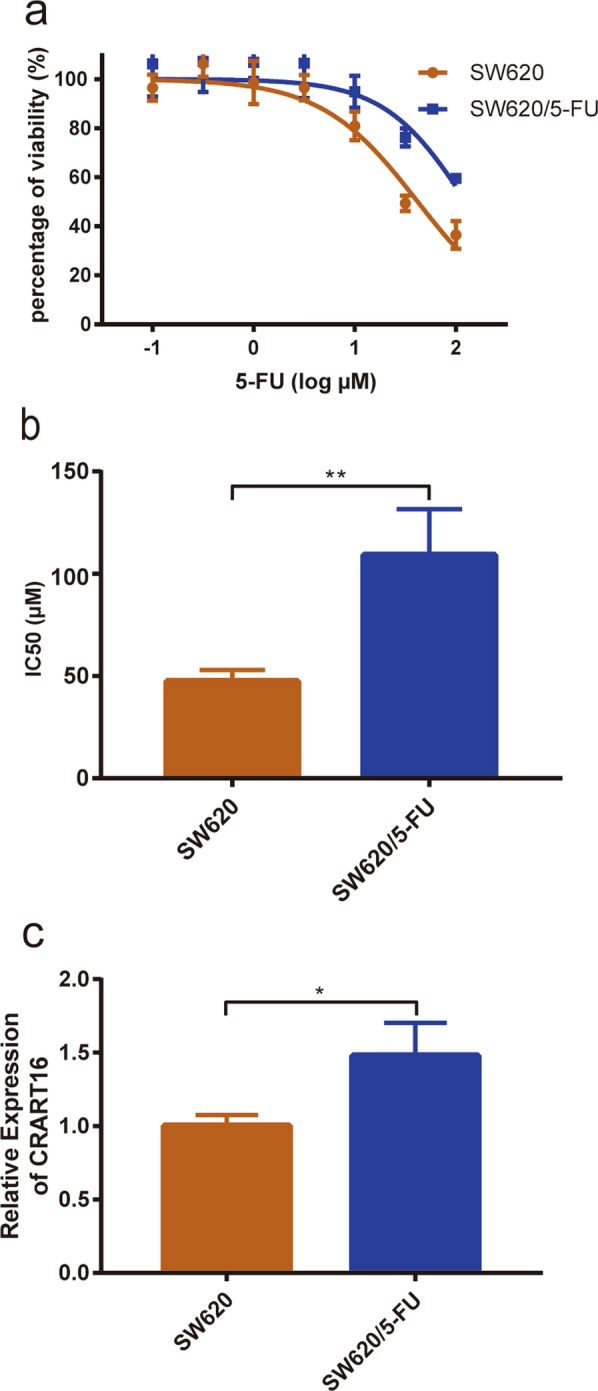
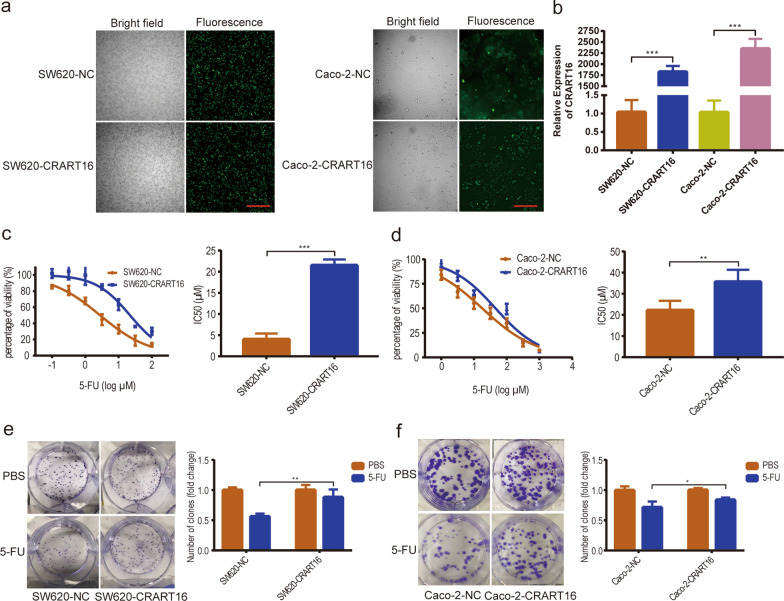
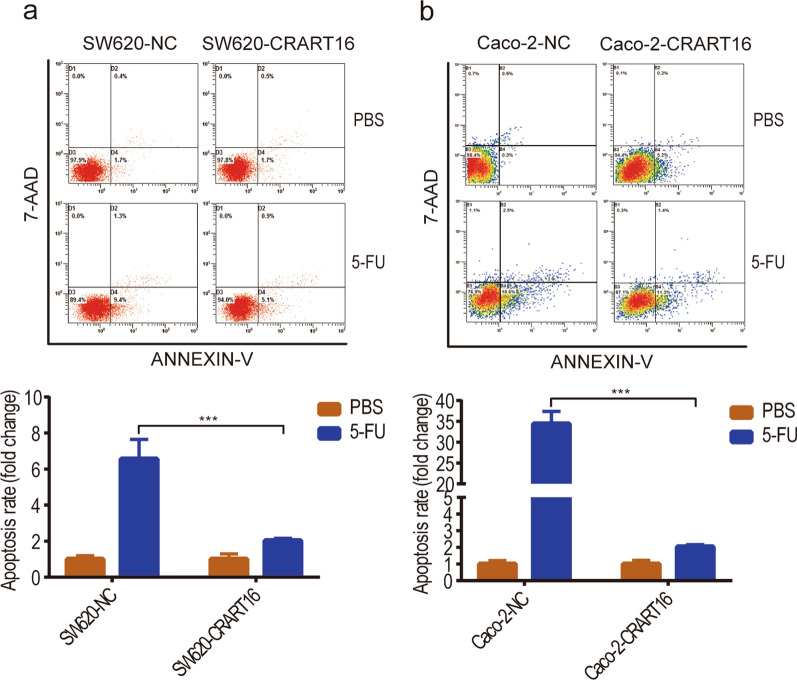
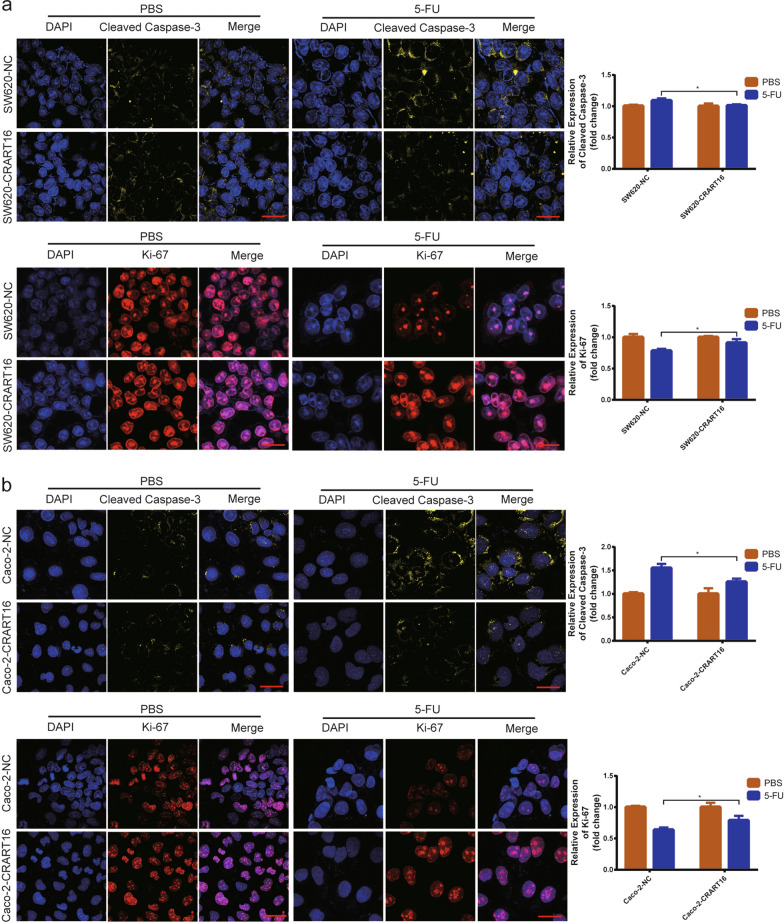
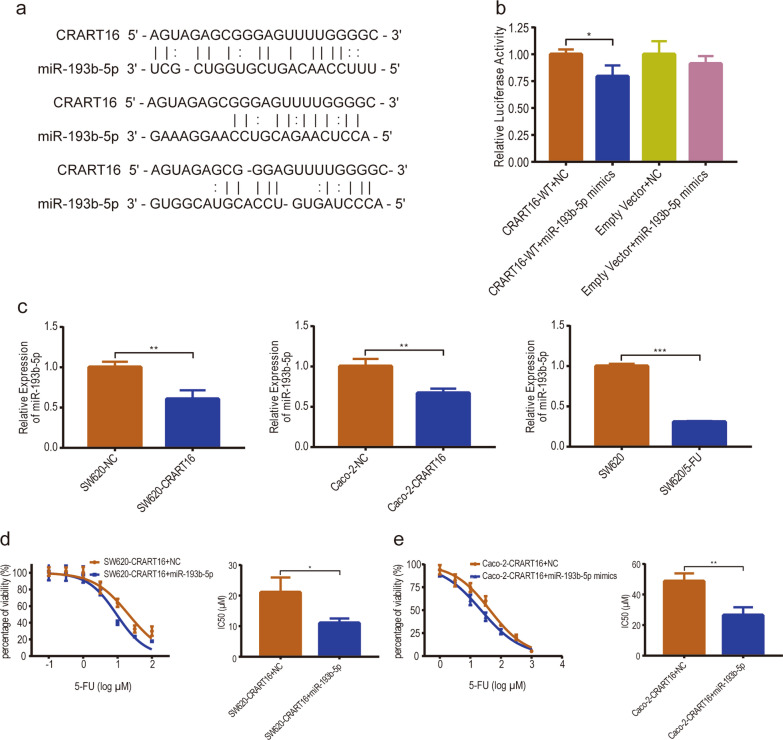
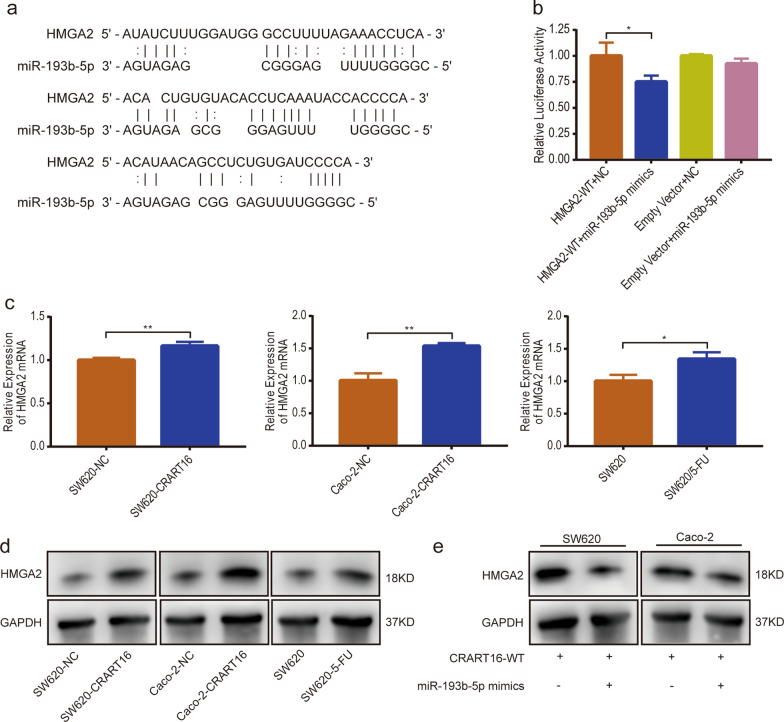
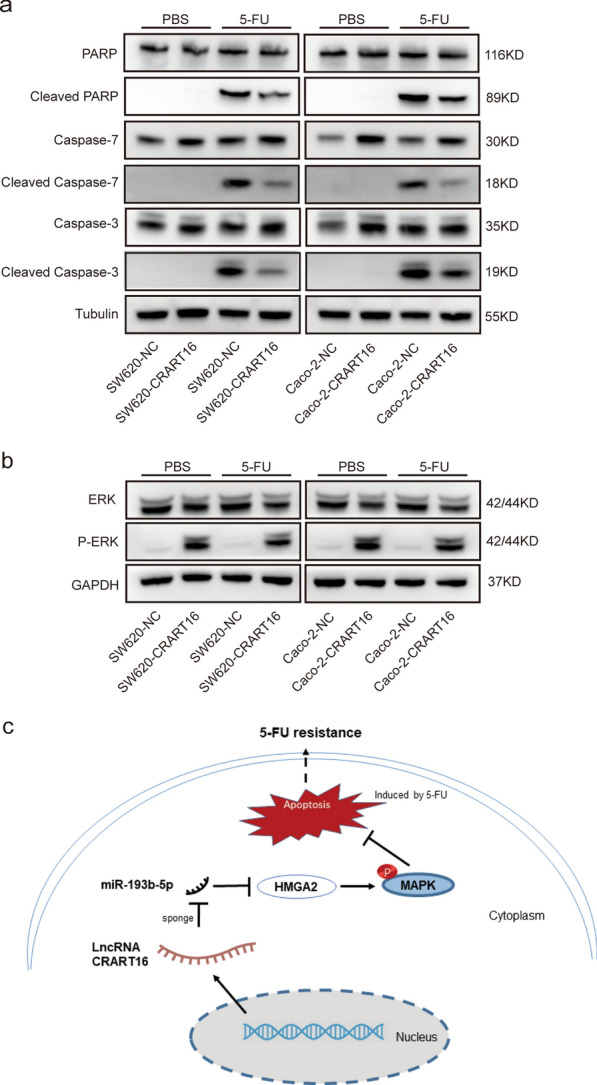
Background: The emergence of chemoresistance to 5-fluorouracil (5-FU)-based chemotherapy is the main cause of treatment failure in advanced and metastatic colorectal cancer (CRC) patients. Long noncoding RNAs (lncRNAs) have been reported to be involved in 5-FU resistance. Previously, we first detected that lncRNA cetuximab resistance-associated RNA transcript 16 (CRART16) could contribute to cetuximab resistance by upregulating V-Erb-B2 erythroblastic leukemia viral oncogene homologue 3 (ERBB3) expression by sponging miR-371a-5p in CRC cells. The current study aimed to explore the role of CRART16 in acquired 5-FU resistance in CRC cells and its possible mechanism. Methods: Quantitative real-time PCR (RT-qPCR) was used to measure the expression levels of CRART16 in a 5-FU-resistant CRC cell subline (SW620/5-FU) and the parent cell line. Lentivirus transduction was performed to establish SW620 and Caco-2 cells stably overexpressing CRART16. Cell Counting Kit-8 (CCK-8) assays and colony formation assays were applied to measure cell chemosensitivity to 5-FU. Flow cytometric and immunofluorescence staining were adopted to assess cell apoptosis induced by 5-FU. The dual-luciferase reporter assay was used to validate the direct interactions between CRART16 and miR-193b-5p and between miR-193b-5p and high-mobility group AT-hook-2 (HMGA2). The expression levels of HMGA2, apoptosis-associated proteins and p-ERK were examined by western blotting. The statistical differences within any two groups were used Student’s t test. Results: CRART16 was upregulated in SW620/5-FU cells. Overexpression of CRART16 reduced the sensitivity of CRC cells to 5-FU by attenuating apoptosis. In addition, CRART16 promoted 5-FU resistance by suppressing the expression of miR-193b-5p. Furthermore, CRART16 modulated the expression of HMGA2 by inhibiting miR-193b-5p and activated the MAPK signaling pathway. Conclusions: CRART16 confers 5-FU resistance in CRC cells through the CRART16/miR-193b-5p/HMGA2/MAPK pathway.
Overview
The claims and statistics of this paper haven’t been checked yet.
Free: it reads the open-access text and checks the first 5 claims that cite a source we can check. Create a free account to check every claim.
Integrity signals
Registry
Cites
Statistics
Figures
Verification
Claims the paper makes
The claims and statistics of this paper haven’t been checked yet.
Free: it reads the open-access text and checks the first 5 claims that cite a source we can check. Create a free account to check every claim.
Claims other papers make about this one
Each is checked against this paper’s own text: does it say what the citing paper says it does?
The source backs part of the claim, not all of it — or backs it for a different population, condition or comparison.
In the citing paper
“In addition, different ncRNAs have been shown to contribute to resistance against 5-FU, oxaliplatin, and anti-EGFR therapies by various mechanisms [62,63,64].”
From Mechanisms and Strategies to Overcome Drug Resistance in Colorectal Cancer (2025) · cites this paper as [62]
Experimental — accuracy not yet measured
Self-check
Percentages, sums and reported differences re-computed from the paper’s own numbers.
The self-check needs the paper’s full text.
Citations
Cites
1 retracted
HMGA2 functions as a competing endogenous RNA to promote lung cancer progression
Kumar, M. S., Armenteros-Monterroso, E., East, P., Chakravorty, P., Matthews, N., Winslow, M. M., & Downward, J. (2014) · Nature · doi:10.1038/nature12785 · Cited by 253
RetractedBray, F., Ferlay, J., Soerjomataram, I., Siegel, R. L., Torre, L. A., & Jemal, A. (2018) · CA: A Cancer Journal for Clinicians · doi:10.3322/caac.21492 · Cited by 84,109 · cited 1×
“Background Colorectal cancer (CRC) is among the most common cancers worldwide, ranking third in terms of incidence but second in terms of mortality [1].”
BackgroundThe MIQE guidelines: minimum information for publication of quantitative real-time PCR experiments
Bustin, S. A., Benes, V., Garson, J. A., Hellemans, J., Huggett, J., Kubista, M., Mueller, R., Nolan, T., Pfaffl, M. W., Shipley, G. L., et al. (2009) · Clinical Chemistry · doi:10.1373/clinchem.2008.112797 · Cited by 16,303 · cited 1×
“The RT-qPCR experiment in this study followed the MIQE guidelines [18].”
MethodRegulation of microRNA biogenesis
Ha, M., & Kim, V. N. (2014) · Nature Reviews Molecular Cell Biology · doi:10.1038/nrm3838 · Cited by 5,462 · cited 1×
“MiRNAs, a class of ncRNAs with lengths of 21–25 nucleotides [23], decrease the expression and thereby prevent the translation of their downstream target mRNAs by binding to complementary sequences located in the 3′ UTRs of mRNAs [24].”
Background5-Fluorouracil: mechanisms of action and clinical strategies
Longley, D. B., Harkin, D. P., & Johnston, P. G. (2003) · Nature Reviews Cancer · doi:10.1038/nrc1074 · Cited by 5,332 · cited 1×
“In addition, the incorporation of 5-FU-derived nucleosides into RNA fractions interferes with RNA synthesis and function [5].”
BackgroundDekker, E., Tanis, P. J., Vleugels, J. L. A., Kasi, P. M., & Wallace, M. B. (2019) · The Lancet · doi:10.1016/s0140-6736(19)32319-0 · Cited by 4,974
Douillard, J., Cunningham, D., Roth, A., Navarro, M., James, R., Karasek, P., Jandik, P., Iveson, T., Carmichael, J., Alakl, M., et al. (2000) · The Lancet · doi:10.1016/s0140-6736(00)02034-1 · Cited by 3,256 · cited 1×
“However, it has been documented that a considerable percentage of CRC patients and nearly half of mCRC patients experience disease progression during the course of 5-FU-based chemotherapy [6, 7].”
BackgroundAn Extensive Class of Small RNAs in Caenorhabditis elegans
Lee, R. C., & Ambros, V. (2001) · Science · doi:10.1126/science.1065329 · Cited by 2,922 · cited 1×
“MiRNAs, a class of ncRNAs with lengths of 21–25 nucleotides [23], decrease the expression and thereby prevent the translation of their downstream target mRNAs by binding to complementary sequences located in the 3′ UTRs of mRNAs [24].”
BackgroundThe emerging role of lncRNAs in cancer
Huarte, M. (2015) · Nature Medicine · doi:10.1038/nm.3981 · Cited by 2,702 · cited 1×
“As new potential regulators in various cellular processes, long noncoding RNAs (lncRNAs), noncoding RNAs (ncRNAs) withs length longer than 200 nucleotides and without protein-coding capacity, have recently attracted growing interest in different cancer types [9].”
BackgroundMicroRNA biogenesis pathways in cancer
Lin, S., & Gregory, R. I. (2015) · Nature Reviews Cancer · doi:10.1038/nrc3932 · Cited by 2,112 · cited 1×
“Over the past two decades, the crucial roles of miRNAs in cancer have been discovered [25].”
BackgroundFluorinated pyrimidines, a new class of tumour-inhibitory compounds
HEIDELBERGER, C., CHAUDHURI, N. K., DANNEBERG, P., MOOREN, D., GRIESBACH, L., DUSCHINSKY, R., SCHNITZER, R. J., PLEVEN, E., & SCHEINER, J. (1957) · Nature · doi:10.1038/179663a0 · Cited by 1,603 · cited 1×
“[4] in 1957, eventually inhibits the synthesis of purines by inhibiting thymidylate synthase (TS) activity in vivo, resulting in the inhibition of DNA replication and repair.”
Background5-fluorouracil and other fluoropyrimidines in colorectal cancer: Past, present and future
Vodenkova, S., Buchler, T., Cervena, K., Veskrnova, V., Vodicka, P., & Vymetalkova, V. (2020) · Pharmacology & Therapeutics · doi:10.1016/j.pharmthera.2019.107447 · Cited by 956 · cited 1×
“Despite the fact that research has entered into the era of targeted therapy and immunotherapy, 5-fluorouracil (5-FU) is still the first-line drug and plays an irreplaceable role in the treatment of advanced CRC and mCRC [3].”
BackgroundSargent, D., Sobrero, A., Grothey, A., O'Connell, M. J., Buyse, M., Andre, T., Zheng, Y., Green, E., Labianca, R., O'Callaghan, C., et al. (2009) · Journal of Clinical Oncology · doi:10.1200/jco.2008.19.5362 · Cited by 666 · cited 1×
“However, it has been documented that a considerable percentage of CRC patients and nearly half of mCRC patients experience disease progression during the course of 5-FU-based chemotherapy [6, 7].”
BackgroundMolecular biology of HMGA proteins: hubs of nuclear function
Reeves, R. (2001) · Gene · doi:10.1016/s0378-1119(01)00689-8 · Cited by 539 · cited 1×
“The HMGA2 protein is normally expressed abundantly during embryogenesis, but its expression is hard to detect in terminally differentiated tissues [32, 34].”
BackgroundLu, Y., Zhao, X., Liu, Q., Li, C., Graves-Deal, R., Cao, Z., Singh, B., Franklin, J. L., Wang, J., Hu, H., et al. (2017) · Nature Medicine · doi:10.1038/nm.4424 · Cited by 425
Self-citationLong Non-Coding RNAs in the Cytoplasm
Rashid, F., Shah, A., & Shan, G. (2016) · Genomics, Proteomics & Bioinformatics · doi:10.1016/j.gpb.2016.03.005 · Cited by 405 · cited 1×
“Recent studies have shown that lncRNAs can suppress the expression of miRNAs by acting as ceRNA sponges [22].”
BackgroundXiong, H., Ni, Z., He, J., Jiang, S., Li, X., He, J., Gong, W., Zheng, L., Chen, S., Li, B., et al. (2017) · Oncogene · doi:10.1038/onc.2016.521 · Cited by 362
Self-citationHMG chromosomal proteins in development and disease
Hock, R., Furusawa, T., Ueda, T., & Bustin, M. (2007) · Trends in Cell Biology · doi:10.1016/j.tcb.2006.12.001 · Cited by 329 · cited 1×
“HMGA2, a member of the high-mobility group A (HMGA) gene family, encodes a small nonhistone chromatin-associated protein without intrinsic transcriptional activity that can modulate transcription by remodeling the chromatin architecture [32, 33].”
BackgroundNuclear phosphoproteins HMGA and their relationship with chromatin structure and cancer
Sgarra, R., Rustighi, A., Tessari, M. A., Di Bernardo, J., Altamura, S., Fusco, A., Manfioletti, G., & Giancotti, V. (2004) · FEBS Letters · doi:10.1016/j.febslet.2004.08.013 · Cited by 228 · cited 2×
“The HMGA2 protein is normally expressed abundantly during embryogenesis, but its expression is hard to detect in terminally differentiated tissues [32, 34].”
BackgroundPan, J., Li, X., Wu, W., Xue, M., Hou, H., Zhai, W., & Chen, W. (2016) · Cancer Letters · doi:10.1016/j.canlet.2016.08.015 · Cited by 216 · cited 1×
“LncRNA UCA1 has been reported to contribute to cisplatin/gemcitabine resistance in vitro and vivo via CREB, which modulates miR-196b-5p in bladder cancer [14].”
BackgroundWang, M., Han, D., Yuan, Z., Hu, H., Zhao, Z., Yang, R., Jin, Y., Zou, C., Chen, Y., Wang, G., et al. (2018) · Cell Death & Disease · doi:10.1038/s41419-018-1187-4 · Cited by 186 · cited 1×
“For instance, H19 is upregulated in recurrent CRC tissues and contributes to 5-FU resistance by sponging miR-194-5p and then promoting SIRT1-mediated autophagy in CRC [19].”
BackgroundSelf-citationOverexpression of HMGA2 Promotes Metastasis and Impacts Survival of Colorectal Cancers
Wang, X., Liu, X., Li, A. Y.-J., Chen, L., Lai, L., Lin, H. H., Hu, S., Yao, L., Peng, J., Loera, S., et al. (2011) · Clinical Cancer Research · doi:10.1158/1078-0432.ccr-10-2542 · Cited by 184
Self-citationThe lncRNA NEAT1 facilitates cell growth and invasion via the miR-211/HMGA2 axis in breast cancer
Li, X., Wang, S., Li, Z., Long, X., Guo, Z., Zhang, G., Zu, J., Chen, Y., & Wen, L. (2017) · International Journal of Biological Macromolecules · doi:10.1016/j.ijbiomac.2017.07.053 · Cited by 141 · cited 1×
“Furthermore, several studies have demonstrated that HMGA2 participates in 5-FU resistance in some malignancies, such as CRC [39, 41, 42], breast cancer [43, 44], and liver cancer [45].”
BackgroundLi, P., Zhang, X., Wang, L., Du, L., Yang, Y., Liu, T., Li, C., & Wang, C. (2017) · Molecular Therapy - Nucleic Acids · doi:10.1016/j.omtn.2017.07.007 · Cited by 140
Self-citationOncological role of HMGA2 (Review)
Zhang, S., Mo, Q., & Wang, X. (2019) · International Journal of Oncology · doi:10.3892/ijo.2019.4856 · Cited by 137 · cited 1×
“Numerous studies have revealed that HMGA2 is overexpressed in many cancer cells [35], and overexpression of HMGA2 is correlated with progression and a poor prognosis in various malignancies, including CRC [36–40].”
BackgroundSelf-citationYao, N., Fu, Y., Chen, L., Liu, Z., He, J., Zhu, Y., Xia, T., & Wang, S. (2019) · Oncogene · doi:10.1038/s41388-019-0904-5 · Cited by 121
Bian, Z., Zhang, J., Li, M., Feng, Y., Yao, S., Song, M., Qi, X., Fei, B., Yin, Y., Hua, D., et al. (2017) · Oncogenesis · doi:10.1038/s41389-017-0008-4 · Cited by 117
Self-citationGao, L., Dou, Z., Ren, W., Li, S., Liang, K. X., & Zhi, K. (2019) · Cell Death and Disease · doi:10.1038/s41419-019-1971-9 · Cited by 108
Liu, B., Liu, Y., Zhao, L., Pan, Y., Shan, Y., Li, Y., & Jia, L. (2017) · Molecular Carcinogenesis · doi:10.1002/mc.22710 · Cited by 93
The emerging role of noncoding RNAs in colorectal cancer chemoresistance
Wei, L., Wang, X., Lv, L., Zheng, Y., Zhang, N., & Yang, M. (2019) · Cellular Oncology · doi:10.1007/s13402-019-00466-8 · Cited by 91
Self-citationPiscuoglio, S., Zlobec, I., Pallante, P., Sepe, R., Esposito, F., Zimmermann, A., Diamantis, I. D., Terracciano, L., Fusco, A., & Karamitopoulou, E. (2012) · Histopathology · doi:10.1111/j.1365-2559.2011.04121.x · Cited by 90
Pharmacogenomics of 5-fluorouracil in colorectal cancer: review and update
Xie, P., Mo, J., Liu, J., Li, X., Tan, L., Zhang, W., Zhou, H., & Liu, Z. (2020) · Cellular Oncology · doi:10.1007/s13402-020-00529-1 · Cited by 86 · cited 1×
“Both primary and acquired chemoresistance are responsible for treatment failure and limit the clinical application of 5-FU [8].”
BackgroundBhayadia, R., Krowiorz, K., Haetscher, N., Jammal, R., Emmrich, S., Obulkasim, A., Fiedler, J., Schwarzer, A., ROUHI, A. M., Heuser, M., et al. (2018) · Journal of Clinical Oncology · doi:10.1200/jco.2017.75.2204 · Cited by 85 · cited 1×
“cancer [29], acute myeloid leukemia [30], and breast cancer [31].”
BackgroundMa, H., Yuan, L., Li, W., Xu, K., & Yang, L. (2018) · Journal of Cellular Biochemistry · doi:10.1002/jcb.26883 · Cited by 76 · cited 1×
“Conversely, it is downregulated and abates 5-FU resistance through the miR-193a-3p/PSEN1 axis in hepatocellular carcinoma [20].”
BackgroundThe role of microRNAs in 5‐FU resistance of colorectal cancer: Possible mechanisms
Marjaneh, R. M., Khazaei, M., Ferns, G. A., Avan, A., & Aghaee‐Bakhtiari, S. H. (2018) · Journal of Cellular Physiology · doi:10.1002/jcp.27221 · Cited by 75 · cited 1×
“It has emerged that miRNAs can participate in 5-FU resistance [26].”
BackgroundXiong, Q., Liu, A., Ren, Q., Xue, Y., Yu, X., Ying, Y., Gao, H., Tan, H., Zhang, Z., Li, W., et al. (2020) · Cell Death and Disease · doi:10.1038/s41419-020-2554-5 · Cited by 64
Yue, J., Jin, S., Gu, S., Sun, R., & Liang, Q. (2019) · Journal of Cellular Physiology · doi:10.1002/jcp.28885 · Cited by 63
Wu, H., Zou, Q., He, H., Liang, Y., Lei, M., Zhou, Q., Fan, D., & Shen, L. (2019) · Cancer Medicine · doi:10.1002/cam4.1809 · Cited by 61 · cited 2×
“Furthermore, several studies have demonstrated that HMGA2 participates in 5-FU resistance in some malignancies, such as CRC [39, 41, 42], breast cancer [43, 44], and liver cancer [45].”
BackgroundWu, H., Liang, Y., Shen, L., & Shen, L. (2016) · Biology Open · doi:10.1242/bio.015008 · Cited by 61 · cited 2×
“Furthermore, several studies have demonstrated that HMGA2 participates in 5-FU resistance in some malignancies, such as CRC [39, 41, 42], breast cancer [43, 44], and liver cancer [45].”
BackgroundZhao, C., Zhao, Q., Zhang, C., Wang, G., Yao, Y., Huang, X., Zhan, F., Zhu, Y., Shi, J., Chen, J., et al. (2017) · Scientific Reports · doi:10.1038/s41598-017-04172-z · Cited by 61 · cited 1×
“In vitro and in vivo, overexpression of miR15b-5p increases 5-FU-induced apoptosis and enhances 5-FU sensitivity by negatively regulating its NF-κB1 and IKK-α targets [28].”
BackgroundZeng, L., Liao, Q., Zou, Z., Wen, Y., Wang, J., Liu, C., He, Q., Weng, N., Zeng, J., Tang, H., et al. (2018) · Cellular Physiology and Biochemistry · doi:10.1159/000495499 · Cited by 59 · cited 1×
“Similarly, lncRNA XLOC_006753 has been proven to promote multidrug resistance in vitro via the PI3K/AKT/mTOR signaling pathway in gastric cancer [15].”
BackgroundSelf-citationHigh mobility group A2 (HMGA2) promotes EMT via MAPK pathway in prostate cancer
Hawsawi, O., Henderson, V., Burton, L. J., Dougan, J., Nagappan, P., & Odero‐Marah, V. (2018) · Biochemical and Biophysical Research Communications · doi:10.1016/j.bbrc.2018.08.155 · Cited by 46 · cited 1×
“Intriguingly, overexpression of HMGA2 was found to upregulate the expression level of p-ERK in prostate cancer cells [49].”
BackgroundHu, S., Cao, M., He, Y., Zhang, G., Liu, Y., Du, Y., Yang, C., & Gao, F. (2019) · Journal of Cancer · doi:10.7150/jca.35067 · Cited by 41
CircFBXL5 promotes the 5-FU resistance of breast cancer via modulating miR-216b/HMGA2 axis
Zhu, M., Wang, Y., Wang, F., Li, L., & Qiu, X. (2021) · Cancer Cell International · doi:10.1186/s12935-021-02088-3 · Cited by 36 · cited 1×
“Furthermore, several studies have demonstrated that HMGA2 participates in 5-FU resistance in some malignancies, such as CRC [39, 41, 42], breast cancer [43, 44], and liver cancer [45].”
BackgroundZhang, X., Wen, L., Chen, S., Zhang, J., Ma, Y., Hu, J., Yue, T., Wang, J., Zhu, J., Bu, D., et al. (2020) · Cancer Cell International · doi:10.1186/s12935-020-1155-9 · Cited by 35 · cited 7×
“endogenous RNA (ceRNA) Our previously published study demonstrated that CRART16 could confer cetuximab resistance in CRC cells by functioning as a ceRNA [17].”
BackgroundMethodResultInfluentialSelf-citationWang, B., Pan, L., Kang, N., & Shen, X. (2020) · Molecular Carcinogenesis · doi:10.1002/mc.23168 · Cited by 29 · cited 1×
“In addition, the downregulation of p-ERK by shPP4R1 transfection was restored by HMGA2 overexpression in non-small-cell lung cancer (NSCLC), whereas HMGA2 silencing attenuated the expression level of p-ERK induced by PP4R1 overexpression [50].”
Longnon-coding RNA BLACAT2 promotes gastric cancer progression via the miR-193b-5p/METTL3 pathway
Hu, H., Kong, Q., Huang, X., Zhang, H., Hu, K.-F., Jing, Y., Jiang, Y., Peng, Y., Wu, L., Fu, Q.-S., et al. (2021) · Journal of Cancer · doi:10.7150/jca.50403 · Cited by 25 · cited 1×
“cancer [29], acute myeloid leukemia [30], and breast cancer [31].”
BackgroundLi, P., Zhang, X., Wang, L., Du, L., Yang, Y., Liu, T., Li, C., & Wang, C. (2020) · Molecular Therapy — Nucleic Acids · doi:10.1016/j.omtn.2020.05.016 · Cited by 18 · cited 1×
“HOTAIR confers 5-FU resistance by sponging miR-218 and activating NF-kB/TS signaling [21].”
BackgroundSelf-citationLet-7 g microRNA sensitizes fluorouracil-resistant human hepatoma cells
Tang, H., Zhang, P., Xiang, Q., Yin, J., Jia, Y., Yang, X., & Lei, X. (2014) · Die Pharmazie · doi:10.31083/ph.2014.3849 · Cited by 13 · cited 1×
“Furthermore, several studies have demonstrated that HMGA2 participates in 5-FU resistance in some malignancies, such as CRC [39, 41, 42], breast cancer [43, 44], and liver cancer [45].”
BackgroundZheng, H., Yan, B., Wu, Q., & Zhang, J. (2021) · Oncology Letters · doi:10.3892/ol.2021.12496 · Cited by 10 · cited 2×
“Furthermore, several studies have demonstrated that HMGA2 participates in 5-FU resistance in some malignancies, such as CRC [39, 41, 42], breast cancer [43, 44], and liver cancer [45].”
BackgroundSelf-citationZhang, M., Hu, D., Wang, S., & Qin, C. (2016) · PubMed · Cited by 7
Cited by
Mechanisms and Strategies to Overcome Drug Resistance in Colorectal Cancer
Haynes, J., & Manogaran, P. (2025) · International Journal of Molecular Sciences · doi:10.3390/ijms26051988 · Cited by 82
“In addition, different ncRNAs have been shown to contribute to resistance against 5-FU, oxaliplatin, and anti-EGFR therapies by various mechanisms [62–64].”
Long non-coding RNAs (lncRNAs) signaling in cancer chemoresistance: From prediction to druggability
Eptaminitaki, G. C., Stellas, D., Bonavida, B., & Baritaki, S. (2022) · Drug Resistance Updates · doi:10.1016/j.drup.2022.100866 · Cited by 81
Epigenetic Alteration in Colorectal Cancer: Potential Diagnostic and Prognostic Implications
Cao, Q., Tian, Y., Deng, Z., Yang, F., & Chen, E. (2024) · International Journal of Molecular Sciences · doi:10.3390/ijms25063358 · Cited by 60
“2 [178–182,”
BackgroundThe Critical Function of microRNAs in Developing Resistance against 5- Fluorouracil in Cancer Cells
Sheikhnia, F., Maghsoudi, H., & Majidinia, M. (2023) · Mini-Reviews in Medicinal Chemistry · doi:10.2174/1389557523666230825144150 · Cited by 13
Yang, I., Yip, K., Chang, Y., Chen, Y., Huang, C., Tsai, H., Yeh, Y., & Wang, J. (2023) · Cancers · doi:10.3390/cancers15051358 · Cited by 14
Self-citation
Metadata
- Authors
- Wang, J., Zhang, X., Zhang, J., Chen, S., Zhu, J., & Wang, X.
- Affiliations
- Peking University First Hospital (CN)
- Chinese Academy of Medical Sciences & Peking Union Medical College (CN)
- Corresponding author
- Wang, Xin
- Venue
- Cancer Cell International
- Published
- 2021-11-29
- Volume
- 21
- Issue
- 1
- Pages
- 638-638
- ISSN
- 1475-2867 (ISSN-L)
- PMC
- PMC8628471
- OpenAlex
- W3215893890
- Cited by
- 18
- References
- 51
- Citations by year
- 2026: 3 · 2025: 5 · 2024: 1 · 2023: 5 · 2022: 4
- FWCI
- 1.69
- Type
- journal article
- Language
- en
- Open access
- gold
- doi.org
- Licence
- cc-by
- creativecommons.org/licenses/by/4.0 (tdm)
- creativecommons.org/licenses/by/4.0 (vor)
- Locations
- Cancer Cell International (publishedVersion, cc-by)
- PubMed Central (publishedVersion, cc-by)
- PubMed (publishedVersion)
- DOAJ (DOAJ: Directory of Open Access Journals) (submittedVersion, cc-by-sa)
- Topics
- Life Sciences › Biochemistry, Genetics and Molecular Biology › Cancer Research › Cancer-related molecular mechanisms research
- Life Sciences › Biochemistry, Genetics and Molecular Biology › Cancer Research › MicroRNA in disease regulation
- Health Sciences › Medicine › Oncology › Colorectal Cancer Treatments and Studies
- Keywords
- long non-coding RNA, 5-fluorouracil resistance, chemoresistance, colorectal cancer, HMGA2, MAPK signaling, apoptosis, microRNA sponging, Caco-2 cells, cetuximab resistance, HER3
About these checks
Registry, retraction, Cites and statistics results are computed, not judged, with one exception: a printed reference that no index lists is read once by a model before it counts as a citation error. Claims are extracted by a model and kept only when their quote appears verbatim in the text; each cited source is then checked, with a model’s help, for whether it says what the claim relies on. Those verdicts can be wrong — read the claim’s quote and the cited source before relying on one.
Statistics and arithmetic are recomputed, not judged.
Confidence bands are shown only for fields calibrated on our annotated test set. None is calibrated yet, so no band is shown.
What counts as a claim ›How we measure confidence ›How we check this ›
Are you an author, or do you see a problem with this page? Request a review
Data sources
Bibliographic data: Semantic Scholar, OpenAlex, Crossref.
Contains information from the Semantic Scholar Academic Graph Datasets, made available under the ODC Attribution License (ODC-BY 1.0).
Semantic Scholar’s data is described in: Kinney, R., et al. (2023). The Semantic Scholar Open Data Platform. arXiv:2301.10140.
