

Confirmation of the presence of Anopheles stephensi among internally displaced people’s camps and host communities in Aden city, Yemen
Open accessPublished version of a preprint
The DOI matches its Crossref record; 35 of the 35 references it cites were found in a registry or an index.
Abstract
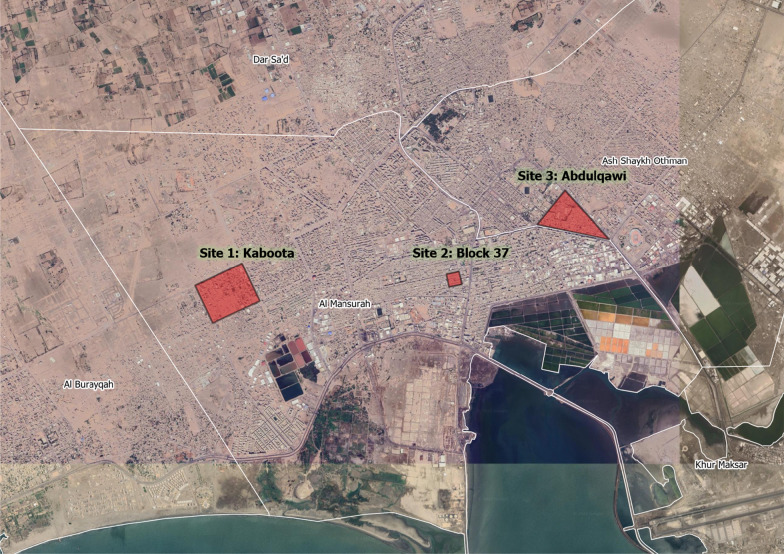
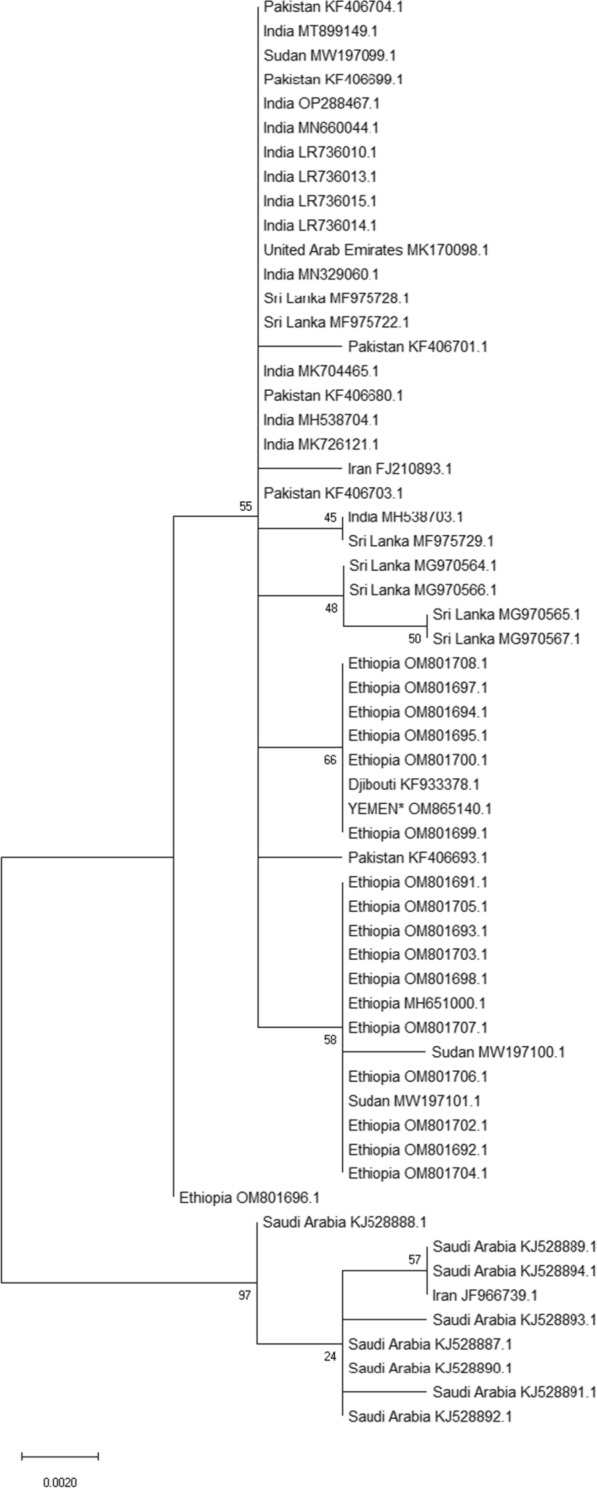
Background: Declines in global malaria cases and deaths since the millennium are currently challenged by multiple factors including funding limitations, limits of, and resistance to vector control tools, and also recent spread of the invasive vector species, Anopheles stephensi —especially into novel urban settings where malaria rates are typically low. Coupled with general increases in urbanization and escalations in the number of conflicts creating rapid and unplanned population displacement into temporary shelter camps within host urban areas, particularly in the Middle East and sub-Saharan Africa, increased urban malaria is a major threat to control and elimination. Methods: Entomological monitoring surveys (targeting Aedes aegypti ) of water containers across urban areas hosting internally displaced people (IDP) communities in Aden city, Yemen, were performed by The MENTOR Initiative, a non-governmental organisation. As part of these surveys in 2021 23 larvae collected and raised to adults were morphologically identified as An. stephensi . Twelve of the samples were sent to Liverpool School of Tropical Medicine for independent morphological assessment and genetic analysis by sequencing the ribosomal ITS2 region and the mitochondrial COI gene. Results: All twelve samples were confirmed morphologically and by sequence comparison of the single ITS2 and COI haplotype detected to the NCBI BLAST database as An. stephensi . Phylogenetic analysis with comparable COI sequences indicated close relationship to haplotypes found in Djibouti and Ethiopia. Conclusion: The study results confirm the presence of An. stephensi in Yemen. Confirmation of the species in multiple urban communities hosting thousands of IDPs living in temporary shelters with widescale dependency on open water containers is of particular concern due to the vulnerability of the population and abundance of favourable breeding sites for the vector. Proactive monitoring and targeted integrated vector management are required to limit impacts in this area of typically low malaria transmission, and to prevent further the spread of An. stephensi within the region.
Overview
The claims and statistics of this paper haven’t been checked yet.
Free: it reads the open-access text and checks the first 5 claims that cite a source we can check. Create a free account to check every claim.
Integrity signals
Registry
Cites
Statistics
Figures
Verification
Claims the paper makes
The claims and statistics of this paper haven’t been checked yet.
Free: it reads the open-access text and checks the first 5 claims that cite a source we can check. Create a free account to check every claim.
Claims other papers make about this one
Each is checked against this paper’s own text: does it say what the citing paper says it does?
The source backs part of the claim, not all of it — or backs it for a different population, condition or comparison.
In the citing paper
“This haplotype has been observed in Yemen and in the northeastern Horn of Africa [7, 17, 18] in other studies and designated Hap3 by Carter et al. [17].”
From Sequencing confirms Anopheles stephensi distribution across southern Yemen (2024) · cites this paper as [7]
Experimental — accuracy not yet measuredThe cited source says what the claim attributes to it.
In the citing paper
“An. stephensi was detected in Yemen in 2021 in Aden City, located in the southern part of Yemen [7].”
From Sequencing confirms Anopheles stephensi distribution across southern Yemen (2024) · cites this paper as [7]
Self-check
Percentages, sums and reported differences re-computed from the paper’s own numbers.
The self-check needs the paper’s full text.
Citations
Cites
MEGA X: Molecular Evolutionary Genetics Analysis across Computing Platforms
Kumar, S., Stecher, G., Li, M., Knyaz, C., & Tamura, K. (2018) · Molecular Biology and Evolution · doi:10.1093/molbev/msy096 · Cited by 37,529
Zhang, K., Wang, J., Ge, Y., Ma, J., & Zhou, Q. (2022) · PubMed · doi:10.5281/zenodo.15145663 · Cited by 15,604
United Nations High Commissioner for Refugees
(2017) · Shaping the Culture of Peace in a Multilateral World · doi:10.4324/9781315129310-7 · Cited by 1,685
Malaria on the Move: Human Population Movement and Malaria Transmission
Martens, P., & Hall, L. (2000) · Emerging Infectious Diseases · doi:10.3201/eid0602.000202 · Cited by 515
Key to the females of Afrotropical Anopheles mosquitoes (Diptera: Culicidae)
Coetzee, M. (2020) · Malaria Journal · doi:10.1186/s12936-020-3144-9 · Cited by 474 · cited 1×
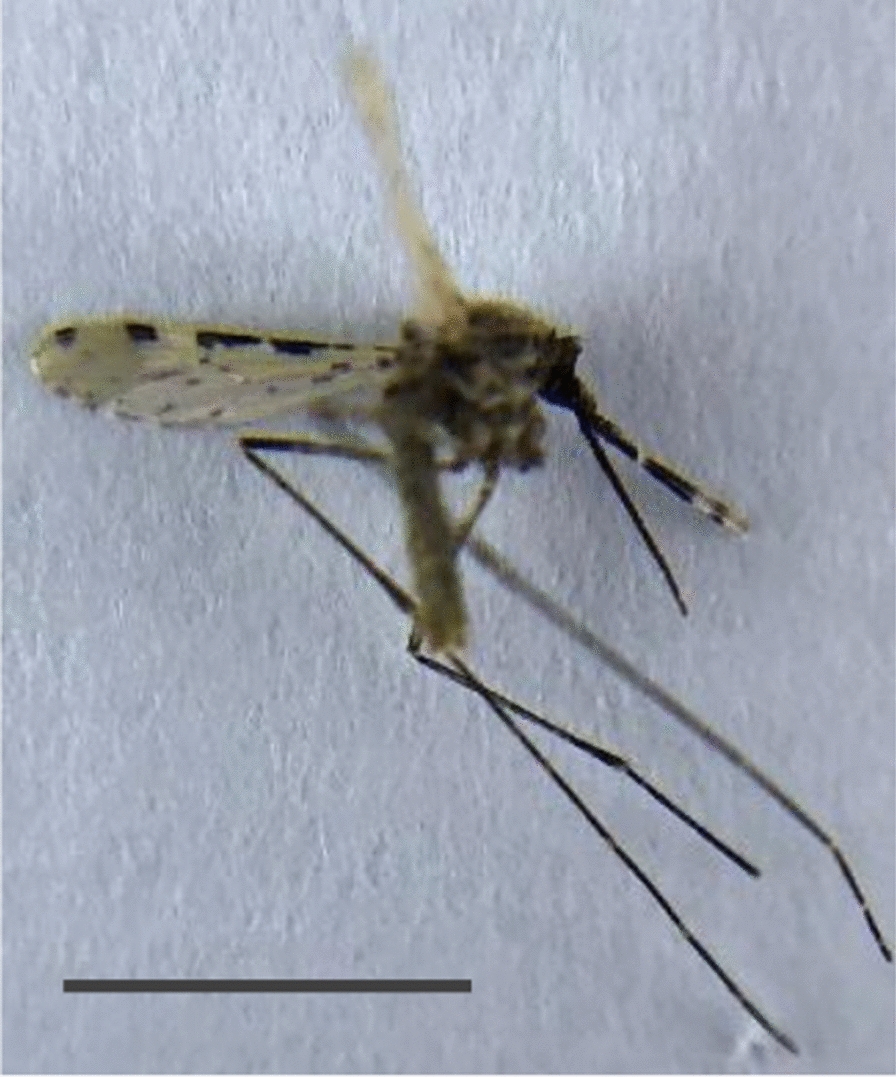
“Laboratory confirmation The sample of twelve adult female mosquito specimens were identified morphologically, with particular focus on the most notable diagnostic characters—the two broad apical bands, and speckled third segment on the maxillary palps and banding patterns on wing vein one [37].”
BackgroundMALARIA TRANSMISSION IN URBAN SUB-SAHARAN AFRICA
ROBERT, V., MACINTYRE, K., KEATING, J., TRAPE, J.-F., DUCHEMIN, J.-B., WARREN, M., & BEIER, J. C. (2003) · The American Journal of Tropical Medicine and Hygiene · doi:10.4269/ajtmh.2003.68.169 · Cited by 463
Colón-González, F. J., Sewe, M. O., Tompkins, A. M., Sjödin, H., Casallas, A., Rocklöv, J., Caminade, C., & Lowe, R. (2021) · The Lancet Planetary Health · doi:10.1016/s2542-5196(21)00132-7 · Cited by 455
Sinka, M. E., Pironon, S., Massey, N. C., Longbottom, J., Hemingway, J., Moyes, C. L., & Willis, K. J. (2020) · Proceedings of the National Academy of Sciences · doi:10.1073/pnas.2003976117 · Cited by 385
WALKER, K., & LYNCH, M. (2007) · Medical and Veterinary Entomology · doi:10.1111/j.1365-2915.2007.00674.x · Cited by 279 · cited 1×
“stephensi, in the same manner as Aedes aegypti, frequently lay their eggs in manmade water containers, including waste or polluted waters [19, 20].”
BackgroundFaulde, M. K., Rueda, L. M., & Khaireh, B. A. (2014) · Acta Tropica · doi:10.1016/j.actatropica.2014.06.016 · Cited by 245
Research works printed but not linked: 5
- WHO World Malaria Report 2021 2021 Geneva World Health Organization
- WHO Malaria control in humanitarian emergencies: an inter-agency handbook 2013 2 Geneva World Health Organization
- Al-Garadi M Epidemiological review of dengue fever in Yemen Int J Adv Res 2015 3 1578 1584
- Folmer O Black M Hoeh W Lutz R Vrijenhoek R DNA primers for amplification of mitochondrial cytochrome c oxidase subunit I from diverse metazoan invertebrates Mol Mar Biol Biotechnol 1994 3 294 299 7881515
- Salit A Zakaria M Balba M Zaghloul T The mosquito fauna of Kuwait J Univ Kuwait (Sci) 1994 21 77 84
Cited by
Emiru, T., Getachew, D., Murphy, M., Sedda, L., Ejigu, L. A., Bulto, M. G., Byrne, I., Demisse, M., Abdo, M., Chali, W., et al. (2023) · Nature Medicine · doi:10.1038/s41591-023-02641-9 · Cited by 162
“11), An. stephensi has spread across the Horn of Africa; its range now includes Ethiopia (2016) 12 , Sudan (2016) 13 , Somalia (2019) 14 , Eritrea (2022) 15 and beyond: Yemen (2021) 16 , Kenya (2022) 17 , Ghana (2022) 15 and Nigeria (2020) 15 .”
Climate change and the rising incidence of vector-borne diseases globally
George, A. M., Ansumana, R., de Souza, D. K., Niyas, V. K. M., Zumla, A. I., & Bockarie, M. J. (2023) · International Journal of Infectious Diseases · doi:10.1016/j.ijid.2023.12.004 · Cited by 89
Invasive Anopheles stephensi in Africa: insights from Asia
Taylor, R., Messenger, L. A., Abeku, T. A., Clarke, S. E., Yadav, R. S., & Lines, J. (2024) · Trends in Parasitology · doi:10.1016/j.pt.2024.06.008 · Cited by 79
Al-Eryani, S. M., Irish, S. R., Carter, T. E., Lenhart, A., Aljasari, A., Montoya, L. F., Awash, A. A., Mohammed, E., Ali, S., Esmail, M. A., et al. (2023) · Malaria Journal · doi:10.1186/s12936-023-04545-y · Cited by 57
Self-citationMsellemu, D. F., Tanner, M., Yadav, R. S., & Moore, S. (2024) · Current Research in Parasitology and Vector-Borne Diseases · doi:10.1016/j.crpvbd.2024.100185 · Cited by 41
Allan, R. J., Budge, S., & Sauskojus, H. (2022) · The Lancet Global Health · doi:10.1016/s2214-109x(22)00454-5 · Cited by 36
Self-citationUrban malaria may be spreading via the wind—here’s why that’s important
Lehmann, T., Bamou, R., Chapman, J. W., Reynolds, D. R., Armbruster, P., Dao, A., Yaro, A. S., Burkot, T. R., & Linton, Y. (2023) · Proceedings of the National Academy of Sciences · doi:10.1073/pnas.2301666120 · Cited by 33
Resurgence of Clinical Malaria in Ethiopia and Its Link to Anopheles stephensi Invasion
Zhou, G., Taffese, H. S., Zhong, D., Wang, X., Lee, M., Degefa, T., Getachew, D., Haileselassie, W., Hawaria, D., Yewhalaw, D., et al. (2024) · Pathogens · doi:10.3390/pathogens13090748 · Cited by 28
Samake, J. N., Athinya, D. K., Milanoi, S., Ramaita, E., Muchoki, M., Omondi, S., Abong’o, B., Matoke-Muhia, D., Mbogo, C. M., Keitany, K., et al. (2025) · Scientific Reports · doi:10.1038/s41598-025-04682-1 · Cited by 25
Future global distribution and climatic suitability of Anopheles stephensi
Acosta, A. L., Castro, M. C., Laporta, G. Z., Conn, J. E., & Sallum, M. A. M. (2025) · Scientific Reports · doi:10.1038/s41598-025-07653-8 · Cited by 27
Samake, J. N., Yared, S., Hassen, M. A., Zohdy, S., & Carter, T. E. (2024) · Scientific Reports · doi:10.1038/s41598-024-78072-4 · Cited by 22
Acford-Palmer, H., Phelan, J. E., Tadesse, F. G., Kristan, M., Collins, E. L., Spadar, A., Walker, T., Bousema, T., Messenger, L. A., Clark, T. G., et al. (2023) · Scientific Reports · doi:10.1038/s41598-023-32336-7 · Cited by 21
Prevalence of Anopheles stephensi in Horn of Africa: a systematic review and meta-analysis
Abebe, W., Sisay, A., Wondmagegn, Y. M., Setegn, A., Asmare, Z., Woldesenbet, D., Kassanew, B., Mekuanint, A., & Feleke, S. F. (2025) · BMC Infectious Diseases · doi:10.1186/s12879-025-11022-1 · Cited by 15
Baina, M. T., Djontu, J. C., Ntabi, J. D. M., Mapanguy, C. C. M., Lissom, A., Vouvoungui, C. J., Boumpoutou, R. K., Mouanga, A. M., Nguimbi, E., & Ntoumi, F. (2024) · Scientific Reports · doi:10.1038/s41598-024-78670-2 · Cited by 15
A decade of invasive Anopheles stephensi sequence-based identification: toward a global standard
Waymire, E., Samake, J. N., Gunarathna, I., & Carter, T. E. (2024) · Trends in Parasitology · doi:10.1016/j.pt.2024.04.012 · Cited by 14
The origin, history, and resistance architecture of an invasive urban malaria mosquito in Africa
Dennis, T. P. W., Sulieman, J. E., Nouredayem, M., Ashine, T., Ebstie, Y. A., Eyasu, A., Simma, E. A., Zemene, E., Negash, N., Yigeremu, A., et al. (2026) · Science · doi:10.1126/science.adx6925 · Cited by 14
Self-citationKenechukwu, F. C., Ugwu, K. C., Offorbuike, C. S., Ojukwu, E. M., Gugu, T. H., Eze, R. E., Agbo, C. P., Momoh, M. A., Onah, A. I., Nwagwu, C. S., et al. (2025) · BMC Chemistry · doi:10.1186/s13065-025-01422-4 · Cited by 13
Understanding Environmental Factors Influencing Vegetation Cover Downstream of Dams
Almalki, R., Khaki, M., Saco, P., & Rodriguez, J. F. (2024) · International Journal of Environmental Research · doi:10.1007/s41742-024-00675-6 · Cited by 9
Maina, M., Musundi, S., Kuja, J., Waweru, H., Kiboi, D. M., Kanoi, B. N., & Gitaka, J. (2024) · Frontiers in Parasitology · doi:10.3389/fpara.2024.1346017 · Cited by 9
Nikpour, F., Vatandoost, H., Hanafi‐Bojd, A. A., Raeisi, A., Mirolyaie, A., Mojahedi, A., Yaryan, M., Banar, A., Kaveh, F., Abbasi, M. A., et al. (2024) · Tropical Medicine & International Health · doi:10.1111/tmi.14028 · Cited by 8
Assada, M., Al-Hadi, M., Esmail, M. A., Al-Jurban, J., Alkawri, A., Shamsan, A., Terreri, P., Samake, J. N., Aljasari, A., Awash, A. A., et al. (2024) · Emerging Infectious Diseases · doi:10.3201/eid3007.240331 · Cited by 7
Oshaghi, M. A., Abbasi, M. A., & Hanafi‐Bojd, A. A. (2024) · Tropical Medicine & International Health · doi:10.1111/tmi.14076 · Cited by 6
Characterizing the larval habitats of the main malaria vector, Anopheles stephensi, in southern Iran
Yousefi, S., Dehghan, O., Abbasi, M. A., & Hanafi‐Bojd, A. A. (2025) · Malaria Journal · doi:10.1186/s12936-025-05465-9 · Cited by 5
Mwima, R., Hui, T. J., Lukyamuzi, E., Boddé, M., Makunin, A., Birungi, K., Lukindu, M., Nanteza, A., Muhanguzi, D., Lawniczak, M., et al. (2026) · Malaria Journal · doi:10.1186/s12936-025-05768-x · Cited by 5
Sequencing confirms Anopheles stephensi distribution across southern Yemen
Baheshm, Y. A., Zayed, A., Awash, A. A., Follis, M., Terreri, P., Samake, J. N., Aljasari, A., Harwood, J. F., Lenhart, A., Zohdy, S., et al. (2024) · Parasites & Vectors · doi:10.1186/s13071-024-06601-1 · Cited by 4
“This haplotype has been observed in Yemen and in the northeastern Horn of Africa [7, 17, 18] in other studies and designated Hap3 by Carter et al. [17].”
Self-citationHunter, G. C., Hughes, J., Zohdy, S., Yoshimizu, M. H., Cash, S., Ebihara, L. E., Higginbotham, B., & Monroe, A. C. (2025) · Malaria Journal · doi:10.1186/s12936-025-05557-6 · Cited by 4
Biting time of day in malaria mosquitoes is modulated by nutritional status
Oke, C. E., Rund, S. S. C., Machani, M. G., Mohammed, A. R., Akuamoah-Boateng, Y., Afrane, Y. A., & Reece, S. E. (2025) · Malaria Journal · doi:10.1186/s12936-025-05550-z · Cited by 4
Malaria Public Health Status: Global Context and Update on Gulf Cooperation Council Countries
Ahmad, T., Alhammadi, B. A., Almaazmi, S. Y., Arafa, S., Blatch, G. L., Dutta, T., Gestwicki, J. E., Keyzers, R. A., Meskiri, A., Sharafeldin, A., et al. (2026) · Advances in experimental medicine and biology · doi:10.1007/978-3-032-24254-9_4 · Cited by 4
Erazo, D., Pietroiusti, R., Ghisbain, G., Colón‐González, F. J., Pironon, S., Bortel, W. V., Mengel, M., Frieler, K., Thiery, W., & Dellicour, S. (2026) · Environmental Research Letters · doi:10.1088/1748-9326/ae51a7 · Cited by 3
Anopheles stephensi and the risk of increased urban malaria in South Africa
Kaiser, M., Dahan-Moss, Y., Koekemoer, L. L., Shandukani, M., Yewhalaw, D., & Brooke, B. D. (2025) · South African Journal of Science · doi:10.17159/sajs.2025/18359 · Cited by 3
Munywoki, D. N., MWANGANGI, J. M., Moise, I. K., Kokwaro, E. D., Odero, J. O., & Muturi, E. J. (2025) · Medical and Veterinary Entomology · doi:10.1111/mve.70042 · Cited by 2
Yin, J., Zhang, T., Liu, Y., Li, J., & Huang, Y. (2026) · Zoonoses · doi:10.15212/zoonoses-2026-0011 · Cited by 2
Serendipitous detection of invasive malaria vector Anopheles stephensi in Kisumu, Kenya in June 2022
Ndenga, B. A., Owuor, K. O., Wambua, S., Bartilol, B., Maia, M., MWANGANGI, J. M., Omukuti, R., Chemutai, S., Arabu, D., Miring’u, I., et al. (2026) · Scientific Reports · doi:10.1038/s41598-026-50986-1 · Cited by 2
Yemen’s Malaria Crisis and its Implications for the GCC (Gulf Cooperation Council) Countries
Ebrahim, S. H., Almaslamani, M., Hosani, F. I. A., Al-Abri, S., AlQahtani, M., Alahmad, B., Bland, S., & Memish, Z. A. (2025) · Journal of Epidemiology and Global Health · doi:10.1007/s44197-025-00457-z · Cited by 2
Kiemdé, F., Rouamba, T., Some, D. Y., Kaboré, B., Valia, D., Natama, H. M., Bere, A. W., Mens, P. F., Tinto, H., & Schallig, H. D. F. H. (2025) · Malaria Journal · doi:10.1186/s12936-025-05767-y · Cited by 2
Bungei, J., Ouma, C., Zhong, D., Oyweri, J., Lee, M., Zhou, G., Atieli, H., Githure, J. I., Wang, C., & Yan, G. (2025) · Malaria Journal · doi:10.1186/s12936-025-05755-2 · Cited by 2
Rahim, M. S. B. A., Saad, N. A., Genasan, V. S. A. L. K., Weng, G. H., Kamal, N. H. M., & Shaharuddin, S. (2024) · E3S Web of Conferences · doi:10.1051/e3sconf/202459905009 · Cited by 2
Inusah, A., Gbeti, C., Jagha, T. O., Wumbei, A., & Ziblim, S. (2025) · medRxiv · doi:10.1101/2025.09.23.25336506 · Cited by 2
Malaria Mimicking Acute Abdomen: An Extremely Rare Case ReportPreprint
Hassan, Y., Ali, A. S., & Mohamed, A. J. (2023) · Research Square · doi:10.21203/rs.3.rs-3101420/v1 · Cited by 1
Le paludisme en Europe préindustrielle.
Boualam, M. A. (2023) · theses.fr (ABES) · doi:10.70675/bd6e1993z4f66z4b1fz8451z8908b3b9d728
Bozorgomid, F., Abbasi, M. A., Yaghoobi‐Ershadi, M. R., & Hanafi‐Bojd, A. A. (2026) · PLoS neglected tropical diseases · doi:10.1371/journal.pntd.0014054 · Cited by 1
Ezeike, A. K., Danga, S. P. Y., Ezenwa, V. C., Chukas, C. F., Ugwu, M. C., Nwangwu, U. C., Anagu, L. O., Oli, A. N., & Esimone, C. O. (2026) · Advances in Entomology · doi:10.4236/ae.2026.142007
The role of infectious diseases and non-violent mortality prediction in armed conflicts
Muñoz-Hernández, C., & Gonzálvez, M. (2026) · Proceedings of the Indian National Science Academy · doi:10.1007/s43538-026-00745-7
Jacob, B. G., Izurieta, R., Nana-Djeunga, H. C., Nwane, P. B., Casonova, J., Domché, A., Efon-Ekangouo, A., Fezeu-Fankam, D., Choudhari, N., Gambrell, A., et al. (2025) · Advanced sciences and technologies for security applications · doi:10.1007/978-3-031-86997-6_2
Gupta, B., Sumitha, M. K., Kalimuthu, M., Pandiyan, G. N., Natarajan, R., GOPALAKRISHNAN, S., Paramasivan, R., Rahi, M., & Kumar, A. (2025) · bioRxiv (Cold Spring Harbor Laboratory) · doi:10.1101/2025.04.28.650555
Sriram, S. (2026) · Frontiers in Malaria · doi:10.3389/fmala.2026.1916446
Projecting potential population exposure to the invasive malaria vector Anopheles stephensi
Sun, Y., Liu, W., Jing, Y., Liu, T., Shang, M., Yue, Y., Guo, Y., & Liu, Q. (2026) · Environmental Research Letters · doi:10.1088/1748-9326/aeb558
Casti, G., Nair, C., Ponti, E. D., Squillace, F., & Ceschi, P. (2026) · International Health · doi:10.1093/inthealth/ihag038
Rozi, I. E., Syahrani, L., Permana, D. H., Irdayanti, I., Sudirman, R., Asih, P. B. S., Lobo, N. F., & Syafruddin, D. (2026) · PLoS ONE · doi:10.1371/journal.pone.0339951
Zaim, M., Parkhideh, S. Z., Zamani, G., Enayati, A., Nikpour, F., Hanafi‐Bojd, A. A., & Sedaghat, M. M. (2026) · Journal of arthropod-borne diseases · doi:10.18502/jad.v20i1.21962
Beyena, T., Lelisa, K., & Mendefro, B. (2026) · Malaria Journal · doi:10.1186/s12936-026-05916-x
Almalki, R., Khaki, M., Saco, P., & Rodriguez, J. F. (2025) · Environmental Management · doi:10.1007/s00267-025-02328-6
Fambirai, T., Chimbari, M. J., & Manyangadze, T. (2025) · medRxiv · doi:10.1101/2025.04.30.25326649
Metadata
- Authors
- Allan, R., Weetman, D., Sauskojus, H., Budge, S., Hawail, T. B., & Baheshm, Y.
- Affiliations
- The MENTOR Initiative (GB)
- Liverpool School of Tropical Medicine (GB)
- Corresponding author
- Allan, Richard
- Venue
- Malaria Journal
- Published
- 2023-01-02
- Volume
- 22
- Issue
- 1
- Pages
- 1-1
- ISSN
- 1475-2875 (ISSN-L)
- PMC
- PMC9806911
- OpenAlex
- W4313476331
- Cited by
- 54
- References
- 35
- Citations by year
- 2026: 11 · 2025: 18 · 2024: 17 · 2023: 7
- FWCI
- 13.50
- Type
- journal article
- Language
- en
- Open access
- gold
- doi.org
- Licence
- cc-by
- creativecommons.org/licenses/by/4.0 (tdm)
- creativecommons.org/licenses/by/4.0 (vor)
- Locations
- Malaria Journal (publishedVersion, cc-by)
- Research Square (acceptedVersion, cc-by)
- PubMed Central (publishedVersion, cc-by)
- PubMed (publishedVersion)
- LSTM Online Archive (Liverpool School of Tropical Medicine) (acceptedVersion)
- LSHTM Research Online (London School of Hygiene and Tropical Medicine) (acceptedVersion, cc-by)
- DOAJ (DOAJ: Directory of Open Access Journals) (submittedVersion, cc-by-sa)
- Greater South Information System
- Funders
- Wellcome Trust (220870/Z/20/Z)
- Economic and Social Research Council (SIPF00005/1)
- Topics
- Health Sciences › Medicine › Public Health, Environmental and Occupational Health › Malaria Research and Control
- Health Sciences › Medicine › Public Health, Environmental and Occupational Health › Mosquito-borne diseases and control
- Life Sciences › Agricultural and Biological Sciences › Ecology, Evolution, Behavior and Systematics › Diptera species taxonomy and behavior
- Keywords
- Anopheles stephensi, invasive mosquito species, urban malaria, internally displaced persons, displaced persons camps, Aden, water containers, mosquito larvae, ITS2, COI haplotypes, phylogenetic analysis, integrated vector management, malaria vector surveillance
- MeSH terms
- Mosquito Vectors, Refugee Camps, Animals, Anopheles, Humans, Malaria, Phylogeny, Water, Yemen
About these checks
Registry, retraction, Cites and statistics results are computed, not judged, with one exception: a printed reference that no index lists is read once by a model before it counts as a citation error. Claims are extracted by a model and kept only when their quote appears verbatim in the text; each cited source is then checked, with a model’s help, for whether it says what the claim relies on. Those verdicts can be wrong — read the claim’s quote and the cited source before relying on one.
Statistics and arithmetic are recomputed, not judged.
Confidence bands are shown only for fields calibrated on our annotated test set. None is calibrated yet, so no band is shown.
What counts as a claim ›How we measure confidence ›How we check this ›
Are you an author, or do you see a problem with this page? Request a review
Data sources
Bibliographic data: Semantic Scholar, OpenAlex, Crossref.
Contains information from the Semantic Scholar Academic Graph Datasets, made available under the ODC Attribution License (ODC-BY 1.0).
Semantic Scholar’s data is described in: Kinney, R., et al. (2023). The Semantic Scholar Open Data Platform. arXiv:2301.10140.
