

The DOI matches its Crossref record; 52 of the 52 references it cites were found in a registry or an index.
Exosomes derived from gemcitabine-resistant cells transfer malignant phenotypic traits via delivery of miRNA-222-3p
Open accessAbstract
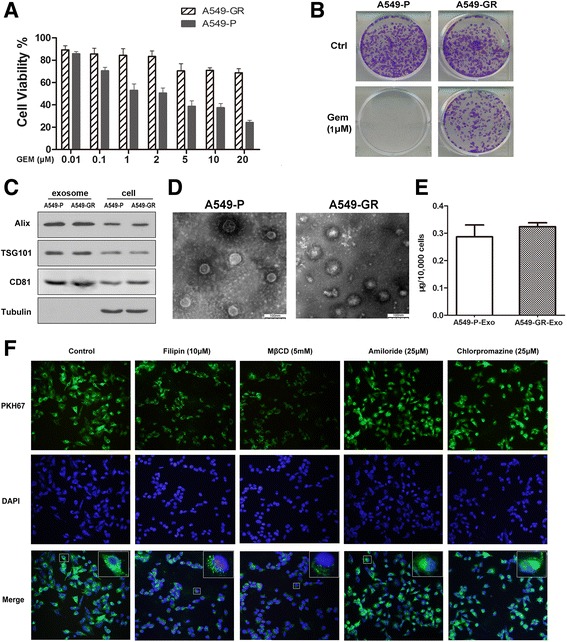
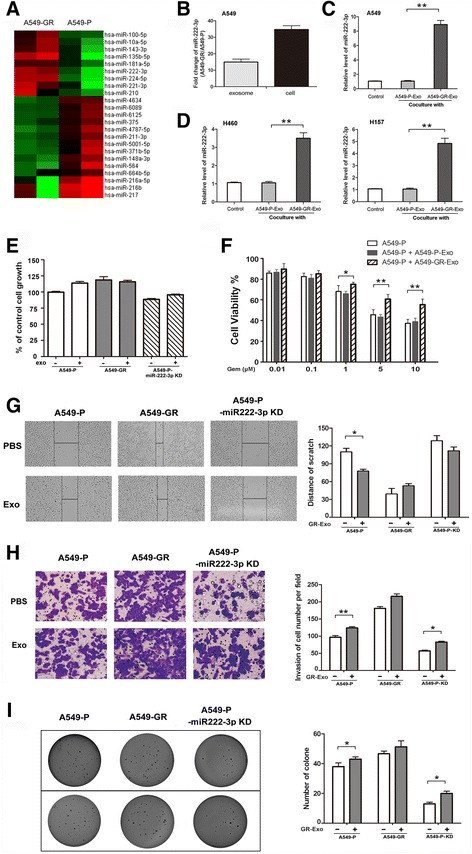
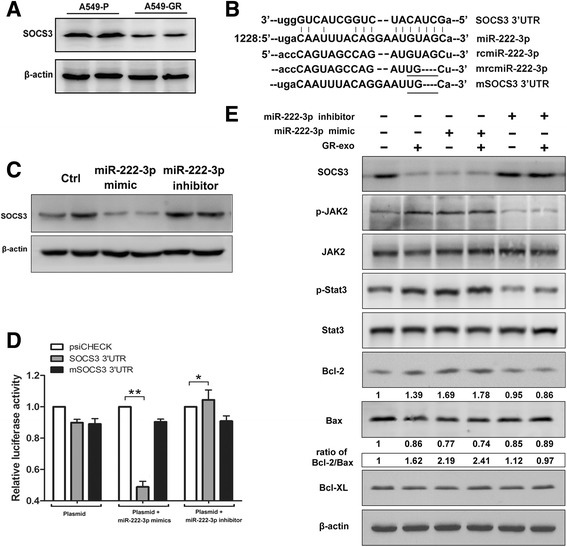
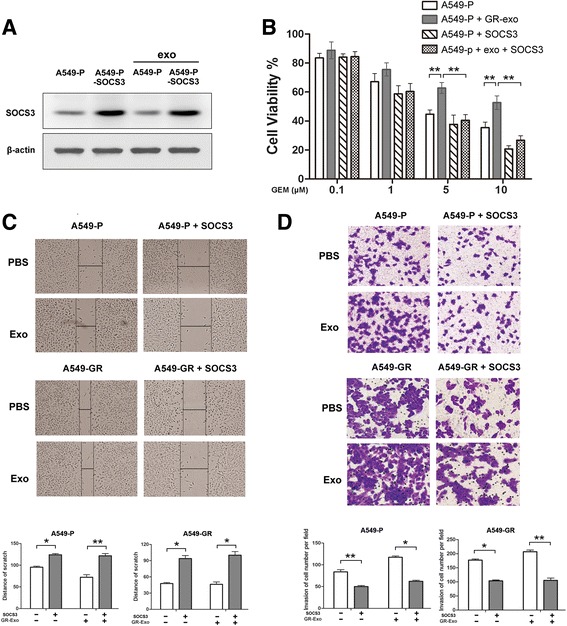
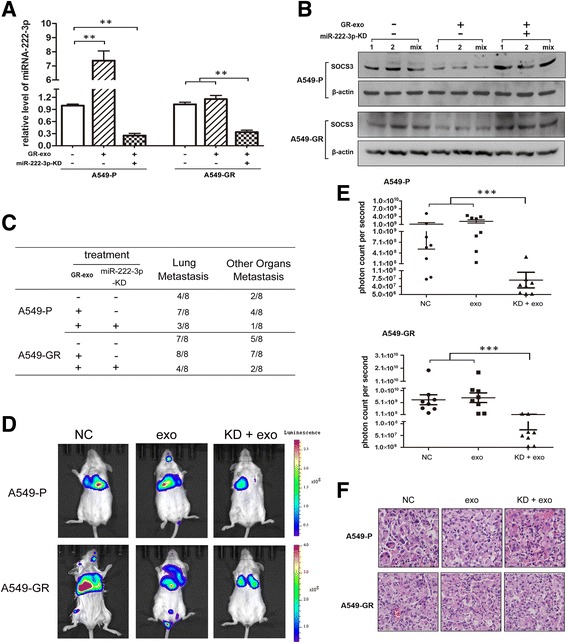
BACKGROUND: Although gemcitabine-based chemotherapy has been established as a core multimodal therapy for non-small cell lung cancer (NSCLC) treatment, its clinical efficacy remains limited by the development of acquired resistance following tumor metastasis and relapse. In this study, we investigated how gemcitabine-resistant (GR) cells contribute to the development of NSCLC tumor malignancy via exosome-mediated transfer of microRNAs. METHODS: We first studied the mechanism of exosome internalization via PKH-67 staining and an immunofluorescence assay, then confirmed our finding by transmission electron microscopy and western blot analysis. Candidate miRNAs were identified through microarray analysis. Thereafter, RT-PCR, MTS, Transwell and soft agar assays were performed to assess the role of exosomic miR-222-3p in vitro. A 3' untranslated region reporter assay was applied to identify the target of miR-222-3p. A lung metastasis mouse model was constructed to evaluate tumor growth and metastasis in vivo. Finally, clinical samples were used for correlation analysis between exosomic miR-222-3p levels and patients' response to gemcitabine. RESULTS: A549-GR-derived exosomes were internalized by receipt cells via caveolin- and lipid raft-dependent endocytosis, which allowed the transfer of miR-222-3p. Exosomic miR-222-3p enhanced the proliferation, gemcitabine resistance, migration, invasion, and anti-anoikis of parental sensitive cells by directly targeting the promoter of SOCS3. In addition, a higher level of exosomic miR-222-3p in sera usually predicted worse prognosis in NSCLC patients. CONCLUSION: Our data demonstrate that exosomic-miR-222-3p functions as a principal regulator of gemcitabine resistance and malignant characteristics by targeting SOCS3. The exosomic miR-222-3p level in sera may be a potential prognostic biomarker for predicting gemcitabine sensitivity in NSCLC patients.
Overview
The claims and statistics of this paper haven’t been checked yet.
Run the check — free, no account needed. It reads the open-access text and checks the sources it cites.
Integrity signals
Registry
Cites
Statistics
Figures
Verification
Claims the paper makes
The claims and statistics of this paper haven’t been checked yet.
Run the check — free, no account needed. It reads the open-access text and checks the sources it cites.
Claims other papers make about this one
Each is checked against this paper’s own text: does it say what the citing paper says it does?
In the citing paper
“However, another study conducted in A549-P cells showed that endocytosis of exosomal miRNAs is mediated by caveolae- and lipid raft-dependent pathways (143).”
From Overview of MicroRNA Biogenesis, Mechanisms of Actions, and Circulation (2018) · cites this paper as [143]
Self-check
Percentages, sums and reported differences re-computed from the paper’s own numbers.
The self-check needs the paper’s full text.
Citations
Cites
6 retracted
RETRACTED: MicroRNA signatures of tumor-derived exosomes as diagnostic biomarkers of ovarian cancer
Taylor, D. D., & Gerçel-Taylor, Ç. (2008) · Gynecologic Oncology · doi:10.1016/j.ygyno.2008.04.033 · Cited by 2,333
RetractedGarofalo, M., Leva, G. D., Romano, G., Nuovo, G. J., Suh, S., Ngankeu, A., Taccioli, C., Pichiorri, F., Alder, H., Secchiero, P., et al. (2009) · Cancer Cell · doi:10.1016/j.ccr.2009.10.014 · Cited by 743
RetractedZhao, J.-J., Lin, J., Yang, H., Kong, W. W., He, L., Ma, X., Coppola, D., & Cheng, J. Q. (2008) · Journal of Biological Chemistry · doi:10.1074/jbc.m806041200 · Cited by 524
RetractedHuang, L., Hu, B., Ni, J., Wu, J., Jiang, W., Chen, C., Yang, L., Zeng, Y., Wan, R., Hu, G., et al. (2016) · Journal of Experimental & Clinical Cancer Research · doi:10.1186/s13046-016-0301-7 · Cited by 86
RetractedLi, J., Yu, J. Q., Zhang, H., Wang, B., Guo, H., Bai, J., Wang, J., Dong, Y., Zhao, Y., & Wang, Y. (2016) · Cellular Physiology and Biochemistry · doi:10.1159/000443111 · Cited by 44
RetractedZhu, G., Huang, Q., Zheng, W., Huang, Y., Hua, J., Yang, S., Zhuang, J., Wang, J., Chang, J., Xu, J., et al. (2016) · Cellular Physiology and Biochemistry · doi:10.1159/000447893 · Cited by 10
RetractedValadi, H., Ekström, K., Bossios, A., Sjöstrand, M., Lee, J. J., & Lötvall, J. O. (2007) · Nature Cell Biology · doi:10.1038/ncb1596 · Cited by 12,834
Exosomes: composition, biogenesis and function
Théry, C., Zitvogel, L., & Amigorena, S. (2002) · Nature reviews. Immunology · doi:10.1038/nri855 · Cited by 5,478
Skog, J., Würdinger, T., van Rijn, S., Meijer, D. H., Gainche, L., Curry, W. T., Carter, B. S., Krichevsky, A. M., & Breakefield, X. O. (2008) · Nature Cell Biology · doi:10.1038/ncb1800 · Cited by 5,001
Exosomes: Extracellular organelles important in intercellular communication
Mathivanan, S., Ji, H. L., & Simpson, R. J. (2010) · Journal of Proteomics · doi:10.1016/j.jprot.2010.06.006 · Cited by 2,581
SOCS proteins, cytokine signalling and immune regulation
Yoshimura, A., Naka, T., & Kubo, M. (2007) · Nature Reviews Immunology · doi:10.1038/nri2093 · Cited by 1,580
MicroRNAs bind to Toll-like receptors to induce prometastatic inflammatory response
Fabbri, M., Paone, A., Calore, F., Galli, R., Gaudio, E., Santhanam, R., Lovat, F., Fadda, P., Mao, C., Nuovo, G. J., et al. (2012) · Proceedings of the National Academy of Sciences · doi:10.1073/pnas.1209414109 · Cited by 1,434
Cappuzzo, F., Ciuleanu, T., Stelmakh, L., Cicenas, S., Szczésna, A., Juhász, E., Esteban, E., Molinier, O., Brugger, W., Melezínek, I., et al. (2010) · The Lancet Oncology · doi:10.1016/s1470-2045(10)70112-1 · Cited by 1,186
Exosomes Released by Melanoma Cells Prepare Sentinel Lymph Nodes for Tumor Metastasis
Hood, J. L., San, R. S., & Wickline, S. A. (2011) · Cancer Research · doi:10.1158/0008-5472.can-10-4455 · Cited by 1,056
Exosomes: A Common Pathway for a Specialized Function
van Niel, G., Porto-Carreiro, I., Simoes, S., & Raposo, G. (2006) · The Journal of Biochemistry · doi:10.1093/jb/mvj128 · Cited by 922
Gridelli, C., Perrone, F., Gallo, C., Cigolari, S., Rossi, A., Piantedosi, F., Barbera, S., Ferrau, F., Piazza, E., Rosetti, F., et al. (2003) · JNCI Journal of the National Cancer Institute · doi:10.1093/jnci/95.5.362 · Cited by 781
Plasma exosomes can deliver exogenous short interfering RNA to monocytes and lymphocytes
Wahlgren, J., Karlson, T. D. L., Brisslert, M., Sani, F. V., Telemo, E., Sunnerhagen, P., & Valadi, H. (2012) · Nucleic Acids Research · doi:10.1093/nar/gks463 · Cited by 727
Svensson, K. J., Christianson, H. C., Wittrup, A., Bourseau-Guilmain, E., Lindqvist, E., Svensson, L. M., Mörgelin, M., & Belting, M. (2013) · Journal of Biological Chemistry · doi:10.1074/jbc.m112.445403 · Cited by 690
Travis, W. D. (2002) · Clinics in Chest Medicine · doi:10.1016/s0272-5231(03)00061-3 · Cited by 663
Travis, W. D. (2011) · Clinics in Chest Medicine · doi:10.1016/j.ccm.2011.08.005 · Cited by 541
Li, L., Li, C., Wang, S., Wang, Z., Jiang, J. D., Wang, W., Li, X., Chen, J., Liu, K., Li, C., et al. (2016) · Cancer Research · doi:10.1158/0008-5472.can-15-1625 · Cited by 534
Exosomal miRNAs as cancer biomarkers and therapeutic targets
Thind, A., & WILSON, C. G. (2016) · Journal of Extracellular Vesicles · doi:10.3402/jev.v5.31292 · Cited by 407
Challagundla, K. B., Wise, P. M., Neviani, P., Chava, H., Murtadha, M., Xu, T., Kennedy, R. J., Ivan, C., Zhang, X., Vannini, I., et al. (2015) · JNCI Journal of the National Cancer Institute · doi:10.1093/jnci/djv135 · Cited by 367
Ying, X., Wu, Q., Wu, X., Zhu, Q., Wang, X., Jiang, L., Chen, X., & Wang, X. (2016) · Oncotarget · doi:10.18632/oncotarget.9246 · Cited by 359
Exosomal Tumor MicroRNA Modulates Premetastatic Organ Cells
Rana, S., Malinowska, K., & Zöller, M. (2013) · Neoplasia · doi:10.1593/neo.122010 · Cited by 353
Tumor cell-derived exosomes: A message in a bottle
Kharaziha, P., Ceder, S., Li, Q., & Panaretakis, T. (2012) · Biochimica et Biophysica Acta (BBA) - Reviews on Cancer · doi:10.1016/j.bbcan.2012.03.006 · Cited by 347
The Roles of Tumor-Derived Exosomes in Cancer Pathogenesis
Yang, C., & Robbins, P. D. (2011) · Clinical and Developmental Immunology · doi:10.1155/2011/842849 · Cited by 322
Gastric cancer exosomes promote tumour cell proliferation through PI3K/Akt and MAPK/ERK activation
Qu, J.-L., Qu, X.-J., Zhao, M.-F., Teng, Y.-E., Zhang, Y., Hou, K., Jiang, Y.-H., Yang, X., & Liu, Y.-P. (2009) · Digestive and Liver Disease · doi:10.1016/j.dld.2009.04.006 · Cited by 313
O’Brien, K., Lowry, M. C., Corcoran, C., Martínez, V. G., Daly, M., Rani, S., Gallagher, W. M., Radomski, M. W., MacLeod, R. A. F., & O’Driscoll, L. (2015) · Oncotarget · doi:10.18632/oncotarget.5192 · Cited by 278
Purification, characterization and biological significance of tumor-derived exosomes.
Koga, K., Matsumoto, K., Akiyoshi, T., Kubo, M., Yamanaka, N., Tasaki, A., Nakashima, H., Nakamura, M., Kuroki, S., Tanaka, M., et al. (2005) · PubMed · Cited by 240
Tumor-cell-derived microvesicles as carriers of molecular information in cancer
Martins, V. R., Dias, M. S., & Hainaut, P. L. (2012) · Current Opinion in Oncology · doi:10.1097/cco.0b013e32835b7c81 · Cited by 213
Galardi, S., Mercatelli, N., Farace, M. G., & Ciafrè, S. A. (2011) · Nucleic Acids Research · doi:10.1093/nar/gkr006 · Cited by 195
Pancreatic Cancer–Derived Exosomes Cause Paraneoplastic β-cell Dysfunction
Javeed, N., Sagar, G., Dutta, S. K., Smyrk, T. C., Lau, J. S., Bhattacharya, S., Truty, M. J., Petersen, G. M., Kaufman, R. J., Chari, S. T., et al. (2014) · Clinical Cancer Research · doi:10.1158/1078-0432.ccr-14-2022 · Cited by 194
Liu, S., Sun, X., Wang, M., Hou, Y., Zhan, Y., Jiang, Y., Liu, Z., Cao, X., Chen, P., Liu, Z., et al. (2014) · Gastroenterology · doi:10.1053/j.gastro.2014.06.006 · Cited by 179
Wang, X., Yue, P., Kim, Y. A., Fu, H., Khuri, F. R., & Sun, S. (2008) · Cancer Research · doi:10.1158/0008-5472.can-08-1522 · Cited by 156
Hamada, S., Masamune, A., Miura, S., Satoh, K., & Shimosegawa, T. (2013) · Cellular Signalling · doi:10.1016/j.cellsig.2013.11.003 · Cited by 135
Niu, J., Xue, A., Chi, Y., Xue, J., Wang, W., Zhao, Z., Fan, M., Yang, C. H., Shao, Z.-M., Pfeffer, L. M., et al. (2015) · Oncogene · doi:10.1038/onc.2015.189 · Cited by 132
Wu, Z.-H., Tao, Z., Zhang, J., Li, T., Chen, N., Xie, J., Zhang, J., & Hu, X. (2015) · Tumor Biology · doi:10.1007/s13277-015-4604-7 · Cited by 98
Exosomes decrease sensitivity of breast cancer cells to adriamycin by delivering microRNAs
Mao, L., Li, J., Chen, W., Cai, Y.-Q., Yu, D., Zhong, S., Zhao, J., Zhou, J., & Tang, J. (2015) · Tumor Biology · doi:10.1007/s13277-015-4402-2 · Cited by 96
Xiao, Y., Yang, Y., Gan, R., Zhao, L., Li, W., Zhou, H., Wang, X., Lü, J., & Meng, Q. H. (2014) · PLoS ONE · doi:10.1371/journal.pone.0098833 · Cited by 91
Liu, Y., Li, Y., Wang, R., Qin, S., Liu, J., Su, F., Yang, Y. F., Zhao, F., Wang, Z., & Wu, Q. (2016) · Journal of Experimental & Clinical Cancer Research · doi:10.1186/s13046-016-0296-0 · Cited by 89
Liao, J., Liu, R., Yin, L., & Pu, Y. (2014) · International Journal of Molecular Sciences · doi:10.3390/ijms150915530 · Cited by 78
Chang, G., Hsu, S., Tsai, J., Wu, W.-J., Chen, C., & Sheu, G. (2004) · European Journal of Pharmacology · doi:10.1016/j.ejphar.2004.09.006 · Cited by 61
Dhayat, S. A., Mardin, W. A., Seggewiß, J., Ströse, A., Matuszcak, C., Hummel, R., Senninger, N. J., Mees, S. T., & Haier, J. (2015) · PLoS ONE · doi:10.1371/journal.pone.0143755 · Cited by 59
Fan, P., Liu, L., Yin, Y., Zhao, Z., Zhang, Y., Amponsah, P. S., Xiao, X., Bauer, N., Abukiwan, A., Nwaeburu, C. C., et al. (2016) · Cancer Letters · doi:10.1016/j.canlet.2016.01.038 · Cited by 58
Yang, Q., Diamond, M. P., & Al-Hendy, A. A. (2016) · PubMed · Cited by 56
Elevated MiR-222-3p Promotes Proliferation and Invasion of Endometrial Carcinoma via Targeting ERα
Liu, B., Che, Q., Qiu, H., Bao, W., Chen, X., Lu, W., Li, B.-L., & Wan, X. (2014) · PLoS ONE · doi:10.1371/journal.pone.0087563 · Cited by 55
miR-222/VGLL4/YAP-TEAD1 regulatory loop promotes proliferation and invasion of gastric cancer cells.
Li, N., Yu, N., Wang, J., Xi, H., Lu, W., Xu, H., Deng, M., Zheng, G., & Liu, H. (2015) · PubMed Central · Cited by 43
Low expression of SOCS-1 and SOCS-3 is a poor prognostic indicator for gastric cancer patients
Li, G., Xu, J., Wang, Z., Yuan, Y., Li, Y., Cai, S., & He, Y. (2014) · Journal of Cancer Research and Clinical Oncology · doi:10.1007/s00432-014-1838-5 · Cited by 37
SOCS3 Methylation Predicts a Poor Prognosis in HBV Infection-Related Hepatocellular Carcinoma
Zhang, X., You, Q., Zhang, X., & Chen, X. (2015) · International Journal of Molecular Sciences · doi:10.3390/ijms160922662 · Cited by 34
The Prognostic Role of SOCS3 and A20 in Human Cholangiocarcinoma
Wang, Y., Wan, M., Zhou, Q., Wang, H., Wang, Z., Zhong, X., Zhang, L., Tai, S., & Cui, Y. (2015) · PLoS ONE · doi:10.1371/journal.pone.0141165 · Cited by 28
Palianopoulou, M., Papanikolaou, V., Stefanou, N., & Tsezou, A. (2011) · Experimental Biology and Medicine · doi:10.1258/ebm.2010.010224 · Cited by 17
Cited by
Sorted by citations
Overview of MicroRNA Biogenesis, Mechanisms of Actions, and Circulation
O'Brien, J., Hayder, H., Zayed, Y., & Peng, C. (2018) · Frontiers in Endocrinology · doi:10.3389/fendo.2018.00402 · Cited by 5,287
Exosomes: composition, biogenesis, and mechanisms in cancer metastasis and drug resistance
Mashouri, L., Yousefi, H., Aref, A. R., Ahadi, A. M., Molaei, F., & Alahari, S. K. (2019) · Molecular Cancer · doi:10.1186/s12943-019-0991-5 · Cited by 1,363
Exosomes: key players in cancer and potential therapeutic strategy
Dai, J., Su, Y., Zhong, S., Cong, L., Liu, B., Yang, J., Tao, Y., He, Z., Chen, C., & Jiang, Y. (2020) · Signal Transduction and Targeted Therapy · doi:10.1038/s41392-020-00261-0 · Cited by 1,186
Exosomes and Ectosomes in Intercellular Communication
Meldolesi, J. (2018) · Current Biology · doi:10.1016/j.cub.2018.01.059 · Cited by 944
Brennan, K., Martin, K., Fitzgerald, S. P., O’Sullivan, J., Wu, Y., Blanco, A., Richardson, C., & Gee, M. M. M. (2020) · Scientific Reports · doi:10.1038/s41598-020-57497-7 · Cited by 943
Metadata
- Authors
- Wei, F., Ma, C., Zhou, T., Dong, X., Luo, Q., Geng, L., Ding, L., Zhang, Y., Zhang, L., Li, N., Li, Y., & Liu, Y.
- Affiliations
- First Hospital of Jilin University (CN)
- Academy of Military Medical Sciences (CN)
- Jilin University (CN)
- Corresponding author
- Liu, Yan
- Venue
- Molecular Cancer
- Published
- 2017-07-25
- Volume
- 16
- Issue
- 1
- Pages
- 132-132
- ISSN
- 1476-4598 (ISSN-L)
- PMC
- PMC5526308
- OpenAlex
- W2736949652
- Cited by
- 245
- References
- 52
- Citations by year
- 2026: 11 · 2025: 19 · 2024: 26 · 2023: 25 · 2022: 32 · 2021: 45 · 2020: 43 · 2019: 23 · 2018: 17 · 2017: 4
- FWCI
- 9.72
- Type
- journal article
- Language
- en
- Update notices
- correction (2021-02-17)
- Open access
- gold
- doi.org
- Locations
- Molecular Cancer (publishedVersion, cc-by)
- PubMed Central (publishedVersion, cc-by)
- PubMed (publishedVersion)
- DOAJ (DOAJ: Directory of Open Access Journals) (submittedVersion, cc-by-sa)
- Funders
- National Natural Science Foundation of China (81301884, 81401883, 81302173)
- Natural Science Foundation of Jilin Province (20140520036JH, 2016041052GH, 20140414027GH, 20160101053JC)
- Jilin University (450060521279)
- China Postdoctoral Science Foundation (2016M590264)
- Topics
- Life Sciences › Biochemistry, Genetics and Molecular Biology › Molecular Biology › Extracellular vesicles in disease
- Life Sciences › Biochemistry, Genetics and Molecular Biology › Cancer Research › MicroRNA in disease regulation
- Physical Sciences › Materials Science › Biomaterials › Nanoparticle-Based Drug Delivery
- Keywords
- exosomes, gemcitabine resistance, non-small cell lung cancer, miR-222-3p, SOCS3, caveolin-dependent endocytosis, lipid rafts, metastasis, anoikis resistance, cell proliferation and invasion, serum biomarkers, prognostic factors, chemotherapy response
- MeSH terms
- Gemcitabine, Animals, Carcinoma, Non-Small-Cell Lung, Cell Movement, Deoxycytidine, Female, Humans, Lung Neoplasms, Male, Middle Aged, Neoplasm Recurrence, Local, Gene Expression Regulation, Neoplastic, Mice, SCID, 3' Untranslated Regions, MicroRNAs, Cell Line, Tumor, Cell Proliferation, Mice, Exosomes
About these checks
Registry, retraction, Cites and statistics results are computed, not judged, with one exception: a printed reference that no index lists is read once by a model before it counts as a citation error. Claims are extracted by a model and kept only when their quote appears verbatim in the text; each cited source is then checked, with a model’s help, for whether it says what the claim relies on. Those verdicts can be wrong — read the claim’s quote and the cited source before relying on one.
Statistics and arithmetic are recomputed, not judged.
Confidence bands are shown only for fields calibrated on our annotated test set. None is calibrated yet, so no band is shown.
What counts as a claim ›How we measure confidence ›How we check this ›
Are you an author, or do you see a problem with this page? Request a review
