

Paracrine and epigenetic control of CAF‐induced metastasis: the role of HOTAIR stimulated by TGF‐ß1 secretion
Open accessThe DOI matches its Crossref record; 40 of the 40 references it cites were found in a registry or an index.
Abstract
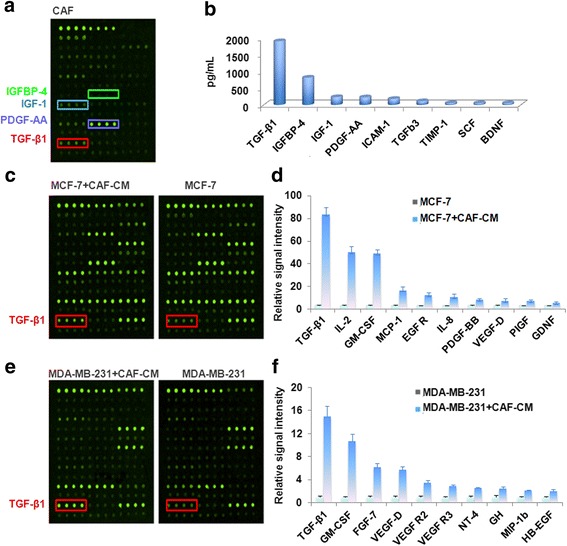
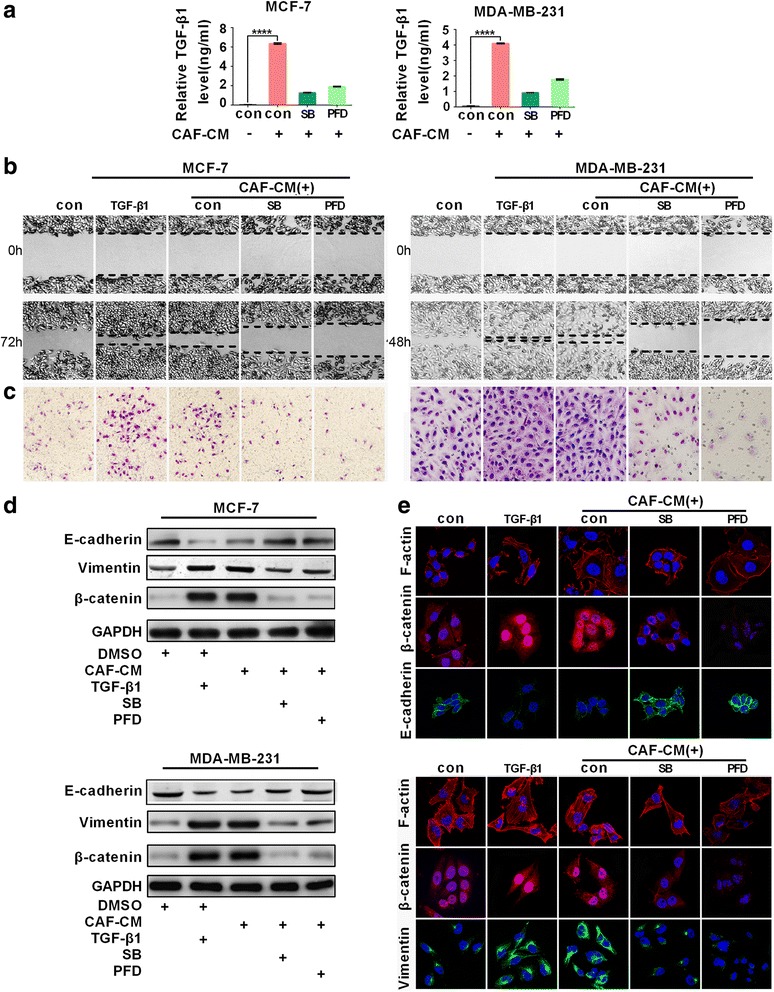
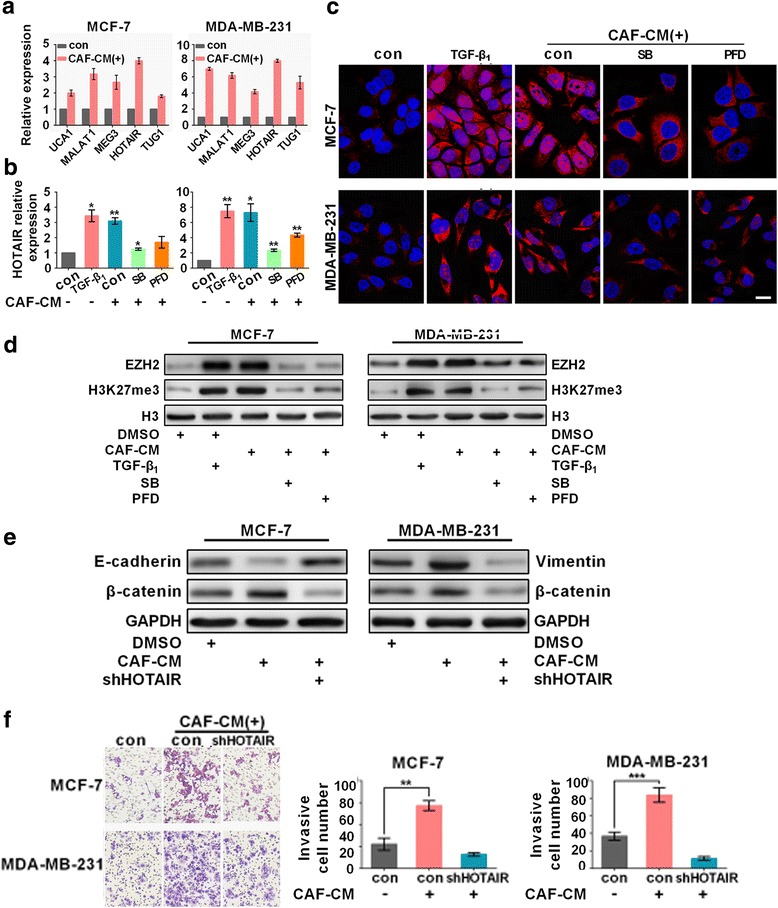
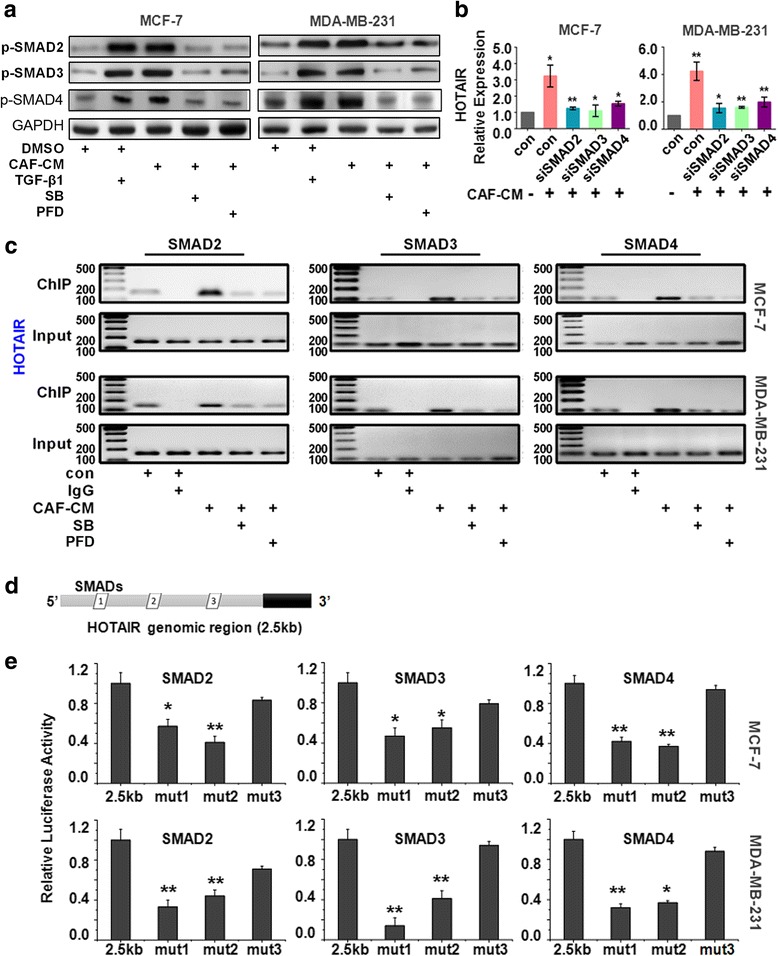
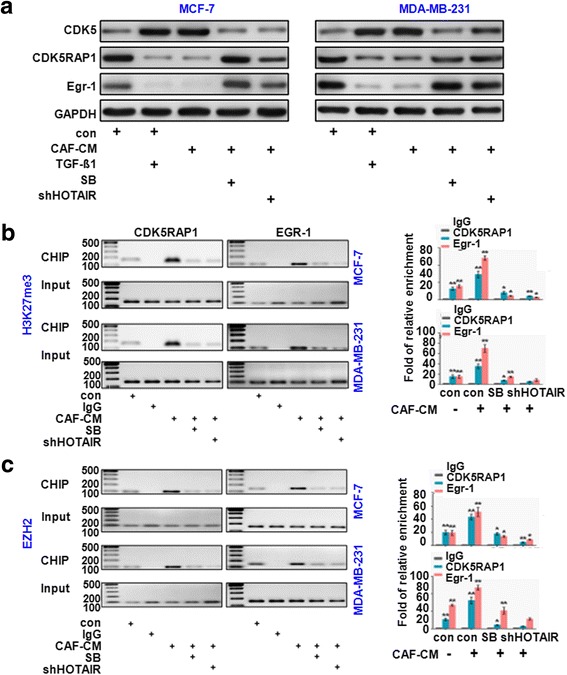
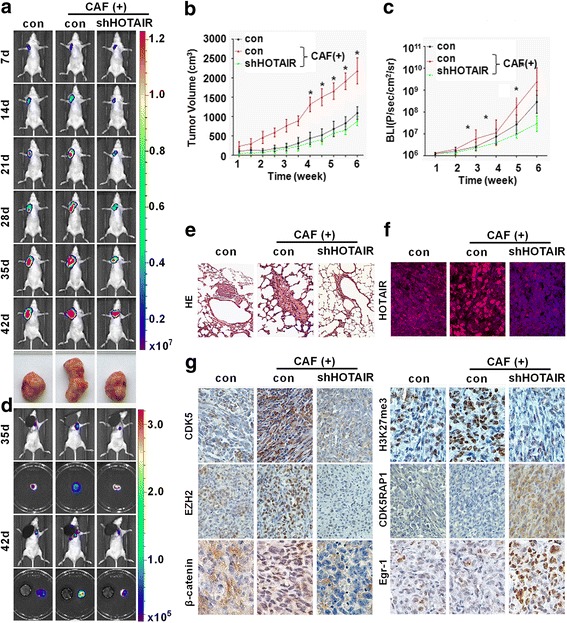
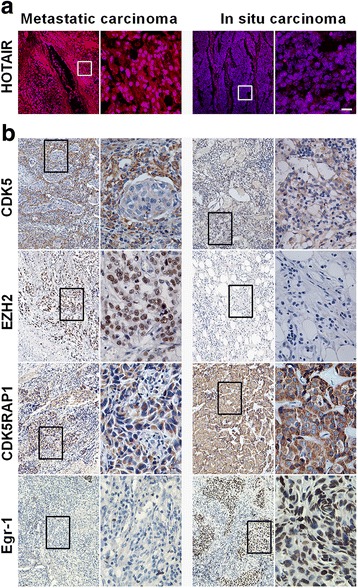
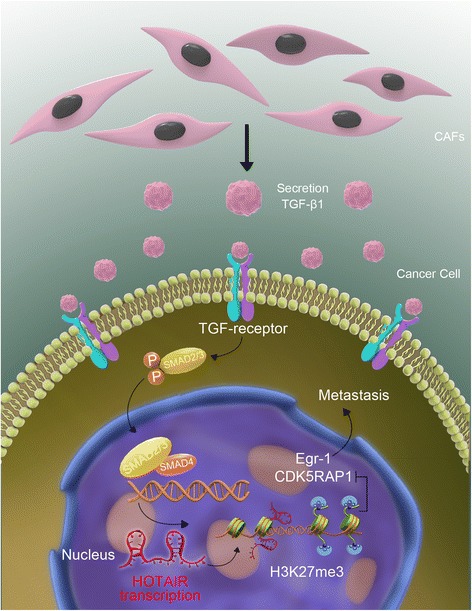
BACKGROUND: The communication between carcinoma associated fibroblasts (CAFs) and cancer cells facilitate tumor metastasis. In this study, we further underlying the epigenetic mechanisms of CAFs feed the cancer cells and the molecular mediators involved in these processes. METHODS: MCF-7 and MDA-MB-231 cells were treated with CAFs culture conditioned medium, respectively. Cytokine antibody array, enzyme-linked immunosorbent assay, western blotting and immunofluorescence were used to identify the key chemokines. Chromatin immunoprecipitation and luciferase reporter assay were performed to explore the transactivation of target LncRNA by CAFs. A series of in vitro assays was performed with RNAi-mediated knockdown to elucidate the function of LncRNA. An orthotopic mouse model of MDA-MB-231 was conducted to confirm the mechanism in vivo. RESULTS: Here we reported that TGF-β1 was top one highest level of cytokine secreted by CAFs as revealed by cytokine antibody array. Paracrine TGF-β1 was essential for CAFs induced EMT and metastasis in breast cancer cells, which is a crucial mediator of the interaction between stromal and cancer cells. CAF-CM significantly enhanced the HOTAIR expression to promote EMT, whereas treatment with small-molecule inhibitors of TGF-β1 attenuated the activation of HOTAIR. Most importantly, SMAD2/3/4 directly bound the promoter site of HOTAIR, located between nucleotides -386 and -398, -440 and -452, suggesting that HOTAIR was a directly transcriptional target of SMAD2/3/4. Additionally, CAFs mediated EMT by targeting CDK5 signaling through H3K27 tri-methylation. Depletion of HOTAIR inhibited CAFs-induced tumor growth and lung metastasis in MDA-MB-231 orthotopic animal model. CONCLUSIONS: Our findings demonstrated that CAFs promoted the metastatic activity of breast cancer cells by activating the transcription of HOTAIR via TGF-β1 secretion, supporting the pursuit of the TGF-β1/HOTAIR axis as a target in breast cancer treatment.
Overview
The claims and statistics of this paper haven’t been checked yet.
Free: it reads the open-access text and checks the first 5 claims that cite a source we can check. Create a free account to check every claim.
Integrity signals
Registry
Cites
Statistics
Figures
Verification
Claims the paper makes
The claims and statistics of this paper haven’t been checked yet.
Free: it reads the open-access text and checks the first 5 claims that cite a source we can check. Create a free account to check every claim.
Claims other papers make about this one
Each is checked against this paper’s own text: does it say what the citing paper says it does?
The source backs part of the claim, not all of it — or backs it for a different population, condition or comparison.
In the citing paper
“Moreover, inhibiting TGF‐β1 was found to significantly inhibit CAF‐induced tumor growth and lung metastasis in an MDA‐MB‐231 orthotopic tumor transplantation nude mouse model [103].”
From Tumor microenvironment signaling and therapeutics in cancer progression (2023) · cites this paper as [103]
Experimental — accuracy not yet measured
Self-check
Percentages, sums and reported differences re-computed from the paper’s own numbers.
The self-check needs the paper’s full text.
Citations
Cites
Smad-dependent and Smad-independent pathways in TGF-β family signalling
Derynck, R., & Zhang, Y. E. (2003) · Nature · doi:10.1038/nature02006 · Cited by 5,373
Long non-coding RNA HOTAIR reprograms chromatin state to promote cancer metastasis
Gupta, R. A., Shah, N., Wang, K. C., Kim, J., Horlings, H. M., Wong, D. J., Tsai, M.-C., Hung, T., Argani, P., Rinn, J. L., et al. (2010) · Nature · doi:10.1038/nature08975 · Cited by 5,218
Self-citationBreast cancer metastasis: markers and models
Weigelt, B., Peterse, J. L., & van't Veer, L. J. (2005) · Nature Reviews Cancer · doi:10.1038/nrc1670 · Cited by 2,232 · cited 1×
“Specifically, high rates of metastasis to the lymph nodes, lungs, bone and brain, not the primary tumor, are the leading cause of breast cancer death [1].”
JASPAR: an open-access database for eukaryotic transcription factor binding profiles
Sandelin, A. (2004) · Nucleic Acids Research · doi:10.1093/nar/gkh012 · Cited by 1,790 · cited 4×
“maximum matrix dissimilarity rate set as 15% in PROMO [28, 29].”
InfluentialFriends or foes — bipolar effects of the tumour stroma in cancer
Mueller, M. M., & Fusenig, N. E. (2004) · Nature Reviews Cancer · doi:10.1038/nrc1477 · Cited by 1,765 · cited 1×
“cular endothelial growth factor (VEGF), platelet-derived growth factor (PDGF), and interleukins (IL) [8, 9].”
Erez, N., Truitt, M., Olson, P., & Hanahan, D. (2010) · Cancer Cell · doi:10.1016/j.ccr.2009.12.041 · Cited by 1,515
PROMO: detection of known transcription regulatory elements using species-tailored searches
Messeguer, X., Escudero, R., Farré, D., Núñez, O., Martı́nez, J., & Albà, M. M. (2002) · Bioinformatics · doi:10.1093/bioinformatics/18.2.333 · Cited by 1,369 · cited 4×
“maximum matrix dissimilarity rate set as 15% in PROMO [28, 29].”
InfluentialStromal gene expression defines poor-prognosis subtypes in colorectal cancer
Calon, A., Lonardo, E., Berenguer-Llergo, A., Espinet, E., Hernando-Momblona, X., Iglesias, M., Sevillano, M., Palomo-Ponce, S., Tauriello, D. V. F., Byrom, D., et al. (2015) · Nature Genetics · doi:10.1038/ng.3225 · Cited by 1,070 · cited 1×
“CAF-mediated initiation of efficient metastasis [26, 32, 33].”
Dependency of Colorectal Cancer on a TGF-β-Driven Program in Stromal Cells for Metastasis Initiation
Calon, A., Espinet, E., Palomo-Ponce, S., Tauriello, D. V. F., Iglesias, M., Céspedes, M. V., Sevillano, M., Nadal, C., Jung, P., Zhang, X. H.-F., et al. (2012) · Cancer Cell · doi:10.1016/j.ccr.2012.08.013 · Cited by 1,060
Quante, M., Tu, S. P., Tomita, H., Gonda, T., Wang, S. S. W., Takashi, S., Baik, G. H., Shibata, W., DiPrete, B., Betz, K. S., et al. (2011) · Cancer Cell · doi:10.1016/j.ccr.2011.01.020 · Cited by 1,044
Cited by
Items 101–200 of 228
Long Noncoding RNAs in the Metastasis of Oral Squamous Cell Carcinoma
Xu, Y., Jiang, E., Shao, Z., & Shang, Z. (2021) · Frontiers in Oncology · doi:10.3389/fonc.2020.616717 · Cited by 34
Self-citationEs, H. A., Cox, T. R., Sarafraz-Yazdi, E., Thiery, J. P., & Warkiani, M. E. (2021) · Cancers · doi:10.3390/cancers13205118 · Cited by 33
“Moreover, CAF-derived cytokines significantly induce the expression of HOTAIR, which in return promotes the EMT program in metastatic breast cancers [53].”
BackgroundResultHuang, L., Wang, Z., Liao, C., Zhao, Z., Gao, H., Huang, R., Chen, J., Wu, F., Zeng, F., Zhang, Y., et al. (2024) · CNS Neuroscience & Therapeutics · doi:10.1111/cns.14566 · Cited by 28
“16 24 However, there have been no reports about PVT1 impacts in GBM TME.”
BackgroundPark, M. N., Kim, M., Lee, S., Kang, S., Ahn, C., Tallei, T. E., Kim, W., & Kim, B. (2025) · Antioxidants · doi:10.3390/antiox14050501 · Cited by 42
“ROS, generated by cytokines like TGF-β 1, not only play a role in oxidative stress but also contribute to the transformation of normal fibroblasts (NFs) into cancer-associated fibroblasts (CAFs) [61,62].”
Saleh, M. E., Gadalla, R., Hassan, H., Afifi, A., Götte, M., El‐Shinawi, M., Mohamed, M. M., & Ibrahim, S. (2019) · PLoS ONE · doi:10.1371/journal.pone.0217550 · Cited by 26
LncRNA HOTAIR promotes endometrial fibrosis by activating TGF-β1/Smad pathway
Wu, J., Jin, L., Zhang, Y., Duan, A., Liu, J., Jiang, Z., Huang, L., Chen, J., Liu, Z., Lu, D., et al. (2020) · Acta Biochimica et Biophysica Sinica · doi:10.1093/abbs/gmaa120 · Cited by 30
Dai, K., Tanaka, M., Kamiyoshi, A., Sakurai, T., Ichikawa‐Shindo, Y., Kawate, H., Cui, N., Wei, Y., Tanaka, M., Kakihara, S., et al. (2019) · Oncogene · doi:10.1038/s41388-019-1112-z · Cited by 27
“with a poor clinical prognosis in breast [3, 4], lung [5, 6], and pancreatic cancer [7, 8], among others.”
BackgroundLong Non-Coding RNAs, Cell Cycle, and Human Breast Cancer
Yin, Q., Ma, H., Bamunuarachchi, G., Zheng, X., & Ma, Y. (2023) · Human Gene Therapy · doi:10.1089/hum.2023.074 · Cited by 29
“118 Moreover, lncRNA MCM3AP-AS1 has been validated as a cytoplasmic RNA and expressed at a high level in BC cells.”
Remodeling the tumor dormancy ecosystem to prevent recurrence and metastasis
Liang, Y., Chen, W., Zhang, Y., & Li, L. (2026) · Signal Transduction and Targeted Therapy · doi:10.1038/s41392-025-02328-2 · Cited by 36
LncRNAs in colorectal cancer: Biomarkers to therapeutic targets
Chen, L., Chen, X., Niu, X., & Peng, X. (2023) · Clinica Chimica Acta · doi:10.1016/j.cca.2023.117305 · Cited by 23
The Interaction Between Long Non-Coding RNAs and Cancer-Associated Fibroblasts in Lung Cancer
Ti, W., Wang, J., & Cheng, Y. (2022) · Frontiers in Cell and Developmental Biology · doi:10.3389/fcell.2021.714125 · Cited by 22
Modulation of the TGF-β signaling pathway by long noncoding RNA in hepatocellular carcinoma
Han, M., Liao, Z., Liu, F., Chen, X., & Zhang, B. (2020) · Biomarker Research · doi:10.1186/s40364-020-00252-x · Cited by 21
“transactivate HOTAIR by binding to its promoter site and promote metastasis of breast cancer [81].”
Liang, T., Wang, Y., Yu, J., Cong, S., Jiang, X., Dong, L., Zhang, G., & Xiao, D. (2021) · Journal of Oncology · doi:10.1155/2021/8836078 · Cited by 24
“Additionally, LncRNA HOTAIR is positively related to tumor recurrence and epithelial to mesenchymal transition (EMT) [25].”
BackgroundSelf-citationAlhussan, A., Palmerley, N., Smazynski, J., Karasinska, J. M., Renouf, D. J., Schaeffer, D. F., Beckham, W., Alexander, A., & Chithrani, D. B. (2022) · Cancers · doi:10.3390/cancers14153586 · Cited by 21
Hidden Treasures: Macrophage Long Non-Coding RNAs in Lung Cancer Progression
Karger, A., Nandigama, R., Stenzinger, A., Grimminger, F., Pullamsetti, S. S., Seeger, W., & Savai, R. (2021) · Cancers · doi:10.3390/cancers13164127 · Cited by 21
Ye, Y., Zhao, Q., Wu, Y., Wang, G., Huang, Y., Sun, W., & Zhang, M. (2022) · Frontiers in Genetics · doi:10.3389/fgene.2022.989719 · Cited by 23
TGFβ Signaling in the Tumor Microenvironment
Goulet, C. R., & Pouliot, F. (2020) · Advances in experimental medicine and biology · doi:10.1007/978-3-030-47189-7_6 · Cited by 22
Liu, Q., Lin, J.-Y., An, P., Chen, Y., Luan, X., & Zhang, H. (2021) · Biochemical Pharmacology · doi:10.1016/j.bcp.2021.114802 · Cited by 21
Tumor-Derived Small Extracellular Vesicles Involved in Breast Cancer Progression and Drug Resistance
Feng, L., Guo, L., Tanaka, Y., & Su, L. (2022) · International Journal of Molecular Sciences · doi:10.3390/ijms232315236 · Cited by 20
Bhuva, D. D., Tan, C. W., Liu, N., Whitfield, H. J., Papachristos, N., Lee, S., Kharbanda, M., Mohamed, A., & Davis, M. J. (2024) · BMC Bioinformatics · doi:10.1186/s12859-024-05676-y · Cited by 23
“5h) could contribute to CAF formation via TGFβ signalling as evidenced by the upregulation of TGFβ1 and its receptors (cluster 11) [67].”
BackgroundLiang, X., Qi, M., Wu, R. T., Liu, A., Chen, D., Tang, L., Chen, J., Hu, X., Li, W., Zhan, L., et al. (2018) · International Journal of Oncology · doi:10.3892/ijo.2018.4574 · Cited by 24
“To the best of our knowledge, only a limited number of lncRNAs have been associated with EMT in PDAC: LOC389641 (8), lincRNA-ROR (29), MALAT-1 (30), MEG3 (31), HOTAIR (32) and H19 (33).”
Long non-coding RNAs in lung cancer: implications for lineage plasticity-mediated TKI resistance
Liu, T., Han, C., Fang, P., Zhu, H., Wang, S., Ma, Z., Zhang, Q., Xia, W., Wang, J., Xu, L., et al. (2020) · Cellular and Molecular Life Sciences · doi:10.1007/s00018-020-03691-9 · Cited by 17
Current Knowledge of Long Non-Coding RNA HOTAIR in Breast Cancer Progression and Its Application
Shi, Y., Huang, Q.-Y., Kong, X., Zhao, R., Chen, X., Zhai, Y., & Xiong, L. (2021) · Life · doi:10.3390/life11060483 · Cited by 22
“CDK5 elevation finally leads to EMT in vitro and distant metastasis in vivo [79,80].”
BackgroundLyu, P., Gu, X., Wang, F., Sun, H., Zhou, Q., Yang, S., & Yuan, W. (2024) · Biomarker Research · doi:10.1186/s40364-024-00622-9 · Cited by 20
“In addition, researchers have demonstrated that the TGF-β1/ HOTAIR signaling pathway and the integrin α2β1/TGF-β axis were promote lung metastasis in patients with breast cancer and salivary adenoid cystic carcinoma, respectively [107, 108].”
BackgroundInterplay of long non-coding RNAs and TGF/SMAD signaling in different cancers
Farooqı, A. A., Attar, R., Qureshi, M. Z., Fayyaz, S., Sohail, M. I., Sabitaliyevich, U. Y., Nurmurzayevich, S. B., Yelekenova, A. B., Yaylım, İ., & Alaaeddine, N. (2018) · Cellular and Molecular Biology · doi:10.14715/cmb/2017.64.15.1 · Cited by 17
Epigenetic Mechanisms beyond Tumour–Stroma Crosstalk
Gagliano, T., & Brancolini, C. (2021) · Cancers · doi:10.3390/cancers13040914 · Cited by 19
Zhu, Y., Dou, H., Liu, Y., Yu, P., Li, F., Wang, Y., & Xiao, M. (2022) · Oxidative Medicine and Cellular Longevity · doi:10.1155/2022/5266627 · Cited by 16
Self-citationRetractedZhang, Q., Lou, Y., Fang, H., Sun, S., Jin, R., Ji, Y., & Chen, Z. (2024) · Experimental and Therapeutic Medicine · doi:10.3892/etm.2024.12438 · Cited by 21
“For example, CAFs can activate homeobox transcript antisense intergenic RNA (HOTAIR) transcription through the secre‑ tion of TGF‑ β 1, and SMAD2/3/4 can directly bind to the HOTAIR promoter site to increase the ability of breast cancer cells to metastasize (66).”
BackgroundThe Role of Sex-specific Long Non-coding RNAs in Cancer Prevention and Therapy
Song, H. K., & Kim, S. Y. (2021) · Journal of Cancer Prevention · doi:10.15430/jcp.2021.26.2.98 · Cited by 17
“Additionally, the lncRNA HOTAIR (HOX transcript antisense RNA) is induced by TGF-β and activates the SMAD signaling cascade, which induces the EMT in cancers of pancreas, liver, and breast [37,42-44].”
BackgroundRoles of TGF‑β signalling pathway‑related lncRNAs in cancer (Review)
Hu, Z., Liu, Y., Liu, M., Zhang, Y., & Wang, C. (2023) · Oncology Letters · doi:10.3892/ol.2023.13693 · Cited by 16
“Ren et al (90) discovered that SMAD2/3/4 binds to the promoter site of HOTAIR and is directly transcribed by HOTAIR, which provides a novel idea for treatment of breast cancer.”
The genetic script of metastasis
Jinesh, G. G., & Brohl, A. S. (2019) · Biological reviews/Biological reviews of the Cambridge Philosophical Society · doi:10.1111/brv.12562 · Cited by 17
“Histone acetylation is a marker of enhancers and euchromatin regions of local and distant metastatic cells show marked differences in H3K27ac pattern in PDAC (Alderton, 2017).”
BackgroundInfluentialEmerging Therapeutic RNAs for the Targeting of Cancer Associated Fibroblasts
Santana-Viera, L., Ibba, M. L., Rotoli, D., Catuogno, S., & Esposito, C. L. (2020) · Cancers · doi:10.3390/cancers12061365 · Cited by 15
Li, J., Zeng, Z., Jiang, X., Zhang, N., Gao, Y., Luo, Y., Sun, W., Li, S., Ren, J., Gong, Y. Q., et al. (2020) · Scientific Reports · doi:10.1038/s41598-020-75541-4 · Cited by 16
Long Non-Coding RNAs as Novel Targets for Phytochemicals to Cease Cancer Metastasis
Rajabi, S., Rajani, H. F., Mohammadkhani, N., Ramírez‐Coronel, A. A., Maleki, M., Maresca, M., & Hajimehdipoor, H. (2023) · Molecules · doi:10.3390/molecules28030987 · Cited by 19
“The CAFs play an important role in metastasis, invasion, and drug resistance of different cancers [74].”
BackgroundInfluentialFamta, P., Shah, S., Dey, B., Kumar, K. C., Bagasariya, D., Vambhurkar, G. B., Pandey, G., Sharma, A., Srinivasarao, D. A., Kumar, R., et al. (2024) · Cancer Pathogenesis and Therapy · doi:10.1016/j.cpt.2024.01.001 · Cited by 21
Zhang, X., Zhang, Y., Qiu, X., Cai, J., Yang, Z., & Song, F. (2022) · Stem Cells International · doi:10.1155/2022/3805013 · Cited by 14
RetractedZhu, L., Liu, M., Shang, Y., Cheng, J., Zhao, H., Zhang, J., & Shen, D. (2025) · Scientific Reports · doi:10.1038/s41598-025-85531-z · Cited by 19
The Role of lncRNAs in Rare Tumors with a Focus on HOX Transcript Antisense RNA (HOTAIR)
Liguori, G., Cerrone, M., Chiara, A. D., Tafuto, S., Tracey, M. C., Botti, G., Bonito, M. D., & Cantile, M. (2021) · International Journal of Molecular Sciences · doi:10.3390/ijms221810160 · Cited by 17
Dhungel, N., & Dragoi, A. (2024) · Frontiers in Molecular Biosciences · doi:10.3389/fmolb.2024.1379971 · Cited by 13
lncRNA HOTAIR and Cardiovascular diseases
Taghvimi, S., Fard, E. S., Khatami, S. H., z.m, S. Z., Taheri‐Anganeh, M., Movahedpour, A., & Ghasemi, H. (2024) · Functional & Integrative Genomics · doi:10.1007/s10142-024-01444-6 · Cited by 14
“Suppression of HOTAIR in cancerous cells can restrain epithelial-mesen - chymal transition (EMT) through the upregulation of E-cad-herin and the downregulation of vimentin and beta-catenin (Ren et al. 2018).”
Diversity in cancer invasion phenotypes indicates specific stroma regulated programs
Novin, A., Suhail, Y., Ajeti, V., Goyal, R., Wali, K. H., Seck, A., Jackson, A., & Gupta, K. (2020) · Human Cell · doi:10.1007/s13577-020-00427-6 · Cited by 13
Research advances of secretory proteins in malignant tumors
Zhang, N., Hao, J., Cai, Y., & Wang, M. (2021) · Chinese Journal of Cancer Research · doi:10.21147/j.issn.1000-9604.2021.01.12 · Cited by 13
“Breast cancer Angiopoietin (66), ANXA1 (8), CCL17 (80), CCL2 (110,146), CHI3L1 (145), CRKL (147), CXCL1 (62), CXCL14 (80), CXCL5 (146), ECM1 (114), Hsp90α (13), IGFBP-3 (31), IL-10 (107), IL-1β (42), IL-32 (41), Leptin (61), LGALS3BP (73), LOX (22), LRP6N (149), PAI-1 (67), PGRN (9), PKM2 (4), PSAP (148), S100A14 (146…”
BackgroundTassinari, M., & Gandellini, P. (2021) · Cancers · doi:10.3390/cancers13040709 · Cited by 12
“Such lncRNA was found to be implicated in cell proliferation and EMT, as demonstrated by the fact that its depletion inhibited CAF‐ induced tumor growth and lung metastasis in MDA‐MB‐231 orthotopic animal model [45].”
BackgroundRatre, P., Nazeer, N., Bhargava, A., Thareja, S., Tiwari, R. R., Raghuwanshi, V. S., & Mishra, P. K. (2023) · ACS Omega · doi:10.1021/acsomega.3c05718 · Cited by 11
“9 Moreover, such interaction and crosstalk offer new insights into the control of gene expression and disease etiology of aggressive and metastatic BCs.”
BackgroundZhou, Y., Zhang, Y., Shao, Y., Yue, X., Chu, Y., Yang, C., & Chen, D. (2023) · Discover Oncology · doi:10.1007/s12672-023-00846-5 · Cited by 11
“It was also involved in epithelial-mesenchymal transformation (EMT) in normal tissue and tumors, and lncRNA HOTAIR has potential for cancer targeted therapy [3, 4].”
BackgroundExosomes and immune modulation: implications for neuroblastoma immunotherapy
Morini, M., Vitale, C., Ardito, M., Dondero, A., Cortese, K., Bottino, C., & Castriconi, R. (2025) · Frontiers in Immunology · doi:10.3389/fimmu.2025.1600062 · Cited by 12
LIVE: a manually curated encyclopedia of experimentally validated interactions of lncRNAs
An, G., Sun, J., Ren, C., Ouyang, Z., Zhu, L., Bo, X., Peng, S., & Shu, W. (2019) · Database · doi:10.1093/database/baz011 · Cited by 11
The role of stromal cells in epithelial–mesenchymal plasticity and its therapeutic potential
Wang, J., Peng, J., Chen, Y., Nasser, M. I., & Qin, H. (2024) · Discover Oncology · doi:10.1007/s12672-024-00867-8 · Cited by 17
Zhang, X., Zhu, Y., Wu, J., Zhou, Y., Chen, W., & Gu, W. (2022) · Non-coding RNA Research · doi:10.1016/j.ncrna.2022.06.003 · Cited by 12
Long non-coding RNAs in breast cancer stem cells
Huang, Y.-T., Mo, W., Ding, X., & Ding, Y. (2023) · Medical Oncology · doi:10.1007/s12032-023-02046-1 · Cited by 11
“For example, CAF-secreted TGF-β1 has been shown to induce HOTAIR expression in BCSCs through SMAD2/3/4, leading to increased EMT and metastasis of BC cells in vivo [44, 45].”
BackgroundBatrash, F., Shaik, A., Rauf, R., Kutmah, M., & Zhang, J. (2024) · Cancers · doi:10.3390/cancers16061113 · Cited by 14
“CAFs are known to secrete growth factors like fibroblast growth factor (FGF) and transforming growth factor-beta (TGF-β ), which can stimulate cancer cell proliferation, epithelial–mesenchymal transition (EMT), and invasiveness [8–11].”
BackgroundFeng, S., Zhang, Y. X., Wang, Y., Gao, Y., & Song, Y. (2024) · Chemistry - A European Journal · doi:10.1002/chem.202402485 · Cited by 15
Self-citationLuan, X., Wang, X., Bian, G., Li, X., Gao, Z., Liu, Z., Zhang, Z., Han, T., Zhao, J., Zhao, H., et al. (2024) · Oncology Reports · doi:10.3892/or.2024.8846 · Cited by 15
Suwardjo, S., Permana, K. G., Aryandono, T., Heriyanto, D., & Anwar, S. L. (2024) · Asian Pacific Journal of Cancer Prevention · doi:10.31557/apjcp.2024.25.4.1169 · Cited by 14
“HOTAIR is also associated with abnormal DNA methylation profiles in cancer [13, 29].”
BackgroundMechanistic insight of cyclin-dependent kinase 5 in modulating lung cancer growth
Lin, H., Chen, M., Prince, G. M. S. H., & Yang, T. (2019) · The Chinese Journal of Physiology · doi:10.4103/cjp.cjp_67_19 · Cited by 10
“Hence, it demands further research on this area in lung cancer.[30]”
BackgroundOncogenic Long Noncoding RNAs in Prostate Cancer, Osteosarcoma, and Metastasis
Al-Shehri, A., & Bakhashab, S. (2023) · Biomedicines · doi:10.3390/biomedicines11020633 · Cited by 10
“Therefore, TGF-β1 is a vital crosstalk mediator between stromal and cancer cells for promoting EMT and metastasis in the tumor microenvironment [55].”
BackgroundYang, C., Shu, J., Li, Y., Zhao, N., Liu, X., Tian, X., Sun, Z., Tabish, M. S., Hong, Y., Chen, K., et al. (2024) · Frontiers in Immunology · doi:10.3389/fimmu.2024.1469918 · Cited by 13
Adylova, A., Муханбетжановна, А. А., Attar, R., Ishmuratova, M., & Farooqı, A. A. (2021) · Non-coding RNA Research · doi:10.1016/j.ncrna.2020.12.003 · Cited by 8
“HOTAIR promoted H3K27-mediated trimethylation of the CDK5RAP1 and EGR-1 promoters, thereby causing the activation of CDK5 [18].”
BackgroundInfluentialPathogenic roles of long noncoding RNAs in melanoma: Implications in diagnosis and therapies
Xiao, Y., Xia, Y., Wang, Y., & Xue, C. (2021) · Genes & Diseases · doi:10.1016/j.gendis.2021.08.007 · Cited by 9
Self-citationLong non-coding RNAs involved in different steps of cancer metastasis
Suman, P., Chhichholiya, Y., Kaur, P., Ghosh, S. K., & Munshi, A. (2022) · Clinical & Translational Oncology · doi:10.1007/s12094-021-02761-z · Cited by 9
“HOTAIR knockdown reduced lung metastases as reported previously [157].”
ResultA prognostic fibroblast-related risk signature in colorectal cancer
Xu, H., & Pan, Y. (2021) · Aging · doi:10.18632/aging.203677 · Cited by 9
“The enhancement of EMT might also involved in progression of tumor, CAFs could secrete TGFβ1 to promote EMT, and then promoted tumor invasion and metastasis [40, 41].”
Paeonol inhibits profibrotic signaling and HOTAIR expression in fibrotic buccal mucosal fibroblasts
Ho, D. C., Chen, S.-H., Fang, C.-Y., Hsieh, C., Hsieh, P., Liao, Y., Yu, C.-C., & Tsai, L. (2021) · Journal of the Formosan Medical Association · doi:10.1016/j.jfma.2021.09.027 · Cited by 8
Cancer metastases: Tailoring the targets
Pote, M. S., Singh, D., A, A. M., Suchita, J., & Gacche, R. N. (2024) · Heliyon · doi:10.1016/j.heliyon.2024.e35369 · Cited by 9
“It was reported that CAFs promote metastasis in breast cancer by over-expression of HOTAIR, another lncRNA HUMT hypomethylation that promotes lymph angiogenesis and metastasis in TNBC [82].”
BackgroundLiu, R., Su, L., Gao, S., Liu, W., & Wang, H. (2026) · Advanced Science · doi:10.1002/advs.202510043 · Cited by 14
“Conversely, CAF-derived TGF-β 1 transcriptionally activates the lncRNA HOTAIR via SMAD2/3/4 complex, accelerating EMT and BC metastasis [ 76 ].”
The role of ncRNA in the co-regulation of autophagy and exosome pathways during cancer progression
Soni, N., Nandi, G., Chaudhary, M., & Bissa, B. (2023) · Biochimica et Biophysica Acta (BBA) - Molecular Cell Research · doi:10.1016/j.bbamcr.2023.119523 · Cited by 7
Exosomes, circadian rhythms, and cancer precision medicine: New frontiers
Soni, N., & Bissa, B. (2024) · Biochimie · doi:10.1016/j.biochi.2024.07.010 · Cited by 11
Xiao, X., Hao, Y., Cheng, C., Hu, H., Chen, H., Tan, J., Wang, Y., Liu, X., Peng, B., Liao, J., et al. (2023) · Hepatology · doi:10.1097/hep.0000000000000534 · Cited by 8
“TGF-β -CAFs have been reported to be a potent immune suppressor and matrix remodeler, [27] which may also play a critical role in HB.”
BackgroundSelf-citationThe Use of Zebrafish Xenotransplant Assays to Analyze the Role of lncRNAs in Breast Cancer
Zampedri, C., Martínez-Flores, W. A., & Meléndez-Zajgla, J. (2021) · Frontiers in Oncology · doi:10.3389/fonc.2021.687594 · Cited by 7
“In breast cancer, TGF-b1 secreted by CAFs up-regulates HOTAIR expression to promote epithelium- mesenchyme transition (EMT) and metastasis (67).”
BackgroundSilent players, loud impact: unveiling the therapeutic potentials of LncRNAs
Kamal, A., Swellam, M. M., Shalaby, N., Darwish, M. K., & El-Nahrery, E. M. A. (2024) · Journal of Translational Genetics and Genomics · doi:10.20517/jtgg.2023.55 · Cited by 8
Role of cancer-associated fibroblasts in tumor microenvironment
Mir, M. A., Sofi, S., & Aisha, S. (2022) · Elsevier eBooks · doi:10.1016/b978-0-443-18696-7.00002-6 · Cited by 6
Liu, Q. (2025) · Clinical and Experimental Medicine · doi:10.1007/s10238-025-01618-x · Cited by 9
“This then prompted the process of EMT and promoted the proliferation of cancerous cells [91].”
Gao, H., Nishikubo, H., Ma, D., Pan, J., Sano, T., Imanishi, D., Sakuma, T., Fan, C., & Yashiro, M. (2025) · International Journal of Molecular Sciences · doi:10.3390/ijms26199695 · Cited by 6
“In orthotopic models, HOTAIR knockdown blocks CAF-induced tumor growth and lung metastasis, linking the TGF-β 1/HOTAIR axis to invasive behavior [104].”
Insights into N6-methyladenosine (m6A) modification of noncoding RNA in tumor microenvironment
Zhang, Y., Zhan, L., Li, J., Jiang, X., & Li, Y. (2023) · Aging · doi:10.18632/aging.204679 · Cited by 5
The role of long non-coding RNAs in breast cancer microenvironment
Yao, W., Wang, L., Liu, F., & Xia, L. (2023) · Pathology - Research and Practice · doi:10.1016/j.prp.2023.154707 · Cited by 5
Sun, X., Li, W., Li, G., Yang, H., Jiang, Z., Shen, L., Shen, Y., Liu, Y., & Wang, G. (2024) · Journal of Cellular and Molecular Medicine · doi:10.1111/jcmm.18275 · Cited by 4
“47,48 To investigate systematically the effect of LINC00524 on BC cell function, we constructed overexpression and interference systems for this lncRNA.”
BackgroundWaseem, S., Zhan, J., Xiao, X., & Bai, P. (2026) · Frontiers in Oncology · doi:10.3389/fonc.2026.1785469 · Cited by 6
Lei, Y., He, J., & Tang, Y. (2023) · Critical Reviews in Oncology/Hematology · doi:10.1016/j.critrevonc.2023.104102 · Cited by 6
A functional interplay between non-coding RNAs and cancer-associated fibroblasts in breast cancer
Anajafi, S., Hadavi, R., Valizadeh-Otaghsara, S. M., Hemmati, M., Hassani, M., Mohammadi‐Yeganeh, S., & Soleimani, M. (2024) · Gene Reports · doi:10.1016/j.genrep.2024.101990 · Cited by 3
Shenoy, U. S., Adiga, D., Gadicherla, S., Kabekkodu, S. P., Hunter, K. D., & Radhakrishnan, R. A. (2022) · Biochimica et Biophysica Acta (BBA) - Reviews on Cancer · doi:10.1016/j.bbcan.2022.188840 · Cited by 5
The Duality of Cdk5: A Master Regulator in Neurodevelopment and a Hijacked Oncogene in Cancer
Nishimura, Y. V., & Kawauchi, T. (2025) · Cells · doi:10.3390/cells14231876 · Cited by 4
“…complex 2 (PRC2)/ enhancer of zeste homolog 2 (EZH2) to deposit the repressive histone mark H3K27me3—which directs H3K27me3 to the CDK5RAP1 and early growth response protein 1 (EGR1) promoters, lowering their expression and associating with higher Cdk5 levels and pro-metastatic EMT [153].”
LncRNA BANCR promotes oral squamous cell carcinoma progression via regulating Rab1A signaling
Li, W., Xu, X., Ma, Z., Shen, P., Cheng, B., Xia, J., & Li, Y. (2023) · Journal of Oral Pathology and Medicine · doi:10.1111/jop.13463 · Cited by 3
An Emerging Role of Long Noncoding RNAs as Novel Biomarkers for Breast Cancer Metastasis
Derlatka, K., Kulczycka, M., Prendecka, M., Homa‐Mlak, I., & Malecka-Massalska, T. J. (2024) · Applied Sciences · doi:10.3390/app14156667 · Cited by 2
Wan, S., Liang, Z., Yao, S., Wang, A., Liu, X., He, H., Cai, H., Gao, Y., & Wang, H. (2024) · Aging · doi:10.18632/aging.205997 · Cited by 2
Xu, Z., Zhang, L., Feng, Y., Zhu, F., Shi, J., Feng, Y., Chen, Q., & Shen, R. (2025) · Journal of Cancer · doi:10.7150/jca.116946 · Cited by 1
“At present, some BC-related lncRNA, such as NRAT1, MALAT1, HOTAIR, BC069792, H19, BCAR4 have been found and reported [10, 12, 14, 21-25].”
Enhancer RNAs: similarities with both lncRNAs and mRNAs reveal novel functions
Vlasov, P. A., & Manley, J. L. (2026) · RNA Biology · doi:10.1080/15476286.2026.2682066 · Cited by 1
Sanati, M., & Ghafouri‐Fard, S. (2026) · Advances in Cancer Biology - Metastasis · doi:10.1016/j.adcanc.2026.100196 · Cited by 1
Insights into the regulation of the HOTAIR proximal promoter
Gupta, A., & Desai, K. V. (2026) · Biochemical Society Transactions · doi:10.1042/bst20260099 · Cited by 1
“Cancer-associated fibroblasts promote cancer growth by releasing tumor-promoting factors such as TGF β , which in turn can up-regulate HOTAIR expression by increasing SMAD2/3/4 binding at the HOTAIR promoter [26].”
The role of exosomal non-coding RNAs in the breast cancer tumor microenvironment
Saadh, M. J., Allela, O. Q. B., Kareem, R. A., Ballal, S., Chahar, M., Saini, S., Prasad, G. V. S., Sameer, H. N., Hamad, A. K., Athab, Z. H., et al. (2025) · Functional & Integrative Genomics · doi:10.1007/s10142-025-01531-2 · Cited by 2
“This is achieved through the activation of another signaling pathway involving CDK5 (Ren et al. 2018).”
Zhou, X., Pan, Y., Li, H., Sun, Y., Li, Y., Jiang, Y.-X., & Liu, T. (2025) · 3 Biotech · doi:10.1007/s13205-025-04361-y · Cited by 1
“Increasing evidence demonstrated the critical role of abnormal EMT activation in tumor occurrence, invasion, and metastasis, including GC (Zhao et al. 2013; Montemayor-Garcia et al. 2013; Ren et al. 2018).”
Self-citationCerda‐Infante, J., Sánchez, M., Rojas, P. A., Corvalán, A. H., Méndez, G. P., Nervi, B., Smith, G. J., Francisco, I. F. S., Godoy, A., & Montecinos, V. P. (2021) · Research Square · doi:10.21203/rs.3.rs-181258/v1
Atallah, I., Rivera, A. M. C., Rivero-Lezcano, O. M., Tascón-González, L., González‐Cortés, C., Diez‐Tascón, C., Fernández‐Villa, T., & Martín, V. (2022) · PubMed
TGFβ mediated chromosomal instability in human colorectal cancer cells
Kaur, S. (2023) · eDiss (Georg-August-Universität Göttingen) · doi:10.53846/goediss-9958 · Cited by 2
Ping, Q., Wang, C., Cheng, X., Zhong, Y., Yan, R., Yang, M., Shi, Y., Li, X., Li, X., Huang, W., et al. (2023) · Figshare · doi:10.6084/m9.figshare.23700654
Self-citationPing, Q., Wang, C., Cheng, X., Zhong, Y., Yan, R., Yang, M., Shi, Y., Li, X., Li, X., Huang, W., et al. (2023) · Figshare · doi:10.6084/m9.figshare.23700666
Self-citationPing, Q., Wang, C., Cheng, X., Zhong, Y., Yan, R., Yang, M., Shi, Y., Li, X., Li, X., Huang, W., et al. (2023) · Figshare · doi:10.6084/m9.figshare.23700660
Self-citationPing, Q., Wang, C., Cheng, X., Zhong, Y., Yan, R., Yang, M., Shi, Y., Li, X., Li, X., Huang, W., et al. (2023) · Figshare · doi:10.6084/m9.figshare.23700648
Self-citationPing, Q., Wang, C., Cheng, X., Zhong, Y., Yan, R., Yang, M., Shi, Y., Li, X., Li, X., Huang, W., et al. (2023) · Figshare · doi:10.6084/m9.figshare.23700675
Self-citationPing, Q., Wang, C., Cheng, X., Zhong, Y., Yan, R., Yang, M., Shi, Y., Li, X., Li, X., Huang, W., et al. (2023) · Figshare · doi:10.6084/m9.figshare.23700651
Self-citationPing, Q., Wang, C., Cheng, X., Zhong, Y., Yan, R., Yang, M., Shi, Y., Li, X., Li, X., Huang, W., et al. (2023) · Figshare · doi:10.6084/m9.figshare.23700672
Self-citationPing, Q., Wang, C., Cheng, X., Zhong, Y., Yan, R., Yang, M., Shi, Y., Li, X., Li, X., Huang, W., et al. (2023) · Figshare · doi:10.6084/m9.figshare.23700657
Self-citation
Metadata
- Authors
- Ren, Y., Jia, H.-H., Xu, Y.-Q., Zhou, X., Zhao, X.-H., Wang, Y.-F., Song, X., Zhu, Z.-Y., Sun, T., Dou, Y., Tian, W.-P., Zhao, X.-L., Kang, C.-S., & Mei, M.
- Affiliations
- Tianjin Medical University (CN)
- Tianjin Medical University Cancer Institute and Hospital (CN)
- Tianjin Medical University General Hospital (CN)
- Corresponding author
- Mei, Mei
- Venue
- Molecular Cancer
- Published
- 2018-01-11
- Volume
- 17
- Issue
- 1
- Pages
- 5-5
- ISSN
- 1476-4598 (ISSN-L)
- PMC
- PMC5765658
- OpenAlex
- W2783018806
- Cited by
- 217
- References
- 40
- Citations by year
- 2026: 17 · 2025: 14 · 2024: 38 · 2023: 33 · 2022: 21 · 2021: 35 · 2020: 32 · 2019: 18 · 2018: 9
- FWCI
- 8.36
- Type
- journal article
- Language
- en
- Open access
- gold
- doi.org
- Licence
- cc-by
- Locations
- Molecular Cancer (publishedVersion, cc-by)
- PubMed Central (publishedVersion, cc-by)
- PubMed (publishedVersion)
- DOAJ (DOAJ: Directory of Open Access Journals) (submittedVersion)
- Funders
- National Natural Science Foundation of China (81673026, 81572492)
- Committee of Tianjin Science and Technology (16JCZDJC34800)
- Topics
- Life Sciences › Biochemistry, Genetics and Molecular Biology › Molecular Biology › TGF-β signaling in diseases
- Life Sciences › Biochemistry, Genetics and Molecular Biology › Cancer Research › Cancer-related molecular mechanisms research
- Health Sciences › Medicine › Oncology › Cancer Cells and Metastasis
- Keywords
- cancer-associated fibroblasts, HOTAIR, TGF-β1, breast cancer metastasis, epithelial-mesenchymal transition, paracrine signaling, long non-coding RNA, H3K27me3, tumor microenvironment, lung metastasis
- MeSH terms
- Cancer-Associated Fibroblasts, Animals, Cell Movement, Humans, Neoplasm Metastasis, Neoplasms, Prognosis, Transcription, Genetic, Signal Transduction, Gene Expression Regulation, Neoplastic, Paracrine Communication, Epigenesis, Genetic, Cell Line, Tumor, Cyclin-Dependent Kinase 5, Mice, Smad Proteins, Transforming Growth Factor beta1, Gene Knockdown Techniques, Epithelial-Mesenchymal Transition, RNA, Long Noncoding
About these checks
Registry, retraction, Cites and statistics results are computed, not judged, with one exception: a printed reference that no index lists is read once by a model before it counts as a citation error. Claims are extracted by a model and kept only when their quote appears verbatim in the text; each cited source is then checked, with a model’s help, for whether it says what the claim relies on. Those verdicts can be wrong — read the claim’s quote and the cited source before relying on one.
Statistics and arithmetic are recomputed, not judged.
Confidence bands are shown only for fields calibrated on our annotated test set. None is calibrated yet, so no band is shown.
What counts as a claim ›How we measure confidence ›How we check this ›
Are you an author, or do you see a problem with this page? Request a review
Data sources
Bibliographic data: Semantic Scholar, OpenAlex, Crossref.
Contains information from the Semantic Scholar Academic Graph Datasets, made available under the ODC Attribution License (ODC-BY 1.0).
Semantic Scholar’s data is described in: Kinney, R., et al. (2023). The Semantic Scholar Open Data Platform. arXiv:2301.10140.
